Preparation is the key to success in any interview. In this post, we’ll explore crucial Project Management and Stakeholder Management interview questions and equip you with strategies to craft impactful answers. Whether you’re a beginner or a pro, these tips will elevate your preparation.
Questions Asked in Project Management and Stakeholder Management Interview
Q 1. Describe your experience with Agile methodologies.
My experience with Agile methodologies is extensive, spanning over eight years across various projects and industries. I’m proficient in Scrum and Kanban, having served as both Scrum Master and Product Owner. I understand the iterative nature of Agile, emphasizing collaboration, flexibility, and continuous improvement.
For instance, in a recent project involving the development of a new e-commerce platform, we utilized Scrum. We implemented daily stand-ups, sprint planning sessions, sprint reviews, and sprint retrospectives. This iterative approach allowed us to adapt quickly to changing requirements and deliver value incrementally. We used a Kanban board to visualize workflow and identify bottlenecks in another project focused on improving customer support processes. This provided transparency and improved team efficiency. My approach focuses on tailoring the Agile framework to the specific needs of each project, ensuring a flexible and effective process.
Beyond the frameworks themselves, I deeply understand Agile principles such as self-organization, cross-functional teams, and empirical process control. I believe in empowering teams to manage their work and make decisions autonomously, fostering a collaborative environment where everyone contributes their best.
Q 2. Explain the difference between a project and a program.
The difference between a project and a program lies primarily in scope and duration. A project is a temporary endeavor undertaken to create a unique product, service, or result. It has a defined beginning and end, specific objectives, and a limited budget. Think of building a house – a defined start, a defined end, and a specific deliverable (the finished house).
A program, on the other hand, is a group of related projects, often managed collectively to achieve strategic organizational objectives. It has a broader scope and a longer timeframe than individual projects. For example, a program might be focused on improving customer satisfaction across the entire organization. This program could involve multiple projects, such as improving the website, enhancing customer service training, and developing a new customer relationship management (CRM) system.
In essence, a program is a portfolio of projects working towards a common goal, whereas a project is a single initiative within that portfolio. Programs require strong governance and alignment across various teams and projects.
Q 3. How do you prioritize competing project demands?
Prioritizing competing project demands requires a structured approach. I typically use a combination of methods, starting with a clear understanding of organizational strategic goals. This forms the basis for all prioritization decisions. I then use techniques like the MoSCoW method (Must have, Should have, Could have, Won’t have) to categorize requirements and the Value vs. Effort matrix to visualize the relative value and effort required for each task.
For example, if Project A is critical to meeting a key regulatory deadline (a ‘Must have’), while Project B is desirable but can be postponed (a ‘Should have’), then Project A takes precedence. The Value vs. Effort matrix helps in choosing tasks offering the highest value with the least effort.
Stakeholder input is also vital. Regular communication and collaboration ensure alignment on priorities and address any conflicts effectively. Using a scoring system combining factors like strategic alignment, risk, and dependencies further refines the prioritization process.
Q 4. What project management tools are you proficient in?
I am proficient in several project management tools, including Microsoft Project, Jira, Asana, and Trello. Microsoft Project is excellent for detailed planning and tracking of complex projects, particularly in traditional project management environments. Jira and Asana are ideal for Agile project management, providing features for sprint management, issue tracking, and collaboration. Trello’s Kanban-style boards are great for visualizing workflows and managing tasks in simpler projects.
My proficiency extends beyond simple task management. I understand how to leverage these tools to create custom workflows, reports, and dashboards to provide stakeholders with clear and concise project status updates. The choice of tool depends on the specific needs of the project and the team’s preferences; I’m adaptable to different environments and can quickly become proficient in new tools if needed.
Q 5. Describe your approach to risk management in projects.
My approach to risk management is proactive and iterative, not reactive. I begin by identifying potential risks during the project planning phase using techniques like brainstorming, SWOT analysis, and risk checklists. For each identified risk, I assess its likelihood and impact using a risk matrix. This allows me to prioritize risks and focus on the most critical ones.
Next, I develop risk response plans. This might include mitigation strategies (reducing the likelihood or impact), contingency plans (actions to take if the risk occurs), or risk acceptance (acknowledging the risk and accepting the potential consequences). I regularly monitor risks throughout the project lifecycle, updating the risk register and adapting the response plans as needed. This ensures that the project remains on track even in the face of unforeseen challenges.
For example, in a recent software development project, we identified the risk of delays due to third-party dependencies. Our mitigation strategy involved early engagement with the third-party vendor and incorporating buffer time into the schedule. This proactive approach allowed us to successfully manage the risk and avoid significant delays.
Q 6. How do you handle stakeholder conflicts?
Handling stakeholder conflicts requires a diplomatic and collaborative approach. I start by actively listening to all parties involved, understanding their perspectives and concerns. This empathy is crucial in diffusing tension and finding common ground.
Next, I facilitate open communication and create a safe space for stakeholders to express their views without interruption. I often use conflict resolution techniques such as mediation and negotiation to help parties find mutually acceptable solutions. This could involve compromise, collaboration, or even arbitration if necessary. I strive to ensure that all stakeholders feel heard and respected, even if their concerns can’t be fully addressed.
Documenting the conflict resolution process and agreed-upon solutions is essential. This provides a clear record for future reference and helps to prevent similar conflicts from arising.
Q 7. Explain your process for creating a project communication plan.
Creating a project communication plan involves several steps. I begin by identifying all stakeholders and categorizing them based on their level of interest and influence (e.g., using a power/interest grid). This allows me to tailor communication methods and frequency to each stakeholder group.
Next, I define the communication objectives. What information needs to be shared, and with whom? What is the desired outcome of each communication effort? I then select appropriate communication channels, considering their effectiveness and reach. This might include regular project status reports, email updates, team meetings, presentations, or even a project website or intranet page.
The plan also includes a communication schedule, specifying the frequency, format, and timing of different communication activities. Finally, I establish a process for managing feedback and resolving communication issues. Regular review and adaptation of the communication plan are crucial to ensure its effectiveness throughout the project lifecycle.
Q 8. How do you measure project success?
Project success isn’t solely defined by on-time and on-budget completion. It’s a multifaceted achievement measured against pre-defined objectives. We need to consider the project’s original goals and assess whether they were met effectively and efficiently. This involves a blend of quantitative and qualitative measurements.
- Quantitative Measures: These are easily measurable metrics like cost, schedule adherence (using Earned Value Management or EVM), and the number of defects or bugs. For example, if a project’s budget was $1 million and it finished at $950,000, that’s a quantitative success in cost management. Similarly, if a project was scheduled for 6 months and finished in 5 months, that’s a schedule success.
- Qualitative Measures: These focus on the intangible aspects like stakeholder satisfaction, the quality of deliverables, and the impact on the organization. This could involve surveys, interviews, or focus groups to gather feedback on customer satisfaction or employee morale. For instance, a successful software launch might be measured by positive user reviews and an increase in user engagement.
Ultimately, a successful project delivers tangible value to the organization while adhering to its constraints. It’s about achieving the ‘triple constraint’ – scope, time, and cost – while satisfying the stakeholders’ needs and expectations.
Q 9. How do you manage project scope creep?
Scope creep, the uncontrolled expansion of project requirements, is a major threat to project success. My approach to managing it involves proactive measures to prevent it and reactive measures to control it when it occurs.
- Proactive Measures: This includes meticulously defining the project scope at the outset using techniques like Work Breakdown Structures (WBS) and creating a comprehensive scope statement that is signed off by all stakeholders. Regular scope reviews with stakeholders help to identify any potential deviations early on. Change control processes with formalized request, approval, and documentation are crucial.
- Reactive Measures: When scope creep inevitably occurs (because some unforeseen issues might arise), we need a well-defined change management process. This includes evaluating the impact of proposed changes on the project’s timeline, budget, and resources. Negotiation with stakeholders might be necessary to prioritize tasks and ensure that only value-added changes are incorporated. Sometimes, difficult decisions need to be made—rejecting requests that don’t align with project objectives.
Think of it like building a house. If the initial blueprint doesn’t clearly outline every detail, the client might request additions during construction (scope creep). A robust contract and clear communication prevent costly changes later.
Q 10. Describe a time you had to make a difficult decision on a project.
On a recent software development project, we faced a critical bug just two weeks before the launch date. Fixing it required significant additional resources and risked delaying the launch. The decision was whether to launch with the bug (risking reputation and potentially losing customers) or delay the launch (affecting our market share).
After evaluating the risk associated with both options, I decided to allocate additional resources and work overtime to fix the bug before the launch date. This involved transparent communication with stakeholders about the delay, adjusting their expectations and managing their disappointment. The successful bug fix and timely launch resulted in positive customer feedback, which justified the difficult decision and strengthened stakeholder confidence.
Q 11. What is your experience with budgeting and forecasting?
I have extensive experience in budgeting and forecasting, using various techniques to create realistic and accurate financial plans. This involves a deep understanding of project costs, including labor, materials, software licenses, and other expenses.
- Budgeting: I typically start with a bottom-up approach, where individual task costs are estimated and aggregated to create a project budget. This is then reviewed and refined through collaborative discussions with team members and stakeholders. Contingency buffers are included to address unforeseen expenses. Tools like Microsoft Project or Primavera P6 are utilized to help with budget management.
- Forecasting: Throughout the project lifecycle, I regularly monitor actual costs against the budget using Earned Value Management (EVM) to identify any variances. This allows for timely adjustments and proactive communication with stakeholders. Forecasting also involves using historical data and trend analysis to predict future costs and resource needs. For example, if there are delays in one area, I may forecast an increase in overall costs or a potential need for additional resources.
Accurate budgeting and forecasting are essential for effective project control and for making data-driven decisions to manage risks and ensure project success.
Q 12. How do you ensure project team members stay motivated?
Maintaining team motivation is crucial for project success. My approach involves a combination of strategies focusing on recognition, empowerment, and communication.
- Recognition and Rewards: Regularly acknowledging team achievements, both big and small, is vital. This could be through verbal praise, team celebrations, or formal recognition programs. A simple ‘thank you’ goes a long way.
- Empowerment and Ownership: Giving team members autonomy and ownership over their tasks fosters a sense of responsibility and pride. Encourage their input in decision-making processes.
- Open Communication and Feedback: Maintaining regular communication channels ensures everyone is informed and feels heard. Constructive feedback, both positive and negative, is essential for growth and continuous improvement. Regular team meetings, both formal and informal, provide opportunities for communication and teamwork.
- Team Building Activities: Incorporating team-building exercises (virtual or in-person) helps to improve relationships and collaboration among team members.
Ultimately, a motivated team is a productive team. My focus is on creating a positive and supportive work environment where every team member feels valued and respected.
Q 13. How do you manage projects with geographically dispersed teams?
Managing geographically dispersed teams requires a thoughtful approach leveraging technology and effective communication strategies.
- Communication Tools: Utilizing collaboration platforms like Slack, Microsoft Teams, or similar tools is crucial for seamless communication. Regular virtual meetings, using video conferencing, help maintain personal connections.
- Project Management Software: Cloud-based project management software, such as Asana, Trello, or Jira, allows all team members to access project information, track progress, and collaborate on tasks regardless of their location.
- Clear Communication Protocols: Establish clear communication protocols outlining response times, preferred communication methods, and reporting frequency. This helps prevent misunderstandings and ensures timely responses.
- Cultural Sensitivity: Be aware of and sensitive to the different time zones and cultural norms of your team members. Schedule meetings at convenient times, considering everyone’s availability and potential time differences.
- Regular Check-ins: Frequent, informal check-ins, through quick calls or instant messaging, can help build relationships and address issues promptly.
Successful management of geographically dispersed teams hinges on trust, clear communication, and the right technology. By carefully planning communication strategies and utilizing the right tools, you can mitigate the challenges of distance and ensure that the team functions as one cohesive unit.
Q 14. What is your experience with change management in projects?
Change management in projects is a continuous process that requires a structured approach. My experience involves utilizing frameworks such as ADKAR (Awareness, Desire, Knowledge, Ability, Reinforcement) or Prosci’s methodology.
- Identifying and Assessing Changes: The first step is to identify any proposed changes and evaluate their impact on the project scope, schedule, budget, and resources. This requires a thorough analysis of the change request, assessing its feasibility and potential consequences.
- Communication and Stakeholder Management: Openly communicate the proposed changes to stakeholders, explaining the rationale and addressing their concerns. This might involve stakeholder workshops or one-on-one conversations to build consensus.
- Planning and Implementation: Develop a detailed plan for implementing the change, outlining the steps involved, the resources required, and the timeline. This plan should clearly outline the roles and responsibilities of each team member.
- Monitoring and Evaluation: Regularly monitor the implementation of the change, tracking progress and addressing any issues or challenges. Gather feedback from stakeholders to assess the effectiveness of the changes and make necessary adjustments.
Effective change management is not just about implementing changes but also about minimizing disruption and ensuring smooth transitions. It’s about making sure everyone understands why a change is needed and how it affects them and the project as a whole. It requires proactive communication and a structured approach to manage the process efficiently and effectively.
Q 15. How do you identify and manage project dependencies?
Identifying and managing project dependencies is crucial for successful project execution. Dependencies are relationships between tasks where one task cannot start until another is completed. Think of it like a recipe: you can’t add the frosting (Task B) until the cake is baked (Task A).
My approach involves a multi-step process:
- Dependency Identification: I use techniques like Work Breakdown Structure (WBS) and brainstorming sessions with the team to identify all tasks and their interrelationships. Tools like mind maps can visually represent these dependencies.
- Dependency Documentation: I meticulously document dependencies using a Project Network Diagram (often created using project management software) or a precedence diagramming method (PDM). This diagram clearly shows which tasks are dependent on others and the sequence of activities.
- Risk Assessment: I analyze potential risks associated with each dependency. For example, a delay in Task A directly impacts Task B. We develop mitigation plans to address these risks, such as buffer time or alternative solutions.
- Communication and Collaboration: Clear communication is key. I regularly update the team on dependencies and any potential delays. This ensures everyone is aware and can adjust their work accordingly.
- Monitoring and Control: Throughout the project, I monitor progress against the dependency network. Any deviations are immediately addressed through proactive communication and adjustments to the project plan.
For example, in a software development project, the testing phase (Task B) is dependent on the coding phase (Task A). A delay in coding directly impacts the testing schedule and ultimately the project deadline. By identifying this dependency early, we can allocate sufficient resources to the coding phase and establish contingency plans in case of unforeseen delays.
Career Expert Tips:
- Ace those interviews! Prepare effectively by reviewing the Top 50 Most Common Interview Questions on ResumeGemini.
- Navigate your job search with confidence! Explore a wide range of Career Tips on ResumeGemini. Learn about common challenges and recommendations to overcome them.
- Craft the perfect resume! Master the Art of Resume Writing with ResumeGemini’s guide. Showcase your unique qualifications and achievements effectively.
- Don’t miss out on holiday savings! Build your dream resume with ResumeGemini’s ATS optimized templates.
Q 16. Explain your approach to quality assurance in project management.
Quality assurance (QA) is an integral part of my project management approach, ensuring the final product meets predefined standards and customer expectations. It’s not just about testing at the end; it’s built into every phase.
My approach emphasizes a proactive, preventative strategy:
- Define Quality Standards: At the outset, I work with stakeholders to define clear, measurable quality standards. This might involve using specific metrics, quality control checklists, or established industry benchmarks.
- Quality Control Plan: I develop a comprehensive QA plan that outlines the processes, tools, and responsibilities for ensuring quality. This plan includes regular inspections, reviews, and testing throughout the project lifecycle.
- Continuous Monitoring: Quality is monitored continuously, not just at the end. This might involve daily stand-ups, regular progress reviews, and use of quality dashboards to track key metrics.
- Regular Testing: Various testing methodologies, such as unit testing, integration testing, and user acceptance testing (UAT), are employed at different stages. This ensures early detection and resolution of defects.
- Defect Tracking and Resolution: A formal system is used to track and manage defects, ensuring that they are properly investigated, resolved, and verified.
- Continuous Improvement: After each project, a post-project review is conducted to identify areas for improvement in the QA process. This ensures continuous learning and improvement.
For instance, in a construction project, QA involves regular inspections to ensure adherence to building codes, material quality checks, and adherence to safety standards. This proactive approach helps prevent costly rework and ensures a high-quality final product.
Q 17. Describe your experience with project closure and post-project review.
Project closure and post-project review are critical for learning and improvement. It’s not just about finishing; it’s about reflecting and improving future endeavors.
My experience involves:
- Formal Closure: I follow a structured process for formally closing the project, including final documentation, sign-off from stakeholders, and a final handover of deliverables.
- Lessons Learned Workshop: I facilitate a lessons learned session involving the project team and stakeholders. This session focuses on identifying what went well, what could have been improved, and key takeaways for future projects.
- Performance Evaluation: I evaluate the performance of the team and individuals, highlighting successes and areas for growth. This feedback is used to enhance future project performance.
- Documentation: All findings from the lessons learned session and performance evaluations are documented and stored for future reference. This creates a knowledge base that can inform future projects.
- Post-Project Report: A comprehensive post-project report is prepared, summarizing the project’s achievements, challenges, and lessons learned. This report is shared with relevant stakeholders.
For example, on a recent marketing campaign, the post-project review revealed that a more targeted social media strategy would have yielded better results. This feedback directly informed the planning and execution of subsequent marketing initiatives.
Q 18. How do you utilize project management software to track progress?
Project management software is indispensable for tracking progress. I’m proficient in various tools, and my approach focuses on leveraging their features effectively.
My utilization involves:
- Task Management: I use the software to create and assign tasks, set deadlines, and track their progress. This provides a clear overview of the project’s status and allows for proactive identification of potential delays.
- Gantt Charts: I utilize Gantt charts to visualize the project schedule, showing task dependencies and timelines. This helps identify critical paths and potential bottlenecks.
- Progress Reporting: The software facilitates the creation of regular progress reports, using dashboards and customizable reports to highlight key performance indicators (KPIs).
- Resource Allocation: I use the resource management features to allocate resources effectively and track their utilization. This ensures optimal resource allocation and prevents over-allocation.
- Risk Management: Many tools offer risk management features, enabling me to identify, assess, and track potential risks and their impact on the project timeline and budget.
- Communication: The software often provides built-in communication tools, like forums or instant messaging, facilitating seamless collaboration within the team.
For example, using tools like Microsoft Project or Jira, I can track the progress of individual tasks, automatically update the Gantt chart, and generate progress reports with a single click, saving significant time and ensuring consistent accuracy.
Q 19. Explain your understanding of critical path analysis.
Critical Path Analysis (CPA) is a technique used to identify the longest sequence of dependent tasks in a project network diagram. This longest sequence determines the shortest possible duration for the entire project. Think of it as the most critical route you must take to reach your destination.
My understanding involves:
- Network Diagram Creation: The process starts with creating a network diagram (like a PERT chart) showing the tasks and their dependencies.
- Duration Estimation: Each task is assigned a duration estimate.
- Critical Path Identification: The critical path is identified by calculating the earliest and latest start and finish times for each task. The path with the longest duration is the critical path.
- Float/Slack Calculation: The amount of float or slack (available time) for each task is determined. Tasks on the critical path have zero float.
- Schedule Optimization: CPA helps prioritize tasks on the critical path. Focusing resources on these tasks can help ensure the project is completed on time.
For example, in a construction project, the critical path might involve the foundation, framing, and roofing. Any delay in these tasks directly impacts the project completion date. By identifying the critical path, we can allocate more resources or expedite these tasks to minimize potential delays.
Q 20. How do you build and maintain positive stakeholder relationships?
Building and maintaining positive stakeholder relationships is paramount to project success. It’s about understanding their needs and concerns and proactively addressing them. Think of it like building a strong foundation for a house – it needs to be strong and stable.
My approach includes:
- Proactive Communication: I keep stakeholders regularly informed about project progress, challenges, and any potential impacts on their interests. This involves regular updates, meetings, and clear documentation.
- Active Listening: I actively listen to stakeholder concerns and feedback. This shows respect and demonstrates a willingness to collaborate.
- Empathy and Understanding: I strive to understand stakeholders’ perspectives and motivations. This involves putting myself in their shoes to see the situation from their point of view.
- Conflict Resolution: I have effective conflict resolution skills, using collaborative approaches to find mutually acceptable solutions.
- Relationship Building: I build rapport with stakeholders through regular communication, demonstrating respect, and building trust.
- Transparency and Honesty: Open and honest communication builds trust and reduces uncertainty. I avoid hiding bad news.
For instance, by proactively communicating potential delays to a key client, and collaboratively developing a revised plan, I was able to maintain a positive relationship and avoid jeopardizing the project.
Q 21. How do you identify key stakeholders and their interests?
Identifying key stakeholders and their interests is a crucial first step in effective stakeholder management. It’s about understanding who influences or is influenced by the project.
My approach involves:
- Stakeholder Register: I create a stakeholder register that lists all individuals or groups who have an interest in the project. This register includes details about their roles, influence, and interests.
- Power/Interest Grid: I use a power/interest grid to categorize stakeholders based on their level of influence and interest in the project. This helps prioritize engagement strategies.
- Interviews and Surveys: I conduct interviews and surveys to gather information about stakeholder expectations and concerns. This provides a deeper understanding of their needs and perspectives.
- Workshops and Meetings: I organize workshops and meetings to engage with stakeholders directly, fostering collaboration and understanding.
- Document Review: I review project documents and other relevant materials to identify key stakeholders and their interests.
For example, in a software development project, key stakeholders might include the client, developers, testers, and end-users. Each has different interests – the client focuses on budget and functionality, developers on technical aspects, testers on quality, and end-users on usability. Understanding these diverse interests ensures I can manage expectations and maintain a positive relationship with all stakeholders.
Q 22. How do you communicate project updates to stakeholders effectively?
Effective communication is the cornerstone of successful stakeholder management. My approach focuses on tailoring communication to the specific needs and preferences of each stakeholder group. This involves understanding their communication styles, preferred channels, and information needs.
- Regular Updates: I establish a consistent cadence of updates, using a variety of methods such as email newsletters, project dashboards, progress reports, and regular meetings (both formal and informal). The frequency depends on the project phase and stakeholder importance.
- Targeted Messaging: I avoid overwhelming stakeholders with unnecessary detail. Each communication is carefully crafted to highlight the information most relevant to that specific audience, using clear, concise language.
- Multiple Channels: I leverage multiple communication channels to reach stakeholders effectively. This might include email, project management software (like Jira or Asana), intranet portals, and even informal channels like instant messaging, depending on the context.
- Feedback Mechanisms: Crucially, I build in mechanisms for stakeholders to provide feedback and ask questions. This could be through dedicated Q&A sessions, surveys, or simply open communication channels.
- Visual Aids: Visual aids like charts, graphs, and progress bars are very effective in conveying complex information quickly and easily. They make updates more engaging and easier to understand.
For example, in a recent project, I used a weekly email update for high-level stakeholders, while project team members received more detailed daily updates via our project management software. This ensured everyone received the appropriate level of information without feeling overwhelmed.
Q 23. Describe a time you had to manage a challenging stakeholder.
I once worked on a project where a key stakeholder, a senior executive with a reputation for being demanding, consistently expressed skepticism and actively resisted changes to the project plan. This stakeholder had a strong preference for detailed, traditional reports and was uncomfortable with using project management software.
My approach involved building a strong personal relationship, understanding his concerns, and actively seeking his input throughout the project lifecycle. I scheduled regular one-on-one meetings to address his concerns directly and demonstrate my understanding of his perspective. I also made sure to present information in his preferred format (detailed reports) while subtly introducing aspects of the project management software in a way that eased his concerns.
I proactively addressed his objections, providing data-backed explanations and anticipating potential roadblocks. This included incorporating his suggestions into the plan where possible, demonstrating that his opinion was valued. Ultimately, I successfully navigated the situation by tailoring my communication and approach to his specific style and preferences, building trust and fostering collaboration.
Q 24. How do you handle stakeholder expectations that are unrealistic?
Managing unrealistic stakeholder expectations requires a delicate balance of empathy and firmness. My approach involves a structured process:
- Clearly Define Expectations: First, I ensure that expectations are clearly defined and documented, outlining what’s achievable within the project constraints (time, budget, resources).
- Negotiate and Re-prioritize: If expectations are unrealistic, I engage in open and honest dialogue with the stakeholder to explain the limitations. This often involves negotiating priorities, perhaps deferring some tasks to a later phase or suggesting alternative solutions.
- Manage Expectations Through Transparency: I consistently communicate progress and challenges, providing regular updates on the project’s trajectory. This transparency helps manage expectations proactively.
- Seek Collaboration: I involve the stakeholder in the decision-making process, creating a collaborative environment where they feel heard and involved in finding solutions.
- Document Agreements: Once a compromise is reached, I meticulously document the revised expectations to avoid future misunderstandings.
For instance, if a stakeholder expects a feature to be delivered much earlier than possible, I would explain the technical challenges and the potential impact on other aspects of the project. I’d then work with them to explore alternatives, such as prioritizing other features or delaying the feature delivery while maintaining transparency about the timeline.
Q 25. How do you ensure stakeholder buy-in for project decisions?
Securing stakeholder buy-in involves building consensus and demonstrating the value of project decisions. My strategies include:
- Early and Frequent Engagement: Involving stakeholders early and often in the decision-making process is crucial. This allows for open dialogue and helps address concerns proactively.
- Data-Driven Decision Making: Presenting data and evidence to support project decisions builds credibility and strengthens buy-in. This demonstrates a rational and objective approach.
- Transparent Communication: Clearly articulating the rationale behind decisions, highlighting benefits and addressing potential risks, fosters understanding and acceptance.
- Addressing Concerns: Actively soliciting feedback and addressing stakeholders’ concerns directly strengthens their trust and commitment to the project.
- Collaboration and Compromise: When possible, I seek collaborative solutions, finding middle ground to achieve consensus.
For example, before making a significant change to the project scope, I’d present the proposed change to all relevant stakeholders, explaining the reasons for the change, outlining its benefits, and addressing potential drawbacks. By engaging them in a collaborative discussion, I can achieve a consensus and secure buy-in before implementing the change.
Q 26. How do you use stakeholder analysis to inform project planning?
Stakeholder analysis is a critical first step in project planning. It helps identify key stakeholders, their interests, influence, and potential impact on the project. This information is crucial for tailoring communication, managing expectations, and mitigating potential risks.
I typically use a stakeholder register to document key information about each stakeholder, including their role, influence level, interest level, communication preferences, and potential concerns. This helps me prioritize stakeholders and develop a targeted communication plan. I might use tools such as power/interest grids to visualize stakeholder influence and engagement needs.
For example, based on my analysis, I might prioritize frequent communication with high-influence, high-interest stakeholders, while less frequent communication might suffice for low-influence, low-interest stakeholders. This ensures efficient allocation of resources and effective communication.
Q 27. What is your experience with stakeholder engagement strategies?
My experience encompasses a range of stakeholder engagement strategies, tailored to the specific context and characteristics of each project. These strategies include:
- Workshops and Meetings: Facilitating workshops and meetings to brainstorm ideas, gather feedback, and build consensus.
- Surveys and Questionnaires: Using surveys to gather feedback efficiently from a large number of stakeholders.
- One-on-One Meetings: Conducting one-on-one meetings to address individual concerns and build relationships.
- Presentations and Reports: Presenting project updates and key decisions using presentations and reports.
- Social Media and Online Platforms: Using social media and online platforms to communicate updates and facilitate discussions (where appropriate).
The choice of strategy depends on factors such as the number of stakeholders, their geographical distribution, their communication preferences, and the complexity of the project.
Q 28. Describe a situation where you had to adapt your stakeholder management approach.
In a recent project, I initially used a top-down approach to stakeholder management, focusing primarily on communicating with senior management. However, this approach proved ineffective as it resulted in a lack of buy-in from the project team and other stakeholders. This highlighted the need for a more participatory and collaborative approach.
I adapted my approach by implementing a more inclusive strategy, involving all stakeholders in the decision-making process. This involved holding regular team meetings, actively seeking input from all members, and using collaborative tools to enhance communication and information sharing. The shift to a more collaborative and bottom-up approach significantly improved stakeholder engagement and ultimately project success.
Key Topics to Learn for Project Management and Stakeholder Management Interview
- Project Initiation & Planning: Understanding project charters, scope definition, work breakdown structures (WBS), and risk assessment methodologies. Practical application: Describe how you’d approach planning a complex project with multiple dependencies.
- Project Execution & Monitoring: Agile vs. Waterfall methodologies, progress tracking, earned value management (EVM), and change management processes. Practical application: Explain how you’d handle a significant scope change request mid-project.
- Project Closure & Reporting: Formal project closure procedures, post-project reviews, and reporting key performance indicators (KPIs). Practical application: Describe your experience with creating and presenting a final project report to stakeholders.
- Stakeholder Identification & Analysis: Techniques for identifying key stakeholders, analyzing their interests and influence, and creating stakeholder engagement plans. Practical application: Explain how you’d manage conflicting stakeholder expectations.
- Stakeholder Communication & Management: Effective communication strategies, conflict resolution techniques, and building strong relationships with stakeholders. Practical application: Describe a situation where you successfully navigated a challenging stakeholder relationship.
- Risk Management & Mitigation: Identifying, assessing, and mitigating project risks, including proactive risk management strategies and contingency planning. Practical application: Describe a project where you successfully mitigated a significant risk.
- Leadership & Teamwork: Motivating teams, fostering collaboration, delegating effectively, and resolving conflicts. Practical application: Discuss your experience leading and mentoring project team members.
Next Steps
Mastering Project Management and Stakeholder Management is crucial for career advancement in today’s dynamic business environment. These skills are highly sought after, opening doors to leadership roles and increased earning potential. To maximize your job prospects, creating a strong, ATS-friendly resume is essential. ResumeGemini is a trusted resource to help you build a professional and impactful resume that highlights your skills and experience effectively. We provide examples of resumes tailored specifically to Project Management and Stakeholder Management roles to help you get started. Take the next step in your career journey – invest in your resume today!
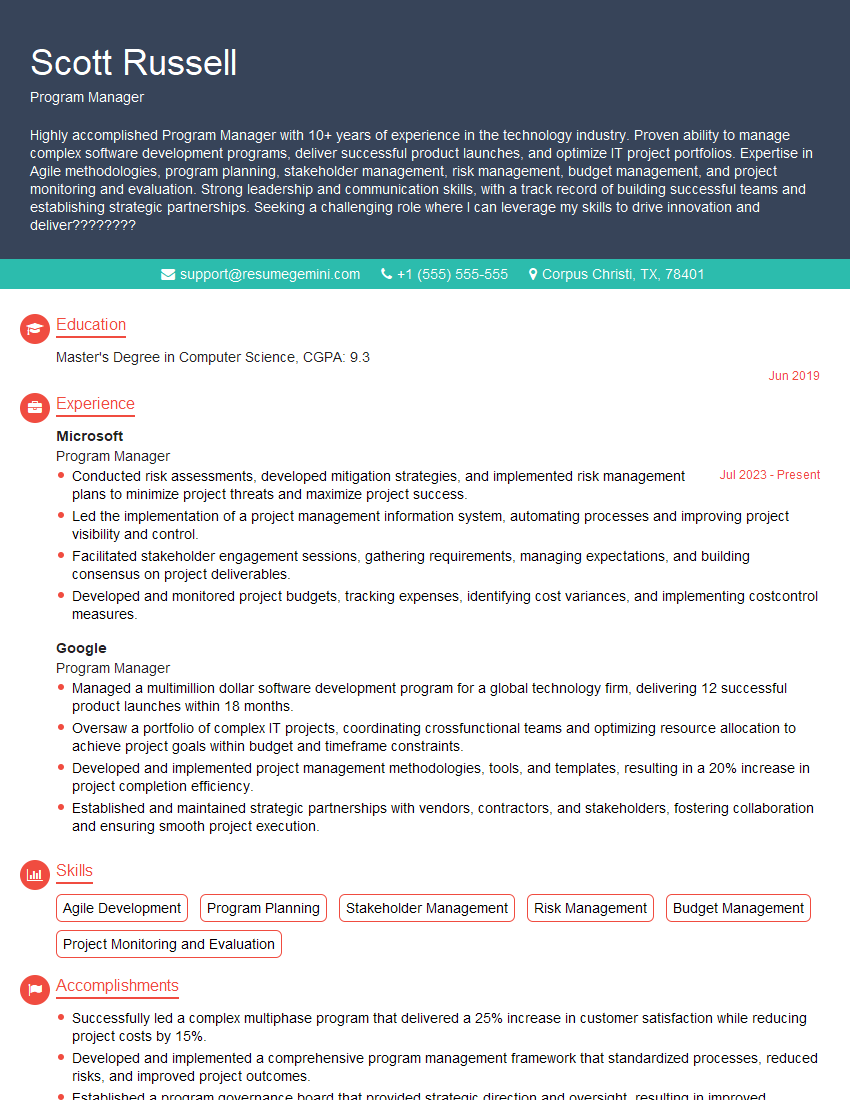
Program Manager Resume Sample
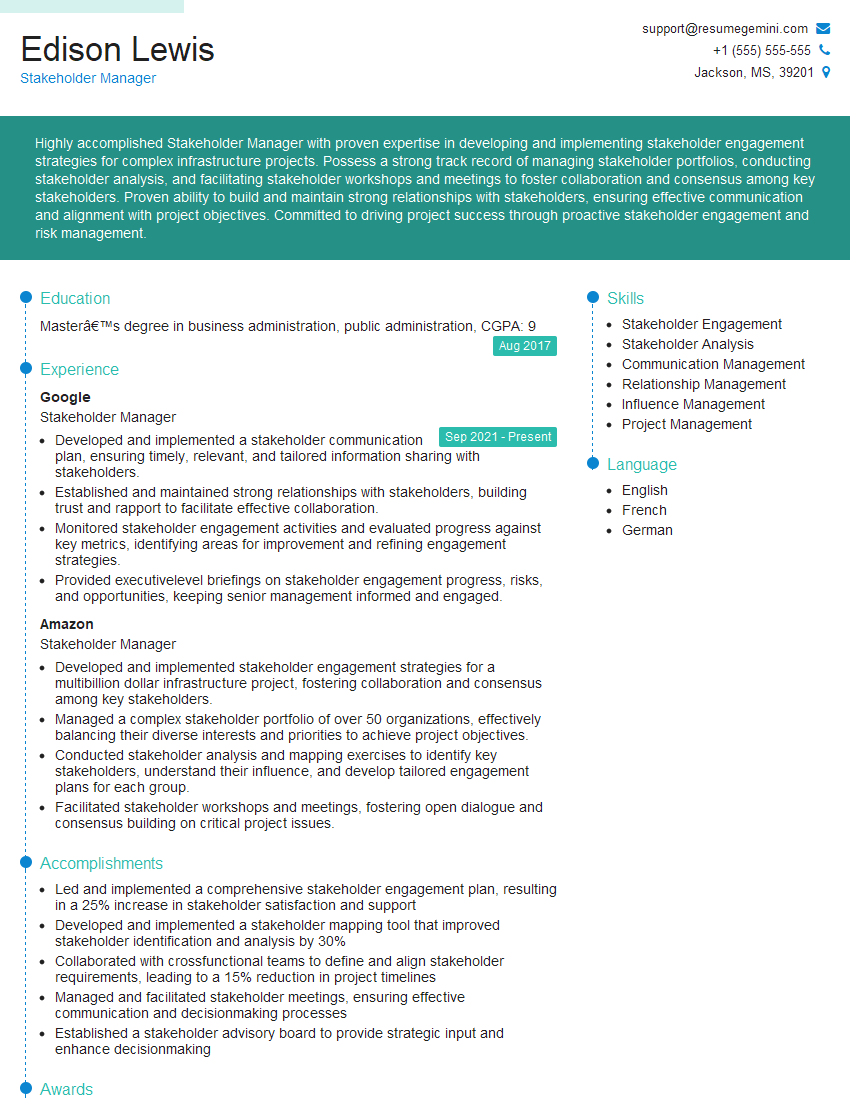
Stakeholder Manager Resume Sample
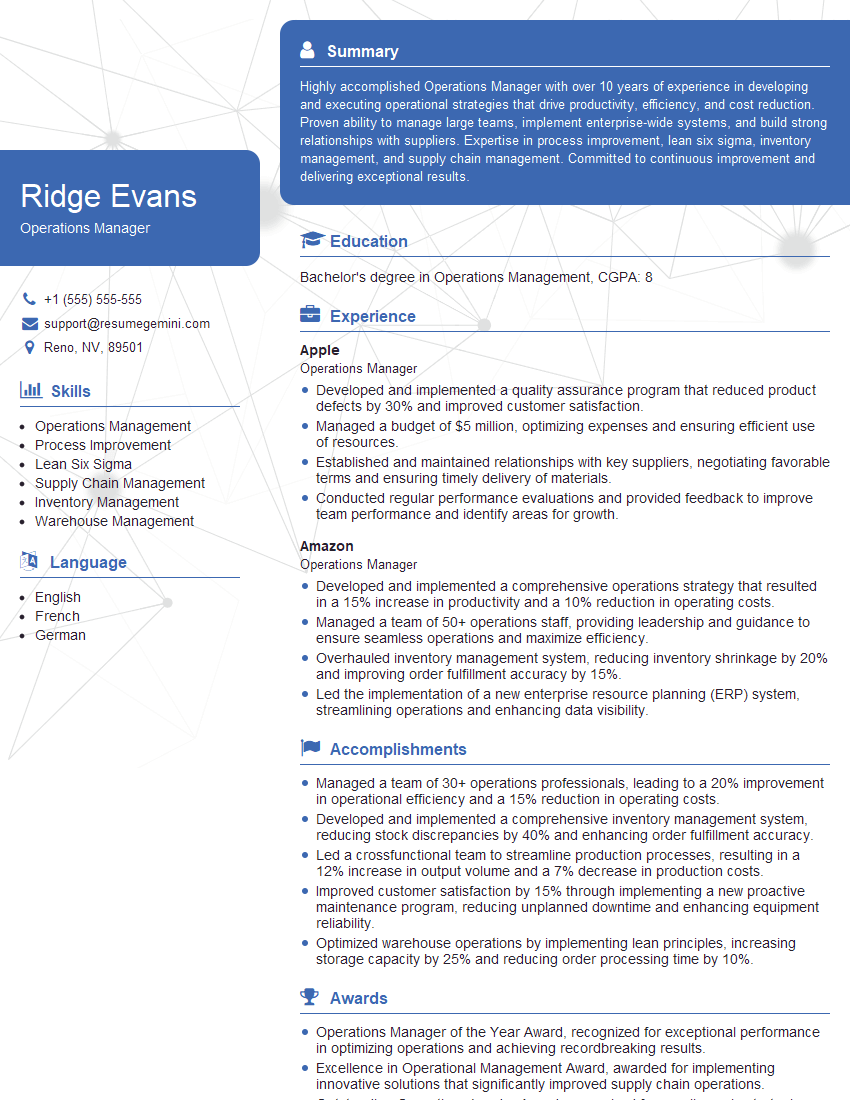
Operations Manager Resume Sample
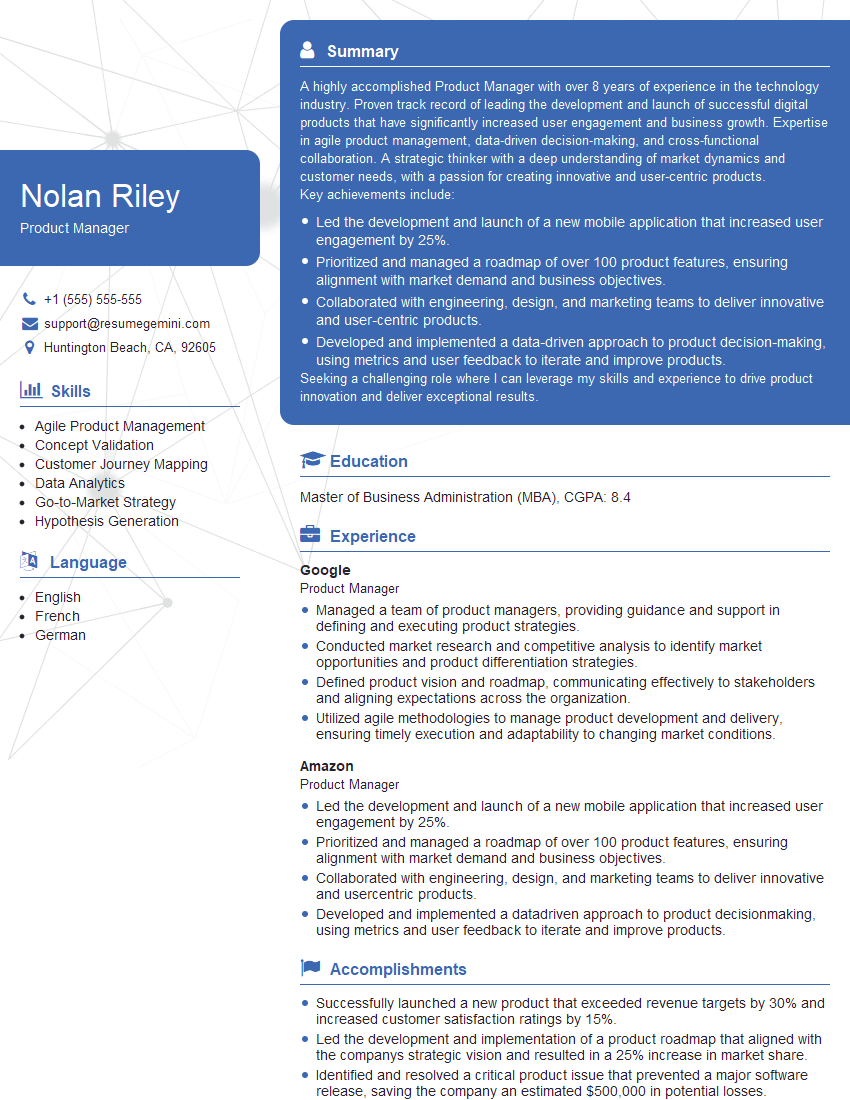
Product Manager Resume Sample
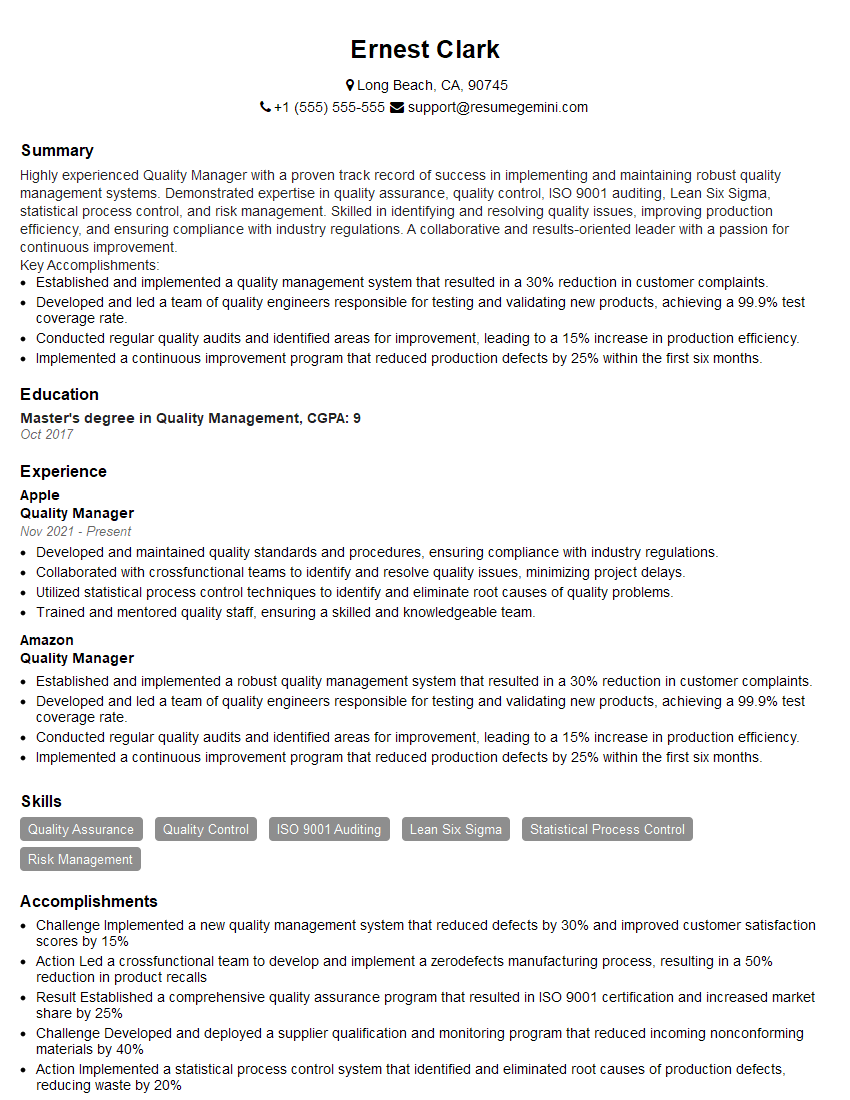
Quality Manager Resume Sample
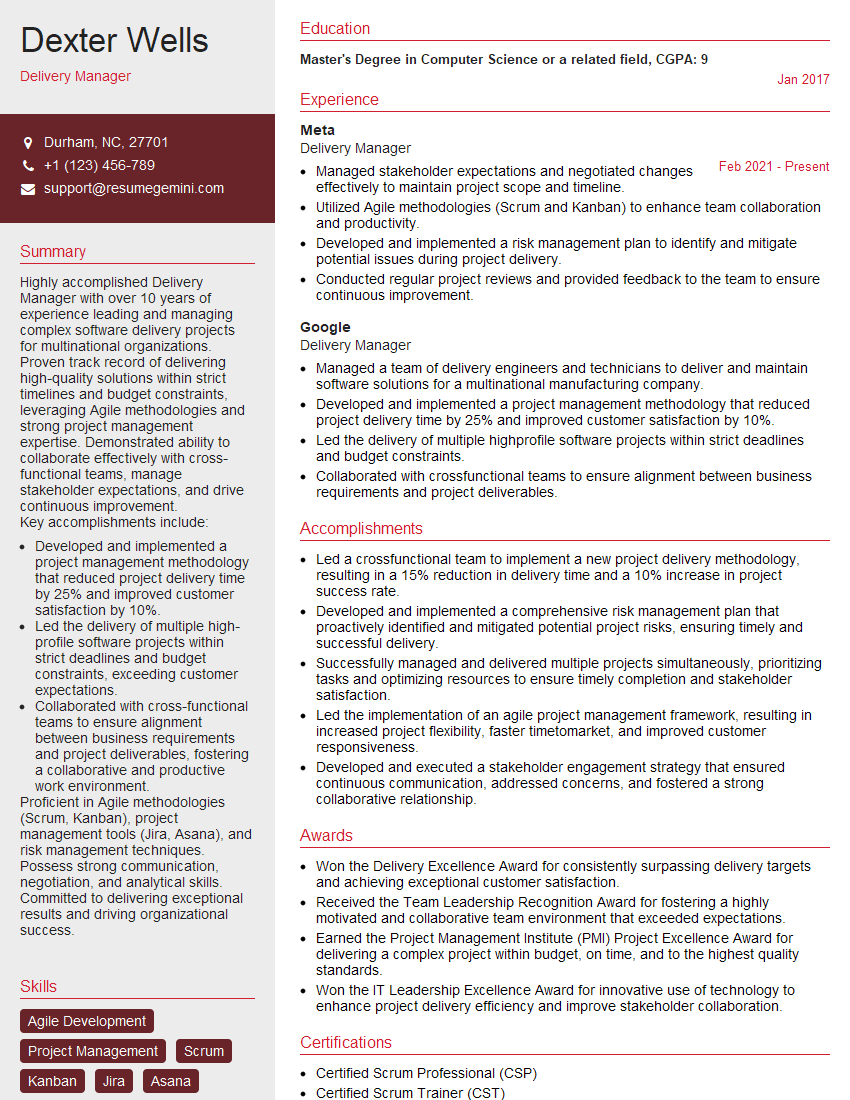
Delivery Manager Resume Sample
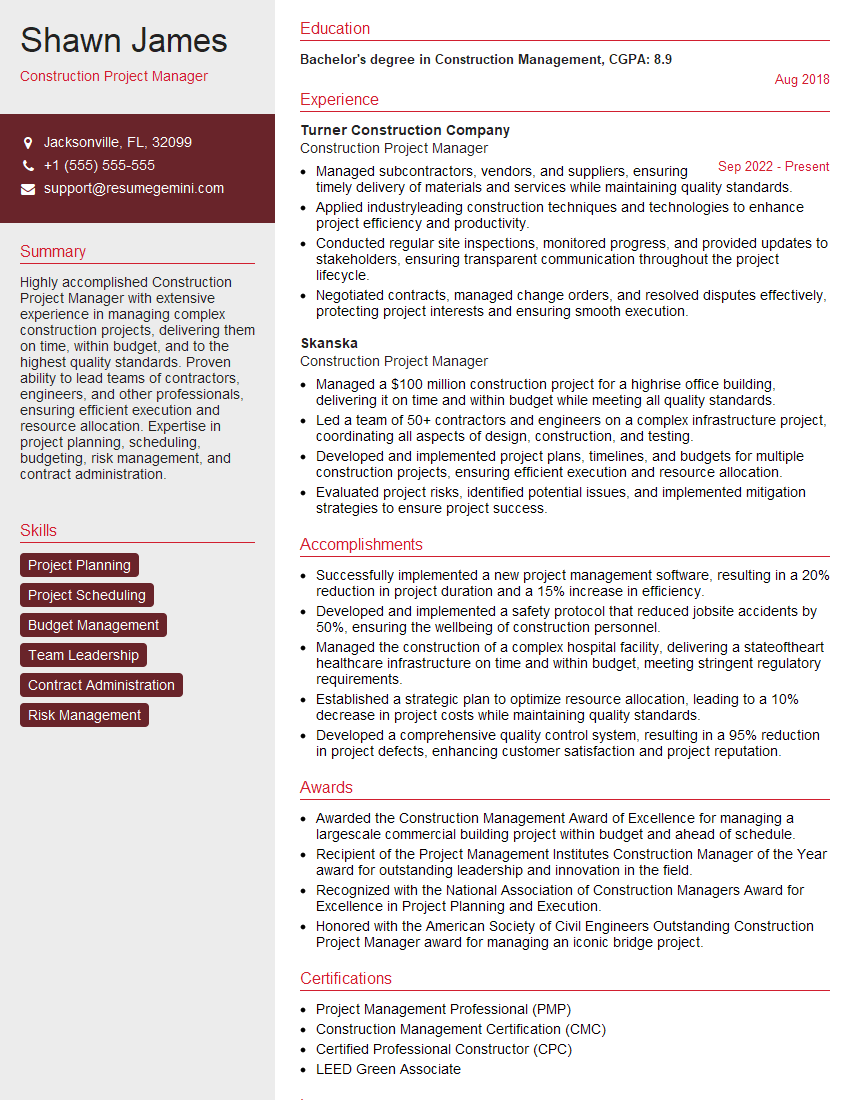
Construction Project Manager Resume Sample
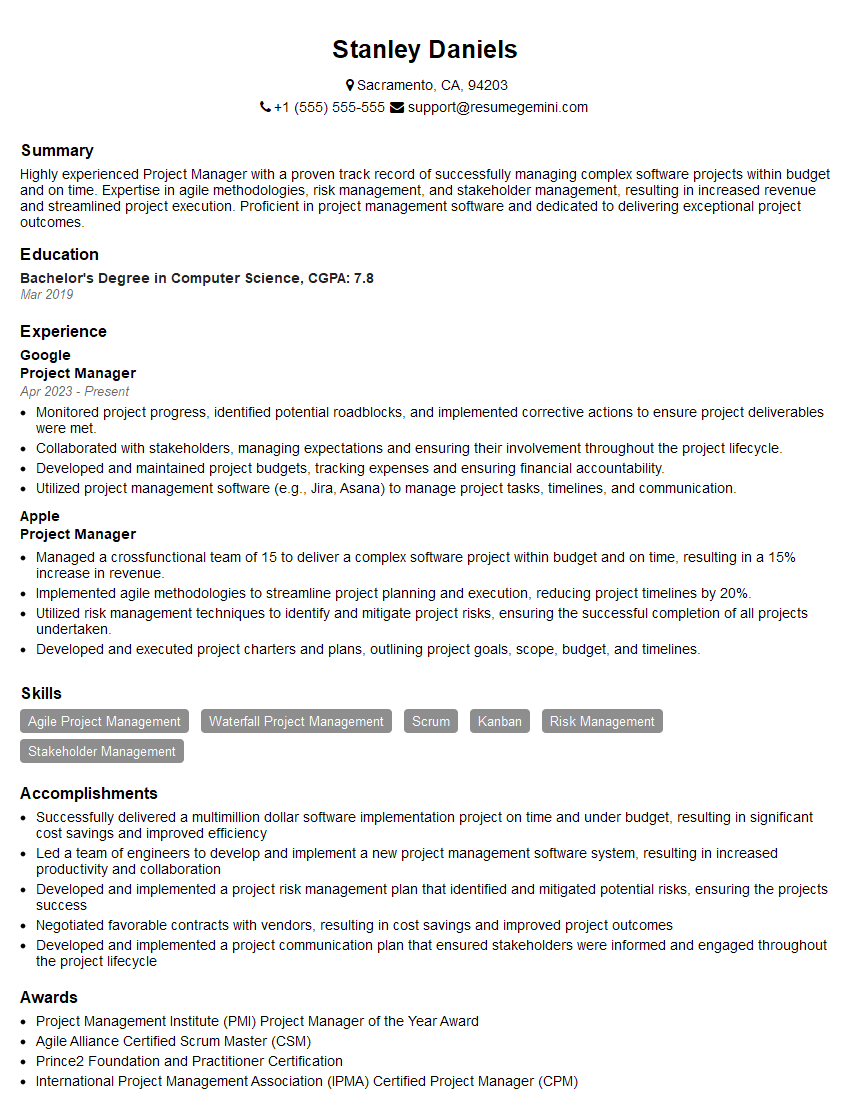
Project Manager Resume Sample
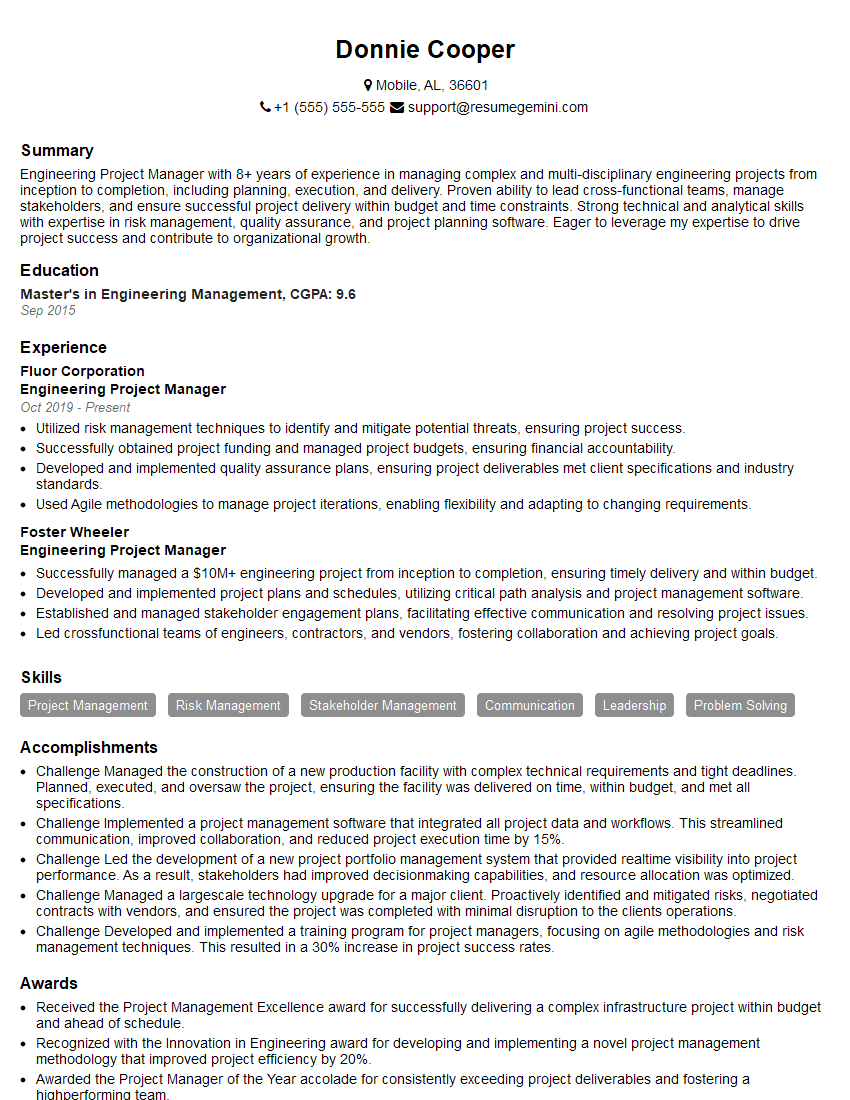
Engineering Project Manager Resume Sample
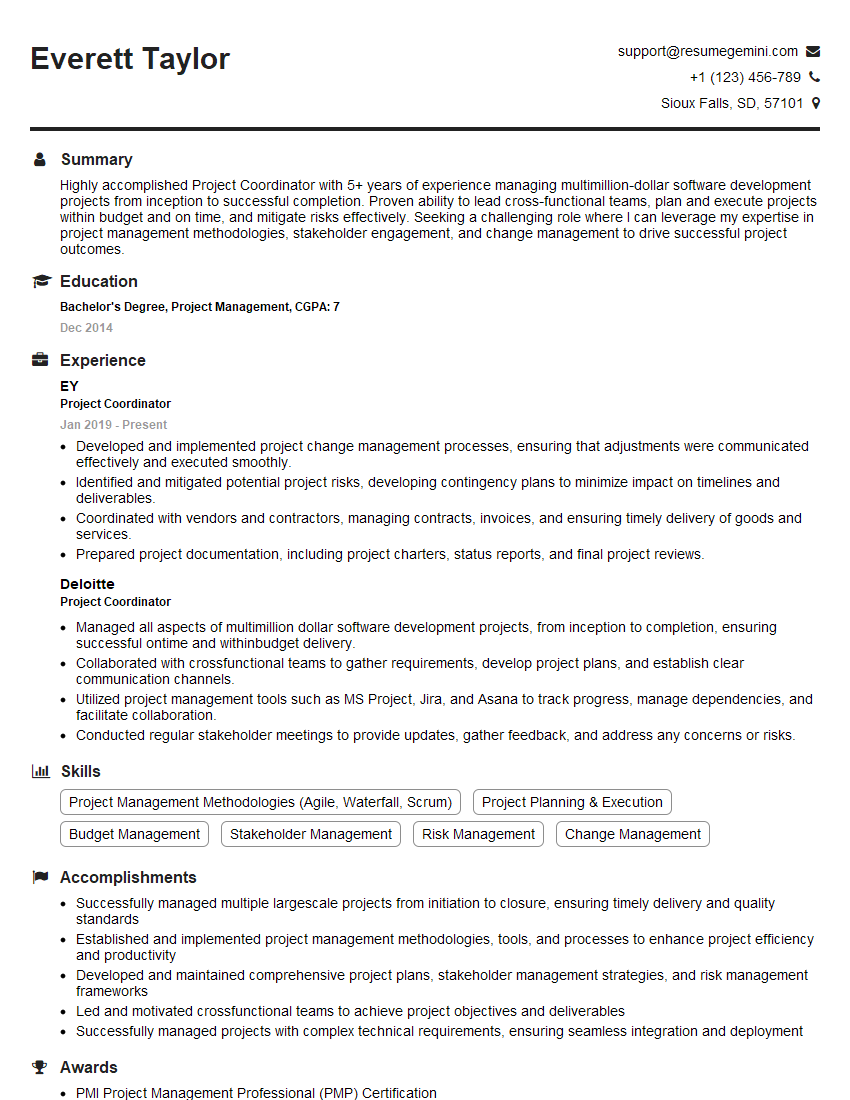
Project Coordinator Resume Sample
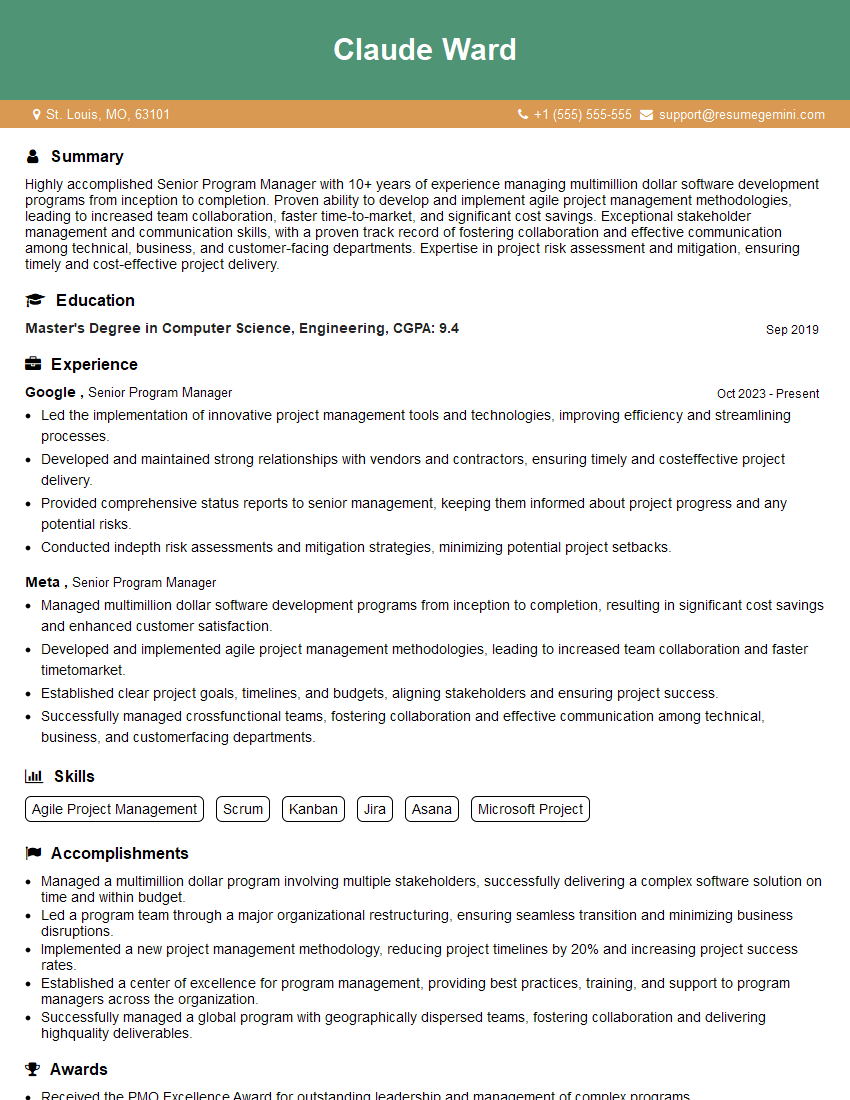
Senior Program Manager Resume Sample
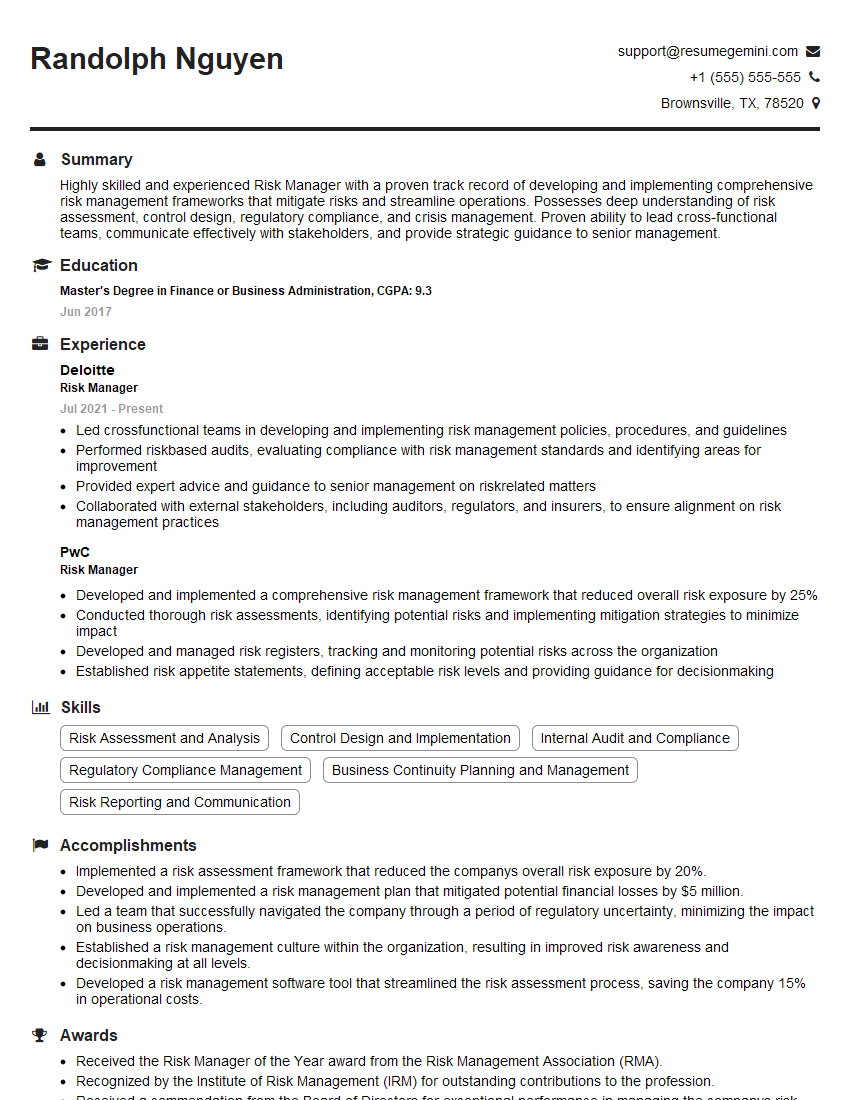
Risk Manager Resume Sample
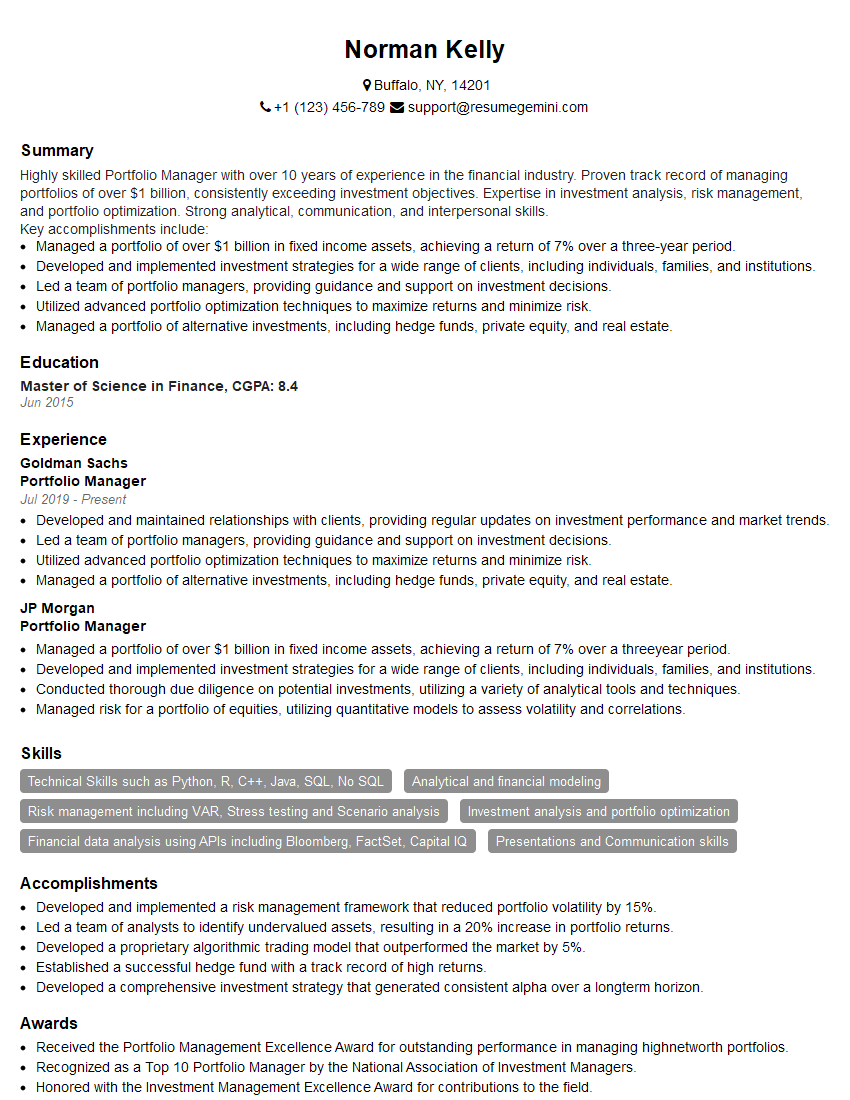
Portfolio Manager Resume Sample
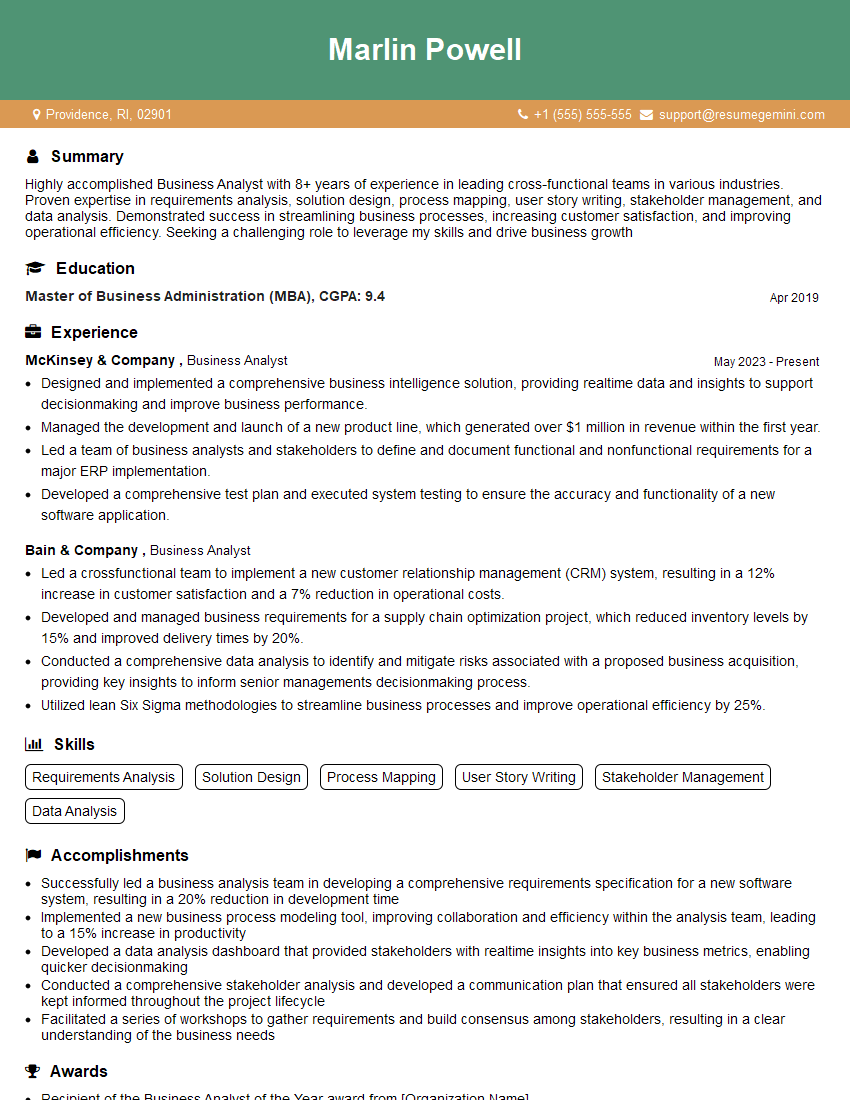
Business Analyst Resume Sample
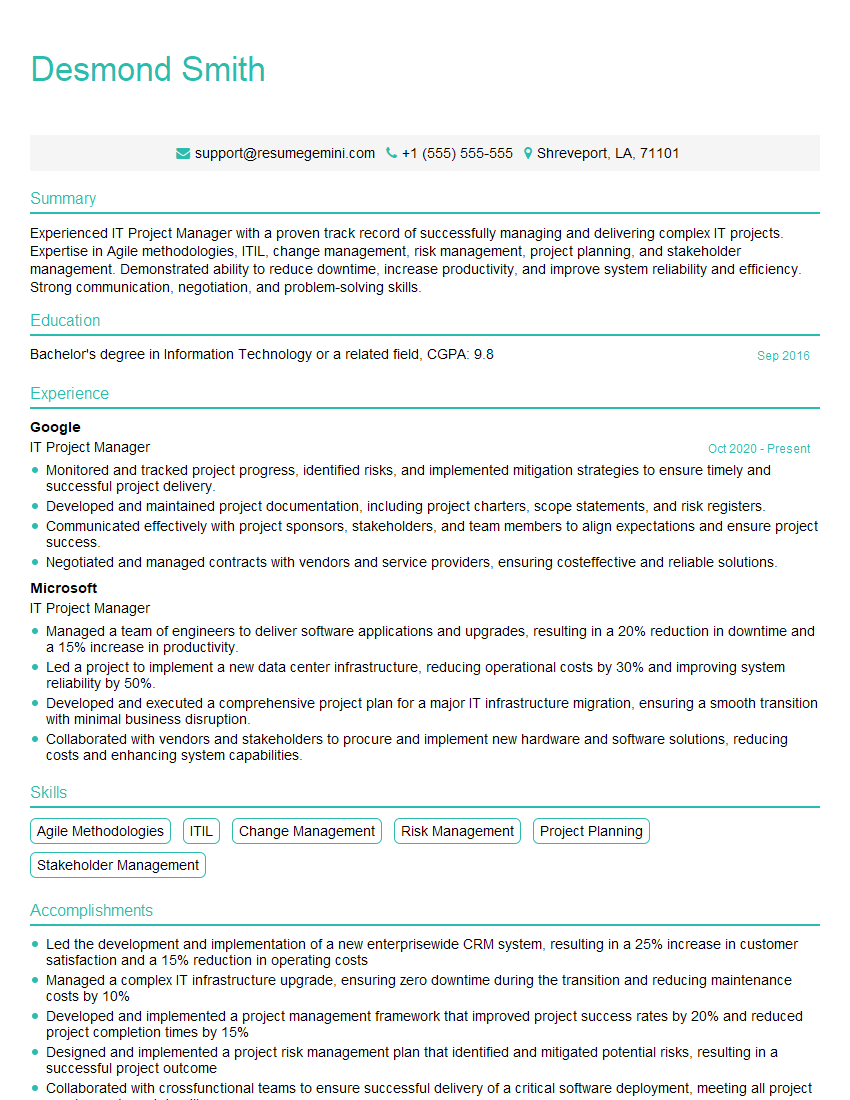
IT Project Manager Resume Sample
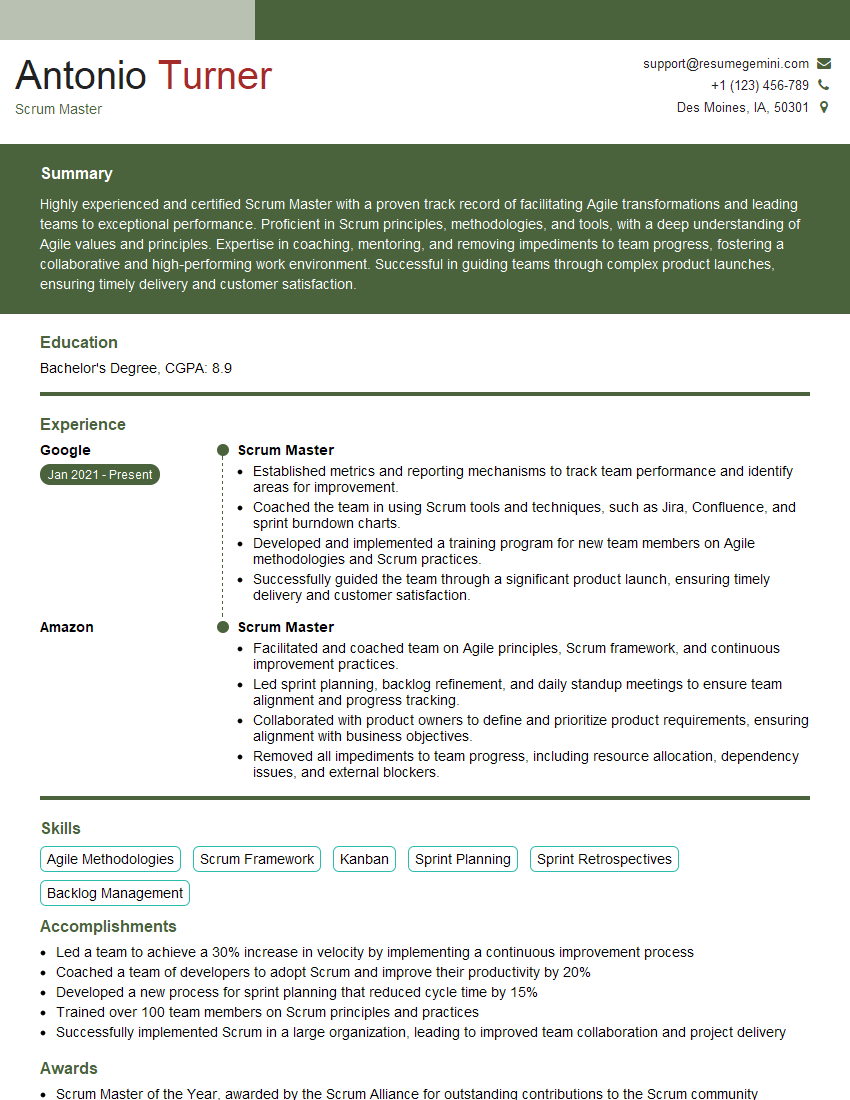
Scrum Master Resume Sample
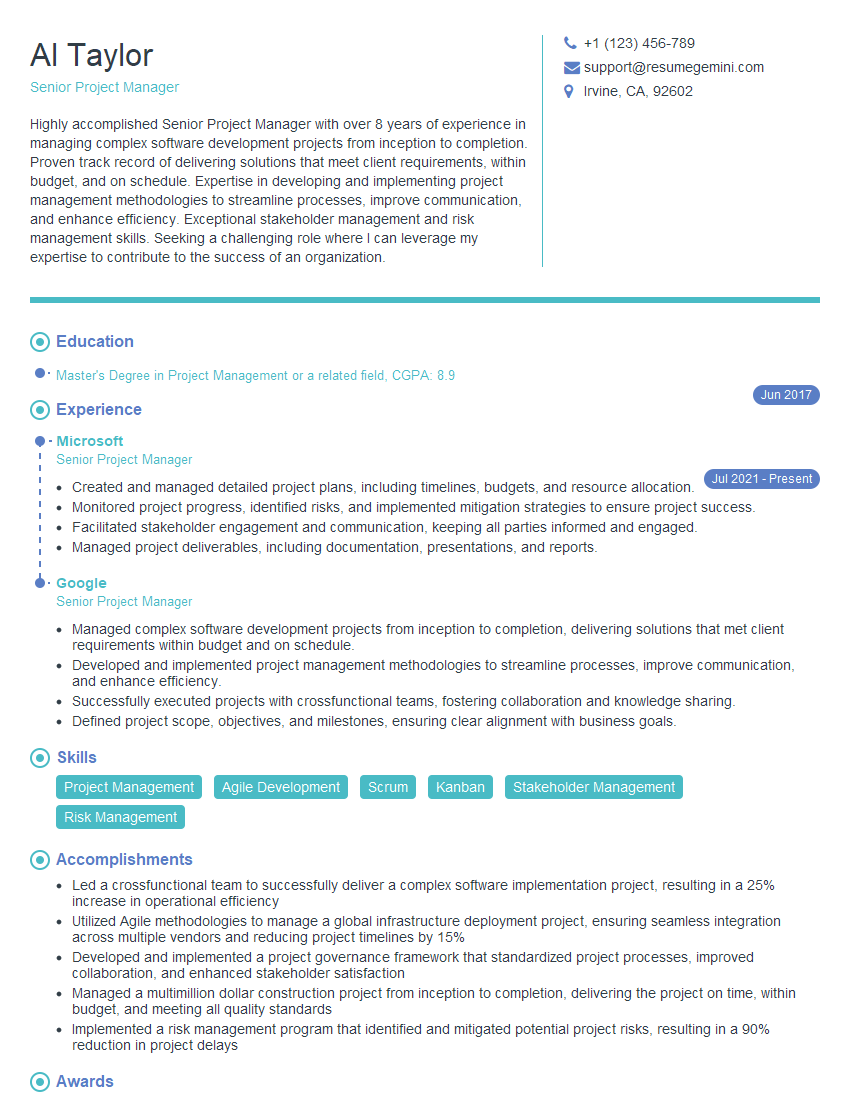
Senior Project Manager Resume Sample
- Program Manager
- Stakeholder Manager
- Operations Manager
- Product Manager
- Quality Manager
- Delivery Manager
- Construction Project Manager
- Project Manager
- Engineering Project Manager
- Project Coordinator
- Senior Program Manager
- Risk Manager
- Portfolio Manager
- Business Analyst
- IT Project Manager
- Scrum Master
- Senior Project Manager
Explore more articles
Users Rating of Our Blogs
Share Your Experience
We value your feedback! Please rate our content and share your thoughts (optional).
What Readers Say About Our Blog
Very informative content, great job.
good