Preparation is the key to success in any interview. In this post, we’ll explore crucial Reverse Engineering and Malware Analysis interview questions and equip you with strategies to craft impactful answers. Whether you’re a beginner or a pro, these tips will elevate your preparation.
Questions Asked in Reverse Engineering and Malware Analysis Interview
Q 1. Explain the difference between static and dynamic analysis in malware analysis.
Static and dynamic analysis are two fundamental approaches in malware analysis, offering complementary perspectives on malicious code. Think of it like examining a car: static analysis is like meticulously studying the car’s blueprints and parts list before it even runs, while dynamic analysis is like driving the car and observing its behavior on the road.
Static Analysis: This involves examining the malware without executing it. Techniques include inspecting the file’s headers, strings, imports, and using disassemblers to analyze the code’s instructions. It’s a safer approach because you avoid the risks of infection. For instance, we can identify suspicious API calls like CreateRemoteThread (used for injection) or strings indicating malicious activity even before running the file.
Dynamic Analysis: This involves executing the malware in a controlled environment (like a sandbox) and observing its behavior. This reveals how the malware interacts with the system, its network activity, file system modifications, and registry changes. Tools like debuggers (like WinDbg or x64dbg) allow us to step through the code instruction by instruction, monitoring registers, memory, and system calls. We might discover, for instance, that the malware is making connections to a known command-and-control (C&C) server or encrypting files on the disk.
Both methods are crucial; static analysis helps identify potential threats and provides a high-level understanding, while dynamic analysis reveals the actual behavior and impact of the malware.
Q 2. Describe your experience with disassemblers like IDA Pro or Ghidra.
I have extensive experience with both IDA Pro and Ghidra, two industry-leading disassemblers. IDA Pro is known for its powerful features and user-friendly interface, though it comes with a hefty price tag. Ghidra, a free and open-source alternative developed by the NSA, offers a comparable feature set and is rapidly gaining popularity.
My expertise encompasses using these tools to disassemble various types of malware, ranging from simple packers to sophisticated rootkits. I’m proficient in navigating the disassembled code, identifying function calls, analyzing control flow, and reconstructing the malware’s logic. For example, I’ve used IDA Pro to reverse engineer a piece of ransomware, identifying its encryption algorithm and the location where encrypted files are stored. This allowed me to create a decryption tool. In Ghidra, I frequently leverage its scripting capabilities (using Python) to automate repetitive tasks such as identifying specific API calls or generating reports.
Beyond basic disassembly, I utilize advanced techniques like function signature analysis, code emulation, and data flow analysis to uncover hidden functionalities and obfuscation techniques within the malware.
Q 3. How would you identify and analyze a polymorphic virus?
A polymorphic virus changes its code with each infection, making static signature-based detection difficult. Imagine a chameleon changing its skin color; each time it’s different, yet it’s still the same creature. To analyze a polymorphic virus, a multi-pronged approach is needed:
- Dynamic Analysis: Executing the virus in a sandbox and monitoring its behavior is crucial. The observed behavior (network connections, file system actions, etc.) will remain relatively consistent despite code changes.
- Behavioral Analysis: Focus on identifying the virus’s actions rather than its specific code. This could involve monitoring system calls, registry modifications, or network traffic.
- Code Emulation: Tools like dynamic binary instrumentation (DBI) can track the execution flow regardless of code changes. This allows for identifying common patterns and algorithms despite the polymorphic variations.
- Unpacking (if packed): Many polymorphic viruses use packers to further complicate analysis. Unpacking techniques (discussed later) are critical in accessing the original, less obfuscated code.
- Heuristic Analysis: Developing heuristics based on common characteristics of polymorphic viruses can help identify them even without precise code matching.
The key is to focus on the virus’s function rather than its form. By analyzing its actions and using techniques that bypass superficial code changes, we can understand its underlying behavior and create effective countermeasures.
Q 4. What are the common techniques used to obfuscate malware?
Malware authors employ various techniques to make their creations harder to analyze. These obfuscation methods act as camouflage, making the malicious code more difficult to understand.
- Packers: Compress and encrypt the malware, making it difficult to directly inspect the code. Think of it like putting the malware inside a heavily locked box.
- Code Encryption/Obfuscation: Encrypting parts of the code or using code transformations to make it harder to follow the execution flow. This is like writing a secret code using substitutions and re-arrangements.
- Anti-Debugging Techniques: Employing tricks to detect if a debugger is attached, making analysis much harder. This is like setting up a tripwire that alerts the malware if someone is trying to examine it.
- Polymorphism: Changing the code’s structure in every infection. (As previously described).
- Metadata Removal: Stripping out identifying information from the file headers, making it harder to trace the origin of the malware. This is like erasing the metadata on a photograph.
- Control Flow Obfuscation: Using complex and confusing jumps and loops to make it difficult to follow the program’s execution path. This is like creating a maze to mislead the analyst.
These methods are often combined to create layered defenses against analysis, making reverse engineering a challenging but rewarding process.
Q 5. Explain the process of unpacking a packed executable.
Unpacking a packed executable is like peeling back the layers of an onion to get to the core. It’s a critical step in malware analysis, as many malicious programs rely on packers to conceal their true nature.
The process often involves:
- Identifying the Packer: First, you need to determine the type of packer used. Tools like PEiD can help identify common packers based on their signatures.
- Static Analysis: Examining the packed file for clues about the unpacking process. This might involve looking for strings, imported functions, or unusual structures.
- Dynamic Analysis: Using a debugger to step through the execution of the packed file and observe the unpacking process. This allows you to see when and how the original code is loaded into memory.
- Memory Dumping: Once the original code is loaded, a memory dump can capture it. This dump can then be analyzed separately using disassemblers.
- Automated Unpackers: Tools like UPX are designed to unpack specific types of packed executables.
Successfully unpacking a file can be challenging, requiring a deep understanding of assembly language, operating system internals, and common packing techniques. The process is often iterative, involving trial and error, and a good understanding of the packer’s functionality is often needed.
Q 6. How do you handle anti-debugging techniques?
Anti-debugging techniques are like security measures built into the malware to prevent analysis. They’re designed to detect when a debugger is attached and respond accordingly, often by terminating the process or modifying its behavior.
To handle these techniques, I employ several strategies:
- Hardware Breakpoints vs Software Breakpoints: Malware frequently detects software breakpoints. Using hardware breakpoints can often bypass these checks.
- Code Emulation: Techniques like dynamic binary instrumentation can help avoid triggering anti-debugging mechanisms.
- Debugger Detachment Detection Avoidance: Understanding how anti-debugging mechanisms work is critical for disabling them.
- Patching: In a controlled environment, carefully patching suspicious anti-debugging instructions can disable them, but this needs to be done cautiously to avoid altering the malware’s behavior unintentionally.
- Run in a Virtual Machine: The Virtual Machine can be configured to effectively hide it’s debugger from the malware’s anti-debugging routines.
The best approach often involves a combination of techniques, carefully navigating the malware’s defenses while preserving its integrity for further analysis. It’s a cat-and-mouse game, and staying updated on the latest anti-debugging methods is essential.
Q 7. Describe your experience with debugging tools such as WinDbg or x64dbg.
I’m proficient in using both WinDbg (primarily for kernel-level debugging) and x64dbg (a user-mode debugger), and I have experience using them in tandem to analyze a wide range of malware. WinDbg’s power lies in its extensive debugging capabilities, especially with kernel-mode malware, allowing me to analyze processes operating at a lower level, while x64dbg provides a more user-friendly interface and excellent plugin support for analyzing user-mode malware.
My experience includes:
- Setting breakpoints: Strategically placing breakpoints at crucial points in the malware’s execution to observe variables, registers, and memory changes.
- Stepping through code: Using single-step execution to meticulously trace the flow of execution and identify suspicious behaviors.
- Memory inspection: Examining the malware’s memory space to analyze data structures, strings, and allocated resources.
- Register analysis: Monitoring register values to understand the program’s state and the computations performed.
- Plugin utilization: Leveraging plugin functionalities in x64dbg, such as those for code analysis, to speed up the process of understanding and reverse-engineering the malware.
Using these debuggers, I can gain a deep understanding of the malware’s dynamic behavior, helping me uncover hidden functionalities, identify malicious actions, and ultimately contribute to the development of countermeasures.
Q 8. How would you analyze a malicious network connection?
Analyzing a malicious network connection involves a multi-step process that combines network monitoring, packet capture, and traffic analysis. Think of it like investigating a crime scene – you need to carefully examine all the evidence to understand what happened.
First, I’d use tools like Wireshark or tcpdump to capture network traffic. This gives me a detailed record of all communication. Then, I’d filter this data to focus on suspicious activity, such as connections to known malicious IP addresses or unusual port usage. For instance, a connection to a known command-and-control server on a non-standard port is a red flag.
Next, I’d examine the content of the packets. I’d look for encoded or encrypted data, which might indicate malicious payloads. I’d also analyze the protocols used to see if they are being misused. For example, a legitimate protocol like DNS might be used to exfiltrate data through a technique known as DNS tunneling.
Finally, I’d correlate the network traffic with other information, such as system logs and process activity, to build a complete picture of the attack. This helps determine the extent of the compromise and the attacker’s goals. For example, if I see a spike in network traffic to a foreign server coinciding with an unusual process running on the victim machine, it points towards data exfiltration.
Q 9. What are the common indicators of compromise (IOCs) you look for?
Indicators of Compromise (IOCs) are clues that suggest a system has been compromised. They’re like breadcrumbs left by the attacker. Common IOCs include:
- Suspicious network connections: Connections to known malicious IP addresses, domains, or unusual ports, as described in the previous answer.
- Unfamiliar processes: Unexpected processes running on the system, especially those with unusual names or locations.
- Modified system files: Changes to critical system files, such as registry keys or executable files. I’d use tools like a hash checker to compare against known good versions.
- Registry key modifications: Changes to registry keys, particularly those related to startup programs or network settings.
- Malicious files: Files with known malicious signatures or unusual behavior.
- Data exfiltration: Unusual data transfers to external servers or email addresses. This could involve large amounts of data being transferred at unusual times.
- Unusual login activity: Login attempts from unfamiliar IP addresses or times, or failed login attempts.
Finding these IOCs requires a combination of automated tools and manual analysis. I use sandboxing techniques to observe the malware’s behavior in a controlled environment, complementing the static analysis of the sample itself. This allows for a holistic approach to identifying the indicators.
Q 10. Explain your understanding of different types of malware (e.g., viruses, worms, Trojans).
Malware comes in many forms, each with its own characteristics. Think of them as different types of weapons, all designed to cause harm, but in different ways:
- Viruses: Viruses attach themselves to other programs or files and replicate when the host program runs. They’re like parasitic organisms, spreading from one system to another.
- Worms: Worms are self-replicating programs that spread across networks without needing a host program. Unlike viruses, they spread independently, replicating themselves and often consuming bandwidth.
- Trojans: Trojans disguise themselves as legitimate software, but secretly perform malicious actions. They’re like a Trojan horse, appearing harmless but containing hidden dangers. They might steal data, give attackers remote access, or perform other malicious functions.
- Ransomware: Ransomware encrypts the victim’s files and demands a ransom for decryption. This is a particularly harmful type that has become extremely prevalent.
- Rootkits: Rootkits hide their presence on a system, making them difficult to detect. They provide persistent access for attackers.
Understanding these differences is crucial for effective malware analysis. Different malware types require different analysis techniques. For example, the analysis of a network worm would significantly focus on network traffic and propagation vectors, while the analysis of ransomware would emphasize decryption techniques and the identification of the encryption key.
Q 11. How do you determine the origin and purpose of a malicious sample?
Determining the origin and purpose of a malicious sample is like solving a mystery. You need to piece together clues to understand the attacker’s motives and methods. I use a combination of static and dynamic analysis techniques.
Static analysis involves examining the malware without actually running it. This includes analyzing the file’s metadata (like creation date, author, etc.), strings within the code, and its overall structure. Tools like IDA Pro and Ghidra are essential for this. For example, I might find strings referring to specific command-and-control servers, revealing the malware’s communication channels.
Dynamic analysis involves running the malware in a controlled environment (like a sandbox) to observe its behavior. I watch for network connections, file modifications, and registry changes. Analyzing the network traffic allows me to identify communication with C&C servers or data exfiltration targets. Sandboxes like Cuckoo Sandbox provide automated analysis and reporting, generating valuable information.
By combining these techniques and correlating the evidence, I can often trace the malware back to its source (e.g., a specific hacking group or nation-state actor) and understand its purpose (e.g., data theft, espionage, or sabotage). The digital fingerprints within the code, such as coding style and used libraries, can provide hints about the author’s skills and background.
Q 12. Describe your experience with scripting languages (e.g., Python) in malware analysis.
Scripting languages like Python are indispensable in malware analysis. They automate repetitive tasks, enhance efficiency, and allow for rapid prototyping of analysis tools. Think of them as the toolbox for an efficient analyst.
I use Python to:
- Automate file processing: I can write scripts to extract metadata, analyze strings, and parse PE headers quickly. For example, I can write a script that automatically extracts all URLs from a malware sample to identify potential C&C servers.
- Analyze network traffic: I can use libraries like
scapyto parse and manipulate network packets. This allows me to efficiently filter and analyze PCAP files, identifying patterns that indicate malicious activity. - Create custom analysis tools: Python allows me to create specialized tools tailored to specific malware families or analysis needs. This can include tools for unpacking malware, analyzing obfuscation techniques, or generating reports.
- Integrate with other tools: I can easily integrate Python scripts with other malware analysis tools, creating more powerful workflows. This can help in automating tasks between different tools in the analysis pipeline.
For example, a Python script using pystemwin could quickly enumerate running processes and network connections from a compromised system within a sandboxed environment. This script would automatically identify suspicious processes associated with the malware sample under analysis.
Q 13. What are the ethical considerations involved in reverse engineering and malware analysis?
Ethical considerations are paramount in reverse engineering and malware analysis. We’re dealing with potentially harmful software, and our actions have consequences. It’s crucial to adhere to strict ethical guidelines.
Key ethical considerations include:
- Legal compliance: We must operate within the bounds of the law. Analyzing malware on systems without proper authorization is illegal. We must only analyse malware obtained legally or with explicit consent.
- Privacy protection: We must respect the privacy of individuals and organizations. We should not use our skills to access or disclose personal information without consent or a legitimate legal reason.
- Responsible disclosure: If we discover vulnerabilities, we should responsibly disclose them to the affected vendors, allowing them to patch the vulnerabilities before they are exploited.
- Avoiding misuse of skills: Our skills can be misused for malicious purposes. We must ensure our work is used for ethical and beneficial purposes, such as protecting individuals and organizations from cyber threats.
It’s essential to work within a clear ethical framework, and to always consider the potential impact of our actions. Similar to a surgeon, we have a responsibility not just to possess the skills, but also to act with responsibility and integrity.
Q 14. How do you document your findings from a malware analysis?
Documenting malware analysis findings is crucial for reproducibility and sharing knowledge. Think of it as writing a scientific report, providing evidence to support your conclusions.
My documentation usually includes:
- Sample metadata: Hash values (MD5, SHA1, SHA256), file size, timestamps, and other relevant metadata.
- Analysis methodology: A detailed description of the techniques used in both static and dynamic analysis. This ensures reproducibility of the analysis.
- Behavioral analysis: A description of the malware’s behavior, including network connections, file modifications, registry changes, and other observed actions. Screenshots, logs, and network captures can be included.
- Code analysis: Detailed analysis of relevant code sections, including function descriptions, pseudocode, and identified malicious code segments. IDA Pro reports and disassembly code are usually part of the documentation.
- IOCs: A list of identified indicators of compromise (IOCs), such as malicious URLs, IP addresses, and file hashes.
- Attribution (if possible): Information about the malware’s origin, including possible attribution to specific threat actors or groups, supported by evidence.
- Conclusions: Summary of findings, including the malware’s purpose and capabilities.
I use structured reporting formats to ensure clarity and consistency. These reports can then be shared with colleagues, clients, or law enforcement agencies, contributing to the collective knowledge of the cyber threat landscape. I also regularly utilize wikis or internal databases to maintain an organized repository of analysis results for future reference.
Q 15. Explain your experience with various memory analysis techniques.
Memory analysis is crucial in malware analysis, allowing us to understand a malware’s behavior in its runtime environment. Techniques range from simple to advanced. At a basic level, we might use tools to inspect the process’s memory space to identify loaded modules, allocated memory regions, and strings. This can reveal clues about the malware’s functionality. More advanced techniques involve analyzing the stack and heap to trace function calls, identify data structures, and understand the malware’s control flow. Volatility is often employed for analyzing memory dumps, allowing us to reconstruct a snapshot of the system’s state at a specific point in time. For example, we can use volatility to extract running processes, network connections, and loaded DLLs from a memory dump, providing valuable insights into the malware’s activity. Furthermore, we might employ techniques such as memory forensics to recover deleted files or reconstruct file system activity from memory, providing a much deeper understanding of what the malware has done on the system. This is particularly valuable when dealing with advanced malware that employs techniques to erase its traces.
Career Expert Tips:
- Ace those interviews! Prepare effectively by reviewing the Top 50 Most Common Interview Questions on ResumeGemini.
- Navigate your job search with confidence! Explore a wide range of Career Tips on ResumeGemini. Learn about common challenges and recommendations to overcome them.
- Craft the perfect resume! Master the Art of Resume Writing with ResumeGemini’s guide. Showcase your unique qualifications and achievements effectively.
- Don’t miss out on holiday savings! Build your dream resume with ResumeGemini’s ATS optimized templates.
Q 16. What are your preferred tools for analyzing memory dumps?
My preferred tools for memory dump analysis depend on the context and the specifics of the investigation, but some of my go-to tools include Volatility, Rekall, and WinDbg. Volatility is exceptionally versatile and offers a wide array of plugins for various analyses. Rekall provides a similar functionality with a slightly different approach, often offering better performance on very large memory dumps. WinDbg, a powerful debugger, allows for very in-depth analysis, especially when combined with extensions like the !analyze extension. The choice ultimately depends on the specifics of the malware and the information I’m seeking to extract. For instance, if I need to quickly identify running processes and network connections, Volatility’s `pslist` and `netconn` plugins would be my first choice. If I need a deeper, more detailed view of the malware’s code execution, I’d likely turn to WinDbg for dynamic analysis and debugging.
Q 17. How would you analyze a malicious script (e.g., PowerShell, JavaScript)?
Analyzing malicious scripts like PowerShell or JavaScript involves a multi-step process. I start with static analysis, examining the script’s code without executing it. This involves using tools like a text editor with syntax highlighting to understand the script’s structure and identify potentially malicious commands or functions. For PowerShell, I’d be looking for suspicious commands like Invoke-WebRequest, IEX, or commands to interact with the registry or file system. In JavaScript, I’d look for calls to external websites or the use of functions that can execute arbitrary code. Then, I move to dynamic analysis, executing the script in a controlled environment like a sandbox (like Cuckoo Sandbox or Hybrid Analysis). This allows me to observe the script’s runtime behavior, network activity, and system interactions in a safe environment. I would use network monitoring tools such as Wireshark to capture the network traffic generated by the script. I also monitor the system’s file system for any changes or created files. Finally, using deobfuscation techniques if necessary, I’d attempt to decipher any obfuscation present, including encoding and encryption, to get to the core functionality of the script. For example, I might use a PowerShell deobfuscator to decode encoded commands or use a JavaScript beautifier to improve code readability.
Q 18. Describe your approach to analyzing a rootkit.
Analyzing a rootkit requires a systematic and methodical approach. Rootkits are designed to hide their presence, so typical techniques won’t always work. First, I begin with identifying signs of infection, looking for unusual system behavior or unexpected processes. Tools such as Process Explorer, Autoruns, and RootkitRevealer can be helpful here. Next, I delve into system-level analysis to determine if any crucial system files have been modified or replaced. I’d thoroughly investigate the boot process, examining the Master Boot Record (MBR) and boot sector for alterations. Then, I would analyze the device drivers, focusing on those that have been loaded, paying close attention to any undocumented or unusual drivers. Memory analysis also plays a vital role. Examining the memory dump helps uncover hidden processes and rootkit components residing in memory. Finally, and most importantly, I’d utilize a clean, virtualized environment that minimizes the risk of contamination during analysis. In essence, it’s a process of carefully peeling back layers of concealment and reconstructing the rootkit’s actions and mechanisms.
Q 19. What are some common techniques used to evade sandboxing?
Malware authors employ numerous techniques to evade sandboxes. One common tactic is to check for the presence of common sandbox characteristics, such as specific hardware or software configurations that are often present in sandboxed environments, like the presence of debugging tools or virtual machine indicators. The malware might detect if it’s running in a virtual machine by checking for virtual machine specific hardware identifiers or examining the CPU’s flags. Another technique is to use time-based triggers – the malware only executes malicious actions after a certain amount of time has passed, waiting to evade detection by the sandbox’s limited timeframe. Furthermore, they can employ API hooking to monitor for the calls to the APIs the sandbox uses for logging or monitoring. By detecting these, the malware can disable or modify its behavior accordingly. Finally, polymorphic or metamorphic malware changes its code frequently to avoid signature-based detection methods.
Q 20. How do you prioritize tasks during a malware analysis investigation?
Prioritizing tasks during malware analysis requires a structured approach. My initial focus is on containment and preventing further damage. This might involve isolating the infected system or removing network access. Next, I identify the malware’s immediate threat level, prioritizing analysis based on the malware’s capabilities. For instance, a ransomware sample demanding a ransom should be addressed before a less critical piece of malware that’s merely collecting information. Following this, I gather the necessary information through initial static and dynamic analysis – determining the malware’s behavior, its spread mechanisms and its primary objectives. This allows for a focused, efficient analysis that mitigates risks and provides actionable results. It’s a balance of speed and accuracy; ensuring effective analysis while minimizing the time taken.
Q 21. How do you handle false positives in your analysis?
Handling false positives is crucial. I start by critically evaluating the context in which the alert occurred. False positives often stem from heuristics, misconfigurations, or limitations of the detection tools. Consider a scenario where an antivirus flags a legitimate program as malware. I would investigate the file’s digital signature and reputation to determine if it is a known legitimate software. If the software is known and trustworthy, I would proceed by examining the specific behavior that triggered the false positive, studying the antivirus’s logs to understand why it flagged it, and searching online for evidence of other users experiencing similar issues. Cross-referencing with other security tools is a useful approach to validate whether multiple security systems are flagging it, bolstering its legitimacy or confirming a false positive. In the event of a genuine malware detection, then I’d proceed with the normal malware analysis.
Q 22. Explain your understanding of different encryption techniques.
Encryption techniques are methods used to transform readable data (plaintext) into an unreadable format (ciphertext) to protect it from unauthorized access. Different techniques offer varying levels of security and computational overhead.
- Symmetric Encryption: Uses the same key for both encryption and decryption. It’s fast but requires secure key exchange. Examples include AES (Advanced Encryption Standard) and DES (Data Encryption Standard). Think of it like a secret codebook – both sender and receiver have the same book to encode and decode the message.
- Asymmetric Encryption (Public Key Cryptography): Uses two keys: a public key for encryption and a private key for decryption. The public key can be distributed widely, making it ideal for secure communication over untrusted networks. RSA and ECC (Elliptic Curve Cryptography) are common examples. Imagine a mailbox with a slot (public key) where anyone can drop a letter (encrypted message), but only you have the key (private key) to open it and read it.
- Hashing: Creates a one-way function that generates a fixed-size fingerprint (hash) of the input data. It’s used for data integrity verification – even a small change to the data results in a completely different hash. SHA-256 and MD5 are popular hashing algorithms. Think of it like a unique digital signature for a file; any alteration is immediately detectable.
Understanding these differences is crucial in malware analysis. For example, identifying the encryption algorithm used by malware helps determine its capabilities and the level of effort needed for decryption.
Q 23. Describe your experience with code signing and certificate verification.
Code signing uses digital certificates to verify the authenticity and integrity of software. A trusted authority (like a Certificate Authority) issues certificates, essentially vouching for the software’s origin and ensuring it hasn’t been tampered with. Certificate verification involves checking if the certificate is valid, hasn’t been revoked, and is issued by a trusted authority. This is crucial for ensuring that the software you’re running actually came from the claimed developer and hasn’t been modified with malicious code.
In my experience, I’ve extensively used code signing verification tools and techniques during malware analysis. If a piece of software claims to be from a legitimate source but lacks a valid certificate or has a revoked certificate, it immediately raises a red flag, suggesting potential malicious activity. Conversely, verifying a valid code signature strengthens confidence in the software’s legitimacy. I’ve often used these techniques to differentiate between legitimate software and malware that attempts to masquerade as legitimate software.
Example: Verifying a certificate chain using OpenSSL.Q 24. What are some common techniques used to detect and prevent malware infections?
Detecting and preventing malware infections involves a multi-layered approach combining various techniques.
- Antivirus Software: Uses signature-based and heuristic detection to identify known and unknown malware. Signature-based detection relies on known malware patterns; heuristic detection analyzes suspicious behavior.
- Firewall: Controls network traffic, blocking unauthorized connections and preventing malware from entering the system from external sources.
- Intrusion Detection/Prevention Systems (IDS/IPS): Monitor network and system activity for malicious behavior. IDS detects attacks; IPS actively blocks them.
- Application Whitelisting: Only allows authorized applications to run, preventing unauthorized software execution.
- Regular Software Updates: Patches vulnerabilities that malware could exploit.
- User Education: Training users to identify phishing scams and avoid risky behaviors minimizes the chances of infection.
- Sandboxing: Running suspicious software in an isolated environment to observe its behavior without risking the main system.
A robust security posture relies on employing a combination of these techniques. A single layer of defense is rarely sufficient; a layered approach increases resilience against various malware threats.
Q 25. Describe your experience with analyzing Android or iOS malware.
My experience with Android and iOS malware analysis involves utilizing specialized tools and techniques tailored to each platform.
Android: I’ve used tools like APKTool to decompile APK (Android Package Kit) files, examining the source code for malicious activities. I’ve also leveraged emulators and debuggers to analyze malware behavior in a controlled environment. Static and dynamic analysis techniques were employed to uncover hidden functionalities and understand the infection mechanisms. Analyzing the permissions requested by the APK is also a crucial first step in identifying potential threats.
iOS: iOS malware analysis is more challenging due to Apple’s security measures. I’ve worked with tools like Hopper Disassembler and LLDB to analyze disassembled code from IPA (iOS App Store Package) files. Analyzing the entitlements and code signing certificates is crucial. Emulators for iOS are often necessary for dynamic analysis, although they can be more complex to set up than Android emulators.
In both cases, understanding the operating system’s architecture, APIs, and security mechanisms is paramount to effective malware analysis.
Q 26. How do you stay up-to-date on the latest malware trends and techniques?
Staying current in the dynamic field of malware analysis requires continuous learning and engagement with the community.
- Security Conferences and Workshops: Attending conferences like Black Hat and DEF CON provides invaluable insights into the latest threats and analysis techniques.
- Security Blogs and Publications: Regularly reading security blogs from researchers like those at VirusTotal and FireEye keeps me abreast of emerging trends.
- Threat Intelligence Feeds: Subscribing to threat intelligence feeds provides real-time alerts on new malware campaigns and variants.
- Open-Source Intelligence (OSINT): Gathering information from public sources like forums and pastebins can reveal valuable clues about malware operations.
- Collaboration with Other Researchers: Engaging with the cybersecurity community through forums and research groups facilitates knowledge sharing and the rapid identification of new threats.
This multifaceted approach ensures I stay informed about evolving threats and refine my analysis techniques accordingly.
Q 27. Explain your understanding of the different stages of the software development lifecycle and where security considerations are applied.
The Software Development Lifecycle (SDLC) is a structured process for building software. Security considerations need to be integrated throughout all stages, not just as an afterthought.
- Requirements Gathering: Identifying security requirements early on. For example, specifying encryption needs for sensitive data.
- Design: Designing the software with security in mind. This includes selecting secure programming languages, employing secure coding practices, and implementing appropriate access control mechanisms.
- Implementation: Following secure coding practices to minimize vulnerabilities.
- Testing: Performing thorough security testing, including penetration testing and vulnerability scanning, to identify and fix flaws.
- Deployment: Securing the deployment environment, implementing proper access control, and using secure configuration management.
- Maintenance: Regularly patching vulnerabilities and monitoring for threats throughout the software’s lifecycle.
Integrating security into every phase of the SDLC significantly reduces vulnerabilities and improves the overall security posture of the software.
Q 28. Describe a challenging malware analysis project and how you overcame the obstacles.
One particularly challenging project involved analyzing a sophisticated piece of malware that used advanced anti-analysis techniques. It employed code obfuscation, polymorphism, and anti-debugging mechanisms making static and dynamic analysis difficult.
Obstacles: The malware heavily obfuscated its code making reverse engineering extremely time-consuming. It also dynamically modified its behavior making consistent analysis challenging. Furthermore, it employed rootkit techniques to hide its presence on the system.
Overcoming the obstacles: We adopted a systematic approach using a combination of static and dynamic analysis. We started with unpacking the malware, utilizing various tools like debuggers and disassemblers. We employed scripting to automate some of the repetitive tasks in analyzing the large and obfuscated code. We leveraged dynamic analysis to observe its behavior in a controlled environment, carefully setting breakpoints and monitoring system calls. We used advanced debugging techniques to bypass the anti-debugging measures. The key was a combination of persistence, creativity, and leveraging advanced tools and techniques in a multi-step process. Ultimately, we were able to successfully unravel its functionality, identify its command-and-control server, and understand its malicious actions.
Key Topics to Learn for Reverse Engineering and Malware Analysis Interview
- Disassembly and Assembly Language: Understanding x86/x64 assembly language is fundamental. Practice reading and interpreting disassembled code to trace program execution.
- Debugging Techniques: Master the use of debuggers like GDB and WinDbg to step through code, inspect memory, and identify malicious behavior. Practical application: Analyze a sample program to identify its functionality and potential vulnerabilities.
- Static and Dynamic Analysis: Learn the strengths and weaknesses of both approaches. Understand how to combine static analysis (e.g., using tools like IDA Pro) with dynamic analysis for comprehensive malware investigation.
- Malware Classification and Behavior Analysis: Learn to categorize malware based on its functionality (e.g., virus, worm, trojan) and understand how to analyze its behavior in a controlled environment (e.g., sandbox).
- Memory Forensics: Gain a solid understanding of memory analysis techniques, including identifying injected code, analyzing process memory, and recovering artifacts from volatile memory.
- Reverse Engineering Tools: Familiarize yourself with industry-standard tools such as IDA Pro, Ghidra, and radare2. Practice using these tools to analyze different types of malware.
- Software Security Principles: Understand common vulnerabilities (e.g., buffer overflows, integer overflows) and how they can be exploited by malware. This theoretical knowledge will enhance your practical analysis skills.
- Operating System Internals: A strong understanding of operating system concepts (e.g., process management, memory management, system calls) is crucial for effective malware analysis.
- Scripting and Automation: Learn to automate repetitive tasks using scripting languages like Python to enhance your efficiency and streamline your analysis workflow.
- Code Obfuscation and Anti-Reverse Engineering Techniques: Understand how malware authors try to hide their code and how to overcome these techniques. This prepares you for real-world challenges.
Next Steps
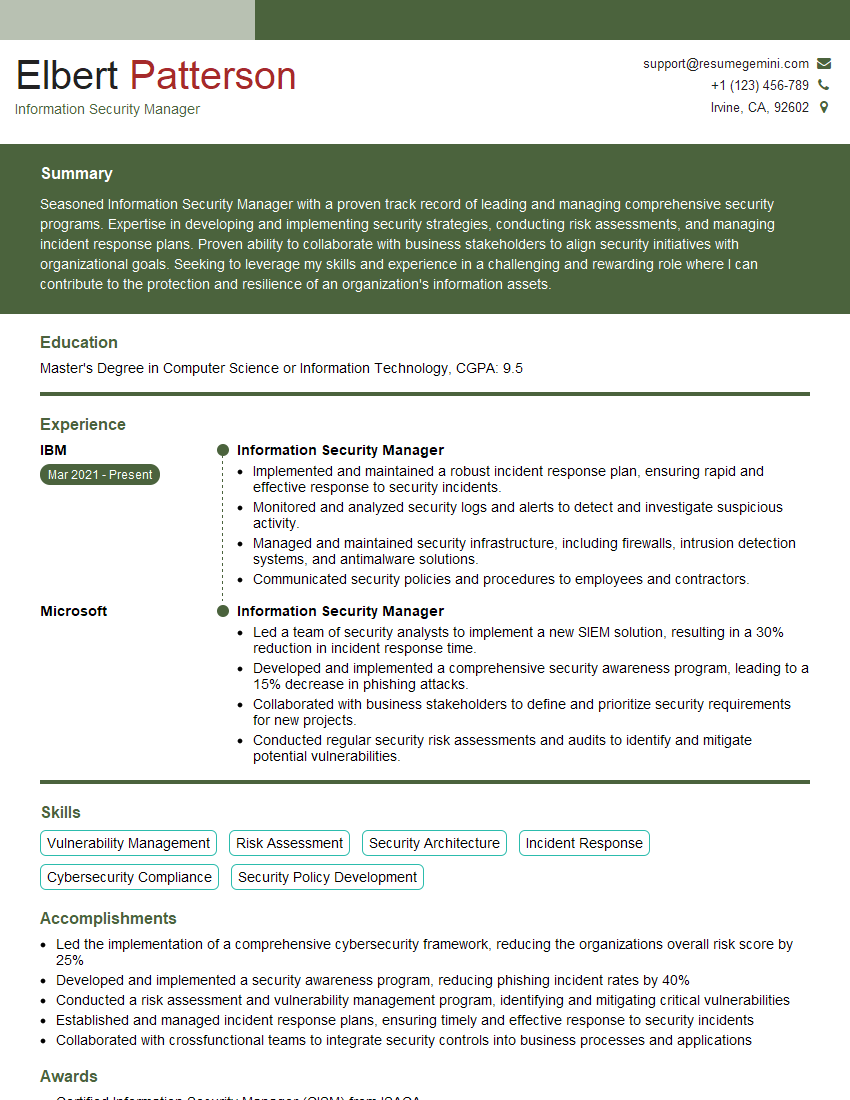
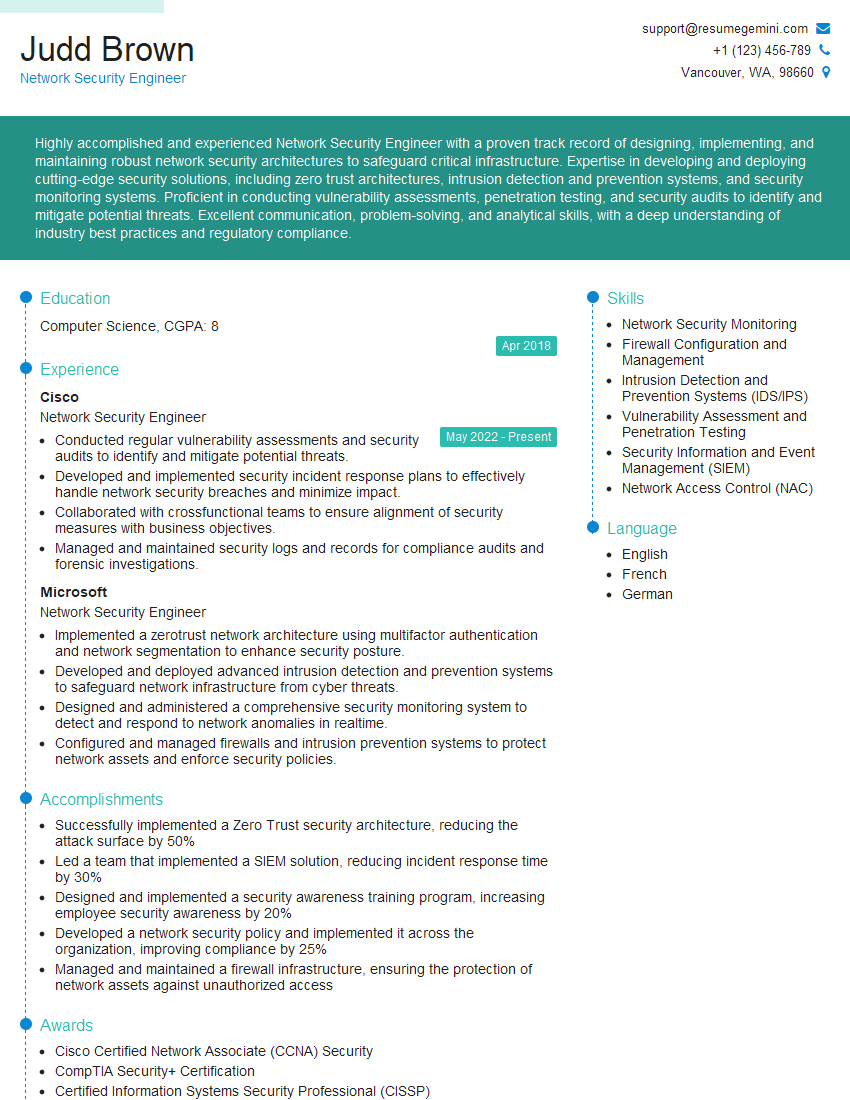
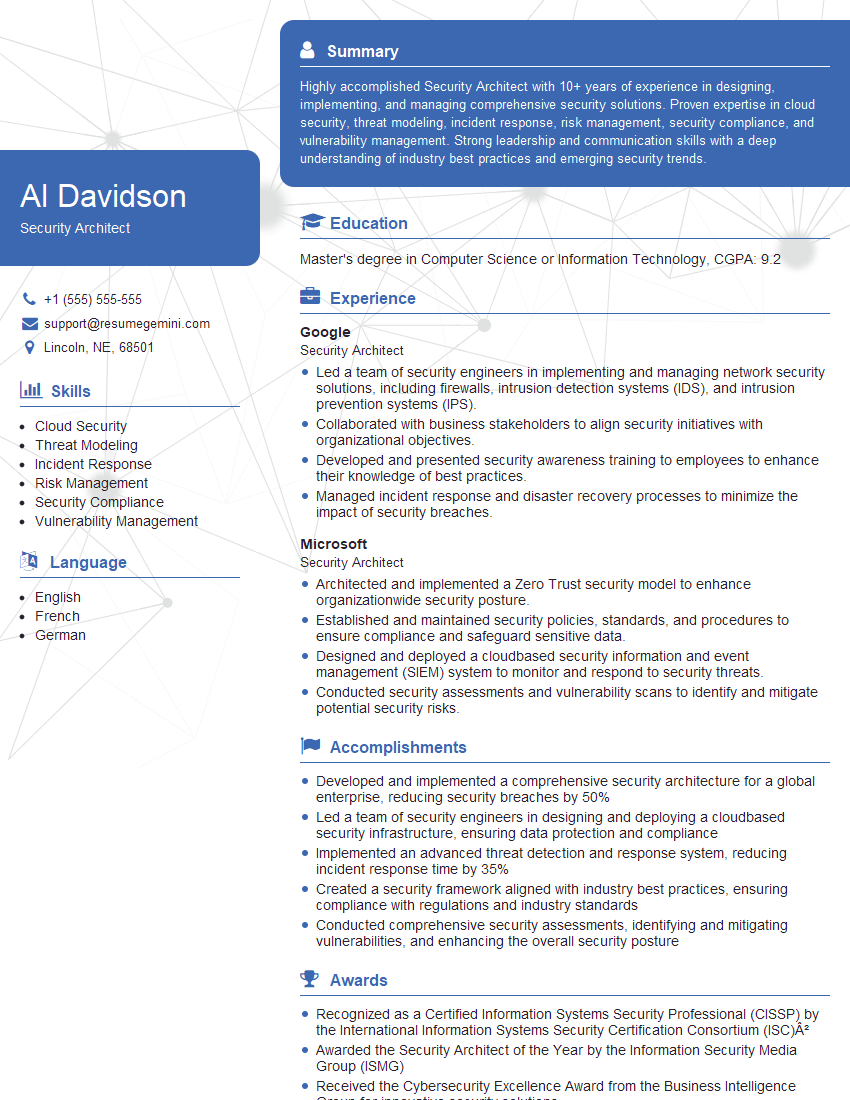
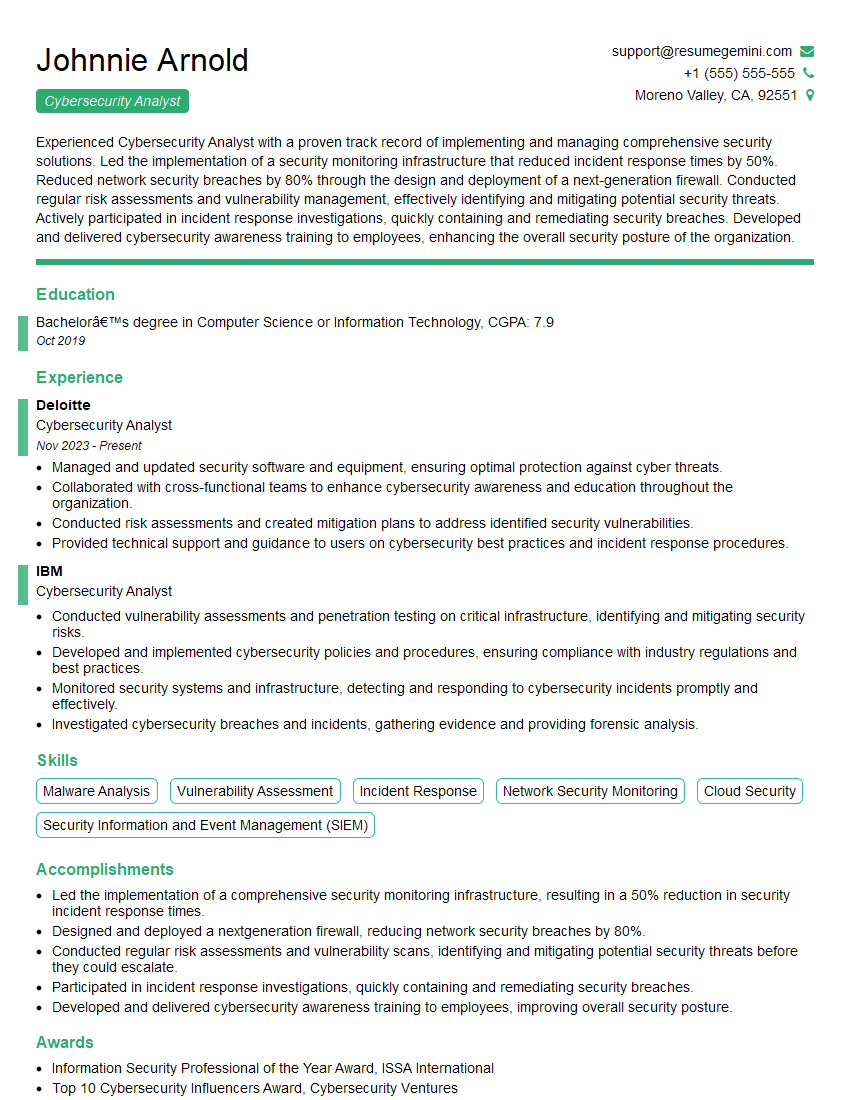
Mastering Reverse Engineering and Malware Analysis opens doors to exciting and challenging careers in cybersecurity, offering significant growth potential and high demand. To maximize your job prospects, focus on creating a strong, ATS-friendly resume that highlights your skills and experience. ResumeGemini is a trusted resource to help you build a professional and effective resume. They offer examples of resumes tailored specifically to Reverse Engineering and Malware Analysis to give you a head start. Invest time in crafting a compelling resume – it’s your first impression with potential employers.


Explore more articles
Users Rating of Our Blogs
Share Your Experience
We value your feedback! Please rate our content and share your thoughts (optional).
What Readers Say About Our Blog
Very informative content, great job.
good