The thought of an interview can be nerve-wracking, but the right preparation can make all the difference. Explore this comprehensive guide to Ability to interpret and apply technical drawings and specifications interview questions and gain the confidence you need to showcase your abilities and secure the role.
Questions Asked in Ability to interpret and apply technical drawings and specifications Interview
Q 1. Explain the difference between orthographic and isometric projections.
Orthographic and isometric projections are two different ways of representing a 3D object on a 2D surface. Think of it like taking pictures of a building from different angles.
Orthographic projection uses multiple views (typically top, front, and side) to show the object’s dimensions accurately. Each view shows only two dimensions of the object, as if you’re looking directly at one face. Imagine looking at the front, then the top, then the side of a box – that’s orthographic projection. It’s precise and ideal for manufacturing since it clearly communicates all measurements.
Isometric projection, on the other hand, attempts to show all three dimensions in a single view. It’s like taking a slightly tilted photo of the object. While it provides a more visually intuitive representation of the object’s shape, the dimensions aren’t drawn to true scale. It’s excellent for quickly visualizing the overall shape but less accurate for precise measurements.
For example, a complex mechanical part would be best represented using orthographic views for manufacturing purposes, while an isometric drawing might be better for a preliminary design review or presenting the part to a non-technical stakeholder.
Q 2. How do you identify different types of lines (e.g., hidden, center, dimension) on a technical drawing?
Technical drawings utilize different line types to convey specific information. Imagine a painter using different brush strokes to create varied effects; similar to that, line types help convey information efficiently.
- Solid lines: These are the most common, representing visible edges and outlines of an object.
- Hidden lines: Shown as dashed lines (
--- --- ---), they indicate features that are not visible from the chosen viewpoint but are present within the object. - Center lines: Represented by alternating long and short dashes (
- - - - -), they denote the axis of symmetry or center of a cylindrical or revolved feature. - Dimension lines: Thin lines with arrowheads at both ends (
<----->), they indicate the distance between two points and are usually accompanied by dimension text. - Leader lines: These lines connect notes or other annotations to specific features on the drawing.
- Phantom lines: These are used to represent the alternate positions of a moving part or to show the outline of an object when it’s partially obscured.
Understanding these different line types is crucial for accurately interpreting the drawing and understanding the object’s geometry and features.
Q 3. What are the common units of measurement used in technical drawings?
The units of measurement in technical drawings are crucial for accuracy. They’re like the language of the drawing, ensuring everyone speaks the same way.
Common units include:
- Millimeters (mm): Widely used in the metric system, prevalent in many engineering disciplines worldwide.
- Inches (in): Commonly used in the imperial system, still prevalent in certain industries, particularly in the US.
- Centimeters (cm): Another unit within the metric system, used less frequently than millimeters in technical drawings.
It is imperative to always check the drawing’s title block to determine the units used. This crucial information may also include scale information.
Q 4. Describe your process for interpreting a complex assembly drawing.
Interpreting complex assembly drawings requires a systematic approach. Think of it as assembling a puzzle, one piece at a time.
- Review the title block: This provides crucial information about the drawing, including the part number, revision level, scale, and units of measurement.
- Identify the main components: Begin by recognizing the major assemblies and sub-assemblies within the drawing.
- Analyze individual parts: Examine each part’s details in the associated detail drawings or through reference drawings.
- Identify mating relationships: Determine how parts connect or interact with each other, considering fasteners, tolerances and fits.
- Follow the bill of materials (BOM): This list details each component and its quantity, aiding in understanding the entire assembly.
- Use exploded views if provided: Exploded views show how parts assemble together, in a step-wise process.
- Verify dimensions and tolerances: Check for conflicts or potential assembly issues.
This structured approach helps ensure a complete and accurate understanding of the assembled component.
Q 5. How do you identify tolerances and fits on a technical drawing?
Tolerances and fits define the allowable variation in dimensions and how parts fit together. Think of it as the acceptable ‘wiggle room’ in manufacturing.
Tolerances are specified using various methods, often involving:
- Plus/minus notation (e.g., 10 ± 0.1 mm): Indicates the allowable deviation from the nominal dimension.
- Limits of size (e.g., 10-10.2 mm): Specifies the maximum and minimum acceptable dimensions.
- Geometric dimensioning and tolerancing (GD&T): This advanced system uses symbols and specific notation to define tolerances for form, orientation, location, and runout.
Fits describe the intended relationship between mating parts, such as clearance, transition, or interference fits. These are typically defined through charts or tables referencing shaft and hole dimensions and tolerances. A clearance fit allows for free movement between parts, while an interference fit requires forcing the parts together, creating a tight connection.
Understanding tolerances and fits is crucial for ensuring the proper function and assembly of parts.
Q 6. How do you use a scale to interpret dimensions on a drawing?
The scale of a drawing indicates the ratio between the dimensions shown on the drawing and the actual dimensions of the object. It’s like using a map to represent a large area in a smaller space.
For example, a scale of 1:10 means that 1 unit on the drawing represents 10 units on the actual object.
To interpret dimensions:
- Identify the scale: This is usually specified in the title block.
- Measure the dimension on the drawing: Use a ruler or other measuring tool.
- Apply the scale factor: Multiply the measured dimension by the scale factor to obtain the actual dimension.
Example: If a dimension on a drawing with a scale of 1:20 measures 5 cm, the actual dimension is 5 cm * 20 = 100 cm (or 1 meter).
Q 7. What are section views and why are they used?
Section views provide a way to visualize the internal features of an object that would otherwise be hidden. Think of it as cutting through the object to see the cross-section.
Several types of section views exist, including:
- Full section: The entire object is cut through, revealing internal details.
- Half section: Only half of the object is shown as a section view, while the other half is an external view, combining both internal and external features in a single view.
- Broken-out section: A small portion of the object is shown in section, revealing a specific internal feature, without completely sectioning the entire object.
- Revolved section: A portion of a revolved feature is rotated 90 degrees into the plane of the section.
Section views are invaluable in technical drawings, providing clear depictions of internal features, such as holes, cavities, or complex shapes that are difficult or impossible to show otherwise. They are essential for design, manufacturing and inspection.
Q 8. Explain the importance of proper annotation and labeling in technical drawings.
Proper annotation and labeling in technical drawings are absolutely crucial for clear communication and error prevention. Think of it like a well-organized recipe – without clear instructions, even the most experienced chef will struggle. Annotations provide the necessary context and details for anyone interpreting the drawing, regardless of their familiarity with the project.
Dimensions: Precisely indicating lengths, widths, heights, diameters, and angles prevents misinterpretations and ensures parts fit together correctly. For example,
Ø10mmclearly indicates a 10mm diameter.Material Specifications: Clearly identifying the materials used (e.g., steel, aluminum, plastic) is vital for manufacturing. A note like
Material: ASTM A36 Steelleaves no room for doubt.Tolerances: Specifying acceptable variations in dimensions prevents manufacturing issues. Using symbols like
±0.1mmcommunicates allowable deviations from the nominal size.Surface Finish: Details on surface roughness (e.g., Ra 0.8µm) ensures the final product meets quality standards.
Notes and References: Additional explanations or cross-references to other drawings or specifications prevent ambiguity. For instance, a note could say
See Detail A on Sheet 2.
In short, thorough annotation prevents costly mistakes, delays, and rework by ensuring everyone is on the same page.
Q 9. How do you interpret symbols and abbreviations commonly found on technical drawings?
Interpreting symbols and abbreviations is a fundamental skill. Think of it as learning a specialized language. Each industry and even individual companies might have their own shorthand. The key is familiarity with standards and reference guides.
I rely heavily on industry standards like ASME Y14.5 for geometric dimensioning and tolerancing (GD&T), which provides a universal language for specifying tolerances and geometric characteristics. I also maintain a personal library of company-specific symbol keys and abbreviation lists.
For example, a small square with a diagonal line often represents a weld, while R10 typically indicates a 10mm radius. Context is crucial – the same symbol could mean different things in different drawings or industries. I always verify the meaning if there’s any ambiguity.
If I encounter an unfamiliar symbol, I first check the drawing’s title block for a legend or reference sheet. If that fails, I consult the project’s specifications document or contact the drawing’s author for clarification. I never make assumptions.
Q 10. Describe your experience with different CAD software (e.g., AutoCAD, SolidWorks).
I’m proficient in several CAD software packages, most notably AutoCAD and SolidWorks. My experience with AutoCAD spans over 10 years, where I’ve used it extensively for 2D drafting, creating detailed drawings, and managing large drawing sets. I’ve used it for everything from creating simple schematics to complex architectural layouts.
SolidWorks, on the other hand, has been instrumental in my 3D modeling work. I’ve used it to design complex parts and assemblies, perform simulations, and generate detailed manufacturing drawings. For example, I recently used SolidWorks to design a custom fixture for a robotic assembly line. The ability to perform simulations before physical prototyping saved significant time and resources.
My experience extends beyond just the software itself; I’m comfortable with data management, version control, and collaboration using cloud-based platforms.
Q 11. How do you handle discrepancies or errors found on a technical drawing?
Discovering discrepancies or errors is a normal part of working with technical drawings. My approach is systematic and documented. First, I verify the error. Is it a genuine discrepancy or a misunderstanding on my part? I double-check dimensions, material specifications, and tolerances against the design intent and related documents.
Next, I document the error meticulously. I create a log noting the drawing number, the specific location of the error, the nature of the error, and the date of discovery. Then, I communicate the discrepancy to the appropriate person(s): the designer, project engineer, or the client, depending on the context.
If I’m authorized to correct the error, I will do so carefully, keeping a version history, and always ensuring my correction aligns with the design intent and applicable standards. If I’m not authorized, I clearly mark the discrepancy on the drawing and highlight it in my communication to ensure timely resolution.
Q 12. Explain how you ensure your interpretations of technical drawings are accurate.
Accuracy is paramount. My approach to ensuring accurate interpretation involves a multi-step verification process. Think of it as a quality control system for your understanding.
Cross-Referencing: I always check multiple sources: the drawing itself, the project specifications, and any related documents. Inconsistencies raise red flags and require further investigation.
Dimensional Checks: I meticulously verify dimensions using calculation and geometric relationships, especially for complex parts and assemblies. Mathematical accuracy avoids costly mistakes later in the project.
Tolerance Analysis: I carefully consider tolerances to understand acceptable variations and potential assembly issues. Understanding tolerances prevents over- or under-designing.
Consultation: If there are any ambiguities or uncertainties, I consult with colleagues or the drawing’s author for clarification before making decisions.
Essentially, I employ a combination of thorough examination, mathematical validation, and collaborative efforts to minimize the risk of inaccurate interpretation.
Q 13. How do you use technical drawings in conjunction with specifications documents?
Technical drawings and specifications are inseparable; they are two sides of the same coin. The drawing provides the visual representation, while the specifications provide the detailed textual description. Think of it as a blueprint and a detailed instruction manual working together.
I use them in conjunction by always cross-referencing information between the two. The drawing might show the overall layout and dimensions, but the specifications will define material grades, surface finishes, tolerances, and other critical details not easily depicted visually. For example, a drawing might show a bolt, but the specifications will list the bolt’s size, material, thread type, and strength class.
A discrepancy between the drawing and specifications requires immediate attention and clarification. This ensures that the final product aligns with the design requirements and avoids costly manufacturing errors.
Q 14. How do you communicate your interpretation of a technical drawing to others?
Communicating my interpretation involves clear, concise, and well-documented methods. I tailor my communication to the audience. For a manufacturing team, I’d focus on the dimensions, tolerances, and material specifications. For a client, I’d emphasize the overall design and functionality.
Verbal Explanations: For quick clarifications or initial discussions, clear and concise verbal explanations are effective.
Written Reports: For complex interpretations or formal communication, detailed written reports with annotated drawings are ideal. These ensure a permanent record of my understanding.
Presentations: For larger projects or multiple stakeholders, presentations combining visual aids and verbal explanations are efficient and effective.
Markups and Annotations: Directly annotating drawings with my interpretations and highlighting areas of concern improves clarity and eliminates ambiguities.
Regardless of the method, I strive to ensure that my communication is unambiguous and leaves no room for misinterpretation. The goal is to guarantee everyone has the same understanding of the design intent.
Q 15. Describe a situation where you had to interpret a complex or ambiguous drawing.
Interpreting ambiguous technical drawings requires a systematic approach. One instance involved a drawing for a custom-designed bracket where the intersection of two curved surfaces was poorly defined. The dimensions were conflicting, leading to multiple possible interpretations.
My strategy involved:
- Reviewing the entire drawing package: I checked other views, sections, and detail drawings for clues. Sometimes a seemingly insignificant detail in another part of the drawing can resolve ambiguity.
- Checking the Bill of Materials (BOM): The BOM helped me understand the intended material and its properties which often helps determine the best possible interpretation. For instance, a material’s flexibility or rigidity can influence how the intersection would behave.
- Consulting with the designer or engineering team: Direct communication clarified the design intent and resolved the dimensional conflict. They confirmed the correct interpretation based on the initial design goals.
- Creating a detailed sketch: Based on the clarified information, I created a detailed sketch resolving the ambiguity. This ensured everyone was on the same page before manufacturing.
This methodical approach ensured that the bracket was manufactured correctly, preventing costly rework and delays.
Career Expert Tips:
- Ace those interviews! Prepare effectively by reviewing the Top 50 Most Common Interview Questions on ResumeGemini.
- Navigate your job search with confidence! Explore a wide range of Career Tips on ResumeGemini. Learn about common challenges and recommendations to overcome them.
- Craft the perfect resume! Master the Art of Resume Writing with ResumeGemini’s guide. Showcase your unique qualifications and achievements effectively.
- Don’t miss out on holiday savings! Build your dream resume with ResumeGemini’s ATS optimized templates.
Q 16. How familiar are you with different drawing standards (e.g., ASME, ANSI)?
I’m proficient in several drawing standards, most notably ASME Y14.5 (American Society of Mechanical Engineers) and ANSI (American National Standards Institute) standards. My familiarity extends to understanding the nuances within these standards—for instance, the differences in dimensioning and tolerancing between ASME Y14.5-2009 and the updated 2018 version. I also have experience with ISO standards and can adapt quickly to others as needed.
Understanding these standards is crucial because they ensure consistent communication and unambiguous interpretation of drawings. Different standards may use different notations for surface finish, tolerances, or other important details. For example, a given surface roughness symbol might have slight variations in representation across ASME and ISO standards, and misinterpreting this can lead to manufacturing defects.
Q 17. How do you identify materials specified in a technical drawing?
Material specifications on technical drawings are typically indicated using material codes, symbols, or a detailed description. Common methods include:
- Material Codes: These are often abbreviated codes referring to specific materials (e.g., ‘AISI 1018’ for a specific grade of steel, ‘6061-T6’ for an aluminum alloy).
- Material Symbols: These are visual representations like a specific symbol for steel, aluminum, or plastic, often found in material selection tables included in the drawing.
- Material Descriptions: For custom materials or if codes aren’t readily available, a full description such as ‘Cold-rolled Steel, ASTM A36’ may be used.
Identifying materials often involves cross-referencing the drawing with the BOM. The BOM provides a more extensive description of each part and clarifies any ambiguities in the drawing’s material notations.
Q 18. Explain the process of checking for drawing completeness and accuracy.
Checking a drawing for completeness and accuracy is a critical step that prevents costly errors down the line. My process involves:
- Visual Inspection: A thorough visual check for clarity, completeness, and consistency in notations, dimensions, and tolerances. Looking for any missing information, or conflicts between views.
- Dimensional Analysis: Verifying dimensions for feasibility and internal consistency. For example, checking if dimensions add up correctly across different views or if tolerances are appropriately defined. I use mathematical checks and comparisons across views to ensure dimensional accuracy and consistency.
- Tolerance Verification: Ensuring tolerances are appropriate for the part’s function and manufacturing process. Tight tolerances might make the part unnecessarily costly or difficult to manufacture.
- Material Verification: Confirming material specifications are realistic and suitable for the intended application and manufacturing processes. In some scenarios, a material might be incorrectly specified due to the designer’s unfamiliarity with material properties.
- Reviewing Notes and Specifications: Careful reading of all notes, specifications, and references. Many times critical information is in the notes section, and it’s easy to overlook them.
Using a checklist is beneficial to ensure every aspect is covered systematically.
Q 19. How do you determine the manufacturing processes needed based on a drawing?
Determining the manufacturing process requires a holistic understanding of the drawing and its specifications. Factors I consider include:
- Part Geometry: Complex shapes may require processes like CNC machining, while simpler shapes might be suitable for stamping or casting.
- Material Properties: The material’s machinability, castability, or formability influences the choice of process. For example, brittle materials are not suitable for processes that involve significant deformation.
- Tolerances: Tight tolerances often necessitate more precise and complex manufacturing processes, while looser tolerances allow for simpler methods.
- Surface Finish Requirements: Specific surface finish requirements might dictate processes like polishing, plating, or specific machining techniques.
- Production Volume: High-volume production often favors cost-effective processes such as casting or stamping, while low-volume production might justify more flexible, higher-precision methods such as CNC machining.
Often, a combination of processes is necessary to produce a final part. A drawing might, for example, specify a cast part that is later machined to achieve the final dimensions and surface finish.
Q 20. How do you handle revisions and updates to technical drawings?
Revisions and updates to technical drawings are handled using a formal revision control system. This typically involves a revision number or letter (e.g., A, B, C) appended to the drawing title or number. Each revision includes a revision log detailing the changes made. These changes are usually highlighted directly on the drawing or in an accompanying revision sheet.
In my workflow, I always ensure I am using the most current revision of the drawing. This is crucial to avoid building components that do not fit or meet the latest specifications. Using a revision control system prevents misunderstandings and ensures that everyone is working with the correct version.
Q 21. What are your strategies for troubleshooting problems identified from drawings?
Troubleshooting problems identified from drawings requires a structured approach. My strategy includes:
- Identify the Problem: Clearly define the problem—is it a dimensional conflict, a missing specification, a manufacturing process constraint, or an unclear notation?
- Analyze the Drawing: Carefully review all aspects of the drawing for clues; sometimes a visual inspection can uncover errors.
- Check for Conflicts: Verify there are no dimensional conflicts between views, sections, and detail drawings.
- Consult References and Standards: Use standards and references such as material properties data sheets, tolerance standards, and the like.
- Seek Clarification: If necessary, I would contact the design team or the client to resolve ambiguities and get clarification.
- Document Findings: Record findings and proposed solutions to prevent future issues.
A methodical and thorough approach prevents errors in manufacturing or assembly. This minimizes rework and project delays.
Q 22. How do you use dimensions and tolerances to verify the accuracy of a manufactured part?
Verifying the accuracy of a manufactured part using dimensions and tolerances is fundamental to quality control. Dimensions specify the ideal size of a feature (length, width, diameter, etc.), while tolerances define the acceptable range of variation from that ideal. Think of it like baking a cake: the recipe provides the ideal dimensions (amount of flour, sugar, etc.), but slight variations within a tolerance are acceptable and still result in a good cake. Beyond the acceptable range, however, the cake might be inedible.
To verify accuracy, I use precision measuring instruments like calipers, micrometers, and height gauges to measure the actual dimensions of the part. I then compare these measurements to the specified dimensions and tolerances on the engineering drawing. If all measurements fall within the specified tolerance limits, the part is considered acceptable. For example, if a drawing specifies a diameter of 10mm ± 0.1mm, any measurement between 9.9mm and 10.1mm would be acceptable. Measurements outside this range indicate a defect and require investigation.
Beyond simple measurements, I’d also consider the type of tolerance specified (e.g., unilateral, bilateral). A unilateral tolerance allows variation only in one direction (e.g., 10mm +0.1mm, -0.0mm), while a bilateral tolerance allows variation in both directions (e.g., 10mm ±0.1mm). Understanding these nuances ensures accurate assessment.
Q 23. Explain your experience with using 3D modeling software to interpret designs.
I have extensive experience utilizing 3D modeling software, primarily SolidWorks and Autodesk Inventor, to interpret designs. My workflow typically involves importing the 2D drawings into the software, then using the software’s tools to create a 3D model. This allows for a comprehensive understanding of the part’s geometry, including hidden features and relationships between different components. This process is invaluable for identifying potential design flaws or manufacturing challenges early on.
For example, I once used SolidWorks to build a 3D model of a complex assembly from a set of 2D drawings. The model highlighted a clearance issue between two components that wasn’t readily apparent from the drawings alone. This early identification prevented costly rework during the manufacturing phase. Furthermore, I can utilize the 3D model to generate various views (section views, isometric views) to better understand the design, and create simulations to check for stress, strain and other parameters.
Q 24. How do you identify and interpret different types of views in a drawing (e.g., top, side, front)?
Technical drawings utilize different views to represent a 3D object on a 2D plane. The most common views are the front, top, and side views. Think of it like taking pictures of an object from different angles. The front view shows the object as seen from the front, the top view shows the object from directly above, and the side view shows the object from the side. These views, when used together, provide a complete representation of the object’s shape and dimensions.
Beyond these standard views, drawings may include section views (cuts through the object to reveal internal features), detail views (magnified views of specific areas), and auxiliary views (views taken at angles other than the standard views). Each view is clearly labeled and oriented to ensure unambiguous interpretation. Proper understanding of orthographic projection principles is essential for accurate interpretation.
For instance, a section view might be used to show the internal structure of a casting, revealing details like cavities or internal ribs which wouldn’t be visible from an external view. Interpreting these views correctly is vital to understanding the complete design.
Q 25. Describe your experience with reading and interpreting electrical schematics.
My experience with electrical schematics is extensive. I’m proficient in reading and interpreting schematics for various systems, from simple circuits to complex control systems. I understand the symbols used to represent different components (resistors, capacitors, transistors, integrated circuits, etc.), and how they connect to form functional circuits.
I can trace signal paths, analyze circuit functionality, and identify potential problems. For example, I can easily determine the voltage and current at various points in a circuit, and assess the impact of component failures. My experience also extends to understanding different types of schematics, such as ladder diagrams (used in industrial control systems) and block diagrams (showing the overall system architecture). This ability allows me to contribute effectively in diverse projects.
Q 26. How do you verify that a manufactured product conforms to the specifications on the drawings?
Verifying a manufactured product’s conformance to drawing specifications involves a multi-step process. It begins with a thorough review of the drawings to understand all requirements, including dimensions, tolerances, material specifications, and surface finishes. Then, using appropriate measuring equipment and inspection techniques, I verify the dimensions and features of the manufactured part against the drawing specifications. This often involves using a combination of manual and automated measurement techniques.
Beyond dimensional checks, I also assess the material properties (e.g., hardness, tensile strength) and surface finish (roughness, texture). Inspection reports are meticulously documented, including any deviations from specifications. This documentation allows for traceability and facilitates root cause analysis if non-conforming products are identified. Statistical Process Control (SPC) techniques are often employed to monitor the manufacturing process and prevent future deviations.
For example, I might use a Coordinate Measuring Machine (CMM) to accurately measure critical dimensions on a complex part, ensuring they fall within the specified tolerances. If deviations are found, I investigate the cause and recommend corrective actions to the manufacturing team.
Q 27. How familiar are you with Geometric Dimensioning and Tolerancing (GD&T)?
I’m very familiar with Geometric Dimensioning and Tolerancing (GD&T). GD&T is a symbolic language used on engineering drawings to define the size, form, orientation, location, and runout of features. It goes beyond simple plus/minus tolerances by specifying the permissible variation of geometric characteristics. Understanding GD&T is crucial for ensuring the proper functionality and interchangeability of parts.
I’m proficient in interpreting GD&T symbols, such as position, perpendicularity, flatness, circularity, and runout. I understand how these symbols define acceptable variations and how to measure and verify compliance using appropriate inspection techniques. For example, I understand the difference between a basic dimension and a feature control frame, and the implications of each for part tolerance. This knowledge ensures that I can accurately interpret and apply GD&T requirements in my work.
Q 28. Explain your approach to understanding and applying material specifications from drawings.
Material specifications on drawings are crucial for ensuring the part’s performance and durability. These specifications typically include the material type (e.g., aluminum 6061-T6, steel 1018), its properties (e.g., tensile strength, yield strength, hardness), and any required treatments (e.g., heat treatment, surface coating). Understanding these specifications is essential for selecting appropriate materials and verifying their conformance during the manufacturing process.
My approach involves carefully reviewing the material specification section of the drawing. I identify the material type and cross-reference it with relevant material standards (e.g., ASTM, ISO) to understand its properties. I also verify that the specified material is compatible with the intended application and manufacturing processes. During inspection, I ensure that the material used conforms to the specified requirements through appropriate testing methods, such as chemical analysis or mechanical testing. If there’s ambiguity in the material specifications, I would clarify with the design engineer before proceeding.
Key Topics to Learn for Ability to Interpret and Apply Technical Drawings and Specifications Interview
- Understanding Drawing Types: Become proficient in identifying and interpreting various drawing types such as orthographic projections, isometric views, and sectional drawings. Practice recognizing common symbols and conventions used in each type.
- Dimensional Analysis: Master the ability to accurately extract and apply dimensions from drawings, understanding tolerances and their implications for manufacturing and assembly. Practice calculating areas, volumes, and other relevant parameters.
- Material Specifications: Learn to identify and understand the meaning of material specifications included in drawings, such as material grades, surface finishes, and heat treatments. Understand how these specifications impact the functionality and performance of the final product.
- Geometric Dimensioning and Tolerancing (GD&T): Familiarize yourself with GD&T symbols and their applications in defining precise dimensions and tolerances. Practice interpreting GD&T callouts to ensure component compatibility and functionality.
- Blueprint Reading and Interpretation: Develop the ability to read and understand complete blueprints, including parts lists, assembly drawings, and detail drawings. Practice identifying relationships between different parts and their assembly sequence.
- Practical Application & Problem Solving: Practice applying your knowledge to solve realistic scenarios. For instance, imagine needing to identify a potential manufacturing error from a drawing or determine the correct sequence of assembly based on the provided specifications.
- Technical Specifications and Standards: Understand common industry standards and specifications relevant to the drawings you are likely to encounter. This might include ISO, ASME, or other relevant standards.
Next Steps
Mastering the ability to interpret and apply technical drawings and specifications is crucial for career advancement in engineering, manufacturing, and many other technical fields. It demonstrates a strong understanding of design principles and practical application, significantly enhancing your value to potential employers. To increase your job prospects, create a compelling and ATS-friendly resume that highlights these skills. ResumeGemini is a trusted resource that can help you build a professional and effective resume. Examples of resumes tailored to highlight expertise in interpreting and applying technical drawings and specifications are available through ResumeGemini to guide your creation.
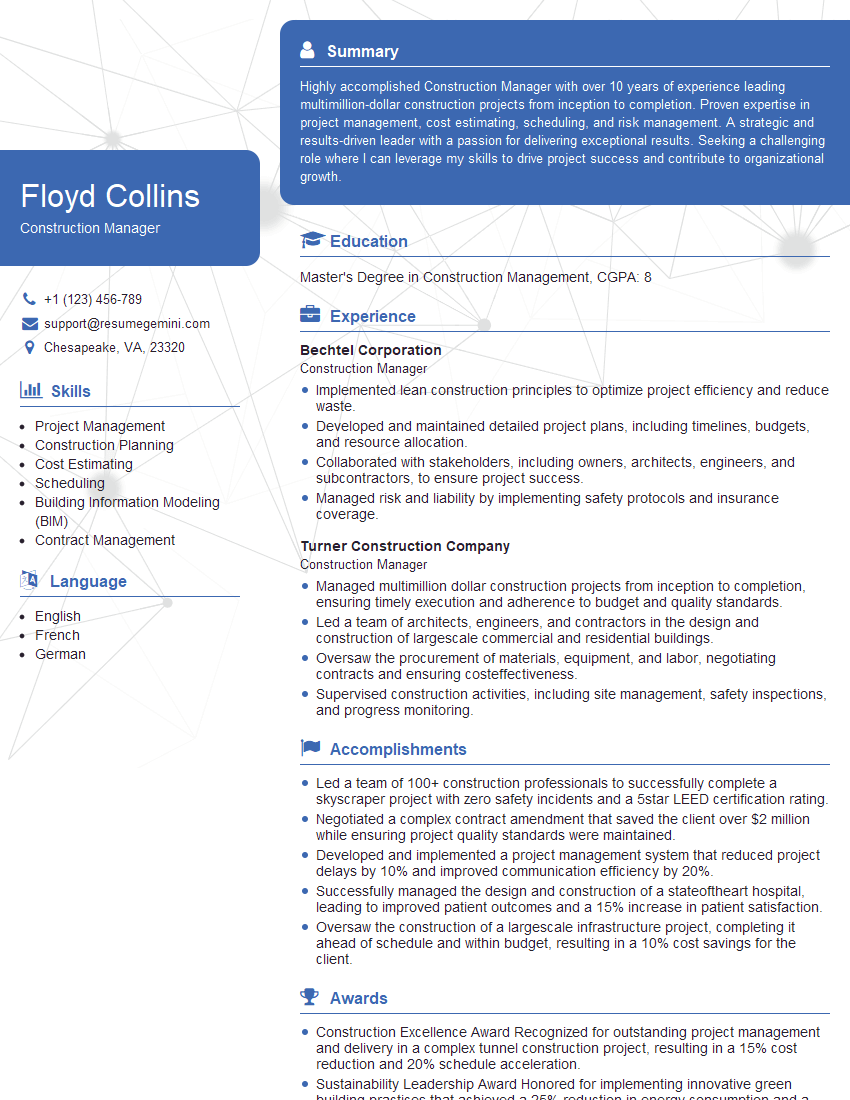
Construction Manager Resume Sample

Project Engineer Resume Sample
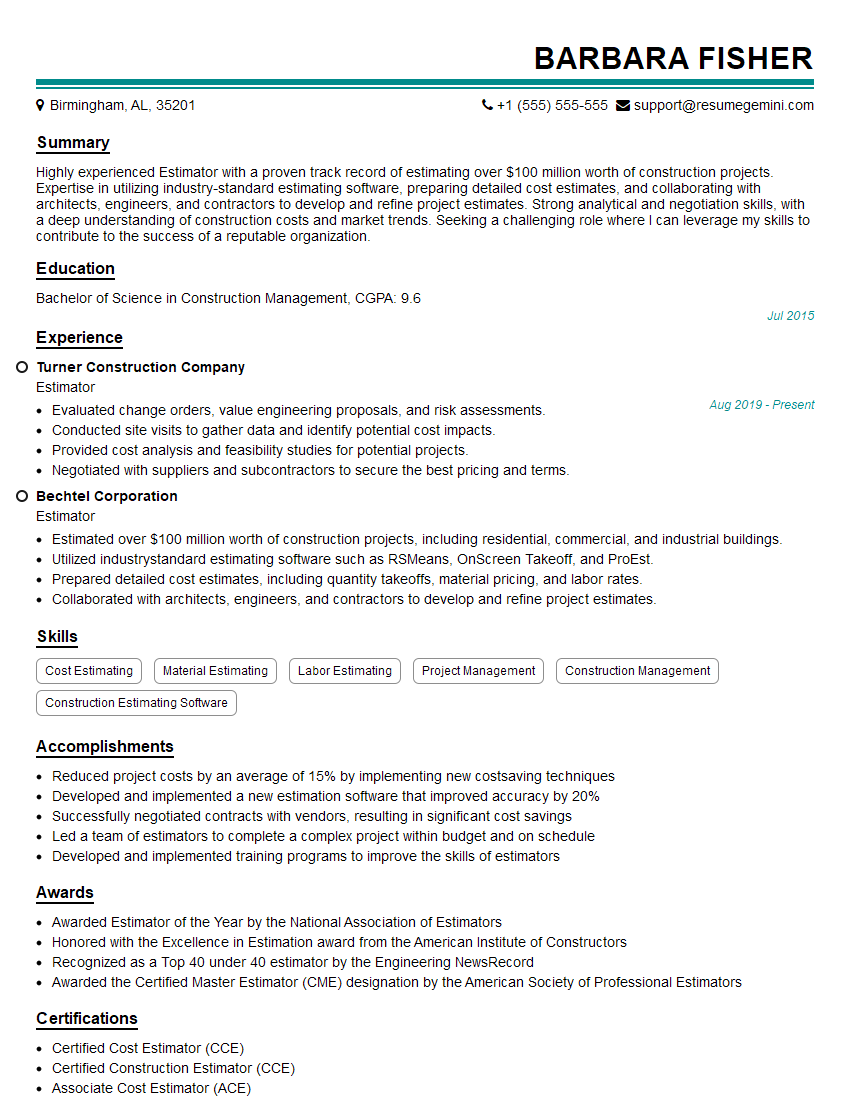
Estimator Resume Sample
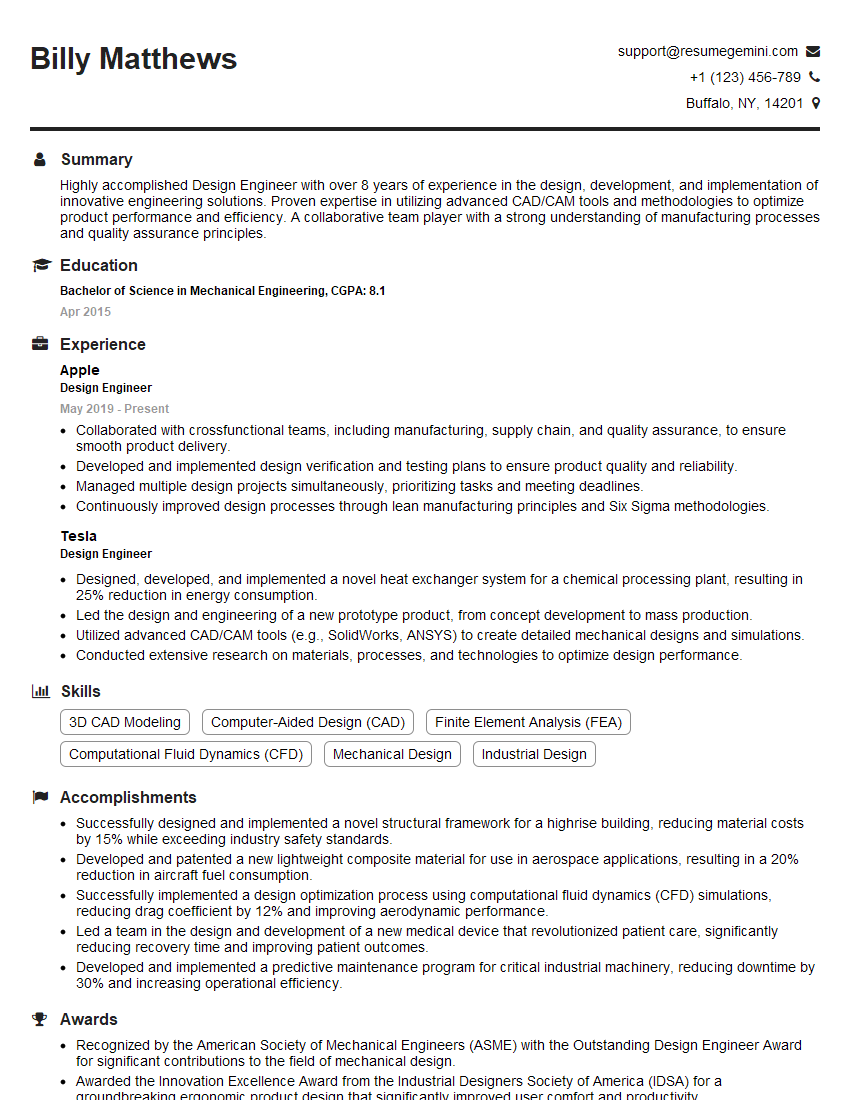
Design Engineer Resume Sample
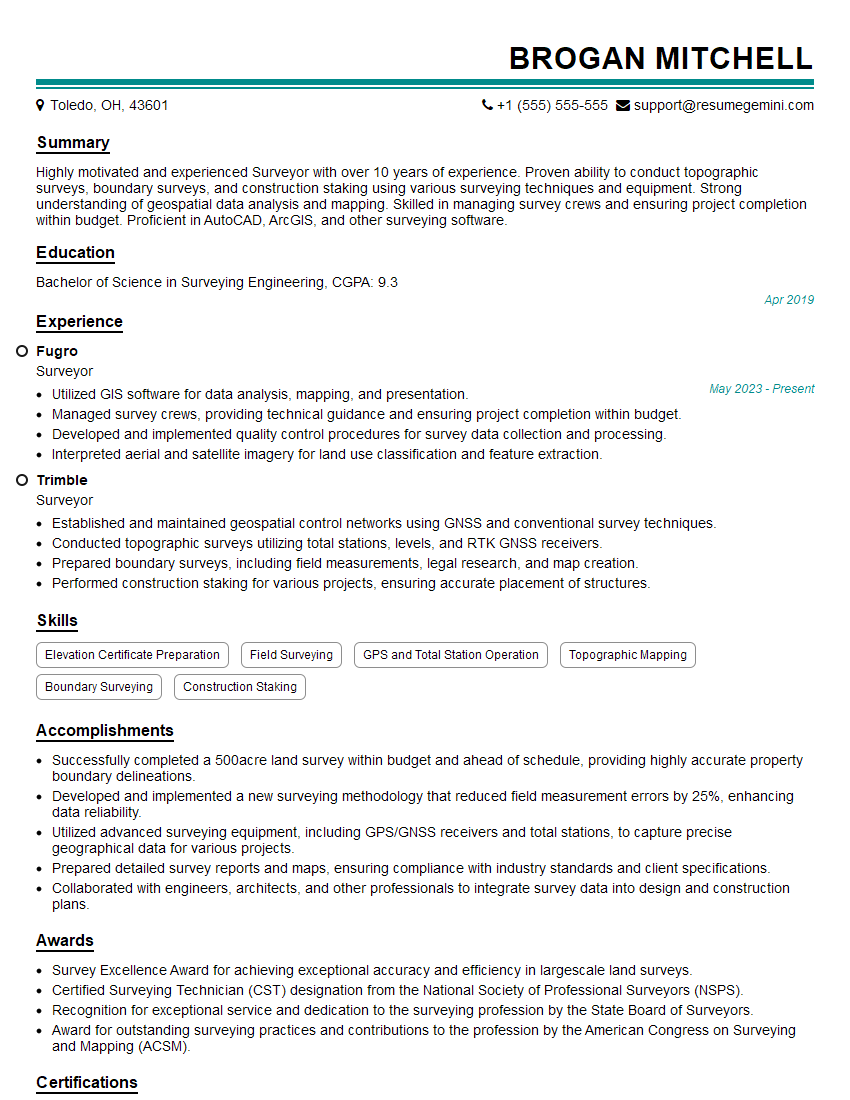
Surveyor Resume Sample

Engineering Technician Resume Sample
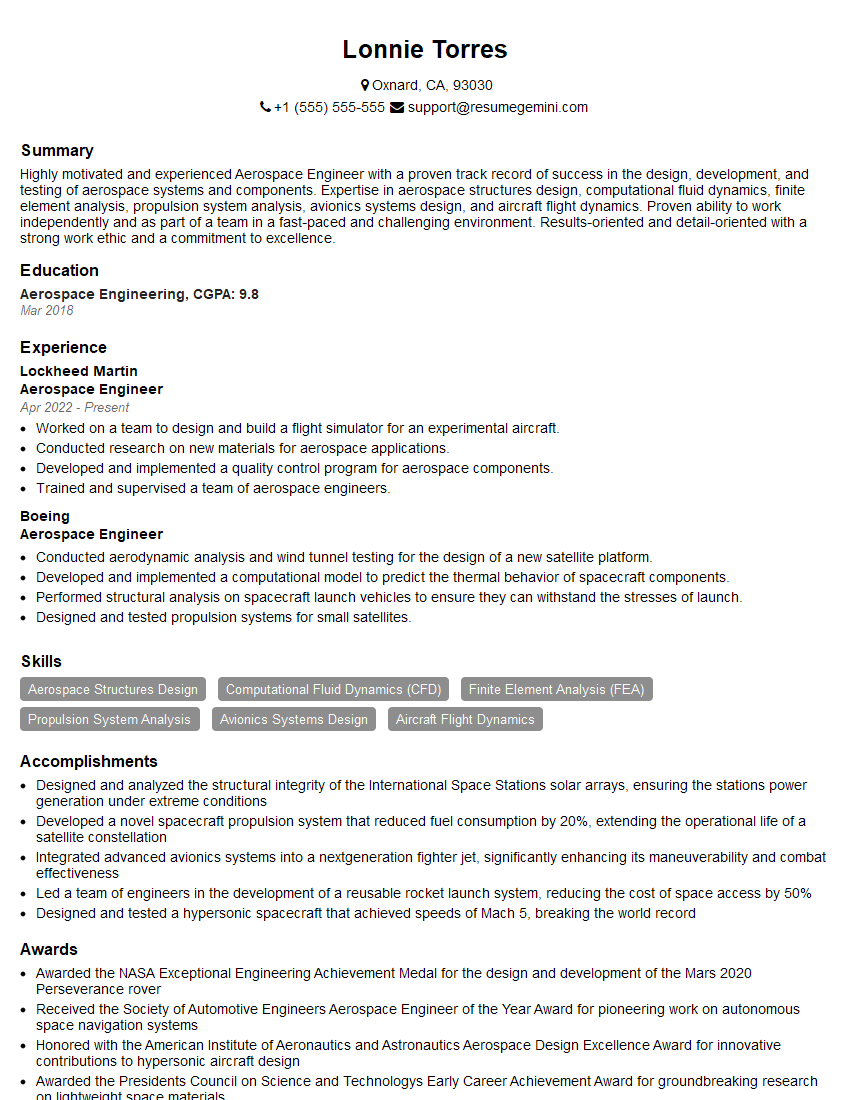
Aerospace Engineer Resume Sample

Civil Engineer Resume Sample
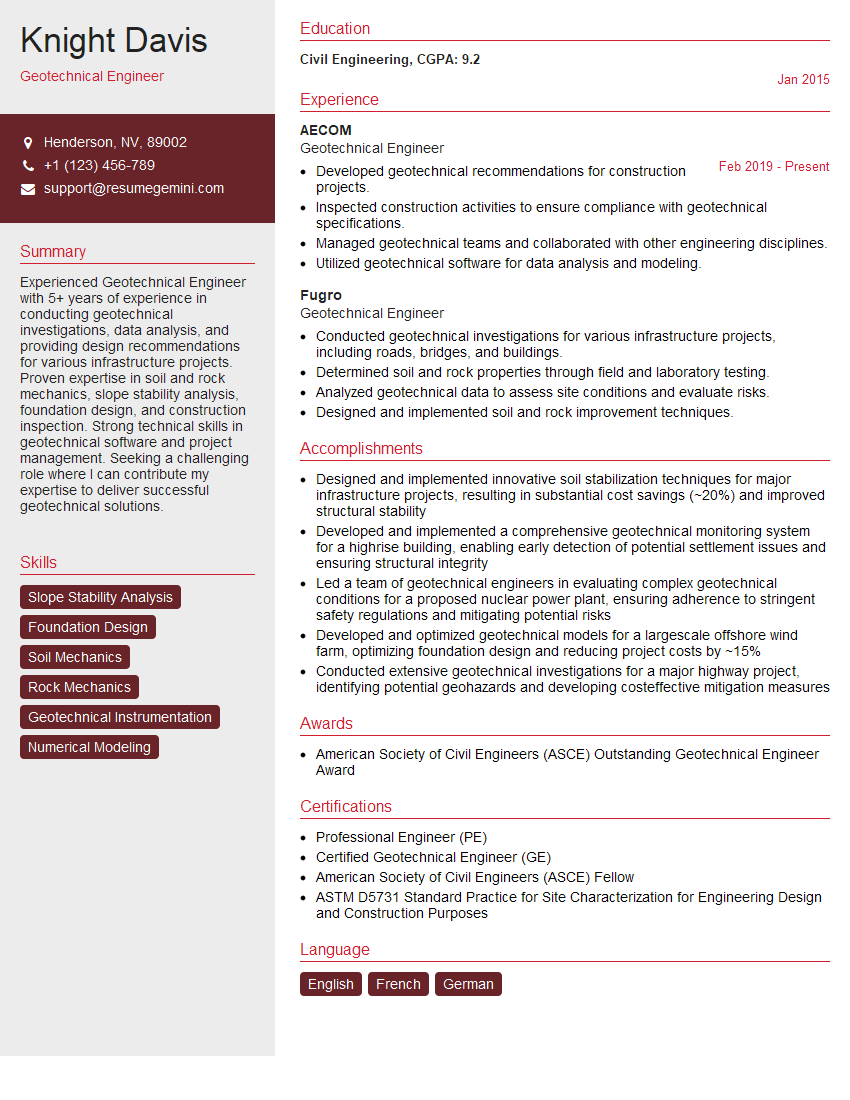
Geotechnical Engineer Resume Sample
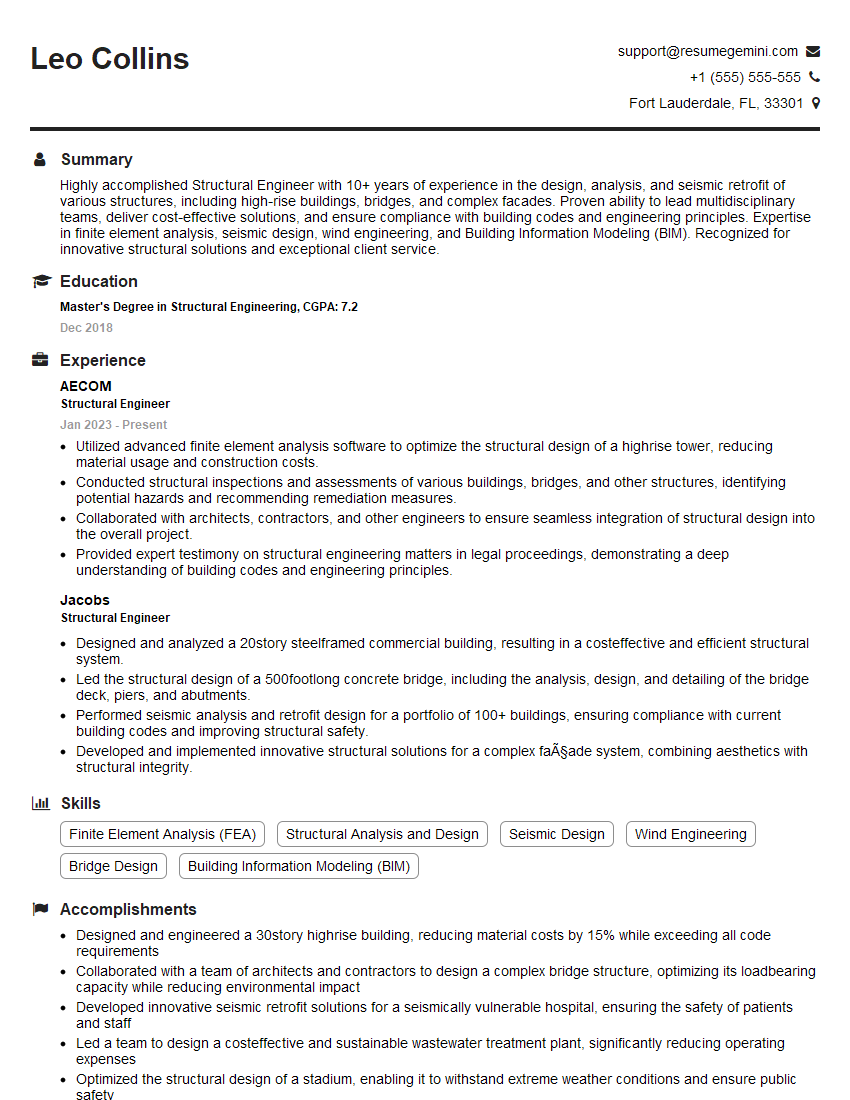
Structural Engineer Resume Sample

Electrical Engineer Resume Sample

Environmental Engineer Resume Sample
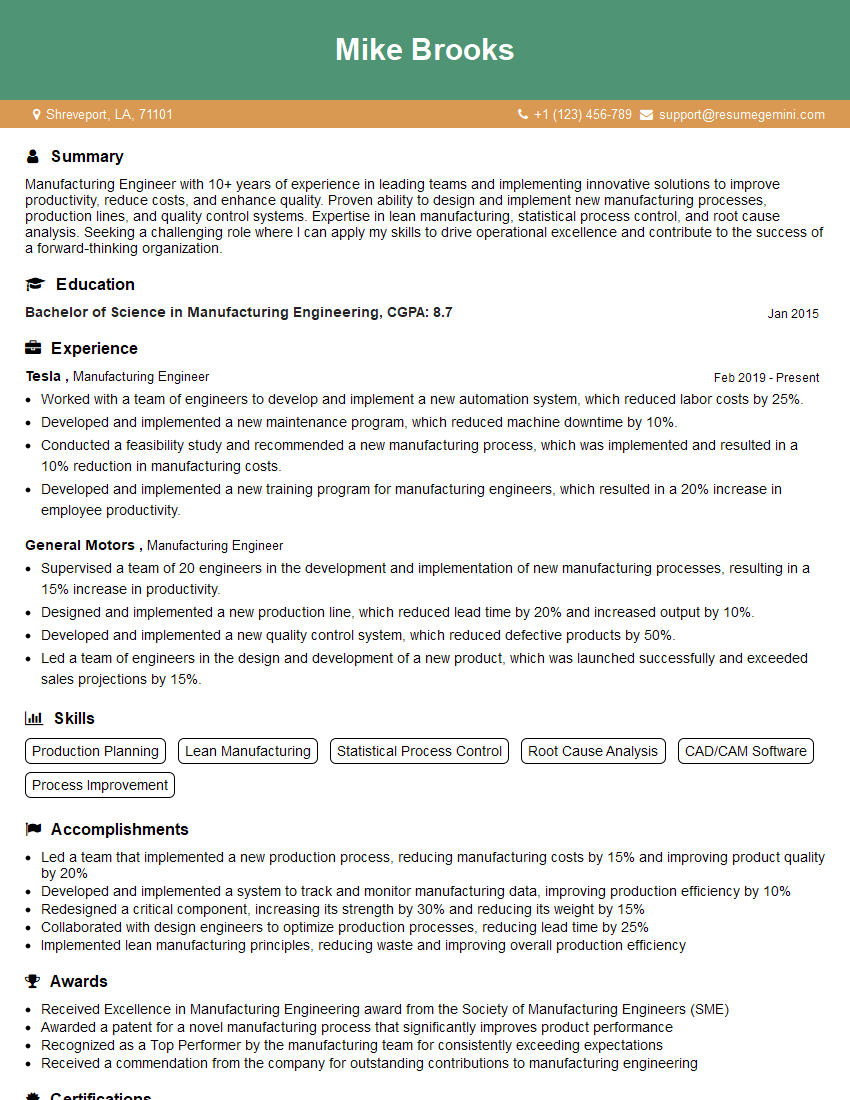
Manufacturing Engineer Resume Sample
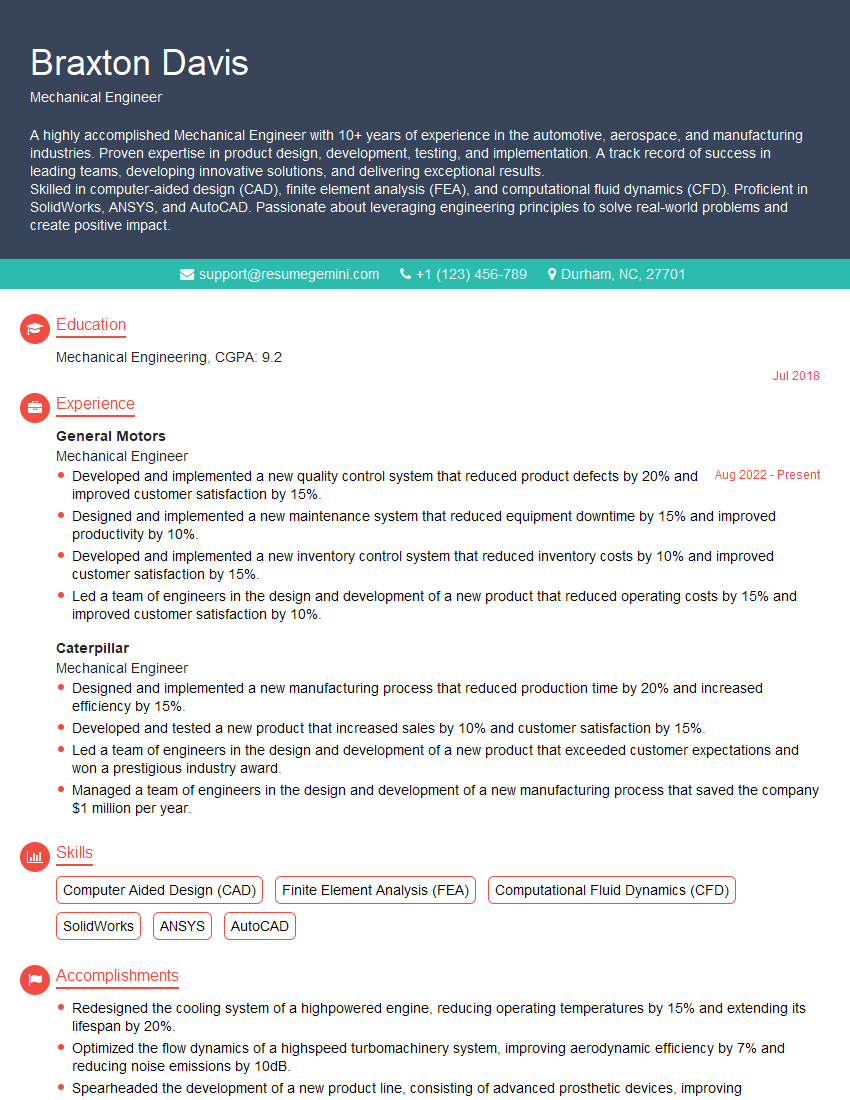
Mechanical Engineer Resume Sample
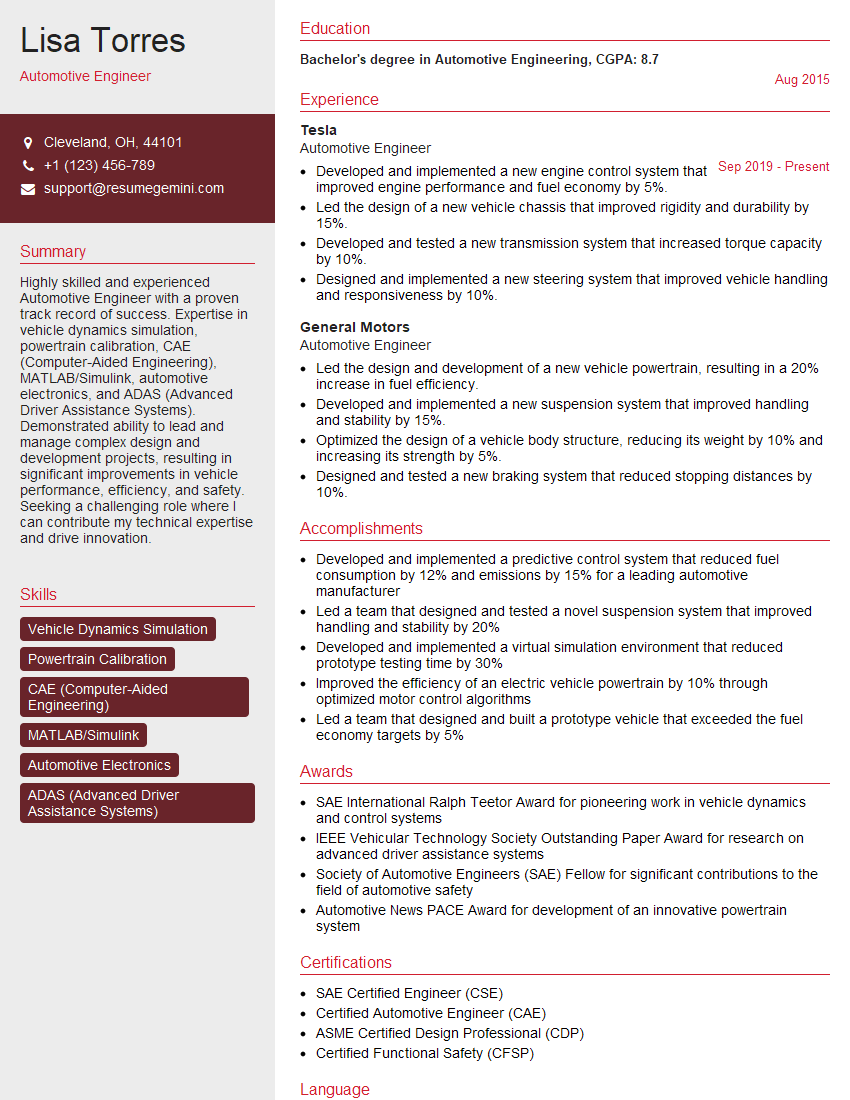
Automotive Engineer Resume Sample
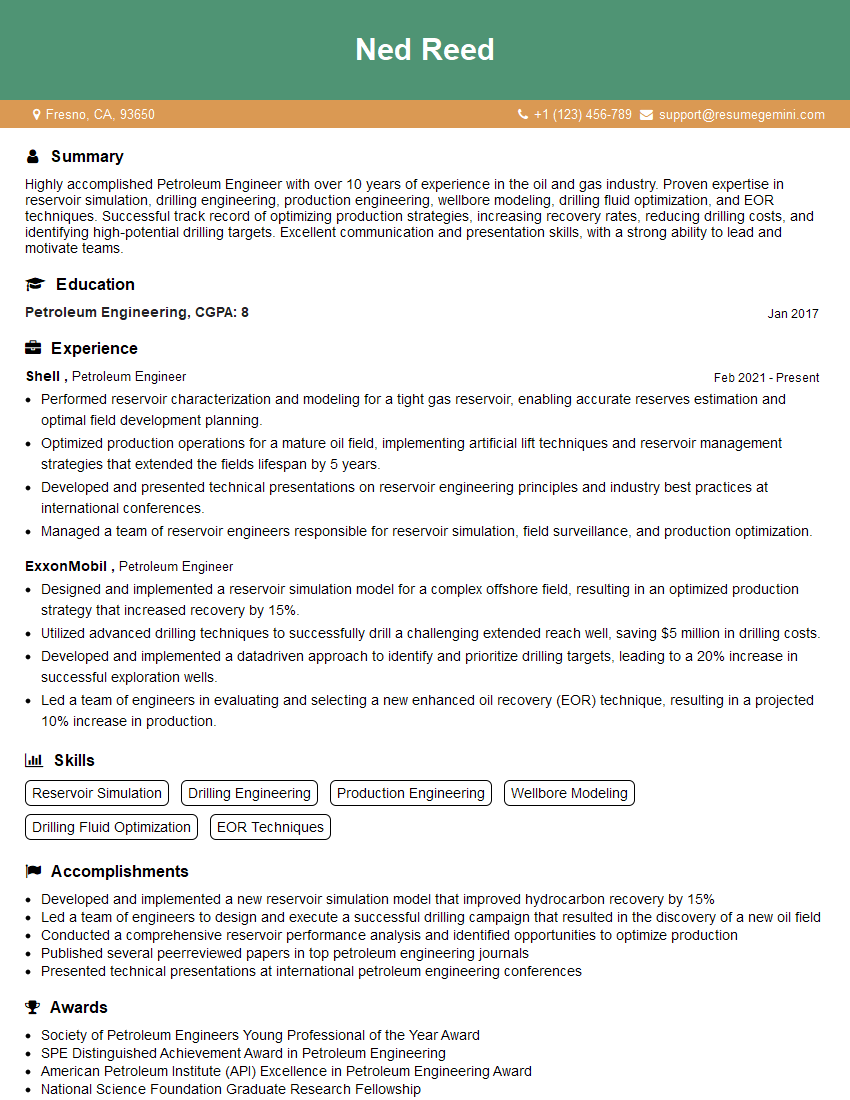
Petroleum Engineer Resume Sample
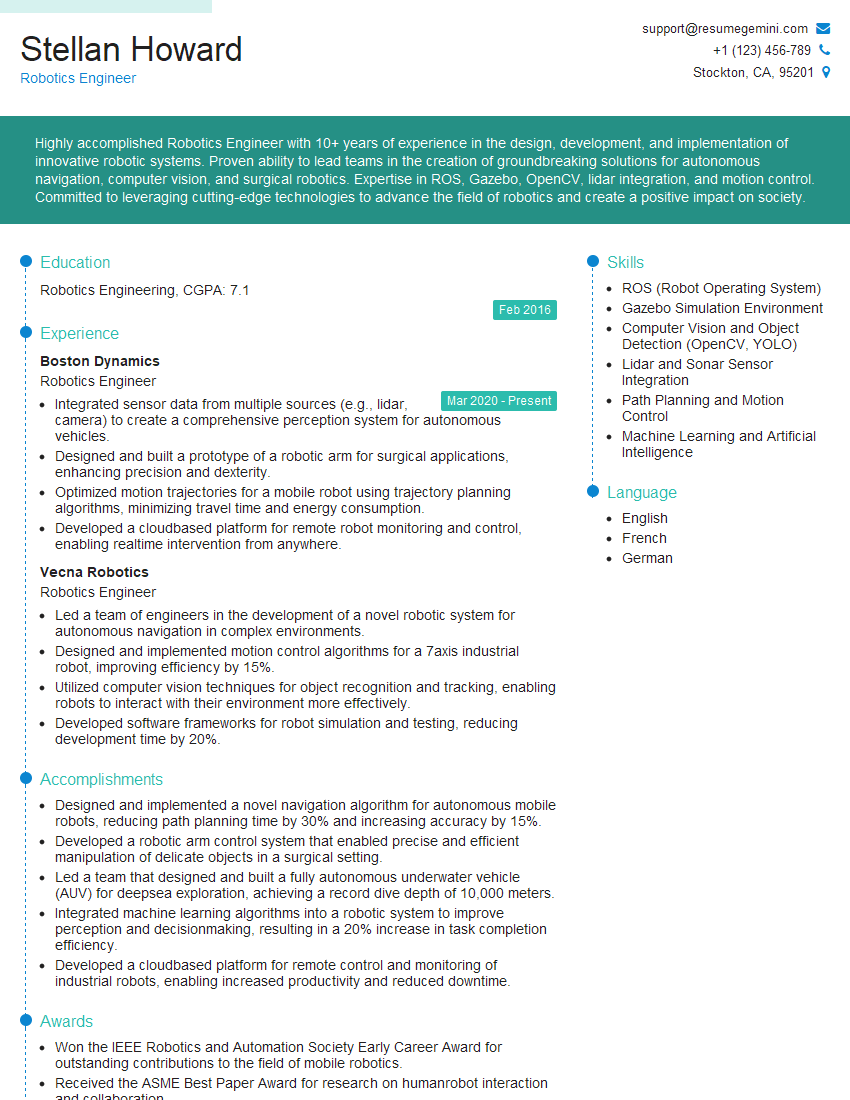
Robotics Engineer Resume Sample
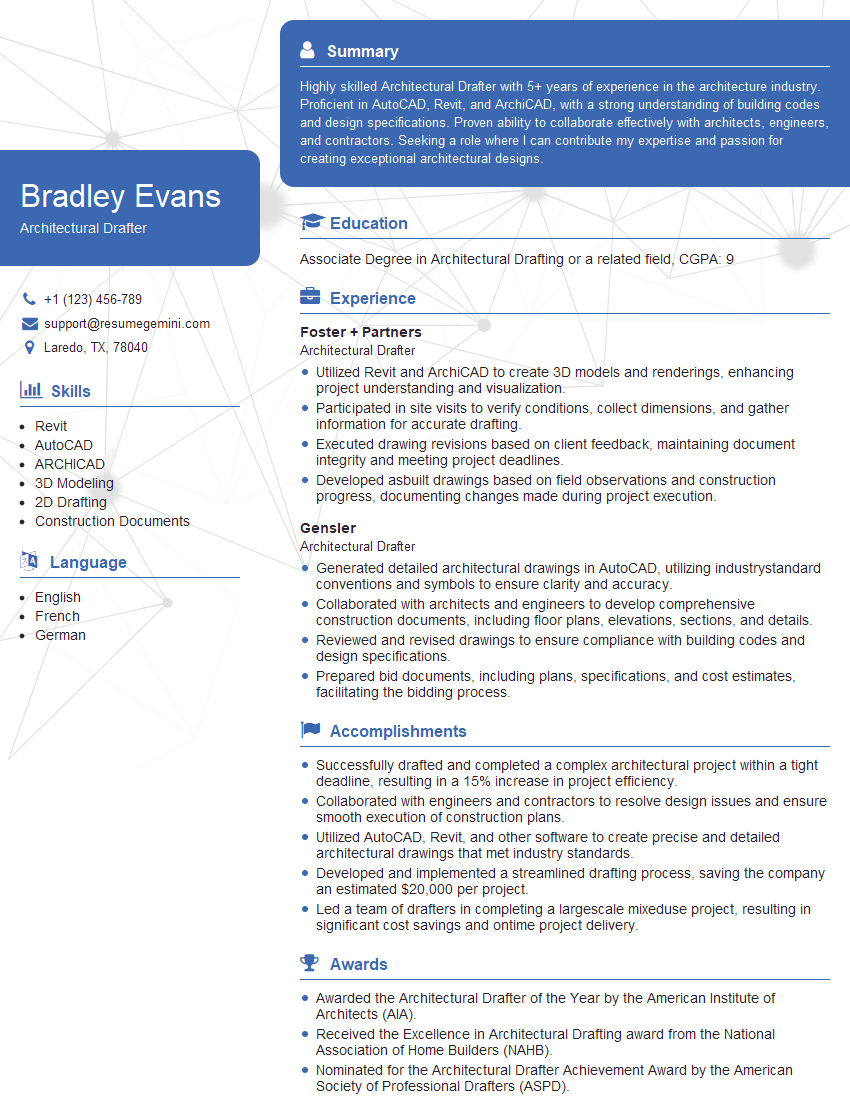
Architectural Drafter Resume Sample
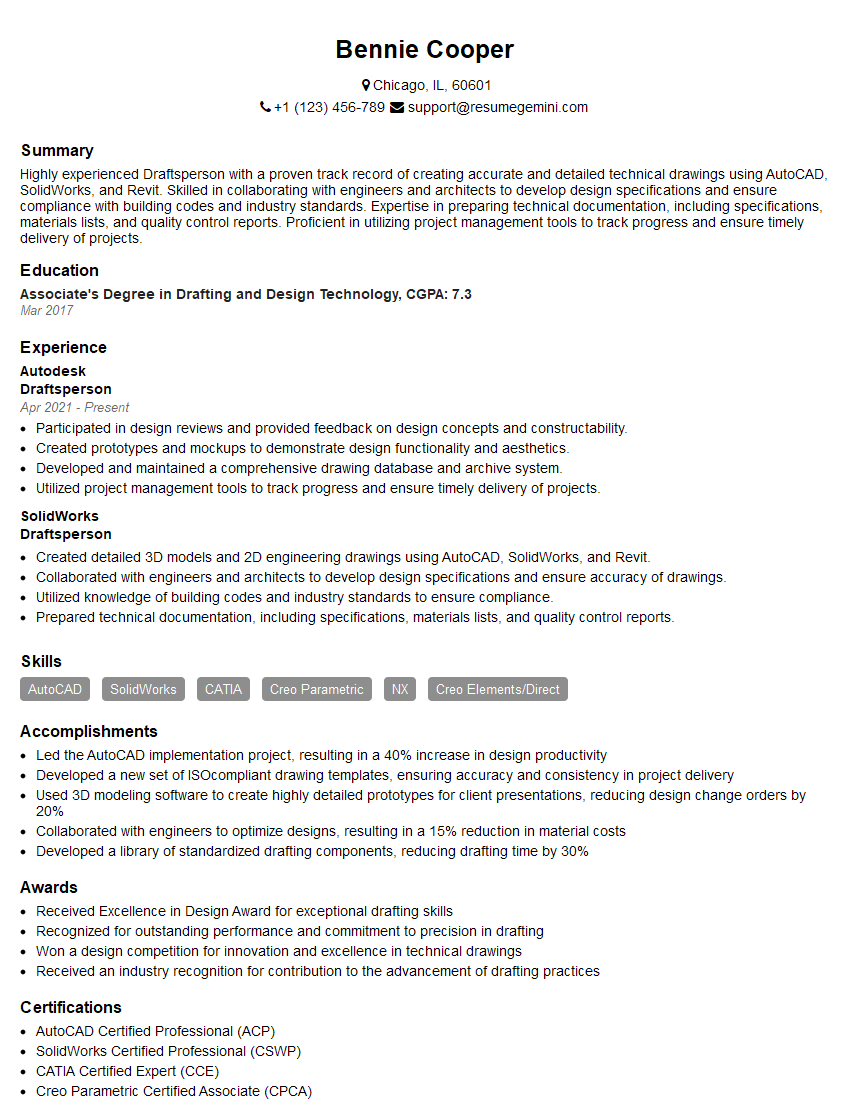
Draftsperson Resume Sample
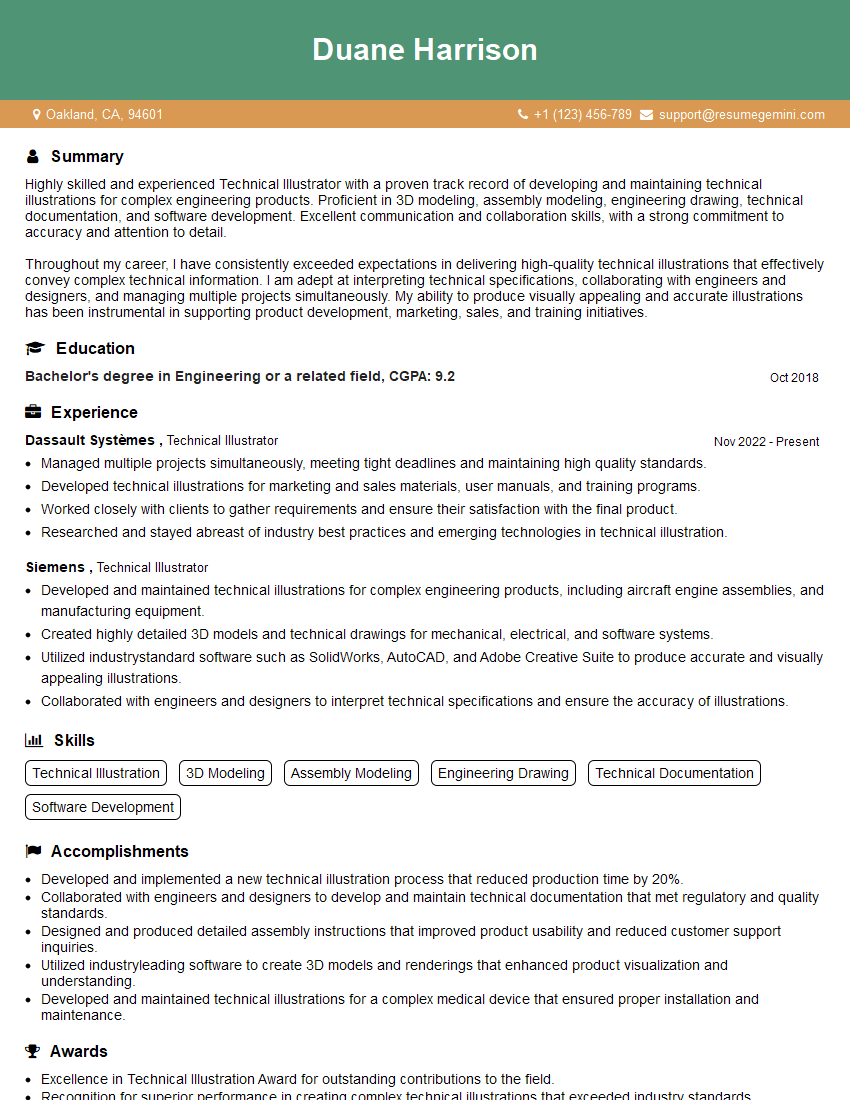
Technical Illustrator Resume Sample
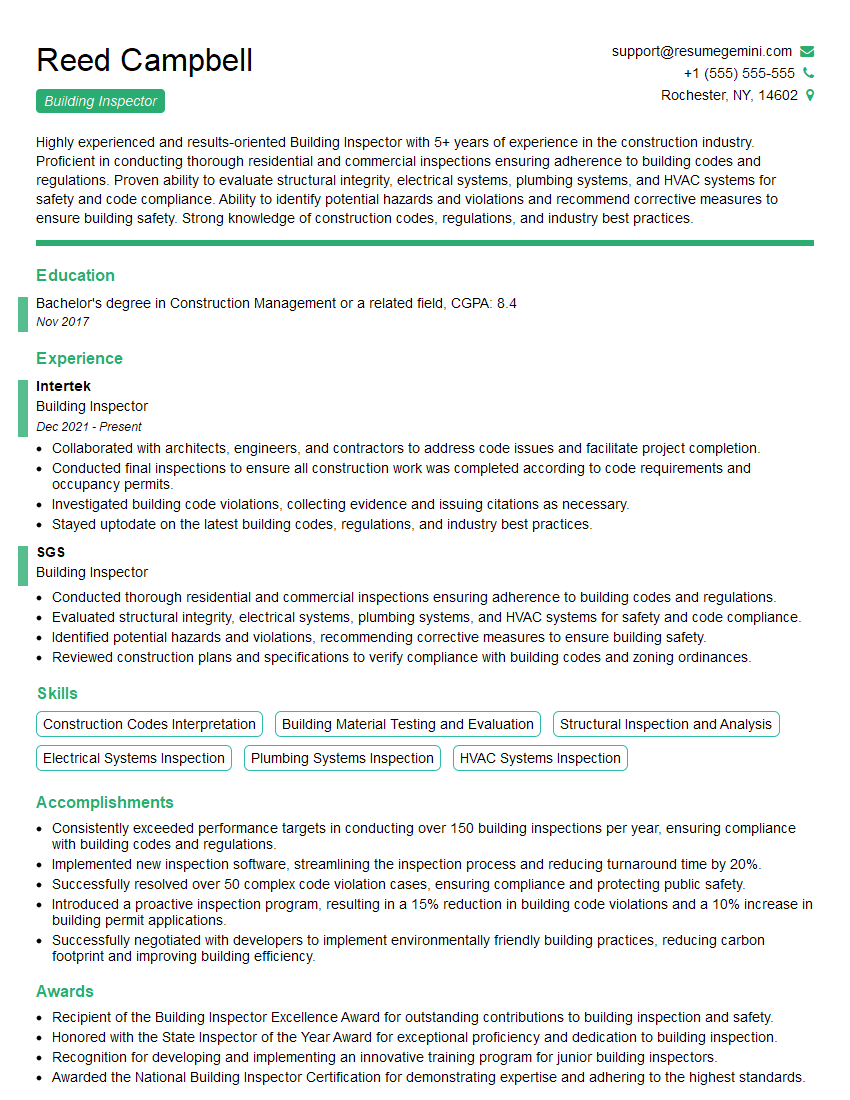
Building Inspector Resume Sample

Quality Control Inspector Resume Sample
- Construction Manager
- Project Engineer
- Estimator
- Design Engineer
- Surveyor
- Engineering Technician
- Aerospace Engineer
- Civil Engineer
- Geotechnical Engineer
- Structural Engineer
- Electrical Engineer
- Environmental Engineer
- Manufacturing Engineer
- Mechanical Engineer
- Automotive Engineer
- Petroleum Engineer
- Robotics Engineer
- Architectural Drafter
- Draftsperson
- Technical Illustrator
- Building Inspector
- Quality Control Inspector
Explore more articles
Users Rating of Our Blogs
Share Your Experience
We value your feedback! Please rate our content and share your thoughts (optional).
What Readers Say About Our Blog
Very informative content, great job.
good