Preparation is the key to success in any interview. In this post, we’ll explore crucial Renewable Energies interview questions and equip you with strategies to craft impactful answers. Whether you’re a beginner or a pro, these tips will elevate your preparation.
Questions Asked in Renewable Energies Interview
Q 1. Explain the difference between photovoltaic and concentrated solar power.
Both photovoltaic (PV) and concentrated solar power (CSP) harness the sun’s energy, but they do so in fundamentally different ways. PV uses photovoltaic cells, typically made of silicon, to directly convert sunlight into electricity. Think of it like a leaf performing photosynthesis, but instead of creating sugars, it creates electricity. CSP, on the other hand, uses mirrors or lenses to concentrate sunlight onto a receiver, heating a fluid (often water or molten salt) to very high temperatures. This heated fluid then drives a conventional power generation system, such as a steam turbine, to produce electricity. Imagine it as a giant magnifying glass focusing the sun’s energy to boil water and create steam for electricity generation.
The key difference lies in their energy conversion process: PV is a direct conversion of light to electricity, while CSP is an indirect conversion, first concentrating solar energy into heat and then using that heat to generate electricity. This difference leads to different applications and characteristics. PV is more suited for distributed generation, such as rooftop solar panels, while CSP is generally better suited for large-scale power plants in areas with high solar irradiance.
Q 2. Describe the various types of wind turbines and their applications.
Wind turbines are categorized primarily by their axis of rotation: horizontal-axis wind turbines (HAWTs) and vertical-axis wind turbines (VAWTs).
Horizontal-Axis Wind Turbines (HAWTs): These are the most common type, resembling giant windmills. They have a horizontal rotor axis, with blades rotating around a tower. HAWTs are generally more efficient at higher wind speeds and are better suited for larger-scale wind farms. They are further classified based on their design and size, with applications ranging from small residential units to massive offshore turbines capable of generating megawatts of power.
Vertical-Axis Wind Turbines (VAWTs): These have a vertical rotor axis and are often more compact and visually less obtrusive than HAWTs. They can start generating power even in low and fluctuating winds because they don’t require precise wind alignment. However, they are generally less efficient than HAWTs at higher wind speeds and are typically used in smaller-scale applications like urban settings or areas with complex wind patterns.
Applications vary depending on the size and type of turbine. Small HAWTs can power individual homes or businesses, while larger HAWTs are used in onshore and offshore wind farms for grid-connected power generation. VAWTs are increasingly used in urban settings due to their compact nature and lower noise levels compared to some HAWTs.
Q 3. What are the advantages and disadvantages of hydropower energy?
Hydropower, using the energy of flowing water to generate electricity, offers significant advantages but also has drawbacks.
Advantages: Hydropower is a reliable and predictable energy source. Once a dam is built, it provides a consistent power supply, unlike intermittent sources like solar and wind. It also has a high capacity factor, meaning it generates power for a large portion of the time. Furthermore, hydropower reservoirs can be used for flood control, irrigation, and recreation, offering multiple benefits beyond electricity generation. For example, the Three Gorges Dam in China provides significant flood control in addition to hydroelectric power.
Disadvantages: Hydropower projects often involve significant environmental impacts, including habitat destruction and alteration of river ecosystems. The construction of large dams can displace communities and cause downstream ecological disruption. Moreover, the operational efficiency of hydropower can be impacted by drought conditions and sediment build-up in reservoirs. In addition, the initial capital cost of building a hydropower plant is substantial.
Q 4. Discuss the environmental impacts of geothermal energy development.
Geothermal energy, utilizing heat from the Earth’s interior, has relatively low environmental impacts compared to fossil fuels, but some concerns remain.
Emissions: Geothermal power plants release significantly fewer greenhouse gases than fossil fuel-based plants. However, some emissions of greenhouse gases like carbon dioxide and hydrogen sulfide can occur, though generally at much lower levels. The levels depend on the type of geothermal resource being used.
Water Usage: Geothermal power plants require substantial amounts of water for cooling and other processes. This can stress local water resources, particularly in arid regions. Careful water management strategies are crucial to minimize environmental impact.
Induced Seismicity: Enhanced Geothermal Systems (EGS), which involve injecting fluids into hot rock formations, have been linked to minor induced seismicity (earthquakes). This is a critical area of research and development, and careful monitoring and management techniques are employed to mitigate the risk.
Land Use: Geothermal power plants require land for plant construction and infrastructure. This can have an impact on habitats and ecosystems depending on the location and extent of land use.
Overall, the environmental impacts of geothermal energy are considerably less than those of fossil fuels, but careful planning, monitoring, and mitigation strategies are essential to minimize any potential negative effects.
Q 5. How does biomass energy contribute to renewable energy generation?
Biomass energy contributes to renewable energy generation by utilizing organic matter from plants or animals as a fuel source. This organic matter, which includes wood, agricultural residues (like corn stalks or rice husks), dedicated energy crops (like switchgrass), and even algae, stores energy from the sun through photosynthesis. Burning biomass releases this stored energy in the form of heat, which can then be used to generate electricity or provide direct heat for various applications.
Different biomass conversion technologies exist, such as direct combustion, gasification, and anaerobic digestion. Direct combustion involves burning biomass directly to produce heat; gasification converts biomass into a combustible gas; and anaerobic digestion breaks down biomass in the absence of oxygen to produce biogas (primarily methane). The choice of technology depends on the type of biomass and the desired application.
Biomass energy’s contribution to renewable energy is significant, providing a diverse and readily available resource in many regions. However, sustainability concerns need careful consideration, including land use change and potential emissions if not managed sustainably.
Q 6. Explain the concept of net metering in the context of solar energy.
Net metering is a billing mechanism that allows customers who generate their own electricity, typically from solar panels, to send excess energy back to the grid and receive credit on their electricity bill. Essentially, it creates a two-way flow of electricity between the customer’s home or business and the utility grid.
Here’s how it works: When the solar panels generate more electricity than the customer is using, the excess power flows back to the grid. The utility meter runs backward, recording the amount of electricity exported. At the end of the billing period, the utility credits the customer for the exported electricity, offsetting the amount of electricity consumed from the grid. This reduces or even eliminates the customer’s electricity bill, effectively sharing the energy they generate with the community.
Net metering incentivizes distributed generation of solar energy and helps integrate renewable energy into existing power grids, making the grid more efficient and resilient. For example, a homeowner with a 5kW solar panel system might export 2kW back to the grid during peak sunlight, reducing their net electricity consumption and decreasing their bill.
Q 7. What are the challenges associated with integrating renewable energy sources into the grid?
Integrating renewable energy sources into the grid presents several significant challenges:
Intermittency: Solar and wind power are intermittent, meaning their output fluctuates based on weather conditions. This variability makes it difficult to reliably predict and manage electricity supply, requiring sophisticated grid management strategies and energy storage solutions.
Grid Infrastructure: Existing grid infrastructure is often not optimally designed to handle the decentralized and variable nature of renewable energy. Upgrades and improvements to the grid, including smart grids and advanced control systems, are necessary to accommodate the influx of renewable energy.
Transmission and Distribution: Renewable energy resources are often located far from population centers, requiring significant investments in new transmission and distribution lines to transport the electricity to where it’s needed. This can face geographical and permitting hurdles.
Balancing Supply and Demand: The inherent unpredictability of renewables requires advanced forecasting and grid management tools to balance supply and demand in real-time. This requires sophisticated algorithms and grid-scale energy storage solutions.
System Stability: The integration of large amounts of renewable energy can impact the stability and frequency of the electrical grid. Advanced grid control systems and flexible generation resources are needed to maintain system stability.
Addressing these challenges requires a holistic approach involving technological advancements, policy support, and grid modernization. The transition to a sustainable energy future necessitates tackling these issues effectively.
Q 8. Describe different energy storage technologies used in conjunction with renewable energy sources.
Energy storage is crucial for integrating renewable energy sources like solar and wind, which are inherently intermittent. Several technologies address this challenge:
- Pumped Hydro Storage: This is a mature technology using excess electricity to pump water uphill, then releasing it to generate power during peak demand. Think of it like a giant water battery. It’s cost-effective for large-scale applications but geographically limited.
- Battery Energy Storage Systems (BESS): These use batteries, typically lithium-ion, to store energy. They’re rapidly improving in terms of cost, efficiency, and lifespan, making them suitable for various scales, from residential to grid-level applications. For example, Tesla Powerwall is a popular residential BESS.
- Compressed Air Energy Storage (CAES): Excess electricity compresses air, which is then used to drive turbines during periods of high demand. It’s a longer-duration storage solution but requires significant infrastructure.
- Thermal Energy Storage: This involves storing energy as heat (e.g., molten salt) or cold (e.g., ice), later used to generate electricity or provide heating/cooling. Concentrated solar power plants often utilize thermal storage.
- Flywheel Energy Storage: This technology stores energy by spinning a massive rotor at high speeds. It’s suitable for short-duration applications requiring fast response times, such as grid stabilization.
The choice of technology depends on factors like project scale, cost, duration of storage required, and geographical constraints.
Q 9. How do you assess the economic viability of a renewable energy project?
Assessing the economic viability of a renewable energy project requires a comprehensive approach, considering various factors over the project’s lifespan (typically 20-30 years):
- Capital Costs: This includes the cost of land acquisition, equipment (turbines, panels, inverters), installation, and permitting.
- Operational Costs: This encompasses maintenance, insurance, grid connection fees, and operations and management expenses.
- Revenue Streams: These are primarily from electricity sales, potentially including government incentives (e.g., tax credits, subsidies, feed-in tariffs), carbon credits, or participation in electricity markets.
- Financial Modeling: Discounted Cash Flow (DCF) analysis is commonly used to evaluate the project’s net present value (NPV) and internal rate of return (IRR). This takes into account the time value of money, inflation, and risk.
- Risk Assessment: This involves identifying and quantifying potential risks, such as changes in energy prices, policy changes, technological advancements, and equipment failures. Sensitivity analysis helps determine the impact of these risks on the project’s financial performance.
Software tools specifically designed for renewable energy project financial modeling are widely available and used to perform these calculations. A strong understanding of financial modeling principles is critical for accurately evaluating the long-term profitability of a renewable energy project.
Q 10. What are the key factors influencing the siting of wind farms?
Siting a wind farm involves careful consideration of several key factors:
- Wind Resource: The most crucial factor is the availability of consistent, high-speed winds. Meteorological data analysis is essential to identify locations with optimal wind conditions. This often involves installing anemometers for long-term data collection.
- Land Availability: Large areas of land are required for wind farms. The land should be suitable for turbine installation and access roads, while considering environmental impacts.
- Grid Connection: Proximity to the electricity grid is crucial for efficient energy transmission. Connecting to the grid involves significant cost and time. The distance from substations can greatly impact project feasibility.
- Environmental Impacts: Environmental assessments are necessary to evaluate the impact on wildlife (birds, bats), noise pollution, and visual impacts on the landscape. Mitigation measures might be required.
- Regulatory Approvals: Obtaining permits and approvals from local, state, and federal authorities can be a lengthy and complex process. This process involves navigating different regulations related to environmental protection, land use, and construction permits.
- Public Acceptance: Community engagement and addressing public concerns are crucial for successful project implementation. Addressing potential negative impacts on nearby residents and stakeholders is essential.
A thorough site assessment, integrating all these factors, is paramount for successful wind farm development.
Q 11. Explain the role of smart grids in optimizing renewable energy integration.
Smart grids play a vital role in optimizing renewable energy integration by enhancing grid flexibility and reliability. They achieve this through:
- Two-way Communication: Smart grids enable two-way communication between the grid and distributed energy resources (DERs), such as solar panels and wind turbines, allowing for real-time monitoring and control.
- Demand-Side Management: Smart grids can manage electricity demand by incentivizing consumers to shift their energy consumption to off-peak hours, thus reducing strain on the grid during periods of low renewable generation.
- Improved Grid Stability: Smart grids use advanced sensors and control systems to maintain grid stability even with the intermittent nature of renewable energy sources. They can rapidly respond to fluctuations in generation and demand.
- Integration of Energy Storage: Smart grids facilitate the seamless integration of energy storage systems, allowing for better utilization of renewable energy and improved grid reliability. They optimize charging and discharging of batteries based on grid needs.
- Advanced Metering Infrastructure (AMI): Smart meters provide real-time data on energy consumption, enabling better forecasting and grid management. This data allows for effective demand response and helps coordinate energy usage with renewable energy generation.
In essence, smart grids act as intelligent platforms for managing the dynamic interaction between renewable energy sources and the electricity grid, leading to more efficient, reliable, and sustainable energy systems.
Q 12. Discuss the different types of solar inverters and their functions.
Solar inverters are essential components of photovoltaic (PV) systems, converting the direct current (DC) electricity generated by solar panels into alternating current (AC) electricity compatible with the power grid and household appliances. Different types exist:
- String Inverters: These connect several solar panels in series (a string) and convert the combined DC output to AC. They are relatively inexpensive but less efficient if one panel in the string is shaded or malfunctions.
- Microinverters: These are small inverters connected to individual solar panels, converting each panel’s DC output independently. This design improves efficiency and allows for better monitoring of each panel’s performance. However, they are typically more expensive per watt.
- Power Optimizers: These are DC-to-DC converters placed between panels and the inverter, maximizing energy production from each panel individually, even in partial shading. They work in conjunction with string inverters.
- Central Inverters: These are large inverters used in large-scale solar farms, converting the combined DC output of numerous strings or panels into AC. They are efficient for large systems but require careful design and maintenance.
The choice of inverter type depends on factors such as system size, budget, shading conditions, and desired monitoring capabilities. For example, a residential rooftop system might use microinverters or power optimizers, while a large utility-scale solar farm will likely use central inverters.
Q 13. What are the common maintenance requirements for solar panels and wind turbines?
Regular maintenance is crucial for maximizing the lifespan and efficiency of renewable energy assets:
- Solar Panels: Maintenance typically includes regular visual inspections to check for damage (cracks, hotspots, debris), cleaning to remove dirt and debris, and occasional repairs or replacements of faulty panels. More rigorous inspections and testing may be needed depending on the system’s age and environmental conditions.
- Wind Turbines: Wind turbines require more intensive maintenance, including regular inspections of blades, gearboxes, generators, and other critical components. Lubrication, cleaning, and minor repairs are often performed during routine maintenance. Major overhauls are conducted periodically, depending on the turbine’s design and operating hours. Specialized tools and skilled technicians are required for wind turbine maintenance. Remote monitoring and diagnostic systems help predict potential failures, enabling preventative maintenance and minimizing downtime.
Preventive maintenance is key for both technologies to minimize unexpected failures and extend operational lifespans. A well-defined maintenance schedule and skilled workforce are essential for the long-term success and profitability of renewable energy projects.
Q 14. How do you calculate the capacity factor of a renewable energy power plant?
The capacity factor represents the actual power generated by a renewable energy plant compared to its maximum possible output over a given period. It indicates the plant’s efficiency and reliability.
The formula is:
Capacity Factor = (Actual Energy Generated / (Rated Capacity × Time Period)) × 100%For example, consider a 1 MW wind turbine over a year (8760 hours). If it generates 3,000 MWh of electricity in that year, the capacity factor is:
Capacity Factor = (3000 MWh / (1 MW × 8760 hours)) × 100% ≈ 34.2%This means the turbine produced 34.2% of its maximum possible output over the year. Capacity factors vary depending on the renewable resource’s intermittency (e.g., wind speed, solar irradiance), plant technology, and location. Higher capacity factors are generally more desirable, indicating better efficiency and economic performance.
Q 15. What are the different types of biomass feedstocks used for energy production?
Biomass feedstocks are organic materials used to generate energy. They’re broadly categorized into several types, each with unique properties and suitability for different energy conversion technologies.
- Agricultural Residues: These include crop stalks (corn stover, wheat straw), rice husks, bagasse (sugarcane residue), and fruit/vegetable waste. They’re readily available and often considered waste products, making them a cost-effective option. However, collection and transportation can be challenging.
- Forestry Residues: This category encompasses wood chips, sawdust, branches, and logging residues. Sustainable forestry practices can provide a substantial and renewable supply. However, careful management is crucial to prevent deforestation.
- Energy Crops: These are plants specifically cultivated for energy production, such as switchgrass, miscanthus, and willow. They offer higher yields and better control over supply than residues but require land and resources for cultivation.
- Municipal Solid Waste (MSW): This includes household garbage, commercial waste, and other discarded materials. While energy recovery from MSW reduces landfill burden, it requires sophisticated waste sorting and treatment to prevent harmful emissions.
- Animal Manure: This organic waste can be used for biogas production (primarily methane), offering a decentralized and often localized energy source. However, the digester technology requires specific management to avoid odor and pollution issues.
The choice of biomass feedstock depends on factors such as availability, cost, transportation logistics, environmental impact, and the specific energy conversion technology used (e.g., combustion, gasification, anaerobic digestion).
Career Expert Tips:
- Ace those interviews! Prepare effectively by reviewing the Top 50 Most Common Interview Questions on ResumeGemini.
- Navigate your job search with confidence! Explore a wide range of Career Tips on ResumeGemini. Learn about common challenges and recommendations to overcome them.
- Craft the perfect resume! Master the Art of Resume Writing with ResumeGemini’s guide. Showcase your unique qualifications and achievements effectively.
- Don’t miss out on holiday savings! Build your dream resume with ResumeGemini’s ATS optimized templates.
Q 16. Explain the principles of energy efficiency and its importance in renewable energy systems.
Energy efficiency in renewable energy systems focuses on maximizing the output of energy obtained from a given renewable resource while minimizing energy losses throughout the entire process. This is crucial for both economic and environmental reasons.
Principles: Energy efficiency involves optimizing every stage, from resource collection to end-use. This includes:
- Improved Conversion Technologies: Using advanced technologies that convert more of the resource into usable energy (e.g., high-efficiency solar panels, advanced wind turbine designs).
- Reduced Transmission Losses: Minimizing energy loss during transmission and distribution through optimized grid infrastructure and smart grid technologies.
- Efficient Energy Storage: Implementing efficient energy storage solutions (batteries, pumped hydro) to manage intermittency and improve grid stability.
- Optimized System Design: Designing systems with optimal orientation, placement, and integration with existing infrastructure to minimize losses.
- Smart Energy Management: Utilizing smart sensors, data analytics, and control systems to optimize energy consumption and distribution.
Importance: High energy efficiency lowers the cost of renewable energy, making it more competitive. It also reduces the environmental footprint by decreasing the amount of resource needed for a given energy output, lessening land use, and reducing waste generation. For example, a solar farm with higher-efficiency panels will require less land area to produce the same amount of electricity.
Q 17. Describe the regulatory landscape for renewable energy development in your region.
The regulatory landscape for renewable energy varies significantly by region. (Note: This answer will be generalized since the specific region isn’t specified. A real answer would need to replace this section with specifics of a particular region’s regulations.)
Generally, supportive regulations include:
- Renewable Portfolio Standards (RPS): These mandates require electricity providers to source a certain percentage of their electricity from renewables.
- Feed-in Tariffs (FITs): These provide guaranteed prices for renewable energy producers, incentivizing investment.
- Tax Credits and Incentives: Financial incentives like tax breaks, grants, and rebates to encourage renewable energy development.
- Streamlined Permitting Processes: Simplified permitting processes to expedite project development.
- Grid Connection Policies: Regulations ensuring access to the electricity grid for renewable energy projects.
Conversely, some challenges may include:
- Intermittency Challenges: Regulations to address the intermittency of renewable energy sources (sun, wind) may be needed to balance grid stability.
- Environmental Impact Assessments: Strict regulations governing environmental impact assessments are essential to mitigate any potential adverse effects.
- Land Use Restrictions: Zoning regulations and land use planning processes can impact the siting of renewable energy projects.
It is crucial to stay updated with the latest changes in regulations, often through government agencies and industry associations.
Q 18. What are the different types of permits and licenses required for renewable energy projects?
The permits and licenses required for renewable energy projects vary greatly depending on the project type, size, location, and local regulations. However, some common permits include:
- Land Use Permits: Permits for land development, including zoning permits and building permits.
- Environmental Permits: These often include permits related to air quality, water quality, and endangered species protection (e.g., Clean Water Act permits, Endangered Species Act permits).
- Construction Permits: Permits required for construction activities, potentially including permits for road access, utility connections, and demolition.
- Grid Connection Permits: Permits to connect the renewable energy system to the electricity grid, often involving interconnection agreements.
- Operating Permits: Permits allowing the project to operate once it’s constructed, often including operational and maintenance plans.
- State and Federal Permits: Permits specific to the state and/or federal jurisdiction, often relating to environmental impact assessment and resource management.
Navigating the permitting process typically requires expert legal and regulatory guidance. Each permit application involves extensive documentation, environmental studies, and stakeholder consultations.
Q 19. Discuss the life cycle assessment of a renewable energy system.
Life cycle assessment (LCA) is a comprehensive analysis of the environmental impacts associated with a product or system throughout its entire life cycle. For renewable energy systems, this includes:
- Raw Material Extraction: The environmental impact of extracting raw materials, such as mining for solar panel components or harvesting wood for biomass.
- Manufacturing and Construction: The energy consumption, emissions, and waste generation associated with manufacturing components and building the system.
- Operation and Maintenance: The ongoing energy consumption, emissions, and waste generation during the operational phase, including transportation of components.
- Decommissioning and Disposal: The environmental impacts of dismantling the system at the end of its life and managing waste disposal.
An LCA provides a holistic view of the environmental footprint of a renewable energy system, allowing for comparisons between different technologies and identification of potential areas for improvement. For example, an LCA of a wind farm might consider the impact of manufacturing the turbines, the land use, and the disposal of the blades at the end of their lifespan.
Q 20. How do you evaluate the environmental impact of a renewable energy project?
Evaluating the environmental impact of a renewable energy project requires a multi-faceted approach. Key aspects include:
- Greenhouse Gas Emissions: Quantifying greenhouse gas emissions during each stage of the life cycle using established methodologies (e.g., IPCC guidelines).
- Air and Water Quality: Assessing potential impacts on air and water quality, considering pollutants released during construction, operation, and decommissioning.
- Land Use and Habitat Impacts: Evaluating changes in land use, habitat fragmentation, and potential impacts on biodiversity.
- Waste Generation: Identifying and quantifying the different types of waste generated throughout the project’s life cycle.
- Noise and Visual Impacts: Assessing potential impacts on surrounding communities from noise and visual changes.
- Resource Depletion: Considering the consumption of resources (water, minerals) during the project’s life cycle.
This assessment often involves environmental impact statements (EIS), using established frameworks and tools to conduct a comprehensive analysis. The results inform mitigation strategies and decision-making regarding project approval and implementation.
Q 21. Explain the concept of levelized cost of energy (LCOE).
The levelized cost of energy (LCOE) is a metric used to compare the total cost of generating electricity from different sources over their entire lifetime. It represents the average cost per unit of energy (typically kilowatt-hour, kWh) produced over the project’s lifespan, considering all costs and normalized to a single value.
Components of LCOE:
- Capital Costs: Initial investment in infrastructure (e.g., solar panels, wind turbines, power plants).
- Operating and Maintenance Costs: Costs associated with the day-to-day operation and maintenance of the system.
- Fuel Costs: The cost of fuel used in energy generation (though this is usually minimal or zero for most renewables).
- Financing Costs: Interest and other costs related to financing the project.
- Decommissioning Costs: Costs associated with dismantling and disposal at the end of the system’s life.
Calculation: The LCOE is calculated by summing the discounted value of all costs over the project’s lifetime and dividing by the total energy produced. The calculation is complex and often involves specialized software. Different assumptions and parameters can significantly impact the result.
Practical Application: LCOE is a vital tool for comparing the economic viability of different renewable energy technologies and making informed decisions regarding energy investments. Lower LCOE indicates a more cost-effective energy generation source.
Q 22. What are the potential risks associated with investing in renewable energy projects?
Investing in renewable energy projects, while crucial for a sustainable future, carries inherent risks. These can be broadly categorized into financial, technological, regulatory, and environmental risks.
- Financial Risks: These include fluctuating energy prices (affecting project profitability), securing adequate financing, and potential cost overruns during construction and operation. For example, delays due to permitting issues or unexpected geological challenges during wind turbine foundation construction can significantly impact project budgets.
- Technological Risks: Technological failures or unforeseen maintenance needs can cause significant downtime and financial losses. The reliability of new technologies, like advanced solar panels or wave energy converters, may be uncertain during the early stages of deployment.
- Regulatory Risks: Changes in government policies, permitting processes, or feed-in tariffs can impact project viability. A sudden shift in renewable energy subsidies or stricter environmental regulations can affect the financial return of an investment.
- Environmental Risks: These involve concerns such as the impact on local ecosystems (e.g., habitat disruption from large-scale solar farms or bird mortality from wind turbines). Proper environmental impact assessments and mitigation strategies are crucial to manage these risks.
Mitigating these risks requires thorough due diligence, robust risk assessment frameworks, and diversification of the investment portfolio. Insurance and hedging strategies can help manage financial uncertainties. Careful site selection and community engagement can help minimize environmental and social impacts.
Q 23. How do you assess the social acceptance of a renewable energy project?
Assessing social acceptance of a renewable energy project is vital for its successful implementation. It goes beyond simply obtaining permits and involves understanding and addressing the concerns of the local community.
A multi-faceted approach is necessary, incorporating the following steps:
- Community Engagement: This includes holding public forums, conducting surveys, and engaging with local stakeholders (residents, businesses, environmental groups) to understand their perspectives and concerns. Transparency and open communication are key.
- Addressing Concerns: Common concerns often revolve around visual impacts (e.g., the aesthetics of wind turbines), noise pollution, property values, and potential environmental effects. Proactively addressing these concerns through mitigation strategies (e.g., noise barriers, landscape integration) is critical.
- Benefit Sharing: Demonstrating the economic benefits to the community, such as job creation, local tax revenue, and reduced energy costs, can increase support. Community ownership models or local employment guarantees can further enhance acceptance.
- Monitoring and Feedback Mechanisms: Establish channels for ongoing dialogue and feedback after project implementation to address any emerging issues and maintain positive relationships with the community.
Successful social acceptance hinges on building trust and demonstrating respect for community values. A well-planned engagement process is often the difference between a project’s smooth execution and its potential failure due to community opposition.
Q 24. Discuss the role of government policies in promoting renewable energy adoption.
Government policies play a pivotal role in accelerating the adoption of renewable energy. They provide the necessary framework for investment, development, and deployment.
- Feed-in Tariffs (FITs): These guarantee a fixed price for renewable energy fed into the grid, providing a predictable revenue stream for project developers. Germany’s early success with solar energy was significantly driven by their robust FIT program.
- Renewable Portfolio Standards (RPS): These mandate a certain percentage of electricity generation from renewable sources, compelling utilities to invest in renewable energy projects. Many US states have implemented successful RPS programs.
- Tax Incentives and Subsidies: Tax credits, grants, and other financial incentives reduce the upfront costs of renewable energy projects, making them more attractive to investors.
- Streamlined Permitting Processes: Efficient and transparent permitting procedures reduce bureaucratic hurdles and expedite project development. This is crucial for reducing delays and costs.
- Carbon Pricing Mechanisms: Carbon taxes or cap-and-trade systems increase the cost of fossil fuels, making renewable energy more competitive. The European Union Emissions Trading System (EU ETS) is a prominent example.
- Research and Development Funding: Government investment in R&D helps advance renewable energy technologies, driving down costs and improving efficiency.
A coherent and stable policy environment is crucial to attract long-term investments in the renewable energy sector and facilitate its sustainable growth. Policy inconsistency can create uncertainty and hinder investment decisions.
Q 25. Describe the different financing mechanisms available for renewable energy projects.
Financing renewable energy projects requires a diverse range of mechanisms, given their capital-intensive nature and long-term payoff.
- Equity Financing: Investors provide capital in exchange for an ownership stake in the project. This can be from private equity firms, venture capitalists, or public offerings.
- Debt Financing: Loans from banks, financial institutions, or government agencies provide funding. This may involve project finance loans specifically structured for long-term infrastructure projects.
- Green Bonds: These are debt securities issued to raise capital specifically for green or environmentally friendly projects, including renewable energy.
- Crowdfunding: This involves raising capital from a large number of individuals via online platforms. This can be particularly effective for smaller-scale community-owned projects.
- Public-Private Partnerships (PPPs): These involve collaborations between government entities and private sector companies, sharing risks and responsibilities for project development and operation. PPPs are commonly used for large-scale infrastructure projects.
- Power Purchase Agreements (PPAs): These contracts guarantee a buyer (e.g., a utility) will purchase the electricity generated by the renewable energy project for a set price and duration. PPAs reduce the financial risk for project developers.
The optimal financing strategy depends on the project’s size, risk profile, and the availability of different funding sources. Sophisticated financial modeling and risk assessment are crucial for securing funding.
Q 26. How do you ensure the safety of workers during the construction and operation of renewable energy facilities?
Ensuring worker safety during the construction and operation of renewable energy facilities is paramount. This requires a comprehensive approach encompassing several key elements:
- Rigorous Safety Training: All workers must receive thorough training on relevant safety procedures, equipment operation, and hazard identification. This includes specific training on working at heights (for wind turbines), electrical safety, and handling hazardous materials.
- Regular Safety Inspections: Frequent inspections of equipment and work sites are essential to identify potential hazards and ensure compliance with safety regulations. This helps proactively mitigate risks before accidents occur.
- Personal Protective Equipment (PPE): Providing and enforcing the use of appropriate PPE, such as hard hats, safety glasses, harnesses, and high-visibility clothing, is crucial for worker protection.
- Emergency Response Plans: Well-defined emergency response plans, including procedures for evacuations, first aid, and contacting emergency services, are necessary to handle unforeseen incidents.
- Compliance with Safety Regulations: Adherence to all relevant occupational safety and health regulations and industry best practices is non-negotiable. This involves regular audits and compliance reporting.
- Safety Culture: Creating a strong safety culture within the organization, where safety is prioritized over production targets, is essential for fostering a safe working environment.
Implementing a robust safety management system, engaging workers in safety discussions, and consistently monitoring performance are critical for minimizing workplace accidents and ensuring the well-being of renewable energy workers.
Q 27. Explain the different types of renewable energy forecasting techniques.
Renewable energy forecasting techniques are essential for grid stability and efficient energy management. These methods predict future energy generation based on weather patterns and other relevant data.
- Numerical Weather Prediction (NWP): NWP models utilize sophisticated atmospheric simulations to predict weather variables like wind speed, solar irradiance, and temperature. These predictions are then used to forecast renewable energy output.
- Statistical Methods: These methods use historical data to identify patterns and correlations between weather data and energy generation. Time series analysis, regression models, and machine learning algorithms are commonly used.
- Hybrid Models: Combining NWP and statistical methods often leads to more accurate forecasts. For instance, statistical models can correct biases or errors in NWP predictions.
- Artificial Intelligence (AI): AI and machine learning algorithms, such as neural networks and support vector machines, are increasingly used to analyze large datasets, identifying complex patterns and improving forecast accuracy.
- Ensemble Forecasting: This technique combines predictions from multiple models to produce a more robust and reliable forecast, reducing the impact of individual model errors.
The choice of forecasting technique depends on factors such as the type of renewable energy source, the desired forecasting horizon (short-term, medium-term, long-term), and data availability. Accurate forecasting is crucial for managing grid stability and integrating renewable energy effectively into the power system.
Q 28. What are the future trends and challenges facing the renewable energy industry?
The renewable energy industry faces exciting opportunities and significant challenges as it continues its rapid expansion.
- Technological Advancements: Ongoing research and development are leading to more efficient and cost-effective renewable energy technologies. Innovations in battery storage, smart grids, and advanced materials will play a significant role.
- Grid Integration Challenges: Integrating intermittent renewable energy sources (like solar and wind) into the power grid requires advanced grid management strategies and sufficient energy storage capacity to ensure reliable power supply.
- Resource Availability and Siting: The availability of suitable locations for large-scale renewable energy projects is a concern, particularly for onshore wind and solar farms. Careful site selection and planning are essential to minimize environmental impacts and community opposition.
- Material Supply Chains: The production of renewable energy technologies relies on specific materials, some of which may face supply chain challenges or ethical concerns (e.g., rare earth elements for wind turbines). Sustainable and ethical sourcing is increasingly important.
- Policy and Regulatory Landscape: Consistent and supportive government policies are crucial for continued investment and growth. Uncertainty around regulations and subsidies can hinder investment decisions.
- Climate Change Mitigation: The urgency of addressing climate change necessitates a rapid transition to renewable energy. Accelerated deployment and innovation are crucial to meet global decarbonization targets.
Successfully navigating these challenges will require collaboration among governments, industry players, researchers, and communities. A holistic approach that considers both technological and societal aspects is needed to ensure the long-term success of the renewable energy transition.
Key Topics to Learn for Renewable Energies Interview
- Solar Energy: Understanding photovoltaic (PV) systems, solar thermal technologies, and their integration into the grid. Explore concepts like efficiency, capacity factors, and lifecycle analysis.
- Wind Energy: Learn about different turbine designs, wind resource assessment, and the environmental impacts of wind farms. Consider the practical applications of wind energy in onshore and offshore settings.
- Hydropower: Familiarize yourself with various hydropower technologies, including run-of-river, impoundment, and pumped hydro storage. Understand the environmental considerations and the role of hydropower in grid stability.
- Geothermal Energy: Explore geothermal power plants, direct use applications (heating and cooling), and the geological factors influencing geothermal resource potential. Consider the challenges of sustainable geothermal energy extraction.
- Biomass Energy: Understand different biomass feedstocks, conversion technologies (e.g., combustion, gasification), and the sustainability challenges associated with biomass energy production.
- Energy Storage: Learn about different energy storage technologies (batteries, pumped hydro, compressed air) and their roles in integrating renewable energy sources into the grid. Explore their efficiency, scalability, and cost-effectiveness.
- Smart Grids and Microgrids: Understand the importance of smart grids for managing intermittent renewable energy sources. Explore the concept of microgrids and their benefits in enhancing grid resilience and reliability.
- Policy and Regulation: Familiarize yourself with relevant renewable energy policies, incentives, and regulations at local, national, and international levels. Understand the role of carbon pricing and renewable portfolio standards.
- Life Cycle Assessment (LCA): Understand how to evaluate the environmental impact of renewable energy technologies across their entire lifecycle, from material extraction to disposal.
- Problem-Solving and Critical Thinking: Practice analyzing real-world renewable energy challenges, such as grid integration issues, intermittency, and resource availability. Develop your ability to propose innovative and sustainable solutions.
Next Steps
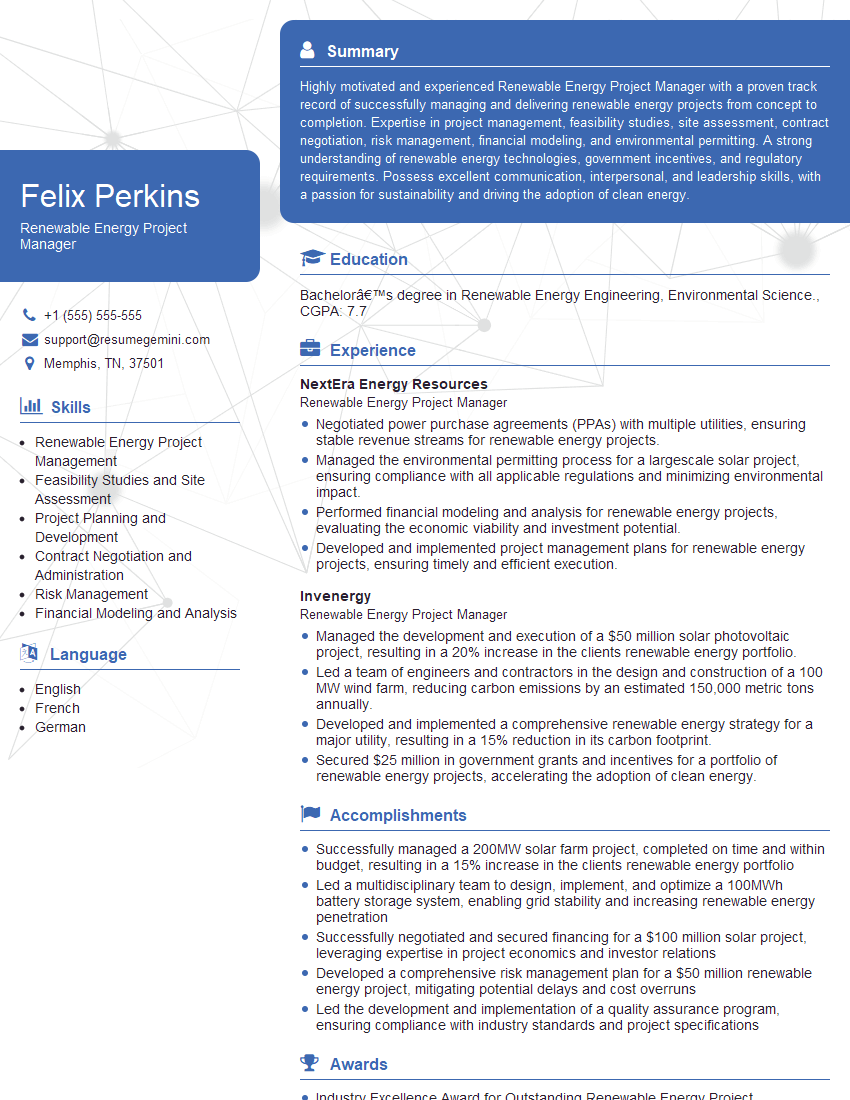
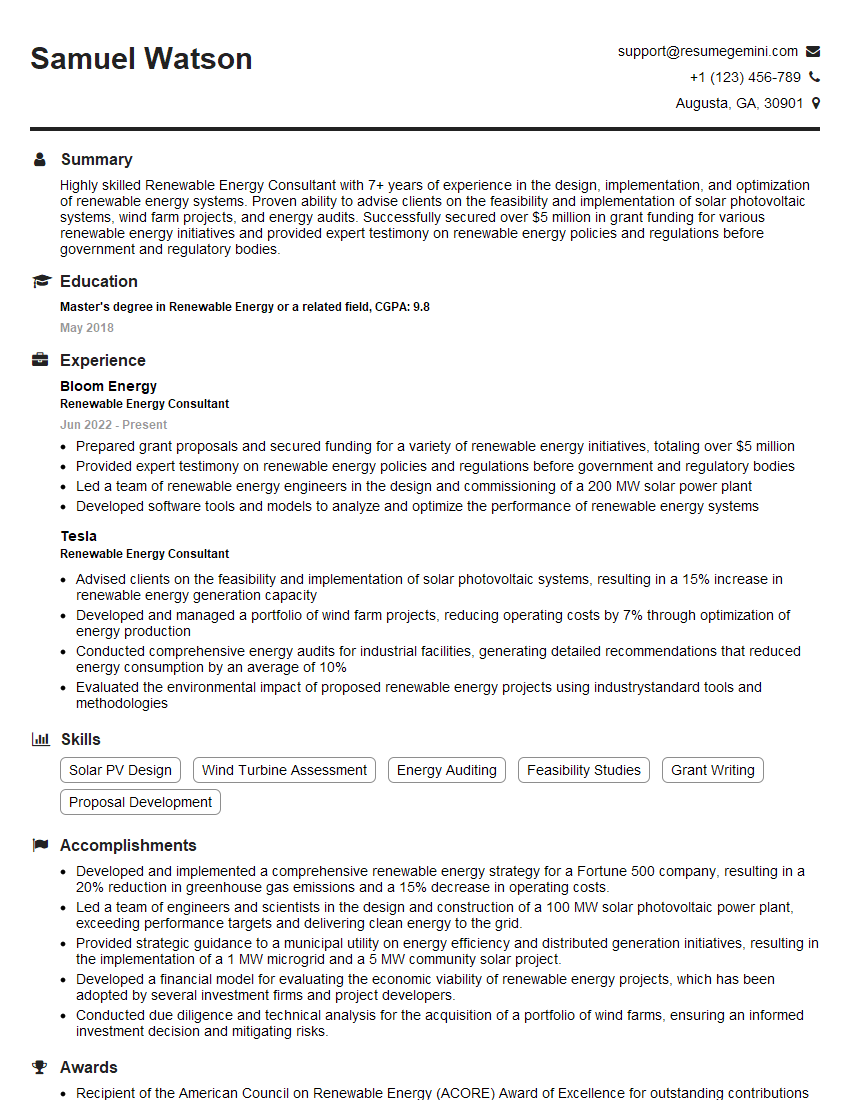
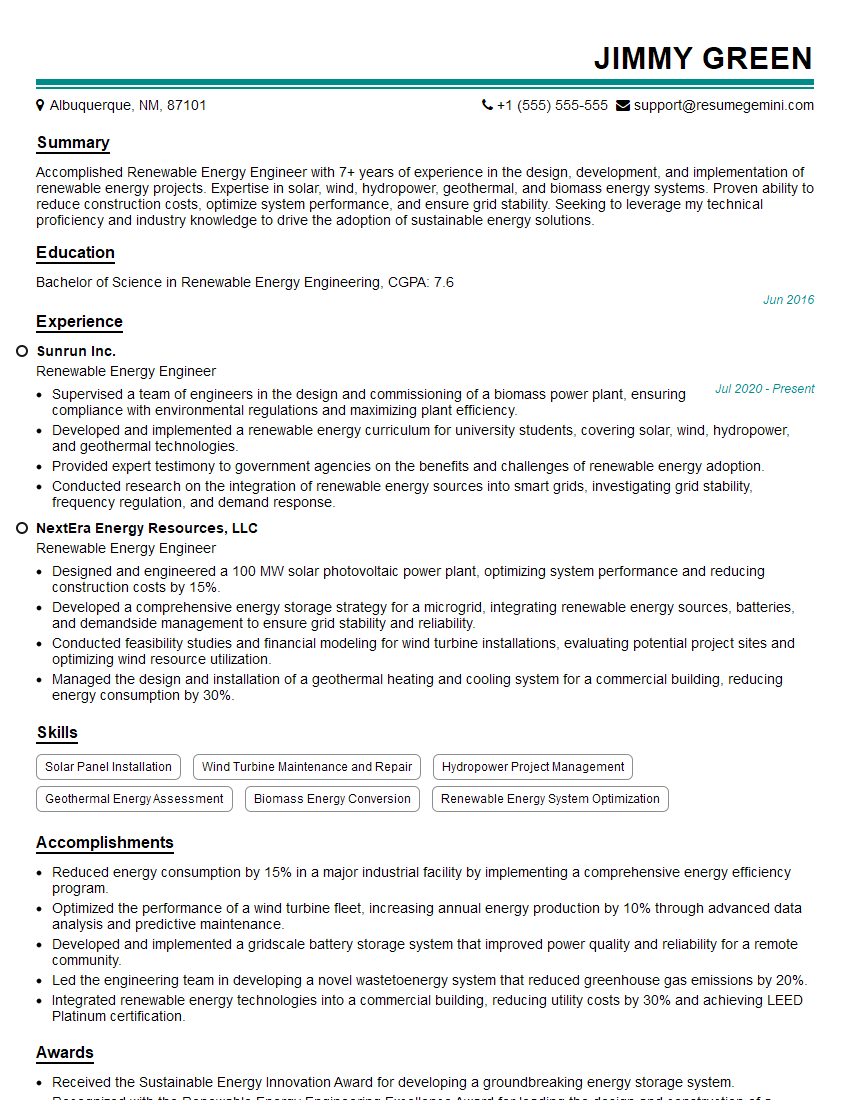
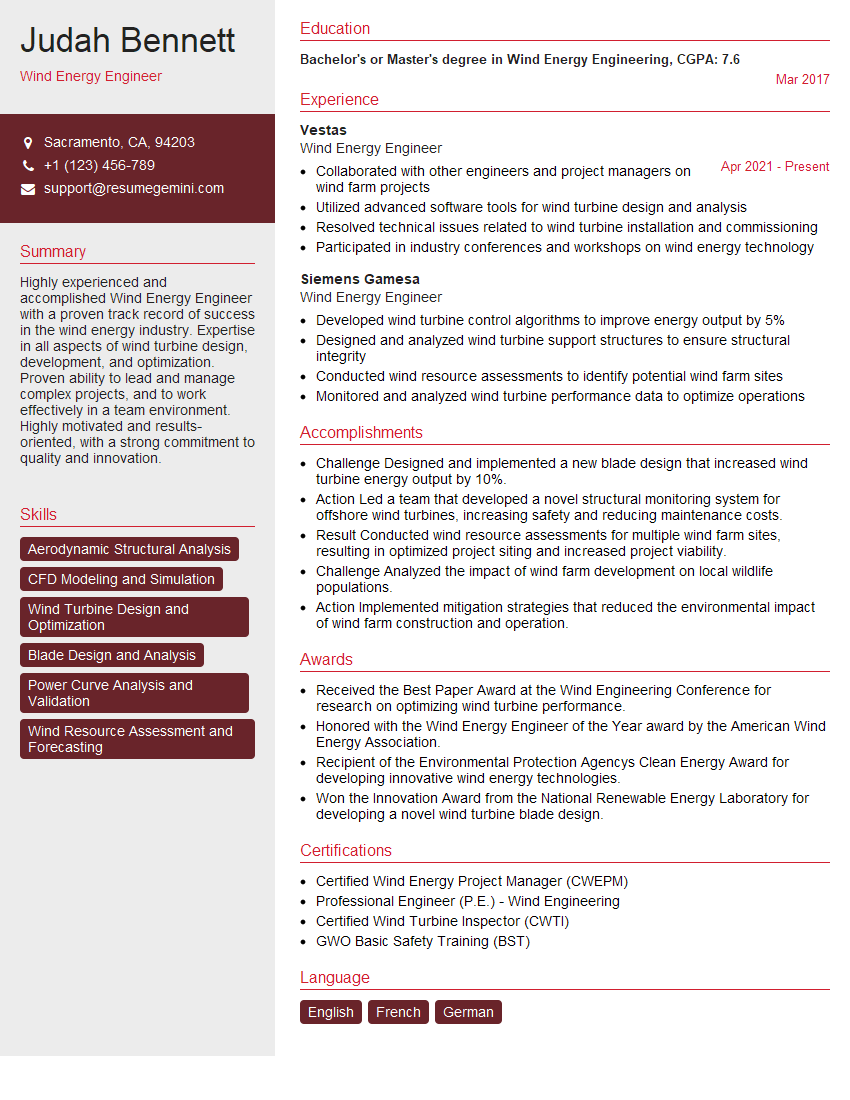
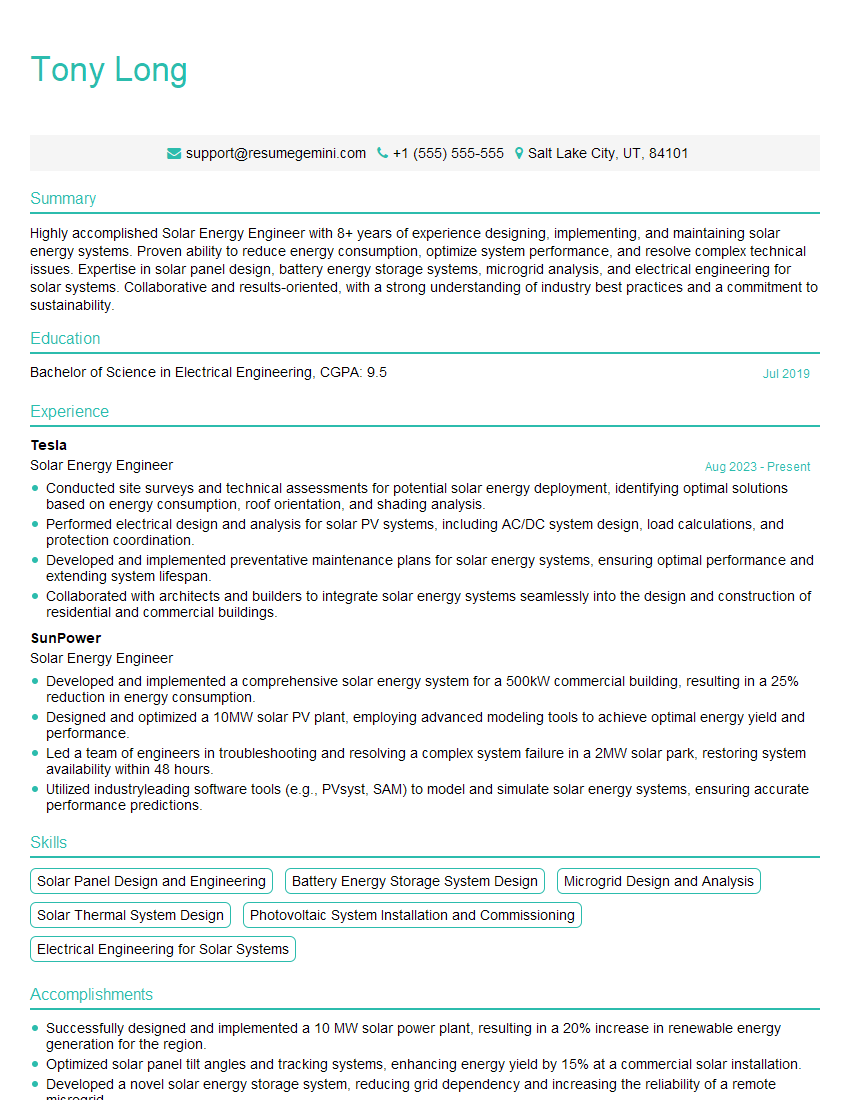
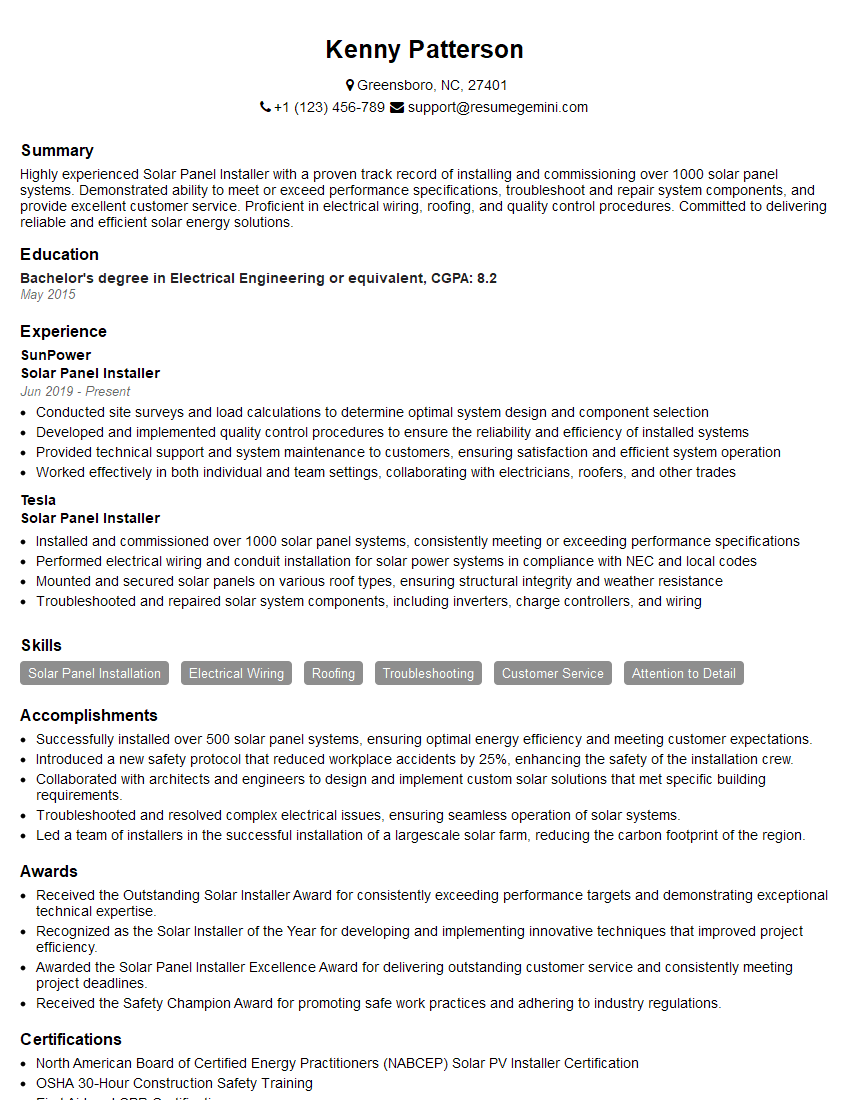
Mastering Renewable Energies opens doors to a fulfilling and impactful career, contributing to a sustainable future. The demand for skilled professionals in this field is rapidly growing, making it a highly competitive yet rewarding career path. To significantly enhance your job prospects, creating an ATS-friendly resume is crucial. ResumeGemini is a trusted resource to help you build a professional and impactful resume that showcases your skills and experience effectively. Examples of resumes tailored to the Renewable Energies sector are available, providing you with valuable templates and guidance to craft a winning application.
Explore more articles
Users Rating of Our Blogs
Share Your Experience
We value your feedback! Please rate our content and share your thoughts (optional).
What Readers Say About Our Blog
Very informative content, great job.
good