Interviews are more than just a Q&A session—they’re a chance to prove your worth. This blog dives into essential Green Globes Assessment interview questions and expert tips to help you align your answers with what hiring managers are looking for. Start preparing to shine!
Questions Asked in Green Globes Assessment Interview
Q 1. Explain the differences between Green Globes and LEED.
Green Globes and LEED are both green building rating systems, but they differ significantly in their approach and structure. LEED (Leadership in Energy and Environmental Design) is a points-based system, where projects earn points by meeting specific prerequisites and credits across various categories. This makes it more prescriptive, focusing on specific performance targets. Green Globes, on the other hand, uses a rating scale based on a comprehensive assessment of the building’s environmental performance. It’s more holistic, evaluating numerous factors and offering a continuous improvement framework rather than a checklist. Think of LEED as a highly structured competition with clearly defined winning criteria, while Green Globes is more like a continuous performance evaluation, allowing for greater flexibility and adaptability to diverse project needs.
For example, LEED might specify a certain level of energy efficiency for a building’s lighting system, while Green Globes would assess the overall energy performance of the lighting, considering factors such as daylight harvesting and occupancy sensors along with efficiency levels. This difference reflects a shift from purely prescriptive compliance to a broader, more integrative consideration of environmental impact.
Q 2. Describe the Green Globes rating system and its key components.
The Green Globes rating system uses a scoring methodology based on a series of questions about a building’s design, construction, and operation. The answers are categorized and weighted to create a final rating score, expressed as a percentage. The system emphasizes a holistic approach, considering environmental impact across multiple aspects of the building’s lifecycle. The key components include a comprehensive survey encompassing building design, construction, operation, and maintenance; a rigorous data verification process; and a clear rating scale indicating the project’s overall sustainability performance. The system is designed to be flexible and applicable to various building types and sizes, making it adaptable to a wide range of projects.
A key feature is its iterative nature; it’s not a one-time assessment. It supports continuous improvement, encouraging projects to refine their performance and aim for higher ratings over time. This differs from other systems that may be more static in their focus.
Q 3. What are the major categories assessed in a Green Globes rating?
Green Globes assesses projects across several major categories. These categories generally encompass the whole life-cycle of a building, aiming for an integrated perspective. Typical categories include:
- Project Management: This considers the project’s planning and execution, including sustainability goals and team coordination.
- Sustainable Site Planning: This evaluates the project’s impact on the surrounding environment, focusing on things like site selection, landscaping, and water management.
- Energy Efficiency: This involves an extensive assessment of the building’s energy consumption, encompassing building envelope performance, HVAC systems, lighting, and renewable energy sources.
- Water Efficiency: This examines water usage in the building, considering fixture selection, irrigation strategies, and water recycling.
- Indoor Environmental Quality: This addresses the health and comfort of building occupants, looking at factors like air quality, lighting, thermal comfort, and acoustics.
- Materials and Resources: This assesses the sustainability of building materials, including recycled content, local sourcing, and embodied carbon.
- Emissions: This category looks at greenhouse gas emissions throughout the project’s lifecycle.
- Waste Management: This assesses construction and operational waste generation and management practices.
The exact categories and sub-categories might be slightly different based on the specific type of building being assessed (e.g., existing buildings may have a different emphasis than new constructions).
Q 4. How does a project achieve a high Green Globes rating?
Achieving a high Green Globes rating requires a comprehensive and integrated approach to sustainability throughout the project lifecycle. It’s not about checking boxes; it’s about embedding sustainability into every decision. This involves careful planning from the initial design phase, implementing effective strategies across all the categories mentioned earlier, and continuously monitoring and improving performance.
Examples of strategies include using sustainable materials with low embodied carbon, optimizing energy efficiency with high-performance building envelopes and efficient HVAC systems, implementing water-saving fixtures, employing innovative waste management strategies and promoting healthy indoor environmental quality. The key is integration. For instance, a high-performance building envelope reduces both energy consumption (energy efficiency) and material use (materials and resources). Documentation is also vital; thorough record-keeping throughout the process will be necessary to support the assessment process.
Furthermore, proactive engagement with the Green Globes assessment team is crucial. Clarifying any ambiguities and addressing potential concerns early on significantly streamlines the process and increases the chances of securing a high rating.
Q 5. What are some common challenges encountered during a Green Globes assessment?
Common challenges in Green Globes assessments include:
- Data Collection: Gathering complete and accurate data for all aspects of the project can be time-consuming and require coordination across various stakeholders. Missing data or incomplete documentation can significantly hamper the assessment.
- Verification: Verifying the accuracy of submitted data is crucial. This can be challenging, especially with complex projects or when dealing with numerous subcontractors.
- Defining Baselines: Establishing clear baselines for performance comparisons can be difficult, especially for existing buildings.
- Balancing Cost and Performance: Implementing highly sustainable practices can often increase project costs. Finding a balance between performance goals and budget constraints is critical.
- Communication Gaps: Clear communication among the design team, the construction team, the operations team, and the Green Globes assessor is crucial to ensure a smooth and efficient process. Lack of coordination can lead to delays and inaccuracies.
For example, securing accurate energy modeling data might prove challenging if the initial design team didn’t prioritize this information. Similarly, obtaining complete records for waste management practices from the construction team could require extra effort.
Q 6. How do you handle discrepancies or disagreements during an assessment?
Handling discrepancies or disagreements during a Green Globes assessment requires a collaborative and transparent approach. The first step is to carefully review the evidence and documentation to determine the source of the discrepancy. This often involves a thorough examination of the project documentation and a discussion between the assessment team and the project team. Open communication is vital in these situations.
If a disagreement persists, a neutral third party expert might be involved to provide an independent assessment. The goal is not necessarily to win an argument, but to find a solution that accurately reflects the project’s actual performance. Green Globes’ assessment process is designed to be fair and impartial, and its procedures incorporate mechanisms for resolving disputes constructively. A well-documented and reasoned approach, prioritizing clear communication and a commitment to finding a consensus, is critical for a successful outcome.
Q 7. Explain the process of verifying data for a Green Globes project.
Data verification is a crucial step in the Green Globes assessment process, ensuring the accuracy and reliability of the information used to determine the project’s rating. The process involves a combination of methods, including:
- Document Review: The assessor thoroughly reviews all submitted documents, including design drawings, specifications, construction records, and operational data.
- On-site Inspections: The assessor conducts on-site visits to visually verify aspects of the project and to collect data that may not be available through documentation alone.
- Third-party Verification: In some cases, independent third-party verification might be required to confirm the accuracy of specific data points, such as energy consumption or water usage.
- Data Sampling and Statistical Analysis: Where complete data is unavailable, appropriate sampling and statistical techniques may be employed to make reliable estimates.
For instance, the assessor might visit the site to verify the presence and functionality of water-saving fixtures, or review utility bills to validate reported energy consumption. A rigorous verification process is vital to maintaining the integrity and credibility of the Green Globes rating system.
Q 8. What are your key strategies for efficient data collection during a Green Globes assessment?
Efficient data collection is paramount in a Green Globes assessment. My strategy centers around a three-pronged approach: meticulous planning, leveraging technology, and effective team collaboration.
Planning: Before commencing the assessment, I thoroughly review the project’s documentation, including architectural plans, building specifications, and operational manuals. This pre-assessment review allows for a targeted approach, reducing wasted time on site. I create a detailed checklist based on the Green Globes criteria relevant to the building type, ensuring all necessary data points are addressed.
Technology: I utilize the Green Globes software and online resources extensively. This includes using the software’s features for data input and calculations, and exploring online resources for clarification on criteria and best practices. Using a mobile data collection app can streamline the on-site process, ensuring accurate and timely recording of data.
Collaboration: Effective communication and collaboration with the building’s stakeholders – architects, engineers, facility managers, and occupants – are crucial. I conduct regular meetings and site walks to gather information from diverse perspectives and to clarify any ambiguities. This collaborative approach ensures data accuracy and reduces potential misunderstandings.
For example, during an assessment of a large office building, I collaborated with the facilities manager to access energy consumption data directly from the building management system, ensuring a precise measure of energy efficiency rather than relying on estimates.
Q 9. How would you interpret a Green Globes report and explain its findings to a client?
Interpreting a Green Globes report involves understanding the scoring system and translating it into actionable insights for the client. The report provides a comprehensive overview of the building’s performance across various sustainability categories. I start by summarizing the overall rating and explaining the weighted scores across different sections.
Highlighting Strengths: I identify areas where the building excels, such as high energy efficiency or water conservation. I explain how these strengths contribute to the overall sustainability performance and potential cost savings.
Identifying Areas for Improvement: I focus on areas where the building’s performance could be enhanced. This might include recommendations for upgrades to energy-efficient lighting, implementing waste reduction strategies, or improvements in indoor air quality. I quantify potential improvements with cost-benefit analyses whenever possible.
Developing Actionable Recommendations: Beyond simply stating areas for improvement, I create a tailored list of practical and cost-effective strategies that the client can implement. This may include identifying available incentives, suggesting sustainable technologies, or outlining a phased approach to achieving higher Green Globes ratings.
Visual Aids: I use charts and graphs to present the data in a user-friendly and understandable format. This helps the client grasp the overall picture quickly and effectively.
For instance, if a report shows a low score in the waste management section, I would not simply say ‘improve waste management’. Instead, I would suggest specific measures, such as implementing a recycling program, providing educational materials to occupants, and sourcing recycled materials for future projects. I’d also provide estimated cost savings and potential environmental impacts from these recommendations.
Q 10. Describe your experience with using Green Globes software and online resources.
I have extensive experience with the Green Globes software and online resources. I’m proficient in navigating the platform, inputting data, generating reports, and interpreting the results. I regularly utilize the online resources for updates, clarifications, and access to relevant case studies.
The software simplifies the assessment process, providing tools to calculate scores, track progress, and manage data effectively. The online resources offer valuable guidance, including frequently asked questions (FAQs), technical bulletins, and webinars, which help in staying abreast of the latest updates and best practices. For example, I’ve utilized the software’s built-in calculators for energy and water use calculations, ensuring accuracy and consistency in my assessments. The online resources have also helped me to address unique challenges encountered during assessments by providing access to relevant case studies and best practices for similar building types.
Q 11. What is your familiarity with the Green Globes rating criteria for different building types?
My familiarity with the Green Globes rating criteria extends across various building types, including offices, schools, hospitals, and industrial facilities. The Green Globes system employs a flexible framework, adapting criteria based on the specific characteristics and operational needs of each building type. I understand the nuances of the criteria for different building types and can tailor my assessment approach accordingly.
For example, the energy efficiency criteria for a hospital will be different from those of a warehouse, reflecting the differing energy demands and operational profiles. I understand and apply these differentiated criteria appropriately in each assessment, ensuring the fairness and accuracy of the final score.
Q 12. Explain the role of innovation points in the Green Globes system.
Innovation points in Green Globes reward projects that go beyond the standard requirements and incorporate cutting-edge sustainable practices. These points are awarded for implementing innovative technologies or strategies that demonstrably improve the building’s environmental performance. This incentivizes adopting leading-edge sustainability solutions and fosters advancements in green building.
For example, incorporating a rainwater harvesting system that is used for toilet flushing or landscaping could earn innovation points. Similarly, the use of renewable energy sources beyond the minimum requirements, or the implementation of a comprehensive waste reduction program surpassing the standard criteria, also qualify for innovation points. These points can significantly enhance the overall Green Globes rating and highlight the project’s commitment to environmental leadership.
Q 13. How do you stay current with updates and changes to the Green Globes standards?
Staying current with Green Globes updates is essential. My approach involves a multi-faceted strategy. I regularly check the Green Globes website for updates to the rating system, technical bulletins, and any changes in methodology. I participate in webinars and training sessions offered by Green Globes to stay updated on the latest changes and best practices. I also actively engage with professional organizations in the green building sector, exchanging knowledge and insights with other assessors.
Furthermore, I subscribe to relevant newsletters and journals dedicated to sustainable building practices to keep informed of technological advancements and emerging trends that may impact Green Globes assessments. This ensures I am always applying the most current and relevant standards in my assessments.
Q 14. Describe a situation where you had to overcome a challenge in a Green Globes assessment.
During an assessment of a historic building, we encountered a significant challenge in verifying the accuracy of the building’s original construction materials. The lack of comprehensive documentation made it difficult to assess the embodied carbon associated with the building’s structure. To overcome this, we employed a multi-pronged strategy.
Material Sampling: We conducted on-site sampling of materials to determine their composition. This allowed us to estimate the embodied carbon with a greater degree of certainty.
Historical Research: We researched local historical archives and contacted preservation specialists to gain insights into the building’s original construction methods and materials.
Expert Consultation: We consulted with material scientists specializing in historical building materials to help us accurately assess the embodied carbon based on our findings.
Through this comprehensive approach, we successfully gathered sufficient data to accurately assess the building’s performance and report the findings in a reliable and transparent manner. The challenge highlighted the importance of thorough planning and adaptability in dealing with the complexities of older buildings.
Q 15. What are the key benefits of using Green Globes for building projects?
Green Globes offers numerous benefits for building projects, primarily revolving around sustainability and operational efficiency. It provides a framework for designing, constructing, and operating environmentally responsible buildings. Key benefits include:
- Enhanced environmental performance: Green Globes helps reduce a building’s environmental footprint by promoting energy efficiency, water conservation, and the use of sustainable materials.
- Improved operational efficiency: By optimizing building systems and processes, Green Globes can lead to lower operating costs and increased building value.
- Increased marketability and tenant attraction: A Green Globes rating demonstrates a commitment to sustainability, attracting environmentally conscious tenants and investors.
- Compliance with regulations: Green Globes can help buildings meet or exceed various environmental regulations and certifications, minimizing potential penalties.
- Data-driven decision making: The assessment process generates valuable data on a building’s environmental performance, enabling informed decisions for improvement.
- Reduced waste: Green Globes encourages the reduction of construction waste and promotes the use of recycled content.
For example, a recent project I worked on saw a 20% reduction in energy consumption after implementing Green Globes recommendations, resulting in significant cost savings for the building owner.
Career Expert Tips:
- Ace those interviews! Prepare effectively by reviewing the Top 50 Most Common Interview Questions on ResumeGemini.
- Navigate your job search with confidence! Explore a wide range of Career Tips on ResumeGemini. Learn about common challenges and recommendations to overcome them.
- Craft the perfect resume! Master the Art of Resume Writing with ResumeGemini’s guide. Showcase your unique qualifications and achievements effectively.
- Don’t miss out on holiday savings! Build your dream resume with ResumeGemini’s ATS optimized templates.
Q 16. How do you ensure the accuracy and objectivity of your Green Globes assessments?
Ensuring accuracy and objectivity in Green Globes assessments is paramount. We achieve this through several key strategies:
- Rigorous training and certification of assessors: Assessors undergo extensive training to understand the Green Globes rating system and its application. This ensures consistent and reliable assessments across different projects.
- Standardized assessment protocols: A structured methodology ensures consistent data collection and evaluation, minimizing bias and promoting fairness.
- Third-party verification: Green Globes assessments can undergo independent verification to further enhance confidence in the results. This provides an extra layer of scrutiny and validation.
- Regular updates and revisions to the rating system: The Green Globes system is regularly updated to reflect advancements in sustainable building practices, keeping it relevant and accurate.
- Use of established methodologies and data sources: We utilize recognized industry standards and reliable data sources for calculations and evaluations, ensuring accuracy.
Think of it like a scientific experiment: we follow established procedures and use calibrated instruments to achieve precise and repeatable results.
Q 17. Explain the significance of data verification and validation in Green Globes.
Data verification and validation are crucial for the integrity of Green Globes assessments. Verification confirms that the data collected is accurate and complete, while validation ensures the data is suitable for its intended purpose.
- Verification: This involves checking the source documents, calculations, and measurements used to support the data claims. For example, we verify energy consumption data by reviewing utility bills and confirming meter readings.
- Validation: This ensures the data accurately reflects the actual performance of the building. This might involve on-site inspections, reviewing operational data, or using specialized equipment to verify claims.
Imagine a chef preparing a recipe: Verification ensures all the ingredients are correct, while validation confirms the dish tastes as expected. Both are essential for a successful outcome.
Q 18. What are some common misconceptions about Green Globes?
Some common misconceptions about Green Globes include:
- It’s too expensive: While there is a cost associated with the assessment, the long-term benefits, such as reduced operating costs and increased property value, often outweigh the initial investment.
- It’s overly complex and time-consuming: The process is designed to be manageable, and assistance is available to guide project teams through each step.
- It only applies to new constructions: Green Globes can be applied to existing buildings as well, providing opportunities for retrofits and improvements.
- It’s solely focused on environmental impact: While environmental performance is central, Green Globes also considers other factors, such as occupant health and well-being.
Addressing these misconceptions requires clear communication and demonstrating the practical value and accessibility of Green Globes.
Q 19. How do you communicate effectively with building owners and project teams during a Green Globes assessment?
Effective communication is key to a successful Green Globes assessment. I employ a multi-pronged approach:
- Regular meetings and updates: Keeping the project team informed throughout the process builds trust and collaboration. I use clear and concise language, avoiding technical jargon whenever possible.
- Accessible documentation and reporting: Providing easy-to-understand reports and documentation ensures transparency and facilitates understanding.
- Proactive problem-solving: I address potential issues or challenges promptly, offering solutions and support to keep the project on track.
- Open dialogue and feedback: Encouraging open communication and feedback from stakeholders allows for addressing concerns and tailoring the assessment to their specific needs.
I find that using visual aids, such as charts and diagrams, can significantly enhance understanding and engagement during meetings.
Q 20. How would you address concerns or objections from project stakeholders regarding Green Globes requirements?
Addressing concerns or objections requires a collaborative approach focused on understanding the root cause of the issue. I typically follow these steps:
- Active listening: I start by carefully listening to the stakeholders’ concerns and objections, demonstrating empathy and understanding.
- Clarification and explanation: I clearly explain the Green Globes requirements and their rationale, addressing any misunderstandings or misconceptions.
- Exploring alternative solutions: Where feasible, I explore alternative approaches that meet the project goals while addressing the stakeholders’ concerns.
- Highlighting the benefits: I emphasize the long-term benefits of achieving a higher Green Globes rating, such as cost savings and improved building performance.
- Documentation and transparency: I provide detailed documentation supporting the assessment process and recommendations.
Often, a collaborative discussion can resolve objections, resulting in a project that satisfies both environmental goals and stakeholder needs.
Q 21. Describe your approach to prioritizing and managing multiple Green Globes projects simultaneously.
Managing multiple Green Globes projects simultaneously requires a structured approach that prioritizes efficiency and communication. I utilize project management tools and techniques, including:
- Prioritization matrix: I use a prioritization matrix to rank projects based on factors such as deadlines, complexity, and client priorities.
- Detailed project plans: Each project has a detailed plan outlining tasks, timelines, and responsibilities. This ensures efficient allocation of resources.
- Regular progress reviews: I conduct regular reviews to monitor progress, identify potential roadblocks, and make necessary adjustments.
- Effective communication: Maintaining clear and consistent communication with all project stakeholders is essential, keeping everyone informed of progress and any changes.
- Delegation and teamwork: I delegate tasks effectively to qualified team members, ensuring workload is distributed fairly and efficiently.
Think of it like conducting an orchestra: each musician (project) requires attention, but a skilled conductor (project manager) ensures a harmonious performance (successful completion of all projects).
Q 22. What software or tools do you find most helpful in conducting Green Globes assessments?
Several software and tools significantly aid Green Globes assessments. The core is the Green Globes online platform itself, providing the assessment questionnaire, data entry, and reporting capabilities. Beyond this, I rely heavily on project management software like Microsoft Project or Asana to manage the assessment timeline, tasks, and communication with the project team. For data collection and analysis, Excel and specialized building information modeling (BIM) software like Revit are invaluable. BIM software enables efficient extraction of data relevant to energy performance, water usage, and material selection, crucial for many Green Globes criteria. Finally, I often use photo documentation software to visually record site conditions and features supporting the assessment.
For example, during a recent assessment of a large office complex, using Revit allowed us to quickly extract the square footage of different building zones and the types of materials used in construction—data directly inputted into the Green Globes platform, streamlining the process and reducing potential errors.
Q 23. How do you ensure the confidentiality and integrity of assessment data?
Confidentiality and data integrity are paramount. Green Globes employs robust security measures, including data encryption and access control protocols, within its online platform. My role involves strict adherence to these protocols. I never share raw data beyond the authorized project team and the Green Globes organization. All data is treated with the utmost confidentiality in line with client agreements and professional ethics. When handling sensitive information, I follow established procedures for anonymization or aggregation whenever appropriate. To ensure data integrity, I meticulously double-check all data entry, employing cross-referencing with other documents and site observations. Regular backups and version control are also critical components of maintaining data integrity throughout the assessment process.
Think of it like handling financial records – meticulous record-keeping, secure storage, and careful auditing are vital for ensuring accuracy and preventing unauthorized access.
Q 24. How would you adapt your assessment approach to different building types or project sizes?
Adaptability is crucial. My assessment approach differs significantly depending on the building type and size. A small residential project requires a far less extensive investigation than a large hospital or commercial complex. For instance, a small building may have limited mechanical systems needing detailed analysis, whereas a large complex requires in-depth scrutiny of HVAC systems, water management, and waste disposal practices. I adjust my scope of work, data collection techniques, and the level of detail in my reports to match the complexity of each project. This includes tailoring the assessment to focus on the most relevant Green Globes criteria for the building type and size. A high-rise building will likely emphasize energy efficiency and life-cycle assessment differently than a single-family home, for example.
In practice, this means employing different questionnaires and prioritizing different sections of the Green Globes system. I use a structured approach to scale my resources efficiently to different project scopes, minimizing time and cost without compromising the assessment’s quality.
Q 25. What are some strategies for maximizing a building’s Green Globes score?
Maximizing a Green Globes score necessitates a holistic, integrated approach starting from the design phase. Strategies include optimizing energy efficiency through high-performance building envelopes and efficient HVAC systems. This might involve incorporating features like high-efficiency windows, proper insulation, and demand-controlled ventilation. Water conservation is equally critical – incorporating low-flow fixtures, rainwater harvesting, and greywater recycling systems significantly boost the score. Sustainable material selection, emphasizing recycled content and locally sourced materials, is also vital. Finally, comprehensive waste management strategies and a strong emphasis on indoor environmental quality contribute substantially.
For example, specifying energy-efficient LED lighting throughout the project and implementing a comprehensive recycling program can make a huge difference. The key is understanding the point allocation in the Green Globes system and prioritizing the most impactful strategies.
Q 26. How do you incorporate the principles of sustainable design into your assessment process?
Sustainable design principles are inherently woven into every aspect of my assessment process. I evaluate building designs against established sustainable design guidelines such as LEED, Passive House, and other relevant standards. I assess the building’s energy performance, material selection, water management, waste reduction strategies, and indoor environmental quality, all core tenets of sustainable design. I look beyond mere compliance and critically assess the building’s long-term environmental and social impact. The assessment is not just about achieving points but about understanding and promoting genuinely sustainable practices. I encourage building owners and designers to consider whole-life cost analysis, embracing long-term operational savings alongside upfront investments in sustainable features.
For instance, I often question the use of certain materials based on their embodied carbon, lifecycle impacts, and availability of recycled alternatives – integrating principles of circular economy into the assessment.
Q 27. What is your understanding of the Green Globes benchmarking process?
Green Globes benchmarking allows for comparing a building’s performance to similar buildings, providing a valuable context for the assessment results. It facilitates the identification of best practices and areas for improvement. The process involves comparing the project’s score against a database of similar buildings, categorized by factors such as building type, size, location, and climate. This comparison helps gauge the project’s sustainability performance relative to its peers, enabling the identification of high-performing attributes and areas needing improvement. This data-driven approach offers a valuable tool for stakeholders to understand the building’s sustainability performance in the broader context of the industry.
Imagine comparing your exam score to the average score of other students in your class – benchmarking provides that same contextual understanding of performance.
Q 28. How would you contribute to the improvement of the Green Globes assessment process?
To improve the Green Globes assessment process, I would focus on enhancing the integration with BIM data. More seamless data exchange between BIM software and the Green Globes platform would improve efficiency and accuracy. Expanding the criteria to encompass emerging technologies and sustainable practices, such as renewable energy integration and smart building technologies, would ensure the assessment system remains relevant and comprehensive. Additionally, I would advocate for more robust and user-friendly reporting features, allowing for clearer and more accessible communication of assessment findings to building owners and other stakeholders. Finally, greater emphasis on providing feedback and resources to building owners to help improve their sustainability performance would increase the value and impact of the assessment process.
This holistic approach ensures Green Globes remains a leading tool promoting environmental responsibility in the built environment.
Key Topics to Learn for Green Globes Assessment Interview
- Green Globes Rating System: Understanding the scoring methodology, rating levels, and the overall goal of the assessment.
- Building Performance: Analyzing energy efficiency, water conservation, and waste management strategies within the context of Green Globes. Practical application: Discuss case studies demonstrating successful implementations of sustainable building practices.
- Sustainable Materials: Knowledge of environmentally preferable materials, their sourcing, and lifecycle assessments. Practical application: Explain how material selection impacts a building’s overall Green Globes score.
- Indoor Environmental Quality: Understanding factors impacting indoor air quality, thermal comfort, and daylighting. Practical application: Discuss strategies for improving indoor environmental quality in existing and new buildings.
- Site Sustainability: Knowledge of site selection criteria, sustainable site planning, and strategies for minimizing environmental impact. Practical application: Analyze site plans and identify potential improvements for environmental sustainability.
- Project Management in Green Globes: Understanding the process of conducting a Green Globes assessment, including documentation, reporting, and verification.
- Green Globes Software and Tools: Familiarity with the online platform and reporting tools used for Green Globes assessments.
- Emerging Trends in Green Building: Staying updated on advancements in sustainable building technologies and practices relevant to Green Globes.
Next Steps
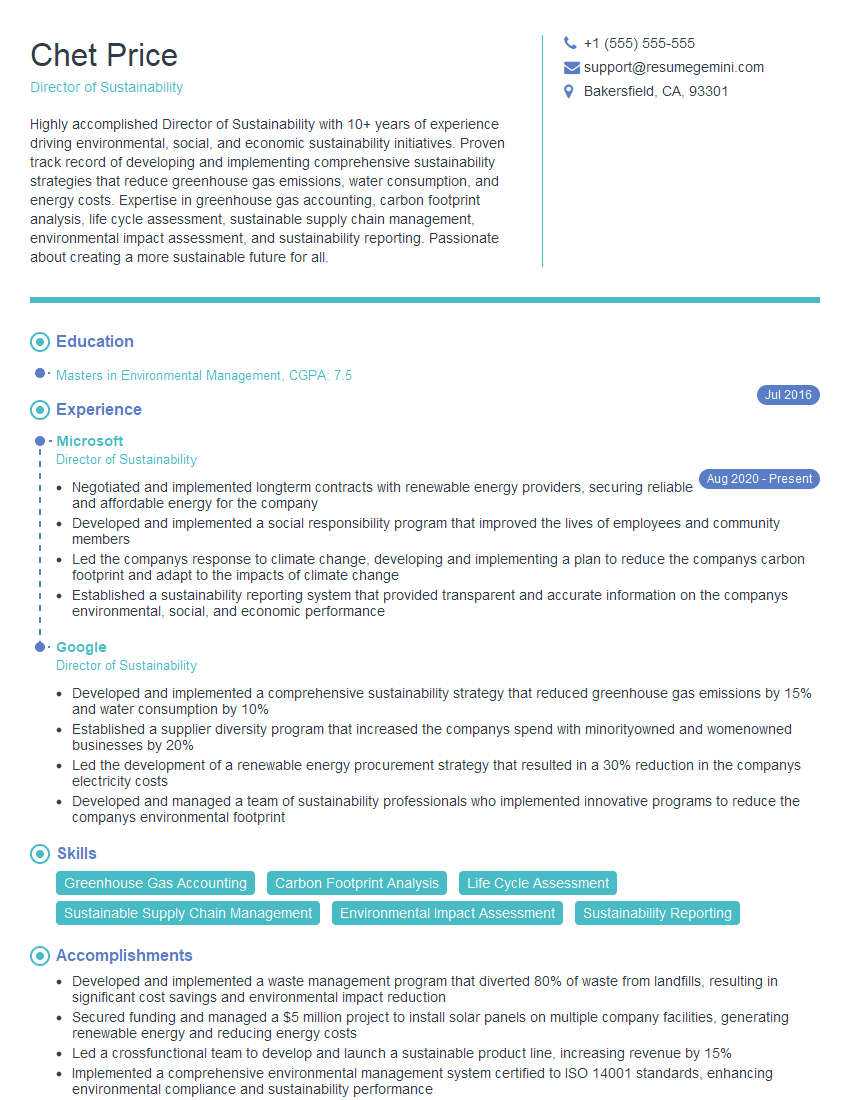
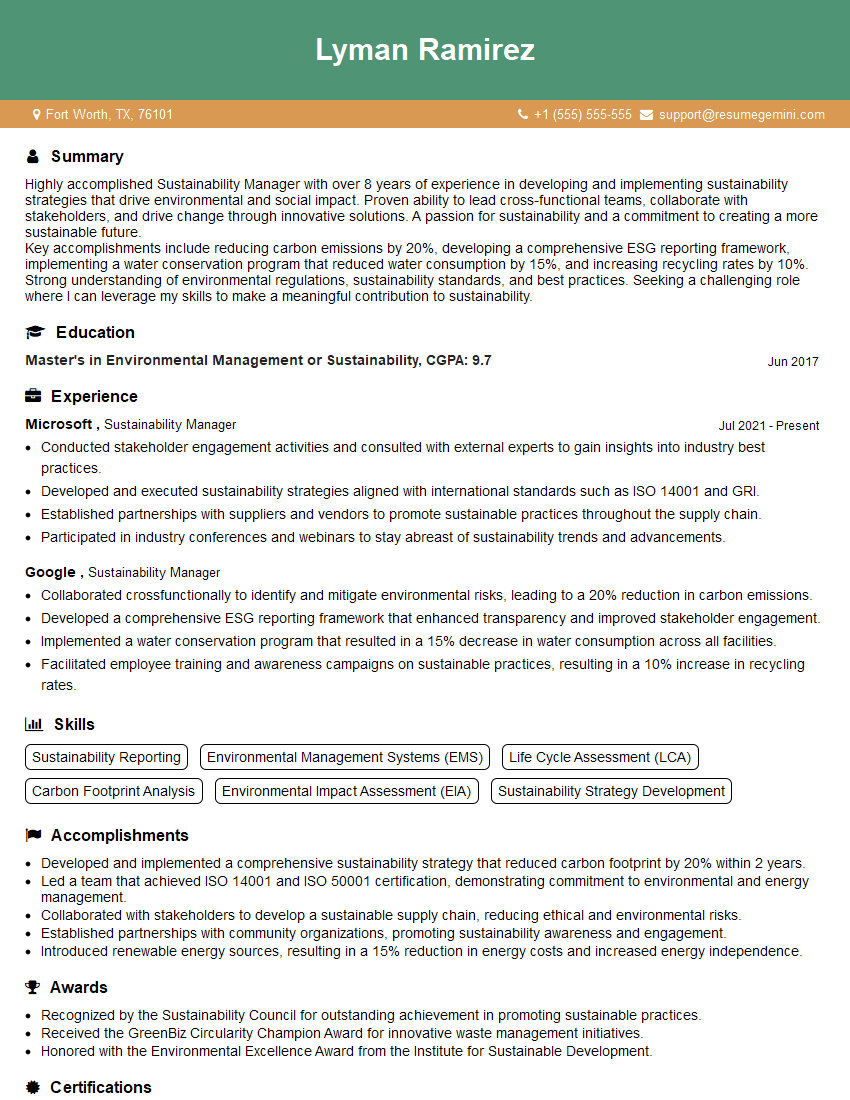
Mastering Green Globes Assessment significantly enhances your career prospects in the sustainable building industry, opening doors to exciting roles with leading organizations. A strong, ATS-friendly resume is crucial for showcasing your skills and experience effectively. To ensure your resume stands out, we highly recommend using ResumeGemini, a trusted resource for building professional and impactful resumes. Examples of resumes tailored to Green Globes Assessment are available to help guide your preparation.
Explore more articles
Users Rating of Our Blogs
Share Your Experience
We value your feedback! Please rate our content and share your thoughts (optional).
What Readers Say About Our Blog
Very informative content, great job.
good