The right preparation can turn an interview into an opportunity to showcase your expertise. This guide to Heel Negotiation interview questions is your ultimate resource, providing key insights and tips to help you ace your responses and stand out as a top candidate.
Questions Asked in Heel Negotiation Interview
Q 1. Describe your approach to identifying the other party’s interests in a Heel Negotiation.
Identifying the other party’s interests in a Heel Negotiation, a strategy where you initially appear weak or disadvantaged to gain leverage, requires a keen understanding of their motivations beyond their stated positions. My approach is multifaceted and begins with active listening. I carefully observe their body language, noting any hesitations or inconsistencies between their words and actions. I employ open-ended questions designed to uncover their underlying needs and priorities. For example, instead of asking ‘What’s your bottom line?’, I might ask ‘What are your key objectives in this negotiation, and what would represent a successful outcome for you?’ This approach reveals not just their desired outcome but also their underlying concerns and vulnerabilities. I also utilize indirect questioning, perhaps by casually mentioning a potential problem and observing their reaction, gauging their true level of concern. Finally, I leverage pre-negotiation research—thoroughly understanding their business, their recent performance, and any publicly available information regarding their priorities—to gain a significant advantage in anticipating their interests.
Q 2. How do you assess the power dynamics in a Heel Negotiation?
Assessing power dynamics in a Heel Negotiation is crucial. It’s not simply about who has more resources; it’s about understanding the relative leverage each party possesses within the specific context of the negotiation. I consider several factors: The urgency each party feels to reach an agreement, the availability of alternative options (BATNA), the perceived risk of not reaching an agreement, and the information each party possesses. For instance, a company facing a looming deadline has less power than one with ample time. Similarly, a party with a strong BATNA (a better alternative to a negotiated agreement) holds more power. I also look beyond surface power dynamics. Public perception can play a significant role, even if one party has objectively less power; if they can frame the negotiation skillfully, they may gain an advantage. Therefore, meticulously analyzing these factors allows me to strategically position myself, even if initially appearing weaker, to maximize my leverage throughout the negotiation.
Q 3. Explain your strategy for building rapport in a high-stakes Heel Negotiation.
Building rapport in a high-stakes Heel Negotiation requires a delicate balance. While employing the ‘heel’ strategy implies appearing initially weaker, it doesn’t mean being unfriendly or dismissive. My strategy focuses on demonstrating empathy and understanding. I begin by acknowledging the other party’s perspective, even if I don’t necessarily agree with it. For example, I might say something like, ‘I understand your concerns about X; that’s certainly a valid point.’ This establishes a foundation of trust. I then seek common ground, finding areas of agreement to create a sense of partnership. This can be something as simple as sharing a common interest or goal, creating a sense of shared purpose. Nonverbal cues like maintaining appropriate eye contact, nodding actively during conversation, and using open body language help create a connection. Finally, I use humor judiciously, ensuring it’s appropriate for the situation and not at the expense of the other party, to create a more relaxed and collaborative atmosphere.
Q 4. What techniques do you employ to manage difficult personalities during a Heel Negotiation?
Managing difficult personalities in a Heel Negotiation demands patience, adaptability, and a deep understanding of human behavior. I employ several techniques, depending on the personality. For aggressive negotiators, I might adopt a calm and measured approach, actively listening without reacting defensively. For passive-aggressive individuals, I might use indirect communication, focusing on the issues rather than directly confronting their behavior. For overly emotional individuals, I might validate their feelings while redirecting the conversation towards constructive solutions. The key is to remain calm and professional, focusing on the issues at hand and avoiding getting drawn into unproductive arguments. I also use reframing techniques—rephrasing their statements to highlight the underlying issues and common goals—to de-escalate conflict and foster cooperation. Finally, I document everything meticulously; this becomes vital in dealing with personalities who might attempt to distort or misrepresent what was said or agreed upon.
Q 5. How do you handle unexpected challenges or setbacks during a Heel Negotiation?
Unexpected challenges and setbacks are inherent in negotiations. My approach is to remain flexible and adapt my strategy accordingly. I always have contingency plans in place for various scenarios. If a key piece of information changes, I reassess my position and adjust my tactics. If a setback occurs, I acknowledge it calmly and strategically use it to strengthen my position (for example, reframing a negative development as an opportunity to renegotiate on more favorable terms). Open communication is key; I never hesitate to address challenges openly and honestly with the other party, demonstrating my willingness to collaborate and find a mutually acceptable solution. I use the setback as an opportunity to reiterate my core needs and explore creative solutions that address both our interests.
Q 6. Describe a time you successfully used a ‘heel’ negotiation tactic. What was the outcome?
In a negotiation for a large software contract, our company was initially perceived as a smaller player with less bargaining power compared to the multinational client. I employed a ‘heel’ strategy by initially focusing on the areas where we demonstrably exceeded their expectations: our superior customer support and our innovative software features. I presented our lower initial bid, subtly emphasizing our eagerness to establish a long-term partnership. I showcased our dedication and commitment to meeting their needs, effectively portraying our willingness to go the extra mile. This approach, despite appearing initially disadvantageous, worked incredibly well. The client, appreciating our enthusiasm and our strengths, ended up negotiating a significantly higher contract price than our initial bid, along with a longer-term commitment. The outcome was a mutually beneficial agreement exceeding initial expectations for both sides.
Q 7. How do you determine the best time to employ a ‘heel’ negotiation tactic?
Determining the optimal time to employ a ‘heel’ negotiation tactic is crucial for its success. It’s not a strategy for every situation. I use it when the other party has a stronger initial perceived power position, but where I possess hidden strengths or unique advantages they might not be aware of. A ‘heel’ approach works best when there’s a reasonable expectation of building trust and rapport despite the initial apparent weakness. It’s counterproductive in situations where a quick decision is needed or trust is already severely eroded. I assess the overall negotiation landscape, considering the time constraints, the other party’s personality and negotiation style, and the relative leverage each party possesses. The ‘heel’ is a tool best used strategically, not as a default approach. Its effectiveness hinges on knowing when to apply it and how to smoothly transition from appearing weak to demonstrating hidden strength.
Q 8. What are the ethical considerations when employing ‘heel’ negotiation tactics?
Ethical considerations in ‘heel’ negotiation, where you strategically concede to gain leverage, are paramount. The core ethical challenge lies in the potential for manipulation. While a calculated concession can be a powerful tool, it must never cross the line into deception or coercion. For instance, feigning weakness or lack of knowledge when you possess otherwise superior information is ethically questionable. The key is transparency within the bounds of the negotiation; while you might strategically withhold certain information, you shouldn’t actively misrepresent facts or mislead the other party. A good rule of thumb is to ensure your concessions are genuine in their concession, even if they are strategically timed.
- Transparency in Intent: Always ensure your actions, even seemingly weak ones, serve a larger strategic goal that is ultimately fair and beneficial, not simply to deceive or gain an unfair advantage.
- Respect for Autonomy: Maintain respect for the other party’s autonomy and decision-making. Avoid pressure tactics that compromise their ability to make a truly informed choice.
- Fairness and Reciprocity: Aim for a mutually beneficial outcome. While ‘heel’ tactics aim for advantage, they shouldn’t be used to exploit the other party’s vulnerabilities.
Think of it like a chess game: strategic concessions are like calculated sacrifices; they weaken your apparent position temporarily to set up a stronger future move. But it’s unethical to cheat or move illegally to achieve victory.
Q 9. How do you balance assertiveness and collaboration in a ‘heel’ negotiation?
Balancing assertiveness and collaboration in ‘heel’ negotiation requires a nuanced approach. It’s not about being aggressive or passive, but about strategically deploying both. You need to be assertive in your goals and confident in your position, while simultaneously demonstrating a collaborative spirit. This delicate balance allows you to appear flexible and open to compromise while still achieving your desired outcome.
Imagine you’re negotiating a contract. You might initially concede on a minor clause (a ‘heel’ tactic), making it seem like you’re compromising. This act of apparent weakness can build trust and encourage the other side to reciprocate with concessions of their own. However, you must firmly stand your ground on core elements of the contract, demonstrating assertiveness and ensuring your primary objectives remain met.
The key is to frame your concessions as strategic moves designed to build rapport and show goodwill, not as signs of weakness. This requires excellent communication skills and a deep understanding of your counterpart’s motivations.
Q 10. How do you identify potential risks associated with using a ‘heel’ negotiation strategy?
Potential risks associated with ‘heel’ negotiation strategies are numerous. Miscalculation is a significant risk. If your concession is perceived as genuine weakness instead of a strategic move, you could significantly weaken your negotiating position and potentially lose the deal. Overdoing it is another major risk. Too many concessions can make you seem desperate or untrustworthy, damaging your reputation.
- Damaged Relationships: If the other party feels manipulated or tricked, the relationship can be irreparably damaged, hindering future collaborations.
- Reputational Harm: If your tactics become known, your reputation for trustworthiness could suffer significantly, affecting your credibility in future negotiations.
- Unforeseen Consequences: Concessions may have unintended negative consequences for your overall goals or strategy.
For example, conceding on a seemingly insignificant detail might unexpectedly impact a more substantial aspect later. Thorough planning and risk assessment are crucial to mitigate these risks.
Q 11. Explain the difference between a ‘heel’ negotiation tactic and a deceptive tactic.
The difference between a ‘heel’ negotiation tactic and a deceptive tactic is subtle yet crucial. A ‘heel’ tactic involves a strategic concession or a carefully crafted display of weakness, designed to gain a future advantage. It relies on a degree of calculated misdirection, but does not involve actively lying or misrepresenting facts. Deception, on the other hand, involves knowingly providing false information or misleading the other party to gain an advantage. Deception is inherently unethical and can have severe consequences.
For instance, strategically offering a lower initial price (a ‘heel’ tactic) implies you are willing to compromise. But falsely claiming you have a better offer from another party is clearly deceptive.
The key differentiator is intent. ‘Heel’ tactics aim for a strategic advantage within the boundaries of ethical negotiation; deceptive tactics intend to mislead and manipulate.
Q 12. How do you mitigate the risks of damaging the relationship with the other party using ‘heel’ tactics?
Mitigating the risks of damaging relationships when using ‘heel’ tactics involves a focus on transparency and building trust. While you’re employing strategic concessions, ensure the overall negotiation process remains fair and equitable. Open communication is crucial, even if it means revealing some of your strategy in a way that doesn’t completely undermine your advantage. Always maintain respect for the other party, and acknowledge their valid points and concerns.
For example, after a seemingly weak concession, you could explain your rationale behind it, emphasizing your collaborative spirit. You could say something like, ‘While I initially suggested ‘X’, I’m willing to consider ‘Y’ to ensure we both achieve our objectives and this partnership runs smoothly’. This shows you’re acting strategically, but not deceptively.
Also, ensure post-negotiation follow-up maintains good will, reinforcing the collaborative spirit and addressing any lingering concerns.
Q 13. Describe your process for planning and preparing for a complex ‘heel’ negotiation.
Planning for a complex ‘heel’ negotiation involves a multi-stage process.
- Goal Setting: Clearly define your primary and secondary objectives. What are your non-negotiables, and where are you willing to be flexible?
- Opponent Analysis: Research the other party. Understand their priorities, negotiation style, and potential weaknesses. What are their likely concessions, and how can you leverage this information?
- Strategy Development: Identify potential ‘heel’ tactics based on your analysis. Determine which concessions will be most effective in achieving your goals. Ensure your concessions are genuine in their inherent value.
- Contingency Planning: Anticipate potential responses to your ‘heel’ tactics and develop alternative strategies if your initial approach doesn’t work. What are your backup plans?
- Communication Plan: Plan your communication carefully. How will you present your concessions to appear strategically timed and not as weakness?
- Post-Negotiation Strategy: Consider how you’ll maintain a positive relationship with the other party even after the negotiation concludes.
Thorough preparation is key. The more you understand your opponent and anticipate their reactions, the more effective your ‘heel’ tactics will be.
Q 14. How do you evaluate the success of a ‘heel’ negotiation after it concludes?
Evaluating the success of a ‘heel’ negotiation requires a holistic approach. It’s not just about whether you achieved your primary objectives, but also about the long-term implications of your tactics.
- Objective Achievement: Did you achieve your primary negotiation goals? Did you get the best possible deal?
- Relationship Impact: Was the relationship with the other party maintained or improved? Did your ‘heel’ tactics damage trust or goodwill?
- Strategic Effectiveness: Were your ‘heel’ tactics successful in achieving a strategic advantage? Did they contribute to the overall success of the negotiation?
- Ethical Reflection: Did your tactics align with your ethical principles and values? Would you employ the same tactics in a similar situation?
A successful ‘heel’ negotiation involves achieving your goals without compromising your ethical standards or damaging long-term relationships. It’s a balance of strategic advantage and enduring partnerships.
Q 15. How do you adapt your ‘heel’ negotiation approach to different cultural contexts?
Adapting a ‘heel’ negotiation approach to different cultural contexts requires a deep understanding of cultural nuances. ‘Heel’ negotiation, which involves starting with a seemingly weak position to gain leverage, isn’t universally understood or accepted. In some cultures, directness is valued, while others prioritize indirect communication and saving face. For instance, in high-context cultures like Japan, a more subtle approach might be necessary, focusing on building relationships and implicit agreement rather than overtly playing a weak hand. In low-context cultures like Germany, a more direct, though still strategically understated, approach might be effective. The key is to adapt the *tactics*, not the underlying principle of leveraging perceived weakness. I always conduct thorough cultural research before engaging in a cross-cultural ‘heel’ negotiation, paying close attention to communication styles, power dynamics, and negotiation etiquette. For example, in a negotiation with a Japanese company, I would focus on long-term relationship building and collaborative problem-solving, subtly hinting at constraints rather than explicitly stating them upfront. This avoids direct confrontation while still achieving my objectives.
Career Expert Tips:
- Ace those interviews! Prepare effectively by reviewing the Top 50 Most Common Interview Questions on ResumeGemini.
- Navigate your job search with confidence! Explore a wide range of Career Tips on ResumeGemini. Learn about common challenges and recommendations to overcome them.
- Craft the perfect resume! Master the Art of Resume Writing with ResumeGemini’s guide. Showcase your unique qualifications and achievements effectively.
- Don’t miss out on holiday savings! Build your dream resume with ResumeGemini’s ATS optimized templates.
Q 16. What are some common mistakes to avoid when using ‘heel’ negotiation techniques?
Common mistakes in ‘heel’ negotiation include appearing insincere, revealing your hand too early, or failing to build rapport. One crucial error is underestimating the other party’s intelligence or understanding of negotiation dynamics. They may see through your strategy and become resentful, harming the relationship. Another pitfall is being overly aggressive, turning a strategic weakness into an actual disadvantage. It’s essential to maintain a balance between appearing vulnerable and demonstrating competence. Finally, not having a well-defined Plan B is dangerous. If your ‘heel’ strategy fails, you need a robust alternative ready. Imagine negotiating a contract; if your initial low offer is immediately rejected, you need a prepared counter-offer that still achieves your main goals, but from a more reasonable starting point. Always have a clear fallback position to avoid being backed into a corner.
Q 17. How do you manage your emotions during a challenging ‘heel’ negotiation?
Managing emotions during a challenging ‘heel’ negotiation is paramount. ‘Heel’ negotiation often involves calculated vulnerability, which can be emotionally taxing. I utilize several techniques to maintain composure: Firstly, I prepare meticulously. Thorough preparation reduces uncertainty and boosts confidence. Secondly, I practice mindfulness and deep breathing exercises to manage stress and anxiety in high-pressure situations. Thirdly, I maintain a clear separation between the negotiation process and my personal emotions. I treat the negotiation as a strategic game, focusing on achieving my objectives without letting emotions cloud my judgment. For example, if faced with a particularly aggressive counter-offer, I would take a brief pause, take a few deep breaths, and then respond calmly and strategically, focusing on the factual points of the discussion rather than getting drawn into emotional debate.
Q 18. How do you build trust and credibility even while using ‘heel’ negotiation tactics?
Building trust and credibility while using ‘heel’ tactics requires careful execution. Honesty and transparency, even when strategically revealing limited information, are key. Instead of outright deception, I focus on presenting my constraints as genuine challenges rather than manipulative ploys. Active listening and empathy also contribute significantly. By genuinely understanding the other party’s needs and concerns, I build rapport and demonstrate respect, even while strategically positioning myself. Consider a scenario where I’m negotiating a lower price for a service. Instead of simply stating a low initial offer, I would explain the budgetary limitations faced by my organization, highlighting the importance of the collaboration while still seeking a mutually beneficial outcome. This approach fosters trust by focusing on shared goals while still strategically achieving my price objective.
Q 19. How do you handle objections effectively during a ‘heel’ negotiation?
Handling objections effectively during a ‘heel’ negotiation involves addressing them directly but strategically. Ignoring objections is a fatal mistake. Instead, I acknowledge their validity and address them with calm reason and factual evidence. I try to understand the underlying concerns that drive the objection. Are they worried about quality, timeline, or something else? Addressing these concerns head-on, even if it means conceding on minor points to gain ground on major issues, strengthens the negotiation. For instance, if the other party objects to a proposed timeline, I could offer a phased delivery or highlight the potential for early completion of crucial milestones, alleviating their concerns while maintaining a positive negotiation trajectory.
Q 20. Describe your experience negotiating with diverse stakeholders in a ‘heel’ negotiation.
My experience negotiating with diverse stakeholders using ‘heel’ techniques has been extensive. I’ve worked with individuals from various cultural backgrounds and with diverse organizational structures. In some cases, the ‘heel’ strategy worked flawlessly because my initial position aligned with their expectations of a ‘bargaining’ process. In other instances, a more nuanced approach was necessary, adjusting my strategy based on the cultural context and individual personalities. For instance, a negotiation with a government agency required a different approach compared to negotiating with a private tech startup. The key takeaway is adaptability and situational awareness. Successful ‘heel’ negotiation is not about a rigid script; it’s about reading the room, understanding your counterparts, and strategically adjusting your tactics while maintaining ethical conduct and building long-term relationships.
Q 21. How do you leverage information asymmetry to your advantage in a ‘heel’ negotiation?
Leveraging information asymmetry in ‘heel’ negotiation is ethical, but requires careful consideration. This involves strategically revealing only some information while skillfully managing the flow of information to your advantage. It’s not about deception; it’s about strategically presenting information to shape the other party’s perception. For example, if I have access to market data indicating a lower-than-expected demand for a particular product, I might strategically hint at this to influence the seller’s price expectations without explicitly revealing my source. This subtle approach can create leverage without resorting to unethical practices. The key is to create a sense of collaborative discovery, where both parties work together to find the best possible solution while subtly guiding the narrative towards a favorable outcome.
Q 22. How do you effectively communicate your interests and goals during a ‘heel’ negotiation?
Effective communication in ‘heel’ negotiation, a strategy where you initially appear weak or disadvantaged to gain leverage, requires a delicate balance. You shouldn’t explicitly state weakness, but rather subtly highlight areas where you are vulnerable or have limited resources. This creates an opening for the other party to underestimate you. Simultaneously, you must confidently communicate your core interests and non-negotiable goals. This is achieved through strategic disclosures and carefully chosen language. For instance, instead of saying “I desperately need this deal,” you might say, “While this project is important, it’s only one part of our broader strategy.” This subtly conveys importance without revealing desperation. Your body language should reinforce your message – maintaining a calm, confident demeanor despite any apparent weakness.
Example: Imagine negotiating a salary. Instead of directly stating your desired salary, you might say, “While my current financial needs are modest, I am keen to contribute my skills to a company with growth opportunities.” This implies a willingness to negotiate, while highlighting your value.
Q 23. What are your preferred strategies for reaching mutually beneficial agreements in a ‘heel’ negotiation?
My preferred strategies for mutually beneficial agreements in ‘heel’ negotiation revolve around building trust and identifying shared interests. I begin by actively listening to the other party’s needs and concerns, expressing empathy, and building rapport. This allows me to uncover potential common ground and areas for compromise. I then use the ‘heel’ tactic strategically, appearing less powerful in specific areas to encourage concessions in others. I might highlight potential risks or challenges that could impact the other party more significantly than they realize. This process is not about deception, but about presenting information in a way that highlights the mutual benefits of an agreement.
Example: In a real estate negotiation, I might initially appear reluctant to offer the full asking price, feigning budgetary constraints. However, I would focus my concessions on areas that are less crucial to me but of high value to the seller, securing a mutually acceptable price.
Q 24. How do you define success in a ‘heel’ negotiation?
Success in a ‘heel’ negotiation isn’t simply about getting the best possible deal; it’s about achieving a win-win outcome while demonstrating strategic acumen. Success is defined by securing an agreement that meets my core interests while creating a positive and sustainable relationship with the other party. This means leaving room for future collaboration and maintaining a level of trust and mutual respect. A successful ‘heel’ negotiation leaves both parties feeling they’ve achieved their primary goals and that the process was fair and transparent (despite the initial apparent weakness). Simply extracting the most favorable terms without consideration for the other party’s needs is ultimately a short-sighted approach.
Q 25. How do you handle situations where the other party employs ‘heel’ tactics against you?
When confronted with ‘heel’ tactics, my approach is to remain calm, composed, and focused on my objectives. I recognize the tactics for what they are and avoid responding in kind. Instead, I focus on directly addressing the underlying issues and concerns. I might ask clarifying questions to uncover the other party’s true motivations and interests. This can help diffuse the situation and create opportunities for constructive dialogue. Maintaining a professional and respectful demeanor is crucial; emotional responses can only escalate the situation.
Example: If the other party uses aggressive lowball offers, I wouldn’t retaliate with an equally aggressive counteroffer. I would instead calmly explain the rationale behind my valuation and attempt to find common ground based on objective data and market analysis.
Q 26. How do you document and track progress in a complex ‘heel’ negotiation?
Documenting and tracking progress in a complex ‘heel’ negotiation requires a meticulous approach. I use a combination of methods, including detailed notes from every meeting and communication, a shared document outlining the key terms and conditions, and a timeline tracking significant milestones and deadlines. This allows me to maintain a clear and comprehensive record of the negotiation process, ensuring transparency and facilitating informed decision-making. I use a project management tool to track tasks, deadlines, and progress toward agreement. A spreadsheet summarizing key offers and concessions made by both parties can also be valuable.
Q 27. Describe your experience with conflict resolution in a ‘heel’ negotiation setting.
My experience with conflict resolution in ‘heel’ negotiations centers on proactive conflict management. I see conflict as an opportunity to understand the underlying issues and find creative solutions. I utilize active listening to understand the other party’s perspective and identify areas of shared interest. I focus on collaborative problem-solving, working towards mutual gains rather than focusing solely on my own objectives. If necessary, I will involve a neutral third party to mediate and facilitate the resolution of critical conflicts, helping to navigate difficult emotional moments in a constructive manner.
Q 28. How do you maintain professionalism and integrity while using ‘heel’ negotiation tactics?
Maintaining professionalism and integrity while employing ‘heel’ negotiation tactics is paramount. The key lies in the ethical application of the strategy. While appearing initially weaker, the goal isn’t to deceive, but to create strategic leverage and uncover underlying interests. Honesty and transparency are essential, even when using the ‘heel’ approach. I would never make false claims or knowingly mislead the other party. Transparency about my core interests and intentions, even if presented indirectly, helps maintain integrity. Building trust, despite the strategic use of apparent weakness, remains a cornerstone of the process.
Key Topics to Learn for Heel Negotiation Interview
- Understanding the Fundamentals: Define “Heel Negotiation” within your chosen industry and articulate its core principles. Consider its ethical implications and potential pitfalls.
- Strategic Planning & Preparation: Develop a framework for approaching negotiation scenarios. Practice identifying your leverage points and anticipating counter-arguments. This includes understanding your own needs and the likely needs of the other party.
- Communication & Persuasion: Master active listening and clear, concise communication. Practice techniques for building rapport and influencing others through persuasive arguments and presenting data effectively.
- Conflict Resolution & Compromise: Explore strategies for navigating disagreements and finding mutually beneficial solutions. Understand different negotiation styles and adapt your approach accordingly.
- Analyzing Outcomes & Learning: Develop a method for reviewing past negotiations to identify areas for improvement and refine your approach. Consider documenting key learnings and applying them to future scenarios.
- Ethical Considerations & Best Practices: Explore the ethical dimensions of negotiation, ensuring fairness and transparency throughout the process. Understand the importance of maintaining professionalism and building trust.
Next Steps
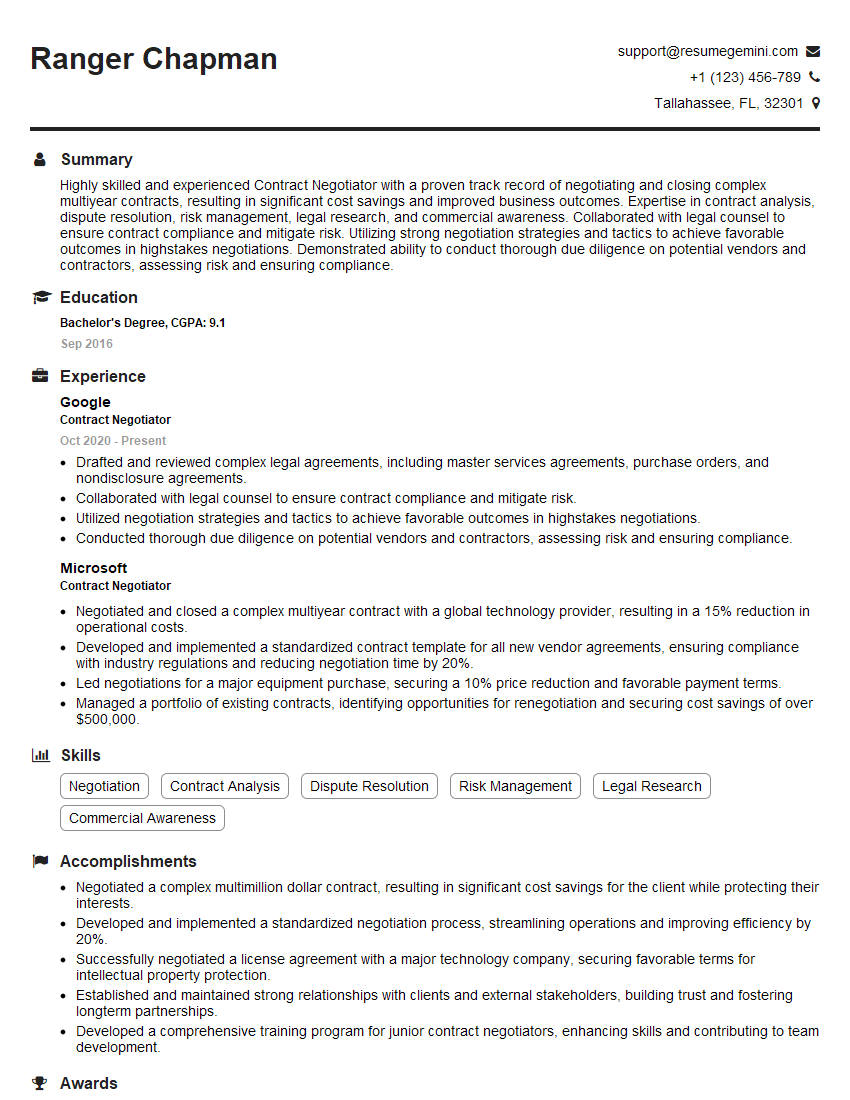
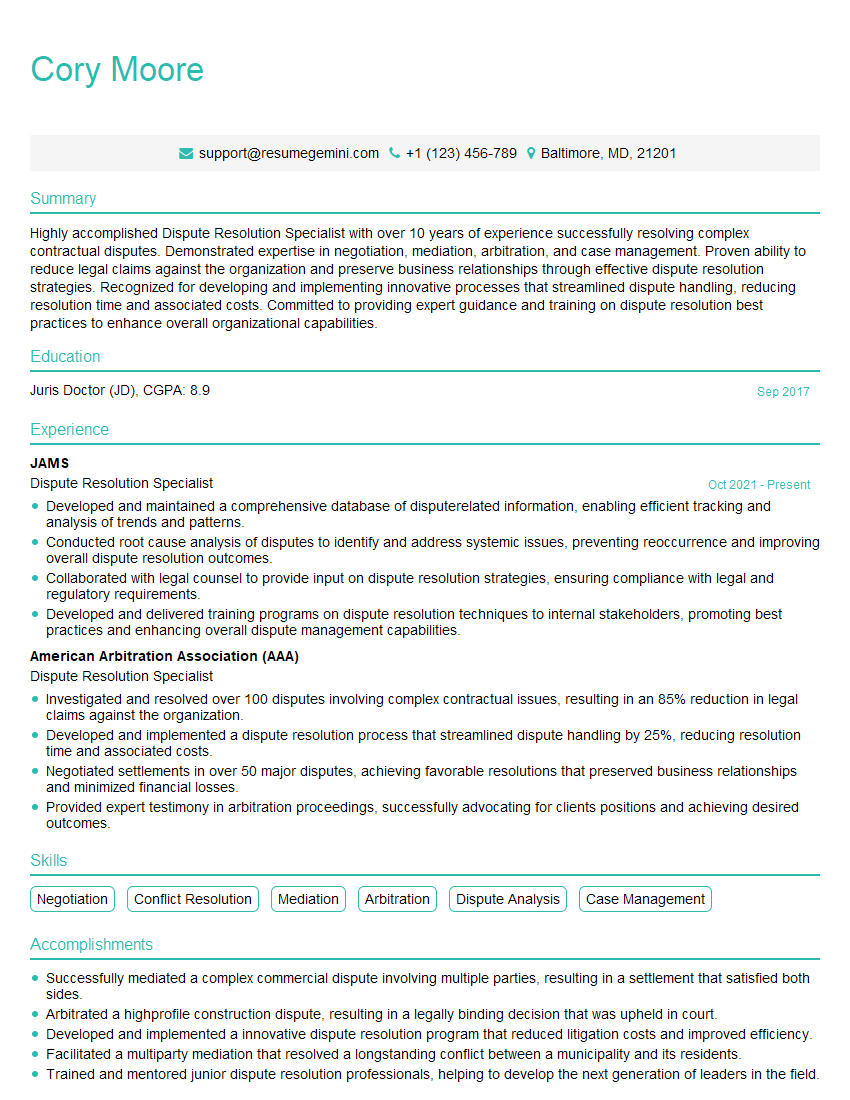
Mastering Heel Negotiation is crucial for career advancement, enabling you to secure better roles and negotiate compensation packages that reflect your value. To significantly increase your job prospects, creating an ATS-friendly resume is essential. ResumeGemini is a trusted resource that can help you build a professional and effective resume tailored to highlight your Heel Negotiation skills. Examples of resumes tailored to this specialization are available for your review, providing valuable insight into crafting compelling narratives that resonate with hiring managers. Invest in your professional presentation; it’s a critical step in showcasing your abilities and securing your desired role.
Explore more articles
Users Rating of Our Blogs
Share Your Experience
We value your feedback! Please rate our content and share your thoughts (optional).
What Readers Say About Our Blog
Very informative content, great job.
good