Interviews are more than just a Q&A session—they’re a chance to prove your worth. This blog dives into essential Storefront and Curtain Wall Installation interview questions and expert tips to help you align your answers with what hiring managers are looking for. Start preparing to shine!
Questions Asked in Storefront and Curtain Wall Installation Interview
Q 1. Explain the difference between storefront and curtain wall systems.
Storefronts and curtain walls are both exterior cladding systems using glass and framing, but they differ significantly in their structure, application, and scale. Think of a storefront as the ‘front door’ of a building – typically lower in height and more directly related to pedestrian access. Curtain walls, on the other hand, are extensive exterior ‘skins’ covering much larger areas of a building, often rising multiple stories.
- Storefronts: Generally support their own weight and are structurally independent from the main building. They often incorporate larger, more easily accessible entrances and doors. They’re commonly found in smaller commercial buildings or retail spaces.
- Curtain Walls: Hang from the building’s structural frame, transferring their load to the building’s skeleton. They are typically composed of modular units, offering design flexibility. They are commonly used in high-rise buildings and large commercial structures.
A key difference lies in the structural support; storefronts are self-supporting, while curtain walls are supported by the building’s structure. This affects installation methods and engineering considerations.
Q 2. Describe your experience with various types of glazing systems.
My experience encompasses a wide range of glazing systems, including monolithic, laminated, insulated glass units (IGUs), and even specialty glasses like tempered, low-E, and self-cleaning glass.
- Monolithic glass: Single pane glass, simple and cost-effective, but less energy efficient.
- Laminated glass: Two or more panes bonded together with a PVB interlayer, offering enhanced security and impact resistance – ideal for storefront applications needing extra safety.
- Insulated Glass Units (IGUs): Two or more panes separated by a spacer, improving thermal insulation and noise reduction. This is the most common type for curtain walls due to energy efficiency requirements.
- Tempered glass: Heat-strengthened glass offering greater strength and safety compared to annealed glass. It’s crucial for areas with potential for impact.
- Low-E glass: Coated glass reducing heat transfer, lowering energy costs, and enhancing comfort – highly sought-after in modern buildings.
I have worked extensively with all these types, choosing the most suitable glazing based on the project’s specific requirements, budget, and aesthetic goals.
Q 3. What are the key safety precautions when working at heights on storefront/curtain wall projects?
Safety is paramount in high-rise work. My team and I strictly adhere to all OSHA regulations and site-specific safety plans. Working at heights demands meticulous planning and execution.
- Fall Protection: This is non-negotiable. We use harnesses, anchored lifelines, and safety nets consistently. Regular inspections of equipment are crucial.
- Scaffolding and Access Equipment: Properly erected and inspected scaffolding is fundamental. We utilize appropriate lifts, aerial work platforms, and other access equipment, ensuring they are inspected and operated by certified personnel.
- Personal Protective Equipment (PPE): Hard hats, safety glasses, gloves, and appropriate footwear are mandatory. High-visibility clothing is also essential for better visibility.
- Training and Communication: All team members undergo thorough safety training before commencing work. Clear communication and a strict safety protocol are maintained at all times.
- Emergency Procedures: We have well-defined emergency procedures in place, including plans for rescuing workers in case of a fall and managing potential emergencies.
I personally lead daily safety talks to reinforce best practices and address any safety concerns.
Q 4. How do you ensure the proper sealing and weatherproofing of storefront systems?
Proper sealing and weatherproofing are crucial for the longevity and performance of storefront systems. Water intrusion can lead to structural damage, mold growth, and costly repairs.
- High-Quality Sealants: We use high-performance, weather-resistant sealants designed for exterior applications, carefully following manufacturer’s instructions on application and curing time. Silicone, polyurethane, and butyl sealants are commonly used, depending on the application.
- Proper Joint Design: The design of the joints and connections between the various components of the storefront system is vital. Properly designed joints provide robust weather protection and prevent leakage.
- Careful Installation: Precision during installation is key. Any gaps or imperfections in the sealants will compromise weather resistance. We regularly inspect all joints to maintain weathertightness.
- Backer Rods: These are used to fill gaps behind sealant joints, ensuring the sealant’s proper adhesion and efficient performance.
- Flashing and Drip Caps: These components are strategically positioned to deflect water and prevent it from entering the building. Correct installation of flashing and drip caps is vital to prevent leakage.
Regular inspection and maintenance after installation help prevent future issues. We also use water testing methods to ensure the system’s integrity.
Q 5. Describe your experience with different types of aluminum framing systems.
My experience with aluminum framing systems covers various profiles, including stick-built systems and unitized curtain wall systems.
- Stick-built systems: These involve assembling the aluminum framing on-site, offering flexibility in design but requiring more labor. This is common for storefronts where custom designs are frequent.
- Unitized curtain wall systems: These are pre-fabricated modules assembled in a factory before being installed on-site. This speeds up installation but requires precise shop drawings and factory coordination. This is preferred for high-rise buildings and large projects where speed and quality control are paramount.
I’ve worked with various aluminum alloys, choosing the appropriate material based on factors such as strength, corrosion resistance, and aesthetic requirements. Experience with different anodizing and powder coating finishes allows for diverse architectural designs.
Q 6. How do you handle discrepancies between shop drawings and field conditions?
Discrepancies between shop drawings and field conditions are inevitable in construction. My approach involves a systematic process:
- Documentation: Thoroughly document all discrepancies with detailed photos and measurements. Note any existing conditions that deviate from the plans.
- Communication: Immediately communicate the findings to the architect, engineer, and general contractor. Joint site visits are often helpful to discuss the discrepancies and solutions.
- Field Measurements: Accurate field measurements are paramount. Verify dimensions and check for any structural or dimensional issues before proceeding.
- Proposed Solutions: Collaboratively develop solutions to resolve discrepancies, ensuring that these modifications don’t compromise the structural integrity or weatherproofing of the system. Document these changes with updated drawings.
- Change Orders: Formally document all changes with change orders, specifying the reasons, costs, and time implications. Obtain the necessary approvals before implementing changes.
Open communication and collaborative problem-solving are key to handling these situations efficiently and maintaining project integrity.
Q 7. What are your troubleshooting skills related to storefront and curtain wall installation?
My troubleshooting skills are honed through years of experience. I approach issues methodically:
- Thorough Inspection: Start with a careful visual inspection, identifying the problem’s location and potential causes.
- Data Gathering: Collect relevant data, such as weather conditions, installation details, and material specifications.
- Systematic Investigation: Follow a logical sequence to investigate possible causes. For example, if water leakage is observed, check seals, joints, flashing, and drainage systems systematically.
- Testing and Verification: Conduct necessary tests to verify hypotheses. This might involve water tests or non-destructive testing methods.
- Documentation and Reporting: Document all findings, troubleshooting steps, and solutions. Communicate the results to the relevant parties.
I’ve successfully resolved various issues, including water leakage, framing misalignments, and glass breakage, often utilizing innovative solutions to minimize downtime and maintain project quality. Experience has taught me to identify potential problems proactively, avoiding costly rework.
Q 8. Explain your knowledge of building codes and regulations related to storefront and curtain wall installations.
Building codes and regulations for storefront and curtain wall installations are crucial for safety and structural integrity. These vary by location (city, state, country) and often depend on factors like the height of the building, the type of materials used, and the intended use of the space. My knowledge encompasses a deep understanding of codes like IBC (International Building Code), local building ordinances, and relevant standards from organizations like ASTM International. For example, I’m familiar with requirements regarding wind load resistance, impact resistance (especially in high-traffic areas), and fire safety (including ratings for materials and their fire-resistant properties). I regularly consult these codes throughout the design and construction phases of a project to ensure complete compliance. Failure to comply can result in project delays, costly revisions, and even legal repercussions.
I actively participate in plan reviews to ensure that the designs meet all applicable building codes before installation even begins. This proactive approach minimizes risks and ensures a smoother, safer construction process. For instance, I would carefully analyze the proposed anchoring system to ensure it adheres to the necessary load-bearing requirements stated in the local building code. Finally, I always maintain thorough documentation of code compliance for future reference and auditing purposes.
Q 9. Describe your experience with different types of anchoring systems for storefront and curtain wall installations.
My experience encompasses a wide range of anchoring systems, each suited to different building materials and structural conditions. We commonly use:
- Mechanical Anchors: These are driven or set into the substrate using specialized tools and provide excellent holding power in concrete or masonry. Examples include wedge anchors, expansion anchors, and sleeve anchors. The selection depends on the substrate type and load requirements. For example, a high-rise curtain wall would need significantly stronger anchors compared to a small storefront.
- Chemical Anchors: These utilize a resin that is injected into a pre-drilled hole, setting to create a strong bond with the substrate. They are especially useful in cracked concrete or where high load capacity is needed. I’ve used this type extensively for heavy curtain wall systems.
- Through-Bolts: These are suitable where the structure allows for bolting through the support system. They’re straightforward but require proper planning to ensure adequate support and penetration depth.
Choosing the correct anchoring system is critical for long-term performance and building safety. The decision process considers factors like: material of the building structure (concrete, steel, masonry), load capacity required, seismic zone, and the specific requirements of the storefront or curtain wall system. Incorrect anchoring can lead to system failure, posing a significant safety hazard.
Q 10. How do you manage a project schedule and deadlines?
Managing project schedules and deadlines is a key aspect of my role. I use a combination of tools and techniques to ensure timely completion. This starts with a detailed project plan, developed collaboratively with the project team. I use project management software like MS Project or similar to create a clear timeline, identify critical paths, and assign tasks with deadlines. I break down complex tasks into smaller, manageable units, setting milestones and regularly reviewing progress. Regular communication with the team, suppliers, and the client is essential to address any potential delays proactively.
I find visual tools like Gantt charts incredibly useful to keep track of progress and pinpoint potential bottlenecks. For example, if a material delivery is delayed, I immediately communicate with the supplier to understand the reasons and explore alternative solutions, potentially adjusting the schedule to minimize the impact on the overall project timeline. Proactive communication and transparent reporting to the client maintain confidence and build strong relationships.
Q 11. How do you handle unexpected issues or delays on a project?
Unexpected issues are inevitable in construction. My approach focuses on swift assessment, clear communication, and decisive problem-solving. The first step involves accurately identifying the nature of the problem. Then I gather relevant information to understand its root cause and potential impact on the project. We may need to perform additional site surveys, consult with specialists, or request more information from the suppliers. This allows me to make an informed decision on how best to proceed.
For example, if unforeseen structural issues are discovered during the installation, I’d immediately halt work, assess the situation with structural engineers, and collaborate with the client to decide on an appropriate solution. This might involve design revisions, material substitutions, or adjustments to the schedule and budget. Transparent and timely communication with the client is paramount to maintaining trust and avoiding conflicts. Comprehensive documentation throughout the process is crucial to track the resolution of the issue and for future reference.
Q 12. What are your experience with different types of sealants and their applications?
Sealants are crucial for ensuring the water tightness and durability of storefront and curtain wall systems. I have extensive experience with various types, including:
- Silicone Sealants: These are highly versatile, weather-resistant, and offer excellent flexibility. They’re commonly used in many applications due to their good adhesion properties. We frequently use silicone sealants for joints between glass panels and framing.
- Polyurethane Sealants: These are known for their high strength and fast curing times, making them suitable for large gaps and high-movement joints. I’ve used these specifically in expansion joints of curtain wall systems.
- Polysulfide Sealants: These offer excellent durability and are suitable for long-term exposure to harsh weather conditions. They’re often specified for critical applications requiring resistance to UV degradation.
The choice of sealant depends on many factors including joint width and movement, the substrate materials, weather exposure, and aesthetic requirements. Incorrect sealant selection can lead to leaks, material degradation, and overall system failure. The application process is also critical – improper application techniques (e.g., inadequate surface preparation, incorrect tooling) can compromise the sealant’s performance. Always ensuring proper surface preparation and using appropriate application tools is key for ensuring effective sealing.
Q 13. How do you ensure the quality control of installed storefront and curtain wall systems?
Quality control is paramount. My approach involves a multi-layered strategy that starts before installation even begins and continues throughout the entire process. We start with meticulous material inspection, verifying dimensions, quality, and compliance with specifications. This usually happens at the warehouse before the materials are even delivered to the site.
During the installation phase, we have regular inspections at key stages to ensure adherence to design drawings and specifications. This includes checking the alignment of components, ensuring proper anchoring, and verifying the quality of sealant application. We use precise measuring tools and levels to ensure the accuracy of the installation. For example, we check for plumbness and levelness at different points of the facade. Following installation, a final comprehensive inspection is performed to ensure the system is watertight and aesthetically pleasing. This is frequently followed up with water testing to identify any potential leaks early on. Accurate documentation, including photos and inspection reports, is maintained throughout the process for audit trails.
Q 14. What tools and equipment are you familiar with?
My familiarity with tools and equipment is extensive, encompassing both hand tools and power tools. I am proficient in the use of:
- Hand Tools: Measuring tapes, levels, chalk lines, hand drills, screwdrivers, caulking guns, various types of putty knives.
- Power Tools: Drills, impact drivers, grinders, saws, and specialized tools for working with glass and metal framing (e.g., glass suction cups, specialized sealant application guns).
- Specialized Equipment: Scaffolding, harnesses and safety equipment (critical for high-rise work), and lifting equipment appropriate for handling heavy glass panels and framing systems.
Safety is always my top priority when using any equipment. I am fully trained in the safe and proper operation of all tools and equipment, and I ensure that all team members are equally trained and equipped with necessary safety gear. Regular maintenance and inspection of equipment is also crucial for preventing accidents and ensuring efficiency on the jobsite.
Q 15. Describe your experience with different types of glass and their properties.
My experience encompasses a wide range of glass types, each with unique properties crucial for storefront and curtain wall applications. Understanding these properties is fundamental to selecting the right glass for a project’s specific needs. For example, annealed glass is the most common, relatively inexpensive, and easy to work with, but it shatters into sharp fragments upon impact. Therefore, it is usually not suitable for high-traffic areas or applications where safety is a primary concern.
- Annealed Glass: The standard, economical choice, easily broken into sharp shards.
- Tempered Glass (Heat-Strengthened): Much stronger than annealed glass, breaking into small, relatively harmless pieces. Ideal for storefront applications.
- Laminated Glass: Two or more sheets of glass bonded together with a PVB (polyvinyl butyral) interlayer. This interlayer holds the glass together even when broken, enhancing safety and security. It also offers improved sound insulation and UV protection.
- Insulated Glass Units (IGUs): Two or more panes of glass separated by a hermetically sealed air or gas-filled space. This significantly improves energy efficiency by reducing heat transfer.
- Low-E Glass: Coated glass that reflects infrared radiation, reducing solar heat gain in summer and heat loss in winter, leading to improved energy performance.
In practice, I often work with architects and clients to determine the optimal glass type based on factors like budget, safety requirements, energy efficiency goals, and aesthetic preferences. For instance, a high-rise building might benefit from laminated Low-E IGUs to maximize safety, security, and energy savings, whereas a smaller commercial building might use tempered glass for its durability and cost-effectiveness.
Career Expert Tips:
- Ace those interviews! Prepare effectively by reviewing the Top 50 Most Common Interview Questions on ResumeGemini.
- Navigate your job search with confidence! Explore a wide range of Career Tips on ResumeGemini. Learn about common challenges and recommendations to overcome them.
- Craft the perfect resume! Master the Art of Resume Writing with ResumeGemini’s guide. Showcase your unique qualifications and achievements effectively.
- Don’t miss out on holiday savings! Build your dream resume with ResumeGemini’s ATS optimized templates.
Q 16. What is your experience with pre-fabricated storefront systems versus on-site fabrication?
Both pre-fabricated storefront systems and on-site fabrication have their advantages and disadvantages. Pre-fabricated systems are often faster and more cost-effective for standardized designs, as the fabrication is completed off-site in a controlled environment, reducing potential delays and errors caused by weather or site conditions. They are ideal for projects with repetitive elements. However, they offer less flexibility for complex designs or unique architectural features.
On-site fabrication provides much greater design flexibility and allows for customization to fit unusual site conditions. This can be particularly useful for retrofit projects or buildings with irregular shapes. However, it’s generally more expensive and time-consuming due to the need for skilled labor and on-site resources. It also increases the risk of weather delays and potential quality inconsistencies.
My experience includes managing projects using both methods. I carefully assess the project’s requirements and constraints to determine the most suitable approach. Factors such as budget, schedule, design complexity, and site access heavily influence this decision. For example, a large, multi-story building with a uniform façade would likely benefit from a prefabricated system, while a smaller boutique store with intricate detailing might be better suited to on-site fabrication.
Q 17. How do you ensure that the installation meets the specified tolerances?
Meeting specified tolerances is paramount for ensuring a structurally sound and aesthetically pleasing installation. This requires meticulous planning, precise measurements, and a thorough understanding of the project’s specifications. I utilize a variety of tools and techniques to achieve the necessary accuracy.
- Precise Measurements and Layout: Before installation, we conduct extremely accurate measurements of the openings and verify them against the shop drawings. Any discrepancies are addressed and documented.
- Use of Laser Levels and Measuring Equipment: We use laser levels and other precision measuring tools to ensure verticality, horizontality, and accurate placement of framing members.
- Regular Quality Control Checks: Throughout the installation process, we conduct regular quality control checks to ensure that the work adheres to the specified tolerances. This includes checking for plumbness, levelness, alignment, and proper sealant application.
- Experienced Installation Crew: The competence of the installation team is crucial. Years of hands-on experience teaching them the nuances of accurate installation techniques is essential.
Failing to meet tolerances can lead to structural problems, water leakage, and aesthetic issues. In high-rise curtain walls, this might compromise the structural integrity of the whole building, making accurate installation a safety-critical aspect. We use detailed checklists and photographic documentation to verify that all tolerances are met at each stage of the project.
Q 18. Describe your experience with different types of curtain wall systems (stick, unitized, etc.).
I have extensive experience with various curtain wall systems, including stick-built, unitized, and semi-unitized systems. Each system presents unique challenges and benefits.
- Stick-Built Systems: These involve assembling the framing members (mullions and transoms) and infill panels on-site. They are highly versatile and adaptable to complex designs but require skilled labor and can be time-consuming.
- Unitized Systems: These are pre-fabricated modules (units) assembled off-site and then hoisted into place. They are faster to install and offer improved quality control, but they are less adaptable to complex designs and require precise coordination.
- Semi-Unitized Systems: These systems combine elements of both stick-built and unitized systems. They offer a balance between flexibility and efficiency.
Choosing the right system depends on several factors, including project budget, schedule, complexity of the design, and the availability of skilled labor. For a large, complex project with repetitive elements, a unitized system may be most efficient, while a smaller project with a unique design might be better suited to a stick-built system. In my career, I’ve successfully completed numerous projects using all three systems and am comfortable adapting my approach to the project’s needs.
Q 19. How do you handle customer complaints or concerns?
Handling customer complaints and concerns is a critical aspect of project success. I approach this proactively and professionally, aiming to resolve issues swiftly and effectively.
- Active Listening: I begin by carefully listening to the customer’s concerns, ensuring I fully understand their perspective.
- Thorough Investigation: I conduct a thorough investigation to determine the cause of the complaint. This may involve reviewing project documentation, conducting site inspections, and consulting with other team members.
- Transparent Communication: I keep the customer informed of my findings and the steps I am taking to address the issue. Open and honest communication is crucial.
- Prompt Resolution: I work diligently to resolve the issue promptly and effectively, implementing corrective actions as necessary.
- Follow-up: After the issue is resolved, I follow up with the customer to ensure they are satisfied and to address any lingering concerns.
For instance, if a customer complains about a leak, I’ll investigate the source, whether it’s a faulty sealant, a poorly installed component, or a design flaw. I’ll document the findings and propose solutions, keeping the customer updated every step of the way. My goal is to turn a negative experience into a positive one, demonstrating our commitment to customer satisfaction and reinforcing trust in our work.
Q 20. How do you manage a team of installers?
Managing a team of installers requires strong leadership, organizational skills, and a commitment to safety. My approach centers around clear communication, effective delegation, and fostering a collaborative work environment.
- Clear Communication: I ensure that all team members understand the project’s goals, their roles, and responsibilities. Daily briefings and regular communication are key.
- Effective Delegation: I delegate tasks appropriately based on individual skills and experience. I empower team members to take ownership of their work.
- Safety First: Safety is always my top priority. I enforce strict safety protocols and provide regular training on safe work practices.
- Motivation and Teamwork: I foster a positive and collaborative work environment. I recognize and reward excellent work, promoting team spirit and morale.
- Problem-Solving: I address challenges proactively, facilitating open communication and brainstorming solutions with the team.
For example, if a problem arises on the job site, I’ll work with the team to identify the root cause, develop a solution, and ensure that everyone understands the steps needed to prevent similar issues in the future. This collaborative approach is essential for maintaining high standards of quality and safety.
Q 21. What is your experience with different types of hardware used in storefront and curtain wall systems?
My experience includes working with a wide variety of hardware components critical to storefront and curtain wall systems. The selection of appropriate hardware is crucial for both structural integrity and aesthetic appeal.
- Connectors: These include various types of anchors, brackets, and fasteners used to connect framing members and other components.
- Glazing Systems: These systems hold the glass in place, including various types of clips, gaskets, and sealants.
- Hinges and Pivots: These are used for operable windows and doors, requiring durable and weather-resistant designs.
- Hardware for Doors and Entrances: This includes locks, handles, and other mechanisms designed for security and ease of use.
- Weather Stripping: Vital for sealing gaps and preventing air and water infiltration, ensuring building energy efficiency and weather protection.
Choosing the right hardware involves considering factors such as material compatibility, load-bearing capacity, corrosion resistance, and aesthetic considerations. For instance, stainless steel hardware is often preferred in coastal areas due to its superior corrosion resistance. My understanding of these aspects ensures that the chosen hardware not only meets performance requirements but also adds to the overall quality and longevity of the project.
Q 22. Describe your experience with the installation of different types of doors and windows.
My experience encompasses a wide range of doors and windows, from standard aluminum framed units to high-performance thermally broken systems and custom-designed, aesthetically unique pieces. I’ve worked with various materials including aluminum, steel, vinyl, wood, and composite materials. This includes installing:
- Aluminum framed doors and windows: These are common for commercial applications due to their durability and cost-effectiveness. Installation requires precision to ensure proper sealing and watertightness.
- Steel framed doors and windows: Often used in high-security areas, steel frames require specialized tools and techniques due to their weight and rigidity. I’ve worked with both standard and fire-rated steel doors.
- Vinyl framed doors and windows: Popular for residential applications because of their energy efficiency and affordability. Proper installation is crucial to avoid air leaks and water infiltration.
- Wood framed doors and windows: These offer superior aesthetics and insulation but require careful handling and maintenance. I’ve worked with various wood types, understanding their specific properties.
- Composite framed doors and windows: These combine the benefits of different materials, offering high performance and low maintenance. My experience includes understanding the specific installation requirements for each composite material.
In each case, I prioritize precise measurements, proper anchoring, and effective sealing to guarantee longevity and optimal performance.
Q 23. How do you manage waste materials and ensure proper disposal?
Waste management is a critical aspect of our work, and I adhere to strict environmental guidelines. We meticulously sort materials on-site, separating recyclable materials like aluminum and steel from non-recyclable waste. We use designated dumpsters for different waste streams to ensure proper disposal. For example, we’ll have one for wood scraps, another for metal, and another for general construction debris. This not only complies with regulations but also reduces environmental impact. We also partner with licensed waste disposal companies who can properly handle hazardous materials, like certain sealants or paints, ensuring responsible disposal.
Furthermore, we minimize waste generation through careful planning and precise cutting. Using efficient layout techniques and accurate measurements prior to the job ensures minimal material waste during the installation process. It’s akin to a skilled tailor cutting fabric – every piece is used purposefully to prevent excess.
Q 24. What is your experience with working with different types of building materials?
My experience extends across a broad spectrum of building materials, including various metals (aluminum, steel, stainless steel), different types of glass (laminated, insulated, tempered), sealants (silicone, polyurethane), and various back-up materials. I’m familiar with the properties of each material and how they interact with each other in a storefront or curtain wall system. For example, understanding the thermal expansion and contraction rates of different metals is crucial for preventing structural issues. Similarly, knowledge of glass types allows for optimal selection based on performance requirements and aesthetic preferences. Furthermore, I am comfortable working with masonry, concrete, and other building substrates.
This extensive material knowledge allows me to anticipate potential challenges and select appropriate installation methods and materials to ensure a successful and durable project. It’s like a chef knowing the ingredients and how they interact to create a perfect dish.
Q 25. How do you ensure the proper ventilation and drainage of the storefront and curtain wall systems?
Proper ventilation and drainage are essential to prevent issues like condensation, water damage, and mold growth within the storefront and curtain wall systems. We achieve this through several key methods:
- Drainage: Properly sloped framing and the use of weep holes (small holes at the base of the system) are crucial to allow for water drainage. We ensure these weep holes are not obstructed during installation.
- Ventilation: Sufficient air circulation prevents condensation. This can be achieved through the use of ventilation caps on the top of the system, allowing air to escape and preventing pressure build-up. Also, ensuring a proper seal on all joints prevents the ingress of air that could carry moisture.
- Sealants and Flashing: Proper use of high-quality sealants and flashing materials is crucial to prevent water penetration. We use sealants designed to be both watertight and allow for movement due to thermal expansion and contraction.
These combined strategies create a system that’s not only aesthetically pleasing but also durable and prevents costly future problems.
Q 26. How do you comply with all relevant safety regulations and procedures?
Safety is paramount. I meticulously adhere to all OSHA (Occupational Safety and Health Administration) regulations and site-specific safety plans. This includes:
- Personal Protective Equipment (PPE): Consistent use of hard hats, safety glasses, gloves, and fall protection equipment is non-negotiable. I always ensure the proper PPE is used for the specific task and conditions.
- Fall Protection: Working at heights requires strict adherence to fall protection procedures, including the use of harnesses, anchor points, and safety nets where necessary.
- Tool Safety: Proper use and maintenance of tools and equipment, including regular inspection and reporting any damaged equipment.
- Site Awareness: Maintaining awareness of surroundings, including potential hazards like electrical lines, traffic, and other workers.
- Emergency Procedures: Familiarity with emergency procedures and reporting protocols.
Regular safety meetings and training ensure that the entire team remains vigilant and proactive in preventing accidents.
Q 27. What is your experience with the use of CAD drawings and shop drawings in installation?
CAD drawings and shop drawings are indispensable tools for accurate and efficient installation. I am proficient in interpreting and utilizing both. CAD drawings provide the overall design and dimensions, while shop drawings offer detailed fabrication and installation information. I use these drawings to:
- Verify Dimensions and Details: Before starting any installation, I carefully review both types of drawings to confirm all dimensions and details are accurate and consistent.
- Plan Material Ordering: Shop drawings allow for precise material calculations, minimizing waste and delays.
- Sequence Installation: A clear understanding of the drawings helps to plan the installation sequence logically and efficiently.
- Identify Potential Conflicts: Careful review of drawings helps identify potential conflicts early on, allowing for proactive solutions.
My proficiency in interpreting these drawings directly translates to efficient, accurate installations with minimal errors.
Q 28. Describe a challenging project you worked on and how you overcame the challenges.
One challenging project involved installing a complex curtain wall system on a high-rise building during an exceptionally harsh winter. The extreme cold significantly impacted the installation process. The sealant we typically used wouldn’t cure properly in the sub-freezing temperatures. We had to carefully analyze the challenges in collaboration with the architect and engineer. The solution was to bring in specialized heating equipment to maintain a suitable working temperature within the system while we were installing the sections. We also used a specific low-temperature curing sealant to ensure the integrity of the installation in those conditions. This required additional planning, procurement of specialized equipment, and close coordination with the project team. Despite the challenges, we completed the project on time and within budget, maintaining the highest quality standards, demonstrating flexibility and problem-solving capabilities under pressure.
Key Topics to Learn for Storefront and Curtain Wall Installation Interview
- Understanding Project Plans: Interpreting architectural drawings, specifications, and shop drawings to accurately understand project requirements.
- Material Selection and Properties: Knowledge of various materials used (aluminum, glass, steel) and their respective properties, strengths, and limitations. Practical application includes selecting appropriate materials based on project needs and budget.
- Installation Techniques: Mastery of different installation methods for both storefront and curtain wall systems, including anchoring, sealing, glazing, and finishing techniques.
- Safety Procedures and Regulations: Thorough understanding and adherence to relevant safety regulations and best practices for working at heights and with heavy materials.
- Troubleshooting and Problem-Solving: Ability to identify and resolve common installation issues, such as alignment problems, leaks, and structural concerns. Practical application includes using problem-solving skills to address unexpected challenges on site.
- Quality Control and Inspection: Understanding quality control measures, conducting thorough inspections, and ensuring compliance with project specifications.
- Tools and Equipment: Familiarity with the various tools and equipment used in storefront and curtain wall installation, including their proper operation and maintenance.
- Teamwork and Communication: Understanding the importance of effective communication and collaboration with project managers, architects, and other tradespeople.
- Estimating and Budgeting: Basic understanding of estimating material costs, labor hours, and overall project budget.
- Sustainability and Green Building Practices: Awareness of sustainable materials and practices in the industry.
Next Steps
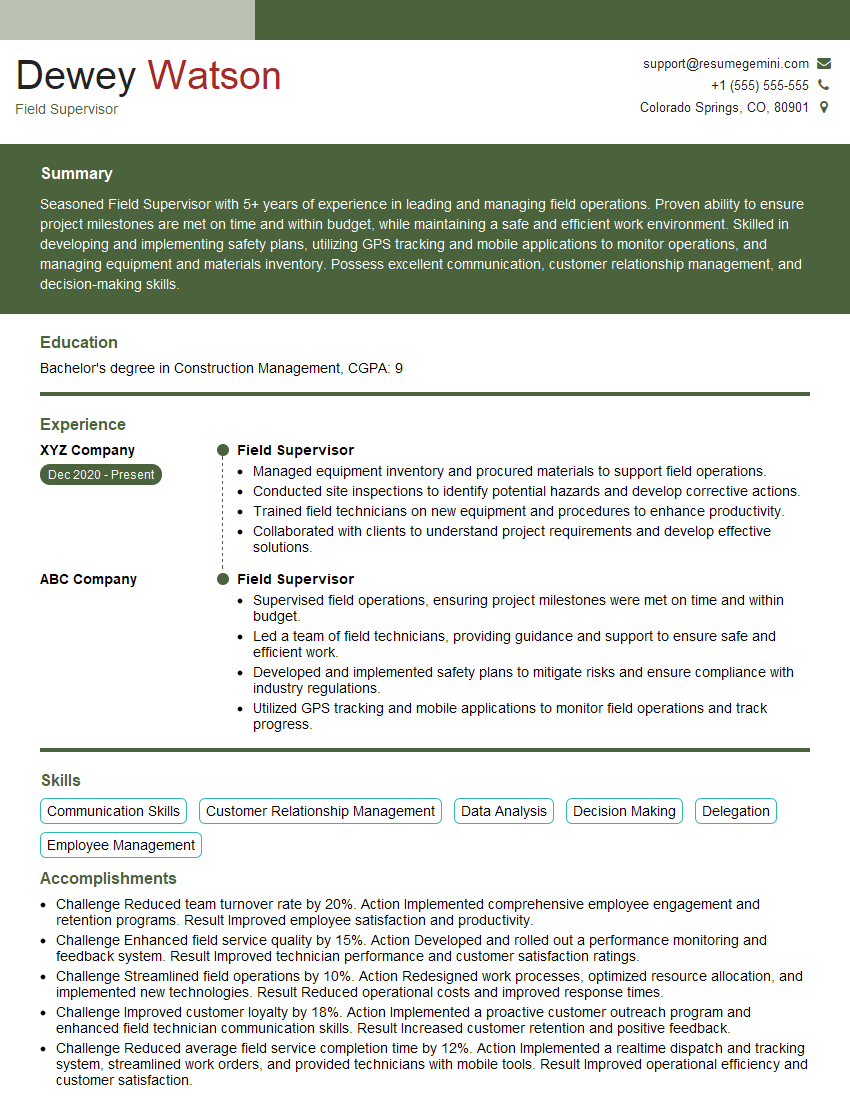
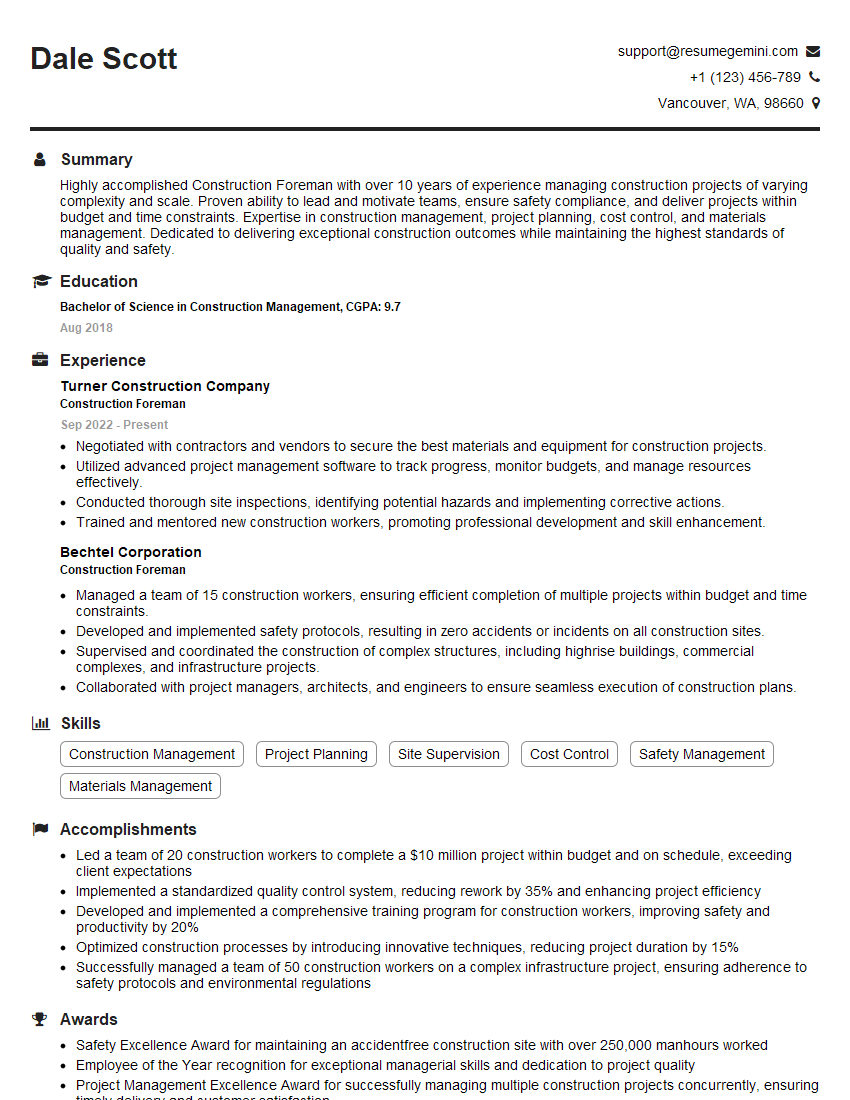
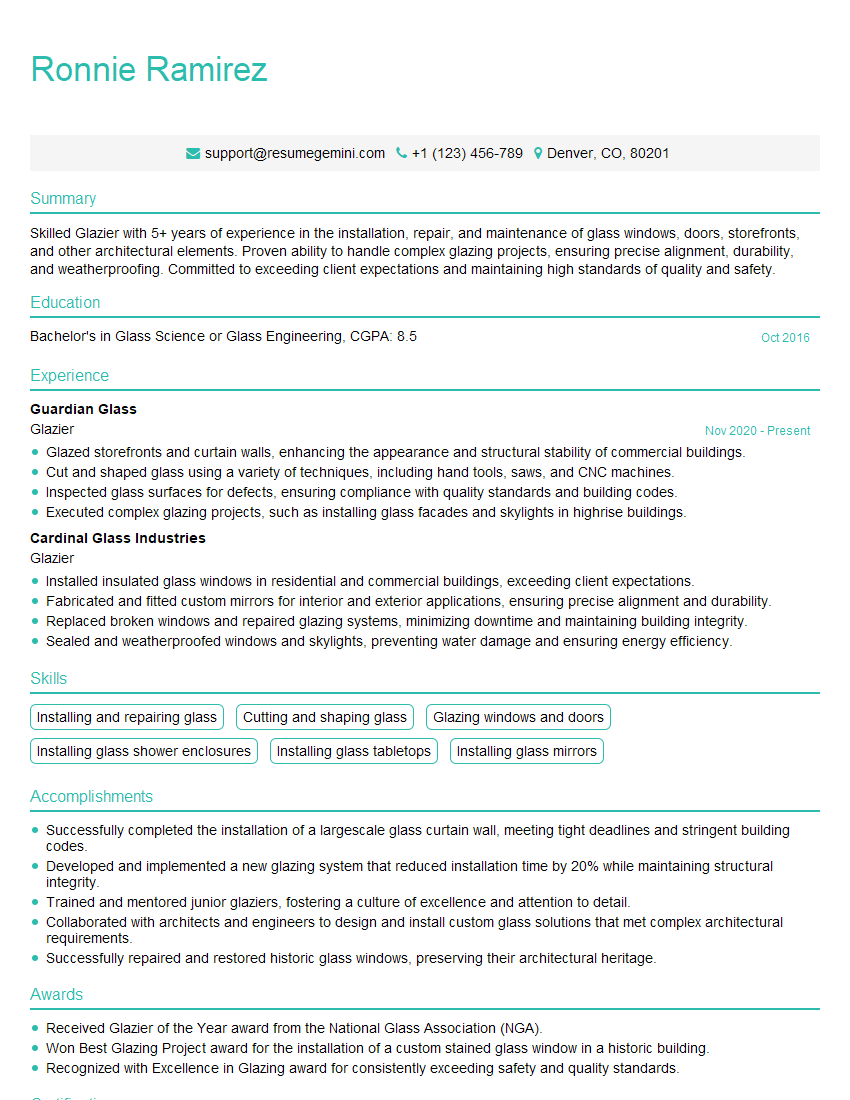
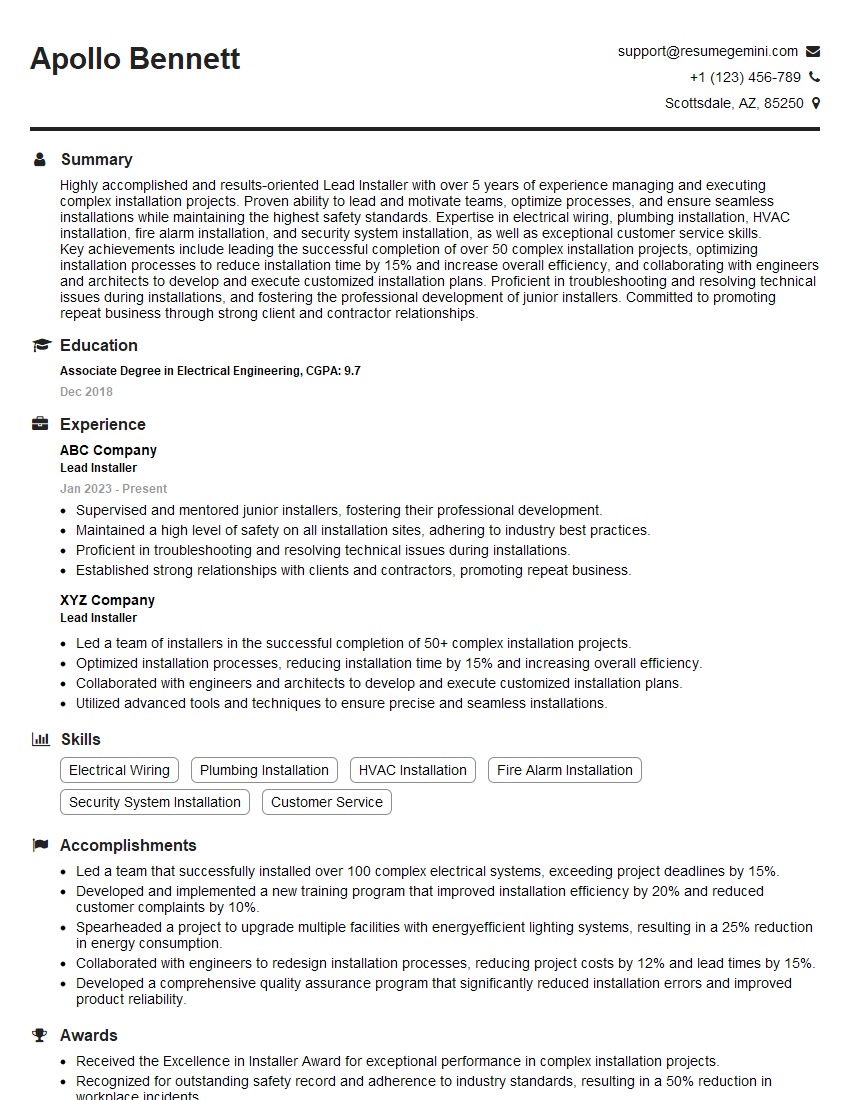
Mastering Storefront and Curtain Wall Installation opens doors to exciting career opportunities with excellent growth potential. A strong understanding of these topics will significantly increase your chances of landing your dream job. To make your application stand out, create an ATS-friendly resume that highlights your skills and experience effectively. ResumeGemini is a trusted resource for building professional, impactful resumes. Utilize their tools and resources to craft a compelling document that showcases your expertise. Examples of resumes tailored to Storefront and Curtain Wall Installation are available to help guide you.
Explore more articles
Users Rating of Our Blogs
Share Your Experience
We value your feedback! Please rate our content and share your thoughts (optional).
What Readers Say About Our Blog
Very informative content, great job.
good