Preparation is the key to success in any interview. In this post, we’ll explore crucial 5S Housekeeping and Visual Management interview questions and equip you with strategies to craft impactful answers. Whether you’re a beginner or a pro, these tips will elevate your preparation.
Questions Asked in 5S Housekeeping and Visual Management Interview
Q 1. Describe the five S’s of 5S Housekeeping.
5S is a workplace organization method that uses a list of five Japanese words: Seiri (Sort), Seiton (Set in Order), Seiso (Shine), Seiketsu (Standardize), and Shitsuke (Sustain). It’s a powerful system for creating a cleaner, safer, and more efficient work environment. Each ‘S’ builds upon the previous one, creating a continuous improvement cycle.
- Sort (Seiri): Remove unnecessary items from the workspace.
- Set in Order (Seiton): Organize and arrange necessary items for easy access and use.
- Shine (Seiso): Clean and inspect the workspace regularly to maintain cleanliness.
- Standardize (Seiketsu): Establish procedures and rules to maintain the first three S’s.
- Sustain (Shitsuke): Make 5S a habit and part of the workplace culture.
Q 2. Explain the importance of Sort in 5S.
The ‘Sort’ phase is crucial because it lays the foundation for all subsequent 5S steps. Think of it as decluttering your workspace – removing everything that isn’t essential for daily operations. This includes broken tools, obsolete materials, excess inventory, and anything that simply takes up space and hinders efficiency. By removing unnecessary items, you reduce clutter, improve safety by removing potential hazards, and free up valuable workspace. For example, a manufacturing facility might sort through its parts inventory, discarding expired or defective components. This reduces waste, prevents errors during assembly, and streamlines the production process.
Q 3. How do you implement Set in a 5S environment?
Implementing ‘Set in Order’ involves strategically organizing the remaining necessary items for optimal efficiency and ease of access. This includes designating specific locations for everything, using clear labeling, and employing visual aids to make it easy for anyone to find what they need. Consider using shadow boards to show where tools should be placed, color-coded storage containers for different parts, or visual cues on the floor for material flow. Imagine a hospital operating room: each instrument has a designated place, clearly labeled, and easily accessible for surgeons. This ensures quick access to vital tools and reduces the risk of errors during a surgery.
Q 4. What are the key benefits of Shine in 5S?
The ‘Shine’ phase focuses on cleanliness and inspection. It’s more than just cleaning; it’s about proactively identifying potential problems. Regular cleaning allows you to spot early signs of wear and tear on equipment, potential spills or leaks, or other safety hazards. For instance, regularly cleaning a machine reveals loose screws or minor malfunctions that could cause larger issues later on. This preventative maintenance saves time and money in the long run. A clean workspace also boosts morale and creates a safer, more professional atmosphere.
Q 5. Describe a practical application of Standardize in 5S.
Standardize involves creating clear, documented procedures to maintain the first three S’s consistently. This prevents backsliding and ensures that everyone understands their responsibilities. This might involve creating checklists for daily cleaning tasks, developing standard operating procedures (SOPs) for tool maintenance, or using visual cues to maintain organized storage. Imagine a fast-food restaurant creating a standardized cleaning checklist for all employees to follow at the end of each shift. This ensures consistency in cleanliness and helps maintain a high standard of hygiene.
Q 6. How do you maintain Sustain in a 5S program?
Sustaining 5S requires making it a permanent part of the workplace culture. This involves ongoing training, regular audits, and clear accountability. Regular 5S audits ensure compliance, while team meetings or huddles can serve as opportunities to review progress, address challenges, and reinforce good practices. For example, a company could implement a points-based reward system for teams that consistently maintain high 5S standards. This fosters a sense of ownership and encourages continuous improvement.
Q 7. What are some common challenges in implementing 5S, and how do you overcome them?
Common challenges in implementing 5S include resistance to change, lack of management support, inconsistent application, and insufficient training. To overcome these:
- Resistance to Change: Address concerns proactively, involve employees in the process, and highlight the benefits of 5S.
- Lack of Management Support: Secure buy-in from top management by demonstrating the ROI of 5S.
- Inconsistent Application: Develop clear standards, provide ongoing training, and regularly audit compliance.
- Insufficient Training: Offer comprehensive training programs that clearly explain the 5S methodology and its benefits.
Success hinges on leadership commitment, clear communication, and consistent reinforcement. Remember, 5S is a journey, not a destination – continuous improvement is key.
Q 8. Explain the relationship between 5S and Lean manufacturing principles.
5S, encompassing Sort, Set in Order, Shine, Standardize, and Sustain, is intrinsically linked to Lean manufacturing. Lean aims to eliminate waste and maximize efficiency, and 5S provides the foundational framework for achieving this. Think of 5S as the hygiene factor for a Lean system. A clean, organized, and standardized workplace is crucial for identifying and eliminating waste such as motion, searching, defects, and over-processing. Each 5S step directly contributes to Lean principles:
- Sort (Seiri): Eliminates unnecessary items, reducing waste of space and time spent searching.
- Set in Order (Seiton): Organizes remaining items for easy access, minimizing wasted motion and improving workflow.
- Shine (Seiso): Maintains cleanliness, preventing equipment malfunctions and improving overall quality.
- Standardize (Seiketsu): Establishes consistent processes and procedures, promoting predictable results and preventing errors.
- Sustain (Shitsuke): Instills a culture of continuous improvement, ensuring long-term adherence to 5S principles.
For example, a Lean manufacturing plant implementing 5S might eliminate unnecessary tools (Sort), organize remaining tools within easy reach (Set in Order), regularly clean the machinery (Shine), document the cleaning process (Standardize), and create a visual checklist to maintain cleanliness (Sustain). This creates a smoother, more efficient workflow, directly aligning with Lean objectives.
Q 9. How do you measure the effectiveness of a 5S program?
Measuring the effectiveness of a 5S program requires a multifaceted approach. You can’t simply rely on visual inspections; quantitative data is crucial. Here are some key metrics:
- Before & After Comparisons: Document initial conditions (e.g., storage space usage, defect rates, search times) before implementing 5S, then compare these to post-implementation data. This provides clear evidence of improvement.
- Defect Reduction Rates: A cleaner, more organized workspace leads to fewer errors. Track the reduction in defect rates as a direct measure of 5S’s effectiveness.
- Process Cycle Time Reduction: Improved efficiency from better organization and workflow should result in shorter process cycle times. Monitor this metric.
- Employee Satisfaction Surveys: Gather feedback from employees on their experience working in the improved environment. This reveals the impact on morale and productivity.
- Safety Incident Reduction: 5S directly contributes to safer work environments. Track the reduction in safety incidents post-implementation.
- Inventory Turnover Rate: Efficient inventory management, often a component of 5S, leads to improved turnover rates. Monitor this as an indicator of improved efficiency.
Using a combination of these metrics provides a comprehensive evaluation of the 5S program’s impact. For example, a 20% reduction in defects coupled with a 15% decrease in process cycle time clearly demonstrates successful implementation.
Q 10. What are some key visual management tools and techniques?
Visual management utilizes visual cues to communicate information quickly and effectively. Here are some key tools and techniques:
- Andon Boards: Real-time displays of production status, highlighting problems or delays.
- Kanban Systems: Visual signals (e.g., cards) to manage inventory and workflow.
- Shadow Boards: Silhouettes showing the correct placement of tools, ensuring quick and accurate retrieval.
- 5S Checklists/Scorecards: Visual aids to track compliance and progress across different 5S areas.
- Color-Coding: Utilizing colors to convey information (e.g., red for danger, green for go).
- Labeling/Signage: Clear labels on storage containers and equipment for easy identification.
- Value Stream Maps: Visual representations of the entire production process, helping identify bottlenecks and areas for improvement.
- Charts and Graphs: Data visualizations, such as control charts or Pareto charts, to monitor key metrics.
These tools work synergistically to create a transparent and easily understandable workspace. Imagine a maintenance team using shadow boards for tool organization, combined with a color-coded system for identifying critical maintenance items—this significantly speeds up response times and reduces errors.
Q 11. How do you design and implement visual controls?
Designing and implementing visual controls requires a systematic approach:
- Identify Key Metrics: Determine which information needs to be visually communicated (e.g., inventory levels, production targets, safety data).
- Choose Appropriate Tools: Select the visual management tools that best suit the specific needs and context. Consider the audience and the level of detail required.
- Data Collection and Analysis: Gather relevant data to populate the chosen visual management tools. Ensure the data is accurate and up-to-date.
- Design for Clarity and Simplicity: Visual controls should be easy to understand at a glance. Avoid clutter and use clear, concise language.
- Placement and Accessibility: Place visual controls in highly visible and easily accessible locations. Ensure they are at eye level for easy viewing.
- Standardization and Documentation: Create a standard format for visual controls, ensuring consistency across the workplace. Document the design and implementation process.
- Training and Communication: Train employees on the use and interpretation of the visual controls. Establish clear communication channels for reporting and addressing any issues.
- Regular Monitoring and Review: Regularly monitor the effectiveness of visual controls and make adjustments as needed. Conduct periodic reviews to ensure continued relevance and accuracy.
For instance, a factory might use an Andon board to display real-time production data. The board would be designed with clear icons and color-coding, and positioned prominently in the production area. Regular monitoring ensures the data is accurate and promptly addresses any issues.
Q 12. Explain the importance of color-coding in visual management.
Color-coding is a powerful visual management tool because it leverages our innate ability to quickly process visual information. Different colors evoke different associations and can convey crucial information at a glance. Consistency is key.
- Safety: Red often signifies danger or stop; green indicates safety or go; yellow warns of potential hazards.
- Status: Different colors can represent the status of a process or equipment (e.g., green for operational, yellow for maintenance required, red for broken).
- Inventory: Different colored labels can be used to identify different types of inventory or their location (e.g., color-coded bins).
- Workflow: Color-coding can highlight different stages of a process, making it easier to track progress.
Using a standard color code across the organization reduces ambiguity and improves communication efficiency. For instance, a consistent use of red for fire extinguishers or emergency exits ensures that every employee instantly understands the meaning, regardless of their background or language.
Q 13. How do you use visual management to improve safety?
Visual management significantly enhances safety by making hazards immediately apparent. Here are some examples:
- Safety Signage: Clear, concise safety signage using standardized colors and symbols (e.g., red for danger, yellow for caution) draws immediate attention to potential hazards.
- Color-Coded Safety Equipment: Distinctive color-coding for safety equipment (e.g., fire extinguishers, emergency shut-off valves) enables rapid location during emergencies.
- Hazard Identification Markers: Visual markers (e.g., tags, stickers) highlighting potential hazards, such as exposed wires or spills, ensure prompt remediation.
- Safety Audits/Checklists: Visual checklists facilitate regular safety audits, ensuring consistent monitoring and prompt action on any identified risks.
- Machine Guarding Indicators: Visual indicators (e.g., lights, labels) on machinery confirm if safety guards are properly in place.
Imagine a warehouse where potential trip hazards are marked with bright yellow tape. This immediately alerts workers to the hazard and promotes safe navigation. Regular safety audits with visual checklists ensure consistent maintenance and proactive hazard mitigation.
Q 14. How do you use visual management to improve efficiency?
Visual management boosts efficiency by streamlining information flow and reducing wasted time searching for information or materials. Here’s how:
- Kanban Systems: Visual signals for material replenishment avoid production delays due to shortages, optimizing workflow.
- Shadow Boards: Instantly identifying the correct tools eliminates search time, improving task completion speed.
- Visual Work Instructions: Pictures and diagrams clarify tasks, minimizing errors and training time.
- Real-time Production Monitoring: Andon boards or other displays provide immediate feedback on production status, allowing for quick intervention if issues arise.
- 5S Audits: Visual tracking of 5S implementation helps ensure consistency and efficiency across the entire workplace.
Consider a machine shop where tools are organized on shadow boards. The machinist can instantly locate the required tools, drastically cutting setup time and boosting productivity. This same concept applies to numerous other scenarios, maximizing efficiency by minimizing waste.
Q 15. How do you use visual management to improve communication?
Visual management is crucial for improving communication because it translates complex information into easily understandable visual cues. Instead of relying solely on lengthy reports or verbal instructions, which can be easily misinterpreted or forgotten, visual management uses signs, charts, labels, and other visual aids to clearly communicate key information to everyone, regardless of their language or literacy level.
- Example 1: Shadow boards: These are silhouettes of tools that show where each tool should be stored. This immediately communicates the correct location and if a tool is missing.
- Example 2: Kanban boards: These visually display the workflow, showing the status of each task (to-do, in progress, completed). This improves transparency and allows everyone to understand the project’s progress and potential bottlenecks.
- Example 3: Color-coded systems: Using different colors to indicate safety hazards, machine status (e.g., green for operational, red for malfunction), or inventory levels makes important information instantly visible and easily understood.
By making information instantly visible, visual management reduces ambiguity, improves efficiency, and fosters a more proactive and collaborative work environment.
Career Expert Tips:
- Ace those interviews! Prepare effectively by reviewing the Top 50 Most Common Interview Questions on ResumeGemini.
- Navigate your job search with confidence! Explore a wide range of Career Tips on ResumeGemini. Learn about common challenges and recommendations to overcome them.
- Craft the perfect resume! Master the Art of Resume Writing with ResumeGemini’s guide. Showcase your unique qualifications and achievements effectively.
- Don’t miss out on holiday savings! Build your dream resume with ResumeGemini’s ATS optimized templates.
Q 16. Describe a time you successfully implemented a 5S program.
In my previous role at a manufacturing facility, we implemented a 5S program to improve workplace organization and efficiency. The initial state was chaotic: tools scattered, materials piled high, and processes unclear. We started with Sort, systematically removing unnecessary items. This involved a team effort where we identified and discarded obsolete tools, excess inventory, and anything not essential to daily operations. Next was Set in Order, where we created designated locations for everything using shadow boards, labeled shelves, and standardized storage solutions. This made finding tools and materials quick and easy. The Shine phase involved deep cleaning the entire workspace, removing dirt, grime, and improving overall hygiene. We even implemented regular cleaning schedules to maintain the improved standard. Standardize focused on creating clear visual standards for everything: tool placement, inventory levels, cleaning schedules, and even safety procedures. This involved creating checklists, visual guides, and training materials. Finally, Sustain required constant monitoring, regular audits, and feedback mechanisms. We implemented a system of daily checks and weekly team meetings to identify areas needing improvement and reinforce the 5S principles. The results were astounding. We saw a 20% reduction in wasted time searching for materials, a 15% increase in productivity, and a significant decrease in workplace accidents. The improved organization fostered a sense of pride and ownership among the employees.
Q 17. What are the key metrics for measuring success in a 5S initiative?
Measuring the success of a 5S initiative requires a multifaceted approach. Key metrics fall into several categories:
- Productivity & Efficiency: Track improvements in cycle times, production output, and reduction in downtime. For example, measure the decrease in time spent searching for tools or materials.
- Safety: Monitor the reduction in accidents, near misses, and safety violations. Improved organization directly contributes to a safer work environment.
- Quality: Assess improvements in product quality, defect rates, and customer satisfaction. A cleaner, more organized workspace helps prevent errors and improve overall quality.
- Waste Reduction: Measure reductions in inventory, scrap, and rework. The 5S process directly addresses the elimination of waste.
- Employee Satisfaction: Conduct surveys or feedback sessions to gauge employee satisfaction with the improved workspace. A more organized and efficient workspace usually boosts morale.
By tracking these metrics before, during, and after 5S implementation, you can quantitatively demonstrate the success and value of the program.
Q 18. How would you handle resistance to 5S implementation from employees?
Resistance to 5S implementation is common, often stemming from fear of change, lack of understanding, or perceived extra work. Addressing this requires a proactive and collaborative approach:
- Education & Communication: Clearly explain the benefits of 5S to employees, emphasizing how it will improve their work lives and the overall efficiency of the workplace. Use real-world examples and demonstrate the positive impacts.
- Involvement & Ownership: Involve employees in the planning and implementation process. Their input and buy-in are critical for success. Create small, cross-functional teams to drive improvements within their specific areas.
- Training & Support: Provide comprehensive training on the 5S methodology and the tools and techniques used. Continuous support and coaching are essential, especially in the initial stages.
- Address Concerns: Actively listen to and address employee concerns. Acknowledge their challenges and work collaboratively to find solutions. Make necessary adjustments to accommodate individual needs or workflow preferences.
- Celebrate Successes: Regularly acknowledge and celebrate successes, both big and small. This creates positive momentum and encourages continued participation.
Remember, change management is crucial. A gradual rollout with clear communication and employee involvement is more effective than a forceful top-down approach.
Q 19. Explain the importance of training in maintaining a 5S workplace.
Training is the cornerstone of maintaining a 5S workplace. It ensures consistent implementation and prevents the program from reverting to its pre-implementation state. Without proper training, employees may not understand the principles, methods, or benefits of 5S. This leads to inconsistent application, which undermines the entire program.
- Initial Training: Comprehensive training should cover all five 5S elements: Sort, Set in Order, Shine, Standardize, and Sustain. This training should be interactive and include hands-on activities.
- Ongoing Training: Regular refreshers are crucial to reinforce the concepts and address any emerging challenges. This might involve short training sessions, workshops, or job aids.
- Team Leader Training: Training should also extend to team leaders or supervisors who will act as champions, ensuring consistent implementation within their teams.
- Visual Aids: Using visual aids such as posters, checklists, and videos can significantly enhance the training effectiveness, making it easier for employees to understand and remember the key concepts.
Training must be tailored to the specific needs of the workplace and the employees. It’s an ongoing investment that ensures long-term success in sustaining a 5S workplace.
Q 20. How do you ensure that 5S is consistently followed?
Consistency in 5S requires a multi-pronged approach that goes beyond initial implementation. It necessitates building a culture of continuous improvement.
- Regular Audits and Inspections: Implement a system of regular audits and inspections to monitor compliance. This could be daily, weekly, or monthly depending on the complexity and criticality of the workplace.
- Visual Management Systems: Utilize visual management tools like checklists, scorecards, and color-coded systems to make it easy to track progress and identify areas for improvement.
- Feedback Mechanisms: Establish feedback mechanisms, such as suggestion boxes, team meetings, and regular performance reviews to gather input from employees and identify potential issues early on.
- Gamification and Incentives: Incorporating gamification and incentives can foster a more engaging and competitive environment that motivates employees to maintain 5S standards. This could involve team competitions, recognition programs, or rewards.
- Leadership Commitment: Consistent 5S requires unwavering support from leadership. Leaders should actively participate in the program, model the desired behaviors, and actively reinforce the importance of 5S.
By embedding 5S into the organizational culture and making it a part of everyone’s daily routine, consistent adherence can be achieved.
Q 21. Describe your experience with visual workplace tools like Kanban boards.
I have extensive experience using visual workplace tools, most notably Kanban boards. I’ve used them in various settings, from software development to manufacturing to project management.
- Kanban Board Implementation: In a previous project, we implemented a Kanban board to manage the workflow of a software development team. The board clearly visualized the status of each task, highlighting bottlenecks and enabling the team to prioritize tasks effectively. We used sticky notes representing tasks, moving them across columns representing different stages of development (e.g., To Do, In Progress, Testing, Done). This significantly improved transparency, communication, and workflow management.
- Benefits Observed: Using the Kanban board, we were able to identify and resolve bottlenecks quickly, reducing lead times and improving overall efficiency. The visual representation also facilitated better communication and collaboration among team members.
- Other Visual Tools: Beyond Kanban, I’m proficient in using other visual tools like Andon cords (for signaling problems), value stream mapping (to visualize and optimize workflows), and various forms of charts and graphs to represent key performance indicators (KPIs).
Visual tools are invaluable in creating a transparent and efficient workplace. They promote better communication, collaboration, and problem-solving, all crucial for a successful 5S implementation and overall organizational success.
Q 22. How do you utilize Andon systems to improve workflow efficiency?
Andon systems are visual signaling devices used to immediately alert management to problems on the production line. They’re crucial for improving workflow efficiency because they facilitate rapid response to issues, minimizing downtime and waste. Think of them as a highly visible alarm system, instantly highlighting a bottleneck or defect.
In my experience, effectively utilizing Andon systems involves more than just installing the lights. It requires a well-defined process for reporting, investigation, and resolution. For example, in a previous role, we implemented an Andon system coupled with a standardized problem-solving methodology (e.g., 5 Whys). When a problem arose, the Andon light would illuminate, triggering a team to investigate, document the root cause using the 5 Whys, and implement a corrective action. This structured approach ensured that issues were addressed swiftly and effectively, minimizing production disruption and preventing recurrence. Regular training on the system’s usage and the problem-solving methodology was also key to its success. We tracked metrics like downtime reduction and resolution times to demonstrate the system’s impact on overall efficiency.
Q 23. What is your experience with shadow boards and their implementation?
Shadow boards are visual management tools that provide a designated location for every tool, ensuring that everything is in its place and readily available. They improve organization and efficiency by eliminating time wasted searching for tools. A well-designed shadow board features an outline of each tool, making it immediately clear if a tool is missing or misplaced.
In my past roles, I’ve implemented shadow boards in various settings, from tool cribs in manufacturing plants to maintenance shops. The implementation process always begins with a thorough inventory of all the tools. Then, we would create a layout on the shadow board, ensuring tools are placed ergonomically and in a logical order for ease of access. Labeling is crucial – clear, concise labels identify each tool and its purpose. We also incorporated color-coding to further enhance visual identification and organization. Finally, regular audits were conducted to maintain the system’s effectiveness. For example, in one instance, implementing shadow boards reduced tool search time by 30%, directly increasing productivity.
Q 24. How would you improve the efficiency of a cluttered warehouse using 5S principles?
Improving the efficiency of a cluttered warehouse using 5S principles is a systematic process. 5S, which stands for Sort, Set in Order, Shine, Standardize, and Sustain, provides a structured approach to workplace organization.
- Sort (Seiri): The first step is to remove all unnecessary items from the warehouse. This involves identifying and discarding obsolete inventory, broken equipment, and unused materials. Everything remaining should be essential to warehouse operations.
- Set in Order (Seiton): Once unnecessary items are removed, organize the remaining items logically and efficiently. This may involve implementing clear labeling, color-coding, and zone definitions to ensure easy location and retrieval of items. Consider using shadow boards for frequently used tools and equipment.
- Shine (Seiso): This step focuses on cleaning and maintaining a clean and organized space. Regular cleaning prevents the accumulation of dust, debris, and other hazards, ensuring a safe and efficient working environment.
- Standardize (Seiketsu): Standardize the processes established in the previous steps. This involves creating visual aids, checklists, and instructions to maintain the newly organized warehouse. Regular inspections help keep the standards in place.
- Sustain (Shitsuke): The final and ongoing step is to maintain the improvements. This involves regular audits, training, and team engagement to ensure the 5S system remains effective long-term.
By systematically applying these principles, you can transform a cluttered warehouse into an organized and efficient operation, reducing waste, improving safety, and boosting productivity.
Q 25. How would you address a situation where 5S standards are not being met?
Addressing a situation where 5S standards are not being met requires a multi-pronged approach. It’s crucial to understand the root cause of the non-compliance before implementing solutions.
- Identify the Root Cause: Conduct a thorough investigation to pinpoint the reasons for the non-compliance. Is it a lack of training, inadequate tools, insufficient time allocated for cleaning, or a lack of management support? Often, staff interviews and observations reveal valuable insights.
- Address the Root Cause: Based on the root cause analysis, implement appropriate corrective actions. This might involve providing additional training, securing better tools, adjusting work schedules, or strengthening management commitment to the 5S initiative.
- Reinforce 5S Standards: Re-emphasize the importance of 5S and its benefits. Use visual management tools like checklists, scorecards, and regularly scheduled audits to monitor compliance. Make 5S a part of the regular performance reviews.
- Celebrate Successes: Recognize and reward teams and individuals who consistently uphold 5S standards. Positive reinforcement is key to fostering a culture of continuous improvement.
- Continuous Improvement: 5S is an ongoing process. Regularly review the system’s effectiveness and make adjustments as needed. Treat it as a journey, not a destination.
For example, in a previous role, we found that a lack of designated storage spaces was contributing to clutter. Addressing this involved creating dedicated storage areas and implementing clear labeling, which significantly improved adherence to 5S standards.
Q 26. Describe your experience with auditing 5S implementation.
Auditing 5S implementation is vital for ensuring its effectiveness and identifying areas for improvement. My approach to 5S auditing involves a combination of observation, data collection, and feedback.
Typically, I conduct a walkthrough of the work area, assessing each 5S element: Sort, Set in Order, Shine, Standardize, and Sustain. This involves checking for proper organization, cleanliness, tool availability, and adherence to established procedures. I use checklists and scorecards to document observations and quantify performance. Data is collected on aspects such as the number of non-conformances, the time taken to locate tools, and the overall level of cleanliness. Beyond the quantitative data, I also gather qualitative feedback from employees through interviews and discussions, getting their perspectives on the effectiveness of the 5S implementation and identifying any challenges they face. The findings are then compiled into a report that includes both quantitative and qualitative data, providing a comprehensive assessment of the 5S implementation and recommendations for improvement. This detailed audit ensures that the 5S system remains robust and continues to deliver its intended benefits.
Q 27. How do you use data to track and improve 5S performance?
Data plays a crucial role in tracking and improving 5S performance. It allows us to objectively measure the effectiveness of the implemented system and identify areas needing attention.
We can track various metrics such as:
- Time spent searching for tools or materials: This metric directly reflects the efficiency of the ‘Set in Order’ element of 5S.
- Number of accidents or near misses: A clean and organized workplace generally leads to fewer accidents, showcasing the impact of ‘Shine’ and ‘Standardize’.
- Inventory turnover rate: Efficient organization and inventory management (through ‘Sort’ and ‘Set in Order’) directly impact turnover rates.
- Compliance rate of 5S standards: This is measured through audits, allowing for continuous monitoring of compliance.
- Employee satisfaction scores related to workplace organization: Qualitative data helps gauge the impact on employees’ experiences.
By regularly collecting and analyzing these metrics, we can identify trends, pinpoint areas for improvement, and demonstrate the return on investment of the 5S initiative. We use data visualization tools like charts and graphs to present this information clearly and effectively, making it easy to understand and communicate the impact of 5S across the organization.
Q 28. How can 5S contribute to overall organizational goals?
5S contributes significantly to overall organizational goals by creating a foundation for efficiency, safety, and quality. It’s not just about tidiness; it’s about creating a more productive and safer work environment.
- Improved Efficiency: By eliminating waste, streamlining processes, and making tools and materials readily accessible, 5S directly boosts productivity and reduces operational costs.
- Enhanced Safety: A clean and organized workplace reduces the risk of accidents and injuries. This leads to lower insurance premiums and improved employee morale.
- Increased Quality: 5S promotes a culture of precision and attention to detail, leading to improved product quality and reduced defects.
- Improved Morale: A well-organized and clean work environment enhances employee satisfaction and pride, contributing to increased morale and retention.
- Better Customer Satisfaction: A well-maintained facility reflects positively on the organization’s image and professionalism, enhancing customer satisfaction.
In short, 5S is not just a housekeeping system; it’s a management philosophy that supports lean manufacturing principles and contributes directly to the bottom line and overall organizational success. It forms a solid base for continuous improvement and a culture of excellence.
Key Topics to Learn for 5S Housekeeping and Visual Management Interview
- Understanding the 5S Methodology: A thorough grasp of the five principles (Sort, Set in Order, Shine, Standardize, Sustain) and their interconnectedness.
- Practical Application of 5S: Examples of implementing 5S in different workplace environments (e.g., manufacturing, office, warehouse). Be prepared to discuss real-world scenarios and your approach to problem-solving within the 5S framework.
- Visual Management Techniques: Explore various visual management tools like color-coding, shadow boards, kanban systems, and their role in improving efficiency and safety.
- Data Collection and Analysis: Discuss methods for measuring the effectiveness of 5S implementation, identifying areas for improvement, and presenting your findings to stakeholders. Consider using metrics and KPIs.
- Problem-Solving and Continuous Improvement: Demonstrate your ability to identify and resolve issues related to 5S implementation, using tools like root cause analysis (RCA) and Kaizen events.
- Teamwork and Communication: Discuss your experience collaborating with teams to implement 5S, emphasizing effective communication strategies for buy-in and sustained success.
- Lean Manufacturing Principles: Understand how 5S aligns with broader Lean principles and contributes to waste reduction and process optimization.
- Safety and Compliance: Discuss how 5S contributes to a safer and more compliant work environment.
Next Steps
Mastering 5S Housekeeping and Visual Management demonstrates your commitment to efficiency, organization, and continuous improvement – highly valuable skills sought after by employers across various industries. This expertise significantly enhances your career prospects, opening doors to more rewarding and challenging roles. To maximize your chances of landing your dream job, creating a strong, ATS-friendly resume is crucial. ResumeGemini is a trusted resource to help you build a professional and impactful resume that highlights your 5S skills effectively. We provide examples of resumes tailored to 5S Housekeeping and Visual Management to guide you in crafting a winning application. Take the next step towards your career success – build your resume with ResumeGemini today!
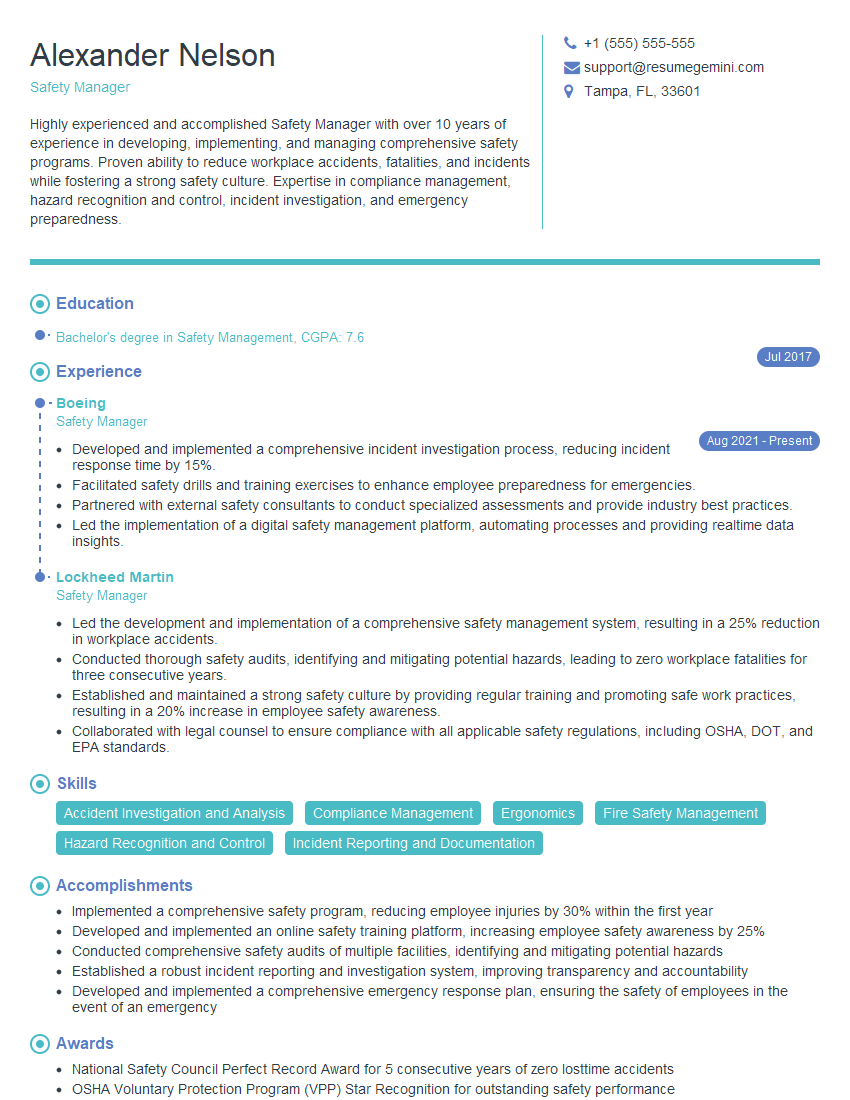
Safety Manager Resume Sample
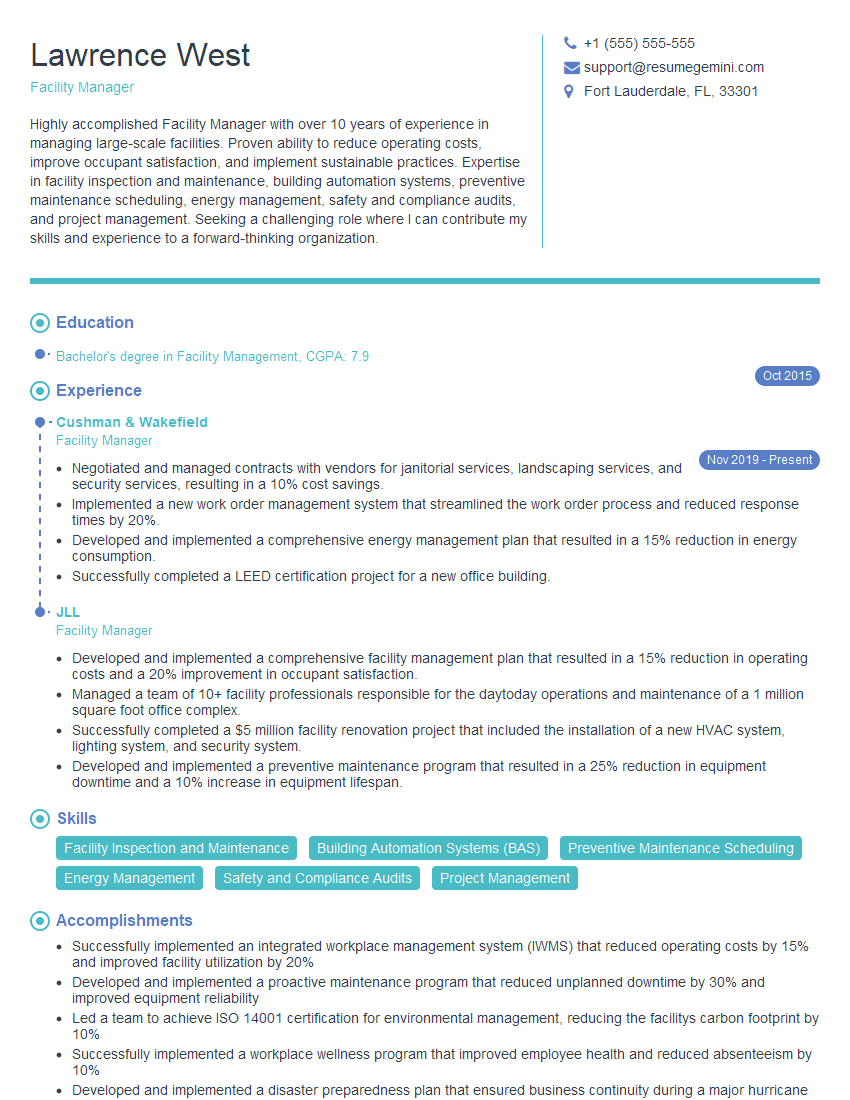
Facility Manager Resume Sample

Operations Manager Resume Sample
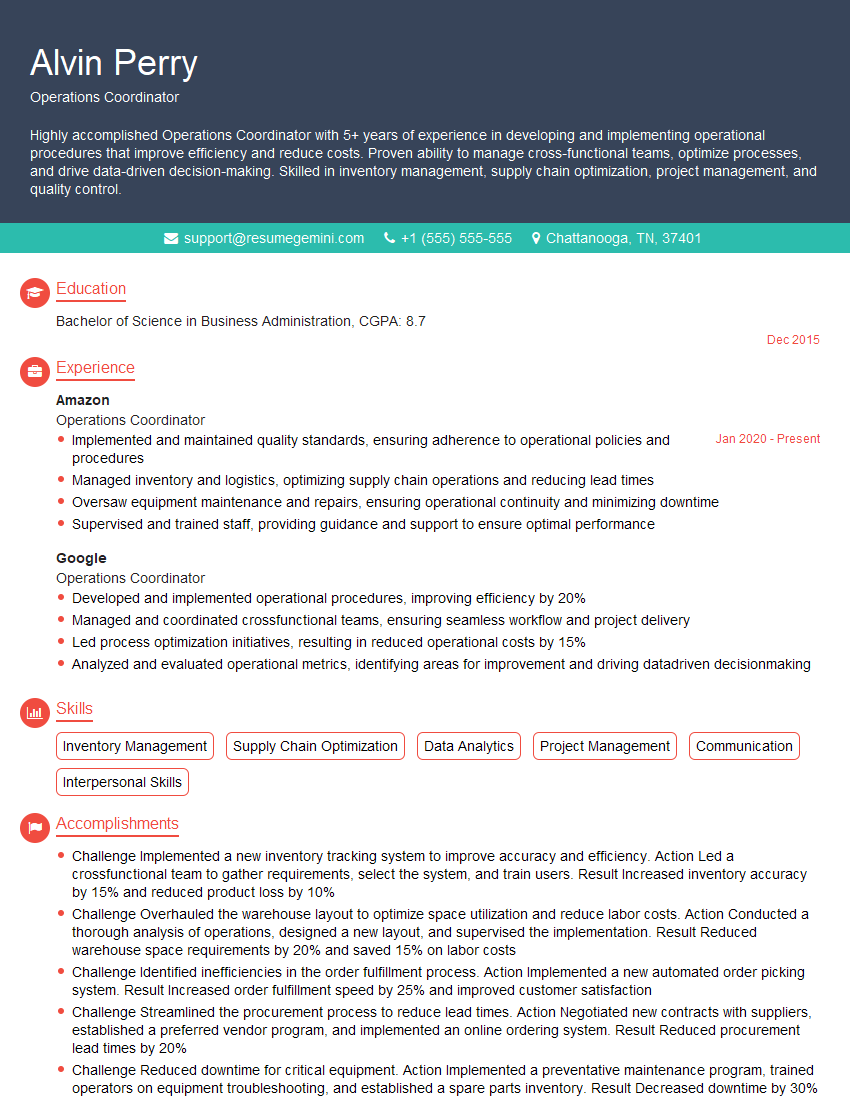
Operations Coordinator Resume Sample
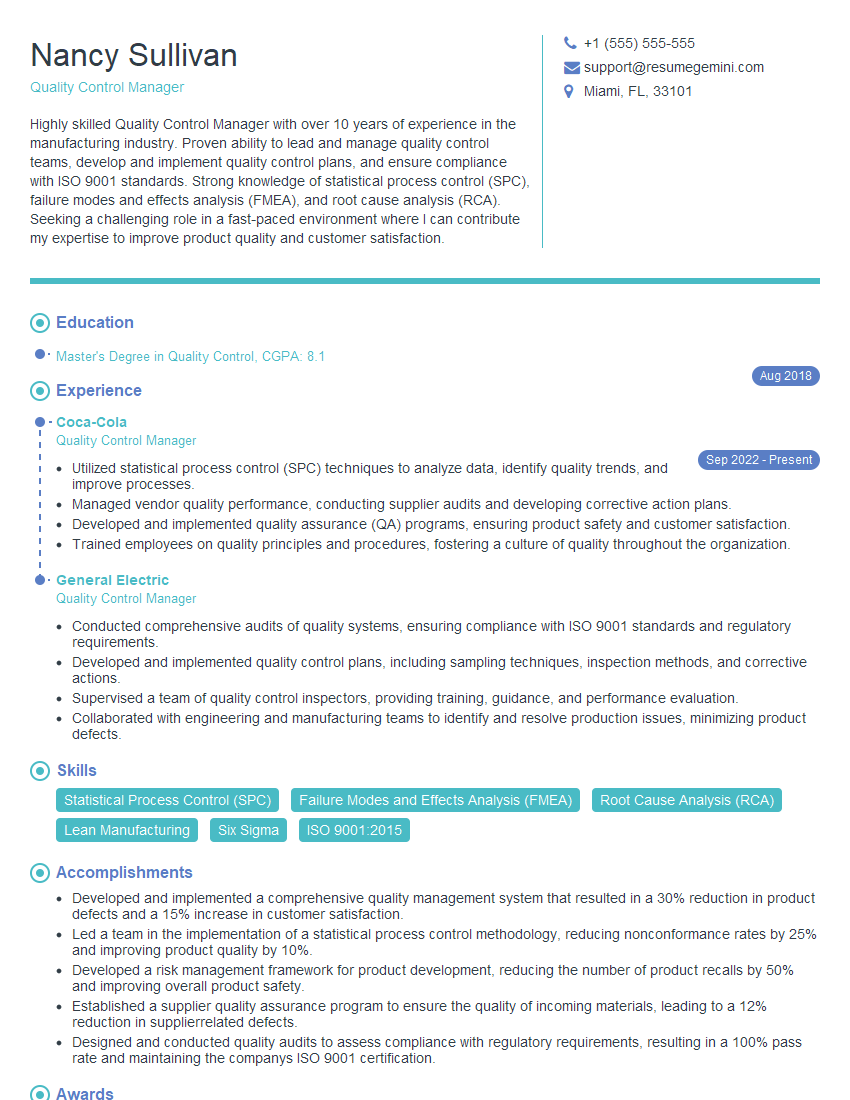
Quality Control Manager Resume Sample
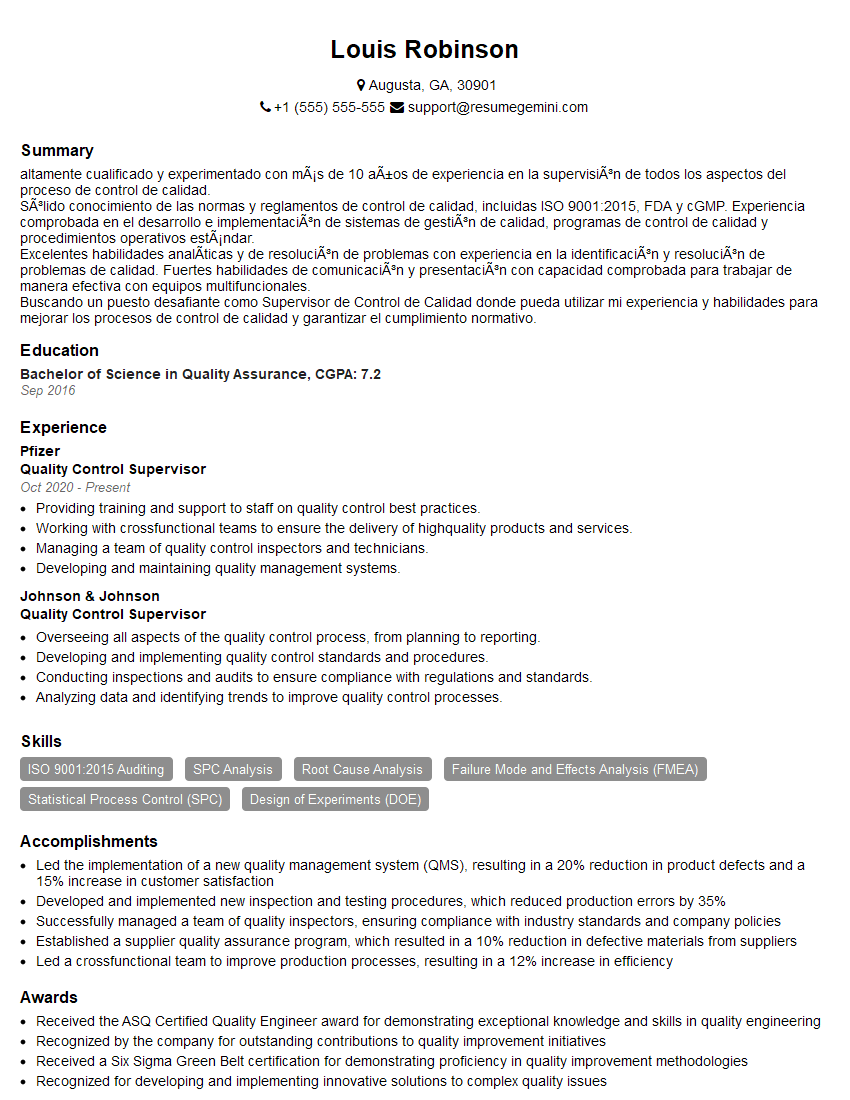
Quality Control Supervisor Resume Sample
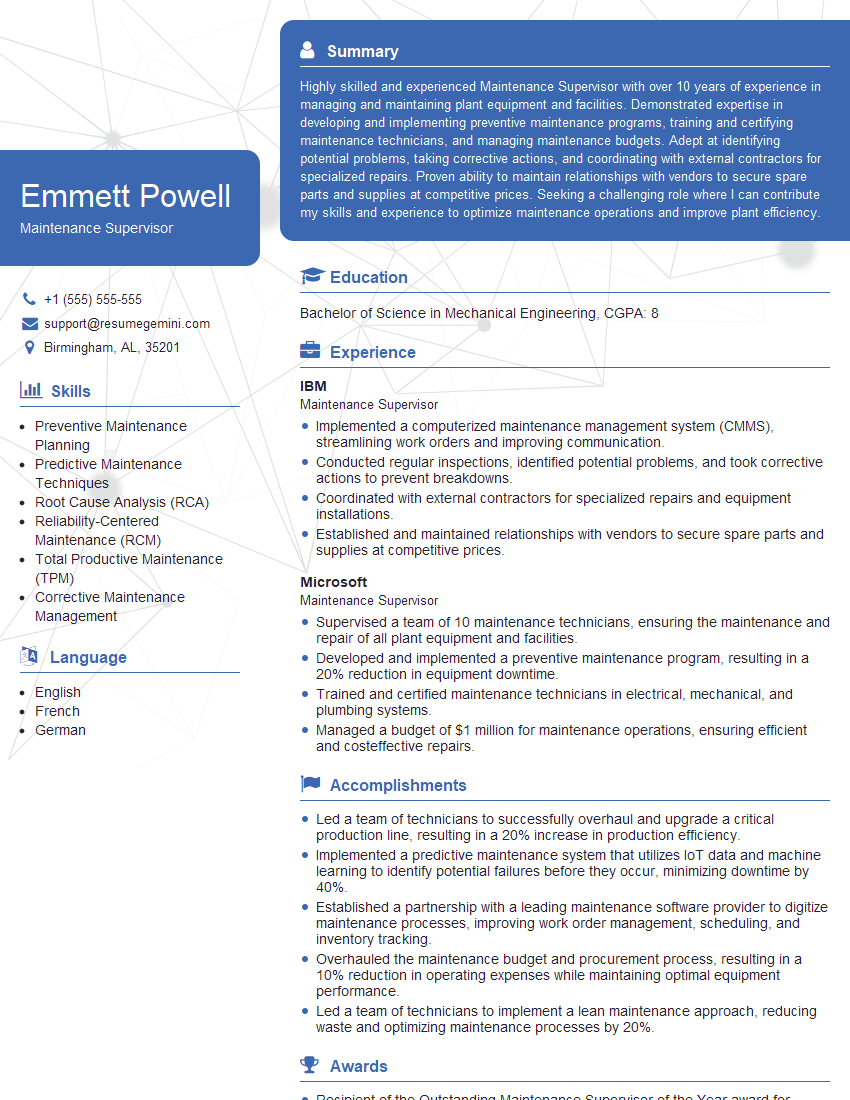
Maintenance Supervisor Resume Sample
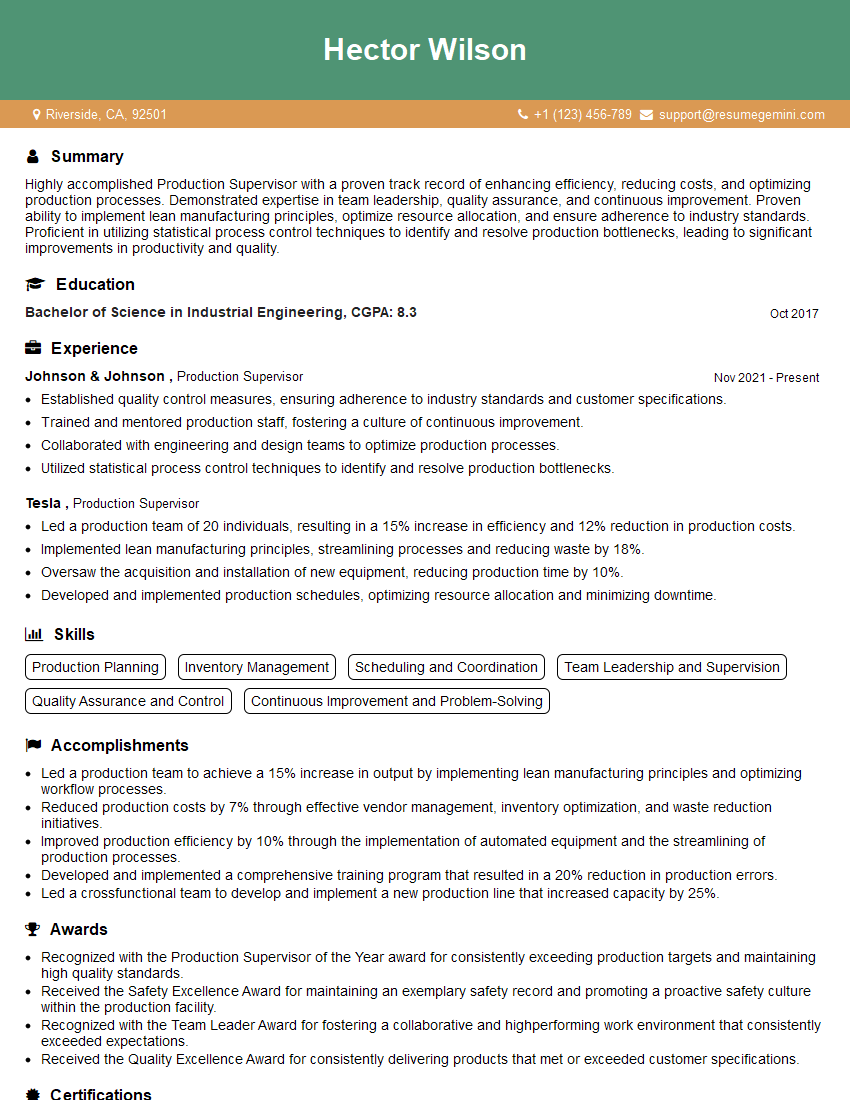
Production Supervisor Resume Sample

Supply Chain Manager Resume Sample
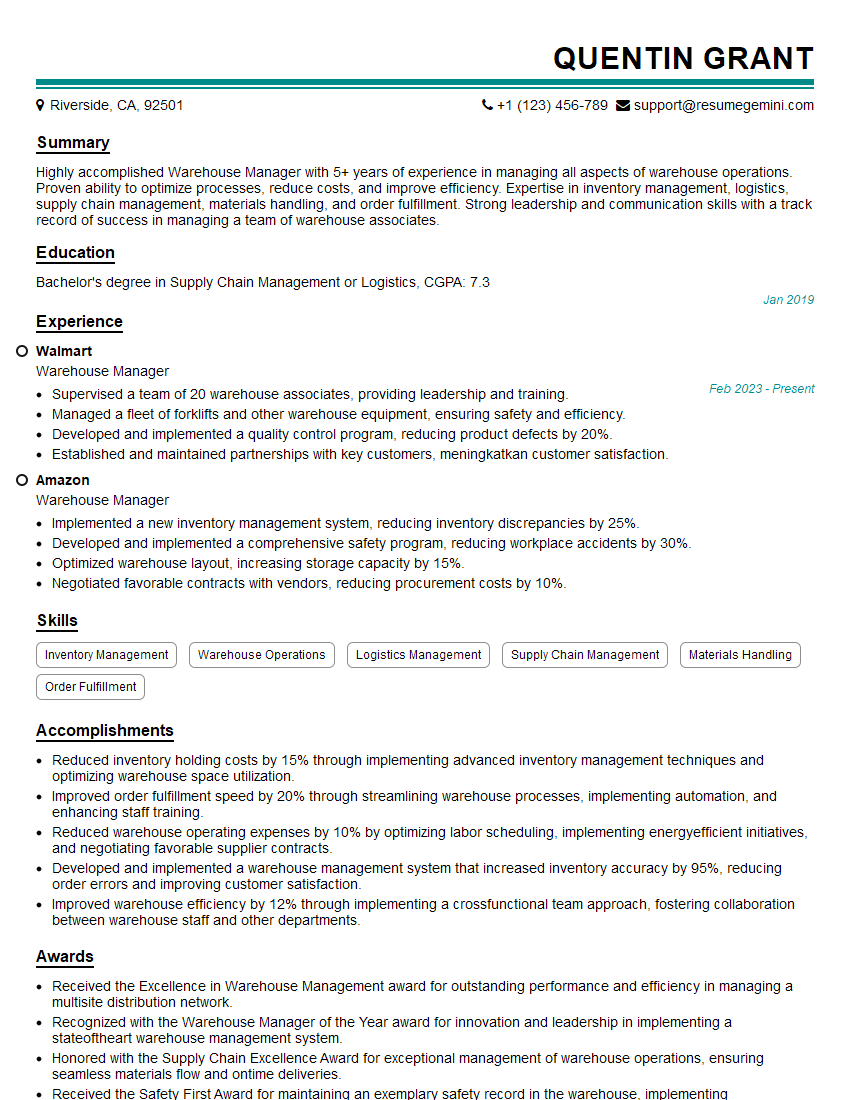
Warehouse Manager Resume Sample
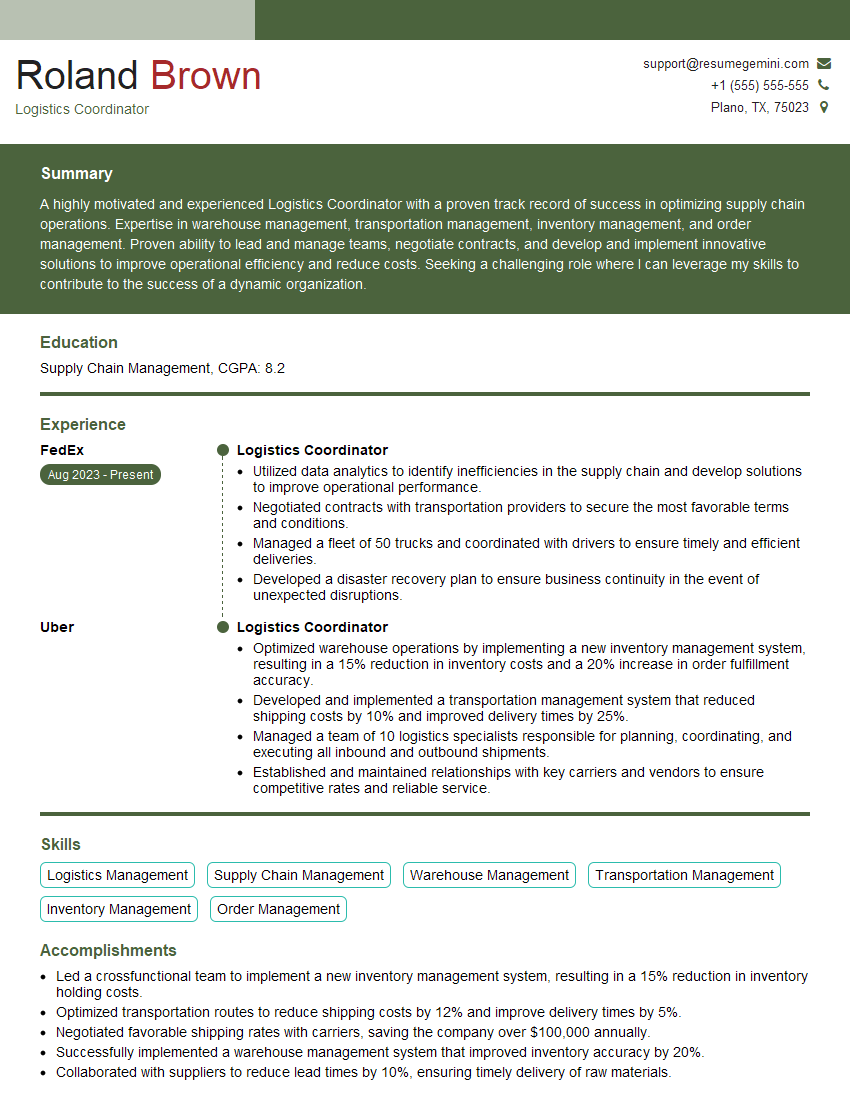
Logistics Coordinator Resume Sample
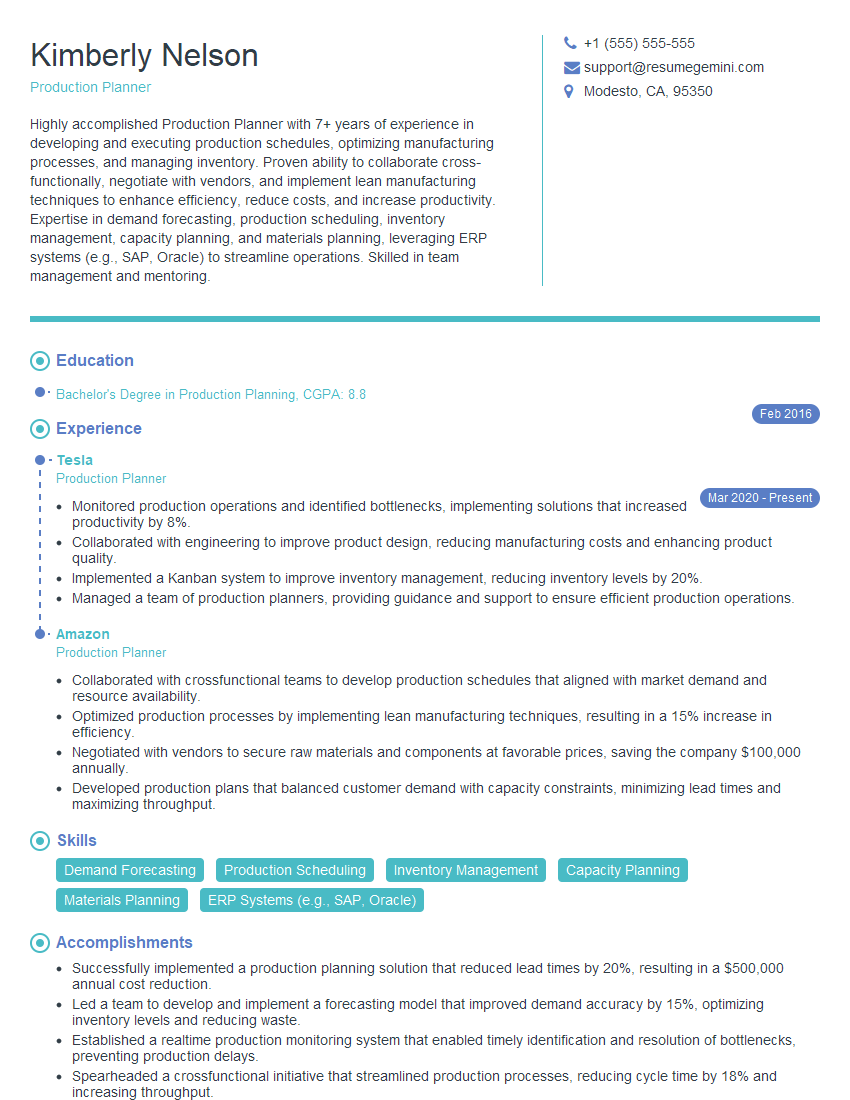
Production Planner Resume Sample
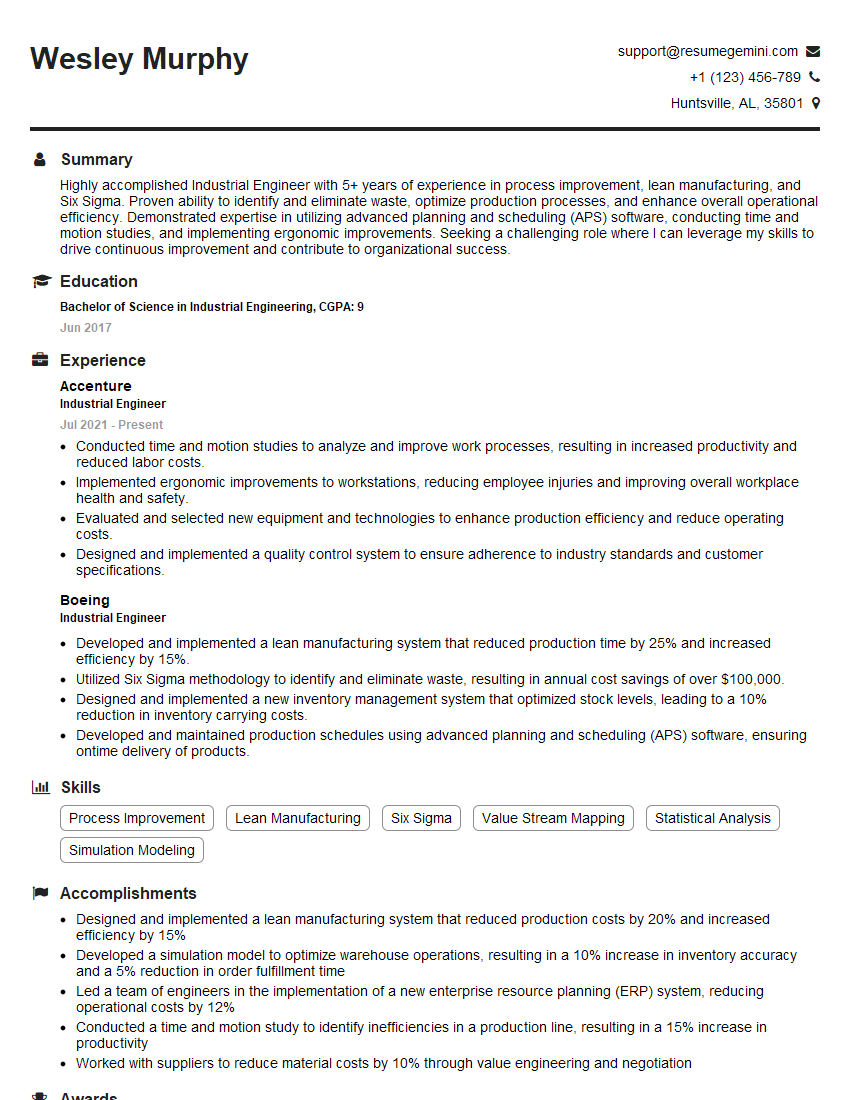
Industrial Engineer Resume Sample
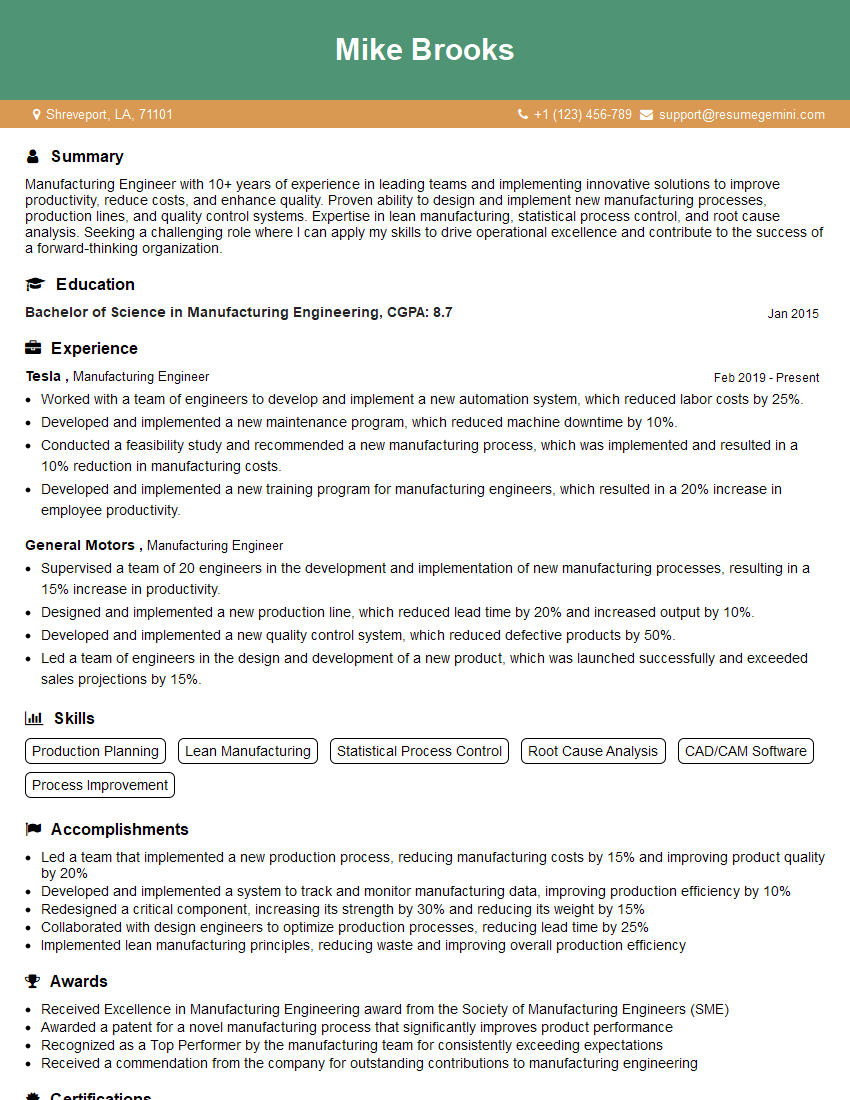
Manufacturing Engineer Resume Sample
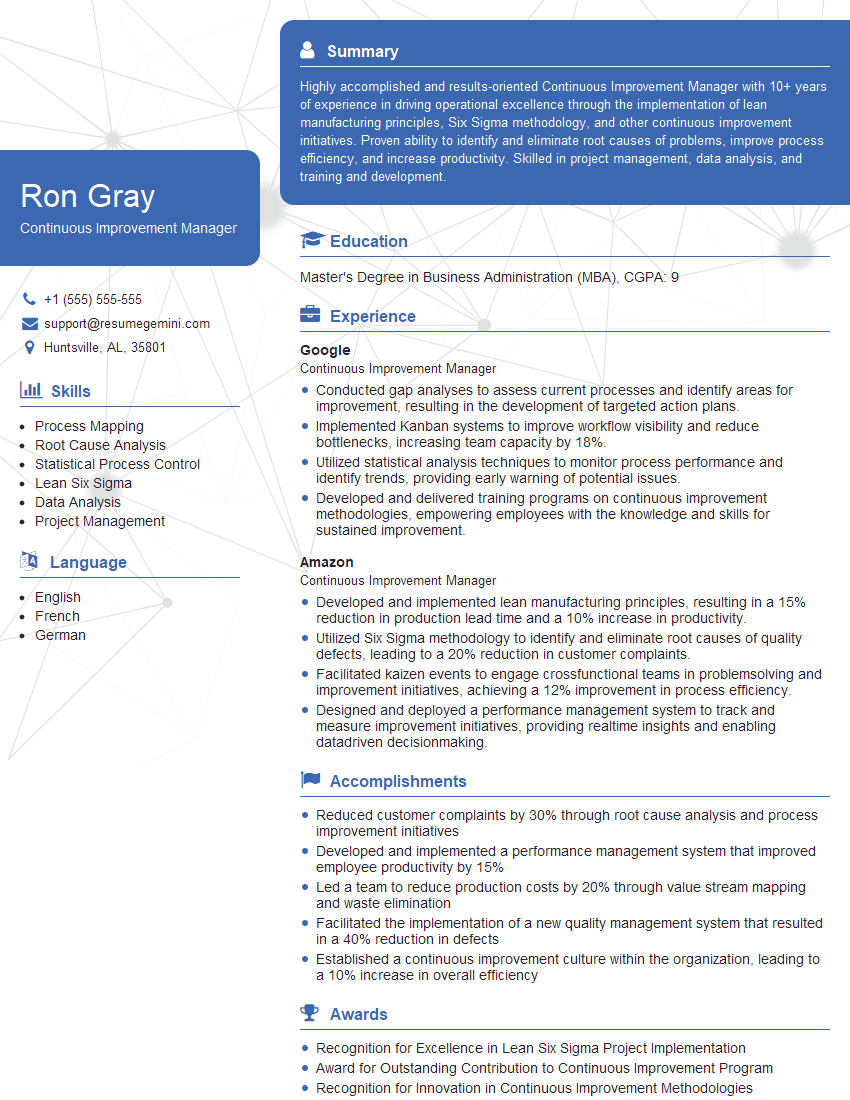
Continuous Improvement Manager Resume Sample
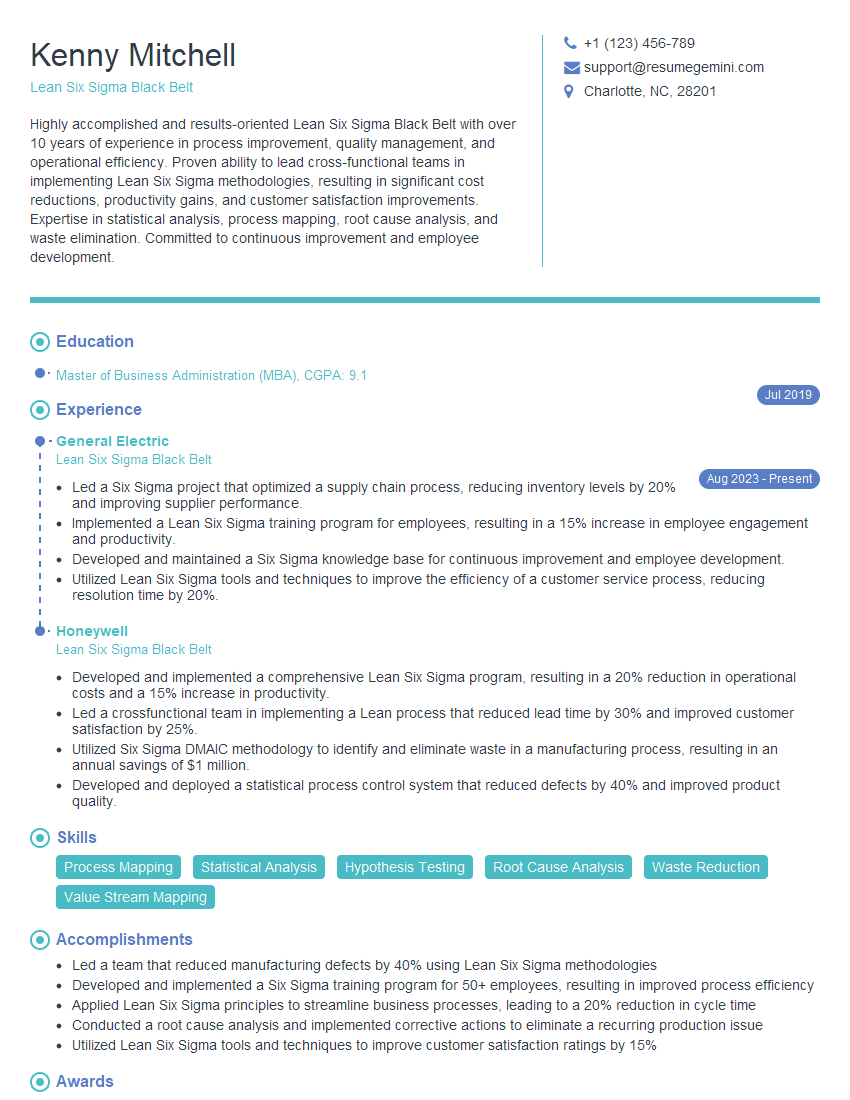
Lean Six Sigma Black Belt Resume Sample
- Safety Manager
- Facility Manager
- Operations Manager
- Operations Coordinator
- Quality Control Manager
- Quality Control Supervisor
- Maintenance Supervisor
- Production Supervisor
- Supply Chain Manager
- Warehouse Manager
- Logistics Coordinator
- Production Planner
- Industrial Engineer
- Manufacturing Engineer
- Continuous Improvement Manager
- Lean Six Sigma Black Belt
Explore more articles
Users Rating of Our Blogs
Share Your Experience
We value your feedback! Please rate our content and share your thoughts (optional).
What Readers Say About Our Blog
Very informative content, great job.
good