Interviews are opportunities to demonstrate your expertise, and this guide is here to help you shine. Explore the essential Ability to identify and assess high-potential recruits interview questions that employers frequently ask, paired with strategies for crafting responses that set you apart from the competition.
Questions Asked in Ability to identify and assess high-potential recruits Interview
Q 1. Describe your process for identifying high-potential candidates during the initial screening?
My initial screening process for high-potential candidates focuses on identifying individuals who demonstrate a combination of intellectual capacity, ambition, and a proactive approach. I don’t just look at their resume; I delve into their narratives. I assess their accomplishments beyond the job description, looking for instances where they went above and beyond, took initiative, or demonstrated resilience in the face of challenges. For example, I’ll pay close attention to how they describe past projects, emphasizing their contributions and the impact they made. I also look for patterns in their career progression – rapid promotions or taking on increased responsibility are strong indicators. Finally, I use behavioral questions to uncover their intrinsic motivation and long-term aspirations. A candidate who clearly articulates their career goals and actively seeks opportunities for growth is a strong signal.
- Analyzing accomplishments: Going beyond the bullet points on a resume to understand the context, challenges overcome, and impact achieved.
- Career progression analysis: Identifying patterns of accelerated growth and increased responsibility.
- Behavioral questioning: Using open-ended questions to understand motivations and career aspirations.
Q 2. What assessment methods do you utilize to evaluate a candidate’s potential beyond their current skills?
Beyond current skills, I employ a multi-faceted assessment approach. This includes personality assessments like the Myers-Briggs Type Indicator (MBTI) or the Big Five personality traits to understand their work style and potential for adaptability. I also utilize structured interviews focusing on past behaviors to predict future performance, incorporating situational judgment tests to gauge their problem-solving abilities under pressure. Furthermore, I might use simulations or case studies to evaluate their critical thinking and strategic decision-making skills. Finally, assessments that measure learning agility, such as the Learning Agility Assessment, provide valuable insights into their ability to adapt and learn quickly in new and unfamiliar situations.
- Personality Assessments: MBTI, Big Five to understand work style and adaptability.
- Behavioral Interviews: Focusing on past behaviors to predict future performance.
- Situational Judgement Tests: Measuring problem-solving abilities under pressure.
- Simulations/Case Studies: Evaluating critical thinking and strategic decision-making.
- Learning Agility Assessments: Gauging adaptability and quick learning in new situations.
Q 3. How do you differentiate between a candidate’s current performance and their future potential?
Differentiating between current performance and future potential requires a nuanced approach. Current performance reflects what a candidate has already achieved, while future potential hinges on their learning agility, adaptability, ambition, and leadership capabilities. I look for discrepancies between their current role and their aspirations. For instance, a high-performing individual in a junior role who consistently seeks opportunities to learn and lead might have significant untapped potential. I also look for evidence of exceeding expectations in their past roles, demonstrating a capacity to quickly learn new skills and adapt to changing environments. The key is to assess their inherent capabilities and their eagerness to grow and learn, not just their current skillset.
Think of it like this: a talented athlete who consistently performs well might be a great current performer, but a high-potential athlete will show significant room for improvement, a drive to learn new techniques and consistently exceed their current capabilities.
Q 4. Explain your approach to identifying candidates with high learning agility.
Identifying candidates with high learning agility is crucial for long-term success. I assess this through targeted questions in interviews that probe their experiences with adapting to new situations, overcoming obstacles, and learning from mistakes. I look for candidates who describe situations where they had to learn new skills quickly or adapt to significant changes in their work environment. I also use assessment tools specifically designed to measure learning agility, focusing on their ability to learn from experience, experiment with new approaches, and adjust their strategies in response to feedback. I might present a hypothetical scenario requiring them to devise a solution with limited information, observing their ability to learn from the feedback and adapt their approach.
- Behavioral Interview Questions: Focusing on experiences adapting to change and learning from challenges.
- Learning Agility Assessments: Standardized tests designed to measure this specific trait.
- Hypothetical Scenarios: Presenting situations requiring adaptation and learning from feedback.
Q 5. How do you assess a candidate’s leadership potential?
Assessing leadership potential involves evaluating a candidate’s ability to influence, motivate, and inspire others. I look for evidence of leadership in their past experiences, even in informal settings. This could include leading teams on projects, mentoring colleagues, or taking initiative to improve processes. I also explore their communication skills, their ability to handle conflict, and their overall emotional intelligence. Assessment centers, often including group exercises and simulations, can be very effective in evaluating leadership potential under pressure. I also look for candidates who demonstrate a desire to mentor and develop others. The key is to go beyond titles and formal leadership roles and look at the impact they’ve had on others.
- Behavioral Questions: Exploring past leadership experiences and their impact.
- Assessment Centers: Using group exercises and simulations to observe leadership in action.
- Focus on Influence and Impact: Assessing their ability to motivate and inspire others.
Q 6. Describe a time you identified a high-potential candidate who wasn’t immediately apparent.
I once identified a high-potential candidate who initially seemed unremarkable during the initial screening. Their resume was modest, and their interview answers were somewhat reserved. However, during a group exercise, they demonstrated exceptional problem-solving skills, quickly identifying the root cause of a complex issue and proposing an innovative solution. They also effectively collaborated with the team, guiding the group towards a consensus and showcasing strong interpersonal skills. Their performance in this scenario revealed a high level of intellectual curiosity, strategic thinking, and collaboration abilities – qualities not immediately evident from their resume or initial interview. This experience highlights the importance of using multiple assessment methods and observing candidates in different situations.
Q 7. How do you handle situations where your assessment of a candidate’s potential differs from the hiring manager’s?
Discrepancies between my assessment and the hiring manager’s are addressed through open and collaborative discussion. I present my assessment rationale, including the evidence from various assessments and observations, explaining why I believe the candidate possesses high potential. I emphasize the importance of long-term strategic thinking and the value of investing in high-potential individuals. I might suggest a follow-up assessment or a trial period to gather further data. Ultimately, the decision involves weighing various perspectives and considering the organization’s specific needs and goals. However, I advocate for a data-driven approach, emphasizing the evidence supporting my assessment, while respectfully acknowledging the hiring manager’s experience and insights.
Q 8. What are the key indicators you look for when assessing a candidate’s long-term career trajectory?
Identifying high-potential candidates isn’t about simply finding the smartest individuals; it’s about recognizing those with the potential for significant future growth and leadership. I look for a combination of factors to predict their long-term career trajectory. This includes their demonstrated learning agility – their ability to quickly grasp new concepts and adapt to changing environments. I also assess their intellectual curiosity; do they actively seek out new knowledge and challenges? Resilience is another crucial indicator; how do they handle setbacks and pressure? Their drive and ambition, as reflected in their career goals and past achievements, are also key. Finally, I assess their leadership potential, observing their ability to influence others, collaborate effectively, and take initiative.
For example, in one instance, a candidate with a strong academic record showed less-than-stellar performance in previous roles. However, during the interview, their self-awareness and eagerness to learn from past mistakes, coupled with a clear understanding of their career aspirations, revealed their impressive learning agility and resilience. This convinced me of their high potential despite their less-than-perfect track record.
Q 9. How do you integrate personality assessments into your overall candidate evaluation?
Personality assessments are valuable tools, but they are just one piece of the puzzle. I use them to gain a deeper understanding of a candidate’s behavioral tendencies and preferences, complementing information gathered through interviews, work samples, and other assessment methods. I prefer assessments like the Myers-Briggs Type Indicator (MBTI) or the Big Five personality traits (Openness, Conscientiousness, Extraversion, Agreeableness, Neuroticism) to understand their work style, communication preferences, and potential for teamwork and leadership. However, I never rely solely on these tests. They provide insights, but shouldn’t dictate the hiring decision. The results are always interpreted within the context of the whole picture, considering their accomplishments, work experience, and performance in other assessment phases.
For example, a candidate might score high in extraversion on an assessment, but their interview performance might reveal a lack of effective communication skills in complex situations. In this case, the assessment provides context, but the interview provides the critical data point.
Q 10. What are some common biases you watch out for during the high-potential identification process?
Several biases can cloud judgment during the high-potential identification process. Confirmation bias—the tendency to seek out information confirming pre-existing beliefs—is a major concern. To counteract this, I actively look for evidence contradicting my initial impressions. Affinity bias—favoring candidates similar to myself—is another common trap. I mitigate this by using structured interviews with predetermined questions and standardized scoring criteria. Halo effect—letting one positive trait overshadow other aspects—is also a significant risk. I combat this by focusing on multiple criteria and using a balanced scoring system across various assessment dimensions. Finally, recency bias—overemphasizing recent performance—is addressed by reviewing the candidate’s entire career history, not just their most recent role.
Q 11. How do you ensure your assessment methods are fair and unbiased?
Ensuring fairness and unbiased assessment is paramount. First, I develop and utilize standardized assessment methods with clear criteria and scoring rubrics. This reduces the influence of subjective interpretations. Second, I use multiple assessment techniques, combining interviews, behavioral event interviews, work samples, and personality assessments to minimize reliance on any single method. Third, I employ diverse interviewers to gain a wider perspective, thus reducing bias stemming from individual preferences. Finally, I regularly review and update my assessment processes to ensure that they remain current and effective in identifying high-potential talent from diverse backgrounds. This includes auditing the process for any unintended biases that might emerge over time.
Q 12. How do you measure the success of your high-potential identification process?
Measuring the success of high-potential identification isn’t a one-time event; it requires ongoing monitoring and analysis. Key metrics include promotion rates within a defined timeframe for identified high-potentials compared to a control group. Another indicator is performance ratings – both objective and subjective evaluations of the candidates’ achievements and contributions in their roles. Retention rates are also crucial; we track how many high-potential candidates remain with the organization. Finally, we also consider leadership roles assumed by these individuals and their impact on team performance and organizational outcomes. By regularly tracking these metrics, we can assess the effectiveness of our identification process and make necessary adjustments.
Q 13. Describe your experience with different types of assessment centers.
I have extensive experience with various assessment centers, from traditional methods involving group exercises, presentations, and in-basket simulations to more modern approaches using virtual reality simulations and gamified assessments. Traditional assessment centers are effective for evaluating teamwork, problem-solving, and communication skills in a controlled environment. However, these can sometimes feel artificial and may not fully reflect real-world scenarios. More modern approaches offer increased engagement and realistic simulations, potentially offering a more comprehensive evaluation. For example, using virtual reality to simulate complex business scenarios allows us to observe a candidate’s decision-making under pressure in a safe and controlled environment, providing rich qualitative data. The choice of assessment center depends on the specific role and the resources available.
Q 14. What are the key competencies required to excel in identifying high-potential individuals?
Successfully identifying high-potential individuals demands a unique blend of competencies. Strong interpersonal skills are essential for building rapport with candidates and conducting effective interviews. Analytical skills are crucial to interpret data from multiple sources, synthesizing information from interviews, assessments, and performance reviews. Strategic thinking helps foresee future needs and identify individuals who align with the organization’s long-term goals. Judgment and decision-making skills are paramount, ensuring objectivity and minimizing bias in the selection process. Finally, strong communication skills are needed to effectively convey assessment findings and provide constructive feedback to candidates and stakeholders.
Q 15. How do you incorporate feedback from various stakeholders in your assessment process?
Incorporating feedback from various stakeholders is crucial for a holistic assessment of high-potential recruits. I employ a structured approach, beginning with defining clear criteria for high potential, which are then shared with all involved – hiring managers, team members, and even potential mentors. This ensures everyone understands the target profile.
Next, I utilize a multi-faceted feedback mechanism. This includes:
- 360-degree feedback forms: These solicit input from various perspectives on the candidate’s skills, behaviors, and potential.
- Structured interviews with calibrated scoring: This ensures consistency across interviewers, preventing bias and enhancing objectivity. Interviewers receive specific training on the key competencies being assessed and utilize a standardized scoring rubric.
- Post-interview debriefs: This allows interviewers to share their observations and discuss any discrepancies in their assessments. We aim to reach consensus by focusing on specific behavioral examples.
- Data aggregation and analysis: I compile all feedback, looking for patterns and consistencies. Discrepancies are investigated further. This might involve revisiting specific interview transcripts or following up with individual feedback providers.
This multi-layered approach ensures that the final assessment is well-rounded and reduces the reliance on any single perspective, leading to more accurate identification of high-potential candidates. For example, a candidate might score highly on technical skills in an interview, but 360-degree feedback could highlight a lack of collaboration skills, thus providing a more balanced picture.
Career Expert Tips:
- Ace those interviews! Prepare effectively by reviewing the Top 50 Most Common Interview Questions on ResumeGemini.
- Navigate your job search with confidence! Explore a wide range of Career Tips on ResumeGemini. Learn about common challenges and recommendations to overcome them.
- Craft the perfect resume! Master the Art of Resume Writing with ResumeGemini’s guide. Showcase your unique qualifications and achievements effectively.
- Don’t miss out on holiday savings! Build your dream resume with ResumeGemini’s ATS optimized templates.
Q 16. How do you adapt your high-potential assessment strategy for different roles and organizational levels?
Adapting my high-potential assessment strategy is essential because different roles and organizational levels demand different skill sets and competencies. A high-potential entry-level engineer requires a different assessment than a high-potential senior manager. My approach involves tailoring the assessment process to the specific requirements of each role and level.
For entry-level roles, I focus on assessing learning agility, problem-solving aptitude, and cultural fit. Assessment methods might include aptitude tests, situational judgment tests, and behavioral interviews focusing on past experiences demonstrating these attributes.
For mid-level roles, I emphasize leadership potential, strategic thinking, and team management skills. Assessments may involve case studies, group exercises, and interviews delving into past leadership experiences and accomplishments.
For senior-level roles, the focus shifts to strategic vision, organizational leadership, and influencing skills. Assessment methods often involve in-depth interviews, simulations, and presentations to assess their ability to address complex business challenges. I also incorporate feedback from peers and subordinates when assessing leadership potential at higher levels.
In essence, my approach remains consistent in its rigor but adjusts its focus and methods based on the specific needs and demands of each role and organizational level. This ensures that the assessment is both relevant and effective in identifying true high-potential individuals at every stage of their career journey.
Q 17. Describe your experience using behavioral interviews to assess potential.
Behavioral interviewing is a cornerstone of my assessment process. I believe past behavior is the strongest predictor of future performance. I use the STAR method (Situation, Task, Action, Result) extensively. This framework prompts candidates to describe specific situations they’ve encountered, the tasks they faced, the actions they took, and the results they achieved.
For example, when assessing leadership potential, I might ask: “Tell me about a time you had to motivate a team to overcome a significant obstacle.” The STAR method ensures a detailed response, allowing me to evaluate not only the outcome but also the candidate’s thought process, decision-making, and problem-solving abilities. I use pre-determined competency-based questions, focusing on areas like communication, leadership, problem-solving, and teamwork, allowing me to compare candidates more objectively. I also actively listen for inconsistencies or discrepancies in their responses, which can signal a lack of integrity or self-awareness.
Beyond the STAR method, I use probing questions to uncover the nuances of their experiences and assess their self-awareness. I avoid leading questions and aim to create a conversational flow to gauge their genuine personality and behaviors under pressure.
Finally, I always document the interview, noting key observations and scoring the candidate against pre-defined competency frameworks to ensure consistency and reduce subjective bias.
Q 18. How do you gauge a candidate’s resilience and adaptability during the interview?
Gauging resilience and adaptability is crucial for identifying high-potential individuals. I assess these traits through a combination of approaches:
- Hypothetical scenarios: I present candidates with challenging, unexpected scenarios relevant to the role and observe their response. How do they handle pressure? Do they brainstorm solutions creatively, or do they become defensive or avoidant?
- Discussion of past challenges: I ask open-ended questions about times they faced setbacks or unexpected challenges in their careers. I’m less interested in the specific outcome and more interested in their approach, their ability to learn from mistakes, and their capacity to bounce back from adversity.
- Behavioral questions focused on change and ambiguity: I explore past experiences where they had to adapt to significant organizational changes or navigate ambiguous situations. Their descriptions reveal their coping mechanisms and their ability to remain productive in uncertain environments.
- Assessment of emotional intelligence: High resilience often goes hand-in-hand with strong emotional intelligence. I assess self-awareness, self-regulation, empathy, and social skills throughout the interview process.
For instance, a candidate’s response to a hypothetical scenario involving a project delay might reveal whether they focus on problem-solving, remain positive, and proactively seek solutions, or become discouraged and reactive. Their past experiences with challenging projects provide further evidence of their resilience and ability to adapt.
Q 19. Explain how you assess a candidate’s problem-solving skills in relation to their potential.
Assessing problem-solving skills is vital for identifying high-potential candidates. I use a multifaceted approach:
- Behavioral questions: I ask candidates to describe how they’ve approached complex problems in the past, focusing on their analytical thinking, creativity, and decision-making processes.
- Case studies: I present candidates with realistic business problems and ask them to develop solutions. This allows me to assess their analytical skills, critical thinking, and ability to think strategically.
- Technical assessments (where applicable): For technical roles, I utilize coding challenges, technical quizzes, or simulations to assess their problem-solving skills within their area of expertise.
- Observation of their approach: Beyond the solution itself, I observe their thought process. Do they approach the problem systematically? Do they consider various perspectives? Are they creative in their thinking? How effectively do they communicate their solution?
By observing both the candidate’s process and the outcome, I can get a clearer picture of their problem-solving skills and their potential for success in the role. For example, even if a candidate doesn’t arrive at the ‘perfect’ solution in a case study, a logical approach, creative thinking, and effective communication can demonstrate strong problem-solving capabilities and high potential.
Q 20. What are your preferred methods for evaluating candidates’ critical thinking abilities?
I evaluate critical thinking abilities using a variety of methods designed to assess their ability to analyze information objectively, identify biases, and formulate well-reasoned judgments. My preferred methods include:
- Case studies and complex scenarios: These assessments require candidates to analyze information, identify key issues, evaluate alternatives, and propose solutions. The focus is not just on the solution but on the thought process leading to it.
- Open-ended questions: Questions that require more than a simple ‘yes’ or ‘no’ answer encourage candidates to explain their reasoning and provide supporting evidence for their claims.
- Logical reasoning tests: These standardized tests assess their ability to identify patterns, draw inferences, and solve problems using logic and deductive reasoning. These tests provide quantitative data that can be compared across candidates.
- Debates or discussions: I may involve the candidates in a structured debate or discussion to gauge their ability to articulate their viewpoints, consider opposing perspectives, and construct a persuasive argument.
By combining these methods, I gain a comprehensive understanding of a candidate’s critical thinking prowess and their ability to apply logic and reasoning to complex problems. I always look beyond the correct answer to evaluate the quality of their thought process and their ability to justify their conclusions.
Q 21. How do you integrate data analysis into your high-potential identification process?
Data analysis plays a crucial role in my high-potential identification process, moving beyond subjective opinions to gain objective insights. I integrate data analysis in several ways:
- Analyzing performance data from previous roles: Where possible, I review candidates’ past performance data – sales figures, project completion rates, customer satisfaction scores, etc. – to identify trends and patterns indicative of high performance.
- Using psychometric assessments: Many assessments provide data-driven insights into personality traits, cognitive abilities, and behavioral patterns. This objective data complements the qualitative data obtained from interviews and other assessments.
- Analyzing feedback data: I use statistical methods to analyze feedback from 360-degree assessments and interviews, looking for common themes and patterns. This helps to identify areas of strength and areas for development.
- Tracking candidate progress: After hiring high-potential candidates, I track their progress and performance data over time to validate the effectiveness of the identification process and refine it for future use. This allows for continuous improvement and validation of the methods employed.
For example, I might analyze data on employee promotions and identify common characteristics among those who have been promoted quickly. This analysis can help refine the selection criteria and ensure future assessments are aligned with the organization’s success factors. The goal is to ensure the process is data-driven, objective, and continuously evolving to better identify and cultivate high-potential talent within the organization.
Q 22. What is your approach to using simulations and case studies in evaluating candidates’ potential?
Simulations and case studies are invaluable tools for assessing a candidate’s potential beyond their resume. My approach is multifaceted. First, I select simulations and case studies relevant to the role and the organization’s challenges. This allows me to observe how candidates approach problem-solving under pressure and assess their critical thinking, decision-making, and communication skills in a realistic context. For example, for a marketing role, I might use a simulated campaign planning exercise where candidates have to develop a strategy, allocate budget, and present their plan. For a management role, a case study involving a complex organizational issue might be used, requiring them to analyze the situation, propose solutions, and articulate their rationale. Secondly, I analyze not only the outcome but also the process. Do they show resilience in the face of setbacks? Do they collaborate effectively? Do they adapt their approach based on new information? The goal isn’t just to find the ‘right answer’, but to identify individuals who demonstrate potential for growth and adaptability.
For example, in assessing candidates for a project management role, I once used a simulation involving resource allocation under tight deadlines. One candidate, while not achieving the optimal outcome, demonstrated exceptional problem-solving skills and adaptability, adjusting her strategy mid-way based on simulated unforeseen circumstances. This adaptability, coupled with her communication skills during the debrief, made her a standout candidate despite a slightly less-than-perfect outcome.
Q 23. How do you handle candidates who are strong in one area but lack potential in others?
Identifying candidates with uneven skill sets requires a nuanced approach. It’s rarely a case of simply rejecting them. Instead, I focus on understanding the why behind the strengths and weaknesses. Is the lack of potential in a certain area due to lack of experience, lack of interest, or an actual skill gap? A deep dive into their background, motivations, and learning agility is crucial. For example, a candidate might be exceptionally skilled in technical aspects of a role but lack communication skills. If their communication skills are trainable, and if their passion and technical expertise are strong enough, I would recommend providing tailored training and mentorship to address the gap. This proactive approach turns a potential weakness into an opportunity for growth and development.
I also consider the overall fit within the team. A candidate’s strong areas might perfectly complement the weaknesses of the existing team, creating a synergistic and well-rounded unit. It’s about finding the right balance between individual potential and team dynamics.
Q 24. How do you ensure that the identified high-potential candidates align with the organization’s strategic objectives?
Aligning high-potential candidates with the organization’s strategic objectives is paramount. This starts by clearly defining the organization’s goals, including its short-term and long-term strategies and the skills and competencies required to achieve them. During the assessment process, I ensure the evaluation criteria reflect these strategic needs. Questions and case studies directly address how the candidate would contribute to the fulfillment of these objectives. This requires a close collaboration with senior management and departmental leaders to understand their strategic priorities and translate those into practical assessment methods.
For instance, if the organization is focused on expanding into a new market, I would assess candidates for their international business acumen, adaptability, and cross-cultural communication skills. If the focus is on innovation, I would evaluate their creative thinking, problem-solving abilities, and willingness to take calculated risks. Essentially, I use the assessment process as a filter, ensuring only those who demonstrably align with the company’s future are considered for high-potential status.
Q 25. How do you communicate your assessments of candidates’ potential to the hiring team effectively?
Communicating assessment findings requires clarity, objectivity, and strong evidence. I avoid subjective opinions and rely on concrete examples and data points from the interviews, simulations, and assessments. I create a structured report that details each candidate’s strengths and weaknesses, supported by specific examples from the evaluation process. The report includes a clear assessment of their potential, highlighting areas where they excel and areas needing development. I also present a concise summary of my overall recommendation, justifying my assessment with concrete evidence.
I then conduct a thorough debrief with the hiring team to discuss my findings. This interactive session allows for clarification, addresses concerns, and encourages collaborative decision-making. This collaborative approach ensures alignment and buy-in from the hiring team, making the transition smoother and increasing the likelihood of a successful placement.
Q 26. What are the ethical considerations in assessing and identifying high-potential candidates?
Ethical considerations are paramount in identifying high-potential candidates. We must ensure fairness, objectivity, and avoid bias at every stage of the assessment process. This means using standardized and validated assessment tools to minimize subjective biases. We also need to be mindful of potential biases related to gender, race, ethnicity, age, and other protected characteristics. All assessments should be conducted in a way that respects individual rights and privacy. Transparency is crucial – candidates should be informed about the assessment process and have the opportunity to ask questions and address concerns.
Furthermore, we must carefully consider the implications of labeling someone as “high-potential.” This can create unfair expectations and pressure. The organization should have well-defined development plans for high-potential employees, ensuring they receive the support and resources they need, rather than simply leaving them to flourish on their own. The focus should remain on fostering a culture of growth and development for all employees, not just a select few.
Q 27. Describe a time when you had to make a difficult decision about a candidate’s potential.
I once had to make a difficult decision about a candidate with exceptional technical skills but a history of poor teamwork. Their performance on technical assessments was outstanding, suggesting a high level of potential. However, their references revealed consistent conflicts with colleagues and a reluctance to collaborate. This presented a dilemma – prioritizing technical expertise over essential interpersonal skills. After careful consideration, and a further interview focusing specifically on team dynamics and conflict resolution, I decided against recommending them for a high-potential program. While their technical skills were impressive, I judged that their lack of teamwork and collaboration skills presented too high a risk.
This decision was difficult because it meant passing on a technically brilliant candidate, but it was ultimately the right one. It underscores the importance of considering the whole person, not just isolated skills, when assessing high potential. This experience reinforced the need for a holistic assessment approach, weighing technical expertise against crucial soft skills and considering the potential impact on team dynamics and organizational culture.
Q 28. How do you support and develop identified high-potential employees after they are hired?
Supporting and developing high-potential employees is crucial. It’s not a one-time event but a continuous process. This involves creating personalized development plans, tailored to each employee’s strengths, weaknesses, and career aspirations. These plans typically include mentorship programs, challenging assignments, leadership training, and opportunities for skill development through courses, workshops, and job rotations. Regular check-ins and performance reviews are essential to track progress and adjust the plan as needed. It’s also crucial to foster a culture of feedback, ensuring high-potential employees receive constructive criticism and ongoing support.
Another key aspect is providing opportunities for networking and collaboration. Connecting them with senior leaders, industry experts, and other high-potential individuals facilitates knowledge sharing and accelerates their development. Finally, celebrating their successes and acknowledging their contributions reinforces their engagement and motivates them to continue striving for excellence. Investing in high-potential employees is an investment in the organization’s future.
Key Topics to Learn for Ability to Identify and Assess High-Potential Recruits Interview
- Identifying Potential: Beyond the Resume: Learn to go beyond the surface level of a resume and identify underlying qualities indicative of high potential. This includes understanding personality traits, learning agility, and potential for growth.
- Behavioral Interviewing Techniques: Master the art of asking insightful behavioral questions to uncover past performance and predict future success. Practice analyzing responses for patterns and indicators of high potential.
- Assessing Cultural Fit: Understand how to assess a candidate’s alignment with the company culture and values. Learn to identify candidates who are likely to thrive within a specific work environment.
- Understanding Different Assessment Methods: Explore various assessment tools and techniques, including aptitude tests, personality assessments, and simulations, and their strengths and limitations in identifying high-potential individuals.
- Bias Mitigation Strategies: Learn to recognize and mitigate unconscious bias during the recruitment process to ensure fair and objective assessment of all candidates.
- Practical Application: Case Studies: Analyze real-world examples of successful and unsuccessful high-potential hires. Learn to identify the key decision-making factors in each case.
- Developing Effective Interview Strategies: Structure your interview approach to effectively uncover relevant information and assess candidate potential in a systematic and efficient manner.
- Providing Constructive Feedback: Learn to deliver feedback that is both helpful and insightful, providing candidates with clear areas for growth and development.
Next Steps
Mastering the ability to identify and assess high-potential recruits is crucial for career advancement in talent acquisition and human resources. It demonstrates a valuable skill set highly sought after by employers. To significantly increase your job prospects, focus on creating an ATS-friendly resume that showcases your relevant skills and experience. ResumeGemini is a trusted resource to help you build a professional and impactful resume. We provide examples of resumes tailored to highlight expertise in identifying and assessing high-potential recruits. Take advantage of these resources to craft a compelling resume that lands you your dream job.
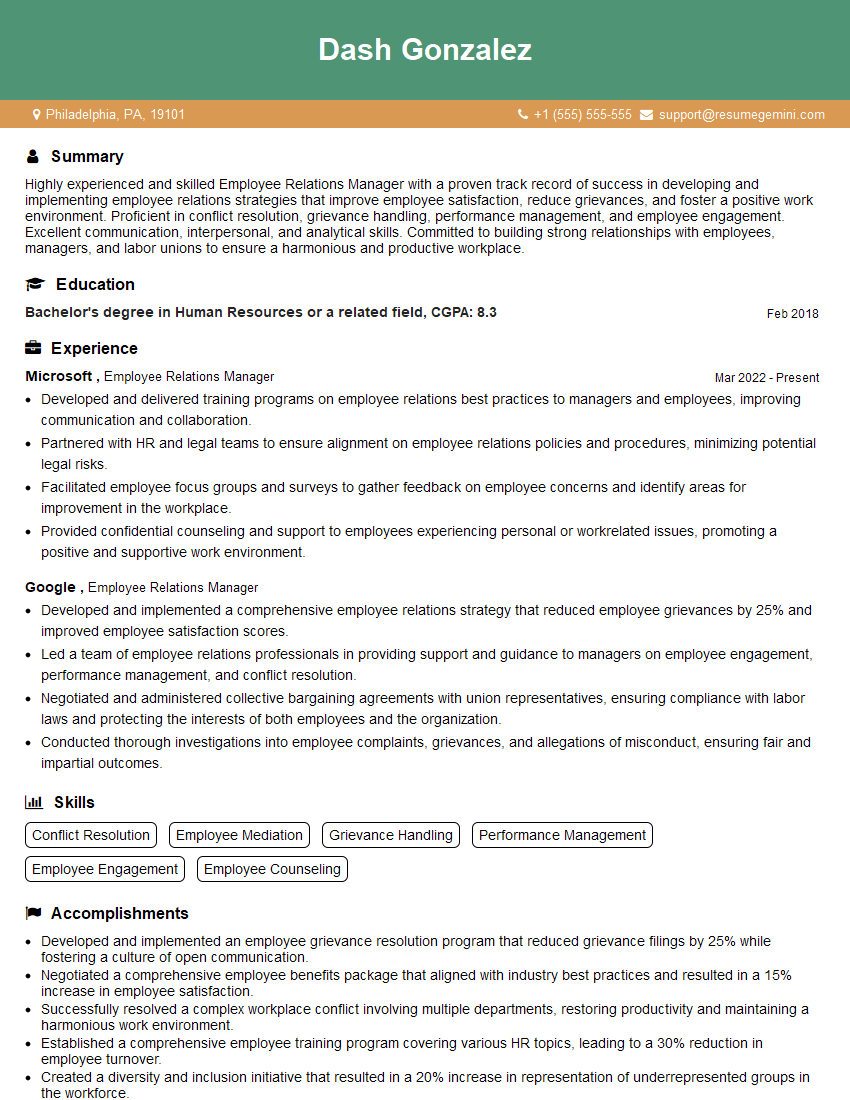
Employee Relations Manager Resume Sample
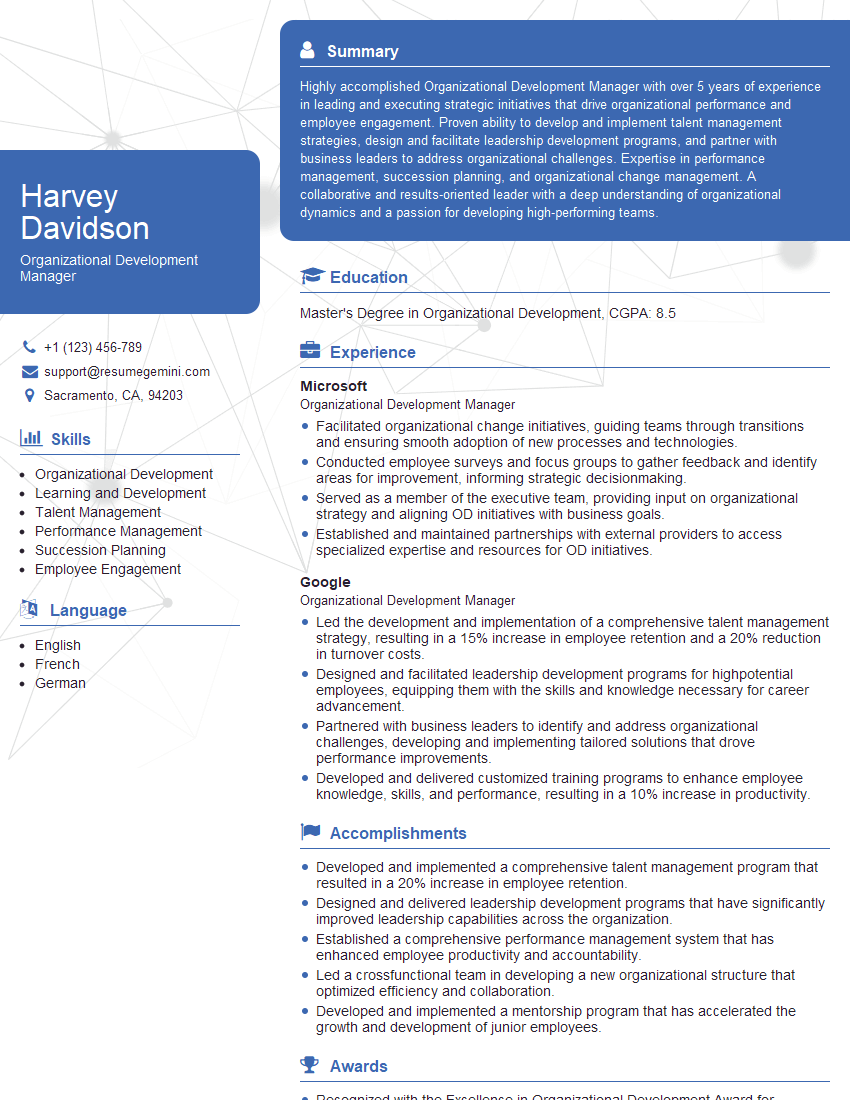
Organizational Development Manager Resume Sample
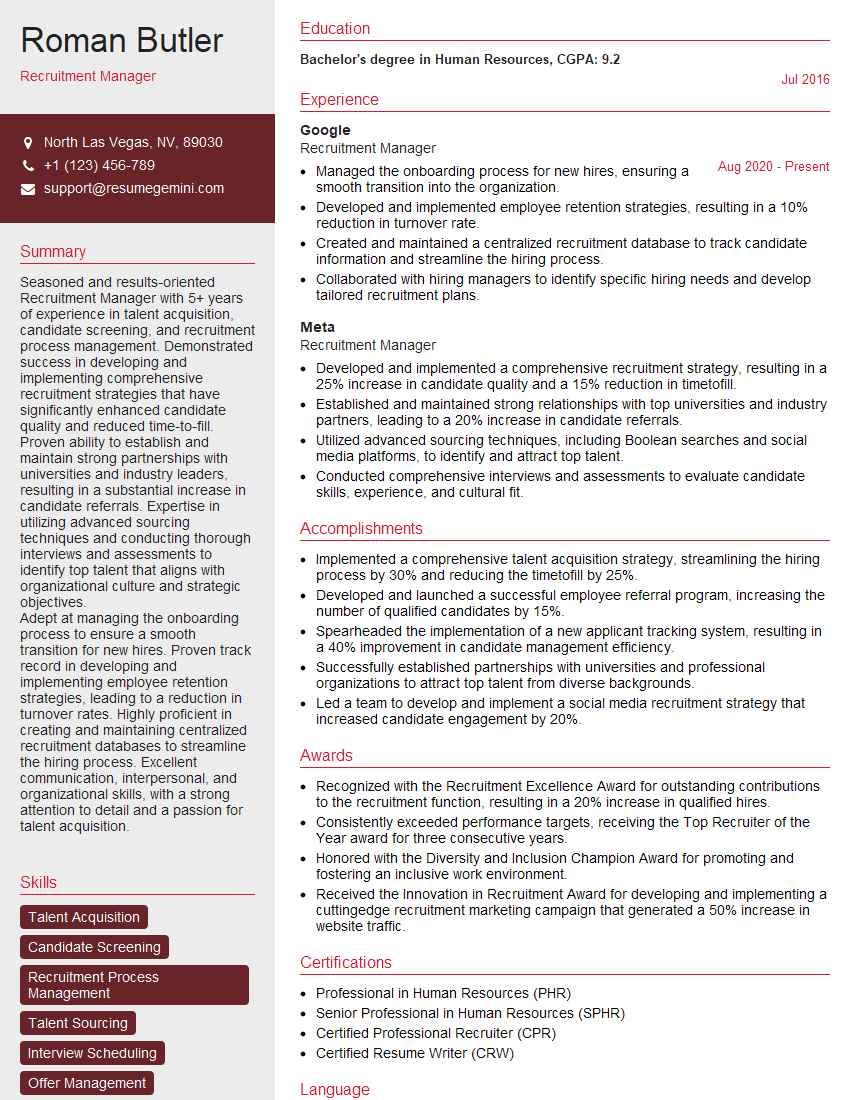
Recruitment Manager Resume Sample
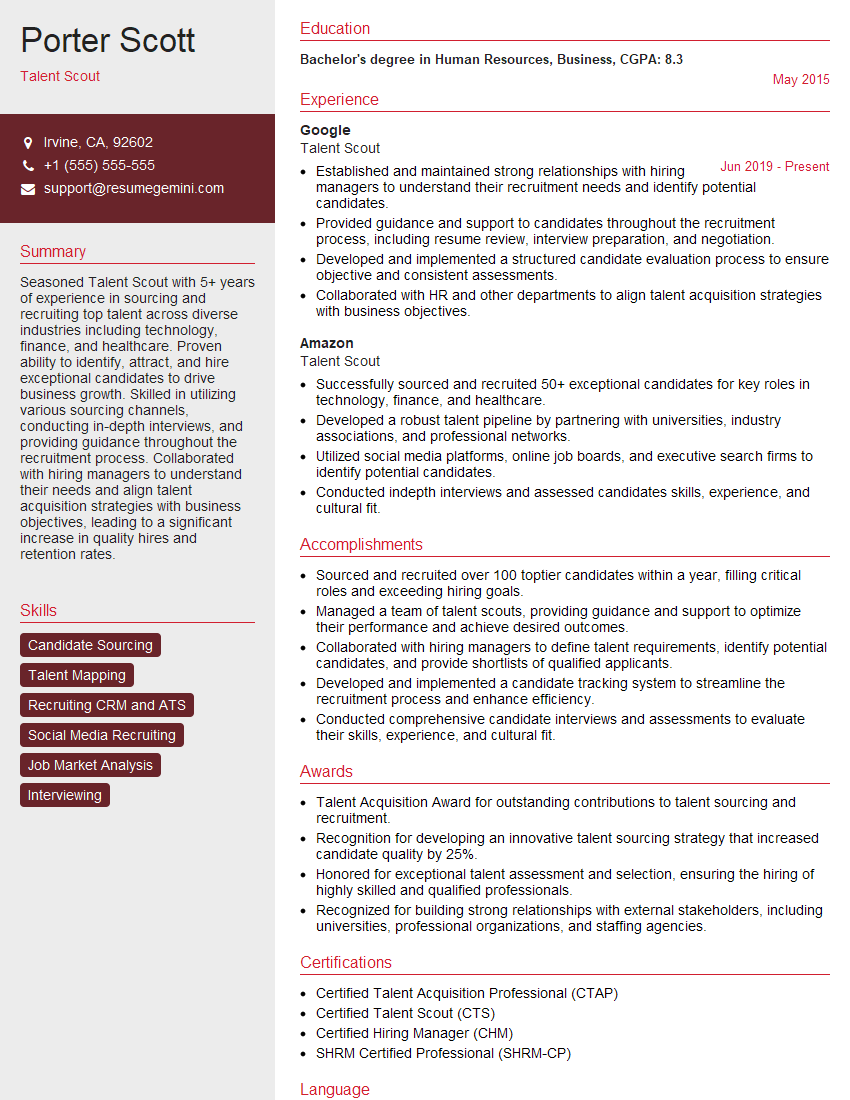
Talent Scout Resume Sample
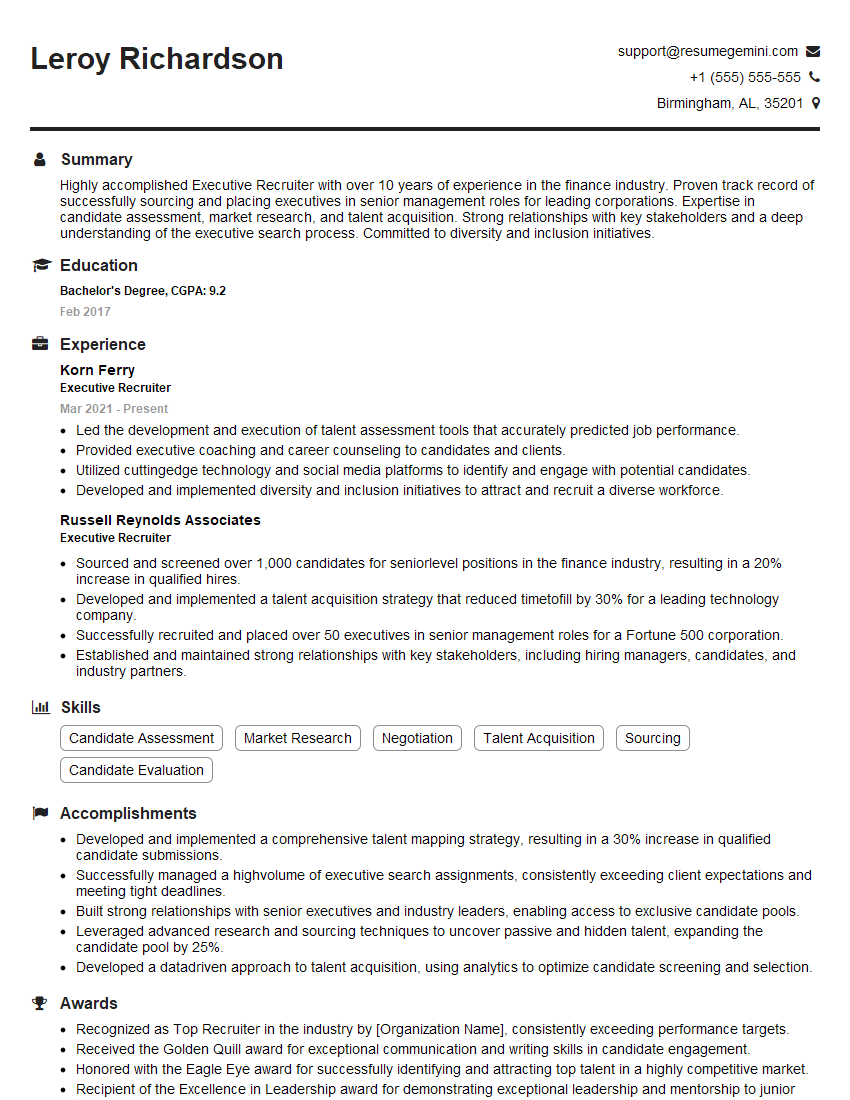
Executive Recruiter Resume Sample
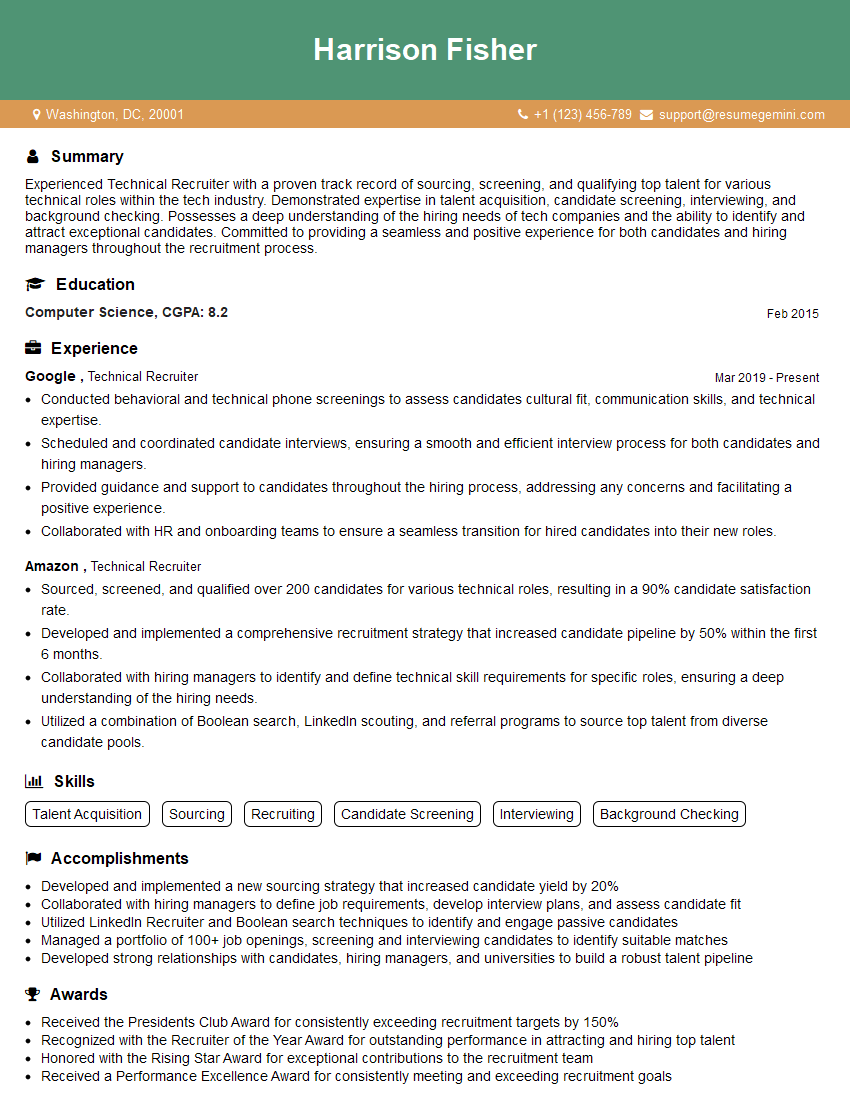
Technical Recruiter Resume Sample
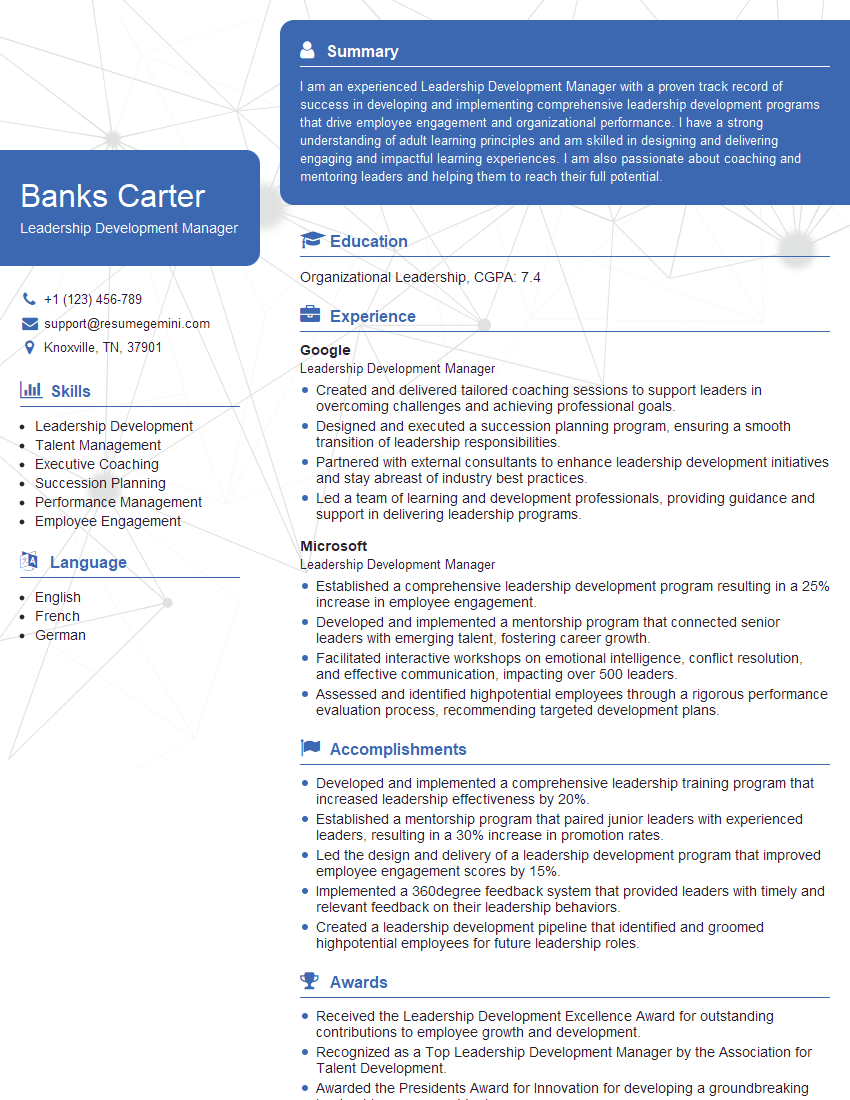
Leadership Development Manager Resume Sample
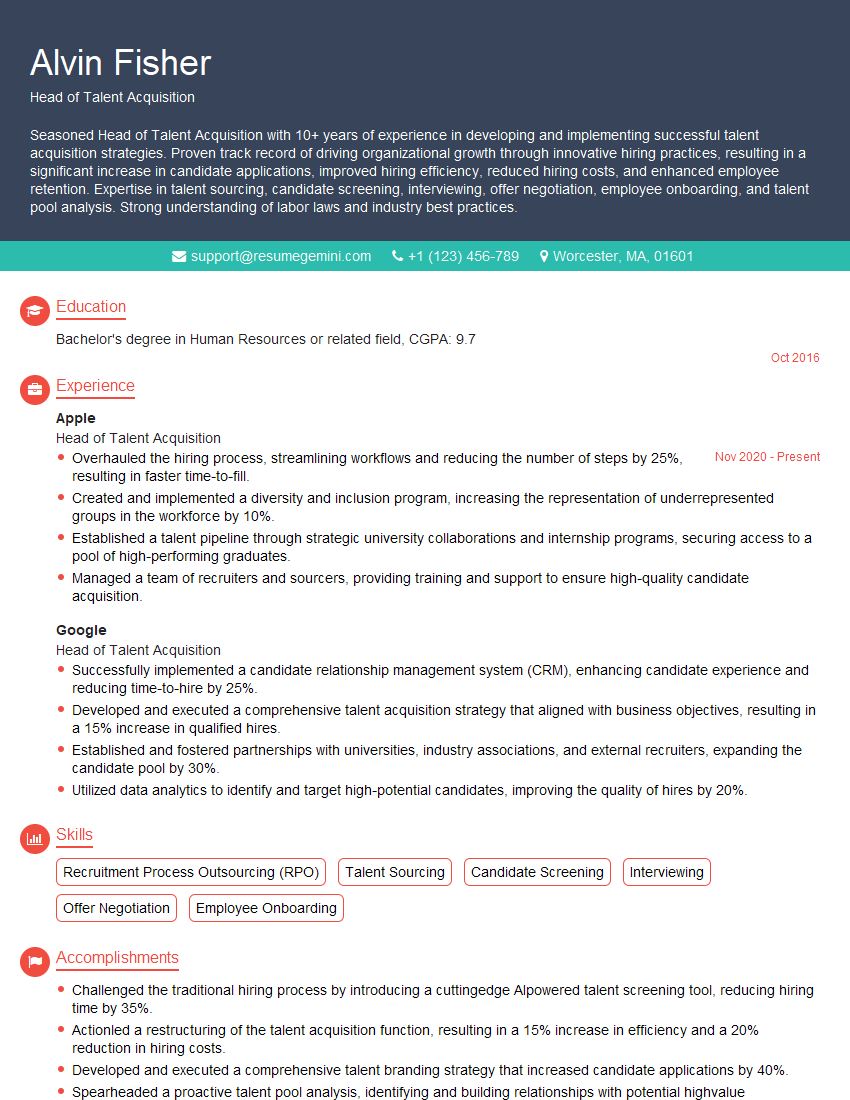
Head of Talent Acquisition Resume Sample
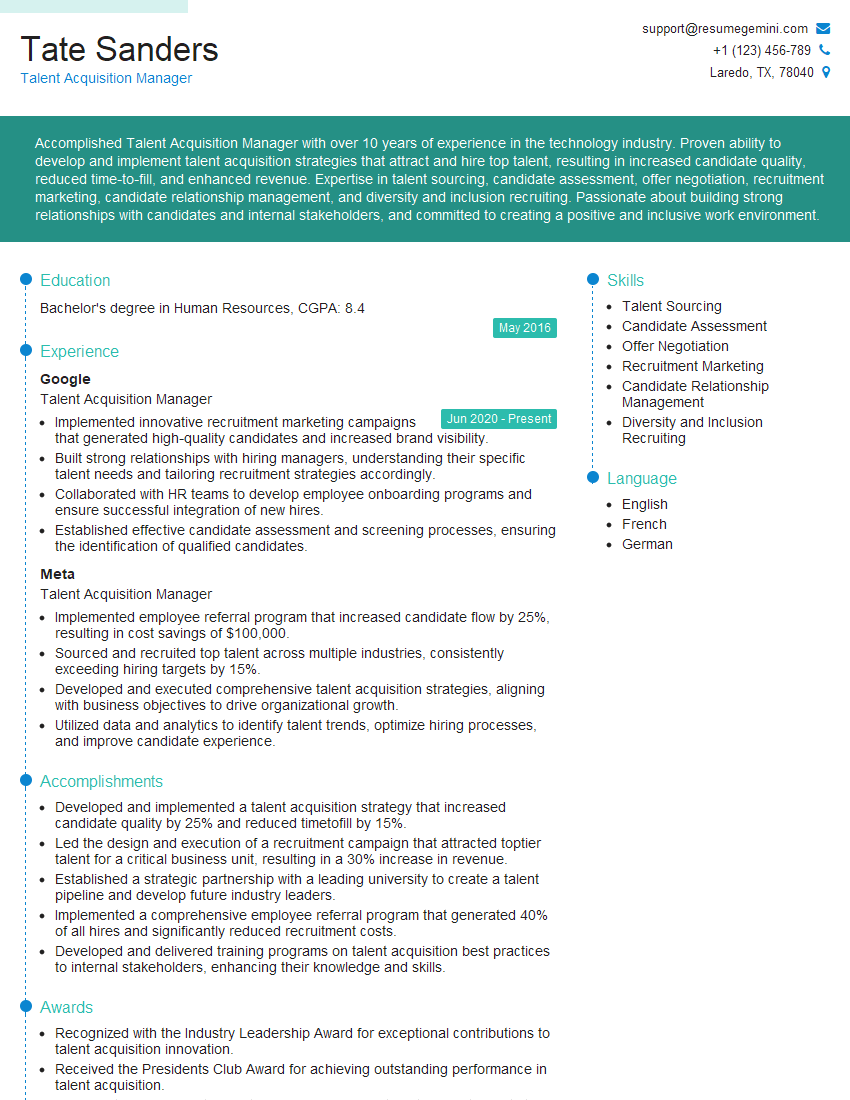
Talent Acquisition Manager Resume Sample
Explore more articles
Users Rating of Our Blogs
Share Your Experience
We value your feedback! Please rate our content and share your thoughts (optional).
What Readers Say About Our Blog
good