Unlock your full potential by mastering the most common Ability to operate and maintain sorting and packaging equipment interview questions. This blog offers a deep dive into the critical topics, ensuring you’re not only prepared to answer but to excel. With these insights, you’ll approach your interview with clarity and confidence.
Questions Asked in Ability to operate and maintain sorting and packaging equipment Interview
Q 1. Describe your experience with different types of packaging machinery.
My experience encompasses a wide range of packaging machinery, from basic manual fillers and sealers to highly automated robotic systems. I’ve worked extensively with various types of filling machines, including volumetric fillers for liquids and powders, and net weigh fillers for granular products. My experience also includes a deep understanding of different sealing technologies such as heat sealing, ultrasonic sealing, and induction sealing. I’ve also worked with cartoning machines, case packers, and palletizers, each requiring a distinct approach to operation and maintenance. For example, I once had to troubleshoot a jam in a high-speed cartoning machine; the solution involved adjusting the product infeed mechanism and fine-tuning the timing belts.
- Volumetric Fillers: Used for liquids and powders where consistent volume is crucial.
- Net Weigh Fillers: Ideal for granular products where precise weight is paramount. These require more frequent calibration.
- Cartoning Machines: Automate the process of placing products into cartons, improving speed and efficiency.
- Case Packers & Palletizers: These machines group cartons into cases and stack cases onto pallets for efficient shipping and storage. They often involve complex robotic systems.
Q 2. How do you troubleshoot common malfunctions in sorting equipment?
Troubleshooting sorting equipment malfunctions requires a systematic approach. I typically begin with a visual inspection, looking for obvious issues like jams, broken parts, or sensor malfunctions. I then check the equipment’s control panel for error codes, which often provide clues about the problem’s source. Using my understanding of the machine’s mechanics and electronics, I might use multimeters to check for power issues or continuity in circuits. If the problem is more complex, I might refer to the machine’s schematics or operator manual.
For instance, I once dealt with a sorting machine repeatedly mis-routing products. After a thorough inspection, I discovered a faulty sensor that was failing to detect product orientation correctly. Replacing the sensor immediately resolved the issue. I also keep detailed logs of maintenance and repairs, aiding in future troubleshooting.
My approach is based on:
- Visual Inspection: Look for obvious problems.
- Error Code Check: Identify codes indicating specific faults.
- Electrical Testing: Use multimeters to check power, continuity, and sensor readings.
- Schematic Review: Consult technical drawings to understand system flow.
- Component Replacement: Replace faulty parts based on diagnostics.
Q 3. What safety procedures do you follow when operating packaging machinery?
Safety is paramount when operating packaging machinery. Before starting any machine, I always ensure that all guards are in place and securely fastened. I check for any loose parts or potential hazards. I wear appropriate personal protective equipment (PPE), including safety glasses, gloves, and hearing protection, as required by the specific machine and task. I never attempt to clear a jam or make adjustments while the machine is running. I always follow the lockout/tagout procedure to prevent accidental start-up during maintenance or repairs. I ensure the area around the machine is kept clear of obstacles to prevent tripping hazards. I also receive regular safety training updates, staying informed about best practices and new safety regulations.
Q 4. Explain your experience with preventative maintenance on packaging lines.
Preventative maintenance is crucial for ensuring the reliable and efficient operation of packaging lines. My approach involves a combination of scheduled maintenance tasks and regular inspections. Scheduled tasks might include lubrication of moving parts, cleaning of sensors and conveyors, and replacement of worn parts like belts or rollers according to the manufacturer’s recommendations. Regular inspections involve checking for signs of wear and tear, loose connections, or potential problems. I use checklists to ensure that all necessary steps are completed and maintain detailed logs of all maintenance activities. This helps predict potential failures and reduces downtime. For example, by regularly cleaning the conveyor belts and replacing them proactively, we significantly reduced jams and maintenance calls, increasing overall output.
Q 5. Describe your experience with PLC programming in relation to packaging automation.
I have significant experience with PLC programming in the context of packaging automation. I’m proficient in ladder logic programming and have used PLCs to control various aspects of packaging lines, including product flow, filling operations, and sealing mechanisms. I’ve worked with different PLC brands such as Allen-Bradley and Siemens. My experience extends to troubleshooting PLC programs, diagnosing faults, and modifying programs to improve efficiency or adapt to changing production requirements. For example, I once re-programmed a PLC to optimize the speed of a cartoning machine, resulting in a significant increase in output without compromising product quality. My programming skills help me efficiently integrate new equipment into existing lines and enhance the overall automation capabilities of the packaging process. I understand how to leverage PLC functionalities to implement safety measures and monitor operational parameters. Example code (Ladder Logic for a simple ON/OFF control):
//Input: Start Button //Output: Conveyor Motor ---[Start Button]---[ ]---(Conveyor Motor)--- Q 6. How do you ensure the quality and efficiency of the packaging process?
Ensuring quality and efficiency in the packaging process requires a multi-faceted approach. I start by carefully monitoring key performance indicators (KPIs) such as throughput, reject rates, and downtime. I use statistical process control (SPC) methods to identify trends and potential problems. Regular quality checks are performed throughout the line, and any issues are addressed promptly. I work closely with the quality control department to ensure that our products meet required specifications. My knowledge of different packaging materials and their properties allows me to optimize packaging design and selection for efficient production and effective protection of the products. I use lean manufacturing principles to identify and eliminate waste in the packaging process, increasing overall efficiency. For example, by implementing a system for quickly identifying and resolving jams, we reduced downtime by 15%, boosting overall productivity.
Q 7. What is your experience with different types of conveyor systems?
My experience with conveyor systems includes various types, each with its own advantages and applications. I’ve worked with roller conveyors, belt conveyors, chain conveyors, and specialized conveyors like spiral and incline conveyors. Roller conveyors are suitable for heavier items, while belt conveyors are better for lighter items or those needing gentler handling. Chain conveyors offer high durability and are suitable for harsh environments. Spiral and incline conveyors are used for multi-level transportation. I understand the importance of proper conveyor alignment, tension, and maintenance to ensure efficient and safe operation. For instance, I once had to troubleshoot a problem with a belt conveyor that was slipping. By adjusting the tension and cleaning the rollers, I resolved the issue and prevented further damage.
Q 8. Explain your experience with palletizing and wrapping equipment.
My experience with palletizing and wrapping equipment spans over eight years, encompassing various automated systems. I’ve worked extensively with robotic palletizers, both high-speed and slower-paced models, as well as automatic stretch wrapping machines and turntable wrappers. This includes everything from routine operation and preventative maintenance to troubleshooting malfunctions and overseeing system upgrades. For example, at my previous role, we transitioned from a manual palletizing system to a robotic one. I was heavily involved in the selection, installation, and training process, resulting in a 40% increase in palletizing efficiency and a significant reduction in workplace injuries.
I’m proficient in programming basic sequences on many PLC controlled systems, understanding the nuances of different palletizing patterns (e.g., layer patterns, block patterns). I’m also familiar with various safety features, such as light curtains and emergency stop mechanisms, crucial for maintaining a safe working environment. My expertise extends to understanding the mechanical aspects, including conveyor integration, film dispensing, and load stability optimization. I can identify potential issues, such as film jams or misaligned pallets, and implement quick solutions.
Q 9. How do you handle production line stoppages due to equipment failure?
When a production line stoppage occurs, my first priority is safety. I secure the equipment, ensuring no one is in harm’s way. Then, I systematically troubleshoot the problem. My approach is based on a structured methodology:
- Identify the Problem: Pinpoint the exact location and nature of the malfunction using diagnostic tools and sensor readings. Is it a mechanical issue, an electrical fault, a software glitch, or a material-related problem?
- Gather Information: Consult maintenance logs, operator feedback, and alarm history to understand the context of the failure.
- Isolate the Cause: Through systematic checks, including visual inspection, sensor data analysis, and testing, I try to pinpoint the root cause. For instance, a sudden stop on a conveyor belt might be due to a broken sensor, a jammed roller, or even a power outage.
- Implement the Solution: This might involve simple fixes like replacing a faulty part, cleaning a sensor, or restarting a system. More complex issues may require more in-depth diagnostics or calling in specialized technicians.
- Preventative Measures: Once the issue is resolved, I record the problem and the solution in the maintenance log, identifying potential preventative measures to avoid similar future stoppages.
Essentially, I strive to minimize downtime and maintain a smooth production flow.
Q 10. Describe your experience with different types of packaging materials.
My experience encompasses a wide range of packaging materials, including corrugated boxes of various sizes and strengths, plastic films (both stretch and shrink wrap), bubble wrap, void fill materials (e.g., air pillows, foam peanuts), and various types of cartons and containers. I understand the properties and limitations of each material, and how their choice impacts product protection, shipping costs, and environmental considerations. For instance, I’ve worked with projects requiring specialized packaging for fragile products, where selecting the right cushioning material and box design was crucial. In another project, we switched from using polystyrene peanuts to biodegradable alternatives, aligning with the company’s sustainability goals.
I’m familiar with material sourcing, quality control, and inventory management for these materials. This includes understanding the specifications, ensuring the materials meet quality standards, and tracking their usage to optimize inventory levels and minimize waste.
Q 11. What is your familiarity with different types of seals and closures?
My familiarity with seals and closures is extensive, encompassing various types used in different packaging applications. I have experience with hot-melt adhesive systems, heat sealing, tape sealing, and various types of closures such as zip locks, screw caps, and pressure-sensitive labels. I understand the importance of selecting the appropriate seal or closure based on the product’s characteristics, the packaging material used, and the required level of tamper evidence. For instance, I’ve worked with pharmaceutical products requiring tamper-evident seals to guarantee product integrity. I also understand the implications of different sealing mechanisms on production speed and efficiency.
I’m also familiar with the maintenance and troubleshooting of sealing equipment, including identifying issues with seal integrity, ensuring proper temperature control (for heat sealing), and maintaining the correct dispensing and application pressure.
Q 12. How do you maintain accurate inventory records of packaging materials?
Maintaining accurate inventory records of packaging materials is critical for efficient production and cost control. I use a combination of physical inventory counts, barcode scanning, and inventory management software to track material levels. This involves regularly checking stock levels, updating the inventory database, and generating reports to monitor consumption and identify potential shortages. We employ a first-in, first-out (FIFO) system to minimize waste from expired materials. Discrepancies are investigated to understand the causes (e.g., theft, damage, or inaccurate recording). I am also involved in ordering new supplies based on consumption rates and projected needs, ensuring we have the right materials available when and where they’re needed.
In the past, we implemented a real-time inventory tracking system that integrated with our production management software. This significantly improved the accuracy and efficiency of our inventory management process.
Q 13. Explain your experience with high-speed packaging lines.
Working with high-speed packaging lines requires a keen eye for detail, precise adjustments, and quick problem-solving skills. I’ve worked on lines processing hundreds or even thousands of units per hour, requiring close collaboration with operators, maintenance personnel, and quality control teams. My experience includes setting up and configuring various high-speed machines such as cartoners, baggers, and wrappers. This involves precise adjustments of speed, timing, and product handling mechanisms to maximize efficiency while maintaining product quality. I’m proficient in identifying and resolving bottlenecks and optimizing the overall line performance for maximum throughput. For example, I helped optimize a high-speed bagging line by fine-tuning the sealing mechanism, reducing downtime caused by jams and improving product integrity.
Safety is paramount on high-speed lines. I’m thoroughly familiar with all safety protocols and procedures, and I emphasize safe working practices among all team members.
Q 14. How do you ensure compliance with packaging regulations and standards?
Ensuring compliance with packaging regulations and standards is a top priority. This involves staying updated on all relevant regulations (e.g., FDA, GMP, ISO standards) and ensuring that our packaging materials and processes meet all required specifications. This includes verifying that our packaging is properly labeled with all required information, including ingredients, warnings, and nutritional facts. We conduct regular audits and inspections to ensure compliance and identify areas for improvement. I collaborate with quality control personnel to ensure all products meet regulatory standards before shipping. We maintain detailed documentation of all compliance activities and train personnel on the latest regulations and best practices. For example, I have played a key role in ensuring compliance with new packaging regulations related to food safety and sustainability.
Proactive compliance avoids costly recalls and ensures customer trust and satisfaction.
Q 15. Describe your experience with automated guided vehicles (AGVs) in a warehouse setting.
My experience with Automated Guided Vehicles (AGVs) spans several years, primarily within large-scale warehouse environments. I’ve worked with various AGV types, including those utilizing laser guidance, magnetic tape guidance, and inertial navigation systems. My responsibilities included not only routine maintenance – ensuring battery health, checking sensor functionality, and performing regular lubrication – but also troubleshooting malfunctions. For instance, I once resolved a recurring AGV path deviation issue by identifying a loose connection in the laser guidance system. This required careful examination of the wiring harness and subsequent repair, leading to a significant improvement in operational efficiency. I also have experience in coordinating AGV traffic flow to optimize the movement of goods within the warehouse, preventing collisions and minimizing downtime. This often involved adjusting AGV routes and speed parameters based on real-time traffic conditions and order fulfillment demands.
Career Expert Tips:
- Ace those interviews! Prepare effectively by reviewing the Top 50 Most Common Interview Questions on ResumeGemini.
- Navigate your job search with confidence! Explore a wide range of Career Tips on ResumeGemini. Learn about common challenges and recommendations to overcome them.
- Craft the perfect resume! Master the Art of Resume Writing with ResumeGemini’s guide. Showcase your unique qualifications and achievements effectively.
- Don’t miss out on holiday savings! Build your dream resume with ResumeGemini’s ATS optimized templates.
Q 16. How do you optimize the packaging process for cost-effectiveness?
Optimizing packaging for cost-effectiveness requires a multifaceted approach. It’s not just about choosing the cheapest materials; it’s about minimizing waste and maximizing efficiency throughout the entire process. This starts with accurate demand forecasting to avoid overstocking packaging supplies. Then comes the careful selection of packaging materials. We need to balance material strength and protection with cost. Using lighter-weight materials where appropriate can significantly reduce shipping expenses. Efficient machine settings are crucial. Ensuring correct package dimensions minimizes wasted space in shipping containers. For instance, I once improved packaging efficiency by 15% simply by implementing a custom-sized box and optimizing the filling process. Regular maintenance of packaging equipment is also vital to prevent malfunctions and jams that lead to material waste and downtime. Finally, implementing a robust quality control system helps to identify and rectify faulty packages before they reach the customer, saving costs associated with returns and replacements.
Q 17. What are some common causes of jams or blockages in sorting machines?
Jams and blockages in sorting machines are unfortunately common occurrences, often stemming from several key causes. Product jams can occur due to improperly sized or shaped items, causing them to become lodged within the conveyor system. Damaged or worn components, such as rollers or belts, can also lead to blockages. Another common culprit is incorrect product orientation, particularly with items that lack consistent shape or size. Accumulation of dust, debris, or even small spilled items can also cause significant jams and system failures. For instance, I once diagnosed a recurring jam in a high-speed sorter to be caused by small plastic fragments accumulating around a sensor, impacting its accuracy and leading to mis-sorting and subsequent blockages. Regular cleaning and preventative maintenance, including careful inspection of all components, is vital in preventing these types of issues.
Q 18. How do you identify and resolve problems related to packaging integrity?
Maintaining packaging integrity is paramount. My approach begins with a visual inspection of the packaging to identify any visible defects, such as tears, punctures, or crushed boxes. I then utilize various testing methods based on the product’s sensitivity and fragility. This might include compression testing for robustness or drop tests to simulate shipping conditions. For fragile items, I often work with specialized packaging materials and designs to ensure safe transit. Statistical Process Control (SPC) charts can help us track defects and identify trends that lead to packaging integrity problems. By analyzing these data points, I can pinpoint the root causes of defects and implement corrective actions, whether it involves adjusting machine settings, changing packaging materials, or re-training staff on proper packaging procedures. A recent example involved a high rate of damaged glass bottles. Through detailed investigation, we found the problem was due to inconsistent pressure applied during the sealing process. Adjusting the machine settings and implementing a more robust quality control process immediately decreased damages to an acceptable level.
Q 19. What experience do you have with robotic packaging systems?
I possess extensive experience with robotic packaging systems, having worked with both Cartesian robots and delta robots in various settings. My responsibilities included programming, operating, and maintaining these systems. Programming typically involved using specialized software to define the robot’s movements and actions, such as picking, placing, and orienting packages. This frequently involved coordinating the robot’s actions with other automated systems like conveyor belts and labeling machines. Maintenance involved regular lubrication of moving parts, sensor calibration, and troubleshooting mechanical or software malfunctions. For instance, I once resolved a significant production bottleneck caused by a robotic arm miscalculating its positioning. The solution involved identifying a minor software glitch which was subsequently fixed through remote system access and re-calibration. My expertise extends to optimizing robot parameters to enhance speed and precision while minimizing wear and tear.
Q 20. Describe your proficiency in using various hand tools and power tools for maintenance.
My proficiency in using hand and power tools is a crucial aspect of my maintenance responsibilities. I am adept at using a wide range of hand tools, including screwdrivers, wrenches, pliers, and various measuring instruments, for both preventative and corrective maintenance tasks. My experience with power tools encompasses drills, grinders, impact wrenches, and pneumatic tools. I understand the importance of safety procedures and always adhere to relevant safety regulations when operating power tools. For instance, during a recent conveyor belt repair, I utilized a combination of hand tools for disassembly, a grinder for cleaning worn surfaces, and a welding torch for repair work. I’m also well-versed in using specialized tools for specific types of machinery, such as those required for repairing robotic arms or pneumatic systems. Proper tool selection and usage are vital for efficient and safe maintenance procedures.
Q 21. Explain your experience with reading and interpreting technical manuals and schematics.
Reading and interpreting technical manuals and schematics is a fundamental skill for me. I regularly utilize these documents to understand the functionality of complex machinery, diagnose malfunctions, and perform repairs. I am proficient in deciphering both electrical and mechanical schematics, identifying components, tracing circuits, and understanding signal flows. I also regularly consult manufacturer’s manuals to find detailed specifications, troubleshooting guides, and safety procedures. For example, while troubleshooting a malfunctioning PLC (Programmable Logic Controller) in a sorting system, I used the system’s wiring diagrams to trace the signal path and ultimately identified a faulty relay. This skill is crucial for effective maintenance and problem-solving in automated systems. My ability to quickly and accurately interpret technical documentation ensures minimal downtime and efficient repairs.
Q 22. How do you conduct regular inspections of packaging equipment to prevent failures?
Regular inspections are the cornerstone of preventative maintenance for packaging equipment. Think of it like a regular health checkup for a machine – catching small problems before they become major breakdowns. My approach involves a structured checklist, tailored to the specific equipment, covering both visual and functional checks.
- Visual Inspection: This includes checking for signs of wear and tear on belts, rollers, and other moving parts; looking for leaks in pneumatic or hydraulic lines; and inspecting for loose connections or damaged components. For example, I’d carefully examine conveyor belts for cracks or fraying, and check the alignment of rollers to ensure smooth product flow.
- Functional Testing: This involves operating the equipment at various speeds and under different loads to identify any anomalies. I’d verify the correct operation of safety features, such as emergency stops and sensors. For instance, I would test the PLC program (if applicable) to confirm the correct sequence of operations and timings.
- Lubrication and Cleaning: A crucial part of the inspection is checking lubrication levels and ensuring all parts are clean and free from debris. This prevents premature wear and ensures smooth operation. Think of it like regularly oiling your car’s engine.
- Documentation: All findings, including any minor issues, are meticulously documented. This allows for tracking trends, identifying potential problems before they escalate, and justifying necessary repairs or replacements.
This systematic approach ensures that potential problems are identified and addressed proactively, minimizing downtime and extending the lifespan of the equipment.
Q 23. What is your understanding of different types of sensors used in automated packaging systems?
Automated packaging systems rely on a variety of sensors to ensure accuracy, efficiency, and safety. These sensors can be broadly categorized into:
- Proximity Sensors: These detect the presence of objects without physical contact. They’re commonly used to detect the presence of products on a conveyor belt, triggering the next stage of the packaging process. For instance, a proximity sensor can signal a filling machine to start dispensing when a container arrives.
- Photoelectric Sensors: These use light beams to detect objects or changes in light levels. They are often employed to detect the presence or absence of labels, seals, or products and are excellent for detecting small variations in color or reflective properties.
- Capacitive Sensors: These detect the presence of conductive or non-conductive materials by measuring changes in capacitance. They are particularly useful in detecting the level of material in a hopper or the presence of product in a container.
- Inductive Sensors: These detect metallic objects without physical contact by generating a magnetic field. They are often used to detect metal objects in a product stream to ensure quality control.
- Temperature Sensors: Critical for monitoring the temperature of various components and ensuring that operating parameters remain within safe limits. For example, monitoring the temperature of the sealing mechanism in a heat-sealing machine is crucial for the integrity of the packaging.
The choice of sensor depends on factors such as the type of product being packaged, the required accuracy, and the environmental conditions. Understanding sensor technology is essential for effective troubleshooting and maintaining optimal system performance.
Q 24. How do you troubleshoot electrical and mechanical issues in packaging machinery?
Troubleshooting electrical and mechanical issues in packaging machinery requires a systematic approach. My strategy involves:
- Safety First: Always disconnect the power supply before attempting any repairs. This is paramount for personal safety and prevents further damage to the equipment.
- Visual Inspection: Begin with a thorough visual inspection, looking for obvious signs of damage such as frayed wires, loose connections, or broken parts. Often, the problem is more visible than you might think.
- Systematic Testing: If the problem isn’t immediately apparent, I follow a process of elimination. This could involve checking individual components, such as motors, sensors, and controllers, using multimeters to test voltage, current, and continuity. For mechanical problems, I would inspect bearings, gears, and other moving parts for wear and tear.
- Diagnostics and Circuit Diagrams: For complex issues, I utilize circuit diagrams and diagnostic tools to identify the root cause. For PLCs, this might involve utilizing the PLC’s built-in diagnostics or using specialized software for programming and troubleshooting.
- Documentation and Record Keeping: All troubleshooting steps, findings, and repairs are documented to assist with future maintenance and troubleshooting.
For example, I once traced a recurring jamming issue on a filling machine to a worn-out cam follower. Identifying this simple mechanical fault prevented costly delays. A systematic approach, combined with a good understanding of both electrical and mechanical systems, is crucial for resolving these issues quickly and effectively.
Q 25. Explain your experience with hydraulic and pneumatic systems in packaging equipment.
Hydraulic and pneumatic systems are frequently used in packaging equipment for tasks such as actuating cylinders, controlling clamps, and driving conveyors. My experience involves maintaining and troubleshooting systems using both technologies.
- Hydraulic Systems: I’m familiar with hydraulic pumps, valves, actuators, and reservoirs. I understand the importance of maintaining correct fluid levels, checking for leaks, and ensuring proper filtration. Issues such as low pressure, fluid leaks, and pump failures are readily diagnosed and addressed. For example, I’ve replaced worn seals in hydraulic cylinders, restoring proper functionality.
- Pneumatic Systems: My experience with pneumatic systems includes maintaining air compressors, valves, cylinders, and tubing. I know how to check for air leaks, replace damaged components, and regulate air pressure. I’ve successfully resolved issues caused by leaks in pneumatic lines leading to loss of pressure in the system and malfunctioning of pneumatic components.
A deep understanding of both systems, including safety procedures, is crucial. For instance, understanding the dangers of high pressure in hydraulic systems and proper depressurization techniques is vital.
Q 26. How do you prioritize maintenance tasks to minimize downtime?
Prioritizing maintenance tasks is essential for minimizing downtime and ensuring operational efficiency. I utilize a combination of methods to prioritize tasks:
- Criticality Assessment: Tasks are prioritized based on their criticality to the overall production process. For instance, a broken filler head that stops an entire line will take precedence over a minor lubrication task.
- Frequency and Severity: Regular maintenance tasks (lubrication, cleaning) are scheduled based on their frequency and past experience with similar equipment. However, if a previous minor issue has escalated and could lead to a major breakdown, this issue will be prioritized immediately.
- Predictive Maintenance: Utilizing sensor data and historical records of maintenance activities can predict potential failures. This allows for proactive maintenance, preventing unexpected downtime.
- Run-to-Failure Analysis: This method involves monitoring the equipment for certain key indicators that might predict future failure. The use of vibration sensors, temperature sensors, and run time counters on equipment can help predict potential failures before they occur.
This combined approach ensures that the most critical and time-sensitive tasks are addressed first, reducing the risk of major disruptions and maximizing uptime.
Q 27. Describe your experience working with a computerized maintenance management system (CMMS).
I have extensive experience working with computerized maintenance management systems (CMMS). A CMMS is a software application used to manage and track maintenance activities. In my previous role, I used a CMMS to:
- Schedule Preventative Maintenance: The system automatically generates work orders for routine maintenance tasks, ensuring that they are performed regularly and consistently.
- Track Maintenance History: The CMMS provides a complete record of all maintenance activities, including repairs, inspections, and replacements. This data is invaluable for trend analysis, preventative planning, and overall equipment management.
- Manage Parts Inventory: The system helps track inventory levels for maintenance parts, ensuring that the necessary components are available when needed.
- Generate Reports: The CMMS allows us to generate various reports on maintenance costs, downtime, and equipment performance. This data is used to make informed decisions about maintenance strategies and resource allocation.
My experience with CMMS software has significantly improved our organization’s maintenance practices, leading to reduced downtime, lower maintenance costs, and improved equipment reliability.
Q 28. What are your strategies for continuous improvement in the packaging process?
Continuous improvement in the packaging process is crucial for maximizing efficiency and minimizing costs. My strategies for continuous improvement involve:
- Data Analysis: Regularly analyzing production data, such as downtime, throughput, and defect rates, to identify areas for improvement. I would analyze any key performance indicators (KPIs) to identify areas of strength and weakness.
- Lean Principles: Applying lean principles to eliminate waste and optimize processes. This may involve streamlining workflows, improving material handling, or reducing changeover times. For example, reducing the time it takes to change from one type of package to another can save considerable time and increase throughput.
- Operator Feedback: Regularly soliciting feedback from operators who are most familiar with the equipment and processes to identify potential issues and opportunities for improvement. Operators are frequently the first to see emerging issues with the equipment or processes.
- Technological Upgrades: Exploring and implementing new technologies, such as automated systems or advanced sensors, to improve efficiency and reduce the risk of failure. The upgrade to a newer more advanced sensor can often help improve throughput, reduce waste, and improve accuracy of the packaging process.
- Training and Development: Ensuring that operators and maintenance personnel receive the necessary training to use the equipment effectively and perform maintenance tasks correctly.
A continuous improvement mindset, combined with a data-driven approach, is vital for maintaining a high-performing packaging system and staying ahead of the curve.
Key Topics to Learn for Ability to operate and maintain sorting and packaging equipment Interview
- Equipment Operation: Understanding the functionality of various sorting and packaging machines (e.g., conveyors, sorters, wrappers, sealers). This includes safe operating procedures and emergency shutdown protocols.
- Preventive Maintenance: Knowing how to perform routine checks, lubrication, and cleaning to ensure optimal equipment performance and longevity. This also includes understanding preventative maintenance schedules.
- Troubleshooting and Repair: Identifying common malfunctions, performing basic repairs, and knowing when to escalate issues to maintenance personnel. This includes understanding basic mechanical and electrical principles relevant to the equipment.
- Safety Procedures: Demonstrating a thorough understanding of all relevant safety regulations and procedures, including lockout/tagout procedures and personal protective equipment (PPE) usage.
- Quality Control: Explaining how to monitor the quality of sorted and packaged products and identify and correct defects. This includes understanding quality metrics and how to improve efficiency and reduce errors.
- Production Efficiency: Discussing strategies for optimizing equipment performance to maximize throughput and minimize downtime. This might include understanding process improvement techniques.
- Record Keeping and Documentation: Understanding the importance of accurate record keeping, including maintenance logs, production reports, and quality control data.
Next Steps
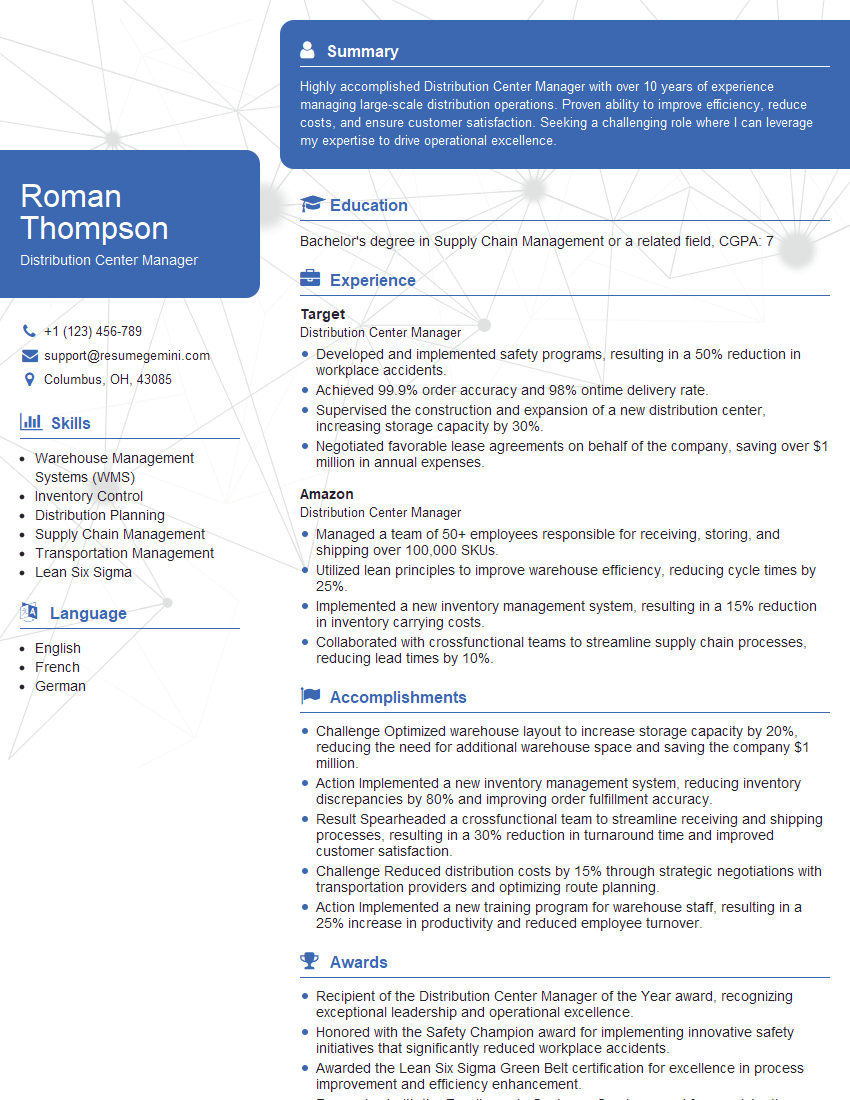
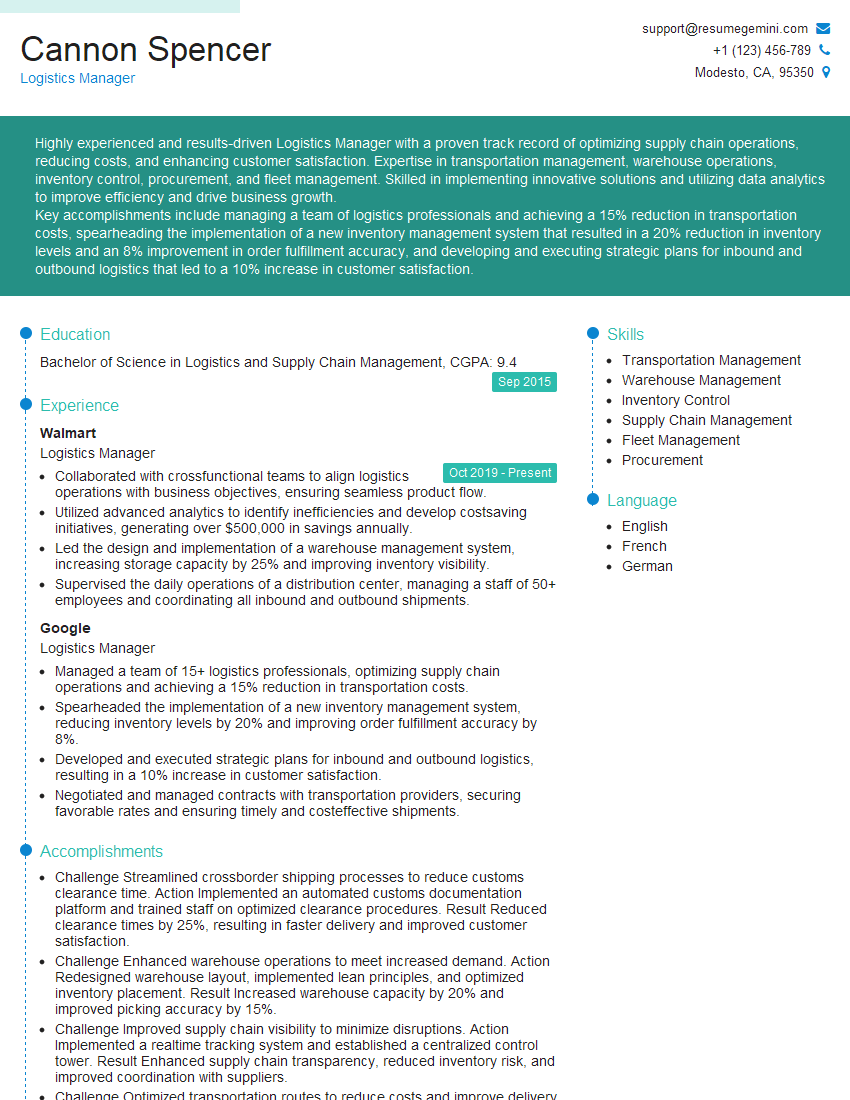
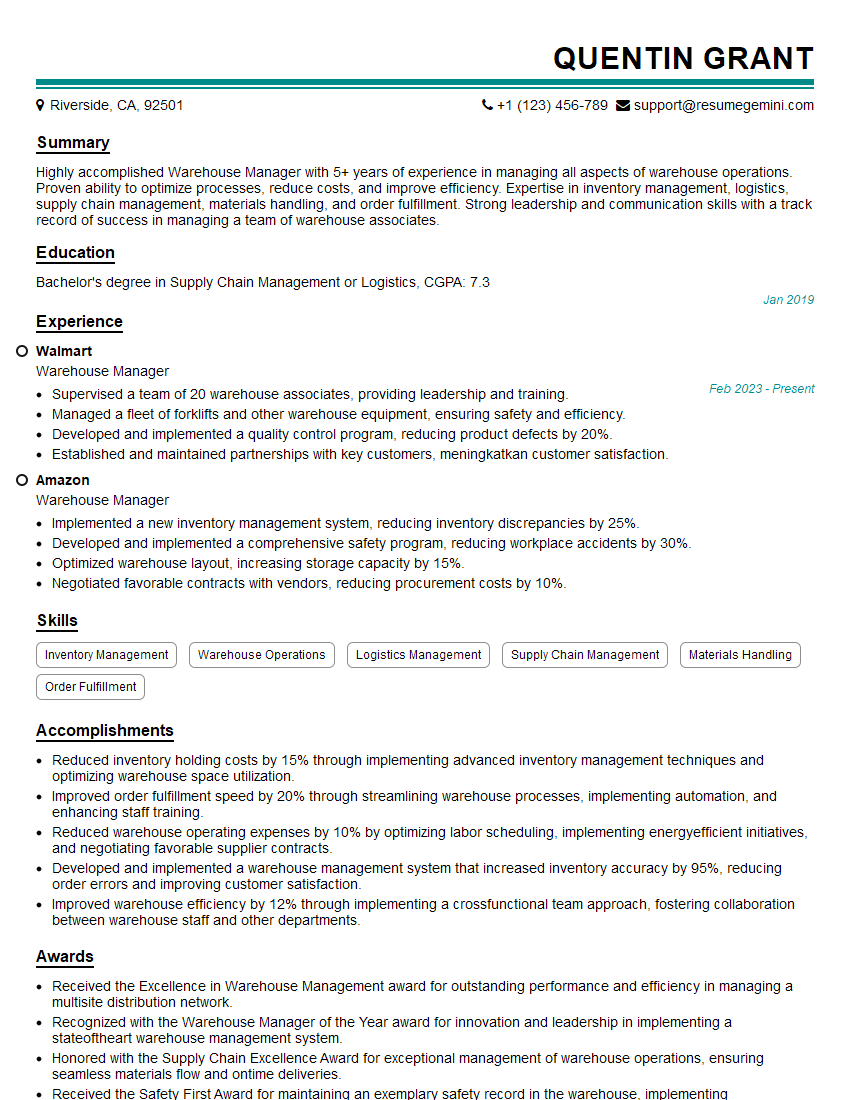
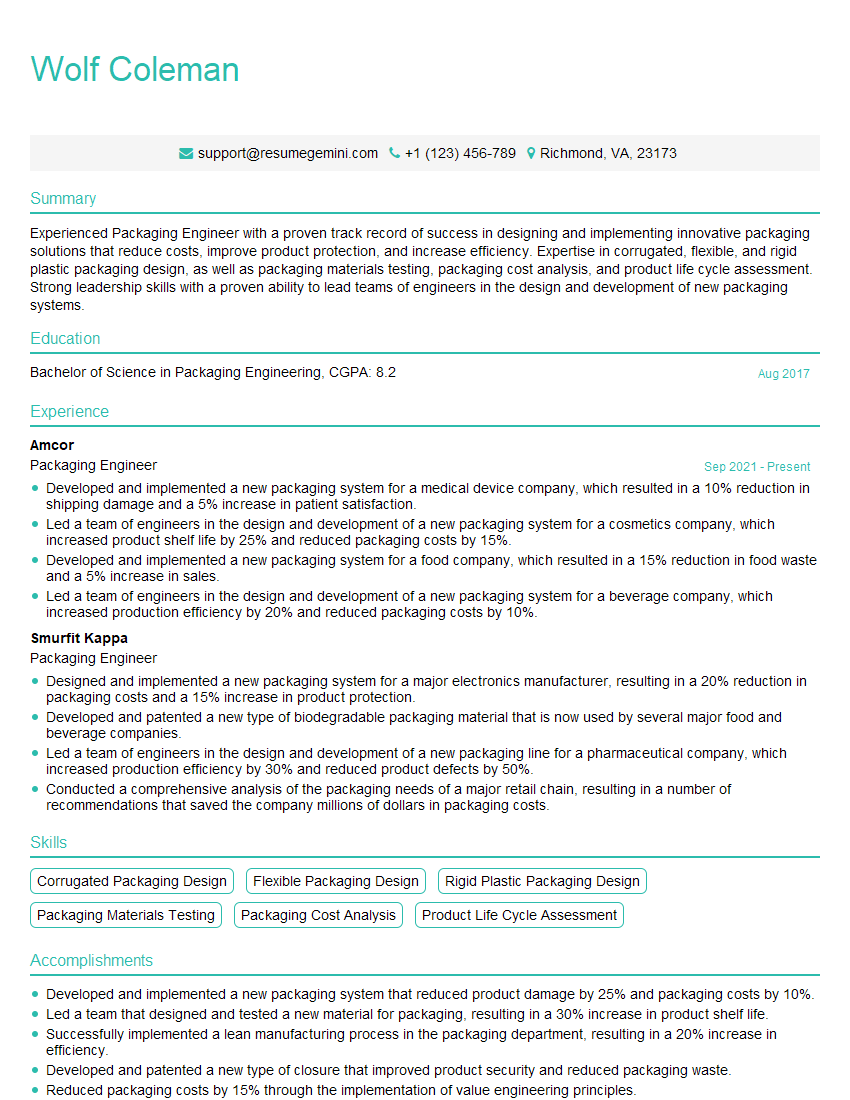
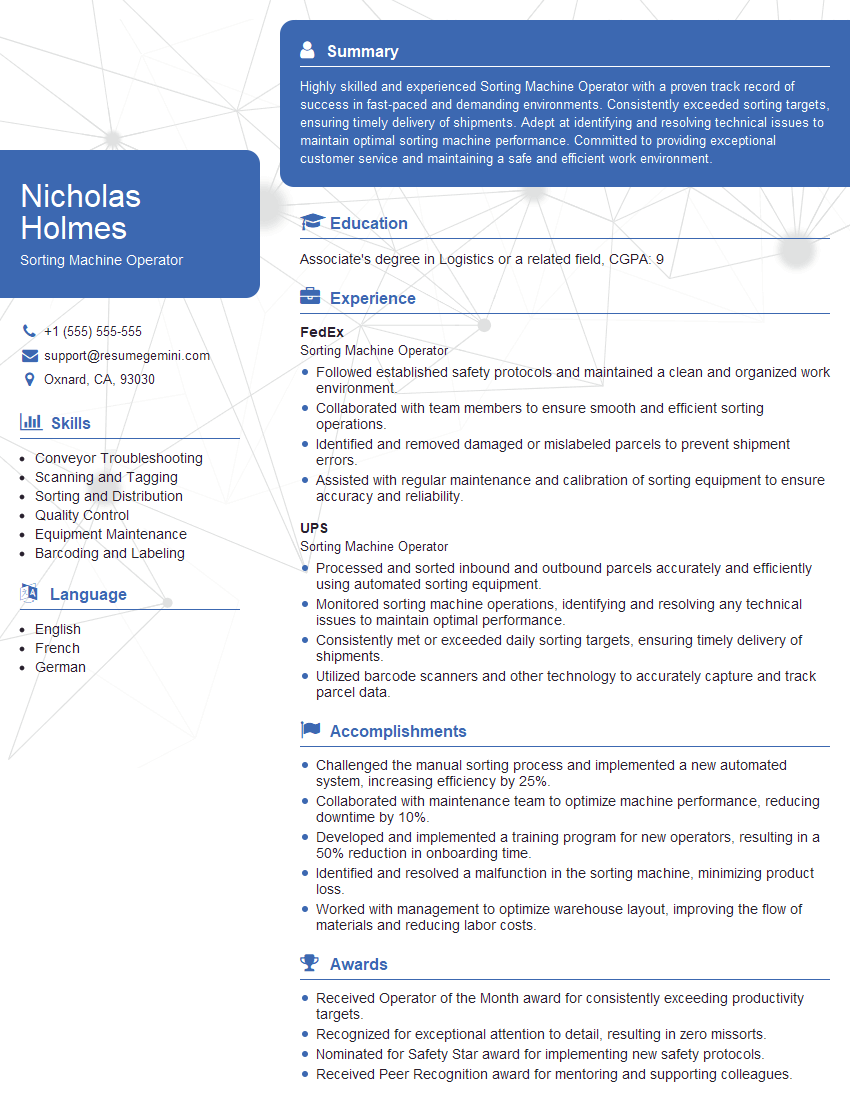
Mastering the ability to operate and maintain sorting and packaging equipment opens doors to numerous opportunities in logistics, manufacturing, and distribution. Proficiency in this area is highly valued, leading to increased job security and career advancement. To maximize your job prospects, create an ATS-friendly resume that highlights your skills and experience effectively. ResumeGemini is a trusted resource to help you build a professional and impactful resume. We offer examples of resumes tailored to highlight expertise in operating and maintaining sorting and packaging equipment to help you craft the perfect application.
Explore more articles
Users Rating of Our Blogs
Share Your Experience
We value your feedback! Please rate our content and share your thoughts (optional).
What Readers Say About Our Blog
Very informative content, great job.
good