Interviews are more than just a Q&A session—they’re a chance to prove your worth. This blog dives into essential Ability to Perform Basic Garment Repairs interview questions and expert tips to help you align your answers with what hiring managers are looking for. Start preparing to shine!
Questions Asked in Ability to Perform Basic Garment Repairs Interview
Q 1. What types of stitches are you proficient in?
I’m proficient in a variety of stitches crucial for different garment repair needs. These include the basic running stitch, a quick and versatile stitch ideal for seams and hemming; the backstitch, known for its strength and durability, perfect for repairing tears and seams that require extra reinforcement; the slip stitch, practically invisible and used for delicate hemming and mending; the blanket stitch, decorative yet functional, great for finishing edges and preventing fraying; and the whipstitch, used for neat seam closures and attaching patches. My experience extends to adapting stitch types based on fabric weight and type – a lightweight silk requires a much finer stitch than a heavy denim.
- Running Stitch: Think of it as the ‘pencil stroke’ of stitching – simple and fast.
- Backstitch: Imagine interlocking bricks – each stitch secures the previous one for superior strength.
- Slip Stitch: Like a secret agent – almost invisible, ideal for inconspicuous repairs.
Q 2. How do you repair a broken zipper?
Repairing a broken zipper involves assessing the damage. Is the slider broken? Are the teeth separated? Or is the zipper completely detached? For a broken slider, replacing it is often the easiest solution. This involves carefully removing the old slider and inserting a new one of the same size. For separated teeth, you might need to use a zipper repair kit with tiny replacement teeth and carefully sew them back onto the zipper tape. If the zipper is detached, restitching it back onto the garment requires precision and patience, using small, strong stitches that match the original stitching.
I often use a combination of techniques, such as hand-sewing and a specialized zipper foot on my sewing machine, to provide a durable repair. I always prioritize matching the thread color to the garment for a seamless finish.
Q 3. Describe your experience with hemming pants.
Hemming pants is a common repair I perform frequently. My process involves first determining the desired length and ensuring the pant leg is even. Then, I press the hem to create a crisp crease, which serves as a guideline. Depending on the fabric and the desired finish, I choose between different hemming techniques: a simple hand-stitched hem for delicate fabrics, a machine-stitched hem for sturdier materials, or a blind hem for an invisible finish. For a professional look, I ensure the stitching is even and consistent and that any excess fabric is neatly trimmed away.
I’ve worked on everything from simple cotton trousers to more complex linen blends, adapting my techniques to each material’s specific requirements. For instance, a delicate silk pant leg would be best suited to a hand-stitched or blind hem to avoid any visible stitching.
Q 4. How do you mend a hole in a garment?
Mending a hole depends entirely on the size and location of the hole, as well as the fabric type. Small holes can often be darned, using a needle and thread to weave new threads into the damaged area, mimicking the original weave. Larger holes may require patching, where a piece of matching or contrasting fabric is applied to the back of the garment to reinforce the area. For delicate fabrics, invisible mending techniques might be used, where the threads are carefully interwoven to conceal the repair as much as possible. The type of stitch used will also vary depending on the fabric and desired level of visibility.
For example, a small hole in a wool sweater would be best darned, while a larger tear in a pair of jeans would likely require patching.
Q 5. What techniques do you use for patching tears?
Patching techniques vary based on the tear’s size and location, as well as the garment’s fabric. For small tears, a simple patch sewn on the underside can effectively repair the garment without being noticeable. For larger tears, a more decorative patch might be applied to the exterior, turning a repair into a design element. I often use a fusible interfacing to secure the patch before stitching, ensuring a strong and lasting repair. The choice of patch material also depends on the garment; a fabric as close as possible to the original is ideal for a seamless repair, while a contrasting fabric can create a unique design feature.
Imagine repairing a child’s ripped jeans – a fun, brightly colored patch adds character rather than just covering the damage.
Q 6. Explain your process for repairing a seam.
Repairing a seam begins with carefully examining the damage. Is it a simple unraveling, or is the seam completely broken? For a simple unraveling, I would carefully resew the seam using the original stitch pattern, ensuring consistent tension and stitch length. If the seam is completely broken, I might need to unpick a small section to create a clean edge before resewing. The technique will depend on the fabric and seam type; a French seam, for example, requires a different approach than a simple overlock stitch. I always choose a thread that matches the garment’s color and type to maintain its original aesthetic. A neatly repaired seam is almost invisible to the untrained eye.
Q 7. How do you identify different types of fabric?
Identifying different types of fabric involves using a combination of visual inspection, tactile examination, and sometimes even a burn test. Visually, I observe the weave, texture, and drape of the fabric. Tactile examination involves feeling the fabric’s texture – is it smooth, rough, soft, stiff? The burn test, while requiring caution, can help determine fiber composition. For example, natural fibers like cotton and linen burn slowly with an ashy residue, while synthetic fibers like polyester melt and often smell acrid. Combining visual and tactile observations with a knowledge of common fabric types helps me correctly identify almost any material. I’ve developed a keen sense of texture and weave over the years which allows me to efficiently identify even unusual blends.
Q 8. What tools and equipment are essential for garment repair?
Having the right tools is crucial for effective and efficient garment repair. Think of it like a surgeon needing the proper instruments – you can’t perform complex procedures with inadequate tools. My essential toolkit includes a variety of needles (sizes 8-16 for different fabrics), sharp scissors (for cutting and snipping), seam ripper (for carefully removing stitches), measuring tape (for accurate alterations), pins (to hold fabric in place), thread in a wide range of colors, hand sewing needles, and thimbles for added protection. For more complex repairs or alterations, I also utilize a sewing machine – preferably one with adjustable stitch length and width for versatility. Iron and ironing board are indispensable for pressing seams and ensuring a neat finish. Lastly, a sturdy work surface, well-lit and comfortable, is critical for detailed work.
- Needles: Different sizes for different fabrics (fine needles for silks, heavier needles for denim).
- Scissors: Sharp, precise cuts are vital for clean repairs.
- Seam Ripper: Essential for carefully unpicking seams without damaging the fabric.
- Measuring Tape: Accuracy is key, especially for alterations.
- Sewing Machine: For faster and more consistent stitching.
Q 9. How do you handle delicate fabrics during repair?
Delicate fabrics demand a gentle touch and specialized techniques. Imagine working with a spiderweb – you need to be extremely careful not to damage it. I always use the finest needles available for the fabric’s weight, ensuring they are sharp to prevent snags. I also use a smaller stitch length for hand sewing or adjust my sewing machine to a delicate stitch setting. For particularly fragile materials like silk or lace, I often use a stabilizer backing to support the fabric during stitching, removing it carefully afterward. Testing the thread tension beforehand on a scrap piece of the same fabric is critical. It’s always better to err on the side of caution with slower, more deliberate movements.
For example, repairing a tear in a silk scarf would require using a fine needle, silk thread, and possibly a water-soluble stabilizer to prevent puckering or damage to the delicate silk fibers.
Q 10. Describe your experience with machine sewing.
I’ve been using sewing machines since I was a teenager. My experience encompasses a wide range of machines, from basic home models to industrial-grade equipment. I’m proficient in operating various types of sewing machines and can adapt my technique to different machine functions. I understand thread tension adjustments, stitch settings, needle selection, and various types of presser feet to achieve the desired result depending on the fabric. My experience includes sewing straight seams, curves, zig-zag stitches, buttonholes and various decorative stitches, as well as managing bulkier fabrics and making adjustments for the machine to accommodate them. I am comfortable troubleshooting common machine malfunctions, such as jammed needles or incorrect thread tension.
Recently, I used my industrial machine to sew a reinforced patch onto a heavy canvas bag, demonstrating my ability to work with robust materials and achieve durable results. I also regularly use my home machine for more delicate tasks like hemming curtains or repairing clothing.
Q 11. How do you assess the damage before starting a repair?
Before starting any repair, a thorough assessment is crucial. It’s like diagnosing a patient before treatment. First, I carefully examine the damage, identifying the type of tear (e.g., clean cut, frayed edges, hole), the fabric’s composition and structure, and the extent of the damage. I check for any underlying issues, such as weak seams or previous repairs. I assess the color and texture to select appropriate matching thread and repair methods. For example, a small, clean tear in cotton fabric may only require a simple hand-sewn stitch, while a large, complicated rip in denim would involve a more involved repair possibly including patches or reinforcement.
Consider a client’s favorite shirt with a hole near the armpit. I’d assess if the tear is just on the outer layer or penetrates to the lining, the material’s resilience, and the best way to seamlessly mend it, keeping the repair invisible.
Q 12. What are some common challenges in garment repair?
Garment repair presents several challenges, including matching thread color precisely, working with complex fabric structures, dealing with difficult-to-repair tears (e.g., large holes, significant fabric damage), and maintaining the garment’s original structure and aesthetic. Sometimes, the fabric itself is degraded, making repair difficult or impossible. Another common challenge is working with delicate or unusual fabrics that require specialized techniques and careful handling. Matching patterns on patterned fabrics can also be incredibly tricky. Finally, time constraints and client expectations are often challenges we must navigate.
For example, repairing a rip in a heavily embroidered garment requires careful attention to avoid damaging the embroidery. A faded or stained area might be impossible to perfectly match, necessitating creative solutions.
Q 13. How do you select the appropriate thread for a repair?
Selecting the correct thread is paramount for a successful and invisible repair. The thread should match the fabric’s color and fiber content as closely as possible. For example, using polyester thread on a cotton garment might result in a noticeable difference in texture and sheen. For woven fabrics, I match the thread weight and type (e.g., cotton, linen, silk) to the garment. For knits, stretchy thread might be necessary to maintain the garment’s flexibility. Always test the thread on a hidden area of the garment to ensure color and texture compatibility. I often have a wide variety of threads on hand to meet various challenges.
I recall a repair where I had to painstakingly blend several thread colors to perfectly match a unique fabric blend, showcasing my commitment to detail and precision.
Q 14. What is your experience with alterations (e.g., taking in a waist)?
I have extensive experience with alterations, including taking in waists, letting out seams, shortening or lengthening garments, and adjusting sleeve lengths. This often involves precise measurements, careful seam ripping, and skillful stitching to maintain the garment’s shape and structural integrity. Taking in a waist, for example, requires understanding the garment’s construction to avoid distorting the garment’s appearance or reducing its functionality. I often use fitting techniques to make sure alterations are customized and produce the desired look. My experience also includes adjusting darts, adjusting hems, adding and removing sleeves, and creating various patterns.
I recently tailored a wedding dress, taking in the bodice and adjusting the length to perfectly fit the client. This demanded a high level of skill and precision to maintain the exquisite details of the dress.
Q 15. How do you deal with a broken button?
Replacing a broken button is a fundamental garment repair. It’s a simple process, but attention to detail ensures a neat and durable result. First, I assess the button’s size and type – is it a shank button (with a small loop at the back), or a flat button? This determines the method of attachment. For a shank button, I use the existing thread holes or carefully create new ones with a needle. For a flat button, I may need to sew through the button’s holes several times to create a secure fastening. I always use a thread that matches the garment’s color as closely as possible. If the original button is missing, I’ll locate a replacement of similar size and material. Then, I carefully sew the new button on, ensuring even stitches for a professional finish. I may use a knot at the back to secure the threads and prevent them from pulling loose. Think of it like building a tiny, strong bridge – each stitch is a crucial support.
For example, recently I repaired a shirt with a missing shank button. I used a needle slightly thinner than the existing thread holes and a matching thread. I made several passes through each hole, creating a strong and neat attachment. The end result was barely noticeable, and the shirt was as good as new.
Career Expert Tips:
- Ace those interviews! Prepare effectively by reviewing the Top 50 Most Common Interview Questions on ResumeGemini.
- Navigate your job search with confidence! Explore a wide range of Career Tips on ResumeGemini. Learn about common challenges and recommendations to overcome them.
- Craft the perfect resume! Master the Art of Resume Writing with ResumeGemini’s guide. Showcase your unique qualifications and achievements effectively.
- Don’t miss out on holiday savings! Build your dream resume with ResumeGemini’s ATS optimized templates.
Q 16. Explain your method for repairing a frayed hem.
Repairing a frayed hem involves preventing further unraveling and restoring a neat edge. My method depends on the fabric’s type and the extent of the damage. For minor fraying, I might carefully trim loose threads, then use a whip stitch – a simple hand stitch that catches the raw edge – to secure it. For more significant fraying, I may need to reinforce the hem with a narrow strip of fabric, which I sew down using a blind stitch to keep it invisible. A blind stitch is a beautiful technique; it’s subtle, yet sturdy. It’s like carefully tucking in a loose end, leaving a smooth, polished result.
For example, I recently repaired a pair of linen trousers with a slightly frayed hem. After trimming the loose threads, I used a whip stitch with a fine needle and matching thread to neaten and secure the edge. The repair was virtually undetectable, and the trousers looked as if they had never frayed.
Q 17. Can you describe your experience with hand-sewing techniques?
I’m proficient in a wide range of hand-sewing techniques. Beyond the basic running stitch, which is fundamental to many repairs, I’m comfortable with slip stitches, blanket stitches, backstitches, and various decorative stitches. I can adjust my stitch length and tension to suit different fabrics and repair needs. My experience includes working with delicate fabrics like silk and heavier materials like denim, requiring me to adapt my technique accordingly. For instance, a slip stitch is ideal for creating almost invisible seams, perfect for delicate repairs, whereas a backstitch provides added strength in more robust fabrics.
I’ve even experimented with embroidery stitches to repair decorative elements or subtly camouflage minor damage. The key is to understand the properties of each stitch and its appropriate application. It’s like having a toolbox filled with different tools – each designed for a specific job.
Q 18. How do you maintain your sewing equipment?
Maintaining my sewing equipment is crucial for both the quality of my work and the longevity of my tools. I regularly clean my sewing machine with a soft brush and compressed air to remove dust and lint, which can clog the mechanisms. I lubricate moving parts as recommended by the manufacturer. My needles are inspected before each use; bent or damaged needles can snag fabric and lead to uneven stitches. I also store my needles in a designated case to prevent loss or damage. Hand-sewing needles are carefully stored in a needle case to prevent accidental injuries and damage. Sharpening scissors and keeping them clean extends their lifespan and keeps them cutting accurately. This regular maintenance ensures my tools are always in optimal condition.
Think of it like maintaining a car – regular checks and maintenance prevent larger, more expensive problems down the line.
Q 19. Describe your experience with different types of needles.
My experience encompasses a wide variety of needles, each designed for a specific purpose. I understand the differences between different needle types such as sharps, ballpoints, embroidery needles, and quilting needles. Sharps are ideal for woven fabrics, ballpoints for knit fabrics to prevent skipped stitches, embroidery needles for decorative stitching, and quilting needles for thicker fabrics like denim or canvas. The choice of needle depends heavily on the fabric type, thickness and the type of stitching required. Choosing the right needle is half the battle in achieving a quality repair. A wrong needle choice might lead to damaged fabrics or uneven stitches.
For example, I would use a sharp needle for mending a silk blouse, while a ballpoint needle would be suitable for mending a wool sweater. Selecting the correct needle size is just as important as the needle type itself.
Q 20. How do you ensure the repair blends seamlessly with the original garment?
Achieving a seamless blend between a repair and the original garment requires meticulous attention to detail. Firstly, I select thread that closely matches the garment’s color and texture. I pay close attention to matching the stitch type and size to the existing stitching on the garment. I often use the same hand-sewing technique as the original seam to create continuity. For invisible repairs, I use techniques such as the blind stitch or ladder stitch, which minimize the visibility of the repair. It requires patience, precision, and a keen eye for detail. In some cases, I may use fabric dye to blend in any noticeable color differences resulting from fabric wear or fading.
I often find that the most successful repairs are almost undetectable. It’s all about precision and using the right techniques.
Q 21. How do you assess the feasibility of a repair?
Assessing the feasibility of a repair involves a thorough evaluation of several factors. First, I examine the extent of the damage and the type of fabric. Some damages, like large tears or extensive fabric loss, might be beyond practical repair. The garment’s overall condition, age, and value also influence the decision. A delicate antique might require specialized repair techniques or might even be better left unrestored. I consider the time and cost involved. Is it worth the effort and expense to repair the garment, or would it be more economical to replace it? I always discuss repair options and costs with the customer before proceeding.
For instance, a small rip on a favorite jeans might be easily patched and mended, but significant damage might justify replacement. It’s a balance of practicality, cost-effectiveness and sentimental value.
Q 22. What are your strategies for troubleshooting a repair problem?
Troubleshooting garment repairs involves a systematic approach. I begin by carefully examining the damaged area to identify the exact nature of the problem. This includes assessing the type of fabric, the extent of the damage (e.g., tear, hole, broken seam), and any underlying issues. For example, if a seam is ripping, I’d check if it’s due to weak stitching, fabric stress, or a poorly constructed seam in the first place.
Next, I consider the available repair methods. A small tear in a delicate fabric might require a delicate hand-sewing technique, while a larger rip in sturdy denim could be mended with a machine stitch. I always choose the most appropriate method based on both the garment and the client’s preferences. If I’m unsure, I might test a repair method on an inconspicuous area first.
Finally, I meticulously document the repair process, noting the techniques used and materials needed. This detailed record helps me replicate successes and learn from any mistakes. It also provides crucial information for future repairs of similar nature, optimizing my efficiency and improving my skill.
Q 23. How do you handle customer requests for specific repairs?
Handling customer requests requires clear communication and a collaborative approach. I always start by listening carefully to the customer’s description of the needed repair, clarifying any ambiguities. For instance, a client might say ‘fix this hole,’ but I’ll ask what kind of stitch they prefer, or if they have a colour match for the thread. This ensures that we’re both on the same page about the desired outcome.
If the requested repair is beyond my capabilities or requires specialized tools, I’ll be honest and transparent with the client, suggesting alternative solutions or recommending a specialist. I value building trust with customers, so honesty is paramount. But equally important is providing options; if they want a specific type of stitching, but it wouldn’t be the best option for the fabric, I’d offer an alternative solution that achieves the same aesthetic result with better durability.
Once we agree on the repair, I provide a detailed estimate, outlining the cost and timeframe. I then keep the customer updated throughout the repair process, addressing any concerns promptly.
Q 24. What safety precautions do you take while performing repairs?
Safety is my top priority. I always ensure my workspace is well-lit and organized to prevent accidents. I use sharp tools with extreme caution, keeping them properly stored when not in use. This includes needles, pins, and scissors, which are always kept in designated containers or holders.
When operating sewing machines, I make sure that all safety guards are in place and functioning correctly. I avoid wearing loose clothing or jewelry that could get caught in moving parts. I regularly inspect the machine for any signs of damage or malfunction, and immediately address any issues. My sewing machine is also regularly serviced to ensure optimal functioning and safety. If a repair involves handling delicate or unusual fabrics, such as vintage materials, I would take extra precautions to avoid damage. I might use protective gloves, for instance, or work on a padded surface.
Finally, I always dispose of sharp objects and fabric scraps responsibly to maintain a clean and safe environment.
Q 25. How do you price your services?
Pricing my services depends on several factors. First, the complexity of the repair is considered. A simple hem is much less expensive than repairing a significant tear or replacing a zipper. The type of fabric also plays a role, as some materials are more difficult to work with than others. Delicate fabrics, for instance, require more time and precision, impacting the price. Lastly, the amount of time involved is also factored in. I use a combination of hourly rates and flat fees depending on the nature of the project.
I ensure my pricing is competitive and transparent. Before starting any work, I provide a clear and detailed estimate to avoid any surprises for the client. I also take into account the cost of materials, such as thread, zippers, or buttons, including these costs in the estimate to ensure total transparency.
Q 26. What is your experience with various sewing machine types?
I’m proficient with various sewing machine types, including both mechanical and electronic models. My experience extends to industrial machines, often used for heavier fabrics and bulk work, as well as domestic machines suitable for various tasks. I’m comfortable with different stitch types and can adjust machine settings to accommodate different fabrics and repair needs.
For example, I utilize the zigzag stitch for mending tears, a straight stitch for hemming, and blind stitch for invisible repairs. My familiarity extends to troubleshooting common machine issues, like jammed needles or bobbin problems, ensuring efficient workflow. This versatility allows me to handle a wide range of repair requests effectively and efficiently. I understand the nuances of various machine brands, adjusting my approach as needed to achieve the highest quality results.
Q 27. How do you keep your workspace organized and efficient?
Maintaining an organized and efficient workspace is crucial for effective repair work. My workspace is designed for both functionality and safety. All tools and materials are stored in designated areas, easily accessible yet safely contained. This prevents accidents and streamlines my workflow. I use clear containers and labels to identify different threads, buttons, and other materials.
I have separate sections for ongoing projects, completed repairs, and supplies. My work surface is kept clean and clutter-free, allowing for efficient movement and preventing accidental damage to garments. I regularly clean and disinfect my workspace to maintain hygiene and prevent the spread of germs. This approach not only enhances safety but also minimizes interruptions and improves my overall productivity.
Q 28. Describe your experience working with different types of sewing patterns
My experience with sewing patterns includes working with both commercially produced patterns and custom-designed ones. I understand how to interpret pattern instructions, make necessary adjustments for different sizes or body types, and translate pattern pieces into actual garments. This is particularly helpful when dealing with repairs that require replacing a damaged section or creating a patch.
I’m familiar with various pattern formats, from paper patterns to digital downloads. I can adjust patterns to correct fit issues, or create my own patterns for unique repairs. Adapting patterns to unusual garments or fabric types is a key skill, one I’ve honed over many years. It’s not just about following instructions – it’s about understanding the principles behind pattern making to create solutions that perfectly integrate with the existing garment.
Key Topics to Learn for Ability to Perform Basic Garment Repairs Interview
- Hand Sewing Techniques: Mastering basic stitches like running stitch, backstitch, and slip stitch. Understanding their applications for different fabrics and repair types.
- Machine Sewing for Repairs: Familiarity with basic machine operation, including straight stitch, zigzag stitch, and appropriate tension adjustments for various fabrics and repair needs. Practical application: seam repair, mending tears.
- Fabric Identification and Selection: Knowing common fabric types (cotton, linen, silk, etc.) and selecting appropriate patching materials for effective repairs. Problem-solving: choosing the right patch for a delicate garment.
- Patching and Mending: Different patching techniques for various tears and holes (e.g., invisible mending, patch placement). Practical application: repairing holes in jeans, patching a torn seam.
- Zipper Repair and Replacement: Understanding zipper construction and common problems, and the ability to repair or replace zippers. Problem-solving: troubleshooting a jammed zipper.
- Button Sewing and Replacement: Proper techniques for sewing buttons (various types and sizes) and replacing broken buttons. Practical application: attaching buttons to shirts and blouses.
- Seam Ripping and Resewing: Careful seam ripping techniques to avoid fabric damage, followed by accurate and neat resewing. Problem-solving: fixing a poorly sewn seam.
- Hemming and Alterations: Basic hemming techniques (e.g., machine or hand hemming) and minor alterations like shortening sleeves or pants. Practical application: adjusting garment length.
- Safety Precautions and Equipment Maintenance: Understanding and following safety procedures while using sewing machines and hand needles. Proper care and maintenance of sewing equipment.
- Understanding Garment Construction: Basic knowledge of how garments are constructed to better diagnose and repair issues.
Next Steps
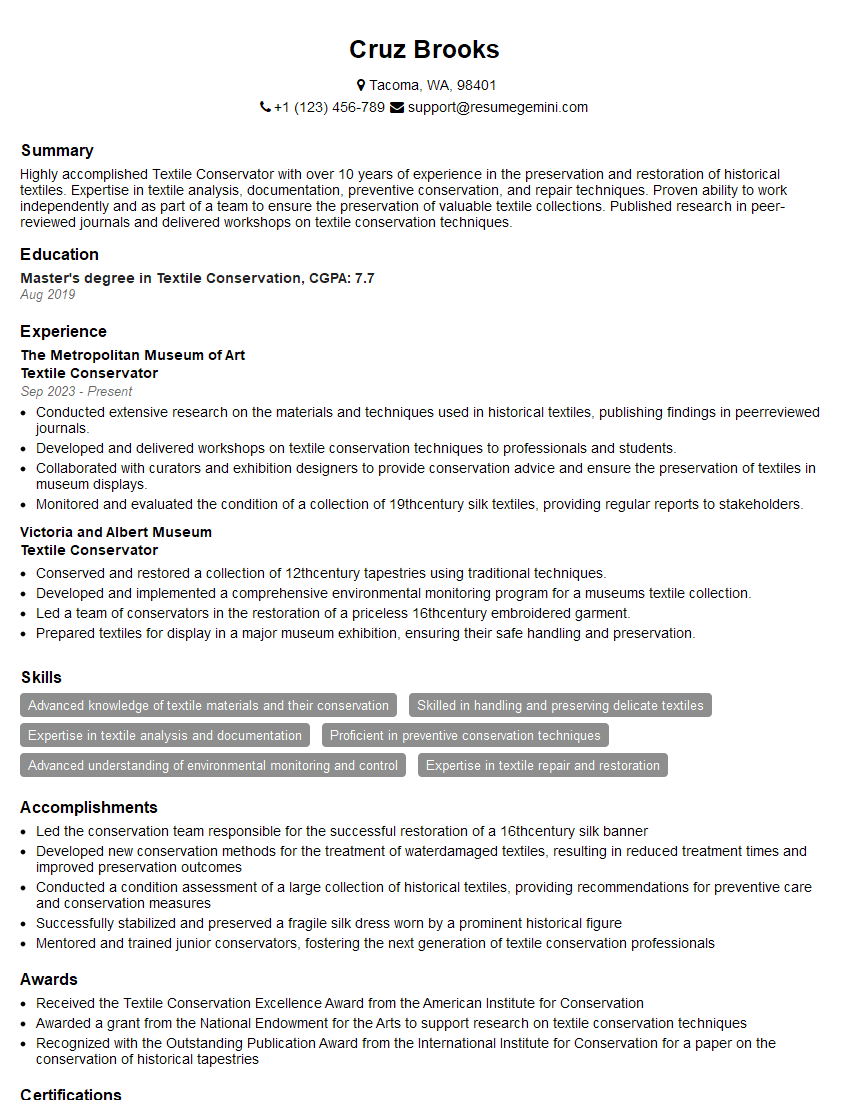
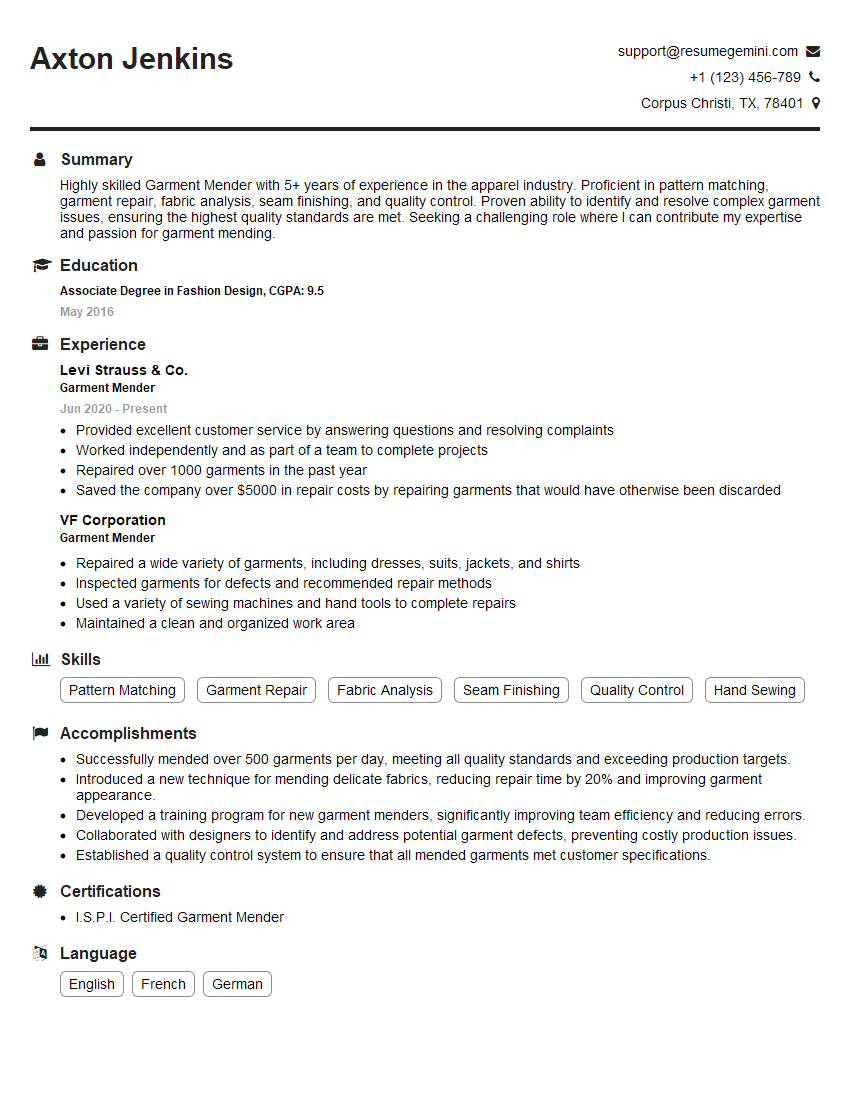
Mastering basic garment repair skills significantly enhances your value to potential employers across various industries, demonstrating practical skills and attention to detail. An ATS-friendly resume is crucial for getting your application noticed. To significantly increase your job prospects, focus on creating a compelling resume that highlights your abilities and experience. ResumeGemini is a trusted resource to help you build a professional and effective resume tailored to your skills. Examples of resumes specifically tailored to showcasing Ability to Perform Basic Garment Repairs are available to help guide your resume creation.



Explore more articles
Users Rating of Our Blogs
Share Your Experience
We value your feedback! Please rate our content and share your thoughts (optional).
What Readers Say About Our Blog
good