Interviews are more than just a Q&A session—they’re a chance to prove your worth. This blog dives into essential Ability to work safely and efficiently with heavy equipment interview questions and expert tips to help you align your answers with what hiring managers are looking for. Start preparing to shine!
Questions Asked in Ability to work safely and efficiently with heavy equipment Interview
Q 1. Describe your experience with pre-operational checks on heavy equipment.
Pre-operational checks are crucial for ensuring the safe and efficient operation of heavy equipment. Think of it like a thorough health check before a long journey – you wouldn’t drive a car without checking the tires, oil, and brakes, would you? Similarly, heavy equipment requires a detailed inspection before each use.
Visual Inspection: This involves checking for any visible damage, leaks (oil, fuel, hydraulic fluid), loose components, or worn parts. I always pay close attention to the tires, tracks, and undercarriage for wear and tear.
Fluid Levels: Checking engine oil, transmission fluid, hydraulic fluid, coolant, and fuel levels is paramount. Low levels can lead to equipment failure and costly repairs. I always use the dipsticks and sight glasses provided, ensuring they are clean before checking.
Operational Systems: This includes testing the brakes, steering, lights, horn, and other safety features. For example, I’ll test the brakes by gently applying them, ensuring they respond smoothly and effectively. A malfunctioning brake system is a major safety hazard.
Safety Devices: I always check that all safety devices, including seatbelts, guards, and emergency shut-offs, are in place and functioning correctly. A missing guard, for instance, could lead to serious injury.
A detailed checklist is essential to ensure consistency and thoroughness in these checks. Following a checklist helps prevent overlooking vital steps and ensures every machine is ready for safe operation.
Q 2. Explain the importance of daily equipment inspections.
Daily equipment inspections are the cornerstone of preventative maintenance and safety. They are essential for identifying minor issues before they escalate into major problems, leading to downtime, costly repairs, and potential accidents. Think of it as regular checkups for your equipment to catch small problems before they become big ones.
Early Problem Detection: Daily checks allow you to identify small leaks, worn parts, or unusual noises early on, preventing major breakdowns and costly repairs later. For example, a small oil leak detected early can prevent a catastrophic engine failure.
Safety Enhancement: Identifying potential hazards like loose bolts, worn tires, or malfunctioning safety features helps mitigate the risk of accidents. A faulty brake light, for example, can be easily replaced preventing a larger issue down the road.
Extended Equipment Life: Regular maintenance significantly extends the lifespan of heavy equipment. Addressing minor issues promptly prevents them from causing more extensive damage, thus saving the company money in the long run. Replacing a worn-out part is much cheaper than repairing a completely broken system.
Compliance and Regulations: Many industries have strict regulations regarding equipment maintenance. Daily inspections help ensure compliance with these regulations and avoid penalties. This is extremely important in construction and mining, where safety standards are high.
A documented inspection process is key—recording all findings ensures accountability and helps track the overall health of the equipment over time. This data can be very helpful when performing preventative maintenance and scheduling more extensive service work.
Q 3. What are the common safety hazards associated with operating heavy equipment?
Operating heavy equipment presents numerous safety hazards, and awareness is crucial. Think of it like navigating a complex maze—careful planning and awareness of potential obstacles are essential.
Tip-overs: Uneven terrain, excessive speed, or improper loading can cause tip-overs, resulting in serious injury or death. This risk increases on inclines or slopes.
Collisions: Collisions with other equipment, personnel, or obstacles can lead to injuries and damage. Maintaining a safe distance from others and being aware of your surroundings is vital.
Falling Objects: Materials falling from the equipment or nearby structures can pose a significant danger. Always ensure the area around your equipment is safe and clear before operation.
Pinch Points: Many heavy equipment components have pinch points where body parts can be trapped. Awareness and careful operation can prevent such injuries.
Exposure to Hazardous Materials: Working with heavy equipment can expose you to hazardous materials such as fuel, lubricants, and asbestos (in older equipment). Appropriate personal protective equipment (PPE) is essential to mitigate these risks.
Electrocution: Contact with electrical wires or power lines can result in electrocution. Always maintain a safe distance from power lines, and never operate the equipment near them without proper precautions.
A strong safety culture and adherence to established safety procedures are essential in minimizing these risks. Training and proper PPE are crucial for any worker operating this kind of equipment.
Q 4. How do you ensure the stability of heavy equipment on uneven terrain?
Maintaining stability on uneven terrain requires careful planning and technique. Imagine balancing a tower of blocks – you wouldn’t try to build it on unstable ground. The same principle applies to heavy equipment.
Site Assessment: Before operating on uneven terrain, I carefully assess the ground conditions, identifying potential hazards and unstable areas. I look for soft ground, slopes, and obstacles that could compromise stability.
Slow and Steady Operation: I always operate the equipment at a slow and controlled speed, avoiding sudden movements that could cause a loss of stability. Smooth operation minimizes the risk of tip-overs.
Proper Weight Distribution: Ensuring proper weight distribution is critical. Overloading one side can easily cause instability. I always ensure the load is evenly distributed across the machine’s capacity.
Use of Outriggers (if applicable): If the equipment is equipped with outriggers, I always deploy them on stable ground to provide additional support and improve stability, particularly on slopes.
Appropriate Techniques: I use appropriate operating techniques, such as avoiding sharp turns and abrupt stops, to maintain stability and control. Traction control systems and other features will be engaged where necessary to enhance stability.
Experience and training play a significant role in mastering these techniques. Understanding the limitations of the equipment and the terrain is crucial for maintaining stability and preventing accidents.
Q 5. Describe your experience with different types of heavy equipment.
My experience encompasses a variety of heavy equipment, each with its own unique operating characteristics and safety considerations. Think of it like mastering different musical instruments – each requires specific techniques and understanding.
Excavators: I have extensive experience operating excavators of various sizes, from small mini-excavators used in confined spaces to large hydraulic excavators used in large-scale earthmoving projects. I am proficient in various attachments such as buckets, hammers, and grapples.
Bulldozers: I’m skilled in operating bulldozers for tasks such as land clearing, grading, and material movement. I understand the importance of proper blade angle and ground pressure control to achieve optimal results.
Wheel Loaders: I have experience with wheel loaders used for material handling and loading tasks. I know how to safely operate these machines, considering their weight and turning radius.
Forklifts: I am certified in forklift operation and am familiar with the safe handling of loads, ensuring stability and minimizing the risk of tip-overs.
This diverse experience allows me to adapt quickly to different equipment and project requirements, ensuring both safety and efficiency.
Q 6. What are the proper procedures for refueling heavy equipment?
Refueling heavy equipment requires strict adherence to safety procedures to prevent fires and explosions. Think of it like handling flammable materials – caution and proper techniques are critical.
Engine Shutdown: Always ensure the engine is completely shut off before refueling.
Ventilation: Adequate ventilation is essential to prevent the buildup of flammable fumes. Never refuel in an enclosed space.
No Smoking/Open Flames: Smoking and any other open flames are strictly prohibited during refueling.
Static Electricity: Static electricity can ignite fuel vapors. Grounding the equipment and using static-dissipative fuel nozzles helps prevent this risk.
Spills: Avoid spills by using a slow, steady flow and avoiding overfilling the tank. Clean up any spills immediately.
Proper Nozzle: Always use the correct nozzle for the type of fuel being used.
Following these procedures helps to create a safe refueling environment and avoid potentially disastrous accidents.
Q 7. How do you handle unexpected equipment malfunctions?
Unexpected equipment malfunctions can be stressful, but a calm and methodical approach is critical. Think of it like troubleshooting a computer problem – systematic steps are crucial for a successful solution.
Immediate Shutdown: If a malfunction occurs, I immediately shut down the equipment and assess the situation to determine the nature of the problem.
Safety First: I always prioritize safety and take necessary precautions to prevent accidents, such as clearing the area and warning others.
Troubleshooting: Based on my experience and the equipment’s operating manual, I attempt to diagnose the problem, consulting appropriate resources if needed.
Reporting: I document all details of the malfunction, including the date, time, circumstances, and any corrective actions taken. This information is essential for maintenance and future prevention.
Seek Assistance: If I’m unable to resolve the issue, I immediately seek assistance from a qualified mechanic or supervisor.
Knowing your equipment and following established protocols are key to handling malfunctions effectively and safely.
Q 8. Explain your understanding of load capacity and weight distribution.
Load capacity refers to the maximum weight a piece of heavy equipment can safely lift or carry, while weight distribution focuses on how that weight is balanced across the equipment’s axles or supports. Understanding both is crucial for preventing equipment damage and accidents. Think of it like this: you wouldn’t overload a small pickup truck with a load meant for a semi-trailer. Similarly, improper weight distribution, even within the load capacity, can cause instability and tipping. For example, a crane’s load capacity might be 10 tons, but if that weight is concentrated heavily on one side, it could topple over. I always check the manufacturer’s specifications for load charts which detail the safe operating loads for various configurations and boom angles. These charts account for the variations in load capacity due to weight distribution. Ignoring these can lead to catastrophic equipment failure and serious injury.
Q 9. Describe your experience with operating heavy equipment in confined spaces.
Operating heavy equipment in confined spaces demands extra caution and precision. My experience includes working on several urban construction sites where maneuvering large excavators and loaders around existing structures and utilities was necessary. This requires careful planning, precise control of the machine, and constant awareness of surroundings. I always begin by assessing the space thoroughly, measuring clearances, identifying potential hazards like underground utilities or overhead obstructions, and creating a detailed mental map of my work area. This often includes a pre-operation walkthrough and discussions with other workers on the site to ensure coordinated efforts and minimize the risk of collisions or other mishaps. For instance, when working near a building, I’d use the machine’s smaller movement capabilities and often opt for lighter implements to maximize control and reduce the chances of accidental damage.
Q 10. How do you maintain situational awareness while operating heavy equipment?
Maintaining situational awareness is paramount. It involves a combination of constant observation, anticipation, and communication. I constantly scan my surroundings, looking for pedestrians, other equipment, overhead hazards, and any unexpected changes in the work environment. I use my mirrors diligently and frequently check blind spots. Before starting any movement, I always perform a thorough check of the area. It’s also crucial to anticipate the movements of others – I’ll slow down and proceed with caution if I see another worker approaching. Furthermore, clear communication with spotters and other personnel is crucial, confirming their understanding of my intended actions. Imagine operating a bulldozer near a trench – constant vigilance is essential to avoid accidents involving other workers and machinery. A proactive approach, combined with continuous scanning, minimizes the likelihood of accidents.
Q 11. What are the different types of personal protective equipment (PPE) used while operating heavy equipment?
The specific PPE varies based on the task and equipment, but generally includes:
- Hard hat: Protection from falling objects.
- Safety glasses or goggles: Protecting eyes from debris.
- High-visibility clothing: Enhancing visibility to others.
- Gloves: Protecting hands from cuts, abrasions and cold weather.
- Hearing protection: Mitigating noise exposure.
- Steel-toe boots: Protecting feet from falling objects and crushing hazards.
- Seatbelts: Providing critical protection in case of an overturn.
Depending on the specific job, additional PPE may be needed, like fall protection harnesses for working at heights or respiratory protection for working in dusty or hazardous environments. Regular inspections of PPE are critical to guarantee their proper functionality. Damaged equipment is immediately replaced or repaired.
Q 12. Explain your understanding of hand signals and communication protocols on a construction site.
Hand signals are a crucial part of communication, especially in noisy environments where verbal communication can be difficult. Standard hand signals are universally understood in the construction industry, including signals for movement, stopping, lifting, lowering, and emergencies. We use a combination of hand signals and radio communication to ensure everyone is on the same page. Before starting any task that involves interaction with others, we review hand signals and assign roles and responsibilities. For example, a spotter is always present for tasks like lifting heavy loads, relying on the operator’s understanding of hand signals to guide the lift safely and efficiently. Regular safety meetings reinforce the importance of standardized hand signals and communication protocol to ensure everyone is on the same page.
Q 13. How do you ensure the safety of pedestrians and other workers around heavy equipment?
Ensuring pedestrian and worker safety is a top priority. I use several techniques:
- Designated walkways and barriers: Establish clearly marked pedestrian zones to keep them separate from equipment operations areas.
- Warning signs and lights: Use cautionary measures like flashing lights and signs to alert pedestrians of machinery in operation.
- Spotters: Employing spotters near the equipment to watch for any pedestrians or obstacles that I might miss.
- Slow speeds and careful maneuvering: Maintaining reduced speeds in areas with high pedestrian traffic and making wide, careful turns.
- Regular communication: Maintaining open communication with others in the work area through radios or hand signals.
Ultimately, it is always about risk assessment. I always adapt my strategies to the conditions present on any given work site.
Q 14. Describe your experience with working at heights using heavy equipment.
My experience with heavy equipment at heights involves working with cranes and aerial lifts for various tasks, such as lifting materials to upper floors or installing equipment. Safety protocols are paramount in these situations. We always begin with a rigorous risk assessment including site inspections to identify any hazards or potential fall risks. I ensure that all necessary safety measures are in place, including fall arrest systems, proper rigging techniques, and secure load handling procedures. Every lift is carefully planned and executed. Before initiating any work at height, I ensure that the equipment is properly inspected and maintained. For example, when operating a crane, I verify that the outriggers are properly positioned and secured, the load is correctly balanced and secured, and the area below is clear of obstructions and personnel. I always follow the manufacturer’s instructions on safe operating procedures for the equipment.
Q 15. What are the emergency procedures in case of an accident involving heavy equipment?
Emergency procedures following a heavy equipment accident prioritize safety and minimizing further harm. The first step is always securing the scene – this means turning off the equipment, if possible, and preventing unauthorized access. Next, we must assess injuries and call for emergency medical services (EMS) immediately. Depending on the severity, this might involve first aid, if trained to administer it, until professionals arrive. Then, we initiate a detailed investigation into the cause of the accident, involving any necessary witnesses and documenting everything for insurance and regulatory purposes. This includes taking photos of the damage, recording witness statements, and preserving the accident site until the investigation is complete. Finally, we cooperate fully with any official inquiries and implement corrective actions to prevent similar occurrences in the future. For instance, if a malfunctioning part caused the accident, we’d immediately replace it and inspect similar equipment to ensure the same issue isn’t lurking elsewhere.
Imagine a scenario where a backhoe bucket accidentally swings into a nearby building. First, power down the machine. Second, call 911 – there may be injured workers inside. Then secure the area, preventing entry until emergency responders complete their assessment. Documentation—photos of the damage, witness statements—is crucial for both the insurance claim and preventing future incidents. After the immediate crisis is over, a root cause analysis would be undertaken to find the cause of the swing (mechanical failure, operator error, etc.) and fix the problem.
Career Expert Tips:
- Ace those interviews! Prepare effectively by reviewing the Top 50 Most Common Interview Questions on ResumeGemini.
- Navigate your job search with confidence! Explore a wide range of Career Tips on ResumeGemini. Learn about common challenges and recommendations to overcome them.
- Craft the perfect resume! Master the Art of Resume Writing with ResumeGemini’s guide. Showcase your unique qualifications and achievements effectively.
- Don’t miss out on holiday savings! Build your dream resume with ResumeGemini’s ATS optimized templates.
Q 16. How do you perform routine maintenance on heavy equipment?
Routine maintenance is the cornerstone of safe and efficient heavy equipment operation. It involves regular inspections, lubrication, cleaning, and minor repairs to prevent major breakdowns. My routine typically starts with a pre-operational inspection, checking fluid levels (engine oil, hydraulic fluid, coolant), tire pressure, and inspecting for any visible damage or leaks. I then proceed with lubrication of key moving parts, following the manufacturer’s recommendations precisely. This is followed by a thorough cleaning of the machine, paying attention to removing debris and dirt which could interfere with mechanisms. The frequency of these inspections and the specific tasks involved depend on the type of equipment, its usage intensity, and manufacturer guidelines. For instance, a daily inspection might be sufficient for some equipment, while others may require more frequent checks, perhaps weekly or even every few hours of operation. Keeping detailed maintenance logs is crucial for tracking service history and ensuring compliance with regulations.
Think of it like caring for a car. You wouldn’t ignore a low tire or a strange noise. Similarly, consistent maintenance ensures that heavy equipment runs smoothly and prevents potentially costly downtime and safety risks. Regularly checking fluid levels, lubricating moving parts, and cleaning the machine prevents damage and extends the life of the equipment. Accurate record-keeping ensures that scheduled maintenance is completed timely, meeting compliance obligations.
Q 17. Explain your knowledge of different types of hydraulic systems in heavy equipment.
Heavy equipment utilizes various hydraulic systems, each with unique characteristics and applications. Open-center systems are common, using a constant flow of hydraulic fluid that is diverted to various actuators as needed. This is often used for steering or auxiliary functions. Closed-center systems, on the other hand, retain the hydraulic fluid within a closed loop, improving response time and precision. They are preferred in applications requiring more precise control, like excavators or loaders. Load-sensing systems are another type, which only supply hydraulic fluid on demand. This improves fuel efficiency by reducing unnecessary energy consumption. They’re used in more sophisticated machines. Finally, electro-hydraulic systems incorporate electronic control elements to adjust hydraulic functions, allowing for more sophisticated control and automation features. Understanding these system types is critical for troubleshooting and effective operation. For example, a leak in an open-center system might only affect one function, while a leak in a closed-center system might affect multiple functions simultaneously.
Consider an excavator. The precise movements of its arm and bucket rely on a sophisticated closed-center hydraulic system. This system provides the necessary speed and accuracy for complex tasks, whereas a simpler open-center system might not offer this level of precision. Understanding the differences between these systems is essential for troubleshooting and maintaining these crucial components.
Q 18. How do you identify and report potential safety hazards on a construction site?
Identifying and reporting safety hazards is a paramount responsibility on any construction site. My approach involves proactive observation, paying close attention to my surroundings, and looking for anything that could potentially cause an accident. This includes checking for unsafe equipment, inadequate signage, exposed wires, uneven ground, or obstructed walkways. If I spot a potential hazard, my first step is to immediately remove myself and others from immediate danger. I then report the hazard using the appropriate channels, which might involve notifying my supervisor or site safety officer, filling out incident reports, and if necessary, securing the hazardous area. The level of urgency of the report depends on the severity of the hazard – an immediate threat requires instant action and reporting.
For example, if I see a loose cable that could cause someone to trip, I’d immediately put up warning cones and report it to my supervisor. A simple visual inspection for loose materials, cracks, or spills is a vital part of keeping the area safe. Timely hazard reporting prevents accidents and creates a safer environment for everyone.
Q 19. What are the regulations and standards related to operating heavy equipment in your region?
(Note: This answer needs to be tailored to the specific region of the interview. The following is a general example and should be replaced with specific details of the region in question). Regulations and standards for operating heavy equipment vary by location, but generally involve licensing requirements, operator training certification, regular equipment inspections, and adherence to safety protocols. In my region, for example, operators must possess a valid operator’s license demonstrating competency in the specific type of equipment they are operating. Equipment must undergo regular maintenance and safety inspections, documented appropriately. There are specific rules about operating times, especially in residential areas, and regulations around working heights, weight limits, and transporting materials safely. Violation of these regulations can result in serious penalties, including fines and suspension of operating licenses.
For example, my region requires a specific type of safety training certification before someone can legally operate a crane. These certifications aren’t just for initial employment but often involve periodic refresher courses to ensure continuing competence and awareness of updated regulations.
Q 20. Describe your experience with using GPS and other technology in heavy equipment operation.
GPS and other technologies have significantly enhanced heavy equipment operation, improving accuracy, efficiency, and safety. I have extensive experience using GPS-guided systems for tasks like precise grading, excavation, and paving. These systems provide real-time position information, guiding the operator to maintain the desired grade or path, minimizing errors and reducing material waste. Other technologies, such as machine control systems, integrate GPS with the equipment’s hydraulics, enabling automated control over functions like blade positioning. I am also familiar with telematics systems that provide data on equipment performance, location, and operational hours, aiding in maintenance scheduling and optimizing efficiency. These technologies have improved safety by offering greater control and reducing the likelihood of operator errors. Also, the data collected can identify potential problems before they become major issues.
Imagine a large-scale road construction project. Using GPS-guided machines allows operators to perfectly grade the roadbed, ensuring a smooth, consistent surface. This is far more efficient and accurate than traditional methods, leading to reduced rework and material costs. The same technology applied to excavation minimizes errors and saves considerable time.
Q 21. How do you handle challenging weather conditions while operating heavy equipment?
Operating heavy equipment in challenging weather conditions demands extra caution and adherence to safety procedures. Extreme heat can cause fatigue and dehydration, requiring more frequent breaks and hydration. Extreme cold requires appropriate protective gear to prevent hypothermia and ensures visibility and traction. Heavy rain or snow can affect visibility and reduce traction, necessitating slower speeds and increased vigilance. Strong winds can cause instability, particularly for taller equipment, often requiring the operation to be suspended. In these conditions, careful risk assessment is crucial before starting work. I always check weather forecasts before commencing work and plan accordingly. If conditions become unsafe, I always stop work and report any concerns to my supervisor immediately. My approach prioritizes safety above all else; if I am not confident that I can operate the equipment safely, I will postpone the work.
For instance, operating a crane in high winds could be extremely hazardous. Knowing when to stop work and ensuring safe working conditions is more important than meeting deadlines. Likewise, reduced visibility in heavy snow necessitates extreme care and possibly the suspension of activities until conditions improve.
Q 22. Explain your experience with working with different types of soil and ground conditions.
My experience encompasses a wide range of soil and ground conditions, from the relatively easy-to-manage sandy soils common in coastal projects to the challenging, unpredictable clay and rock formations often encountered in mountainous terrain. I’ve worked extensively with both cohesive soils (like clay, which sticks together) and non-cohesive soils (like sand and gravel, which don’t). Understanding the specific properties of each is critical. For instance, clay can become extremely difficult to excavate when wet, requiring adjustments to equipment operation and potentially the use of different tools. Conversely, sandy soil can be prone to instability, necessitating careful planning and execution to avoid cave-ins. I adjust my operating techniques—speed, pressure, and choice of equipment—to accommodate these varying conditions, always prioritizing safety and efficiency.
For example, during a road construction project in a region known for its expansive clay soils, we experienced significant challenges due to heavy rainfall. The clay became highly saturated and sticky, causing our excavators to struggle. To mitigate this, we reduced operating speed, used specialized bucket attachments optimized for sticky materials, and adjusted our excavation strategy to create smaller, more manageable sections. This prevented equipment damage and ensured the safety of the crew.
Q 23. How do you manage your time effectively while operating heavy equipment?
Effective time management while operating heavy equipment is crucial for productivity and safety. My approach is multifaceted, starting with meticulous pre-operation planning. This includes reviewing blueprints, understanding the task’s scope, and identifying potential time-consuming challenges. Once the operation begins, I concentrate on smooth, continuous movements, minimizing idling and unnecessary stops. I also prioritize maintenance breaks during naturally occurring lulls in activity to keep the equipment running at peak performance, saving time in the long run. Finally, clear communication with the team helps streamline the overall process, avoiding delays caused by miscommunication or coordination issues.
For instance, in a large-scale earthmoving project, I established a system of frequent, short communication check-ins with my team and supervisor. This allowed for immediate issue resolution and prevented small delays from snowballing into major setbacks. It also enabled me to anticipate and adjust to changing conditions proactively, optimizing workflow and overall project timeline.
Q 24. What are your strategies for preventing equipment damage?
Preventing equipment damage is paramount. My approach involves a proactive, multi-layered strategy. Firstly, I religiously follow the pre-operational checklist, ensuring all fluids are at correct levels and all components are functional. I carefully inspect the area before commencing work, identifying potential hazards like hidden rocks or debris that could damage the equipment. During operation, I avoid abrupt movements and excessive force, operating within the machine’s specified capabilities. Regular maintenance, including lubrication and cleaning, is also essential. Finally, I actively monitor the equipment’s performance during operation, immediately addressing any unusual sounds or vibrations.
I recall a situation where a colleague experienced a significant hydraulic leak. The cause was traced to a lack of regular maintenance. This reinforced my dedication to thorough, routine inspections, preventing potentially costly repairs.
Q 25. Describe your experience with working as part of a team using heavy equipment.
Teamwork is fundamental in heavy equipment operation. Effective collaboration requires clear communication, mutual respect, and a shared understanding of safety protocols. I actively participate in pre-job briefings, ensuring everyone is aware of the task’s objectives, potential hazards, and designated roles. During operation, I maintain open communication with other operators and ground personnel, utilizing hand signals and two-way radios to ensure coordination and prevent accidents. I also actively contribute to problem-solving, sharing my experience and expertise to overcome challenges collaboratively.
On a recent pipeline project, a critical section required precise coordination between three excavators, a bulldozer, and a team of ground workers. By working as a cohesive unit, with constant communication and carefully coordinated movements, we completed the section efficiently and safely, avoiding any collisions or damage.
Q 26. How do you troubleshoot common mechanical issues in heavy equipment?
Troubleshooting mechanical issues involves a systematic approach. I start by identifying the symptom—a strange noise, reduced performance, or a warning light. Then, I use my understanding of the machine’s mechanics to isolate the potential cause. This often involves checking fluid levels, inspecting belts and hoses, and listening carefully for unusual sounds. If the problem persists, I’ll refer to the equipment’s maintenance manual and potentially use diagnostic tools to pinpoint the issue. If the issue is beyond my capabilities, I promptly report it to the designated maintenance personnel. Safety is always the priority; I never attempt a repair that could jeopardize safety.
For example, I once encountered a situation where the excavator’s hydraulics became sluggish. By systematically checking fluid levels and identifying a minor leak in a hose, I was able to temporarily address the problem using a repair kit until a proper replacement could be installed. This minimized downtime and prevented further damage.
Q 27. Explain your understanding of environmental regulations related to heavy equipment operation.
My understanding of environmental regulations related to heavy equipment operation is thorough. I am familiar with regulations concerning emissions, noise pollution, soil erosion, and the proper handling and disposal of hazardous materials. I adhere strictly to these regulations, ensuring that my operation complies with all relevant local, state, and federal guidelines. This includes proper fueling procedures to minimize spills, using appropriate techniques to control erosion during excavation, and following designated routes to minimize noise disruption. I am also knowledgeable about the environmental impact of the materials used and processed, understanding the implications for land reclamation and waste management.
For instance, I’m aware of specific requirements for operating heavy equipment near waterways, including the need to install erosion control measures and prevent sediment runoff into sensitive aquatic ecosystems.
Q 28. Describe a situation where you had to make a quick decision to ensure safety while operating heavy equipment.
During a demolition project, a large section of a wall unexpectedly shifted during excavation. I immediately stopped the excavator, assessed the situation, and alerted the ground crew to clear the area. I then repositioned the equipment, reassessed the structural integrity of the remaining wall, and developed a revised demolition strategy, focusing on smaller, controlled sections. My prompt action prevented a potential accident and minimized damage.
This incident highlighted the importance of continuous situational awareness and rapid response to unexpected events in heavy equipment operation.
Key Topics to Learn for Ability to work safely and efficiently with heavy equipment Interview
- Safety Regulations and Procedures: Understanding and adhering to OSHA regulations, company safety protocols, and pre-operational checks for heavy equipment. Practical application includes describing your experience with lockout/tagout procedures and pre-shift inspections.
- Equipment Operation and Maintenance: Demonstrating proficiency in operating various types of heavy equipment (e.g., excavators, loaders, bulldozers) and performing basic maintenance tasks. Consider detailing your experience with troubleshooting minor mechanical issues and performing routine maintenance checks.
- Site Awareness and Hazard Identification: Identifying and mitigating potential hazards on the job site, such as uneven terrain, overhead obstructions, and blind spots. Prepare examples of how you’ve proactively identified and addressed safety concerns on past projects.
- Efficient Operation Techniques: Optimizing fuel efficiency, minimizing wear and tear on equipment, and maximizing productivity through efficient work methods. Be ready to discuss your strategies for improving efficiency and reducing downtime.
- Communication and Teamwork: Effectively communicating with colleagues, supervisors, and other personnel on the job site to ensure safe and coordinated operations. Highlight your experience collaborating in team environments and your ability to communicate clearly in potentially stressful situations.
- Emergency Procedures: Understanding and practicing emergency procedures, including responding to equipment malfunctions, accidents, and injuries. Be prepared to explain your understanding of emergency response protocols and your experience handling unexpected situations.
Next Steps
Mastering the ability to work safely and efficiently with heavy equipment is crucial for career advancement in construction, mining, and other related industries. It demonstrates a commitment to safety, efficiency, and technical proficiency, opening doors to higher-paying positions and increased responsibility. To significantly boost your job prospects, creating a strong, ATS-friendly resume is essential. ResumeGemini is a trusted resource that can help you craft a compelling resume that highlights your skills and experience. We provide examples of resumes tailored to the “Ability to work safely and efficiently with heavy equipment” skillset to guide you in showcasing your qualifications effectively.
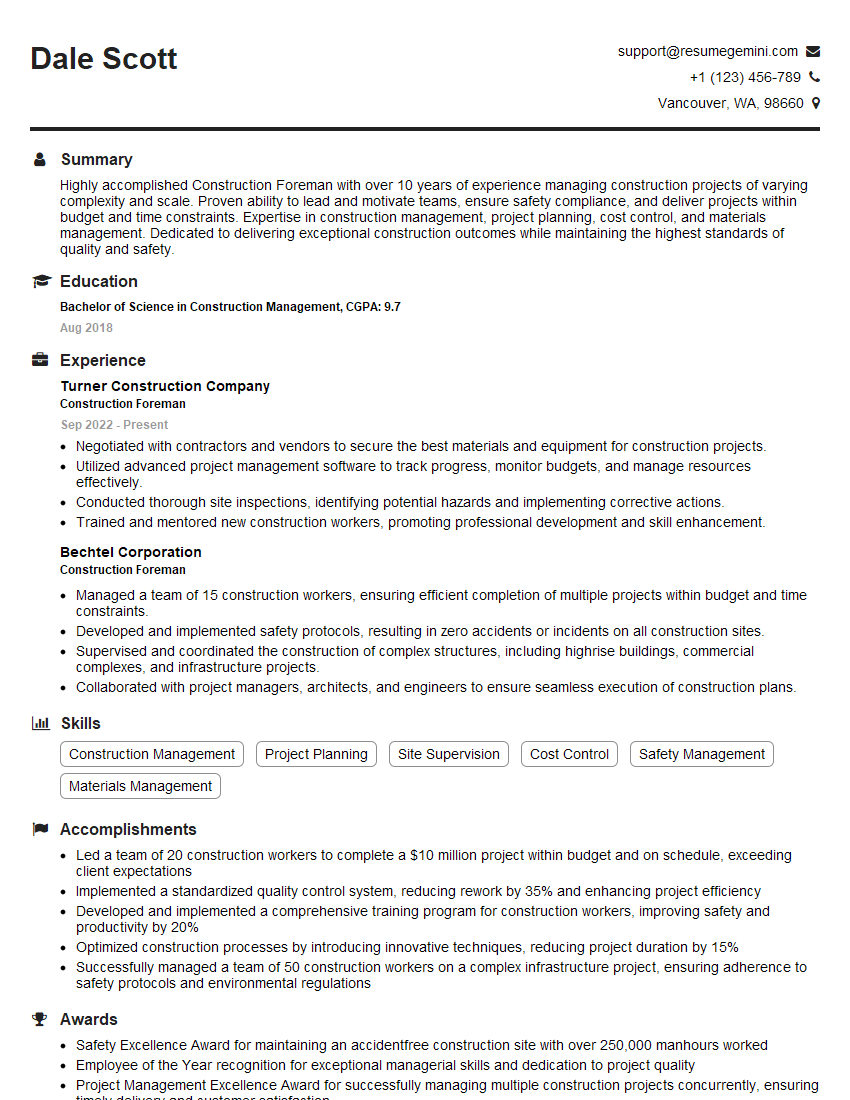
Construction Foreman Resume Sample

Construction Superintendent Resume Sample

Field Engineer Resume Sample

Crane Operator Resume Sample
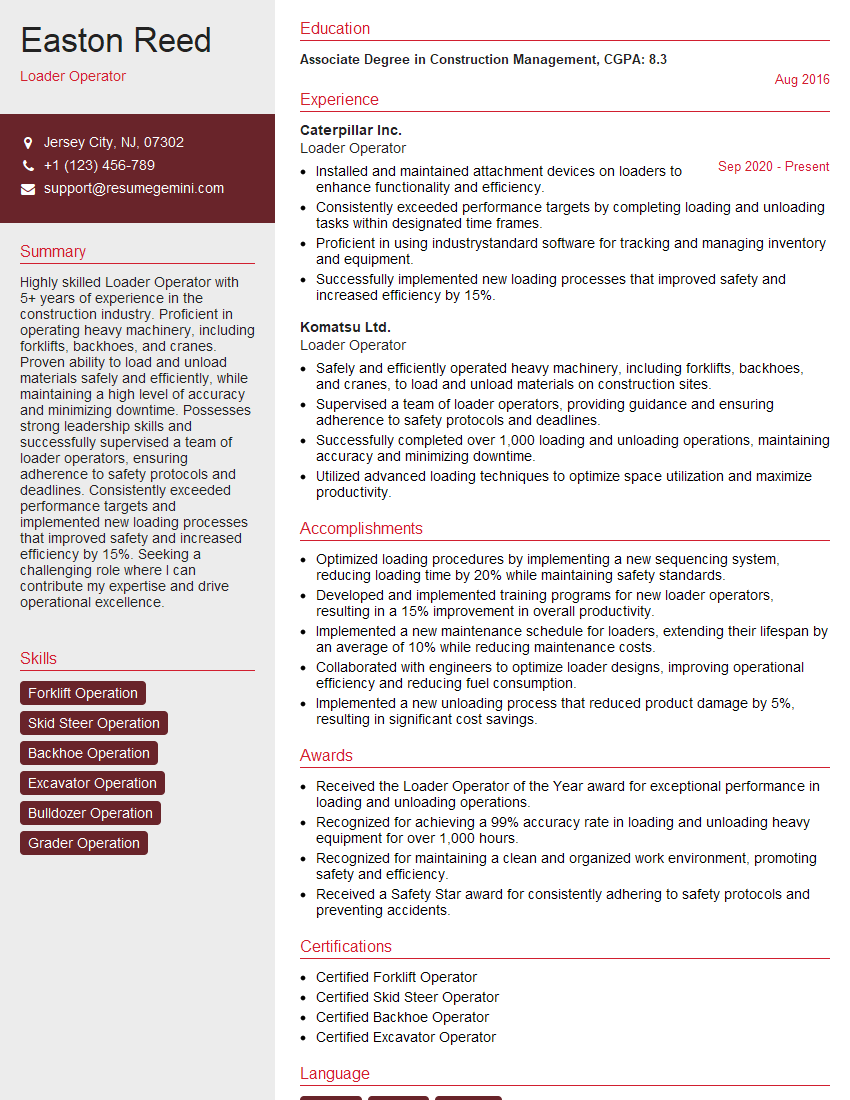
Loader Operator Resume Sample

Site Supervisor Resume Sample

Heavy Equipment Operator Resume Sample
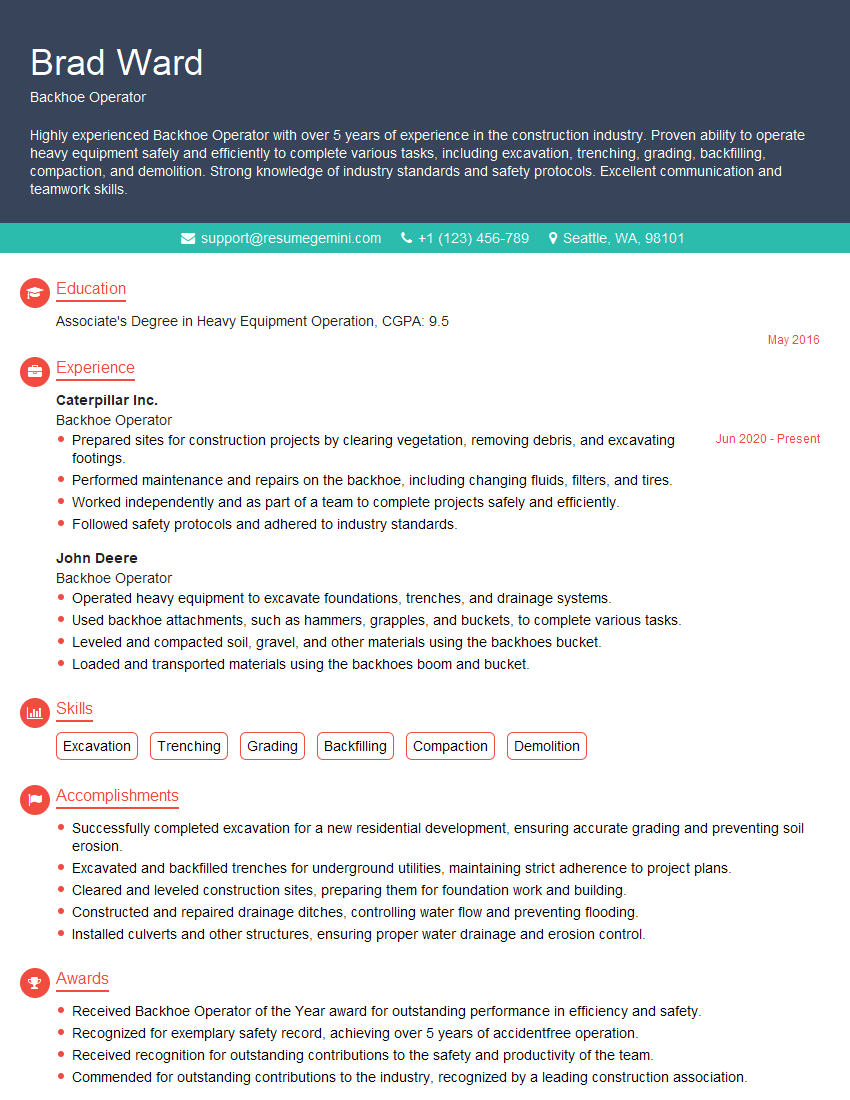
Backhoe Operator Resume Sample
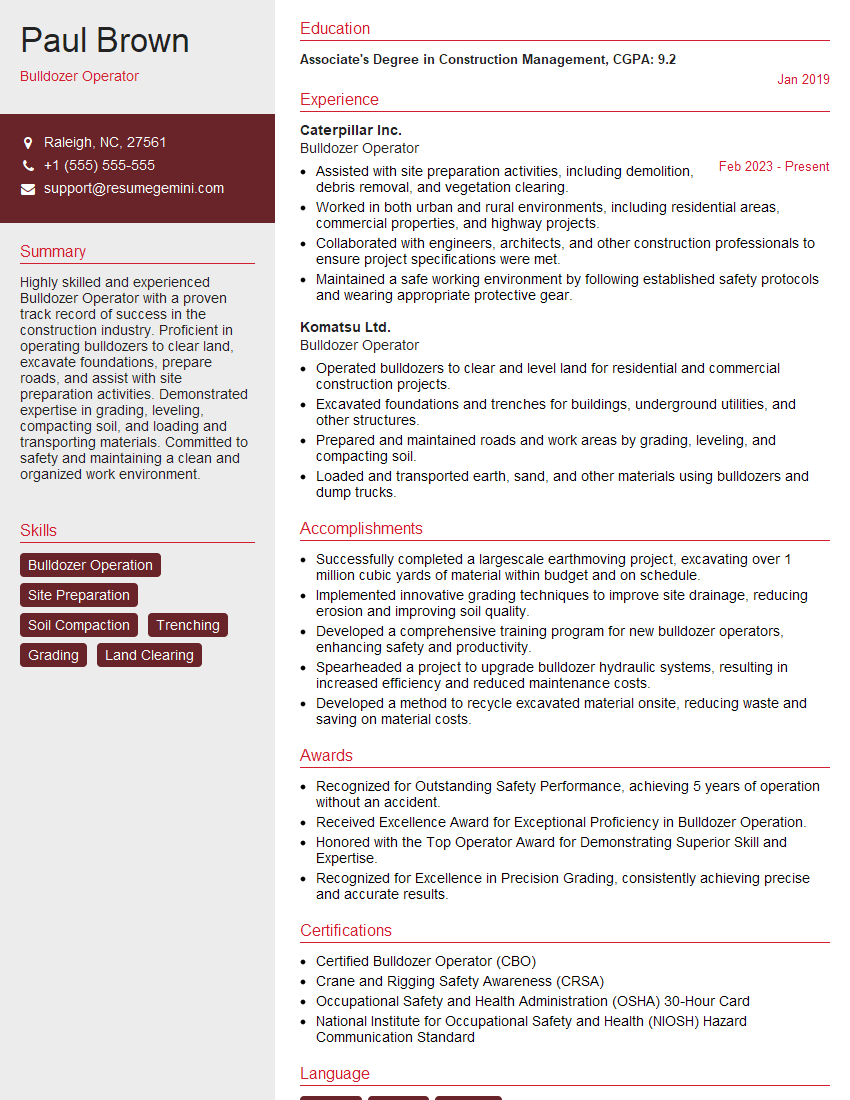
Bulldozer Operator Resume Sample
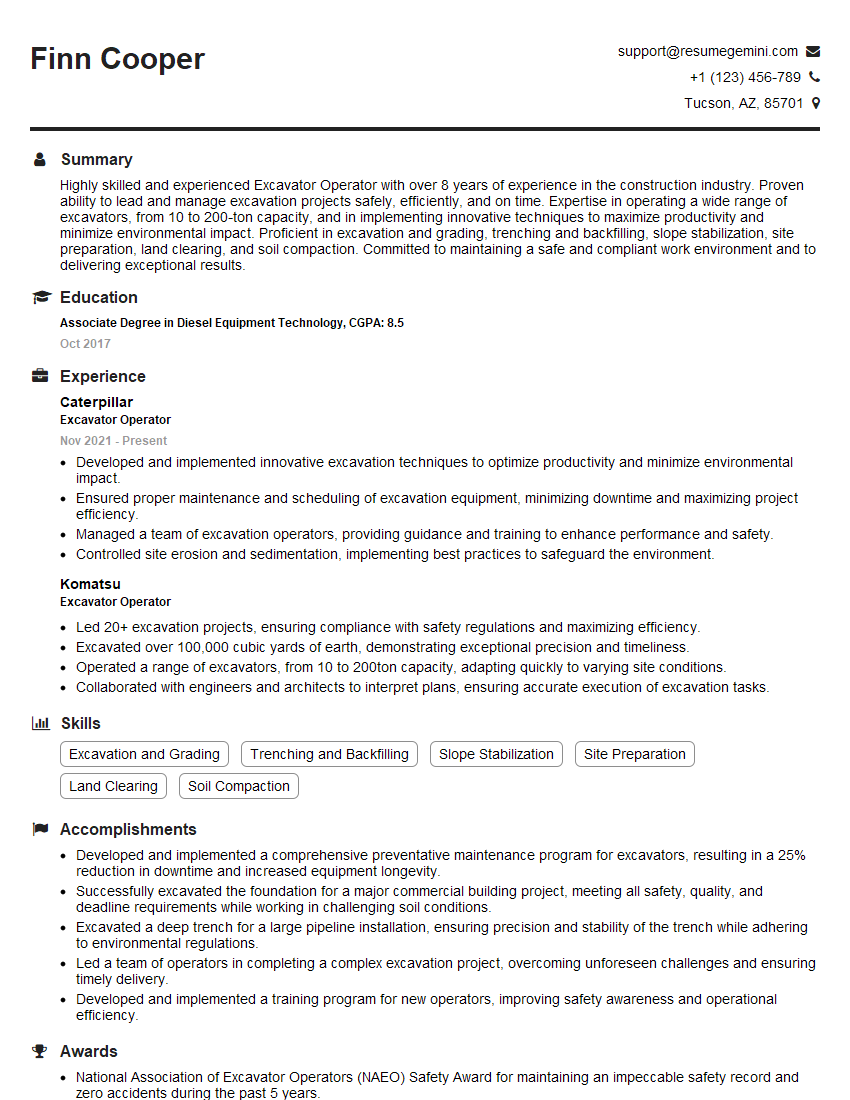
Excavator Operator Resume Sample
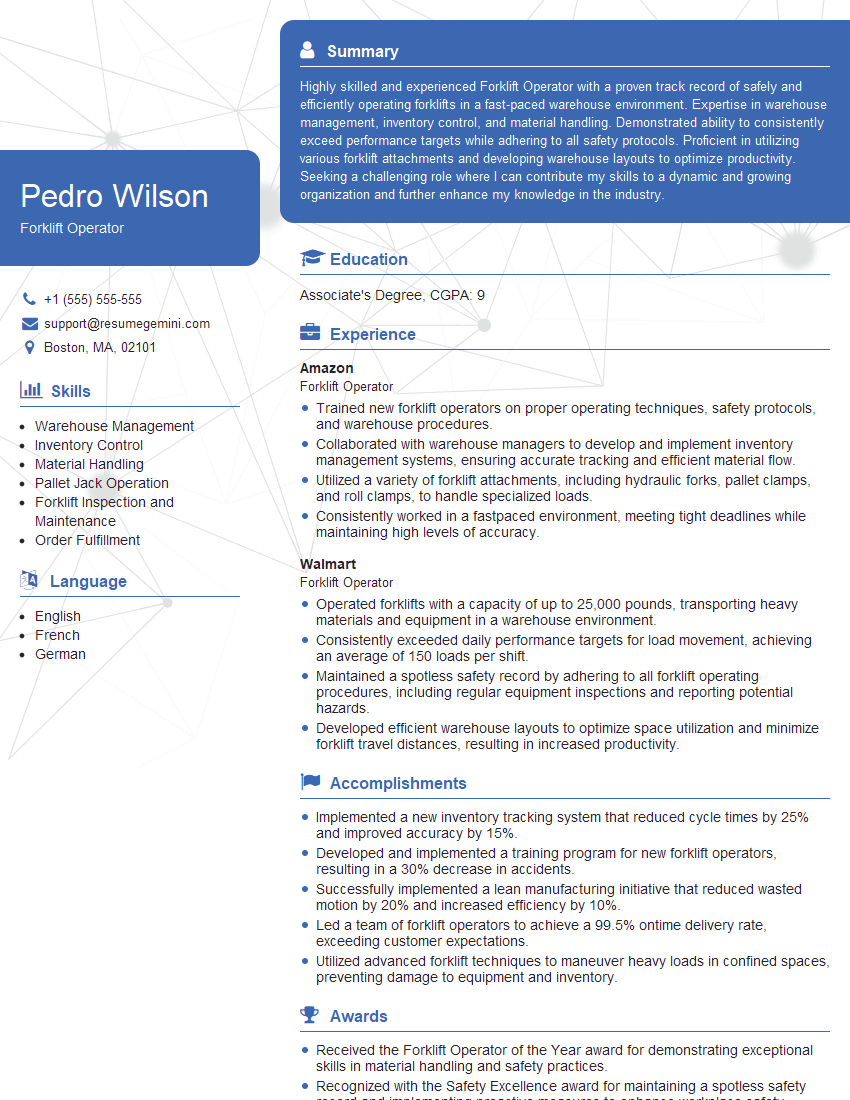
Forklift Operator Resume Sample

Grader Operator Resume Sample
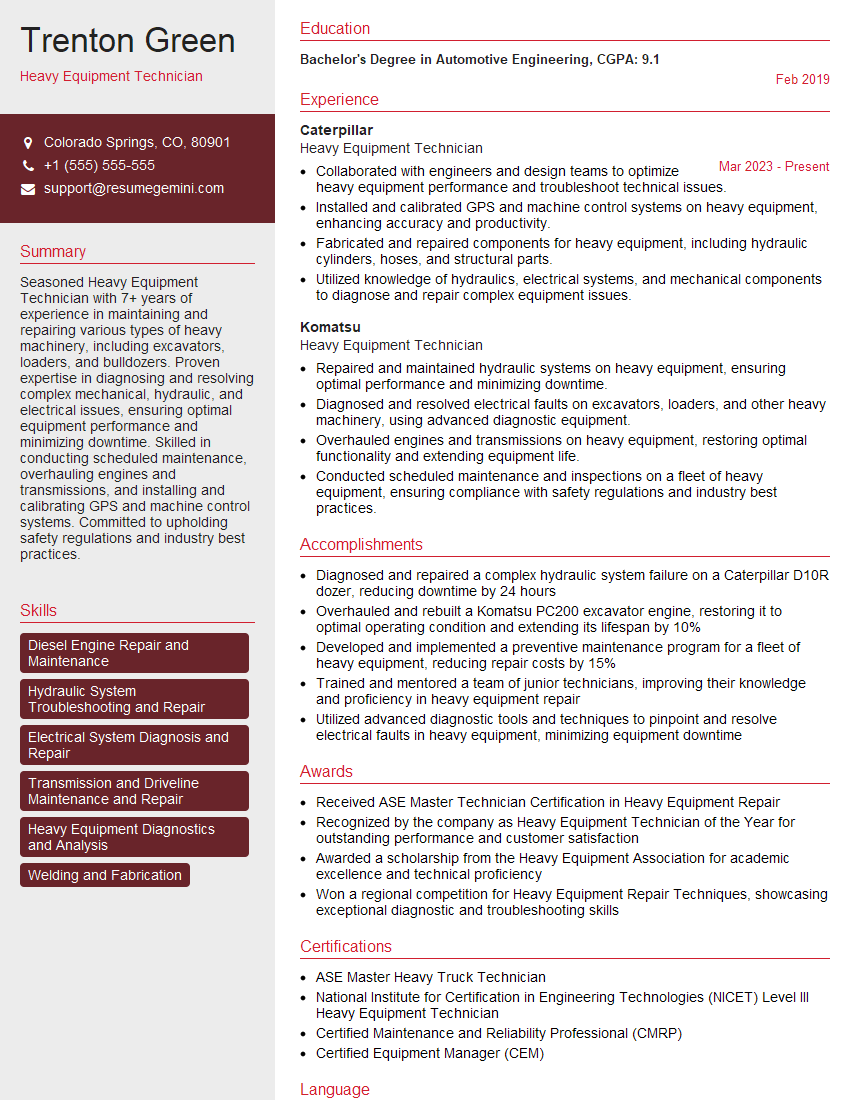
Heavy Equipment Technician Resume Sample
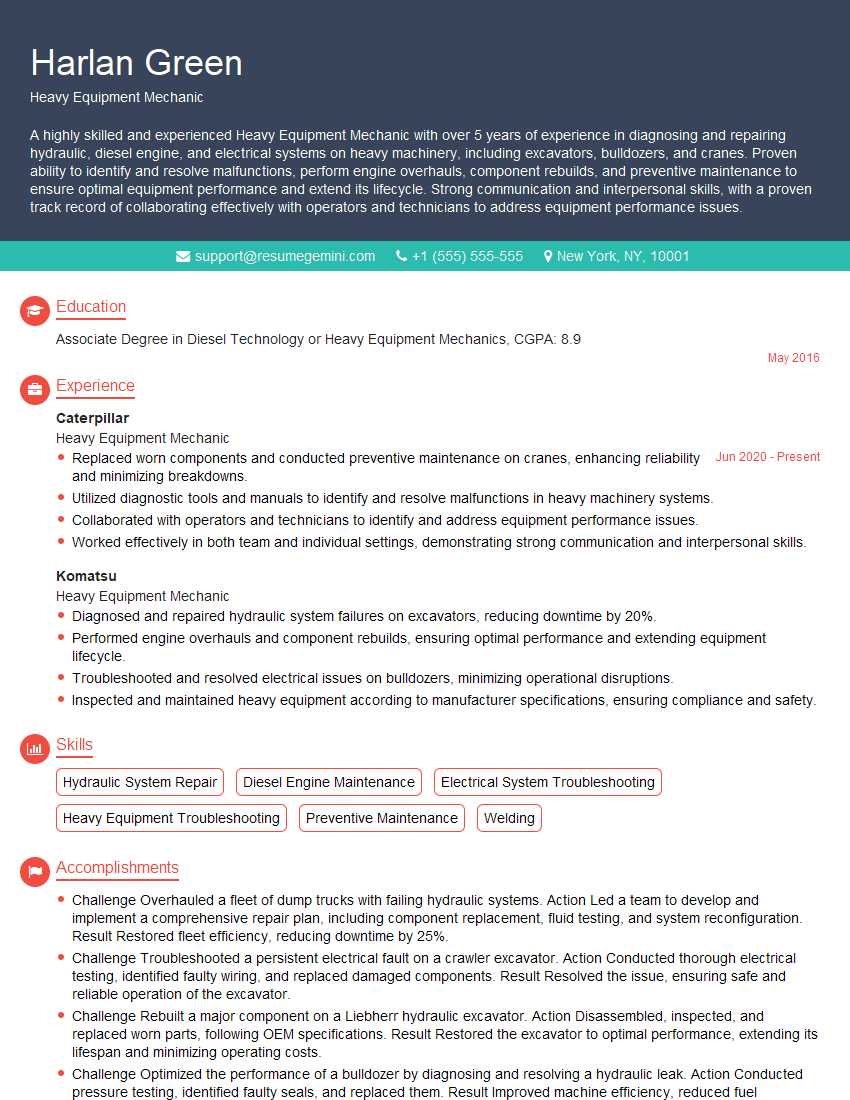
Heavy Equipment Mechanic Resume Sample
Explore more articles
Users Rating of Our Blogs
Share Your Experience
We value your feedback! Please rate our content and share your thoughts (optional).
What Readers Say About Our Blog
Very informative content, great job.
good