Are you ready to stand out in your next interview? Understanding and preparing for Acid Value Determination interview questions is a game-changer. In this blog, we’ve compiled key questions and expert advice to help you showcase your skills with confidence and precision. Let’s get started on your journey to acing the interview.
Questions Asked in Acid Value Determination Interview
Q 1. Define Acid Value and its significance.
Acid value, also known as acidity or neutralization value, is a measure of the amount of free fatty acids present in a substance, typically oils and fats. It’s expressed as the number of milligrams of potassium hydroxide (KOH) required to neutralize one gram of the sample. Its significance lies in assessing the quality and degradation of fats and oils. A high acid value indicates significant hydrolysis (breakdown of fats by water) or oxidation, leading to rancidity and a decrease in the shelf life of the product. In industries like food processing, cosmetics, and biodiesel production, acid value is a crucial quality control parameter.
For example, a high acid value in cooking oil signifies rancidity, making it unsuitable for consumption. In biodiesel production, a high acid value indicates the need for pre-esterification to improve the quality of the final product.
Q 2. Explain the principle behind Acid Value determination.
The principle behind acid value determination is based on a simple acid-base titration. Free fatty acids in the sample react quantitatively with a strong base, typically potassium hydroxide (KOH) in a non-aqueous solvent. The amount of base required to neutralize these acids is directly proportional to the concentration of free fatty acids present. The reaction is a neutralization reaction, where the acidic hydrogen of the fatty acid reacts with the hydroxide ion from the base, forming water and a salt (potassium carboxylate).
Imagine it like this: you have a mixture of vinegar (acid) and oil. You add a known amount of a base (like baking soda solution) until the vinegar is completely neutralized. The amount of base used tells you how much vinegar was present.
Q 3. Describe the procedure for determining Acid Value using titration.
The procedure for determining acid value involves these steps:
- Weighing the sample: Accurately weigh a specific amount (e.g., 1-2 grams) of the sample into a flask.
- Dissolving the sample: Dissolve the sample in a neutral solvent (e.g., ethanol or a mixture of ethanol and diethyl ether), ensuring complete dissolution.
- Adding the indicator: Add a few drops of a suitable indicator (phenolphthalein is common).
- Titration: Titrate the sample with a standardized solution of potassium hydroxide (KOH) in ethanol, slowly adding the base from a burette until a persistent color change (from colorless to pink with phenolphthalein) is observed. This indicates the complete neutralization of the free fatty acids.
- Recording the volume: Note the volume of KOH solution used in the titration.
The entire process should be performed under controlled conditions, preferably at room temperature, to avoid any discrepancies caused by temperature variations.
Q 4. What are the common indicators used in Acid Value determination?
The most commonly used indicator in acid value determination is phenolphthalein. It changes color from colorless to pink at a pH of around 8-10, which is the appropriate range for the endpoint of the titration of fatty acids with KOH. Other indicators like thymol blue can also be used, depending on the specific sample and solvent.
The choice of indicator depends on the pKa of the fatty acids involved and the type of solvent system used. It’s essential that the indicator’s color change is distinct and occurs within the pH range where the neutralization is complete.
Q 5. How do you select the appropriate solvent for Acid Value determination?
Solvent selection is crucial for accurate acid value determination. The solvent should completely dissolve the sample, be miscible with the titrant (KOH solution), and not interfere with the titration. Common choices include:
- Ethanol (neutralized): It’s often preferred for its ability to dissolve many fats and oils.
- Diethyl ether/Ethanol mixture: This mixture enhances the solubility of certain samples.
- Isopropyl alcohol: Another option for dissolving samples with high polarity.
The selected solvent should be free of acidic or basic impurities, which can affect the titration results. Therefore, proper solvent purification or use of a high-purity grade is necessary.
Q 6. What are the potential sources of error in Acid Value determination?
Several factors can introduce errors into acid value determination:
- Presence of moisture: Water reacts with KOH, consuming some of the titrant and leading to an overestimation of the acid value.
- Impurities in the sample: The presence of other acidic or basic substances interferes with the titration.
- Impurities in the solvent or titrant: These will affect the accuracy of the measurements.
- Indicator error: Subjective judgment of the endpoint can introduce error.
- Temperature variations: Temperature changes influence the solubility and reactivity of the components.
- Poorly standardized titrant: Inaccurate concentration of KOH solution directly impacts the accuracy.
Careful sample preparation, the use of high-purity reagents and solvents, and meticulous titration techniques are crucial to minimize these errors.
Q 7. How do you calculate Acid Value from titration data?
Acid Value (AV) is calculated using the following formula:
AV = (V x N x 56.1) / WWhere:
V= Volume of KOH solution used in titration (mL)N= Normality (concentration) of the KOH solution (usually 0.1 N)56.1= Molecular weight of KOHW= Weight of the sample (g)
For example, if 10 mL of 0.1 N KOH was used to titrate 1 gram of oil, then:
AV = (10 mL x 0.1 N x 56.1) / 1 g = 56.1The acid value in this case would be 56.1 mg KOH/g.
Q 8. What are the units for Acid Value?
Acid value, also known as acidity, is expressed as the number of milligrams of potassium hydroxide (KOH) required to neutralize one gram of the sample. It’s a measure of the amount of free fatty acids present in a substance. So, the units are mg KOH/g.
Q 9. Explain the difference between Acid Value and Saponification Value.
Both Acid Value and Saponification Value are important indicators of the quality and composition of fats and oils, but they measure different things. Acid Value measures the free fatty acids present, indicating the degree of hydrolysis or rancidity. Imagine a container of oil; the acid value reflects how much of the oil has already broken down into its individual acidic components. A higher acid value suggests more free fatty acids and possibly degradation.
Saponification Value, on the other hand, measures the total amount of fatty acids, both free and esterified (bound). It tells you how much alkali (like KOH) is needed to completely saponify (convert into soap) all the fatty acids in a sample. This reflects the average molecular weight of the fatty acids in the sample. Think of it as the total fatty acid content—both those already free and those still locked up in the oil molecule. A higher saponification value typically indicates shorter-chain fatty acids.
Q 10. How does temperature affect Acid Value determination?
Temperature significantly impacts Acid Value determination. The reaction between the fatty acids and the titrant (usually KOH) is temperature-dependent. Higher temperatures can increase the rate of reaction, leading to potentially inaccurate results if not controlled. We always use a controlled temperature during titration, usually room temperature (25°C), because any variation could change the equilibrium of the reaction. For example, a higher temperature might slightly increase the apparent acid value by affecting the solubility of the fatty acids.
Q 11. What is the importance of sample preparation in Acid Value determination?
Proper sample preparation is crucial for accurate Acid Value determination. This often involves dissolving or dispersing the sample in a suitable solvent (e.g., ethanol-diethyl ether mixture), ensuring homogeneity to obtain a representative sample for titration. For solid samples, careful weighing and complete dissolution are paramount to prevent inaccurate measurements. If you’re analyzing a viscous sample, you might need to heat it gently to reduce its viscosity to ensure that you can get a homogeneous mixture. Incomplete dissolution or heterogeneous samples could lead to inconsistent and unreliable results, such as underestimating or overestimating the true acid value.
For example, if you’re testing used cooking oil, solid particles need to be removed by filtration before analysis. Otherwise, these particles can interfere with the titration, creating errors.
Q 12. Describe the types of samples where Acid Value determination is commonly used.
Acid Value determination finds extensive applications across various industries. It’s commonly used for:
- Fats and oils: Assessing the quality and rancidity of vegetable oils, animal fats, and other lipid-based products.
- Biodiesel: Monitoring the production process and determining the purity of the biodiesel fuel.
- Waxes: Characterizing the composition and determining the quality of natural and synthetic waxes.
- Fatty acids: Evaluating the purity and composition of commercial fatty acids.
- Cosmetic products: Assessing the quality and stability of products containing fats or oils.
In essence, any industry dealing with fats, oils, or fatty acid-containing materials might employ Acid Value determination to ensure product quality and consistency.
Q 13. How do you handle samples with high viscosity in Acid Value determination?
Handling high-viscosity samples requires careful attention during sample preparation. Simply using more solvent might not be enough; it might affect the equilibrium during titration. Gently warming the sample to reduce its viscosity, but below its decomposition point, is often the best approach. However, excessive heating can affect the Acid Value, so it’s vital to monitor the temperature carefully. Another method is to use an ultrasonic bath to gently disperse the sample and improve mixing with the solvent. Alternatively, you can dilute the sample, but this needs accurate calculations to compensate in the final result. Ultimately, the method depends on the nature of the sample. It is important to note any sample pre-treatment in the final report.
Q 14. What are the limitations of the Acid Value test?
While Acid Value is a valuable indicator, it does have limitations. It only measures free fatty acids and doesn’t reflect the total fatty acid content. It also doesn’t differentiate between various types of fatty acids. The presence of other acidic substances in the sample might interfere with the determination. For example, the presence of strong inorganic acids could significantly skew the acid value, falsely elevating it. Therefore, it’s always crucial to interpret the Acid Value results within the context of other relevant tests and the sample’s specific properties. A single Acid Value test can only offer partial information about a sample’s composition and characteristics.
Q 15. Explain the relevance of Acid Value in quality control.
Acid value, also known as acidity or neutralization number, is a crucial indicator of the quality and purity of various materials, especially oils and fats. In quality control, it reflects the amount of free fatty acids present. High acid value suggests degradation, rancidity, or contamination, which can negatively impact the product’s quality, shelf life, and ultimately, its suitability for its intended purpose. For instance, a high acid value in edible oils signifies rancidity, making it unsuitable for consumption. Similarly, in industrial applications, high acid value can affect the performance of lubricants or hinder the chemical reactions in which they’re involved.
Think of it like this: imagine a perfectly ripe avocado. Its acid value would be relatively low. Now, imagine leaving that avocado out for a week. It starts to spoil; the free fatty acids increase, and the acid value goes up, indicating spoilage.
Career Expert Tips:
- Ace those interviews! Prepare effectively by reviewing the Top 50 Most Common Interview Questions on ResumeGemini.
- Navigate your job search with confidence! Explore a wide range of Career Tips on ResumeGemini. Learn about common challenges and recommendations to overcome them.
- Craft the perfect resume! Master the Art of Resume Writing with ResumeGemini’s guide. Showcase your unique qualifications and achievements effectively.
- Don’t miss out on holiday savings! Build your dream resume with ResumeGemini’s ATS optimized templates.
Q 16. How can you improve the accuracy of Acid Value determination?
Improving the accuracy of acid value determination involves meticulous attention to detail at each stage of the process. Here’s how:
- Precise Weighing: Use an analytical balance capable of measuring to at least four decimal places to accurately weigh the sample and titrant. Inconsistent weighing is a major source of error.
- Proper Solvent Selection: Choose a solvent that completely dissolves the sample and is compatible with the titration technique. Incomplete dissolution can lead to inaccurate results.
- Careful Titration: Titrate slowly, especially near the endpoint, to ensure complete neutralization. Use a suitable indicator that provides a sharp color change at the endpoint. The choice of indicator is critical to ensure it signals the true equivalence point.
- Blank Correction: Always run a blank titration to account for any acidity in the solvents or reagents used. This correction is vital for eliminating systematic errors.
- Replicate Measurements: Perform multiple titrations (at least three) and calculate the average to minimize random errors and increase precision. A consistent result across multiple trials provides confidence in the accuracy.
- Calibration of Equipment: Regularly calibrate the burette and pH meter (if using potentiometric titration) to ensure accurate measurements.
For example, using a standardized solution of potassium hydroxide (KOH) in ethanol and a phenolphthalein indicator, and performing multiple titrations with proper blank correction, will enhance the precision and reliability of your acid value results significantly.
Q 17. What are the safety precautions to be followed during Acid Value determination?
Safety is paramount during acid value determination. The key precautions include:
- Eye Protection: Always wear safety goggles to protect your eyes from splashes of solvents or titrants.
- Gloves: Use chemical-resistant gloves to prevent skin contact with solvents, titrants, and the sample, many of which can be irritating or harmful.
- Proper Ventilation: Ensure adequate ventilation in the laboratory to minimize exposure to solvent vapors, which can be toxic or flammable.
- Appropriate Disposal: Dispose of all waste solvents and samples according to your laboratory’s safety protocols and local regulations. Never pour chemicals down the drain without authorization.
- Careful Handling of Reagents: Handle all reagents, particularly strong bases like potassium hydroxide, with care to avoid spills or accidental ingestion.
A specific example is ensuring the work area is clean and free from hazards before beginning the procedure. Spilled solvents can create a slipping hazard, and proper cleaning minimizes risks.
Q 18. What is the role of blanks in Acid Value determination?
The blank titration in acid value determination plays a crucial role in correcting for any inherent acidity present in the solvents and reagents. The blank is essentially a titration performed without the sample. It measures the volume of titrant required to neutralize the acidity of the solvent and indicator. By subtracting the volume of titrant used in the blank from the volume used in the sample titration, we obtain a corrected volume that reflects only the acidity of the sample, eliminating systematic error that might otherwise be introduced by impurities in the reagents.
Imagine you’re trying to measure the sugar in a cup of coffee, but the cup itself has a small amount of sugar residue. The blank helps you account for that residue to determine the accurate amount of sugar added.
Q 19. How do you interpret the results of an Acid Value determination?
The acid value is expressed as the milligrams of potassium hydroxide (KOH) required to neutralize one gram of the sample. A higher acid value indicates a greater concentration of free fatty acids. The interpretation depends on the context and the acceptable range for the specific material being tested. For example, a high acid value in edible oils indicates rancidity and is undesirable, while a specific range might be acceptable for certain industrial oils depending on their application. Results are typically compared against established standards or specifications.
For instance, an acid value of 2 mg KOH/g for olive oil might be considered acceptable, while a value of 10 mg KOH/g would indicate significant degradation. Always consult the relevant industry standards to interpret the results correctly.
Q 20. What are the different methods used for Acid Value determination?
Several methods are employed for acid value determination, the most common being:
- Titration with a Standard Base: This is the most widely used method. A known weight of the sample is dissolved in a suitable solvent, and then titrated with a standardized solution of a strong base (typically potassium hydroxide in ethanol) using a suitable indicator (like phenolphthalein). The endpoint is determined by a color change or by potentiometric methods.
- Potentiometric Titration: This method uses a pH meter to monitor the change in pH during titration. The endpoint is determined by the inflection point in the titration curve, which offers higher precision than visual methods.
The choice of method depends on factors like the type of sample, the desired accuracy, and the available equipment. Potentiometric titration generally provides more accurate results, especially for samples with weakly acidic components or unclear visual endpoints.
Q 21. What is the significance of the neutralization point in Acid Value determination?
The neutralization point, or endpoint, in acid value determination is the point at which all the free fatty acids in the sample have been neutralized by the titrant (usually KOH). It’s crucial because the volume of titrant required to reach this point is directly used in calculating the acid value. The endpoint is detected either visually by a color change of the indicator or instrumentally by a significant change in pH (potentiometric titration). Accurate determination of the endpoint is crucial for obtaining an accurate acid value. Improper identification of the endpoint introduces error in the calculated acid value.
Think of it as balancing a chemical equation: The endpoint signifies that the acid and base have reacted completely in stoichiometric proportions.
Q 22. How can you troubleshoot common problems encountered during Acid Value determination?
Troubleshooting Acid Value determination involves systematically investigating potential sources of error. Imagine baking a cake – if it doesn’t turn out right, you check each ingredient and step. Similarly, here’s a troubleshooting framework:
- Inaccurate Weighing: Ensure your balance is calibrated and you’re using appropriate weighing techniques for both the sample and the titrant. A slight error in weighing can significantly impact the final Acid Value.
- Improper Sample Preparation: The sample must be representative and homogenous. If dealing with a solid, ensure it’s finely ground and thoroughly mixed before weighing. For liquids, proper mixing is vital. Inconsistencies in the sample will lead to inconsistent results.
- Indicator Error: The endpoint of the titration must be clearly identified. If the indicator is old or deteriorated, or if the color change is not sharp, the titration will be inaccurate. Always use fresh indicator solutions.
- Titrant Issues: Ensure your titrant (e.g., potassium hydroxide) is correctly standardized and its concentration is accurately known. Degradation or contamination of the titrant can lead to significant errors. Check the expiry date and store appropriately.
- Environmental Factors: Avoid performing titrations in drafty areas or where temperature fluctuates significantly. These factors can affect the accuracy of the measurement.
- Calculation Errors: Carefully review your calculations. A small mistake in the formula can lead to a large error in the final Acid Value. Double-checking calculations is essential.
By systematically checking these points, you can identify and rectify the problem, ensuring accurate and reliable Acid Value determination.
Q 23. Describe the equipment required for Acid Value determination.
The equipment needed for Acid Value determination is relatively straightforward but essential for accurate results. Think of it like setting up a precise chemistry experiment.
- Analytical Balance: A high-precision balance capable of weighing to at least 0.001g is crucial for accurate sample weighing.
- Volumetric Flasks: Used to prepare the sample solution and the standardized titrant solution to ensure accurate concentrations.
- Burette: A precisely calibrated glass tube used to deliver the titrant to the sample solution during the titration. A digital burette can increase precision.
- Erlenmeyer Flasks: Used as titration vessels to hold the sample solution during the titration process. The size should be appropriate for the volume of the sample and titrant.
- Pipettes: Used for accurate measurement and transfer of solvents, if necessary.
- Magnetic Stirrer with Stir Bar: Provides efficient mixing during the titration, ensuring uniform reaction.
- pH Meter (Optional but Recommended): Can provide a more precise endpoint determination than visual indicators, especially for dark-colored samples.
Q 24. Compare and contrast different types of titrants used for Acid Value determination.
Several titrants can be used for Acid Value determination, each with its own advantages and disadvantages. The most common are alcoholic potassium hydroxide (KOH) solutions.
- Alcoholic Potassium Hydroxide (KOH): This is the most commonly used titrant because it’s relatively strong and can effectively neutralize most organic acids found in oils and fats. The alcohol (usually ethanol) helps dissolve the sample and enhances the reaction.
- Sodium Hydroxide (NaOH): While less common than KOH, NaOH can also be used. However, it’s less soluble in non-polar solvents compared to KOH, potentially affecting the titration’s accuracy.
The choice often depends on the specific application and the nature of the sample being analyzed. For instance, KOH in ethanol is generally preferred for its better solubility and compatibility with a wide range of samples.
Q 25. How does the choice of indicator affect the accuracy of Acid Value determination?
The choice of indicator is crucial for accurate Acid Value determination because it signals the endpoint of the titration. Imagine a seesaw – the endpoint is the balance point. The indicator helps us identify this point accurately.
- Phenolphthalein: This is a common indicator that changes color from colorless to pink at a pH of around 8.2–10.0. This is suitable for many applications, but its performance can be affected by the sample’s color.
- Other Indicators: Other indicators, such as thymolphthalein, might be used depending on the specific sample and its characteristics. The choice needs careful consideration to ensure the indicator’s color change coincides with the actual neutralization point.
An inappropriate indicator can lead to a premature or delayed endpoint determination, resulting in an inaccurate Acid Value. Therefore, selecting the right indicator is essential for reliable results.
Q 26. Explain the impact of water content on Acid Value determination.
Water content significantly impacts Acid Value determination. Think of it like trying to measure the sugar in a cake that also has a lot of water – the water dilutes the sugar and skews your measurement.
Water reacts with the titrant, consuming it and leading to an overestimation of the acid content. This is because the water consumes some of the titrant before it reaches the sample’s acids. Consequently, a higher volume of titrant will be used, leading to a falsely elevated Acid Value. Therefore, careful consideration of sample preparation is needed. Methods for removing water, like drying the sample before analysis, should be employed to obtain accurate results.
Q 27. What are the regulatory requirements related to Acid Value determination in specific industries?
Regulatory requirements for Acid Value determination vary significantly depending on the industry and the specific application. For example, the food industry will have different standards compared to the cosmetic industry.
Many industries adhere to standards set by organizations like the American Oil Chemists’ Society (AOCS) or the International Organization for Standardization (ISO). These standards specify the methodology, the acceptable tolerances, and the reporting requirements for Acid Value. Non-compliance can have serious consequences, impacting product quality and market access. It’s critical to consult the relevant standards and regulations specific to the industry and product being analyzed.
Q 28. How does automation impact Acid Value determination?
Automation has significantly impacted Acid Value determination, increasing efficiency and precision. Automated titrators can handle the entire process, from sample preparation to endpoint detection and data analysis.
Automated systems reduce human error, improve reproducibility, and increase throughput. They can also perform more complex titrations than manual methods, allowing for more detailed analysis and better quality control. Imagine a fully automated system where you just load the sample, press a button, and the results are automatically generated and recorded. This is the reality for many laboratories today.
Key Topics to Learn for Acid Value Determination Interview
- Definition and Significance: Understand the fundamental definition of Acid Value, its significance in various industries (e.g., oil, food, pharmaceuticals), and its implications for product quality and stability.
- Titration Techniques: Master the theoretical principles and practical execution of titration methods used in Acid Value determination, including understanding standardization procedures and calculation methodologies.
- Sample Preparation: Learn the critical steps involved in sample preparation for accurate Acid Value determination, including considerations for solvents, sample size, and potential interferences.
- Error Analysis and Quality Control: Develop a strong understanding of potential sources of error in Acid Value determination and the implementation of quality control measures to ensure accurate and reliable results. This includes understanding precision and accuracy in measurements.
- Interpretation of Results: Be able to interpret Acid Value data and correlate it with the quality and properties of the analyzed material. Understand the implications of high or low Acid Values.
- Instrumental Techniques: Explore alternative methods for Acid Value determination, such as potentiometric titration or automated systems, and understand their advantages and limitations.
- Applications across Industries: Gain a broad understanding of how Acid Value determination is applied in different industrial sectors and the specific requirements and challenges within each.
- Troubleshooting Common Issues: Be prepared to discuss common problems encountered during Acid Value determination and effective troubleshooting strategies.
Next Steps
Mastering Acid Value Determination demonstrates a strong foundation in analytical chemistry and opens doors to exciting career opportunities in quality control, research and development, and production across diverse industries. To significantly boost your job prospects, creating a compelling and ATS-friendly resume is crucial. ResumeGemini is a trusted resource that can help you build a professional resume tailored to highlight your skills and experience in Acid Value Determination. Examples of resumes tailored to this specific area of expertise are available to guide you. Take the next step in your career journey – invest in your professional presentation.

Lab Manager Resume Sample

Quality Control Manager Resume Sample
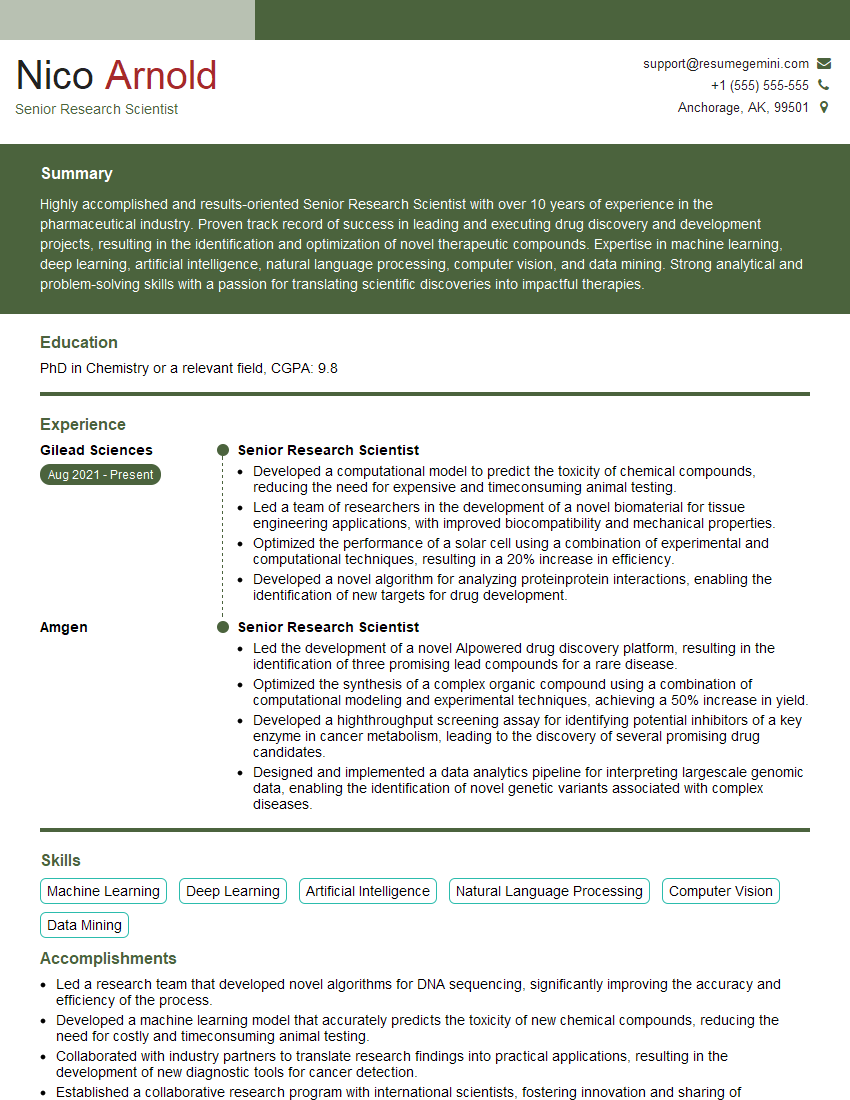
Senior Research Scientist Resume Sample

Regulatory Affairs Specialist Resume Sample

Research Scientist Resume Sample

Technical Specialist Resume Sample

Chemical Engineer Resume Sample

Laboratory Technician Resume Sample

Food Scientist Resume Sample

Analytical Chemist Resume Sample
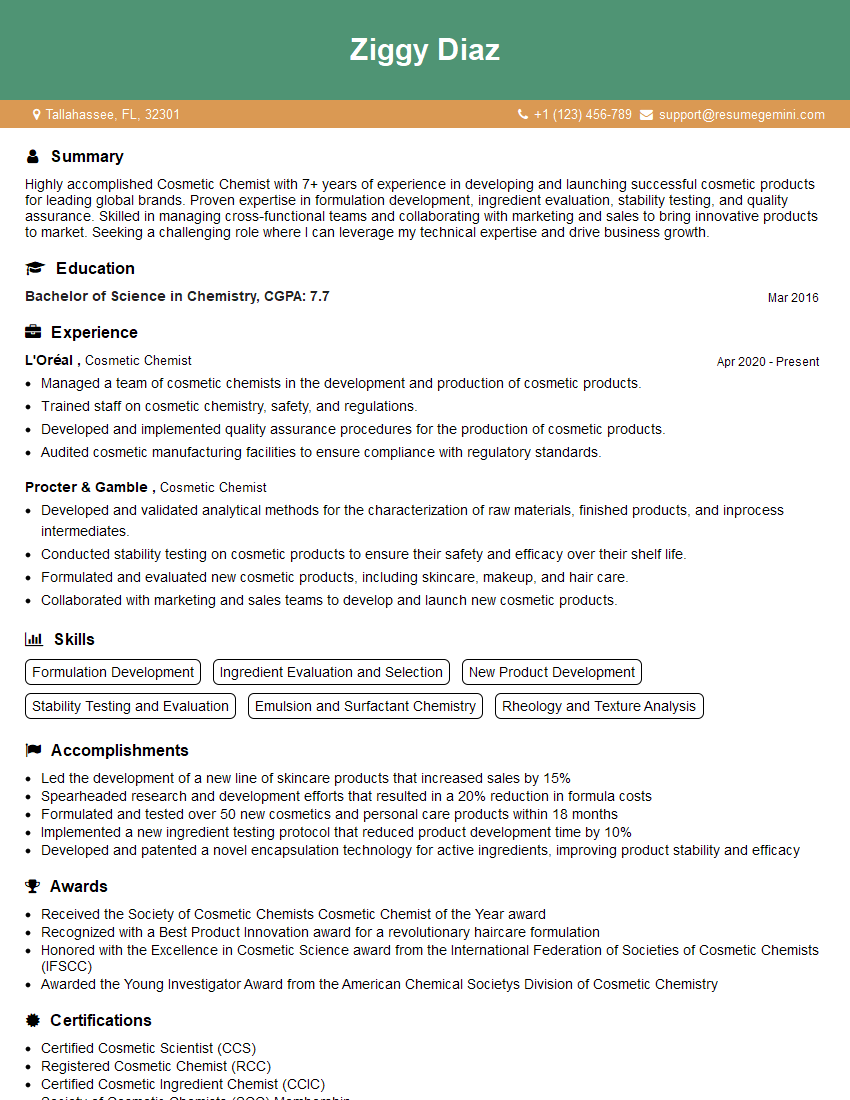
Cosmetic Chemist Resume Sample

Process Chemist Resume Sample

Research Chemist Resume Sample

Senior Chemist Resume Sample

Materials Scientist Resume Sample
Explore more articles
Users Rating of Our Blogs
Share Your Experience
We value your feedback! Please rate our content and share your thoughts (optional).
What Readers Say About Our Blog
Very informative content, great job.
good