Every successful interview starts with knowing what to expect. In this blog, we’ll take you through the top Acquisition Strategy Development interview questions, breaking them down with expert tips to help you deliver impactful answers. Step into your next interview fully prepared and ready to succeed.
Questions Asked in Acquisition Strategy Development Interview
Q 1. Describe your experience in developing and implementing acquisition strategies.
Developing and implementing acquisition strategies is a multifaceted process requiring a deep understanding of both the acquiring company and potential targets. It begins with clearly defining the strategic rationale for the acquisition – what gaps in the business are we trying to fill? Are we seeking to expand into a new market, acquire a specific technology, or eliminate a competitor? This strategic vision guides the entire process. I’ve been involved in several acquisitions, from small, privately held companies to larger publicly traded entities. In one case, we acquired a smaller firm to gain access to their proprietary software, which significantly enhanced our existing product line. The process involved identifying the target, conducting thorough due diligence, negotiating the purchase agreement, and finally, integrating the acquired company into our operations. This involved detailed financial modeling, legal review, and careful planning for the post-acquisition phase. A critical element was managing the transition to ensure minimal disruption to both businesses.
Q 2. How do you identify and assess potential acquisition targets?
Identifying and assessing potential acquisition targets is a systematic process. It starts with a clear definition of the acquisition criteria, aligned with the overarching strategic goals. We look at factors like market share, technology, customer base, management team, and financial performance. Think of it like dating – you don’t just settle for anyone; you have a specific type in mind. We often use a combination of methods to find targets: market research reports, industry databases, competitor analysis, and even networking within our industry. Once a potential target is identified, we perform a preliminary assessment, focusing on key metrics like revenue growth, profitability, and debt levels. We use financial models to project future performance under our ownership and to identify any potential red flags. This initial screening helps us prioritize targets for more thorough due diligence.
Q 3. Explain your process for conducting due diligence on a potential acquisition.
Due diligence is a crucial step, acting as a thorough check-up before finalizing an acquisition. It involves a comprehensive review of all aspects of the target company, from its financials to its legal compliance. My process typically includes: a financial audit, review of legal contracts and intellectual property, operational review of processes and efficiency, technology assessment, and a customer and employee survey. The goal is to verify the information provided by the target company and identify any potential risks or liabilities. For instance, in one acquisition, due diligence revealed a significant legal dispute that hadn’t been previously disclosed, influencing our final offer price. This phase requires a multidisciplinary team comprising financial analysts, legal experts, operational specialists and IT professionals, each with a specific area of focus. Detailed reports are created for each area to facilitate a data-driven decision on whether to proceed with the acquisition.
Q 4. What are the key financial metrics you consider when evaluating an acquisition?
Key financial metrics play a critical role in evaluating an acquisition. We focus on: Revenue growth: Consistent and sustainable revenue growth is a key indicator of a healthy business. Profitability margins: Understanding gross and net profit margins helps assess the target’s efficiency and pricing power. Debt levels: High debt can be a significant risk, impacting future cash flow. Cash flow from operations: This metric reveals the target’s ability to generate cash from its core business. Return on Investment (ROI): This is crucial for assessing the long-term financial benefits of the acquisition. We analyze historical performance and project future performance based on various scenarios. We also consider key ratios such as the Price-to-Earnings (P/E) ratio, which helps compare the target’s valuation to similar companies in the industry. These metrics are presented in detailed financial models that help predict future performance and assist in negotiations.
Q 5. How do you determine the appropriate valuation for an acquisition target?
Determining the appropriate valuation is a complex process that considers several factors. There isn’t a single formula; we usually employ multiple valuation approaches, including Discounted Cash Flow (DCF) analysis, comparable company analysis, and precedent transactions. DCF projects future cash flows and discounts them back to their present value, providing an intrinsic value. Comparable company analysis looks at similar companies that have been recently acquired or are publicly traded, adjusting for differences. Precedent transactions examine past acquisitions of similar companies. Each method provides a range, and we use the overlap of the results, along with strategic considerations, to reach a final valuation. Negotiation plays a significant role, and the final price is a result of balancing the buyer’s valuation, the seller’s expectations, and market conditions.
Q 6. What are some common integration challenges after an acquisition, and how do you mitigate them?
Integration challenges are common after an acquisition. Some of the most frequent issues are: Technology incompatibility: Integrating different IT systems can be complex and time-consuming. Cultural clashes: Differences in corporate culture can create friction and conflict. Customer retention: Maintaining customer loyalty after a change in ownership requires careful management. Redundancies: Overlapping roles and functions often lead to staff reductions. To mitigate these challenges, I emphasize careful planning prior to the closing. This involves forming an integration team early on, developing a detailed integration plan with clear timelines and responsibilities, and communicating frequently with all stakeholders. We also invest in training and change management initiatives to help employees adapt to the new environment and foster a positive and collaborative culture.
Q 7. How do you manage the cultural integration of two companies after a merger?
Cultural integration is paramount for a successful acquisition. Simply merging balance sheets isn’t enough; you need to merge cultures effectively. We begin by understanding the unique cultures of both organizations through surveys, interviews, and observations. Identifying similarities and differences helps us to develop an integration strategy that fosters mutual respect and understanding. We create opportunities for interaction between employees from both companies, often through social events and team-building activities. Clear communication is crucial; we actively communicate the reasons for the merger, future plans, and the roles of employees within the integrated organization. We often focus on creating a shared vision and values that both cultures can align with. Building trust and open communication channels is essential for navigating cultural differences and creating a unified and productive work environment. This process requires patience, empathy, and a willingness to address any conflicts constructively.
Q 8. Describe your experience negotiating acquisition agreements.
Negotiating acquisition agreements requires a blend of strategic thinking, financial acumen, and strong interpersonal skills. It’s not just about the numbers; it’s about understanding the seller’s motivations and building a relationship based on trust and mutual benefit. My experience spans various deal sizes and complexities, from small, privately held companies to larger, publicly traded entities.
My approach typically involves a thorough due diligence process to identify potential risks and opportunities. This informs my negotiation strategy, allowing me to approach the discussions with a clear understanding of the value proposition. I focus on crafting win-win scenarios, which usually involves identifying creative solutions that address both parties’ concerns. For example, in one acquisition, the seller was particularly concerned about the future of their employees. We addressed this by including a detailed retention plan within the agreement, ensuring a smooth transition and minimizing disruption to their workforce. This led to a more successful and smoother negotiation process.
I also have significant experience navigating complex legal and regulatory landscapes. I work closely with legal counsel to ensure the agreement is comprehensive, legally sound, and protects the interests of my client. Finally, I always prioritize clear and transparent communication throughout the entire negotiation process. Keeping all stakeholders informed and engaged fosters trust and improves the likelihood of a successful outcome.
Q 9. How do you manage risk in an acquisition process?
Managing risk in an acquisition is paramount. It involves a systematic approach that begins long before the final agreement is signed. Think of it as building a bridge – you need a solid foundation to support the weight of the structure.
- Due Diligence: This is the cornerstone of risk management. A thorough due diligence process meticulously examines the target company’s financials, legal standing, operations, and market position. We examine everything from contracts and intellectual property to environmental compliance and potential liabilities. This helps uncover hidden problems and allows us to factor them into our offer price or negotiation strategy.
- Financial Modeling: Robust financial modeling allows us to assess the acquisition’s potential financial performance under various scenarios. Sensitivity analyses can highlight the impact of unexpected events, like changes in market conditions or unforeseen operational challenges.
- Legal Review: Working with experienced legal counsel is essential. They help us identify and mitigate legal risks, ensuring the agreement is legally sound and protects our interests.
- Integration Planning: A well-defined integration plan helps manage the risks associated with combining two organizations. This includes outlining processes for consolidating operations, integrating IT systems, and managing human resources. Failing to properly plan for integration is a major source of risk and often leads to cost overruns and operational disruptions.
- Contingency Planning: Developing contingency plans for various scenarios, such as unforeseen regulatory hurdles or integration difficulties, is crucial. This helps us respond effectively to challenges and minimize negative impacts.
In one instance, due diligence revealed a potential environmental liability that wasn’t initially disclosed. By identifying this early, we were able to negotiate a price reduction that offset this risk, ultimately securing a more favorable deal.
Q 10. What is your experience with different acquisition financing methods?
My experience encompasses a wide range of acquisition financing methods, including:
- Debt Financing: This involves borrowing funds from banks, private equity firms, or through bond issuances. We consider factors like interest rates, loan terms, and covenants when selecting this route.
- Equity Financing: This involves raising capital by issuing new shares of stock. This can dilute existing ownership but may be more attractive when debt is undesirable.
- Hybrid Financing: A combination of debt and equity financing, allowing us to balance risk and return. This is often the most suitable approach, depending on the deal size and the target company’s financial structure.
- Seller Financing: The seller provides a portion of the financing, usually through deferred payments or notes. This can be beneficial when securing external funding is challenging.
The choice of financing method depends heavily on several factors, such as the acquirer’s financial position, the target’s financial health, market conditions, and the overall deal structure. For example, in a recent acquisition of a technology startup, we opted for a blend of equity financing from our venture capital partners and a debt facility from a specialized bank to leverage each source’s benefits.
Q 11. Explain your understanding of post-merger integration planning.
Post-merger integration planning is arguably the most critical phase of an acquisition, directly impacting its long-term success. It’s not simply about combining two companies; it’s about creating a new, more efficient, and profitable entity. A well-defined plan addresses all aspects of the integration process, from organizational structure and operations to IT systems and culture.
My approach involves a phased integration process, focusing on critical priorities first. This typically includes:
- Due diligence and assessment: Identifying overlaps and synergies across the two organizations
- Integration planning team: Forming a dedicated team representing both organizations to develop and execute the plan
- Communication strategy: Developing a clear and consistent communication plan for employees of both organizations.
- Technology integration: Planning the migration and integration of IT systems, including databases and applications
- Cultural integration: Addressing differences in organizational cultures and creating a unified culture.
Without a comprehensive integration plan, acquisitions often fail to deliver expected synergies, resulting in operational inefficiencies, employee morale issues, and ultimately, financial losses. I’ve observed instances where a lack of careful integration planning led to significant delays, loss of key employees, and ultimately lower returns on investment than projected. A thorough, well-executed integration strategy minimizes these risks and maximizes the benefits of the acquisition.
Q 12. How do you measure the success of an acquisition?
Measuring the success of an acquisition goes beyond simply looking at the financial statements. While key financial metrics like Return on Investment (ROI), Earnings Before Interest, Taxes, Depreciation, and Amortization (EBITDA), and revenue growth are important, we also consider qualitative factors.
Key metrics include:
- Financial Performance: Did the acquisition meet or exceed its projected financial targets? Did it enhance profitability and revenue growth?
- Synergy Realization: Were the anticipated synergies realized? Did the acquisition create efficiencies and cost savings?
- Market Share: Did the acquisition strengthen the acquirer’s market position and expand its customer base?
- Employee Retention: Was there successful retention of key employees from the target company?
- Customer Retention: Did the acquisition maintain or improve customer loyalty and satisfaction?
- Cultural Integration: Was a successful integration of the company cultures achieved?
A holistic approach, considering both quantitative and qualitative factors, provides a more accurate assessment of an acquisition’s success. A successful acquisition is not just financially sound, but also strengthens the overall business in a sustainable way.
Q 13. What are some common pitfalls to avoid during the acquisition process?
Many pitfalls can derail an acquisition process. Avoiding these requires careful planning and execution.
- Overpaying for the target: Failing to conduct a thorough valuation can lead to overpaying, impacting ROI.
- Underestimating integration challenges: Insufficient planning for cultural, operational, and technological integration can result in significant disruptions and unforeseen costs.
- Ignoring due diligence: Skipping or rushing due diligence can expose the acquirer to unexpected liabilities or hidden problems.
- Poor communication: A lack of communication with employees, customers, and other stakeholders can create uncertainty and negatively affect morale and customer loyalty.
- Unrealistic expectations: Setting overly ambitious targets or failing to account for potential risks can lead to disappointment and financial losses.
- Lack of clear strategy: Acquisitions must align with the acquirer’s overall strategic goals and objectives. Without a clear strategy, it’s hard to evaluate success.
For example, in one instance I witnessed a failed acquisition where the acquirer significantly overpaid for the target due to insufficient due diligence, leading to substantial financial losses and a negative impact on the acquirer’s stock price.
Q 14. How do you build and maintain relationships with potential acquisition targets?
Building and maintaining relationships with potential acquisition targets is a long-term process that requires patience, understanding, and mutual respect. It’s about building trust and demonstrating the acquirer’s value proposition.
My approach includes:
- Networking: Actively participating in industry events and conferences to identify potential targets and build relationships.
- Market research: Conducting thorough research to identify companies that align with the acquirer’s strategic goals.
- Direct outreach: Reaching out to potential targets directly, introducing the acquirer and highlighting the benefits of a potential acquisition.
- Building rapport: Developing relationships based on mutual trust and understanding, focusing on shared values and goals.
- Maintaining confidentiality: Respecting the confidentiality of the discussions and information shared throughout the process.
It’s important to remember that relationships are built on trust. Transparency and open communication are essential, even if the deal doesn’t materialize. Maintaining positive relationships, even after unsuccessful negotiations, often paves the way for future opportunities.
Q 15. Describe your experience with regulatory compliance in acquisitions.
Regulatory compliance is paramount in acquisitions. It involves navigating a complex landscape of laws and regulations that vary significantly depending on the industry, target company location, and the type of acquisition. My experience encompasses ensuring compliance with antitrust laws (like the Hart-Scott-Rodino Act in the US), securities regulations (like the disclosure requirements under the Securities Exchange Act of 1934), and industry-specific regulations, such as those related to data privacy (GDPR, CCPA) or environmental protection.
For instance, in one acquisition involving a healthcare technology company, we meticulously reviewed all HIPAA compliance aspects to ensure a seamless transition and continued patient data protection. This included thorough due diligence, developing a detailed compliance plan, and securing the necessary approvals from relevant regulatory bodies. We also established a dedicated compliance team to proactively manage ongoing compliance requirements post-acquisition.
Another key area is foreign direct investment regulations, particularly when acquiring international companies. Understanding and addressing these requirements is critical for preventing delays or potential legal issues.
Career Expert Tips:
- Ace those interviews! Prepare effectively by reviewing the Top 50 Most Common Interview Questions on ResumeGemini.
- Navigate your job search with confidence! Explore a wide range of Career Tips on ResumeGemini. Learn about common challenges and recommendations to overcome them.
- Craft the perfect resume! Master the Art of Resume Writing with ResumeGemini’s guide. Showcase your unique qualifications and achievements effectively.
- Don’t miss out on holiday savings! Build your dream resume with ResumeGemini’s ATS optimized templates.
Q 16. What is your experience with different types of acquisitions (e.g., stock purchase, asset purchase)?
I have extensive experience with both stock purchases and asset purchases. A stock purchase involves acquiring all or a controlling interest in the target company’s stock, essentially taking over the entire entity, including its liabilities and assets. This is generally a quicker and cleaner process, but it exposes the acquirer to potential unknown liabilities. In contrast, an asset purchase involves selectively acquiring specific assets of the target company, allowing the acquirer to choose which parts of the business to acquire, thus avoiding certain liabilities. However, this process can be more complex and time-consuming due to the need for individual asset valuations and contract negotiations.
For example, in one project, we opted for an asset purchase to acquire only the profitable divisions of a struggling company, avoiding the legacy liabilities of its less successful operations. In another deal, a stock purchase was more strategically advantageous due to the synergy potential with the acquirer’s existing business, despite the inclusion of some liabilities.
Understanding the nuances of each approach and their implications is essential for developing a well-informed acquisition strategy.
Q 17. How do you handle disagreements or conflicts during the acquisition process?
Disagreements are inevitable in acquisitions. My approach is based on proactive communication, collaborative problem-solving, and a focus on mutual value creation. I believe in establishing clear communication channels early in the process and involving all relevant stakeholders. This means regular meetings, transparent information sharing, and establishing a framework for addressing disagreements in a structured manner.
When conflicts arise, I facilitate open discussions, focusing on understanding the underlying concerns and interests of each party. I leverage mediation techniques to guide the parties towards a mutually acceptable solution, often by highlighting shared goals and the long-term benefits of collaboration. In some cases, independent expert opinions may be needed to resolve technical or valuation disputes. Ultimately, my goal is to find a resolution that protects the deal’s integrity while maintaining strong relationships.
It’s crucial to remember that while firm negotiation is important, preserving relationships with the target company’s management and key employees is vital for a successful post-acquisition integration.
Q 18. How do you prioritize competing acquisition opportunities?
Prioritizing acquisition opportunities requires a structured approach. I use a multi-criteria decision analysis (MCDA) framework. This involves identifying key criteria such as strategic fit, financial attractiveness (internal rate of return, net present value), and risk assessment. Each criterion is weighted according to its importance based on the overall corporate strategy. Potential acquisition targets are then scored against each criterion, and the weighted scores are aggregated to produce an overall ranking.
For example, a company focused on rapid expansion might prioritize targets with high growth potential and strong market share, even if the financial returns are slightly lower in the short term. Conversely, a company aiming for stability might prioritize acquisitions with lower risk and consistent cash flow, even if the growth potential is limited.
This framework ensures a consistent and objective evaluation of various opportunities, avoiding biases and enhancing decision quality. Regular reviews and adjustments to the criteria weights are crucial to adapt to changing market conditions and corporate goals.
Q 19. What is your understanding of synergy realization in mergers and acquisitions?
Synergy realization in mergers and acquisitions refers to the creation of value beyond the simple sum of the individual entities. It’s about achieving greater efficiency, market share, or profitability through combining the strengths and capabilities of the merging companies. Synergies can be broadly categorized into revenue synergies (increased sales or market share) and cost synergies (reduced expenses through economies of scale, process improvements, or elimination of redundancies).
Realizing synergies requires a well-defined integration plan with clear roles, responsibilities, and timelines. This plan should address potential challenges proactively, including cultural differences, technological integration, and workforce restructuring. Effective communication and change management are crucial to ensure buy-in from employees of both organizations. Post-acquisition monitoring and measurement of synergy realization are essential for tracking progress and making necessary adjustments.
For example, a successful synergy realization strategy may involve combining sales teams to leverage a wider customer base, consolidating overlapping functions to reduce costs, and integrating technology platforms to improve efficiency.
Q 20. Describe your experience with creating acquisition financial models.
Creating acquisition financial models is a cornerstone of my work. These models are used to evaluate the financial viability of a potential acquisition, forecast future performance, and determine the appropriate purchase price. I build detailed models that include projected revenue, expenses, capital expenditures, and working capital. These models incorporate sensitivity analysis to assess the impact of various assumptions on the overall financial outcome, such as changes in revenue growth rates, margins, or interest rates.
A typical model will include discounted cash flow (DCF) analysis to estimate the present value of future cash flows, assessing the target company’s intrinsic value. I also use comparable company analysis and precedent transactions to establish a valuation range. The model will incorporate various acquisition scenarios (e.g., different purchase prices, financing options) and their effects on key financial metrics like return on investment (ROI) and payback period.
These models serve as a crucial tool for negotiation, due diligence, and post-acquisition performance monitoring. They provide a structured and data-driven approach to evaluating an acquisition’s financial feasibility and strategic implications.
Q 21. How do you communicate acquisition strategies to stakeholders?
Effective communication of acquisition strategies is essential for securing stakeholder buy-in and ensuring successful implementation. My approach involves tailoring the communication to the specific audience, using clear and concise language, and providing context relevant to their interests.
For example, when communicating to the board of directors, I present a high-level overview focusing on strategic rationale, financial projections, and risk assessment. With employees, the focus shifts towards addressing their concerns about job security, changes in roles, and the long-term vision. For investors, I emphasize financial performance, returns, and risk mitigation strategies.
I utilize a variety of communication methods, including presentations, written reports, Q&A sessions, and regular updates to keep stakeholders informed throughout the process. Transparency and proactive engagement build trust and confidence, which are crucial for successfully navigating the complexities of an acquisition.
Q 22. How do you manage the expectations of stakeholders throughout the acquisition process?
Managing stakeholder expectations throughout an acquisition is crucial for success. It’s a continuous process requiring proactive communication and transparency. I begin by clearly defining roles and responsibilities for each stakeholder group – executive leadership, legal, finance, operations, and the target company’s team. Early on, I establish a communication plan outlining key milestones, anticipated challenges, and reporting mechanisms. This includes regular updates, both formal (e.g., presentations, reports) and informal (e.g., one-on-one meetings), tailored to the specific audience and their information needs.
For example, I might provide high-level summaries to the executive team focusing on strategic implications, while providing more detailed financial projections and due diligence findings to the finance team. Addressing concerns and questions promptly and honestly is vital; actively listening and acknowledging anxieties helps build trust and manage expectations. By consistently managing communication, and adjusting my approach based on feedback, I ensure all stakeholders are informed, engaged, and aligned throughout the process, minimizing surprises and potential conflicts.
Q 23. What is your experience with different types of deal structures?
My experience encompasses a wide range of deal structures, including:
- Asset Purchases: Acquiring specific assets (e.g., intellectual property, real estate) rather than the entire entity. This is useful when seeking to acquire only specific valuable parts of a company, limiting liability associated with the target company’s other assets.
- Stock Purchases: Buying all or a controlling share of the target company’s stock, leading to full or partial ownership. This is a simpler structure but carries the risk of inheriting all the target’s liabilities.
- Mergers: Combining two or more entities into a new legal entity. This is often complex and involves significant legal and operational integration.
- Joint Ventures: Creating a new entity through the partnership of two or more existing companies. This structure is beneficial when combining complementary skills or resources, sharing risks and rewards.
- Leveraged Buyouts (LBOs): Acquiring a company using significant debt financing. This is a high-risk/high-reward strategy.
The choice of deal structure depends on various factors, including the target’s financial health, legal considerations, tax implications, and strategic goals. I carefully analyze these factors to recommend the most suitable structure for each acquisition.
Q 24. How do you assess the long-term strategic fit of a potential acquisition?
Assessing long-term strategic fit is paramount. I use a multi-faceted approach, starting with a thorough analysis of the target’s business model, market position, competitive landscape, and financial performance. This involves in-depth due diligence, examining both quantitative data (financial statements, market share) and qualitative factors (brand reputation, management team, operational efficiency). Crucially, I investigate synergies: how well the target’s operations, technology, customer base, and intellectual property align with the acquirer’s existing businesses.
For example, if my client is a software company, an acquisition might enhance their existing product line, expand their reach into a new market segment, or provide access to proprietary technology. Furthermore, I consider cultural compatibility. A mismatch in corporate culture can lead to integration issues and hinder the success of an acquisition. I use frameworks such as Porter’s Five Forces to assess the market landscape and competitive advantages that could be created or strengthened through the acquisition. The final assessment of strategic fit is made based on a holistic evaluation of these diverse factors and their long-term implications.
Q 25. Describe a time when an acquisition did not meet its projected financial returns. What went wrong and what did you learn?
In a previous acquisition, we overestimated the synergy potential between the target’s and our existing operations. While the initial financial projections seemed promising, we failed to adequately account for integration challenges. The cultural differences between the two organizations led to significant friction, impacting productivity and employee morale. This resulted in higher-than-anticipated integration costs and revenue shortfall from lost client relationships and decreased employee efficiency.
The key lesson learned was the critical importance of thorough cultural due diligence. We underestimated the time, effort, and resources required to successfully integrate two very different corporate cultures. Going forward, I prioritize detailed cultural assessments and develop more robust integration plans with proactive strategies to address potential cultural conflicts, including comprehensive employee communication and retention programs. We now implement structured cultural assessments early in the due diligence process, and factor potential integration issues into financial projections.
Q 26. How do you leverage technology and data analytics in acquisition strategy development?
Technology and data analytics are indispensable in acquisition strategy development. I leverage these tools throughout the entire process. For example, we use data analytics to identify and assess potential acquisition targets by analyzing industry trends, market share data, and competitive landscapes. We utilize market research platforms and financial databases to gather critical information on potential targets, allowing us to quickly filter through thousands of possibilities.
During due diligence, we use advanced analytics to analyze the target’s financial statements, operational efficiency, and customer behavior. This helps us to create more accurate financial models and assess risk. Machine learning algorithms are also utilized to predict financial performance following the acquisition. Furthermore, project management software helps streamline the workflow for a large and complex acquisition process, ensuring timely completion of various tasks and milestones. These data-driven insights enable more informed decision-making, reducing uncertainty and maximizing the chances of success. Technology provides efficiencies and insights that were simply not possible before.
Q 27. Explain your understanding of different valuation methodologies (e.g., DCF, precedent transactions).
Valuation methodologies are crucial for determining a fair price in an acquisition. I’m experienced in applying several methods, always remembering that a combination of approaches generally provides the most robust valuation.
- Discounted Cash Flow (DCF) Analysis: This projects the target’s future cash flows and discounts them back to their present value. It’s a fundamental method but relies heavily on future assumptions, so sensitivity analysis is critical.
- Precedent Transactions: This compares the target company to similar companies that have recently been acquired. The method depends on finding truly comparable companies, which can be challenging.
- Public Company Comparables: This compares the target company to publicly traded companies with similar characteristics. This requires careful consideration of market conditions and industry-specific factors.
- Asset-Based Valuation: This values the target’s net asset value, particularly relevant for asset-heavy businesses. The method can be less effective for businesses where intangible assets are more significant.
I select the most appropriate methodologies based on the target company’s characteristics, available data, and market conditions. It’s important to understand the limitations of each method and to use a combination to arrive at a robust and defensible valuation.
Q 28. How do you create a comprehensive acquisition integration plan?
Creating a comprehensive acquisition integration plan is crucial for realizing the synergies and achieving the projected returns of an acquisition. My approach starts well before the deal closes. I focus on several key areas:
- People: Developing a clear communication and integration strategy for employees of both companies. Addressing concerns about job security, culture, and roles is paramount. We often create detailed organizational charts and job descriptions for the combined entity to address anxieties.
- Technology: Planning the consolidation and integration of IT systems, databases, and applications. This can be a highly complex process requiring careful planning and phased execution.
- Operations: Determining how the operations of the two companies will be integrated, which may involve consolidating facilities, streamlining processes, and implementing best practices.
- Finance: Integrating financial systems, accounts, and reporting procedures. This involves establishing a clear process for managing cash flow, accounting, and budgeting for the combined entity.
- Legal and Compliance: Ensuring compliance with all relevant regulations and legal requirements post-acquisition.
The integration plan needs to be detailed and time-bound, with specific responsibilities assigned to individuals or teams. Regular progress reviews are essential, allowing for course correction and effective issue resolution. A well-structured plan facilitates a smooth transition, minimizes disruption, and maximizes the chances of a successful post-acquisition integration.
Key Topics to Learn for Acquisition Strategy Development Interview
- Target Identification & Valuation: Understanding how to identify suitable acquisition targets and employing various valuation methodologies (e.g., discounted cash flow, comparable company analysis) to determine fair market value.
- Due Diligence & Risk Assessment: Mastering the process of conducting thorough due diligence, including financial, legal, and operational assessments, to identify and mitigate potential risks associated with an acquisition.
- Integration Planning & Execution: Developing a comprehensive integration plan that addresses operational, cultural, and technological aspects of merging two organizations. This includes post-merger integration strategies and potential challenges.
- Financial Modeling & Forecasting: Building robust financial models to project the financial performance of the acquired company post-acquisition and assessing the overall impact on the acquirer.
- Negotiation & Deal Structuring: Understanding the art of negotiation and structuring deals that are favorable to the acquirer while meeting the seller’s objectives. This includes understanding different deal structures and their implications.
- Synergy Identification & Realization: Identifying and quantifying potential synergies between the acquirer and target company, and developing strategies to effectively realize these synergies post-acquisition.
- Regulatory & Legal Compliance: Navigating the complex legal and regulatory landscape associated with mergers and acquisitions, ensuring compliance with all relevant laws and regulations.
- Strategic Alignment & Long-Term Vision: Demonstrating an understanding of how the acquisition aligns with the overall strategic goals of the acquiring company and contributes to long-term growth and value creation.
Next Steps
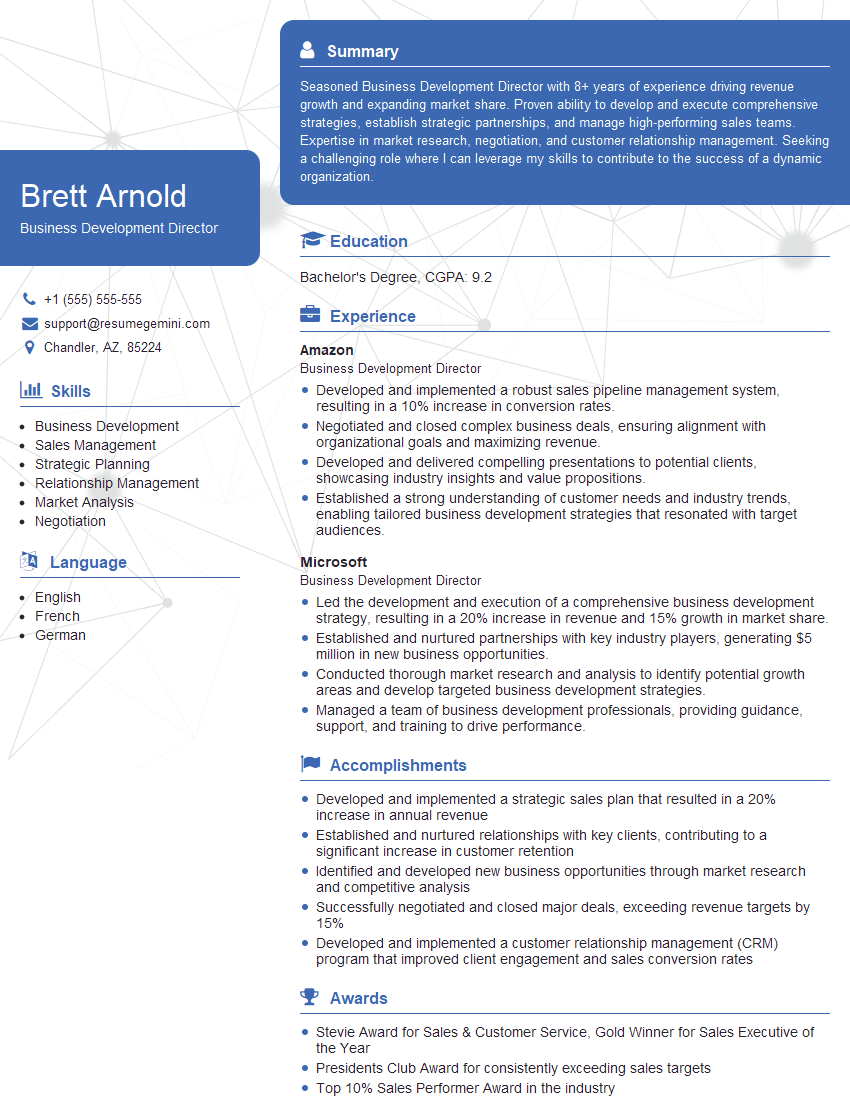
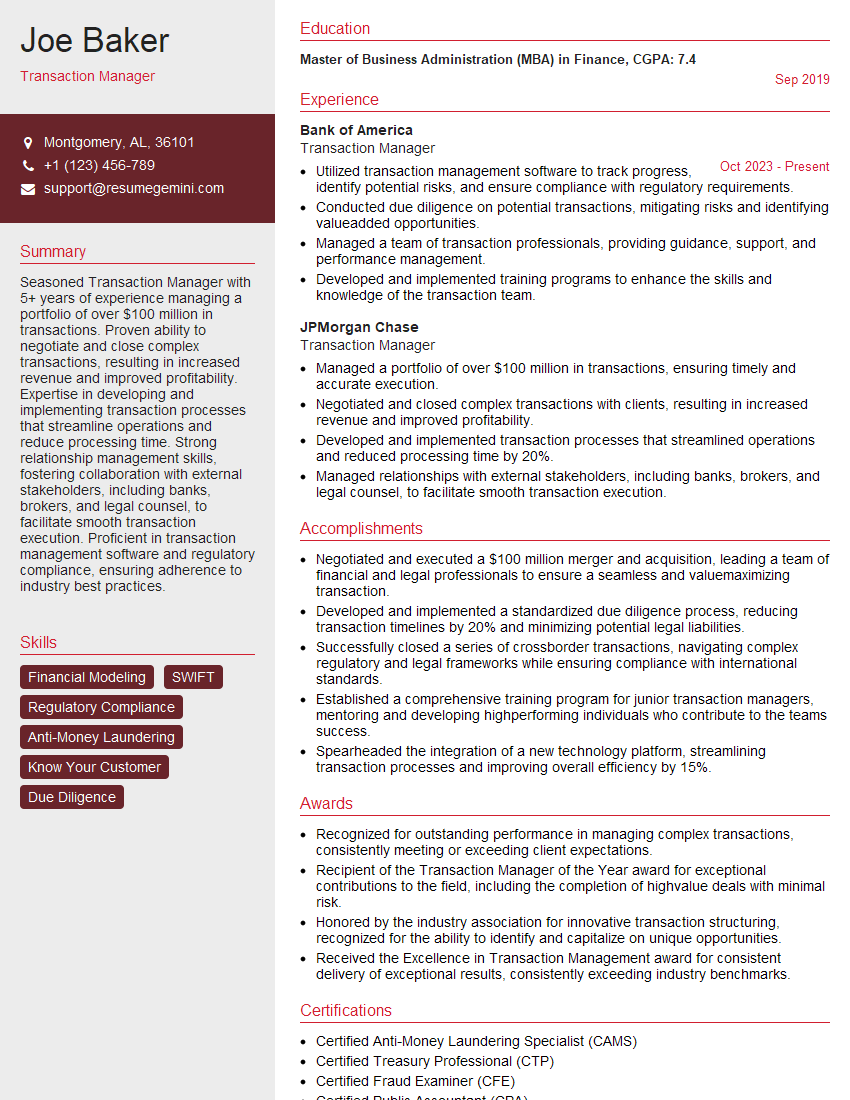
Mastering Acquisition Strategy Development is crucial for advancing your career in finance, business development, or corporate strategy. It showcases your ability to think strategically, analyze complex situations, and drive significant value creation within an organization. To significantly boost your job prospects, focus on creating a compelling and ATS-friendly resume that highlights your relevant skills and experience. ResumeGemini is a trusted resource that can help you build a professional and impactful resume tailored to the specific demands of Acquisition Strategy Development roles. Examples of resumes tailored to this field are available to help guide you. Invest the time to craft a strong resume – it’s your first impression and crucial to securing your dream role.
Explore more articles
Users Rating of Our Blogs
Share Your Experience
We value your feedback! Please rate our content and share your thoughts (optional).
What Readers Say About Our Blog
Very informative content, great job.
good