Interviews are opportunities to demonstrate your expertise, and this guide is here to help you shine. Explore the essential Acting and Improvisation interview questions that employers frequently ask, paired with strategies for crafting responses that set you apart from the competition.
Questions Asked in Acting and Improvisation Interview
Q 1. Describe your approach to character development.
Character development is a multifaceted process that I approach systematically. It begins with a deep dive into the script, understanding the character’s relationships, motivations, and arc. I then move to building a backstory, exploring their past experiences, upbringing, and significant relationships that shape their present self. This backstory doesn’t necessarily need to be explicitly shown on stage, but it informs my choices as an actor. Next, I consider the character’s physicality; how they move, their posture, their voice. I might even explore specific mannerisms or tics. Finally, I focus on the emotional core of the character, working to understand their desires and fears, and how they express themselves. For example, in playing a seemingly cold character, I might uncover a deep-seated insecurity driving their exterior. This layered approach allows me to create a believable and compelling character, not just a collection of traits.
Q 2. Explain your understanding of Stanislavski’s system.
Stanislavski’s system is a cornerstone of realistic acting. At its heart lies the concept of ‘living truthfully under imaginary circumstances.’ This means accessing your own emotions and experiences to inform the character’s actions and behavior, while simultaneously maintaining the reality of the fictional world. Key elements include ‘given circumstances’ (the character’s background and situation), ‘objectives’ (what the character wants to achieve in each scene), and ‘obstacles’ (what stands in their way). I use ’emotional recall’ to connect with the character’s emotions, drawing on my own memories to find authentic expressions. However, I believe in a flexible approach, adapting the system to fit the specific demands of the role and the director’s vision. For instance, while ’emotional recall’ is powerful, it’s not always necessary; sometimes a deep understanding of the character’s psychology is sufficient to portray their emotions convincingly.
Q 3. How do you handle stage fright or performance anxiety?
Stage fright is a common experience, even for seasoned actors. My approach is multifaceted. Firstly, thorough preparation is crucial; knowing my lines and blocking inside and out significantly reduces anxiety. Secondly, I practice mindfulness and breathing techniques to calm my nerves before a performance. Deep, slow breaths help regulate my heart rate and center me. Thirdly, I focus on the present moment and connect with my fellow actors, relying on the energy we build together. Finally, I view performance anxiety as a sign of passion and engagement – nervous energy, when channeled correctly, can enhance the performance, making it more dynamic and powerful. I’ve learned to see it as excitement rather than fear. A small ritual before a performance – like listening to specific music – helps trigger a sense of calm and readiness.
Q 4. What is your preferred method for memorizing lines?
My preferred method for memorizing lines combines active recall and contextual understanding. I don’t simply rote-learn; I immerse myself in the script, understanding the character’s motivations and the overall narrative. I read the lines aloud repeatedly, paying attention to the rhythm and phrasing. I then break down the scenes into smaller chunks, focusing on mastering each segment before moving on. I use various techniques such as writing out the lines, recording myself reading them and listening back, and practicing with a partner. Finally, I integrate the lines into my physical and emotional preparation for the character, making the memorization process more organic and less mechanical. For instance, I might associate specific lines with particular movements or emotions.
Q 5. Describe your experience with improvisation techniques.
Improvisation is integral to my acting. It enhances spontaneity and strengthens my ability to react authentically in a scene. I’ve extensively explored techniques like ‘yes, and…’, which encourages building on others’ ideas rather than blocking them, and ‘character work,’ where we create quick backstories and motivations for improvised characters. I’ve participated in numerous improv workshops focusing on listening actively, accepting offers from other improvisers, and creating compelling narratives on the spot. These experiences have instilled in me a comfort with the unexpected and honed my ability to create believable and engaging moments under pressure. For example, in a recent improv performance, an unexpected audience interaction led to a completely improvised subplot, and the flexibility I’d developed allowed me to seamlessly weave it into the main narrative.
Q 6. How do you build rapport with fellow actors?
Building rapport with fellow actors is paramount for a successful performance. I begin by actively listening to their ideas and perspectives during rehearsals. I am always open to collaborative exploration, valuing their input and expertise. I strive to create a safe and supportive space where everyone feels comfortable taking risks and offering feedback. This often involves informal chats outside of rehearsals, getting to know them personally. A strong bond between actors translates directly to the chemistry visible on stage. Before scenes, we might do vocal warm-ups together, sharing a laugh and creating a positive atmosphere. Simple gestures like offering encouragement and celebrating each other’s successes build mutual trust and respect, forming a cohesive unit. This collaborative environment leads to a more authentic and engaging performance.
Q 7. Explain your understanding of comedic timing.
Comedic timing is the art of precisely controlling the rhythm and pacing of a joke or comedic scene to maximize its impact. It’s about understanding the build-up, the punchline, and the silence in between. It’s not just about delivering the line quickly or slowly; it’s about finding the perfect tempo that allows the audience to fully appreciate the humor. I work on this by paying close attention to the rhythm and pauses in the script, experimenting with different deliveries during rehearsals. I also observe successful comedians, analyzing their timing and delivery. A crucial aspect is understanding the audience; their reactions guide the adjustments in timing, ensuring the humor connects effectively. Moreover, comedic timing often involves a subtle interplay with other actors; a shared glance, a slight hesitation, or a perfectly placed reaction can significantly enhance the comedic effect. A successful comedic performance is a well-orchestrated dance of timing, pacing, and collaboration.
Q 8. How do you adapt to unexpected changes during a performance?
Adapting to unexpected changes during a performance is crucial. It’s about embracing the ‘yes, and…’ principle of improvisation, even when things go wildly off-script. This involves active listening, quick thinking, and a willingness to adjust your character’s reactions in real-time.
For instance, if a prop malfunctions, I wouldn’t freeze. Instead, I’d incorporate the mishap into the scene. Perhaps my character reacts with frustration, improvising a line about the broken prop, thereby making the unexpected event a part of the narrative. This requires a deep understanding of your character’s motivations and a flexible mindset. It’s not about perfection, but about maintaining the flow and believability of the performance.
Another approach is to utilize my training in improvisational techniques. These techniques teach you to build on unexpected suggestions from fellow actors or even the audience, transforming potential setbacks into opportunities for genuine comedic or dramatic moments. Essentially, it’s about shifting from a rigid script to a fluid, collaborative storytelling experience.
Q 9. Describe a time you had to overcome a challenge during a rehearsal or performance.
During a student production of ‘A Midsummer Night’s Dream’, the actor playing Puck fell ill on opening night. With the show about to start, I, playing Hermia, had to step in and learn several of Puck’s lines and physical comedic bits. It was incredibly challenging, but we worked together as a cast to ensure the show went on. I used my understanding of the character’s arc and the overall plot to seamlessly incorporate my lines into the existing scenes.
The solution involved quick memorization, collaboration with other actors, and improvisation to bridge the gaps left by the missing actor. The director helped, guiding me through the scene changes and crucial cues. The experience was stressful, but rewarding. It underscored the importance of teamwork and adaptability in live theatre.
Q 10. What are your strengths and weaknesses as an actor?
My strengths lie in my ability to embody diverse characters, blending physicality, vocal modulation, and emotional depth to create believable portrayals. I’m a quick study, absorbing information and adapting to new directorial styles with ease. I also excel at collaborative work, fostering a positive environment on set and valuing the input of others.
However, I am working on my ability to completely detach from emotionally demanding roles after a performance. This requires disciplined self-care and intentional strategies to shift my mental and emotional state post-performance. Another area for growth is expanding my comedic timing; while I’m comfortable with dramatic roles, I’m actively seeking opportunities to refine my comedic performance.
Q 11. How do you incorporate audience feedback into your performance?
Incorporating audience feedback is a delicate balance. While I don’t change my character’s core traits, I’m keenly aware of the audience’s energy. If I sense a scene isn’t resonating, I might subtly adjust my pacing or delivery to enhance clarity or emotional impact. This could involve increasing the volume of a key line or slowing down a particularly intense moment.
Direct feedback – like laughter or gasps – offers immediate insight. A roaring laugh confirms a joke landed, while an awkward silence signals a need to re-evaluate the delivery. I use these cues to gauge the effectiveness of my performance and tailor my approach accordingly. It is about responsiveness without compromising the integrity of the story.
Q 12. How do you maintain your energy and focus during a long performance?
Maintaining energy and focus during long performances requires a multi-faceted approach. Physical preparation is key: I ensure I’m well-rested, hydrated, and have eaten a nutritious meal before the show. Throughout the performance, I utilize breathing exercises to manage stress and center myself.
Furthermore, I actively engage with my fellow actors, using our shared energy to maintain momentum. In between scenes, I avoid distractions and utilize mindfulness techniques to stay present and focused. By breaking down the performance into smaller chunks and focusing on the current moment, I can conserve energy and avoid burnout.
Q 13. Explain your experience with different acting styles (e.g., Meisner, Chekhov).
My training encompasses various acting styles. The Meisner technique, with its emphasis on truthful acting through the use of ‘the reality of doing,’ helped me develop authentic emotional connections within scenes. I learned to react truthfully to my scene partner, building upon their actions and impulses to create spontaneous and genuine interactions.
On the other hand, Chekhov technique, with its focus on inner life and physical expression, aided my understanding of subtext and emotional depth. It encourages the actor to tap into their own emotional reservoirs, shaping their character’s actions and motivations with a richness informed by their lived experiences. I find these techniques to be complimentary, providing a full toolbox for character development and performance.
Q 14. Describe your process for creating an original character.
Creating an original character is a deeply personal and iterative process. It begins with understanding the character’s backstory: their upbringing, relationships, motivations, and aspirations. This includes creating a detailed biography that extends beyond the script’s parameters.
Next, I explore their physicality: how do they move, speak, and carry themselves? I develop a distinct voice and mannerisms. I utilize tools such as mood boards, sketches, or even writing from the character’s perspective to further delve into their inner world. Finally, I continuously refine the character through rehearsal and feedback, allowing the role to evolve organically through collaborative work and exploration. The goal is a nuanced, believable individual with a unique history and inner life.
Q 15. How do you handle constructive criticism?
Constructive criticism is invaluable for growth in acting. I approach it as an opportunity for learning and refinement, not a personal attack. My process involves:
- Active Listening: I listen carefully to the feedback, asking clarifying questions if needed. I avoid interrupting or becoming defensive.
- Identifying Specifics: I focus on the concrete observations, separating subjective opinions from actionable suggestions. For example, instead of dwelling on ‘your performance was weak,’ I’d analyze feedback like ‘your pacing felt rushed in the second act, specifically during the courtroom scene’.
- Self-Reflection: I internally assess whether the criticism resonates with my own self-perception. This honest reflection helps me determine if the feedback is valid and needs addressing.
- Experimentation and Practice: I then experiment with different approaches, incorporating the feedback into my practice. This might involve adjusting my pacing, vocal delivery, or physicality.
- Seeking Further Guidance: If needed, I seek further guidance from the director or a trusted mentor to refine my understanding and implementation of the feedback.
For instance, once a director pointed out that my character’s vulnerability wasn’t fully conveyed. Instead of being discouraged, I reviewed the scene, explored different physical and vocal techniques, and ultimately found a more impactful way to portray the character’s emotion through subtle movements and a softer vocal tone.
Career Expert Tips:
- Ace those interviews! Prepare effectively by reviewing the Top 50 Most Common Interview Questions on ResumeGemini.
- Navigate your job search with confidence! Explore a wide range of Career Tips on ResumeGemini. Learn about common challenges and recommendations to overcome them.
- Craft the perfect resume! Master the Art of Resume Writing with ResumeGemini’s guide. Showcase your unique qualifications and achievements effectively.
- Don’t miss out on holiday savings! Build your dream resume with ResumeGemini’s ATS optimized templates.
Q 16. Explain the importance of listening in both acting and improvisation.
Listening is the cornerstone of both acting and improvisation. In acting, it allows you to react authentically to your scene partners, building genuine chemistry and believability. In improv, it’s even more crucial, as you’re constantly building the scene collaboratively, relying on your fellow performers’ input to shape the story.
- Active Listening in Acting: This goes beyond simply hearing the words; it’s about absorbing your scene partner’s subtext, their emotional state, and the unspoken cues. This allows you to create a believable and reactive performance. Imagine a scene where your character is confessing a secret: listening intently to your partner’s response reveals whether they are supportive, angry, or shocked, informing your subsequent actions.
- Active Listening in Improv: In improv, listening is fundamental to building a shared reality and creating a cohesive scene. You need to accept and build on your fellow improviser’s offers, suggestions, and unexpected turns. For example, if a partner suggests we’re in a spaceship, I don’t contradict them; I build on that idea, perhaps by adding details about the spaceship’s destination or the mission.
Without active listening, acting becomes a monologue, and improv descends into a chaotic exchange of unrelated ideas. It’s about finding the truth in the moment, fueled by the dynamic interplay between performers.
Q 17. How do you use your body to convey emotion?
The body is a powerful tool for conveying emotion in acting. Subtle or exaggerated physical cues can significantly enhance the emotional impact of a scene. I utilize various techniques, including:
- Posture: Slumped shoulders can indicate sadness or defeat, while an upright posture can show confidence or defiance.
- Gestures: Hand gestures, facial expressions, and other body movements can emphasize emotions and intentions. A clenched fist can express anger, while open hands might suggest openness or vulnerability.
- Movement: The way a character moves – pacing, gait, etc. – contributes to their portrayal. A hurried pace could show anxiety, while slow, deliberate movements might communicate thoughtfulness.
- Facial Expressions: These are crucial in expressing a wide range of emotions, from joy and surprise to fear and sadness.
For example, in a scene portraying grief, I might use a slumped posture, avoid eye contact, and exhibit slow, deliberate movements. My facial expression would show sadness and exhaustion. The physicality complements the emotional state, creating a much more convincing portrayal.
Q 18. What are your favorite improvisation games or exercises?
I find several improv games incredibly valuable for honing my skills. Here are a few of my favorites:
- Yes, and…: This fundamental principle of improv encourages building upon each other’s ideas rather than blocking them. It fosters collaboration and creative storytelling.
- One-Word Story: Each improviser contributes one word at a time, creating a collaborative narrative. It emphasizes listening and working together to form a coherent story.
- Character Work: Improvising scenes with established characters or creating characters spontaneously promotes understanding of physicality and character development.
- Scenes from a Hat: This game involves pulling prompts from a hat and building scenes around those suggestions, fostering spontaneity and adaptability.
These games help me develop quick thinking, adaptability, and trust in my scene partners, critical skills for both improvisation and scripted work. They are essential for developing the ‘Yes, and…’ mindset, which is crucial for building compelling scenes.
Q 19. Describe your experience with physical comedy.
Physical comedy is a delightful and challenging aspect of acting. It relies heavily on precise timing, exaggerated movements, and a clear understanding of character. My approach involves:
- Exaggeration: Physical comedy is often about amplifying gestures and movements to create a comedic effect. It is about finding the most funny way to portray a stumble, not just doing a regular stumble.
- Timing and Rhythm: The comedic impact often rests on perfectly timed gestures and actions. This requires good physical control and an understanding of comedic timing.
- Character Consistency: The physicality should always be consistent with the character’s personality and circumstances.
- Observational Humor: I often draw inspiration from everyday physical awkwardness, amplifying it for comedic effect.
I once played a character who was constantly tripping over their own feet. The comedy didn’t come from just falling, but from the way they reacted—the exaggerated expressions of surprise, the frustrated sighs, and the way they’d try to regain composure. The physicality was carefully crafted to match the character’s clumsy and perpetually unlucky nature.
Q 20. How do you incorporate improvisation into scripted work?
Improvisation enhances scripted work by adding spontaneity, depth, and unexpected layers of nuance. While adhering to the script’s core narrative, I utilize improvisation in several ways:
- Reaction Work: I use improv to enhance reactions to my scene partners. Instead of simply delivering lines, I listen and react authentically, adding believability and chemistry to the scene. This can subtly alter line delivery or even add gestures not explicitly in the script.
- Character Development: Improvisation helps me deepen my understanding of my character beyond the script. Exploring possible motivations and subtext through impromptu exercises can lead to richer, more nuanced performances.
- Exploring Subtext: Improvisational techniques allow me to explore the unspoken emotions and motivations driving my character’s actions, even if not explicitly detailed in the script. This provides depth and relatability.
- Rehearsals: Improv games during rehearsals can help loosen up the actors, fostering collaboration and trust between the cast, even during intense scenes that may not involve improvisation in the final production.
For example, during a scene with a tense argument, the script might dictate specific lines, but through improvisation, I can organically react to my partner’s performance, adding nuanced expressions and actions that enhance the emotional tension and make the scene feel more dynamic.
Q 21. Explain your understanding of scene work.
Scene work is the foundation of acting, focusing on developing and executing believable interactions between characters within a given setting. It’s about creating a realistic and compelling moment, driven by conflict, objective, and character relationships. I approach scene work through:
- Understanding the Objective: Each character has a specific objective, or what they want to achieve within the scene. This drives their actions and choices.
- Exploring Relationships: The dynamic between characters shapes their interactions and reactions. A scene between friends will differ significantly from a scene between rivals.
- Creating Believable Actions: The actions and choices characters make must be believable and aligned with their personalities and objectives. They should stem from the character’s inner world.
- Utilizing Physicality: Body language, gestures, and movement contribute significantly to the scene’s believability and emotional impact.
- Active Listening and Reaction: Listening attentively to your scene partner allows for authentic and dynamic interactions. It’s essential for creating genuine chemistry.
Effective scene work requires a deep understanding of character, clear communication, and a willingness to collaboratively create a believable and engaging moment. It’s a skill that continually evolves with experience.
Q 22. How do you handle working with difficult directors or actors?
Working with difficult individuals is, unfortunately, a common experience in any creative field. My approach centers on professionalism and clear communication. First, I focus on understanding the root of the difficulty. Is it a clash of creative visions? A communication breakdown? A personal issue unrelated to the project?
Once I identify the source, I adapt my strategy. If it’s a creative disagreement, I actively listen to the director or actor’s perspective, seeking common ground and proposing alternative solutions. I might suggest a compromise, or offer a different interpretation of the scene that respects both our viewpoints. If the issue stems from poor communication, I make a conscious effort to be clear, concise, and respectful in my interactions. I might initiate a direct, private conversation to address concerns openly and honestly.
Finally, if the difficulty is a personality conflict, I maintain my professionalism, focusing on my own performance and respecting boundaries. I remember a production where a fellow actor was consistently negative. Instead of engaging, I focused my energy on my preparations, supporting my fellow cast members who were being affected, and ultimately delivering my best performance despite the challenging environment. The goal is always to maintain a positive and productive working atmosphere, even when facing adversity.
Q 23. Describe your experience with different types of auditions.
Auditions are the bread and butter of an actor’s life, and I’ve had the opportunity to experience a wide variety. I’ve done everything from cold readings for commercials, where you’re given the script mere moments before, to prepared monologues for classical theater roles, requiring months of preparation and character study.
Casting calls for film and television often involve scene work with other actors, testing your chemistry and ability to react spontaneously. I’ve also participated in self-tape auditions, where you record yourself performing a scene from home—this requires technical proficiency and the ability to self-direct. Each type of audition demands a different approach. Cold readings prioritize quick comprehension and adaptability, while prepared monologues highlight your technical skills and interpretation. Scene work emphasizes collaboration and responsiveness, and self-tapes demand technical skill and self-awareness. The key is to tailor your preparation to the specific demands of each audition format.
Q 24. How do you prepare for a cold reading?
A cold reading is a daunting but common challenge. The key is to approach it strategically. First, I quickly read the script, understanding the overall context and identifying the character’s objective, relationship to other characters, and overall arc. I look for keywords and clues about their personality, motivation, and emotional state.
Then, I focus on understanding the immediate scene I’m about to read. What is the situation? What is the character’s goal? Who are they interacting with? I might jot down a few quick notes on their main objective and relationship dynamics. However, I avoid over-preparing, as it can hinder spontaneity. Finally, I take a deep breath, trust my instincts, and deliver the reading with clarity, energy, and a focus on telling the story. I also pay close attention to my vocal delivery and body language, aiming to showcase my range and adaptability.
Q 25. How do you develop your vocal skills for acting?
Vocal skills are paramount for an actor. My training involved extensive vocal exercises focusing on breath control, projection, articulation, and resonance. I work regularly with a vocal coach to maintain and improve my technique.
Breath control exercises like diaphragmatic breathing help ensure sustained vocal projection, essential for stage acting. Articulation drills, focusing on consonants and vowels, ensure clarity even in emotionally charged scenes. Resonance exercises, using different parts of the vocal tract, add depth and richness to the voice, enhancing character portrayal. Studying different accents and dialects expands range and authenticity. I also focus on vocal variety, understanding how pitch, tone, pace, and rhythm contribute to conveying emotions and subtext. For example, mastering a character’s distinct accent not only adds realism but also shapes their personality and background in the audience’s mind.
Q 26. What is your understanding of subtext in acting?
Subtext refers to the unspoken or implied meaning beneath the surface of the dialogue. It’s the hidden emotions, intentions, and motivations that drive a character’s actions and words. It’s what the character truly feels but may not explicitly express. Understanding and conveying subtext is crucial for creating a believable and nuanced performance.
For example, a character might say ‘I’m fine,’ but their tone of voice, body language, and facial expressions might reveal underlying anger, sadness, or resentment. A great actor understands that ‘I’m fine’ in this instance is just a verbal mask. I explore subtext by analyzing the script for hidden conflicts, unmet needs, and underlying desires. I also use improvisation and character work to unearth the character’s internal world, uncovering their motivations and hidden emotions. This often requires deep empathy and an understanding of human nature. The goal is not just to speak the lines, but to embody the character’s true feelings and motivations, even if they’re not overtly stated.
Q 27. How do you differentiate between acting for stage and screen?
Acting for stage and screen are distinct disciplines. Stage acting requires larger-than-life gestures and vocal projection to reach an audience often seated far away. There’s a direct, immediate connection with the audience. Subtle nuances might be lost in the vast theater space. Screen acting, on the other hand, is much more intimate. The camera captures the most minute expressions and gestures. Subtlety and nuance are key here.
Stage acting demands endurance and consistency; the performance unfolds in real-time, without the benefit of edits. Screen acting is more fragmented, involving multiple takes, close-ups, and the ability to react to varying camera angles. In stage acting, the actor interacts directly with the audience. This necessitates an awareness of the audience’s energy and response to create a shared experience. Screen acting involves interaction with fellow actors and the director, but the audience’s energy is more indirect. I’ve found that both disciplines demand discipline, technical proficiency, and deep understanding of character and story. I’ve successfully transitioned between both and find that the lessons learned in one often enrich the other.
Q 28. Describe your experience with ensemble work.
Ensemble work is crucial in theater and film. It’s about collaboration, support, and a shared commitment to the story. It requires a high level of trust and communication among the actors. In my experience, ensemble work has always been about active listening and reacting authentically to the other actors’ choices. It is crucial to be present in the moment and respond organically to the unfolding scene.
I’ve been in productions where ensemble work was pivotal to the success of the production. A recent play, for example, required a complex interplay between multiple characters. Through improvisational exercises and collaborative scene work, we built strong relationships and developed a nuanced understanding of each character’s relationships and motivations. This helped create a seamless and believable narrative. Ultimately, the strength of the ensemble is reflected in the overall performance, and a collaborative spirit improves the creative experience for everyone involved.
Key Topics to Learn for Acting and Improvisation Interview
- Character Development: Understanding techniques for creating believable and nuanced characters, including backstory creation, physicality, and vocal work. Practical application: Prepare examples demonstrating your ability to inhabit different character types and adjust your performance based on given circumstances.
- Scene Work & Storytelling: Mastering the art of building compelling scenes through clear objectives, active listening, and dynamic interaction. Practical application: Be ready to discuss your approach to scene work, including how you build relationships between characters and advance a narrative.
- Improvisation Techniques: Knowledge of core improv principles like “Yes, and…”, active listening, and character commitment. Practical application: Be prepared to discuss your experience with different improv games and formats, and how you utilize improv skills in collaborative settings.
- Audition Preparation & Technique: Understanding the audition process, including script analysis, character choices, and effective presentation of your skills. Practical application: Showcase your understanding of audition expectations and how you tailor your performance to the specific demands of a role.
- Physical & Vocal Training: Demonstrating awareness of the importance of physical and vocal training in enhancing performance quality. Practical application: Discuss your training and how it informs your approach to character work and scene development.
- Collaboration & Teamwork: Highlighting your understanding of collaborative performance and your ability to contribute effectively within an ensemble. Practical application: Describe examples where you’ve worked effectively with others in a theatrical context.
- Adaptability & Problem-Solving: Demonstrating your ability to adapt to changing circumstances and solve problems creatively within a performance context. Practical application: Discuss how you’ve overcome challenges during rehearsals or performances.
Next Steps
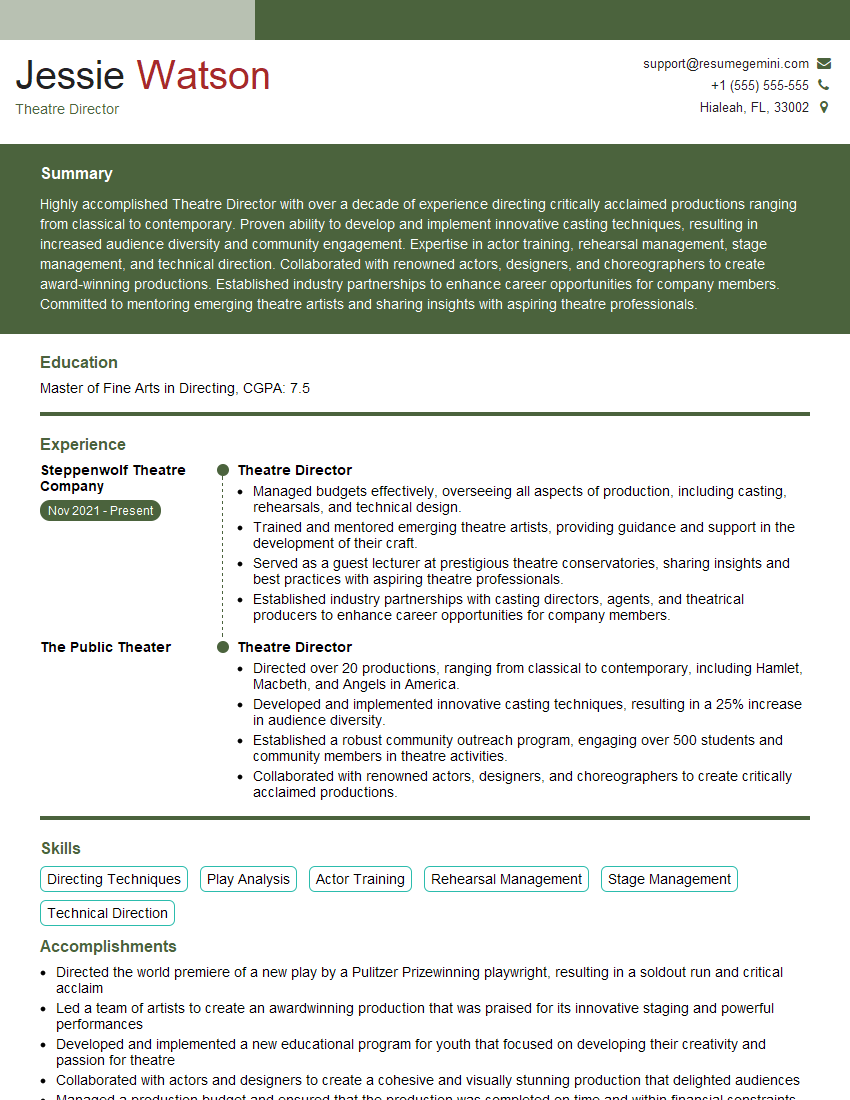
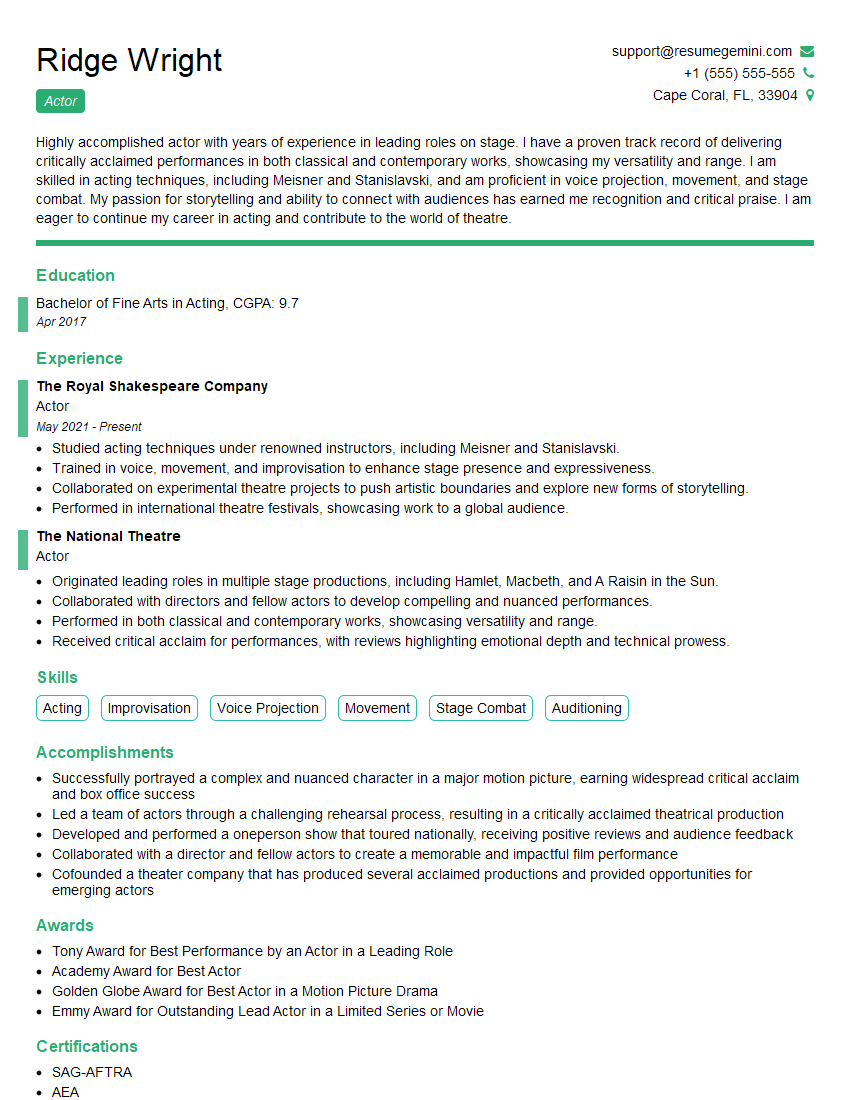
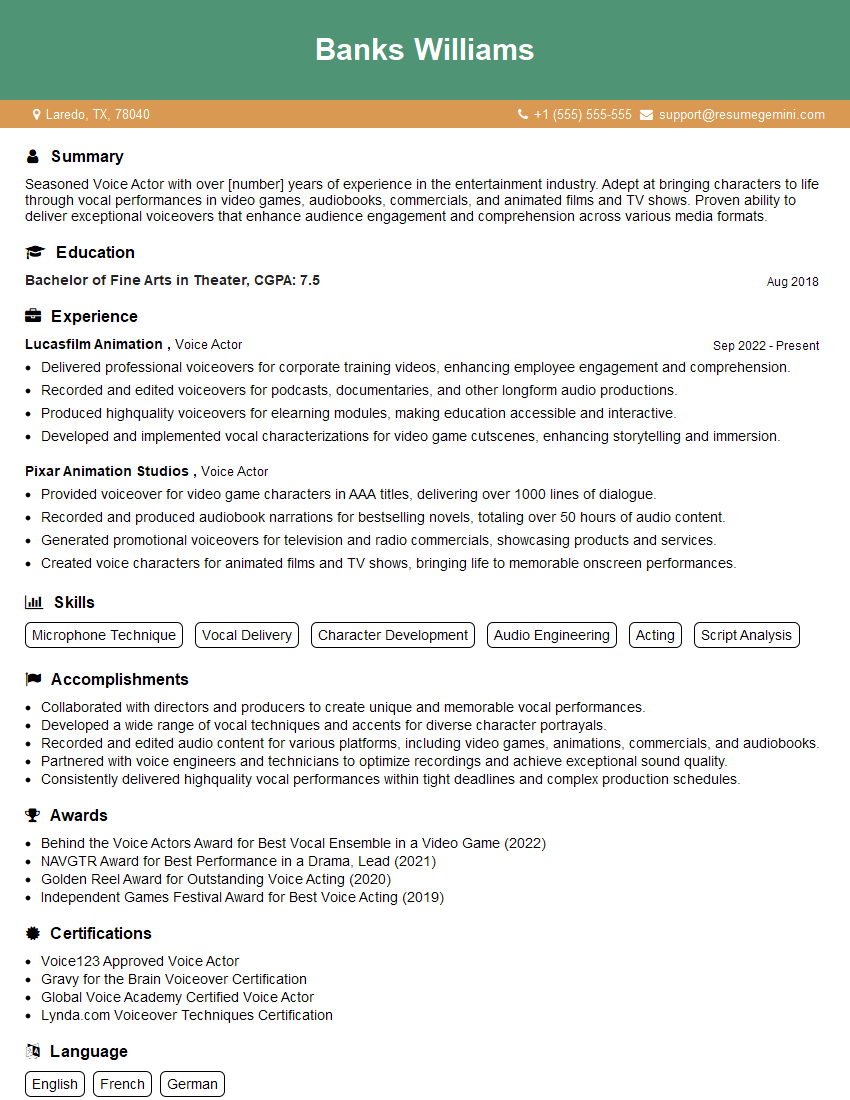
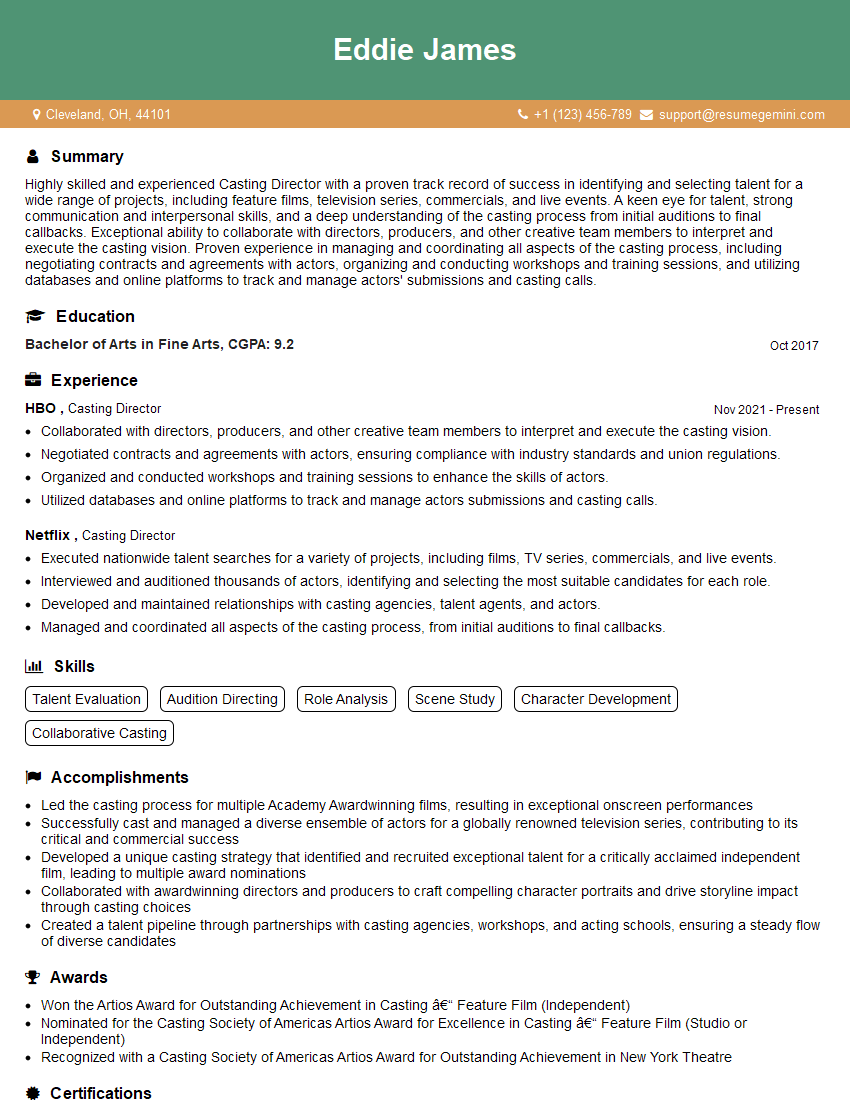
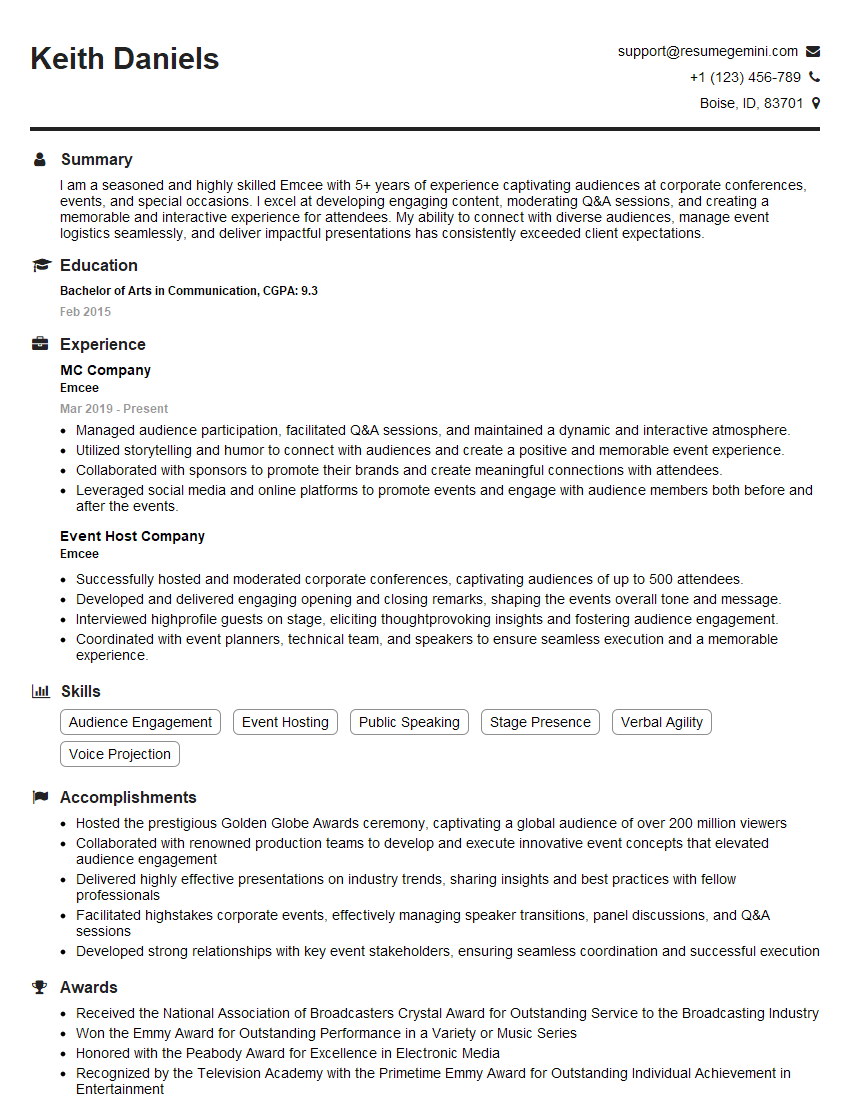
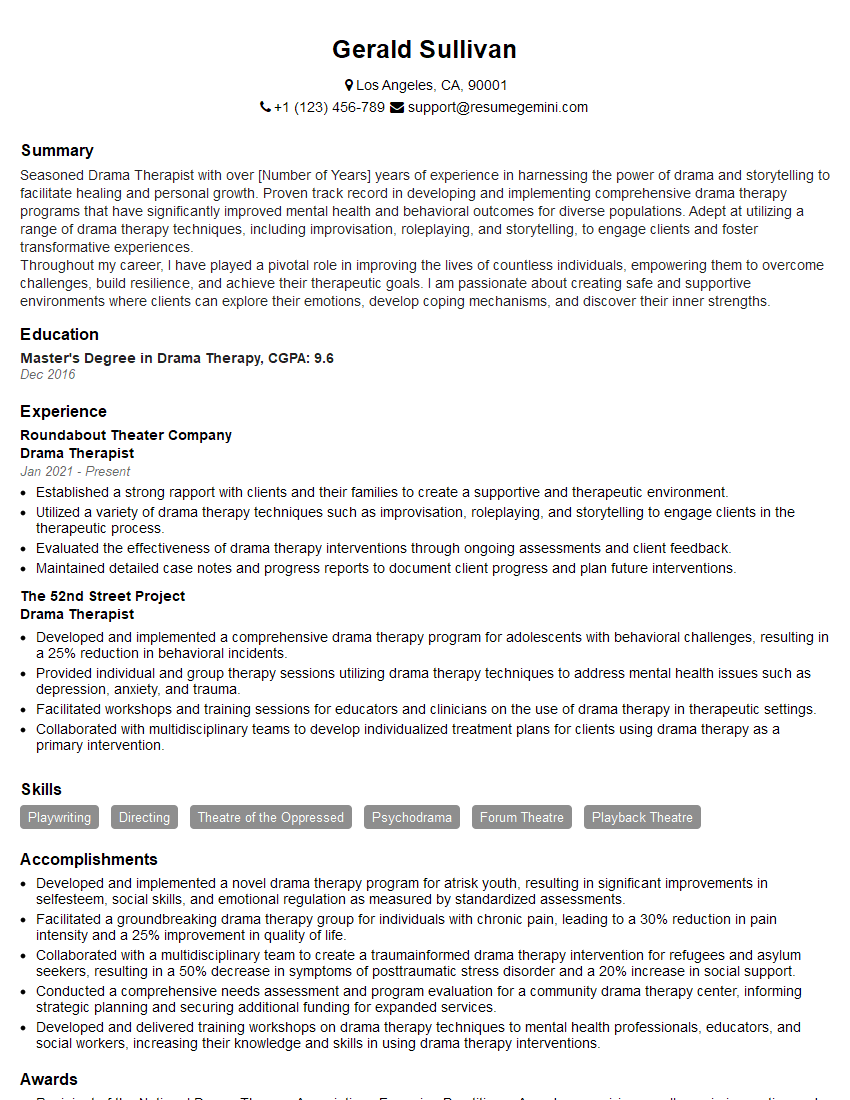
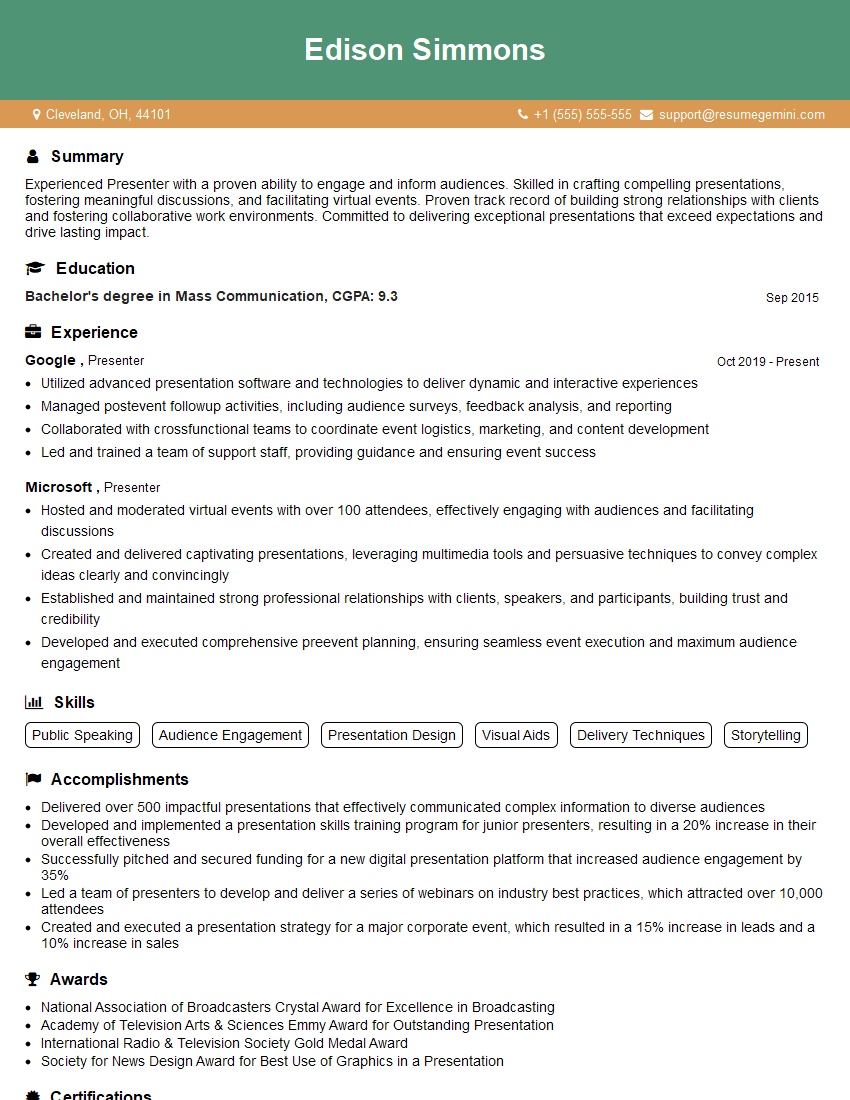
Mastering acting and improvisation is crucial for a thriving career in the performing arts. It opens doors to diverse roles, demanding projects, and rewarding collaborations. To maximize your job prospects, a strong, ATS-friendly resume is essential. ResumeGemini is a trusted resource that can help you craft a compelling resume showcasing your unique skills and experience. We provide examples of resumes tailored specifically to Acting and Improvisation professionals, to help guide you in presenting your talents effectively.
Explore more articles
Users Rating of Our Blogs
Share Your Experience
We value your feedback! Please rate our content and share your thoughts (optional).
What Readers Say About Our Blog
Very informative content, great job.
good