Are you ready to stand out in your next interview? Understanding and preparing for Adaptive and Agile Approach interview questions is a game-changer. In this blog, we’ve compiled key questions and expert advice to help you showcase your skills with confidence and precision. Let’s get started on your journey to acing the interview.
Questions Asked in Adaptive and Agile Approach Interview
Q 1. Explain the difference between Agile and Waterfall methodologies.
Waterfall and Agile represent fundamentally different approaches to software development. Waterfall, a traditional method, follows a linear, sequential process where each phase must be completed before the next begins (requirements, design, implementation, testing, deployment, maintenance). Think of it like building a house: you lay the foundation, then build the walls, then the roof, and so on. Changes are difficult and expensive to implement once a phase is finished.
Agile, on the other hand, is iterative and incremental. It emphasizes flexibility and collaboration. Instead of a rigid plan, Agile projects are broken down into smaller, manageable iterations (typically sprints) allowing for frequent adjustments based on feedback and changing requirements. Imagine building with LEGOs: you can constantly tweak and rebuild as you go, adapting to new ideas or discovering better ways to construct your creation.
In short, Waterfall is rigid and predictive, while Agile is flexible and adaptive. Waterfall works best for projects with well-defined requirements that are unlikely to change, while Agile is ideal for projects with evolving needs and a high degree of uncertainty.
Q 2. Describe the Scrum framework and its key roles.
Scrum is a lightweight Agile framework for managing and completing complex projects. It’s based on a cyclical process called a sprint, typically lasting two to four weeks. The core of Scrum revolves around three key roles:
- Product Owner: Responsible for defining and prioritizing the product backlog (a prioritized list of features), representing the stakeholders and ensuring the team builds the right product.
- Scrum Master: A facilitator who removes impediments for the team, ensuring the Scrum process is followed, and protecting the team from external distractions. Think of them as the team’s coach and advocate.
- Development Team: A self-organizing, cross-functional team responsible for designing, developing, testing, and delivering the product increment. They are the ones doing the actual work.
These roles work together during various Scrum events like sprint planning, daily scrum, sprint review, and sprint retrospective, to deliver potentially shippable increments of the product at the end of each sprint.
Q 3. What are the principles of the Agile Manifesto?
The Agile Manifesto outlines four key values and twelve supporting principles. The values prioritize:
- Individuals and interactions over processes and tools
- Working software over comprehensive documentation
- Customer collaboration over contract negotiation
- Responding to change over following a plan
These values emphasize collaboration, adaptability, and delivering functional software quickly. The twelve principles provide further guidance on how to apply these values in practice, such as embracing change, delivering working software frequently, and maintaining a sustainable pace.
Q 4. How do you handle conflicting priorities in an Agile environment?
Conflicting priorities are inevitable in Agile projects. Effective management requires a collaborative approach. Here’s a step-by-step strategy:
- Clearly Define Priorities: Use techniques like MoSCoW prioritization (Must have, Should have, Could have, Won’t have) or value vs. effort matrices to rank requirements based on business value and effort required.
- Transparency and Communication: Openly discuss conflicting priorities with all stakeholders (Product Owner, Development Team, Customers). Ensure everyone understands the constraints and trade-offs.
- Negotiation and Collaboration: Facilitate discussions to find compromises. Explore alternatives, break down large features, or defer less critical items to later sprints.
- Data-Driven Decisions: Rely on data to support decisions. Analyze sprint velocity, burn-down charts, and feedback to make informed choices.
- Continuous Improvement: Regularly review the prioritization process to identify areas for improvement and refine the approach over time.
For example, if two features have equal value but different complexities, prioritizing the simpler one might allow for quicker feedback and quicker value delivery.
Q 5. Explain the concept of iterative development.
Iterative development is a core concept in Agile. It involves developing software in small, incremental cycles (iterations) rather than one large monolithic release. Each iteration builds upon the previous one, incorporating feedback and adapting to changing requirements. This approach reduces risk, allows for early feedback, and ensures the final product aligns closely with customer needs.
Imagine building a house iteratively: you might start with the foundation and basic structure in the first iteration, then add walls and windows in the second, followed by the roof and interior finishes in subsequent iterations. This allows for flexibility – if you decide you want a different type of window mid-way, you can adjust in the next iteration without having to rebuild the entire house.
Q 6. What is a sprint backlog and how is it managed?
The sprint backlog is a subset of the product backlog, containing the tasks the development team commits to completing during a single sprint. It’s a highly dynamic document. The Scrum Master and Development Team work together to break down user stories (from the product backlog) into smaller, actionable tasks. Each task includes an estimate of its complexity (e.g., using story points) and is assigned to a team member.
Management of the sprint backlog involves:
- Refinement: Continuously refining the backlog items to ensure clarity and accurately estimate the work involved.
- Tracking Progress: Using tools like Kanban boards or Scrum boards to monitor task completion and identify potential bottlenecks.
- Adaptability: Regularly reviewing and updating the backlog during the sprint to account for new information or changing priorities. This might involve adding new tasks, removing completed ones, or re-prioritizing existing tasks.
Q 7. How do you facilitate effective sprint planning?
Effective sprint planning is crucial for a successful sprint. It’s a collaborative session involving the entire Scrum team. Here’s how to facilitate it:
- Review the Product Backlog: Start by reviewing the prioritized items in the product backlog and selecting which items will be targeted for the upcoming sprint. This selection should be based on value, complexity, and capacity.
- Break Down User Stories: Collaboratively break down selected user stories into smaller, well-defined tasks. Each task should be easily understood and independently estimable.
- Estimate Task Complexity: Use relative estimation techniques (like story points) to estimate the effort required for each task. This helps predict the sprint capacity and identify potential risks.
- Commit to a Sprint Goal: The team collectively commits to a specific, achievable goal for the sprint. This provides a clear focus for the sprint.
- Create the Sprint Backlog: The tasks, along with their estimates and assignments, form the sprint backlog.
- Plan the Sprint Capacity: Based on the team’s estimation and velocity from previous sprints, the team determines what it realistically can achieve in the upcoming sprint.
Throughout this process, the Scrum Master ensures collaboration, communication, and alignment among team members.
Q 8. What are some common Agile metrics you track?
Tracking Agile metrics provides crucial insights into project health and performance. We don’t just track metrics for the sake of it; we use them to identify areas for improvement and make data-driven decisions. Common metrics I track include:
- Velocity: This measures the amount of work a team completes in a sprint. It helps predict future sprint capacity and identify potential bottlenecks. For example, a consistent decrease in velocity might signal a need for more training or resource allocation.
- Cycle Time: This tracks the time it takes for a task to move from the backlog to done. Reducing cycle time is a key goal, improving efficiency and customer satisfaction. A high cycle time can point to process inefficiencies or overly complex tasks.
- Lead Time: This measures the time from when a request is made to when it’s delivered. This provides a high-level view of the entire process and is crucial for customer satisfaction. Analyzing lead time helps us understand where delays occur.
- Burndown/Burnup Charts: These visually represent the remaining work and provide a clear picture of sprint progress. Deviations from the predicted path can be addressed early on.
- Defect Rate: Tracking the number of defects found per sprint helps assess quality and identify areas prone to errors. A high defect rate could indicate a need for better testing practices or more thorough requirements gathering.
- Customer Satisfaction: Using feedback surveys or direct interaction, we gauge client happiness with the delivered value. This is ultimately the most important metric, proving that the agile process is delivering what matters most.
These metrics are not standalone; they work together to paint a comprehensive picture of project performance. We regularly review and discuss these metrics during sprint retrospectives, ensuring continuous improvement.
Q 9. How do you identify and mitigate risks in an Agile project?
Risk mitigation in Agile projects is an ongoing process, not a one-time event. We employ a proactive approach, integrating risk management throughout the entire lifecycle. Here’s my typical process:
- Risk Identification: We use brainstorming sessions, risk checklists, and past project experience to identify potential risks (e.g., technical challenges, resource constraints, scope creep, dependencies on external parties). We categorize them by likelihood and impact.
- Risk Analysis: We assess each risk using a matrix that considers its likelihood and potential impact. This helps prioritize risks based on their severity.
- Risk Response Planning: We develop mitigation strategies for each identified risk. This may include contingency plans, alternative solutions, and proactive measures to reduce the likelihood or impact. For example, if a dependency on an external vendor is identified, we might explore alternative solutions or proactively schedule meetings to ensure timely delivery.
- Monitoring and Control: We regularly monitor identified risks throughout the project, tracking their status and implementing planned mitigation strategies when necessary. We adapt our strategies as new risks emerge or circumstances change. This is often built into sprint reviews and retrospectives.
- Continuous Improvement: Each project offers learning opportunities. We document lessons learned from each risk event, incorporating those insights into our future risk management processes.
This proactive and iterative approach helps ensure that we address risks early, minimizing their impact on the project and its successful delivery.
Q 10. Describe your experience with different Agile frameworks (e.g., Scrum, Kanban, XP).
I have extensive experience with various Agile frameworks, adapting my approach based on project needs and team dynamics. Here’s a summary:
- Scrum: I’ve led numerous Scrum projects, leveraging its iterative approach with sprints, daily stand-ups, sprint reviews, and retrospectives. I’m comfortable with Scrum roles (Product Owner, Scrum Master, Development Team) and artifacts (Product Backlog, Sprint Backlog, etc.). For example, in a recent project developing a mobile application, we effectively used Scrum to deliver features incrementally, gaining valuable user feedback at each sprint review.
- Kanban: I’ve implemented Kanban boards to visualize workflow, limit work in progress (WIP), and improve flow efficiency. Kanban’s flexibility is ideal for projects with evolving requirements or those requiring rapid response to changing priorities. In a support team project, we used Kanban to prioritize and manage incoming tickets, ensuring efficient resolution and reducing wait times.
- Extreme Programming (XP): I’ve incorporated XP practices such as test-driven development (TDD), pair programming, and continuous integration into my projects. TDD, in particular, ensured high-quality code and early detection of bugs. For instance, on a critical software component, we used pair programming and TDD to ensure both code quality and knowledge sharing within the development team.
My experience shows I’m not rigidly tied to a single framework but am adept at selecting and tailoring the most appropriate approach to optimize project success.
Q 11. How do you handle impediments within a team?
Handling impediments requires a structured, collaborative, and proactive approach. My strategy centers on:
- Open Communication: I encourage team members to openly identify and report impediments immediately, without fear of blame. This includes creating a safe space for vulnerability.
- Immediate Assessment: Once an impediment is identified, we assess its severity and impact on the sprint goals. This determines the urgency of the solution.
- Collaboration and Problem-Solving: We work collaboratively to brainstorm solutions. This often involves the team, the Scrum Master (if applicable), and stakeholders. We try to find the simplest, most effective solution.
- Escalation (if necessary): If the team cannot resolve the impediment, I escalate it to the appropriate management level to secure resources or make necessary decisions.
- Documentation and Tracking: We document the impediment, the solution implemented, and the outcome. This helps prevent recurring issues and track overall team efficiency.
- Retrospective Review: We discuss the impediment during sprint retrospectives to identify root causes and implement preventative measures to avoid similar issues in the future.
A recent example involved a dependency on an external team. By proactively communicating and collaborating with that team, we managed to remove the impediment and keep the project on track.
Q 12. How do you ensure transparency in an Agile project?
Transparency is crucial for effective Agile project management. It fosters trust, accountability, and collaboration. I achieve this through several methods:
- Visual Management: Kanban boards, burndown charts, and other visual tools make project progress and impediments readily visible to the entire team and stakeholders. These tools should be easily accessible and regularly updated.
- Daily Stand-ups: These brief meetings provide a daily snapshot of progress, challenges, and roadblocks, ensuring everyone is aligned.
- Regular Sprint Reviews and Retrospectives: These sessions provide opportunities for feedback and open communication about progress, issues, and lessons learned.
- Open Communication Channels: I encourage open and frequent communication using tools like instant messaging and project management software, ensuring information is readily available and easily accessible.
- Accessible Documentation: We maintain updated documentation of requirements, design decisions, and project plans, easily accessible to all stakeholders. Version control is critical for transparency.
- Stakeholder Engagement: Regular updates and meetings with stakeholders ensure they are informed of progress and any potential challenges. We maintain open communication channels to address their concerns promptly.
By ensuring open communication and easily accessible information, we foster a culture of transparency where everyone understands the project’s status and feels empowered to contribute.
Q 13. Explain the concept of continuous integration and continuous delivery (CI/CD).
Continuous Integration and Continuous Delivery (CI/CD) are two closely related practices that significantly improve software development efficiency and quality. They automate the process of building, testing, and deploying software.
Continuous Integration (CI) focuses on automating the integration of code changes from multiple developers into a shared repository. Each integration is verified by an automated build and automated tests, ensuring early detection of integration issues. This reduces integration problems and makes it much easier to track down and fix bugs.
Continuous Delivery (CD) builds on CI by automating the release process. Once code passes CI, it’s automatically deployed to a staging environment for further testing and eventually to production. This reduces deployment time and risk, allowing for more frequent releases.
Benefits of CI/CD include faster feedback loops, reduced risks, improved code quality, faster deployments, and increased developer productivity. For example, in a recent project, implementing CI/CD allowed us to release new features daily, significantly improving the speed of feedback from users and accelerating product development.
A typical CI/CD pipeline involves:
- Version Control: Developers commit code to a shared repository (e.g., Git).
- Build Automation: An automated build process compiles the code and runs unit tests.
- Automated Testing: Various automated tests (unit, integration, system, etc.) are executed.
- Deployment Automation: The application is automatically deployed to different environments (development, testing, staging, production).
- Monitoring and Feedback: The deployed application is monitored, and feedback is collected to improve the process.
Q 14. How do you adapt Agile practices to different project contexts?
Adaptability is a cornerstone of Agile. We don’t blindly apply Agile frameworks; we tailor them to the specific project context. Factors influencing adaptation include:
- Project Size and Complexity: Larger, more complex projects might require a more structured approach like Scrum, while smaller projects might benefit from Kanban’s simplicity.
- Team Size and Experience: Teams with less Agile experience might need more support and coaching. We adapt the framework to fit the team’s maturity level.
- Client Involvement: The level of client involvement influences the frequency of feedback loops and the degree of iterative development.
- Technology Stack: The technology used impacts the tools and processes we employ, particularly in areas like CI/CD.
- Regulatory Requirements: Compliance requirements might necessitate stricter documentation and approval processes.
For example, in a project with a geographically distributed team, we used tools like video conferencing and collaborative workspaces to bridge the distance and ensure effective communication. In a project with high regulatory requirements, we tailored our documentation and approval processes to meet compliance standards. The key is to leverage the principles of Agile, adapting the practices to fit the unique needs of the project and team.
Q 15. What is your experience with Agile estimation techniques?
Agile estimation isn’t about finding the perfect number; it’s about creating a shared understanding of effort. I’ve extensively used techniques like Planning Poker (using Fibonacci sequence cards to estimate story points), T-Shirt Sizing (small, medium, large, etc.), and Relative Estimation (comparing stories to a baseline). My experience shows that the most effective approach adapts to the team’s maturity and the project’s complexity. For example, with a new team working on a complex project, we might start with T-Shirt sizing for a quick overview before refining estimates with Planning Poker as we gain more experience. For simpler tasks, a quick relative estimation during backlog refinement can be sufficient.
In one project involving building a new e-commerce platform, we initially struggled with consistent estimations using Planning Poker. We addressed this by introducing a dedicated estimation session with clear explanations of story criteria and incorporating past project data. This iterative approach significantly improved accuracy over time.
Career Expert Tips:
- Ace those interviews! Prepare effectively by reviewing the Top 50 Most Common Interview Questions on ResumeGemini.
- Navigate your job search with confidence! Explore a wide range of Career Tips on ResumeGemini. Learn about common challenges and recommendations to overcome them.
- Craft the perfect resume! Master the Art of Resume Writing with ResumeGemini’s guide. Showcase your unique qualifications and achievements effectively.
- Don’t miss out on holiday savings! Build your dream resume with ResumeGemini’s ATS optimized templates.
Q 16. How do you measure the success of an Agile project?
Measuring Agile project success goes beyond simply delivering features on time and within budget. It’s a holistic evaluation considering various aspects. Key metrics include:
- Velocity: The consistent rate at which the team completes work, providing insight into team performance and predictability.
- Customer Satisfaction: Measured through feedback surveys, user testing, and direct communication to ensure the delivered value meets user needs.
- Product Quality: Assessed via code reviews, automated testing, and bug reports, ensuring a high-quality outcome.
- Team Morale and Collaboration: A highly engaged team is more productive and delivers better results. This can be gauged through retrospective feedback and observation.
- Adaptability to Change: Agile thrives on adapting to change. Measuring how effectively the team handles changing requirements or priorities is crucial.
For instance, in a previous project developing a mobile app, we tracked not only feature completion but also user engagement metrics (downloads, active users, and in-app activity) to truly measure the success of the app beyond its technical implementation.
Q 17. Describe your experience with Agile tools (e.g., Jira, Trello, Asana).
I have extensive experience using several Agile tools, including Jira, Trello, and Asana. My choice depends on the project’s size and team dynamics. Jira, with its robust features for tracking issues, managing sprints, and generating reports, is best suited for large, complex projects with many stakeholders. Trello’s Kanban board approach works well for smaller teams or projects that prioritize visual workflow management. Asana offers a balance, providing both Kanban and list views with good task management features.
In a recent project using Jira, we customized workflows to reflect our specific process, incorporating automated transitions to streamline our development cycle and improve transparency.
Q 18. How do you facilitate effective team collaboration in an Agile setting?
Effective team collaboration in an Agile setting hinges on open communication, mutual respect, and shared understanding. I facilitate this through:
- Daily Scrums: Short, focused daily meetings to synchronize efforts and address impediments.
- Regular Retrospectives: Dedicated sessions for team reflection and continuous improvement.
- Collaborative Tools: Using shared project management tools to ensure everyone stays informed and aligned.
- Open Communication Channels: Encouraging open dialogue, questions, and idea sharing without fear of judgment.
- Pair Programming/Mob Programming: Promoting knowledge sharing and collaboration through code development practices.
For example, in one project, we adopted pair programming to foster knowledge sharing amongst junior and senior developers, resulting in improved code quality and faster learning for newer team members.
Q 19. Explain the concept of a Daily Scrum.
The Daily Scrum is a 15-minute time-boxed meeting held daily by the development team. It’s not a status meeting; instead, it’s a collaborative opportunity to plan the day’s work. Each team member answers three key questions:
- What did I do yesterday that helped the team progress toward the Sprint Goal?
- What will I do today to help the team progress toward the Sprint Goal?
- Are there any impediments preventing me from doing my work?
The Daily Scrum focuses on identifying and resolving impediments to maintain workflow. Think of it as a quick check-in to keep everyone aligned and on track. It helps prevent larger problems from developing by addressing small roadblocks early on.
Q 20. What is your approach to conflict resolution in an Agile team?
Conflict is inevitable in any team, but in Agile, it’s crucial to address it constructively. My approach focuses on:
- Early Detection: Recognizing potential conflicts through observation and open communication.
- Facilitation: Creating a safe space for open discussion where everyone feels heard and respected.
- Mediation: Guiding the team to find mutually acceptable solutions, focusing on shared goals rather than individual positions.
- Focus on the Problem, Not the Person: Shifting the discussion from personal attacks to the underlying issues.
- Documentation: Keeping records of agreed-upon solutions and actions to avoid recurring conflicts.
In one situation, a disagreement arose about the technical approach to a feature. I facilitated a discussion where each team member explained their reasoning, highlighting the pros and cons of each approach. We ultimately chose a hybrid solution that incorporated the best aspects of both, leading to a more robust and efficient implementation.
Q 21. How do you handle changes in requirements in an Agile project?
Agile embraces change. When requirements change, we don’t resist; we adapt. My approach involves:
- Prioritization: Assessing the impact of the change on the sprint goal and overall project objectives.
- Re-estimation: Evaluating the effort required to implement the new requirements, using techniques like those mentioned earlier.
- Negotiation: Discussing with the stakeholders to balance the value of the new requirements with the project timeline and resources.
- Sprint Review/Adaptation: Incorporating changes into the sprint backlog, adjusting the sprint goal if necessary, or prioritizing new items in the product backlog.
- Transparency: Communicating the impact of changes to all stakeholders and ensuring everyone remains informed.
For example, during the development of a software application, a crucial market shift prompted a change in the core functionality. We collaborated with stakeholders to analyze the implications, adjusted our sprint plan to accommodate the alterations, and transparently communicated the revised timeline and features to all concerned parties. This ensured the project remained aligned with market needs and customer expectations.
Q 22. Describe your experience with Agile retrospectives.
Agile retrospectives are incredibly valuable meetings held at the end of each iteration (sprint) to reflect on what went well, what could be improved, and how to adapt our processes for future success. Think of it as a team ‘post-mortem’ focused on continuous improvement, not blame.
My experience involves facilitating these sessions, ensuring a safe and collaborative environment. We typically use techniques like:
- Start, Stop, Continue: Identifying practices to start, stop, and continue in the next iteration.
- Prioritized Problem Solving: Focusing on the most impactful issues, often using dot-voting to determine priorities.
- Fishbone Diagram (Ishikawa): Analyzing root causes of identified problems.
I always strive to keep retrospectives action-oriented. We don’t just discuss problems; we generate concrete action items with assigned owners and deadlines. For example, in one project, a retrospective revealed slow feedback cycles. We decided to implement a daily stand-up meeting focused specifically on code reviews, which drastically reduced delays in subsequent sprints.
Q 23. What is your understanding of technical debt and how do you manage it in an Agile project?
Technical debt refers to the implied cost of rework caused by choosing an easy (often quick) solution now instead of using a better approach that would take longer. It’s like taking a shortcut that might save time initially, but ultimately makes the journey longer and more difficult later.
Managing technical debt in an Agile project requires proactive planning and disciplined execution. We address it through:
- Identifying and Prioritizing: Regularly assessing the codebase for areas of technical debt, categorizing its impact (e.g., minor, major, critical), and prioritizing it alongside new feature development.
- Refactoring Sessions: Allocating specific sprint time for improving code quality and addressing technical debt. These sessions can be themed (e.g., improving test coverage, refactoring a specific module).
- Continuous Integration/Continuous Delivery (CI/CD): Implementing automated testing and deployment processes helps reduce the risk and cost of fixing defects later.
- Tracking and Monitoring: Measuring the technical debt level over time using relevant metrics, so we can observe the effect of our efforts.
For instance, if we find a poorly documented module causing integration problems, we might allocate a portion of a sprint to improve its documentation and add automated tests, thereby reducing the risk of future bugs and improving maintainability.
Q 24. Explain your understanding of Lean principles and how they relate to Agile.
Lean principles focus on eliminating waste and maximizing value for the customer. Agile methodologies are heavily influenced by Lean thinking, adopting its emphasis on efficiency and continuous improvement.
The core Lean principles relevant to Agile include:
- Value Stream Mapping: Identifying and optimizing the flow of work from concept to delivery.
- Waste Reduction (Muda): Eliminating non-value-added activities like unnecessary meetings, excessive documentation, or waiting times.
- Continuous Improvement (Kaizen): Regularly seeking ways to refine processes and enhance efficiency.
- Respect for People: Empowering team members and fostering a collaborative environment.
In practice, a Lean-Agile approach might involve using Kanban boards to visualize workflow, employing timeboxing for meetings, and implementing just-in-time delivery of information to minimize waste and maximize efficiency. For example, in one project, applying Lean principles to the deployment pipeline reduced deployment time from several days to a few hours, resulting in faster feedback and quicker delivery of value to the client.
Q 25. How do you ensure quality in an Agile development process?
Ensuring quality in Agile is a continuous process, not an afterthought. It’s built into every stage of development.
Here are key strategies:
- Test-Driven Development (TDD): Writing tests *before* writing code ensures functionality and reduces bugs early in the development cycle.
- Continuous Integration (CI): Regularly integrating code changes into a shared repository to catch conflicts and errors early.
- Code Reviews: Peer reviews help improve code quality, identify potential bugs, and share knowledge within the team.
- Automated Testing: Employing unit, integration, and system tests to automate quality checks, saving time and resources.
- Definition of Done (DoD): Establishing clear criteria for completing a user story, including testing and documentation, ensures a consistent level of quality.
For instance, in a recent project, the implementation of comprehensive automated testing reduced the number of bugs discovered during user acceptance testing by over 60%, significantly reducing the time and cost associated with bug fixes.
Q 26. Describe a time you successfully implemented an Agile solution.
In a previous project involving the development of a mobile banking application, the client was experiencing delays and escalating costs using a traditional waterfall approach. The project was behind schedule and lacked flexibility to adapt to changing requirements.
We successfully implemented an Agile solution by:
- Introducing Scrum: We adopted Scrum framework, breaking down the project into manageable sprints, with daily stand-ups, sprint reviews, and retrospectives.
- Prioritizing Features: We collaborated with the client to prioritize essential features and deliver value incrementally.
- Implementing Continuous Integration: Automating the build and testing processes ensured quick feedback and early detection of issues.
- Close Collaboration: We established a strong client partnership with regular communication and feedback loops.
This approach resulted in a faster delivery of core functionality, reduced costs, and increased client satisfaction. The Agile approach allowed us to adapt to changing requirements efficiently, delivering a successful product within budget and on time.
Q 27. What are the limitations of Agile methodologies?
While Agile methodologies offer numerous advantages, they also have limitations:
- Requires Experienced Teams: Agile requires skilled and self-organizing teams, which might not always be readily available.
- Not Suitable for All Projects: Agile might not be the best fit for projects with strict regulatory requirements or unclear objectives.
- Difficult to Scale: Scaling Agile across large, distributed teams can present challenges in communication and coordination.
- Can Be Time-Consuming: The iterative nature of Agile can require significant upfront effort in planning and collaboration.
- Requires Strong Leadership: Successful Agile implementation depends on strong leadership to remove impediments and foster a collaborative environment.
For example, attempting to apply Agile to a highly regulated medical device development project might be overly complex and risky due to the extensive documentation and regulatory hurdles.
Q 28. How do you adapt your Agile approach based on team dynamics?
Adapting the Agile approach to team dynamics is crucial for success. I focus on understanding individual strengths and weaknesses, communication styles, and preferred working methods.
My adaptation strategies include:
- Tailoring Agile Practices: Selecting and customizing Agile frameworks (like Scrum or Kanban) to suit the team’s specific context and preferences. For example, a team that thrives on autonomy might benefit from a Kanban approach, while a team that prefers structure might prefer Scrum.
- Facilitating Communication: Implementing effective communication channels and techniques to ensure clear information flow and address concerns promptly. This might involve daily stand-ups, regular team meetings, or using collaborative tools.
- Encouraging Collaboration: Creating a supportive and inclusive team environment that encourages collaboration and mutual respect. Activities like team-building exercises can enhance team cohesion and communication.
- Addressing Conflicts: Proactively identifying and resolving conflicts to avoid negative impacts on team productivity and morale. This might involve mediation or facilitating open communication between team members.
- Continuous Feedback: Regularly soliciting feedback from team members about the Agile process and adjusting it based on their input.
For instance, if a team struggles with estimation, we might adopt a technique like planning poker or story mapping to improve accuracy. If a team lacks experience in a particular skill, we might invest in training or mentoring to build capacity. It’s about creating a supportive environment where everyone feels empowered to contribute and succeed.
Key Topics to Learn for Adaptive and Agile Approach Interview
- Agile Methodologies: Understand the core principles of Scrum, Kanban, and Lean, including their strengths and weaknesses in different project contexts. Consider how these methodologies address change and iterative development.
- Adaptive Planning & Execution: Explore techniques for adapting plans based on feedback and changing priorities. Discuss practical examples of how you’ve navigated unforeseen challenges in a project using agile principles.
- Stakeholder Management in Agile: Learn how to effectively communicate and collaborate with diverse stakeholders, managing expectations and resolving conflicts in an agile environment. This includes understanding the role of the Product Owner and Scrum Master.
- Risk Management & Mitigation: Examine how agile methodologies address risk throughout the project lifecycle. Discuss strategies for identifying, assessing, and mitigating potential risks proactively.
- Continuous Improvement & Retrospective: Understand the importance of regular retrospectives and how they contribute to team learning and process optimization. Be prepared to discuss your experiences with implementing improvements based on retrospective feedback.
- Tools & Technologies: Familiarize yourself with common tools used in agile project management (e.g., Jira, Trello, Asana) and their application in different contexts. Be prepared to discuss your experience with specific tools.
- Scaling Agile: Explore frameworks for implementing agile methodologies in larger, more complex projects (e.g., SAFe, LeSS). Discuss the challenges and benefits of scaling agile.
Next Steps
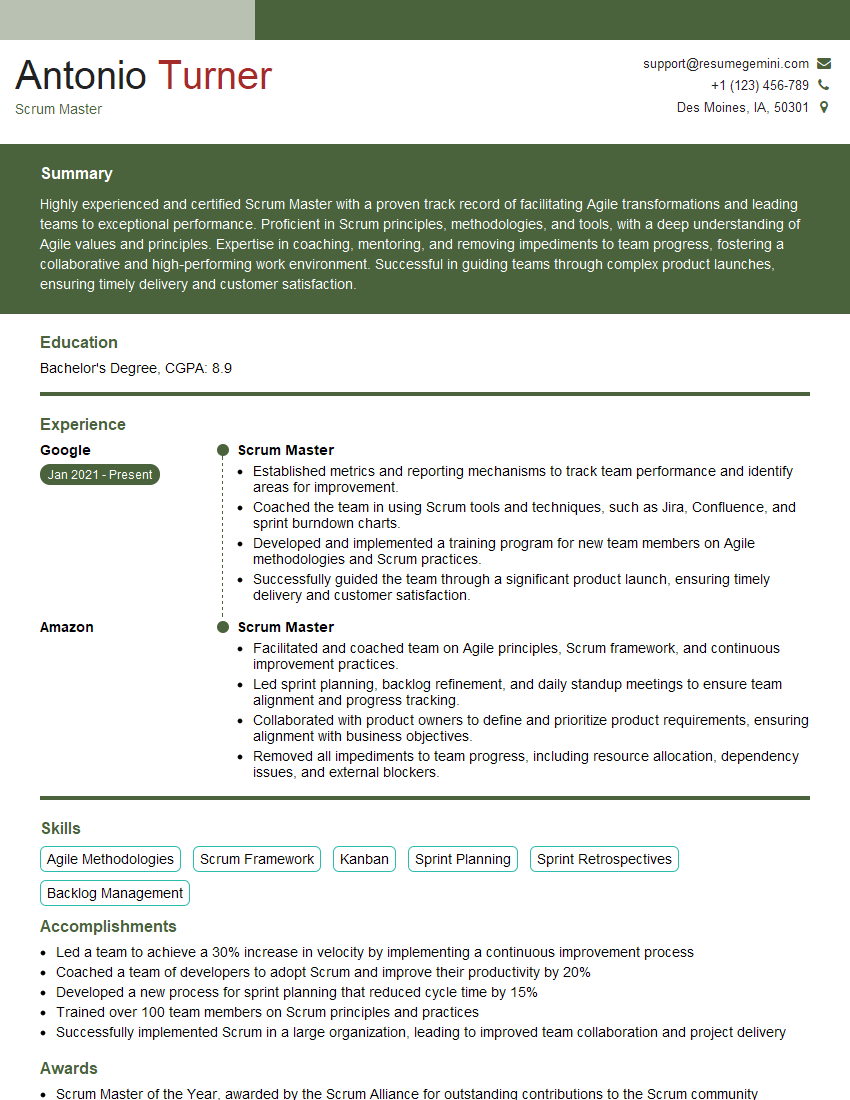
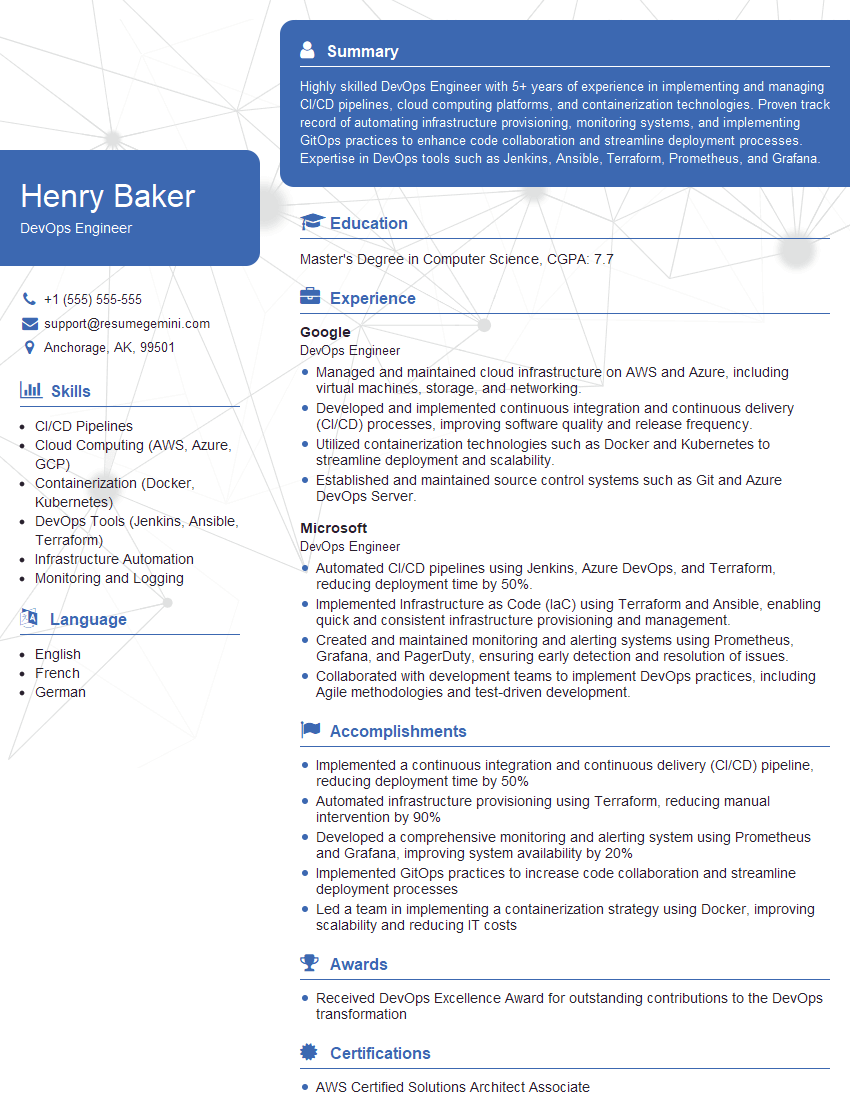
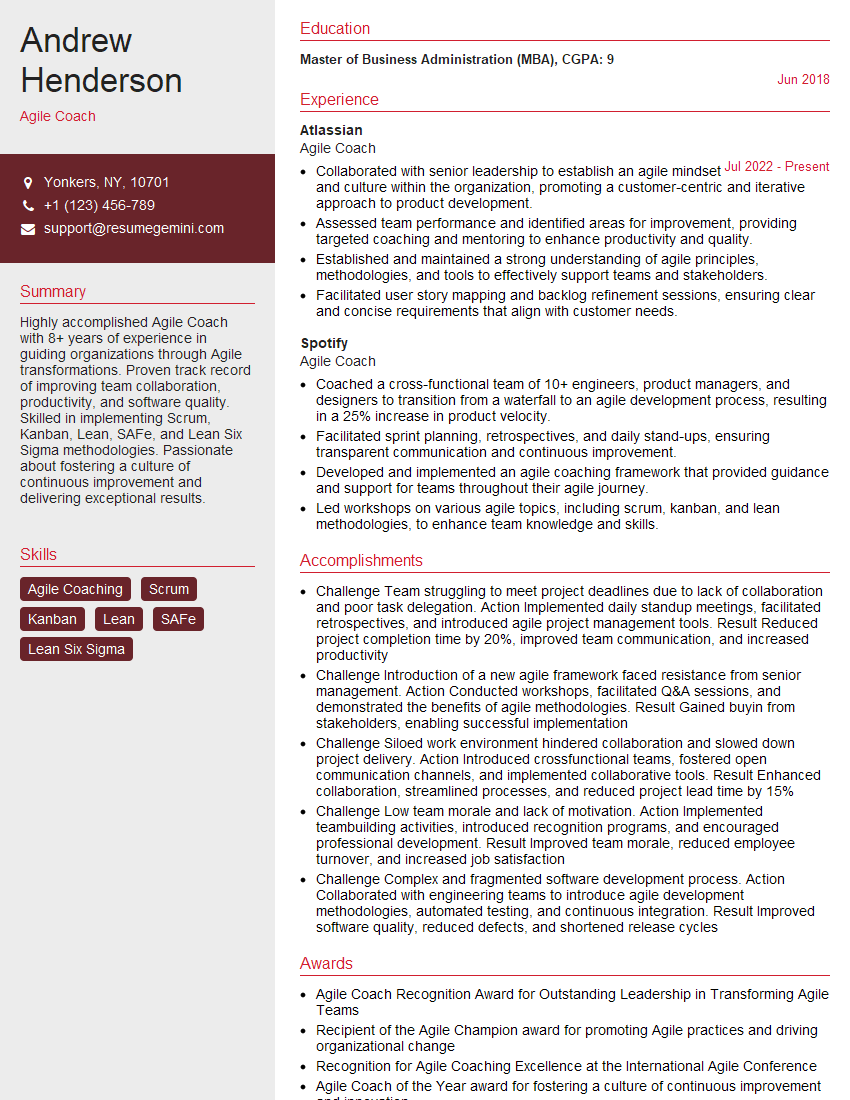
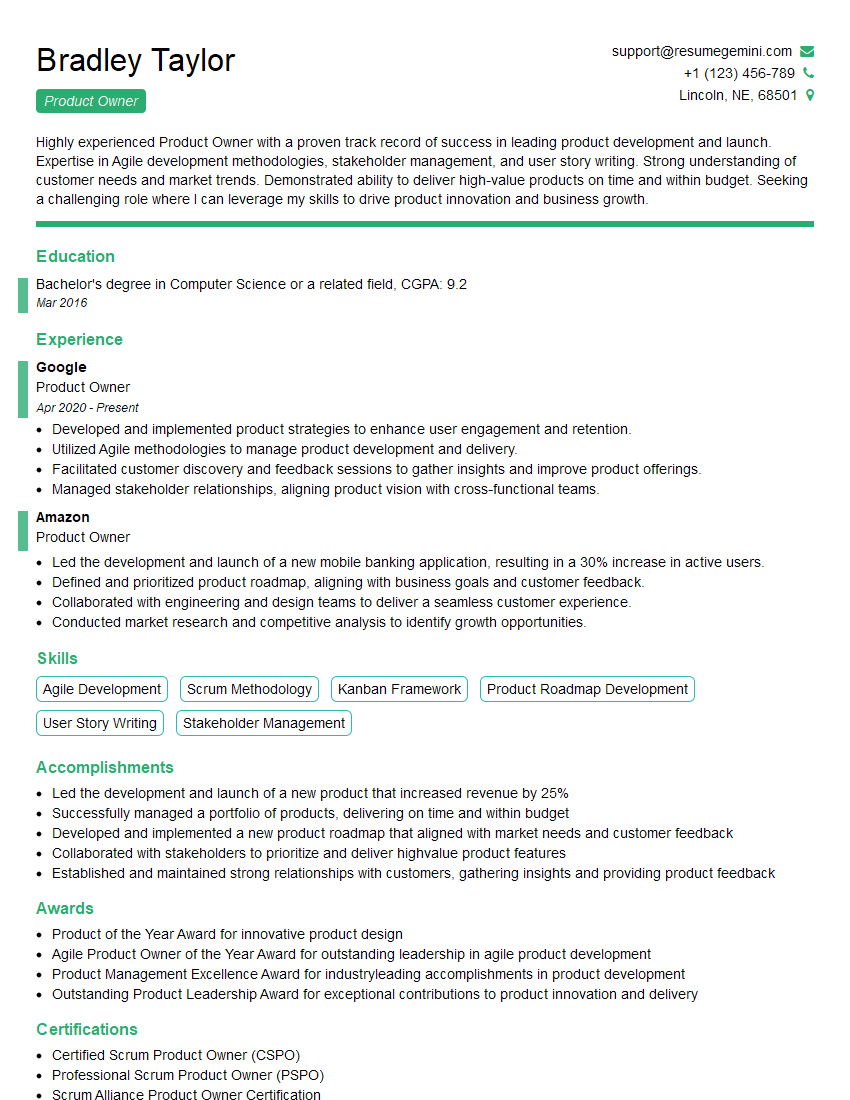
Mastering Adaptive and Agile approaches is crucial for career advancement in today’s dynamic work environment. Demonstrating a strong understanding of these methodologies significantly improves your job prospects across numerous industries. To stand out, create a compelling, ATS-friendly resume that highlights your Agile experience. ResumeGemini is a trusted resource to help you build a professional resume that showcases your skills effectively. Examples of resumes tailored to Adaptive and Agile Approach are available to further guide you in creating a standout application.
Explore more articles
Users Rating of Our Blogs
Share Your Experience
We value your feedback! Please rate our content and share your thoughts (optional).
What Readers Say About Our Blog
Very informative content, great job.
good