The right preparation can turn an interview into an opportunity to showcase your expertise. This guide to Adhering to Mailroom Security Protocols interview questions is your ultimate resource, providing key insights and tips to help you ace your responses and stand out as a top candidate.
Questions Asked in Adhering to Mailroom Security Protocols Interview
Q 1. Describe your experience implementing and enforcing mailroom security protocols.
Implementing and enforcing mailroom security protocols involves a multi-faceted approach, focusing on physical security, procedural adherence, and staff training. In my previous role at [Previous Company Name], I was responsible for developing and overseeing the implementation of a comprehensive mailroom security policy. This included conducting risk assessments to identify vulnerabilities, implementing access control measures such as keycard access and CCTV surveillance, and establishing clear procedures for handling incoming and outgoing mail. I also developed and delivered training programs for mailroom staff, emphasizing the importance of security protocols and best practices. For example, we transitioned from a manual logbook system to a digital system that tracked package deliveries and pickups with timestamps and electronic signatures, enhancing traceability and accountability.
Furthermore, I regularly reviewed and updated the security policy to reflect changes in best practices and emerging threats. This ensured our mailroom remained secure and compliant with relevant regulations. We also conducted regular security audits to identify and rectify any weaknesses. For instance, we discovered a potential blind spot in our CCTV coverage, which was addressed promptly by repositioning cameras and adding new ones. This proactive approach helped us maintain a robust security posture.
Q 2. Explain the procedure for handling suspicious packages or mail.
Handling suspicious packages or mail requires a calm, methodical approach prioritizing safety. The first step is to isolate the item immediately, preventing further potential contamination or exposure. This involves moving it away from high-traffic areas and other packages. Next, we would visually inspect the package for anything unusual— unusual odors, unusual markings, or anything that seems out of place. Any suspicious item would be reported immediately to the appropriate authority; this may involve our internal security team, and depending on the severity, the local police department or bomb squad.
We have strict protocols for documenting these events, including detailed descriptions of the item, photos, and the chain of custody. Following all necessary safety protocols and procedures ensures a safe and responsible approach to potentially dangerous packages. For example, during a recent incident involving a package with an unknown substance, our immediate action, and quick reporting to authorities prevented any possible harm and secured the situation rapidly.
Q 3. How would you respond to a security breach in the mailroom?
Responding to a security breach in the mailroom demands a swift and organized response. The first step is to contain the breach, limiting further access and potential damage. This may involve locking down the mailroom, securing affected areas, and preventing unauthorized access. We would then immediately initiate a thorough investigation, identifying the nature and extent of the breach, and determining its cause. This might include reviewing security footage, examining access logs, and interviewing staff.
Following the investigation, we would implement corrective measures to prevent future breaches, such as strengthening access controls, updating security systems, and enhancing staff training. We would also report the breach to relevant authorities, such as law enforcement, and inform any affected parties, complying with all relevant data protection regulations. Documentation of the entire process, from initial discovery to corrective actions, is critical for accountability and future prevention efforts. For example, in the case of a lost package containing sensitive financial data, following this protocol ensured rapid identification of the missing package, minimal disruption to operations, and prompt notification of all involved parties.
Q 4. What are the key elements of a robust mailroom security policy?
A robust mailroom security policy encompasses several key elements. First, it should define clear access control procedures, specifying who is authorized to enter the mailroom and under what circumstances. This often involves the use of keycard systems, biometric scanners, or other access control technologies. Second, the policy should outline procedures for handling incoming and outgoing mail, including inspection processes and the proper disposal of confidential information. Third, it should include comprehensive security awareness training for mailroom staff, ensuring they understand their responsibilities and are equipped to handle potential security threats.
Fourth, the policy needs to address emergency procedures, including how to respond to suspicious packages, security breaches, and other unforeseen events. Fifth, regular security audits and risk assessments are crucial to identify vulnerabilities and improve security measures. Sixth, data protection and privacy regulations must be fully integrated into the policy, ensuring compliance with relevant legislation, such as GDPR or CCPA. Lastly, the policy should establish a reporting mechanism for security incidents, ensuring prompt and effective response and remediation.
Q 5. How do you ensure compliance with data protection regulations regarding mail handling?
Ensuring compliance with data protection regulations requires a comprehensive approach to mail handling. We adhere strictly to guidelines outlined in regulations like GDPR and CCPA by establishing clear procedures for handling sensitive information, including labeling and storing such mail securely. This involves the use of secure containers, shredding equipment for confidential waste, and access restrictions to prevent unauthorized viewing or handling of such materials.
We maintain detailed records of all mail handled, particularly items containing sensitive data. Training programs for mailroom staff emphasize the importance of data protection and privacy, educating employees on the relevant regulations and their responsibilities. Regular audits ensure we remain compliant with these regulations and address any potential vulnerabilities promptly. For example, we implemented a system for tracking and logging all packages containing personal data, ensuring transparency and accountability.
Q 6. What measures would you put in place to prevent unauthorized access to mail and materials?
Preventing unauthorized access involves a layered security approach. This includes physical security measures such as secure entry points (keycard access, for example), surveillance systems (CCTV), and robust locking mechanisms for mail containers and storage areas. Beyond this, we employ procedural controls, such as requiring staff identification and authorization for mail handling, maintaining detailed logs of all access and activities, and limiting the number of individuals with access to sensitive areas.
Regular security audits and staff training are critical for maintaining this level of security. Training programs include awareness of potential threats, proper handling of mail, and the importance of reporting suspicious activity. The use of secure, encrypted communication channels for electronic mail and other sensitive digital materials further enhances security. For example, we implemented a two-factor authentication system for mailroom access, significantly improving the security posture and minimizing unauthorized access attempts.
Q 7. Describe your experience with mailroom access control systems.
My experience with mailroom access control systems spans several years, and includes working with various technologies, from simple keycard systems to more sophisticated biometric access control solutions. I have designed and implemented access control systems in several mailrooms, ensuring they aligned with the overall security strategy and organizational needs. This includes the selection, installation, configuration, and ongoing maintenance of the access control systems.
I am proficient in integrating these systems with other security infrastructure components, such as CCTV surveillance and intrusion detection systems. The integration allows for comprehensive monitoring and management of mailroom access. For example, I configured a system to alert security personnel of any unauthorized access attempts, ensuring immediate response to potential threats. Furthermore, I’m experienced with generating and analyzing reports on access activity to identify trends and potential vulnerabilities, which greatly assists in proactive security management.
Q 8. How do you maintain a secure chain of custody for sensitive mail?
Maintaining a secure chain of custody for sensitive mail is crucial for ensuring accountability and preventing unauthorized access. Think of it like a relay race – each person handling the mail is a runner, and the mail itself is the baton. Every handoff needs to be documented meticulously.
- Signed Receipt Logs: Every individual who receives, processes, or delivers sensitive mail signs a log, noting the date, time, and item description. This creates an unbroken trail of accountability.
- Barcoded or Tracking Numbers: Assigning unique identifiers to sensitive mail allows for real-time tracking and prevents misplacement or loss. This is particularly useful for registered or certified mail.
- Secure Storage: Sensitive mail should be stored in locked cabinets, safes, or other secure locations accessible only to authorized personnel. Access should be logged using key card systems or other secure access control methods.
- Designated Personnel: Restrict access to sensitive mail to only authorized personnel who have undergone proper security training. This minimizes the risk of unauthorized individuals gaining access.
- Regular Audits: Conducting periodic audits of the chain of custody helps identify any gaps or weaknesses in the process and enables prompt corrective action.
For example, in a hospital setting, patient medical records sent via mail would require a rigorous chain of custody to comply with HIPAA regulations. Each step from mailroom receipt to the relevant department would be logged, with authorized personnel’s signatures to confirm transfer.
Q 9. What are some common security threats associated with mailrooms, and how can they be mitigated?
Mailrooms face various security threats, including theft, data breaches, and even the potential spread of biohazards. Effective mitigation strategies are crucial.
- Theft: This can be mitigated through robust security measures like CCTV surveillance, access control systems (key cards, biometric scanners), and regular security patrols.
- Data Breaches: Confidential documents need secure disposal (shredding) and proper handling to avoid information leakage. Training employees on data security best practices is essential.
- Biohazards: Proper handling of potentially contaminated mail (e.g., through the use of gloves and appropriate disposal procedures) is vital. Clear protocols for handling suspicious mail should also be in place.
- Insider Threats: Background checks for mailroom personnel, along with regular security awareness training, help minimize the risk of insider threats. Regular audits of security procedures also play a significant role.
- Unauthorized Access: Controlling access to the mailroom is key, limiting entry to authorized personnel only. Physical security measures like locked doors and alarm systems are vital.
Imagine a scenario where a disgruntled employee steals sensitive client data from the mailroom. Implementing access controls and regular security audits would have significantly reduced the risk of such an incident.
Q 10. Explain your understanding of different security classifications for mail items.
Understanding security classifications for mail items is critical for appropriate handling and protection. These classifications generally align with an organization’s overall data classification scheme. For example:
- Confidential: This level encompasses information that requires a high degree of protection and should only be accessed by authorized personnel. Examples include financial reports, employee records, and strategic plans.
- Restricted: This category includes information with a moderate level of sensitivity. Access is usually restricted to specific departments or individuals. Examples might include internal communications or marketing materials.
- Unclassified: This represents information that does not require any special security measures. Examples would be standard business correspondence or promotional materials.
- Top Secret: This is the highest level of classification, reserved for exceptionally sensitive information that requires the most stringent security protocols, such as national security information.
The classification system used will be specific to an organization and tailored to its needs and the regulations it must comply with. Incorrect classification can lead to serious security breaches and legal consequences.
Q 11. Describe your experience with mailroom security audits and inspections.
I have extensive experience with mailroom security audits and inspections. These audits are crucial for identifying vulnerabilities and ensuring compliance with security policies and regulations.
- Pre-Audit Preparation: This involves reviewing existing security policies, procedures, and logs to identify any potential gaps.
- Physical Inspection: A thorough inspection of the mailroom’s physical security, including access controls, CCTV coverage, and storage facilities, is conducted. This checks for any vulnerabilities in the physical infrastructure.
- Process Review: Examining mail handling procedures, chain of custody protocols, and document disposal methods to ensure compliance with established standards.
- Personnel Interviews: Discussions with mailroom staff to assess their understanding of security protocols and identify any potential training needs.
- Documentation Review: Checking logs, records, and other documentation to ensure they accurately reflect mail handling activities and comply with regulations.
- Post-Audit Report: A comprehensive report summarizing audit findings, including identified vulnerabilities and recommended corrective actions, is provided.
During a recent audit for a financial institution, I discovered a weakness in their shredding procedures, leading to the implementation of a more secure cross-cut shredder and improved oversight of the disposal process. This highlights the critical role of regular audits in preventing security breaches.
Q 12. How do you manage and track sensitive documents received via mail?
Managing and tracking sensitive documents received via mail requires a robust system combining physical security and digital tracking. Consider this a two-pronged approach:
- Physical Tracking: This involves using a signed receipt log for all sensitive mail received, including tracking numbers where applicable. The log should record who received, handled, and to whom the mail was delivered.
- Digital Tracking: A dedicated database or software system can be employed to log mail items electronically, capturing details like sender, recipient, date received, content description (without revealing sensitive information), and tracking number. This allows for easy searching and auditing.
- Secure Storage: All sensitive mail and related documentation must be stored in locked cabinets or safes accessible only to authorized individuals.
- Regular Inventory: Periodically reviewing the inventory of stored sensitive documents ensures that everything is accounted for.
For instance, in a law firm, client confidential documents received by mail would be logged into a secure database, assigning a unique ID, and securely stored in a designated file cabinet with restricted access.
Q 13. What are the best practices for shredding confidential documents from the mailroom?
Shredding confidential documents from the mailroom is crucial for protecting sensitive information. Best practices include:
- Secure Shredders: Using high-security shredders, such as cross-cut or micro-cut shredders, that render documents virtually impossible to reconstruct.
- Regular Maintenance: Shredders need regular maintenance and blade replacement to ensure optimal performance and prevent jams that can delay shredding and create security risks.
- Designated Area: Establish a dedicated area for shredding, ideally secured and monitored by CCTV.
- Witnessing (Optional but recommended): For extremely sensitive documents, having a second person witness the shredding process can add an extra layer of security and accountability.
- Shredding Policy: A clear and documented shredding policy outlines what types of documents require shredding, the process for shredding, and the procedure for handling the shredded materials.
- Disposal of Shredded Material: Ensure shredded material is disposed of securely, for example through incineration or secure disposal services, to prevent reconstruction.
Imagine a situation where a competitor gains access to discarded documents containing confidential business strategies. Following proper shredding practices could have prevented this significant security breach.
Q 14. How would you handle a situation where a piece of mail is addressed incorrectly?
Handling incorrectly addressed mail requires a careful approach to ensure confidentiality and compliance.
- Verify Address: The first step is to double-check the address against the internal address list to confirm if it is a valid internal address. If it’s not, determine if the address is an external address.
- External Address: If the address is an external address, check the letter for any sensitive information visible. If so, treat it as confidential mail and follow the chain of custody procedures. Correct the address if possible and return it to sender via registered or certified mail, preferably with a return receipt.
- Internal Address: If the address is internal, forward the mail to the correct recipient or department. Record the correction in the mail tracking system. This highlights the importance of effective mail handling and tracking processes.
- Undetermined Address: If the address cannot be determined, it should be documented and stored separately as undeliverable mail until the recipient is confirmed, or a return-to-sender procedure is initiated. Follow internal data privacy regulations before discarding undeliverable mail.
For example, if a confidential personnel file is mistakenly addressed to the wrong department, it’s critical to promptly redirect it to the correct recipient while meticulously recording the address correction and documenting the actions taken to prevent data leakage.
Q 15. Describe your experience with using security scanners and detection devices in a mailroom.
My experience with mailroom security scanners and detection devices is extensive. I’ve worked with various technologies, from simple metal detectors to sophisticated X-ray machines capable of identifying explosives and contraband. In one role, we implemented a multi-layered system: a walk-through metal detector at the entrance, followed by an X-ray machine for all incoming packages, and finally, a handheld scanner for suspicious items. This layered approach significantly reduced the risk of unauthorized items entering the facility. I’m proficient in operating and maintaining these devices, understanding their limitations, and interpreting the results. For instance, understanding the difference between a false positive (a harmless item triggering the alarm) and a true positive requires experience and training. I am also familiar with troubleshooting malfunctions and ensuring regular calibration to maintain accuracy.
In another instance, we used an advanced system that integrated with our mail tracking software, allowing us to identify the sender and recipient of suspicious packages before they were even opened, improving response time and efficiency.
Career Expert Tips:
- Ace those interviews! Prepare effectively by reviewing the Top 50 Most Common Interview Questions on ResumeGemini.
- Navigate your job search with confidence! Explore a wide range of Career Tips on ResumeGemini. Learn about common challenges and recommendations to overcome them.
- Craft the perfect resume! Master the Art of Resume Writing with ResumeGemini’s guide. Showcase your unique qualifications and achievements effectively.
- Don’t miss out on holiday savings! Build your dream resume with ResumeGemini’s ATS optimized templates.
Q 16. What is your understanding of the legal and regulatory frameworks relevant to mailroom security?
My understanding of the legal and regulatory frameworks surrounding mailroom security is thorough. This includes familiarity with laws pertaining to data privacy (like GDPR and CCPA), regulations concerning hazardous materials handling (like those from OSHA and DOT), and federal laws on mail theft and fraud. I’m aware of the penalties associated with non-compliance, such as fines and potential criminal charges. For instance, mishandling confidential information can result in severe legal consequences. I understand the importance of maintaining proper documentation of procedures, security incidents, and staff training to ensure compliance. Staying updated on changes in legislation and adapting our security protocols accordingly is a crucial aspect of my role.
I also understand the importance of adhering to company-specific policies that may be stricter than the general legal requirements. This ensures a robust and comprehensive security posture for the organization.
Q 17. Explain how you would educate employees on proper mailroom security procedures.
Educating employees on proper mailroom security procedures is a multifaceted process that I approach systematically. It begins with a comprehensive training program incorporating both theoretical knowledge and hands-on practice. I typically use a combination of methods: interactive presentations, online modules, and practical demonstrations. The training covers topics such as:
- Identifying suspicious packages and materials
- Proper handling procedures for different mail types
- Safe disposal of confidential documents
- Security protocols for electronic mail and data
- Emergency procedures in case of a security breach
I use real-world examples and case studies to illustrate the importance of adherence to protocols. Regular refresher training sessions, coupled with ongoing assessments and feedback, reinforce the learning and ensure continued compliance. I also encourage a culture of open communication, where employees feel comfortable reporting any security concerns without fear of reprisal.
Q 18. Describe your experience in managing mailroom inventory and supplies.
Managing mailroom inventory and supplies involves meticulous tracking and organization. I utilize inventory management software to track supplies like envelopes, boxes, labels, and security equipment. This system allows for efficient ordering, minimizing stockouts and waste. I regularly audit the inventory to identify potential shortages and adjust ordering schedules accordingly. This prevents disruptions in mail processing due to lack of essential materials. For example, running out of security envelopes for sensitive documents could cause delays and security risks.
Furthermore, I maintain a detailed log of all equipment maintenance and calibration schedules. This ensures that security scanners and other devices function optimally, reducing the risk of equipment failure and maintaining a consistent level of security.
Q 19. How do you ensure the security of electronic mail and data within the mailroom?
Ensuring the security of electronic mail and data within the mailroom requires a multi-layered approach. This includes implementing strong password policies, using encryption for sensitive emails, and regularly updating anti-virus and anti-malware software on all mailroom computers. Access to sensitive electronic data is strictly controlled, with only authorized personnel having access. We use secure servers and firewalls to protect our network from external threats. We regularly conduct security audits to identify and address vulnerabilities. For example, we conduct penetration testing to simulate real-world attacks and identify any weaknesses in our system. Furthermore, we enforce data loss prevention (DLP) measures to prevent sensitive information from leaving the network unauthorized. Proper disposal of electronic media, following data sanitization procedures, is also crucial.
Q 20. What are your strategies for preventing mail theft or loss?
My strategies for preventing mail theft or loss focus on a combination of physical and procedural safeguards. These include:
- Secure mailroom access control: Limited access, key card systems, and surveillance cameras are essential.
- Regular mailroom patrols: Periodic checks ensure that everything is in order and deter potential thieves.
- Proper mail handling procedures: Clear guidelines for sorting, processing, and delivering mail minimize the risk of misplacement or theft.
- Signed receipts for registered mail: This provides accountability and evidence of delivery.
- Insurance: Protecting against potential losses due to theft or damage is crucial.
In addition to these, regular employee training on security awareness and procedures is paramount. A well-trained workforce acts as the first line of defense against mail theft or loss.
Q 21. How would you handle a situation where an employee violates mailroom security protocols?
Handling a situation where an employee violates mailroom security protocols requires a firm yet fair approach. My first step would be to gather all the facts related to the violation, including witness statements and any evidence. I would then follow the company’s disciplinary procedures, which may involve issuing a warning, suspension, or termination, depending on the severity of the infraction. Maintaining detailed documentation throughout the process is crucial, to ensure transparency and compliance with company policy and legal requirements. The employee would be given an opportunity to explain their actions. Depending on the situation, additional training or retraining may be required to address the root cause of the violation. In cases of serious misconduct, or repeated violations, legal counsel may be necessary. The goal is to both address the immediate violation and to prevent future incidents by reinforcing security procedures and promoting a culture of accountability.
Q 22. Describe your experience with maintaining a secure and organized mailroom environment.
Maintaining a secure and organized mailroom involves a multi-faceted approach focusing on physical security, procedural compliance, and staff training. In my previous role, I implemented and oversaw a system that included secure access control, utilizing key card entry and surveillance cameras. We established clear procedures for handling incoming and outgoing mail, including logging all packages and registered mail. This meticulous system ensured proper tracking and minimized the risk of loss or misdirection. Furthermore, we regularly conducted security audits and staff training to reinforce best practices and identify potential vulnerabilities. For example, we conducted mock security breaches to test our procedures and response time. This proactive approach ensured our mailroom remained a secure and efficient operation.
We also implemented a robust system for managing sensitive documents, including secure storage for confidential materials and secure destruction of outdated materials using a cross-cut shredder. This helped us meet regulatory compliance requirements and maintain data privacy.
Q 23. What are the key performance indicators (KPIs) you would use to measure mailroom security effectiveness?
Key Performance Indicators (KPIs) for mailroom security effectiveness should be both quantitative and qualitative. Quantitative KPIs include:
- Number of security incidents (e.g., lost mail, unauthorized access attempts): A lower number indicates improved security.
- Time taken to resolve security incidents: Faster resolution times demonstrate efficient incident response.
- Mail processing time: While not strictly a security metric, efficient processing reduces opportunities for vulnerabilities.
- Compliance audit scores: Regular audits assess adherence to security protocols.
Qualitative KPIs include:
- Staff training scores and feedback: High scores and positive feedback reflect effective training and improved awareness.
- Security audit findings and recommendations: Analysis of findings highlights areas for improvement.
- Employee feedback on security procedures: Gathering employee perspectives identifies areas for streamlining processes and increasing security effectiveness.
Tracking these KPIs provides a comprehensive overview of mailroom security performance, highlighting strengths and areas for improvement. Regular review and analysis are crucial to maintaining a robust security posture.
Q 24. How do you prioritize security measures based on the sensitivity of the mail being handled?
Prioritizing security measures depends heavily on the sensitivity of the mail. A tiered approach is essential. For example, highly sensitive mail, such as those containing financial information or personal health information (PHI), requires the highest level of security. This might involve:
- Dedicated secure storage: Using safes or locked cabinets.
- Restricted access: Only authorized personnel with proper clearance can handle this mail.
- Detailed logging and tracking: Meticulous records of every step in handling the mail.
- Shredding of sensitive documents after processing: Ensuring secure disposal.
Mail with lower sensitivity levels, such as general correspondence, can use a less stringent approach, but still maintain basic security procedures, such as regular mailroom checks, proper sorting and distribution, and employee awareness training. This layered approach ensures resources are used efficiently while still maintaining appropriate security levels across all mail types.
Q 25. Describe your understanding of different types of mail security threats (e.g., physical, electronic, etc.)
Mailroom security threats can be broadly categorized into:
- Physical Threats: These include theft, vandalism, unauthorized access, and physical damage to mail or equipment. Examples include someone breaking into the mailroom, or an employee stealing packages.
- Electronic Threats: These involve data breaches through electronic interception or malware. For example, a phishing email aimed at an employee could lead to a data breach.
- Internal Threats: These are threats posed by employees, including negligence, intentional sabotage, or theft. Examples include an employee accidentally leaving sensitive documents unsecured, or intentionally destroying important mail.
- Environmental Threats: These include natural disasters (fire, flood) or power outages that can damage mail or disrupt operations. These can have a direct impact on the security and availability of the mailroom.
Understanding these threats allows for proactive measures to mitigate risks through security controls, staff training, and emergency preparedness plans.
Q 26. How would you investigate a potential security incident in the mailroom?
Investigating a potential security incident requires a systematic approach. The first step is to secure the scene, preserving any evidence. This includes limiting access to the area and preventing further compromise. Next, I would gather information from all relevant sources: security logs, witness statements, and any physical evidence. A thorough review of the mailroom’s security protocols will be undertaken to identify any weaknesses that might have been exploited. Depending on the nature of the incident, external authorities (law enforcement or regulatory bodies) may need to be involved. The investigation should aim to establish the nature and extent of the breach, identify the responsible party (if applicable), and recommend preventative measures to avoid future incidents. Detailed documentation of every step of the investigation is crucial.
For example, if a package was stolen, I would review security camera footage, check the mail log to identify the package, and interview anyone who may have seen anything suspicious.
Q 27. Explain your experience with reporting and documenting security incidents in the mailroom.
Reporting and documenting security incidents is vital for accountability and continuous improvement. I would utilize a standardized incident report form to document all relevant details: date, time, location, nature of the incident, involved personnel, evidence collected, actions taken, and any conclusions drawn. This report would be submitted to the appropriate manager according to established procedures. In addition to the formal report, regular security briefings would be conducted to share insights, lessons learned, and ongoing threat awareness. This comprehensive approach ensures transparency, accountability, and contributes to the development of effective security protocols. For instance, a summary of all security incidents within a set period, with analysis of common themes and recommendations for improvements, could be part of a regular report.
Key Topics to Learn for Adhering to Mailroom Security Protocols Interview
- Understanding Confidentiality: Knowing how to handle sensitive information, including recognizing and appropriately dealing with confidential mail and packages.
- Access Control & Authorization: Familiarizing yourself with procedures for granting and restricting access to mailroom areas and equipment, including understanding the implications of unauthorized access.
- Package Handling & Inspection Procedures: Mastering techniques for safe and secure handling of incoming and outgoing mail, including proper inspection procedures to identify potential threats.
- Data Security within the Mailroom: Understanding the importance of data protection, particularly for any electronic mail or digitally stored information processed in the mailroom.
- Security Protocols & Emergency Procedures: Learning about emergency procedures related to security breaches, suspicious packages, or other unforeseen events.
- Maintaining Accurate Records & Logs: Understanding the importance of meticulous record-keeping and the procedures for logging mail activity, package deliveries, and any security-related incidents.
- Compliance with Regulations: Familiarizing yourself with relevant security regulations and legal compliance requirements applicable to mail handling.
- Technological Security Measures: Understanding and applying the technological security measures in place, such as security cameras, access control systems, or mail screening equipment.
- Problem-Solving Scenarios: Thinking critically about how you would address various hypothetical situations, such as a suspicious package or a security breach.
Next Steps
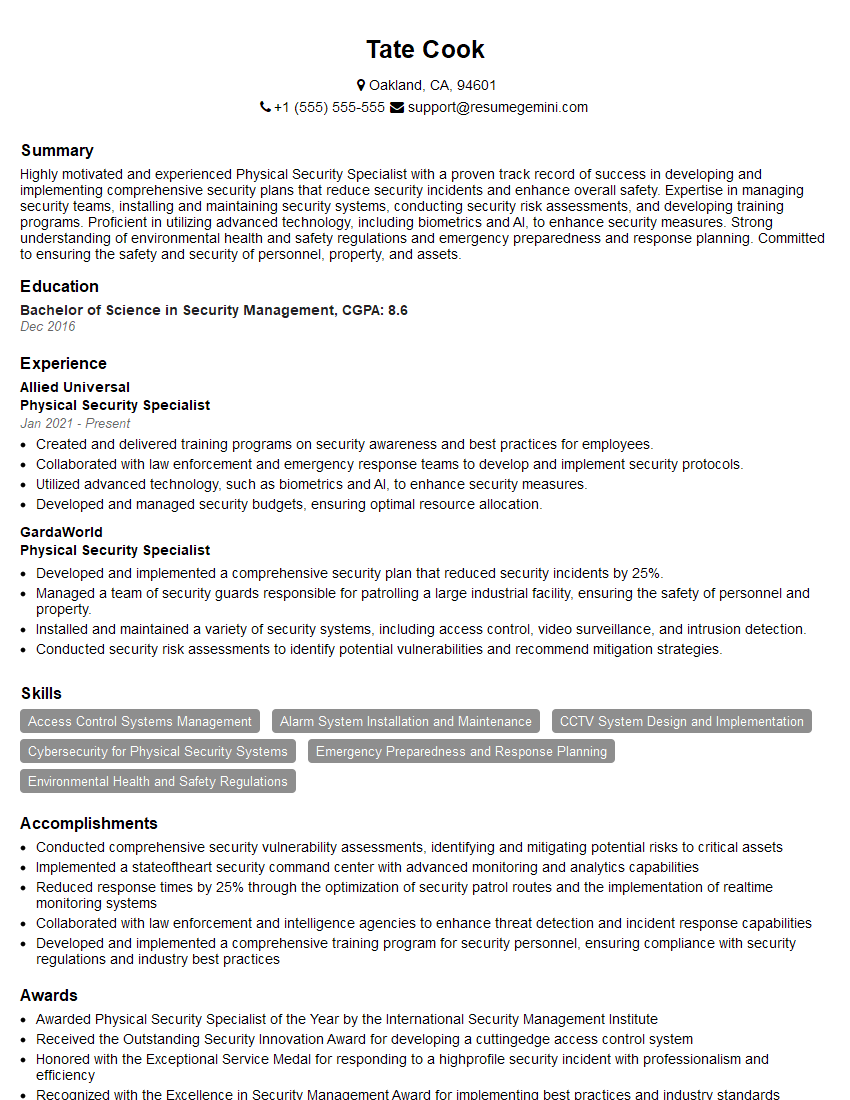
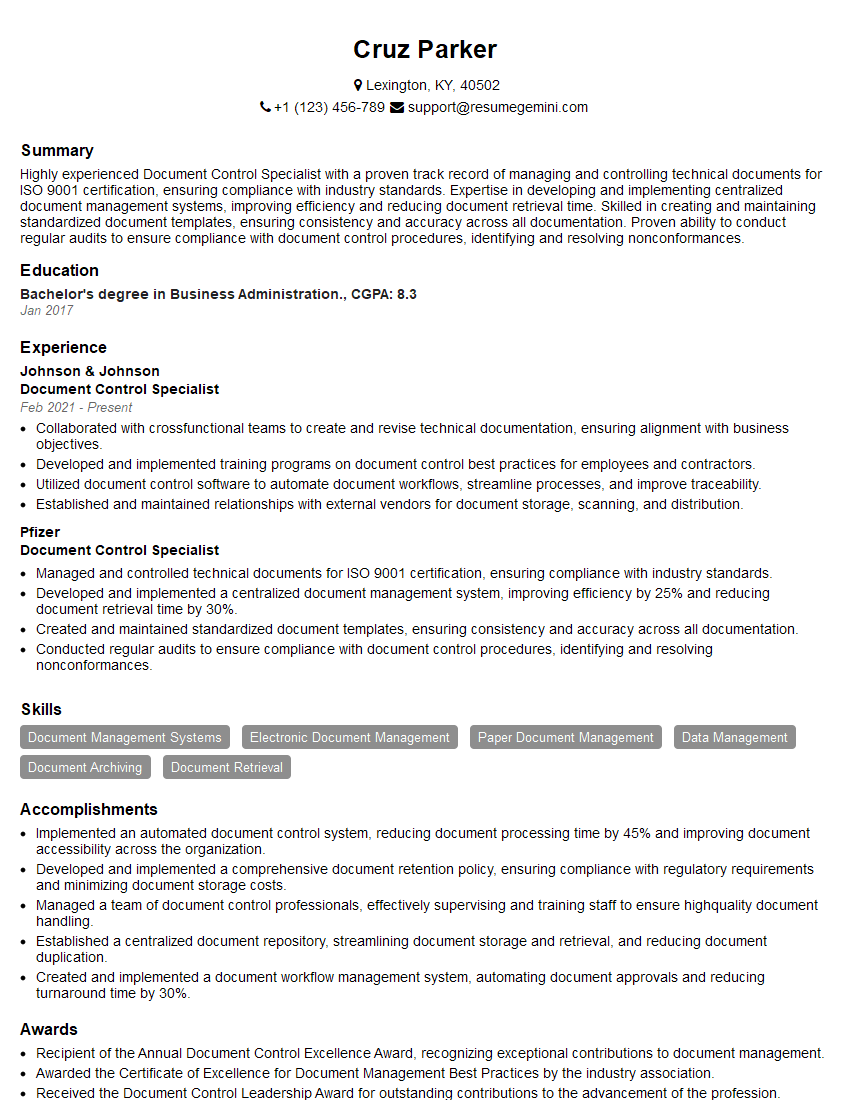
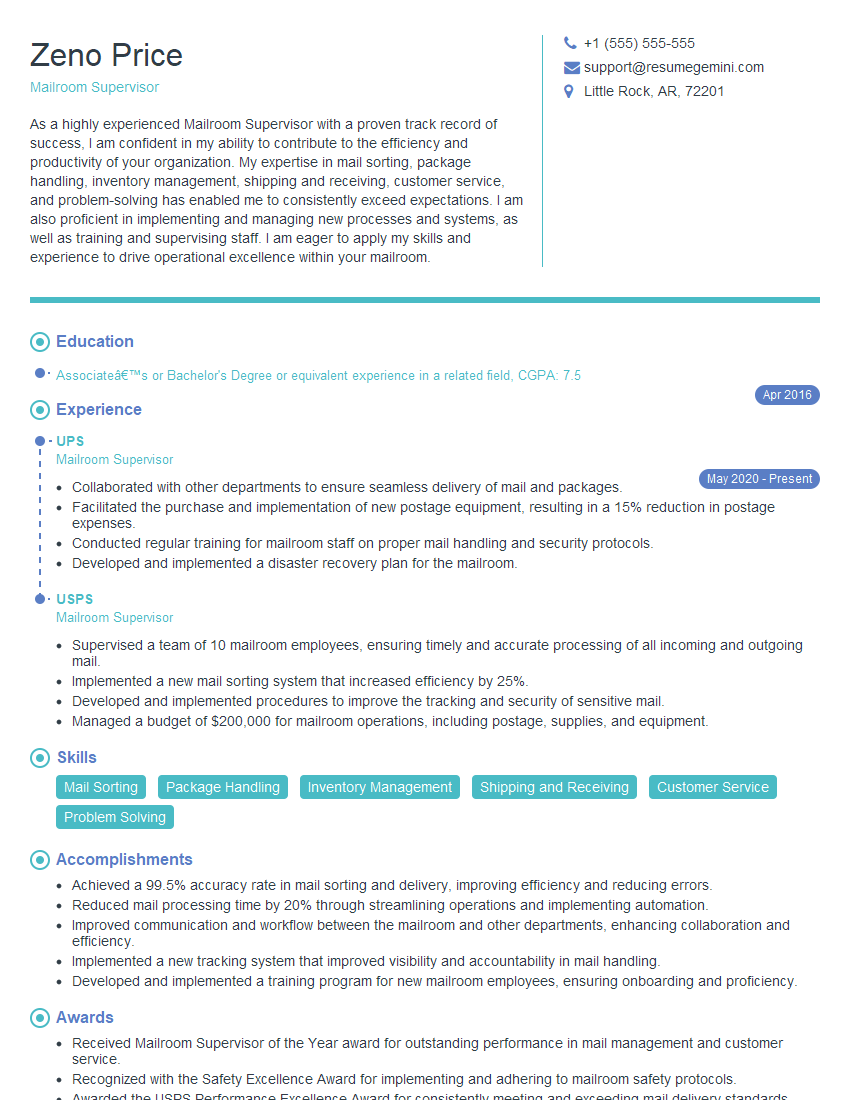
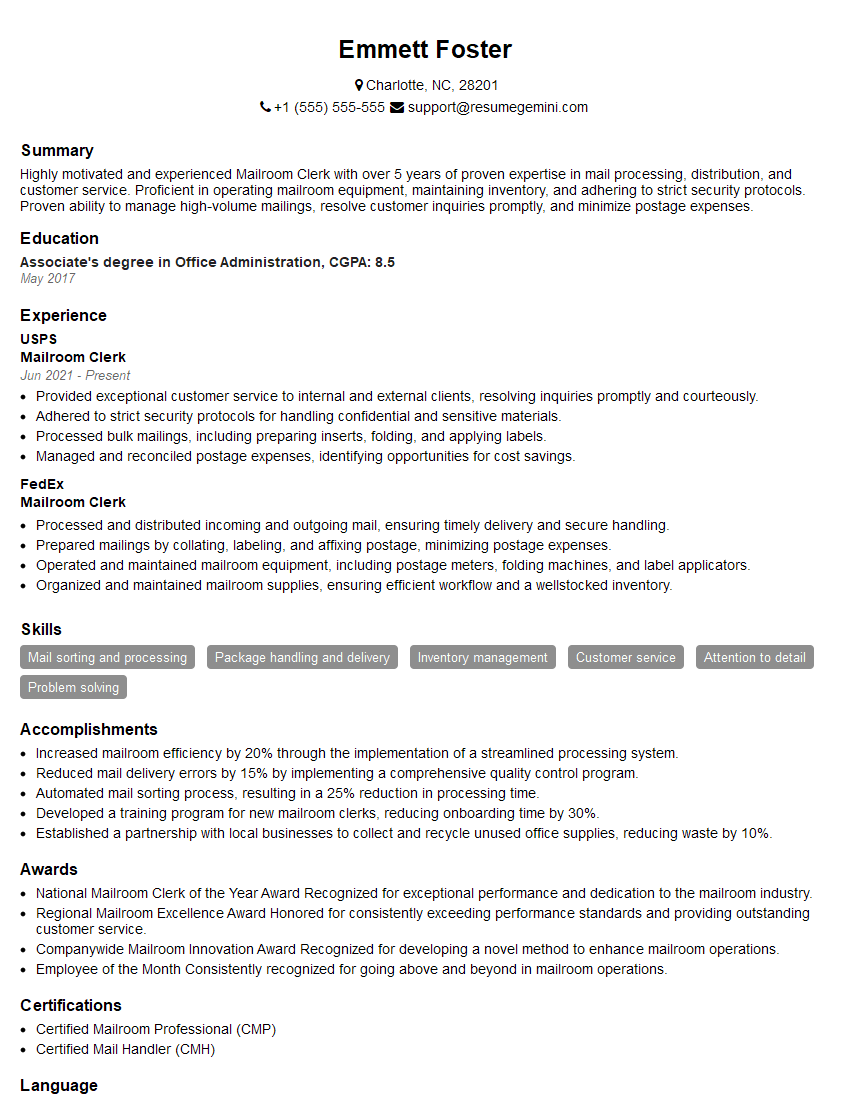
Mastering mailroom security protocols demonstrates your commitment to responsible and secure operations, a highly valued skill in any organization. This expertise will significantly enhance your career prospects, opening doors to roles with increased responsibility and higher earning potential. To further boost your job search, focus on creating an ATS-friendly resume that highlights your skills and experience effectively. ResumeGemini is a trusted resource that can help you build a professional, impactful resume tailored to your specific career goals. Examples of resumes tailored to showcasing expertise in adhering to mailroom security protocols are available through ResumeGemini, helping you present your qualifications in the best possible light.
Explore more articles
Users Rating of Our Blogs
Share Your Experience
We value your feedback! Please rate our content and share your thoughts (optional).
What Readers Say About Our Blog
Very informative content, great job.
good