Interviews are opportunities to demonstrate your expertise, and this guide is here to help you shine. Explore the essential Adjustable Waistband Setting interview questions that employers frequently ask, paired with strategies for crafting responses that set you apart from the competition.
Questions Asked in Adjustable Waistband Setting Interview
Q 1. Explain the different methods for creating an adjustable waistband.
Creating an adjustable waistband involves several methods, each offering unique benefits and challenges. The most common approaches are using elastic, a drawstring, or a combination of both.
- Elastic Waistband: This is the simplest and most widely used method. Elastic is encased within the waistband casing, providing a comfortable and stretchy fit. The amount of stretch is controlled by the type and width of the elastic used.
- Drawstring Waistband: This offers a more customized fit, allowing the wearer to adjust the tightness precisely. A casing is created, and a drawstring is threaded through it, enabling the wearer to pull the waistband tighter or looser.
- Combination Method: This approach often combines both elastic and a drawstring. Elastic provides a base level of comfort and stretch, while the drawstring allows for fine-tuning of the fit. This is particularly useful for garments needing a wider range of adjustment.
- Hook and Loop Tape (Velcro): While less common for formal garments, hook and loop tape can offer a simple adjustable solution for casual wear. It provides quick adjustability and is generally easy to sew.
The choice of method depends on factors like the garment type, target audience, desired level of adjustability, and overall aesthetic.
Q 2. Describe the advantages and disadvantages of using elastic versus a drawstring for an adjustable waistband.
Elastic and drawstrings each present distinct advantages and disadvantages:
- Elastic:
- Advantages: Comfortable, easy to sew, provides consistent stretch, generally less bulky than drawstrings.
- Disadvantages: Can lose its elasticity over time, may not provide sufficient adjustment range for a wide size variation, can be difficult to replace if broken.
- Drawstring:
- Advantages: Highly adjustable, suitable for a wide range of sizes, easily replaceable.
- Disadvantages: Can be bulky, may require more complex construction, can be uncomfortable if the drawstring is too tight or rough.
Think of it like choosing between a stretchy t-shirt (elastic) and trousers with a belt (drawstring): the t-shirt is convenient and comfortable for everyday wear, while trousers offer a more precise and adjustable fit.
Q 3. How do you ensure consistent waistband size and fit across different sizes?
Ensuring consistent waistband size and fit across different sizes requires meticulous pattern making and attention to detail. This involves:
- Accurate Pattern Grading: The pattern needs to be carefully graded to accommodate the varying measurements of different sizes. This includes adjusting the waistband width and length proportionally.
- Consistent Seam Allowances: Maintaining consistent seam allowances across all sizes is crucial. Inconsistent allowances will lead to variations in the final waistband size.
- Standard Elastic Width: Using the same width of elastic for all sizes simplifies the process and improves consistency. However, you might need to adjust the amount of elastic used depending on the size.
- Pre-Washing Fabric: Pre-washing the fabric minimizes shrinkage after the garment is made, ensuring the waistband retains its size and fit.
- Quality Control: Implementing a robust quality control process, including regular measurements during production, is vital to maintaining consistent sizing.
For instance, a size small might require 20 inches of elastic, while a large might need 28 inches, but the width of the elastic remains constant at, say, 1 inch.
Q 4. What types of fabrics are best suited for adjustable waistbands?
The choice of fabric for an adjustable waistband depends largely on the garment’s style and intended use. However, certain fabrics are generally more suitable:
- Lightweight Woven Fabrics: Fabrics like cotton poplin, chambray, or linen are excellent choices for a comfortable and breathable waistband. They hold their shape well and are easy to sew.
- Knit Fabrics: Soft knits like cotton jersey or rib knit can provide a more flexible and forgiving waistband, especially for garments with a closer fit. However, they require careful handling to prevent stretching during construction.
- Stable Fabrics: For more structured garments, a stable fabric like twill or canvas can create a firmer waistband. These fabrics provide good support and maintain their shape over time.
Avoid overly stretchy or delicate fabrics which might compromise the integrity of the waistband or make sewing difficult.
Q 5. How do you select the appropriate elastic width and type for a waistband?
Selecting the appropriate elastic width and type is essential for a well-fitting and comfortable waistband. Consider:
- Elastic Width: The width is usually determined by the waistband’s design and the desired level of stretch. Wider elastic typically provides more stretch but can be bulkier. Common widths are 1/2 inch, 5/8 inch, and 1 inch.
- Elastic Type: Different types of elastic offer varying degrees of stretch and durability. Woven elastic is typically more durable and less likely to lose its elasticity, while braided elastic is softer and more flexible. Consider the fabric weight and garment type when choosing. For heavier fabrics, a more durable elastic is recommended.
- Garment Fit: The intended fit of the garment will influence the elastic choice. A garment with a snug fit might require a narrower, less stretchy elastic, whereas a looser fit could accommodate a wider, more stretchy option.
Experimentation and testing different types of elastic with sample garments are crucial to finding the perfect fit for your project.
Q 6. Explain the process of attaching an elastic waistband to a garment.
Attaching an elastic waistband typically involves creating a casing to house the elastic. Here’s a step-by-step process:
- Create the Waistband: Cut the waistband fabric according to your pattern, adding seam allowances.
- Create the Casing: Fold the waistband fabric in half lengthwise, wrong sides together, and press. Sew along the long edge, leaving a gap (typically 1-2 inches) for inserting the elastic.
- Insert the Elastic: Using a safety pin, attach one end of the elastic to the casing gap. Feed the elastic through the casing until it meets the other end. Overlap the elastic ends, and secure them using a zig-zag stitch.
- Close the Casing: Carefully close the remaining gap in the casing, using a neat stitch that matches the rest of the waistband seam.
- Attach to Garment: Sew the waistband to the garment’s waistline, ensuring even distribution and a smooth finish. Press the seam carefully.
Remember to measure the waistline accurately and adjust the elastic length to create the desired fit.
Q 7. Describe how to sew a clean and professional-looking waistband finish.
Achieving a clean and professional waistband finish involves attention to detail at every stage of construction:
- Neat Seam Allowances: Press seam allowances open or to one side to create a flat, smooth finish.
- Consistent Stitching: Use a straight stitch for the majority of seams to avoid bulk, then switch to a zig-zag stitch for areas where the fabric might fray (like the casing opening).
- Professional Finishing Techniques: Consider techniques such as serging or using a narrow zigzag stitch to prevent fraying and improve durability.
- Clean Press: Press seams carefully after each step of construction, preventing wrinkles and ensuring a crisp and professional look.
- Hidden Seam Allowances: For high-quality finish, consider using techniques that conceal seam allowances, such as French seams or enclosed seams.
By paying close attention to these details, you can create a waistband that’s both functional and aesthetically pleasing, enhancing the overall look of your garment.
Q 8. How do you troubleshoot common problems encountered during waistband construction, such as puckering or uneven stitching?
Troubleshooting waistband construction issues like puckering or uneven stitching requires a systematic approach. Puckering often stems from inconsistent fabric tension during sewing, while uneven stitching can result from machine malfunction or improper thread tension.
To address puckering:
- Check your fabric: Ensure the fabric is pre-washed and ironed to remove wrinkles, which can contribute to puckering. Different fabric types require different needle sizes and stitch lengths – using the wrong combination can lead to unevenness and puckering.
- Adjust your tension: Slightly reduce your machine’s stitch tension. Too much tension pulls the fabric together, causing puckering. Experiment to find the optimal balance for your fabric and machine.
- Use a walking foot: A walking foot helps feed fabric evenly, reducing the chances of puckering, especially with slippery fabrics.
- Use a smaller stitch length: A shorter stitch length increases stability and reduces puckering.
For uneven stitching:
- Inspect your machine: Ensure your sewing machine needle is sharp and correctly inserted. A bent or dull needle can cause skipped stitches and inconsistent stitching.
- Check your thread: Use high-quality thread appropriate for the fabric. Make sure the thread is properly wound on the bobbin and spools, and the tension is balanced between the upper and lower threads.
- Clean your machine: Lint and debris buildup in the machine can interfere with the smooth operation and cause uneven stitching. Regular cleaning and maintenance are essential.
Remember, practice makes perfect! Experimenting with different settings and techniques on scrap fabric before working on your final project will help you achieve the best results.
Q 9. What quality control measures do you implement to ensure waistband durability and functionality?
Quality control in waistband construction prioritizes durability and functionality. My approach involves multiple checks throughout the process:
- Fabric Selection: I choose durable, high-quality fabrics appropriate for the garment’s intended use. Stretchy fabrics for elastic waistbands must have sufficient give and recovery.
- Pattern Accuracy: Precise cutting and careful attention to seam allowances are critical. I double-check measurements and make any necessary adjustments before cutting. Using a rotary cutter and cutting mat for precision is a great help.
- Seam Strength: I use appropriate stitch types and settings to create strong, secure seams that can withstand repeated stretching and stress. Reinforcing seams in high-stress areas further enhances durability. A serger helps prevent fraying and adds to seam strength.
- Elastic Quality: I use high-quality elastic with appropriate width and stretch. Low-quality elastic can lose its elasticity over time, leading to a poorly fitting garment.
- Finishing: Neat and secure finishing techniques, such as overlocking or zigzag stitching, are vital to prevent fraying and enhance the overall look and feel of the waistband. Encasing the elastic securely prevents it from twisting or digging into the wearer.
- Final Inspection: I always perform a thorough final inspection of each waistband, checking for any flaws or inconsistencies before the garment is completed. This can include visual inspection and a ‘fit test’ to assess the waistband’s comfort and functionality.
Implementing these measures ensures high-quality, durable waistbands that maintain their functionality over time.
Q 10. How do you incorporate size adjustments into a waistband pattern?
Incorporating size adjustments into a waistband pattern involves creating design elements that allow for easy size modifications. The most common approach is to include ease (extra fabric) into the waistband pattern, then adjust the size by altering the length of the waistband.
Methods for Size Adjustment:
- Ease Allowance: Add extra fabric (ease) to the pattern piece. This extra fabric allows for adjustments in size without significantly altering the garment’s fit. A common practice is adding 1 to 2 inches of ease to the waistband.
- Multiple Pattern Sizes: Create separate patterns for different sizes. This approach eliminates the need for complex adjustments during construction, allowing for streamlined production and accurate fit for each size.
- Adjustable Closures: Incorporate adjustable closures like buttons, hooks, or drawstrings which allow the waistband to be adjusted to fit a range of sizes. This can be incorporated into both woven and knit fabrics.
- Elastic Waistband: The most versatile method uses elastic, allowing the garment to adapt to different body shapes and sizes. The amount of elastic used is a critical factor in how the garment fits.
The specific method chosen depends on the garment’s style, fabric, and intended user. For example, a simple elastic waistband works well for children’s clothing where sizes change frequently, while adjustable closures might be preferred for more tailored garments.
Q 11. What are some common mistakes to avoid when constructing adjustable waistbands?
Common mistakes to avoid when constructing adjustable waistbands often stem from overlooking essential details.
- Incorrect Elastic Length: Using too much or too little elastic is a frequent error. Too much elastic results in a baggy waistband; too little makes it too tight and uncomfortable.
- Uneven Elastic Distribution: The elastic should be evenly distributed around the waistband casing to ensure a comfortable and uniform fit. Uneven distribution can lead to bunching or tightness in certain areas.
- Poorly Constructed Casing: A poorly constructed casing can cause the elastic to become twisted or caught, leading to discomfort and a poor fit. A strong and appropriately sized casing is essential for a well-functioning adjustable waistband.
- Ignoring Fabric Stretch: Failing to account for the stretch of the fabric when cutting the waistband can lead to sizing issues. Pre-washing fabrics is essential as they may shrink upon first wash.
- Using the Wrong Type of Elastic: Using elastic with low durability or inappropriate width for the project can lead to a waistband that quickly loses its elasticity and shape. Knit elastic is best for knit garments, and woven elastic for woven garments.
Careful planning, attention to detail, and the use of appropriate techniques are critical to avoid these common pitfalls.
Q 12. Describe different methods for creating a casing for an elastic waistband.
Several methods exist for creating a casing for an elastic waistband, each with its own advantages and disadvantages.
- Self-Faced Casing: Fold over the top edge of the waistband twice, creating a channel to house the elastic. This method is simple and requires minimal extra fabric. It’s suitable for lighter-weight fabrics but might not be as durable for heavier materials.
- Separate Fabric Casing: Cut a separate strip of fabric to create the casing. This provides a more defined and durable casing, particularly for heavier fabrics. It adds a bit more bulk but offers a neater finish.
- Continuous Binding: Use bias tape or binding to encase the elastic. This method is excellent for a clean, professional finish and works well with various fabric weights. However, it’s slightly more involved than the other methods.
- Facing Method: Cut and sew a separate facing piece to the top edge of the waistband. This provides additional strength and stability for a stronger casing that will hold up better.
The best method depends on the project’s specific requirements and the fabric used. For a casual garment, a simpler method like the self-faced casing might suffice, while a more structured garment could benefit from a separate fabric casing or facing.
Q 13. How do you determine the correct length of elastic for a given waistband size?
Determining the correct elastic length requires considering the waistband’s finished size and the desired level of stretch. A general rule is to cut the elastic slightly shorter than the waistband’s finished length. This allows for the elastic to provide adequate support without being too tight. The correct length of elastic is always less than the measurement of the finished waistband.
Calculation Methods:
- Measurement Method: Measure the finished waistband’s circumference, then subtract 1 to 2 inches (or more, depending on the fabric and elastic’s stretch). The exact amount depends on personal preference and the desired snugness. Experimentation with elastic length is recommended until desired comfort is achieved.
- Trial and Error: Sew a sample waistband with elastic, try it on, and adjust the elastic length as needed. This is particularly helpful when working with new fabrics or elastic types.
- Pattern Instructions: Always refer to the pattern instructions. Many patterns provide specific guidelines for elastic length.
Remember to test your elastic length before completely finishing your garment, as adjusting the elastic later can be challenging. Accurate calculations ensure a perfect fit.
Q 14. Explain the importance of proper tension when sewing an elastic waistband.
Proper tension when sewing an elastic waistband is crucial for comfort and fit. Too much tension can create a tight, uncomfortable waistband; too little results in a loose, ill-fitting one. This can be controlled through adjusting your machine settings and sewing techniques.
Achieving Proper Tension:
- Machine Tension: Slightly reduce your machine’s stitch tension to prevent pulling or puckering on the elastic.
- Hand-Sewing: For hand-sewing the elastic, use small, even stitches and maintain consistent tension throughout the sewing process.
- Test Stitching: Sew a test stitch on a scrap of fabric to assess tension. Adjust your machine settings until you find the right balance for your fabric and elastic.
- Stretching Technique: As you sew, gently stretch the elastic to maintain even tension while sewing. The amount of stretch needed depends on the type of elastic and the desired fit.
- Even Stitch Distribution: Ensure the stitches are evenly spaced along the seam. This helps distribute the tension evenly and prevents the seam from breaking or becoming distorted.
Mastering elastic waistband construction involves finding the balance between a comfortable, secure fit and avoiding over-tension that can lead to discomfort or damage to the waistband.
Q 15. How do you account for fabric stretch when constructing an adjustable waistband?
Accounting for fabric stretch in an adjustable waistband is crucial for a comfortable and well-fitting garment. Ignoring stretch can lead to a waistband that’s either too tight or too loose. The key is to understand the type of stretch your fabric has – is it two-way stretch (stretching horizontally and vertically), four-way stretch (stretching diagonally as well), or no stretch at all?
For fabrics with stretch, you’ll need to reduce the cut size of the waistband. The amount you reduce depends on the fabric’s percentage of stretch. For instance, a fabric with 20% stretch might require a 10-15% reduction in the waistband’s length. This ensures the waistband is snug but not restrictive when the elastic is not stretched. You can test this by stretching a sample of the fabric to its maximum and measuring the difference. This allows you to calculate the correct amount of reduction needed.
Think of it like making a sweater – you don’t want it to be skin-tight, yet you want it to maintain its shape. You would adjust your pattern making for the fabric’s elasticity in that same manner.
For fabrics with little to no stretch, you’ll need a more generous allowance for elastic, compensating for the lack of fabric give. You’ll have to account for the elastic’s expansion.
Career Expert Tips:
- Ace those interviews! Prepare effectively by reviewing the Top 50 Most Common Interview Questions on ResumeGemini.
- Navigate your job search with confidence! Explore a wide range of Career Tips on ResumeGemini. Learn about common challenges and recommendations to overcome them.
- Craft the perfect resume! Master the Art of Resume Writing with ResumeGemini’s guide. Showcase your unique qualifications and achievements effectively.
- Don’t miss out on holiday savings! Build your dream resume with ResumeGemini’s ATS optimized templates.
Q 16. What are some innovative techniques for creating adjustable waistbands?
Innovative adjustable waistband techniques move beyond basic elastic. Here are a few examples:
Self-fabric Waistband with Drawstring: This offers a clean, polished look, especially suitable for structured garments. The drawstring allows for easy adjustment and a customizable fit.
Corded Elastic: Using corded elastic provides a more structured and less bulky feel than standard elastic, offering a sleek finish and better support.
Hook-and-Eye System with Internal Elastic: This combines the security of hooks and eyes with the comfort of elastic. The elastic lies flat and provides additional adjustability; the hooks and eyes add a level of adjustability above and beyond what the elastic would provide alone.
Adjustable Buckles: Using buckles (metal or plastic) allows for a truly adjustable and customized fit. They often provide a range of adjustment larger than purely elastic systems.
The choice depends on the garment’s style and the desired level of adjustability.
Q 17. Describe the different types of closures used for adjustable waistbands (e.g., hooks, buttons).
Various closures cater to different aesthetic and functional needs in adjustable waistbands. Here are some common types:
Hooks and Eyes: Offer a secure and discreet closure, ideal for formal wear or garments where a clean finish is desired. They are generally placed at the side or center back.
Buttons: Provide a more visible closure, often used in conjunction with buttonholes. Can be decorative and add to the garment’s character.
Zippers: Used in conjunction with other adjustable features, zippers add a level of secure closure to a design and are especially useful for waistbands which are highly tailored or structured.
Drawstrings: Offer a casual and comfortable closure, particularly suitable for sportswear or loungewear. Provides easy adjustability.
Velcro: A quick and easy closure, often seen in children’s clothing or other casual garments. Easy to use, it offers less tailored look.
Q 18. How do you ensure the waistband lies flat and doesn’t twist or bunch?
Preventing twisting and bunching requires careful construction techniques. Key steps include:
Precise Cutting and Seam Allowance: Accurate cutting ensures consistent waistband width, minimizing the chance of unevenness. Consistent seam allowance also helps.
Proper Pressing: Pressing seams open before attaching the waistband creates a smooth, flat base. Pressing after attaching the waistband further enhances the flatness.
Consistent Elastic Distribution: Evenly distributing the elastic within the casing prevents bunching or twisting. Using a safety pin to guide the elastic during insertion helps achieve even distribution.
Interfacing (if used): Interfacing adds structure and stability, helping the waistband maintain its shape and lie flat. Proper use of interfacing is key.
Careful Stitching: Use appropriate stitch length and tension to secure the elastic without causing puckering or distortion. Using a narrow zig-zag stitch helps secure stretchy fabric to a non-stretchy one such as interfacing.
Q 19. How do you adapt waistband construction techniques for different garment types (e.g., pants, skirts, dresses)?
Adapting waistband construction to different garment types involves adjusting the width, style, and closure method.
Pants: Typically utilize a wider waistband (2-4 inches) often incorporating belt loops and a closure mechanism (button, zipper, or hook-and-eye). They often incorporate interfacing to give more body to the garment.
Skirts: Can use narrower waistbands (1.5-3 inches) and may rely on elastic alone or incorporate a drawstring. Often include casing for comfort.
Dresses: Depending on style (casual or formal), can incorporate any of the above methods. Consider the overall aesthetic and the need for a clean finish when choosing a method.
The key is to choose a construction method that complements the garment’s design and provides the necessary support and adjustability.
Q 20. What are the key considerations when selecting the appropriate stitching for an elastic waistband?
Selecting the right stitching for an elastic waistband is critical for durability and comfort. The stitch needs to be strong enough to withstand repeated stretching and bending yet flexible enough to allow the elastic to do its job.
Stitch Type: A zig-zag stitch is commonly used as it flexes well with the fabric’s movement and securely grips the elastic.
Stitch Length: A shorter stitch length (around 2.0-2.5 mm) provides better strength and durability, while a longer stitch (3.0 mm or more) may allow for more stretch, though it’s not as strong.
Stitch Tension: Too tight tension can restrict the elastic and make the waistband uncomfortable; too loose tension can lead to the stitches breaking. The goal is to find a balance for the chosen elastic.
For example, if using a lightweight elastic in a lightweight fabric, a slightly longer stitch would be suitable. Conversely, a heavier elastic in a heavier fabric calls for a shorter stitch. It’s important to test your stitch on a scrap fabric before stitching your garment.
Q 21. Explain the role of interfacing in waistband construction.
Interfacing plays a vital role in waistband construction, primarily by providing structure and stability. It prevents the waistband from stretching out, twisting, or losing its shape over time. Interfacing lends itself to garments which need an elegant, crisp finish.
The type of interfacing used depends on the fabric and garment weight. For instance, lightweight fabrics might use a lightweight fusible interfacing, while heavier fabrics might need a heavier-weight non-fusible interfacing. A fusible interfacing is applied using heat, while a non-fusible interfacing is attached through stitching. The decision on what kind of interfacing to use, or even if it’s needed, depends greatly on the fabric being used in construction.
Think of interfacing as the ‘skeleton’ of the waistband – it provides the support needed to keep the waistband looking sharp and fitting correctly. Interfacing is not always necessary, but it’s frequently used for more structured waistbands or when working with delicate fabrics.
Q 22. How do you measure and mark the waistband accurately for consistent results?
Accurate waistband measurement is paramount for a well-fitting garment. Think of it like building a house – a shaky foundation leads to problems later. We begin by taking precise body measurements at the natural waistline, ensuring the tape measure is held parallel to the floor. For consistent results, always measure twice and record the measurements. Add seam allowance (typically 1-1.5 inches) to this measurement to determine the final waistband length. Marking the waistband involves carefully dividing the total length into equal sections. Using tailor’s chalk or a fabric marker, mark these sections on the wrong side of the fabric to avoid visible markings on the finished garment. This method ensures an even distribution of fabric, preventing any pulling or bunching around the waist.
For example, if your waist measurement is 30 inches and your seam allowance is 1.5 inches, your total waistband length would be 31.5 inches. You might divide this into six equal sections (approximately 5.25 inches each) for accurate placement of belt loops or other details.
Q 23. Describe the process of pressing a waistband to achieve a professional finish.
Pressing a waistband is crucial for a professional finish; it’s the difference between a homemade look and a couture one. Think of pressing as setting the fabric’s shape and ensuring the seams lie flat. Before pressing, ensure your iron is at the correct temperature for the fabric type; always test on a scrap piece first. Press each seam allowance open individually, carefully guiding the fabric to avoid creases. After joining the waistband ends, press the seam allowance open and then press the entire waistband flat, paying close attention to the edges. A tailor’s ham or pressing cloth can be used to prevent unwanted shiny marks or imprints on the fabric. This process creates a crisp, professional look that enhances the overall garment appearance.
For instance, when pressing a double-fold waistband, ensure the folded edges are neatly aligned before pressing, creating a clean, finished edge that’s both durable and aesthetically pleasing.
Q 24. How do you address fit issues related to the waistband after garment construction?
Fit issues with waistbands can arise even with meticulous planning. Common problems include a waistband that’s too tight or too loose. If the waistband is too tight, carefully unpick the side seams, allowing for more ease. Re-stitch the seams, ensuring a comfortable fit. If it’s too loose, carefully evaluate the original measurements. It might require taking in the side seams. If significant adjustments are needed, consider adding darts or gathers to better control excess fabric. Always test the fit on the garment before making permanent alterations. Remember, patience is key. Making small, incremental adjustments is more effective than making large alterations that could compromise the integrity of the fabric.
In one instance, I worked on a dress where the waistband was slightly too large. Instead of taking in the seams significantly, I added subtle darts at the back, creating a more flattering and comfortable fit without altering the garment’s overall design.
Q 25. What are some sustainable practices that can be implemented in adjustable waistband construction?
Sustainable practices in adjustable waistband construction focus on minimizing waste and using eco-friendly materials. This begins with choosing fabrics made from organic cotton, recycled materials, or sustainable sources. Prioritize zero-waste pattern cutting techniques to reduce fabric scraps. Instead of discarding fabric scraps, consider repurposing them for smaller projects or stuffing for other crafts. Employing energy-efficient sewing machines and using water-saving methods for fabric pre-washing also contribute to sustainability. Avoid excessive packaging and opt for biodegradable or recyclable packaging for finished garments. Consider upcycling old clothes by incorporating them into new waistband designs.
For example, using pre-consumer fabric scraps from another project minimizes waste, making your waistband creation significantly more sustainable. And choosing a machine that uses less electricity helps your workshop’s environmental footprint.
Q 26. How do you troubleshoot a waistband that is too tight or too loose?
Troubleshooting a waistband that’s too tight or too loose involves a systematic approach. If it’s too tight, carefully unpick the side seams, increasing the waistband’s width incrementally until comfortable. If it’s too loose, consider taking in the seams on either side, ensuring a symmetrical fit. If the looseness is significant, adding darts or gathers can help to control the excess fabric. Always try the garment on during the adjustment process, ensuring a comfortable fit around the waist before permanently securing the seams. For elastic waistbands, consider replacing the elastic with a smaller or larger size accordingly. If using a drawstring, adjust the length of the drawstring. It’s important to check the fit at each stage to ensure you address the issue effectively.
In one case, a client’s waistband was excessively loose. Instead of taking in the seams, we opted for adding a stylish tie belt, converting a problem area into a design feature.
Q 27. What are the safety precautions to take when working with sewing machines during waistband construction?
Safety is paramount when using sewing machines. Always ensure your work area is well-lit to avoid eye strain. Keep your fingers clear of the needle and presser foot while the machine is operating. Never reach for dropped objects while the machine is running. Before cleaning or making adjustments, always unplug the machine from the power source. Use appropriate safety pins to secure fabric layers, avoiding accidental needle pricks. Dress appropriately; loose clothing can easily get caught in the machine. Regular machine maintenance, including lubricating moving parts, helps to prevent malfunctions and ensures smooth operation.
A simple precaution I always advise is keeping a small first-aid kit nearby with bandages and antiseptic wipes to address any minor accidents promptly and efficiently.
Q 28. Explain the importance of pre-washing fabrics before constructing the waistband.
Pre-washing fabrics before constructing a waistband is essential to prevent shrinkage and ensure a consistent fit. Imagine making a perfect waistband, only to have it shrink after the first wash! Pre-washing helps account for this shrinkage. It also removes any sizing or finishes applied during manufacturing, leading to a more accurate fabric measurement and a better overall result. The type of pre-wash depends on the fabric: some fabrics need gentle hand washing, while others can be machine washed on a delicate cycle. Always check the fabric’s care label for specific washing instructions. After washing, allow the fabric to air dry completely before cutting and sewing to prevent distortions in the final garment.
I once had a client whose waistband shrunk considerably after the first wash because the fabric hadn’t been pre-washed. It taught me a valuable lesson about the importance of this seemingly small step in the process!
Key Topics to Learn for Adjustable Waistband Setting Interview
- Mechanism Design: Understanding the various mechanical components involved in adjustable waistband systems (e.g., buckles, straps, sliders, elastic). Analyze the strengths and weaknesses of different designs.
- Material Science: Knowledge of fabrics and materials used in waistband construction, their properties (durability, elasticity, comfort), and how material choice impacts the overall performance of the adjustable mechanism.
- Manufacturing Processes: Familiarity with the manufacturing techniques used in producing adjustable waistbands, including sewing, bonding, and the integration of different components. Consider the implications of various manufacturing methods on cost and quality.
- Quality Control and Testing: Understanding the processes involved in ensuring the quality and durability of adjustable waistband systems, including testing methods and standards for functionality and longevity.
- Ergonomics and User Experience: Analyzing the user experience of different adjustable waistband designs. Consider ease of use, comfort, and overall user satisfaction.
- Cost Optimization: Explore strategies for optimizing the cost of manufacturing adjustable waistbands without compromising quality or functionality. This may include material selection, process optimization, and design simplification.
- Troubleshooting and Problem Solving: Develop your ability to identify and resolve common issues related to the functionality and durability of adjustable waistband systems. Consider root cause analysis and preventative measures.
- Industry Standards and Regulations: Understanding relevant industry standards and regulations that impact the design, manufacturing, and safety of adjustable waistbands.
Next Steps
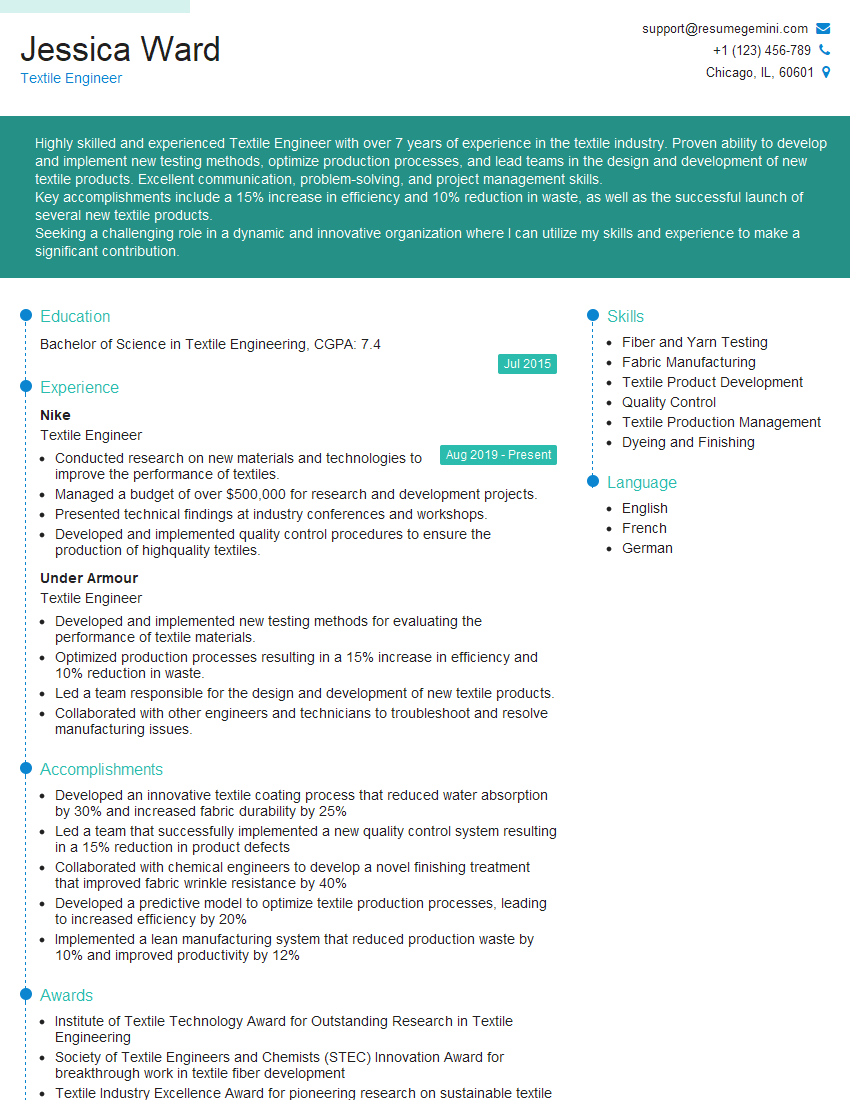
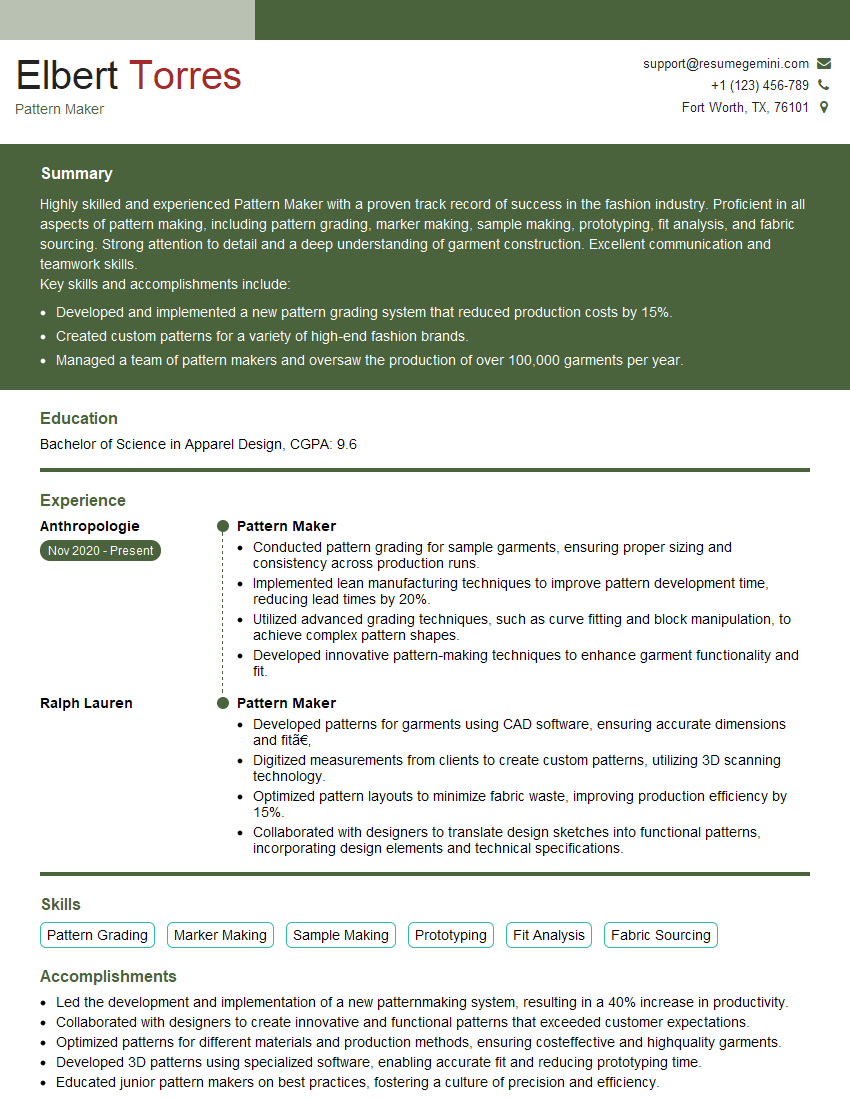
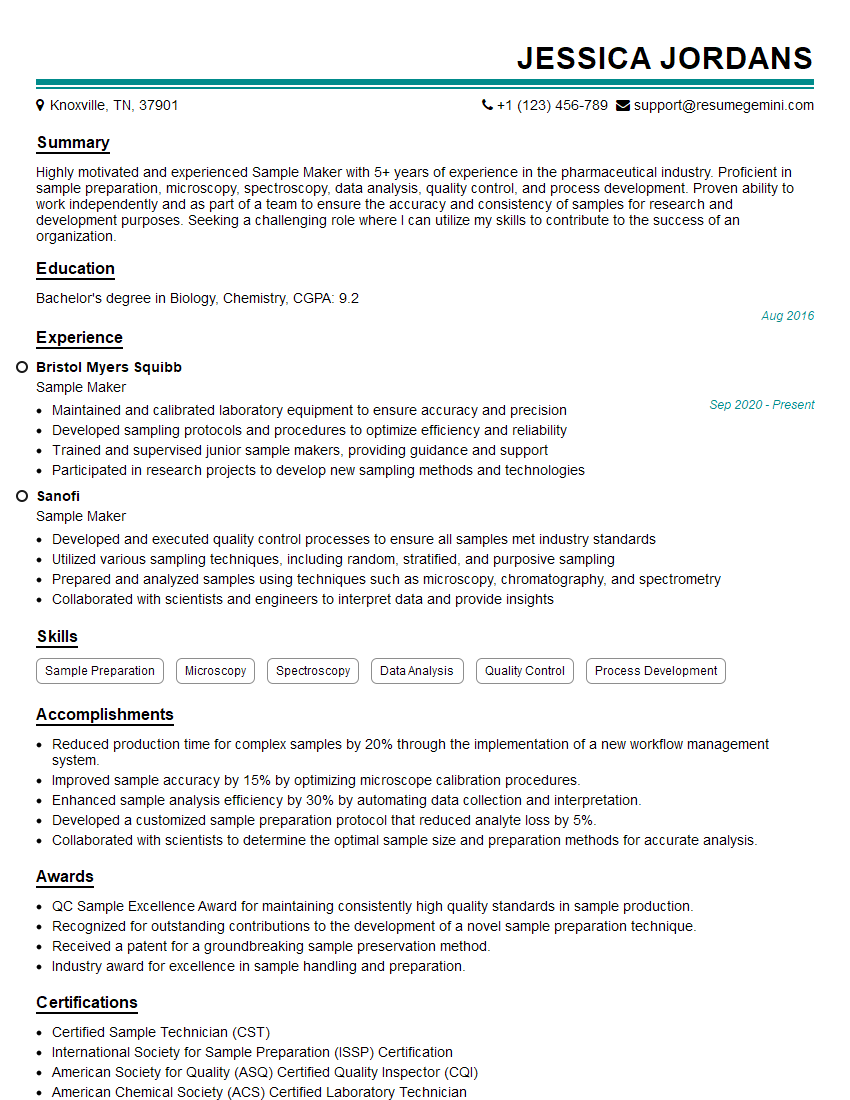
Mastering Adjustable Waistband Setting knowledge opens doors to exciting opportunities in the apparel and textile industries. A strong understanding of these concepts significantly enhances your marketability and positions you for success. To maximize your chances of landing your dream role, focus on crafting a compelling and ATS-friendly resume that highlights your skills and experience. ResumeGemini is a trusted resource to help you build a professional resume that showcases your qualifications effectively. Examples of resumes tailored to Adjustable Waistband Setting positions are available to guide you through this process.
Explore more articles
Users Rating of Our Blogs
Share Your Experience
We value your feedback! Please rate our content and share your thoughts (optional).
What Readers Say About Our Blog
Very informative content, great job.
good