Cracking a skill-specific interview, like one for ADR, requires understanding the nuances of the role. In this blog, we present the questions you’re most likely to encounter, along with insights into how to answer them effectively. Let’s ensure you’re ready to make a strong impression.
Questions Asked in ADR Interview
Q 1. Explain the difference between mediation and arbitration.
Mediation and arbitration are both Alternative Dispute Resolution (ADR) processes designed to resolve conflicts outside of traditional litigation, but they differ significantly in their approach and outcome.
Mediation is a facilitative process where a neutral third party, the mediator, assists disputing parties in reaching a mutually agreeable settlement. The mediator doesn’t decide the outcome; instead, they guide the parties towards a resolution by helping them identify common ground and explore options. Think of the mediator as a skilled facilitator, helping parties navigate the conversation and find solutions themselves.
Arbitration, on the other hand, is more adjudicative. An arbitrator, also a neutral third party, hears evidence and arguments presented by both sides and then makes a binding decision, similar to a judge in court. The arbitrator’s decision is legally enforceable, resembling a court judgment. Imagine the arbitrator as a private judge making a final, legally binding ruling.
In short: Mediation is collaborative and focuses on reaching a mutually agreeable solution, while arbitration is more adversarial and results in a decision imposed by a neutral third party.
Q 2. Describe the various types of ADR processes.
ADR encompasses a wide array of processes, each suited to different types of disputes and parties involved. Some common types include:
- Mediation: As discussed earlier, a facilitated negotiation process aimed at a mutually acceptable settlement.
- Arbitration: A more formal process where a neutral third party hears evidence and renders a binding decision.
- Negotiation: The most basic form of ADR, where parties directly communicate and attempt to resolve their differences without a third party.
- Conciliation: Similar to mediation but often less structured, with the conciliator playing a more advisory role.
- Early Neutral Evaluation: An expert assesses the strengths and weaknesses of each side’s case early in the process, helping parties gain a realistic perspective and potentially fostering settlement.
- Mini-Trial: A less formal trial-like setting where each side presents a summary of their case to senior managers or executives, who then attempt to negotiate a settlement.
- Med-Arb: A hybrid process combining mediation and arbitration. Parties first attempt mediation; if unsuccessful, the mediator transitions to an arbitrator to make a binding decision.
The choice of ADR process depends largely on the nature of the dispute, the relationship between the parties, and their desired outcomes.
Q 3. What are the advantages and disadvantages of ADR compared to litigation?
ADR offers several advantages over traditional litigation, but it also has some drawbacks.
Advantages of ADR:
- Cost-effectiveness: ADR is generally less expensive than litigation, saving parties on legal fees, court costs, and expert witness expenses.
- Time efficiency: ADR processes are usually faster than litigation, leading to quicker resolutions and reduced delays.
- Confidentiality: ADR proceedings are typically confidential, protecting the parties’ reputations and sensitive information.
- Preservation of relationships: The collaborative nature of many ADR processes helps preserve or even improve relationships between parties, unlike the adversarial nature of litigation.
- Flexibility and control: Parties have greater control over the process and outcome in ADR compared to litigation.
Disadvantages of ADR:
- Enforcement challenges: While arbitration awards are typically legally enforceable, enforcing mediation agreements can be difficult if one party fails to comply.
- Power imbalances: ADR can sometimes exacerbate existing power imbalances between parties, particularly in negotiation or mediation.
- Lack of appeal: Arbitration decisions are often final and binding, with limited opportunities for appeal, unlike court decisions.
- Limited discovery: The discovery process, which allows parties to obtain information from each other, is often more limited in ADR than in litigation.
The choice between ADR and litigation depends on a careful weighing of these advantages and disadvantages in the context of the specific dispute.
Q 4. How do you determine the appropriate ADR process for a given dispute?
Selecting the appropriate ADR process requires a careful assessment of several factors:
- Nature of the dispute: Is it a simple contract dispute or a complex matter involving multiple parties and technical issues? Complex cases might benefit from arbitration or early neutral evaluation.
- Relationship between parties: Is there a desire to preserve the relationship? Mediation might be preferable. If the relationship is irrevocably damaged, arbitration might be more suitable.
- Desired outcome: Do the parties want a binding decision or a mutually agreeable settlement? Arbitration provides a binding decision, while mediation aims for a mutually agreeable settlement.
- Cost and time constraints: Negotiation is generally the quickest and cheapest option, while litigation can be both time-consuming and expensive.
- Legal enforceability: Consider the legal enforceability of the potential outcome. Arbitration awards are typically legally enforceable, while mediation agreements rely on the parties’ good faith.
Often, a combination of processes (e.g., starting with negotiation, moving to mediation if needed, and finally arbitration as a last resort) can be a flexible and effective approach.
Q 5. Describe your experience in facilitating negotiations.
I have extensive experience facilitating negotiations in a variety of contexts, from commercial disputes to family conflicts. My approach centers on active listening, identifying underlying interests, and helping parties explore creative solutions.
For instance, I recently mediated a dispute between a software developer and a client over a delayed project. Both parties were entrenched in their positions – the client focusing on the missed deadline, the developer highlighting unforeseen technical challenges. Through active listening and careful questioning, I helped each party understand the other’s perspective and underlying needs. This led to a negotiated settlement involving a revised project timeline and a mutually agreeable adjustment to the payment schedule. It was crucial to create a safe space where both parties felt comfortable expressing their concerns and exploring solutions without feeling judged or attacked. The emphasis on collaborative problem-solving, rather than adversarial argumentation, led to a successful resolution.
Q 6. How do you handle power imbalances in mediation?
Power imbalances are a significant concern in mediation, and addressing them is crucial for a fair and effective process. My approach involves several strategies:
- Identifying and acknowledging the imbalance: Openly acknowledging the power imbalance creates a safe space for discussion and allows the less powerful party to voice their concerns without fear of being dismissed.
- Leveling the playing field: I employ techniques to level the playing field, such as ensuring equal speaking time, providing support to the less powerful party, and reframing arguments to highlight underlying interests and concerns.
- Empowering the less powerful party: I actively encourage the less powerful party to participate and express their needs. This can involve providing information, clarifying misunderstandings, and assisting them in articulating their position effectively.
- Caucusing: Private meetings with each party individually can help address specific concerns and build trust. This allows me to understand their individual perspectives and needs without the presence of the other party, leading to a better understanding and potential compromise.
- Developing creative solutions: I help parties brainstorm solutions that address the needs of both sides while acknowledging and mitigating the effects of the power imbalance.
It’s essential to remember that fairness does not always mean equality; it means ensuring that the process itself and its outcome are just, even if the parties’ initial power positions differ.
Q 7. What techniques do you use to manage difficult personalities during ADR?
Managing difficult personalities requires patience, empathy, and a well-defined structure. My approach involves:
- Establishing clear ground rules: Setting clear expectations regarding communication styles, respectful behavior, and the overall process from the outset helps manage disruptive behavior.
- Active listening and validation: Demonstrating active listening, even to challenging statements, helps diffuse tension and creates a sense of being heard, even if their opinions aren’t adopted.
- Reframing and rephrasing: Rephrasing aggressive statements or comments to highlight underlying needs can defuse the situation and facilitate productive dialogue.
- Managing interruptions: Addressing interruptions firmly but respectfully, ensuring that all voices are heard, creates a more controlled and productive environment.
- Caucusing: Private meetings with individuals experiencing conflict can allow for open communication, identify reasons for difficult behavior, and provide support.
- Time-outs: If tensions become unbearable, brief breaks can provide an opportunity to reset and reduce tension.
Ultimately, the goal is not necessarily to change the personalities involved but to manage their behavior to create a productive environment conducive to reaching a resolution. I view even the most difficult personality as having underlying needs and motivations that must be understood to resolve the conflict.
Q 8. How do you ensure confidentiality in an ADR process?
Confidentiality is paramount in ADR. It’s the cornerstone of trust, encouraging open communication and honest negotiations. We achieve this through several key measures:
- Confidentiality Agreements: Before the process begins, all parties sign a legally binding confidentiality agreement. This explicitly outlines what information is confidential, who is bound by it, and the consequences of breaching it. It’s crucial that this agreement is clear, unambiguous, and covers all relevant aspects of the dispute, including documents shared and discussions held.
- Private Settings: ADR processes, especially mediation and arbitration, are held in private settings, free from public scrutiny. This ensures parties feel comfortable sharing sensitive information without fear of public disclosure.
- Limited Access to Information: Only individuals directly involved in the ADR process – the parties, their representatives, and the neutral – have access to confidential information. Even support staff is carefully vetted and bound by confidentiality clauses.
- Protecting Documentation: All documents related to the dispute are handled securely, with appropriate access controls and storage measures. This includes secure digital storage, password protection, and physical file security in the case of paper documents.
- Professional Conduct: As a neutral, I adhere to strict codes of conduct that emphasize confidentiality. This means I do not disclose any information shared during the ADR process, even after the process concludes, unless required by law.
For example, in a recent commercial mediation, we utilized a comprehensive confidentiality agreement that specifically addressed the sensitive financial data being exchanged. This allowed the parties to freely negotiate without fear of reputational damage from public disclosure of their financial vulnerabilities.
Q 9. How do you deal with an impasse in mediation?
An impasse in mediation is a frustrating but not uncommon occurrence. It doesn’t necessarily mean failure, but it requires a skilled mediator to navigate. My approach involves a multi-pronged strategy:
- Reframing the Issues: Often, an impasse arises from focusing on positions rather than interests. I help parties reframe the issues to identify underlying interests and needs. This might involve asking open-ended questions to uncover the ‘why’ behind their positions.
- Caucus Meetings: Private meetings with each party separately allow me to address concerns confidentially, gauge their willingness to compromise, and explore potential solutions that might not be readily apparent in a joint session.
- Reality Testing: I help parties assess the risks and costs of continued litigation, emphasizing the advantages of a mediated settlement. This can involve presenting realistic scenarios and potential outcomes, encouraging a pragmatic approach.
- Exploring Alternative Solutions: If a full resolution isn’t possible, I explore options like partial settlements, phased agreements, or agreements to mediate further at a later date. Even a partial agreement can be a significant step forward.
- Documenting the Impasse: If a complete resolution isn’t reached, I meticulously document the reasons for the impasse and the efforts made to resolve it. This can be valuable if the dispute proceeds to litigation.
For instance, in a family mediation involving child custody, I used caucus sessions to understand each parent’s underlying concerns about the child’s well-being. This allowed me to facilitate a compromise that addressed both parties’ key interests, resulting in a mutually acceptable custody arrangement.
Q 10. Explain your understanding of the legal framework governing ADR in [Specific Jurisdiction].
(Please specify the jurisdiction for a tailored answer. This answer will provide a general framework.) The legal framework governing ADR varies significantly across jurisdictions. However, most jurisdictions recognize ADR as a valuable alternative to traditional litigation and have laws or rules that support it. Generally, this framework addresses:
- Statutory Basis: Many jurisdictions have statutes that explicitly authorize and sometimes mandate ADR in certain circumstances. These statutes may outline specific types of ADR (mediation, arbitration, conciliation), the circumstances under which they are appropriate, and the enforceability of agreements reached through ADR.
- Rules of Procedure: Specific rules govern the conduct of various ADR processes. For example, arbitration often has established rules regarding the appointment of arbitrators, the conduct of hearings, and the making of awards. Mediation often has less formalized procedures, guided more by the mediator’s experience and the parties’ agreement.
- Enforceability of Agreements: A key aspect is the enforceability of settlements or awards reached through ADR. Most jurisdictions have mechanisms for enforcing such agreements through the courts if necessary.
- Confidentiality and Privilege: Laws related to confidentiality and privilege in ADR help protect the information shared during the process. The specific rules surrounding confidentiality vary from one jurisdiction to another.
- Arbitration Acts: Many jurisdictions have specific arbitration acts which detail the procedural rules for arbitration. These acts often include provisions for challenging an arbitral award, although such challenges are generally limited.
Understanding the specific legal framework within a given jurisdiction is crucial for ensuring that the ADR process is conducted legally and ethically and that the resulting agreements are enforceable.
Q 11. What is your experience with online dispute resolution (ODR)?
My experience with Online Dispute Resolution (ODR) is extensive, encompassing both technical and interpersonal aspects. I’ve been involved in several ODR platforms, including:
- Conducting Online Mediations: I have conducted numerous online mediations, using video conferencing platforms and secure online document sharing tools to facilitate communication and negotiation. This requires careful management of technology and a keen awareness of potential technological limitations, as well as the specific needs of participants who may be less tech-savvy.
- Utilizing ODR Platforms: I’m familiar with various ODR platforms and their functionalities. This includes understanding their capabilities for document management, communication, and case tracking. The ability to navigate these platforms efficiently is essential for maintaining a smooth and effective ODR process.
- Addressing Technical Challenges: Experience includes troubleshooting technical difficulties, assisting parties with access issues, and adapting the process to address technological limitations, ensuring that technology does not hinder the effectiveness of the ADR process.
- Ensuring Accessibility: A key focus is ensuring accessibility and inclusivity for all participants, irrespective of their technological proficiency or location. This might involve providing training or technical support to enhance the participation of less technically-proficient individuals.
One notable case involved a cross-border e-commerce dispute where ODR proved to be a cost-effective and efficient alternative to international litigation. The platform’s secure document-sharing capabilities allowed us to manage a substantial volume of evidence while maintaining confidentiality.
Q 12. How do you ensure a fair and impartial process in arbitration?
Impartiality and fairness are the bedrock of a legitimate arbitration process. I ensure these principles are upheld through various methods:
- Disclosure of Potential Conflicts: Before the arbitration begins, I thoroughly disclose any potential conflicts of interest, allowing parties to object if necessary. This includes personal relationships, past representations, or any financial interests that could affect my objectivity.
- Impartial Hearing Process: I conduct the hearing in a fair and impartial manner, ensuring both sides have equal opportunity to present their evidence and arguments. This involves strictly adhering to procedural fairness, providing opportunities for cross-examination, and allowing the introduction of relevant evidence.
- Due Process: I provide both parties with due process throughout the arbitration, giving them ample notice of hearings and deadlines, allowing for the presentation of witnesses and evidence, and affording opportunities to challenge opposing evidence.
- Independent Decision-Making: I carefully consider all the evidence presented before rendering a decision, avoiding any bias or influence. My decision is based solely on the merits of the case and applicable law.
- Transparency and Reasoning: The arbitration award should clearly state the reasoning behind the decision, enabling parties to understand the basis of the outcome. This promotes transparency and allows parties to potentially identify any procedural errors.
For example, in a construction arbitration case where a potential conflict was identified, it was immediately disclosed to both parties, providing them an opportunity to decide whether or not to proceed with my involvement. This proactive approach safeguards the fairness and integrity of the process.
Q 13. Describe your approach to crafting an arbitration award.
Crafting an arbitration award is a meticulous process that requires careful consideration of the evidence, arguments, and applicable law. My approach involves:
- Thorough Review of Evidence: I begin by meticulously reviewing all evidence presented during the arbitration hearing. This includes written submissions, witness testimony, and exhibits.
- Analysis of Legal Issues: I then analyze the relevant legal principles and case law applicable to the dispute. This ensures the award is legally sound and consistent with prevailing jurisprudence.
- Statement of Facts: The award begins with a concise and impartial statement of the relevant facts, as determined through the evidence presented.
- Legal Reasoning: I detail the legal reasoning supporting the decision, explaining how the applicable law applies to the facts of the case. This is crucial for transparency and allows parties to fully understand the basis of the decision.
- Decision and Award: Finally, the award clearly states the decision and the specific relief granted to each party. This might include monetary damages, specific performance, or other remedies.
- Clarity and Precision: The award must be written clearly and precisely, avoiding ambiguity to reduce the chances of future disputes about its interpretation.
The goal is to produce an award that is not only legally correct but also clear, concise, and easy to understand for all parties involved. A well-crafted award minimizes the likelihood of appeals or further challenges.
Q 14. How do you manage the expectations of the parties involved in ADR?
Managing expectations is vital for a successful ADR process. It starts from the very first interaction and continues throughout the process. My approach involves:
- Realistic Expectations: At the outset, I clearly communicate the nature of ADR, its limitations, and the potential outcomes. This includes explaining that ADR is not always guaranteed to produce a perfect resolution and that compromise might be necessary.
- Process Explanation: I thoroughly explain the process itself, outlining the steps involved, timelines, and roles of the parties and the neutral. This eliminates misunderstandings and prepares parties for what to expect.
- Regular Communication: I maintain regular communication with the parties, providing updates and addressing any concerns. This proactive approach helps maintain transparency and manage expectations effectively.
- Active Listening: I listen carefully to the parties’ concerns and aspirations. This allows me to tailor the process to their needs and address any anxieties they might have.
- Realistic Goal Setting: I encourage the parties to set realistic goals, focusing on achievable outcomes. This helps manage their expectations and fosters a more productive negotiation process.
- Managing Disappointment: If a complete resolution isn’t reached, I help parties understand why and explore potential alternative strategies. I emphasize the value of the process even without a complete settlement. This helps prevent disappointment and opens doors for future dispute resolution.
For example, in a workplace dispute, I spent time initially explaining the mediation process and its potential limitations, helping the parties realistically assess their objectives, thereby reducing the risk of disappointment and increasing the likelihood of a positive outcome.
Q 15. What are some common ethical considerations in ADR?
Ethical considerations in Alternative Dispute Resolution (ADR) are paramount, ensuring fairness, impartiality, and respect for all parties involved. These considerations center around maintaining confidentiality, avoiding conflicts of interest, ensuring procedural fairness, and promoting informed decision-making.
- Confidentiality: ADR processes often rely on the parties’ willingness to share sensitive information. Breaching confidentiality can severely damage trust and undermine the process. For example, a mediator revealing details discussed in a private caucus to the other party would be a serious ethical breach.
- Conflicts of Interest: ADR professionals must disclose any potential conflicts of interest, such as prior relationships with a party or financial stake in the outcome. Failure to do so can lead to bias and an unfair process. Imagine a mediator who previously represented one party in a similar case; their impartiality would be severely compromised.
- Procedural Fairness: All parties should have equal opportunities to present their case, be heard, and participate meaningfully in the process. This means ensuring access to information, providing adequate time for preparation, and affording equal opportunities for cross-examination (in arbitration, for example).
- Informed Decision-Making: Parties should make informed decisions based on a clear understanding of their options and the potential consequences. This necessitates the ADR professional clearly explaining the process, the potential outcomes, and the implications of each decision.
Career Expert Tips:
- Ace those interviews! Prepare effectively by reviewing the Top 50 Most Common Interview Questions on ResumeGemini.
- Navigate your job search with confidence! Explore a wide range of Career Tips on ResumeGemini. Learn about common challenges and recommendations to overcome them.
- Craft the perfect resume! Master the Art of Resume Writing with ResumeGemini’s guide. Showcase your unique qualifications and achievements effectively.
- Don’t miss out on holiday savings! Build your dream resume with ResumeGemini’s ATS optimized templates.
Q 16. How do you assess the strengths and weaknesses of each party’s case?
Assessing the strengths and weaknesses of each party’s case involves a meticulous review of evidence, legal arguments, and potential outcomes. It’s not about determining who is ‘right’ or ‘wrong,’ but rather understanding the potential for success based on the available information and legal framework.
- Evidence Review: Thorough review of all documentation, witness statements, expert reports, and any other relevant evidence is crucial. This analysis includes assessing the credibility, relevance, and admissibility of the evidence.
- Legal Arguments: Evaluating the legal arguments presented by each party involves understanding the applicable laws, precedents, and potential legal interpretations. This includes identifying any potential weaknesses or gaps in the legal arguments.
- Potential Outcomes: Predicting the likely outcomes requires considering various factors such as the strength of the evidence, the persuasiveness of the legal arguments, and the potential biases or preferences of the decision-maker (in arbitration, for example). It also involves evaluating the potential costs and benefits of pursuing litigation versus settlement.
- Risk Assessment: An essential part of the process is assessing the risks associated with each outcome for each party. This helps both sides understand the potential consequences of their actions and aids in informed decision-making.
This assessment is an ongoing process throughout the ADR proceedings and is vital in guiding the negotiation and resolution process.
Q 17. How do you facilitate effective communication between disputing parties?
Facilitating effective communication in ADR requires a multi-pronged approach that builds trust, manages emotions, and promotes active listening. The goal is to create a safe space where parties can express their concerns, understand each other’s perspectives, and work towards a mutually acceptable solution.
- Active Listening: This means paying close attention to both the verbal and non-verbal cues of the parties, reflecting back their concerns to ensure understanding, and asking clarifying questions.
- Reframing and Summarizing: Reframing negative or accusatory statements into more neutral language can de-escalate tensions. Summarizing key points from each party helps ensure everyone is on the same page and reduces misunderstandings.
- Managing Emotions: ADR professionals must be adept at managing emotional outbursts or intense moments, ensuring a respectful environment that doesn’t derail the process. This may involve taking breaks, providing space for parties to process emotions, or employing techniques like emotional labeling (“I hear you’re feeling frustrated by this”).
- Communication Techniques: Utilizing tools like joint sessions, caucuses (private meetings with individual parties), and written communication can improve clarity and efficiency.
- Establishing Ground Rules: Starting the process by setting clear ground rules regarding respectful communication and process expectations helps guide behavior and maintain a productive environment.
Q 18. Describe a challenging ADR case and how you successfully resolved it.
In one case, two family members were locked in a bitter dispute over the inheritance of a valuable piece of property. The relationship was irrevocably strained, with accusations of betrayal and dishonesty flying freely. Both parties were adamant that they were right, making direct communication nearly impossible.
To address this, I initially held separate caucuses to understand each party’s perspective and concerns independently. This helped create a safe space for them to express their emotions without interruption or judgment. I then employed a narrative approach, encouraging each party to tell their story. This allowed them to feel heard and understood, breaking down some of the defensiveness. I focused on identifying their shared interests and underlying needs, which were ultimately the preservation of family ties and fair distribution of assets. Using these shared interests as a bridge, I facilitated a series of joint sessions that emphasized collaborative problem-solving. We reached a compromise where the property was sold, and the proceeds were divided fairly, reflecting the needs and desires of each party. While there were still some lingering hard feelings, the agreement brought closure and preserved some semblance of their relationship.
Q 19. How do you maintain neutrality and impartiality in an ADR proceeding?
Maintaining neutrality and impartiality is fundamental to effective ADR. It involves avoiding any actions or statements that could be perceived as favoring one party over another. This requires careful self-awareness, consistent application of procedural fairness, and a commitment to equitable process.
- Self-Awareness: Recognizing one’s own biases and potential predispositions is the first step. This is best achieved through self-reflection, regular training, and potentially seeking supervision from other ADR practitioners.
- Equal Treatment: All parties must be given equal time, equal opportunities to present their case, and equal access to information. Questions should be directed fairly to both sides, ensuring that neither party feels unfairly targeted or ignored.
- Avoidance of Bias: Carefully consider and actively avoid language, tone, or body language that might indicate preference or favoritism toward one party. Maintaining a calm, neutral demeanor is vital.
- Transparency: Transparency in the process builds trust. Making the rules of the process clear and the decision-making process transparent contributes to perceptions of fairness.
- Disclosure: Any potential conflicts of interest must be promptly disclosed to all parties involved. If a conflict cannot be resolved, the ADR professional should withdraw from the case.
Q 20. What are your strengths and weaknesses as a mediator/arbitrator?
My strengths as a mediator/arbitrator include strong communication and listening skills, a deep understanding of negotiation techniques, and a proven ability to manage conflict effectively. I am adept at building rapport with individuals from diverse backgrounds, creating a safe and productive environment for communication. I pride myself on my ability to remain impartial, focus on solutions, and help parties find common ground even in highly contentious situations.
My weaknesses are that, like any human, my own subconscious biases may sometimes be a challenge to fully eliminate, though I actively work to mitigate them through self-reflection and training. Another potential area is that while I excel at facilitating negotiations, I may sometimes need to remind myself that I am not in charge of making a decision unless acting as an arbitrator. My role is to enable the parties to resolve their dispute, and that means letting them lead the solution-finding process.
Q 21. How do you handle objections from the parties during an ADR process?
Handling objections during ADR requires a calm, professional approach that prioritizes fairness and maintaining the process integrity. The approach should always prioritize understanding the underlying reason for the objection and finding a way to address the concern within the bounds of the ADR process.
- Listen and Understand: First and foremost, actively listen to the party raising the objection. Ensure you understand the nature of their concern.
- Clarify and Explain: Seek clarification on the nature and basis of the objection. Explain the relevant rules, procedures, and guidelines of the ADR process to ensure everyone understands the framework.
- Address the Issue: Depending on the nature of the objection, there may be several ways to resolve it. This could involve adjusting the process, revisiting specific evidence, ensuring that everyone has access to necessary information, or seeking legal advice (where appropriate).
- Document the Objection: Keep a clear and accurate record of all objections, the response, and the resolution reached. This ensures transparency and provides a documented record of the process.
- Rule on Objections (in arbitration): If acting as an arbitrator, you will need to rule on objections according to the governing rules and principles of law.
Remember that addressing objections effectively demonstrates fairness and strengthens the integrity of the ADR process, ultimately fostering trust among the parties involved.
Q 22. Explain your understanding of the different types of mediation (e.g., facilitative, evaluative).
Mediation styles vary significantly, impacting the mediator’s role and the process’s trajectory. Two prominent types are facilitative and evaluative mediation.
- Facilitative Mediation: In this approach, the mediator acts as a neutral facilitator, guiding communication and helping parties explore options for resolution. They don’t offer opinions or evaluations of the case’s merits. Think of them as a skilled conversation conductor, ensuring both sides are heard and can engage constructively. For example, I recently facilitated a mediation between neighbors disputing a property line. My role was solely to create a safe space for them to discuss their concerns, brainstorm solutions, and reach a mutually agreeable compromise.
- Evaluative Mediation: Here, the mediator plays a more active role, offering opinions and assessments of the case’s strengths and weaknesses. They might suggest potential outcomes based on their experience and legal knowledge. This is particularly useful in cases where parties are entrenched in their positions and need an objective perspective to move forward. Imagine a commercial dispute involving complex contractual issues. An evaluative mediator could provide valuable insights into the likely court outcome, influencing the parties’ willingness to negotiate.
Other styles exist, such as transformative mediation (focused on improving the relationship between parties) and narrative mediation (helping parties reframe their story and find common ground). The choice of mediation style depends on the specific circumstances of the dispute and the parties’ preferences.
Q 23. How do you manage time effectively during an ADR proceeding?
Effective time management in ADR is crucial. It ensures the process remains efficient and doesn’t become unduly drawn out, preserving resources for all involved. My strategy involves a structured approach:
- Pre-mediation Planning: I meticulously review the case materials beforehand, outlining key issues and potential sticking points. This helps prioritize discussion topics and formulate a clear agenda for the mediation session.
- Setting Time Limits: I establish a clear timeframe at the outset, ensuring each party understands the allocated time for their presentation, negotiation, and caucuses (private meetings with the mediator). I use visual aids like timers to keep everyone on track.
- Agenda Management: The agenda acts as a roadmap. If discussions stray, I gently guide the conversation back to relevant points. This helps maintain focus and prevent the mediation from becoming bogged down in tangential issues.
- Caucus Strategy: I strategically utilize caucuses to address individual concerns privately, gaining insights to facilitate breakthroughs. Effective use of caucuses minimizes wasted time in the joint sessions.
- Break Intervals: Short, scheduled breaks can help refresh participants and prevent fatigue, maintaining productivity throughout the session.
Flexibility is also key; while a structured approach is essential, I remain adaptable to the evolving dynamics of the mediation, adjusting the schedule as needed to best support the process.
Q 24. What are your strategies for dealing with emotional parties?
Dealing with emotional parties requires sensitivity, empathy, and a structured approach. It’s vital to acknowledge and validate their emotions without letting them derail the process.
- Creating a Safe Space: Establishing ground rules at the start emphasizing respect and active listening is vital. This sets the tone for a constructive dialogue.
- Active Listening and Validation: Showing genuine empathy by actively listening and acknowledging the parties’ feelings helps diffuse tension. Phrases like, “I understand this is a difficult situation for you,” can be incredibly powerful.
- Emotional Regulation Techniques: If emotions escalate, I might suggest brief breaks or offer strategies for self-regulation, such as deep breathing exercises. Helping parties regain composure helps facilitate progress.
- Separating Emotions from Issues: I gently guide the conversation toward focusing on the specific issues at hand, separating emotional outbursts from the substance of the dispute. This helps avoid getting lost in personal attacks.
- Involving Support Systems: If necessary, I might suggest that the parties bring a trusted friend, family member, or therapist for emotional support.
Managing emotions effectively doesn’t mean suppressing them. Instead, it involves creating a space where emotions are acknowledged, understood, and channeled toward productive resolution.
Q 25. What are the key elements of a successful mediation agreement?
A successful mediation agreement rests on several key elements:
- Clarity and Specificity: The agreement must be unambiguous, detailing the terms and conditions clearly. Vague language can lead to future disputes. For example, instead of saying “Party A will compensate Party B,” the agreement should specify the amount, method of payment, and timeframe.
- Mutual Agreement: It must reflect a genuine meeting of the minds, ensuring both parties willingly accept the terms. No party should feel coerced or pressured.
- Enforceability: The agreement should be legally sound and enforceable. This involves adhering to relevant legal principles and ensuring the terms are possible to fulfill.
- Consideration: Each party must receive something of value in exchange for their concessions. This ensures the agreement is legally binding.
- Completeness: The agreement should address all significant issues raised during the mediation. Leaving out important details can cause future conflicts.
- Mutual Satisfaction: While not always legally binding, ensuring both parties feel their needs are reasonably addressed leads to greater compliance and a more lasting resolution.
I always ensure the agreement is reviewed and understood by all parties before signing. I often include a provision for future clarification, ensuring a clear understanding of the agreement’s terms and allowing for adjustment if needed.
Q 26. How familiar are you with the various rules and procedures of arbitration?
My familiarity with arbitration rules and procedures is extensive. I’ve participated in numerous arbitrations under various rules, including those of the American Arbitration Association (AAA) and the International Chamber of Commerce (ICC). I’m well-versed in:
- Selecting an Arbitrator: Understanding the process of arbitrator selection, including challenges to impartiality and conflicts of interest.
- Pre-Hearing Procedures: Managing document exchange, witness lists, and scheduling hearings efficiently.
- Hearing Procedures: Navigating evidentiary rules, managing witness testimony, and ensuring due process for all parties.
- Award Drafting: Knowing the requirements for a well-written and legally sound arbitration award.
- Enforcement of Awards: Understanding the process of enforcing arbitration awards both domestically and internationally.
- Different Arbitration Rules and Procedures: I’m familiar with the nuances of different arbitral institutions and their specific rules.
My experience extends to various types of arbitration, including commercial, international, and construction arbitrations. I understand that different rules and procedures apply based on the context, and I adapt my approach accordingly.
Q 27. Describe your experience with drafting settlement agreements.
Drafting settlement agreements is a cornerstone of my ADR practice. I approach it with meticulous attention to detail, ensuring the agreement is legally sound, comprehensive, and reflects the parties’ intentions accurately. My process usually involves:
- Reviewing the Mediation Agreement: I start by thoroughly reviewing the terms agreed upon during the mediation, ensuring complete understanding of the compromises.
- Legal Compliance: The agreement must comply with all applicable laws and regulations. This often involves cross-referencing with relevant statutes and case law.
- Clarity and Precision: Using plain, unambiguous language is vital to prevent future disputes. I avoid legal jargon where possible, explaining complex concepts simply.
- Specific Performance: The agreement must outline clear and specific steps for implementing the agreed-upon terms.
- Confidentiality Clauses: Depending on the case, confidentiality clauses are usually incorporated to protect sensitive information.
- Dispute Resolution Mechanisms: Should future disagreements arise, I often include provisions for mediation or arbitration to resolve those issues.
I always ensure the agreement is reviewed by the parties and their legal counsel before finalization. I believe a well-drafted settlement agreement is critical for the success of any ADR process, preventing future litigation and ensuring a durable resolution.
Q 28. What are your thoughts on the future of ADR?
The future of ADR is bright, driven by factors such as increasing caseloads in traditional courts, a growing preference for faster and less costly dispute resolution, and technological advancements. I envision several key trends:
- Increased Use of Technology: Online dispute resolution (ODR) platforms will become more sophisticated, enabling remote mediations and arbitrations with greater efficiency. This will improve access to ADR for individuals and businesses in remote locations.
- Hybrid Models: We’ll see a blend of in-person and online ADR, catering to diverse needs and preferences. This flexibility will optimize the process, minimizing travel costs and time constraints.
- Focus on Early Dispute Resolution: There’s a growing emphasis on tackling disputes at an early stage, minimizing costly and time-consuming litigation. This proactive approach aligns perfectly with ADR principles.
- Expansion of ADR Methods: New techniques and models will emerge, tailored to specific types of disputes and cultural contexts. This adaptability ensures that ADR remains a dynamic and relevant field.
- Greater Collaboration Between Professionals: We’ll see increased collaboration between lawyers, mediators, arbitrators, and other ADR professionals, leading to more effective and efficient dispute resolution processes.
The future of ADR is not just about resolving disputes but also about building stronger, more collaborative relationships between parties. As ADR professionals, our role is to adapt and evolve, harnessing new tools and techniques to meet the evolving needs of businesses and individuals.
Key Topics to Learn for ADR Interview
- Negotiation & Mediation: Understand the principles of effective negotiation, mediation techniques, and conflict resolution strategies. Consider practical applications in diverse settings, including business disputes and interpersonal conflicts.
- Arbitration Processes: Familiarize yourself with different arbitration procedures, the role of the arbitrator, and the enforcement of arbitration awards. Think about how to present arguments effectively within an arbitration framework.
- ADR Methods & Selection: Learn the strengths and weaknesses of various ADR methods (mediation, arbitration, conciliation, etc.) and how to select the most appropriate method based on the specific circumstances of a dispute.
- Legal Frameworks of ADR: Grasp the relevant legal aspects governing ADR in your jurisdiction, including the enforceability of agreements and relevant statutes.
- Ethical Considerations in ADR: Understand the ethical responsibilities of practitioners involved in ADR, including impartiality, confidentiality, and due process.
- Communication & Interpersonal Skills: ADR heavily relies on effective communication and interpersonal skills. Reflect on how to build rapport, actively listen, and manage difficult conversations.
- Case Study Analysis: Practice analyzing hypothetical ADR scenarios, identifying key issues, and proposing effective solutions. Consider various perspectives and potential outcomes.
Next Steps
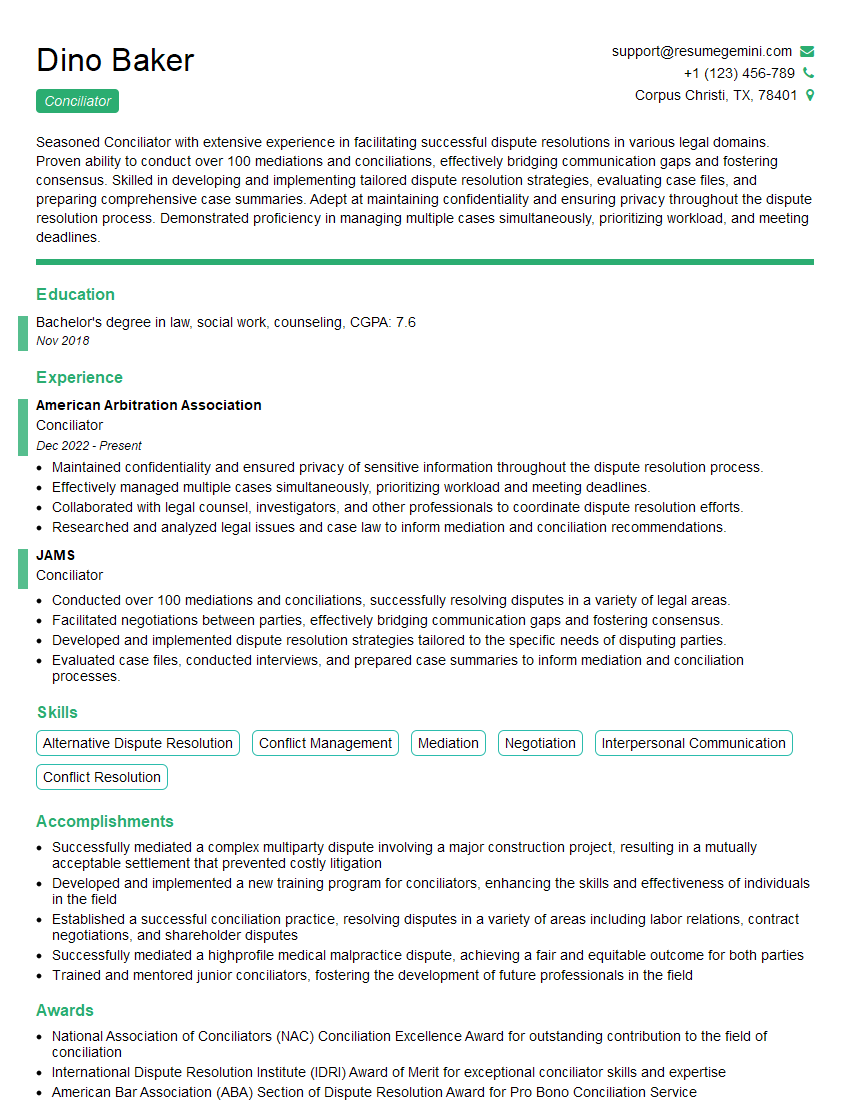
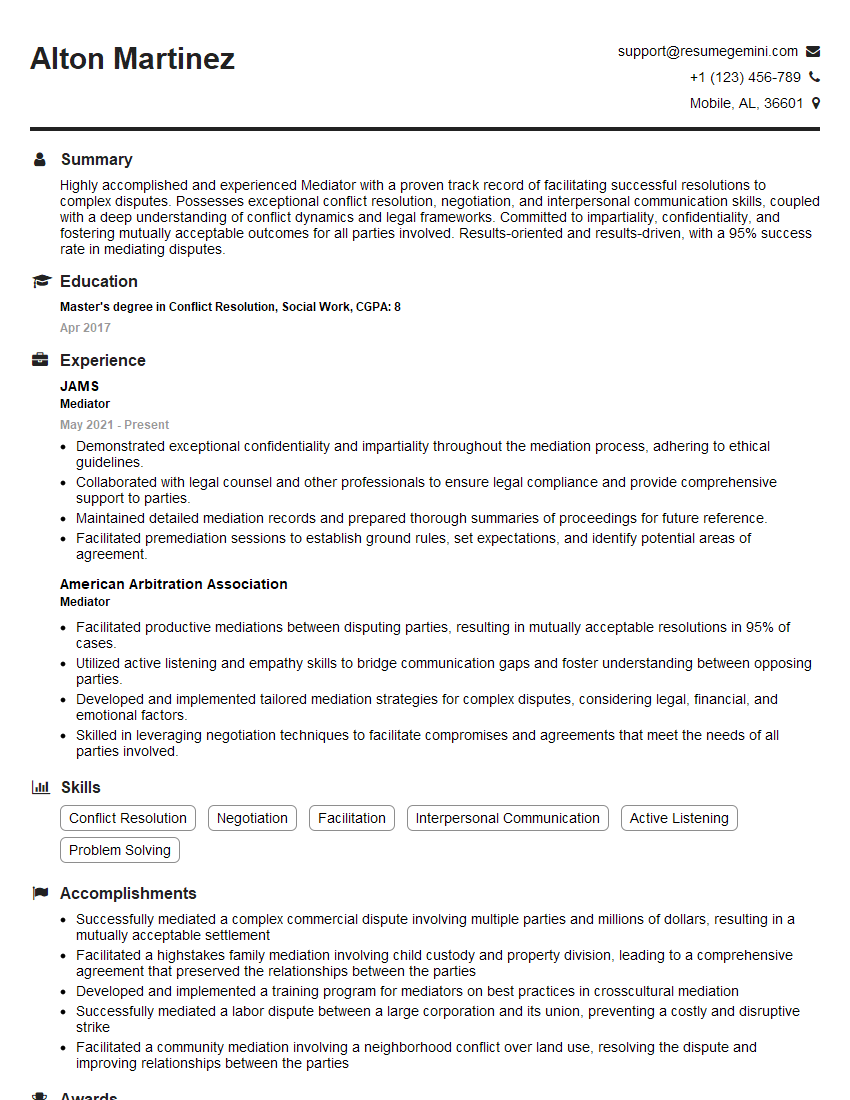
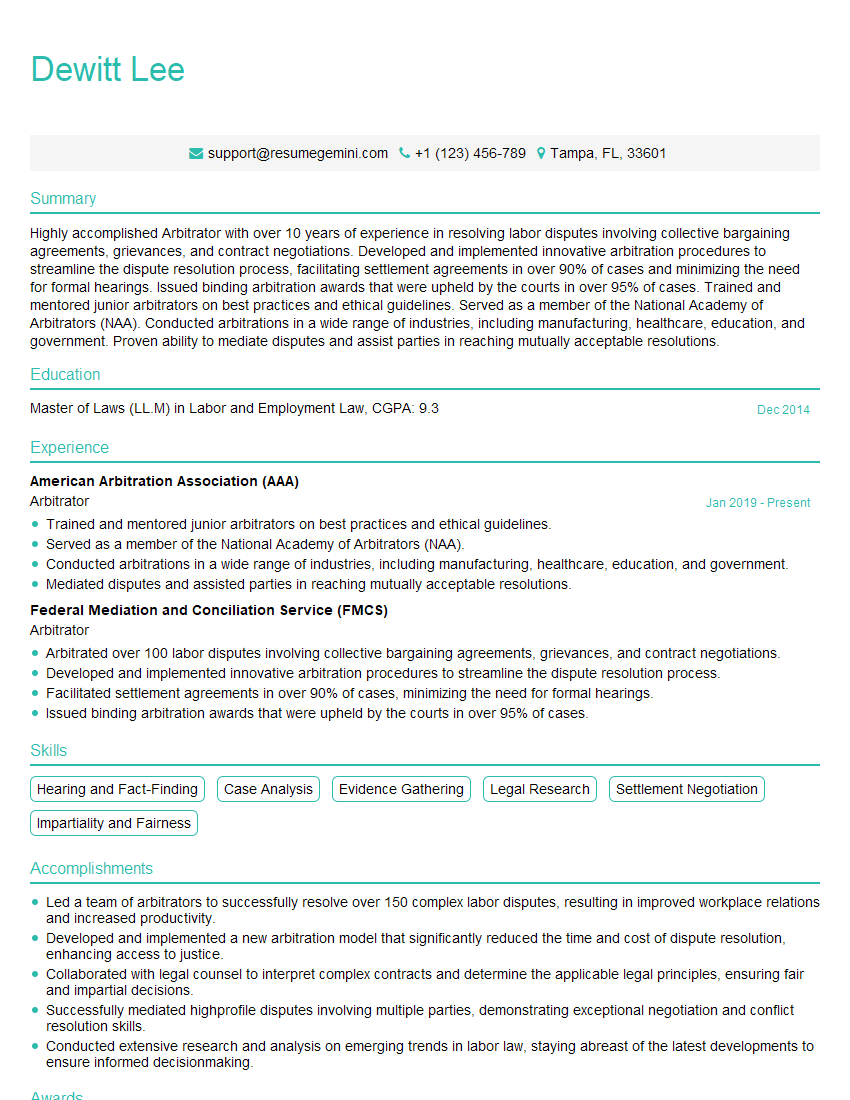
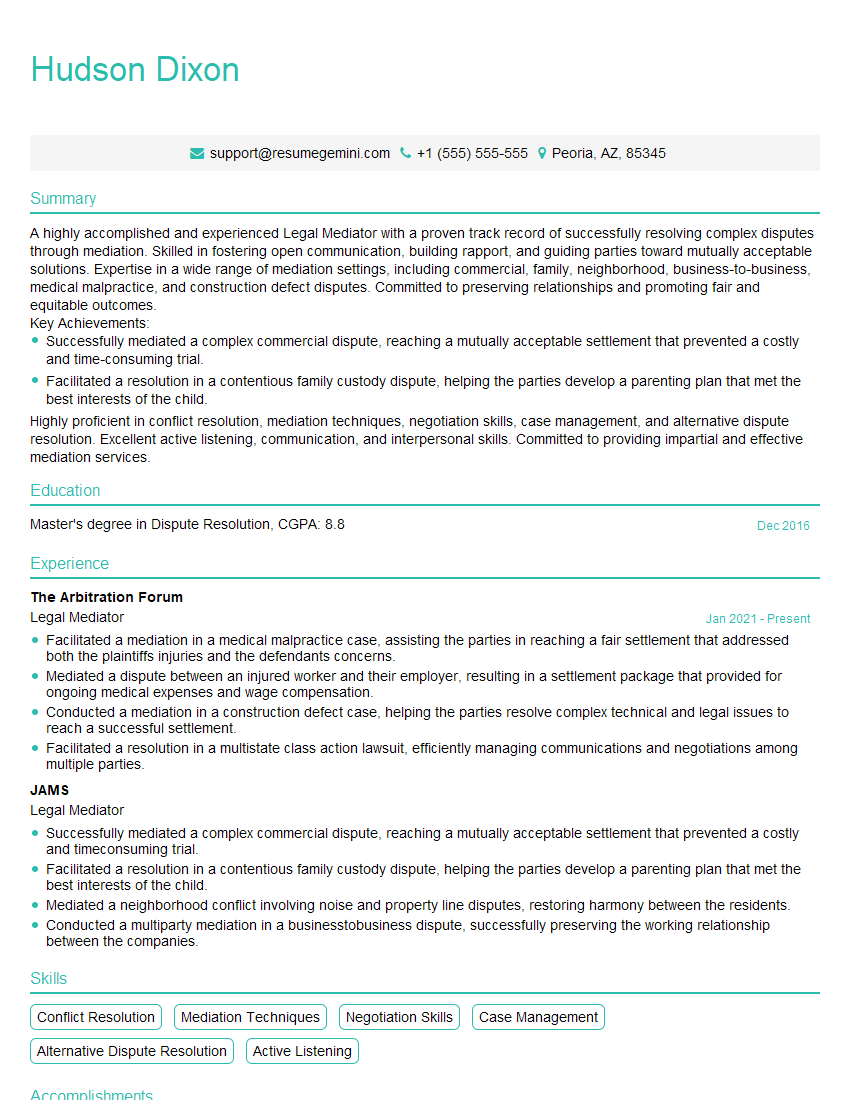
Mastering ADR significantly enhances your career prospects, opening doors to diverse and rewarding opportunities in legal, business, and conflict resolution fields. To maximize your job search success, it’s crucial to create an ATS-friendly resume that highlights your skills and experience effectively. ResumeGemini is a trusted resource to help you build a professional and impactful resume, ensuring your qualifications stand out to potential employers. Examples of resumes tailored to ADR are available to further guide your preparation.
Explore more articles
Users Rating of Our Blogs
Share Your Experience
We value your feedback! Please rate our content and share your thoughts (optional).
What Readers Say About Our Blog
Very informative content, great job.
good