Feeling uncertain about what to expect in your upcoming interview? We’ve got you covered! This blog highlights the most important Advanced knowledge of stage terminology and protocols interview questions and provides actionable advice to help you stand out as the ideal candidate. Let’s pave the way for your success.
Questions Asked in Advanced knowledge of stage terminology and protocols Interview
Q 1. Define ‘call time’ and explain its importance.
Call time is the time actors and crew members are required to be present and ready to begin work on a theatrical production. It’s crucial for the smooth running of rehearsals and performances.
Think of it like the start time of a very important meeting. Everyone needs to be there, prepared, and ready to contribute. If a key actor is late, the whole rehearsal or show could be delayed or disrupted. A call time ensures that the production can begin on schedule, allowing sufficient time for costume changes, makeup, set adjustments, and technical checks. A typical call time is scheduled to allow ample buffer time before the show’s actual curtain-up time. For example, if the show starts at 7:30 PM, actors might have a call time as early as 5:00 PM, and the technical crew might even arrive earlier.
Q 2. What is a ‘cue’ and how are cues used in a theatrical production?
A cue is a signal, either auditory or visual, that triggers an action or event on stage. It is essential for coordinating the various aspects of a theatrical production. It’s like a secret code used by the different departments (lighting, sound, props, actors) to ensure everything happens precisely when it should.
Cues can be verbal (e.g., “Places!” before the curtain rises), visual (e.g., a light change, a specific actor’s movement), or mechanical (e.g., the sound of a door creaking). A stage manager is typically responsible for giving cues that activate light and sound changes, set movements, or actor entrances and exits. Imagine a scene where a character needs to enter as the lights dim. The cue might be ‘Light Cue 7, then Actor A enters on stage right’. Without clear and well-rehearsed cues, the production will be chaotic and likely fail to maintain its intended rhythm.
Q 3. Explain the difference between a ‘strike’ and a ‘load-in’.
Load-in refers to the process of bringing all the set pieces, props, costumes, and equipment into the theater and setting them up. Think of it as the ‘building phase’ of the production.
Strike, on the other hand, is the complete dismantling and removal of the set, props, and equipment from the theater after the final performance. It’s like the ‘teardown’ or ‘cleanup’ phase, and is often done much quicker, as the crew might be more experienced and know exactly what to do.
In essence, load-in is setting up the production, while strike is taking it all down.
Q 4. What is the purpose of a ‘prompt script’?
A prompt script is a copy of the play’s script used by the stage manager during a production. It contains important notes including cues, blocking information, and any other details to ensure smooth transitions and consistency throughout the performance. It’s essentially the stage manager’s bible.
The prompt script aids in providing the actors with their lines if they forget, though this is ideally avoided with well-rehearsed actors, it’s more commonly used for cueing technical elements. It ensures a clear record of any adjustments made during the run of a play, providing a consistent experience to the audience.
Q 5. Describe the process of ‘hanging’ and ‘focusing’ lights.
Hanging lights involves physically installing lighting instruments in the theater’s grid, or ceiling structure. This includes securely attaching the lights to the grid and running the cables for power and data. It requires specialized equipment and a thorough understanding of weight distribution and safety regulations. Imagine hanging heavy Christmas lights, but much more precise.
Focusing lights is the process of carefully adjusting the direction and shape of the light beams emitted by each lighting instrument. It involves adjusting the beam angle, aiming the light at precise points on stage, and creating specific lighting effects. This process requires great skill and precision to achieve the desired look and feel of the production. It’s like fine-tuning a spotlight to highlight a single object in a massive dark room.
These two steps are essential to creating the visual design of a theatrical production and are critical in creating moods and emphasizing key areas of the stage.
Q 6. What is a ‘ghost light’ and why is it used?
A ghost light is a single bulb left burning onstage overnight. This practice dates back to the days before electricity, but remains a tradition for several reasons.
Firstly, it provides illumination for anyone who might need to enter the theater at night for any reason, preventing accidents. It’s akin to a nightlight in a house. Secondly, it is believed by some to ward off bad luck. While this is based on superstition, it adds a symbolic respect for the space, the performance, and the craft. It shows that the theater is a space that is cared for and respected.
Q 7. Explain the importance of a ‘stage plot’.
A stage plot is a technical drawing that shows the placement of all the scenic elements, including the set pieces, props, actors’ positions, and the locations of lighting instruments on the stage. It serves as a roadmap for the technical crew. Think of it as the architectural blueprint of a theatrical production.
The stage plot is crucial for the successful execution of a production because it clearly communicates the spatial relationships between all the elements. It helps the lighting designers understand where they need to focus their lights, the set designers and construction crew understand how to build and place the sets, and the stage manager know where the actors must be positioned. Without it, the show would be a logistical nightmare. It ensures that everyone involved can work efficiently and effectively towards a unified vision.
Q 8. What are some common safety protocols on a stage?
Stage safety is paramount. Protocols vary depending on the production, but common elements include ensuring proper weight distribution for set pieces, using appropriate safety harnesses and fall protection for rigging work, maintaining clear pathways to avoid tripping hazards (especially in low light conditions), and having a designated first-aid station readily accessible. Electrical safety is critical; all wiring must be properly insulated and grounded to prevent shocks. Fire safety measures such as readily available fire extinguishers, clearly marked exits, and fire safety training for all crew members are also essential. Imagine a complex set with moving parts – a thorough risk assessment and implementation of these protocols are vital to prevent accidents.
- Weight Limits: Clearly marked weight limits on all rigging points prevent overloading.
- Lockout/Tagout Procedures: These procedures ensure equipment is safely shut down before maintenance or repairs.
- Emergency Exits: Clearly marked and unobstructed emergency exits are critical for rapid evacuation.
Q 9. Describe the role of the stage manager during a performance.
The stage manager (SM) is the central hub of communication and organization during a production. They’re responsible for the smooth execution of the show, from the call to places to the final curtain. Their duties encompass coordinating the entire stage crew, ensuring the actors are properly cued, managing technical elements such as lighting and sound cues, liaising with the director and designers, handling any unforeseen issues that arise during performance, and ensuring that the production runs according to schedule. Think of the SM as the conductor of an orchestra – orchestrating all aspects of the performance to create a cohesive whole.
- Cueing: The SM calls cues for lighting, sound, and set changes.
- Communication: The SM is the point person for communication between the director, actors, and technical crews.
- Problem Solving: The SM handles emergencies and unexpected problems with calm and efficiency.
Q 10. How do you handle a technical issue during a show?
Handling a technical issue during a show requires quick thinking and clear communication. The first step is to assess the problem: Is it a minor glitch that can be easily fixed, or a major malfunction that requires a significant intervention? For example, if a spotlight malfunctions, the SM might quickly switch to a backup light, while a major power outage might necessitate a temporary halt to the performance. The SM immediately communicates the problem to relevant technical crew members, directing their efforts toward a swift resolution. Prioritization is key: Addressing issues that impact the audience’s viewing experience takes precedence.
A calm and professional demeanor is crucial to reassure performers and the audience. A well-rehearsed backup plan mitigates the severity of any disruptions. A common strategy for minor problems is to quickly ‘patch’ the issue without interrupting the show. For major problems, there are pre-established contingency plans.
Q 11. Explain the different types of stage rigging systems.
Stage rigging systems are used to suspend scenery, lighting, and other equipment above the stage. Several types exist, each with unique characteristics:
- Counterweight System: This is the most common system, using a system of ropes, pulleys, and counterweights to balance the weight of the flown items, making them easy to raise and lower. This system is robust and reliable, but requires significant space for the counterweight arbor.
- Electric Hoists: These motorized systems provide more precise control and quicker lift speeds compared to counterweight systems but require regular maintenance and safety checks.
- Chain Hoists: These manual systems use a chain and ratchet mechanism to lift and lower items. They are less precise than electric hoists and more physically demanding to operate, but are often used for smaller loads.
- Motorized Winches: These systems are often used for more complex scenic movements.
Safety is paramount in rigging; regular inspections and adherence to weight limits are critical to prevent accidents.
Q 12. What are the key elements of a successful sound check?
A successful sound check ensures optimal audio quality for the performance. It involves verifying microphone levels, adjusting equalization settings, testing sound effects and music playback, and confirming communication clarity between performers and the sound crew. The sound engineer works closely with the performers to ensure proper microphone placement and technique. It also ensures that the balance of instruments, vocals, and sound effects is well-balanced and pleasing to the ear. A checklist of all audio equipment is usually employed. A good sound check anticipates and minimizes potential issues, resulting in a clean and polished sound during the performance. This involves ensuring proper gain staging and checking that all levels are within acceptable ranges to avoid clipping or excessive noise. The room’s acoustics are also considered. A properly executed sound check minimizes the possibility of unexpected issues that could affect the quality of the performance.
Q 13. What is a ‘dead mic’ and how is it addressed?
A ‘dead mic’ is a microphone that is not transmitting any audio signal. This can be due to a number of reasons: a faulty cable, a dead battery (in wireless mics), a muted channel on the mixer, or a problem with the microphone itself. Addressing a dead mic depends on the source of the problem. If the cable is faulty, it needs to be replaced. If the battery is dead, a fresh one needs to be installed. If the channel is muted, it needs to be unmuted on the mixing console. If the microphone itself is faulty, a backup microphone should be used. Quick identification and decisive action is crucial to minimizing disruption to the performance.
Q 14. How do you communicate effectively with different crew members?
Effective communication with different crew members is crucial for a smooth production. Using clear, concise language, avoiding jargon (unless everyone understands it), and using proper communication channels (walkie-talkies, headsets, or designated meeting points) are important. Respectful communication is vital. Before a show, a clear understanding of roles and responsibilities is established, and the communication protocol is agreed upon. Different crews (lighting, sound, stagehands, etc.) have different communication needs. A stage manager should adapt communication strategies to each crew’s preferences and needs. In a stressful situation, clear and concise instructions are more effective than long, detailed explanations. For example, short, direct commands over a headset during a scene change are vital for safety and efficiency. Open and honest communication helps solve problems and prevents misunderstandings.
Q 15. Describe your experience with various stage technologies.
My experience with stage technologies spans a wide range, from traditional to cutting-edge systems. I’m proficient in operating and troubleshooting lighting consoles, including ETC Ion and MA Lighting grandMA2. I’m familiar with various lighting fixtures, from LED pars and moving heads to conventional spotlights and cyclorama washes. My sound experience encompasses digital audio workstations (DAWs) like Ableton Live and Pro Tools, along with mixing consoles such as Yamaha and Soundcraft boards. I’m also experienced with stage automation systems, including rigging and fly systems, and have worked extensively with various projection systems and video playback software.
For instance, in a recent production, I utilized a grandMA2 console to program complex lighting cues, coordinating them with the sound design and the actors’ movements. This involved precise timing and coordination with the stage manager to ensure seamless transitions. I’ve also worked with automated curtain systems to create impressive reveals and scene changes, requiring meticulous programming and safety protocols.
Career Expert Tips:
- Ace those interviews! Prepare effectively by reviewing the Top 50 Most Common Interview Questions on ResumeGemini.
- Navigate your job search with confidence! Explore a wide range of Career Tips on ResumeGemini. Learn about common challenges and recommendations to overcome them.
- Craft the perfect resume! Master the Art of Resume Writing with ResumeGemini’s guide. Showcase your unique qualifications and achievements effectively.
- Don’t miss out on holiday savings! Build your dream resume with ResumeGemini’s ATS optimized templates.
Q 16. What is the significance of the ‘running order’?
The ‘running order’ is the backbone of any theatrical production. It’s a meticulously documented sequence of events, specifying the exact order in which scenes, musical numbers, or other elements will occur during the performance. This document acts as a central reference for everyone involved—stage crew, actors, musicians, lighting and sound technicians— ensuring that everything happens smoothly and in the correct order. Think of it as the ultimate timetable for the show.
Its significance lies in its ability to prevent confusion and streamline the production process. Without a detailed running order, delays and mistakes are much more likely. It dictates the cues for lighting, sound, scene changes, prop placement, and even actor entrances and exits. A well-structured running order is crucial for a successful and efficient production.
Q 17. Explain the concept of ‘blocking’ in a theatrical production.
Blocking, in theatrical terms, refers to the precise movement and positioning of actors on stage. It’s essentially the choreography of the actors’ performance. The director meticulously plans each actor’s path, where they stand, how they move between locations on stage, and their interactions with other actors and the set. It’s a collaborative process involving the director, actors, and stage manager.
Effective blocking contributes significantly to the storytelling and emotional impact of a production. It helps to create clear sightlines for the audience, emphasize dramatic moments, and enhance the flow of the narrative. Imagine a tense scene; careful blocking can use the space to build suspense, while poor blocking might confuse the audience and weaken the drama.
For example, in a romantic scene, a director might block the actors to move closer gradually, increasing the tension, while in a fight scene, clear blocking ensures the safety of the actors and the visibility of the action.
Q 18. What is a ‘backstage pass’ and its purpose?
A backstage pass is a credential that grants authorized personnel access to areas restricted to the general public, such as backstage, dressing rooms, and technical areas of a theatre or performance venue. It’s essentially an ‘all-access’ pass to the behind-the-scenes world.
Its purpose is primarily to ensure security and control of access to sensitive areas. It helps to prevent unauthorized individuals from entering backstage and potentially disrupting the production, causing damage, or compromising safety. Backstage passes often have identification features such as photographs and specific event details, allowing security personnel to easily verify access privileges.
Q 19. Describe different types of stage curtains and their functions.
There are several types of stage curtains, each serving a specific function:
- Main Curtain (Grand Drape): The largest curtain, typically at the front of the stage, used to open and close acts or scenes. Often made of heavy, luxurious fabrics.
- Scrim: A translucent curtain that appears opaque when lit from the front and transparent when lit from behind, allowing for impressive scene transitions and special effects.
- Leg Curtains (Leg Drops): Narrow curtains positioned on either side of the stage, masking the wings (offstage areas) and improving the visual framing of the performance space.
- Traveler Curtain: A curtain that moves horizontally across the stage, often used to reveal or conceal set pieces or to create scenic transitions.
- Backdrop Curtain: A curtain serving as the background, often painted or printed with scenery, or used as a projection screen.
The choice of curtain type depends on the production’s needs, budget, and the desired aesthetic.
Q 20. What is a ‘dress rehearsal’ and its purpose?
A dress rehearsal is a full-scale run-through of the entire production, including costumes, makeup, lighting, sound, and special effects, performed as if it were a live show. It’s essentially the final practice before the official opening night.
Its purpose is to identify and correct any remaining problems, technical glitches, or pacing issues before the audience sees the show. It allows the cast and crew to rehearse the entire production under performance conditions, to fine-tune timing, solve technical problems, and ensure a seamless performance. It’s a critical stage for identifying and resolving unforeseen challenges before the actual performance.
Q 21. How do you maintain order and efficiency during a quick change?
Maintaining order and efficiency during a quick change requires meticulous planning, clear communication, and a well-trained team. It’s a highly choreographed process.
Strategies for efficient quick changes include:
- Designated Quick Change Areas: Dedicated spaces, usually backstage, outfitted with multiple racks and mirrors, maximize efficiency.
- Clear Communication: A clear system of cues (verbal or visual) between the stage manager, actors, and the dressers is essential.
- Pre-planned Costumes: Costumes are laid out in precise order, with specific accessories clearly marked.
- Designated Dressers: Experienced dressers know the costumes and can swiftly facilitate changes.
- Practice: Regular rehearsals of the quick change process are vital for smooth transitions.
Imagine a musical with multiple costume changes during rapid-fire song transitions. A well-coordinated system ensures that each costume change happens promptly and flawlessly, minimizing downtime and ensuring a smooth, uninterrupted performance.
Q 22. What are your experiences with different types of stage lighting?
My experience with stage lighting encompasses a wide range of technologies, from traditional incandescent and tungsten-halogen fixtures to modern LED and moving-head lights. I’m proficient in the use of Fresnels, ellipsoidal spotlights (LEKs), PAR cans, and cyclorama lighting. I understand the principles of color mixing, gel filtration, and the use of dimming boards for precise control. I’ve worked extensively with lighting consoles, including both manual and computerized systems, and am comfortable programming and operating complex lighting cues. For instance, in a recent production of ‘Hamlet’, I designed and implemented a lighting scheme that used a combination of warm and cool light to create a dramatic and atmospheric setting, reflecting the shifting moods of the play. My experience also includes troubleshooting lighting issues, ensuring safety protocols are followed, and working collaboratively with lighting designers and technicians to achieve the desired aesthetic.
Q 23. What is the difference between a ‘follow spot’ and a ‘profile’?
A follow spot and a profile are both types of stage lighting instruments, but they serve very different purposes. A follow spot is a powerful spotlight, usually with a high-intensity discharge lamp, designed to follow a specific performer or object across the stage. It allows for highly focused, dynamic lighting effects, often used to highlight a soloist or create a sense of urgency. Think of the dramatic spotlight following a lead actor during a crucial scene.
A profile, or ellipsoidal spotlight (often called an Leko), is a more precise and versatile instrument. It uses lenses and shutters to create a sharply defined beam of light, allowing for precise shaping and control of the light spill. Profiles are commonly used to light specific areas of the stage, creating a defined key light or creating gobo (templates that project patterns) effects. Profiles are essential for nuanced lighting designs, offering greater control than follow spots over the beam shape and colour.
Q 24. What is a ‘sound reinforcement’ system?
A sound reinforcement system is the collection of microphones, amplifiers, speakers, and signal processing equipment used to amplify and distribute sound in a live performance setting. Its primary function is to ensure that the audience can clearly hear actors’ voices, musicians’ instruments, or other audio sources. A typical system includes microphones to capture the sound, mixers to control the levels and equalization of each input, amplifiers to boost the signal strength, and speakers to project the amplified sound throughout the venue. Sophisticated systems often incorporate digital signal processing (DSP) for more advanced control and effects. Imagine a large musical theatre production; the sound reinforcement system is critical for all audience members to hear the singing and dialogue clearly, regardless of their seating location.
Q 25. What is the role of the ‘head of props’?
The head of props is responsible for the acquisition, maintenance, and deployment of all properties (props) used in a theatrical production. This includes sourcing items, constructing props as needed, organizing and tracking their location, ensuring they are in good condition, and coordinating their placement on stage. This role requires meticulous attention to detail, strong organizational skills, and the ability to collaborate with other members of the production team like the set designer, costume designer, and stage manager. For example, in a historical play, they might be responsible for sourcing period-accurate furniture, weapons, or clothing accessories. They often keep detailed inventories of all props, ensuring everything is accounted for and returned to its rightful place after a performance.
Q 26. Describe how you manage communication between the stage manager and the director.
Effective communication between the stage manager and director is crucial for a smooth production. I facilitate this through clear and consistent channels, often using a combination of daily briefings, detailed notes, and prompt feedback. Before rehearsals, I work with the director to ensure a shared understanding of the blocking, lighting, sound, and prop cues. During rehearsals, I maintain a detailed record of all changes and decisions made by the director, and relay this information clearly and efficiently to the rest of the crew. Regular check-ins with the director allow for any concerns or adjustments to be discussed proactively. Think of me as the bridge, ensuring that the director’s vision translates seamlessly onto the stage. I’m adept at anticipating potential problems and addressing them before they impact the performance. A daily log maintained meticulously becomes a bible for the entire team.
Q 27. How do you troubleshoot a problem with stage microphones?
Troubleshooting stage microphones involves a systematic approach. My first step would be to identify the specific problem – no sound, feedback, low volume, etc. Then I’d check the obvious: is the microphone switched on? Is it properly connected? Is the cable intact? If the issue persists, I’d check the gain settings on the mixer, ensuring the microphone channel isn’t muted or the input level too low or high. I’d also look for issues with phantom power (if needed) and check for any interference from other electronic devices. If the microphone is still not working, I’d try replacing it with a known working microphone to see if the problem is with the microphone itself or the system. Visual inspection of cables and connectors is crucial. Feedback, a common problem, is usually addressed by adjusting microphone placement, gain levels, or using EQ filters to reduce frequencies causing the issue. Documenting the steps taken and the solution is essential for future reference.
Q 28. What are some common stage markings and their significance?
Stage markings, often tape on the floor, provide crucial spatial information for actors and technicians. Common markings include:
- Tape lines: Indicate set boundaries, actor positions, and paths of movement. These are essential for consistent blocking.
- X marks: Often denote specific positions for actors during a scene, particularly for lighting or sound cues.
- Numbered positions: Provide precise locations, especially helpful for complex movement patterns in ensemble scenes.
- Furniture markings: Outline the footprint of set pieces, helping with placement and ensuring safe movement around props.
- Trap door markings: Mark the location of any stage traps or access points for effects.
Understanding these markings is crucial for efficient rehearsals and performance. They provide a visual guide for everyone involved, ensuring consistency and safety throughout the production. Imagine trying to stage a complex fight scene without these markings – it would be chaotic and potentially dangerous. They translate the director’s vision onto the stage floor in a concrete, practical way.
Key Topics to Learn for Advanced Stage Terminology and Protocols Interview
- Stage Management Systems: Understanding various stage management software and their applications in scheduling, communication, and problem-solving. This includes practical experience with cue sheets, prompt books, and communication protocols.
- Technical Theatre Terminology: Mastery of technical terms related to lighting, sound, rigging, set construction, and costuming. Be prepared to discuss specific equipment, techniques, and safety protocols.
- Production Workflow & Collaboration: Demonstrate knowledge of the entire production process, from initial design concepts to final strike. Highlight your experience collaborating effectively with designers, technicians, and directors.
- Safety Protocols & Regulations: Thorough understanding and practical application of safety regulations and procedures related to stage equipment, handling, and potential hazards. Be prepared to discuss risk assessment and mitigation strategies.
- Problem-Solving & Troubleshooting: Showcase your ability to identify and resolve technical issues during rehearsals and performances. Provide examples of your quick thinking and resourcefulness in high-pressure situations.
- Communication & Teamwork: Discuss your experience communicating effectively with diverse teams, including actors, designers, technicians, and stagehands. Emphasize your collaborative approach and ability to manage conflicting priorities.
Next Steps
Mastering advanced stage terminology and protocols is crucial for career advancement in theatre and live performance. A strong understanding of these concepts demonstrates professionalism, competence, and a commitment to safety. To significantly boost your job prospects, create an ATS-friendly resume that highlights your skills and experience effectively. ResumeGemini is a trusted resource to help you build a professional and impactful resume. We provide examples of resumes tailored to candidates with advanced knowledge of stage terminology and protocols to guide you. Take advantage of these resources to present yourself as the ideal candidate.
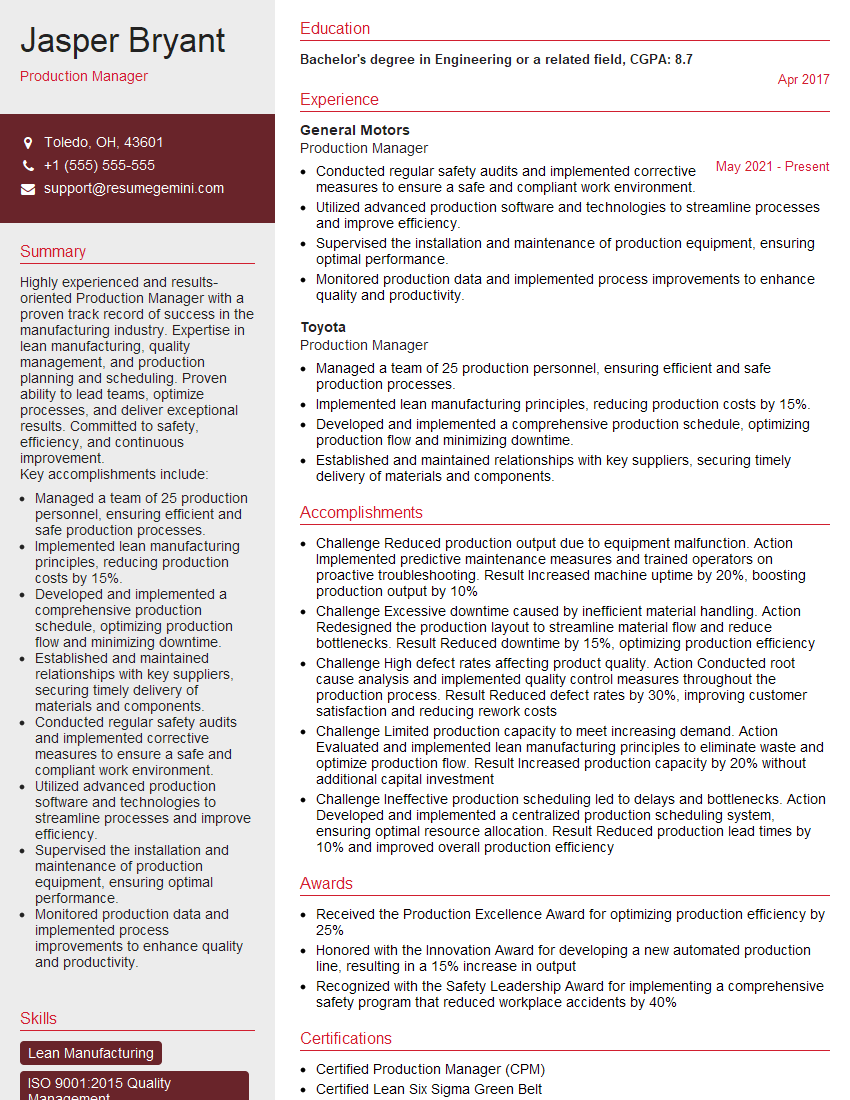
Production Manager Resume Sample
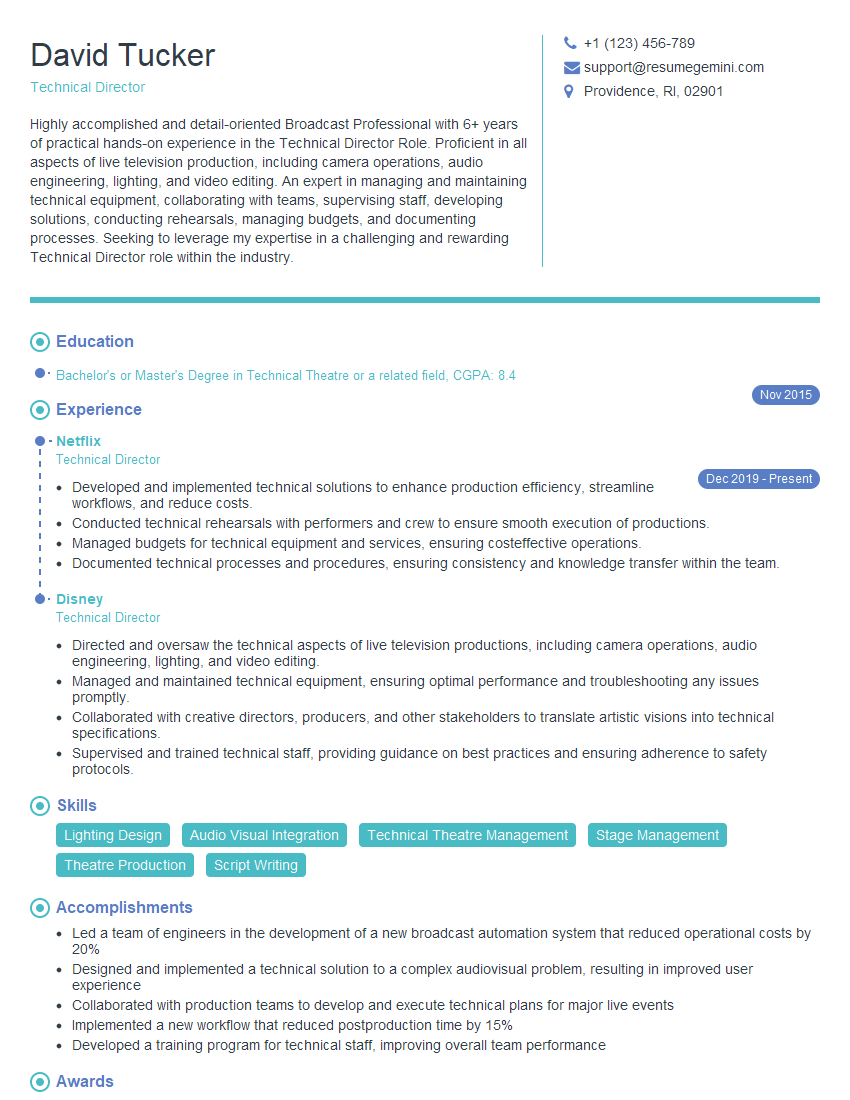
Technical Director Resume Sample

Production Coordinator Resume Sample
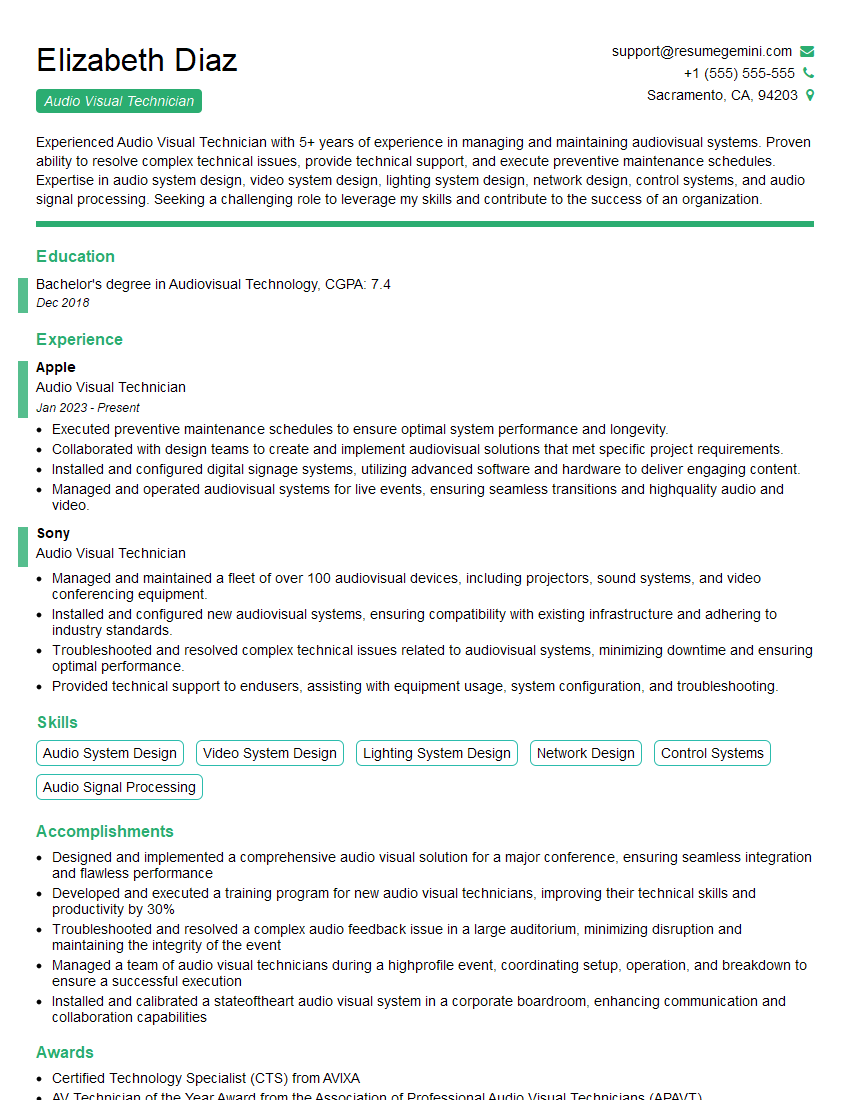
Audio Visual Technician Resume Sample
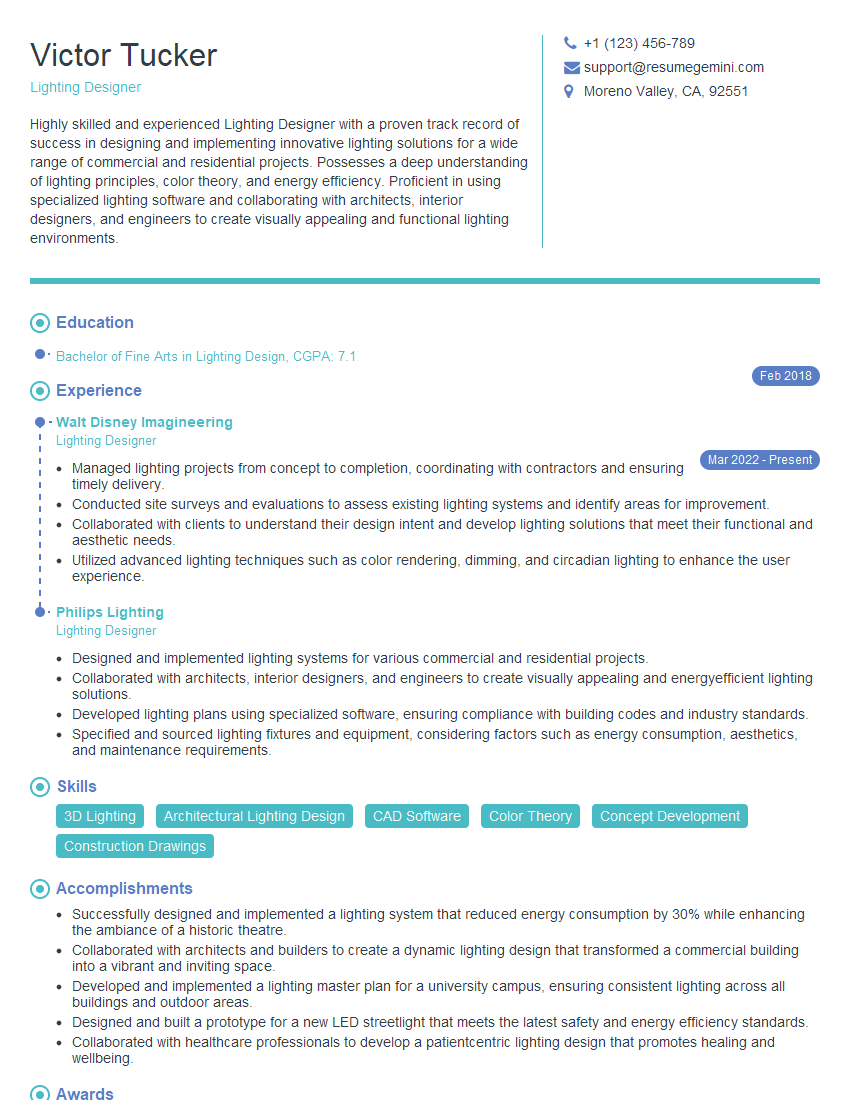
Lighting Designer Resume Sample
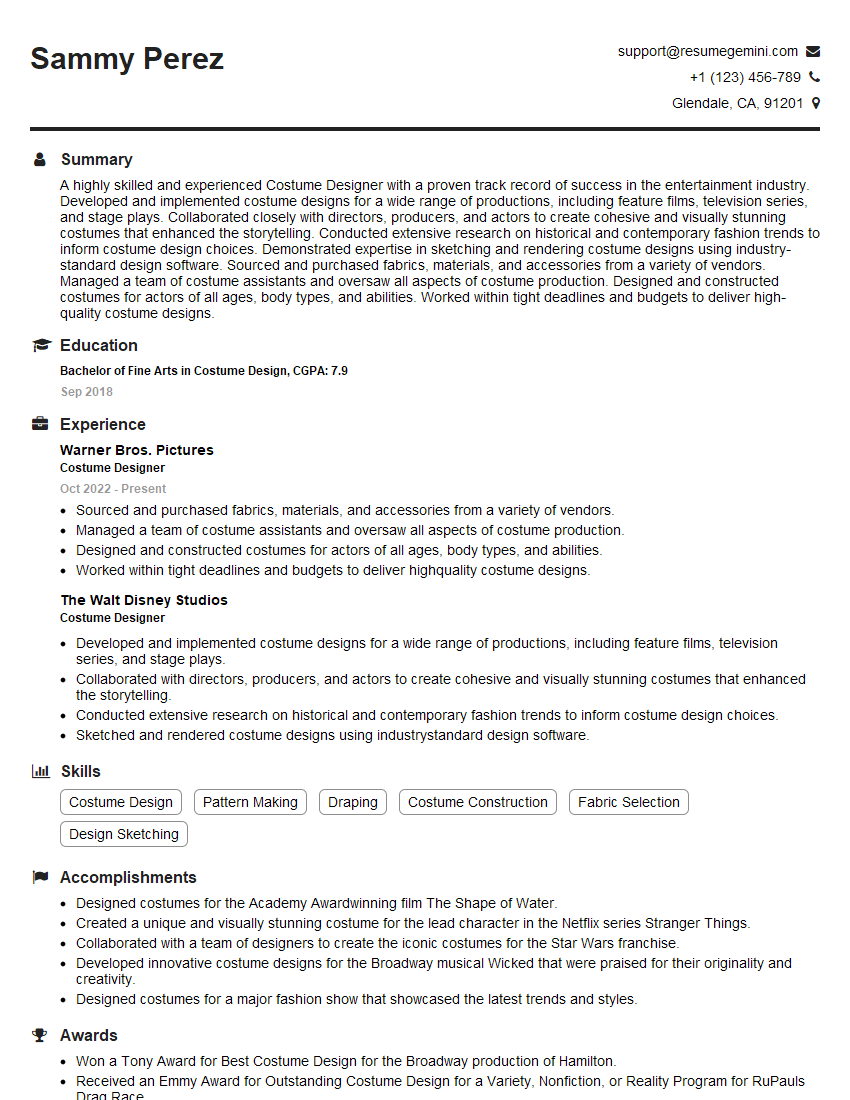
Costume Designer Resume Sample
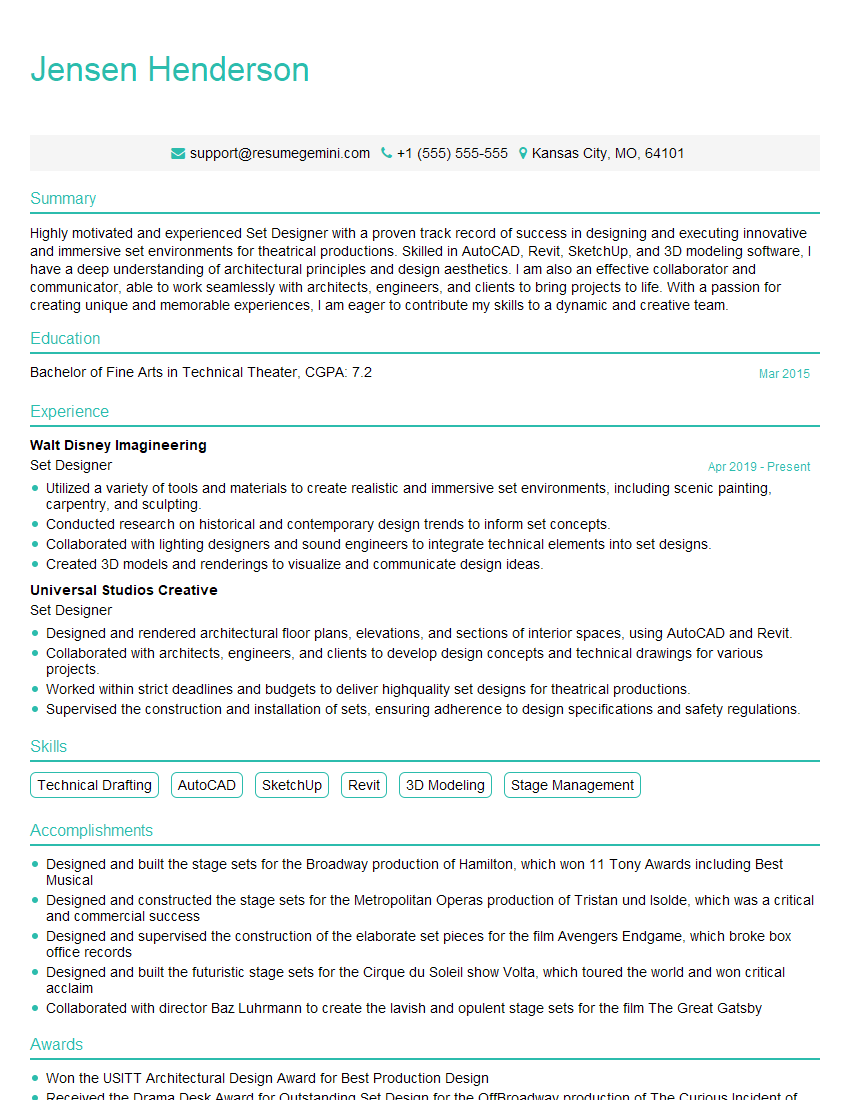
Set Designer Resume Sample
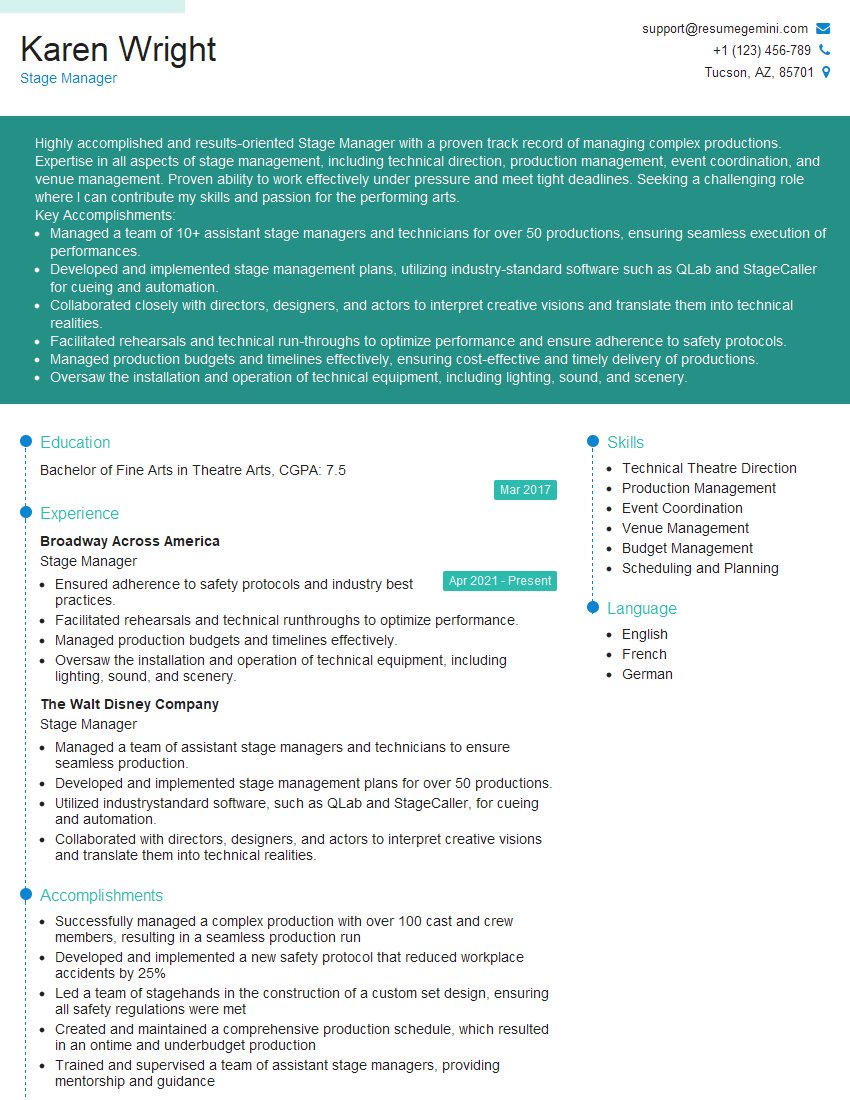
Stage Manager Resume Sample
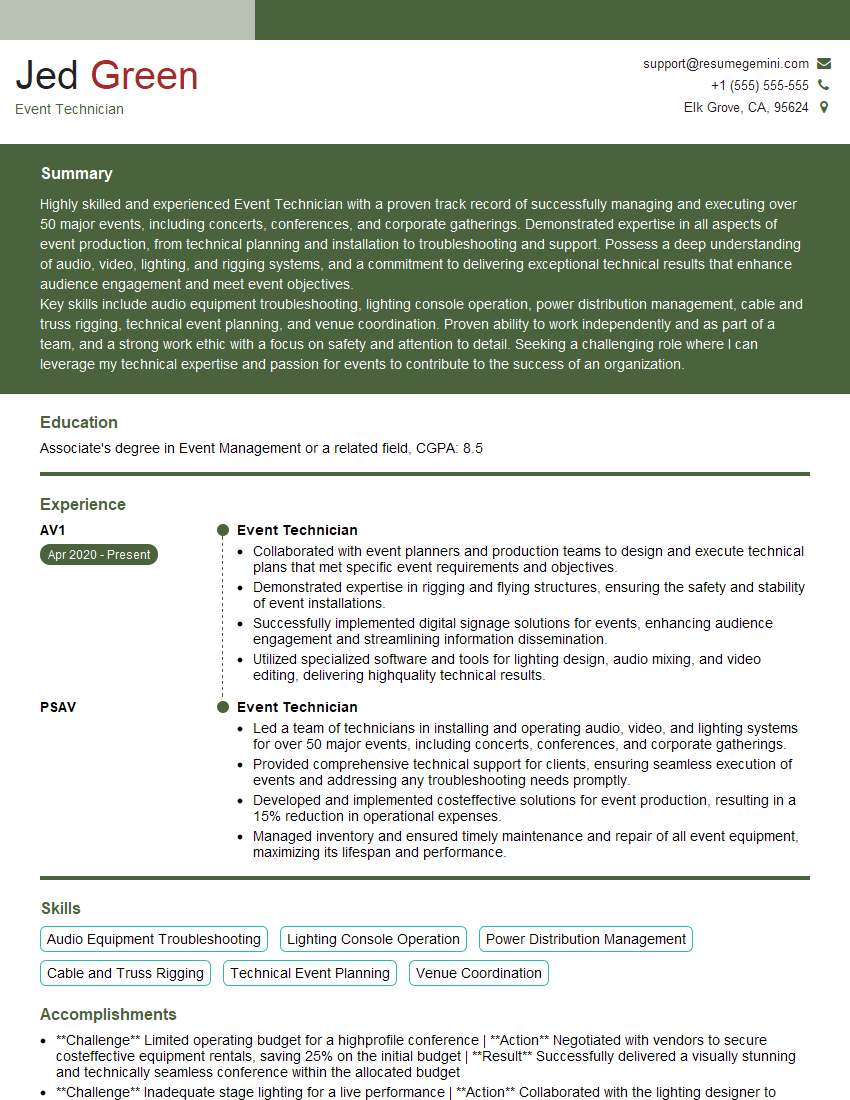
Event Technician Resume Sample
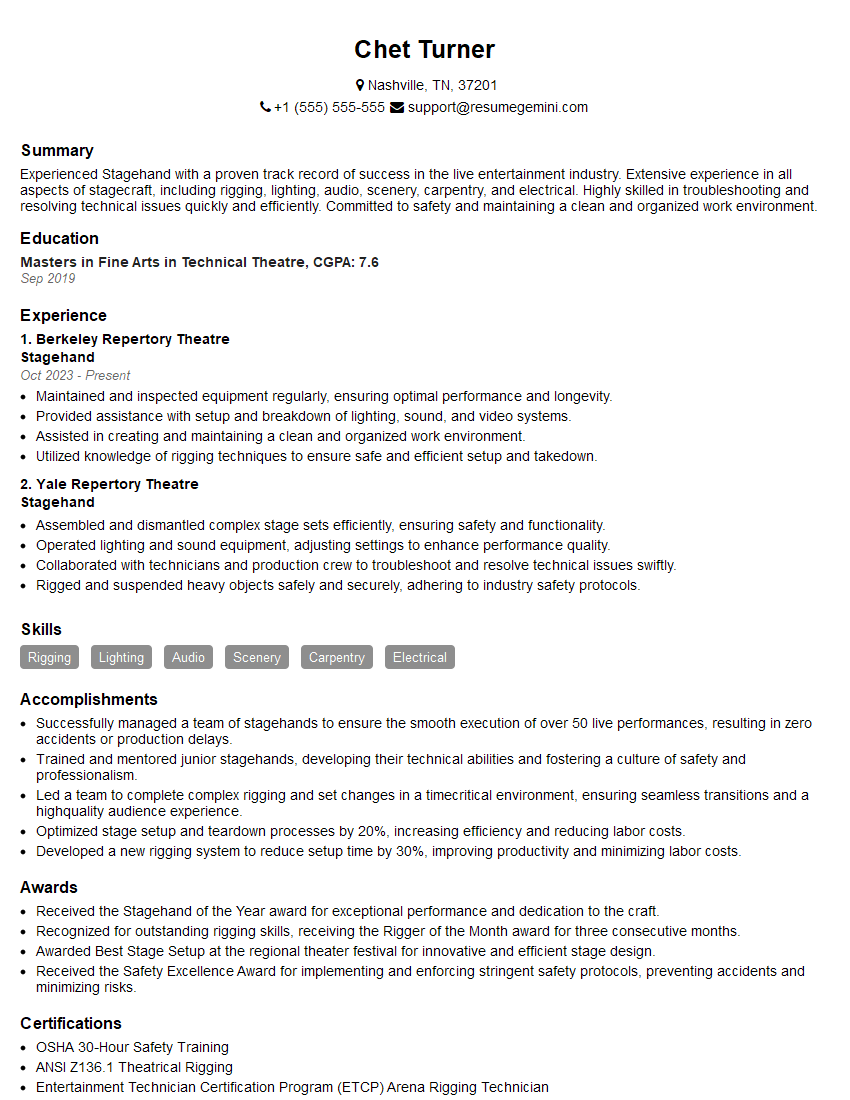
Stagehand Resume Sample
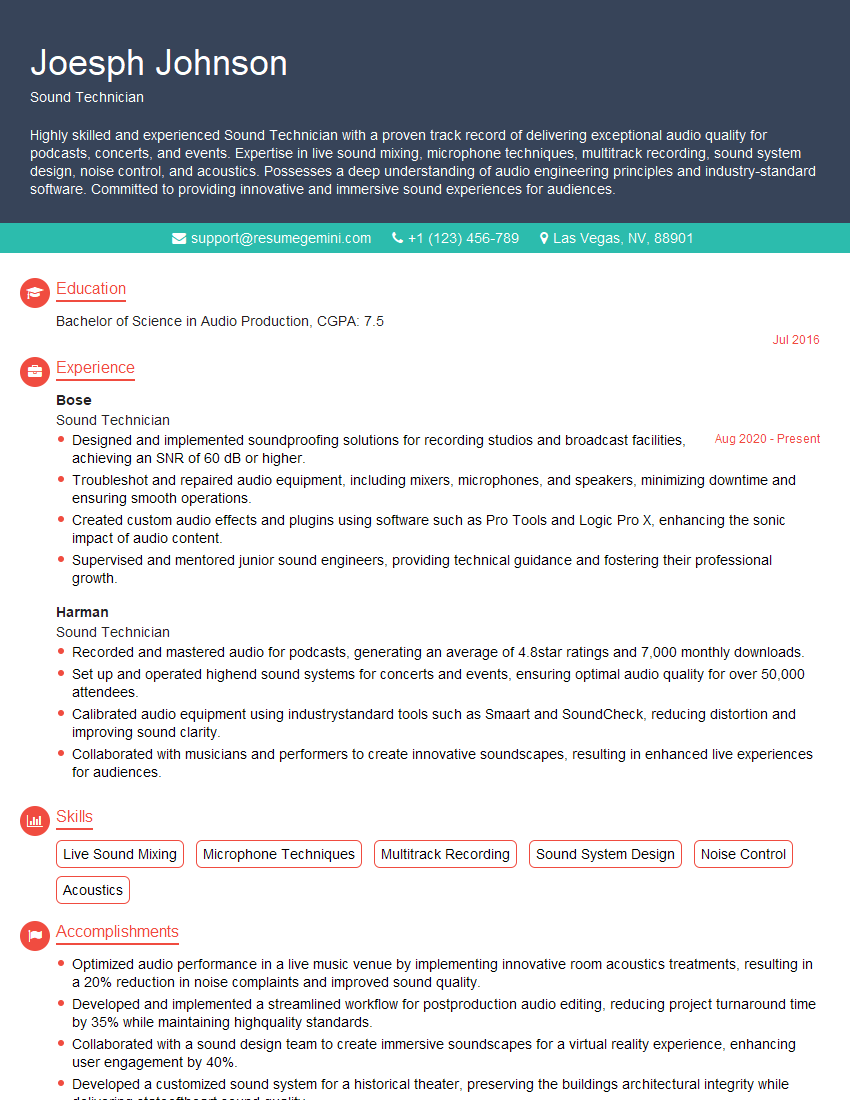
Sound Technician Resume Sample
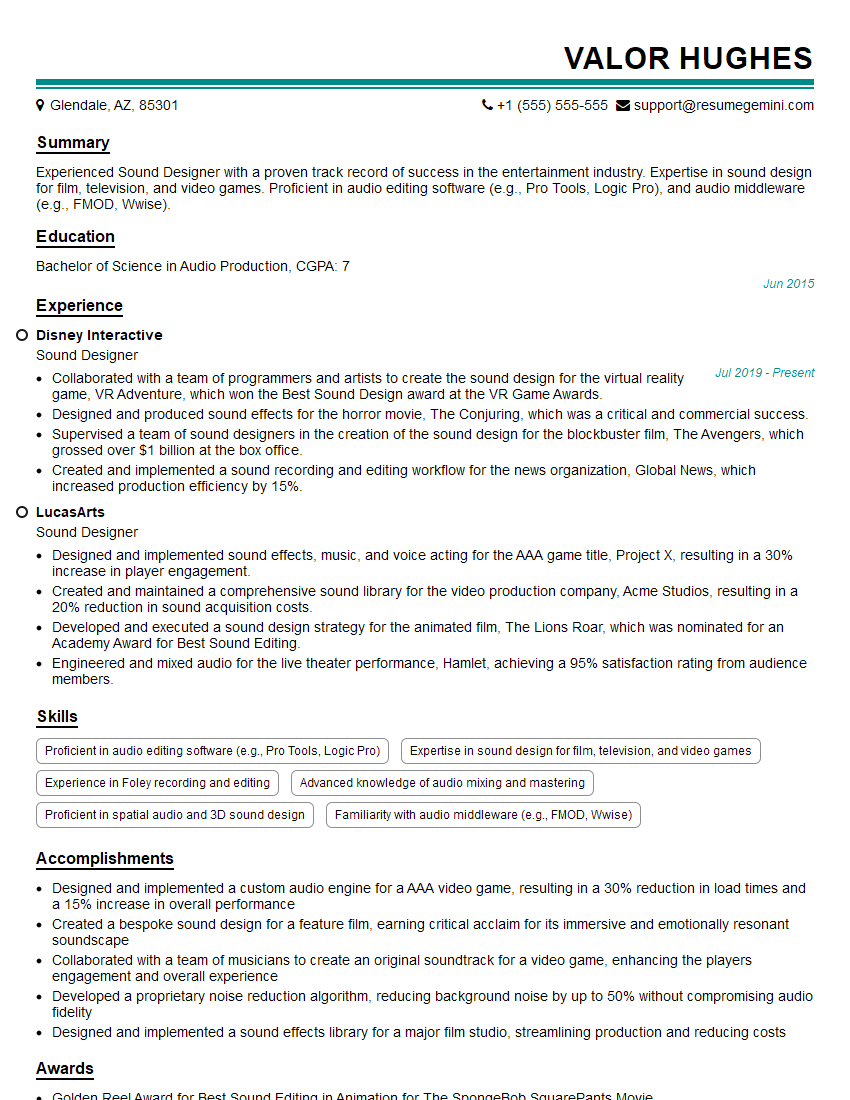
Sound Designer Resume Sample
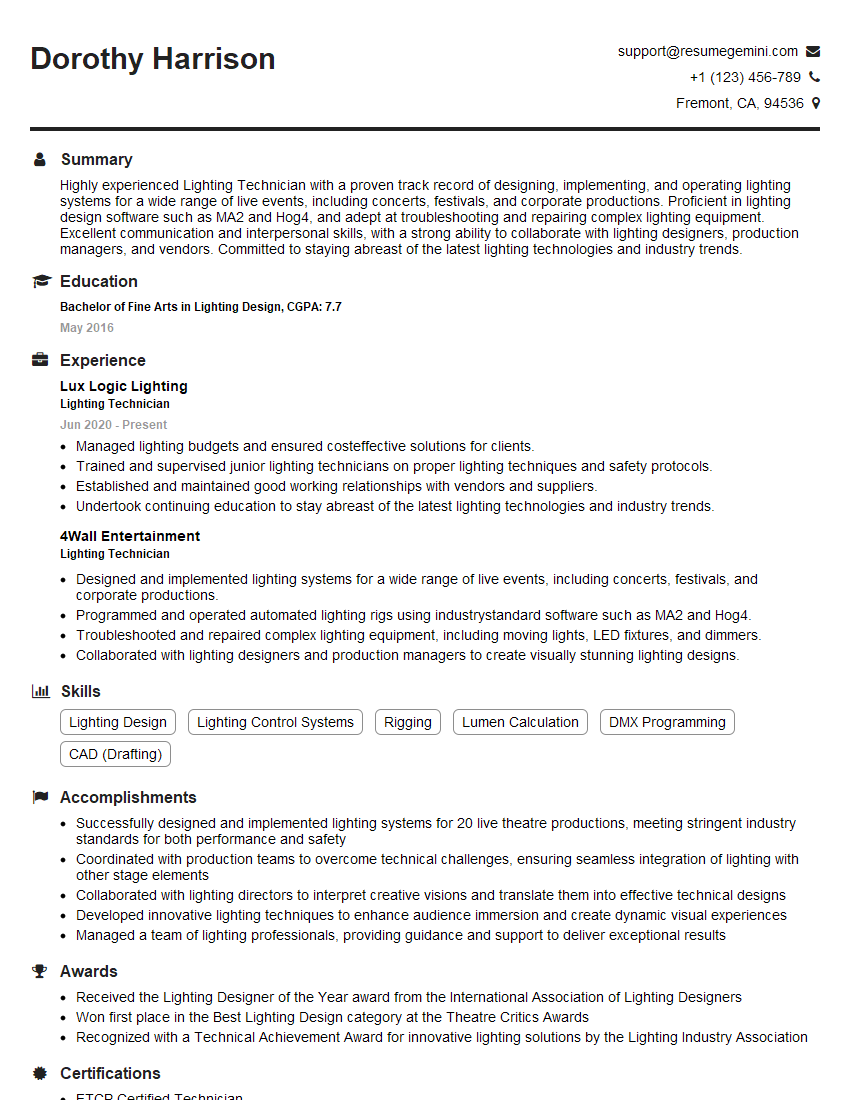
Lighting Technician Resume Sample
Explore more articles
Users Rating of Our Blogs
Share Your Experience
We value your feedback! Please rate our content and share your thoughts (optional).
What Readers Say About Our Blog
Very informative content, great job.
good