The right preparation can turn an interview into an opportunity to showcase your expertise. This guide to Advanced Materials interview questions is your ultimate resource, providing key insights and tips to help you ace your responses and stand out as a top candidate.
Questions Asked in Advanced Materials Interview
Q 1. Explain the difference between amorphous and crystalline materials.
The key difference between amorphous and crystalline materials lies in the arrangement of their constituent atoms or molecules. Crystalline materials possess a highly ordered, repeating three-dimensional atomic structure, like a perfectly arranged stack of oranges. This long-range order leads to distinct properties like sharp melting points and anisotropic behavior (properties vary with direction). Examples include diamonds (carbon) and quartz (silicon dioxide). In contrast, amorphous materials lack this long-range order; their atoms are arranged randomly, like a pile of oranges haphazardly thrown together. This results in properties such as a gradual softening range rather than a sharp melting point and isotropic behavior (properties are the same in all directions). Examples include glass and many polymers.
Think of it like this: a crystal is like a well-organized library with books neatly shelved, while an amorphous solid is like a messy room with books strewn everywhere.
Q 2. Describe the various types of bonding in materials (ionic, covalent, metallic, etc.).
Materials are held together by various types of bonding, each influencing their properties significantly.
- Ionic Bonding: This involves the electrostatic attraction between oppositely charged ions. One atom donates an electron (becoming a cation), and another accepts it (becoming an anion). This type of bond is strong and results in materials with high melting points and brittleness. Sodium chloride (NaCl), common table salt, is a prime example.
- Covalent Bonding: Here, atoms share electrons to achieve a stable electron configuration. This bond is also strong, leading to high melting points and often hardness. Diamonds, with their strong covalent carbon-carbon bonds, are exceptionally hard.
- Metallic Bonding: In metals, valence electrons are delocalized, forming a ‘sea’ of electrons that surrounds positively charged metal ions. This ‘electron sea’ allows for high electrical and thermal conductivity, ductility (ability to be drawn into wires), and malleability (ability to be hammered into sheets). Copper and aluminum are excellent examples.
- Van der Waals Bonding: This is a weaker type of bonding resulting from temporary fluctuations in electron distribution, creating temporary dipoles. It’s responsible for the attraction between molecules in many polymers and explains their often lower melting points and flexibility.
- Hydrogen Bonding: A special type of dipole-dipole interaction involving hydrogen atoms bonded to highly electronegative atoms like oxygen or nitrogen. It plays a crucial role in the properties of water and biological molecules.
Q 3. What are the key properties of polymers, ceramics, and metals?
Polymers, ceramics, and metals each exhibit distinct sets of properties:
- Polymers: Generally lightweight, flexible, and insulators. They are often ductile and have low melting points. Examples include polyethylene (plastic bags) and nylon (clothing fibers). Their properties are highly tunable through variations in molecular structure and processing.
- Ceramics: Typically hard, brittle, and have high melting points. They are often good electrical and thermal insulators. Examples include alumina (used in high-temperature applications) and silicon carbide (used as an abrasive). Their strength can be exceptionally high under compression.
- Metals: Usually strong, ductile, malleable, and good conductors of heat and electricity. Their properties are highly dependent on their crystal structure and alloying elements. Examples include steel (iron with carbon), aluminum (aircraft structures), and copper (electrical wiring).
Q 4. Explain the concept of material fatigue and creep.
Material fatigue and creep are time-dependent failure mechanisms:
- Fatigue: This refers to the progressive and localized structural damage that occurs when a material is subjected to cyclic loading (repeated stress). Even stresses well below the material’s yield strength can cause fatigue failure after many cycles. This is a significant concern in engineering, as fatigue cracks can propagate unexpectedly, leading to catastrophic failures. Think of repeatedly bending a paperclip until it breaks.
- Creep: This is the time-dependent, permanent deformation of a material under constant load at elevated temperatures. The atoms within the material gradually rearrange themselves, leading to slow but continuous elongation or deformation. This is a critical consideration in high-temperature applications, such as turbine blades in jet engines.
Both fatigue and creep are often accelerated by high temperatures and corrosive environments.
Q 5. How do you characterize the mechanical properties of a material (e.g., tensile strength, Young’s modulus)?
Mechanical properties are characterized using various experimental techniques. Tensile testing is a common method for determining several key parameters:
- Tensile Strength: The maximum stress a material can withstand before fracturing under tensile load. This is a measure of the material’s strength.
- Young’s Modulus (Elastic Modulus): A measure of a material’s stiffness or resistance to deformation under elastic loading (deformation is recovered when the load is removed). It’s the slope of the stress-strain curve in the elastic region.
- Yield Strength: The stress at which a material begins to deform plastically (permanent deformation occurs). This marks the transition from elastic to plastic behavior.
- Ductility: The ability of a material to deform plastically before fracture. It’s often expressed as percent elongation or reduction in area.
These tests involve applying a controlled tensile load to a specimen and measuring its elongation. The resulting stress-strain curve provides valuable information about the material’s mechanical behavior.
Q 6. Discuss different techniques for material characterization (SEM, TEM, XRD, etc.).
Various techniques are used to characterize materials at different length scales:
- Scanning Electron Microscopy (SEM): Provides high-resolution images of the material’s surface morphology and topography. It uses a focused beam of electrons to scan the surface, and the interaction of the electrons with the sample generates signals used to create images.
- Transmission Electron Microscopy (TEM): Offers even higher resolution than SEM and allows for the analysis of the material’s internal structure at the atomic level. A beam of electrons is transmitted through a very thin sample.
- X-ray Diffraction (XRD): Used to determine the crystalline structure of a material. The diffraction pattern of X-rays scattered by the material reveals information about the arrangement of atoms in the crystal lattice.
- Other Techniques: Many other techniques exist, including atomic force microscopy (AFM) for surface imaging at the nanoscale, thermal analysis (TGA, DSC) for studying thermal properties, and spectroscopic methods (FTIR, Raman) for chemical analysis.
The choice of technique depends on the specific information needed and the material’s characteristics.
Q 7. Describe the process of designing a material for a specific application.
Designing a material for a specific application is an iterative process involving several key steps:
- Define the requirements: Clearly specify the needed properties (strength, weight, conductivity, etc.) and the operating environment (temperature, pressure, chemical exposure).
- Select candidate materials: Based on the requirements, identify potential materials that possess the desired properties. This may involve consulting material databases or conducting literature reviews.
- Material synthesis and processing: Develop methods to synthesize and process the chosen material to achieve the desired microstructure and properties. This often involves experimentation and optimization.
- Characterize the material: Employ appropriate characterization techniques (as discussed earlier) to assess the material’s properties and ensure they meet the specifications.
- Testing and validation: Subject the material to rigorous testing under simulated operating conditions to validate its performance and durability.
- Iterative design: If the material doesn’t meet the requirements, modify the synthesis, processing, or material selection and repeat the characterization and testing steps.
Designing a new material is a complex undertaking that requires a deep understanding of materials science, engineering principles, and often, collaboration across different disciplines.
Q 8. Explain your experience with finite element analysis (FEA) in materials science.
Finite Element Analysis (FEA) is a powerful computational method used to predict the behavior of materials under various conditions. In my experience, I’ve extensively used FEA software like ANSYS and Abaqus to model and simulate material properties, stress distribution, and failure mechanisms. For instance, I utilized FEA to optimize the design of a carbon fiber reinforced polymer (CFRP) component for an aerospace application. By simulating different loading scenarios, I was able to identify potential stress concentrations and refine the design to improve its strength and durability. This involved defining the material properties (elastic modulus, Poisson’s ratio, etc.) within the FEA software, meshing the geometry, applying boundary conditions (loads, constraints), and then analyzing the results. The process allowed us to avoid costly and time-consuming physical prototyping, significantly accelerating the development cycle.
Another project involved using FEA to study the creep behavior of a nickel-based superalloy at high temperatures. This required using specialized material models that account for time-dependent deformation and accurately predicting the long-term performance of the component under sustained stress. FEA provided invaluable insights, allowing for informed design choices and a more robust final product.
Q 9. How do you handle material selection challenges in a project?
Material selection is a critical aspect of any engineering project. My approach involves a systematic process. First, I define the application requirements, including desired properties like strength, weight, cost, and environmental resistance. Then, I create a shortlist of candidate materials based on these requirements. This might involve consulting material property databases or literature reviews. Next, I use a decision matrix to compare the candidate materials based on weighted criteria, allowing for a quantitative assessment of their suitability. For example, if lightweighting is paramount, I might prioritize materials with a high strength-to-weight ratio. If cost is a major constraint, I would focus on more readily available and less expensive materials. Finally, prototyping and testing are crucial to verify the performance of the selected material in the real-world application.
Consider a recent project where we needed a material for a biomedical implant. Biocompatibility, strength, and corrosion resistance were essential. Using the decision matrix, we compared titanium alloys, stainless steels, and various biopolymers. Based on the weighted criteria, titanium alloy emerged as the optimal choice due to its superior biocompatibility and strength. However, further testing was crucial to ensure the material met the stringent requirements of the application.
Q 10. Describe your experience with different types of composite materials.
I have extensive experience working with various composite materials, including fiber-reinforced polymers (FRPs), metal matrix composites (MMCs), and ceramic matrix composites (CMCs). FRPs, such as carbon fiber reinforced polymers (CFRPs) and glass fiber reinforced polymers (GFRPs), are widely used due to their high strength-to-weight ratio and design flexibility. I’ve worked on projects involving the design and analysis of CFRP components for aerospace applications, where precise control of fiber orientation is critical for optimizing mechanical properties. MMCs, which combine a metallic matrix with reinforcing phases like ceramic particles or fibers, offer enhanced properties like strength, stiffness, and wear resistance. I’ve used MMCs in high-temperature applications where superior strength at elevated temperatures is necessary. CMCs offer exceptional high-temperature strength and corrosion resistance, making them suitable for applications like heat shields and gas turbine components. However, their processing and fabrication can be challenging.
My work often involves characterizing the mechanical and physical properties of these composites using techniques like tensile testing, flexural testing, and scanning electron microscopy (SEM) to understand their microstructure and relate it to their macroscopic behavior. Understanding the interaction between the matrix and reinforcement phases is crucial for optimizing the performance of these materials.
Q 11. What are the challenges associated with scaling up a material synthesis process?
Scaling up a material synthesis process from the laboratory to industrial production presents numerous challenges. One major hurdle is maintaining consistency in material properties. What works flawlessly at a small scale might exhibit significant variations in larger batches. This requires precise control over parameters like temperature, pressure, and reactant mixing. Another challenge is equipment limitations. Laboratory equipment often lacks the capacity and automation needed for large-scale production. Scaling up necessitates the design and implementation of robust, industrial-scale equipment, which can be a significant engineering undertaking. Economic considerations also play a crucial role. The cost-effectiveness of the scaled-up process must be evaluated to ensure the viability of the final product. This involves optimizing energy consumption, material usage, and overall production efficiency. Finally, safety and environmental considerations become more critical at an industrial scale, requiring stringent safety protocols and waste management strategies.
For example, during the scaling up of a novel polymer synthesis process, we encountered difficulties in controlling the temperature gradient within a larger reactor. This led to inconsistencies in the molecular weight distribution of the polymer and impacted its final mechanical properties. We resolved this issue by optimizing the reactor design and incorporating more effective temperature control mechanisms.
Q 12. Explain your understanding of phase diagrams.
Phase diagrams are graphical representations that illustrate the equilibrium relationships between different phases of a material as a function of temperature, pressure, and composition. They are invaluable tools in materials science, providing insights into phase transitions, solidification processes, and the stability of different phases. Understanding phase diagrams allows us to predict the microstructure of a material and tailor its properties by controlling its processing parameters. For instance, the iron-carbon phase diagram is fundamental to understanding the heat treatments used to create different steels with varying mechanical properties. The diagram shows how different phases (austenite, ferrite, cementite) form at different temperatures and carbon concentrations, guiding us to achieve specific microstructures.
In a binary phase diagram, the regions represent different phases (e.g., solid solution, liquid). The lines and curves delineate the boundaries between these phases and provide information about phase transformations. Leveraging these diagrams, we can control cooling rates during processing to achieve a desired microstructure. For example, rapid cooling might prevent the formation of certain phases, while slow cooling might allow for equilibrium phases to form, leading to distinct mechanical properties.
Q 13. How do you ensure the quality control of a material throughout its lifecycle?
Ensuring material quality control throughout the lifecycle—from raw material selection to final product use—is paramount. This involves implementing rigorous quality control measures at each stage of the process. Firstly, raw materials need thorough characterization to ensure they meet the specified purity and properties. This could involve chemical analysis, spectroscopic techniques, and mechanical testing. During the synthesis or processing stage, in-process quality control is critical, using techniques like real-time monitoring of temperature, pressure, and composition. Non-destructive evaluation (NDE) techniques, such as ultrasonic testing and X-ray inspection, are employed to detect defects or inconsistencies in the material without damaging it. Finally, rigorous testing of the final product verifies that the material meets its specified performance requirements. This may involve destructive testing (e.g., tensile testing, impact testing) or other performance evaluations specific to the application.
Documentation and traceability are crucial aspects of quality control. Maintaining detailed records of each stage of the process allows us to identify and correct any issues that arise. Moreover, a well-defined quality management system (QMS), such as ISO 9001, provides a framework for ensuring consistent quality control practices.
Q 14. What are some common failure mechanisms in materials?
Materials can fail through various mechanisms, depending on factors like the material itself, the applied load, and the environment. Some common failure mechanisms include:
- Fatigue failure: This occurs when a material subjected to cyclic loading fails at a stress level lower than its ultimate tensile strength. Fatigue cracks initiate and propagate until the component fractures. This is often seen in bridges or aircraft components.
- Creep failure: This is time-dependent deformation at elevated temperatures under constant stress. The material gradually deforms until it fails. This is common in gas turbine blades or nuclear reactor components.
- Fracture: This involves the separation of a material into two or more pieces. This can be brittle fracture (sudden failure with minimal plastic deformation) or ductile fracture (gradual failure with significant plastic deformation). Brittle fracture can be catastrophic and is often observed in ceramics, while ductile fracture is more forgiving as it allows for some warning before complete failure.
- Corrosion: The degradation of a material due to chemical or electrochemical reactions with its environment. This can significantly reduce the material’s strength and lifespan. Examples include rusting of steel or oxidation of metals at high temperatures.
- Stress corrosion cracking (SCC): A combined effect of tensile stress and corrosive environment that leads to cracking and failure. This is often seen in pipelines or other structures exposed to harsh environments.
Understanding these failure mechanisms is critical for designing reliable and durable components. Careful material selection, design optimization, and proper maintenance strategies can help mitigate the risk of failure.
Q 15. Describe your experience with different types of coatings and their applications.
Coatings are thin layers of material applied to a substrate to enhance its properties. My experience encompasses a wide range, from protective coatings to functional coatings. For instance, I’ve worked extensively with:
- Protective Coatings: These aim to safeguard the substrate from environmental factors like corrosion, wear, and abrasion. Examples include organic coatings like paints and varnishes for automotive applications, and inorganic coatings like thermal spray coatings (e.g., ceramic coatings on turbine blades for increased high-temperature durability) and electrodeposited coatings (e.g., chrome plating for corrosion resistance).
- Functional Coatings: These impart specific functionalities beyond protection, such as electrical conductivity (e.g., conductive polymers for printed electronics), optical properties (e.g., anti-reflective coatings on lenses), or biological activity (e.g., bioactive coatings for medical implants). I’ve been involved in the development and characterization of several such coatings, including superhydrophobic coatings for self-cleaning surfaces and anti-fouling coatings for marine applications.
In each project, selection of the appropriate coating material and application technique was crucial, depending on the substrate material, required properties, and application environment. For example, selecting a coating compatible with the substrate to avoid delamination, ensuring uniform thickness for consistent performance, and understanding the coating’s degradation mechanisms under various conditions are all critical aspects I’ve focused on.
Career Expert Tips:
- Ace those interviews! Prepare effectively by reviewing the Top 50 Most Common Interview Questions on ResumeGemini.
- Navigate your job search with confidence! Explore a wide range of Career Tips on ResumeGemini. Learn about common challenges and recommendations to overcome them.
- Craft the perfect resume! Master the Art of Resume Writing with ResumeGemini’s guide. Showcase your unique qualifications and achievements effectively.
- Don’t miss out on holiday savings! Build your dream resume with ResumeGemini’s ATS optimized templates.
Q 16. Discuss the principles of diffusion in materials.
Diffusion in materials is the net movement of atoms or molecules from a region of high concentration to a region of low concentration. This process is governed by several factors, primarily the temperature and the concentration gradient. Think of it like dropping a sugar cube into a cup of water – the sugar molecules gradually spread throughout the water until they’re evenly distributed.
The fundamental principles are described by Fick’s laws of diffusion. Fick’s first law states that the flux (amount of material moving per unit area per unit time) is proportional to the concentration gradient:
J = -D(dC/dx)where J is the flux, D is the diffusion coefficient (a material-dependent property influenced by temperature), C is the concentration, and x is the distance. Fick’s second law describes how the concentration changes over time.
Diffusion is crucial in many material processes, including heat treatments (where diffusion of alloying elements controls microstructure and properties), sintering (where diffusion bonds powder particles together), and the formation of semiconductor devices. My work involves leveraging diffusion processes in designing materials with specific microstructures and properties, for example, in controlling the diffusion of dopants into silicon to achieve specific electrical conductivity.
Q 17. Explain your understanding of nanomaterials and their unique properties.
Nanomaterials are materials with at least one dimension in the nanoscale (1-100 nanometers). This size regime leads to unique properties compared to their bulk counterparts. These unique properties stem from the increased surface area to volume ratio and quantum mechanical effects at the nanoscale.
- Increased Surface Area: Imagine a cube: as you reduce its size, its surface area relative to its volume increases dramatically. This affects reactivity, catalysis, and other surface-dependent properties.
- Quantum Mechanical Effects: At the nanoscale, quantum mechanical phenomena become significant. For example, the electronic properties of nanoparticles can differ significantly from the bulk material, leading to unique optical and electronic behavior.
Examples include carbon nanotubes (known for their exceptional strength and electrical conductivity), quantum dots (used in displays and bioimaging due to their size-tunable optical properties), and metal nanoparticles (employed in catalysis and biomedical applications). I’ve worked with various nanomaterials, exploring their applications in sensors, energy storage, and biomedical devices. Understanding the synthesis, characterization, and processing of these materials is crucial for realizing their full potential.
Q 18. Describe your experience with additive manufacturing techniques.
Additive manufacturing (AM), also known as 3D printing, allows for the fabrication of complex three-dimensional objects layer by layer from a digital design. My experience includes working with several AM techniques:
- Selective Laser Melting (SLM): This technique uses a high-powered laser to melt and fuse metallic powders layer by layer. I’ve utilized SLM to create customized parts with complex geometries for aerospace and biomedical applications, focusing on optimizing process parameters to achieve desired microstructure and mechanical properties.
- Fused Deposition Modeling (FDM): This is a more widely accessible technique that extrudes molten thermoplastic filaments to build up the object. I’ve employed FDM for prototyping and creating functional parts with polymers and polymer composites, often exploring different filament materials and infill patterns to meet specific requirements.
AM offers significant advantages in terms of design flexibility and customization. However, challenges remain regarding controlling microstructure, ensuring consistency across parts, and managing material costs. My work involves addressing these challenges through process optimization, material characterization, and developing new processing strategies.
Q 19. How do you approach solving a complex materials problem?
Solving a complex materials problem requires a systematic and iterative approach. I typically follow these steps:
- Problem Definition: Clearly defining the problem, including desired material properties, application constraints, and performance metrics, is the first crucial step. This involves thorough research and discussion with stakeholders.
- Literature Review: A comprehensive literature review helps identify potential solutions and relevant material systems. This stage includes assessing existing research, patents, and industry standards.
- Materials Selection: Based on the literature review, I select candidate materials that best meet the requirements. This often involves using materials selection databases and computational tools to evaluate material properties and predict performance.
- Experimental Design and Testing: Rigorous experimental design is critical to gather reliable data. This involves careful sample preparation, controlled testing conditions, and appropriate analytical techniques. I often employ statistical methods to analyze results.
- Iterative Improvement: Based on experimental results, I refine the material design, processing parameters, or selection of materials. This iterative process continues until the desired performance is achieved.
- Validation and Characterization: The final material is rigorously validated through various tests to ensure it meets the specified requirements. Advanced characterization techniques, such as microscopy and spectroscopy, are essential in understanding the structure-property relationships.
Throughout this process, communication and collaboration with colleagues and stakeholders are vital for successful problem-solving. A recent example involved developing a new high-temperature polymer composite; through iterative testing, we optimized the processing conditions and fiber orientation to achieve a 20% increase in its tensile strength.
Q 20. Discuss your understanding of sustainability in materials science.
Sustainability in materials science is paramount. It encompasses the entire lifecycle of a material, from raw material extraction to end-of-life management, aiming to minimize environmental impact and promote resource efficiency. Key aspects include:
- Life Cycle Assessment (LCA): Evaluating the environmental impact of a material throughout its lifecycle, considering energy consumption, emissions, and waste generation.
- Sustainable Material Selection: Choosing materials with lower environmental footprints, prioritizing recycled materials, renewable resources (e.g., bio-based polymers), and materials that are easily recyclable or biodegradable.
- Green Chemistry and Processing: Developing environmentally friendly synthesis and processing routes, reducing waste generation and minimizing the use of hazardous chemicals.
- Circular Economy Principles: Designing materials and products for durability, repairability, and recyclability, promoting reuse and reducing waste going to landfills.
My work increasingly focuses on developing sustainable materials and processes. For example, I am currently involved in a project developing biodegradable polymers for packaging applications as an alternative to petroleum-based plastics. This work integrates principles of green chemistry and LCA to evaluate the full environmental impact of our solutions.
Q 21. Explain the difference between single crystal and polycrystalline materials.
The key difference between single crystal and polycrystalline materials lies in their microstructure. A single crystal is a material where the crystal lattice extends uninterrupted throughout the entire sample. Think of it like a perfectly ordered array of atoms.
In contrast, a polycrystalline material is composed of many small crystals (grains) with different orientations. The boundaries between these grains are called grain boundaries, and they can significantly impact the material’s properties. Imagine a mosaic, with many small tiles representing the individual grains, each potentially differently oriented.
Single crystals generally exhibit higher strength, better conductivity (electrical and thermal), and greater optical transparency compared to polycrystalline materials. However, they are often more expensive and difficult to produce. Polycrystalline materials are generally easier and cheaper to manufacture, often with sufficient properties for many applications.
Examples include silicon single crystals used in semiconductor manufacturing (high purity and uniformity are critical), versus polycrystalline silicon used in solar cells (lower cost and acceptable performance). Understanding the grain structure and its effect on macroscopic properties is essential for selecting appropriate materials for different applications.
Q 22. What are the key factors affecting the thermal properties of materials?
The thermal properties of a material, such as its ability to conduct or resist heat, are primarily determined by its atomic structure and bonding characteristics. Several key factors influence these properties:
- Atomic Bonding: Stronger bonds, like those found in metals, generally lead to higher thermal conductivity because the atoms are tightly bound and efficiently transfer vibrational energy (heat). Conversely, materials with weaker bonds, such as polymers, often have lower thermal conductivity.
- Crystal Structure: The arrangement of atoms in a crystal lattice significantly affects heat transfer. Highly ordered crystalline structures typically exhibit higher thermal conductivity compared to amorphous (non-crystalline) materials. Think of it like a well-organized highway system versus a chaotic maze – the highway allows for easier and faster transfer.
- Electron Mobility: In metals, free electrons play a crucial role in thermal conductivity. The ease with which electrons can move through the material directly impacts how efficiently heat is transferred. This is why metals are generally excellent conductors of heat.
- Phonon Scattering: Phonons are quantized lattice vibrations that carry thermal energy. Imperfections within the material, such as impurities or defects, scatter phonons, reducing thermal conductivity. This is why highly pure materials generally exhibit better thermal properties.
- Phase Transitions: Changes in the material’s phase (e.g., solid to liquid) dramatically alter its thermal properties. Melting, for example, often leads to a significant increase in thermal conductivity due to increased atomic mobility.
- Temperature: Thermal conductivity itself can be temperature dependent. For many materials, thermal conductivity decreases with increasing temperature as phonon scattering increases.
Understanding these factors is crucial in designing materials for specific thermal applications, such as heat sinks for electronics or thermal insulation for buildings.
Q 23. Describe your experience with material modeling and simulation.
I have extensive experience with material modeling and simulation using various software packages, including COMSOL Multiphysics, Abaqus, and LAMMPS. My work has involved both ab initio calculations (density functional theory, DFT) for understanding fundamental material properties at the atomic level and finite element analysis (FEA) for simulating macroscopic material behavior. For example, I used DFT to investigate the electronic structure of novel thermoelectric materials to predict their potential performance. In another project, I employed FEA to simulate the stress-strain behavior of a composite material under different loading conditions, optimizing its design for improved strength and durability. This involved creating detailed 3D models, defining material properties, applying boundary conditions, and interpreting the simulation results to gain insights into the material’s response. I am also proficient in scripting languages like Python to automate simulations and analyze large datasets.
Q 24. What is your experience with biocompatible materials?
My experience with biocompatible materials centers around developing novel biomaterials for biomedical applications. I’ve worked on projects involving the synthesis and characterization of various biocompatible polymers, such as PLGA (poly(lactic-co-glycolic acid)) and PEG (polyethylene glycol), for drug delivery systems and tissue engineering scaffolds. A key aspect of this work has been evaluating the biocompatibility of these materials through in vitro cell culture studies, assessing cell viability, proliferation, and morphology in the presence of the materials. I also possess experience in surface modification techniques to enhance the bioactivity and integration of biomaterials with living tissues. For example, I’ve utilized techniques like plasma treatment and covalent attachment of bioactive peptides to improve cell adhesion and differentiation on biomaterial surfaces. This work requires meticulous attention to detail, precise experimental techniques, and rigorous data analysis to ensure both the safety and effectiveness of the biomaterials.
Q 25. Explain your understanding of surface chemistry and its impact on material properties.
Surface chemistry plays a pivotal role in determining the overall properties of a material. The surface of a material often differs significantly from its bulk properties, influencing its interactions with its environment. For instance, the surface chemistry determines the wettability (hydrophilic or hydrophobic) of a material, crucial in applications like coating and adhesion. Surface functionalization through chemical modification can alter the surface energy and reactivity, leading to enhanced performance. Consider a biomedical implant: the surface chemistry directly dictates how well the implant integrates with the surrounding tissue – preventing rejection or promoting beneficial interactions. Moreover, catalysis heavily relies on surface chemistry, where specific surface sites act as active centers for chemical reactions. In semiconductor devices, the surface states influence the electronic properties, affecting device performance. Controlling the surface chemistry is therefore essential for designing materials with targeted functionality. Techniques such as X-ray photoelectron spectroscopy (XPS) and atomic force microscopy (AFM) are critical for characterizing and understanding the surface properties.
Q 26. How do you stay updated with the latest advancements in advanced materials?
Staying current in the rapidly evolving field of advanced materials requires a multi-faceted approach. I regularly read peer-reviewed journals such as Nature Materials, Advanced Materials, and Science, focusing on areas relevant to my research interests. I also attend international conferences and workshops to learn about the latest research findings and network with leading experts. Further, I actively follow reputable online resources such as Materials Today and utilize tools like Google Scholar and Web of Science for literature searches. Participating in online communities and professional organizations dedicated to advanced materials enables access to discussions and updates from other researchers. This continuous learning is vital for maintaining my expertise and adapting to the dynamic landscape of this field.
Q 27. Describe a time you had to troubleshoot a materials-related problem.
During a project involving the development of a high-strength polymer composite, we encountered unexpected brittleness in the final product, jeopardizing the project’s success. Initially, we suspected issues with the polymer matrix itself. However, after systematic investigation and detailed characterization, we discovered that the problem stemmed from inadequate interfacial bonding between the polymer and the reinforcing fibers. The solution involved introducing a coupling agent to improve the adhesion between these two components. This agent acted as a bridge, promoting stronger interfacial bonding and significantly enhancing the toughness of the composite. This experience emphasized the importance of thorough material characterization at all stages of development and highlighted the necessity of a systematic troubleshooting process – employing both experimental testing and theoretical modeling to pinpoint the root cause of the problem and develop an effective solution.
Q 28. What are your salary expectations for this role?
Based on my experience and the requirements of this role, my salary expectations are in the range of [Insert Salary Range]. However, I am open to discussing this further based on the specifics of the compensation package, including benefits and opportunities for professional development.
Key Topics to Learn for Advanced Materials Interview
- Nanomaterials: Understand the unique properties of nanomaterials (e.g., carbon nanotubes, graphene) and their applications in various fields like electronics and medicine. Explore synthesis techniques and characterization methods.
- Biomaterials: Learn about the design, synthesis, and application of biocompatible materials for medical implants, drug delivery systems, and tissue engineering. Consider the biocompatibility and degradation aspects.
- Polymer Science: Grasp fundamental polymer chemistry, including polymerization techniques, polymer structure-property relationships, and the applications of various polymer types (e.g., thermoplastics, thermosets).
- Composites: Familiarize yourself with different types of composite materials (e.g., fiber-reinforced polymers, ceramic matrix composites) and their design principles. Understand how to optimize their mechanical and physical properties.
- Material Characterization Techniques: Develop a solid understanding of techniques like XRD, SEM, TEM, and various spectroscopy methods used to analyze material structure and properties. Be prepared to discuss their strengths and limitations.
- Material Processing and Manufacturing: Gain knowledge of different manufacturing techniques for advanced materials, such as additive manufacturing (3D printing), casting, and molding. Understand the impact of processing on material properties.
- Computational Materials Science: Familiarize yourself with the use of computational tools and simulations in materials design and discovery. Understanding basic concepts is beneficial.
- Sustainability and Environmental Impact: Be prepared to discuss the environmental impact of material production and disposal, and the importance of developing sustainable materials and manufacturing processes.
Next Steps
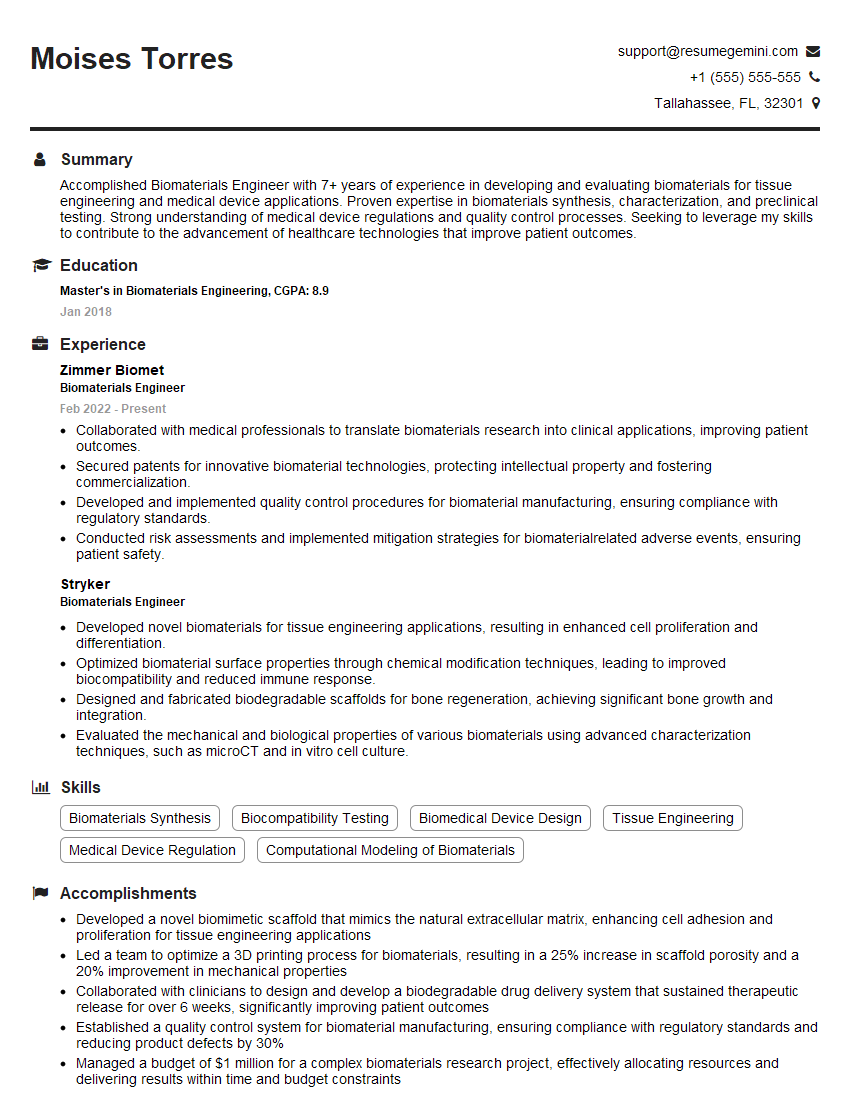
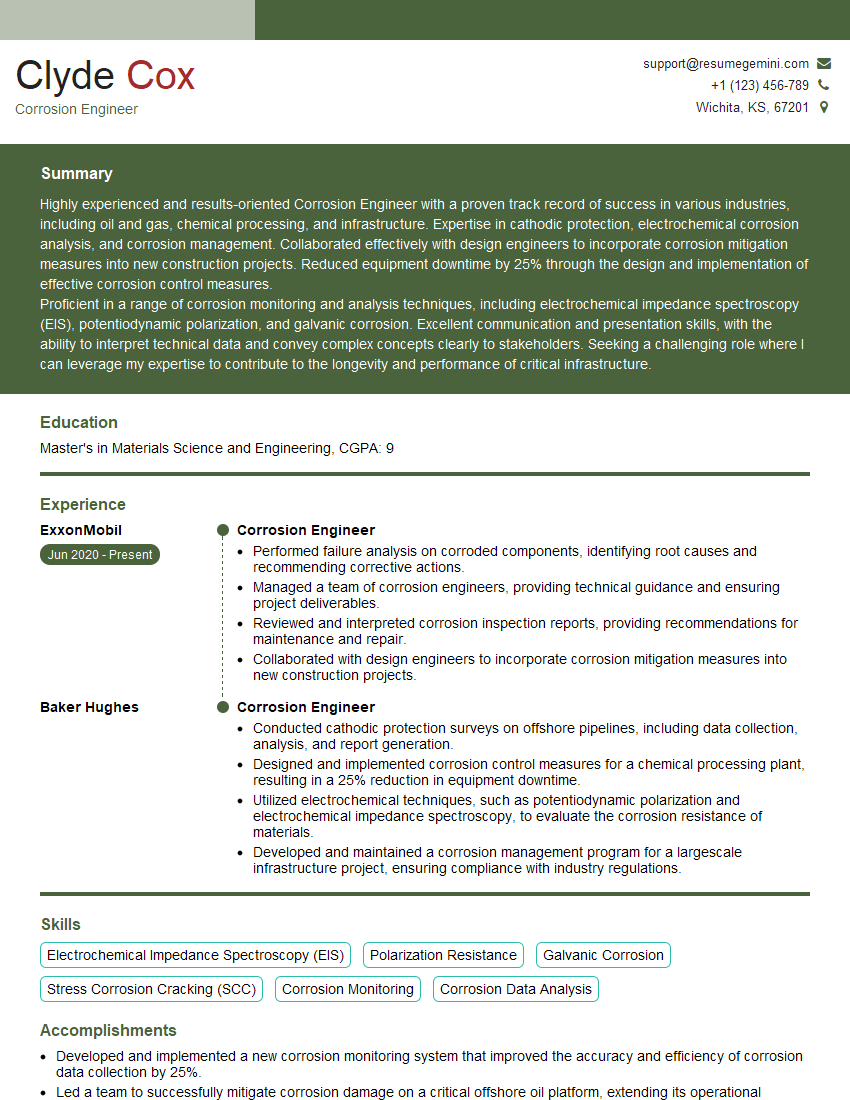
Mastering advanced materials knowledge is crucial for a thriving career in a rapidly evolving technological landscape. Demand for skilled professionals in this field is high, opening doors to exciting research and development opportunities, as well as impactful roles in various industries. To stand out, a strong, ATS-friendly resume is vital. Use ResumeGemini to craft a compelling resume that showcases your skills and experience effectively. ResumeGemini provides you with the tools and examples to build a professional resume tailored to the Advanced Materials field, increasing your chances of securing your dream job. Examples of resumes tailored to Advanced Materials are available to guide you.

Explore more articles
Users Rating of Our Blogs
Share Your Experience
We value your feedback! Please rate our content and share your thoughts (optional).
What Readers Say About Our Blog
Very informative content, great job.
good