Feeling uncertain about what to expect in your upcoming interview? We’ve got you covered! This blog highlights the most important Advanced Prototyping and Fabrication interview questions and provides actionable advice to help you stand out as the ideal candidate. Let’s pave the way for your success.
Questions Asked in Advanced Prototyping and Fabrication Interview
Q 1. Explain the difference between additive and subtractive manufacturing.
Additive and subtractive manufacturing represent fundamentally different approaches to creating objects. Think of sculpting: subtractive manufacturing is like carving a statue from a block of marble – you start with a large piece and remove material until you achieve the desired shape. Additive manufacturing, on the other hand, is like building with LEGOs – you start with nothing and add material layer by layer until the object is complete.
Subtractive Manufacturing: This involves removing material from a larger block of material (e.g., milling, turning, drilling). It’s precise for intricate details but generates waste material and is less efficient for complex geometries. Examples include CNC machining, drilling, and sawing.
Additive Manufacturing (3D Printing): This builds objects layer by layer from a digital design. It’s ideal for complex shapes and allows for customization, but might have limitations in terms of material strength and surface finish compared to subtractive methods. Examples include Fused Deposition Modeling (FDM), Stereolithography (SLA), and Selective Laser Sintering (SLS).
In essence, the choice between additive and subtractive manufacturing depends heavily on the design complexity, material requirements, production volume, and budget.
Q 2. Describe your experience with various rapid prototyping techniques (e.g., SLA, FDM, SLS).
My experience encompasses a wide range of rapid prototyping techniques. I’ve extensively used FDM, SLA, and SLS technologies for various projects.
- FDM (Fused Deposition Modeling): I’ve used FDM for creating quick, functional prototypes, particularly when dealing with large parts or designs requiring intricate internal structures. Its affordability and ease of use make it excellent for early-stage prototyping and concept validation. I have experience with various FDM materials like PLA, ABS, and PETG, selecting the appropriate material based on the intended application (e.g., PLA for its ease of printing and biodegradability, ABS for its strength and durability).
- SLA (Stereolithography): SLA provides exceptionally high resolution and smooth surface finishes, making it ideal for prototypes requiring fine details and aesthetic appeal. I’ve leveraged SLA for creating intricate medical models and product mockups where precision and surface quality were paramount. The photopolymer resins used offer diverse properties, including biocompatibility and high tensile strength.
- SLS (Selective Laser Sintering): This powder-bed fusion technique is perfect for creating strong, durable prototypes from a wide range of materials, including nylon and metal powders. I utilized SLS to produce functional prototypes that needed to withstand considerable stress and strain, such as parts for robotic arms or engineering components. The ability to create complex internal structures without support material is a key advantage.
Each technique has its strengths and weaknesses, and selecting the right one depends entirely on the project requirements.
Q 3. What are the limitations of 3D printing technologies?
While 3D printing offers revolutionary capabilities, certain limitations persist:
- Build Volume Restrictions: The size of the printable object is limited by the printer’s build platform. Large, complex parts may require splitting into smaller sections and joining them.
- Material Limitations: The range of printable materials is constantly expanding, but it still doesn’t match the breadth of materials available in traditional manufacturing. Material properties (e.g., strength, flexibility) can also vary depending on the printing technology.
- Surface Finish and Accuracy: While high-resolution printers exist, surface imperfections and dimensional inaccuracies can be a challenge. Post-processing steps (e.g., sanding, polishing) are often necessary to achieve the desired quality.
- Print Time and Cost: Complex geometries and large parts can lead to extended print times, impacting turnaround and overall project costs.
- Support Structures: Overhangs and intricate features often require support structures, which add to printing time and can necessitate extra work to remove them.
Overcoming these limitations requires careful consideration of design, material selection, and post-processing methods.
Q 4. How do you select the appropriate prototyping method for a given project?
Selecting the appropriate prototyping method involves a systematic approach:
- Define Project Requirements: Clearly outline the purpose of the prototype (functional testing, aesthetic evaluation, etc.), material properties needed (strength, flexibility, biocompatibility), and desired accuracy and surface finish.
- Analyze Design Complexity: Assess the intricacy of the design. Complex geometries may benefit from additive manufacturing, while simpler shapes might be better suited to subtractive methods.
- Consider Budget and Time Constraints: Different methods vary significantly in cost and production time. Balance the need for speed and quality with available resources.
- Evaluate Material Options: The availability of materials and their compatibility with different manufacturing processes are crucial considerations.
- Assess Production Volume: For large-scale production, subtractive methods often become more cost-effective, while additive manufacturing shines for low-volume, customized prototypes.
For example, a high-fidelity model of a jewelry piece might call for SLA for its smooth surface and fine details. A sturdy functional prototype of a gear might be best produced with SLS for its strength and durability. A large, relatively simple housing might be efficiently prototyped using FDM.
Q 5. Describe your experience with CAD software (e.g., SolidWorks, AutoCAD).
I possess extensive experience with various CAD software packages, most notably SolidWorks and AutoCAD. My proficiency includes:
- SolidWorks: I’m adept at creating 3D models, assemblies, and detailed drawings using SolidWorks. I’ve used its simulation tools for stress analysis and other performance evaluations of my designs. From simple parts to complex assemblies, SolidWorks is my go-to for robust and feature-rich 3D modeling.
- AutoCAD: I utilize AutoCAD primarily for 2D drafting and detailed technical drawings, particularly when working with manufacturing drawings for CNC machining or other subtractive processes. My skills extend to creating precise dimensions, annotations, and layouts that meet industry standards.
I routinely use both software packages for creating models that are then used for generating toolpaths for CNC machining or for preparing files for 3D printing.
Q 6. Explain your proficiency with CAM software and CNC machining.
My proficiency with CAM software and CNC machining is substantial. I’m comfortable generating toolpaths for various CNC operations (milling, turning, routing) using software such as Mastercam and Fusion 360. This includes:
- Toolpath Generation: I can create efficient and precise toolpaths for different machining operations, optimizing for surface finish, machining time, and tool wear. I understand concepts like stepover, depth of cut, and feed rate and how they impact the final product.
- Machine Operation: I’m familiar with the operation and safety procedures of various CNC machines, including 3-axis and 5-axis mills, and lathes. This involves setting up the machine, loading and securing the workpiece, and monitoring the machining process to ensure accuracy and quality.
- Post-Processing: I’m skilled in post-processing techniques, including deburring, finishing, and inspection to ensure the prototype meets the required specifications.
I’ve successfully used CNC machining to produce highly accurate and functional prototypes for a wide range of projects. For example, I used CNC milling to create a precisely machined fixture for a robotics project and CNC turning to create custom threaded parts.
Q 7. How do you ensure the dimensional accuracy of prototypes?
Ensuring dimensional accuracy is crucial in prototyping. My approach involves a multi-faceted strategy:
- Precise CAD Modeling: I meticulously create CAD models with accurate dimensions and tolerances, paying close attention to detail and using appropriate constraints and parameters. This forms the foundation for accurate prototyping.
- Appropriate Manufacturing Process Selection: I carefully choose the appropriate manufacturing method based on the required accuracy and surface finish. For example, SLA is often preferred over FDM when higher precision is needed.
- Calibration and Maintenance of Equipment: Regular calibration and maintenance of 3D printers and CNC machines are essential to maintain accuracy. I conduct regular checks to ensure the machines are functioning optimally.
- Dimensional Inspection: I utilize various measurement tools, such as calipers, micrometers, and CMMs (Coordinate Measuring Machines) to verify the dimensions of the prototypes against the CAD model. This allows for early detection and correction of any inaccuracies.
- Post-Processing Optimization: If necessary, I employ post-processing techniques such as sanding, polishing, or machining to correct minor dimensional discrepancies and improve surface finish.
By implementing these steps, I consistently produce prototypes that meet stringent dimensional requirements.
Q 8. Describe your experience with material selection for prototyping.
Material selection for prototyping is crucial; it directly impacts functionality, cost, and the overall success of the project. My approach involves a systematic evaluation considering several factors. First, I analyze the design requirements: What are the needed mechanical properties (strength, flexibility, durability)? What are the environmental conditions (temperature, humidity, chemical exposure)? What’s the aesthetic requirement (color, finish)? Then, I create a shortlist of candidate materials based on these needs. For example, if I need a strong, lightweight part for an aerospace application, I might consider carbon fiber reinforced polymers or aluminum alloys. If it’s a consumer product requiring low cost and ease of manufacturing, I might opt for ABS or PLA plastics. Finally, I often create small-scale test parts to validate my material choice against the actual performance requirements.
I utilize material databases and software to compare material properties and cost-effectiveness. I also consider manufacturability – how easily can the part be produced using the chosen prototyping method (3D printing, CNC machining, injection molding)? In one project, we initially chose a high-strength steel for a robotic arm component. However, after testing, we discovered its weight negatively impacted the robot’s speed and efficiency. Switching to a lightweight aluminum alloy with suitable surface treatments addressed this issue.
Q 9. How do you handle design changes during the prototyping process?
Design changes are inevitable in the prototyping process. My approach is to embrace iterative design, making changes efficiently and minimizing wasted resources. I use collaborative design software that allows multiple team members to make and review design changes simultaneously. This transparency ensures everyone is informed and avoids conflicts later. For significant modifications, I prioritize a structured change management process. This typically involves documenting the change, assessing its impact on the schedule and budget, and obtaining necessary approvals before implementing it. We utilize version control in our CAD software, which allows us to easily revert to previous design iterations if needed. This is critical for traceability and facilitating informed decision-making. In one project, we discovered a critical flaw in the initial design during the first round of testing. Our version control system enabled us to quickly revert to an earlier design, make the necessary correction, and resume prototyping with minimal downtime.
Q 10. Explain your experience with tolerance analysis in prototyping.
Tolerance analysis is critical for ensuring the prototype functions as intended and is manufacturable. Tolerance refers to the permissible variation in a dimension or other characteristic. I start by identifying critical dimensions that significantly impact the part’s performance. Then, I determine acceptable tolerances for these dimensions based on the design requirements and the capabilities of the chosen manufacturing process. For example, 3D printing typically has larger tolerances than CNC machining. I use statistical methods and tolerance stack-up analysis to determine the overall tolerance on assembly functionality. If the overall tolerance is unacceptable, I may need to revise the design or choose a different manufacturing process. Software like GD&T (Geometric Dimensioning and Tolerancing) software helps in visualizing and analyzing tolerance stack-up. Ignoring tolerance analysis can lead to prototypes that fail to meet requirements or are impossible to manufacture consistently.
Q 11. Describe your experience with prototyping for different materials (e.g., plastics, metals, composites).
My experience spans diverse materials. With plastics, I’ve used FDM (Fused Deposition Modeling), SLS (Selective Laser Sintering), and injection molding for prototyping. FDM is great for quick, low-cost prototypes; SLS offers better accuracy and material properties; injection molding yields high-volume, production-quality parts. For metals, I utilize CNC machining for high-precision parts, often aluminum or stainless steel. I’ve also worked with additive manufacturing techniques like Direct Metal Laser Sintering (DMLS) for complex metal geometries. Regarding composites, I have experience working with carbon fiber reinforced polymers, which are excellent for creating lightweight, high-strength components. The choice is always determined by the project’s specific needs, considering the material’s strength, weight, cost, and manufacturability. For instance, a high-performance drone component might require carbon fiber composites for its lightweight and high-strength properties, while a low-cost consumer toy might use ABS plastic made through injection molding.
Q 12. How do you manage the cost and time constraints of a prototyping project?
Cost and time are always major constraints. I mitigate these using a combination of strategies. First, a thorough upfront design review helps identify potential issues early, preventing costly rework later. I also select prototyping methods and materials that optimize the balance between cost and performance. For instance, I might use 3D printing for early-stage prototypes to quickly iterate and then switch to CNC machining for more refined prototypes that require higher precision. Breaking down the project into smaller, manageable phases allows for better cost and time tracking and easier management of potential issues. I use project management tools to track progress, budget, and deadlines. In one instance, we optimized the cost by strategically using different materials for different parts of the prototype – using a cost-effective material for less critical sections and a higher-performance material only where necessary.
Q 13. Describe your experience with quality control procedures in prototyping.
Quality control is paramount. My approach starts with defining clear quality standards at the beginning of the project. These standards are then incorporated into the design specifications and manufacturing processes. This involves regular inspections and tests at various stages of prototyping. I use dimensional measurement tools such as calipers and CMM (Coordinate Measuring Machine) to check tolerances. I also conduct functional testing to ensure the prototype meets the design requirements. Documentation is crucial: I meticulously document all inspection and test results. This data helps identify areas for improvement in the design or manufacturing process and provides a valuable record for future projects. A robust quality control system reduces rework, improves efficiency, and ensures the final prototype meets the desired standards.
Q 14. How do you troubleshoot issues during the prototyping process?
Troubleshooting is an integral part of prototyping. When issues arise, my approach is systematic. First, I carefully document the problem, including all relevant data such as images, measurements, and test results. Then, I analyze the problem, considering potential causes: is it a design flaw, a manufacturing error, or a material limitation? Depending on the nature of the problem, I might use various troubleshooting techniques – finite element analysis (FEA) to investigate stress points, material testing to determine material properties, or simply visual inspection to identify obvious flaws. It is vital to gather as much data as possible before making any assumptions. I involve the team in brainstorming sessions to explore various potential solutions. Iterative testing is crucial – I make changes, retest, and repeat the process until the problem is resolved. Proper documentation throughout this process not only solves immediate issues but also provides valuable lessons for future projects.
Q 15. Describe your experience with project management in a prototyping environment.
Project management in prototyping is crucial for success. It’s not just about building things; it’s about managing timelines, resources, and expectations. My approach involves a phased methodology. I start with a thorough needs assessment, clearly defining project goals and deliverables. This often includes creating a detailed work breakdown structure (WBS) to identify all tasks and sub-tasks.
Next, I establish a realistic schedule using tools like Gantt charts, accounting for potential delays and incorporating buffer time. This allows for iterative development and flexibility, which is vital in prototyping. Resource allocation is key; this includes personnel, materials, and equipment, all meticulously tracked using project management software. Regular progress meetings are essential for communication and conflict resolution.
For example, on a recent project developing a bio-medical device prototype, I used Agile methodology, breaking down the development into sprints. Each sprint focused on a specific feature, allowing for continuous testing and feedback integration. This iterative approach helped us quickly address challenges and resulted in a successful prototype within budget and ahead of schedule.
Career Expert Tips:
- Ace those interviews! Prepare effectively by reviewing the Top 50 Most Common Interview Questions on ResumeGemini.
- Navigate your job search with confidence! Explore a wide range of Career Tips on ResumeGemini. Learn about common challenges and recommendations to overcome them.
- Craft the perfect resume! Master the Art of Resume Writing with ResumeGemini’s guide. Showcase your unique qualifications and achievements effectively.
- Don’t miss out on holiday savings! Build your dream resume with ResumeGemini’s ATS optimized templates.
Q 16. Explain your familiarity with different types of 3D printers.
My experience encompasses a wide range of 3D printing technologies. I’m proficient with Fused Deposition Modeling (FDM) printers, which use a heated nozzle to extrude molten plastic layer by layer. These are cost-effective and suitable for rapid prototyping, especially for creating functional parts with less stringent aesthetic requirements. I’ve extensively used FDM printers to create jigs, fixtures, and initial functional prototypes.
I also have experience with Stereolithography (SLA) printers, which use a UV laser to cure liquid resin, creating highly detailed and precise parts. SLA is ideal for prototypes requiring high surface finish and intricate geometries, such as medical models or intricate mechanical components. I’ve utilized SLA for creating detailed anatomical models for surgical planning and complex plastic housings for electronic devices.
Furthermore, I’m familiar with Selective Laser Sintering (SLS) and Multi Jet Fusion (MJF) technologies for producing strong, durable prototypes from powders. These methods are great for manufacturing parts with high strength-to-weight ratios, which might be needed for structural testing or functional prototypes subjected to stress.
Q 17. What is your experience with post-processing techniques for 3D printed parts?
Post-processing is critical for achieving the desired properties and appearance of 3D-printed parts. The techniques I employ vary depending on the printing method and the material used. For FDM prints, common post-processing includes removing support structures, sanding for surface smoothing, and applying primers or paints for improved aesthetics and durability.
For SLA prints, support removal is equally important, but often requires more care due to the delicate nature of the parts. Additional steps might involve cleaning the parts in an ultrasonic bath to remove residual resin, followed by curing under UV light to enhance strength and stability. I also use techniques like smoothing with chemicals like isopropyl alcohol for a better surface finish.
For SLS and MJF prints, post-processing can involve media blasting to remove excess powder, followed by sanding and potentially painting or powder coating. In some cases, additional heat treatment might be required to improve part strength and dimensional stability. Each method requires specific attention and optimization to achieve optimal results.
Q 18. How do you ensure the functionality and performance of a prototype?
Ensuring functionality and performance requires a multi-faceted approach that begins even before the prototyping phase. Design for Manufacturing (DFM) principles are critical – considering the manufacturing limitations and capabilities early on prevents costly redesigns. Finite Element Analysis (FEA) simulations can be used to predict structural integrity and identify potential weak points before physical prototyping, saving both time and resources.
During prototyping, rigorous testing is paramount. This might involve functional testing to verify the intended operation, durability tests to assess lifespan under expected conditions, and stress testing to check structural limits. Data from these tests is meticulously documented and used to iterate and refine the design. I frequently utilize automated testing procedures to gather consistent and reliable data. For example, on a robotic arm prototype, I programmed automated movement sequences and force sensors to evaluate the robot’s accuracy and precision.
Comparative analysis is also vital. We might compare our prototype’s performance against existing solutions or benchmark specifications. This allows us to assess the prototype’s strengths and weaknesses relative to existing technologies.
Q 19. Describe your experience with reverse engineering.
Reverse engineering involves disassembling and analyzing an existing product to understand its design, functionality, and manufacturing processes. My experience encompasses various techniques, from simple visual inspection and measurements to using advanced 3D scanning technologies. I use 3D scanners to create point clouds of complex geometries, which are then processed using software to create 3D CAD models.
This process frequently involves material analysis to determine the composition and properties of the components. I use techniques like X-ray diffraction and chemical analysis to achieve this. Once the CAD model is recreated, I verify its accuracy through simulations and physical testing. For instance, in a project involving a competitor’s device, I used reverse engineering to identify weaknesses in their design that we could improve upon in our own product development.
Ethical considerations are paramount in reverse engineering, ensuring that intellectual property rights are respected. I always operate within legal and ethical guidelines, focusing on learning and innovation rather than direct replication.
Q 20. What are your preferred methods for documenting the prototyping process?
Meticulous documentation is crucial in prototyping. I utilize a combination of methods to capture every step of the process. This starts with detailed design specifications, including CAD models and design rationale documented in a project notebook. I maintain a version control system for all design files, enabling easy tracking of changes and collaboration among team members.
I also employ a robust system for documenting the manufacturing process, including detailed instructions, material specifications, and quality control checks. Process parameters for 3D printing, such as layer height, print speed, and temperature are rigorously recorded. Furthermore, I create detailed test reports with photographic and video documentation of each testing phase. This allows for future reproducibility and aids in identifying and addressing potential problems.
Project management software plays a critical role in consolidating all documentation into a centralized repository, providing a complete and readily accessible history of the project’s development.
Q 21. How do you ensure the safety of yourself and others during prototyping operations?
Safety is my top priority throughout the prototyping process. I always adhere to strict safety protocols, starting with a thorough risk assessment before beginning any work. This involves identifying potential hazards associated with specific materials, equipment, and processes. I use appropriate Personal Protective Equipment (PPE) consistently, including safety glasses, gloves, and respiratory protection, as required by the materials and processes involved.
Safe handling of hazardous materials is paramount. This includes proper storage, disposal, and adherence to relevant safety data sheets (SDS). I ensure that all equipment is properly maintained and regularly inspected to prevent malfunctions. Workspaces are kept clean and organized to minimize trip hazards and accidental injuries. Furthermore, I conduct regular safety training for team members to ensure everyone is aware of potential hazards and appropriate safety procedures.
Emergency procedures are well-defined and communicated clearly to the team. This includes knowing the location of safety equipment, emergency exits, and contact information for emergency services. A safe and organized work environment minimizes risks and promotes productivity.
Q 22. Describe your experience with different types of manufacturing processes (Injection molding, Casting, etc.)
My experience encompasses a wide range of manufacturing processes, with a strong focus on additive and subtractive techniques alongside traditional methods. Let’s start with injection molding – a high-volume process ideal for creating consistent, complex plastic parts. I’ve worked extensively with different mold materials, from aluminum for prototyping to hardened steel for mass production, ensuring optimal part quality and minimizing defects. I understand the intricacies of gate placement, runner design, and the importance of proper cooling channels to prevent warping or sink marks.
Casting, another key area of my expertise, offers flexibility in material selection. I’ve experience with both investment casting (lost-wax casting) for intricate designs and sand casting for larger, less complex parts. I’m familiar with the processes involved – creating molds, pouring molten metal, and post-processing steps like cleaning and finishing. I’ve worked with various metals, including aluminum, zinc, and investment casting wax. My work has also involved exploring less common methods like 3D printing (SLA, FDM, SLS), CNC machining, and vacuum forming, each chosen strategically based on the project requirements, material properties, and budget constraints. For instance, I once used SLA 3D printing to quickly prototype a complex biocompatible implant, and later transitioned to investment casting for the final product to achieve high precision and surface finish.
Q 23. How familiar are you with Design for Manufacturing (DFM)?
Design for Manufacturing (DFM) is integral to my workflow. It’s not just about designing a part that looks good; it’s about designing a part that can be efficiently and cost-effectively manufactured. My approach to DFM involves considering the entire manufacturing process from the outset. This includes choosing appropriate materials, simplifying geometries to reduce machining time, and ensuring features are easily accessible for manufacturing operations. For example, I avoid using undercuts or excessively thin walls that would make molding or casting difficult. I use DFM analysis tools to simulate the manufacturing process and identify potential issues early on, often saving time and resources. I leverage software that integrates design and manufacturing data, allowing for early detection of design flaws which can prevent costly rework or project delays. A recent project involved a complex housing requiring multiple manufacturing techniques. By carefully applying DFM principles, we were able to streamline the production process, reducing manufacturing lead time by 20% and overall costs by 15%.
Q 24. Explain your experience working with different types of files (STL, STEP, etc.)
I’m proficient in working with a wide variety of CAD file formats, including STL, STEP, IGES, and SolidWorks native files. STL (Stereolithography) files are commonly used for 3D printing, offering a surface mesh representation suitable for additive manufacturing. STEP (Standard for the Exchange of Product data) files, on the other hand, are more comprehensive, containing design history and parametric information, allowing for greater flexibility and modifications. IGES (Initial Graphics Exchange Specification) serves as another important file exchange standard, frequently used in collaboration between different CAD systems. Understanding the strengths and limitations of each format is critical. For example, while STEP files offer more data, they can be larger and more complex to work with than STL files. I carefully select the appropriate file format based on the intended manufacturing process and the level of detail required. My workflow often involves converting between formats using CAD software, carefully validating data integrity throughout the conversion process to maintain design accuracy.
Q 25. How do you optimize a design for manufacturability?
Optimizing a design for manufacturability is an iterative process. It begins with understanding the chosen manufacturing method’s capabilities and limitations. I start by simplifying geometries, avoiding unnecessary complexities or features that would increase production time or cost. This often involves using standard parts or features whenever possible. For example, replacing a custom-designed bolt with a standard off-the-shelf component drastically simplifies procurement and assembly. Then, I analyze wall thicknesses, ensuring they are sufficient to prevent warping or breakage during manufacturing, yet not unnecessarily thick, saving material and reducing weight. I also optimize the part’s orientation during manufacturing to minimize support structures (in additive manufacturing) or machining time. Throughout this process, I regularly utilize Finite Element Analysis (FEA) to simulate stress and strain on the design, ensuring its structural integrity under various loads and conditions. Finally, tolerance analysis is critical, ensuring the manufactured part falls within acceptable dimensional variations, preventing issues with assembly and functionality.
Q 26. What are your experience with surface finishing techniques?
Surface finishing is crucial for both aesthetics and functionality. My experience covers various techniques, including polishing, bead blasting, powder coating, electroplating, and anodizing. The choice of technique depends on factors such as the material, desired finish, and budget. For instance, polishing provides a high-gloss finish ideal for consumer products, while bead blasting creates a matte finish that masks imperfections. Powder coating offers durability and a wide range of colors, suitable for outdoor applications. Electroplating adds a protective layer and can improve conductivity, while anodizing enhances the hardness and corrosion resistance of aluminum parts. I’ve worked with different surface roughness specifications, ensuring the final finish meets the required standards. In one project, a client needed a biocompatible surface for a medical implant. After thorough research and experimentation, we selected electropolishing, followed by a passivation treatment, achieving the desired smoothness and biocompatibility without compromising the mechanical properties.
Q 27. How do you handle unexpected challenges or failures during the prototyping process?
Unexpected challenges are inevitable in prototyping. My approach focuses on meticulous planning, thorough testing, and a systematic troubleshooting process. If a prototype fails, I start by carefully examining the failure mode – identifying the root cause through visual inspection, dimensional analysis, and often destructive testing. Data acquisition tools, such as strain gauges or accelerometers, are invaluable in identifying stress points or unexpected load distributions. I maintain detailed documentation of each step, enabling a rapid identification of the failure point. Then I iterate on the design, implementing changes based on the analysis and retesting the modified prototype. For instance, in one project, a prototype failed due to unforeseen vibration resonance. By analyzing the data from accelerometers, we identified the resonant frequency and redesigned the part to mitigate the vibrations, resulting in a successful final prototype. This iterative process and meticulous record keeping are crucial to success in rapid prototyping.
Q 28. Describe your experience using data acquisition and analysis tools in prototyping
Data acquisition and analysis are essential throughout the prototyping process. I use various tools and techniques to collect and analyze data, providing valuable insights for design optimization. Strain gauges help measure stress and strain distribution under load, identifying potential weak points. Accelerometers record vibrations and shock, helping to analyze dynamic behavior. Temperature sensors monitor heat generation, important for thermal management. I often use data acquisition systems capable of collecting data from multiple sensors simultaneously. The acquired data is then analyzed using software packages like MATLAB or LabVIEW, generating graphs, charts, and statistical analyses that reveal patterns, correlations, and critical design parameters. This data-driven approach ensures that design decisions are based on empirical evidence, enhancing the reliability and performance of the final product. For example, in a recent project involving a high-speed rotating component, we used accelerometers and vibration analysis to identify and eliminate undesirable vibrations, increasing the operational speed and reliability.
Key Topics to Learn for Advanced Prototyping and Fabrication Interview
- Additive Manufacturing Techniques: Understanding various 3D printing technologies (SLA, SLS, FDM, etc.), their material properties, and application suitability. Consider the pros and cons of each method for different project requirements.
- Subtractive Manufacturing Processes: Mastery of CNC machining, milling, and routing techniques. Be prepared to discuss tooling selection, material compatibility, and precision tolerances.
- Material Science & Selection: Demonstrate knowledge of various materials used in prototyping (plastics, metals, composites) and their properties relevant to design and fabrication choices. Be ready to justify material selection based on project needs.
- Design for Manufacturing (DFM): Showcase your understanding of how design choices impact the manufacturing process and cost. Discuss how to optimize designs for efficient and cost-effective production.
- Rapid Prototyping Methodologies: Explain various rapid prototyping workflows, including iterative design cycles, feedback incorporation, and testing methodologies. Highlight your experience with agile development practices.
- CAD/CAM Software Proficiency: Demonstrate fluency in relevant software (e.g., SolidWorks, Fusion 360, AutoCAD) and your ability to translate design concepts into manufacturable prototypes.
- Quality Control & Inspection: Discuss your understanding of quality control measures during the prototyping process, including inspection techniques and error mitigation strategies.
- Project Management & Teamwork: Highlight your experience in managing prototyping projects, coordinating with teams, and adhering to deadlines.
Next Steps
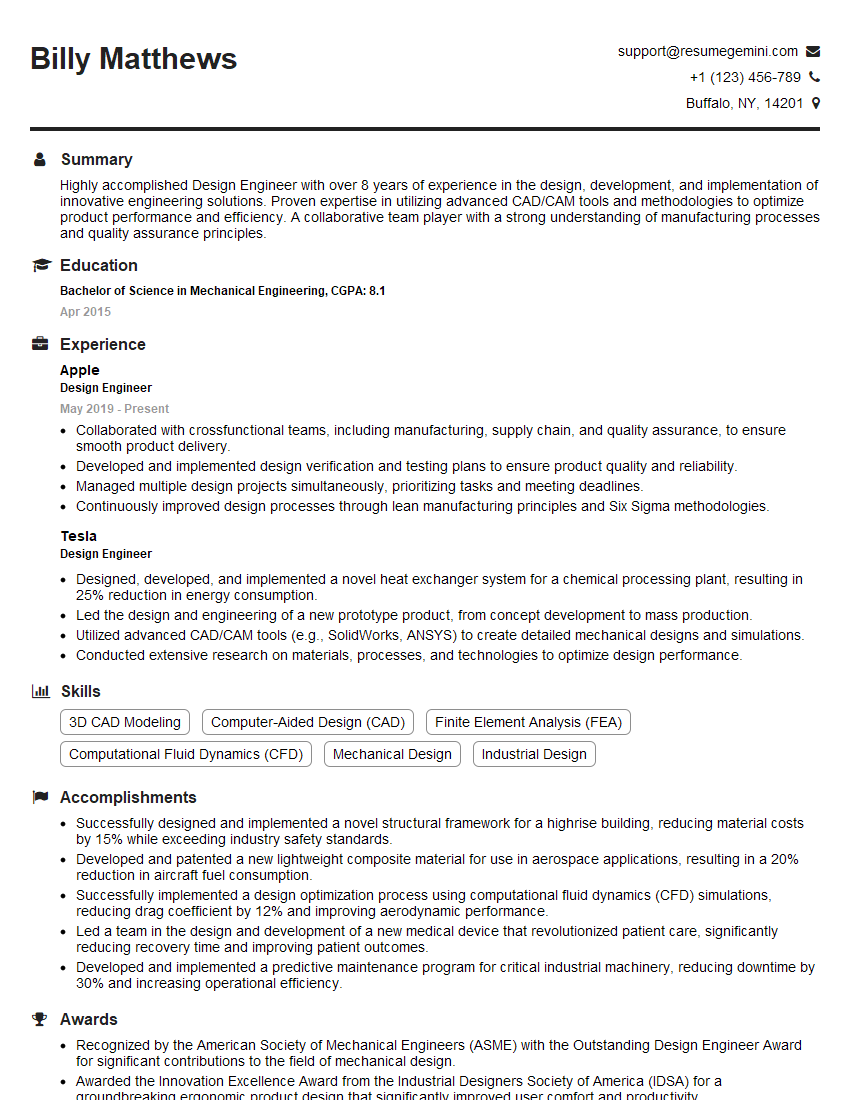
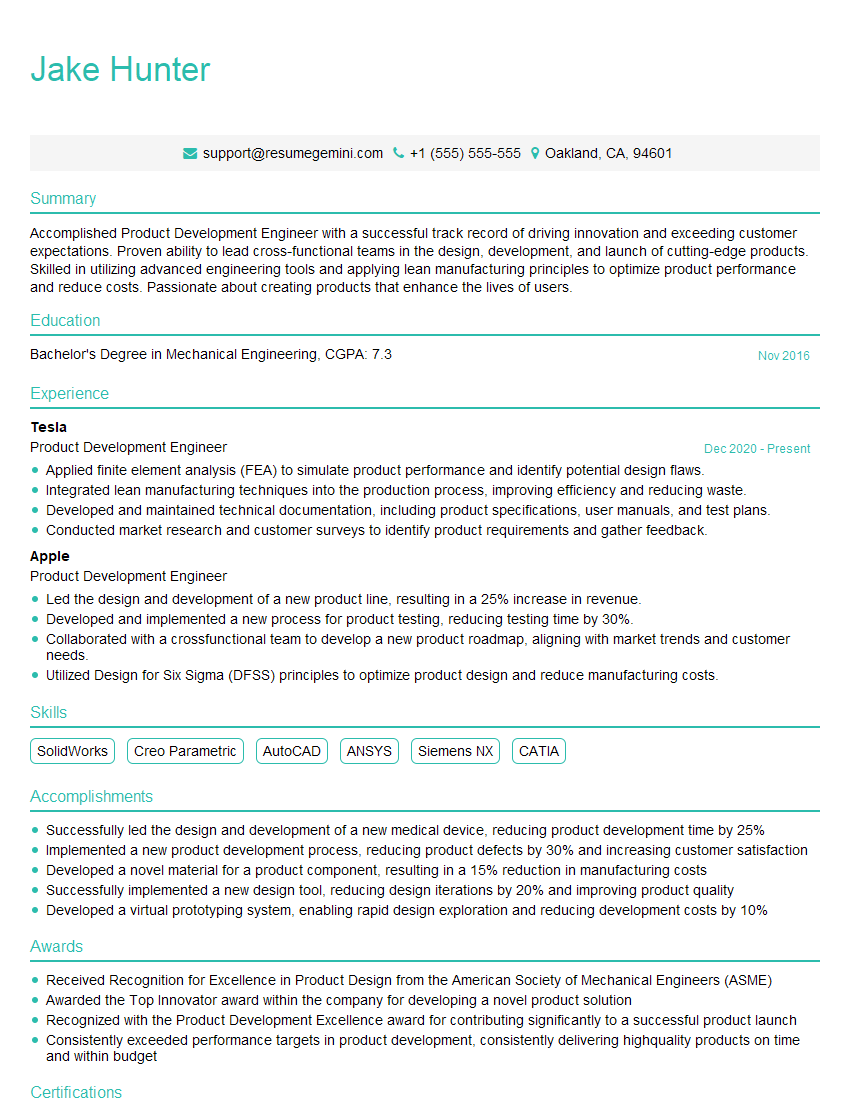
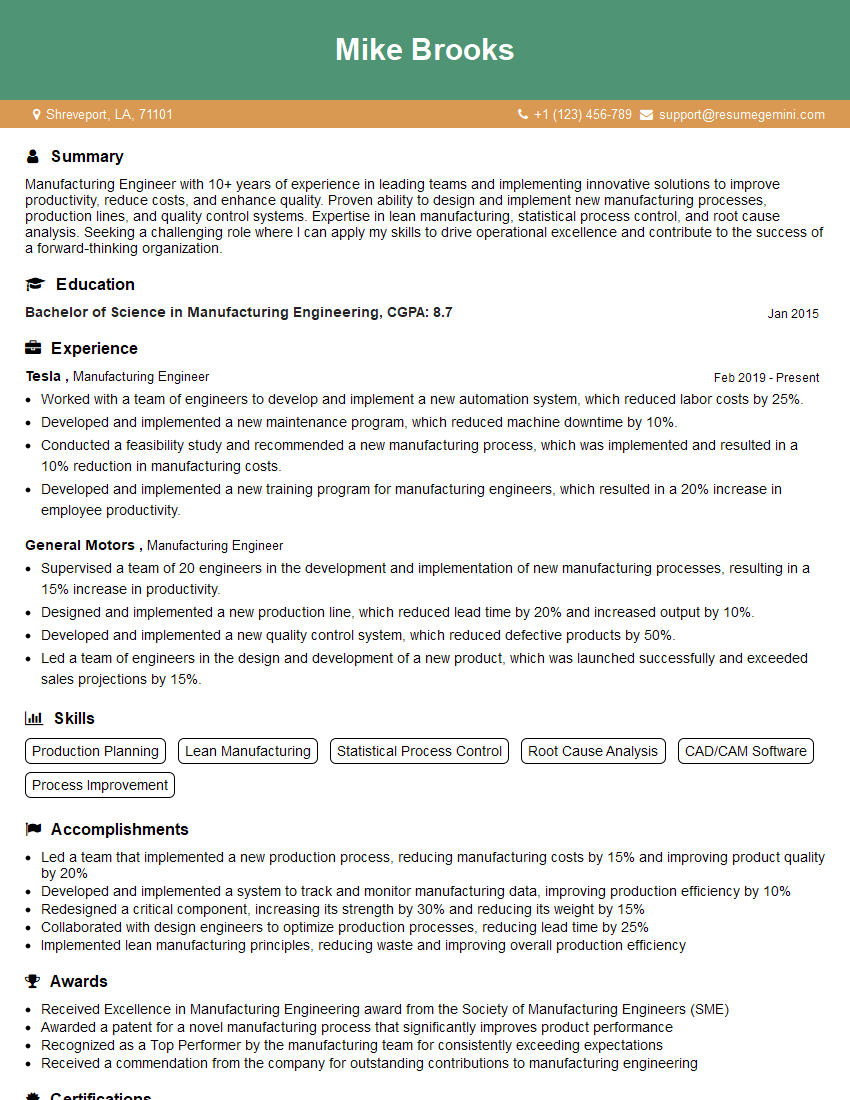
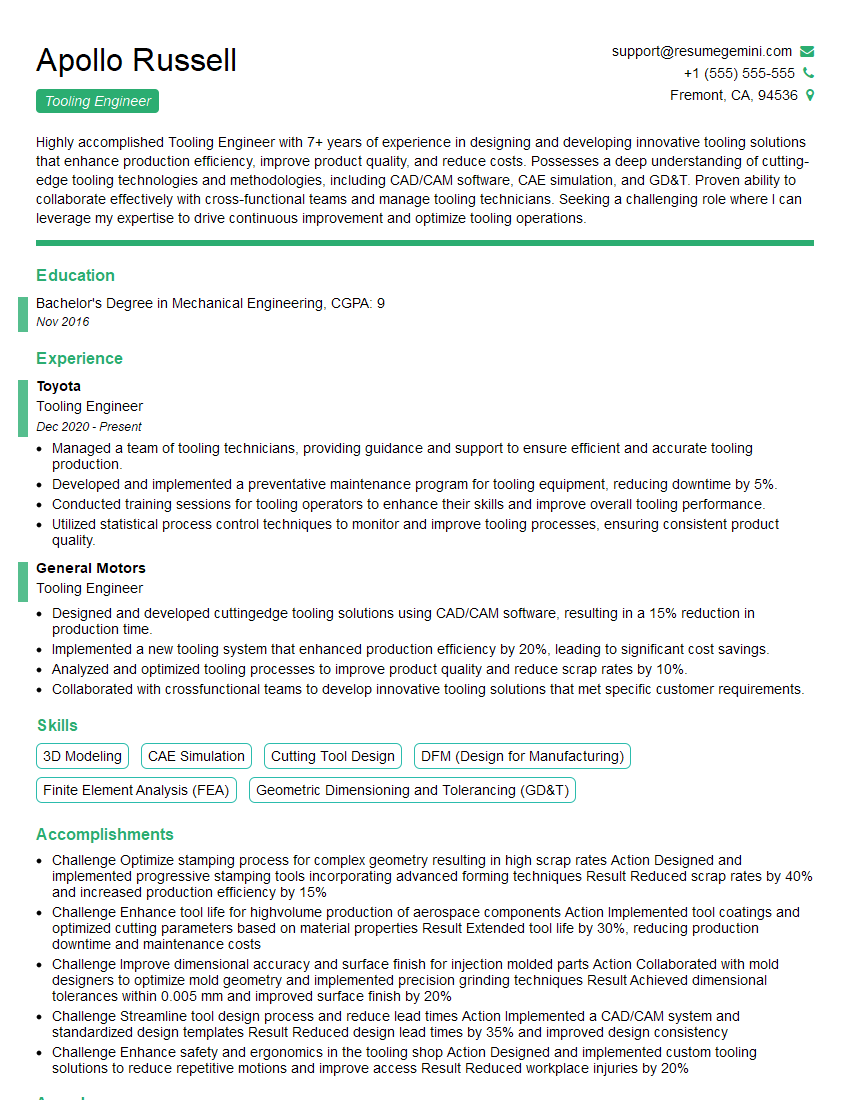
Mastering Advanced Prototyping and Fabrication significantly enhances your career prospects in engineering, design, and manufacturing. These skills are highly sought after, opening doors to innovative and challenging roles. To maximize your job search success, creating a strong, ATS-friendly resume is crucial. ResumeGemini is a trusted resource that can help you build a professional resume that highlights your skills and experience effectively. ResumeGemini provides examples of resumes tailored to Advanced Prototyping and Fabrication, giving you a head start in crafting a compelling application that grabs recruiters’ attention.
Explore more articles
Users Rating of Our Blogs
Share Your Experience
We value your feedback! Please rate our content and share your thoughts (optional).
What Readers Say About Our Blog
Very informative content, great job.
good