Are you ready to stand out in your next interview? Understanding and preparing for Advanced Reproductive Technologies interview questions is a game-changer. In this blog, we’ve compiled key questions and expert advice to help you showcase your skills with confidence and precision. Let’s get started on your journey to acing the interview.
Questions Asked in Advanced Reproductive Technologies Interview
Q 1. Describe the process of in-vitro fertilization (IVF).
In-vitro fertilization (IVF) is a complex process designed to help individuals or couples conceive when natural conception is not possible. It involves fertilizing eggs with sperm outside the body, in a laboratory, and then transferring the resulting embryos into the uterus. Think of it as creating a ‘test tube baby’, though it’s much more sophisticated than that simple phrase suggests.
- Ovarian Stimulation: The woman’s ovaries are stimulated using fertility drugs to produce multiple mature eggs. This increases the chances of successful fertilization.
- Egg Retrieval: A minor surgical procedure is performed to retrieve these mature eggs from the ovaries using a needle guided by ultrasound.
- Fertilization: The retrieved eggs are mixed with the partner’s or donor’s sperm in a culture dish in the laboratory. Fertilization is confirmed when the sperm penetrates the egg and the formation of a zygote begins.
- Embryo Culture: The fertilized eggs (now embryos) are grown in a specialized incubator for several days, allowing them to develop to the desired stage (typically blastocyst stage, a group of 100 or more cells). The embryologist closely monitors their growth and development.
- Embryo Transfer: A selected number of healthy embryos are carefully transferred into the woman’s uterus using a thin catheter. This procedure is minimally invasive.
- Pregnancy Test: Approximately two weeks after the embryo transfer, a pregnancy test is performed to determine if implantation has occurred and pregnancy has been established.
For example, a couple struggling with unexplained infertility might opt for IVF. The process allows for careful selection of healthy embryos, increasing the odds of a successful pregnancy.
Q 2. Explain the differences between IVF, GIFT, and ZIFT.
IVF, GIFT, and ZIFT are all Assisted Reproductive Technologies (ARTs) aimed at achieving pregnancy, but they differ in where and how fertilization takes place.
- IVF (In-vitro Fertilization): Fertilization occurs entirely outside the body, in a laboratory dish. The resulting embryos are then transferred into the uterus.
- GIFT (Gamete Intrafallopian Transfer): Unfertilized eggs and sperm are placed directly into the fallopian tube. Fertilization happens inside the woman’s body, naturally. This method is rarely used today because of its lower success rates compared to IVF.
- ZIFT (Zygote Intrafallopian Transfer): Eggs are fertilized in a laboratory setting (similar to IVF), but instead of transferring embryos into the uterus, the zygotes (fertilized eggs) are transferred into the fallopian tube. The zygote will develop and travel to the uterus for implantation. Like GIFT, it is less commonly used than IVF.
Think of it like this: IVF is like baking a cake entirely in the kitchen; GIFT is like mixing the ingredients and putting them in the oven to bake in your house; ZIFT is like mixing the ingredients in the kitchen and then placing the batter into the oven in your house.
Q 3. What are the indications for Intracytoplasmic Sperm Injection (ICSI)?
Intracytoplasmic Sperm Injection (ICSI) is a specialized IVF procedure where a single sperm is directly injected into a mature egg. It’s used when there are issues with sperm quantity, motility, or morphology that prevent natural fertilization.
- Severe male factor infertility: Low sperm count (oligospermia), poor sperm motility (asthenospermia), abnormal sperm shapes (teratospermia), or complete absence of sperm in the ejaculate (azoospermia).
- Failed previous IVF attempts: If previous IVF cycles failed due to fertilization issues, ICSI might be a solution.
- Genetic defects in sperm: In cases where genetic screening reveals defects in sperm that could impact fertilization or embryonic development.
- Obstruction in the reproductive tract: ICSI can bypass potential blockages in the male reproductive system, enabling fertilization even if natural ejaculation is difficult or impossible.
For instance, a man with severe oligoasthenoteratospermia (low sperm count, poor motility, and abnormal shape) would likely benefit from ICSI to achieve fertilization.
Q 4. Describe the different types of preimplantation genetic testing (PGT).
Preimplantation Genetic Testing (PGT) is a set of techniques used to screen embryos for genetic abnormalities before they are implanted into the uterus. It helps reduce the risk of having a child with a serious genetic disorder.
- PGT-A (Aneuploidy): This tests for an abnormal number of chromosomes (aneuploidy) in the embryo. Aneuploidy is a major cause of implantation failure and miscarriage.
- PGT-M (Monogenic): This screens for known monogenic (single-gene) disorders in the embryo, such as cystic fibrosis or Huntington’s disease. It’s used when one or both parents carry a gene for a specific disease.
- PGT-SR (Structural Rearrangements): This is used for couples who carry balanced chromosomal translocations or inversions. These chromosomal rearrangements can lead to embryos with unbalanced chromosomes, resulting in miscarriage or birth defects.
Each type of PGT is performed using a small sample of cells from the embryo (biopsy), which are then analyzed using advanced genetic techniques. For example, a couple with a family history of cystic fibrosis would consider PGT-M to select embryos free from the CF gene mutation.
Q 5. What are the ethical considerations surrounding ART?
Ethical considerations surrounding ART are multifaceted and complex. They include:
- Embryo selection and disposal: The creation of multiple embryos during IVF raises questions about the fate of unused embryos. Some are frozen for future use, but others are often discarded, leading to ethical debates about the moral status of embryos.
- Genetic screening and selection: PGT allows for the selection of embryos based on genetic characteristics. This raises concerns about designer babies and potential discrimination against individuals with genetic conditions.
- Access and equity: The high cost of ART procedures can create disparities in access, making it more readily available to affluent individuals than to those with limited resources.
- Reproductive autonomy: The right of individuals and couples to make choices regarding reproduction, including the use of ART, needs to be balanced against potential risks and ethical considerations.
- Third-party involvement: The use of donor gametes (sperm or eggs) and gestational surrogacy raises ethical questions about parentage, parental rights, and the well-being of all involved parties.
These are ongoing debates within the medical and ethical communities and require careful consideration.
Q 6. How is ovarian stimulation monitored during IVF cycles?
Ovarian stimulation is carefully monitored throughout an IVF cycle to ensure optimal egg production while preventing complications. Monitoring involves several key methods:
- Transvaginal ultrasound: Regular ultrasounds are performed to assess the size and number of developing follicles (fluid-filled sacs containing eggs) in the ovaries.
- Blood tests: Blood tests are conducted to measure hormone levels, specifically estradiol (E2). Estradiol levels reflect the maturation of the follicles and help predict the timing of ovulation.
- Assessment of endometrial thickness: Ultrasound is also used to assess the thickness of the uterine lining (endometrium). A suitable endometrial thickness is essential for embryo implantation.
This close monitoring allows the physician to adjust medication dosages as needed, ensuring a safe and effective stimulation process. For example, if follicle growth is slower than expected, the medication might be adjusted to enhance follicle development. Conversely, if follicles grow too rapidly, medication might be reduced to prevent ovarian hyperstimulation syndrome (OHSS), a potentially serious complication.
Q 7. Explain the role of an embryologist in ART procedures.
The embryologist plays a crucial role in ART procedures. They are the scientists responsible for the laboratory aspects of IVF and other ARTs, ensuring the health and viability of eggs, sperm, and embryos.
- Egg and sperm preparation: The embryologist prepares the eggs and sperm for fertilization, assessing their quality and selecting the best candidates.
- Fertilization and embryo culture: They oversee the fertilization process, monitor the development of embryos in the incubator, and select the most suitable embryos for transfer.
- Embryo biopsy and PGT: If PGT is performed, the embryologist performs the embryo biopsy, carefully removing a few cells from the embryo for genetic analysis.
- Cryopreservation: They are also responsible for cryopreserving (freezing) embryos, sperm, and eggs for future use.
- Quality control: The embryologist maintains strict quality control measures in the laboratory to ensure optimal conditions for gamete and embryo development.
In essence, the embryologist acts as the ‘caretaker’ of the eggs, sperm, and embryos, optimizing their chances of developing into healthy babies. Their expertise is vital for the success of ART cycles.
Q 8. What are the common causes of male infertility?
Male infertility, the inability to conceive a child, stems from various factors affecting sperm production, function, or delivery. Think of it like a complex machine – if one part malfunctions, the entire system can fail.
- Sperm Production Issues: Conditions like varicocele (enlarged veins in the scrotum), infections (e.g., mumps orchitis), and genetic abnormalities (e.g., Klinefelter syndrome) can reduce sperm count or impair their quality. Imagine the factory producing fewer or defective cars.
- Sperm Function Problems: Sperm motility (ability to swim) and morphology (shape) are crucial. Problems here could mean sperm are too slow or misshapen to reach the egg. It’s like cars with faulty engines or bad tires.
- Delivery Issues: Blockages in the reproductive tract, such as those caused by previous infections or injuries, prevent sperm from reaching the ejaculate. Think of this as a clogged highway preventing cars from reaching their destination.
- Other Factors: Lifestyle choices like smoking, excessive alcohol consumption, and obesity also negatively impact sperm health. Environmental toxins can also play a role. These are like poor road conditions impacting car performance.
Diagnosing the cause often involves semen analysis, hormonal tests, and possibly genetic screening to identify the underlying problem and tailor treatment accordingly.
Q 9. What are the common causes of female infertility?
Female infertility encompasses various factors hindering conception. A woman’s reproductive system is a delicate ecosystem, and imbalances can disrupt its function.
- Ovulation Disorders: Conditions like Polycystic Ovary Syndrome (PCOS) or premature ovarian failure can prevent the release of eggs. This is like the factory not producing any cars.
- Fallopian Tube Problems: Blockages or damage to the fallopian tubes – where fertilization occurs – can prevent eggs from reaching sperm or fertilized eggs from reaching the uterus. Imagine a broken conveyor belt.
- Uterine Issues: Conditions like uterine fibroids or endometriosis can interfere with implantation or pregnancy maintenance. Think of this as a damaged assembly line.
- Cervical Factors: Cervical mucus abnormalities can hinder sperm transport. This is like the highway having a gate that’s too small for cars to pass.
- Endometriosis: This condition involves the growth of uterine tissue outside the uterus, which can cause inflammation and interfere with implantation.
- Age-Related Factors: Diminished egg quality and quantity are significant factors impacting fertility as women age. It’s like the factory becoming old and producing fewer, lower quality cars.
Diagnosis often involves tracking ovulation, assessing fallopian tube patency (via HSG or laparoscopy), and evaluating uterine structure (via ultrasound).
Q 10. Describe the process of embryo cryopreservation.
Embryo cryopreservation, or freezing embryos, is a vital technique in assisted reproductive technologies (ART). It allows couples to preserve extra embryos created during IVF for future attempts, reducing the need for multiple cycles. It’s like preserving food for later use.
The process involves a controlled freezing procedure using cryoprotective agents (CPAs) which protect the embryo from ice crystal formation during freezing. These agents prevent cellular damage. The embryos are slowly cooled to ultra-low temperatures (-196°C) in liquid nitrogen. This slow freezing helps to prevent ice crystals from forming inside the cells, which would cause damage. Later, the embryos are thawed and assessed for viability before potential transfer back to the uterus.
Vitrification, a rapid-freezing method, is increasingly preferred as it reduces the risk of ice crystal formation. It’s faster and more efficient and results in higher survival rates.
Q 11. How is embryo quality assessed?
Embryo quality assessment is crucial for maximizing success rates in IVF. It involves evaluating various morphological characteristics to predict the embryo’s developmental potential. Think of it like grading a student’s test—some are going to perform better than others.
- Morphology: Embryologists examine the embryo’s size, shape, cell number, fragmentation (amount of cell debris), and symmetry. A high-quality embryo typically displays even cell division, minimal fragmentation, and symmetrical appearance.
- Time-lapse Imaging: Advanced systems track embryo development over time, providing detailed information about cleavage patterns and timings. This enables a more dynamic assessment of embryo viability.
- Blastocyst Stage Assessment: Embryos are often cultured to the blastocyst stage (day 5 or 6), where the inner cell mass (ICM) and trophectoderm (TE) can be assessed. ICM forms the fetus, while the TE forms the placenta. A high-quality blastocyst has a well-developed ICM and TE.
While morphology provides valuable information, it’s not a foolproof predictor of implantation. Combining morphological evaluation with other factors contributes to a more comprehensive assessment.
Q 12. Explain the concept of blastocyst transfer.
Blastocyst transfer involves transferring an embryo at the blastocyst stage (day 5 or 6 post-fertilization) to the uterus, rather than at the earlier cleavage stage. This is considered more advanced than transferring an earlier-stage embryo.
Blastocysts are more developed and have undergone significant differentiation, providing better indicators of viability. It’s like planting a seedling that’s already put down strong roots, rather than a seed. This leads to higher chances of implantation success and reduces multiple pregnancies by being more selective.
The process involves culturing embryos in the laboratory until they reach the blastocyst stage and then selecting the most suitable blastocysts for transfer. Only one or two high-quality blastocysts are typically transferred, mitigating the risk of multiple pregnancies.
Q 13. What are the risks associated with multiple gestation pregnancies?
Multiple gestation pregnancies (twins, triplets, etc.), while exciting, carry significantly increased risks compared to singleton pregnancies. This is because the uterus has more than one baby to accommodate, leading to complications for both mother and babies. It is like a car engine having to carry an oversized load, which can cause the system to overheat and break.
- Premature birth: Multiple pregnancies are significantly more likely to result in premature birth, leading to various health challenges for infants. Early birth is a major risk factor for long-term complications.
- Low birth weight: Babies born in multiple pregnancies often have lower birth weights, increasing their vulnerability to health problems. Underdeveloped organs and other physical challenges are commonplace.
- Preeclampsia: This pregnancy complication involving high blood pressure can lead to severe health issues for both mother and babies. It can damage organs and cause seizures.
- Gestational diabetes: High blood sugar during pregnancy poses risks to the mother and the babies. It is linked to long-term health problems, including obesity and diabetes for the child.
- Birth defects: Multiple pregnancies slightly elevate the risk of birth defects in the babies.
- Increased risk of complications during labor and delivery: Labor and delivery are complex processes, and the presence of multiple babies significantly increase the odds of complications.
Strategies for managing these risks include careful monitoring of the pregnancy and early detection and management of potential complications.
Q 14. Discuss the role of assisted hatching in IVF.
Assisted hatching is an ART procedure where a small hole is created in the zona pellucida, the outer shell of the embryo, to aid in hatching. This helps the embryo break out of the zona and implant in the uterine lining more easily. It is similar to helping a chick hatch out of its shell.
The zona pellucida plays a crucial role in protecting the embryo during early development. However, sometimes it becomes too hard, hindering successful hatching. Assisted hatching aims to overcome this hurdle, particularly in cases where previous IVF attempts have failed or where the woman has a history of implantation failure.
Methods include mechanical methods using a laser or acid Tyrode’s solution. The technique is selectively applied, as it’s not suitable for all embryos and can potentially damage them. Assisted hatching is employed only in cases where the embryologist identifies the zona to be exceptionally thick or hardened.
Q 15. What are the success rates of different ART techniques?
Success rates in Assisted Reproductive Technologies (ART) vary significantly depending on several factors, including the specific technique used, the patient’s age and overall health, the cause of infertility, and the clinic’s experience. It’s crucial to understand that these are probabilities, not guarantees.
- In-vitro Fertilization (IVF): The success rate, often measured by live birth rate per cycle, generally ranges from 30-50% for women under 35, decreasing with age. For women over 40, the rate drops considerably.
- Intrauterine Insemination (IUI): IUI has a lower success rate than IVF, typically ranging from 10-20% per cycle, and is often used for less severe cases of infertility.
- Intracytoplasmic Sperm Injection (ICSI): ICSI, where a single sperm is directly injected into the egg, has similar success rates to IVF, but it is often used in cases where male infertility is a factor and may slightly lower the overall success rate depending on the severity of the male factor.
- Gamete Intrafallopian Transfer (GIFT) and Zygote Intrafallopian Transfer (ZIFT): These older techniques have largely been replaced by IVF, but they historically showed success rates comparable to IVF, though with higher invasiveness.
It’s important to note that these are average ranges. Individual results can vary widely. A comprehensive fertility assessment, including a thorough medical history and testing, is essential for accurate prediction of success rates for a specific patient.
Career Expert Tips:
- Ace those interviews! Prepare effectively by reviewing the Top 50 Most Common Interview Questions on ResumeGemini.
- Navigate your job search with confidence! Explore a wide range of Career Tips on ResumeGemini. Learn about common challenges and recommendations to overcome them.
- Craft the perfect resume! Master the Art of Resume Writing with ResumeGemini’s guide. Showcase your unique qualifications and achievements effectively.
- Don’t miss out on holiday savings! Build your dream resume with ResumeGemini’s ATS optimized templates.
Q 16. How do you manage complications during an IVF cycle?
Managing complications during an IVF cycle requires a multidisciplinary approach, involving close monitoring and prompt intervention. Common complications include Ovarian Hyperstimulation Syndrome (OHSS), ectopic pregnancy, multiple pregnancies, and infection.
- OHSS: This is characterized by enlarged ovaries and fluid buildup. Management involves close monitoring of fluid levels, pain management, and in severe cases, hospitalization and fluid drainage.
- Ectopic Pregnancy: This occurs when a fertilized egg implants outside the uterus. Early detection through ultrasound and treatment with medication or surgery are crucial.
- Multiple Pregnancies: IVF often leads to multiple pregnancies due to the transfer of multiple embryos. Selective reduction (reducing the number of embryos) might be considered in cases of high-order multiples to reduce risks to mother and fetuses.
- Infection: Strict adherence to sterile techniques during procedures minimizes infection risk. Antibiotic treatment is administered if infection occurs.
Proactive monitoring, patient education, and timely intervention are key to minimizing the impact of complications. Open communication with the patient is crucial throughout the process.
Q 17. Explain the process of sperm preparation for ICSI.
Sperm preparation for ICSI is a critical step, aiming to select the most morphologically normal and motile sperm for injection. The process involves several steps:
- Semen Collection: Semen is collected either through masturbation or by electroejaculation.
- Liquefaction: The semen sample is allowed to liquefy naturally.
- Density Gradient Centrifugation: This technique separates motile sperm from seminal fluid and debris. The sperm with better motility will migrate through the density gradient.
- Sperm Selection: A skilled embryologist selects morphologically normal sperm with good motility under a microscope.
- Final Preparation: Selected sperm are washed and resuspended in a suitable medium before injection.
The entire process is performed under strict sterile conditions to minimize contamination and preserve sperm viability. The quality of sperm preparation directly impacts the success rate of ICSI.
Q 18. Describe the different methods of oocyte retrieval.
Oocyte (egg) retrieval is typically performed using transvaginal ultrasound aspiration (TVA). This minimally invasive procedure is the most common method.
- Transvaginal Ultrasound Aspiration (TVA): A thin needle guided by ultrasound is inserted through the vagina to aspirate oocytes from the follicles in the ovaries. This is typically performed under sedation or anesthesia.
- Laparoscopic Oocyte Retrieval: This is a more invasive surgical procedure that is rarely used now except in specific cases, such as when the ovaries are not easily accessible through the vagina.
The choice of method depends on several factors, including the patient’s anatomy, the number and location of follicles, and the clinician’s expertise. Patient comfort and safety are paramount throughout the procedure.
Q 19. How do you counsel patients about the risks and benefits of ART?
Counseling patients about ART involves a careful discussion of both the potential benefits and risks. It’s a crucial aspect of responsible ART practice.
- Benefits: The primary benefit is the possibility of achieving pregnancy and parenthood for individuals or couples facing infertility. We discuss the chances of success based on individual factors.
- Risks: These include OHSS, ectopic pregnancy, multiple pregnancies, miscarriage, and the psychological stress associated with the process. We also discuss the potential for birth defects, although the risk is generally not significantly higher than in naturally conceived pregnancies.
- Financial Considerations: ART is expensive, and the cost can vary greatly depending on the techniques used and the number of cycles required. We openly discuss this aspect and advise on financing options if needed.
Empathy, active listening, and clear communication are essential. The goal is to empower patients to make informed decisions about their treatment.
Q 20. What are the legal and regulatory aspects of ART?
The legal and regulatory aspects of ART are complex and vary across jurisdictions. Key areas include:
- Informed Consent: Patients must provide informed consent for all aspects of treatment. This includes a thorough understanding of the procedures, risks, benefits, and alternatives.
- Embryo Disposition: Legal frameworks often address the storage, use, and disposal of embryos. Decisions regarding embryo donation, freezing, or destruction need to be clearly documented.
- Third-Party Reproduction: Laws governing surrogacy, egg donation, and sperm donation vary significantly. These often involve complex legal and ethical considerations.
- Licensing and Accreditation: ART clinics are subject to licensing and accreditation requirements, aimed at ensuring quality and safety standards.
- Data Privacy and Confidentiality: Patient data must be protected according to relevant privacy regulations.
Staying abreast of evolving laws and regulations is crucial for responsible practice in ART.
Q 21. How do you handle patient expectations regarding ART outcomes?
Managing patient expectations is a critical aspect of ART. Realistic expectations contribute significantly to a positive patient experience and reduce the risk of disappointment.
- Individualized Approach: We tailor our approach to each patient based on their medical history, age, and other factors. We provide a personalized assessment of their chances of success.
- Transparency and Honesty: We clearly communicate the limitations of ART and the fact that success is not guaranteed. We explain that the chances of success are probabilities, not certainties.
- Emotional Support: We acknowledge the emotional toll that infertility and ART can take. We offer emotional support and connect patients with appropriate resources.
- Realistic Goals: We encourage patients to set realistic goals, emphasizing that a single cycle may not always result in a successful pregnancy.
Open communication and a supportive approach are crucial in helping patients cope with the emotional and psychological challenges associated with ART.
Q 22. Describe your experience with different types of fertility medications.
My experience encompasses a wide range of fertility medications, crucial for stimulating ovarian function and preparing the body for conception. These medications fall into several categories, each with specific mechanisms and potential side effects.
- Gonadotropins: These are hormones (like FSH and LH) that mimic the body’s natural hormones, stimulating follicle growth and maturation in the ovaries. Examples include Gonal-f, Follistim, and Menopur. I’ve used these extensively in various IVF cycles, carefully adjusting dosages based on individual patient responses monitored through blood tests and ultrasounds. One case involved a patient with low ovarian reserve who responded exceptionally well to a low-dose protocol with close monitoring.
- Clomiphene Citrate (Clomid): This oral medication is often used in milder cases of infertility, stimulating ovulation by increasing the production of gonadotropins. I find it particularly useful for patients with anovulatory cycles. However, it carries the risk of multiple pregnancies, requiring careful monitoring.
- GnRH Agonists/Antagonists: These medications control the timing of ovulation, preventing premature follicle rupture. GnRH agonists (like Lupron) are used in various protocols, such as long and short protocols, for IVF. GnRH antagonists (like Cetrotide) offer a more flexible approach, allowing for a more individualized stimulation process. The choice depends on factors like patient response and ovarian reserve.
- Letrozole: An aromatase inhibitor, Letrozole, is increasingly used as an alternative to clomiphene for ovulation induction. It’s generally better tolerated than Clomid, but its efficacy can vary between patients.
Managing these medications requires a nuanced understanding of patient-specific factors like age, ovarian reserve, and past medical history. Close monitoring throughout the treatment cycle is paramount to prevent complications and optimize outcomes.
Q 23. How do you interpret semen analysis results?
Semen analysis is a cornerstone of male infertility evaluation. I interpret these results by analyzing several key parameters:
- Sperm Concentration: This refers to the number of sperm per milliliter of semen. A low concentration is a common indicator of male infertility.
- Sperm Motility: This assesses the percentage of sperm that are actively moving progressively. Poor motility hinders fertilization.
- Sperm Morphology: This evaluates the shape and structure of sperm. Abnormal morphology can impact the sperm’s ability to fertilize an egg.
- Semen Volume: The total volume of ejaculated semen. A low volume can indicate problems with seminal fluid production.
- pH: The acidity or alkalinity of the semen. An abnormal pH can affect sperm survival.
I carefully analyze all these parameters in conjunction with the patient’s medical history to diagnose the underlying cause of infertility. For example, a low concentration and poor motility could suggest a problem with sperm production in the testes. Abnormal morphology might point towards genetic factors. A complete interpretation requires a holistic view, considering all aspects of the analysis alongside other clinical information.
Q 24. Explain the role of hormone replacement therapy in ART.
Hormone replacement therapy (HRT) plays a vital role in ART, particularly in situations where the woman’s ovaries are not functioning properly or need to be suppressed.
- Ovarian Suppression: In IVF cycles, HRT is used to suppress the patient’s natural ovarian cycle and precisely control follicle development. This ensures that the controlled ovarian stimulation process is more predictable and effective.
- Endometrial Preparation: In cases of premature ovarian failure or after ovarian tissue cryopreservation, HRT prepares the uterine lining (endometrium) to receive a fertilized embryo for successful implantation. This mimics the natural hormonal changes of a normal menstrual cycle.
- Egg Donation Cycles: The recipient in an egg donation cycle needs HRT to prepare her endometrium for embryo implantation. The hormonal regimen is carefully tailored to synchronize the endometrial lining with the development of the donated embryos.
The type and dosage of HRT (usually estrogen and progesterone) are carefully individualized based on the specific clinical situation. Close monitoring of the patient’s response using blood tests and transvaginal ultrasounds is crucial for optimizing treatment and preventing potential complications. For example, inadequate endometrial preparation can lead to implantation failure, while excessive stimulation can increase the risk of OHSS (Ovarian Hyperstimulation Syndrome).
Q 25. Describe your experience with managing ovarian hyperstimulation syndrome (OHSS).
Ovarian Hyperstimulation Syndrome (OHSS) is a potentially serious complication of ovarian stimulation in ART. It occurs when the ovaries become significantly enlarged and fluid builds up in the abdomen. My management approach is multi-faceted, focusing on early detection and prompt intervention.
- Careful Monitoring: Regular transvaginal ultrasounds and blood tests to monitor ovarian size and hormone levels are crucial for early detection. I closely watch for signs of increasing ovarian size and rising hormone levels, which can be early indicators.
- Mild OHSS Management: Mild OHSS usually involves rest, increased fluid intake, and close monitoring. Patients are advised to contact me immediately if they experience any concerning symptoms like abdominal pain or bloating.
- Moderate to Severe OHSS Management: Moderate to severe cases require hospitalization for fluid management, which may involve intravenous fluids, diuretics, and pain relief. In severe cases, interventions like paracentesis (draining fluid from the abdomen) may be necessary. In extremely rare severe cases, hospitalization in an intensive care unit may be required for management of electrolyte imbalance or other complications.
- Prevention: Careful selection of stimulation protocols, customized dosage adjustments based on patient responses, and avoiding triggering ovulation too early are crucial preventive measures. Some protocols minimize the risk of OHSS by reducing the number of follicles stimulated.
OHSS management is a dynamic process. My approach involves constant monitoring, prompt intervention based on the severity of symptoms, and personalized care tailored to each patient’s condition. Open communication with the patient and their family is vital throughout the process.
Q 26. How do you assess the endometrial receptivity?
Assessing endometrial receptivity is crucial for successful embryo implantation. We use several methods to evaluate the readiness of the uterine lining:
- Endometrial Thickness: Ultrasound is used to measure the thickness of the endometrium. A specific thickness range (usually between 7-12mm) is generally considered optimal for implantation, although this can vary slightly depending on the day of the cycle.
- Endometrial Pattern: Ultrasound also helps assess the endometrial pattern, looking for a trilaminar appearance (three layers) indicating proper development. An irregular or thin lining may indicate impaired receptivity.
- Endometrial Biopsy (optional): This is a more invasive procedure where a small sample of the endometrial lining is taken for histological examination. It provides a detailed assessment of the endometrial cells and their expression of certain markers associated with receptivity. This is not routinely used but can be helpful in cases of repeated implantation failure.
- Endometrial Receptivity Array (ERA) (optional): ERA is a molecular test that analyzes gene expression in the endometrium to determine the optimal window of implantation. This test helps personalize the timing of embryo transfer for improved success rates. This is a more advanced test often used in cases of recurrent implantation failure.
The integration of these methods offers a comprehensive evaluation of endometrial receptivity, leading to more informed decisions regarding embryo transfer timing and ultimately improving pregnancy chances. The choice of assessment methods depends on the individual patient’s clinical situation and past history.
Q 27. Discuss your experience with different types of infertility diagnoses.
My experience covers a wide spectrum of infertility diagnoses, requiring a comprehensive approach to identify the underlying causes.
- Female Infertility: This includes conditions such as anovulation (lack of ovulation), endometriosis (tissue resembling the uterine lining grows outside the uterus), polycystic ovary syndrome (PCOS), tubal factor infertility (blocked fallopian tubes), and uterine abnormalities. Diagnosing these conditions often involves a combination of physical examinations, hormone testing, imaging studies (such as ultrasound and hysterosalpingography), and laparoscopy (a minimally invasive surgical procedure).
- Male Infertility: Diagnosing male infertility is based primarily on semen analysis, along with hormone testing and genetic evaluations in certain cases. Conditions like low sperm count (oligospermia), poor sperm motility (asthenospermia), abnormal sperm morphology (teratospermia), and varicoceles (enlarged veins in the scrotum) fall under this category.
- Unexplained Infertility: In some cases, thorough investigation fails to reveal a clear cause for infertility. This necessitates a collaborative approach, often involving advanced reproductive techniques to help overcome the reproductive challenges.
A thorough understanding of these diagnoses is essential for tailoring the most appropriate treatment plan for each couple. It’s not uncommon to see couples with a combination of male and female factor infertility issues, requiring a personalized and integrated treatment approach. For example, a couple with both tubal factor infertility and male factor infertility might benefit from IVF with ICSI (intracytoplasmic sperm injection).
Q 28. What is your approach to patient communication and education in ART?
Patient communication and education are integral to successful ART outcomes. My approach emphasizes empathy, transparency, and shared decision-making.
- Initial Consultation: I take time to listen carefully to each couple’s story, understand their hopes and concerns, and thoroughly explain the diagnosis and available treatment options. This includes discussing the success rates of different procedures, potential risks and side effects, and the emotional and financial aspects of treatment.
- Clear and Simple Explanations: I avoid using excessive medical jargon and instead use simple, understandable language to explain complex concepts. I use analogies and visual aids whenever necessary to ensure clear understanding.
- Shared Decision-Making: I believe that patients should actively participate in the decision-making process. I encourage open dialogue and answer all their questions patiently, empowering them to make informed choices about their treatment. I provide all relevant information to help couples make decisions which align with their values and circumstances.
- Ongoing Support: I provide ongoing support throughout the treatment cycle, addressing concerns and providing reassurance. I remain readily available for questions and offer encouragement, especially during emotionally challenging periods.
I strive to create a trusting and supportive environment where couples feel comfortable asking questions and expressing their emotions. Open communication significantly reduces anxiety, promotes adherence to treatment protocols, and ultimately improves overall treatment outcomes. I regularly evaluate my communication approaches to ensure effectiveness and patient satisfaction.
Key Topics to Learn for Advanced Reproductive Technologies Interview
- Assisted Reproductive Technologies (ART): Understand the various ART techniques including In Vitro Fertilization (IVF), Intracytoplasmic Sperm Injection (ICSI), Gamete Intrafallopian Transfer (GIFT), and Zygote Intrafallopian Transfer (ZIFT). Be prepared to discuss their indications, procedures, and success rates.
- Embryo Culture and Development: Master the principles of embryo culture, including media selection, environmental control, and assessment of embryo morphology and viability. Discuss techniques for improving embryo development and selection for transfer.
- Preimplantation Genetic Testing (PGT): Explore different types of PGT (PGT-A, PGT-M, PGT-SR) and their applications in screening embryos for chromosomal abnormalities and genetic diseases. Understand the ethical considerations and limitations of PGT.
- Oocyte and Sperm Cryopreservation: Learn about the techniques and principles involved in freezing and thawing oocytes and sperm. Discuss the implications for fertility preservation and assisted reproduction.
- Ovarian Stimulation Protocols: Familiarize yourself with different ovarian stimulation protocols used in IVF cycles, including their advantages, disadvantages, and patient selection criteria. Be ready to discuss monitoring techniques and potential complications.
- Ethical and Legal Considerations: Understand the legal and ethical frameworks governing ART, including issues related to consent, embryo selection, and surrogacy. This demonstrates a comprehensive understanding of the field.
- Data Analysis and Interpretation: Be prepared to discuss statistical analysis of ART outcomes, including success rates, pregnancy rates, and live birth rates. This showcases analytical skills vital in the field.
- Troubleshooting and Problem-Solving: Be ready to discuss common challenges encountered in ART procedures and the approaches used to address them. This highlights practical experience and critical thinking skills.
Next Steps
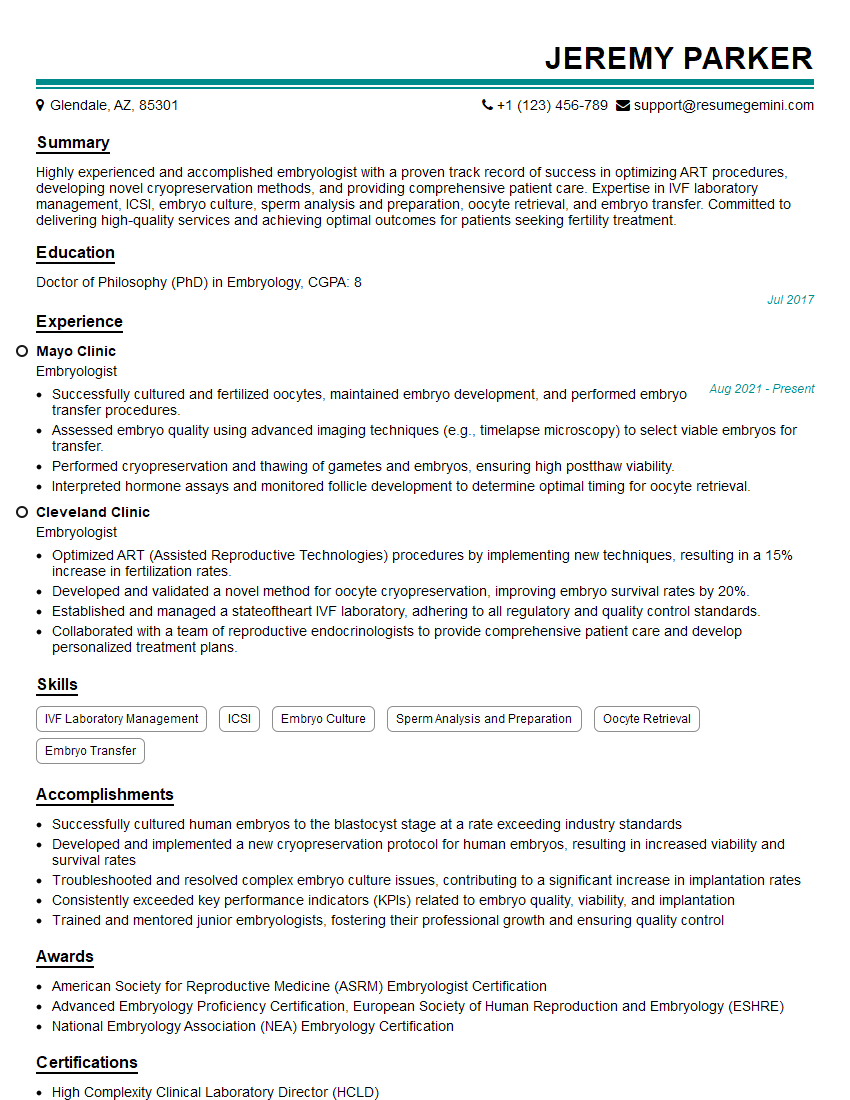
Mastering Advanced Reproductive Technologies opens doors to rewarding and impactful careers in a rapidly evolving field. A strong understanding of these techniques and ethical considerations is crucial for success. To significantly boost your job prospects, invest time in creating a compelling, ATS-friendly resume that effectively highlights your skills and experience. ResumeGemini is a trusted resource to help you build a professional resume that stands out. They provide examples of resumes tailored to the Advanced Reproductive Technologies field to guide you in crafting your perfect application. Take the next step toward your dream career today!
Explore more articles
Users Rating of Our Blogs
Share Your Experience
We value your feedback! Please rate our content and share your thoughts (optional).
What Readers Say About Our Blog
Very informative content, great job.
good