Interviews are more than just a Q&A session—they’re a chance to prove your worth. This blog dives into essential Aerial Delivery Techniques interview questions and expert tips to help you align your answers with what hiring managers are looking for. Start preparing to shine!
Questions Asked in Aerial Delivery Techniques Interview
Q 1. Explain the different types of aerial delivery systems.
Aerial delivery systems are broadly categorized by the method of payload deployment and the type of parachute used. They range from simple, low-cost systems suitable for smaller, less sensitive cargo to sophisticated, precision systems designed for delicate or time-critical deliveries.
- Low-Velocity Parachute Systems: These utilize relatively large parachutes to slow the descent of the payload, minimizing impact forces. They are commonly used for heavier loads or less fragile items.
- High-Velocity Parachute Systems: These employ smaller, more specialized parachutes that allow for faster descent rates. While offering quicker delivery, they require more robust packaging and are typically used for smaller, more rugged items.
- Guided Delivery Systems: These advanced systems utilize GPS and other technologies to steer the payload to a precise location, significantly improving accuracy. They are often employed for delicate equipment or humanitarian aid.
- Container Delivery Systems: This approach involves packaging the payload within a robust container that protects it during the descent and impact. Various sizes and designs are available depending on the cargo’s size and fragility.
- Ram-Air Parachute Systems: These use steerable ram-air parachutes, offering controlled descent and improved accuracy compared to traditional round parachutes. They are frequently chosen for heavier and larger payloads requiring a gentler landing.
The choice of system depends on factors such as payload weight, size, fragility, required accuracy, and environmental conditions.
Q 2. Describe the process of rigging a parachute for a specific payload.
Rigging a parachute for a specific payload is a critical process requiring meticulous attention to detail and adherence to strict safety procedures. It involves selecting the appropriate parachute type and size based on the payload’s weight, dimensions, and fragility. The process typically follows these steps:
- Payload Assessment: Determine the weight, dimensions, center of gravity, and fragility of the payload. This dictates the parachute size, type, and rigging configuration.
- Parachute Selection: Choose a parachute that can safely handle the payload’s weight and characteristics. Consider factors like descent rate and impact force.
- Harness or Sling Attachment: Secure the payload to the parachute harness or sling using appropriate straps, webbing, or other load-bearing equipment. Ensure the attachment points are strong enough to withstand the stresses of deployment and landing.
- Bridle Adjustment: If necessary, adjust the bridle (the lines connecting the parachute canopy to the payload) to ensure proper payload orientation and stability during descent. Incorrect bridle adjustment can lead to oscillations or uncontrolled spins.
- Safety Checks: Thoroughly inspect all connections and components to ensure there are no loose parts, fraying, or other defects. A pre-flight checklist is crucial.
- Documentation: Document the entire rigging process, including the payload details, parachute specifications, and all attachment points. This is crucial for traceability and accountability.
For instance, rigging a delicate piece of scientific equipment would require a different approach than rigging a sturdy crate of supplies. The selection of parachute material, the number of suspension lines, and the type of shock absorbers would all be tailored to the payload.
Q 3. What are the critical safety considerations for aerial delivery operations?
Safety is paramount in aerial delivery operations. Critical considerations include:
- Proper Rigging Techniques: Adhering to strict procedures and using correctly sized and inspected parachutes and equipment.
- Weather Conditions: Avoiding operations in high winds, low clouds, or adverse weather conditions that could compromise the safety of the operation or the payload.
- Personnel Training: Ensuring all personnel involved, including riggers, pilots, and ground crew, are properly trained and certified.
- Emergency Procedures: Establishing and rehearsing clear emergency procedures for handling equipment malfunctions, parachute failures, or unforeseen events.
- Drop Zone Selection: Choosing a safe drop zone free of obstructions, populated areas, and other hazards. This includes assessing the terrain, vegetation, and potential obstacles.
- Risk Assessment: Conducting a thorough risk assessment before each operation to identify and mitigate potential hazards. This should involve considering all aspects, from weather to ground conditions to equipment reliability.
- Payload Securing: Ensuring the payload is securely attached to prevent shifting during the drop and minimizing the risk of damage.
A failure to consider these factors can lead to serious accidents, damage to property, and potential loss of life.
Q 4. How do you calculate the required altitude and airspeed for a successful airdrop?
Calculating the required altitude and airspeed for a successful airdrop involves a complex interplay of factors, including payload weight, parachute characteristics, wind speed and direction, and desired drop zone accuracy. There isn’t a single formula; instead, it relies on a combination of empirical data, aerodynamic modeling, and experience.
Generally, higher altitude provides more time for the parachute to fully deploy and stabilize before ground impact. Airspeed needs to be controlled to minimize drift and ensure accurate delivery. Factors such as wind speed and direction are critical to determining the appropriate air release point and altitude. Specialized software and simulations are often used to predict the trajectory and landing point of the payload based on these input parameters. Experienced airdrop planners utilize wind data, weather forecasts, and historical drop data to adjust these parameters for optimal results. The goal is to create a trajectory that accounts for wind drift and ensures the payload lands within a safe and acceptable margin of error for the intended drop zone.
For example, a precision airdrop of a delicate payload might require significantly higher altitude and a more controlled airspeed compared to a less sensitive payload dropped from a higher altitude with a greater margin of error.
Q 5. What are the different types of parachutes used in aerial delivery and their applications?
Various types of parachutes are used in aerial delivery, each suited for different payloads and mission requirements:
- Round Parachutes: These are simple, reliable, and cost-effective parachutes used for relatively large, robust payloads. They offer high drag but less maneuverability.
- Square Parachutes: Offering better stability and control compared to round parachutes, though they are generally more complex and expensive.
- Ram-Air Parachutes: These steerable parachutes provide precision control over descent speed, direction, and landing point. They are often used for guided delivery systems.
- Ribbon Parachutes: These are used for extremely heavy or bulky payloads, providing a high drag area to decelerate the load during descent.
- Cluster Parachutes: These consist of multiple smaller parachutes attached to a single payload, providing redundancy and increased stability.
The choice of parachute type depends heavily on factors such as payload size, weight, fragility, and required accuracy. A delicate instrument might require a ram-air parachute for precision control, while a large container of supplies might use a cluster or ribbon parachute for efficient deceleration.
Q 6. Explain the concept of precision airdrop and its challenges.
Precision airdrop aims to deliver payloads to a specific location within a small margin of error. This requires advanced technologies and careful planning. The process involves the integration of GPS navigation, sophisticated parachute systems (often ram-air parachutes), and specialized software for trajectory prediction and control.
Challenges include:
- Environmental Factors: Wind speed, direction, and gusts significantly affect the payload’s trajectory, making accurate prediction difficult.
- Technological Limitations: While technology has advanced significantly, limitations in GPS accuracy, sensor reliability, and communication systems can still impact precision.
- Payload Characteristics: The size, weight, and aerodynamic properties of the payload influence its flight characteristics and susceptibility to wind drift.
- Terrain and Obstacles: Uneven terrain, obstacles such as trees or buildings, and variations in wind patterns at lower altitudes can all affect the payload’s landing point.
Despite these challenges, precision airdrop is essential for delivering critical supplies to inaccessible locations, deploying sensitive equipment, and supporting military operations. Ongoing research and development are constantly improving the accuracy and reliability of this technology.
Q 7. How do weather conditions affect aerial delivery operations?
Weather conditions significantly affect aerial delivery operations. High winds, heavy rain, snow, or low visibility can render operations unsafe or impossible. Wind speed and direction are particularly critical, affecting the payload’s trajectory and making accurate delivery challenging. Strong winds can cause the payload to drift significantly from the intended landing point, potentially leading to damage or loss.
Adverse weather can also lead to delayed operations, requiring careful monitoring of weather forecasts and real-time conditions. Heavy rain or snow can increase the weight of the payload and reduce parachute effectiveness. Low cloud cover or fog can severely limit visibility, making it difficult for pilots to accurately release the payload. Therefore, comprehensive weather monitoring and contingency planning are essential components of any successful aerial delivery operation. Operational decisions often hinge on real-time weather data and predictions, with safety always being the primary consideration.
Q 8. Describe your experience with different types of cargo and their handling during airdrop.
My experience encompasses a wide range of cargo types in aerial delivery, from standard pallets and containers to specialized equipment and humanitarian aid. Handling varies significantly depending on the cargo’s size, weight, fragility, and contents. For instance, lightweight, non-fragile goods like clothing or medical supplies might be bundled and dropped using simple container systems. Conversely, heavier or more sensitive items require specialized platforms, such as low-velocity airdrop systems (LVADS) that reduce impact forces. Fragile equipment necessitates customized packaging and potentially the use of cushioning materials to prevent damage during landing. We frequently handle oversized cargo requiring careful rigging and securement to prevent shifting or dislodgment during flight and descent. I’ve personally overseen the delivery of everything from construction materials in remote areas to vital emergency supplies during disaster relief operations, each requiring a tailored approach.
- Example 1: Dropping pallets of bottled water in a flood-affected area. Standard pallets were used, packaged to withstand minor impacts.
- Example 2: Delivering a sensitive piece of medical equipment using a precision-guided airdrop system.
Q 9. What are the procedures for handling hazardous materials in aerial delivery?
Handling hazardous materials in aerial delivery is subject to stringent regulations and demands meticulous planning. Safety is paramount. We adhere to national and international guidelines, including those established by the International Civil Aviation Organization (ICAO). Before any airdrop, a detailed risk assessment is conducted, identifying potential hazards and developing mitigation strategies. Hazardous materials are packaged according to specific UN standards to prevent leaks or spills. Packaging must be robust enough to survive the impact of landing. Aircrew receive specialized training on handling hazardous materials, including proper procedures for emergency situations. The designated drop zone must be carefully selected to minimize environmental risks, and emergency response plans are established in case of an accident. Detailed manifests and tracking systems are used to ensure accountability and efficient handling. For example, dropping radioactive materials would necessitate using specialized containers, lead shielding, and extremely precise airdrop techniques. Each aspect of the operation would undergo intensive scrutiny and approval processes.
Q 10. Explain the importance of pre-flight checks and inspections in aerial delivery.
Pre-flight checks and inspections are critical for ensuring the safety and success of any aerial delivery operation. A thorough inspection is mandatory before any flight, covering the aircraft’s airworthiness, navigation systems, and the functionality of the airdrop equipment. This includes checking the integrity of parachutes, cargo release mechanisms, and any specialized delivery systems. We also verify the accuracy of the planned drop zone coordinates and the suitability of the terrain. The cargo itself is inspected to confirm it’s properly secured and packaged for the airdrop. Any discrepancies or defects are immediately addressed before proceeding. This meticulous attention to detail helps prevent accidents, ensures operational efficiency, and ultimately protects lives and valuable cargo. Think of a pre-flight check as a crucial safety net. Overlooking a simple detail, like a damaged parachute, could lead to a catastrophic failure.
Q 11. How do you ensure the accuracy and efficiency of airdrop operations?
Accuracy and efficiency in airdrop operations are achieved through a combination of advanced technologies and meticulous planning. Precise GPS navigation systems guide the aircraft to the designated drop zone. Sophisticated airdrop computers calculate optimal release parameters based on factors like altitude, wind speed, and cargo weight. Real-time tracking and communication systems allow for monitoring the cargo’s trajectory and providing updates on its location. Regular calibration and maintenance of the equipment are vital to maintaining accuracy. Simulation exercises and thorough crew training help to hone the skills and efficiency of the team. Adopting advanced technologies and investing in training programs continuously improves the accuracy and speed of our airdrop operations. Data analysis after each mission helps identify areas for improvement and optimize future missions. For example, the use of precision guided systems, like GPS-aided targeting systems, allows for pinpoint accuracy and drastically improves efficiency, reducing the risk of cargo landing in unintended areas.
Q 12. Describe your experience with airdrop planning and execution.
My experience in airdrop planning and execution spans numerous diverse operations. Planning begins with a thorough analysis of the operational requirements, including the type of cargo, destination, environmental factors (weather, terrain), and the available resources. We then select the appropriate aircraft, airdrop systems, and personnel. Detailed flight plans are developed, incorporating contingency plans for unexpected events. Pre-flight briefings ensure everyone is informed and prepared. During the execution phase, I manage all aspects of the operation, ensuring adherence to safety protocols and maintaining close coordination with the flight crew and ground support teams. Post-operation debriefings help to evaluate the success of the mission and identify areas for improvement. For instance, planning an airdrop into a mountainous region requires careful consideration of wind patterns, terrain elevation, and the potential for obscured visibility. The selection of a specific airdrop system is heavily influenced by these factors, with an emphasis on safety and effective delivery.
Q 13. What are the common causes of airdrop failures and how can they be mitigated?
Common causes of airdrop failures include equipment malfunctions (parachute failures, release system malfunctions), inaccurate navigation, adverse weather conditions (strong winds, turbulence), and human error (incorrect calculations, improper cargo handling). Mitigation strategies involve rigorous maintenance and inspection of equipment, accurate weather forecasting and contingency planning, and investment in advanced technologies like GPS-guided systems. Thorough crew training and standardized operating procedures help minimize human error. Regular simulations and drills enhance the team’s preparedness for various scenarios. For example, a parachute failure can be mitigated by using redundant parachutes or by selecting alternative airdrop methods for sensitive cargo. Similarly, adverse weather conditions can be addressed by postponing the operation until conditions improve or adjusting the airdrop plan to account for wind variations.
Q 14. Explain your understanding of airdrop trajectory and its factors.
Understanding airdrop trajectory is essential for successful delivery. It’s influenced by several factors, primarily gravity, air resistance, and wind. Gravity dictates the downward motion of the cargo, while air resistance, dependent on the cargo’s shape and size, slows its descent. Wind significantly affects the horizontal drift of the payload, leading to deviations from the intended drop point. Altitude and the release velocity also play crucial roles. Higher altitudes result in longer descent times, increasing the influence of wind. Higher release velocities initially lead to a faster descent but increase the impact force upon landing. Accurate prediction of trajectory relies on sophisticated models that incorporate all these factors, along with precise weather data. This knowledge is critical in planning the drop, adjusting release parameters, and ensuring accurate cargo delivery. For example, a headwind might require adjusting the release point to compensate for the wind’s effect on the horizontal displacement of the payload. I frequently employ computational fluid dynamics (CFD) modeling to simulate and optimize airdrop trajectories.
Q 15. How do you maintain and repair parachutes and related equipment?
Maintaining and repairing parachutes and related equipment requires meticulous attention to detail and adherence to strict safety protocols. It’s not just about fixing rips; it’s about ensuring the equipment functions flawlessly under extreme stress.
The process typically begins with a thorough inspection. We visually examine every square inch of the parachute canopy, lines, risers, and harness for any signs of wear, tear, damage, or degradation. We check for fraying, broken stitching, and any potential points of failure. This often involves specialized tools like microscopes to detect minute flaws.
Repairs can range from simple stitching of minor tears to replacing entire sections of the canopy or harness. We use only certified materials and follow manufacturer specifications precisely. Once repairs are completed, the parachute undergoes rigorous testing, often including a thorough pack inspection followed by a drop test under controlled conditions to validate the integrity of the repair.
Beyond parachutes, we also maintain related equipment like cargo containers, release mechanisms, and even the specialized rigging equipment. This includes regular lubrication, cleaning, and inspections for corrosion or damage. Accurate record-keeping of all inspections and repairs is crucial for safety and compliance.
Career Expert Tips:
- Ace those interviews! Prepare effectively by reviewing the Top 50 Most Common Interview Questions on ResumeGemini.
- Navigate your job search with confidence! Explore a wide range of Career Tips on ResumeGemini. Learn about common challenges and recommendations to overcome them.
- Craft the perfect resume! Master the Art of Resume Writing with ResumeGemini’s guide. Showcase your unique qualifications and achievements effectively.
- Don’t miss out on holiday savings! Build your dream resume with ResumeGemini’s ATS optimized templates.
Q 16. Describe your experience with different types of aircraft used in aerial delivery.
My experience spans a variety of aircraft commonly used in aerial delivery, from the venerable C-130 Hercules to the more modern C-17 Globemaster III. Each aircraft presents unique challenges and considerations for airdrop operations.
The C-130, known for its versatility, is often deployed in challenging environments and requires precise airdrop techniques due to its smaller size compared to larger aircraft. I’ve had extensive experience with low-level airdrops from the C-130, requiring careful coordination with aircrews to ensure accurate delivery.
The C-17, on the other hand, allows for high-altitude, high-opening (HAHO) airdrops, enabling the delivery of larger loads and reducing the risk of ground fire. This aircraft demands a different set of procedural skills and logistical planning. For example, the larger payload capacity necessitates more advanced cargo securing techniques.
I’ve also worked with helicopters, like the CH-47 Chinook, for precision airdrops in difficult-to-access areas. These operations require highly skilled aircrews and precise communication. Helicopter airdrops are often more challenging due to the aircraft’s lower speed and maneuverability, increasing the need for skilled airdrop specialists.
Q 17. How do you ensure the security and integrity of cargo during airdrop?
Securing cargo during airdrop is paramount; it ensures the safety of personnel and the integrity of the delivered goods. We employ a multi-layered approach.
First, proper packaging is critical. Cargo is often secured using specialized containers designed to withstand the impact of landing. These containers are often reinforced and padded to absorb shock. The type of packaging depends on the fragility and weight of the cargo.
Next, the cargo is secured within the aircraft using robust tie-down systems to prevent movement during flight. This often involves specialized straps, nets, and other restraint mechanisms. The tie-down procedure is meticulously documented and verified by multiple personnel before takeoff.
Finally, the parachute system itself plays a crucial role. We use various parachute systems, ranging from simple cargo parachutes to more sophisticated systems designed for specific cargo types or delivery scenarios. The correct choice of parachute ensures a soft landing, minimizing damage to the cargo. Regular inspections and maintenance of these systems are crucial.
For high-value or sensitive cargo, additional security measures might include GPS tracking, tamper-evident seals, and even specialized protective packaging.
Q 18. Explain your understanding of airdrop regulations and compliance.
Airdrop regulations and compliance are extremely important, primarily concerning safety and environmental impact. They vary by country and often involve international agreements. These regulations cover various aspects of the operation.
One key area is airspace restrictions. Airdrop operations necessitate obtaining necessary permissions and adhering to designated airspaces to avoid conflict with other air traffic. Flight plans and communication with air traffic control are critical.
Environmental concerns are also addressed, particularly regarding the potential impact on the environment below the drop zone. Regulations might stipulate specific drop zones, prohibit airdrops in environmentally sensitive areas, or mandate post-drop environmental assessments.
Safety regulations cover all aspects, from parachute maintenance and inspection to the training and qualification of personnel involved in the operation. Thorough documentation and record-keeping are required to ensure compliance. Any deviation from the regulations can lead to serious consequences, including operational halts and legal repercussions.
Q 19. What are the different methods of airdrop release?
Airdrop release methods are tailored to the specific mission requirements and cargo type. The most common methods include:
- Static Line Release: This is a simple and reliable method where a static line connects the parachute to the aircraft. Upon exiting the aircraft, the line pulls the parachute open. Suitable for low-altitude drops.
- Low-Altitude Parachute Extraction System (LAPES): A more sophisticated system often used for heavier cargo, LAPES utilizes a smaller drogue parachute to initially stabilize the load before deploying the main parachute. This increases accuracy and reduces damage.
- High-Altitude High-Opening (HAHO): Used for personnel drops from high altitudes, HAHO involves deploying the parachute at a high altitude to allow for a controlled descent and increased accuracy of landing.
- High-Altitude Low-Opening (HALO): Similar to HAHO, but the parachute is deployed at a lower altitude, allowing for a faster, more dynamic descent. This requires more highly trained jumpers.
The choice of method depends on factors like aircraft type, altitude, cargo weight, and the desired accuracy of the drop. Each method requires specific training and adherence to strict procedures.
Q 20. How do you manage risks associated with aerial delivery operations?
Risk management in aerial delivery is a proactive and multi-faceted process. We identify potential hazards and implement mitigating strategies to minimize the likelihood and impact of incidents.
Hazard Identification: We conduct thorough risk assessments before each operation, identifying potential hazards like adverse weather conditions, equipment malfunctions, human error, and terrain challenges. This involves analyzing past incidents and incorporating lessons learned.
Mitigation Strategies: Once hazards are identified, we implement control measures. These include using redundant equipment, rigorous pre-flight checks, stringent training programs for personnel, detailed operational plans, and employing robust communication systems. Weather monitoring is critical, and operations are often postponed in the face of unsuitable conditions.
Contingency Planning: We also develop contingency plans to address potential emergencies, such as parachute malfunctions, aircraft emergencies, or ground accidents. These plans include emergency procedures, communication protocols, and backup solutions.
Post-Operation Review: After each operation, a thorough review is conducted to identify areas for improvement and to refine our risk management strategies. This iterative process allows for continuous improvement in safety and efficiency.
Q 21. Describe your experience with post-airdrop recovery and assessment.
Post-airdrop recovery and assessment is critical to ensure the mission’s success and to learn from the operation. It involves a systematic approach.
Recovery: This involves locating the dropped cargo or personnel and retrieving them safely. This might involve ground crews, specialized vehicles, or even aerial reconnaissance. The method depends on the terrain, the location of the drop zone, and the type of cargo.
Assessment: Once the cargo is recovered, we assess the condition of the cargo and the parachute system. This includes checking for any damage to the cargo and evaluating the performance of the parachute and related equipment. We evaluate the accuracy of the drop, any deviations from the plan, and the overall effectiveness of the operation.
Documentation: All aspects of the recovery and assessment are meticulously documented. This includes photos, videos, and detailed reports. This documentation is used for future planning, risk assessment, and to improve our processes.
Lessons Learned: This is a crucial step, involving a detailed analysis of the entire operation, identifying areas where improvements can be made. This might include refining techniques, upgrading equipment, or revising operational procedures. The goal is continuous improvement in efficiency, safety and accuracy of future airdrops.
Q 22. How do you communicate effectively during aerial delivery operations?
Effective communication during aerial delivery operations is paramount for mission success. It relies on a multi-faceted approach, incorporating clear, concise messaging across various channels and utilizing standardized procedures.
- Pre-mission Briefing: A detailed briefing using visual aids (maps, diagrams) ensures everyone understands the mission parameters, including drop zone coordinates, wind conditions, and contingency plans. We use standardized terminology to avoid ambiguity.
- Real-time Communication: During the operation, we utilize secure radio communication channels. This allows for continuous updates on aircraft position, weather changes, and any challenges encountered on the ground. Clear, concise reports are crucial – think ‘Drop Zone confirmed, wind 10 knots from the west.’ rather than long, rambling descriptions.
- Post-mission Debriefing: A formal debriefing analyzes the operation’s success or areas needing improvement. This involves feedback from all participants, identifying communication breakdowns and proposing solutions for future missions.
For instance, during a recent operation in mountainous terrain, real-time communication between the aircrew and ground crew allowed for a last-minute adjustment to the drop zone due to unexpected strong winds, preventing potential equipment damage.
Q 23. Explain your experience with using specialized software for airdrop planning.
I have extensive experience using specialized software for airdrop planning, such as AirDrop Planner Pro and Parachute Simulation Software (PSS). These tools are invaluable for optimizing mission parameters and mitigating risks.
- AirDrop Planner Pro: This software allows for the precise calculation of drop trajectories, considering factors like aircraft speed, altitude, wind speed and direction, and payload weight. It helps determine the optimal release point for accurate delivery.
- Parachute Simulation Software (PSS): PSS simulates parachute deployment and descent, considering different parachute types and payload characteristics. This helps predict landing points and potential hazards, allowing for adjustments to minimize risks.
In a recent operation involving the delivery of heavy equipment, using PSS allowed us to simulate various parachute configurations and determine the most suitable setup for the specific terrain and payload weight, leading to a safe and precise landing. The software’s visualization tools greatly enhanced the planning process.
Q 24. What are your strategies for troubleshooting problems during an airdrop operation?
Troubleshooting during an airdrop operation requires a systematic approach, combining quick thinking with established protocols. My strategy involves a five-step process:
- Identify the problem: Accurately determine the nature of the problem (e.g., equipment malfunction, unexpected weather, navigation error).
- Assess the impact: Evaluate the severity of the problem and its potential consequences for personnel and equipment.
- Implement immediate solutions: Utilize contingency plans or available resources to mitigate the immediate risks. This might involve altering the drop zone or requesting backup support.
- Investigate the root cause: After the operation, thoroughly analyze the issue to determine its underlying cause, whether it’s equipment failure, human error, or environmental factors.
- Implement corrective actions: Based on the root cause analysis, implement measures to prevent similar issues in future operations. This may involve updating procedures, improving equipment maintenance, or enhancing training protocols.
For example, during a night airdrop, encountering unexpected low cloud cover, we immediately implemented our low-visibility procedures, utilizing night-vision goggles and ground-based illumination to ensure a successful drop despite reduced visibility. A post-mission investigation determined better weather forecasting and communication were crucial for mitigating this issue in future operations.
Q 25. Describe your experience with different types of terrain and their impact on airdrop.
Different terrains significantly impact airdrop operations. Understanding these impacts is crucial for planning successful and safe deliveries.
- Flat terrain: Offers the simplest drop conditions, with predictable wind patterns and easy access for recovery teams.
- Mountainous terrain: Presents challenges due to unpredictable winds, limited drop zones, and difficult terrain access. We utilize specialized software to simulate wind patterns and identify suitable drop zones within safe parameters.
- Water landings: Requires specialized equipment like water-resistant containers and buoyant parachutes. Detailed pre-planning, considering water currents and depths, is essential.
- Urban environments: Pose significant risks due to obstacles (buildings, power lines), populated areas, and the need for precise drop placement to avoid civilian casualties.
For instance, during an airdrop in a mountainous region, we used advanced weather modeling to predict wind patterns and employed precision airdrop techniques to land supplies near a remote village in a narrow valley. This required careful coordination with ground teams and meticulous planning.
Q 26. How do you adapt to changing circumstances during an airdrop operation?
Adaptability is a key skill in aerial delivery. I use a flexible, risk-management approach, utilizing established procedures while remaining open to adjustments as needed.
- Real-time assessment: Continuously monitor weather conditions, aircraft status, and ground reports. Any significant change triggers an immediate reassessment of the mission plan.
- Contingency planning: Have alternative drop zones, equipment configurations, and communication strategies prepared for unexpected events.
- Decision-making: Utilize a structured decision-making process, considering risks, benefits, and available resources to determine the best course of action.
- Teamwork and communication: Maintain clear communication with all team members to share information and coordinate adjustments to the plan.
In one instance, a sudden change in wind direction threatened to displace the cargo outside the designated drop zone. We reacted swiftly, communicating the change to the aircrew and ground team, rerouting the aircraft and adapting the drop approach to ensure a safe delivery.
Q 27. Explain your experience with training and mentoring others in aerial delivery.
I have extensive experience training and mentoring personnel in aerial delivery techniques. My approach emphasizes both theoretical knowledge and practical skills.
- Classroom instruction: I deliver lectures and workshops on airdrop planning, parachute systems, safety procedures, and emergency response protocols.
- Practical training: I oversee hands-on training exercises, including parachute rigging, drop zone preparation, and simulated airdrop scenarios. This combines classroom learning with realistic field exercises.
- Mentorship: I provide individual guidance and support to trainees, addressing their specific needs and challenges. Regular feedback and constructive criticism enhance skill development.
- Simulation training: I utilize advanced simulators to replicate diverse airdrop scenarios, allowing trainees to practice decision-making under various conditions, increasing proficiency and confidence.
I’ve successfully mentored numerous personnel who have since become proficient in advanced aerial delivery techniques, some of whom now lead their own teams. I believe a structured and supportive learning environment fosters professional growth and promotes operational excellence.
Q 28. How do you stay current with advancements in aerial delivery techniques and technology?
Staying current in aerial delivery requires continuous learning and engagement with the latest advancements.
- Professional development courses: I regularly attend workshops and seminars on new technologies and techniques in aerial delivery.
- Industry publications and journals: I subscribe to relevant publications and journals, keeping abreast of the latest research and developments.
- Networking with peers: I actively participate in industry conferences and forums, engaging with experts and sharing best practices.
- Online resources and training: I utilize online platforms and resources to access updated information, including software updates and new training materials.
For example, I recently completed a course on the latest advancements in GPS-guided parachutes and their integration with airdrop planning software. This enhanced my understanding of precision airdrop capabilities and improved my ability to optimize mission planning.
Key Topics to Learn for Aerial Delivery Techniques Interview
- Parachute Systems: Understanding various parachute types (round, rectangular, ram-air), deployment mechanisms, and their limitations in different environments and payload weights.
- Airborne Delivery Platforms: Familiarity with aircraft capabilities and limitations in aerial delivery operations, including loading procedures and safety considerations.
- Cargo Preparation and Packaging: Mastering techniques for securing and preparing different types of cargo for safe aerial delivery, considering factors like weight distribution, fragility, and environmental conditions.
- Delivery Planning and Execution: Understanding the process of mission planning, including target area analysis, wind conditions, and the selection of appropriate delivery techniques.
- Safety and Risk Management: Thorough knowledge of safety protocols, emergency procedures, and risk mitigation strategies related to aerial delivery operations.
- Navigation and Targeting: Understanding the principles of navigation and target acquisition for accurate and precise aerial delivery.
- Data Analysis and Reporting: Ability to analyze flight data, delivery results, and identify areas for improvement in efficiency and safety.
- Regulatory Compliance: Knowledge of relevant regulations and standards governing aerial delivery operations.
- Troubleshooting and Problem-Solving: Developing the ability to identify and resolve issues that may arise during aerial delivery operations, including malfunctions and unexpected environmental factors.
- Advanced Techniques: Explore specialized techniques like High Altitude Low Opening (HALO) jumps, container delivery systems, and precision airdrop methods.
Next Steps
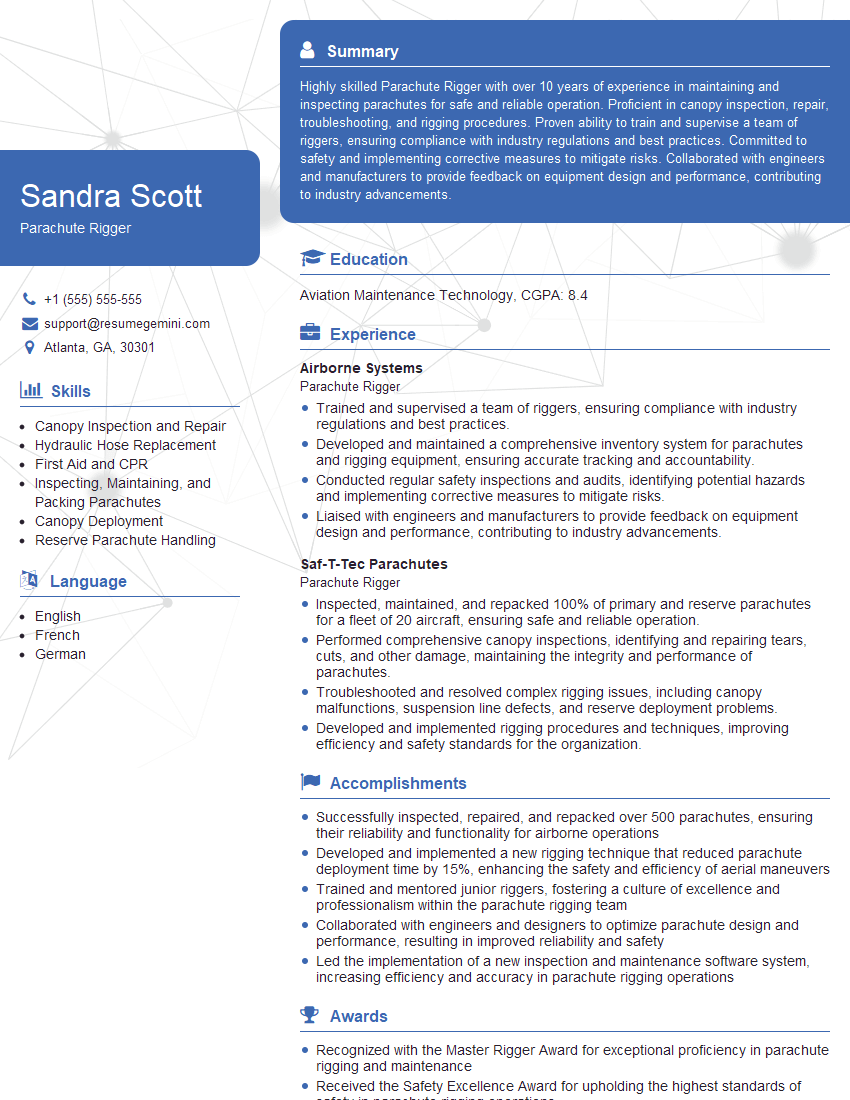
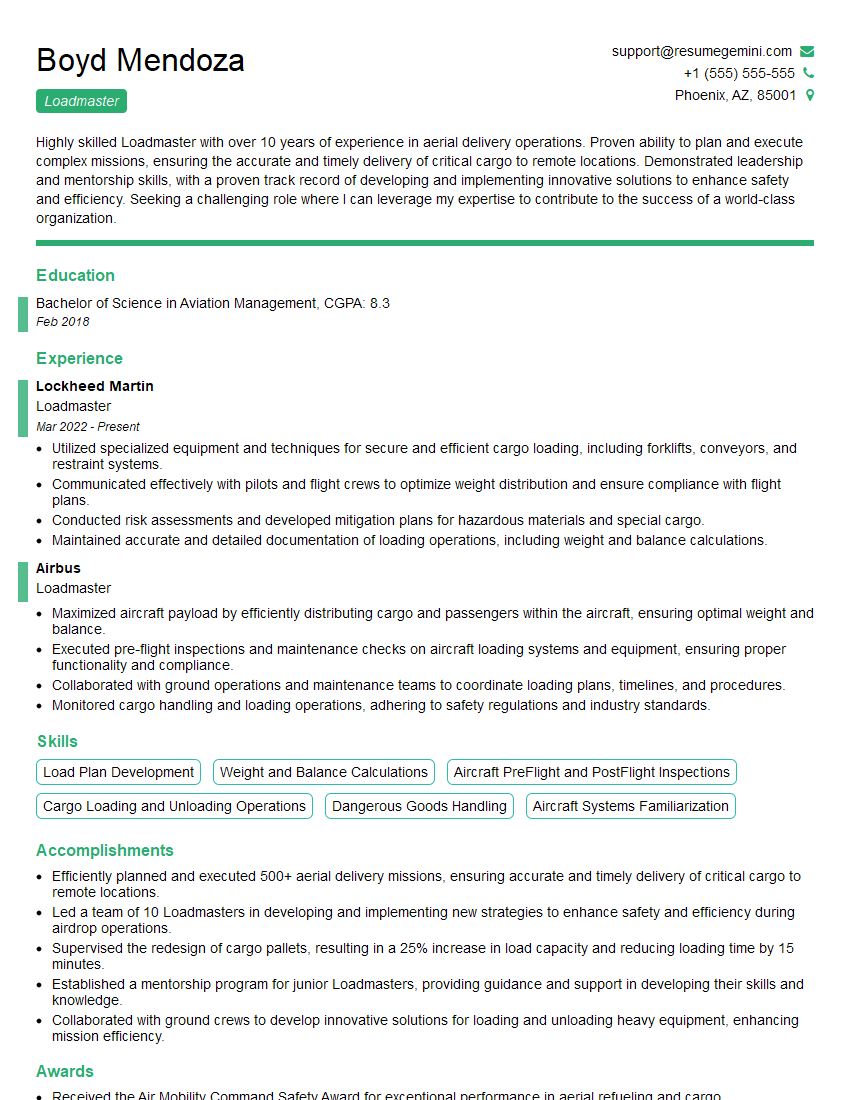
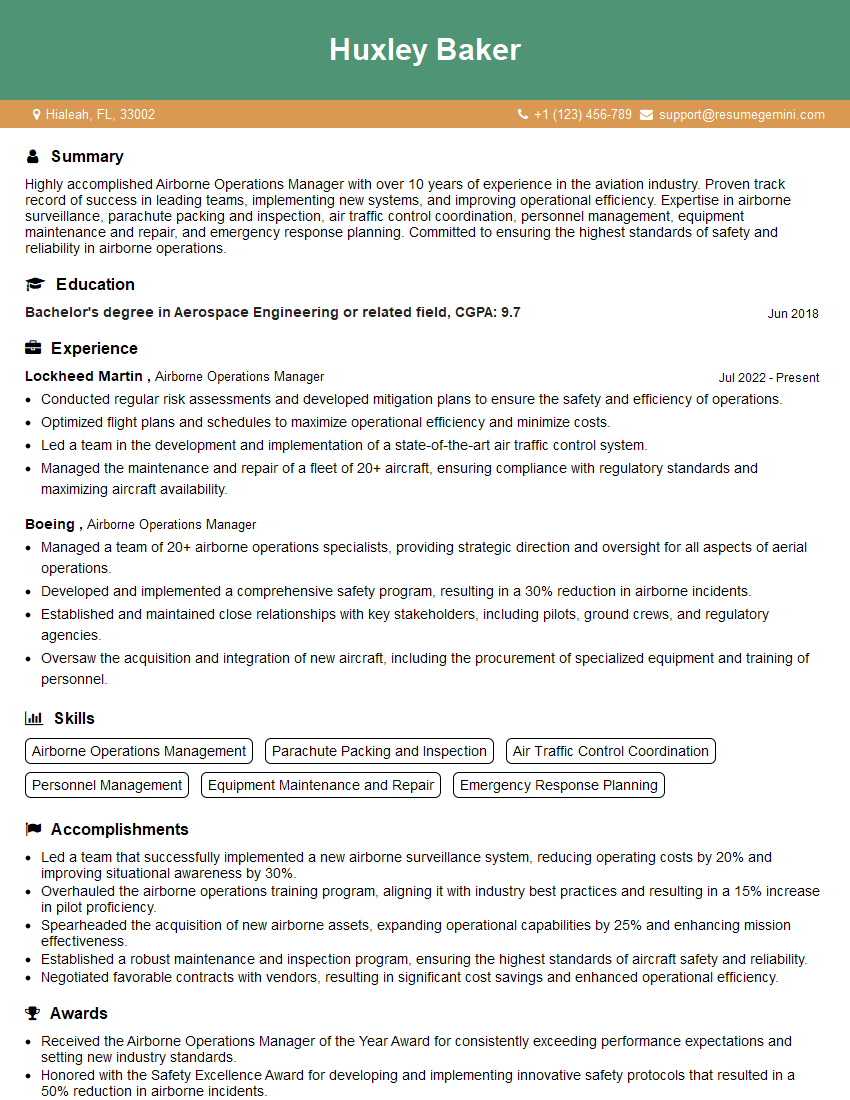
Mastering Aerial Delivery Techniques is crucial for career advancement in this specialized field. A strong understanding of these concepts demonstrates your expertise and commitment to safety. To significantly boost your job prospects, it’s essential to create a professional and ATS-friendly resume that highlights your skills and experience effectively. ResumeGemini is a trusted resource that can help you build a compelling resume tailored to the demands of this industry. Examples of resumes specifically crafted for Aerial Delivery Techniques professionals are available to guide your creation process. Take the next step towards your dream career by leveraging the power of a well-structured and impactful resume.
Explore more articles
Users Rating of Our Blogs
Share Your Experience
We value your feedback! Please rate our content and share your thoughts (optional).
What Readers Say About Our Blog
Very informative content, great job.
good