The right preparation can turn an interview into an opportunity to showcase your expertise. This guide to Aerial Delivery interview questions is your ultimate resource, providing key insights and tips to help you ace your responses and stand out as a top candidate.
Questions Asked in Aerial Delivery Interview
Q 1. Describe the different types of aerial delivery systems.
Aerial delivery systems encompass a variety of methods for transporting cargo from an aircraft to the ground. The choice depends heavily on factors like payload size, weight, urgency, and the environment. Here are some key types:
- Parachute Systems: These are the most common, utilizing various parachute designs (round, square, ram-air) to slow the descent of cargo. Types include low-velocity, high-velocity, and steerable parachutes. Low-velocity is best for fragile items, while high-velocity is suitable for heavier loads. Steerable parachutes allow for more precise placement.
- Ballistic Systems: These systems use a powerful charge to propel the cargo away from the aircraft, often used for heavier loads or when speed is crucial. The impact on landing can be substantial, so this is typically used for more rugged equipment.
- Container Delivery Systems: Cargo is placed inside specialized containers designed to withstand impact. These containers often incorporate parachutes or other deceleration systems for a softer landing. They offer increased protection for sensitive equipment.
- Low-Altitude Parachute Extraction System (LAPES): Designed for low-altitude drops, LAPES systems employ a smaller parachute to extract a larger cargo parachute from a container, useful for delivering supplies in challenging terrain.
Each system presents a unique trade-off between precision, speed, payload capacity, and the risk of damage to the cargo.
Q 2. Explain the process of parachute packing and maintenance.
Parachute packing and maintenance are critical for safety and operational success. Improper packing can lead to catastrophic failure. The process involves meticulous steps, and regular maintenance ensures the parachute remains airworthy.
- Packing: This is a highly specialized skill, requiring certified personnel. The process begins with a thorough inspection of the parachute for any damage or wear. Then, the parachute is carefully folded and packed according to strict manufacturer specifications, ensuring proper deployment. Any deviation can compromise the functionality and safety of the parachute.
- Maintenance: Regular maintenance includes inspections for wear and tear, stitching integrity, line strength, and canopy condition. This is often conducted according to a strict schedule based on usage and manufacturer recommendations. Repairs are carried out by certified professionals using only approved materials.
Think of it like meticulously packing a complex piece of equipment – every step must be followed exactly. A single mistake in packing or maintenance can lead to a failed deployment with potentially severe consequences.
Q 3. What are the key factors influencing the selection of an appropriate aerial delivery system?
Selecting the right aerial delivery system involves a careful consideration of multiple factors:
- Payload Characteristics: Size, weight, fragility, and shape of the cargo significantly influence the choice of system.
- Delivery Environment: Terrain, weather conditions (wind speed, visibility), and obstacles in the drop zone heavily affect system selection. A mountainous area will require different considerations than a flat desert.
- Accuracy Requirements: How precisely does the cargo need to be delivered? High precision might require steerable parachutes or alternative methods.
- Altitude and Airspeed: Aircraft capabilities and safety requirements restrict the altitude and speed from which cargo can be dropped; this impacts the choice of delivery system.
- Operational Constraints: Time constraints, available resources, and the expertise of personnel will influence the feasibility of different options.
For example, delivering medical supplies to a remote village during a storm would require a system that is robust, reliable, and capable of operating in challenging conditions, likely prioritizing container delivery systems for protection and parachute systems designed for high winds.
Q 4. How do you calculate the required altitude and airspeed for a successful airdrop?
Calculating the required altitude and airspeed for a successful airdrop is a complex process, heavily influenced by several factors and often relies on specialized software and ballistic calculations. There isn’t a simple formula.
It involves:
- Parachute Deployment Altitude: Determined by the parachute’s deployment characteristics and the desired descent rate. Higher altitudes are often used for larger payloads or to allow for more accurate positioning. This involves knowing the specific parachute system’s deployment parameters.
- Airspeed: Too high, and the parachute might not deploy correctly or the payload could be damaged. Too low, and you risk the aircraft coming dangerously close to the drop zone. Airspeed is heavily influenced by aircraft type, weight, and atmospheric conditions.
- Wind Speed and Direction: Strong winds significantly affect the trajectory of the payload, requiring adjustments to altitude and airspeed. Precise wind data is crucial. The drift due to wind needs to be accounted for to determine the release point.
- Payload Weight and Dimensions: Heavier or larger payloads require higher altitudes and potentially different parachute systems.
Typically, these calculations are done using sophisticated models considering all these variables. Professional airdrop planners use specialized software to accurately predict the payload trajectory and ensure a successful delivery.
Q 5. Describe the safety procedures involved in aerial delivery operations.
Safety is paramount in aerial delivery operations. Procedures emphasize risk mitigation at every stage:
- Pre-Flight Checks: Thorough inspections of aircraft, parachutes, and cargo are mandatory before any operation.
- Weather Monitoring: Continuous monitoring of weather conditions is crucial to avoid risky drops in adverse weather.
- Drop Zone Selection and Clearance: Careful selection and clearance of drop zones are essential to ensure the safety of personnel and property on the ground.
- Crew Training and Certification: Aircrew and ground personnel must undergo rigorous training and certification.
- Emergency Procedures: Detailed contingency plans must be in place to deal with equipment malfunctions, accidents, or unfavorable weather conditions.
- Communication: Clear and reliable communication between aircrew, ground crew, and air traffic control is essential.
Safety protocols are designed to minimize risk at all phases, from planning to post-mission assessment.
Q 6. What are the common challenges faced during aerial delivery missions?
Aerial delivery missions face various challenges:
- Adverse Weather: High winds, rain, fog, and low visibility can severely impact accuracy and safety.
- Terrain Constraints: Mountainous terrain, dense forests, or bodies of water can limit suitable drop zones and increase the risk of accidents.
- Equipment Malfunctions: Parachute malfunctions, container failures, or aircraft issues can lead to cargo loss or damage.
- Wind Drift: Accurate prediction and compensation for wind drift is critical, but unpredictable wind gusts can still cause significant deviations.
- Human Error: Mistakes in planning, packing, or execution can have serious consequences.
Successfully overcoming these challenges requires robust planning, skilled personnel, and reliable equipment.
Q 7. How do you mitigate risks associated with adverse weather conditions during airdrops?
Mitigating risks associated with adverse weather involves several strategies:
- Real-time Weather Monitoring: Constant monitoring of weather conditions using advanced meteorological tools is crucial. This includes wind speed, direction, visibility, precipitation, and cloud cover.
- Weather Contingency Plans: Missions should incorporate flexible plans to adjust drop times, locations, or even postpone the mission if weather conditions deteriorate beyond acceptable limits.
- Advanced Parachute Systems: Employing steerable parachutes or systems designed to withstand high winds can improve accuracy and reduce the impact of adverse conditions.
- Alternative Delivery Methods: In extreme weather, alternative methods such as ground transport might be considered.
- Risk Assessment and Decision-Making: A thorough risk assessment before every mission helps identify and mitigate potential hazards, enabling informed decisions regarding whether to proceed.
The safety of personnel and the successful completion of the mission are always the top priorities. Therefore, a conservative approach is often adopted when dealing with uncertain weather.
Q 8. Explain the importance of load planning and weight distribution in aerial delivery.
Load planning and weight distribution are paramount in aerial delivery, ensuring safe and accurate delivery of cargo. Improper planning can lead to equipment damage, payload loss, or even injury. It’s like packing a suitcase – you wouldn’t just throw everything in haphazardly; you carefully organize items to maximize space and prevent damage. Similarly, in aerial delivery, we meticulously plan the placement of each item within the delivery container to optimize weight distribution and maintain the center of gravity. This prevents instability during descent and landing, minimizing the risk of the load swaying or tipping over. We use specialized software and consider factors such as the size, shape, weight, and fragility of each item. We aim for a balanced load that minimizes stress on the parachute system and ensures a soft landing.
For example, heavier items are usually placed lower and closer to the center of gravity, while lighter and more fragile items are positioned towards the top and periphery. We also account for the parachute’s suspension points and potential wind drag on the cargo. A poorly planned load might result in a skewed descent, potentially leading to damage upon impact, or even cause the parachute to malfunction.
Q 9. What are the different types of parachutes used in aerial delivery and their applications?
Several parachute types are used in aerial delivery, each suited to different cargo and circumstances. The choice depends on the payload weight, size, fragility, and the desired accuracy of the drop zone. Some common types include:
- Low-Velocity Parachutes (LVPS): Designed for heavy and bulky cargo, LVPS provide a gentle descent, reducing the risk of damage. They’re typically used for larger loads where precise accuracy isn’t the primary concern. Think of these as the ‘workhorses’ of the airdrop world.
- High-Velocity Parachutes (HVPS): These are employed for lighter, more maneuverable payloads needing a faster descent. They offer greater precision in landing but can be less gentle on delicate cargo. Imagine these as the ‘sports cars’ of parachutes.
- Ram-Air Parachutes: These steerable parachutes provide more control over the cargo’s descent path, enabling more accurate placement in challenging terrain. They’re ideal when precision is crucial, like delivering supplies to a specific location within a mountainous region. These are like the ‘helicopters’ of parachutes.
- Ribbon Parachutes: These are often used for smaller, less sensitive items that need a stable and slow descent. Think of these as the more ‘gentle’ option for smaller packages.
The selection process involves careful consideration of several factors. We’ll consult the parachute’s specifications, the environmental factors of the drop zone, and most importantly, the weight and characteristics of the cargo to be delivered. An incorrect choice could result in a damaged payload or a failed drop.
Q 10. How do you ensure the integrity of the cargo during aerial delivery?
Ensuring cargo integrity during aerial delivery requires a multi-layered approach. It starts long before the airdrop itself. We use robust packaging materials customized to the cargo’s specific needs, considering its fragility and environmental vulnerability. This could involve everything from cushioning materials to waterproof containers and specialized crates. We often utilize shock-absorbing materials, such as bubble wrap or foam padding, to protect against impacts. For sensitive equipment, we might use climate-controlled containers to maintain a stable temperature and humidity.
During the loading and rigging process, we implement stringent quality control checks to ensure all packaging is secure and properly fastened. The parachute system is meticulously inspected, and all components are checked for wear and tear. After the airdrop, immediate assessment of the cargo’s condition is conducted to assess potential damage and to make the necessary arrangements.
For example, delicate electronics might require specialized anti-static packaging and vibration dampeners, while heavy machinery needs secure bracing and reinforced packaging to withstand the impact forces. The packaging design itself is often tested and refined through simulations, ensuring a successful delivery.
Q 11. Describe your experience with different types of cargo and their handling requirements during airdrops.
My experience encompasses a wide range of cargo, from humanitarian aid supplies like food and medical kits to military equipment including weapons and ammunition. Each type presents unique handling challenges. Foodstuffs, for instance, require temperature control and protection from moisture and contamination. Medical supplies necessitate careful handling to maintain their sterility. Conversely, heavy equipment demands specialized rigging and secure fastening to prevent shifting or damage during the drop. Ammunition handling demands stringent safety protocols, including secure containers and the use of specialized equipment.
I’ve worked on airdrops involving everything from small, individual packages to large, palletized loads. Each requires a specific approach, from choosing the correct parachute to using specialized loading techniques. For example, transporting a generator requires a different approach than dropping bales of hay. Experience allows me to anticipate potential issues and adjust the handling accordingly, ensuring safe and successful delivery.
Q 12. Explain the process of post-airdrop recovery and accountability.
Post-airdrop recovery and accountability are critical for efficient operations and resource management. Once the cargo lands, a recovery team is deployed to locate and secure it. This team uses GPS coordinates from the airdrop and may employ ground and aerial support. The team must also ensure the safety of the recovery process, especially when dealing with hazardous materials. A detailed inventory is conducted to account for all delivered items, ensuring nothing is lost or damaged during the drop. A thorough inspection is done for damage or loss.
A detailed report is generated, documenting the airdrop’s success, any challenges encountered, and the status of the recovered cargo. This information is essential for future planning and improving operational efficiency. This report also includes a record of the cargo’s condition upon recovery, which is vital for maintaining accountability and ensuring the intended recipients receive functional items.
Q 13. How do you handle unexpected issues or emergencies during an airdrop operation?
Unexpected issues during airdrops are inevitable. We have protocols in place to handle a variety of emergencies. These range from equipment malfunctions to adverse weather conditions. For example, if a parachute malfunctions during descent, we have backup systems and procedures to mitigate the situation, which may involve deploying a secondary parachute or utilizing emergency landing procedures. Adverse weather, such as high winds, necessitates changes in approach, perhaps delaying the drop or adjusting the drop zone.
Clear communication is paramount. We maintain constant communication between the aircraft crew, the ground crew, and any personnel involved in the post-drop recovery. This enables quick decision-making and ensures everyone is aware of the situation and the appropriate response. Detailed risk assessments are conducted beforehand to identify potential hazards and establish contingency plans. We also undergo regular training simulations to prepare for these scenarios.
Q 14. What is your experience with airdrop simulation and training?
Airdrop simulation and training are essential aspects of my professional development and operational readiness. I’ve participated extensively in both computer-based simulations and live-fire exercises. Computer simulations allow us to test various scenarios and parameters, such as wind speed, cargo weight, and parachute type, without the risks and costs associated with live airdrops. These simulations allow us to refine our load planning and recovery procedures in a safe and controlled environment.
Live-fire exercises provide invaluable hands-on experience. They allow us to practice techniques, refine emergency procedures, and build teamwork and coordination under realistic conditions. The feedback from these exercises is integrated into our standard operating procedures and training protocols, ensuring continuous improvement and operational readiness. Both methods, simulation and live training, are essential components of maintaining proficiency and ensuring safe and efficient aerial delivery operations.
Q 15. How familiar are you with relevant regulations and safety standards for aerial delivery?
My familiarity with regulations and safety standards for aerial delivery is extensive. I’m deeply versed in both national and international regulations, including those governing airspace usage, payload limitations, and environmental considerations. For instance, I have a thorough understanding of FAA regulations in the US, and equivalent regulations in other countries where I’ve worked. These regulations cover everything from aircraft certification and pilot licensing to packaging requirements for different types of cargo to ensure safe and legal operations. Safety is paramount, and my experience includes rigorous adherence to standards such as those set by the International Air Transport Association (IATA) for dangerous goods transportation by air. I regularly consult these regulations and stay updated on any changes to ensure complete compliance and minimize risk in every operation.
Specifically, I am well-versed in risk assessment methodologies applicable to aerial delivery, including hazard identification, risk analysis, and mitigation planning. I ensure that all operations are planned with safety at the forefront, implementing comprehensive risk assessments prior to each mission. This ensures that all potential hazards are identified and appropriate mitigating actions are implemented, leading to significantly reduced operational risks.
Career Expert Tips:
- Ace those interviews! Prepare effectively by reviewing the Top 50 Most Common Interview Questions on ResumeGemini.
- Navigate your job search with confidence! Explore a wide range of Career Tips on ResumeGemini. Learn about common challenges and recommendations to overcome them.
- Craft the perfect resume! Master the Art of Resume Writing with ResumeGemini’s guide. Showcase your unique qualifications and achievements effectively.
- Don’t miss out on holiday savings! Build your dream resume with ResumeGemini’s ATS optimized templates.
Q 16. Describe your experience with different types of aircraft used in aerial delivery operations.
My experience encompasses a wide range of aircraft used in aerial delivery, from fixed-wing aircraft like C-130 Hercules and smaller, more agile aircraft like the CASA 212 to helicopters such as the CH-47 Chinook and UH-60 Black Hawk. Each aircraft type presents unique capabilities and limitations. For example, the C-130 Hercules excels in carrying large payloads over long distances, while helicopters are ideal for delivering supplies to hard-to-reach locations with limited landing zones. I’ve worked extensively with both military and civilian aircraft, understanding their respective operational procedures, maintenance requirements, and limitations. This broad experience allows me to select the most appropriate aircraft for a given mission, taking into account factors such as payload capacity, range, required precision, and the environment’s impact on the operation.
Furthermore, my experience extends to the technical aspects of aircraft integration with aerial delivery systems. I’m familiar with the integration of various cargo release mechanisms and their compatibility with different aircraft types. Understanding these intricacies is crucial for efficient and safe operations, ensuring the reliable delivery of supplies.
Q 17. How do you ensure accurate and timely delivery of supplies during aerial delivery missions?
Accurate and timely delivery hinges on meticulous planning and execution. It starts with a thorough understanding of the operational environment, including weather conditions, terrain, and the recipient’s location. We use advanced GPS technology and real-time tracking systems to monitor the aircraft’s position and payload throughout the mission. Pre-flight planning includes detailed route analysis, considering wind patterns, air traffic control restrictions and emergency landing sites. This planning minimizes delays and ensures efficient flight paths.
Furthermore, precise cargo packaging and deployment systems are critical. We utilize various methods, including parachute systems, containerized deliveries, and specialized drop systems tailored to specific cargo and environmental factors. For instance, we use different parachute systems for varied weights and sensitivities of the cargo to guarantee safe and intact delivery. Post-delivery, we implement robust tracking systems to confirm successful arrival and condition of the supplies. This data feeds into our ongoing operational improvement process.
Q 18. Explain the role of communication and coordination in a successful aerial delivery operation.
Communication and coordination are the lifelines of a successful aerial delivery operation. Clear and concise communication channels are essential among the aircrew, ground crews, and the receiving personnel. We utilize a multi-layered communication system, including secure radio frequencies, satellite communication, and even pre-arranged visual signals, depending on the operational environment. This ensures seamless information flow throughout the mission, allowing for real-time adjustments based on changing conditions.
Before any mission, a detailed briefing outlines all aspects of the operation, allocating responsibilities and outlining contingency plans. This pre-mission coordination is crucial in preventing confusion and errors. Post-mission debriefs are equally important, serving as a platform to identify lessons learned and areas for improvement. We consistently strive to streamline communication protocols and enhance situational awareness to optimize mission efficiency and safety.
Q 19. Describe your experience with data analysis and reporting in aerial delivery operations.
Data analysis and reporting are integral to improving efficiency and safety. We collect extensive data throughout the operation, including flight parameters, weather data, cargo information, and delivery times. This data is then analyzed using statistical methods and visualization tools to identify trends, potential bottlenecks, and areas for improvement. For instance, we might analyze wind patterns to optimize flight paths or review drop accuracy to refine our deployment systems. This data-driven approach allows us to proactively address potential issues and enhance our operational capabilities.
Our reporting process involves the generation of comprehensive reports for stakeholders, highlighting key performance indicators such as on-time delivery rates, cargo integrity, and safety metrics. These reports aid in continuous improvement initiatives, ensuring we meet and exceed the standards of performance and efficiency expected in aerial delivery operations.
Q 20. What is your experience with different types of terrain and their impact on aerial delivery?
Terrain significantly influences aerial delivery planning and execution. Mountainous regions pose challenges due to wind shear, reduced visibility, and limited suitable landing zones. Dense forests or jungles restrict visibility and access for ground crews. Flat, open terrain is, of course, easier to navigate. However, even seemingly simple terrain requires careful consideration of wind conditions, which can affect the accuracy of parachute deployments and overall flight safety. I’ve worked in diverse environments, from the high-altitude deserts to dense rainforests, understanding the unique challenges each presents.
My experience includes adapting drop zones to account for terrain obstacles. This might involve selecting alternative drop zones or implementing precision delivery systems that compensate for wind drift or other environmental factors. We carefully assess terrain features during the planning phase and conduct risk assessments to choose the safest and most efficient method of delivery for each mission.
Q 21. How do you adapt aerial delivery plans based on changing environmental conditions?
Adapting to changing environmental conditions is a crucial skill in aerial delivery. Unexpected weather changes, such as sudden storms or high winds, can significantly impact mission safety and feasibility. We use real-time weather updates and forecasting tools to monitor conditions and adjust the flight plan accordingly, potentially delaying the mission or selecting alternative routes or drop zones. For example, if high winds are predicted, we might opt for a different, more sheltered drop zone, or even postpone the mission until conditions improve.
Our contingency plans account for various weather scenarios. We have established protocols for dealing with unexpected changes, prioritizing safety above all else. We maintain constant communication with meteorological services and air traffic control to make informed decisions based on the most up-to-date information available. Effective communication and flexible planning are vital to ensuring the safe and successful execution of aerial delivery operations, even in challenging environmental conditions.
Q 22. Describe your experience with different types of containers and packaging used in aerial delivery.
My experience encompasses a wide range of containers and packaging tailored to the specific needs of aerial delivery. The choice depends heavily on the cargo’s fragility, weight, size, and the environmental conditions of the drop zone.
Standard Cargo Parachutes: These are often used for bundles of supplies or equipment, secured within a sturdy container designed to withstand the impact of landing. We frequently utilize containers built from plywood or high-strength corrugated cardboard, reinforced with strapping and padding.
Rigid Containers: For more delicate or high-value items, we utilize rigid containers like aluminum or plastic crates. These offer superior protection against impacts and environmental elements. Proper padding and shock absorption are crucial here. We often use custom-fit foam inserts.
Low-Velocity Parachute Systems (LVPS): These systems are specifically designed for delivering heavier or more sensitive cargo with a gentler landing. They require specialized containers that are robust and can sustain a slower descent rate.
Bundle Packaging: For less sensitive items, we’ll use various packaging techniques, bundling items together securely with netting, straps, and protective coverings. The primary goal is to maintain integrity and prevent individual items from getting separated during the drop.
Selecting the right container and packaging is critical. It’s a balance between weight (to maximize payload), protection (to ensure cargo survival), and cost-effectiveness.
Q 23. What is your experience with the maintenance and repair of aerial delivery equipment?
Maintenance and repair of aerial delivery equipment is paramount to operational safety and efficiency. My experience covers preventative maintenance schedules, troubleshooting malfunctions, and carrying out necessary repairs.
Parachutes: Regular inspections for wear and tear, stitching integrity, and proper deployment mechanisms are vital. We meticulously check for any damage to the canopy, lines, and bridle system. Repairs often involve replacing damaged sections or performing rigorous stitching work.
Cargo Containers: Regular checks for structural integrity, including hinges, latches, and any signs of stress fractures are essential. Repairs can range from simple welding to complete replacements depending on the extent of the damage.
Aircraft Modifications: If modifications to aircraft are needed for aerial delivery (like fitting specialized cargo release systems), I ensure compliance with all safety and maintenance regulations and work with certified engineers and technicians.
Detailed records are kept for all maintenance activities to adhere to regulatory requirements and to allow for tracking of equipment lifespan. This ensures optimal functionality and longevity of the equipment. We utilize specialized software for tracking maintenance tasks and parts inventory.
Q 24. How do you ensure the accuracy of cargo manifests and tracking during airdrops?
Accuracy in cargo manifests and tracking is non-negotiable in aerial delivery. Any discrepancy can have severe consequences. We utilize a multi-layered approach:
Digital Manifests: We use digital systems that allow real-time updates and tracking of cargo. This involves barcoding, RFID tagging, or other automated identification systems to prevent manual errors.
Double-Checking: A rigorous system of double-checking the manifest against the physical cargo before loading and after loading is crucial. Multiple personnel are involved in the verification process.
GPS Tracking: Where possible, we incorporate GPS trackers within or attached to the cargo containers to monitor their location from dispatch to delivery. Real-time data feeds improve responsiveness and situational awareness.
Ground Confirmation: Post-airdrop, the receiving team provides confirmation of the cargo received, quantity, and condition. This feedback is then incorporated into the overall tracking system.
These combined measures significantly reduce errors and improve accountability, ensuring a reliable and verifiable record of the cargo’s journey.
Q 25. Describe your experience with the integration of aerial delivery with other logistical operations.
Aerial delivery doesn’t operate in isolation; it’s an integral part of a larger logistical chain. My experience involves seamless integration with various aspects of logistics:
Ground Transportation: Careful coordination is needed to ensure efficient ground transportation to and from the airbase, encompassing vehicle routing and scheduling to minimize delays.
Warehousing: Efficient warehousing operations are crucial, requiring effective inventory management and coordination with airdrop scheduling to prevent bottlenecks.
Supply Chain Management: I’ve worked extensively on optimizing the entire supply chain, from procurement to final delivery. Understanding lead times, demand forecasting, and risk assessment is vital in this regard.
Communication Systems: Effective communication channels between all parties involved—from the aircrew to the ground teams and supply chain managers—are crucial to ensure smooth operations.
This integrated approach optimizes the entire process, leading to increased efficiency and cost-effectiveness while minimizing delays and ensuring timely delivery.
Q 26. How do you ensure compliance with environmental regulations during aerial delivery operations?
Environmental compliance is paramount in aerial delivery operations. We adhere strictly to all relevant regulations to minimize any potential negative impact on the environment.
Waste Management: Proper disposal of packaging materials and any debris generated during operations is crucial. We use biodegradable materials whenever possible and ensure proper waste collection at designated areas.
Noise Pollution: We follow strict noise reduction guidelines during operations, and flight paths are carefully planned to minimize disturbance to local communities.
Fuel Efficiency: We optimize flight plans and utilize fuel-efficient aircraft to reduce carbon emissions. This aligns with our commitment to reducing our environmental footprint.
Environmental Impact Assessments: Where required, we conduct comprehensive environmental impact assessments to evaluate the potential risks of our operations and mitigate them accordingly.
Our commitment to sustainable practices ensures that our aerial delivery operations are environmentally responsible and compliant with all governing regulations.
Q 27. Explain your understanding of the chain of custody for supplies delivered via airdrop.
Chain of custody in aerial delivery is a critical aspect, ensuring traceability and accountability for all supplies from origin to destination. It involves meticulous documentation at every stage.
Source Verification: We verify the origin and authenticity of supplies before they enter the supply chain, ensuring they meet quality and safety standards. Documentation such as certificates of origin and quality control reports are maintained.
Packaging and Labeling: Unique identification numbers or barcodes are affixed to each package for easy tracking throughout the process.
Manifest Documentation: Detailed manifests listing the contents, quantity, and tracking information are meticulously maintained, ensuring complete transparency.
Airborne Tracking: Real-time tracking during flight, employing GPS and other systems, ensures continuous monitoring of the cargo’s location.
Ground Receipt and Verification: Upon arrival, recipients sign off on a delivery receipt, verifying receipt and condition of the supplies. This ensures complete accountability.
This system helps track every single item, providing a detailed audit trail for any potential discrepancies or investigations. It is essential for maintaining trust and accountability throughout the entire delivery process.
Q 28. Describe a time you had to solve a complex problem during an aerial delivery operation.
During a humanitarian airdrop operation in a remote mountainous region, unexpected severe weather conditions caused significant challenges. The original drop zone became inaccessible due to high winds and low cloud cover. The initial plan was compromised, and the risk of a failed delivery was high, potentially endangering the lives of the recipients who were in dire need of supplies.
To solve this, I collaborated with the aircrew and meteorological team to identify a suitable alternative drop zone, accounting for wind speed, terrain, and accessibility. This involved using high-resolution satellite imagery and weather models to pinpoint a safer landing area. We also implemented a contingency plan involving smaller, more maneuverable aircraft to cope with the challenging weather conditions. We had to re-package the cargo to reduce its size and weight for better handling by the smaller aircraft.
Despite the unexpected circumstances, we successfully delivered the crucial supplies, minimizing risk and ensuring the safety of both the aircrew and the recipients. The ability to adapt quickly, collaborate effectively, and think creatively was key to overcoming this complex challenge.
Key Topics to Learn for Your Aerial Delivery Interview
- Aerial Delivery Systems: Understanding various delivery platforms (parachutes, airdrops, etc.), their capabilities, limitations, and suitability for different cargo types.
- Cargo Packaging and Preparation: Mastering techniques for securing and protecting diverse payloads during aerial delivery, considering factors like weight, fragility, and environmental conditions.
- Trajectory and Ballistics: Grasping the principles of projectile motion and their impact on accurate delivery, including considerations for wind speed, altitude, and target location.
- Airfield Operations and Logistics: Familiarity with procedures for loading, staging, and deploying cargo, encompassing safety protocols and coordination with ground crews.
- Safety and Risk Mitigation: Demonstrating a thorough understanding of safety regulations, hazard identification, and risk assessment procedures in aerial delivery operations.
- Data Analysis and Performance Evaluation: Knowledge of methods for analyzing delivery data to improve efficiency, accuracy, and safety, including the use of relevant software and tools.
- Emergency Procedures and Contingency Planning: Understanding protocols for handling unexpected events, such as equipment malfunctions or adverse weather conditions.
- Regulations and Compliance: Familiarity with national and international regulations governing aerial delivery operations.
- Technological Advancements: Awareness of emerging technologies and their potential applications in enhancing aerial delivery systems and efficiency.
Next Steps
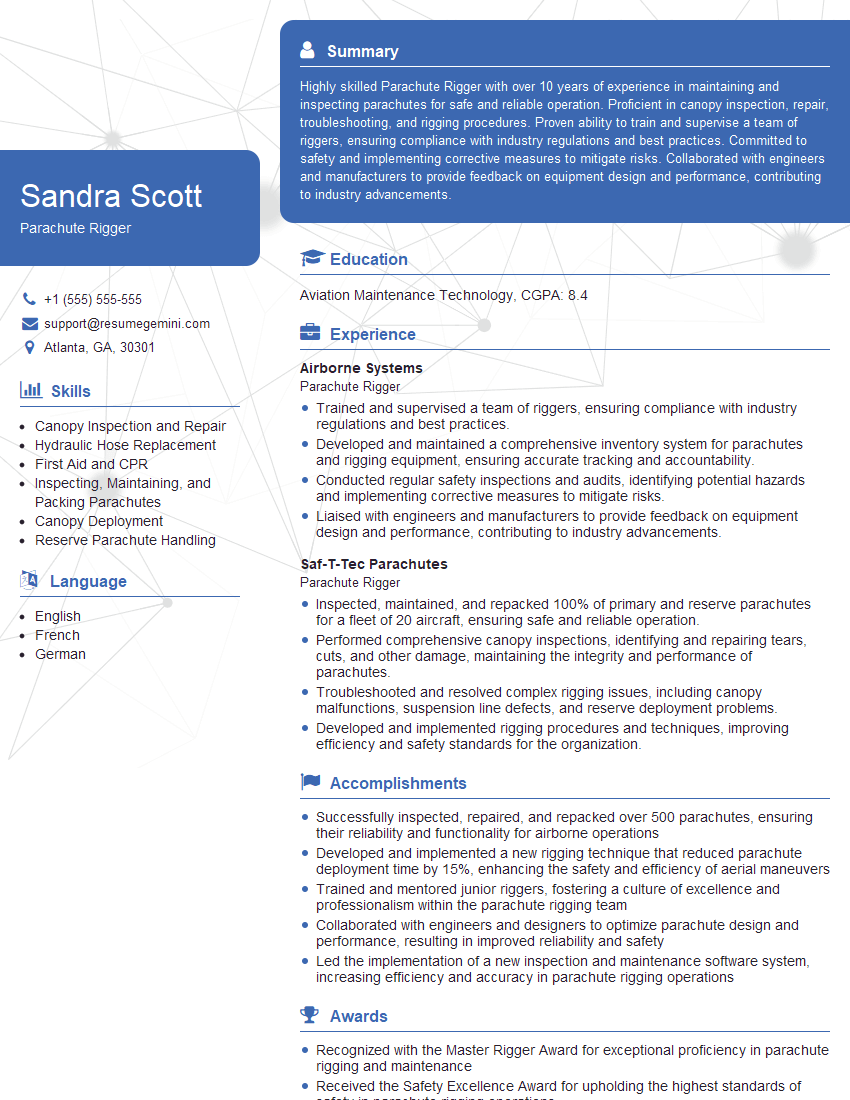
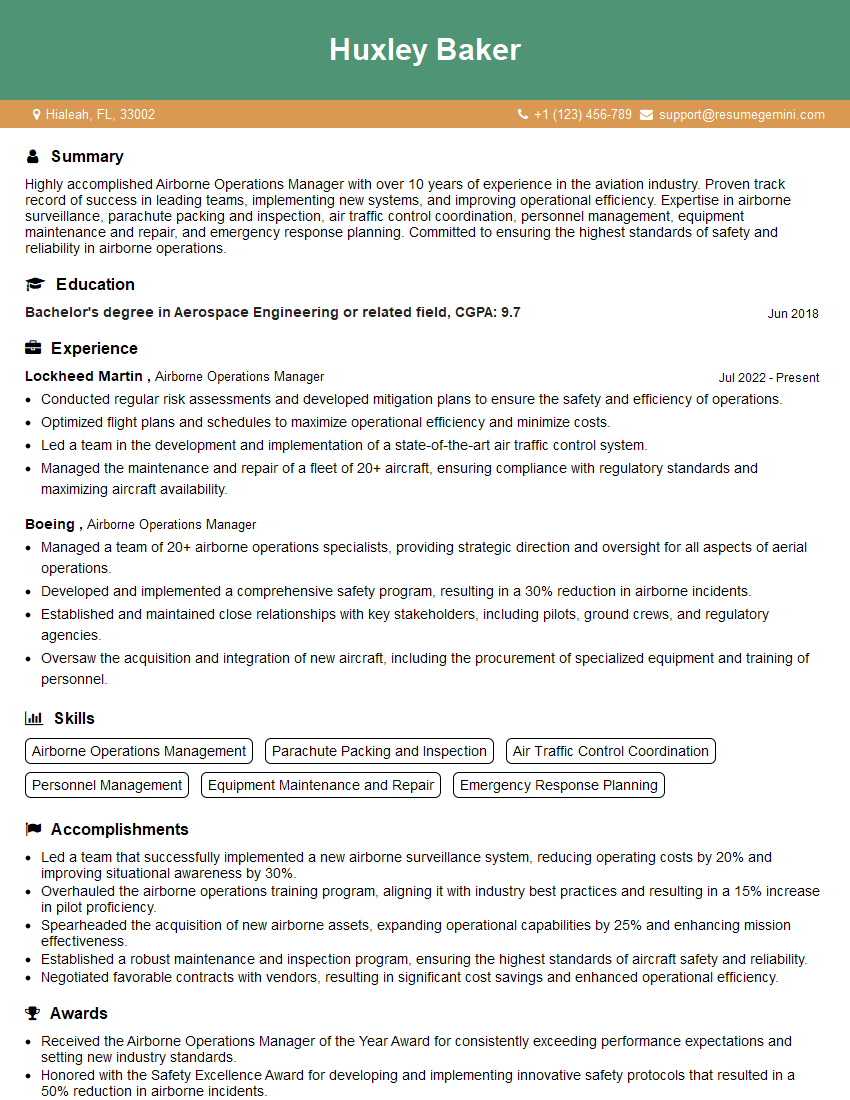
Mastering Aerial Delivery opens doors to exciting and impactful careers within logistics, defense, humanitarian aid, and other vital sectors. To significantly enhance your job prospects, a well-crafted, ATS-friendly resume is crucial. ResumeGemini is a trusted resource that can help you create a professional and compelling resume tailored to highlight your skills and experience in this specialized field. We provide examples of resumes specifically designed for Aerial Delivery professionals to guide your resume development. Take the next step towards your dream career – build a standout resume with ResumeGemini today!
Explore more articles
Users Rating of Our Blogs
Share Your Experience
We value your feedback! Please rate our content and share your thoughts (optional).
What Readers Say About Our Blog
Very informative content, great job.
good