Cracking a skill-specific interview, like one for Agricultural Diplomacy, requires understanding the nuances of the role. In this blog, we present the questions you’re most likely to encounter, along with insights into how to answer them effectively. Let’s ensure you’re ready to make a strong impression.
Questions Asked in Agricultural Diplomacy Interview
Q 1. Explain the role of the WTO in regulating international agricultural trade.
The World Trade Organization (WTO) plays a crucial role in regulating international agricultural trade through its agreements, primarily the Agreement on Agriculture (AoA). The AoA aims to create a fairer and more predictable trading environment for agricultural products. It works by establishing rules and disciplines around various aspects of agricultural trade, including:
- Market Access: This involves reducing tariffs (taxes on imports) and quotas (limits on the quantity of imports) on agricultural goods. The AoA requires countries to progressively reduce these trade barriers over time.
- Domestic Support: This deals with government policies that support domestic farmers, such as subsidies. The AoA distinguishes between different types of support, with some being allowed and others being subject to limits. For example, support for programs directly linked to production (like output-based payments) is generally more restricted than support for programs unrelated to production levels (like rural development programs).
- Export Competition: This focuses on government policies that distort international trade, such as export subsidies (payments to farmers to help them sell their products abroad). The AoA aims to reduce the use of these subsidies.
However, the AoA is not without its critics. Many argue that it hasn’t gone far enough in reducing trade barriers, particularly for developing countries that often face significant challenges competing with heavily subsidized agricultural products from developed nations. Negotiations under the WTO’s Doha Development Agenda attempted to address these concerns but ultimately stalled. The ongoing tension highlights the complex interplay of economic interests and development goals in global agricultural trade.
Q 2. Describe the impact of climate change on global food security.
Climate change poses a significant threat to global food security. Its impacts are multifaceted and far-reaching:
- Changes in Rainfall Patterns and Temperature: Increased frequency and intensity of droughts, floods, and heat waves can severely damage crops and livestock, reducing yields and impacting agricultural productivity. Imagine a farmer relying on predictable rainfall – climate change disrupts this pattern, leading to crop failure and livelihood insecurity.
- Increased Pest and Disease Prevalence: Warmer temperatures and altered weather patterns can expand the geographic range of pests and diseases, affecting both crops and livestock. This necessitates increased use of pesticides and other inputs, which can have environmental and health consequences.
- Sea-Level Rise and Salinization: Rising sea levels threaten coastal agricultural lands, leading to saltwater intrusion and soil salinization, rendering them unsuitable for farming. Coastal communities, often heavily reliant on agriculture, are particularly vulnerable.
- Reduced Nutritional Value: Studies suggest that rising CO2 levels can reduce the nutritional content of some crops, impacting the quality of food produced and the overall health of populations.
The consequences of these impacts are felt most acutely in developing countries, where agriculture often represents a significant portion of the economy and livelihoods are highly dependent on climate-sensitive agricultural practices. Addressing climate change’s impact on food security requires a multi-pronged approach encompassing adaptation (adjusting farming practices to cope with the changes) and mitigation (reducing greenhouse gas emissions) strategies.
Q 3. What are the key challenges in achieving sustainable agricultural development in developing countries?
Achieving sustainable agricultural development in developing countries faces numerous interconnected challenges:
- Limited Access to Resources: Many farmers lack access to essential resources such as improved seeds, fertilizers, irrigation, and credit, limiting their productivity and resilience to shocks. For example, a farmer without access to irrigation may be severely impacted by a drought.
- Land Degradation and Soil Erosion: Unsustainable farming practices, deforestation, and climate change contribute to land degradation and soil erosion, reducing agricultural productivity over time. This is a slow-burning crisis, often unnoticed until it’s too late.
- Lack of Infrastructure and Market Access: Poor infrastructure, such as inadequate transportation networks and storage facilities, hinders farmers’ ability to get their products to market and receive fair prices. A farmer with a bumper harvest might lose a large portion of it due to lack of storage or transportation.
- Climate Change Vulnerability: Developing countries are disproportionately vulnerable to the impacts of climate change, making it even more difficult to achieve sustainable agricultural development. This amplifies existing inequalities and challenges.
- Lack of Education and Technology Transfer: A lack of access to training and information on improved agricultural technologies and practices hinders farmers’ ability to adopt sustainable methods. This knowledge gap prevents the uptake of more efficient and environmentally friendly practices.
Addressing these challenges requires a holistic approach involving investments in research and development, capacity building, infrastructure development, and policies that promote sustainable land management and equitable access to resources.
Q 4. How can agricultural diplomacy contribute to conflict resolution in regions with food insecurity?
Agricultural diplomacy can play a crucial role in conflict resolution in regions with food insecurity. Food insecurity is often a root cause or exacerbating factor in conflicts, and addressing it can contribute to peacebuilding efforts. This involves:
- Facilitating Dialogue and Negotiation: Agricultural diplomacy can create platforms for dialogue between conflicting parties, focusing on shared concerns related to food security and resource management. This allows for communication and potential compromise.
- Promoting Food Aid and Assistance: Strategically providing food aid and agricultural assistance can reduce immediate food shortages and create an environment more conducive to peace. However, the distribution and management of aid require careful consideration to avoid unintended consequences.
- Supporting Sustainable Agriculture: Investing in sustainable agricultural practices can improve food security in the long term and build resilience to future shocks, reducing the likelihood of future conflicts stemming from resource scarcity. This is a long-term investment with significant returns.
- Addressing Underlying Causes: Agricultural diplomacy should also address the underlying causes of conflict, such as land tenure disputes or unequal access to resources. It requires understanding the specific context of each conflict.
Examples include the role of international organizations in mediating disputes over water rights or facilitating access to agricultural inputs in conflict-affected regions. It’s a delicate dance requiring sensitivity, understanding of local dynamics and a long-term commitment.
Q 5. Discuss the importance of biosecurity in international agricultural trade.
Biosecurity in international agricultural trade is critical to preventing the spread of plant and animal pests and diseases across borders. The introduction of a new pest or disease can have devastating economic and environmental consequences. It can wipe out entire crops or livestock populations, disrupt food production, and impact biodiversity. Effective biosecurity measures include:
- Phytosanitary Measures: These are regulations and procedures designed to prevent the introduction and spread of plant pests and diseases. This includes inspections, quarantines, and treatments of imported plants and plant products.
- Animal Health Measures: Similar measures are used to prevent the introduction and spread of animal diseases, including inspections, vaccinations, and restrictions on the movement of animals and animal products.
- International Collaboration: Effective biosecurity requires international cooperation and information sharing, including early warning systems and coordinated responses to outbreaks. This necessitates strong international agreements and harmonized standards.
- Risk Assessment and Management: A key component is conducting risk assessments to identify potential pathways for the introduction of pests and diseases and developing appropriate management strategies to minimize those risks.
Failure to maintain strong biosecurity measures can have serious consequences. The devastating impact of the potato blight in the 19th century or more recent outbreaks of avian influenza illustrate the need for proactive and robust biosecurity protocols in international trade.
Q 6. Explain the concept of food sovereignty and its implications for agricultural policy.
Food sovereignty is the right of peoples to healthy and culturally appropriate food produced through ecologically sound and sustainable methods, and their right to define their own food and agriculture systems. It emphasizes the need for local control over food systems, challenging the dominance of global markets and corporate interests.
Its implications for agricultural policy are significant:
- Prioritization of local food systems: Policies should support local farmers and food producers, prioritizing the needs of local communities over the demands of global markets.
- Emphasis on sustainability: Food sovereignty advocates for agricultural practices that are environmentally sustainable, promoting biodiversity, soil health, and water conservation.
- Promotion of cultural diversity: Policies should respect and protect the diversity of food cultures and agricultural practices, avoiding monoculture and promoting traditional knowledge.
- Empowerment of farmers: Food sovereignty seeks to empower farmers by giving them greater control over their production and marketing decisions, freeing them from dependence on corporations and global markets.
- Challenging corporate influence: It challenges the influence of large corporations and multinational organizations on food production and distribution, calling for greater transparency and accountability.
Implementing food sovereignty principles requires a shift away from neoliberal agricultural policies that prioritize market liberalization and towards policies that prioritize the needs and rights of local communities.
Q 7. How do you negotiate trade agreements related to agricultural products?
Negotiating trade agreements related to agricultural products is a complex and challenging process involving multiple stakeholders and diverse interests. It often resembles a high-stakes game of chess, requiring strategic planning and skillful maneuvering.
The process generally involves:
- Preparation and Research: Thorough research is crucial. Understanding your country’s comparative advantages, the market conditions, and the interests of other participating countries is essential before entering negotiations. This involves analyzing data, assessing your negotiating leverage, and identifying potential areas of compromise.
- Identifying Objectives and Priorities: Defining clear objectives and prioritizing your interests is critical. You need to identify what you hope to achieve from the agreement and which areas are non-negotiable. This clarity guides your strategy throughout the process.
- Negotiation Strategies: This involves using a variety of tactics such as reciprocal concessions, building alliances, and employing different negotiating styles based on the counterpart. Flexibility and a willingness to compromise are essential but not at the expense of your country’s core interests.
- Legal and Technical Expertise: Negotiations involve complex legal and technical issues, so having experts in trade law, sanitary and phytosanitary regulations, and agricultural economics is crucial. This is where the details often become challenging.
- Monitoring and Implementation: Once an agreement is reached, ensuring its effective implementation and monitoring its impact is equally important. This often involves mechanisms for dispute settlement and regular review meetings.
Successful agricultural trade negotiations require a multifaceted approach, combining strong analytical skills, diplomatic finesse, and a deep understanding of both the technical and political dimensions of international trade.
Q 8. What are the ethical considerations of genetically modified organisms (GMOs) in international agriculture?
The ethical considerations surrounding genetically modified organisms (GMOs) in international agriculture are multifaceted and complex. They involve issues of biosafety, socioeconomic impacts, and intellectual property rights, often playing out differently across diverse cultural and political landscapes.
- Biosafety: Concerns exist regarding potential environmental risks like gene flow to wild relatives, the development of herbicide-resistant weeds, and impacts on non-target organisms. International agreements like the Cartagena Protocol on Biosafety aim to manage these risks through informed consent and risk assessment procedures.
- Socioeconomic Impacts: GMOs can offer benefits like increased yields and reduced pesticide use, but their adoption can also exacerbate existing inequalities. Smaller farmers may lack access to the necessary technology or resources, widening the gap between large and small-scale producers. Furthermore, concerns exist about potential impacts on local seed systems and biodiversity.
- Intellectual Property Rights: The control of GMO technology by a few multinational corporations raises concerns about access, affordability, and farmers’ dependence on these corporations. This can limit farmers’ agency and control over their production processes.
- Ethical Considerations of Labeling and Consumer Choice: Transparency in labeling GMOs is crucial for consumer choice. However, different countries have varying regulations, leading to confusion and challenges in international trade.
Addressing these ethical concerns requires a careful balancing act, promoting responsible innovation while ensuring equity and sustainability. International collaborations, transparent regulatory frameworks, and participatory approaches are essential to navigate these complexities.
Q 9. Describe different approaches to addressing food waste and loss.
Addressing food waste and loss requires a multi-pronged approach targeting various stages of the food supply chain, from farm to table. This involves a combination of technological, logistical, and behavioral changes.
- Improved Harvesting and Post-Harvest Handling: Implementing better storage facilities, reducing transportation losses, and utilizing appropriate technologies for processing and preservation can significantly minimize waste at the farm level.
- Enhanced Processing and Packaging: Adopting efficient processing techniques and packaging solutions that extend shelf life are crucial. This includes exploring alternative preservation methods such as modified atmosphere packaging or irradiation.
- Retail and Consumer Practices: Educating consumers about proper food storage and reducing impulsive buying can help minimize household waste. Retailers can play a role by improving their inventory management and implementing effective marketing strategies to promote responsible consumption.
- Policy Interventions: Governments can play a significant role through incentives for reducing waste, supporting infrastructure development, and enacting policies that encourage food donation and composting.
- Technological Innovations: Technology plays a crucial role in monitoring and managing food quality, predicting demand, and optimizing supply chains. Sensors and data analytics can help track spoilage and predict shelf life, enabling more precise inventory management.
A successful strategy requires collaboration between governments, industry stakeholders, and consumers to achieve meaningful reductions in food waste and loss.
Q 10. How can agricultural diplomacy promote collaboration between governments and NGOs?
Agricultural diplomacy can effectively foster collaboration between governments and NGOs by acting as a bridge, facilitating dialogue and building trust. This involves several key strategies:
- Joint Programs and Initiatives: Governments and NGOs can collaboratively design and implement projects focused on sustainable agriculture, food security, and rural development. This can involve sharing resources, expertise, and best practices.
- Knowledge Sharing and Capacity Building: Agricultural diplomacy can facilitate the exchange of information and technology between governments and NGOs, strengthening their collective capacity to address agricultural challenges.
- Advocacy and Policy Dialogue: NGOs can leverage their expertise and networks to influence government policies related to agriculture, promoting equitable and sustainable practices.
- Monitoring and Evaluation: Joint monitoring and evaluation frameworks can enhance transparency and accountability, ensuring that collaborative initiatives are effective and achieve their intended outcomes.
- Conflict Resolution and Mediation: In situations of conflict or disagreement, agricultural diplomacy can help mediate disputes, facilitating constructive dialogue and finding common ground.
Success depends on mutual respect, shared goals, and a commitment to collaborative problem-solving. Clear communication channels and a transparent decision-making process are essential.
Q 11. Explain the role of technology in improving agricultural productivity in developing countries.
Technology plays a transformative role in boosting agricultural productivity in developing countries by addressing various constraints, including limited resources, climate change impacts, and lack of information access.
- Precision Agriculture: GPS, remote sensing, and GIS technologies allow for site-specific management practices, optimizing resource use and improving yields. This includes targeted fertilizer application, precise irrigation, and variable rate seeding.
- Mobile Technology: Smartphones and mobile applications can provide farmers with access to real-time weather information, market prices, and agricultural advisory services, empowering informed decision-making.
- Improved Crop Varieties: Biotechnology and plant breeding techniques can develop crops with higher yields, enhanced nutritional value, and improved resistance to pests and diseases.
- Water Management Technologies: Efficient irrigation systems, such as drip irrigation and rainwater harvesting techniques, can conserve water and enhance crop production in water-scarce regions.
- Mechanization: Appropriate mechanization can reduce labor costs, improve efficiency, and enhance timely operations, especially in labor-intensive activities.
However, technological adoption requires addressing challenges such as affordability, accessibility, and training. Context-specific approaches that consider local conditions and the needs of smallholder farmers are crucial for successful technology transfer and integration.
Q 12. What are the key principles of fair trade in the agricultural sector?
Fair trade in the agricultural sector emphasizes equitable partnerships between producers and consumers, focusing on social justice, environmental sustainability, and economic viability. Key principles include:
- Fair Prices: Producers receive a price that covers their costs of production and allows for a fair profit margin, ensuring their economic viability.
- Social Premiums: Additional payments are made to support community development initiatives, such as education, healthcare, or infrastructure projects.
- Environmental Sustainability: Producers are encouraged to adopt environmentally friendly farming practices, minimizing the impact on natural resources.
- Direct Trade Relationships: Fair trade often involves direct trade between producers and importers, reducing the number of intermediaries and enhancing transparency.
- Democratic Organization: Producer organizations are democratically managed, ensuring that farmers have a voice in decision-making processes.
- Safe Working Conditions: Fair trade promotes safe and healthy working conditions for all workers involved in the production process.
Fair trade seeks to address power imbalances in global agricultural markets, empowering producers and promoting more equitable distribution of benefits along the supply chain.
Q 13. How can you effectively communicate complex agricultural issues to diverse audiences?
Communicating complex agricultural issues effectively to diverse audiences requires tailoring the message to the specific audience and utilizing various communication channels.
- Know Your Audience: Understanding the audience’s background, knowledge level, and interests is crucial to crafting a message that resonates. Use simple language, avoiding jargon and technical terms.
- Use Multiple Communication Channels: Employ a range of channels such as infographics, videos, presentations, and workshops to reach different segments of the population. Consider local languages and cultural sensitivities.
- Storytelling: Use storytelling to make the information relatable and engaging. Real-life examples and case studies can help illustrate complex concepts.
- Visual Aids: Employ visual aids such as charts, graphs, and images to convey information effectively and make it more accessible.
- Interactive Sessions: Encourage participation and dialogue through interactive sessions, such as workshops and Q&A sessions.
- Collaboration with Communication Professionals: Partner with communication professionals who have expertise in audience engagement and information dissemination.
Effective communication is essential for fostering public understanding, building support, and promoting informed decision-making on agricultural issues.
Q 14. Describe a successful negotiation you’ve been involved in related to agriculture.
In a recent negotiation involving a dispute between a group of smallholder coffee farmers in a developing country and a large international coffee roaster, I played a mediating role. The farmers were facing unfair pricing practices, leading to economic hardship. The roaster, while acknowledging some issues, argued that current market prices were driving their purchasing decisions.
My approach focused on finding common ground. I facilitated a series of meetings involving representatives from both sides, emphasizing the mutual benefits of a long-term partnership. We used data to highlight the economic impact of fair pricing on the farmers while simultaneously explaining to the roaster the potential positive brand image associated with ethical sourcing. This resulted in a revised contract including a guaranteed minimum price for the coffee beans, a commitment to capacity building programs for farmers, and a transparent system for determining pricing.
The success of this negotiation demonstrates the importance of collaborative problem-solving, data-driven arguments, and a focus on long-term mutual benefits in agricultural diplomacy. It highlighted the significance of understanding the perspectives of all stakeholders involved in order to create sustainable and mutually beneficial partnerships.
Q 15. What are some of the challenges in implementing sustainable agricultural practices?
Implementing sustainable agricultural practices faces numerous hurdles. These challenges aren’t isolated; they’re interconnected and vary significantly depending on the region and specific context.
High Initial Investment Costs: Transitioning to sustainable methods, such as organic farming or precision agriculture, often requires significant upfront investment in new equipment, training, and potentially certification. Smallholder farmers, particularly in developing countries, may lack the financial resources to make this transition.
Lack of Access to Information and Technology: Farmers need access to up-to-date information on sustainable techniques, as well as the technology to implement them. This can be a challenge in remote areas with limited internet connectivity or extension services.
Market Access and Price Volatility: Sustainable products may command a premium price, but accessing markets that are willing to pay that premium can be difficult. Price volatility in agricultural markets also makes long-term planning and investment challenging.
Policy and Regulatory Frameworks: Supportive government policies and regulations are crucial for incentivizing sustainable practices. However, inconsistent or inadequate policies can hinder adoption.
Climate Change Impacts: Increasingly unpredictable weather patterns, droughts, and floods pose significant challenges to sustainable agriculture. Adaptation strategies are essential but often require further investment and innovation.
For example, a small farmer in sub-Saharan Africa might struggle to afford the irrigation system needed for drought-resistant crops, even if they understand the benefits. Similarly, a lack of cold storage facilities can limit the market access for perishable organic produce.
Career Expert Tips:
- Ace those interviews! Prepare effectively by reviewing the Top 50 Most Common Interview Questions on ResumeGemini.
- Navigate your job search with confidence! Explore a wide range of Career Tips on ResumeGemini. Learn about common challenges and recommendations to overcome them.
- Craft the perfect resume! Master the Art of Resume Writing with ResumeGemini’s guide. Showcase your unique qualifications and achievements effectively.
- Don’t miss out on holiday savings! Build your dream resume with ResumeGemini’s ATS optimized templates.
Q 16. How do you measure the success of an agricultural development program?
Measuring the success of an agricultural development program requires a multi-faceted approach that goes beyond simply increasing yields. We need to consider both quantitative and qualitative indicators.
Quantitative Indicators: These involve measurable data, such as increased crop yields, improved livestock productivity, increased farmer incomes, reduced pesticide use, and enhanced water use efficiency. Data collection methods might include farm surveys, satellite imagery, and market analysis.
Qualitative Indicators: These focus on the broader impacts, such as improved food security, enhanced farmer knowledge and skills, increased women’s participation in agriculture, improved environmental sustainability, and positive social changes within farming communities. Data collection might include focus groups, interviews, and participatory assessments.
For instance, a successful program might show a 20% increase in maize yields and a significant improvement in farmers’ understanding of soil health management techniques. A simple yield increase without improved farmer practices might not indicate long-term sustainability.
Q 17. What are the main economic factors that influence agricultural production?
Economic factors significantly shape agricultural production. These factors interact in complex ways and influence decisions made at various levels, from individual farmers to global markets.
Input Costs: Prices of seeds, fertilizers, pesticides, machinery, and labor directly impact production costs and profitability. Fluctuations in these prices can make farming unpredictable.
Output Prices: Market prices for agricultural commodities are crucial. Low prices can discourage production, while high prices can incentivize it, potentially leading to overproduction.
Interest Rates and Access to Credit: Farmers often need loans for investments. High interest rates or limited access to credit can restrict expansion and adoption of new technologies.
Land Availability and Quality: The amount and quality of arable land are fundamental. Land scarcity or degradation can limit production potential.
Exchange Rates: Global agricultural markets are interconnected. Changes in exchange rates can affect the competitiveness of agricultural products in international markets.
Government Policies: Subsidies, tariffs, trade agreements, and regulations heavily influence agricultural production. These policies can create both opportunities and constraints.
For example, a sudden increase in fertilizer prices could significantly reduce profitability for farmers, especially if output prices don’t rise accordingly. Similarly, favorable exchange rates can make a country’s agricultural exports more competitive globally.
Q 18. Discuss the impact of subsidies on global agricultural markets.
Agricultural subsidies, while intended to support domestic farmers, have profound impacts on global agricultural markets, often leading to both benefits and drawbacks.
Increased Production and Supply: Subsidies can boost domestic production, leading to increased supply in global markets. This can depress global prices, impacting farmers in countries without subsidy programs.
Trade Distortions: Subsidized products can be sold at lower prices internationally, making it difficult for unsubsidized farmers to compete. This can lead to trade disputes and unfair competition.
Environmental Impacts: Some subsidies encourage practices that are environmentally unsustainable, such as intensive farming with high fertilizer and pesticide use. This can lead to negative externalities like water pollution and biodiversity loss.
Food Security Implications: While subsidies can enhance food security in some countries, they can undermine it in others by depressing prices and reducing the profitability of agriculture in developing nations.
For example, the European Union’s Common Agricultural Policy (CAP) has been both praised for supporting European farmers and criticized for its impact on global agricultural markets, particularly for farmers in developing countries.
Q 19. How can agricultural diplomacy help improve food safety standards globally?
Agricultural diplomacy plays a crucial role in improving global food safety standards through international cooperation and the harmonization of regulations.
Negotiating International Standards: Diplomatic efforts facilitate the development and adoption of internationally recognized food safety standards, such as those set by the Codex Alimentarius Commission. This ensures a consistent level of safety across borders.
Capacity Building and Technical Assistance: Agricultural diplomacy can support developing countries in building their capacity to implement and enforce food safety regulations. This includes providing training, technical expertise, and access to resources.
Promoting Information Sharing and Best Practices: Diplomacy fosters collaboration among countries, allowing for the exchange of information on emerging food safety threats, best practices, and innovative technologies.
Addressing Sanitary and Phytosanitary (SPS) Barriers: Agricultural diplomacy helps address trade barriers related to food safety and plant health. Negotiations aim to reduce unnecessary restrictions while ensuring that trade does not compromise food safety.
For instance, diplomatic efforts have helped many countries adopt the HACCP (Hazard Analysis and Critical Control Points) system, a widely recognized food safety management system.
Q 20. Explain the importance of traceability in food supply chains.
Traceability in food supply chains is the ability to track a food product’s journey from its origin (farm or production site) to the consumer. It’s essential for ensuring food safety, promoting transparency, and managing risks.
Food Safety: Traceability allows for rapid identification and removal of contaminated products in case of outbreaks, minimizing the impact on public health.
Consumer Confidence: Knowing where their food comes from builds trust among consumers and enhances confidence in the food system.
Supply Chain Management: Traceability provides valuable data for improving efficiency, optimizing logistics, and reducing waste in the supply chain.
Risk Management: In cases of food fraud or product recalls, traceability helps pinpoint the source of the problem and take appropriate corrective actions.
Sustainability: Traceability can be used to monitor and verify sustainable practices throughout the supply chain, promoting ethical and environmentally responsible production.
For example, a barcode on a package of meat can provide information on the farm where the animal was raised, the processing plant, and the distribution network. This allows for quick tracking in case of a food safety concern.
Q 21. What are the key metrics for measuring the effectiveness of an agricultural diplomacy initiative?
Measuring the effectiveness of an agricultural diplomacy initiative requires a strategic approach focusing on both short-term and long-term outcomes.
Number of Agreements and Collaborations: This reflects the extent of diplomatic engagement and the success in forging partnerships.
Adoption of International Standards: The number of countries adopting harmonized food safety or agricultural standards speaks to the initiative’s impact on global standards.
Increased Trade Volume: Improved trade facilitation and reduced sanitary and phytosanitary barriers can lead to increased agricultural trade among participating countries.
Improved Food Security Indicators: Data on food availability, access, utilization, and stability can demonstrate the initiative’s impact on food security at the national and regional levels.
Capacity Building Achievements: Measuring the number of trained personnel, improved infrastructure, and enhanced institutional capabilities demonstrates the long-term impact on partner countries.
Changes in Policy and Regulations: Tracking the implementation of improved agricultural policies and food safety regulations indicates the influence of the initiative on national policies.
These metrics, combined with qualitative assessments, provide a comprehensive picture of an agricultural diplomacy initiative’s success. It’s important to tailor the specific metrics to the goals and objectives of each initiative.
Q 22. How can you effectively manage conflict between competing interests in the agricultural sector?
Managing conflict in the agricultural sector requires a multifaceted approach focusing on collaboration, communication, and understanding competing interests. Think of it like a complex ecosystem – different players (farmers, processors, exporters, consumers, governments) all have their own needs and priorities, which can often clash.
Identifying the root causes: Thoroughly investigate the sources of conflict. Is it about access to resources (water, land, credit)? Market access? Trade disputes? Regulatory inconsistencies? Understanding the ‘why’ is crucial.
Facilitating dialogue and negotiation: Create a platform for stakeholders to openly communicate their concerns and perspectives. Mediation or facilitated workshops can help bridge the gap between opposing parties. This might involve using techniques like interest-based negotiation, focusing on the underlying needs rather than just stated positions.
Developing collaborative solutions: Instead of forcing a win-lose outcome, encourage collaborative problem-solving. This could involve finding creative compromises, developing shared goals, or identifying common ground. For example, a water-sharing agreement between farmers using different irrigation techniques could resolve conflicts over water scarcity.
Enforcing regulations fairly: Transparent and consistent application of existing rules and regulations is essential. Clear guidelines and a fair dispute resolution mechanism can prevent conflicts from escalating. An example would be clear regulations around pesticide use and its enforcement.
Building trust and capacity: Long-term conflict resolution requires building trust between stakeholders. This involves capacity building initiatives that equip stakeholders with the necessary skills and knowledge to engage in constructive dialogue and problem-solving.
Q 23. Describe your understanding of the Sanitary and Phytosanitary (SPS) measures.
Sanitary and Phytosanitary (SPS) measures are regulations implemented by countries to protect human, animal, or plant life or health from risks arising from pests, diseases, or contaminants. Imagine them as border guards for agricultural products, ensuring safety and preventing the spread of harmful organisms.
These measures cover a wide range of areas, including:
- Food safety: Regulations on food processing, handling, and labeling to ensure safe consumption.
- Animal and plant health: Measures to prevent the introduction and spread of plant pests and animal diseases (e.g., quarantines, inspections).
- Food additives and contaminants: Regulations on the use of pesticides, antibiotics, and other substances.
While vital for protecting public health, SPS measures can also act as trade barriers if they are applied in a discriminatory or unjustified manner. The WTO’s SPS Agreement aims to harmonize these measures, ensuring they are science-based, non-discriminatory, and don’t unnecessarily impede international trade. Countries need to justify their SPS measures with scientific evidence, and avoid using them as disguised protectionism.
Q 24. How can agricultural diplomacy contribute to the achievement of the Sustainable Development Goals (SDGs)?
Agricultural diplomacy plays a crucial role in achieving the Sustainable Development Goals (SDGs), particularly those related to ending hunger (SDG 2), promoting sustainable agriculture (SDG 2), and ensuring healthy lives (SDG 3). It acts as a bridge, connecting countries and organizations to work together towards common goals.
Promoting sustainable agricultural practices: Diplomacy can facilitate the sharing of knowledge and technology on sustainable farming methods, reducing reliance on harmful chemicals and promoting biodiversity.
Improving access to markets and finance: Diplomatic efforts can help open up markets for smallholder farmers in developing countries, ensuring fair prices for their produce and facilitating access to credit and investment.
Strengthening food security: Through collaboration, countries can work together to manage food crises, address climate change impacts on agriculture, and improve disaster preparedness.
Enhancing nutrition: Diplomatic initiatives can support the diversification of diets and the promotion of nutritious crops.
Investing in agricultural research and development: Diplomacy can foster collaboration between research institutions to develop climate-resilient crops and improved farming techniques.
For example, multilateral agreements on agricultural trade and technology transfer can significantly contribute to achieving several SDGs simultaneously.
Q 25. Discuss the role of agricultural diplomacy in responding to food crises.
Agricultural diplomacy is critical in responding to food crises, acting as a first responder and long-term strategist. Imagine a drought devastating a region – agricultural diplomacy is the coordinating effort that ensures assistance arrives effectively.
Coordination of international aid: Diplomats work to coordinate the efforts of various international organizations, governments, and NGOs to ensure timely and efficient delivery of food aid, seeds, and other essential resources.
Facilitating trade and market access: Diplomacy can help open up markets for food-producing countries affected by crises, ensuring access to essential supplies and preventing price spikes.
Promoting resilience-building: Long-term solutions involve investing in climate-resilient agriculture, strengthening local food systems, and building capacity for early warning systems and disaster preparedness.
Addressing root causes: Food crises often have underlying causes like conflict, poverty, or environmental degradation. Diplomatic efforts can address these root causes to prevent future crises.
The 2011 East African drought is a prime example where effective international coordination through diplomatic efforts was crucial in mitigating the humanitarian impact.
Q 26. How can you build and maintain strong relationships with stakeholders in the agricultural sector?
Building and maintaining strong relationships with stakeholders in agriculture requires a proactive, trust-based approach. It’s about creating a network and not just making contacts.
Active listening and understanding: Truly understand the perspectives and needs of different stakeholders, whether they are farmers, businesses, NGOs, or government officials.
Transparency and open communication: Maintain clear and consistent communication, keeping stakeholders informed of decisions and developments.
Mutual respect and collaboration: Foster an environment of collaboration and mutual respect, acknowledging the contributions of all stakeholders.
Building trust through consistent actions: Follow through on commitments and demonstrate integrity in all interactions.
Regular engagement: Establish mechanisms for regular engagement and feedback, such as stakeholder forums, workshops, or regular meetings.
Think of it like building a strong team – it requires consistent effort, open communication, and a shared vision.
Q 27. What are the opportunities and challenges in promoting agribusiness development in developing countries?
Promoting agribusiness development in developing countries presents both significant opportunities and challenges. It’s a powerful engine for economic growth and poverty reduction, but navigating its complexities is key.
Opportunities:
- Increased food security: Agribusiness can improve food production, storage, and distribution, enhancing food security.
- Economic growth and job creation: It can generate income, employment, and stimulate rural development.
- Improved incomes for farmers: Access to markets and better technology can boost farmer incomes.
- Increased export earnings: Developing countries can gain from exporting agricultural products.
Challenges:
- Lack of infrastructure: Poor roads, storage facilities, and irrigation systems hinder development.
- Limited access to finance: Smallholder farmers often struggle to access credit and investment.
- Market access constraints: Trade barriers and lack of market information limit opportunities.
- Climate change impacts: Changing weather patterns threaten agricultural production.
- Lack of technology and skills: Farmers need access to improved technologies and training.
Addressing these challenges requires a multi-pronged approach involving investment in infrastructure, access to finance, capacity building, market development, and supportive government policies.
Q 28. Explain the role of international organizations in shaping agricultural policy.
International organizations play a significant role in shaping agricultural policy, providing a platform for international cooperation and setting global standards.
Setting global standards: Organizations like the FAO (Food and Agriculture Organization) establish standards for food safety, animal and plant health, and agricultural practices, promoting consistency and harmonization across countries.
Providing technical assistance and capacity building: Organizations like the World Bank and regional development banks provide technical support, financing, and training to developing countries to improve their agricultural sectors.
Facilitating international cooperation: They create forums for countries to share knowledge, collaborate on research, and negotiate trade agreements, such as the WTO’s Agreement on Agriculture.
Monitoring and evaluation: They monitor progress towards global food security goals and provide data and analysis to inform policy decisions.
Advocacy and policy influence: They advocate for policies that promote sustainable agriculture, food security, and rural development, influencing national and international policies.
These organizations are vital in driving progress toward a more sustainable and equitable agricultural system globally.
Key Topics to Learn for Agricultural Diplomacy Interview
- Food Security and Trade: Understanding global food systems, trade agreements (e.g., WTO), and their impact on agricultural development and diplomacy.
- Sustainable Agriculture and Climate Change: Analyzing the role of agriculture in climate change mitigation and adaptation, and the diplomatic strategies for promoting sustainable agricultural practices.
- Agricultural Technology and Innovation: Exploring the impact of biotechnology, precision agriculture, and other technological advancements on food production and international cooperation.
- Rural Development and Poverty Alleviation: Examining the link between agricultural development, poverty reduction, and the design of effective development programs through diplomatic channels.
- International Organizations and Agreements: Familiarity with key players like the FAO, WTO, and various bilateral and multilateral agreements related to agriculture.
- Conflict and Food Security: Understanding how conflict affects food systems and the diplomatic strategies for ensuring food security in conflict zones.
- Negotiation and Conflict Resolution Skills: Practical application of negotiation and mediation techniques in agricultural diplomacy contexts, including scenario-based problem solving.
- Policy Analysis and Advocacy: Analyzing agricultural policies, identifying opportunities for improvement, and advocating for effective change through diplomatic engagement.
- Communication and Stakeholder Engagement: Effective communication strategies for building consensus among diverse stakeholders (farmers, governments, NGOs, etc.) in international agricultural contexts.
Next Steps
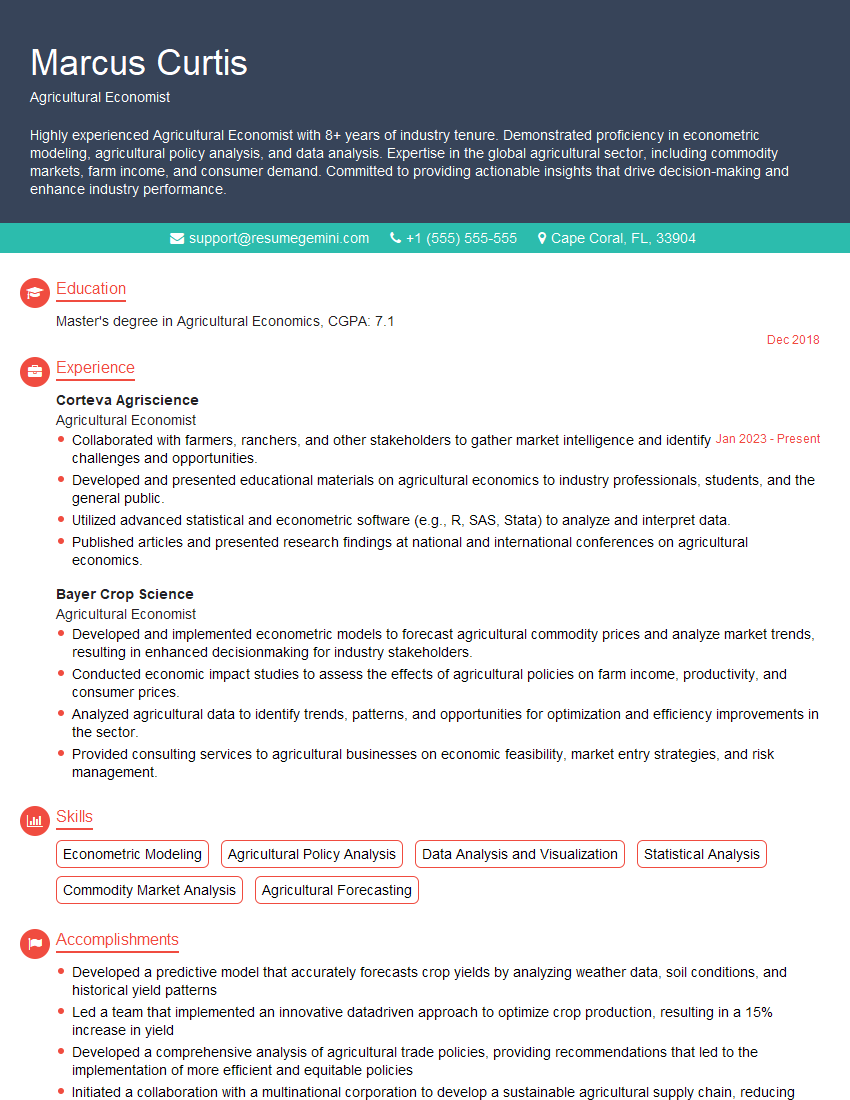
Mastering Agricultural Diplomacy opens doors to a rewarding career contributing to global food security and sustainable development. It allows you to leverage your expertise to shape international policy and make a tangible difference in the lives of millions. To maximize your job prospects, building an ATS-friendly resume is crucial. ResumeGemini can help you craft a compelling and effective resume that highlights your skills and experience, increasing your chances of securing an interview. ResumeGemini provides examples of resumes tailored to Agricultural Diplomacy to guide you through the process. Invest the time to create a strong resume – it’s your first impression and a critical step in your career journey.
Explore more articles
Users Rating of Our Blogs
Share Your Experience
We value your feedback! Please rate our content and share your thoughts (optional).
What Readers Say About Our Blog
Very informative content, great job.
good