Interviews are more than just a Q&A session—they’re a chance to prove your worth. This blog dives into essential AI Applications interview questions and expert tips to help you align your answers with what hiring managers are looking for. Start preparing to shine!
Questions Asked in AI Applications Interview
Q 1. Explain the difference between supervised, unsupervised, and reinforcement learning.
The core difference between supervised, unsupervised, and reinforcement learning lies in how the algorithms learn from data. Think of it like teaching a dog new tricks.
- Supervised Learning: This is like explicitly showing your dog what to do. You provide the algorithm with labeled data – input data paired with the correct output. For example, you show pictures of cats and label them “cat,” and pictures of dogs and label them “dog.” The algorithm learns to associate the image features with the correct labels, and then predicts the labels for new, unseen images. Examples include image classification, spam detection, and medical diagnosis.
- Unsupervised Learning: This is more like letting your dog explore and discover things on its own. You give the algorithm unlabeled data, and it tries to find patterns or structure within the data. Imagine showing your dog a pile of toys and letting it sort them – it might group similar toys together based on color, size, or shape. Common techniques include clustering (grouping similar data points), dimensionality reduction (reducing the number of variables), and anomaly detection (finding unusual data points).
- Reinforcement Learning: This is like training your dog with rewards and punishments. The algorithm learns by interacting with an environment. It takes actions, receives rewards or penalties based on the outcome, and learns to maximize its cumulative reward over time. Think of a robot learning to navigate a maze; it gets a reward for reaching the goal and a penalty for hitting walls. Examples include game playing (AlphaGo), robotics, and resource management.
Q 2. Describe the bias-variance tradeoff.
The bias-variance tradeoff is a fundamental concept in machine learning that describes the balance between a model’s ability to fit the training data (variance) and its ability to generalize to unseen data (bias). It’s like finding the sweet spot between memorizing a specific exam and understanding the underlying concepts.
High Bias (Underfitting): A model with high bias is too simple to capture the complexity of the data. It makes strong assumptions about the data and doesn’t fit the training data well. Think of a straight line trying to fit a curved dataset – it will miss a lot of the points. This leads to poor performance on both training and test data.
High Variance (Overfitting): A model with high variance is too complex and fits the training data too closely, including the noise. It memorizes the training data rather than learning the underlying patterns. Imagine trying to connect every data point with a complex, wiggly curve – it perfectly fits the training data but will likely perform poorly on unseen data. This results in excellent training performance but poor test performance.
The goal is to find a model with a good balance between bias and variance. A model with low bias and low variance is ideal as it generalizes well and achieves high accuracy. Techniques like cross-validation and regularization help manage this tradeoff.
Q 3. What are some common techniques for handling missing data?
Missing data is a common problem in real-world datasets. Several techniques exist to handle it, each with its own strengths and weaknesses. The best choice depends on the nature of the data and the amount of missingness.
- Deletion: This involves removing rows or columns with missing values. Listwise deletion (removing entire rows) is simple but can lead to significant data loss, especially if missing data is not random. Pairwise deletion (removing only affected pairs of variables) is less prone to loss but can cause inconsistencies.
- Imputation: This replaces missing values with estimated ones. Common methods include:
- Mean/Median/Mode Imputation: Replacing missing values with the mean (average) for numerical data, median (middle value) for skewed data, or mode (most frequent value) for categorical data. Simple but can distort the distribution and relationships between variables.
- K-Nearest Neighbors (KNN) Imputation: Imputing missing values based on the values of similar data points. More sophisticated than simple mean/median/mode but computationally intensive.
- Multiple Imputation: Creating several plausible imputed datasets and combining the results. Handles uncertainty associated with imputation but is complex.
Choosing the right method requires careful consideration of the data and potential bias. Understanding the mechanism of missingness (Missing Completely at Random (MCAR), Missing at Random (MAR), Missing Not at Random (MNAR)) is crucial for selecting an appropriate strategy.
Q 4. Explain the concept of overfitting and how to mitigate it.
Overfitting occurs when a model learns the training data too well, including its noise and outliers. It performs exceptionally well on the training set but poorly on unseen data. Imagine a student who memorizes the answers to a specific exam without understanding the material – they’ll ace that exam but fail subsequent ones.
Mitigation Techniques:
- Cross-Validation: A technique that involves splitting the data into multiple subsets, training the model on some subsets, and evaluating its performance on the others. This helps estimate how well the model generalizes to unseen data.
- Regularization: Adding a penalty term to the model’s loss function that discourages overly complex models. L1 and L2 regularization are common techniques (discussed further in subsequent answers).
- Pruning (for decision trees): Removing branches from a decision tree to reduce its complexity and prevent overfitting.
- Early Stopping (for iterative methods): Monitoring the model’s performance on a validation set during training and stopping the training process when performance starts to decline. This prevents the model from learning the noise in the training data.
- Data Augmentation: Increasing the size and diversity of the training dataset by creating modified versions of existing data points. This reduces the model’s reliance on specific training examples.
- Feature Selection/Engineering: Selecting the most relevant features and creating new ones from existing ones to reduce dimensionality and improve model generalization.
Q 5. What are some common evaluation metrics for classification and regression problems?
Evaluation metrics quantify the performance of a machine learning model. The choice depends on the problem type (classification or regression).
- Classification:
- Accuracy: The percentage of correctly classified instances. Simple but can be misleading with imbalanced datasets.
- Precision: The proportion of correctly predicted positive instances among all instances predicted as positive.
- Recall (Sensitivity): The proportion of correctly predicted positive instances among all actual positive instances.
- F1-score: The harmonic mean of precision and recall, providing a balance between the two.
- AUC-ROC (Area Under the Receiver Operating Characteristic Curve): Measures the model’s ability to distinguish between classes across different thresholds.
- Regression:
- Mean Squared Error (MSE): The average squared difference between predicted and actual values. Sensitive to outliers.
- Root Mean Squared Error (RMSE): The square root of MSE, providing a more interpretable measure in the original units.
- Mean Absolute Error (MAE): The average absolute difference between predicted and actual values. Less sensitive to outliers than MSE.
- R-squared (Coefficient of Determination): Represents the proportion of variance in the dependent variable explained by the model.
Choosing the right metric depends on the specific application and priorities. For instance, in medical diagnosis, high recall (minimizing false negatives) might be prioritized over high precision.
Q 6. What is regularization and why is it important?
Regularization is a technique used to prevent overfitting by adding a penalty term to the model’s loss function. This penalty discourages the model from learning overly complex relationships in the data by constraining the magnitude of its parameters (weights). Think of it as adding a speed limit to prevent reckless driving (overfitting).
Importance: Regularization improves the model’s generalization ability by reducing its sensitivity to noise and outliers in the training data. This leads to better performance on unseen data and prevents the model from memorizing the training set.
Q 7. Explain the difference between L1 and L2 regularization.
L1 and L2 regularization are two common types of regularization techniques that differ in how they penalize the model’s parameters.
- L1 Regularization (LASSO): Adds a penalty term proportional to the absolute value of the model’s parameters.
loss = original_loss + λ * Σ|wi|whereλis the regularization strength andwiare the model’s weights. L1 regularization tends to produce sparse models, meaning many weights become exactly zero. This can be useful for feature selection, as it effectively removes irrelevant features. - L2 Regularization (Ridge): Adds a penalty term proportional to the square of the model’s parameters.
loss = original_loss + λ * Σwi^2. L2 regularization shrinks the weights towards zero but rarely sets them to exactly zero. This leads to more robust models that are less sensitive to individual data points.
The choice between L1 and L2 regularization depends on the specific problem and dataset. L1 is preferred when feature selection is important, while L2 is often preferred when dealing with highly correlated features. Experimentation and cross-validation can help determine which regularization technique performs better in a particular scenario.
Q 8. What are some common deep learning architectures (e.g., CNN, RNN, Transformer)?
Deep learning architectures are the building blocks of many AI systems. They define the structure and flow of information within a neural network. Three prominent architectures are Convolutional Neural Networks (CNNs), Recurrent Neural Networks (RNNs), and Transformers.
- Convolutional Neural Networks (CNNs): These excel at processing grid-like data, such as images and videos. They use convolutional layers to detect features at different scales. Think of it like a magnifying glass, starting with broad strokes and then focusing on finer details. A classic example is image classification, where a CNN might identify a cat in a picture by detecting edges, then shapes, and finally the characteristic features of a cat.
- Recurrent Neural Networks (RNNs): RNNs are designed for sequential data, such as text and time series. They have loops that allow information to persist across time steps. Imagine reading a sentence – understanding each word depends on the context of the preceding words. RNNs, particularly LSTMs (Long Short-Term Memory) and GRUs (Gated Recurrent Units), address the vanishing gradient problem, which makes them better at handling long sequences compared to basic RNNs. A common application is natural language processing tasks like sentiment analysis.
- Transformers: These have revolutionized natural language processing. Unlike RNNs, transformers process the entire input sequence in parallel using a mechanism called self-attention. This allows them to capture long-range dependencies much more efficiently. Think of it like reading a whole paragraph at once, rather than word by word, to better understand the relationships between sentences. Examples include machine translation and text summarization. The BERT (Bidirectional Encoder Representations from Transformers) model is a prime example.
Q 9. Explain the backpropagation algorithm.
Backpropagation is the core algorithm for training neural networks. It’s a method for calculating the gradient of the loss function with respect to the network’s weights. This gradient indicates the direction and magnitude of adjustments needed to reduce the error made by the network. Think of it as finding the steepest descent on a hilly landscape to reach the valley (minimum loss).
Here’s a simplified explanation:
- Forward Pass: Input data is fed forward through the network, and the output is computed.
- Loss Calculation: The difference between the predicted output and the actual target is calculated using a loss function (e.g., mean squared error).
- Backward Pass: The gradient of the loss function is calculated with respect to each weight in the network using the chain rule of calculus. This process propagates the error backward through the network, layer by layer.
- Weight Update: The weights are updated using an optimization algorithm (e.g., gradient descent) to minimize the loss. The update rule typically involves subtracting a fraction of the gradient from the current weight.
This process is iterated many times over the training dataset until the network’s performance reaches a satisfactory level.
Q 10. How do you handle imbalanced datasets?
Imbalanced datasets, where one class has significantly more samples than others, pose a challenge because models tend to be biased towards the majority class. Several techniques address this:
- Resampling: This involves either oversampling the minority class (creating copies of existing samples) or undersampling the majority class (removing samples). Careful consideration is needed to avoid overfitting in oversampling and losing valuable information in undersampling. Techniques like SMOTE (Synthetic Minority Over-sampling Technique) generate synthetic samples for the minority class.
- Cost-Sensitive Learning: Assign higher weights or penalties to misclassifications of the minority class during training. This forces the model to pay more attention to the minority class, making it less likely to overlook it.
- Ensemble Methods: Combining multiple models trained on different subsets of the data or with different resampling techniques can improve overall performance on imbalanced datasets. Bagging and boosting techniques are particularly useful here.
- Anomaly Detection Techniques: If the minority class represents outliers or anomalies, specialized techniques like One-Class SVM or Isolation Forest might be more suitable than traditional classification algorithms.
The best approach depends on the specific dataset and problem. Experimentation and evaluation are crucial to determine the most effective strategy.
Q 11. What are some common techniques for feature scaling and selection?
Feature scaling and selection are crucial preprocessing steps to improve model performance and prevent issues caused by features with different scales or irrelevant features.
- Feature Scaling: This involves transforming features to a similar scale. Common methods include:
- Standardization (Z-score normalization): Centers the data around a mean of 0 and a standard deviation of 1.
z = (x - μ) / σ - Min-Max scaling: Scales features to a range between 0 and 1.
x' = (x - min) / (max - min)
- Standardization (Z-score normalization): Centers the data around a mean of 0 and a standard deviation of 1.
- Feature Selection: This involves choosing a subset of the most relevant features. Methods include:
- Filter methods: Rank features based on statistical measures (e.g., correlation, chi-squared test) and select the top-ranked features.
- Wrapper methods: Evaluate subsets of features using a model’s performance as a criterion. Recursive feature elimination is a common example.
- Embedded methods: Integrate feature selection into the model training process (e.g., L1 regularization in linear models).
The choice of scaling and selection methods depends on the dataset and the chosen model. For example, some models (like tree-based methods) are less sensitive to feature scaling than others (like linear models).
Q 12. Explain the concept of a confusion matrix.
A confusion matrix is a table that visualizes the performance of a classification model. It summarizes the counts of true positive (TP), true negative (TN), false positive (FP), and false negative (FN) predictions.
Imagine you’re building a model to detect spam emails. The confusion matrix would show:
- TP: Number of spam emails correctly identified as spam.
- TN: Number of non-spam emails correctly identified as non-spam.
- FP: Number of non-spam emails incorrectly identified as spam (false alarms).
- FN: Number of spam emails incorrectly identified as non-spam (missed spam).
From the confusion matrix, we can calculate metrics like accuracy, precision, recall, and F1-score, providing a comprehensive understanding of the model’s performance beyond simple accuracy.
Q 13. What is cross-validation and why is it important?
Cross-validation is a technique to evaluate the performance of a machine learning model by splitting the dataset into multiple folds (subsets). The model is trained on some folds and tested on the remaining fold. This process is repeated multiple times, with each fold used as a test set once. The average performance across all folds provides a more robust estimate of the model’s generalization ability compared to a single train-test split.
Why is it important?
Cross-validation helps prevent overfitting. A model that performs exceptionally well on a single train-test split might be overfitting the training data and not generalize well to unseen data. Cross-validation gives a more realistic assessment of how the model will perform on new data. It’s particularly valuable when datasets are limited, as it makes more efficient use of the available data.
k-fold cross-validation is a common approach, where the dataset is split into k folds. k=5 or k=10 are typical choices.
Q 14. Describe your experience with different programming languages used in AI (e.g., Python, R).
My primary programming language for AI development is Python. Its rich ecosystem of libraries, including NumPy, Pandas, Scikit-learn, TensorFlow, and PyTorch, provides comprehensive tools for data manipulation, model building, and deployment. I have extensive experience using these libraries to build various machine learning models, from simple linear regression to complex deep learning architectures.
I’ve also worked with R, particularly for statistical analysis and data visualization. R’s strength lies in its statistical computing capabilities and its extensive package library, such as ggplot2 for creating publication-quality visualizations. However, for large-scale deep learning projects, Python’s scalability and performance advantages generally make it the more practical choice.
I have experience leveraging other languages like SQL for database management and interacting with large datasets and Java for certain deployment scenarios requiring robust and scalable server-side solutions.
Q 15. What are your experiences with different AI/ML libraries (e.g., TensorFlow, PyTorch, scikit-learn)?
My experience spans several popular AI/ML libraries. TensorFlow, with its Keras API, has been my go-to for large-scale deep learning projects, particularly those involving image recognition and natural language processing. I’ve leveraged its computational graph capabilities to build and optimize complex models efficiently. For example, I used TensorFlow to develop a convolutional neural network (CNN) for a medical image analysis project, achieving state-of-the-art results in lesion detection. PyTorch, on the other hand, offers a more dynamic and Pythonic approach, making it ideal for research and prototyping. Its strong debugging capabilities and ease of use in creating custom layers proved invaluable in a recent project involving reinforcement learning. Finally, scikit-learn is my mainstay for classical machine learning tasks like regression, classification, and clustering. Its comprehensive documentation and user-friendly interface have simplified the process of building and evaluating models, particularly during exploratory data analysis. I used scikit-learn to build a robust fraud detection system for a financial institution, employing a combination of Support Vector Machines (SVMs) and Random Forests.
Career Expert Tips:
- Ace those interviews! Prepare effectively by reviewing the Top 50 Most Common Interview Questions on ResumeGemini.
- Navigate your job search with confidence! Explore a wide range of Career Tips on ResumeGemini. Learn about common challenges and recommendations to overcome them.
- Craft the perfect resume! Master the Art of Resume Writing with ResumeGemini’s guide. Showcase your unique qualifications and achievements effectively.
- Don’t miss out on holiday savings! Build your dream resume with ResumeGemini’s ATS optimized templates.
Q 16. Describe your experience with cloud computing platforms for AI (e.g., AWS, Azure, GCP).
I have extensive experience with major cloud computing platforms for AI, including AWS, Azure, and GCP. My work on AWS primarily involved utilizing its SageMaker platform for model training, deployment, and monitoring. I’ve built and deployed several machine learning pipelines using SageMaker’s built-in algorithms and custom container images. For instance, I used SageMaker’s built-in XGBoost algorithm to train a model for real-time customer churn prediction. On Azure, I’ve worked extensively with Azure Machine Learning, leveraging its automated machine learning capabilities to quickly experiment with various models and hyperparameters. A notable project involved using Azure’s cognitive services for sentiment analysis in a large-scale social media monitoring project. Finally, on GCP, I’ve used Vertex AI to build and deploy models, appreciating its integration with other GCP services. I’ve found each platform offers unique strengths, and my choice depends on the specific project requirements, such as cost optimization, existing infrastructure, and desired level of integration with other tools.
Q 17. How do you choose the appropriate algorithm for a given problem?
Choosing the right algorithm is a crucial step in any AI project. It depends heavily on several factors: the type of problem (classification, regression, clustering, etc.), the size and nature of the data (structured, unstructured, noisy), and the desired outcome (accuracy, interpretability, speed). For example, for a simple binary classification problem with a small dataset and a need for interpretability, a logistic regression model might be sufficient. However, for a complex image classification task with a large dataset, a deep convolutional neural network would be more appropriate. If the data is highly dimensional and needs dimensionality reduction, Principal Component Analysis (PCA) or t-SNE might be used before feeding the data to another algorithm. I typically follow a systematic approach: I start by understanding the problem, exploring the data, then selecting a few candidate algorithms based on their characteristics. I then evaluate their performance using appropriate metrics, and finally choose the algorithm that provides the best balance between accuracy, efficiency, and interpretability. A/B testing different algorithms is often a crucial part of this process.
Q 18. Explain your experience with model deployment and monitoring.
Model deployment and monitoring are critical for ensuring the continued success of any AI project. My experience encompasses various deployment strategies, from simple REST APIs using Flask or FastAPI to more sophisticated cloud-based deployments using platforms like AWS SageMaker, Azure Machine Learning, and Google Cloud AI Platform. I’ve also used containerization technologies like Docker and Kubernetes for scalable and reproducible deployments. Post-deployment, I prioritize rigorous monitoring to track model performance, identify data drift, and ensure its continued accuracy and reliability. Key metrics I monitor include accuracy, precision, recall, F1-score, and latency. I utilize tools like Prometheus, Grafana, and custom dashboards to visualize these metrics and trigger alerts when performance degrades. For example, in a fraud detection system, a sudden drop in recall could indicate that the model is missing a significant number of fraudulent transactions, requiring immediate investigation and retraining.
Q 19. Describe a challenging AI project you worked on and the solutions you implemented.
One challenging project involved building a real-time recommendation system for an e-commerce platform. The challenge was to balance the accuracy of recommendations with the computational cost of processing millions of user interactions and product details. Initially, we tried a collaborative filtering approach, but it suffered from scalability issues. We solved this by implementing a hybrid approach that combined collaborative filtering with content-based filtering and a deep learning model. The content-based filtering pre-processed the data to reduce the computational load on collaborative filtering, while the deep learning model further improved the accuracy by learning latent features from user interactions and product attributes. We deployed this system using a microservices architecture on AWS, leveraging SageMaker for model training and deployment. Regular A/B testing ensured we continuously optimized the system for click-through rates and conversion rates. The result was a significant improvement in customer engagement and sales conversions.
Q 20. Explain your understanding of different types of neural networks.
My understanding of neural networks covers a wide range of architectures. Feedforward neural networks, the most basic type, are used for tasks such as classification and regression. Convolutional Neural Networks (CNNs) excel at processing image data, leveraging convolutional layers to extract features. Recurrent Neural Networks (RNNs), particularly LSTMs and GRUs, are designed for sequential data like text and time series. Autoencoders are used for dimensionality reduction and anomaly detection. Generative Adversarial Networks (GANs) are capable of generating new data samples that resemble the training data. I have experience implementing and fine-tuning each of these architectures for various applications. The choice of architecture depends heavily on the nature of the data and the problem being addressed. For example, a CNN would be a suitable choice for an image classification problem, while an LSTM would be preferred for natural language processing tasks.
Q 21. How do you handle noisy data?
Handling noisy data is crucial for building reliable and accurate AI models. Noisy data can manifest in various forms, including missing values, outliers, and inconsistencies. My approach involves a multi-step process. First, I thoroughly explore the data to identify the types and extent of noise. For missing values, I might use imputation techniques such as mean/median imputation, k-Nearest Neighbors imputation, or more sophisticated methods based on the context of the data. For outliers, I might use techniques such as z-score normalization or interquartile range (IQR) to identify and potentially remove or transform them. Data cleaning might involve transforming categorical features using one-hot encoding or label encoding and scaling numerical features using standardization or min-max scaling. In some cases, robust algorithms that are less sensitive to noise, such as Random Forests or SVM, can be used directly. In other instances, using techniques like data smoothing or employing robust loss functions during training can improve model robustness. The choice of approach always depends on the nature of the noise and the impact on the model’s performance. Careful consideration needs to be given as to not introduce bias during the process. Regular evaluation using appropriate metrics is vital throughout the process to ensure the effectiveness of the noise reduction strategies.
Q 22. What is your experience with time series analysis?
Time series analysis is a powerful technique used to analyze data points collected over time. It’s crucial for understanding trends, patterns, and making predictions based on historical data. My experience encompasses various aspects, from data preprocessing and feature engineering to model selection and evaluation.
For instance, I’ve worked on projects involving forecasting stock prices using ARIMA models, predicting customer churn using recurrent neural networks (RNNs) like LSTMs, and analyzing sensor data from industrial machinery to detect anomalies and predict potential equipment failures. In these projects, I’ve utilized techniques such as decomposition to separate trend, seasonality, and residuals; differencing to make data stationary; and various model evaluation metrics like RMSE and MAE to assess predictive accuracy.
One specific project involved predicting energy consumption for a large manufacturing plant. We used a combination of ARIMA and Prophet models, incorporating external factors like weather data and production schedules to improve forecasting accuracy. This resulted in significant cost savings through optimized energy management.
Q 23. What is your understanding of different optimization algorithms (e.g., gradient descent, Adam)?
Optimization algorithms are the heart of many machine learning models. They help find the best set of parameters (weights and biases) that minimize a cost function (or loss function), improving the model’s accuracy.
Gradient descent is a fundamental algorithm. It iteratively adjusts parameters by moving in the direction of the steepest descent of the cost function. Imagine a hiker descending a mountain; gradient descent is like following the steepest path downhill to reach the valley (minimum cost).
Adam (Adaptive Moment Estimation) is a more sophisticated optimization algorithm that builds upon gradient descent. It adapts the learning rate for each parameter individually, allowing for faster convergence and better performance, especially in high-dimensional spaces. It uses both the first and second moments of the gradients to adjust the learning rate.
I’ve extensively used both gradient descent and Adam, often preferring Adam for its efficiency in complex models. Choosing the right algorithm depends on factors like the dataset size, model complexity, and computational resources.
# Example (conceptual):
optimizer = tf.keras.optimizers.Adam(learning_rate=0.001) # Using Adam optimizer in TensorFlow/Keras
Q 24. How do you ensure the ethical implications of your AI models are addressed?
Ethical considerations are paramount in AI development. My approach involves a multi-faceted strategy to mitigate potential biases and negative impacts.
- Data Bias Mitigation: I carefully scrutinize the training data for biases related to gender, race, ethnicity, or other sensitive attributes. Techniques like data augmentation, re-weighting, or adversarial training can help reduce biases.
- Fairness and Transparency: I strive to build models that are fair and transparent. This involves using explainable AI techniques (XAI) to understand model decisions and ensure they are not discriminatory.
- Impact Assessment: Before deployment, I conduct a thorough impact assessment to anticipate potential negative consequences. This includes considering the model’s potential for misuse, unintended biases, and broader societal effects.
- Accountability and Monitoring: I advocate for mechanisms to monitor model performance after deployment and address any issues that may arise. This includes establishing clear lines of accountability and a system for reporting and resolving ethical concerns.
For example, in a facial recognition project, I would carefully consider the impact on different demographic groups to ensure equal accuracy and prevent potential discrimination.
Q 25. Explain your approach to debugging complex AI models.
Debugging complex AI models can be challenging. My approach is systematic and combines several strategies:
- Start with the Basics: First, I ensure the data is correctly preprocessed, the model architecture is sound, and the hyperparameters are appropriately tuned. Often, simple errors in these steps can lead to unexpected results.
- Monitor Training Metrics: I carefully track training and validation metrics like loss, accuracy, precision, and recall. Unusual patterns or plateaus in these metrics can indicate problems like overfitting, underfitting, or learning rate issues.
- Visualization: Visualizing data, model outputs, and activation patterns can provide valuable insights. Tools like TensorBoard and other visualization libraries are invaluable.
- Debugging Tools: I leverage debugging tools integrated into frameworks like TensorFlow and PyTorch to step through the code, inspect variables, and identify bottlenecks.
- Ablation Studies: I sometimes conduct ablation studies, where I systematically remove parts of the model to understand their individual contributions and identify problematic components.
- Explainable AI (XAI): Employing XAI techniques can help understand model behavior, identify misclassifications, and understand areas where the model is making errors.
A common issue I’ve encountered is vanishing or exploding gradients in RNNs. By carefully analyzing the gradients during training and adjusting the architecture or using techniques like gradient clipping, I’ve been able to resolve these problems.
Q 26. What is your experience with explainable AI (XAI)?
Explainable AI (XAI) is crucial for building trust and understanding in AI systems. My experience with XAI involves using various techniques to make model predictions more interpretable.
- LIME (Local Interpretable Model-agnostic Explanations): This technique approximates the model’s behavior locally around a specific prediction, making it easier to understand why a particular prediction was made.
- SHAP (SHapley Additive exPlanations): SHAP values provide a game-theoretic approach to explaining predictions by attributing the contribution of each feature.
- Decision Trees and Rule-Based Models: These models are inherently more interpretable than complex neural networks. When feasible, I prefer using them or incorporating interpretable components into the design.
- Feature Importance Analysis: Techniques like permutation feature importance can help identify the most influential features in the model’s predictions.
In a recent project involving loan application approval, we used LIME to explain the reasons behind loan denials, which helped improve fairness and transparency.
Q 27. How do you stay updated with the latest advancements in AI?
Staying updated in the rapidly evolving field of AI requires a multi-pronged approach:
- Research Papers: I regularly read research papers published in top AI conferences (NeurIPS, ICML, ICLR) and journals (JMLR, AI Magazine). ArXiv is a great resource for pre-prints.
- Online Courses and Tutorials: Platforms like Coursera, edX, and fast.ai offer excellent courses on various AI topics. I also use online tutorials and documentation from libraries like TensorFlow and PyTorch.
- Conferences and Workshops: Attending conferences and workshops allows me to learn from leading experts and network with other professionals.
- Industry Blogs and Newsletters: Following reputable blogs and newsletters helps me stay informed about the latest developments and trends in the field.
- Open-Source Projects: Contributing to and studying open-source projects provides practical experience and insights into cutting-edge techniques.
I also actively participate in online communities and forums dedicated to AI, where I can ask questions, share my knowledge, and learn from others.
Key Topics to Learn for AI Applications Interview
- Machine Learning Fundamentals: Understand supervised, unsupervised, and reinforcement learning techniques. Explore common algorithms like linear regression, logistic regression, decision trees, and support vector machines.
- Deep Learning Architectures: Familiarize yourself with convolutional neural networks (CNNs) for image processing, recurrent neural networks (RNNs) for sequential data, and transformers for natural language processing. Consider practical applications like image classification, object detection, and sentiment analysis.
- Natural Language Processing (NLP): Grasp core concepts such as tokenization, stemming, lemmatization, and word embeddings. Explore applications in chatbots, language translation, and text summarization.
- Computer Vision: Learn about image segmentation, object recognition, and feature extraction. Understand the practical applications in autonomous vehicles, medical imaging, and security systems.
- AI Ethics and Bias: Develop a strong understanding of ethical considerations in AI development and deployment. Be prepared to discuss bias mitigation strategies and responsible AI practices.
- Deployment and Scalability: Understand the challenges and best practices for deploying AI models in production environments, including considerations for scalability and maintainability. Explore cloud-based solutions and containerization technologies.
- Problem-Solving and Case Studies: Practice applying your knowledge to real-world problems. Analyze case studies of successful AI applications and be prepared to discuss your approach to solving complex challenges.
Next Steps
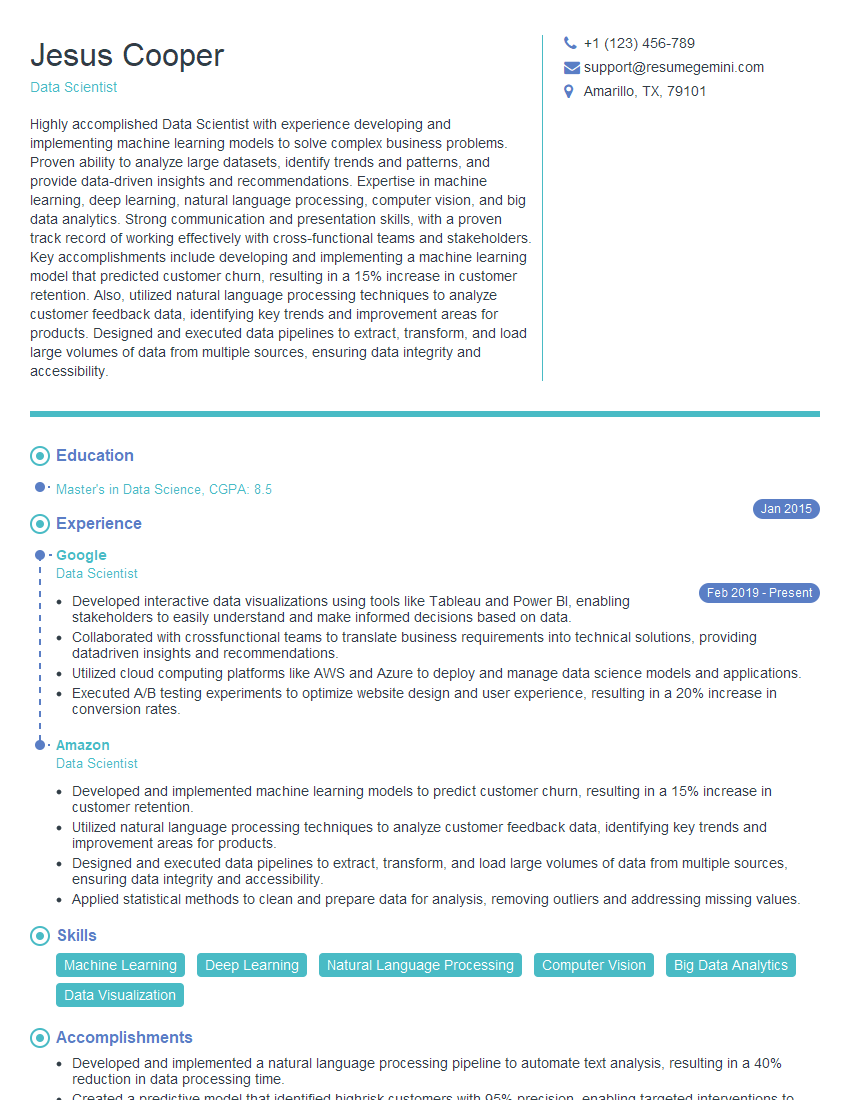
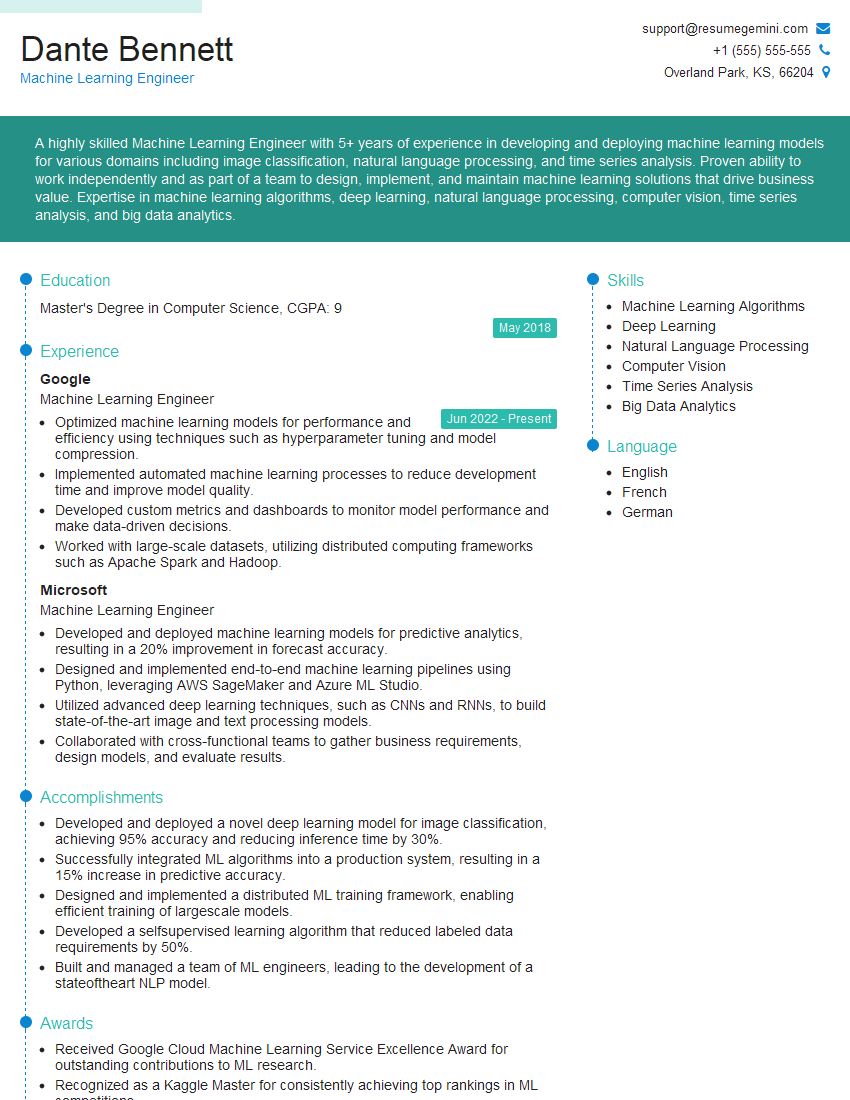
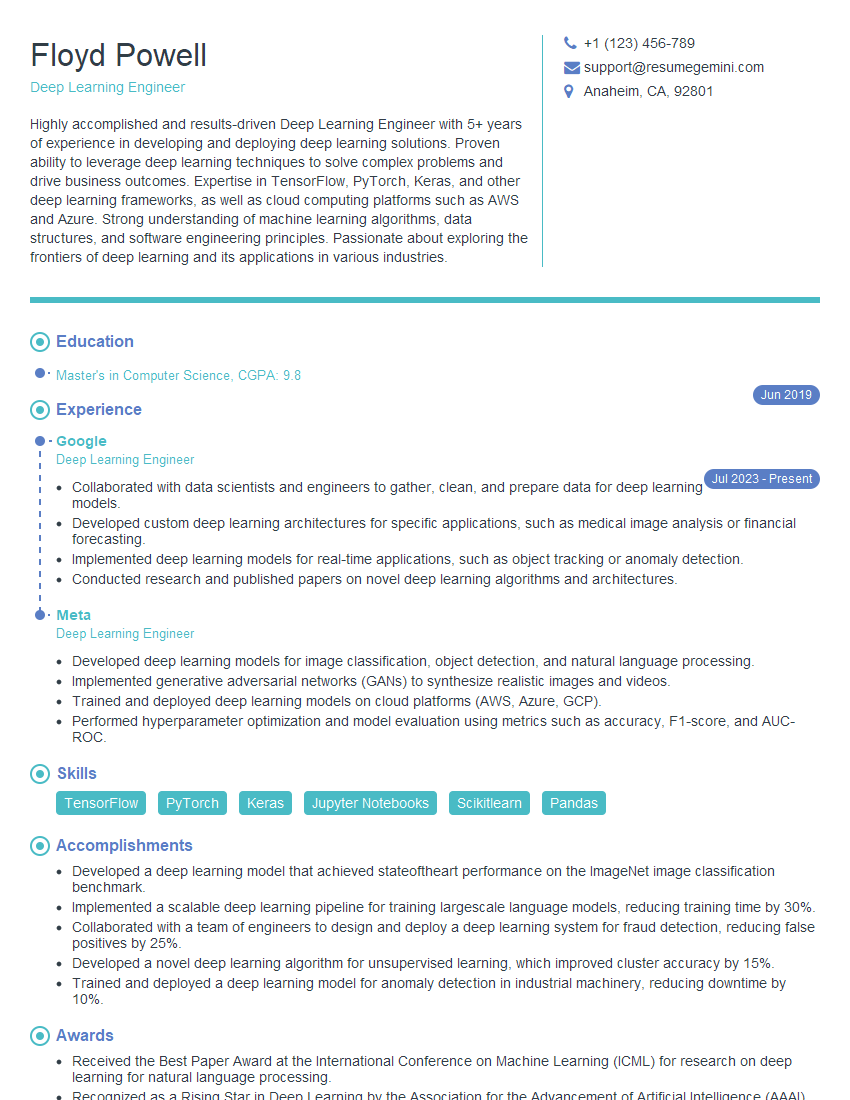
Mastering AI Applications opens doors to exciting and high-demand careers in a rapidly evolving field. To maximize your job prospects, creating a strong, ATS-friendly resume is crucial. ResumeGemini can help you build a professional resume that highlights your skills and experience effectively. We provide examples of resumes tailored to AI Applications to help you craft a compelling application that stands out from the crowd. Take the next step towards your dream AI career with a resume that showcases your expertise.

Explore more articles
Users Rating of Our Blogs
Share Your Experience
We value your feedback! Please rate our content and share your thoughts (optional).
What Readers Say About Our Blog
good