Interviews are more than just a Q&A session—they’re a chance to prove your worth. This blog dives into essential Air Intercept and Weapon Control interview questions and expert tips to help you align your answers with what hiring managers are looking for. Start preparing to shine!
Questions Asked in Air Intercept and Weapon Control Interview
Q 1. Explain the principles of air intercept techniques.
Air intercept techniques revolve around detecting, identifying, and engaging hostile airborne threats. It’s a dynamic process involving several key phases: Detection (using radar or other sensors), Identification (determining friend from foe), Tracking (maintaining a continuous record of the target’s position and velocity), Engagement (launching and guiding a weapon to intercept the target), and finally, Assessment (evaluating the results of the engagement).
Imagine it like a game of air-to-air tag, but with significantly higher stakes. The interceptor aircraft must skillfully maneuver to close the distance with the target, considering factors like speed, altitude, and the target’s evasive maneuvers. This often involves advanced flight techniques and a deep understanding of both the interceptor’s and target’s capabilities.
Different intercept techniques exist, including head-on attacks (direct confrontation), tail-chase attacks (pursuing from behind), and beam attacks (approaching from the side). The best technique depends on the specific situation, including the range to the target, the target’s maneuverability, and the available weaponry.
Q 2. Describe different types of air-to-air missiles and their capabilities.
Air-to-air missiles come in a variety of types, each with its own strengths and weaknesses. Broadly, they can be categorized as short-range, medium-range, and long-range missiles. Key capabilities include range, speed, maneuverability, guidance system, and warhead type.
- Short-range missiles (e.g., AIM-9 Sidewinder): These are highly maneuverable missiles ideal for close-range engagements. They often use heat-seeking (infrared) guidance to lock onto the target’s engine heat signature.
- Medium-range missiles (e.g., AIM-7 Sparrow): These offer greater range than short-range missiles, typically using radar guidance to track the target. They are less maneuverable but can engage targets at longer distances.
- Long-range missiles (e.g., AIM-120 AMRAAM): These missiles provide the longest range, often employing active radar homing (the missile’s own radar guides it to the target) for precision strikes. This allows for beyond-visual-range (BVR) engagements.
Different warheads are also used, including high-explosive fragmentation warheads to cause damage over a wider area, and more sophisticated warheads designed to produce a higher probability of kill.
Q 3. What are the key elements of a successful air intercept operation?
A successful air intercept operation hinges on several critical elements:
- Effective Sensor Integration: Accurate and timely information from radar, electronic warfare systems, and other sensors is crucial for target detection, identification, and tracking.
- Precise Weapon Delivery: Accurate targeting, weapon selection, and launch parameters are vital to ensure a successful hit.
- Situational Awareness: Maintaining a clear understanding of the entire battlespace, including friendly forces and potential threats, is essential to avoid fratricide and maximize effectiveness.
- Pilot Skill and Training: Highly skilled pilots with extensive training in air combat maneuvers and weapon systems are crucial for successful interception.
- Effective Communication: Clear, concise, and timely communication between the interceptor aircraft, ground control, and other airborne assets is essential for coordination and mission success.
Consider a scenario where an interceptor must quickly engage a hostile fighter jet. A failure in any of these elements – for instance, inaccurate radar data or poor pilot decision-making – could result in mission failure or even loss of the interceptor aircraft.
Q 4. How do you prioritize multiple targets during an air intercept mission?
Prioritizing multiple targets during an air intercept mission involves a complex decision-making process. Factors considered include:
- Threat Level: Targets posing the most immediate danger to friendly forces or assets are given the highest priority.
- Target Value: High-value targets (e.g., AWACS aircraft or bombers) may be prioritized over less significant threats.
- Weapon Availability: The number and type of missiles available influence target prioritization. A pilot might choose a higher-value target if they have sufficient weapons.
- Engagement Geometry: The relative positions and flight paths of the targets and the interceptor also play a role. A pilot will likely target the most easily engaged threat first.
- Support from other assets: if support from other aircraft or ground-based systems is available, it could affect prioritization.
A common prioritization strategy involves using a threat matrix, a decision-support tool which assigns weights to these factors to determine the order of engagement. In some cases, cooperative engagement with other interceptors might be employed.
Q 5. Explain the role of radar in air intercept and weapon control.
Radar plays a crucial role in air intercept and weapon control. It provides the ‘eyes’ for the entire process, enabling the detection, tracking, and identification of airborne targets. Radar systems used in air intercept operations generally have advanced capabilities for:
- Target Detection: Detecting airborne targets at long ranges, even in adverse weather conditions.
- Target Tracking: Continuously monitoring the position and velocity of targets, even amidst clutter or jamming.
- Target Identification: Identifying the type of aircraft using features such as size, speed, and radar signature.
- Weapon Guidance: Providing targeting information to air-to-air missiles, allowing them to accurately intercept their targets.
Without advanced radar capabilities, effective air interception would be nearly impossible. Imagine trying to hit a fast-moving target in poor visibility without radar – it’s simply not feasible.
Q 6. Describe the communication protocols used during air intercept operations.
Communication protocols during air intercept operations are critical for coordinating actions and ensuring mission success. They utilize various methods, ensuring secure and timely information exchange. Common communication protocols include:
- Voice communication: Used for real-time communication between pilots, air control centers (ACCs), and other aircraft. Standardized phraseology ensures clear understanding in high-stress situations.
- Data links: Transmit tactical data, such as target locations and threat assessments, digitally between aircraft and ground stations, improving situational awareness and coordination.
- Secure communication systems: Employ encryption to prevent interception by enemy forces. This is essential to protect sensitive information about mission plans and tactics.
Think of it as a highly coordinated orchestra: everyone needs to know their part, and the conductor (air control) needs to maintain seamless communication to ensure a successful performance.
Q 7. How do you manage friendly fire risks during an engagement?
Managing friendly fire risks during an engagement is paramount in air intercept operations. Several strategies are employed:
- Positive Identification (PID): Before engaging a target, pilots must positively identify it as hostile to ensure it is not a friendly aircraft. This often involves multiple confirmation sources, including visual identification, radar data, and communication with ground control.
- De-confliction Procedures: These procedures help coordinate the actions of multiple friendly aircraft to avoid collisions or accidental engagements. This includes maintaining safe separation distances and sharing real-time information.
- Use of IFF (Identification Friend or Foe) systems: These systems help distinguish between friendly and hostile aircraft based on electronic transponders. However, they can be jammed or spoofed, so it’s not the only tool for PID.
- Weapon Safety Mechanisms: Missiles incorporate safety mechanisms to prevent accidental launch or unintended targeting of friendly aircraft. For example, some missiles require confirmation of target identification before launch.
Failing to manage friendly fire risks can lead to devastating consequences, including the loss of friendly aircraft and personnel. Rigorous adherence to established procedures and thorough training are essential in minimizing these risks.
Q 8. What are the limitations of various air-to-air weapons systems?
Air-to-air weapons systems, while incredibly effective, have inherent limitations. These limitations can be broadly categorized into range, accuracy, lethality, and susceptibility to countermeasures.
- Range: Even beyond-visual-range (BVR) missiles have a limited range. Factors like atmospheric conditions and the target’s maneuvers affect this range. A missile launched at maximum range may not have enough energy to intercept a maneuvering target effectively. For example, a long-range missile might struggle to hit a highly agile fighter jet performing aggressive evasive maneuvers at the edge of its range.
- Accuracy: While modern missiles possess sophisticated guidance systems, factors like target speed, maneuverability, and electronic countermeasures (ECM) can affect their accuracy. A fast-moving target can be difficult to track, leading to a miss, even with advanced radar and infrared guidance. Similarly, ECM can deceive the missile’s guidance system, causing it to deviate from its intended trajectory.
- Lethality: The explosive power and fragmentation characteristics of a missile determine its lethality. Some missiles are designed for kinetic energy kills (direct impact), while others rely on fragmentation to damage the target. The lethality varies depending on the type of aircraft, its construction, and the point of impact.
- Susceptibility to Countermeasures: Enemy aircraft can employ various countermeasures, such as chaff (metallic strips that create radar clutter) and flares (infrared decoys), to confuse and deceive missiles. These countermeasures can significantly reduce the effectiveness of certain weapon systems.
Understanding these limitations is crucial for effective mission planning and execution. Pilots must consider weapon range, target characteristics, and the threat of countermeasures when selecting a weapon and developing an attack plan.
Q 9. How do you assess the threat posed by enemy aircraft?
Assessing the threat posed by enemy aircraft involves a multi-faceted approach, integrating information from various sources. It’s not simply about identifying the aircraft type; it’s about understanding its capabilities and intentions within the operational context.
- Aircraft Identification: Initially, the type of aircraft is identified using radar, visual sighting, or electronic intelligence (ELINT). Knowing if it’s a fighter, bomber, or reconnaissance aircraft provides crucial clues about its potential threat.
- Weapon Loadout: If possible, the enemy aircraft’s weapon loadout is determined. This is done through visual observation, radar signatures, or intelligence reports. A fighter carrying long-range air-to-air missiles poses a greater threat than one carrying only short-range weapons.
- Operational Context: The situation drastically affects the threat assessment. An enemy fighter operating alone is a different threat than one operating as part of a large formation with ground support. The overall mission objective of the enemy also plays a crucial role. Are they trying to attack ground targets, engage friendly aircraft, or conduct reconnaissance?
- Maneuvers and Tactics: Analyzing the enemy aircraft’s maneuvers and tactics provides significant insight. Aggressive maneuvers may suggest an offensive intention, while defensive maneuvers could signal a desire to evade engagement.
This assessment is a continuous process, constantly updated as new information becomes available. This information is used to determine the appropriate response, including the choice of weapon systems, tactics, and defensive measures.
Q 10. Explain the concept of beyond-visual-range (BVR) engagements.
Beyond-Visual-Range (BVR) engagements refer to air combat where the opposing aircraft are outside each other’s visual range, typically relying on radar and sophisticated missile guidance systems. This extends the range of engagement significantly, allowing for attacks from considerable distances.
Think of it like this: Imagine two ships on the ocean, too far apart to see each other. They can still engage in a battle by using long-range artillery. Similarly, in BVR combat, aircraft use radar to detect and track targets beyond visual range. Once a target is locked, a BVR missile is launched. The missile then uses its own guidance system (typically a combination of inertial guidance, radar guidance, and/or infrared guidance) to navigate to the target. This allows a pilot to engage and potentially destroy an enemy aircraft before even seeing it.
The effectiveness of BVR engagements heavily relies on the performance of the radar systems, the capabilities of the missiles, and the ability of the pilot to manage the engagement and any electronic countermeasures.
Q 11. Describe the procedures for engaging multiple enemy aircraft.
Engaging multiple enemy aircraft requires a systematic approach, prioritizing targets and employing efficient tactics. It’s often a complex situation demanding quick thinking and precise execution.
- Prioritization: The most immediate threat is usually addressed first, often the aircraft posing the greatest immediate danger, or the one with the most advanced weapons.
- Weapon Selection: The selection of the air-to-air weapon is based on the range, speed, and maneuverability of both the target and the friendly aircraft.
- Tactical Coordination: In a multi-aircraft scenario, coordination with wingmen is critical. This often involves a ‘high-low’ approach where one aircraft engages a higher priority target, while another supports or engages other threats. One pilot may focus on long-range BVR engagements while the other engages at closer range.
- Situational Awareness: Maintaining situational awareness is vital, constantly monitoring the position and actions of both friendly and enemy aircraft. This often requires using radar, electronic warfare systems, and information sharing with other aircraft.
- Adaptive Tactics: The situation is dynamic; tactics need to be adapted based on enemy responses and changes in the situation. This might involve switching targets, maneuvering to gain an advantage, or using defensive tactics to evade attack.
Effective engagement of multiple enemy aircraft hinges on skilled airmanship, precise weapon delivery, and seamless coordination between pilots and supporting assets.
Q 12. What are the different types of air-to-air combat maneuvers?
Air-to-air combat maneuvers are designed to gain a tactical advantage over an opponent, aiming to achieve a firing solution or evade an attack. These maneuvers are broadly classified into offensive and defensive techniques.
- Offensive Maneuvers: These maneuvers aim to place the friendly aircraft in a position to attack the enemy. Examples include:
- High-Yo-Yo: A climbing maneuver to gain altitude and energy advantage before attacking.
- Head-On Attack: A direct approach, often utilizing high-G maneuvers to outmaneuver the opponent.
- Turn-and-Burn: A maneuver relying on superior turn rate to gain a firing position.
- Defensive Maneuvers: These aim to evade attack and improve survival chances. Examples include:
- Defensive Turn: Using defensive maneuvers to evade incoming missiles or gunfire, potentially using terrain masking.
- Evasive Maneuvers: High-G maneuvers and other erratic flight paths to evade missiles.
- Energy Management: Strategic use of aircraft energy (speed and altitude) to manage the engagement.
These maneuvers are not performed in isolation; they are used in combination based on the specific situation, aircraft capabilities, and opponent’s actions. The skills involved in executing these maneuvers successfully require extensive flight training and experience.
Q 13. How do you use electronic warfare to support air intercept missions?
Electronic Warfare (EW) plays a critical role in supporting air intercept missions. It encompasses electronic attack (EA), electronic protection (EP), and electronic support (ES), all working together to enhance the mission’s success.
- Electronic Attack (EA): This involves using electronic systems to jam or disrupt enemy radars and communication systems. This can significantly reduce the enemy’s situational awareness and ability to target friendly aircraft. For example, jamming an enemy radar can prevent it from accurately tracking friendly aircraft, making it harder for them to launch effective attacks.
- Electronic Protection (EP): This involves employing techniques and technologies to protect friendly aircraft from enemy electronic attacks. This includes using countermeasures like chaff and flares, as well as employing electronic counter-countermeasures (ECCM) to reduce the effectiveness of enemy jamming.
- Electronic Support (ES): This involves passively collecting and analyzing enemy electronic emissions to gain intelligence about their capabilities, locations, and intentions. This information can significantly improve situational awareness and enable more effective targeting and countermeasures.
By skillfully integrating these three components, EW significantly enhances the survivability and effectiveness of air intercept operations. It provides a crucial advantage, allowing friendly aircraft to detect, track, and engage enemy aircraft while minimizing their own vulnerability.
Q 14. Explain the role of AWACS in air intercept operations.
Airborne Warning and Control Systems (AWACS) aircraft play a pivotal role in air intercept operations by providing a comprehensive, long-range picture of the battlespace. They act as the ‘eyes in the sky,’ significantly enhancing situational awareness and coordinating the intercept efforts.
- Long-Range Surveillance: AWACS aircraft utilize powerful radars to detect and track enemy aircraft at very long ranges, often hundreds of kilometers. This allows for early warning of potential threats, giving friendly forces ample time to react.
- Target Identification and Tracking: AWACS can identify and track numerous targets simultaneously, providing crucial information on their type, altitude, speed, and heading. This enhances the accuracy of threat assessment and allows for more effective targeting.
- Command and Control: AWACS acts as a command and control center, coordinating the actions of multiple friendly aircraft involved in the intercept. This centralized command ensures effective coordination, optimizes resource allocation, and prevents friendly fire incidents.
- Data Relay: AWACS relays critical information to ground stations and other aircraft, enhancing overall communication and situational awareness across the entire operational area.
Without AWACS, air intercept operations would be significantly hampered, relying on individual aircraft’s capabilities to detect and track targets. AWACS dramatically enhances the effectiveness and survivability of intercept missions by providing this invaluable real-time situational awareness and command and control capability.
Q 15. How do you coordinate with other aircraft and ground units during an air intercept?
Coordinating during an air intercept involves seamless communication and data sharing between multiple entities. Think of it like a well-orchestrated symphony – each instrument (aircraft and ground units) plays its part to achieve a harmonious outcome.
This coordination relies heavily on secure communication networks such as data links and radio frequencies. We use standardized procedures and protocols to ensure clear understanding. For instance, the intercepting aircraft will receive targeting information from ground control intercept (GCI) radar, which might include the target’s position, altitude, speed, and heading. Simultaneously, the intercepting aircraft will relay its own position and status to maintain a clear picture of the situation. Other friendly aircraft might be tasked with providing cover or acting as wingmen, necessitating constant communication and coordination of maneuvers to avoid friendly fire and ensure optimal positioning for the intercept.
- Ground Control Intercept (GCI): GCI provides radar tracking data and guidance to intercepting aircraft.
- Data Links: Allow the rapid exchange of detailed information between aircraft and ground stations.
- Radio Communication: Provides real-time verbal updates and coordination amongst all involved parties.
A real-world example might involve an intercept of a suspected hostile aircraft approaching national airspace. GCI radar detects the target and vectors an intercepting fighter towards it. The fighter pilot maintains constant communication with GCI, updating on their position, and receiving updated target information. If other friendly aircraft are involved, they too will communicate with the lead interceptor and GCI, coordinating their actions to create a coordinated response.
Career Expert Tips:
- Ace those interviews! Prepare effectively by reviewing the Top 50 Most Common Interview Questions on ResumeGemini.
- Navigate your job search with confidence! Explore a wide range of Career Tips on ResumeGemini. Learn about common challenges and recommendations to overcome them.
- Craft the perfect resume! Master the Art of Resume Writing with ResumeGemini’s guide. Showcase your unique qualifications and achievements effectively.
- Don’t miss out on holiday savings! Build your dream resume with ResumeGemini’s ATS optimized templates.
Q 16. What are the factors affecting the accuracy of air-to-air weapons?
Accuracy in air-to-air engagements is a complex issue affected by a multitude of factors. It’s not just about aiming and shooting; it’s about mastering a delicate interplay of technology and human skill under immense pressure.
- Weapon System Accuracy: The inherent accuracy of the missile itself – different missile types have varying degrees of precision.
- Target Maneuvers: Evasive maneuvers by the target significantly reduce the probability of a successful hit.
- Launch Conditions: Factors like launch range, altitude, and aspect angle all affect missile trajectory.
- Environmental Conditions: Weather such as wind, rain, and turbulence can disrupt missile guidance systems.
- Sensor Accuracy: The accuracy of the radar and other sensors used to track the target directly influences missile guidance.
- Pilot Skill and Experience: The pilot’s ability to correctly identify and engage the target, and manage launch parameters, is crucial.
For example, launching a missile at long range against a highly maneuverable target in adverse weather will dramatically decrease the chance of a hit compared to launching a short-range missile at a less-agile target in clear conditions. The skill of the pilot in leading the target, accounting for its movements and managing the weapon system’s limitations, plays a critical role in mitigating the impact of these factors.
Q 17. Describe the challenges of conducting air intercept operations in adverse weather conditions.
Adverse weather presents significant challenges to air intercept operations, drastically reducing effectiveness and increasing risk. Imagine trying to hit a moving target in a blizzard – the difficulty is exponentially increased.
- Reduced Visibility: Clouds, fog, rain, and snow severely limit visual contact with the target, forcing reliance on radar.
- Radar Limitations: While radar can penetrate clouds, weather interference can degrade accuracy and range.
- Sensor Degradation: Adverse weather can affect the performance of other sensors, including infrared (IR) systems.
- Increased Risk of Accidents: Reduced visibility and poor flying conditions increase the likelihood of mid-air collisions.
- Weapon System Performance: Some weapon systems are more sensitive to weather conditions than others.
For instance, a nighttime intercept in heavy rain will significantly hinder visual acquisition of the target, forcing reliance on radar, which might be impacted by the weather conditions. The reduced visibility could lead to difficulties in maneuvering close to the target without risking a collision with it or other friendly aircraft. The pilot needs enhanced situational awareness and expertise to navigate these conditions safely and effectively.
Q 18. How do you maintain situational awareness during a high-intensity air combat scenario?
Maintaining situational awareness during high-intensity air combat is paramount to survival and mission success. It’s about building a holistic understanding of everything happening around you in real time. Think of it like a chess grandmaster anticipating several moves ahead.
This involves constantly scanning instruments, utilizing sensors and communication systems, and rapidly assessing threats and opportunities. This is a highly cognitive task. Key elements include:
- Sensor Fusion: Integrating information from radar, electronic warfare systems, and other sensors to build a comprehensive picture.
- Communication: Maintaining clear and concise communication with ground control and other aircraft.
- Tactical Awareness: Understanding the enemy’s capabilities, intentions, and potential courses of action.
- Self-Awareness: Knowing the aircraft’s capabilities and limitations, along with fuel status and weapon availability.
An example: During a dogfight, a pilot constantly scans the radar for approaching threats, assesses their potential danger, considers their fuel levels and ammunition, and maintains constant communication with wingmen to coordinate maneuvers. Understanding the target’s aircraft type and capabilities helps the pilot choose the right tactic for engagement or evasion.
Q 19. Explain the importance of pre-mission planning in air intercept operations.
Pre-mission planning in air intercept operations is critical for success. It’s like a military strategist preparing for battle – careful planning significantly increases the chances of a favorable outcome.
It involves a meticulous review of all elements of the operation, including:
- Mission Objectives: Clearly defining the goals of the intercept, including the threat assessment, acceptable risks and mission success criteria.
- Threat Assessment: Analyzing the capabilities of the target aircraft and any potential threats they might pose.
- Route Planning: Determining optimal flight paths to efficiently reach the intercept area.
- Communication Plan: Establishing clear communication channels and protocols between all involved parties.
- Contingency Planning: Developing strategies for handling potential unforeseen circumstances, including equipment malfunctions and enemy actions.
- Weapon Selection and Loadout: Choosing the most appropriate weapons based on the threat and mission parameters.
A thorough pre-mission brief that covers these aspects ensures that all participating personnel are on the same page, increasing the likelihood of a successful intercept while mitigating risks.
Q 20. Describe different types of radar and their applications in air defense.
Radars are essential for air defense, providing critical information about the airspace. Different types offer varying capabilities tailored to specific tasks.
- Primary Surveillance Radar (PSR): These long-range radars detect and track aircraft over a wide area. They’re like a broad overview of the airspace. They typically use longer wavelengths and less precise information on specific targets.
- Secondary Surveillance Radar (SSR): These radars interrogate transponders in aircraft and receive identification codes. They are essential for identifying friendly aircraft and provide more accurate position details than primary radar.
- Airborne Interception Radar (AIR): These radars are mounted on fighter aircraft and used for target acquisition and tracking during intercepts. They are typically shorter-range and offer greater precision than ground-based radar.
- Fire Control Radar (FCR): These highly accurate radars provide precise target information needed to guide weapons towards a target. Their high precision is essential for accurate weapon delivery.
A well-integrated air defense system will typically use a combination of these radar types. For example, PSR will detect potential threats. SSR will identify them as friendly or hostile. AIR will guide fighter jets to engage the target. And the FCR will guide the weapons to their destination.
Q 21. How do you handle unexpected events during an air intercept mission?
Handling unexpected events during an air intercept requires adaptability, quick thinking, and adherence to established procedures. Think of it as improvising a new move in a highly competitive game – you need to react promptly and effectively based on the changing circumstances.
The key is to remain calm, assess the situation, and make informed decisions based on the available information. This involves:
- Communication: Immediately inform ground control and other aircraft involved about the unexpected event.
- Risk Assessment: Evaluate the implications of the unexpected event on mission success and safety.
- Decision Making: Make a timely and informed decision about the best course of action, considering available options and limitations.
- Execution: Execute the chosen course of action efficiently and effectively.
- Post-Mission Debrief: Analyze what happened, identify any areas of improvement, and integrate the lessons learned into future operations.
For example, if the target unexpectedly changes course, or if equipment malfunctions occur, the pilot must assess the situation, communicate with ground control and wingmen and adjust the interception plan. This may include requesting updated targeting information or requesting alternative support, or possibly aborting the mission entirely depending on the severity of the unforeseen circumstances and the risk to personnel.
Q 22. What are the safety procedures for handling and deploying air-to-air weapons?
Safety in handling and deploying air-to-air weapons is paramount. It begins long before the weapon is even considered for use. We follow a strict regimen of pre-flight checks, ensuring all arming and fuzing mechanisms are correctly set according to the mission parameters and the weapon’s technical order. This involves multiple personnel confirmations at each stage.
The weapons themselves are handled with extreme care, adhering to all established safety protocols, using appropriate lifting devices and equipment to prevent damage or accidental activation. Secure storage and transportation are crucial, and every aspect is logged and documented meticulously. During deployment, procedures dictate clear communication between the pilot and weapons systems officer, confirming target identification and weapon release authorization. Post-deployment, there are specific procedures for reporting weapon status and evaluating the effectiveness of the deployment. Any malfunction or deviation from the standard operating procedures trigger thorough investigation and corrective actions. Think of it like surgery – each step is critically important, and any lapse could have catastrophic consequences.
- Pre-flight Checks: Rigorous inspection of weapons and their integration with aircraft systems.
- Armament Safety Procedures: Strict adherence to safety pins, arming switches, and other safety devices.
- Secure Handling: Utilizing specialized equipment for transportation and handling to prevent accidental damage.
- Clear Communication: Precise communication between pilot and weapons systems officer during deployment.
- Post-Deployment Review: Thorough analysis of deployment effectiveness and incident reporting.
Q 23. Explain the concept of kill chains in air intercept operations.
The kill chain in air intercept operations represents the sequential steps required to successfully engage and neutralize an airborne threat. It’s a methodical process, not a chaotic scramble. Each link is critical; a failure at any point can compromise the entire operation.
Typically, it starts with Detection, identifying the threat via radar or other sensors. Next is Tracking, continuously monitoring the target’s position and trajectory. Identification follows, confirming that the target is indeed hostile and warrants engagement. Then comes Targeting, calculating the necessary flight path and weapon parameters for a successful hit. Engagement involves launching the weapon(s) and guiding them to the target. Finally, Assessment evaluates the effectiveness of the engagement, confirming the target’s neutralization. A successful kill chain seamlessly links these stages, ensuring a swift and decisive outcome. Imagine it like a chain – each link is equally strong, and one weak link breaks the entire process.
- Detection: Radar, visual, or other sensor systems acquire the threat.
- Tracking: Continuous monitoring of the threat’s position and velocity.
- Identification: Verifying the threat’s nature and intent.
- Targeting: Calculating the engagement parameters for weapon delivery.
- Engagement: Launching and guiding the weapon system towards the target.
- Assessment: Evaluating the effectiveness of the engagement.
Q 24. How do you evaluate the effectiveness of an air intercept mission?
Evaluating the effectiveness of an air intercept mission goes beyond simply whether the target was hit. It’s a multifaceted assessment that considers several key factors. First and foremost, we review the mission objectives: Did we achieve what we set out to do? Did we neutralize the threat effectively? Next comes threat neutralization; were all targets eliminated, and if not, why? A detailed post-mission debrief is crucial. This involves analyzing radar data, weapon effectiveness, and pilot performance. Collateral damage assessment is also vital, ensuring there was no unintended harm. Finally, we look at the operational efficiency – resource consumption, response time, and any lessons learned. A comprehensive analysis allows continuous improvement of tactics, techniques, and procedures.
For example, a successful mission might involve intercepting and destroying multiple hostile aircraft without collateral damage and within a specified timeframe, demonstrating good coordination and efficient use of resources. Conversely, a less effective mission might fall short of its objectives due to inadequate sensor coverage, malfunctioning weapons, or poor coordination, highlighting areas needing improvement.
Q 25. Describe your experience with different air defense systems.
My experience encompasses a variety of air defense systems, both domestically and internationally. This includes working with advanced radar systems like the AN/TPY-2, various types of missile systems such as AIM-120 AMRAAM and AIM-9 Sidewinder, and integrated command and control systems. I’ve worked with ground-based systems, ship-based systems, and airborne systems, gaining valuable insights into their capabilities and limitations. This cross-system experience allowed me to develop an understanding of system interoperability and how different systems can be most effectively integrated into a comprehensive air defense network. For example, I’ve been involved in exercises integrating AWACS aircraft with ground-based Patriot missile batteries, demonstrating seamless data sharing and coordinated defense.
Each system has its strengths and weaknesses. The AN/TPY-2 excels in long-range detection but may be vulnerable to sophisticated countermeasures. The AIM-120 has a long range and high accuracy but requires precise targeting data. Understanding these nuances allows for effective operational planning and the mitigation of potential system limitations.
Q 26. What are your strengths and weaknesses in Air Intercept and Weapon Control?
My strengths lie in my analytical abilities, strong problem-solving skills, and extensive experience in diverse air defense systems. I excel at quickly assessing complex situations and developing effective strategies to neutralize threats. I’m a skilled communicator, adept at explaining technical information to both technical and non-technical audiences. My experience in leading and mentoring teams has honed my leadership skills.
My weakness is that the ever-evolving nature of this field means it requires continuous learning and adaptation. Staying current with all the latest technologies and strategies is an ongoing challenge, though one that I actively address through professional development.
Q 27. How do you stay up-to-date with advancements in Air Intercept technology?
Keeping up with advancements in Air Intercept technology requires a multifaceted approach. I regularly attend industry conferences and seminars to learn about the latest developments. I actively participate in professional organizations, staying connected with colleagues and subject matter experts. I subscribe to relevant journals and technical publications. Furthermore, I participate in simulations and exercises that test our capabilities against the most current and projected threats, allowing for practical application of new knowledge and refinement of existing strategies. Continuous professional development is critical in this rapidly evolving field. Staying informed ensures we remain at the forefront of air defense capabilities.
Key Topics to Learn for Air Intercept and Weapon Control Interview
- Air Surveillance and Threat Assessment: Understanding radar systems, interpreting data, and identifying potential threats. Practical application: Describing your experience in differentiating between friendly and hostile aircraft based on radar signatures and flight patterns.
- Weapon System Integration: Knowledge of various weapon systems, their capabilities, and limitations. Practical application: Explaining the decision-making process involved in selecting the appropriate weapon system for a given target and scenario.
- Intercept Techniques and Procedures: Mastering the principles of air intercept, including maneuvering tactics, communication protocols, and coordination with other units. Practical application: Illustrating your understanding of how to effectively engage multiple targets while maintaining situational awareness.
- Air Combat Maneuvering (ACM): Understanding fundamental ACM principles and their application in various engagement scenarios. Practical application: Discussing different evasion and attack maneuvers, and their effectiveness under specific conditions.
- Electronic Warfare (EW): Familiarity with electronic countermeasures (ECM) and electronic counter-countermeasures (ECCM). Practical application: Explaining the role of EW in enhancing survivability and mission success.
- Mission Planning and Debriefing: Understanding the process of mission planning, execution, and post-mission analysis. Practical application: Describing your experience in contributing to mission planning and evaluating the effectiveness of different strategies.
- Crew Resource Management (CRM): Highlighting your ability to work effectively within a team, communicate clearly under pressure, and make sound decisions collaboratively. Practical application: Providing examples of how you have utilized CRM principles to resolve conflicts and improve teamwork.
Next Steps
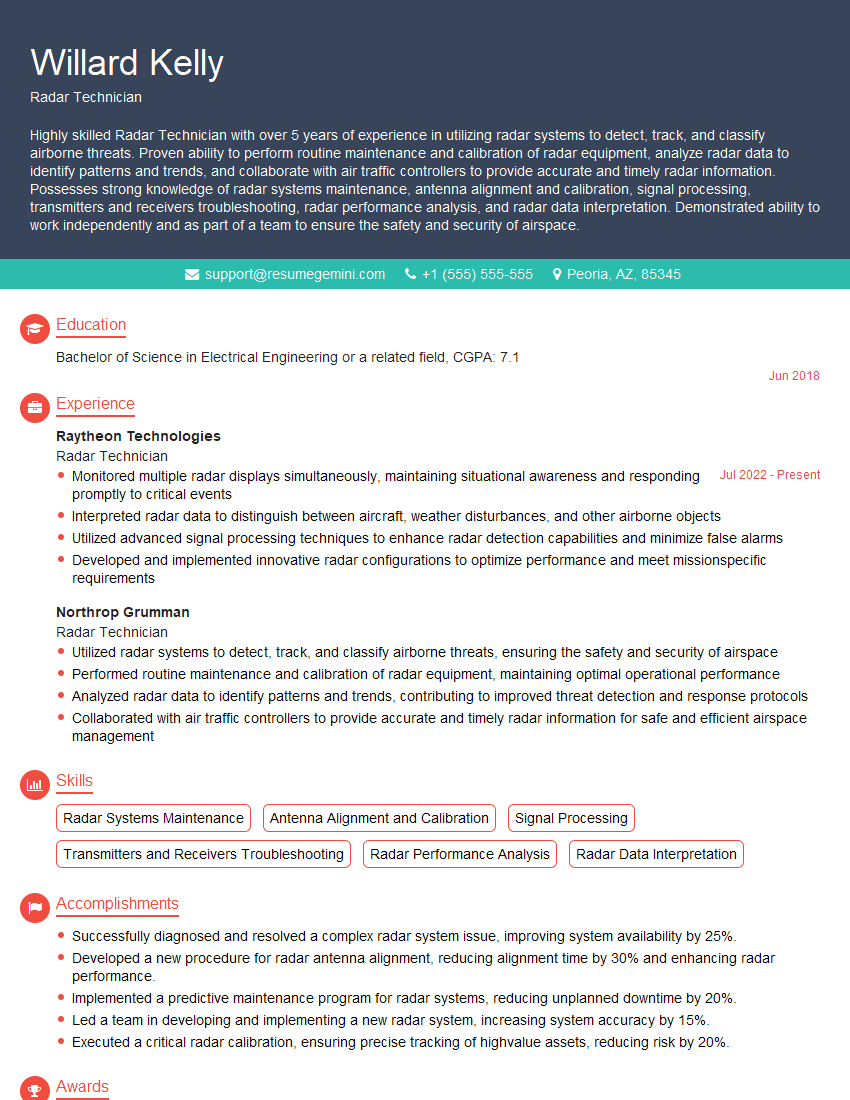
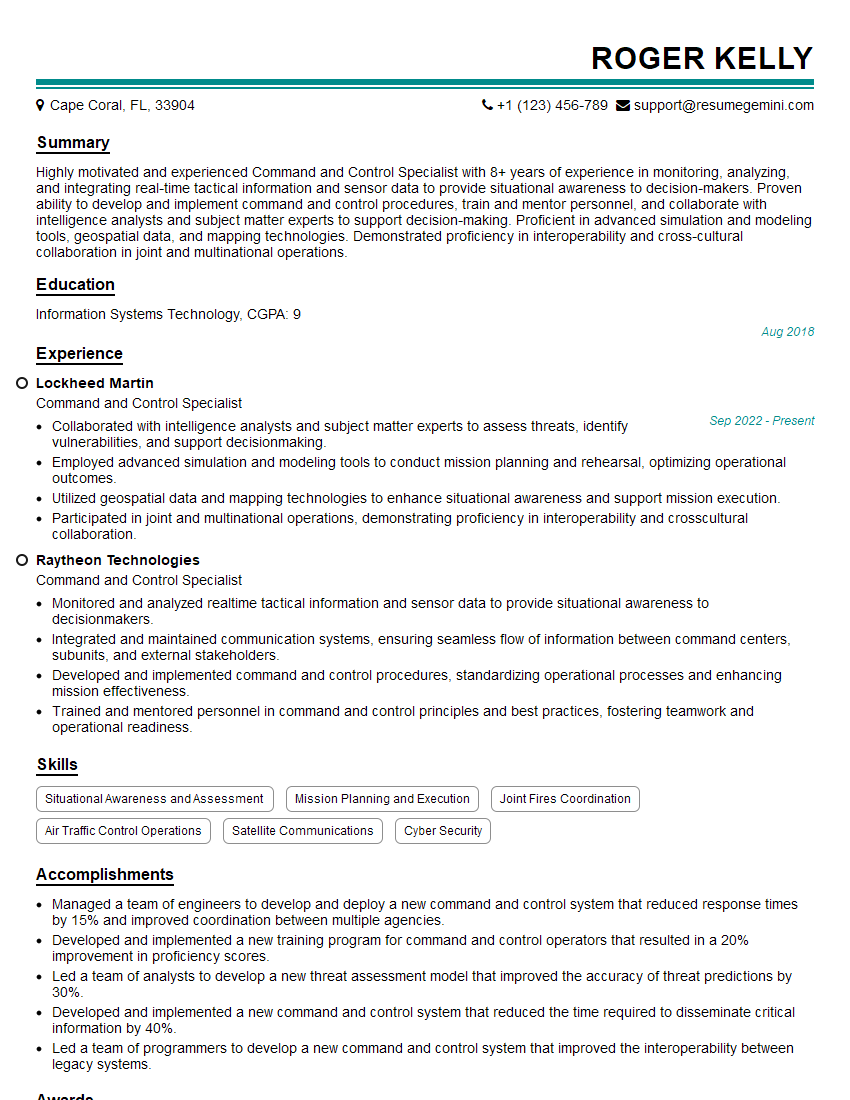
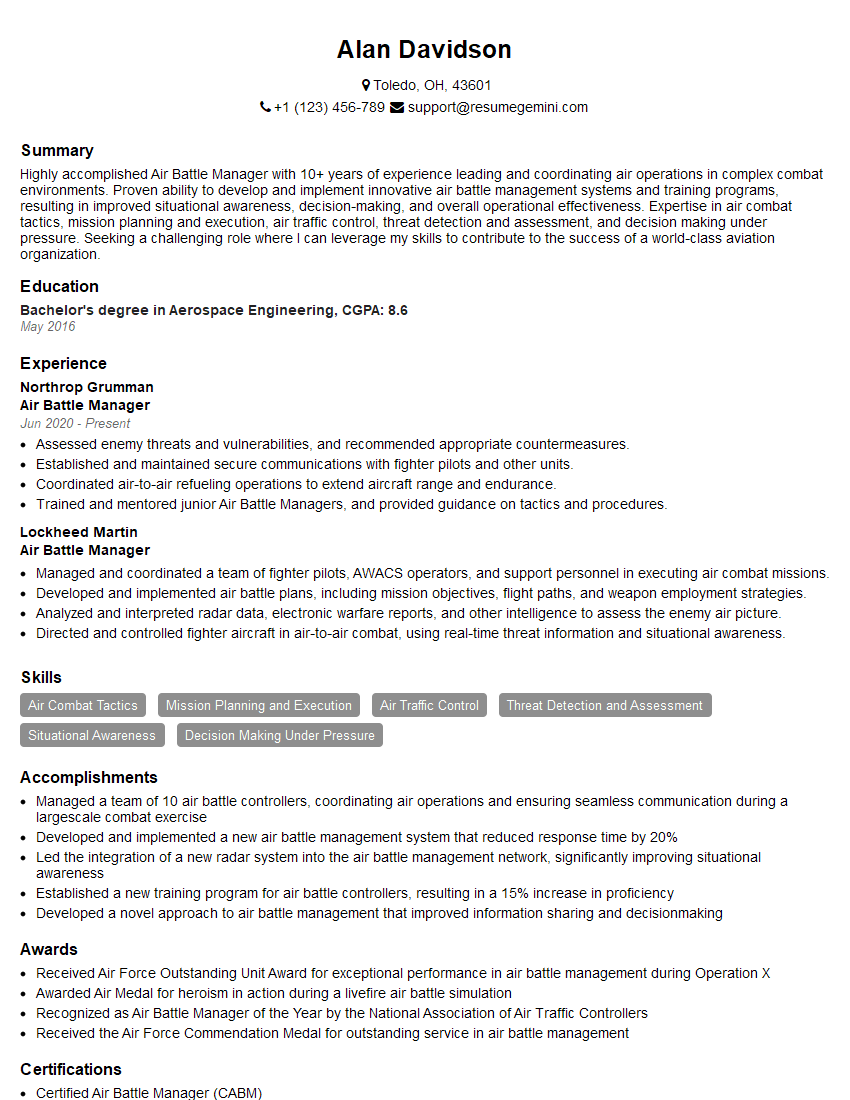
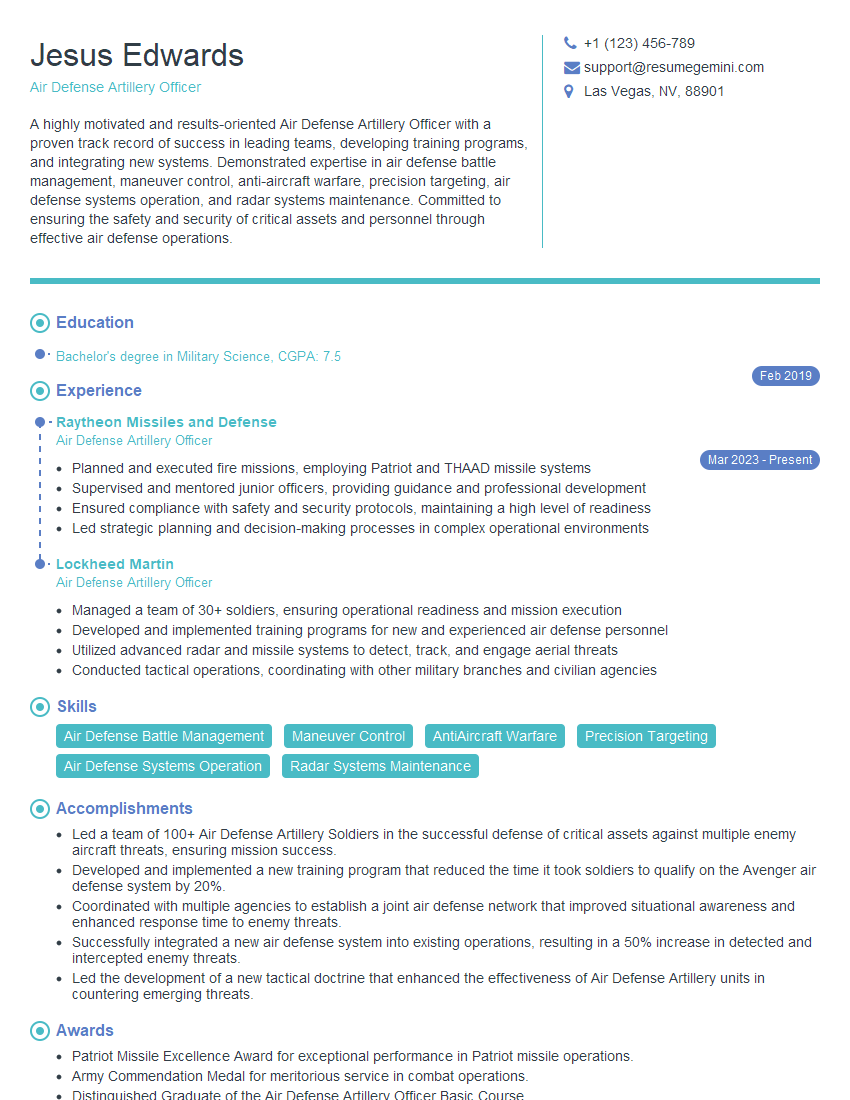
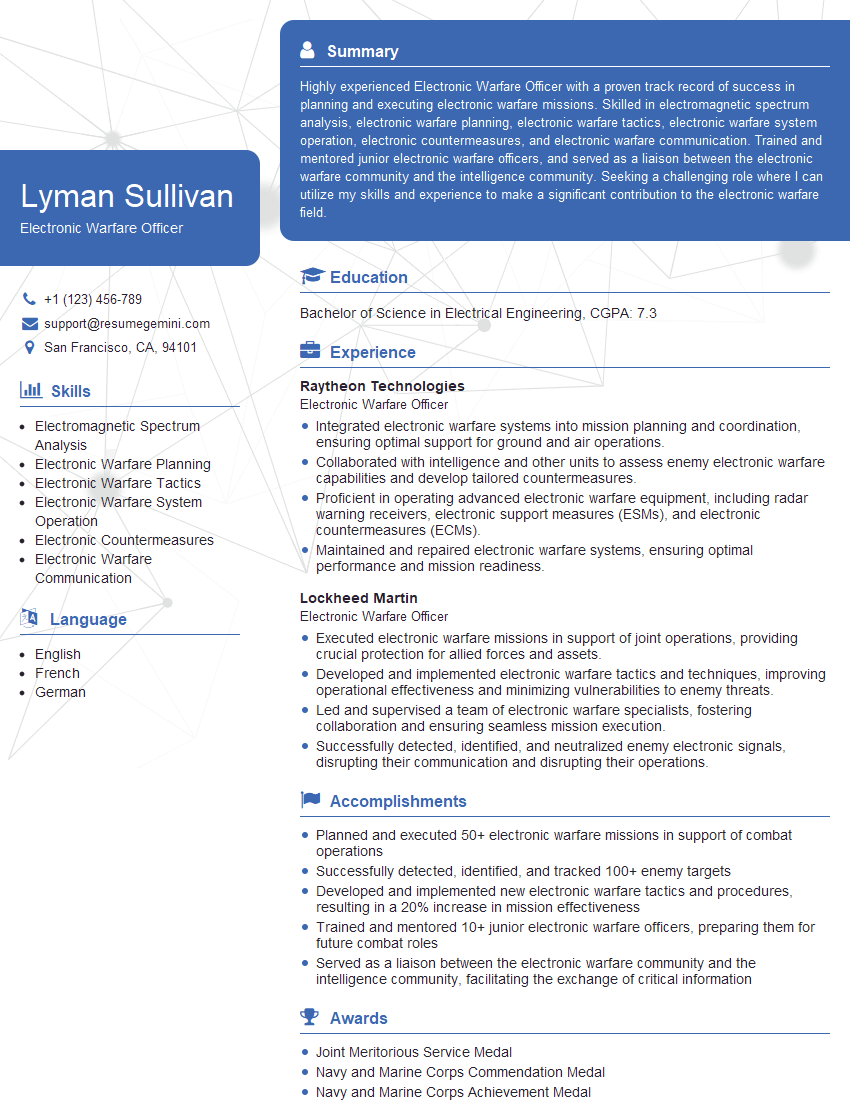
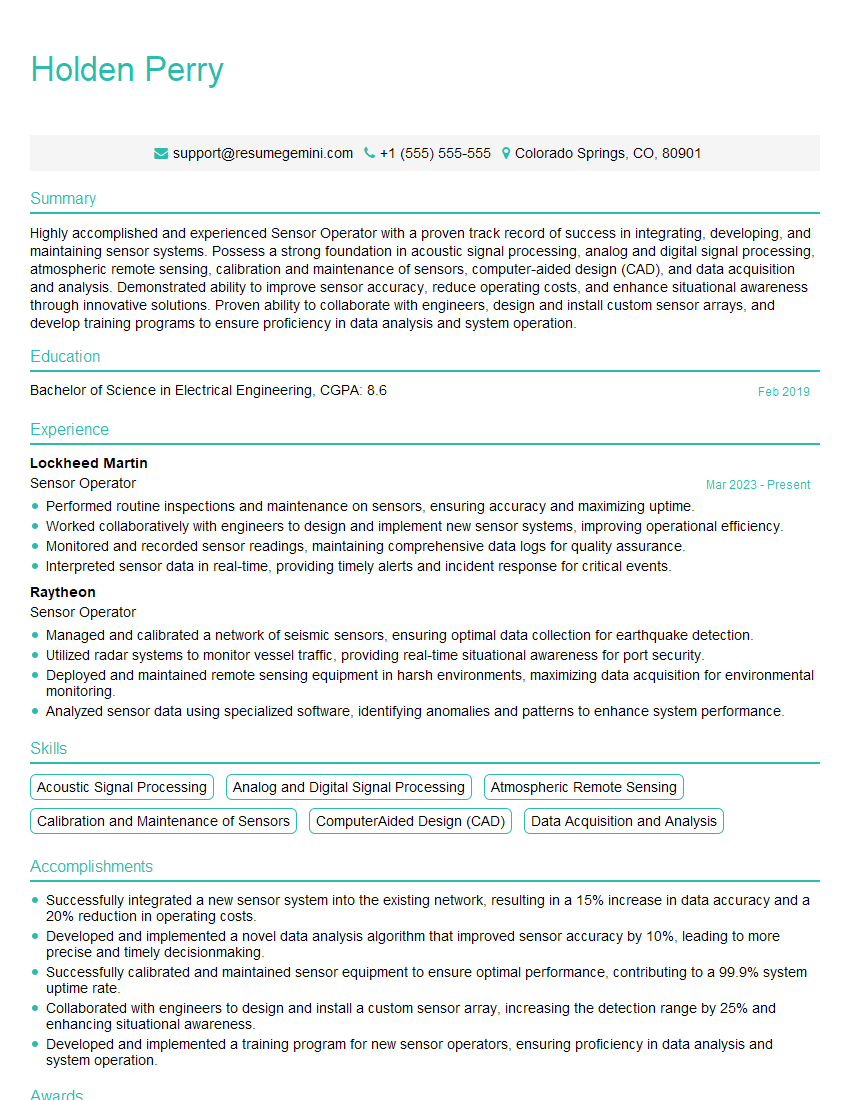
Mastering Air Intercept and Weapon Control opens doors to exciting and challenging career opportunities in a highly specialized field. To maximize your chances of success, a well-crafted resume is crucial. An ATS-friendly resume, optimized for applicant tracking systems, ensures your qualifications are seen by recruiters. ResumeGemini is a trusted resource that can significantly enhance your resume-building experience. We provide examples of resumes tailored specifically to the Air Intercept and Weapon Control field, designed to highlight your skills and experience effectively. Take the next step towards your dream career – build a powerful resume with ResumeGemini today!
Explore more articles
Users Rating of Our Blogs
Share Your Experience
We value your feedback! Please rate our content and share your thoughts (optional).
What Readers Say About Our Blog
Very informative content, great job.
good