Interviews are more than just a Q&A session—they’re a chance to prove your worth. This blog dives into essential Air Operations Coordination interview questions and expert tips to help you align your answers with what hiring managers are looking for. Start preparing to shine!
Questions Asked in Air Operations Coordination Interview
Q 1. Explain the process of flight planning and its importance in Air Operations Coordination.
Flight planning is the meticulous process of defining a flight’s route, altitude, speed, and other crucial parameters before takeoff. It’s the cornerstone of safe and efficient air operations coordination. Think of it as creating a detailed roadmap for an aircraft, ensuring a smooth journey from origin to destination and back.
The process typically involves several steps: determining the flight route using navigational charts and considering weather forecasts; calculating fuel requirements based on distance, altitude, and expected headwinds; filing a flight plan with Air Traffic Control (ATC), providing them with crucial information about the flight; and creating contingency plans for unexpected situations like weather changes or mechanical issues.
The importance of flight planning cannot be overstated. It minimizes risks by anticipating potential challenges, optimizes fuel consumption, and ensures adherence to regulations. A well-executed flight plan contributes significantly to the safety and efficiency of the entire air traffic system by providing ATC with the information needed to manage airspace effectively and prevent collisions.
Q 2. Describe your experience with air traffic control procedures and regulations.
My experience with air traffic control procedures and regulations is extensive. I’ve worked closely with ATC across various airspace classes, from controlled airspace requiring constant communication with ATC to uncontrolled airspace where pilots have more autonomy. I’m proficient in understanding and applying regulations like Instrument Flight Rules (IFR) and Visual Flight Rules (VFR), which dictate flight procedures depending on weather conditions and aircraft capabilities.
For instance, I’ve been involved in situations requiring pilots to adhere strictly to assigned altitudes and routes in busy airspace to maintain separation from other aircraft, avoiding potential mid-air collisions. I’m also experienced in communicating effectively with ATC using standard phraseology, ensuring clear and unambiguous instructions are understood and followed. I am familiar with the ICAO standards and recommended practices which ensure global interoperability of air navigation systems.
Q 3. How do you manage conflicting air traffic requests in a high-pressure situation?
Managing conflicting air traffic requests in a high-pressure situation requires a calm, decisive, and systematic approach. My strategy involves:
- Prioritization: Assessing the urgency and potential risk of each request. Requests involving imminent safety concerns always take precedence.
- Communication: Clearly and concisely communicating with all involved parties – pilots, ATC, and other stakeholders – to understand the situation fully and ensure everyone is on the same page.
- Negotiation and Coordination: Finding a compromise that balances safety, efficiency, and the needs of all parties. This might involve adjusting flight paths, altitudes, or speeds.
- Escalation: If a resolution can’t be reached, escalating the issue to senior personnel for assistance.
- Documentation: Meticulously documenting all communications and decisions made during the conflict resolution process for review and future learning.
For example, in a situation involving two aircraft converging on the same point, I would prioritize the aircraft with the lower altitude and less maneuverability to ensure its safety. I’d coordinate with both pilots and ATC to adjust the trajectories, ensuring a safe separation distance is maintained.
Q 4. What are the key performance indicators (KPIs) for efficient Air Operations Coordination?
Key Performance Indicators (KPIs) for efficient Air Operations Coordination focus on safety, efficiency, and capacity. Some critical KPIs include:
- Safety incidents per flight hour: A lower rate indicates better safety practices.
- On-time performance: Measures the percentage of flights arriving and departing on schedule, reflecting operational efficiency.
- Airspace utilization: Quantifies how effectively the airspace is used, indicating potential improvements in capacity.
- Average delay time: Tracks the average delay experienced by flights, reflecting the impact of unforeseen events.
- Fuel efficiency: Measures fuel consumption per flight, reflecting operational cost-effectiveness and environmental impact.
- Controller workload: Monitors the workload on air traffic controllers to identify potential bottlenecks and areas for optimization. This might involve using advanced ATM technologies to help distribute work.
These KPIs are used to monitor performance, identify areas for improvement, and measure the overall effectiveness of the air operations coordination system.
Q 5. Explain your understanding of airspace classifications and their impact on flight operations.
Airspace classifications categorize airspace based on the level of air traffic control and the type of operations permitted. This impacts flight operations significantly. Think of it as different roads with different speed limits and traffic rules.
- Uncontrolled airspace (Class G): Pilots are responsible for their own separation. Navigation is typically VFR.
- Controlled airspace (Classes A, B, C, D, E): Air traffic control provides separation services, and specific procedures and communications are mandatory.
The impact on flight operations is substantial. For example, flights in Class B airspace (around major airports) require prior clearance from ATC before entry, whereas flights in Class G airspace only need to be aware of other aircraft and obstacles. IFR flights almost exclusively operate within controlled airspace, whereas VFR flights can operate in controlled or uncontrolled airspace depending on weather and other conditions.
Understanding airspace classifications is paramount for safe and efficient flight operations. It dictates the level of control, communication requirements, and navigational procedures necessary for different flights and situations.
Q 6. How do you handle unexpected weather events that disrupt flight operations?
Unexpected weather events, like severe thunderstorms or heavy snow, can significantly disrupt flight operations. My approach involves a multi-faceted response:
- Real-time Monitoring: Continuously monitoring weather radar, forecasts, and pilot reports to anticipate and assess the impact of weather changes.
- Communication and Coordination: Immediately communicating with pilots and ATC to inform them about weather conditions and implement necessary actions, such as rerouting flights, holding patterns, or delaying departures.
- Risk Assessment: Evaluating the level of risk associated with the weather event and taking appropriate actions to mitigate potential hazards.
- Contingency Planning: Having pre-defined contingency plans to address various weather scenarios, ensuring a smooth and efficient response.
- Ground Handling: Coordinating with ground crews to ensure aircraft are safely sheltered or prepared for potential delays or diversions.
For example, during a sudden thunderstorm, I might reroute flights around the affected area, delay departures, or implement holding patterns to keep aircraft separated and safe while the weather passes.
Q 7. Describe your experience with using Air Traffic Management (ATM) systems.
My experience with Air Traffic Management (ATM) systems is extensive. I’m proficient in using various systems for flight planning, data analysis, and air traffic control, including radar systems, flight data processing, and communication systems. I am adept at using these systems to track aircraft, manage airspace, and ensure safe and efficient air traffic flow.
For example, I’ve used advanced radar systems to monitor aircraft positions and velocities, enabling timely interventions to prevent potential conflicts. I’ve also used data analysis tools to identify trends and patterns in air traffic flow, helping optimize airspace utilization and improve efficiency. My experience extends to working with various ATM communication systems, ensuring seamless information exchange between ATC and pilots.
I understand the importance of staying up-to-date with the latest technological advancements in ATM, ensuring I can effectively utilize new tools and systems to enhance safety and efficiency in air operations coordination.
Q 8. How do you ensure safety and security protocols are followed during air operations?
Ensuring safety and security in air operations is paramount. It’s a multi-layered process involving stringent adherence to regulations, robust risk management, and constant vigilance. We achieve this through a combination of proactive measures and reactive responses.
Pre-flight checks and maintenance: Rigorous inspections of aircraft, equipment, and navigational aids are crucial. This includes checking weather forecasts and NOTAMs (Notices to Airmen) for potential hazards.
Crew training and qualification: Pilots and air traffic controllers undergo extensive training to handle various scenarios, including emergencies. Regular refresher courses and simulations keep their skills sharp.
Communication protocols: Clear and concise communication is the backbone of safe operations. Standardized phraseology and procedures minimize ambiguity and prevent misunderstandings.
Contingency planning: We develop detailed plans for handling potential emergencies, such as engine failures, bad weather, or security threats. Regular drills ensure teams are prepared to execute these plans effectively.
Security measures: Airport security protocols, including passenger screening, baggage checks, and perimeter security, are strictly enforced. This is often in collaboration with national security agencies.
For instance, during a recent thunderstorm, we implemented a temporary flight restriction, rerouting several flights to avoid the hazardous weather zone, ensuring the safety of both passengers and crew. This involved real-time coordination with pilots and other air traffic control centers.
Q 9. Explain the role of communication in Air Operations Coordination and how you utilize it.
Communication is the lifeblood of air operations coordination. Effective communication ensures the seamless flow of information between pilots, air traffic controllers, maintenance crews, and other stakeholders. Without it, the system would collapse into chaos.
Standard Phraseology: We use precise, standardized language to avoid ambiguity. Think of it as a common language for everyone involved, irrespective of their native tongue. This eliminates the risk of misinterpretations leading to accidents.
Multiple Communication Channels: We utilize various communication channels like VHF radio, data links (like ADS-B), and telephone lines to ensure redundancy and reach different stakeholders. For instance, we might use VHF for immediate instructions to pilots, and data links for more detailed flight plan information.
Active Listening and Confirmation: It’s not just about transmitting information; it’s about receiving and confirming its correct understanding. We frequently use readbacks and acknowledgements to ensure clarity and prevent errors. For example, after issuing an instruction to a pilot, we would expect a readback confirming they understand and will comply.
Coordination with other agencies: We work closely with meteorological services, emergency services, and other air traffic control centers to share information and coordinate responses. This is particularly crucial during emergencies or large-scale events.
For example, I once had to coordinate a complex emergency landing involving a bird strike. Clear and immediate communication with the pilot, emergency services, and the airport fire department was critical in ensuring a safe outcome. This involved quickly conveying the pilot’s situation and coordinating a safe landing path and immediate ground support.
Q 10. Describe your experience with emergency response procedures in air traffic control.
Emergency response procedures are integral to air traffic control. My experience involves handling various emergencies, from engine failures and medical emergencies to hijackings and severe weather events. Our training emphasizes quick thinking, decisive action, and adherence to established protocols.
Immediate action and assessment: Upon receiving an emergency declaration, we immediately assess the situation, determining the nature of the emergency and its potential impact.
Prioritization and resource allocation: We prioritize emergency response based on the severity of the situation, allocating available resources – such as emergency services, runways, and personnel – efficiently.
Coordination with multiple agencies: We coordinate closely with emergency medical services, fire departments, law enforcement, and other relevant agencies. Effective communication during a crisis is critical for a successful outcome.
Post-incident analysis: After the emergency, a thorough investigation is carried out to identify contributing factors and lessons learned to prevent future occurrences. This helps in improving emergency response procedures.
In one instance, I coordinated the emergency landing of a small aircraft experiencing engine failure. By quickly directing the pilot to the nearest suitable runway and coordinating with emergency services on the ground, we ensured a safe landing and the crew’s well-being. Post-incident review highlighted the importance of clear communication and quick decision-making under pressure.
Q 11. How familiar are you with various types of aircraft and their operational limitations?
Familiarity with various aircraft types and their operational limitations is crucial for effective air operations coordination. This knowledge extends beyond basic aircraft identification to encompass performance characteristics, handling qualities, and specific operational constraints.
Aircraft performance: I understand the differences in takeoff and landing distances, climb rates, speeds, and fuel consumption for different aircraft types. This knowledge is essential for sequencing aircraft efficiently and safely.
Handling qualities: Understanding how different aircraft handle in various conditions (e.g., wind, turbulence) helps in making informed decisions about runway assignments, sequencing, and separation.
Operational limitations: I’m aware of the operational limitations of different aircraft, such as weight restrictions, altitude restrictions, and navigational equipment capabilities. This is crucial for ensuring compliance with safety regulations.
Emergency procedures: I am familiar with the specific emergency procedures for various aircraft types, including emergency landing procedures, communication protocols, and safety equipment.
For example, I know that a large commercial airliner requires a significantly longer runway and higher approach speed compared to a smaller general aviation aircraft. Understanding these differences prevents conflicts and ensures safe operations. This knowledge is applied on a daily basis when managing runway usage and separation between aircraft.
Q 12. How do you prioritize tasks during peak air traffic periods?
Prioritizing tasks during peak air traffic periods requires a systematic approach combining established procedures and real-time judgment. It’s a dynamic process that demands constant adaptation and flexibility.
First-in, first-out (FIFO) principle: While not always strictly applicable, it forms a baseline. Aircraft are generally processed in the order they arrive, with exceptions based on priority.
Emergency situations: Emergency situations always take precedence. Aircraft declaring emergencies are immediately given priority access to runways, airspace, and other resources.
Aircraft type and size: Larger aircraft often require longer runways and more time for takeoff and landing, influencing their placement in the sequence.
Weather conditions: Adverse weather conditions can necessitate prioritization of aircraft with shorter landing distances and superior handling characteristics.
Runway availability: If runways are limited, prioritization might focus on minimizing delays and maximizing runway utilization.
Real-time adjustments: Constant monitoring of the situation and flexible adjustment of the sequence are essential to maintain a smooth workflow and prevent delays or conflicts.
Imagine a scenario with a sudden influx of aircraft during a busy afternoon and an approaching thunderstorm. My priority would be to ensure safe landing of the approaching aircraft, while simultaneously managing departure clearances. Using predictive modeling and weather information, I would adjust the arrival and departure sequencing dynamically to manage potential delays and minimize risks associated with adverse weather.
Q 13. Describe your experience with conflict resolution in a team environment within air operations.
Conflict resolution is an inevitable part of team work in air operations. Disagreements can arise from workload pressure, differing interpretations of procedures, or personality clashes. Effective conflict resolution is essential to maintain a safe and efficient operating environment.
Open communication: The first step is to foster an environment of open communication where team members feel comfortable expressing their concerns and perspectives without fear of reprisal.
Active listening: Truly listening to understand the other person’s point of view, rather than just preparing a response, is critical in resolving conflict constructively.
Focus on the issue, not the person: Keeping the discussion focused on the specific issue at hand, rather than resorting to personal attacks, promotes productive dialogue.
Find common ground: Identifying shared goals and values helps to build consensus and find solutions acceptable to all parties involved.
Seek mediation when necessary: If disagreements persist, seeking guidance from a supervisor or experienced team member can be beneficial in finding a mutually satisfactory solution.
For example, I once encountered a conflict between two controllers regarding runway assignments during a busy period. By actively listening to both parties and focusing on the operational challenges, we were able to find a compromise that ensured safe and efficient operations. This involved a compromise in runway usage to accommodate the peak traffic.
Q 14. Explain the importance of maintaining accurate records and documentation in Air Operations.
Maintaining accurate records and documentation is critical for several reasons in air operations. These records serve as a foundation for safety investigations, operational analysis, and regulatory compliance. They are essential for understanding past events, identifying trends, and improving future operations.
Safety investigations: Detailed records are invaluable during safety investigations. They provide crucial information for identifying the causes of incidents and implementing corrective actions. This helps in understanding what happened and preventing similar occurrences.
Operational analysis: Data from flight plans, air traffic control communications, and weather reports allows for analysis of operational efficiency, identifying bottlenecks, and improving processes. This data-driven approach enhances operational efficiency and safety.
Regulatory compliance: Accurate record-keeping ensures compliance with national and international regulations. This is crucial to maintain operational licenses and avoid penalties.
Historical data: Records provide valuable historical data for long-term trend analysis, which helps in predicting and preparing for future scenarios.
Auditing and accountability: Detailed records are essential for auditing purposes and demonstrate accountability for decisions and actions.
For instance, meticulously maintained flight logs and ATC recordings are essential in investigating accidents. These records provide a detailed timeline of events, communications, and decisions made, helping in determining the cause of an incident and preventing similar incidents in the future.
Q 15. What software or systems are you proficient in using for air operations management?
My proficiency in air operations management software spans several key systems. I’m highly experienced with AirBOSS, a comprehensive system for managing flight schedules, crew assignments, and aircraft maintenance. Its intuitive interface allows for efficient tracking of all operational aspects. I’m also adept at using AIMS (Airport Information Management System) for real-time monitoring of airport operations, including runway availability, gate assignments, and potential delays. Furthermore, my experience includes working with FlightAware for tracking aircraft in real-time, analyzing flight data, and predicting potential issues. Finally, I have a strong understanding of various weather data systems like ADDS (Aviation Data Dissemination System) to access crucial meteorological information for flight planning and execution.
Career Expert Tips:
- Ace those interviews! Prepare effectively by reviewing the Top 50 Most Common Interview Questions on ResumeGemini.
- Navigate your job search with confidence! Explore a wide range of Career Tips on ResumeGemini. Learn about common challenges and recommendations to overcome them.
- Craft the perfect resume! Master the Art of Resume Writing with ResumeGemini’s guide. Showcase your unique qualifications and achievements effectively.
- Don’t miss out on holiday savings! Build your dream resume with ResumeGemini’s ATS optimized templates.
Q 16. How do you utilize meteorological information to inform flight operations decisions?
Meteorological information is absolutely critical to safe and efficient flight operations. I utilize weather data from various sources, including ADDS and specialized aviation weather briefings, to assess potential risks and inform decisions. For example, if a forecast predicts significant icing conditions at a specific altitude, I would advise pilots to adjust their flight plan to avoid those altitudes or potentially delay the flight until conditions improve. Similarly, strong headwinds or turbulence forecasts would influence fuel calculations and flight timing. I use this data not only reactively to manage immediate issues but also proactively during flight planning to minimize delays and ensure the safety of the flight crew and passengers. Understanding wind shear forecasts allows for adjustments in approach procedures for safer landings, particularly critical during low visibility conditions. Analyzing temperature and humidity data helps in determining runway conditions and potential for reduced braking performance.
Q 17. Describe a challenging situation you faced in air operations and how you overcame it.
During a particularly busy holiday season, we experienced an unexpected and significant ground delay at our primary hub due to a severe thunderstorm. This resulted in cascading delays across our entire network, impacting numerous flights and creating considerable passenger frustration. To address this, I immediately initiated a multi-pronged approach. First, we activated our contingency plan, which involved rerouting flights to alternative airports where weather conditions were favorable. Second, I coordinated closely with air traffic control to expedite the departure and arrival processes, prioritizing flights with the most urgent passenger needs. Third, I leveraged our communication systems to keep passengers updated on the delays and provide alternative solutions. Through efficient communication, proactive decision-making, and effective resource allocation, we were able to minimize disruption and mitigate passenger frustration. It was a challenging situation, but it underscored the importance of robust contingency planning and efficient teamwork under pressure.
Q 18. How do you ensure effective communication between pilots, ground crews, and air traffic control?
Effective communication is the backbone of safe and efficient air operations. I ensure clear and consistent communication using multiple channels. Standard operating procedures (SOPs) dictate the use of precise aviation terminology and established communication protocols between pilots, ground crews, and air traffic control. We utilize dedicated radio frequencies for air-to-ground communication, adhering strictly to established procedures. For non-urgent updates or detailed information sharing, we rely on digital communication platforms that provide a written record for clarity and accountability. Regular briefings and debriefings are crucial for maintaining a shared understanding of operational status and potential challenges. Building strong relationships based on trust and mutual respect is paramount, fostering effective collaborative problem-solving across all teams.
Q 19. What are some common challenges faced in Air Operations Coordination, and how would you address them?
Common challenges in air operations coordination include unforeseen weather disruptions, unexpected aircraft maintenance issues, air traffic congestion, and crew scheduling conflicts. To address these, I advocate for robust contingency planning, proactive risk assessment, and utilizing real-time data analysis. For weather disruptions, alternative flight plans and rerouting strategies are crucial. Maintenance issues require proactive maintenance schedules and efficient communication with engineering teams. Air traffic congestion necessitates close coordination with air traffic control and implementing optimized flight plans. Crew scheduling conflicts can be minimized through advanced rostering and proactive management of crew availability. Investing in advanced technologies like predictive analytics for weather and maintenance can proactively mitigate many of these challenges.
Q 20. Explain the concept of ‘sterile cockpit’ and its importance.
The ‘sterile cockpit’ rule is a critical safety procedure that restricts non-essential conversation and activities during critical phases of flight, such as takeoff, landing, and low-visibility operations. During these times, the focus must be solely on piloting the aircraft. The importance of this stems from the fact that distractions, even seemingly minor ones, can significantly impair a pilot’s performance and judgment, potentially leading to accidents. By minimizing distractions during critical stages of flight, the sterile cockpit enhances situational awareness and helps pilots maintain the highest level of concentration, ensuring the safety of everyone onboard.
Q 21. Describe your understanding of NOTAMs (Notice to Air Missions) and their use in flight planning.
NOTAMs, or Notices to Air Missions, are essential safety messages disseminated to aircrew, providing critical information about potential hazards or changes affecting flight operations. These can include runway closures, navigational aid outages, construction near airports, or temporary flight restrictions. During flight planning, I meticulously review all relevant NOTAMs to ensure the flight plan is safe and compliant. Failure to account for NOTAM information could result in unexpected delays, rerouting, or even more serious safety risks. NOTAMs are a crucial element of risk mitigation in aviation.
Q 22. How do you contribute to a safety-conscious culture within the air operations team?
A safety-conscious culture isn’t just about following rules; it’s about fostering a mindset where everyone prioritizes safety above all else. My contribution starts with proactive engagement. I champion open communication, encouraging team members to report near misses or concerns without fear of reprisal. We conduct regular safety briefings, analyzing past incidents and using them as learning opportunities, not blame-finding exercises. This includes incorporating human factors training to address issues like fatigue management and stress reduction. We also actively participate in safety audits and implement corrective actions promptly. For example, if a recurring issue emerges, such as miscommunication during handovers, we’ll implement a standardized checklist or improve our communication protocols. Finally, I believe in leading by example. My own adherence to safety protocols, from meticulously double-checking flight plans to thoroughly briefing my team, sets the tone for the entire operation.
Q 23. Explain your knowledge of different types of flight rules (VFR, IFR).
Flight rules dictate the conditions under which aircraft can operate. Visual Flight Rules (VFR) allow flights primarily using visual references – pilots navigate by seeing the ground and other aircraft. VFR operations require sufficient visibility and cloud clearance. Think of it like driving a car on a clear day: you rely on your senses to navigate. Conversely, Instrument Flight Rules (IFR) allow flights in instrument meteorological conditions (IMC), when visibility is poor or cloud cover is substantial. Pilots rely on instruments and air traffic control guidance to navigate safely. This is like driving a car in heavy fog – you rely on your instruments and the guidance of others (like road signs or GPS). IFR flights require pilots to hold specific certifications and the aircraft to be instrument-equipped. The difference is critical for safety and efficient air space management. In my experience, transitioning seamlessly between VFR and IFR procedures is paramount to managing complex air operations, especially in varied weather conditions.
Q 24. How do you manage discrepancies in flight data or reporting?
Discrepancies in flight data or reporting are a serious concern. My approach is methodical and follows a structured process. First, I verify the source of the discrepancy. This might involve cross-referencing data from different systems, like flight tracking software and pilot logs. Second, I investigate the potential causes. Is it a data entry error, a sensor malfunction, or a genuine anomaly? Third, I implement corrective actions. This could range from simple data correction to initiating a full investigation if a safety issue is suspected. We use a collaborative approach, involving pilots, maintenance personnel, and IT support as necessary. For example, a discrepancy between reported fuel levels and calculated consumption might trigger a deeper look at fuel gauge accuracy or a review of flight planning procedures. Documenting every step of the investigation and resolution is crucial for future reference and continuous improvement of our processes.
Q 25. Describe your experience with performance monitoring and analysis in air operations.
Performance monitoring and analysis are key to optimizing operational efficiency and safety. We utilize various tools to track key performance indicators (KPIs), such as on-time departures and arrivals, fuel efficiency, and turnaround times. I analyze this data to identify trends and areas for improvement. For example, if we see a consistent delay in a particular flight leg, we investigate the cause – could it be weather patterns, air traffic congestion, or ground handling issues? Then we develop strategies to mitigate those issues. We also use data to evaluate the effectiveness of implemented changes, like new flight procedures or training programs. A strong data-driven approach not only improves efficiency but also highlights potential safety risks before they materialize, making it an essential aspect of air operations management.
Q 26. What are your strategies for maintaining situational awareness in a dynamic air traffic environment?
Maintaining situational awareness in a dynamic environment requires a multi-faceted approach. Firstly, I utilize advanced technologies, such as radar systems and flight tracking software, to gain a comprehensive view of the airspace. Secondly, I rely on effective communication with air traffic control and pilots, ensuring constant information flow. Thirdly, I actively look for potential conflicts or anomalies, proactively addressing them before they escalate. Thinking ahead is critical. For instance, anticipating potential weather changes or unexpected air traffic congestion allows us to make informed decisions to prevent delays or disruptions. A strong team with excellent communication is key. The use of checklists and briefings allows everyone to be on the same page and helps maintain situational awareness across the team. Finally, regular training on emergency procedures and conflict resolution reinforces the ability to react efficiently in challenging scenarios.
Q 27. How would you handle a communication breakdown between air traffic control and a pilot?
Communication breakdowns are a serious safety concern. My response would be swift and decisive. First, I’d attempt to re-establish communication using alternative channels if possible. This might involve contacting the pilot on a different frequency or using emergency communication methods. Second, I’d coordinate with other air traffic control units or ground personnel to locate the aircraft and determine its status. Third, I would follow established emergency procedures, potentially including initiating a search and rescue operation if necessary. The priority is always the safety of the aircraft and its occupants. A thorough post-incident investigation would then be carried out to determine the cause of the communication failure and implement measures to prevent recurrence. This could involve improved communication equipment, updated procedures, or enhanced training.
Q 28. What steps do you take to ensure compliance with all relevant aviation regulations and standards?
Compliance is paramount in air operations. We adhere strictly to all relevant regulations set by governing bodies such as the FAA (Federal Aviation Administration) or EASA (European Union Aviation Safety Agency). This involves maintaining detailed records of all operations, ensuring all personnel hold the necessary licenses and certifications, and conducting regular safety audits. We proactively monitor regulatory updates and adapt our procedures accordingly. We have a dedicated compliance officer who ensures we remain up-to-date with regulations and best practices. Additionally, we maintain a robust safety management system (SMS) which helps us identify and mitigate risks, continuously improving our safety performance. Any non-compliance is addressed immediately and thoroughly documented, demonstrating our unwavering commitment to safety and regulatory compliance.
Key Topics to Learn for Air Operations Coordination Interview
- Air Traffic Management Principles: Understanding airspace classifications, flight rules (VFR/IFR), and procedures for managing air traffic flow. Practical application: Explain how you would handle a conflict between two aircraft approaching the same runway.
- Communication and Coordination: Mastering clear, concise communication with pilots, air traffic controllers, and other stakeholders. Practical application: Describe your experience in a high-pressure communication scenario and how you maintained effective coordination.
- Emergency Procedures and Response: Knowledge of emergency protocols and procedures for handling incidents and accidents. Practical application: Outline your understanding of the steps involved in responding to an aircraft emergency.
- Flight Planning and Navigation: Familiarity with flight planning tools and navigation systems. Practical application: Explain how you would assist a pilot with flight planning, considering weather conditions and airspace restrictions.
- Aviation Meteorology: Understanding weather patterns and their impact on flight operations. Practical application: Describe how different weather conditions would affect flight planning and decision-making.
- Air Operations Regulations and Compliance: Thorough understanding of relevant aviation regulations and safety standards. Practical application: Explain how you ensure compliance with safety regulations during air operations.
- Data Analysis and Decision-Making: Ability to analyze data from various sources (e.g., flight plans, weather reports) to make informed decisions. Practical application: Describe a situation where you had to analyze data to make a critical decision in a time-sensitive manner.
- Teamwork and Leadership: Effective collaboration with colleagues and leading a team in a demanding environment. Practical application: Explain your approach to teamwork and leadership in a complex air operation scenario.
Next Steps
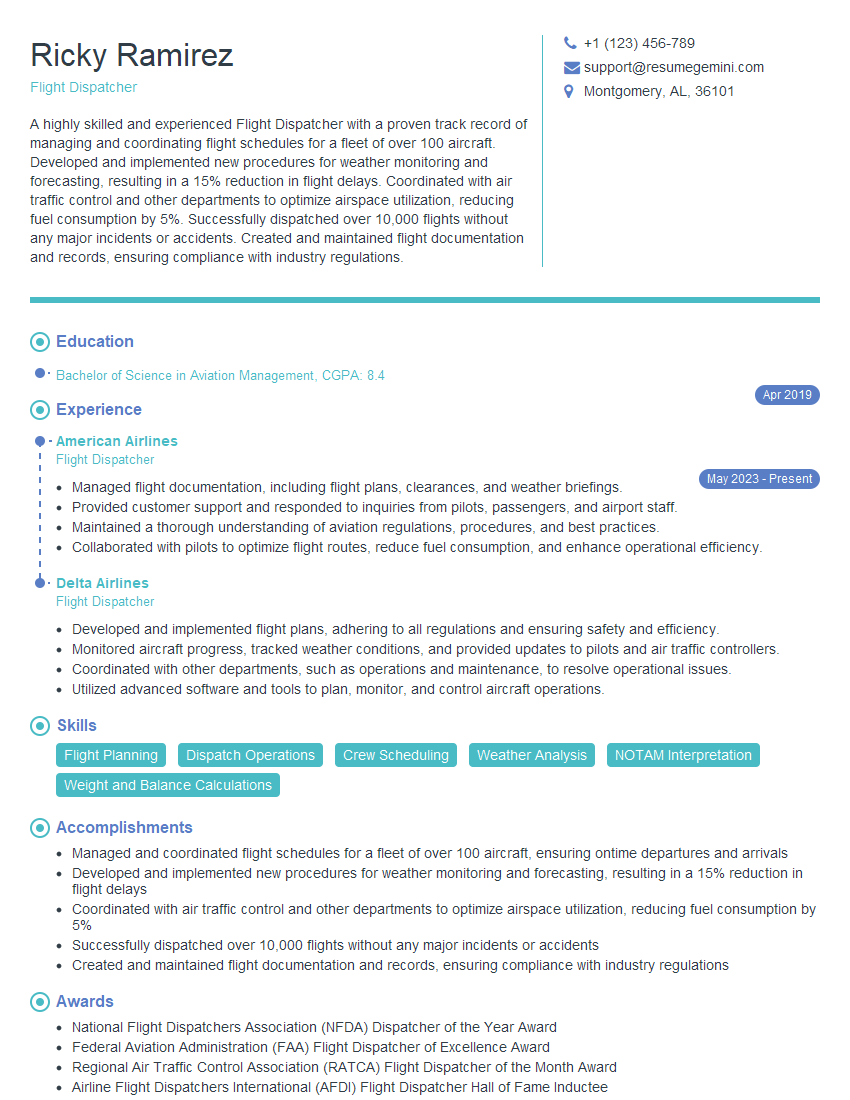
Mastering Air Operations Coordination opens doors to exciting and rewarding career opportunities within the aviation industry. To maximize your job prospects, it’s crucial to present your skills and experience effectively through a well-crafted resume. An ATS-friendly resume is key to getting your application noticed by recruiters and hiring managers. We strongly encourage you to leverage ResumeGemini to build a professional and impactful resume that showcases your expertise in Air Operations Coordination. ResumeGemini provides valuable tools and resources, including examples of resumes tailored specifically to this field, to help you create a standout application. Take the next step towards your dream career today!
Explore more articles
Users Rating of Our Blogs
Share Your Experience
We value your feedback! Please rate our content and share your thoughts (optional).
What Readers Say About Our Blog
Very informative content, great job.
good