Unlock your full potential by mastering the most common Airborne Imagery interview questions. This blog offers a deep dive into the critical topics, ensuring you’re not only prepared to answer but to excel. With these insights, you’ll approach your interview with clarity and confidence.
Questions Asked in Airborne Imagery Interview
Q 1. Explain the difference between orthorectification and georeferencing.
Both georeferencing and orthorectification are crucial steps in processing airborne imagery to make it geographically accurate, but they achieve this in different ways. Georeferencing involves assigning geographic coordinates (latitude and longitude) to the image, essentially linking it to a known map projection. Think of it like pinning a picture to a map – the picture is there, but it might be slightly skewed or distorted. Orthorectification goes further; it corrects for geometric distortions caused by terrain relief, sensor tilt, and lens distortion, resulting in a true orthographic projection. This means every point in the image has a precise, accurate location on the Earth’s surface. In essence, georeferencing provides a basic geographic location, while orthorectification ensures geometric accuracy.
Example: Imagine an aerial image of a mountain range. Georeferencing would simply tell you where the image is located on the Earth. Orthorectification, however, would correct the image so that the slopes appear true to their actual angles, preventing buildings on the slopes from appearing distorted or stretched.
Q 2. Describe the various types of airborne sensors used for imagery acquisition.
Airborne sensors for imagery acquisition come in various types, each with its strengths and weaknesses. These can be broadly categorized based on the type of radiation they detect:
- Frame Cameras: These capture images similar to a traditional camera, providing high spatial resolution. They are suitable for applications needing detailed imagery, but their coverage is limited by the field of view.
- Linear Array Sensors (Pushbroom): These sensors use a linear array of detectors to scan the terrain, creating a continuous swath of imagery. They are often used for higher-speed acquisition and larger area coverage compared to frame cameras.
- Multispectral Sensors: These capture images in multiple spectral bands, allowing for detailed vegetation analysis, mineral mapping, and other applications needing spectral information beyond the visible spectrum. Common examples include sensors that capture imagery in the red, green, blue, near-infrared (NIR), and other spectral bands.
- Hyperspectral Sensors: These capture images in hundreds of narrow, contiguous spectral bands, providing extremely detailed spectral information which allows for very fine material identification. They are often used in specialized research and monitoring applications.
- LiDAR (Light Detection and Ranging): While not strictly an imaging sensor, LiDAR utilizes lasers to measure distances to the ground, generating highly accurate three-dimensional point clouds. These point clouds are then used to create Digital Elevation Models (DEMs) and other valuable spatial datasets.
Q 3. What are the advantages and disadvantages of using different spectral bands in airborne imagery?
Using different spectral bands in airborne imagery offers significant advantages in various applications, but also has some limitations.
- Advantages:
- Vegetation Analysis: Near-infrared (NIR) bands are highly sensitive to chlorophyll, allowing for assessing vegetation health and density. Red and green bands provide information on plant species and structure.
- Mineral Mapping: Specific spectral bands are sensitive to the reflectance properties of different minerals, enabling identification and mapping of geological features.
- Water Quality Assessment: Different spectral bands allow the measurement of water depth, turbidity, and chlorophyll concentration.
- Disadvantages:
- Data Volume: Utilizing more bands increases the data volume, which requires more storage and processing power.
- Cost: Sensors with more spectral bands are typically more expensive.
- Atmospheric Effects: Certain bands are more susceptible to atmospheric scattering and absorption, requiring more complex atmospheric correction methods.
Example: In agriculture, the use of NIR bands can indicate crop stress, allowing farmers to make timely interventions. In urban planning, multispectral data can distinguish between impervious surfaces (roads, buildings), vegetation, and water bodies, aiding in urban heat island studies.
Q 4. How do atmospheric effects impact airborne imagery, and how can they be corrected?
Atmospheric effects, such as scattering and absorption of light by gases and aerosols, significantly impact airborne imagery. Scattering can cause a hazy appearance and reduce image contrast, while absorption can alter the spectral signature of objects. These effects can lead to inaccurate estimations of surface reflectance and introduce errors in various analyses.
Atmospheric correction techniques aim to mitigate these effects. These techniques use atmospheric models and reference data (e.g., measurements of atmospheric conditions) to estimate and remove the atmospheric contribution from the measured radiance, producing more accurate reflectance values. Common methods include dark object subtraction, empirical line methods, and radiative transfer models. Accurate atmospheric correction is crucial for reliable quantitative analysis of airborne imagery.
Q 5. Explain the concept of Ground Sampling Distance (GSD) and its importance.
Ground Sampling Distance (GSD) refers to the linear distance on the ground that corresponds to one pixel in a remotely sensed image. It determines the level of detail visible in the imagery. A smaller GSD means higher spatial resolution, allowing you to see finer details, while a larger GSD indicates lower resolution and less detail.
Importance: GSD is crucial in determining the suitability of an image for specific applications. For tasks requiring fine detail, such as infrastructure inspection or object detection, a small GSD is necessary. For broader-scale applications such as land cover mapping, a larger GSD might be sufficient. The selection of appropriate GSD ensures that sufficient detail is captured while keeping data management and processing manageable.
Example: An image with a GSD of 0.5 meters will show much more detail than an image with a GSD of 5 meters. The higher resolution image will clearly show individual cars in a parking lot, whereas the lower-resolution image may only show the general parking lot area.
Q 6. Describe the process of creating a Digital Elevation Model (DEM) from airborne LiDAR data.
Creating a Digital Elevation Model (DEM) from airborne LiDAR data involves several steps:
- Data Acquisition: Airborne LiDAR systems emit laser pulses that measure the time it takes for the pulses to return to the sensor. This provides accurate distance measurements (range) to the ground surface and any objects above it.
- Point Cloud Processing: The returned signals are processed to create a three-dimensional point cloud. This involves filtering out noise, classifying points based on the surface they represent (ground, vegetation, buildings), and georeferencing the points.
- Ground Point Extraction: Algorithms are used to identify and extract ground points from the point cloud. This often involves sophisticated filtering techniques to separate ground points from points representing objects above the ground.
- Interpolation: The extracted ground points are used to interpolate a continuous surface representing the ground’s elevation. Several interpolation methods are available, such as kriging, inverse distance weighting, and triangulated irregular networks (TINs).
- DEM Generation: The interpolated surface is then rasterized to create a DEM, a grid of elevation values. The grid cell size depends on the required resolution and the density of the LiDAR point cloud.
The resulting DEM represents the terrain’s elevation, which is critical for various applications like hydrological modeling, slope analysis, and volume calculations.
Q 7. What are common file formats used for storing airborne imagery data?
Several common file formats are used for storing airborne imagery data, each with its strengths and limitations:
- GeoTIFF (.tif, .tiff): A widely used format that supports georeferencing and various compression techniques. It’s a flexible and versatile choice.
- ERDAS Imagine (.img): A proprietary format used by ERDAS Imagine software, known for its ability to handle large datasets and various spectral bands.
- HDF5 (.h5, .hdf5): A hierarchical data format suitable for storing very large and complex datasets, often used for hyperspectral imagery.
- NITF (National Imagery Transmission Format): A military standard for storing imagery, providing robust data management and metadata capabilities. Often used for high-resolution imagery with extensive associated information.
- JPEG2000 (.jp2): A wavelet-based compression format offering high compression ratios while maintaining good image quality.
The choice of file format often depends on the specific application, software used, and the size and complexity of the dataset.
Q 8. Explain the principles of photogrammetry and its application in airborne imagery analysis.
Photogrammetry is the science of making measurements from photographs. In airborne imagery analysis, it’s the process of using overlapping aerial photographs to create 3D models and accurate maps of the Earth’s surface. Think of it like this: your eyes see a slightly different perspective of an object depending on where you stand. Photogrammetry uses this principle, employing multiple images from different viewpoints to reconstruct a detailed 3D representation. This involves several steps: image orientation (determining the camera’s position and orientation for each image), point cloud generation (identifying corresponding points in multiple images to build a 3D point cloud), and surface modeling (creating a 3D surface from the point cloud). Applications range from creating detailed topographic maps for infrastructure planning to generating digital elevation models (DEMs) for flood risk assessment, and even modeling archaeological sites with precision.
For example, imagine needing to plan a new highway route. Airborne imagery coupled with photogrammetry allows engineers to accurately model the terrain, assess environmental impact, and plan optimal routes, minimizing costs and environmental disruptions. Another application is precision agriculture, where drone imagery is processed using photogrammetry to create detailed 3D models of fields, enabling farmers to optimize irrigation and fertilizer application.
Q 9. How do you assess the quality of airborne imagery data?
Assessing airborne imagery quality involves several key aspects. Firstly, spatial resolution refers to the level of detail; higher resolution means smaller features are visible. We assess this by examining the ground sample distance (GSD), which is the size of the area on the ground represented by a single pixel. Secondly, radiometric resolution relates to the range of brightness values or the number of bits per pixel. Higher radiometric resolution provides more subtle differences in brightness levels, crucial for detecting variations in vegetation or materials. Spectral resolution is important for multispectral and hyperspectral imagery; it’s determined by the number and width of spectral bands captured, influencing our ability to distinguish between different materials. Lastly, geometric accuracy is paramount; it’s how well the image aligns with real-world coordinates, influenced by factors like sensor calibration and atmospheric conditions. We evaluate this through ground control points (GCPs) – known points on the ground with precise coordinates – which are used to georeference the imagery.
Poor image quality might be manifested as blurring (low spatial resolution), banding (poor radiometric resolution), or noticeable distortions (poor geometric accuracy). Careful pre-flight planning, rigorous quality control during acquisition, and advanced processing techniques are all vital for achieving high-quality data.
Q 10. Describe different techniques for image mosaicking and stitching.
Image mosaicking and stitching are crucial for combining multiple overlapping images into a single, seamless image. Several techniques exist:
- Simple averaging or blending: This is a straightforward approach where overlapping areas are averaged or blended using techniques like feathering. It’s simple but can lead to blurry seams and loss of detail in high-contrast areas.
- Feature-based mosaicking: This method uses image features such as edges and corners to identify and align overlapping images. Powerful algorithms such as Scale-Invariant Feature Transform (SIFT) and Speeded-Up Robust Features (SURF) find corresponding features in different images, enabling accurate alignment and stitching. This produces higher quality mosaics but can be computationally intensive.
- Homography-based mosaicking: A homography is a transformation matrix that maps points from one image plane to another. This method is precise, especially for images with significant perspective changes, and is widely used in professional software packages.
- Seamline optimization: Advanced techniques focus on identifying optimal seam lines between images, minimizing the visibility of seams and artifacts. These often use sophisticated algorithms that evaluate image quality and edge strength.
The choice of technique depends on the image characteristics, desired accuracy, and available computational resources. For example, simple averaging might suffice for low-resolution images, while feature-based or homography-based methods are preferred for high-resolution datasets and orthorectification.
Q 11. What are the challenges of working with large airborne datasets?
Large airborne datasets present unique challenges. Storage and processing are major issues; terabytes of data require specialized hardware and efficient algorithms. Computational time for processing and analysis can be extensive, sometimes requiring high-performance computing clusters. Data management is complex, demanding robust metadata systems for organization and accessibility. Data visualization can be difficult, requiring specialized software capable of handling large datasets and allowing for efficient exploration and analysis. And finally, cost is a significant factor, encompassing data acquisition, storage, processing, and skilled personnel.
Solutions involve cloud computing, distributed processing frameworks (like Hadoop or Spark), efficient data compression techniques, and the use of specialized software optimized for large-scale image processing. Careful planning and efficient workflows are essential to manage these challenges.
Q 12. Explain different methods for image classification in remote sensing.
Image classification in remote sensing aims to assign each pixel in an image to a specific land cover class (e.g., forest, water, urban). Several methods exist:
- Supervised classification: This involves training a classifier using a set of labeled samples, where the class of each sample is known. Common algorithms include maximum likelihood classification (MLC), support vector machines (SVM), and decision trees. Accuracy depends on the quality and quantity of training data.
- Unsupervised classification: This approach doesn’t require labeled training data; algorithms such as k-means clustering group pixels based on their spectral similarity. It’s useful when labeled data is scarce but requires careful interpretation of the resulting clusters.
- Object-based image analysis (OBIA): This technique segments the image into meaningful objects (e.g., individual trees or buildings) before classification, considering both spectral and spatial information. It often yields better accuracy than pixel-based methods, particularly in heterogeneous landscapes.
- Deep learning: Convolutional neural networks (CNNs) are increasingly used for image classification, often achieving state-of-the-art results. They require large datasets for training but can learn complex patterns and features automatically.
The best approach depends on the data, the available resources, and the desired level of accuracy. For example, supervised classification might be appropriate when ground truth data is available, while unsupervised classification might be useful for exploratory analysis.
Q 13. How do you handle cloud cover in airborne imagery analysis?
Cloud cover is a significant challenge in airborne imagery analysis as it obscures the ground features. Several strategies exist to handle this:
- Image acquisition planning: Choosing optimal acquisition times and locations can minimize cloud cover. This often involves monitoring weather forecasts and using satellite imagery to identify cloud-free periods.
- Cloud masking: Algorithms can automatically identify and mask out cloudy areas in images, retaining only cloud-free regions for analysis. Various methods exist, including thresholding on brightness values or using specialized cloud detection algorithms.
- Cloud removal techniques: Advanced techniques aim to reconstruct the obscured areas under clouds by using information from neighboring cloud-free pixels. These often involve sophisticated interpolation or inpainting methods.
- Multiple acquisitions: Acquiring multiple images at different times increases the chance of capturing cloud-free data. This strategy is efficient but can be more expensive.
The choice of strategy depends on the extent of cloud cover and the specific application. For example, simple cloud masking might suffice for moderate cloud cover, while more sophisticated methods are needed for extensive cloud cover. Often, a combination of these strategies is employed.
Q 14. What are some common sources of error in airborne imagery acquisition and processing?
Several sources of error can affect airborne imagery acquisition and processing:
- Atmospheric effects: Haze, fog, and atmospheric scattering can degrade image quality and affect color balance. Atmospheric correction techniques are crucial to mitigate these effects.
- Sensor errors: Calibration errors, lens distortion, and sensor noise can introduce inaccuracies in the acquired data. Proper sensor calibration and noise reduction techniques are vital.
- Geometric distortions: Aircraft motion, terrain relief, and atmospheric refraction can lead to geometric distortions in the images. Orthorectification is crucial to correct these distortions.
- Processing errors: Errors in image processing steps, such as mosaicking, stitching, and classification, can also affect the final results. Careful quality control and validation are essential.
Understanding these sources of error and implementing appropriate mitigation strategies are vital for ensuring the reliability and accuracy of airborne imagery analysis. For example, careful flight planning helps minimize the effects of aircraft motion, while meticulous GCP selection enhances geometric accuracy. Regular quality checks during the processing steps help to catch and correct potential errors.
Q 15. Describe your experience with specific image processing software (e.g., ENVI, ArcGIS).
My experience with image processing software is extensive, encompassing both ENVI and ArcGIS. ENVI, with its powerful spectral analysis tools, has been instrumental in my work with hyperspectral imagery, particularly in identifying vegetation health and stress. For example, I used ENVI’s spectral indices calculation capabilities to analyze NDVI (Normalized Difference Vegetation Index) from an airborne hyperspectral survey of a vineyard, enabling precise identification of areas suffering from water stress. ArcGIS, on the other hand, excels in geospatial data management and visualization. I’ve leveraged its capabilities to create detailed maps integrating airborne imagery with other GIS datasets like elevation models and land use classifications, facilitating effective urban planning analysis. A specific project involved overlaying orthorectified aerial photography onto cadastral data in ArcGIS to accurately assess building footprints and compliance with zoning regulations.
Beyond these core packages, I’m also proficient in using Python libraries like GDAL and Rasterio for image manipulation, processing, and automation of repetitive tasks. This allows for efficient batch processing and tailored workflows that greatly enhance productivity.
Career Expert Tips:
- Ace those interviews! Prepare effectively by reviewing the Top 50 Most Common Interview Questions on ResumeGemini.
- Navigate your job search with confidence! Explore a wide range of Career Tips on ResumeGemini. Learn about common challenges and recommendations to overcome them.
- Craft the perfect resume! Master the Art of Resume Writing with ResumeGemini’s guide. Showcase your unique qualifications and achievements effectively.
- Don’t miss out on holiday savings! Build your dream resume with ResumeGemini’s ATS optimized templates.
Q 16. Explain your understanding of different coordinate systems and projections used in GIS and remote sensing.
Coordinate systems and projections are fundamental to geospatial data handling. Understanding them is crucial for accurate spatial analysis and avoiding errors. Simply put, a coordinate system defines the location of points on the Earth’s surface, while a projection translates that 3D spherical surface onto a 2D plane. Different projections inevitably introduce distortions, and the choice of projection depends on the application and the area being mapped.
For instance, the commonly used Geographic Coordinate System (GCS), based on latitude and longitude, is useful for global-scale applications. However, for regional mapping and accurate distance measurements, projected coordinate systems like UTM (Universal Transverse Mercator) or State Plane Coordinate Systems are preferred. These minimize distortion within smaller, well-defined areas. I’ve regularly dealt with transforming data between these systems, ensuring consistency and accuracy in my analyses. For example, when working with high-resolution imagery, precise transformation to a local UTM zone is critical for accurate distance and area calculations during environmental impact assessments.
Q 17. How do you ensure the accuracy and precision of geospatial data derived from airborne imagery?
Ensuring the accuracy and precision of geospatial data from airborne imagery requires a multi-faceted approach, starting even before data acquisition. Ground Control Points (GCPs) are essential. These are precisely surveyed points on the ground whose coordinates are known with high accuracy. These GCPs are then identified in the imagery, allowing for georeferencing and orthorectification, a process that corrects for geometric distortions caused by the sensor’s perspective and terrain variations.
The accuracy of GCP measurements directly impacts the quality of the final product. We utilize high-precision GPS equipment, often augmented with Real-Time Kinematic (RTK) GPS for centimeter-level accuracy. Furthermore, rigorous quality control checks are performed throughout the process, including evaluating the root mean square error (RMSE) of GCPs after georeferencing, which gives a measure of the accuracy achieved. We also employ techniques like bundle adjustment, which optimizes the camera position and orientation parameters for improved geometric accuracy. A robust quality control protocol ensures that the resulting geospatial data meets the required accuracy standards for the specific application.
Q 18. Describe your experience in analyzing airborne imagery for specific applications (e.g., agriculture, urban planning).
I have extensive experience in analyzing airborne imagery for various applications. In agriculture, I’ve used multispectral imagery to assess crop health and yield, identifying areas needing irrigation or fertilization. This involved using vegetation indices like NDVI and calculating zonal statistics to assess the average health within different fields. For a large-scale agricultural project, this allowed for a precise application of resources, optimizing crop yields and reducing waste.
In urban planning, I’ve used high-resolution imagery to monitor urban sprawl, assess infrastructure development, and identify areas requiring improvement. One notable project involved analyzing changes in impervious surfaces (roads, buildings) over time to quantify urban growth patterns and inform sustainable development strategies. This often involves change detection techniques that compare imagery from different time points to highlight significant changes in the landscape.
Q 19. What are the ethical considerations involved in the use of airborne imagery?
Ethical considerations in the use of airborne imagery are paramount. Privacy is a key concern, particularly with high-resolution imagery that can potentially identify individuals or reveal sensitive information. Strict adherence to privacy regulations is essential, and techniques like pixelation or anonymization might be necessary to protect individuals’ identities. Transparency regarding data acquisition and use is vital to build trust and ensure responsible data handling. Data should only be collected and used for legitimate purposes, with appropriate authorization. Furthermore, avoiding bias in data interpretation and ensuring the responsible dissemination of information is crucial to avoid misrepresentation or misuse of the data.
Informed consent, when necessary, should be obtained before using airborne imagery for any purposes that might impact individuals or communities. Careful consideration of potential social and environmental impacts of the analyses derived from the imagery is critical to ethical practice.
Q 20. Explain your experience with data visualization techniques for airborne imagery.
Effective data visualization is critical for conveying insights from airborne imagery to a wider audience. I’m experienced in creating various types of visualizations, including orthomosaics, digital elevation models (DEMs), 3D models, and thematic maps. Orthomosaics, for instance, provide a visually appealing and geographically accurate representation of the area surveyed. These are widely used in mapping and planning applications.
For dynamic visualization, I utilize interactive map platforms like ArcGIS Online or QGIS, allowing for exploration of the data and the overlaying of multiple datasets. Thematic maps, generated by classifying the imagery based on spectral characteristics or other relevant information, are effective in highlighting patterns and trends. For example, a thematic map classifying land cover into different categories (e.g., forest, urban, water) can be quickly understood by stakeholders. In presenting findings, I strive for clarity and conciseness, adapting my visualization techniques to the target audience and the message being conveyed.
Q 21. Describe your experience with different types of LiDAR systems and their applications.
My experience with LiDAR systems includes both airborne and terrestrial systems. Airborne LiDAR, using pulsed laser technology, provides high-density point clouds that capture the 3D surface of the terrain and objects. This data is invaluable for creating highly accurate digital elevation models (DEMs), digital surface models (DSMs), and extracting features such as buildings, trees, and power lines. I’ve used airborne LiDAR extensively for applications such as flood risk assessment, pipeline monitoring, and forestry management.
Terrestrial LiDAR, on the other hand, offers very high-resolution data for smaller areas but is often used in more controlled environments. I’ve employed terrestrial LiDAR for precise measurement of infrastructure components. Different LiDAR systems have varying pulse frequencies, point densities, and scanning methods. The choice of system depends on the specific application and desired level of detail. Understanding these system characteristics is critical to selecting the right technology for a specific project and interpreting the data correctly. Post-processing of LiDAR data often involves filtering, classification, and feature extraction using specialized software.
Q 22. What are the limitations of using airborne imagery for certain applications?
Airborne imagery, while powerful, has limitations. For instance, atmospheric conditions like haze, clouds, and rain can severely impact image quality, leading to blurry or obscured data. This is especially problematic for applications requiring high resolution and detail, such as precise land surveying or infrastructure inspection.
Another limitation is sun angle and shadows. Low sun angles can create long shadows that obscure details in the landscape, making it difficult to interpret features accurately. This is particularly relevant for applications like 3D modelling, where accurate surface representation is crucial.
Cost and accessibility are also factors. Airborne imagery acquisition requires specialized equipment and skilled personnel, making it a relatively expensive option compared to other data sources. Difficult terrain or access restrictions can further increase the cost and complexity of data acquisition.
Finally, the resolution and sensor type will limit the applications. While high-resolution sensors can capture fine details, they may not be suitable for large-area monitoring. Conversely, lower resolution sensors might be sufficient for broad-scale mapping but lack the detail needed for specific object identification.
For example, using airborne imagery for detailed agricultural analysis during a period of persistent cloud cover would be significantly hindered.
Q 23. How do you handle data inconsistencies or discrepancies in airborne imagery datasets?
Handling data inconsistencies in airborne imagery datasets requires a multi-step approach. First, data quality assessment is crucial. This involves visually inspecting the imagery for artifacts, identifying areas with poor image quality, and evaluating the metadata for any inconsistencies in acquisition parameters (altitude, time, etc.).
Next, I use georeferencing and rectification techniques to ensure all images are correctly aligned and projected to a common coordinate system. This often involves using ground control points (GCPs) – known locations on the ground that are identifiable in the images – to correct geometric distortions.
If inconsistencies remain, I employ image preprocessing techniques like atmospheric correction to account for variations in light and atmospheric scattering. This helps to normalize the imagery and reduce variations in brightness and contrast between different parts of the dataset.
For larger discrepancies, advanced methods like image mosaicking and orthorectification are used to stitch together multiple images into a seamless, map-like representation. This involves sophisticated algorithms to minimize seams and geometric distortions.
Finally, statistical analysis can be applied to identify and potentially correct outliers or erroneous data points. This could involve comparing the dataset to other data sources or applying filtering techniques to smooth out noise.
Imagine a situation where clouds partially obscure parts of an aerial survey. Careful analysis of image quality alongside the use of rectification and potentially filling in gaps with alternative data sources is crucial for producing a reliable and consistent dataset.
Q 24. Explain your understanding of different image enhancement techniques.
Image enhancement techniques are used to improve the visual quality and interpretability of airborne imagery. These techniques can be broadly classified into spatial and spectral enhancement methods.
Spatial enhancement focuses on improving the spatial resolution and sharpness of the image. Common techniques include:
- Filtering: Techniques like low-pass and high-pass filters are used to remove noise and enhance edges, respectively.
- Sharpening: Algorithms like unsharp masking increase the contrast at edges to improve the sharpness of features.
- Geometric correction: Techniques like orthorectification remove geometric distortions caused by terrain and sensor orientation.
Spectral enhancement focuses on manipulating the spectral information contained in the image. This can involve:
- Band combination: Combining different spectral bands to create a composite image that enhances specific features (e.g., creating a false-color infrared image to highlight vegetation).
- Principal Component Analysis (PCA): Reduces data dimensionality while retaining important information, improving signal-to-noise ratio and allowing for feature extraction.
- Ratioing: Creating ratios between different spectral bands to highlight specific features of interest (e.g., Normalized Difference Vegetation Index (NDVI) to assess vegetation health).
For example, enhancing an image of a forest to highlight areas of disease might involve combining near-infrared and red bands to create a false-color image, followed by applying a suitable filter to reduce noise.
Q 25. Describe your experience with the integration of airborne imagery with other data sources (e.g., GPS, ground surveys).
Integrating airborne imagery with other data sources is fundamental to extracting maximum value from the imagery. I have extensive experience integrating airborne imagery with GPS data for accurate georeferencing and creating geospatial products like orthomosaics and digital elevation models (DEMs).
Integration with ground surveys adds valuable ground truth information. For example, comparing spectral signatures in the imagery with ground-sampled data from field surveys helps to accurately classify land cover types or assess the health of vegetation. This ground truthing is essential for validation and improving the accuracy of automated classification techniques.
Furthermore, I’ve worked with integrating airborne imagery with LiDAR data. This combination allows for the creation of highly accurate 3D models and detailed topographic maps. LiDAR provides elevation data while imagery provides textural and spectral information, offering a synergistic approach.
In a recent project involving infrastructure monitoring, we integrated airborne imagery with GPS data from mobile mapping systems to monitor the condition of roads and bridges. This allowed for a cost-effective and efficient solution compared to traditional manual inspection methods. The GPS data provided precise location information which helped in contextualizing changes detected in the airborne imagery.
Q 26. What are some emerging trends and technologies in the field of airborne imagery?
The field of airborne imagery is constantly evolving. Some key emerging trends include:
- Increased use of UAVs (drones): Drones offer cost-effective and highly flexible alternatives for data acquisition, particularly for smaller-scale projects.
- Hyperspectral and multispectral sensors: These advanced sensors provide significantly more detailed spectral information, improving classification accuracy and enabling the detection of subtle variations in surface features.
- Artificial intelligence (AI) and machine learning (ML): AI and ML are being increasingly used for automated image processing tasks such as object detection, classification, and change detection, improving efficiency and accuracy.
- 3D modelling and point cloud processing: Creating highly detailed 3D models from airborne imagery is increasingly important for applications like urban planning and infrastructure management. Point cloud data integration significantly improves the accuracy of these models.
- Integration with cloud computing: Cloud computing platforms provide scalable and cost-effective solutions for processing and storing large airborne imagery datasets.
For example, the use of AI for automated identification of damaged infrastructure in post-disaster scenarios is a rapidly growing application area of airborne imagery.
Q 27. Explain your experience with project management in relation to airborne imagery projects.
My project management experience with airborne imagery projects is extensive. I’ve been involved in all stages, from initial planning and budgeting to data acquisition, processing, analysis, and final report delivery. I use a structured approach that includes:
- Detailed project planning: This involves defining clear project objectives, scope, deliverables, timelines, and budgets.
- Risk assessment and mitigation: Identifying potential risks such as weather conditions, equipment failure, and data processing challenges, and developing contingency plans.
- Team management: Leading and coordinating multidisciplinary teams of pilots, sensor operators, data processors, and analysts.
- Effective communication: Maintaining clear and regular communication with clients and stakeholders to ensure alignment and manage expectations.
- Quality control: Implementing rigorous quality control procedures at each stage of the project to ensure high data quality and accuracy.
I successfully managed a large-scale project involving airborne LiDAR and imagery acquisition for a detailed topographic survey. This involved coordinating multiple flight missions, data processing, and the generation of high-resolution DEMs and orthomosaics. Careful planning and effective communication were critical to completing this project on time and within budget.
Q 28. How do you stay updated with the latest advancements in airborne imagery technology and techniques?
Staying updated in the rapidly evolving field of airborne imagery requires a multi-pronged approach. I regularly attend industry conferences and workshops to learn about the latest advancements in technology and techniques. This includes events like ISPRS conferences and specialized workshops on specific applications like precision agriculture or infrastructure monitoring.
I actively engage with the professional community through memberships in relevant organizations and participation in online forums and discussion groups. This allows for the exchange of information and best practices with other experts in the field.
I regularly review relevant scientific journals and publications. Peer-reviewed articles are crucial for staying abreast of the newest research findings and technological developments.
Furthermore, I actively seek out and participate in training courses and workshops offered by equipment manufacturers and software providers. Hands-on training is often the best way to learn about new equipment and software functionalities.
Finally, I continuously explore online resources like industry websites, blogs, and tutorials to stay up-to-date with the latest news, trends, and software updates.
Key Topics to Learn for Airborne Imagery Interview
- Sensor Technologies: Understanding various airborne sensors (e.g., LiDAR, multispectral, hyperspectral cameras) and their operational principles, including data acquisition methodologies and limitations.
- Data Processing and Analysis: Familiarity with image processing techniques like orthorectification, georeferencing, and various data analysis workflows relevant to extracting valuable information from airborne imagery datasets.
- Photogrammetry and 3D Modeling: Knowledge of techniques for creating 3D models and digital elevation models (DEMs) from aerial imagery, understanding the workflow from image acquisition to final product generation.
- Applications in Different Fields: Exploring the diverse applications of airborne imagery across industries such as surveying, mapping, agriculture, environmental monitoring, and urban planning. Be prepared to discuss specific examples.
- Data Interpretation and Visualization: Ability to interpret processed imagery data, identify patterns, and present findings effectively through maps, charts, and reports. This includes understanding common data formats and visualization tools.
- Project Management and Workflow: Understanding the stages involved in an airborne imagery project, from initial planning and data acquisition to final product delivery, including quality control measures and potential challenges.
- Software Proficiency: Demonstrating knowledge of relevant software packages used in airborne imagery processing and analysis (mention specific software you are familiar with during the interview).
- Accuracy and Error Analysis: Understanding sources of error in airborne imagery data and how to assess and mitigate their impact on the accuracy and reliability of project outputs.
Next Steps
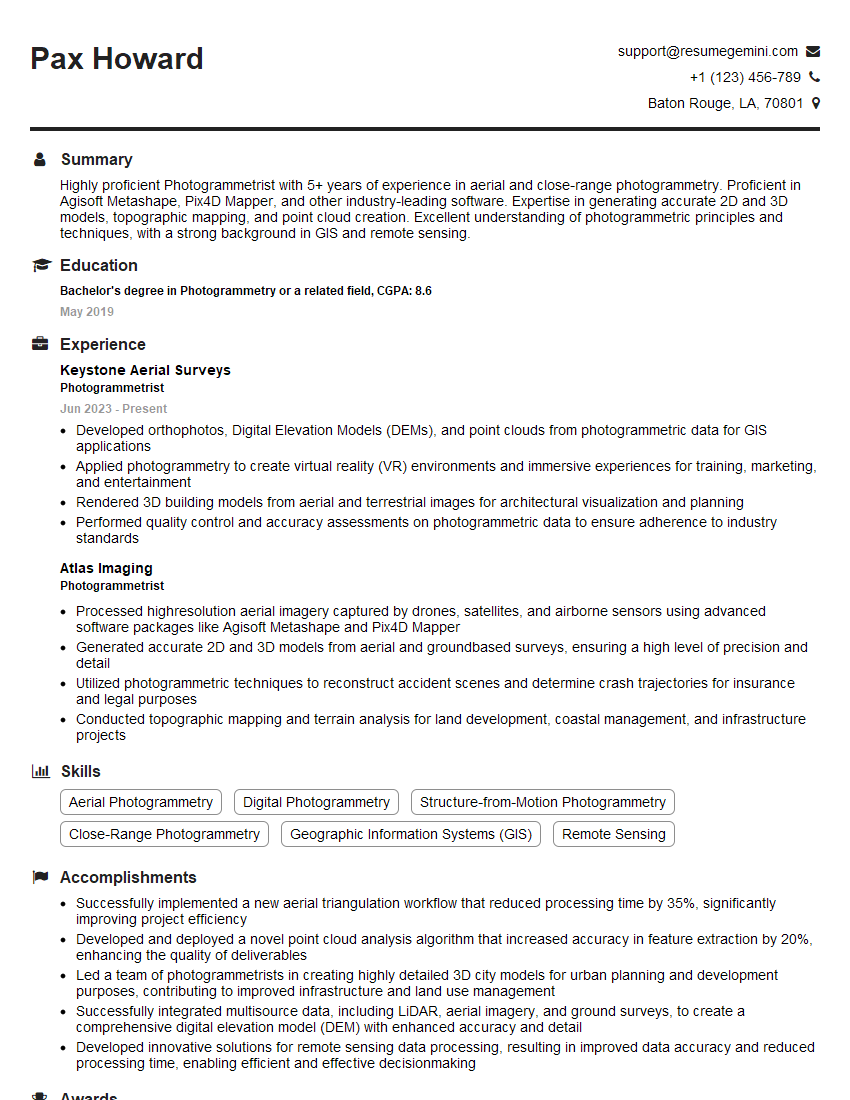
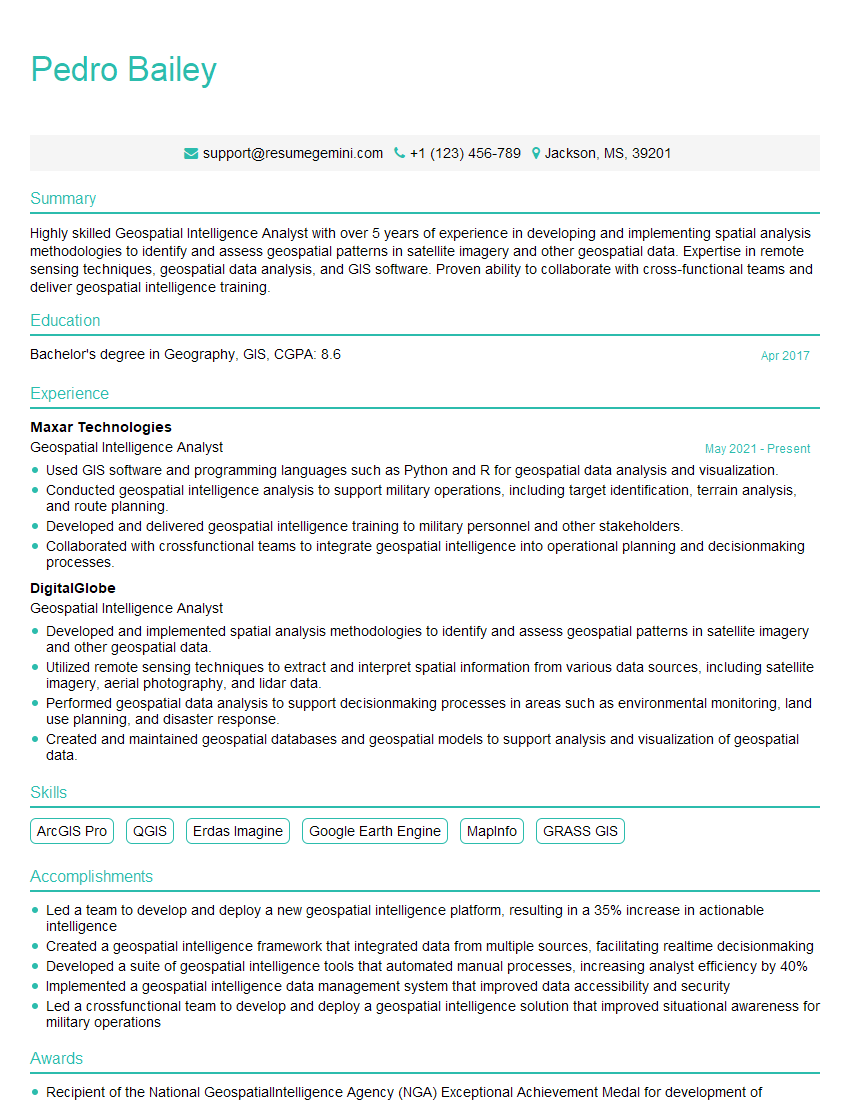
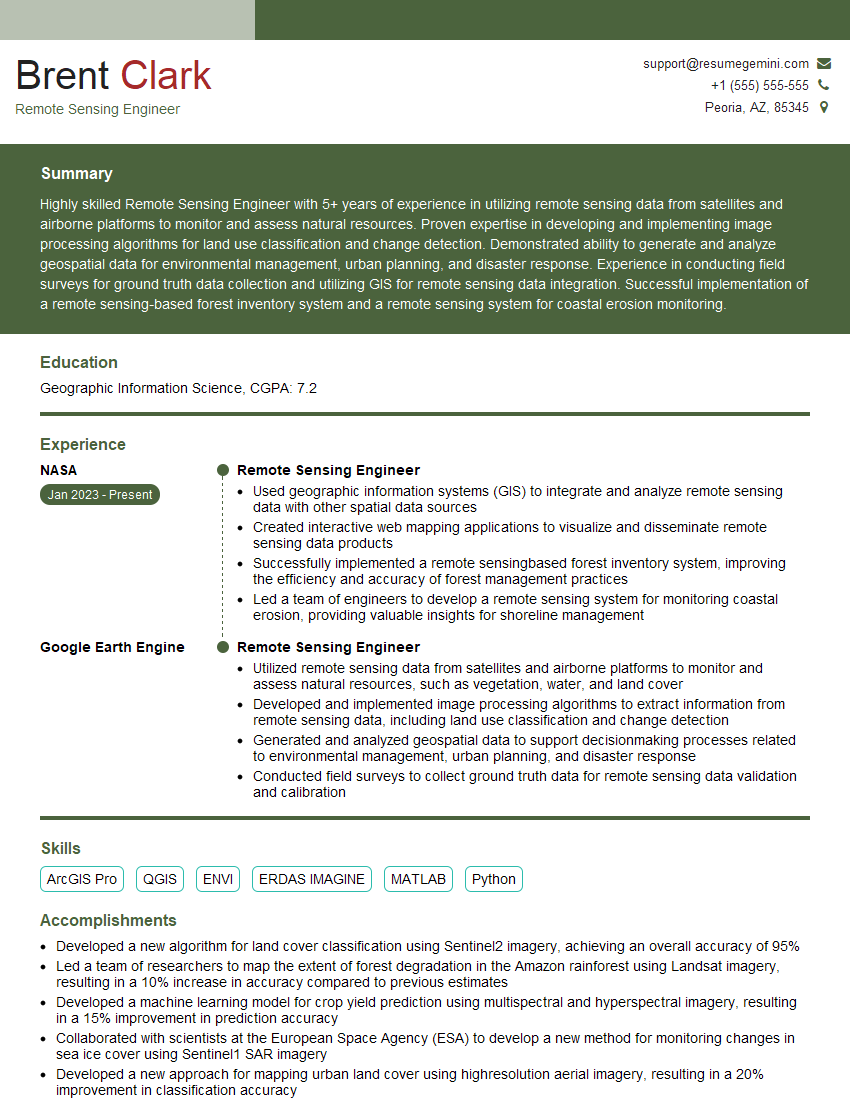
Mastering Airborne Imagery opens doors to exciting and impactful career opportunities in a rapidly evolving field. To maximize your chances of landing your dream role, a strong, ATS-friendly resume is crucial. ResumeGemini can significantly enhance your resume-building experience, helping you present your skills and experience in the best possible light. We offer examples of resumes tailored specifically to Airborne Imagery to help you craft a compelling application. Take advantage of these resources and put your best foot forward!

Explore more articles
Users Rating of Our Blogs
Share Your Experience
We value your feedback! Please rate our content and share your thoughts (optional).
What Readers Say About Our Blog
Very informative content, great job.
good