The thought of an interview can be nerve-wracking, but the right preparation can make all the difference. Explore this comprehensive guide to Airborne Intelligence, Surveillance, and Reconnaissance (ISR) interview questions and gain the confidence you need to showcase your abilities and secure the role.
Questions Asked in Airborne Intelligence, Surveillance, and Reconnaissance (ISR) Interview
Q 1. Explain the differences between SIGINT, IMINT, and MASINT.
Airborne Intelligence, Surveillance, and Reconnaissance (ISR) relies on a multitude of intelligence gathering disciplines. Three key components are SIGINT, IMINT, and MASINT, each offering unique perspectives.
- SIGINT (Signals Intelligence): This focuses on intercepting and analyzing electromagnetic emissions. Think of it as eavesdropping on electronic conversations. This includes communications (COMINT), electronic intelligence (ELINT), and foreign instrumentation signals intelligence (FISINT). An example is intercepting radio transmissions to determine enemy troop movements or intentions.
- IMINT (Imagery Intelligence): This uses imagery from various sensors, like cameras and radar, to create visual representations of targets and areas of interest. It’s like having a high-resolution photo album of the battlefield. Examples include satellite imagery showing infrastructure damage or aerial photographs revealing troop deployments.
- MASINT (Measurement and Signature Intelligence): This is a broader category encompassing intelligence derived from analyzing non-visual and non-communications signals, such as acoustic, nuclear, seismic, or RF emissions. Think of it as collecting ‘signatures’ that reveal unique characteristics of targets. An example is identifying the type of a vehicle based on its unique engine sound or radar signature.
The key difference lies in the source of the intelligence. SIGINT taps into electronic signals, IMINT relies on imagery, and MASINT uses a wide range of physical measurements to infer intelligence.
Q 2. Describe your experience with various ISR sensor platforms.
My experience spans a wide range of ISR sensor platforms. I’ve worked extensively with:
- Reconnaissance aircraft: Platforms such as the U-2 and RQ-4 Global Hawk, renowned for their high-altitude, long-endurance capabilities and sophisticated sensor payloads. I’ve been involved in mission planning, data analysis, and sensor calibration for these systems. For example, calibrating the EO/IR sensor on a Global Hawk to ensure accurate thermal imaging of targets in various environmental conditions.
- Unmanned Aerial Systems (UAS): I have hands-on experience with various UAS platforms, from small tactical drones to larger medium-altitude, long-endurance (MALE) drones. We utilized these for real-time surveillance, target acquisition, and damage assessment, often integrating data from multiple sensors for a complete picture. A key challenge was developing algorithms for autonomous flight path planning while maximizing data acquisition and minimizing risk.
- Satellite imagery: I’ve extensively used commercial and government satellite imagery for geospatial analysis and target identification. This includes employing image processing techniques to enhance resolution and filter out noise, allowing for precise target location and feature extraction.
Each platform presents unique challenges and advantages in terms of range, resolution, endurance, and cost. My expertise lies in integrating data from multiple platforms to develop a comprehensive and accurate intelligence picture.
Q 3. How do you ensure data integrity and security in an ISR environment?
Data integrity and security are paramount in ISR. We employ a multi-layered approach:
- Data Encryption: All data, from acquisition to storage and analysis, is encrypted using robust algorithms to prevent unauthorized access.
- Secure Communications: We use encrypted communication channels to transfer data between platforms and analysis centers. This includes using secure VPNs and employing strict access control measures.
- Data Authentication and Integrity Checks: We use digital signatures and checksums to verify data integrity and authenticity, ensuring that data has not been tampered with during transmission or storage.
- Access Control: A strict need-to-know basis governs access to sensitive data, with roles and permissions carefully defined. This includes background checks and security clearances for all personnel involved.
- Redundancy and Backup: We maintain multiple backups of critical data in secure, geographically dispersed locations to mitigate data loss risks.
Regular security audits and penetration testing are conducted to identify vulnerabilities and strengthen our defenses. This is a continuous process, adapting to evolving threats and technologies.
Q 4. What are the limitations of different ISR sensor technologies?
Different ISR sensor technologies have inherent limitations:
- Electro-Optical (EO) and Infrared (IR) sensors: Limited by weather conditions (clouds, fog, rain), daylight hours (EO), and thermal camouflage. Resolution is also affected by distance and atmospheric conditions.
- Radar sensors: Susceptible to jamming and clutter, especially in complex terrain. Resolution can be lower than EO/IR, particularly with older systems. Ground penetrating radar can have difficulty penetrating dense or rocky soil.
- Signals Intelligence (SIGINT) sensors: Can be difficult to isolate specific signals in a crowded electromagnetic environment. Sophisticated encryption techniques can render intercepted signals unintelligible.
- Hyperspectral sensors: Extremely data-intensive and require specialized processing capabilities. Processing times can be long and the data volume poses challenges for storage and transmission.
Understanding these limitations is crucial for effective mission planning. We often employ multiple sensors to compensate for individual limitations and achieve a more complete understanding.
Q 5. Explain the process of target acquisition and tracking using airborne ISR assets.
Target acquisition and tracking involve a coordinated process:
- Intelligence Preparation of the Battlefield (IPB): Prior to mission execution, we analyze available intelligence to identify potential targets and predict their likely location and behavior.
- Sensor Tasking: Based on IPB, we task the appropriate airborne ISR assets (e.g., aircraft, UAS) to acquire imagery or signals from the target area.
- Sensor Data Collection: The sensors on the ISR platforms collect the relevant data (imagery, signals, etc.).
- Target Detection and Identification: Analysts use automated detection algorithms and manual review to locate and identify potential targets within the collected data.
- Target Tracking: Once a target is identified, tracking algorithms and manual observation are used to follow its movements and monitor its activities.
- Data Fusion: Data from multiple sensors and intelligence sources is fused to create a more complete and accurate picture of the target.
The entire process requires a sophisticated interplay between technology, human expertise, and effective communication between all involved parties. For example, a real-time fusion of data from a UAV’s EO/IR sensor with SIGINT data might provide crucial confirmation of a suspected weapons cache.
Q 6. How do you analyze and interpret ISR data to support mission objectives?
Analyzing and interpreting ISR data is crucial for mission success. This involves:
- Data Processing and Exploitation: The raw data from various sensors undergo processing to enhance quality, extract relevant features, and create usable products.
- Geospatial Analysis: Data is analyzed within a geographic context to understand the spatial relationships between targets, terrain, and other features.
- Pattern Recognition: Analysts identify patterns and anomalies in the data to detect significant events and predict future activities.
- All-Source Intelligence Integration: ISR data is combined with other intelligence sources (HUMINT, OSINT, etc.) to create a holistic intelligence picture.
- Reporting and Dissemination: The analysis results are documented in intelligence reports and disseminated to relevant decision-makers.
The process is iterative and requires critical thinking and strong analytical skills. We constantly refine our analytical methods and incorporate new technologies to improve accuracy and timeliness of intelligence.
Q 7. Describe your experience with geospatial intelligence analysis tools and techniques.
My experience with geospatial intelligence (GEOINT) analysis tools and techniques is extensive. I am proficient in using commercial and government software suites for:
- Image Exploitation: Using software like ArcGIS Pro and ENVI to analyze satellite and aerial imagery, including georeferencing, orthorectification, and feature extraction.
- 3D Modeling: Creating 3D models of terrain and infrastructure using software such as ERDAS IMAGINE and other specialized tools to better understand the operational environment and target locations.
- Data Fusion: Integrating imagery with other GEOINT data, such as terrain elevation data (DEM), to create a more complete picture. This allows us to develop precise visualizations and simulations of tactical situations.
- Spatial Analysis: Employing techniques like buffer analysis, overlay analysis, and proximity analysis to determine relationships between various features and targets within a defined geographical area.
I am also familiar with various geospatial data formats and standards, ensuring interoperability and efficient data sharing across different platforms and agencies. I’ve used these tools numerous times to support military operations, disaster response efforts, and infrastructure development projects.
Q 8. How do you prioritize multiple ISR targets during a mission?
Prioritizing ISR targets requires a structured approach balancing mission objectives, target urgency, and available resources. We use a multi-criteria decision analysis (MCDA) framework. This involves assigning weights to factors like:
- Time Sensitivity: How quickly does the intelligence need to be acquired? Imminent threats take precedence.
- Intelligence Value: How critical is the information from this target to the overall mission? High-value targets (HVTs) are prioritized.
- Risk Assessment: What are the potential risks associated with targeting this location? Higher-risk targets might be addressed later, or with additional support.
- Resource Availability: Do we have the sensor capacity and bandwidth to cover all targets effectively? Prioritization often involves resource allocation – a high-value, high-risk target might require more assets.
For instance, imagine a scenario with three targets: a suspected insurgent assembly (high value, high risk, high time sensitivity), a known weapons cache (high value, medium risk, medium time sensitivity), and a suspected communication hub (medium value, low risk, low time sensitivity). Using MCDA, we’d likely prioritize the insurgent assembly first, allocating the most advanced sensors and sufficient protection for the collection platform. The weapons cache would follow, and the communication hub would be addressed as resources allow.
Q 9. Explain your understanding of the legal and ethical considerations in airborne ISR operations.
Airborne ISR operations are governed by a complex web of legal and ethical considerations, primarily focused on respecting national sovereignty, privacy rights, and the laws of armed conflict (LOAC). International law dictates that surveillance must be conducted in accordance with national and international laws and regulations and avoid unnecessary harm to civilians.
Legal considerations include obtaining appropriate authorizations before conducting surveillance within a nation’s airspace (unless explicitly permitted by international treaties such as NATO agreements). Ethical considerations emphasize the proportionality of the response – the potential benefit of the intelligence must outweigh the potential risks and intrusion. We must minimize collateral damage and ensure that collected data is handled responsibly and securely, with strict adherence to data protection laws and regulations.
For example, before conducting ISR over a foreign country, we must obtain legal clearances and follow strict protocols to ensure compliance with national and international laws and that our actions do not violate the sovereignty of that nation or the privacy of its citizens. A crucial ethical element includes the careful review of imagery and data to avoid any unintended harm or targeting errors. We need robust protocols to ensure the ethical use of this sensitive information.
Q 10. What are the key challenges in real-time data processing and dissemination in an ISR context?
Real-time data processing and dissemination in ISR pose significant challenges, mainly due to the sheer volume of data generated by modern sensors, the need for rapid analysis, and the limitations of bandwidth in airborne environments. Key challenges include:
- Data Volume and Velocity: Modern sensors generate massive amounts of data at high speeds, requiring robust processing and storage capabilities.
- Bandwidth Constraints: Transmitting this data in real-time, especially from high-altitude platforms, can be challenging due to limited bandwidth.
- Latency: Delays in processing and transmission can render information obsolete. The need for real-time processing necessitates quick responses.
- Data Security: Protecting sensitive ISR data from unauthorized access during transmission and processing is paramount.
- Interoperability: Sensors and platforms from different manufacturers may not be easily compatible, requiring careful system integration.
Imagine a scenario where an airborne platform is tracking multiple moving targets. Real-time processing is needed to track their movements, predict trajectories, and relay the information to ground stations efficiently and securely. The solutions involve advanced data compression techniques, efficient algorithms, secure communication protocols and utilizing cloud-based processing platforms for handling the high data volume, optimizing bandwidth utilization, and minimizing latency.
Q 11. Describe your experience with data fusion techniques in ISR.
Data fusion is crucial in ISR, combining data from multiple sources (sensors, intelligence reports, etc.) to create a more comprehensive and accurate understanding of a situation than any single source could provide. I have extensive experience with various data fusion techniques, including:
- Sensor Fusion: Combining data from different sensors (e.g., radar, electro-optical/infrared, signals intelligence) to improve accuracy and reduce uncertainty.
- Source Fusion: Integrating information from various intelligence sources (e.g., human intelligence, signals intelligence, open-source intelligence) to obtain a holistic picture.
- Spatial-Temporal Fusion: Combining data from different time points and locations to track objects and events over time.
For example, fusing radar data (showing target location and speed) with electro-optical imagery (identifying target type) creates a richer understanding than either sensor alone. This allows for more informed decision-making by providing detailed information on the target’s nature, location, and movement patterns. This enhanced situational awareness leads to quicker responses and more effective actions.
Q 12. How do you assess the reliability and validity of ISR data sources?
Assessing the reliability and validity of ISR data sources is a critical aspect of the intelligence analysis process. We employ a multi-faceted approach:
- Source Credibility: Evaluating the trustworthiness and reliability of the source itself. Is it known to be accurate? Does it have any biases?
- Data Quality: Analyzing the quality of the data itself. Is it clear, complete, and consistent? Are there any errors or inconsistencies?
- Cross-Referencing: Comparing information from multiple independent sources to verify information. Corroboration is key to establishing confidence.
- Data Contextualization: Understanding the circumstances under which the data was collected to determine potential limitations or biases.
- Analyst Expertise: Leveraging the knowledge and expertise of trained intelligence analysts to interpret the data and assess its significance.
Consider a scenario where a single source reports enemy troop movements. The reliability of this claim can only be assessed through cross-referencing with other data – radar, signals intelligence, or even human intelligence reports. If multiple sources corroborate the information, confidence in its validity increases significantly. Conversely, contradictory information from reliable sources warrants further investigation and potentially requires a reevaluation of initial assessments.
Q 13. What is your experience with different types of communication systems used in airborne ISR?
My experience encompasses a wide range of communication systems used in airborne ISR, including:
- Satellite Communication (SATCOM): Used for high-bandwidth, long-range data transmission to ground stations.
- Line-of-Sight (LOS) Communications: Employing radio frequencies for shorter range communication, often used for relaying data to ground stations within visual range.
- Data Links: Specialized communication systems optimized for transmitting large amounts of data securely and efficiently. Examples include various tactical data links.
- High Frequency (HF) Radio: Used for longer range communications, particularly in areas where satellite coverage is limited.
Each system has its strengths and limitations in terms of bandwidth, range, security, and cost. The choice of communication system depends on several factors such as the mission parameters, geographic location, and the amount of data to be transmitted. For instance, a high-altitude, long-endurance unmanned aerial vehicle (UAV) might rely heavily on SATCOM for data transmission while a shorter range mission close to a ground station might utilize LOS communication for real-time data transfer.
Q 14. How do you handle conflicting information from various ISR sources?
Handling conflicting information from various ISR sources requires a structured and methodical approach:
- Identify and Analyze Discrepancies: Carefully examine the conflicting reports to identify the exact points of disagreement.
- Assess Source Reliability: Evaluate the credibility and track record of each source. Which sources are more reliable than others?
- Reconcile Discrepancies: Attempt to reconcile conflicts by investigating potential explanations for the discrepancies. Was there a misunderstanding? Were there limitations in data collection?
- Data Validation and Verification: Seek additional information to corroborate one or more of the conflicting accounts through other means. This may require further ISR collection efforts.
- Develop a Synthesis: Formulate a coherent narrative that incorporates the best available evidence while acknowledging the uncertainty associated with conflicting information. It might involve presenting multiple, equally plausible interpretations if complete resolution is not possible.
For instance, if one sensor reports the presence of a specific type of vehicle and another doesn’t, we might investigate reasons for this discrepancy: sensor limitations, masking, or even an error in data processing. The goal is not to necessarily eliminate uncertainty but to manage it effectively. Presenting multiple possible explanations with appropriate caveats provides a more accurate representation of the current knowledge. Proper handling of conflicting information is key to ensuring accurate decision-making.
Q 15. Describe your experience with mission planning and debriefing in airborne ISR operations.
Mission planning in airborne ISR is a meticulous process, akin to orchestrating a complex symphony. It begins with a thorough understanding of the intelligence requirements – what needs to be observed and why. We use specialized software to define the area of interest (AOI), select appropriate sensors (electro-optical/infrared cameras, radar, SIGINT systems), and plan flight paths that optimize sensor coverage and minimize risk. This involves careful consideration of factors like weather, terrain, potential threats, and legal restrictions.
Debriefing is equally critical. It’s where we analyze the collected data, evaluating its quality, completeness, and relevance to the initial intelligence requirements. We identify any shortcomings in the mission planning or execution, and make recommendations for improvement in future missions. This often involves comparing the collected data against pre-mission expectations and intelligence assessments. For instance, if we were tasked with identifying a specific type of vehicle in a certain area, the debrief would involve verifying its presence, confirming its characteristics, and assessing the reliability of the identification.
One memorable mission involved tracking a suspected smuggling operation. Thorough pre-mission planning allowed us to select the optimal flight path and sensor configurations, which resulted in the capture of high-resolution imagery clearly showing the suspect vehicles. Post-mission debriefing highlighted the effectiveness of our approach, resulting in the successful disruption of the operation. This iterative process of planning, execution, and debriefing ensures continuous improvement in our mission effectiveness.
Career Expert Tips:
- Ace those interviews! Prepare effectively by reviewing the Top 50 Most Common Interview Questions on ResumeGemini.
- Navigate your job search with confidence! Explore a wide range of Career Tips on ResumeGemini. Learn about common challenges and recommendations to overcome them.
- Craft the perfect resume! Master the Art of Resume Writing with ResumeGemini’s guide. Showcase your unique qualifications and achievements effectively.
- Don’t miss out on holiday savings! Build your dream resume with ResumeGemini’s ATS optimized templates.
Q 16. How do you collaborate effectively with other intelligence analysts and stakeholders?
Effective collaboration is the cornerstone of successful ISR operations. My approach relies on clear communication, active listening, and a strong understanding of each stakeholder’s role and expertise. This includes regular briefings, collaborative data analysis sessions, and leveraging communication platforms for efficient information sharing. I frequently utilize shared online platforms, where everyone can access real-time data and contribute their insights. With intelligence analysts, this involves sharing raw data, interpreting findings, and jointly developing comprehensive intelligence reports.
For example, when working on a counter-terrorism mission, I collaborated closely with human intelligence (HUMINT) analysts to integrate their insights with the ISR data we collected. Their knowledge of local networks and individuals helped us contextualize the ISR findings, leading to a more accurate and actionable intelligence picture. We used secure video conferencing and collaborative document sharing tools to enhance this process. Maintaining open lines of communication, ensuring everyone has the same level of understanding, and respecting diverse perspectives are key to fostering productive partnerships.
Q 17. Explain your experience with specific ISR software and hardware.
My experience encompasses a range of ISR software and hardware, from sophisticated sensor management systems to advanced geospatial intelligence (GEOINT) analysis platforms. I’m proficient in using various software for mission planning (e.g., mission planning software incorporating flight planning and sensor integration tools), data processing (e.g., image exploitation software with tools for object recognition and measurement), and analysis (e.g., GEOINT and SIGINT analysis platforms). I have extensive hands-on experience with electro-optical/infrared (EO/IR) sensors, synthetic aperture radar (SAR), and signals intelligence (SIGINT) systems on various aircraft platforms.
For instance, I’ve used Harris Corporation's ELINT system for collecting and analyzing electronic signals, and Agisoft Metashape for processing aerial imagery into 3D models for detailed analysis. My understanding extends beyond merely operating these systems; I understand their limitations and how to optimize their use based on mission parameters and environmental factors. I can troubleshoot technical issues, adapt to new technologies, and ensure the data integrity of the collected information.
Q 18. How do you adapt to changing mission parameters and unexpected challenges in ISR operations?
Adaptability is paramount in ISR operations. Unexpected challenges, such as adverse weather conditions, sensor malfunctions, or changes in the operational environment, are commonplace. My approach to handling these situations involves a combination of preemptive planning, quick thinking, and effective communication. Pre-mission planning includes developing contingency plans to address foreseeable issues. For instance, alternative flight paths might be planned in case of unexpected weather.
During a mission, if a sensor malfunctions, I immediately assess the impact on data collection, communicate the situation to the mission commander, and explore alternative data acquisition strategies, potentially re-tasking other sensors or adjusting the flight path. Similarly, if mission parameters change – such as a sudden shift in the target’s location – I work collaboratively with the mission commander and other analysts to revise the mission plan and optimize data collection accordingly. Problem-solving skills and the ability to maintain composure under pressure are essential for success.
Q 19. Describe your experience with risk assessment and mitigation in airborne ISR missions.
Risk assessment and mitigation are crucial aspects of airborne ISR missions, involving a systematic evaluation of potential hazards and the implementation of measures to minimize their impact. This includes analyzing potential threats – from hostile fire to equipment malfunction – and assessing their likelihood and potential consequences. We develop mitigation strategies that include alternative plans, safety protocols, and risk-reduction measures like employing defensive countermeasures. This also involves understanding and adhering to all relevant regulations and safety procedures.
For example, before any flight, a detailed risk assessment is conducted, considering factors like weather, potential threats, and aircraft mechanical condition. Mitigation strategies might include choosing an alternative flight route to avoid known hazards, adjusting the flight altitude to minimize exposure to threats, or deploying specialized countermeasures against hostile fire. Risk assessment isn’t a one-time event; it’s an ongoing process refined throughout the mission lifecycle.
Q 20. What are the key performance indicators (KPIs) for success in airborne ISR operations?
Key Performance Indicators (KPIs) for airborne ISR operations vary depending on the specific mission objectives, but some common indicators include:
- Data Quality: The accuracy, resolution, and completeness of the collected data. High-resolution imagery with minimal distortion is a key success metric.
- Timeliness: The speed at which the collected data is processed, analyzed, and delivered to decision-makers. Real-time intelligence delivery is critical in many scenarios.
- Mission Success Rate: The percentage of missions that successfully achieve their objectives. This reflects the effectiveness of planning, execution, and risk mitigation.
- Intelligence Value: The impact of the collected intelligence on decision-making processes and mission outcomes. This might be measured through the number of actionable intelligence reports generated or their direct contribution to successful operations.
- Cost-Effectiveness: The efficiency of resource utilization in relation to the intelligence value gained. This involves optimizing sensor usage, flight time, and personnel costs.
These KPIs are tracked using various data analysis tools and reporting mechanisms, allowing for continuous monitoring of mission effectiveness and identification of areas for improvement.
Q 21. How do you ensure the accuracy and timeliness of ISR data reports?
Ensuring the accuracy and timeliness of ISR data reports requires a multi-faceted approach. First, rigorous quality control procedures are applied throughout the data lifecycle, from data acquisition and processing to analysis and reporting. This includes careful calibration of sensors, robust data validation checks, and peer review of analysis findings. We utilize standardized data formats and metadata to enhance data integrity and facilitate efficient sharing and processing. Secondly, efficient data processing workflows are employed, using automation where possible to expedite the analysis process. Real-time data processing and transmission are critical in time-sensitive situations.
For example, employing automated image processing techniques can significantly reduce analysis time while ensuring consistency. Strict adherence to reporting timelines and rigorous data validation checks ensure reports are delivered accurately and on time. Continuous training and professional development are also crucial in maintaining expertise and using the latest data analysis tools.
Q 22. Describe your experience with different types of airborne platforms used in ISR.
My experience with airborne ISR platforms spans a wide range, encompassing both manned and unmanned systems. I’ve worked extensively with various aircraft, each offering unique capabilities. For instance, I’ve operated on high-altitude, long-endurance platforms like the U-2, providing persistent surveillance over large areas. These aircraft excel in strategic ISR, offering exceptional range and endurance, but are expensive to operate and maintain. Conversely, I’ve also had significant experience with smaller, tactical platforms such as the P-3 Orion, which offers a combination of surveillance and anti-submarine capabilities. This platform is better suited for shorter-range operations requiring a rapid response. My experience also includes working with various UAVs, ranging from small, commercially available drones for close-range reconnaissance to larger, military-grade UAVs such as the MQ-9 Reaper, capable of carrying heavier payloads and performing more complex missions including precision strikes.
- High-Altitude, Long-Endurance (HALE) platforms (e.g., U-2): Ideal for strategic surveillance, covering vast areas for extended periods.
- Tactical platforms (e.g., P-3 Orion): Suited for shorter-range operations, often involving rapid response and specific targets.
- Unmanned Aerial Vehicles (UAVs) (e.g., MQ-9 Reaper, smaller commercial drones): Provide flexibility, cost-effectiveness in certain scenarios, and reduce risk to human life, though limitations exist in endurance and payload.
Q 23. What are the advantages and disadvantages of using manned versus unmanned aerial vehicles (UAVs) in ISR missions?
The choice between manned and unmanned aerial vehicles (UAVs) in ISR missions hinges on a careful consideration of advantages and disadvantages. Manned aircraft, while more expensive to operate and maintain, offer superior situational awareness, adaptability, and decision-making capabilities in complex environments. The human pilot can react in real-time to unforeseen circumstances, making critical judgments and adjusting the mission dynamically. However, human limitations include fatigue, risk to life, and emotional factors influencing decisions. UAVs, on the other hand, are significantly cheaper to operate, can remain airborne for longer durations, and reduce the risk to human life. They excel in routine surveillance tasks and hazardous environments. However, their limitations include reliance on communication links, vulnerabilities to jamming, and reduced adaptability in unpredictable situations. The optimal choice depends entirely on the mission’s specific requirements.
- Manned Advantages: Superior situational awareness, adaptability, better decision-making, direct human control.
- Manned Disadvantages: High operating costs, risks to human life, pilot fatigue limitations.
- UAV Advantages: Lower operating costs, longer endurance, reduced risk to human life.
- UAV Disadvantages: Communication dependency, vulnerability to jamming, limited adaptability.
Q 24. Explain your understanding of the impact of weather conditions on ISR operations.
Weather conditions profoundly impact ISR operations. Adverse weather like heavy rain, fog, snow, or strong winds can severely restrict visibility, rendering optical and electro-optical sensors ineffective. For instance, low cloud cover can completely obscure ground targets. High winds can compromise the stability of UAVs, making operations dangerous or impossible. Furthermore, atmospheric conditions can affect the propagation of radio waves, impacting communication links crucial for UAV control and data transmission. Mitigation strategies include employing all-weather sensors like synthetic aperture radar (SAR), which can penetrate clouds and fog, scheduling missions based on weather forecasts, and employing advanced communication techniques resilient to adverse weather conditions. The impact varies according to the sensor type and the specific mission objective; some missions might be postponed or cancelled, while others can adapt to the conditions by changing tactics.
- Impact: Reduced visibility, communication disruptions, sensor limitations, potential mission failure.
- Mitigation: All-weather sensors (SAR), weather forecasting, robust communication systems, mission planning adjustments.
Q 25. How do you maintain situational awareness during complex ISR operations?
Maintaining situational awareness during complex ISR operations involves a multi-layered approach combining technology and human expertise. This starts with integrating data from multiple sources, including real-time sensor feeds from the airborne platform, intelligence reports, weather data, and geographical information systems (GIS). A crucial component is the use of advanced displays and software that provide a comprehensive, interactive view of the operational environment. Effective communication within the ISR team is also paramount, utilizing secure channels to share information and coordinate actions. Finally, constant monitoring of the operating environment and analysis of all gathered data allows for proactive adaptation to changing circumstances. Think of it like a jigsaw puzzle; we gather all the pieces from different sources and slowly assemble a clearer picture. Consistent evaluation of that picture and adjusting accordingly are key for effectiveness.
- Data Integration: Sensor feeds, intelligence reports, weather data, GIS.
- Advanced Displays: Comprehensive, interactive views of the operational environment.
- Communication: Secure channels for information sharing and coordination.
- Continuous Monitoring and Analysis: Proactive adaptation to changing circumstances.
Q 26. Describe your experience with post-mission analysis and reporting in airborne ISR.
Post-mission analysis and reporting in airborne ISR is a critical phase that converts raw data into actionable intelligence. This typically begins with the processing and exploitation of sensor data, often involving advanced image analysis techniques and automated systems to identify and classify targets. This data is then correlated with other intelligence sources to validate findings and build a comprehensive picture. The results are compiled into detailed reports that adhere to specific intelligence formats and standards. These reports are disseminated to relevant stakeholders, including military commanders, policymakers, and other intelligence agencies. Quality assurance is paramount; we employ rigorous procedures to ensure the accuracy and integrity of all analysis and reporting.
- Data Processing and Exploitation: Image analysis, target identification and classification.
- Data Correlation: Integration with other intelligence sources.
- Report Generation: Adherence to intelligence formats and standards.
- Dissemination: Sharing findings with relevant stakeholders.
- Quality Assurance: Ensuring accuracy and integrity.
Q 27. How do you stay current with advances in airborne ISR technologies and techniques?
Staying current with advances in airborne ISR technologies and techniques requires a multifaceted approach. I regularly attend industry conferences and seminars, participating in professional development courses to learn about the latest advancements. I actively follow relevant publications, journals, and online resources such as professional websites and government reports. Collaboration with peers within the field and participation in research projects contribute significantly to my knowledge base. Moreover, maintaining a strong understanding of the technological landscape enables me to anticipate future trends and effectively adapt to changing operational requirements.
- Conferences and Seminars: Staying abreast of latest technologies and best practices.
- Publications and Online Resources: Continuous learning through journals and websites.
- Collaboration and Research: Working with peers and engaging in research projects.
- Technological Foresight: Anticipating future trends and adaptations.
Q 28. Explain your understanding of the role of airborne ISR in national security.
Airborne ISR plays a crucial role in national security by providing timely and accurate intelligence that informs critical decision-making processes. It enhances situational awareness, allowing for the detection and monitoring of potential threats, such as terrorist activities, illicit trafficking, and military movements. This intelligence informs military operations, diplomacy, and counterterrorism efforts, significantly improving national security capabilities. For example, in disaster relief, airborne ISR can assess damage, locate survivors, and guide rescue efforts. In the case of border security, it helps in monitoring and detecting illegal crossings and smuggling activities. The ability to monitor large areas and gain intelligence in near real time is crucial to ensuring the safety and security of a nation.
- Threat Detection and Monitoring: Providing early warning of potential threats.
- Informing Decision-Making: Supporting military operations, diplomacy, and counterterrorism.
- Disaster Relief: Assessing damage and guiding rescue efforts.
- Border Security: Monitoring and detecting illegal crossings and smuggling.
Key Topics to Learn for Airborne Intelligence, Surveillance, and Reconnaissance (ISR) Interview
- Sensor Technologies: Understand the capabilities and limitations of various ISR sensors (e.g., electro-optical/infrared, radar, SIGINT). Consider the trade-offs between different sensor types and their applications in diverse operational environments.
- Data Fusion and Analysis: Explore the process of integrating data from multiple sources to create a comprehensive situational awareness picture. Practice interpreting fused intelligence data and drawing actionable conclusions.
- Mission Planning and Execution: Familiarize yourself with the phases of an ISR mission, from planning and tasking to data collection and dissemination. Understand the importance of coordination and communication within a team.
- Intelligence Cycle: Demonstrate a solid understanding of the intelligence cycle (planning and direction, collection, processing, analysis, production, and dissemination) and how ISR fits within this broader framework.
- Communication Systems: Gain familiarity with various communication systems used in Airborne ISR, including secure communication protocols and data transmission methods. Understanding challenges related to bandwidth and latency is crucial.
- Platforms and Assets: Become knowledgeable about different airborne platforms used for ISR (e.g., manned aircraft, UAVs) and their respective capabilities and limitations. Discuss the advantages and disadvantages of each.
- Ethical and Legal Considerations: Understand the ethical and legal frameworks governing the collection and use of intelligence information. Be prepared to discuss responsible conduct in ISR operations.
- Problem-Solving and Decision-Making under Pressure: Practice analyzing complex scenarios and making informed decisions in time-constrained environments, typical of real-world ISR missions.
Next Steps
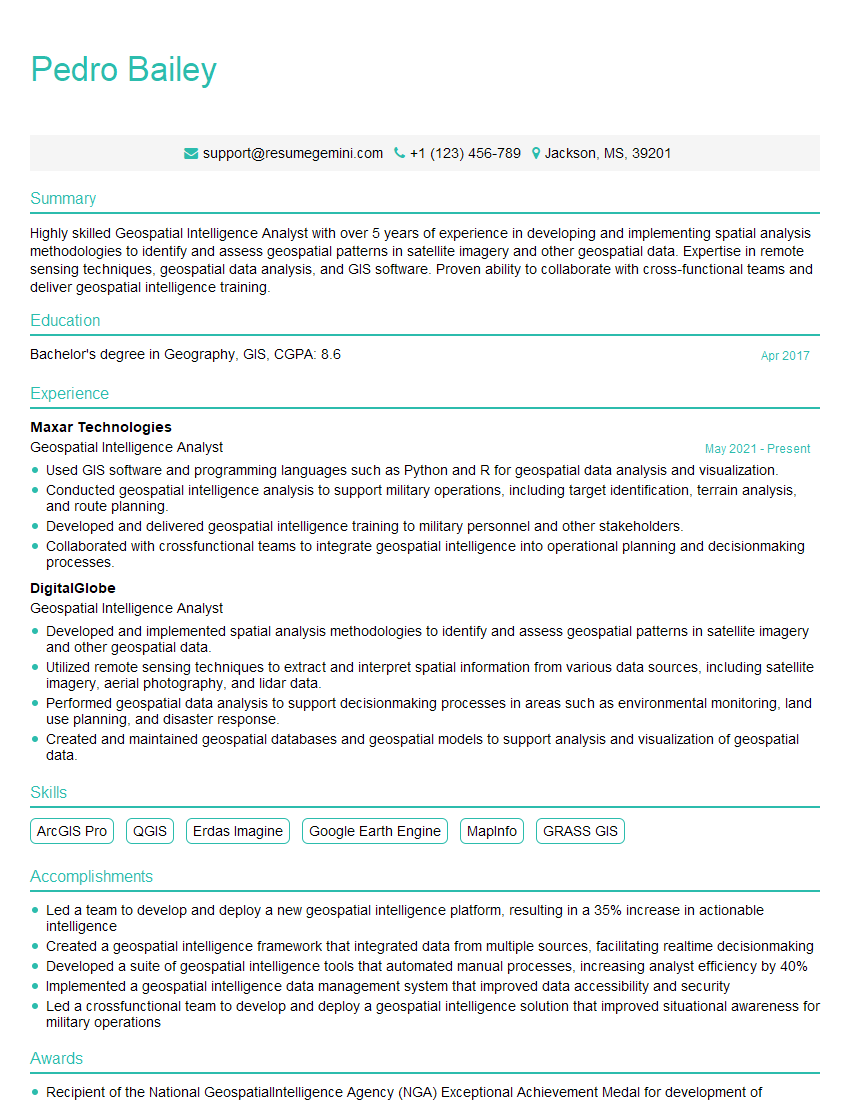
Mastering Airborne Intelligence, Surveillance, and Reconnaissance (ISR) principles significantly enhances your career prospects in a rapidly evolving field. It opens doors to exciting opportunities and positions you for leadership roles within the intelligence community. To increase your chances of landing your dream job, focus on building a strong, ATS-friendly resume that highlights your skills and experience effectively. ResumeGemini is a trusted resource that can help you craft a compelling and professional resume tailored to the specific requirements of Airborne ISR positions. Examples of resumes tailored to Airborne Intelligence, Surveillance, and Reconnaissance (ISR) roles are available to guide you through the process.
Explore more articles
Users Rating of Our Blogs
Share Your Experience
We value your feedback! Please rate our content and share your thoughts (optional).
What Readers Say About Our Blog
Very informative content, great job.
good