Cracking a skill-specific interview, like one for Airborne Reconnaissance, requires understanding the nuances of the role. In this blog, we present the questions you’re most likely to encounter, along with insights into how to answer them effectively. Let’s ensure you’re ready to make a strong impression.
Questions Asked in Airborne Reconnaissance Interview
Q 1. Explain the different types of airborne reconnaissance sensors and their applications.
Airborne reconnaissance relies on a variety of sensors to gather intelligence. These sensors can be broadly categorized into imaging and non-imaging systems. Imaging sensors capture visual data, while non-imaging sensors collect other types of information.
- Electro-Optical (EO) Sensors: These include cameras (visible and near-infrared) and thermal infrared (IR) cameras. Visible cameras provide high-resolution imagery in daylight, useful for identifying targets and infrastructure. Near-infrared cameras penetrate atmospheric haze better. Thermal IR cameras detect heat signatures, invaluable for night operations and detecting concealed objects or personnel. Example: Identifying enemy troop movements at night using thermal imagery.
- Infrared (IR) Sensors: These extend EO capabilities into the infrared spectrum, detecting heat signatures. Different IR wavelengths reveal different information, such as the material composition of objects.
- Hyperspectral Sensors: These advanced sensors capture hundreds of narrow spectral bands, allowing for extremely detailed material identification and analysis. They are used for things like mineral mapping, environmental monitoring, and detecting concealed explosives. Example: Identifying the presence of specific minerals in the earth’s crust to help in geological surveys.
- Synthetic Aperture Radar (SAR): SAR sensors use radar pulses to create images, regardless of weather or daylight conditions. They are excellent for penetrating cloud cover and vegetation, providing information about terrain and infrastructure. Different modes (e.g., spotlight, stripmap) offer various resolutions and coverage areas. Example: Mapping flooded areas after a hurricane to assess the damage.
- LiDAR (Light Detection and Ranging): LiDAR uses laser pulses to measure distance, creating highly accurate 3D models of terrain. This is crucial for creating highly precise maps and identifying changes in elevation. Example: Creating precise digital elevation models (DEMs) for urban planning and infrastructure projects.
The choice of sensor depends heavily on the mission objective. A search and rescue operation might prioritize EO and IR sensors, while a geological survey would focus on hyperspectral and LiDAR.
Q 2. Describe the process of planning an airborne reconnaissance mission.
Planning an airborne reconnaissance mission is a complex, multi-stage process demanding meticulous attention to detail. It begins with a clear definition of the Intelligence Requirement (IR) which determines the objectives, geographic area, and the type of information needed.
- Intelligence Requirements Definition: What specific information are we trying to gather? What are the priority targets? What is the area of interest (AOI)?
- Sensor Selection: Based on the IR, we select the appropriate sensors. This involves considering factors like resolution, range, weather conditions, and the type of target.
- Flight Planning: This crucial step includes defining the flight path, altitude, and airspeed to optimize data collection. Factors like weather, airspace restrictions, and sensor limitations are all incorporated. Software tools are often employed to model flight paths and predict sensor coverage.
- Sensor Calibration and Testing: Before the mission, sensors are calibrated to ensure accurate data collection. This involves comparing sensor readings to known standards and performing diagnostic checks.
- Mission Briefing: All team members receive thorough briefings including the mission objectives, flight plans, contingency plans, and communication protocols.
- Data Collection: This stage involves execution of the planned flight path, collecting data from the selected sensors.
- Post-Mission Debriefing: A critical step to review the mission, identify any issues that occurred, and suggest improvements for future missions.
For example, planning a mission to assess damage after a natural disaster would involve selecting sensors that can penetrate cloud cover (SAR) and provide high-resolution imagery (EO), along with a flight path that covers the affected area effectively.
Q 3. How do you ensure the quality and accuracy of airborne reconnaissance data?
Ensuring the quality and accuracy of airborne reconnaissance data is paramount. It relies on a combination of pre-mission, in-mission, and post-mission procedures.
- Sensor Calibration: Precise calibration before and (if possible) during flight is essential to minimize systematic errors. This involves using known standards and comparing sensor readings against them.
- Ground Control Points (GCPs): These are precisely located points on the ground, used for georeferencing and aligning imagery. Accurate GCPs are crucial for accurate measurements and map creation.
- Data Quality Assurance (QA): This involves employing automated and manual techniques to check for artifacts, anomalies, and errors in the collected data. This could involve visual inspection by trained analysts or automated algorithms that detect inconsistencies.
- Image Processing Techniques: Techniques like geometric correction (aligning images to a map projection), radiometric correction (correcting for variations in sensor response), and atmospheric correction (removing atmospheric effects) are crucial to improve data quality.
- Data Validation: Data is compared with other intelligence sources or ground truth data (data collected independently on the ground) to validate its accuracy and reliability. For example, a thermal signature identified as a potential vehicle could be validated by other intelligence reports or ground observation.
- Metadata Management: Meticulous documentation of all aspects of the mission, including sensor parameters, flight path, and processing steps, is crucial for traceability and accountability. Metadata is crucial for understanding and interpreting the data later.
Think of it like a high-precision instrument; it requires careful calibration and maintenance to produce reliable results. Ignoring these steps can lead to inaccurate interpretations and flawed conclusions, undermining the entire mission.
Q 4. What are the limitations of airborne reconnaissance, and how can they be mitigated?
Airborne reconnaissance, while powerful, has limitations. These limitations can be addressed through careful planning and the use of complementary technologies.
- Weather Dependence: Many sensors, especially EO sensors, are significantly affected by adverse weather conditions like cloud cover, fog, and rain. This can be mitigated by using all-weather sensors like SAR, but those offer reduced resolution sometimes.
- Altitude Limitations: Altitude affects sensor resolution and coverage. Higher altitudes provide broader coverage but lower resolution, while lower altitudes allow for higher resolution but limited coverage and increased vulnerability.
- Sensor Limitations: Each sensor has its limitations. For example, EO sensors are ineffective at night, while SAR can struggle with complex urban environments. Careful sensor selection and the use of multiple sensors can mitigate this.
- Cost and Resources: Airborne reconnaissance missions can be expensive, requiring specialized aircraft, sensors, and trained personnel. Careful mission planning and efficient resource allocation are essential.
- Time Sensitivity: Real-time intelligence might be crucial in some situations; however, the processing and analysis of data gathered by airborne platforms can take considerable time depending on the scale and complexity of the data. Using rapid processing techniques and efficient data handling workflows is crucial to address this issue.
For example, relying solely on EO imagery during a nighttime operation would be ineffective. Using a combination of EO and thermal IR sensors or SAR would provide a more complete picture.
Q 5. Explain the concept of data fusion in airborne reconnaissance.
Data fusion in airborne reconnaissance involves combining data from multiple sensors to create a more comprehensive and accurate understanding of the observed area. This process leverages the strengths of individual sensors to compensate for their weaknesses. For example, combining high-resolution EO imagery with LiDAR data to create a 3D model, with SAR data helping to fill gaps caused by cloud cover.
There are various data fusion techniques, ranging from simple image overlay to sophisticated algorithms that integrate data at multiple levels. The goal is to create a synergistic effect, where the combined data provides significantly more information than the individual components alone.
Consider this: EO imagery might show the presence of vehicles, SAR data could reveal their potential movement through terrain, and LiDAR could provide precise height measurements, enabling a comprehensive assessment of the situation.
Effective data fusion requires careful consideration of sensor characteristics, data registration, and the use of appropriate fusion algorithms. The success of data fusion depends heavily on the quality and consistency of the input data.
Q 6. How do you interpret and analyze imagery from different sensor types?
Interpreting and analyzing imagery from different sensor types requires a blend of technical expertise and experience. It’s not just about recognizing objects but also understanding the context and implications. This process often involves several steps.
- Image Pre-processing: This involves correcting for geometric and radiometric distortions. This is done to enhance the quality and accuracy of the imagery before any interpretation occurs.
- Visual Interpretation: Trained analysts visually examine the imagery, identifying features, and making initial assessments. This step relies heavily on pattern recognition and understanding of various indicators.
- Change Detection: Comparing imagery from different times allows identifying changes in the area. This could involve comparing before-and-after images of an event like a flood or earthquake to determine the extent of damage.
- Quantitative Analysis: This involves using image processing techniques to extract quantitative information, such as area measurements, object counts, and density estimates. This requires using specialized software tools for performing measurements and analysis of the imagery.
- Contextual Integration: Combining information from different sources, such as other intelligence reports or ground truth data, helps create a comprehensive picture and validate interpretations.
For example, analyzing a thermal infrared image requires understanding the relationship between temperature and material properties. Similarly, interpreting SAR data requires an understanding of the backscatter properties of different materials. Effective interpretation requires extensive training and familiarity with the characteristics of the various sensor types and their data outputs.
Q 7. Describe your experience with geospatial information systems (GIS) in the context of airborne reconnaissance.
Geospatial Information Systems (GIS) are fundamental to airborne reconnaissance. They provide the framework for integrating, managing, analyzing, and visualizing the geospatial data collected from various sensors. GIS software helps us organize and display the sensor data in a geographic context; it enables us to overlay different datasets (like EO and LiDAR), making comprehensive analysis and visualization possible.
My experience includes using GIS software to:
- Georeference imagery: Aligning images to a common coordinate system, ensuring accurate positioning on a map.
- Create thematic maps: Generating maps highlighting specific features, such as vegetation density, elevation changes, or areas affected by natural disasters.
- Perform spatial analysis: Analyzing the spatial relationships between different features, such as measuring distances, calculating areas, or identifying clusters.
- Integrate data from multiple sources: Combining airborne sensor data with other geospatial datasets (e.g., topographic maps, demographic data) to improve analytical capabilities.
- Develop 3D models: Integrating LiDAR data with imagery to generate highly accurate 3D models of the terrain and structures.
GIS is not just a tool for visualizing data; it’s an integral part of the entire reconnaissance process, from mission planning to post-processing and analysis. Without GIS, integrating and interpreting the large amounts of geospatial data produced by airborne sensors would be extremely challenging.
Q 8. What are the key factors to consider when selecting an appropriate airborne platform for a specific mission?
Selecting the right airborne platform for a reconnaissance mission is crucial for mission success. It’s like choosing the right tool for a job – a hammer won’t work for screwing in a screw! The key factors depend on several mission-specific parameters.
- Mission Objectives: What needs to be observed? High-resolution imagery for target identification? Wide-area surveillance? The required sensor payload (e.g., electro-optical/infrared cameras, radar) dictates platform capabilities.
- Target Area: Is it a dense urban environment requiring low-altitude flight, a vast desert needing long endurance, or a maritime zone demanding sea-state adaptability? This influences the choice between fixed-wing aircraft, helicopters, or even Unmanned Aerial Systems (UAS).
- Weather Conditions: Expected weather (wind, visibility, precipitation) drastically impacts flight safety and sensor performance. A platform’s ability to operate in adverse conditions is paramount. For instance, a high-altitude, long-endurance platform might be ideal for overcoming cloud cover.
- Payload Capacity and Endurance: The platform must carry the necessary sensors and fuel for the mission’s duration. A small UAS might suffice for short-range, low-payload missions, while a larger aircraft would be needed for extensive surveillance.
- Cost and Operational Logistics: Budget constraints and the availability of support infrastructure (airfields, maintenance crews) play a significant role. For example, using a commercially available platform might be cheaper than developing a bespoke solution.
- Risk Assessment: The potential threats in the operational environment, like enemy air defenses or hostile terrain, will influence platform selection and operational planning. Stealth capabilities or survivability might become critical factors.
For instance, a high-resolution imagery mission over a small area might utilize a small UAS, while large-scale surveillance would necessitate a manned fixed-wing aircraft with long-range capabilities. Each mission demands careful consideration of these interlinked factors.
Q 9. How do you handle challenging weather conditions during an airborne reconnaissance mission?
Handling challenging weather is a critical aspect of airborne reconnaissance, often requiring a multi-pronged approach. It’s like navigating a stormy sea – you need the right ship and crew!
- Mission Planning and Risk Assessment: Pre-flight weather briefings are essential, incorporating weather forecasts, satellite imagery, and real-time data. This allows us to adjust the mission plan, delay it, or abort it entirely if the risks outweigh the benefits.
- Platform Selection: Some platforms are better equipped to handle adverse weather. For example, a platform with de-icing capabilities and robust flight control systems would be better suited for icing conditions compared to a lightly-built UAS.
- Sensor Selection and Calibration: Certain sensors are less affected by adverse weather conditions than others. Synthetic Aperture Radar (SAR), for instance, can penetrate cloud cover and provide imagery regardless of daylight conditions. Accurate sensor calibration is crucial for compensating for atmospheric distortion.
- Pilot Expertise and Training: Experienced pilots are better equipped to handle difficult flight conditions, ensuring the safe operation of the platform and minimizing risks. Pilots undergo regular training in Instrument Meteorological Conditions (IMC) flying.
- Real-Time Data Monitoring and Adaptation: During flight, we continuously monitor weather data and adjust the flight plan as needed. We may need to alter altitudes, routes, or even abort the mission if weather conditions deteriorate rapidly.
For instance, during a mission with expected heavy cloud cover, we might deploy a platform with SAR capabilities and a highly skilled pilot experienced in IMC flying. We’d also have backup plans in place in case of mission termination.
Q 10. Explain your experience with different types of image processing software.
My experience encompasses a wide range of image processing software, each with its strengths and weaknesses. It’s like having a toolbox filled with different tools, each designed for a specific task.
- ENVI (Exelis Visual Information): A powerful and versatile software package, excellent for various image processing tasks, including atmospheric correction, geometric rectification, and orthorectification. I’ve used it extensively for multispectral and hyperspectral image analysis.
- ERDAS IMAGINE: Another robust platform known for its robust capabilities in managing and processing large datasets. I’ve used it for creating mosaics, performing image classification, and generating digital elevation models (DEMs).
- PCI Geomatica: I’ve relied on this software for precise geometric correction, especially when working with high-resolution imagery requiring accurate georeferencing. Its photogrammetric capabilities are particularly valuable.
- Agisoft Metashape (formerly PhotoScan): A user-friendly software perfect for creating 3D models from imagery via photogrammetry. It’s particularly effective for generating highly detailed terrain models.
- Open-Source Options (e.g., QGIS, GDAL): I have also worked with open-source tools for specific tasks, leveraging their flexibility and affordability. They are useful for tasks like data manipulation and format conversion.
The choice of software depends on the specific mission requirements and the type of data acquired. For example, ENVI might be chosen for detailed spectral analysis, while Agisoft Metashape might be ideal for 3D modeling.
Q 11. Describe your experience with photogrammetry and its application to airborne reconnaissance.
Photogrammetry is the science of extracting 3D information from 2D images – like creating a 3D puzzle from many 2D pieces. In airborne reconnaissance, it’s invaluable for creating highly accurate maps, 3D models, and digital elevation models (DEMs) from aerial imagery. Think of it as turning photographs into precise, measurable representations of the terrain.
My experience with photogrammetry includes:
- Generating Orthophotos: Creating geometrically corrected images, free from distortions, for precise measurements and mapping.
- Developing Digital Elevation Models (DEMs): Extracting elevation data to create detailed terrain models for various applications such as infrastructure planning and risk assessment.
- 3D Model Creation: Generating highly accurate 3D models of buildings, infrastructure, or terrain features for detailed analysis and visualization.
- Change Detection: Comparing imagery from different time periods to identify changes in the environment, such as deforestation or construction activities.
I’ve used both commercial software packages like Agisoft Metashape and PCI Geomatica and have experience with various processing workflows, from image acquisition planning to final product generation. For example, I’ve used photogrammetry to create detailed 3D models of disaster-affected areas to facilitate relief efforts.
Q 12. How do you identify and assess potential threats or risks during a reconnaissance mission?
Identifying and assessing threats and risks in reconnaissance is a crucial aspect of mission planning and execution. It’s like playing a game of chess – you must anticipate your opponent’s moves.
- Threat Assessment: This involves analyzing potential threats in the area of operations, like enemy forces, anti-aircraft defenses, or hostile civilian populations. Intelligence reports, satellite imagery, and local knowledge are vital.
- Risk Analysis: This identifies potential hazards that could affect mission success, including weather conditions, mechanical failures, or communication disruptions. Risk matrices are used to prioritize and mitigate these risks.
- Route Planning and Selection: This involves choosing a flight path that minimizes risks while maximizing sensor coverage. Factors like terrain, weather, and potential threats are considered.
- Communication Protocols: Establishing clear communication protocols with ground control and other stakeholders is vital for quick response to unexpected situations.
- Contingency Planning: Having backup plans and escape routes for various scenarios, such as equipment malfunction or hostile encounters, is crucial.
For example, during a reconnaissance mission over a contested area, we might utilize encrypted communication channels, fly at higher altitudes to avoid enemy defenses, and have multiple escape routes planned. The success hinges on proactive identification and mitigation of potential threats.
Q 13. Explain the difference between real-time and post-mission analysis of airborne reconnaissance data.
The difference between real-time and post-mission analysis lies in the timing and immediacy of data processing and interpretation. Think of it like the difference between live sports coverage and watching a recorded game later.
- Real-time Analysis: This involves processing and analyzing data during the mission itself. It provides immediate feedback to mission commanders, allowing them to make quick decisions based on the current situation. This often requires specialized, on-board processing capabilities.
- Post-mission Analysis: This involves comprehensive processing and analysis of the collected data after the mission is completed. This analysis is more thorough and allows for detailed examination of the data, using advanced image processing techniques and tools that may not be available on-board.
Real-time analysis is crucial for time-sensitive missions requiring immediate action, like tracking a moving target. Post-mission analysis is important for detailed mapping, intelligence gathering, and long-term decision-making. Both types are complementary and vital for comprehensive reconnaissance operations.
Q 14. How do you communicate effectively with different stakeholders involved in an airborne reconnaissance operation?
Effective communication is the cornerstone of any successful airborne reconnaissance operation. It’s like orchestrating a symphony – everyone needs to be on the same page.
- Pre-mission Briefings: Clear and concise briefings are essential to ensure that all stakeholders understand their roles and responsibilities. This includes pilots, sensor operators, intelligence analysts, and mission commanders.
- Real-time Communication: Secure and reliable communication channels are essential during the mission. This might include encrypted voice communication, data links, and satellite communication systems.
- Data Sharing and Collaboration: Efficient methods for sharing data and collaborating with other teams, like intelligence analysts and decision-makers, are critical. This might involve cloud-based data storage and collaboration tools.
- Post-mission Debriefings: Thorough debriefings are crucial for analyzing the mission’s successes and failures, identifying areas for improvement, and sharing lessons learned. This helps improve future missions.
- Report Generation and Dissemination: Clear and concise reports, with high-quality imagery and data, are vital for informing decision-makers and other stakeholders.
For example, I’ve used secure communication systems to ensure real-time updates during high-risk missions and utilized collaborative platforms to ensure seamless data sharing with intelligence analysts post-mission. Clear and consistent communication fosters a cooperative environment and improves efficiency and safety.
Q 15. What is your experience with data security and handling classified information in airborne reconnaissance?
Data security is paramount in airborne reconnaissance, where we often handle highly sensitive and classified information. My experience encompasses strict adherence to established security protocols, including the use of encrypted communication channels, secure data storage systems, and multi-level security clearances. I’ve worked extensively with systems like the National Imagery Transmission System (NITS) and have a deep understanding of handling data at various classification levels, from CONFIDENTIAL to TOP SECRET. For example, during a recent mission involving a high-value target, I was responsible for the secure transmission of imagery data to a designated intelligence facility using encrypted satellite links. Any potential compromise was mitigated through rigorous authentication, authorization, and accounting measures. This involved regular security audits and adherence to strict handling procedures, ensuring data integrity and confidentiality at all times.
Career Expert Tips:
- Ace those interviews! Prepare effectively by reviewing the Top 50 Most Common Interview Questions on ResumeGemini.
- Navigate your job search with confidence! Explore a wide range of Career Tips on ResumeGemini. Learn about common challenges and recommendations to overcome them.
- Craft the perfect resume! Master the Art of Resume Writing with ResumeGemini’s guide. Showcase your unique qualifications and achievements effectively.
- Don’t miss out on holiday savings! Build your dream resume with ResumeGemini’s ATS optimized templates.
Q 16. Describe your experience with different airborne reconnaissance platforms (e.g., manned aircraft, UAVs).
My experience with airborne reconnaissance platforms spans both manned aircraft and Unmanned Aerial Vehicles (UAVs), or drones. I’ve worked extensively with manned platforms like the P-8 Poseidon and the RC-135 Rivet Joint, conducting missions that involved long-range surveillance and signals intelligence gathering. These platforms offer significant payload capacity and extended endurance, enabling comprehensive data collection over large areas. However, their operational costs are higher. In contrast, I’ve also operated and managed various UAVs, including smaller tactical systems for close-range reconnaissance and larger, more sophisticated systems capable of persistent surveillance. UAVs provide cost-effective solutions for specific missions, offering flexibility and reduced risk to personnel. A particularly memorable experience involved using a UAV equipped with hyperspectral imaging to identify camouflaged targets in a dense jungle environment. The data collected proved critical in the subsequent ground operation.
Q 17. Explain the principles of target acquisition and identification using airborne sensors.
Target acquisition and identification rely heavily on the effective use of airborne sensors. This involves a multi-step process. First, we employ sensors like synthetic aperture radar (SAR) for initial detection, even in adverse weather conditions. SAR’s ability to penetrate clouds makes it invaluable. Next, electro-optical/infrared (EO/IR) sensors are employed for detailed imagery, allowing for visual identification of the target and its surrounding environment. For example, EO cameras provide high-resolution imagery for identification of vehicles or structures, while IR sensors can detect heat signatures, useful for identifying active equipment or personnel. We use advanced image processing techniques, including change detection and object recognition algorithms, to enhance the imagery and automatically identify targets. Finally, we utilize data fusion techniques, integrating data from multiple sensors to create a comprehensive picture of the target and its context. This holistic approach is essential for accurate target identification and intelligence gathering. Think of it like building a 3D puzzle – each sensor provides a piece of information that, when combined, completes the picture.
Q 18. How do you ensure the operational readiness of airborne reconnaissance equipment?
Ensuring operational readiness of airborne reconnaissance equipment is an ongoing process involving meticulous planning and execution. This includes regular preventative maintenance, which often involves rigorous inspections and calibrations of all sensors and communication systems. We conduct simulated missions to test the overall system integrity and identify potential issues before deployment. Our team also undergoes comprehensive training programs, ensuring proficiency in handling and troubleshooting different equipment malfunctions. Furthermore, we rely heavily on comprehensive logistical support to maintain a supply of spare parts and ensure timely repairs. Imagine a finely tuned orchestra – every instrument (sensor) must be in perfect working order for the music (data collection) to be flawless. This proactive approach minimizes downtime and maximizes mission success.
Q 19. Describe your troubleshooting experience with airborne reconnaissance systems.
Troubleshooting airborne reconnaissance systems demands a systematic approach, combining technical expertise and problem-solving skills. One instance involved a malfunction in the EO/IR sensor’s cooling system during a critical mission. We followed a troubleshooting procedure, starting with a visual inspection, followed by checking system logs and sensor diagnostics. The problem was eventually traced to a faulty cooling pump. By quickly replacing the component, we restored system functionality, minimizing mission disruption. Another example involved a communication link failure during data transmission. We used network diagnostics to pinpoint the source of the problem to a faulty antenna connector. Replacing the connector successfully resolved the issue. These experiences highlight the importance of thorough training, a systematic approach to troubleshooting, and access to comprehensive technical documentation.
Q 20. What are your experience in utilizing different types of mapping and charting techniques?
My experience encompasses various mapping and charting techniques, including the use of Geographic Information Systems (GIS) software to integrate and analyze data from multiple sources. I’m proficient in creating geospatial products like orthorectified imagery, digital elevation models (DEMs), and various types of thematic maps. For example, during a recent project, I used GIS software to analyze satellite imagery, aerial photographs, and ground survey data to create a highly detailed map of a complex urban area. This involved integrating data from various sensors and applying techniques like geometric correction, image registration, and mosaicking. I have also experience with creating nautical charts and using specialized software for creating 3D terrain models used for mission planning and analysis.
Q 21. What is your understanding of relevant regulations and safety protocols related to airborne reconnaissance?
My understanding of regulations and safety protocols is thorough and comprehensive. This involves familiarity with Federal Aviation Regulations (FARs), national airspace regulations, and specific operational guidelines for airborne reconnaissance. We adhere strictly to safety protocols to ensure the safety of aircrews and ground personnel, including pre-flight inspections, detailed flight planning, and risk assessments. We also comply with strict regulations concerning data privacy, handling of classified information, and environmental considerations. For example, before each mission, we review and comply with all relevant airspace authorizations and obtain necessary clearances for any planned overflights or restricted areas. This ensures legal compliance and minimizes any risks to both the mission and the people involved.
Q 22. Explain your understanding of various coordinate systems used in geospatial analysis.
Geospatial analysis relies heavily on accurate coordinate systems to locate and analyze data. Understanding these systems is crucial for integrating data from various sources. Common systems include Geographic Coordinate Systems (GCS) and Projected Coordinate Systems (PCS).
Geographic Coordinate Systems (GCS): These systems use latitude and longitude to define locations on a sphere (Earth’s surface). Latitude measures north-south position, and longitude measures east-west position, referenced to the prime meridian. A common example is the WGS84 (World Geodetic System 1984), used globally by GPS systems. Think of it like drawing lines of latitude and longitude on a globe.
Projected Coordinate Systems (PCS): Because the Earth is a sphere, directly using latitude and longitude can distort distances and areas, especially over large areas. PCS transform the spherical GCS coordinates onto a flat plane using mathematical projections. These projections introduce some distortion, but they’re necessary for accurate measurements on maps and in many GIS applications. Common projections include UTM (Universal Transverse Mercator), which divides the earth into zones and uses a cylindrical projection, and State Plane Coordinate Systems (SPCS), designed for specific regions within a country. Think of this as flattening the globe to create a map; different projections distort the globe differently.
Understanding the differences is vital. In airborne reconnaissance, we might receive data in UTM, while ground-based data might be in a local state plane coordinate system. Successful integration requires accurate coordinate transformations using tools like GIS software to ensure all data aligns correctly. Failure to do so results in misaligned data and inaccurate analyses.
Q 23. How do you integrate data from multiple sources (e.g., airborne, ground-based) to create a comprehensive intelligence picture?
Integrating data from multiple sources in airborne reconnaissance is a critical step in building a comprehensive intelligence picture. The process involves several steps:
- Data Acquisition and Preprocessing: This involves collecting data from various sources – airborne imagery (satellite, UAV, manned aircraft), ground-based sensor data, intelligence reports, etc. Preprocessing includes georeferencing (assigning geographic coordinates), orthorectification (removing geometric distortions), and radiometric calibration (correcting for variations in sensor response). This is like carefully organizing and cleaning your puzzle pieces before assembling them.
- Data Fusion: This stage involves combining data from different sources. Different techniques exist, such as data merging (simple overlaying) or more complex methods like image registration (precise alignment of images from different sensors) and sensor fusion (combining data from different sensors to enhance information). The goal is to create a single integrated dataset.
- Data Analysis: Once integrated, data is analyzed using GIS software and other specialized tools. This might involve change detection, object recognition, feature extraction, and various other analytical techniques. This is where we begin to assemble our puzzle, interpreting patterns and uncovering insights.
- Visualization and Reporting: The final step is presenting the findings in a clear and concise manner through maps, reports, and presentations. The clear presentation of findings is crucial for decision-making.
Example: In a counter-narcotics operation, we might combine high-resolution aerial imagery showing suspicious activity with ground-based sensor data tracking vehicle movements and intelligence reports on drug trafficking routes. By integrating this data, we can create a more complete picture of the operation, identify key players, and target our resources effectively. This process relies heavily on GIS software capable of handling diverse data types and complex analyses.
Q 24. How familiar are you with different types of image enhancement and analysis techniques?
I’m very familiar with a range of image enhancement and analysis techniques crucial in airborne reconnaissance. These techniques significantly improve the quality and interpretability of imagery.
- Image Enhancement: Techniques like contrast stretching (improving the visibility of subtle details), histogram equalization (improving the distribution of pixel intensities), and spatial filtering (reducing noise and sharpening edges) are routinely used to enhance the clarity and interpretability of raw imagery.
- Image Analysis: This involves extracting meaningful information from enhanced imagery. Techniques include:
- Object-Based Image Analysis (OBIA): This approach segments the image into meaningful objects (e.g., buildings, vehicles) based on spectral and spatial characteristics, making feature extraction and classification more efficient.
- Image Classification: This involves assigning categories (e.g., land cover types) to pixels or objects in an image, often using machine learning algorithms. This is like labeling the pieces of our puzzle.
- Change Detection: Comparing images acquired at different times to identify changes in the scene (see question 4 for more detail).
Example: In a pre-disaster assessment, we could enhance blurry aerial imagery using noise reduction filters to identify damaged infrastructure. Then we can use OBIA to automatically delineate damaged buildings, providing critical information for disaster response efforts. Proficiency in these techniques is essential to derive actionable intelligence from airborne imagery.
Q 25. What is your experience with change detection analysis using airborne imagery?
Change detection analysis using airborne imagery is a core competency in my field. It involves comparing images taken at different times to identify changes in the scene. This is incredibly valuable in many applications.
Methods: Several approaches exist, including:
- Image differencing: Subtracting the pixel values of two images. Areas with significant differences (high absolute values) highlight changes.
- Image ratioing: Dividing the pixel values of two images. Ratios significantly different from 1 indicate changes.
- Post-classification comparison: Classifying both images and comparing the resulting maps to highlight changes in land cover or other features.
Applications: Change detection is used to monitor deforestation, urban sprawl, infrastructure development, agricultural practices, and even military activities. The accuracy of the detection depends greatly on the image quality, registration accuracy, and the chosen method. Advanced techniques using machine learning are improving the speed and accuracy of this process.
Example: I recently used change detection to monitor illegal mining activities. By comparing high-resolution aerial imagery acquired over several months, we could identify new mining pits, roads, and other infrastructure developed by illegal mining operations, providing critical evidence for law enforcement.
Q 26. Describe your experience with report writing and presenting findings from airborne reconnaissance missions.
Effective communication of findings is crucial in airborne reconnaissance. My experience in report writing and presentation spans various formats, tailoring content to the specific audience and purpose.
Report Writing: I adhere to strict standards, ensuring reports are accurate, concise, and well-organized, following a structured format including:
- Executive Summary: Concise overview of the mission, findings, and recommendations.
- Methodology: Detailed explanation of data acquisition, processing, and analysis techniques.
- Results: Clear presentation of findings, including maps, charts, and tables.
- Conclusions and Recommendations: Summary of key findings, interpretations, and suggestions for action.
Presentations: I present findings to both technical and non-technical audiences using visual aids (maps, charts, images) and clear, non-technical language where appropriate. The key is to effectively communicate complex information in a digestible way. I’ve presented my findings to various stakeholders, including military commanders, government agencies, and scientific researchers.
Example: In a recent environmental monitoring project, I prepared a comprehensive report and presentation detailing deforestation rates in a protected area. This included high-resolution maps showing changes over time, supporting my recommendations for enhanced conservation efforts.
Q 27. How do you prioritize tasks during a time-sensitive airborne reconnaissance operation?
Prioritizing tasks during a time-sensitive airborne reconnaissance operation is crucial for mission success. My approach uses a combination of planning and adaptive decision-making.
Pre-Mission Planning: Before the operation, we establish clear objectives, identify critical areas of interest, and create a prioritized task list based on mission importance and urgency. This might involve assigning weights to targets based on their intelligence value.
In-Flight Prioritization: During the mission, unforeseen circumstances may necessitate adapting the plan. Factors like weather conditions, equipment malfunctions, and emerging threats require on-the-fly prioritization. I rely on:
- Risk Assessment: Evaluating the potential risks and consequences of focusing on one task over another.
- Time Constraints: Understanding the remaining time and making trade-off decisions about which targets to cover within the given timeframe.
- Communication: Maintaining clear communication with ground control and other team members to adjust the plan as needed.
Example: During a search and rescue operation, if weather conditions deteriorate rapidly, we might need to prioritize searching the most likely locations for survivors, even if other areas of interest have to be deferred to a later mission.
Q 28. What is your understanding of the ethical considerations surrounding airborne reconnaissance operations?
Ethical considerations are paramount in airborne reconnaissance. Operations must adhere to national and international laws, respecting individual privacy, and avoiding actions that could be considered harmful or intrusive.
Key Considerations:
- Privacy: Airborne reconnaissance can inadvertently capture images of private property or individuals. Strict protocols are necessary to ensure privacy is respected and data is handled responsibly. Any data containing personal information requires careful handling and protection according to legal requirements.
- Consent: Whenever possible, obtaining consent is crucial, particularly for targeted surveillance. In scenarios where consent isn’t feasible (e.g., national security), rigorous oversight and legal justification are essential.
- Proportionality: The methods used must be proportionate to the legitimate aims of the operation. The potential benefits must outweigh the risks and potential infringements on privacy or other rights.
- Transparency and Accountability: Clear procedures and oversight mechanisms are crucial to maintain accountability and prevent misuse of technology. Maintaining a clear chain of command and documentation of all operations is vital.
Example: Before conducting any aerial surveillance, we must ensure we have the necessary legal authorization and have taken steps to minimize the risk of intrusion on private property or individuals’ privacy. This may involve limiting the area of coverage, the resolution of the imagery, or the use of techniques that obscure identifiable features.
Key Topics to Learn for Airborne Reconnaissance Interview
- Sensor Systems & Technologies: Understanding various sensor types (e.g., electro-optical, infrared, radar), their capabilities, limitations, and applications in reconnaissance missions. Consider exploring data fusion techniques.
- Mission Planning & Execution: Practical application of mission planning principles, including route planning, target identification, risk assessment, and contingency planning. Practice visualizing complex scenarios and developing effective strategies.
- Data Analysis & Interpretation: Developing skills in analyzing reconnaissance data, identifying key features, and drawing meaningful conclusions. This includes understanding image processing techniques and interpreting geospatial data.
- Airborne Platforms & Systems: Familiarize yourself with the operational characteristics of various airborne platforms used in reconnaissance, including their capabilities and limitations. Understand sensor integration and platform management.
- Communication & Collaboration: Explore effective communication strategies within a team environment, particularly in high-pressure situations. Understand the importance of clear and concise reporting of findings.
- Intelligence Gathering & Analysis: Learn the principles of intelligence gathering, including the collection, processing, analysis, and dissemination of intelligence information. Understand the role of reconnaissance in the broader intelligence cycle.
- Security & Protocol: Understand and adhere to strict security protocols and handling of classified information. Familiarize yourself with relevant regulations and procedures.
- Problem-Solving & Decision-Making under Pressure: Develop your ability to quickly analyze situations, make informed decisions, and solve problems effectively under pressure and time constraints. Practice using critical thinking skills.
Next Steps
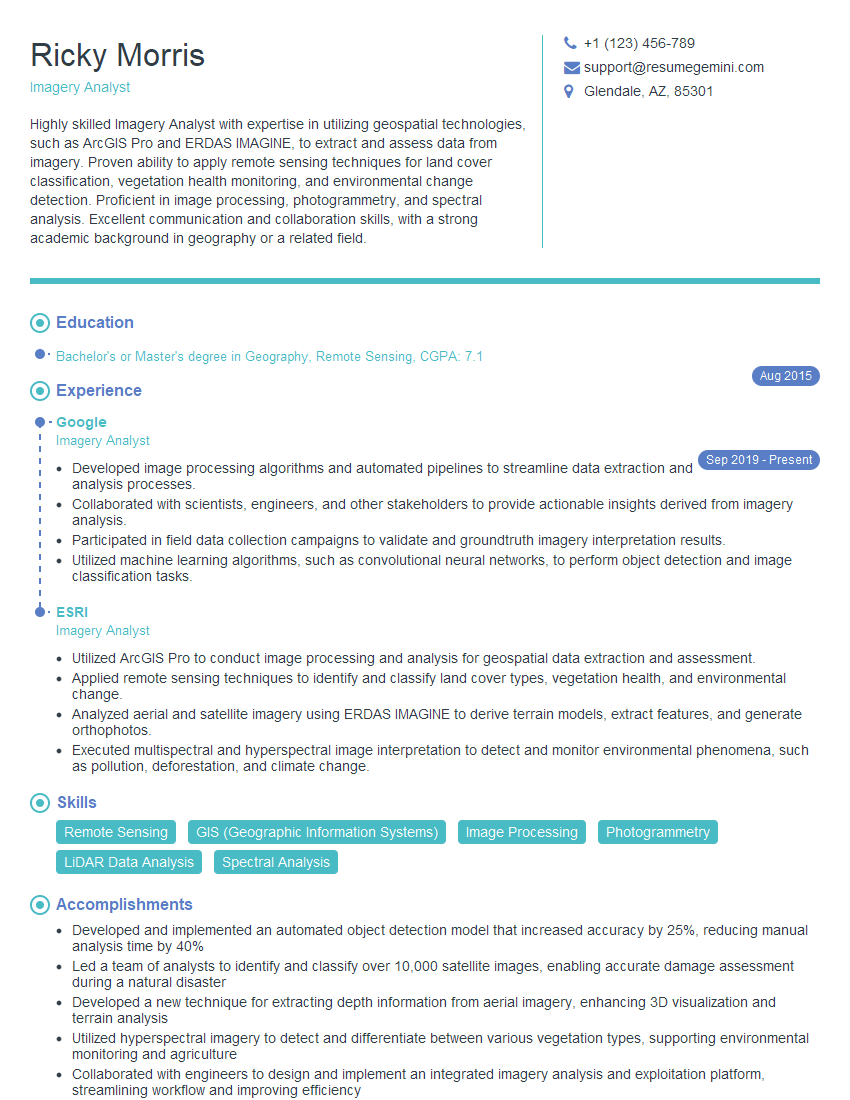
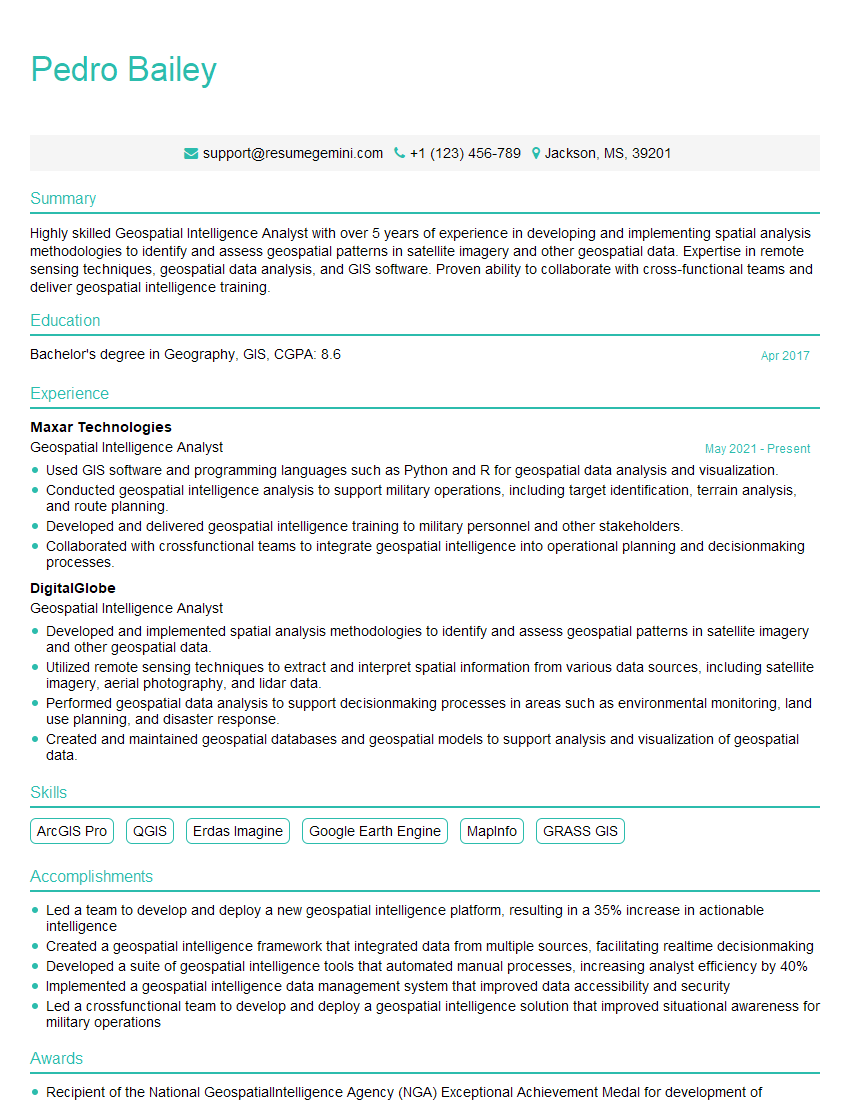
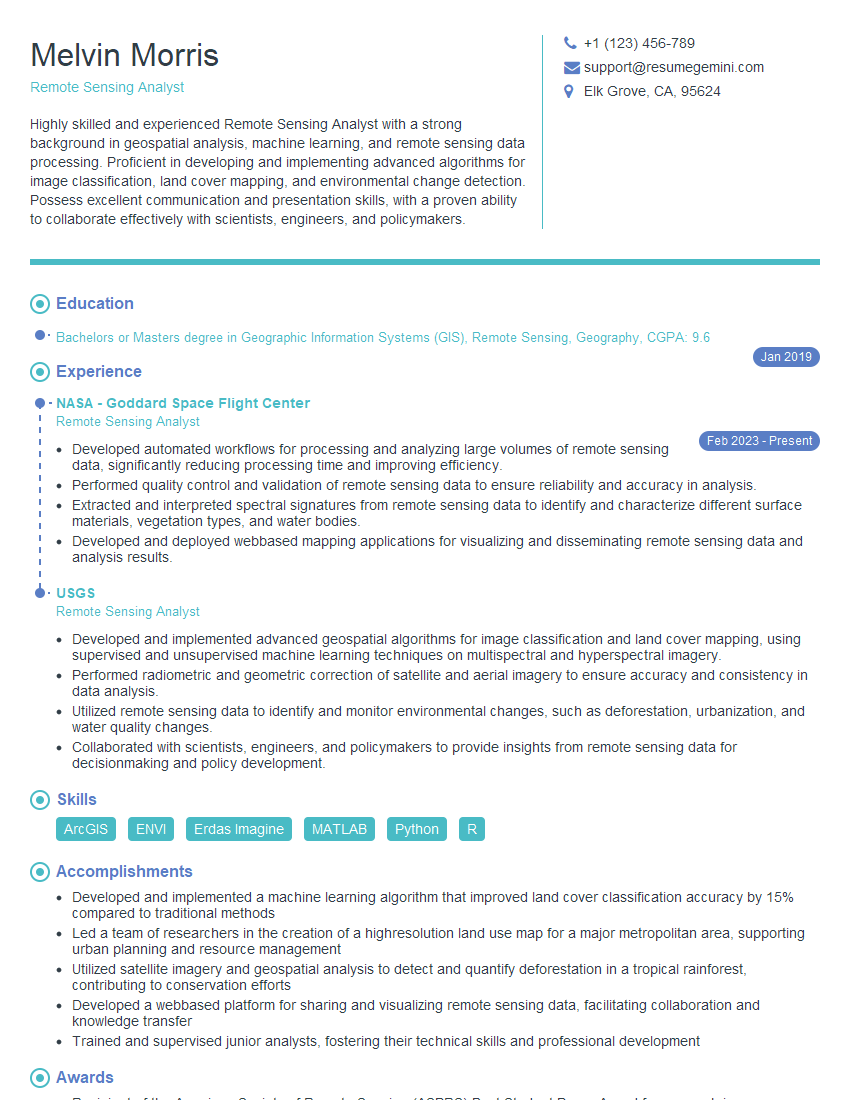
Mastering Airborne Reconnaissance opens doors to exciting and challenging careers, offering opportunities for professional growth and significant contributions to national security. To maximize your job prospects, it’s crucial to present your skills and experience effectively. Creating an ATS-friendly resume is essential for getting your application noticed by recruiters. We highly recommend using ResumeGemini to build a professional, impactful resume that highlights your qualifications for Airborne Reconnaissance roles. Examples of resumes tailored to this field are available to help you get started.
Explore more articles
Users Rating of Our Blogs
Share Your Experience
We value your feedback! Please rate our content and share your thoughts (optional).
What Readers Say About Our Blog
Very informative content, great job.
good