Interviews are more than just a Q&A session—they’re a chance to prove your worth. This blog dives into essential Aircraft Configuration and Load Management interview questions and expert tips to help you align your answers with what hiring managers are looking for. Start preparing to shine!
Questions Asked in Aircraft Configuration and Load Management Interview
Q 1. Explain the concept of Center of Gravity (CG) and its importance in flight.
The Center of Gravity (CG) is the average location of an aircraft’s weight. Imagine it as the point where the aircraft would balance perfectly if it were suspended. Its importance in flight is paramount because it directly impacts stability and control. If the CG is too far forward, the aircraft will be nose-heavy, making it difficult to lift off and potentially leading to a stall. If it’s too far aft, the aircraft becomes tail-heavy, making it difficult to control and prone to dangerous pitching movements. Maintaining the CG within the specified limits ensures safe and predictable flight characteristics.
Think of it like balancing a pencil on your finger – you need to find the exact center to keep it upright. Similarly, aircraft designers carefully position components to achieve optimal CG location.
Q 2. Describe the process of calculating aircraft weight and balance.
Calculating aircraft weight and balance involves a systematic process of determining the total weight and the location of the CG. It begins with weighing the aircraft itself (empty weight), and then adding the weights of all components, including fuel, passengers, cargo, and baggage. Each item’s weight and its distance from a datum point (a reference point on the aircraft) are recorded. These values are used to calculate the moment (weight x distance from datum). The total moment and total weight are used to compute the CG location.
This process is typically documented on a weight and balance form. Airlines and operators use sophisticated software to automate this process, ensuring accurate CG calculations. For example, a pilot might input the number of passengers, baggage weight, and fuel quantity; the software automatically calculates the resulting CG and compares it against acceptable limits. Deviations from these limits may result in flight restrictions or cancellations.
Example calculation: Total weight = 10,000 lbs, Total Moment = 500,000 lb-in, CG location = Total Moment / Total Weight = 50 inches from datumQ 3. How do you determine the maximum allowable takeoff weight (MTOW)?
The Maximum Allowable Takeoff Weight (MTOW) is the highest weight at which the aircraft is certified to take off. It’s determined by a number of factors, including structural limitations (the ability of the wings, landing gear, and fuselage to withstand the stresses of takeoff), performance considerations (the ability of the aircraft to climb at a safe rate and achieve a safe climb gradient), and regulatory requirements. Manufacturers conduct extensive testing and analysis to determine the MTOW for each aircraft type. This value is crucial for safety as exceeding it could lead to structural failure or compromised performance.
For example, an aircraft may have an MTOW of 150,000 lbs. This limit must never be surpassed during flight operations. The actual takeoff weight will be determined by a combination of payload (passengers and cargo), fuel, and the aircraft’s empty weight. The pilot is ultimately responsible for ensuring that the aircraft weight remains within the MTOW limit prior to departure.
Q 4. What are the factors affecting aircraft performance calculations?
Aircraft performance calculations are influenced by numerous factors. These can be broadly categorized as:
- Aircraft-specific factors: These include the aircraft’s weight, dimensions, wing area, engine power, and aerodynamic characteristics (lift, drag, etc.).
- Environmental factors: These include air density (affected by altitude and temperature), wind speed and direction, and runway conditions (slope, surface friction).
- Operational factors: These include the type of flight (e.g., short haul vs. long haul), the desired flight path (climb rate, cruising altitude), and payload distribution.
Accurate prediction of performance requires consideration of all these factors. This is often accomplished using sophisticated performance prediction software, taking into account the specifics of each flight, including weather conditions at the departure and arrival airports.
Q 5. Explain the different types of load distribution and their impact on stability.
Different types of load distribution significantly impact stability. The most relevant types are:
- Forward CG: A forward CG can make the aircraft more stable in pitch, but it can also increase the stall speed and reduce maneuverability.
- Aft CG: An aft CG can improve maneuverability and reduce stall speed, but it makes the aircraft less stable and more susceptible to oscillations or even uncontrolled pitching.
- Symmetrical CG: Ideally, we aim for a CG that is within the optimal range and fairly symmetrical, balancing stability and maneuverability.
Consider the example of a small cargo plane. If heavy cargo is loaded towards the rear, the aft CG shifts, potentially impacting the aircraft’s stability and requiring adjustments to flight controls. Careful planning is crucial to prevent instability and ensure safe flight within the CG limits.
Q 6. How do you handle unexpected weight changes during flight preparation?
Unexpected weight changes during flight preparation require immediate action. This might involve the addition of unexpected cargo, changes in passenger numbers, or fuel adjustments due to unforeseen weather conditions. The weight and balance must be recalculated immediately to ensure the CG remains within the allowable limits. If the changes are significant and push the CG beyond acceptable boundaries, appropriate actions should be taken, including adjusting cargo placement, offloading items, or potentially delaying the flight until the issue is resolved. Rigorous adherence to established procedures and communication between ground crew and pilots is critical in such situations.
For instance, if a heavy piece of equipment is added unexpectedly, the loading crew will need to determine its weight and its CG location and recalculate the aircraft’s total weight and CG. If it makes the CG fall outside the limits, a decision will have to be made to remove some other cargo.
Q 7. Describe the process of loading cargo, considering weight, balance, and safety.
Loading cargo involves a meticulous process that prioritizes weight, balance, and safety. This process starts with determining the weight and dimensions of each item and then using software or manual calculations to plot their positions within the aircraft’s designated cargo hold, taking into account the aircraft’s CG limits. Items are strategically placed to maintain the CG within the allowed range. Weight distribution is crucial to avoid stress concentrations on the aircraft’s structure. Safety regulations demand securing cargo properly using appropriate restraints to prevent shifting during flight. Loadmasters play a key role in ensuring that all cargo is loaded correctly and secured. They use specialized equipment and procedures to maintain stability and safety during flight.
Imagine loading a container of fragile ceramics on a cargo aircraft. You’d not only want to distribute the weight evenly but also need to ensure that the container is well-secured to prevent movement and potential damage during flight. Each step of the process is carefully monitored to prevent incidents and ensure that the cargo arrives safely at its destination.
Q 8. What are the regulatory requirements for aircraft load management?
Aircraft load management is governed by a stringent set of regulations, primarily established by national aviation authorities like the FAA (Federal Aviation Administration) in the US or EASA (European Union Aviation Safety Agency) in Europe, and supplemented by international organizations like ICAO (International Civil Aviation Organization). These regulations focus on ensuring safe flight operations by preventing weight and balance issues that could lead to accidents. Key aspects covered include:
- Weight limitations: Regulations define maximum takeoff weight (MTOW), maximum landing weight (MLW), maximum zero-fuel weight (MZFW), and other weight restrictions based on aircraft type and operational conditions. Exceeding these limits can compromise aircraft performance and structural integrity.
- Center of gravity (CG) limits: Regulations specify forward and aft CG limits within which the aircraft must operate. The CG is the point where the aircraft’s weight is considered to be concentrated. An improperly located CG can affect handling characteristics and flight stability, even leading to controllability issues.
- Load distribution: Regulations often address how cargo and passengers are distributed within the aircraft to maintain the CG within limits. This is especially critical for heavier items that significantly influence the overall balance.
- Documentation and record-keeping: Detailed records of weight and balance calculations, load manifests, and other relevant information are mandatory for audits and investigations in case of incidents.
- Dangerous goods: Strict rules govern the transportation of hazardous materials, including packaging, labeling, stowage, and handling procedures to prevent accidents.
Non-compliance can lead to severe penalties, including fines, grounding of the aircraft, and even legal action.
Q 9. How do you ensure compliance with weight and balance limitations?
Ensuring compliance with weight and balance limitations is a multi-step process that involves careful planning and meticulous execution. It begins with accurate weight estimation of all onboard items – passengers, baggage, cargo, fuel, and the aircraft itself. We utilize specialized software and load control systems to calculate the aircraft’s weight and CG. These systems take into account the weight and location of each item. Here’s how we ensure compliance:
- Accurate weight and balance data: We maintain up-to-date weight and balance data for the aircraft, including empty weight, moments of inertia, and allowable weight and CG limits. Regular maintenance checks ensure the accuracy of this data.
- Pre-flight planning: Before each flight, we carefully plan the loading based on passenger manifest, cargo information, and fuel requirements. Load planning software helps us optimize weight distribution to keep the CG within limits.
- Load sheet preparation: A detailed load sheet, detailing the weight and position of all items onboard, is generated. This serves as a critical document for the flight crew and ground crew.
- On-site checks and adjustments: During loading, we perform on-site weight and balance checks using scales and other measuring instruments. If discrepancies arise, we make adjustments to the load distribution to maintain compliance.
- Regular training: Regular training for load controllers and flight crews is crucial to maintain awareness of procedures and potential hazards.
Think of it like balancing a seesaw – you need to distribute the weight evenly to prevent it from tipping over. Similarly, aircraft need precise weight and balance control for safe and stable flight.
Q 10. What are the potential consequences of improper weight and balance calculations?
Improper weight and balance calculations can have catastrophic consequences. Even small deviations can significantly impact the aircraft’s stability and performance, leading to:
- Difficult handling characteristics: The aircraft might become difficult to control, requiring more effort from the pilot and potentially leading to loss of control.
- Increased stall speed: An aft CG can increase stall speed, making it harder to recover from a stall.
- Reduced climb performance: An improper CG can negatively impact climb performance, especially during takeoff.
- Structural damage: Exceeding weight limits can cause structural damage to the aircraft, potentially leading to in-flight failures.
- Accidents and fatalities: In severe cases, improper weight and balance can cause accidents, resulting in serious injuries or fatalities.
A real-world example involved an aircraft that crashed due to an improperly loaded cargo which shifted during flight, pushing the CG beyond limits and causing loss of control. This underscores the paramount importance of precise weight and balance management.
Q 11. Explain the role of load sheets and their importance in flight operations.
Load sheets are the crucial documents that provide a detailed record of an aircraft’s weight and balance distribution for a specific flight. They are essential for safe flight operations, acting as a critical communication tool between ground crews, load controllers, and flight crews. Key information included in a load sheet includes:
- Aircraft details: Aircraft registration number, type, and maximum weight and CG limits.
- Weight and balance data: Total weight, CG location, and breakdown of weight by individual items (passengers, baggage, cargo, fuel).
- Load distribution: Detailed information on the location of each item within the aircraft, including container numbers and positions.
- Center of gravity calculations: Detailed calculations showing how the CG was determined and if it falls within the acceptable limits.
- Signatures and approvals: Signatures from the load controller, flight crew, and sometimes other relevant personnel signifying agreement with the load information.
Without accurate and properly completed load sheets, it’s impossible to ensure safe and legal flight operations. They are audited regularly to ensure compliance with safety regulations.
Q 12. How do you manage dangerous goods during aircraft loading?
Managing dangerous goods (DG) during aircraft loading requires meticulous attention to detail and strict adherence to regulations set by the ICAO Technical Instructions for the Safe Transport of Dangerous Goods by Air (TI). This involves several crucial steps:
- Proper identification and classification: Accurate identification and classification of DG according to the UN hazard classes and compatibility groups is crucial. Incorrect classification can lead to serious incidents.
- Packaging and labeling: DG must be properly packaged and labeled according to the regulations, using UN-approved packaging and clearly visible labels showing the hazard class, UN number, and other relevant information.
- Documentation: Comprehensive documentation, including a Shipper’s Declaration for Dangerous Goods, is required, detailing the type, quantity, and properties of the DG. This document must accompany the shipment throughout its journey.
- Segregation and stowage: Different classes of DG must be segregated and stowed according to compatibility guidelines to prevent hazardous reactions and ensure safe transport. Specific stowage locations in the aircraft might be designated for DG.
- Emergency response plan: Appropriate emergency response plans must be in place to handle accidents or spills involving DG during loading or in flight.
- Training: Personnel involved in handling DG must receive specialized training to ensure they understand the safety procedures and risks involved.
Failure to properly manage DG can result in serious consequences, including fires, explosions, and release of toxic substances, posing significant risk to passengers, crew, and ground personnel.
Q 13. Describe your experience with different loading equipment and techniques.
My experience encompasses a range of loading equipment and techniques used in aircraft load management, tailored to the specific aircraft type and airport infrastructure. This includes:
- Belt loaders: Used for loading and unloading baggage and cargo containers efficiently and safely. Their speed and capacity are beneficial for high-volume operations.
- Container dollies and tugs: Used for moving Unit Load Devices (ULDs) – standardized containers for cargo – around the aircraft and loading them onto the aircraft using built-in loading systems. Their maneuverability is essential for efficient loading.
- Passenger boarding bridges: These structures facilitate passenger boarding and disembarking, safely and efficiently, and minimize exposure to the elements.
- Forklifts and pallet jacks: Used for moving heavy cargo and containers within the terminal and onto the loading equipment.
- Specialized loading equipment for oversized cargo: Handling oversized and oddly shaped items requires specialized equipment and careful planning to ensure the item’s secure placement without exceeding weight or CG limits.
Understanding the capabilities and limitations of this diverse equipment is critical for selecting the appropriate loading technique for optimal efficiency and safety.
Q 14. How do you handle discrepancies between planned and actual weight?
Discrepancies between planned and actual weight are a common occurrence in aircraft loading. These discrepancies necessitate immediate attention and corrective action to ensure continued compliance with weight and balance limitations. The response involves:
- Identifying the source of the discrepancy: Thorough investigation to pinpoint the cause of the weight difference – e.g., inaccurate passenger count, changes in cargo weight, or fuel discrepancies.
- Recalculating the weight and balance: Using the updated weight and balance data, a new calculation is performed to determine the actual weight and CG location.
- Adjusting the load distribution: If the recalculation shows that the weight and/or CG is outside the allowed limits, the load distribution must be adjusted to bring it back within compliance. This may involve offloading some cargo or baggage.
- Documenting the changes: All changes made must be documented clearly and accurately on the load sheet, including the reason for the adjustment and the updated weight and balance calculations.
- Communicating with the flight crew: The flight crew must be informed of the changes and any impact on flight performance. They are responsible for handling the aircraft during the flight and require accurate data.
This systematic approach ensures that the aircraft remains within safe operational limits, even in the face of unforeseen weight fluctuations. It prevents potential hazards and contributes to safe and successful flights.
Q 15. Explain the concept of fuel planning and its impact on weight and balance.
Fuel planning is crucial for safe and efficient flight operations. It involves determining the optimal amount of fuel required for a flight, considering factors like distance, weather conditions, reserves, and aircraft performance. This directly impacts weight and balance because fuel is a significant weight component. Improper fuel planning can lead to an aircraft being either too heavy (exceeding maximum takeoff weight) or too light (compromising stability and potentially affecting performance). For example, underestimating fuel needs might necessitate an emergency landing due to fuel exhaustion, whereas overestimating could lead to a heavier-than-optimal aircraft requiring more runway for takeoff and consuming more fuel.
The process typically starts with calculating the trip fuel, which accounts for the distance to the destination. Then, we add reserves for unforeseen circumstances such as holding patterns due to weather or air traffic delays. Finally, we add contingency fuel, adding a further safety buffer. All these fuel components are carefully calculated using specialized software and flight planning tools, and their total weight is incorporated into the aircraft’s weight and balance calculations.
Career Expert Tips:
- Ace those interviews! Prepare effectively by reviewing the Top 50 Most Common Interview Questions on ResumeGemini.
- Navigate your job search with confidence! Explore a wide range of Career Tips on ResumeGemini. Learn about common challenges and recommendations to overcome them.
- Craft the perfect resume! Master the Art of Resume Writing with ResumeGemini’s guide. Showcase your unique qualifications and achievements effectively.
- Don’t miss out on holiday savings! Build your dream resume with ResumeGemini’s ATS optimized templates.
Q 16. How do you manage passenger load distribution for optimal stability?
Managing passenger load distribution is essential for maintaining aircraft stability. Think of it like balancing a seesaw; uneven weight distribution can lead to an unstable flight. We use weight and balance software to predict the center of gravity (CG) location. This is the average location of an aircraft’s weight. The CG needs to remain within a specified range during the flight for safe operations. If the CG is too far forward, the aircraft may be difficult to control during takeoff and landing, while a CG that’s too far aft can result in instability and reduced control.
To optimize stability, we often need to strategically assign passengers to seats. For instance, on a nearly empty flight, heavier passengers might be strategically placed closer to the center of gravity to keep it within the acceptable limits. Airlines utilize automated systems and algorithms to achieve this efficiently, especially with larger aircraft and more complex loading configurations. Boarding procedures often factor in this process; passengers might be directed to certain areas to ensure optimal weight distribution.
Q 17. What software or tools do you use for aircraft load management?
Several specialized software packages are used for aircraft load management. Some prominent examples include Jeppesen LoadMaster, AIMS (Airline Information Management System), and various custom-built solutions by individual airlines. These tools often include sophisticated features like automated weight and balance calculations, passenger and cargo manifest management, and real-time data integration with flight planning systems.
The software allows us to input data such as passenger weight (often using an average weight based on statistical data), cargo weights and dimensions, baggage weights, fuel quantity, and the aircraft’s empty weight. The software then calculates the aircraft’s CG and total weight, comparing them against the operational limits specified in the aircraft’s flight manual. It will then generate a load manifest and weight and balance report for the flight crew. We also utilize electronic flight bags (EFBs) which provide a mobile platform to access this information during the preparation and execution of flights.
Q 18. How do you communicate weight and balance information to flight crew?
Weight and balance information is communicated to the flight crew through a formal and standardized process, typically involving a comprehensive load manifest and a weight and balance report. This report, generated by the load management software, includes crucial data such as:
- Total aircraft weight
- Center of gravity (CG) location
- Maximum takeoff weight (MTOW)
- Maximum landing weight (MLW)
- Fuel weight
- Payload weight
The information is typically presented clearly and concisely, often with graphical representations to visually confirm that the CG is within the permissible limits. The flight crew is responsible for reviewing this data before flight to ensure the aircraft is within its operational limits and safe to operate. In some cases, this report is directly uploaded to the aircraft’s flight management system.
Q 19. Describe your experience with handling emergency situations related to weight and balance.
In my experience, emergency situations related to weight and balance are rare but require immediate and decisive action. One example involved a last-minute change in passenger count and weight distribution just before takeoff due to several passenger no-shows and last-minute passenger additions. This necessitated a quick recalculation of the weight and balance, requiring swift communication with the ground crew to adjust passenger seating and baggage loading.
We had to prioritize ensuring the CG remained within acceptable limits before proceeding with the flight, and we had to be sure to follow the proper documentation procedures, given the deviation from the initial load plan. Effective communication and quick problem-solving skills are absolutely vital in such cases to mitigate risks and ensure flight safety. If necessary, corrective actions could involve removing baggage or fuel to bring the aircraft within its operational limits, potentially causing a delay.
Q 20. What is your understanding of the limitations of aircraft operational flight envelope?
The aircraft operational flight envelope defines the boundaries within which an aircraft can safely operate. It encompasses various parameters, including speed, altitude, angle of attack, load factors (g-forces), and, critically, weight and balance. Exceeding these limits can lead to dangerous situations, including structural damage, loss of control, and potentially catastrophic failures. The flight envelope is clearly defined in the aircraft’s flight manual.
Understanding these limitations is paramount for safe operations. For example, exceeding the maximum takeoff weight (MTOW) could cause structural stress on the aircraft and could reduce performance, increasing takeoff and landing distances. Exceeding the maximum landing weight (MLW) can result in similar issues upon landing, and significantly increasing the risk of landing gear issues. Similarly, a center of gravity outside the acceptable range could lead to instability, making control of the aircraft difficult or impossible.
Q 21. How do you ensure accurate data entry for aircraft weight and balance calculations?
Ensuring accurate data entry is crucial for precise weight and balance calculations. Inaccuracies can have serious safety implications. We utilize several strategies to minimize errors:
- Double-checking all data entries: Every piece of information, including passenger and cargo weights, fuel quantity, and baggage weights, is independently verified.
- Using standardized weight values: Pre-defined average weights for passengers and baggage are employed, based on statistical data and airline experience, to minimize the impact of individual variations in passenger and cargo weight.
- Using automated systems: Modern load management software automatically performs calculations, significantly reducing human error.
- Regular training and updates: Staff involved in load planning receive ongoing training on the software and best practices to ensure consistency and accuracy.
- Internal audits and quality control: Regular audits and quality control measures are implemented to detect and correct any errors or inconsistencies in data entry and calculations.
By adhering to these stringent procedures, we ensure the integrity of weight and balance calculations, minimizing the risks associated with inaccurate data.
Q 22. Describe your understanding of different aircraft types and their specific weight and balance requirements.
Aircraft weight and balance is crucial for safe and efficient flight. Different aircraft types, from small single-engine planes to large airliners, have unique weight and balance requirements dictated by their design and operational characteristics. These requirements are documented in the aircraft’s flight manual.
For example, a Cessna 172 (single-engine piston) has relatively simple weight and balance considerations, primarily focusing on the total weight not exceeding the maximum allowable takeoff weight (MTOW) and maintaining the center of gravity (CG) within specified limits. The CG is the point where the aircraft’s weight is considered to be concentrated. These limits are shown graphically in a weight and balance envelope. Conversely, a Boeing 747 (large jet airliner) has significantly more complex considerations. Its weight and balance calculations will need to account for fuel distribution across multiple tanks, passenger weight distribution, cargo placement, and the weight of various systems. The calculations for a 747 are performed using sophisticated software to manage the vast number of variables and ensure compliance with stringent safety regulations. The process involves inputting weights of various components and their locations to calculate the total weight and the CG. Beyond MTOW, other weight limits such as Maximum Zero Fuel Weight (MZFW) are important to prevent structural damage during flight.
- Single-Engine Piston Aircraft: Simpler weight and balance calculations, focusing on total weight and CG within defined limits.
- Multi-Engine Piston Aircraft: Increased complexity due to multiple engines and larger payload capacity, requiring more precise CG calculations.
- Turboprop Aircraft: Similar to multi-engine piston, but with more sophisticated fuel management and potential for higher payload.
- Jet Aircraft: Most complex, incorporating fuel management, payload distribution, and sophisticated computer programs for precise CG and weight calculations.
Q 23. How do you use weight and balance data to determine aircraft performance parameters?
Weight and balance data are fundamental to determining several aircraft performance parameters. Accurate weight and balance information is crucial for safe and efficient operation. It directly impacts:
- Takeoff and Landing Performance: The aircraft’s weight significantly affects its takeoff and landing distances. A heavier aircraft requires a longer takeoff run and a longer landing distance. The CG location also influences the aircraft’s stability during these critical phases of flight. A CG outside the limits can lead to control difficulties.
- Fuel Consumption: Weight influences fuel burn. A heavier aircraft consumes more fuel. Careful weight management is essential for maximizing fuel efficiency.
- Flight Stability and Control: The CG position directly influences the aircraft’s stability and controllability. A CG outside the permitted range can make the aircraft difficult to control, potentially leading to accidents. The CG has a direct impact on pitch stability.
- Structural Stress: Excessive weight can place undue stress on the aircraft structure, potentially leading to fatigue and failure.
For example, let’s consider a scenario where an aircraft’s CG is forward of its limits. During takeoff, this can result in a higher stall speed which reduces safety margins and compromises maneuverability. Conversely, a rearward CG could lead to excessive nose-heavy pitching and possibly a stall.
Q 24. How do you verify the accuracy of weight and balance calculations before flight?
Verifying the accuracy of weight and balance calculations is paramount. This is accomplished through a multi-step process:
- Accurate Weighing: The aircraft should be weighed on calibrated scales to determine its actual weight. This is often done during maintenance checks. All fuel should be accounted for.
- Precise Measurements: Accurate measurements of the location of all items contributing to the weight (passengers, cargo, fuel) must be taken and documented.
- Cross-Checking Calculations: All calculations should be performed using the aircraft’s flight manual or approved software and then independently cross-checked to minimize the risk of errors. Several rounds of checks should be performed, especially with complex scenarios.
- Documentation Review: Meticulous record-keeping is essential. All weight and balance data should be recorded and reviewed before each flight. This includes weight records and CG calculations. Any discrepancies need to be immediately resolved.
- Software Verification: If weight and balance software is used, its accuracy and calibration should be regularly verified through updates and internal checks.
In summary, a systematic approach combining physical measurements, rigorous calculations, and thorough documentation ensures accurate weight and balance verification prior to every flight, enhancing safety and minimizing risks.
Q 25. What are the common safety concerns related to aircraft load management?
Several safety concerns are associated with improper aircraft load management:
- Overloading: Exceeding the aircraft’s maximum takeoff weight (MTOW) can lead to structural damage, reduced performance, increased fuel consumption, and a greater risk of accidents during takeoff and landing. The aircraft may not be able to achieve the required climb rate, resulting in a loss of altitude and subsequent terrain impact.
- Center of Gravity (CG) Limits Exceeded: A CG outside the prescribed limits can severely compromise flight stability and controllability, making the aircraft difficult or impossible to handle. This can lead to loss of control and accidents.
- Improper Cargo Securing: Improperly secured cargo can shift during flight, disrupting the weight and balance and compromising the aircraft’s stability and potentially injuring passengers or crew.
- Incorrect Fuel Loading: Errors in fuel loading can result in an overweight condition or an imbalance that affects flight performance and stability.
- Failure to Account for Passengers and Baggage: Inaccurate estimation of passenger weight and baggage can lead to exceeding the weight limits or shifting the CG, jeopardizing safety.
These concerns highlight the importance of adhering to strict weight and balance procedures and performing regular checks to ensure safe and efficient operation.
Q 26. Describe your experience with handling deviations from standard weight and balance procedures.
In my experience, deviations from standard weight and balance procedures are handled with a structured approach prioritizing safety. The specific actions depend on the nature and extent of the deviation.
- Minor Deviations: Small deviations within acceptable tolerances might be addressed by minor adjustments, like shifting baggage, or using fuel to compensate. Thorough recalculations will confirm the aircraft remains within the safety envelope. Any documentation will be updated to reflect the changes.
- Significant Deviations: Larger deviations would require more significant actions. This might involve removing cargo or passengers to reduce the aircraft’s weight, redistributing weight to bring the CG within limits, or in some cases, delaying the flight until the issue is resolved. Consultations with the aircraft manufacturer, regulatory bodies, and operational experts may be necessary.
- Emergency Situations: In emergency scenarios involving sudden weight shifts or unexpected conditions, immediate corrective actions are necessary to maintain control and safety. Detailed reports of such situations are then submitted for review to avoid repeating the situation.
Regardless of the deviation’s severity, maintaining accurate records and thorough documentation are essential, including the nature of the deviation, the steps taken to rectify it, and the resulting weight and balance configuration. This documentation is crucial for future flight planning and operational safety review.
Q 27. How do you stay updated on changes in regulations and best practices for aircraft load management?
Staying updated on changes in regulations and best practices is vital in the aviation industry. I employ several methods to achieve this:
- Regulatory Updates: I regularly monitor publications and updates from aviation regulatory bodies such as the FAA (Federal Aviation Administration) in the United States or EASA (European Union Aviation Safety Agency) in Europe. These organizations issue notices, advisories, and rule changes that impact aircraft weight and balance procedures.
- Industry Publications: Reading industry publications, attending seminars, and participating in conferences keep me informed of the latest best practices, emerging technologies, and safety recommendations within aircraft load management.
- Manufacturer Information: Staying updated on aircraft manufacturer’s service bulletins, manuals, and recommended practices is crucial. These updates often include modifications to weight and balance procedures or new safety standards.
- Professional Networks: Networking with other professionals in the field, engaging in professional organizations, and participating in discussions helps me share and learn about best practices.
- Software Updates: Keeping any software used for weight and balance calculations updated ensures the use of the latest algorithms, safety enhancements, and regulatory compliance.
Continuous learning is essential to ensure safe and efficient aircraft load management practices compliant with the latest regulations and best practices.
Q 28. Explain your problem-solving approach in a scenario where an aircraft is overloaded.
My problem-solving approach to an overloaded aircraft involves a structured and systematic process:
- Assess the Situation: The first step is to determine the extent of the overload. This involves comparing the calculated total weight to the aircraft’s MTOW and determining how much weight needs to be removed.
- Identify Weight Reduction Options: Explore options for reducing weight. This might involve removing cargo, baggage, or, in extreme cases, passengers. The priority is to prioritize safety above all else.
- Prioritize Weight Removal: If removing items is necessary, prioritize based on least impact on the flight’s objectives (e.g., removing less essential cargo before passengers). Consider the impact of any removed item on the CG.
- Redistribute Weight: If feasible, repositioning heavy items can improve the CG distribution without the need for weight removal.
- Recalculate Weight and Balance: After removing weight or redistributing it, recalculate the total weight and CG to verify it falls within the permissible limits.
- Document Actions: Maintain a detailed record of all actions taken, including weight removed, items shifted, and the final weight and balance calculations. This documentation is crucial for future reference and accident investigation purposes if needed.
- Notify Authorities if necessary: Depending on the severity of the situation, regulatory bodies or other relevant authorities may need to be informed about the weight issue, particularly if it involved removing passengers or cargo.
Throughout the process, safety remains the top priority. If the overload cannot be safely resolved, the flight should be delayed or canceled until the issue is rectified.
Key Topics to Learn for Aircraft Configuration and Load Management Interview
- Weight and Balance Calculations: Understanding principles of center of gravity (CG), moment, and weight limitations. Practical application includes performing weight and balance calculations for various flight scenarios and understanding the impact of fuel, payload, and other factors.
- Aircraft Performance: Analyzing how aircraft configuration affects range, fuel consumption, and takeoff/landing performance. Practical application involves using performance charts and software to optimize flight plans based on load and weather conditions.
- Load Planning and Manifest Preparation: Creating efficient load plans that comply with regulations and optimize weight distribution. Practical application includes using specialized software to generate accurate load manifests and ensuring compliance with safety regulations.
- Cargo Handling and Securing: Understanding proper cargo handling techniques, securement methods, and associated regulations to prevent shifting during flight. Practical application includes knowledge of different types of cargo and the best practices for their securement.
- Regulatory Compliance: Familiarity with relevant regulations (e.g., FAA, EASA) pertaining to aircraft weight and balance, load planning, and dangerous goods transportation. Practical application includes demonstrating understanding of the legal framework governing aircraft operations.
- Aircraft Systems and their Impact on Load Management: Understanding how different aircraft systems (fuel, hydraulics, etc.) affect weight and balance calculations. Practical application involves analyzing system limitations and their influence on load planning.
- Problem-Solving and Decision-Making: Demonstrating the ability to troubleshoot load-related issues and make sound judgments under pressure. Practical application includes describing scenarios where quick thinking and problem-solving were essential in load management.
Next Steps
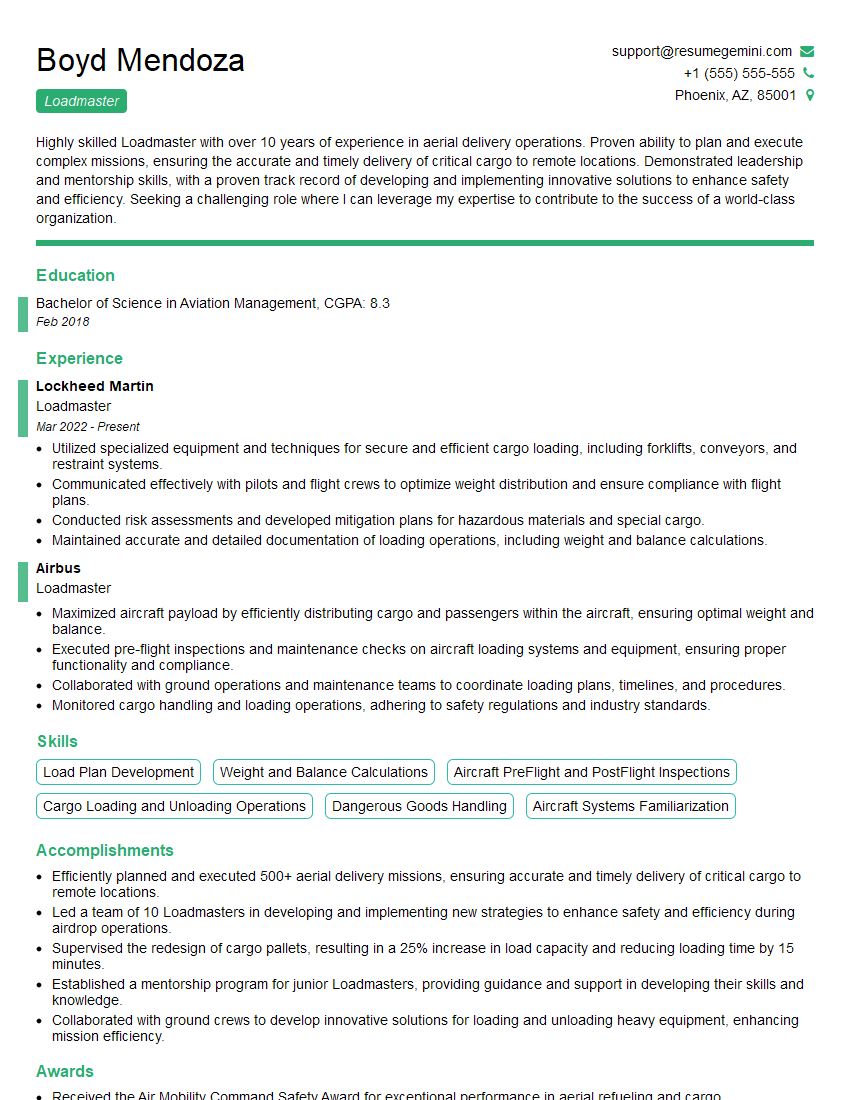
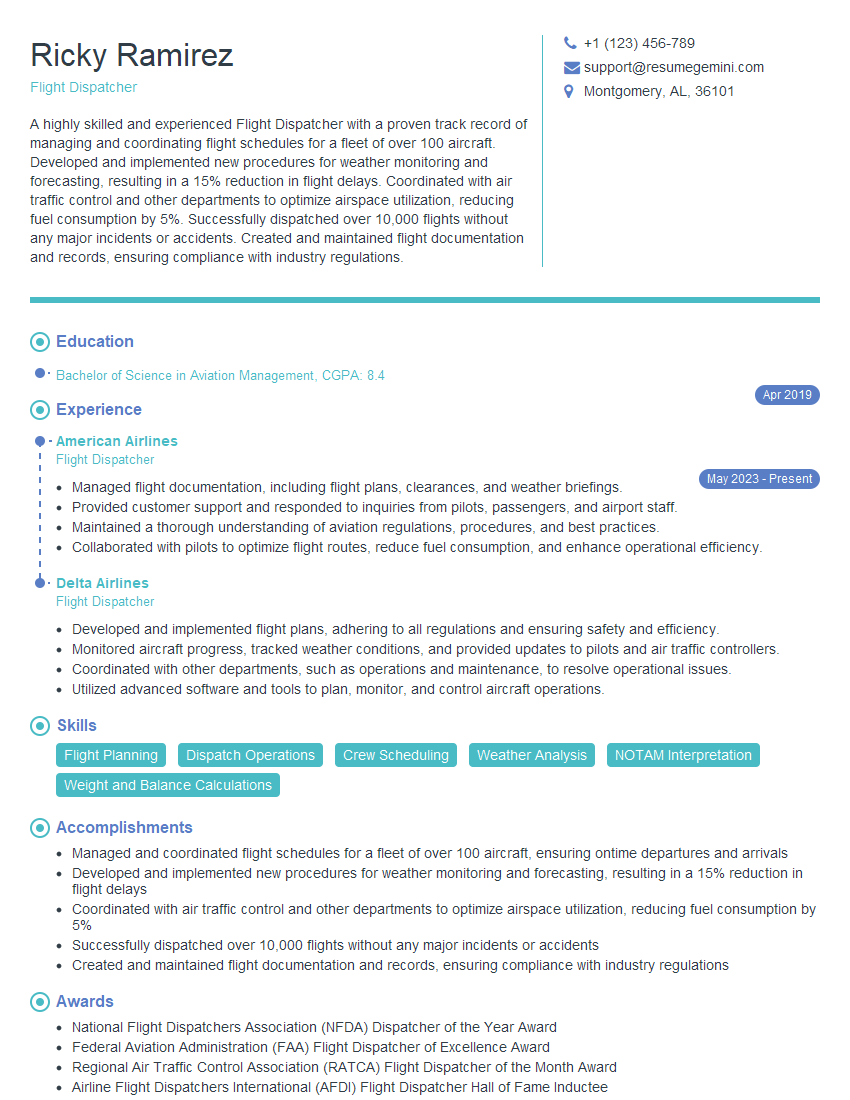
Mastering Aircraft Configuration and Load Management is crucial for career advancement in the aviation industry, opening doors to specialized roles and higher responsibilities. To maximize your job prospects, it’s essential to present your skills effectively. Building an ATS-friendly resume is key to getting your application noticed. We strongly encourage you to leverage ResumeGemini as a trusted resource for creating a professional and impactful resume. ResumeGemini provides examples of resumes tailored to Aircraft Configuration and Load Management positions, helping you showcase your expertise convincingly.
Explore more articles
Users Rating of Our Blogs
Share Your Experience
We value your feedback! Please rate our content and share your thoughts (optional).
What Readers Say About Our Blog
Very informative content, great job.
good