Feeling uncertain about what to expect in your upcoming interview? We’ve got you covered! This blog highlights the most important AISC Code of Standard Practice interview questions and provides actionable advice to help you stand out as the ideal candidate. Let’s pave the way for your success.
Questions Asked in AISC Code of Standard Practice Interview
Q 1. Explain the purpose and scope of the AISC Code of Standard Practice.
The AISC Code of Standard Practice (CSP) isn’t about *design* calculations; instead, it’s a comprehensive guide for the fabrication, erection, and quality control of structural steel projects. Think of it as the ‘rules of the road’ for ensuring a safe and efficient steel construction process. Its scope covers everything from material selection and shop fabrication to field erection and quality assurance. It aims to minimize errors, improve efficiency, and ultimately deliver a structurally sound and reliable steel structure. The CSP isn’t a design standard itself (that’s the AISC 360), but it’s essential for ensuring that the designed structure is built correctly.
Q 2. Describe the different types of steel connections covered in the AISC Code.
The AISC Code details a wide variety of steel connections, broadly categorized as:
- Bolted Connections: These use bolts to transfer shear and/or tension forces between steel members. They can be simple (bearing-type) or more complex (high-strength bolted connections). The CSP specifies requirements for bolt types, hole tolerances, and edge distances.
- Welded Connections: These utilize welding to join steel members. The CSP outlines permissible welding procedures, quality control checks, and the impact of welding on member strength. Different types of welds (e.g., fillet welds, groove welds) are covered, along with their associated requirements for size, preparation, and inspection.
- Hybrid Connections: These use a combination of bolts and welds to transfer forces, often leveraging the strengths of both connection types. A common example is a bolted connection supplemented by fillet welds to enhance shear capacity.
The CSP provides detailed guidance on the appropriate selection of connection types based on the design loads, member sizes, and fabrication capabilities. It’s critical to consider factors like ease of fabrication, cost-effectiveness, and ultimate strength when choosing a connection type.
Q 3. What are the key considerations for designing bolted connections according to AISC?
Designing bolted connections according to AISC involves several key considerations:
- Bolt Type and Grade: Selecting the correct bolt type (e.g., A325, A490) and grade is crucial for ensuring adequate strength. Higher-strength bolts allow for smaller connection sizes.
- Bolt Spacing and Edge Distances: These parameters are critical for preventing bolt failures and ensuring adequate shear and bearing capacities. AISC provides minimum requirements for these distances to prevent premature failures due to stress concentrations.
- Hole Tolerances: The CSP specifies limits for oversized and slotted holes to accommodate variations in fabrication. Oversized holes reduce the bolt’s shear strength, requiring careful design consideration.
- Slip Critical Connections: For connections designed to resist slip, special considerations exist regarding bolt tightening procedures and the use of washers to ensure proper clamping force.
- Bearing Strength: The capacity of the connected members to withstand the bearing pressure of the bolts should be verified. This is especially important in cases with thick members or higher loads.
Ignoring these considerations can lead to inadequate connections, jeopardizing the structural integrity of the entire building. For instance, insufficient edge distance can lead to bolt pull-out or member failure before the bolt yields.
Q 4. How do you determine the allowable stress for steel members based on AISC specifications?
Allowable stresses for steel members are determined according to AISC 360, not the CSP. The CSP focuses on fabrication, not design. AISC 360 defines allowable stresses based on several factors:
- Steel Grade: Different steel grades (e.g., A992, A572) have varying yield and tensile strengths, directly impacting allowable stresses.
- Stress Type: Allowable stresses are specified for different stress types, including axial tension, compression, bending, and shear.
- Member Geometry: The shape of the member (e.g., wide-flange, tube, channel) and its slenderness ratio (length-to-radius of gyration) influence allowable stresses. Slender members are more susceptible to buckling under compression.
- Load Combinations: Allowable stresses should consider various load combinations (dead load, live load, wind load, etc.), according to ASCE 7.
The process generally involves selecting a steel grade, determining the relevant stress type and member properties, applying appropriate factors of safety (typically 1.67 for yield strength), and then consulting the AISC 360 specification tables to find the allowable stress.
For example, the allowable axial compressive stress in a slender column will be significantly lower than in a stubby one due to the higher risk of buckling.
Q 5. Explain the importance of proper detailing in minimizing fabrication errors.
Proper detailing is crucial for minimizing fabrication errors and ensuring the steel structure is built according to design intent. Detailed drawings with clear dimensions, notes, and specifications are essential. The CSP emphasizes the importance of accurate and complete shop drawings, including:
- Clear Weld Symbols and Dimensions: Ambiguous weld symbols can lead to incorrect weld sizes and procedures, affecting the connection’s strength.
- Detailed Connection Diagrams: These should clearly show the bolt patterns, hole sizes, and any special requirements, minimizing assembly errors.
- Member Markings and Identification: Proper identification of each member helps avoid misplacement during erection.
- Tolerances and Allowances: Clearly defining acceptable tolerances for dimensions, angles, and other parameters helps prevent rejections due to minor discrepancies.
Imagine building a complex puzzle with poorly drawn instructions. Similarly, vague or inaccurate shop drawings will lead to errors in fabrication and assembly, resulting in costly rework or even structural failure. Thorough detailing saves time and money by preventing costly errors downstream. This often comes at the expense of time up front to correctly document the design.
Q 6. What are the requirements for fireproofing steel members per AISC?
AISC doesn’t directly specify fireproofing requirements; that falls under building codes (like IBC). However, the CSP addresses fireproofing in terms of its impact on the structural steel. Fireproofing materials must be applied correctly to ensure they don’t compromise the steel’s structural integrity or cause corrosion. Key aspects the CSP emphasizes include:
- Material Compatibility: The fireproofing material must not react negatively with the steel, leading to corrosion or reduced strength.
- Proper Application: The material should be applied uniformly and according to the manufacturer’s specifications to ensure its effectiveness and prevent damage to the steel members.
- Impact on Steel Strength: The weight of the fireproofing material and its potential to restrict thermal expansion must be considered in the design.
- Inspection and Quality Control: Regular inspection is crucial to ensure the fireproofing is properly applied and remains intact.
A common example is spray-applied fire-resistive material (SFRM). Improper application can leave gaps exposing the steel or create areas of excessive thickness, causing unforeseen stress on the structure. The CSP highlights the importance of quality control to prevent such issues.
Q 7. How does the AISC Code address the impact of welding on steel member strength?
The AISC Code, specifically AISC 360, addresses the impact of welding on steel member strength by providing guidelines on weld design and quality control. Welding can alter the steel’s properties near the weld zone, potentially reducing the overall member strength if not properly managed. The CSP then focuses on the fabrication quality control related to the welding. Key considerations include:
- Weld Strength: AISC 360 specifies allowable stresses for welds based on the type of weld, weld size, and steel grade. Proper weld design ensures sufficient strength to transfer the required loads.
- Heat Affected Zone (HAZ): Welding introduces a heat-affected zone around the weld, which can undergo changes in microstructure and strength. Proper welding procedures minimize the negative effects on the HAZ.
- Weld Inspection and Quality Control: The CSP emphasizes the importance of non-destructive testing (NDT) methods, such as visual inspection, radiography, or ultrasonic testing, to ensure the welds meet quality standards.
- Preheating and Post-weld Heat Treatment: In certain cases, preheating the steel before welding or employing post-weld heat treatment can help to minimize the negative impact of the HAZ.
Inadequate welding procedures or insufficient quality control can lead to weld defects, like cracks or incomplete fusion, significantly reducing the member’s strength and overall structural integrity. Proper welding practices, as outlined in the AISC code, are crucial for ensuring the strength and durability of the steel connections.
Q 8. Describe the process for checking the stability of a steel column using AISC criteria.
Checking the stability of a steel column using AISC criteria involves determining if the column will buckle under compressive loads before reaching its material yield strength. This is primarily done using a column effective length and a critical buckling stress check. The process involves several steps:
- Determine the effective length (K): This factor accounts for how the column is restrained at its ends. A perfectly pinned column has K=1.0, while a fixed-fixed column has K=0.5. AISC provides guidance on determining K based on end conditions. For instance, a column fixed at one end and free at the other would have K=2.0.
- Calculate the slenderness ratio (KL/r): This is the ratio of the effective length (KL) to the least radius of gyration (r) of the column cross-section. The radius of gyration represents the distribution of the cross-sectional area about the axis of bending. A higher slenderness ratio indicates a more slender column, more prone to buckling.
- Determine the critical stress (Fcr): AISC provides formulas for calculating the critical buckling stress. These formulas consider both the material properties (yield strength, Fy) and the slenderness ratio (KL/r). The formulas differ depending on whether the column is considered short, intermediate, or slender.
- Compare critical stress to applied stress (Fa): The applied stress is calculated by dividing the axial load on the column by its cross-sectional area. If Fa is less than Fcr, the column is considered stable. If Fa exceeds Fcr, the column is unstable and will buckle.
For example, consider a W14x100 column with a yield strength of 50 ksi, effectively pinned at both ends (K=1.0), and a length of 20 ft. We’d calculate KL/r, find Fcr using the appropriate AISC formula, and compare it to Fa to assess stability. Software is typically used for this process due to the complex nature of the calculations. Failure to adequately account for effective length and the appropriate critical stress calculation can lead to significant design errors and potential structural collapse.
Q 9. Explain the AISC requirements for bracing and lateral support of steel members.
AISC requirements for bracing and lateral support of steel members focus on preventing instability and ensuring that members can resist anticipated loads. Bracing and lateral support restrict lateral-torsional buckling and sway. The requirements aren’t prescriptive but are performance-based, considering the member’s geometry, loading, and material properties.
- Lateral-Torsional Buckling: Unbraced compression members are susceptible to lateral-torsional buckling (LTB), a failure mode where the member bends laterally and twists simultaneously. AISC provisions limit the unbraced length to prevent LTB, often achieved by providing bracing at intervals specified in the relevant section of the AISC Specification.
- Sway: Sway refers to the lateral movement of a structure or member due to lateral loads or instability. Preventing excessive sway is critical to structural stability. Bracing and lateral support are designed to resist sway, generally utilizing diagonal bracing, shear walls, or moment frames.
- Bracing Methods: Various methods exist for providing bracing and lateral support. These include:
- Diagonal Bracing: Uses tension or compression members arranged diagonally to resist lateral loads.
- K-Bracing: A type of diagonal bracing that is more compact and commonly used.
- Moment Frames: Provide lateral stability through the bending capacity of structural members.
- Shear Walls: Rigid walls designed to resist lateral forces.
- Design Considerations: Designers must consider the load case, the stiffness of the bracing members, the connection details, and the overall stability of the structure when selecting appropriate bracing and lateral support systems.
In practice, this often means adding intermediate supports to beams or columns, or designing a more robust connection to transfer bracing forces efficiently. Overlooking this leads to structural failures, costly repairs, and even potential safety hazards.
Q 10. How does AISC address the use of high-strength steel in structural design?
AISC addresses the use of high-strength steel by allowing for higher allowable stresses and potentially reduced section sizes compared to conventional steels. However, this requires careful consideration of several factors:
- Material Properties: High-strength steel has a higher yield strength (Fy) but may exhibit different ductility characteristics than conventional steel. This needs to be considered in the design to ensure satisfactory performance.
- Fracture Toughness: High-strength steels may have lower fracture toughness in some instances. Designers need to ensure the structural details and connections are suitable for the material, mitigating brittle fracture risks. AISC provides guidance on appropriate weld designs and details.
- Fabrication: High-strength steel can be more challenging to fabricate due to its increased strength, and may require more specialized welding techniques and equipment.
- Design Considerations: The design approach remains consistent with the fundamental principles of structural mechanics, but with consideration of the modified material properties in the relevant equations. AISC specifications will generally provide adjusted factors or formulas for these higher-strength steels.
Essentially, while high-strength steels offer weight savings and economic benefits, the design must explicitly address the material’s unique characteristics to ensure structural safety. Ignoring these differences can lead to unexpected failures. Choosing the wrong weld type for high-strength steel, for example, could result in a brittle fracture during service.
Q 11. What are the common methods for connecting steel beams to columns according to AISC?
AISC outlines several common methods for connecting steel beams to columns, each with its own advantages and disadvantages:
- Welded Connections: These provide strong and rigid connections, suitable for various loading conditions. The design must consider the weld size, type (e.g., fillet, groove), and electrode type to ensure sufficient strength and avoid weld failures. This is usually the preferred method for high-strength applications.
- Bolted Connections: These offer ease of fabrication and erection. The design must consider the bolt size, type (e.g., high-strength bolts), spacing, and edge distance to ensure sufficient strength and prevent slip or failure. This type of connection is often more flexible and cheaper than welded connections, but may require more careful detailing to prevent yielding of the connected members.
- Shear Connections: These are used primarily in composite construction to transfer shear forces between the steel beam and concrete slab. These connections usually involve shear studs or other devices that create a frictional interaction between the steel and concrete.
The selection of the connection method depends on various factors, including load magnitude and type, architectural requirements, fabrication constraints, budget, and project timeline. For instance, in a high-rise building, welded connections may be preferred for their strength and rigidity, while in a simpler structure, bolted connections might be a more cost-effective option.
Q 12. Explain the concepts of LRFD and ASD design methods as described in the AISC.
AISC presents two primary design methods: Load and Resistance Factor Design (LRFD) and Allowable Stress Design (ASD). Both methods achieve the same goal—ensuring structural safety—but with a different philosophical approach:
- LRFD (Load and Resistance Factor Design): This is a limit states design method that accounts for the variability of loads and resistances. It uses load factors (to increase the design loads) and resistance factors (to reduce the predicted capacity of members) to ensure a desired probability of failure. The design equation is typically expressed as:
∑(γiQi) ≤ φRnwhere γi are load factors, Qi are loads, φ is the resistance factor and Rn is the nominal strength.- ASD (Allowable Stress Design): This is a traditional method that uses allowable stresses based on a factor of safety to account for uncertainties. The design must satisfy:
∑ Qi ≤ Rawhere Qi are loads and Ra is the allowable strength.
LRFD is generally preferred for its more explicit consideration of probabilities of failure, offering greater clarity and improved risk management in contemporary design. However, ASD is still used and is easier to understand for some engineers. Understanding both is crucial for a structural engineer.
Q 13. How do you account for corrosion in the design of steel structures according to AISC?
AISC addresses corrosion by requiring designers to account for potential material loss due to corrosion, ensuring the structure’s long-term strength and stability. This is done through:
- Corrosion Allowances: The design might incorporate an allowance for corrosion based on anticipated environmental conditions and material type. This is often expressed as a reduction in the material section’s dimensions to account for the material loss from corrosion.
- Protective Coatings: The use of appropriate coatings, such as paint or galvanization, is often specified to protect the steel from corrosion. Designers must choose coating systems based on the environment and its aggressiveness.
- Material Selection: Selecting corrosion-resistant materials, like stainless steel or weathering steels, can reduce the need for extensive corrosion protection measures. These materials are frequently used in harsh environments.
- Design Details: Careful attention to design details can minimize the risk of corrosion. For example, ensuring proper drainage and avoiding stagnant water is critical for preventing corrosion. Avoiding sharp corners or crevices also can slow corrosion rate.
Failing to account for corrosion in the design can lead to premature structural failure, requiring costly repairs or even replacement. Corrosion-related design must balance cost and durability based on a project’s overall requirements and expected service life.
Q 14. Describe the role of shear connectors in composite steel-concrete structures.
In composite steel-concrete structures, shear connectors are crucial for transferring shear forces between the steel beam and the concrete slab. This creates a composite action, enhancing the beam’s flexural capacity. Without adequate shear connectors, the steel and concrete would act independently, significantly reducing the overall strength and stiffness of the composite section.
- Types of Shear Connectors: Common shear connectors include:
- Stud Shear Connectors: These are small, headed studs welded to the top flange of the steel beam. They bond with the concrete slab, transferring shear forces through friction and bond.
- Channel Shear Connectors: These are channel-shaped elements that are welded to the steel beam and embedded within the concrete slab, transferring shear through friction and bearing.
- Design Considerations: Designers must ensure that the number, size, and spacing of the shear connectors are sufficient to transfer the anticipated shear forces. AISC provides design guidance for shear connector spacing, embedment, and the amount of shear each connector can resist.
- Composite Action: The primary purpose of shear connectors is to ensure composite action, which leads to a stronger, more efficient beam compared to a steel beam acting alone. This is a common approach for building floors and roofs to maximize load capacity and reduce steel usage.
A lack of appropriate shear connectors would reduce the effective moment of inertia of the composite section. This can lead to underestimation of structural strength, potentially resulting in a collapse. Proper design and implementation of shear connectors are therefore essential for the safety and functionality of composite structures.
Q 15. What are the AISC requirements for the inspection and testing of steel materials?
AISC (American Institute of Steel Construction) emphasizes rigorous inspection and testing of steel materials to ensure they meet the specified quality and strength requirements for structural applications. This process involves several key stages, starting even before the steel reaches the fabrication shop.
Material Certification: The steel mill provides a certificate of compliance, verifying that the material conforms to the specified grade (e.g., A992, A572 Gr. 50) and meets all chemical and mechanical property requirements outlined in ASTM standards. This is the foundational step, guaranteeing the starting point meets the required quality.
Visual Inspection: Upon arrival at the fabrication shop, a visual inspection is conducted to check for any surface defects like cracks, laminations, or excessive rust. This is a crucial first-line defense against using substandard material.
Mill Test Reports (MTRs): These reports, provided by the steel mill, offer detailed test results for the specific heat of steel used. They typically include tensile strength, yield strength, elongation, and chemical composition data. This allows for verification against the specified material properties.
Independent Testing: In some projects, especially large-scale or high-consequence structures, independent testing labs might conduct further tests to verify the material properties. This adds an extra layer of assurance, particularly for critical structural components.
Positive Material Identification (PMI): PMI testing, using techniques like spark spectroscopy, ensures the steel used corresponds precisely to the specified grade. This prevents accidental substitution of a lower-grade material.
Failure to adhere to these inspection and testing procedures can lead to structural weaknesses, compromising safety and potentially causing catastrophic failures. Think of it like building a house—you wouldn’t start constructing without ensuring the foundation’s strength. Similarly, ensuring the quality of the steel is paramount to a safe and reliable steel structure.
Career Expert Tips:
- Ace those interviews! Prepare effectively by reviewing the Top 50 Most Common Interview Questions on ResumeGemini.
- Navigate your job search with confidence! Explore a wide range of Career Tips on ResumeGemini. Learn about common challenges and recommendations to overcome them.
- Craft the perfect resume! Master the Art of Resume Writing with ResumeGemini’s guide. Showcase your unique qualifications and achievements effectively.
- Don’t miss out on holiday savings! Build your dream resume with ResumeGemini’s ATS optimized templates.
Q 16. Explain how AISC addresses the effects of wind loads on steel structures.
AISC addresses wind loads through the use of design standards that incorporate wind pressure calculations based on the structure’s location, height, and shape. These standards are meticulously developed, drawing on extensive wind tunnel testing and meteorological data. The process involves several key steps:
Wind Load Determination: Using relevant codes like ASCE 7 (Minimum Design Loads and Associated Criteria for Buildings and Other Structures), engineers determine the design wind speed and pressure for the specific project location. This considers factors such as the building’s height, exposure category (open terrain vs. urban environment), and topographic effects.
Structural Analysis: Sophisticated structural analysis software is used to model the structure’s response to these wind loads. This includes calculating forces, moments, and deflections at various points on the structure. This ensures the structural components are adequately sized to withstand the expected wind forces.
Design of Wind Bracing: Based on the analysis results, engineers design wind bracing systems – such as diagonal bracing, moment frames, or shear walls – to resist the lateral wind forces. Proper bracing is crucial for preventing instability and collapse under wind loading.
Aerodynamic Considerations: The shape and orientation of the building significantly impact its susceptibility to wind forces. Designers consider aerodynamic effects such as vortex shedding, buffeting, and galloping to ensure the structure’s stability and avoid resonance phenomena.
Imagine a tall skyscraper in a hurricane-prone area. Without proper consideration of wind loads, the structure could experience significant sway and even collapse. AISC guidelines provide a framework for mitigating these risks and ensuring the building’s safety.
Q 17. Describe the various types of steel sections and their applications.
AISC recognizes a wide variety of steel sections, each designed for specific applications based on their strength, stiffness, and geometric properties. Here are some key types:
Wide-Flange Shapes (W-Shapes): These are the most common shapes used in structural steel construction. They’re highly efficient for resisting bending moments and shear forces and are used extensively in beams and columns.
American Standard Shapes (S-Shapes): Similar to W-shapes, but with a smaller flange width-to-depth ratio, they are useful where space is limited or different aesthetic preferences exist.
Channels (C-Shapes): These sections are typically used for beams, purlins, and bracing members where bending about one axis is the primary concern.
Angles (L-Shapes): Angles are commonly used as bracing members, tension members, and for connecting other structural components.
Hollow Structural Sections (HSS): These include square, rectangular, and circular shapes. HSS sections are highly efficient for resisting torsion and bending and are increasingly popular in modern construction for their sleek aesthetics and high strength-to-weight ratio.
T-Shapes and I-Shapes: These sections are commonly used in specific design situations where their unique geometry provides advantageous strength characteristics in certain orientations.
The choice of steel section depends on numerous factors including the load conditions, structural configuration, available space, and cost considerations. For example, a large-span beam might require a W-shape with a deep depth to minimize deflection, while a bracing member might only need a smaller angle section.
Q 18. How does the AISC Code address seismic design considerations for steel structures?
AISC addresses seismic design considerations through its interaction with and adoption of relevant seismic design standards, such as ASCE 7 and the provisions of the International Building Code (IBC). The process involves a comprehensive evaluation of the structure’s potential response to earthquake ground motions.
Seismic Zone Classification: The first step is to determine the seismic zone for the project location. This dictates the design ground motion parameters used in the analysis.
Seismic Analysis: A thorough seismic analysis is required to evaluate the structure’s response to ground shaking. This often involves sophisticated dynamic analysis techniques considering the structure’s natural frequencies and damping characteristics. Methods like Response Spectrum Analysis (RSA) and Time History Analysis (THA) are employed.
Seismic Design of Structural Elements: Based on the analysis results, the design of various structural components, such as beams, columns, connections, and bracing systems, is optimized to resist the seismic forces. This includes considerations for ductile detailing, which ensures that the structure can deform significantly without brittle failure.
Ductile Detailing: This is crucial in seismic design. Ductile detailing involves specific connection designs and member proportions that ensure inelastic deformation is concentrated in predictable locations, preventing catastrophic failures. Specific requirements for weld sizes, bolt patterns, and moment connections are included in this process.
Seismic Isolation: For highly sensitive structures or those in very high-seismic zones, seismic isolation systems might be employed. These systems decouple the structure from the ground, reducing the transmission of seismic forces.
Imagine a hospital in a high seismic zone. The AISC guidelines, along with supplemental seismic design standards, mandate robust seismic design practices to ensure its continued functionality during and after an earthquake. This ensures life safety and the continued operation of crucial services.
Q 19. What are the requirements for detailing welded connections according to AISC?
AISC provides detailed requirements for detailing welded connections, ensuring strength, durability, and safety. These requirements cover aspects ranging from weld types to inspection procedures.
Weld Type Selection: The appropriate weld type (e.g., fillet weld, groove weld) must be selected based on the load conditions and connection design. Designers must consider factors like the thickness of the connected members, the type of stress, and the required weld strength.
Weld Size and Geometry: The weld size (leg size for fillet welds, throat thickness for groove welds) is determined based on strength calculations and must be consistent with the design requirements. The geometry must be precise, to ensure proper weld fusion and transfer of forces.
Weld Access and Preparation: Adequate access for welding is crucial for ensuring high-quality welds. Proper surface preparation of the connecting members is required to ensure proper fusion.
Welding Procedures and Qualifications: Welders must be qualified to the requirements of AWS D1.1 (Structural Welding Code – Steel). This ensures consistency and quality of workmanship. Welding procedures must be approved based on the specific materials and welding processes.
Weld Inspection: A thorough visual inspection of the completed welds is necessary to ensure there are no defects. In some cases, non-destructive testing (NDT) methods such as radiographic testing (RT) or ultrasonic testing (UT) may be required to detect internal defects.
Consider a moment connection in a steel frame. A poorly detailed weld might lead to premature failure under load, compromising the structural integrity of the entire frame. AISC’s detailed requirements ensure these connections are properly designed and fabricated to safely transfer forces and withstand expected loads.
Q 20. Explain the importance of proper shop drawings and their compliance with AISC standards.
Shop drawings are crucial in steel construction; they provide a detailed representation of the fabricated steel components, including dimensions, connections, and fabrication details. Compliance with AISC standards is paramount for the success of the project. The importance stems from several factors:
Clarity and Precision: Shop drawings ensure clear communication between the engineer, fabricator, and erector. They clarify design intent and reduce the risk of misinterpretations, minimizing errors during fabrication and erection.
Quality Control: They act as a quality control mechanism during the fabrication process. The fabricator uses the shop drawings as a guide, enabling them to identify and address any potential issues early on.
Compliance with Standards: The drawings must comply with AISC standards and applicable codes, ensuring that the fabricated components meet the required strength, stability, and safety requirements. This includes detailing aspects like connection types, weld sizes, and bolt patterns.
Coordination and Fit-Up: Shop drawings facilitate precise coordination among the various steel components, minimizing the need for field adjustments during erection. This significantly improves erection efficiency and minimizes potential delays.
Legal and Liability: Properly prepared and approved shop drawings provide documentation for legal compliance and protect the parties involved from potential liability.
Imagine a complex steel structure like a stadium. Without accurate and compliant shop drawings, there’s a significant risk of fabrication errors leading to costly rework, delays, and safety issues. Approved shop drawings provide a blueprint for construction, enabling the efficient and safe execution of the project.
Q 21. How does AISC account for the effects of fatigue loading on steel structures?
AISC addresses fatigue loading by providing guidance on detailing and design considerations for members subjected to repeated cycles of stress. Fatigue failure is a gradual weakening of material under cyclic loading, even if the stresses are below the yield strength. AISC’s approach involves several key aspects:
Fatigue Limit States: AISC design provisions include fatigue limit states to ensure that structures can withstand the expected number of stress cycles without fatigue failure. These provisions are often based on the S-N curves (stress vs. number of cycles to failure) which empirically represent the fatigue behavior of steel.
Detailing for Fatigue Resistance: AISC highlights the critical role of detailing in enhancing fatigue resistance. This includes minimizing stress concentrations, using smooth transitions between different structural elements, and employing fatigue-resistant weld details. Sharp corners and abrupt changes in geometry are to be avoided.
Stress Range Calculations: Accurate calculation of the stress range experienced by the member under cyclic loading is crucial. This typically involves considering the variation in applied loads during operation.
Material Selection: While not always explicitly stated, material selection can influence fatigue resistance. Higher-strength steels often exhibit better fatigue properties.
Inspection and Maintenance: Regular inspection and maintenance are essential to detect and address potential fatigue-related damage early on. This is crucial for bridges, offshore platforms, and other structures exposed to extensive cyclic loading.
Consider a bridge subjected to millions of truck loadings over its lifetime. Ignoring fatigue considerations in the design could lead to catastrophic failure, underscoring the importance of AISC’s guidance on fatigue-resistant design and detailing.
Q 22. Describe the process for checking the adequacy of a steel beam using AISC criteria.
Checking a steel beam’s adequacy using AISC criteria involves a methodical process encompassing several key steps. First, we determine the beam’s loading conditions, including dead loads (self-weight, permanent fixtures) and live loads (occupancy, snow, wind). We then calculate the maximum bending moment, shear force, and deflection. These values form the basis of our design checks.
Next, we select an appropriate steel section from AISC’s steel manual, considering factors like yield strength and available shapes. We then use the chosen section’s properties (section modulus, moment of inertia, etc.) to check if the beam can resist the calculated bending moment and shear force. This involves comparing the calculated stresses (bending stress, shear stress) with the allowable stresses defined in the AISC specification, accounting for factors like safety factors and load combinations. Furthermore, we must also verify that the beam’s deflection remains within acceptable limits, preventing excessive sagging and ensuring serviceability. Let’s say we have a simply supported beam carrying a 10-kip concentrated load at midspan. After calculations, we find the maximum bending stress is 18 ksi. If our chosen W12x26 section has an allowable bending stress of 22 ksi (based on the yield strength and appropriate safety factors as per AISC), the beam is deemed adequate. However, if the calculated stress exceeds the allowable stress, we would need to select a stronger section or modify the design. This process ensures the beam’s safety and structural integrity.
Q 23. What are the AISC requirements for the installation of steel structures?
AISC mandates rigorous standards for steel structure installation to ensure safety and longevity. These requirements cover various aspects, beginning with proper handling and storage of steel members to prevent damage before erection. Precise alignment and plumbness during erection are critical, often involving the use of surveying equipment and temporary bracing to maintain stability throughout the construction process. Welding, bolting, and other connection methods must strictly adhere to AISC specifications, ensuring the strength and integrity of the joints. Furthermore, AISC emphasizes the importance of quality control inspections at each stage, ensuring compliance with drawings and specifications. Imagine a high-rise building—even minor discrepancies in alignment or welding could jeopardize the entire structure. AISC’s rigorous installation standards are thus crucial in mitigating such risks. Regular inspections and adherence to detailed fabrication plans are central to ensuring successful projects. This might involve third-party inspections at critical junctions during the construction process.
Q 24. Explain the different types of steel plate girders and their design considerations.
Steel plate girders are economical choices for carrying heavy loads over long spans. They are essentially built-up beams made of plates welded together. There are two primary types: welded plate girders and riveted plate girders, with welded girders dominating contemporary practice due to superior weld technology. Design considerations include ensuring proper web stiffeners (vertical elements to prevent web buckling) and flange plates capable of handling significant bending stresses. We need to verify shear capacity, which includes checking for web buckling and shear yielding. The design requires detailed stress analysis, considering local buckling in the web and flanges, as well as overall bending capacity. For example, a long-span bridge might use several plate girders, each meticulously designed to handle its share of the load, considering live load from vehicles and dead load from the structure itself. Proper detailing of the connections between the plate girder and supporting columns is equally crucial for transferring loads efficiently and safely. The design must always consider the possibility of fatigue under repeated cyclical loads.
Q 25. How does AISC address the use of cold-formed steel in structural design?
AISC addresses cold-formed steel (CFS) through dedicated standards and design specifications, acknowledging its distinct behavior compared to hot-rolled steel. CFS, formed by bending thin steel sheets at room temperature, exhibits greater susceptibility to local buckling, and AISC’s standards account for this. The design procedures emphasize the use of effective section properties, which account for the reduced strength due to local buckling. These specifications are crucial, as the thin-walled sections may buckle at lower stresses than their hot-rolled counterparts. The AISC design guides provide specific provisions for considering local buckling, distortional buckling, and overall buckling. Let’s take a cold-formed steel stud for instance. A proper design using AISC provisions will accurately predict its capacity and ensure it won’t prematurely fail under service loads.
Q 26. Describe the importance of quality control throughout the process of steel construction.
Quality control (QC) is paramount throughout steel construction, ensuring that the final product meets the design specifications and safety requirements. This begins with material procurement, where verification of steel properties and certifications is essential. During fabrication, QC procedures ensure welding quality, proper bolt tightening, and accurate dimensions. Regular inspections during erection verify alignment and installation accuracy, while final inspections confirm the structural integrity of the completed structure. Think of a large-scale project like a stadium—failure to maintain quality control at any stage could result in catastrophic consequences. The use of qualified welders, certified inspectors, and comprehensive documentation ensure accountability and traceablility. This rigorous approach mitigates risk and assures the safety of the entire structure.
Q 27. What are the common failure modes of steel members and how does the AISC Code address them?
Steel members can fail in several ways, including yielding (exceeding the material’s yield strength), fracture (sudden separation due to excessive stress), buckling (instability under compressive loads), and fatigue (progressive cracking due to repeated cyclic loads). AISC addresses these failure modes through provisions in its specification, including safety factors (to account for uncertainties and potential variations in materials or loads), limit states design (designing members to avoid exceeding critical stress levels), and detailed procedures for checking buckling. Consider column buckling: AISC provides effective length factors and equations to determine the critical buckling load, ensuring adequate column design to avoid buckling failure. Similarly, fatigue provisions ensure the structure withstands cyclic loads encountered in many service environments, such as bridges or offshore platforms.
Q 28. How do you ensure compliance with AISC standards in your structural design process?
Ensuring compliance with AISC standards is an integral part of my structural design process. I begin by selecting the appropriate AISC specification relevant to the project (e.g., 360 for structural steel). I then meticulously follow the specified design procedures and load combinations, performing detailed calculations using appropriate software or tools. I ensure the selected steel members satisfy all strength and serviceability requirements as outlined in the specification. I meticulously document all calculations, supporting my selection of steel members and verifying compliance. Furthermore, I collaborate with fabricators and erectors, emphasizing the importance of AISC guidelines during fabrication and construction to maintain consistency between design and implementation. Periodically, I will perform independent checks to ensure the design fully complies with all AISC requirements. This multifaceted approach guarantees the structural integrity and safety of the designed structures, which are crucial aspects of my responsibility as a structural engineer.
Key Topics to Learn for AISC Code of Standard Practice Interview
- Design Considerations: Understanding the fundamental principles behind the AISC Code, including load and resistance factor design (LRFD) and allowable stress design (ASD) methodologies. Consider how these methods influence design choices.
- Member Selection and Design: Practical application of the AISC Code to select appropriate steel sections for various structural elements (beams, columns, connections). This includes understanding section properties and capacity calculations.
- Connection Design: Mastering the design of different types of connections (bolted, welded, etc.) according to the AISC Code, including considerations for strength, stability, and detailing. This should encompass understanding shear strength, weld sizes, and bolt patterns.
- Stability and Buckling: Grasping the concepts of column buckling, lateral-torsional buckling, and effective lengths. Learn how to apply AISC provisions to ensure structural stability.
- Code Interpretations and Commentary: Familiarize yourself with the commentary and background information provided within the AISC Code to enhance understanding of its applications and limitations.
- Practical Problem Solving: Developing the ability to apply the AISC Code to solve realistic structural design problems, including hand calculations and software usage (if relevant to your target role).
- Common Design Scenarios: Review and understand how the code is applied in various design situations, such as beam-column interaction, moment connections, and base plate design.
Next Steps
Mastering the AISC Code of Standard Practice is crucial for career advancement in structural engineering. A strong understanding of these standards demonstrates competence and professionalism, opening doors to more challenging and rewarding roles. To maximize your job prospects, create an ATS-friendly resume that clearly highlights your AISC Code expertise. ResumeGemini is a trusted resource that can help you build a compelling and effective resume. We provide examples of resumes tailored to AISC Code of Standard Practice to guide you in crafting a document that showcases your skills and experience effectively.
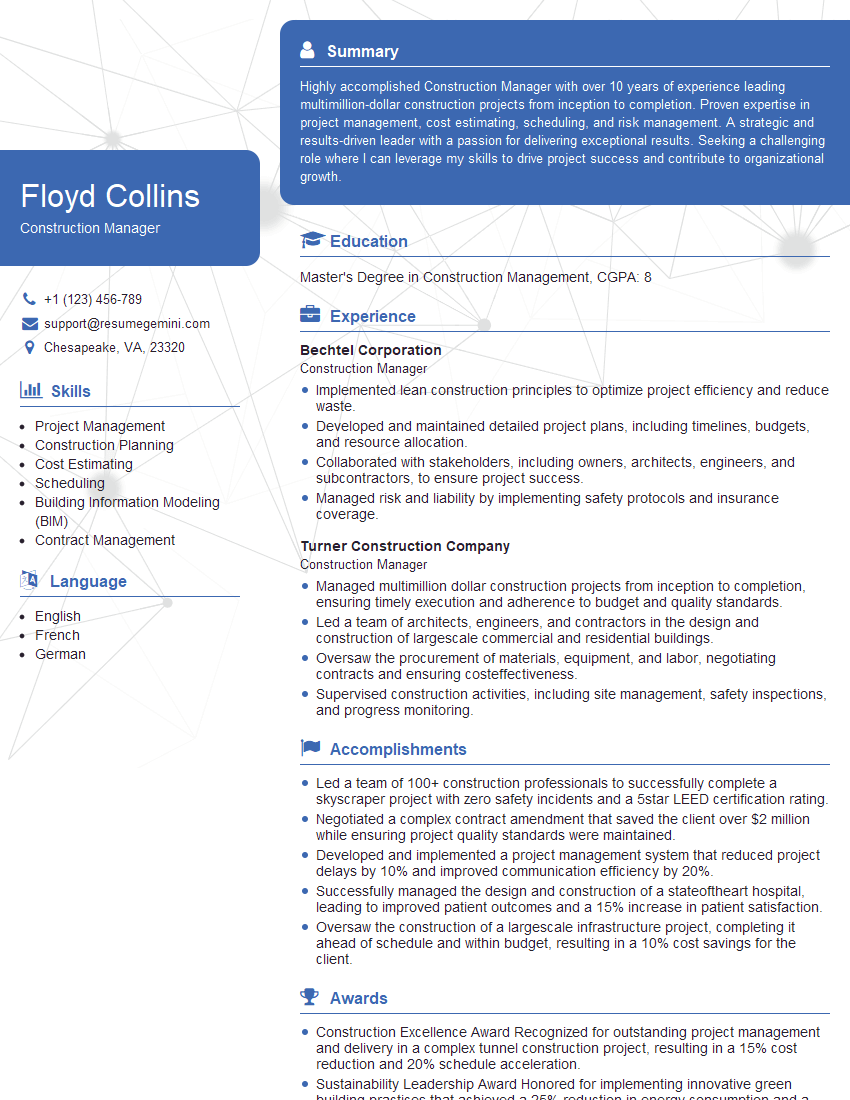
Construction Manager Resume Sample

Project Manager Resume Sample

Chief Engineer Resume Sample

Project Engineer Resume Sample
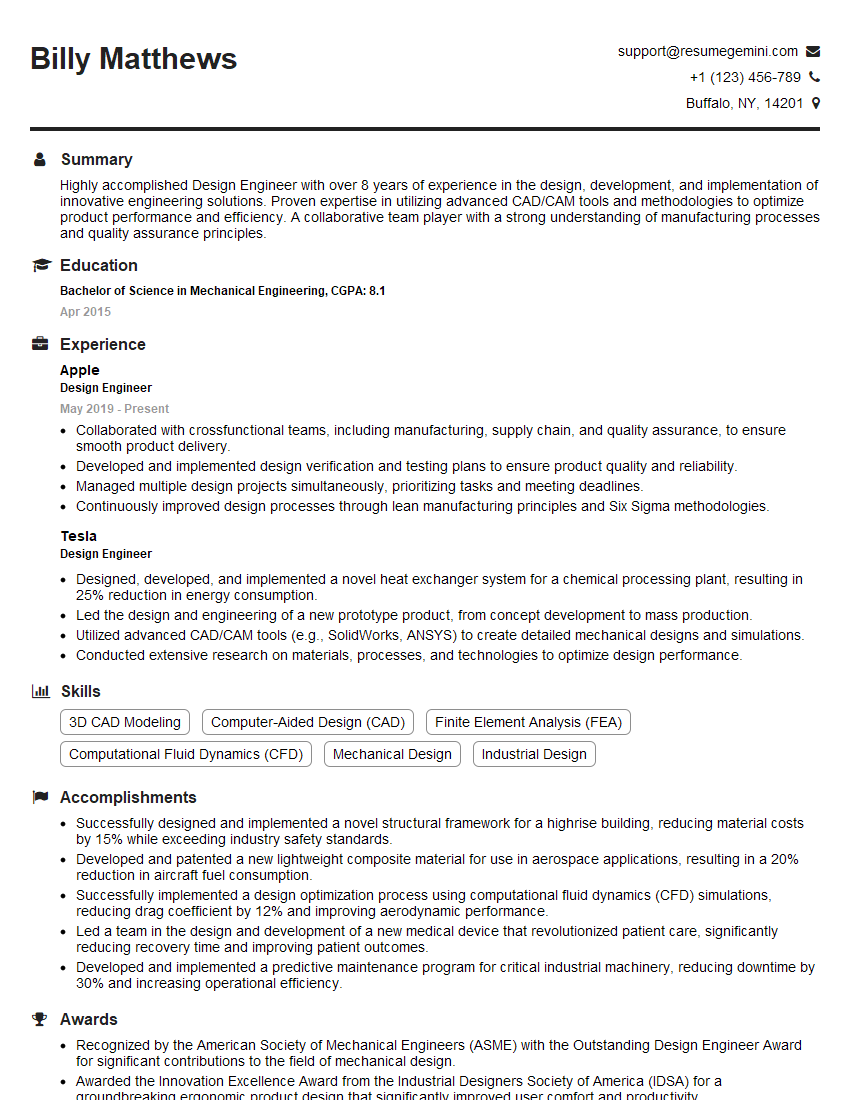
Design Engineer Resume Sample
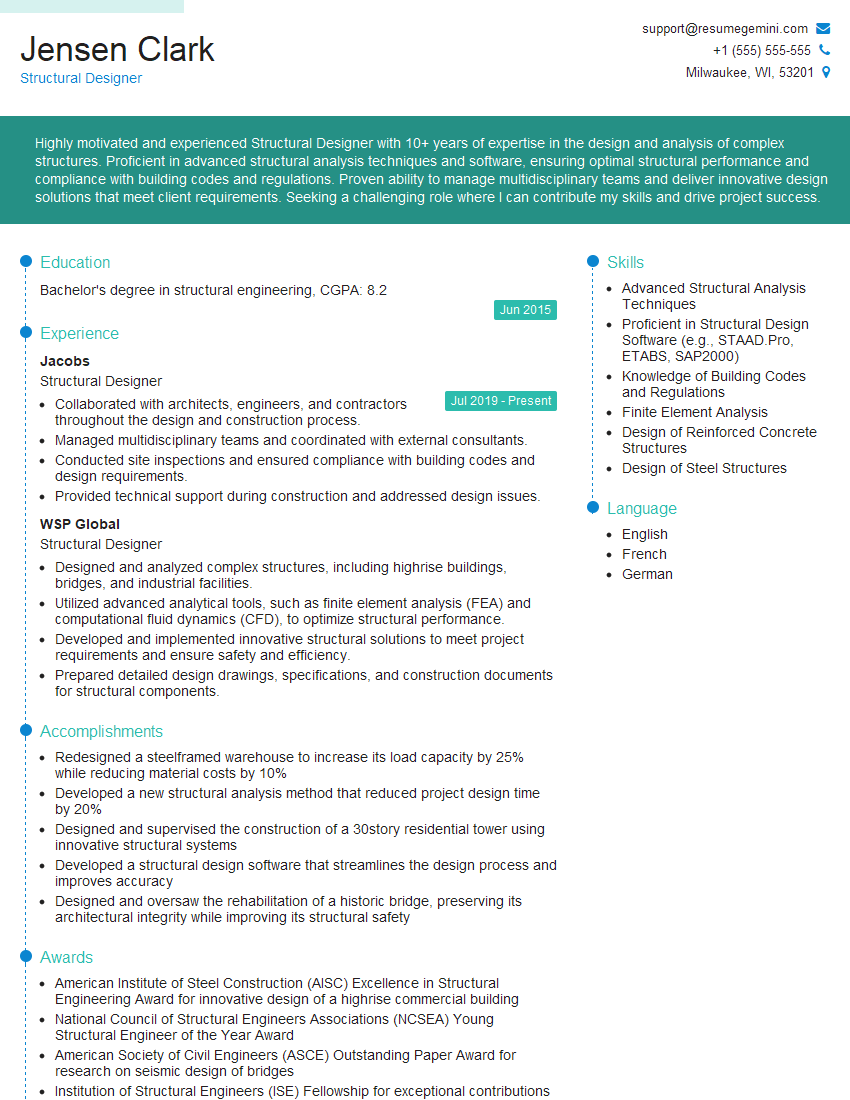
Structural Designer Resume Sample

Civil Engineer Resume Sample
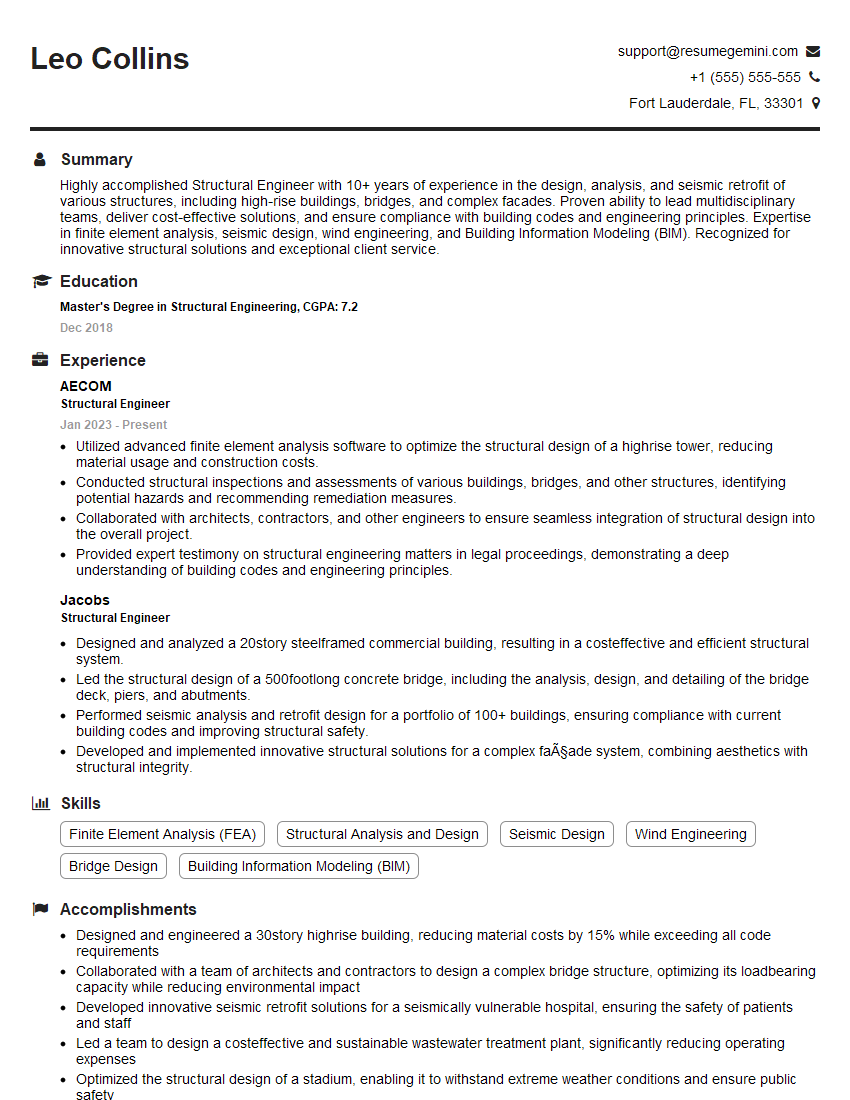
Structural Engineer Resume Sample
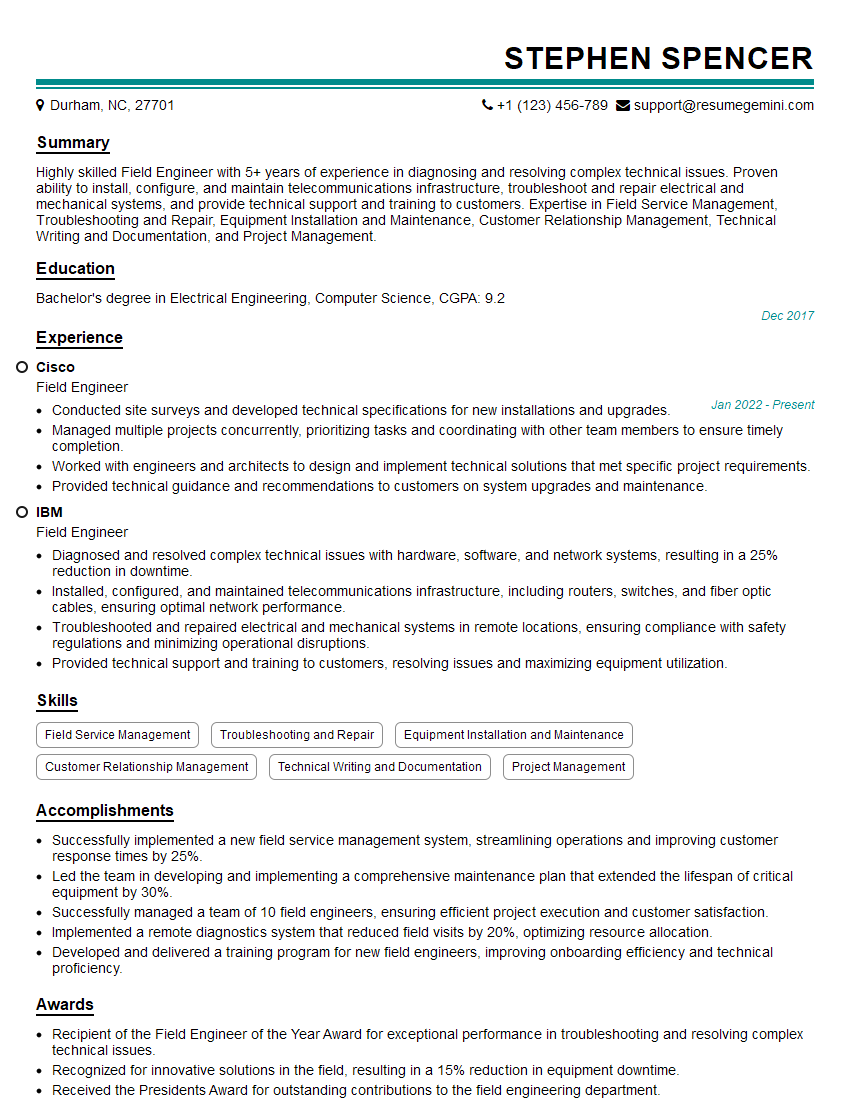
Field Engineer Resume Sample
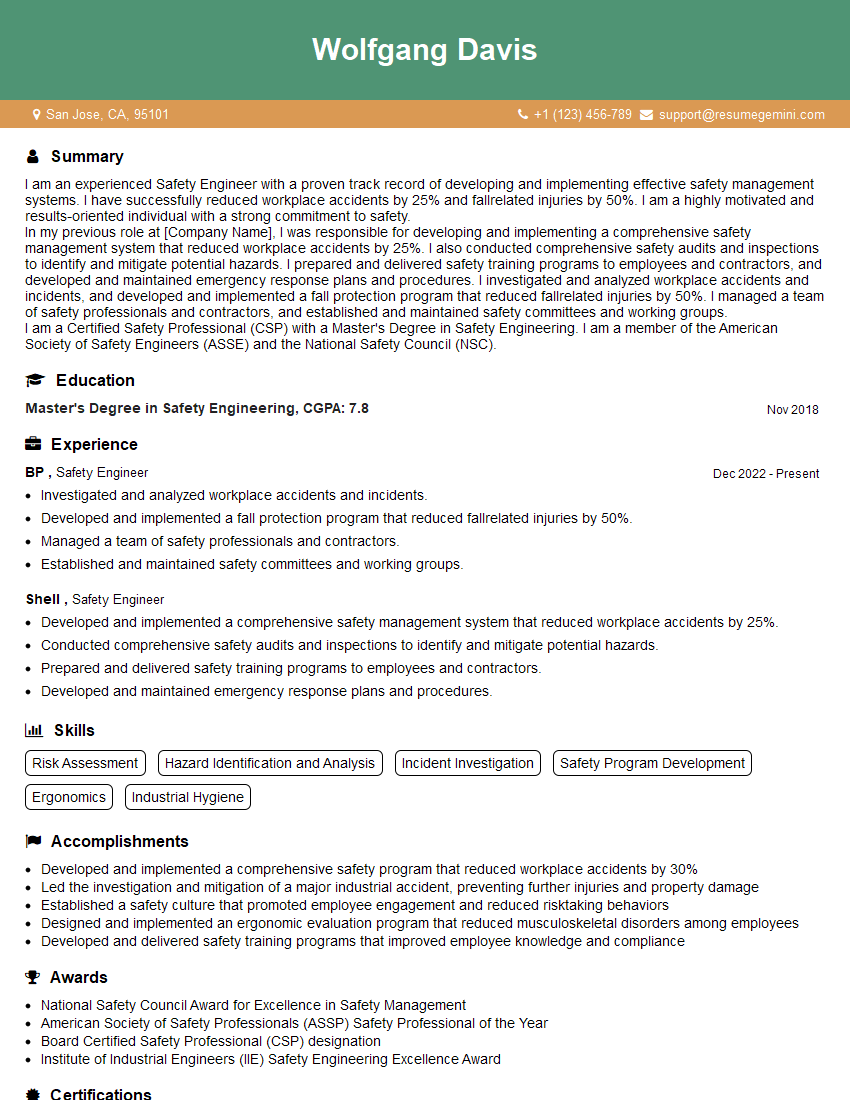
Safety Engineer Resume Sample

Welding Engineer Resume Sample

Steel Detailer Resume Sample

Construction Inspector Resume Sample

Technical Writer Resume Sample
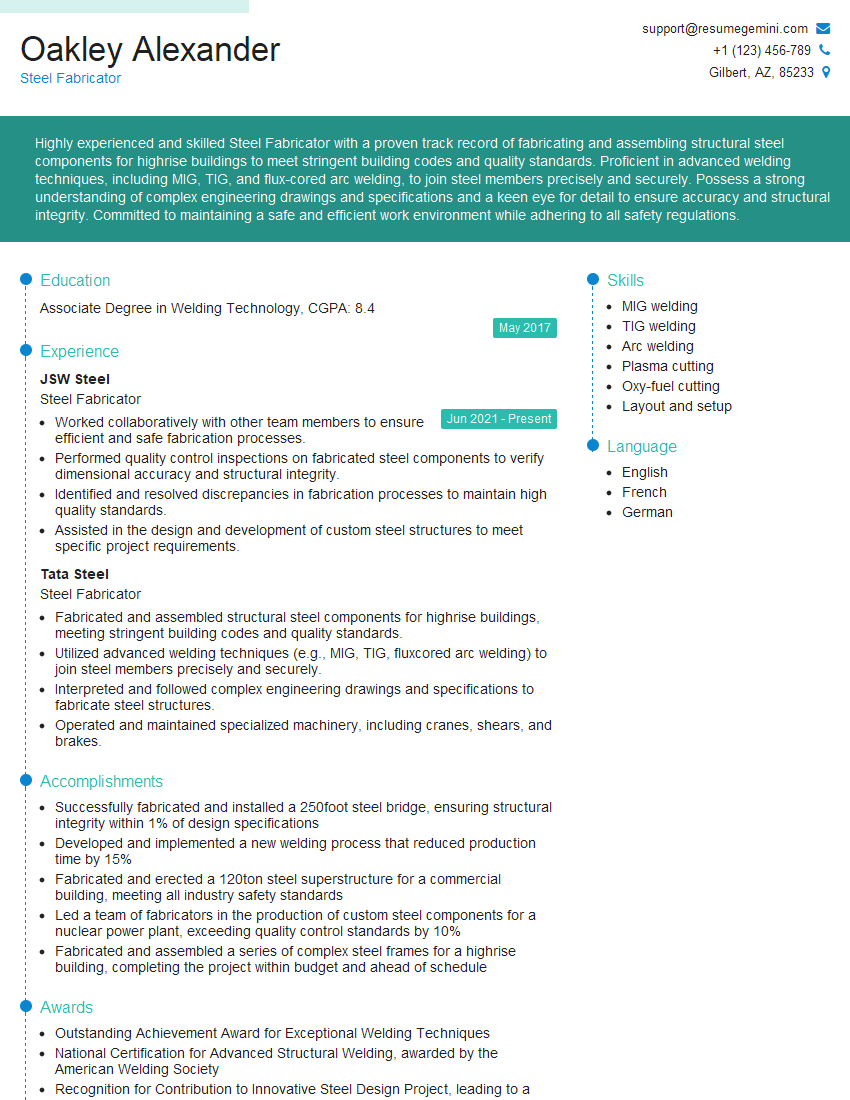
Steel Fabricator Resume Sample

Quality Control Inspector Resume Sample
Explore more articles
Users Rating of Our Blogs
Share Your Experience
We value your feedback! Please rate our content and share your thoughts (optional).
What Readers Say About Our Blog
Very informative content, great job.
good