The right preparation can turn an interview into an opportunity to showcase your expertise. This guide to Alcohol Knowledge interview questions is your ultimate resource, providing key insights and tips to help you ace your responses and stand out as a top candidate.
Questions Asked in Alcohol Knowledge Interview
Q 1. Explain the difference between fermentation and distillation.
Fermentation and distillation are both crucial processes in alcohol production, but they achieve different results. Fermentation is a natural process where yeast consumes sugars, converting them into alcohol and carbon dioxide. This is a relatively low-alcohol process. Distillation, on the other hand, is a method of separating liquids based on their boiling points. It’s used to increase the alcohol concentration of fermented liquids. Think of it this way: fermentation creates the initial alcoholic beverage, while distillation purifies and concentrates it.
Imagine making wine: Yeast ferments grape juice, producing a low-alcohol wine. To make brandy, however, that wine is then distilled, concentrating the alcohol and creating a much stronger spirit.
Q 2. Describe the process of making wine, from grape to bottle.
Winemaking is a fascinating journey from vine to bottle. It starts with harvesting ripe grapes, which are then crushed to release their juice. This juice, known as ‘must,’ undergoes fermentation, where naturally occurring or added yeast converts the sugars into alcohol and carbon dioxide. The process is monitored carefully to control temperature and yeast activity. Once fermentation is complete, the wine is aged, often in oak barrels, to develop its flavor and complexity. After aging, the wine is clarified (removing sediment), bottled, and finally, labeled and released for enjoyment.
Different types of wine require variations in this process. For example, red wine requires longer fermentation times and skin contact with the grape juice, while white wine typically involves shorter fermentation times and no skin contact.
Q 3. What are the key characteristics of a Sauvignon Blanc wine?
Sauvignon Blanc is known for its vibrant acidity and distinctive aromatic profile. Key characteristics often include grassy notes, hints of grapefruit or passionfruit, and a crisp, refreshing mouthfeel. Some Sauvignon Blancs also exhibit herbaceous or cat pee notes, though these are not universally present and depend greatly on the terroir (the environmental factors affecting a grape’s growth).
The intensity of these flavors varies depending on the region where the grapes are grown. New Zealand Sauvignon Blancs, for instance, are often recognized for their intense grassy and tropical fruit characteristics, while those from the Loire Valley in France may show more restrained, herbaceous notes.
Q 4. Compare and contrast the brewing processes of ales and lagers.
Ales and lagers are both types of beer, but their brewing processes differ significantly, primarily due to the type of yeast used and the fermentation temperature. Ales use ‘top-fermenting’ yeast, which ferments at warmer temperatures (15-24°C), producing a quicker fermentation and often resulting in fuller-bodied beers with fruity or estery notes. Lagers, on the other hand, use ‘bottom-fermenting’ yeast, fermenting at cooler temperatures (8-15°C). This slower, cooler fermentation process results in cleaner, crisper beers with a smoother, more subtle flavor profile.
Think of it like baking a cake: a faster, warmer bake might produce a richer, more complex flavor, akin to an ale, whereas a slower, cooler bake might result in a more delicate and refined cake, similar to a lager.
Q 5. What are the main types of whiskey, and what distinguishes them?
Whiskey is a broad category encompassing many types, each with its distinct characteristics. Key differences often lie in the grain used, the distillation process, and the aging method. Some major types include:
- Scotch Whisky: Made from malted barley in Scotland, typically aged in oak barrels.
- Irish Whiskey: Often triple-distilled, typically smoother than Scotch.
- Bourbon: An American whiskey made primarily from corn, aged in new charred oak barrels.
- Rye Whiskey: An American whiskey made primarily from rye grain, known for its spicier character.
- Japanese Whisky: Often drawing inspiration from Scotch techniques, but with unique flavour profiles.
These are just a few examples; numerous sub-categories and regional variations exist within each type.
Q 6. Explain the role of yeast in fermentation.
Yeast plays a crucial role in fermentation by acting as a catalyst. It’s a single-celled microorganism that consumes sugars (like glucose and fructose) in the presence of oxygen or in anaerobic conditions. During this process, it produces ethanol (alcohol) and carbon dioxide as byproducts. Without yeast, the sugars would remain unconverted, and alcoholic beverages would not be produced.
Different strains of yeast produce different flavour profiles in alcoholic beverages. Winemakers and brewers carefully select specific yeast strains to achieve the desired characteristics in their final product. Think of it as choosing the right ingredients for a recipe; the yeast acts as a fundamental ingredient in the creation of alcoholic beverages.
Q 7. How does aging affect the taste of spirits?
Aging significantly impacts the taste of spirits. During aging, typically in oak barrels, the spirit interacts with the wood, leading to several changes. The oak imparts color, flavors (such as vanilla, spice, or smoky notes), and tannins (which influence texture and mouthfeel). The spirit also undergoes a process of oxidation, where it interacts with oxygen, resulting in mellowing and the development of more complex flavors. The longer a spirit ages, the more pronounced these changes become.
For instance, a young whiskey might taste harsh and fiery, but aging softens it, adding complexity and depth. The specific impact of aging varies depending on the type of wood, the barrel’s condition, and the climate of the aging facility.
Q 8. What are the common flavor profiles of different hops?
Hops, the female flowers of the Humulus lupulus plant, are crucial in beer brewing, contributing significantly to its bitterness, aroma, and flavor. Different hop varieties offer unique profiles, broadly categorized by their aroma and bittering characteristics.
- Bittering Hops: These are typically used early in the boil, contributing mainly bitterness and less aroma. Examples include Magnum, Hallertau Mittelfrüh, and Nugget. They often exhibit earthy or grassy notes.
- Aroma Hops: Added later in the boil or during dry-hopping (adding hops after fermentation), these hops impart a wide range of aromas. Examples include Cascade (citrusy and floral), Citra (citrusy and tropical), and Centennial (floral and slightly spicy).
- Flavor Hops: These sit between bittering and aroma hops, offering both bitterness and flavor characteristics. Examples include East Kent Goldings (floral and earthy) and Willamette (slightly spicy and floral).
Think of it like building a flavor profile with spices. Bittering hops are your base, providing a foundational bitterness, while aroma and flavor hops add complexity and nuance. The choice and combination of hop varieties significantly impact the final beer’s character.
Q 9. What are the key factors influencing the quality of a wine?
The quality of a wine is a complex interplay of various factors, beginning in the vineyard and continuing through the winemaking process. Key influencers include:
- Grape Variety: Different grape varieties possess unique characteristics affecting the wine’s acidity, tannins, sugar content, and aroma profile. A Cabernet Sauvignon will naturally produce a bolder, tannic wine than a Pinot Noir.
- Terroir: This encompasses the unique combination of soil, climate, and topography of a specific vineyard site. It profoundly impacts the grapes’ development and the resulting wine’s character (discussed further in question 3).
- Viticulture Practices: Vineyard management techniques such as pruning, canopy management, and irrigation significantly influence grape quality and yield. Careful vineyard management can lead to concentrated, high-quality fruit.
- Winemaking Techniques: From fermentation methods (temperature, yeast strains) to aging (oak type, duration), winemaking choices greatly influence the final product. Malolactic fermentation, for example, can soften a wine’s acidity.
- Harvest Timing: Picking grapes at optimal ripeness is crucial. Overripe grapes can lead to excessive sweetness and lack of acidity, while underripe grapes may lack flavor and body.
In short, a high-quality wine is the result of a holistic approach, from meticulously managed vineyards to skillful winemaking decisions.
Q 10. Explain the concept of terroir.
Terroir is a French term referring to the unique combination of environmental factors that influence the character of a wine. It’s not just about the ‘place’, but the complex interplay of several elements:
- Soil: The composition of the soil (minerals, drainage, texture) impacts water availability, nutrient uptake, and the overall development of the vine.
- Climate: Temperature, rainfall, sunshine hours, and wind exposure all influence the vine’s growth cycle, the concentration of sugars and acids in the grapes, and the resulting wine’s flavor profile.
- Topography: The slope, altitude, and aspect (direction the vineyard faces) affect sunlight exposure, drainage, and temperature variations throughout the day.
For example, a cool climate region might produce wines with higher acidity and lighter body, while a warmer climate might produce wines with more ripe fruit and fuller body. Even within a region, subtle differences in soil and slope can lead to noticeable variations in wine character, reflecting the unique terroir of specific vineyard sites.
Q 11. Describe the different methods of wine preservation.
Proper wine preservation is essential to maintain its quality and prevent spoilage. Methods include:
- Refrigeration: Once opened, refrigeration slows down oxidation and microbial activity, extending the shelf life of wine for several days. Store at 45-55°F (7-13°C).
- Vacuum Pumps: These remove air from the bottle, reducing oxidation and preventing spoilage. They are effective for preserving opened bottles for several weeks.
- Inert Gas Systems: These systems inject inert gases like argon or nitrogen into the bottle, displacing oxygen and preventing oxidation. These are particularly useful for preserving opened bottles of high-quality wine for longer periods.
- Proper Storage (Unopened Bottles): Storing unopened bottles in a cool, dark, and consistent temperature environment away from vibrations and strong odors helps preserve the wine’s quality for years, particularly for age-worthy wines.
Choosing the right method depends on the type of wine, how long you intend to keep it, and your budget. For everyday drinking, refrigeration is sufficient. For precious bottles, inert gas systems offer superior preservation.
Q 12. What are the common defects found in wine?
Wine defects can significantly impact its quality and palatability. Some common defects include:
- Corked Wine (TCA): Caused by 2,4,6-trichloroanisole (TCA) contamination from corks, resulting in a musty, moldy, or damp cardboard aroma. (Further explained in question 6).
- Volatile Acidity (VA): Excessive acetic acid produces a vinegar-like smell and taste. This can be due to bacterial infection during fermentation or poor storage.
- Brettanomyces (Brett): A yeast that produces off-flavors such as barnyard, horse blanket, or smoky notes. It can occur during fermentation or aging.
- Hydrogen Sulfide (H2S): Produces a rotten egg or cabbage-like aroma. This is usually a transient fault, often resolved during maturation.
- Oxidation: Exposure to oxygen can lead to browning, loss of fruitiness, and development of nutty or sherry-like aromas, sometimes desirable in certain styles, but undesirable as a fault.
Identifying these defects requires experience and training. However, understanding the characteristics of each defect can help in assessing a wine’s quality and determining potential issues.
Q 13. How do you identify a corked wine?
A corked wine is a wine contaminated by 2,4,6-trichloroanisole (TCA), a compound produced by certain molds that can grow in cork stoppers. The resulting defect is easily identifiable by a characteristic aroma, often described as musty, moldy, damp cardboard, or wet dog. It doesn’t necessarily affect the wine’s appearance or sweetness, but it completely overwhelms the wine’s intended fruit and other aromas.
Identifying a corked wine requires smelling it carefully. If you detect a persistent, unpleasant, and musty aroma, especially one that lingers after swirling the wine, it is likely corked. It’s important to distinguish this from other defects that might have similar, less intense, or less persistent characteristics.
Q 14. What is the role of oak in aging spirits?
Oak plays a crucial role in aging spirits, particularly whiskey, bourbon, and brandy. The type of oak, its level of toasting, and the length of aging all contribute to the spirit’s final character.
- Flavor and Aroma: Oak imparts various flavor and aroma compounds to the spirit, including vanilla, spice (cinnamon, clove), coconut, toasty notes, and smoky characteristics. The level of toasting and charring influences the intensity of these flavors.
- Color: Oak contributes color to the spirit, influencing its appearance.
- Texture and Mouthfeel: Oak aging softens harshness and adds complexity to the spirit’s texture, creating a smoother, rounder mouthfeel.
- Maturation and Stability: The oak’s porous nature allows for the controlled release and oxidation of volatile compounds in the spirit, leading to a more complex and stable product.
Different types of oak, such as American or French, produce distinct flavor profiles. American oak tends to contribute sweeter vanilla and coconut notes, while French oak often adds more subtle spice and complexity. The interplay between the spirit’s base and the oak is key to creating a balanced and flavorful final product.
Q 15. Explain the difference between malted and unmalted barley.
The key difference between malted and unmalted barley lies in a process called malting. Malting involves soaking barley grains in water, allowing them to germinate, and then halting the germination process through drying. This process activates enzymes within the barley grain, breaking down complex starches into simpler sugars. These sugars are crucial for fermentation in brewing beer. Unmalted barley retains its starches and lacks these activated enzymes.
Think of it like this: unmalted barley is like a raw potato – it has the potential for energy (starch), but that energy isn’t readily available. Malted barley is like a cooked potato – the starch has been broken down into easily usable sugars. In brewing, the readily available sugars in malted barley are essential for yeast to convert into alcohol and carbon dioxide.
- Malted Barley: Used in almost all beers for its fermentable sugars and enzymatic activity.
- Unmalted Barley: May be used in some beer styles in smaller quantities, often contributing to body and mouthfeel, but generally not as a primary fermentable source.
Career Expert Tips:
- Ace those interviews! Prepare effectively by reviewing the Top 50 Most Common Interview Questions on ResumeGemini.
- Navigate your job search with confidence! Explore a wide range of Career Tips on ResumeGemini. Learn about common challenges and recommendations to overcome them.
- Craft the perfect resume! Master the Art of Resume Writing with ResumeGemini’s guide. Showcase your unique qualifications and achievements effectively.
- Don’t miss out on holiday savings! Build your dream resume with ResumeGemini’s ATS optimized templates.
Q 16. What are the main ingredients in beer?
The main ingredients in beer are water, malted barley (or other grains), hops, and yeast. While seemingly simple, the precise ratios and types of each ingredient significantly impact the final beer’s character.
- Water: Forms the vast majority of the beer, acting as a solvent and affecting the final taste profile. Different water profiles contribute to distinct beer characteristics.
- Malted Barley (or other grains): Provides the fermentable sugars that yeast converts into alcohol. Different barley varieties and grain adjuncts (e.g., wheat, rice, corn) contribute to diverse flavor profiles.
- Hops: Provide bitterness, aroma, and act as a natural preservative. The type and amount of hops used greatly affect the beer’s taste and aroma.
- Yeast: A microorganism that ferments the sugars into alcohol and carbon dioxide, also contributing to flavor and aroma. Different yeast strains produce different beer styles.
Q 17. What is the importance of water quality in brewing?
Water quality is paramount in brewing. The mineral content of water – specifically the levels of calcium, magnesium, sulfate, chloride, and bicarbonate – significantly influences the beer’s taste, mouthfeel, and overall balance. Different water profiles are even preferred for specific beer styles.
For example, high sulfate waters tend to accentuate hop bitterness, while high chloride waters can lend a fuller, more malty body. A brewer needs to understand their water’s characteristics and may need to adjust it (through techniques like adding salts or using filtration) to achieve the desired beer profile. Poor water quality can lead to off-flavors, poor yeast health, and an overall unbalanced beer.
Q 18. Describe the different methods of beer filtration.
Beer filtration aims to remove yeast, proteins, and other particles, resulting in a clearer, more stable beer with a longer shelf life. Several methods exist:
- Sheet Filtration: Uses a filter sheet to remove larger particles. It’s a relatively slow method, preserving more of the beer’s flavor and aroma.
- Plate & Frame Filtration: Uses a series of plates with filter cloths to separate solids from the beer. More efficient than sheet filtration but can lead to some flavor loss.
- Centrifugation: Uses centrifugal force to separate solids from the liquid. It’s a very fast method, but it can be harsh and potentially affect the beer’s flavor.
- Membrane Filtration: Uses membranes with different pore sizes to remove particles. This produces highly clarified beers but can be costly and potentially alter some of the beer’s subtle flavors.
The choice of filtration method depends on the brewer’s desired level of clarity, shelf-life requirements, and the sensitivity to potential flavor impacts.
Q 19. What are the common serving temperatures for different types of wine?
Serving temperature significantly impacts wine appreciation. The ideal temperature depends on the wine’s type and style, primarily aiming to highlight its aroma and flavor characteristics.
- Light-bodied white wines (e.g., Sauvignon Blanc, Pinot Grigio): 45-50°F (7-10°C)
- Medium-bodied white wines (e.g., Chardonnay, Riesling): 50-55°F (10-13°C)
- Full-bodied white wines (e.g., oaked Chardonnay): 55-60°F (13-16°C)
- Light-bodied red wines (e.g., Pinot Noir, Gamay): 55-60°F (13-16°C)
- Medium-bodied red wines (e.g., Merlot, Cabernet Franc): 60-65°F (16-18°C)
- Full-bodied red wines (e.g., Cabernet Sauvignon, Syrah): 65-70°F (18-21°C)
Serving too cold can mask aromas and flavors, while serving too warm can make the wine taste flat or overly alcoholic.
Q 20. What are the common serving temperatures for different types of beer?
Similar to wine, beer’s ideal serving temperature varies depending on its style. The goal is to balance the beer’s flavors and aromas without overpowering them.
- Lagers (e.g., Pilsner, Helles): 40-45°F (4-7°C)
- Pales Ales (e.g., IPA, Pale Ale): 45-50°F (7-10°C)
- Stouts and Porters: 50-55°F (10-13°C)
- Belgian Ales (e.g., Dubbel, Tripel): 50-55°F (10-13°C)
- Wheat Beers (e.g., Hefeweizen): 40-45°F (4-7°C)
Serving beers too warm can accentuate the alcohol and make it taste harsh. Serving them too cold can mute the flavor and aroma.
Q 21. Explain the concept of body in wine.
In wine, ‘body’ refers to the wine’s weight and texture in the mouth. It’s a sensation that’s felt rather than tasted, describing how the wine feels as it coats the palate. Body is determined by several factors, primarily alcohol content, sugar levels (residual sugar), and the concentration of other compounds like glycerol and tannins.
Imagine tasting three different wines: a light-bodied Sauvignon Blanc, a medium-bodied Chardonnay, and a full-bodied Cabernet Sauvignon. The Sauvignon Blanc would feel light and refreshing, the Chardonnay would have a more substantial presence, and the Cabernet Sauvignon would feel thick and rich. These differences in mouthfeel illustrate the varying degrees of body among wines.
Understanding body is crucial for wine appreciation and pairing. Light-bodied wines are often best with lighter dishes, while full-bodied wines complement richer, more intense flavors.
Q 22. What are the common tasting notes used to describe wine?
Describing wine tasting notes involves a nuanced approach, employing vocabulary that captures the sensory experience. We use terms to describe the aromas and flavors perceived, categorized broadly into fruit (e.g., red fruit like cherry and blackberry, stone fruit like peach and apricot, citrus fruit like lemon and grapefruit), floral (e.g., rose, violet, lavender), spice (e.g., clove, cinnamon, pepper), herbal (e.g., thyme, mint, rosemary), earthy (e.g., mushroom, forest floor, truffle), and oaky (e.g., vanilla, cedar, toast) notes. These descriptors are influenced by the grape variety, winemaking techniques, and aging process.
For instance, a Pinot Noir might be described as having notes of raspberry, cherry, and earthiness, while a Sauvignon Blanc might showcase grapefruit, grass, and a hint of passionfruit. The intensity and balance of these notes contribute to the overall complexity and character of the wine.
Q 23. What are the common tasting notes used to describe beer?
Describing beer tasting notes is similar to wine, though the ingredients and fermentation process lead to a different range of descriptors. Common tasting notes for beer include malt (e.g., bread crust, caramel, toffee, biscuit), hop (e.g., citrus, pine, floral, herbal, grassy), fruit (e.g., banana, pear, plum, berries), spice (e.g., clove, cinnamon, pepper), and yeast (e.g., esters contributing fruity notes, phenols contributing spicy notes). The bitterness, sweetness, and overall body also play a significant role.
A strong IPA might be described as having intense pine and citrus hop aromas with a balanced malt profile, while a stout could be characterized by notes of dark chocolate, roasted coffee, and a creamy mouthfeel. These descriptions provide a sensory map of the beer’s profile.
Q 24. How would you identify a spoiled beer?
Identifying spoiled beer requires a keen sensory evaluation. Several indicators point towards spoilage. A sour or vinegary smell often signifies bacterial infection. Off-flavors such as cardboard, wet dog, or skunk-like aromas often suggest oxidation or lightstruck beer. A cloudy or hazy appearance, particularly if accompanied by sediment, is also a strong indicator. Finally, tasting the beer: an excessively sour, acidic taste, or any unexpected and unpleasant flavors confirms spoilage. Any unusual bubbles, such as a fizzing sound when opening the container, can point towards improper carbonation or spoilage.
For example, if a beer smells strongly of vinegar and tastes harshly sour, it’s likely spoiled due to bacterial contamination. Similarly, a beer that tastes and smells skunky has likely been exposed to UV light.
Q 25. What are the legal aspects of alcohol service and sales in your region?
(Note: This answer requires specifying a region. The following is a general example and must be adapted to a specific jurisdiction.) In many jurisdictions, the legal aspects of alcohol service and sales are strictly regulated. These regulations commonly include minimum legal drinking age (MLDA), licensing requirements for establishments serving alcohol (restaurants, bars, etc.), limitations on hours of sale, restrictions on advertising, blood alcohol content (BAC) limits for drivers, and regulations against serving intoxicated individuals. Failure to comply with these laws can lead to significant penalties, including fines, license revocation, and even criminal charges.
For example, serving alcohol to a minor is a serious offense with substantial legal repercussions. Similarly, establishments must have proper licenses to serve alcohol and must ensure that employees are properly trained in responsible alcohol service.
Q 26. Describe your experience with wine pairing.
My experience with wine pairing is extensive, spanning various cuisines and wine styles. I understand the principles of complementarity and contrast. Complementarity involves pairing a wine with a dish where the wine’s flavors enhance the dish’s flavors, creating a harmonious experience. For example, the acidity in a Sauvignon Blanc cuts through the richness of a creamy pasta dish. Contrast, on the other hand, involves pairing a wine with a dish where the wine’s flavors offer a counterpoint to the dish’s flavors, providing an interesting complexity. A robust Cabernet Sauvignon pairs well with a grilled steak because its bold tannins complement the rich meat.
I’ve successfully paired lighter-bodied wines like Pinot Grigio with seafood and richer-bodied wines like Zinfandel with spicy food. I consider the weight, acidity, tannin, and overall flavor profile of both the wine and the food to make these pairings.
Q 27. Explain your understanding of responsible alcohol service.
Responsible alcohol service prioritizes the safety and well-being of patrons. It encompasses several key principles: refusing service to intoxicated individuals, verifying the age of patrons, promoting responsible consumption through pacing and awareness, educating patrons about the effects of alcohol, and providing alternative non-alcoholic beverages. It also means being aware of and managing any signs of intoxication, such as slurred speech, unsteady gait, or aggressive behavior, and intervening when necessary.
A responsible server actively encourages moderation, avoids over-serving, and recognizes signs of intoxication to prevent alcohol-related harm. This involves both individual responsibility and a commitment to community safety.
Q 28. Describe your experience in managing alcohol inventory.
My experience in managing alcohol inventory involves meticulous tracking and control. This includes regular stock counts, using inventory management systems (either software or spreadsheet-based), monitoring sales data to predict demand, and setting reorder points to avoid stockouts. It also includes proper storage techniques to maintain optimal conditions – suitable temperature and humidity to prevent spoilage and oxidation, and secure storage to prevent theft or damage. Regular waste audits can help assess loss and identify areas for improvement.
Accurate inventory management is crucial for minimizing waste, controlling costs, and ensuring sufficient stock to meet customer demands. Regular analysis of sales data allows for informed decisions about ordering, potentially reducing storage costs and preventing losses from spoilage.
Key Topics to Learn for Alcohol Knowledge Interview
- Types of Alcoholic Beverages: Understand the production processes, key ingredients, and characteristics of various alcoholic beverages (e.g., beer, wine, spirits). Be prepared to discuss the differences in flavor profiles and alcohol content.
- Alcohol Production Processes: Detail the fermentation process, distillation techniques (if applicable), and aging methods for different alcoholic beverages. Consider the impact of these processes on the final product.
- Legal and Regulatory Frameworks: Familiarize yourself with relevant laws and regulations concerning alcohol production, distribution, and consumption in your target market. This includes licensing, labeling, and taxation.
- Sensory Evaluation of Alcohol: Practice describing the aroma, taste, and appearance of different alcoholic beverages using professional terminology. Understanding sensory evaluation methods is crucial.
- Alcohol and Health: Understand the potential health effects of alcohol consumption, both positive and negative. Be prepared to discuss responsible drinking practices and the impact of alcohol on various health conditions.
- Market Trends and Consumer Behavior: Research current trends in the alcohol industry, including consumer preferences, emerging beverage categories, and marketing strategies. Be able to analyze market data and identify opportunities.
- Supply Chain Management: Explore the logistics involved in the alcohol industry, including sourcing, production, distribution, and retail. Understanding challenges and solutions in this area is beneficial.
- Sustainability and Ethical Considerations: Discuss environmental and social responsibility within the alcohol industry, including sustainable farming practices, water usage, and ethical sourcing of ingredients.
Next Steps
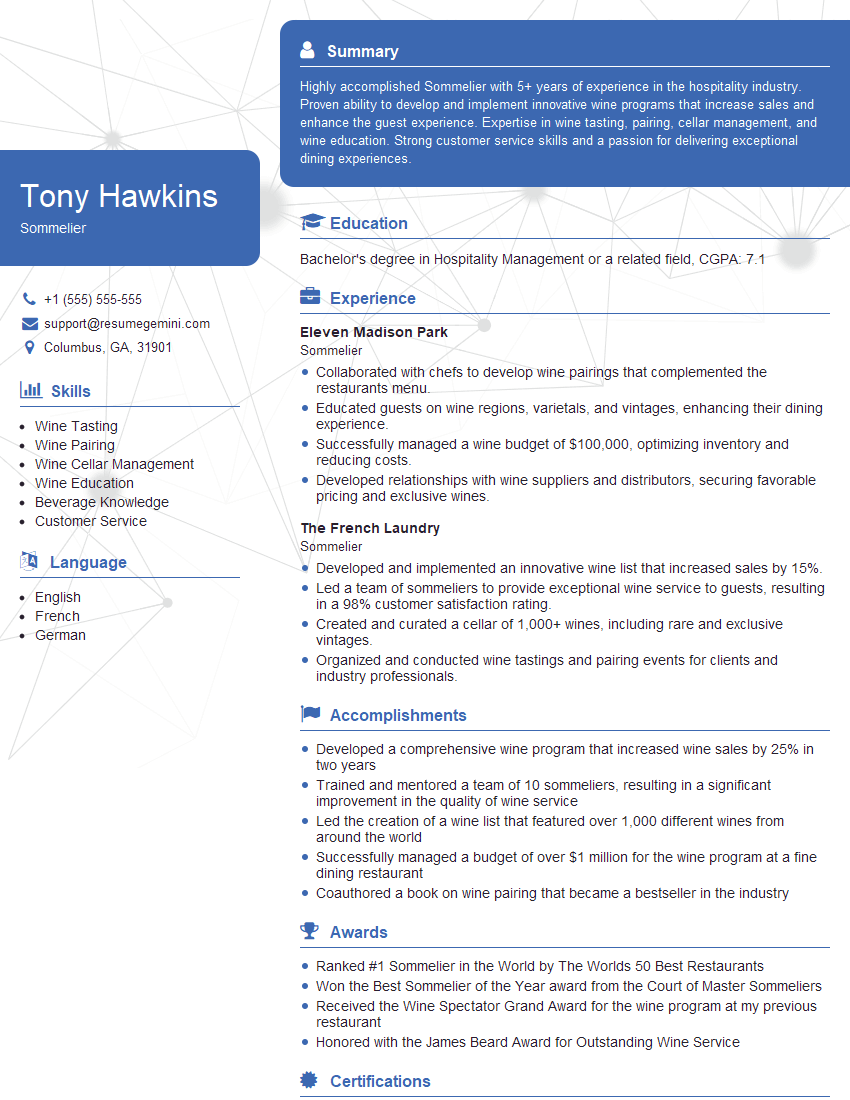
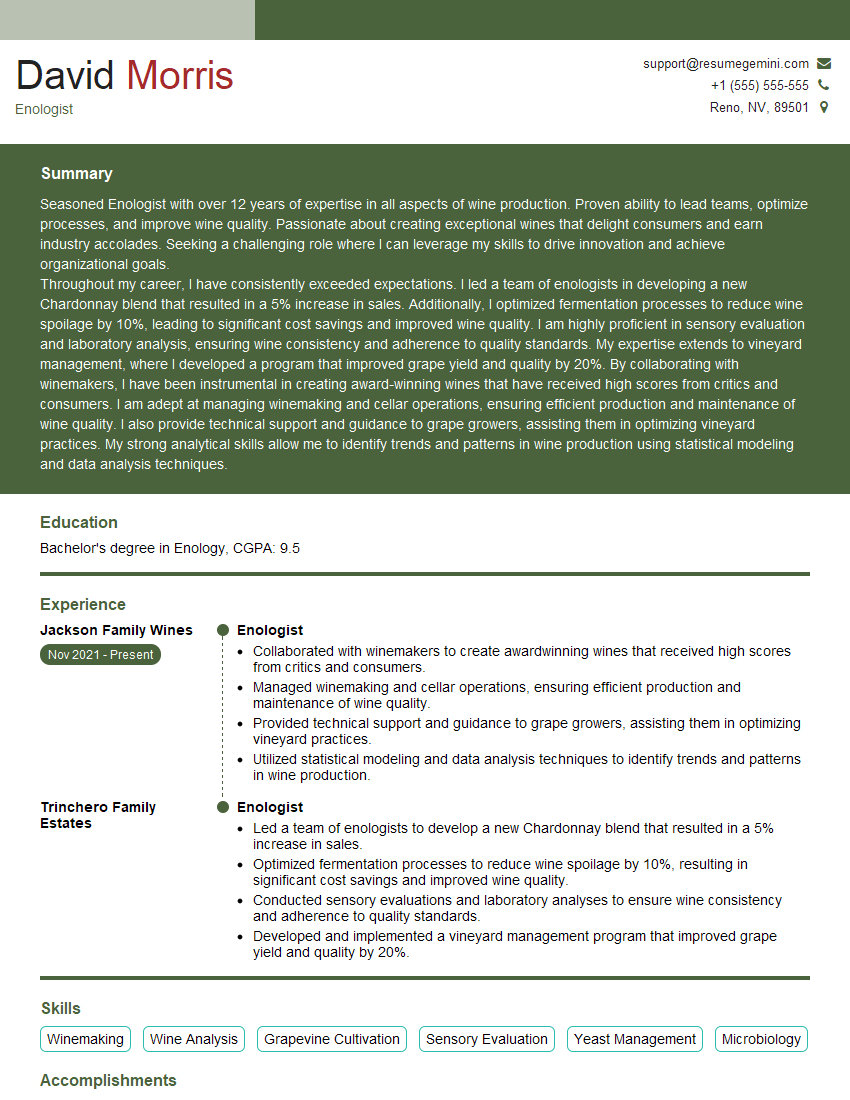
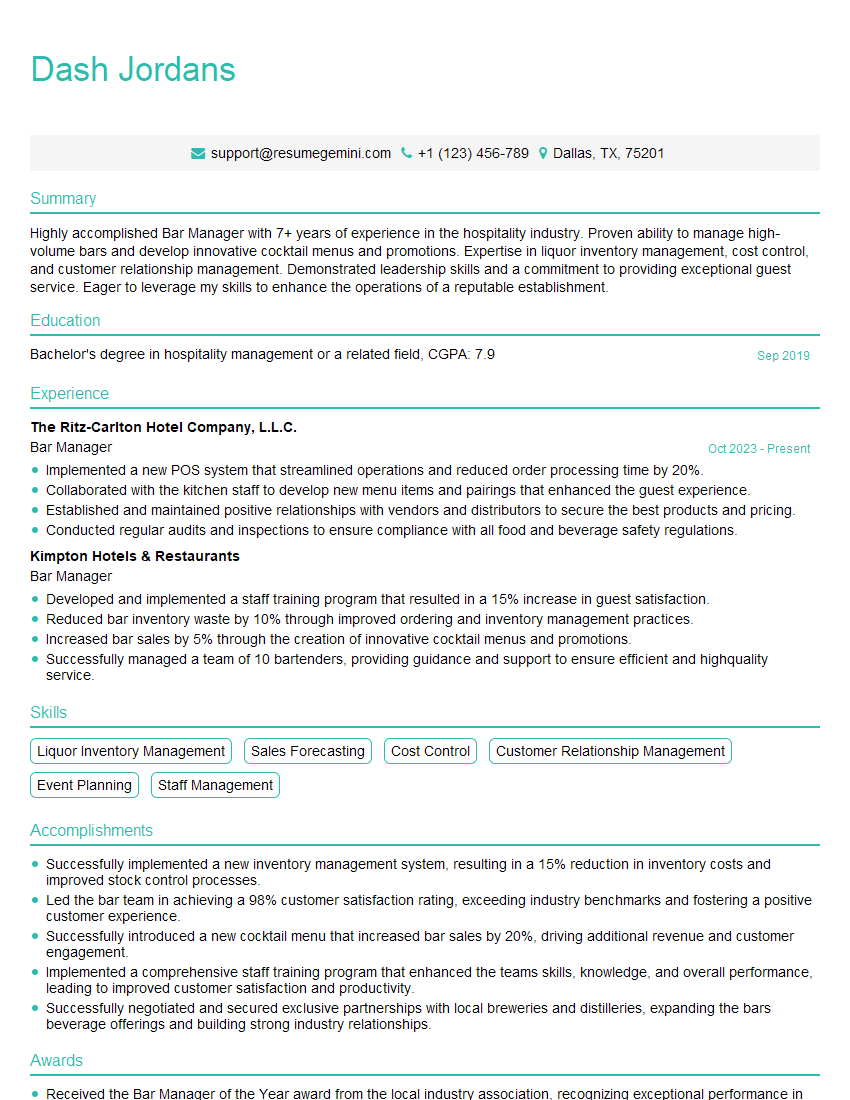
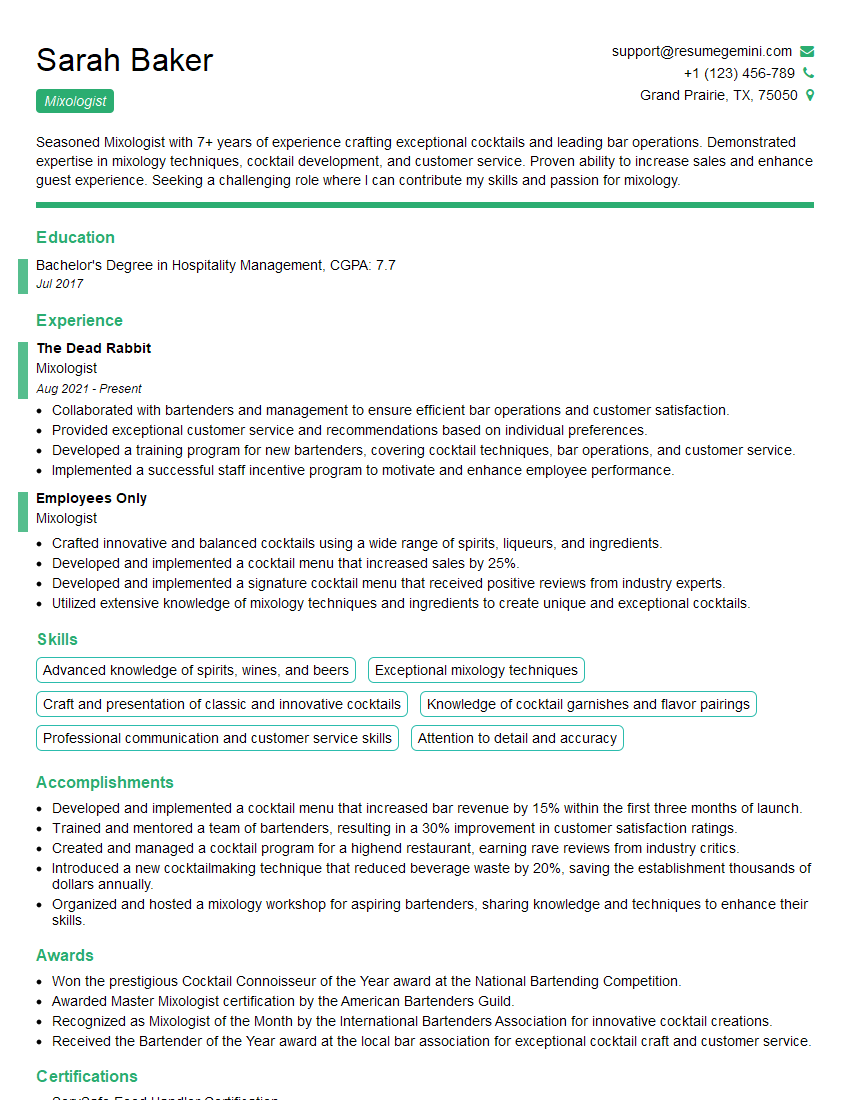
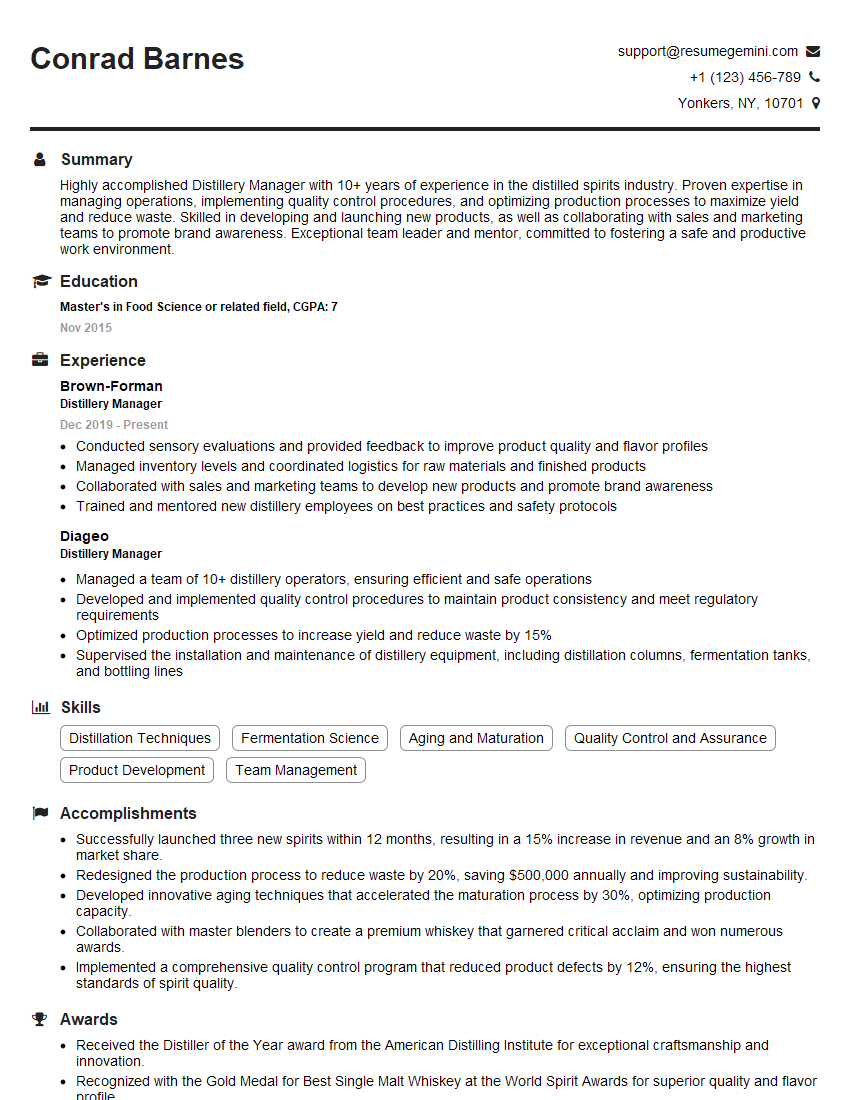
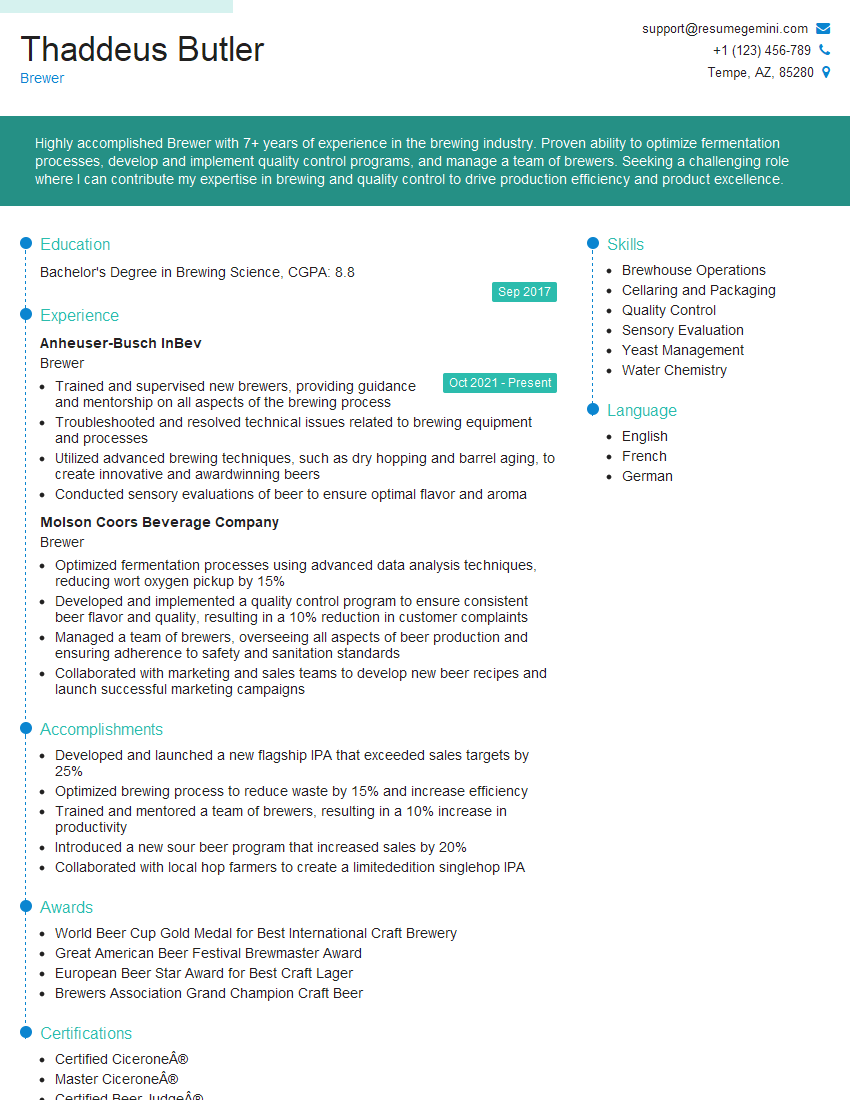
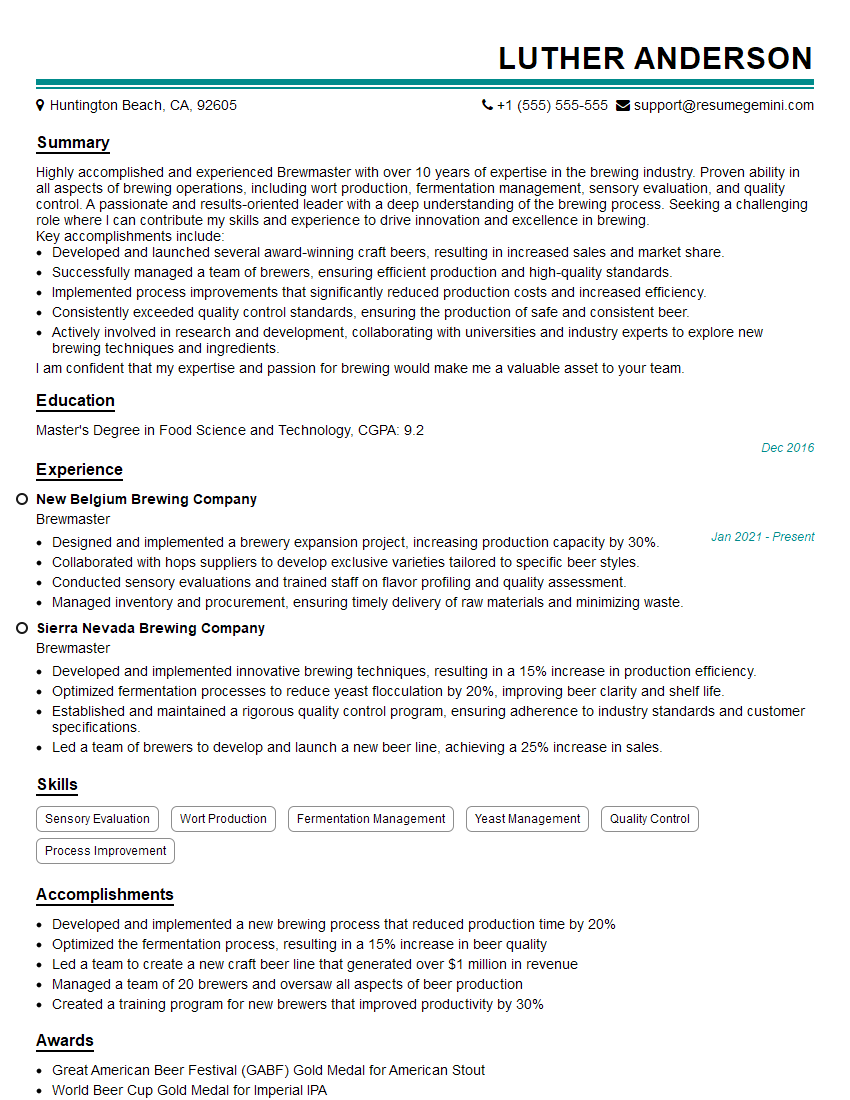
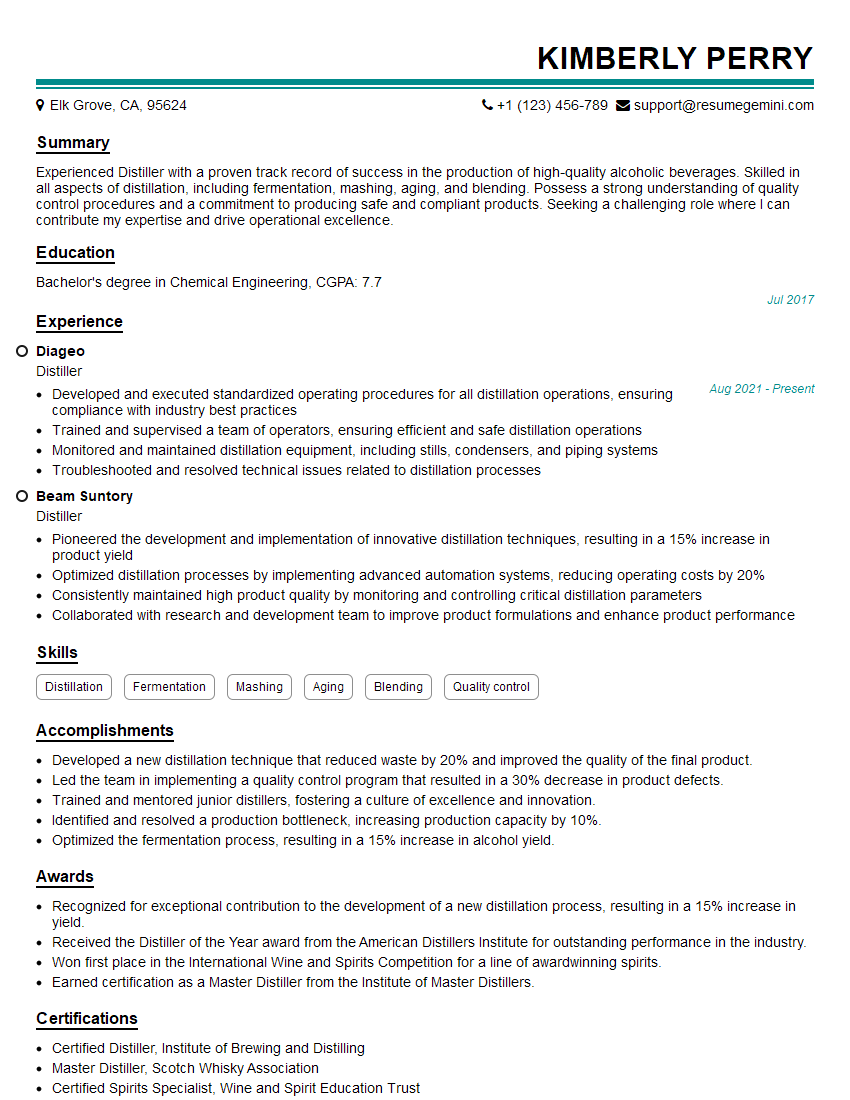
Mastering alcohol knowledge significantly enhances your career prospects within the beverage industry, opening doors to exciting roles and opportunities for advancement. A well-crafted resume is key to showcasing your expertise effectively to potential employers. Make sure your resume is ATS-friendly to ensure it gets noticed by recruiters. We highly recommend using ResumeGemini to create a professional and impactful resume that highlights your unique skills and experience in Alcohol Knowledge. ResumeGemini provides examples of resumes tailored to the Alcohol Knowledge field to help you get started.
Explore more articles
Users Rating of Our Blogs
Share Your Experience
We value your feedback! Please rate our content and share your thoughts (optional).
What Readers Say About Our Blog
good