Are you ready to stand out in your next interview? Understanding and preparing for All source intelligence integration interview questions is a game-changer. In this blog, we’ve compiled key questions and expert advice to help you showcase your skills with confidence and precision. Let’s get started on your journey to acing the interview.
Questions Asked in All source intelligence integration Interview
Q 1. Explain the concept of All Source Intelligence (ASI) integration.
All Source Intelligence (ASI) integration is the process of combining information from multiple intelligence disciplines to create a more comprehensive and accurate understanding of a situation or event. Think of it like assembling a puzzle – each intelligence discipline provides a piece, but only when put together do you see the whole picture. Instead of relying on a single source, ASI leverages diverse data points to reduce bias, improve accuracy, and provide a more holistic view.
This integration isn’t just about collecting data; it’s about analyzing the relationships between different data points, identifying patterns and inconsistencies, and ultimately making more informed decisions. A successful ASI integration system requires robust data management, sophisticated analytical tools, and skilled analysts who can interpret the combined information.
Q 2. Describe the different intelligence disciplines (OSINT, HUMINT, SIGINT, GEOINT, MASINT) and how they integrate.
ASI draws upon various intelligence disciplines, each providing a unique perspective:
- OSINT (Open-Source Intelligence): Publicly available information from websites, social media, news reports, etc. Think of this as the readily accessible information, like a news article about a political rally.
- HUMINT (Human Intelligence): Information gathered from human sources, such as informants, spies, or interviews. This is often the most valuable, but also the most sensitive, intelligence. Imagine getting information from a confidential source within a company.
- SIGINT (Signals Intelligence): Information intercepted from electronic signals, like communications, radar, and satellite transmissions. This is often highly technical and requires specialized equipment. Think about intercepting encrypted communications.
- GEOINT (Geospatial Intelligence): Information derived from imagery, maps, and geospatial data, including satellite imagery, aerial photography, and geographic information systems (GIS). Think satellite imagery used to track troop movements.
- MASINT (Measurement and Signature Intelligence): Information derived from measuring physical characteristics such as acoustics, electromagnetics, nuclear emissions, etc. This is highly technical and specialized intelligence.
Integration occurs through data sharing and analysis platforms that allow analysts to view and correlate data from these different sources. For example, satellite imagery (GEOINT) showing unusual activity in a specific location could be corroborated by intercepted communications (SIGINT) and social media posts (OSINT) describing the same events, creating a far more complete picture.
Q 3. What are the key challenges in integrating data from diverse sources?
Integrating data from diverse sources presents several significant challenges:
- Data Format Inconsistency: Different sources use various formats (CSV, XML, JSON, etc.), requiring data transformation and standardization.
- Data Quality and Reliability: Sources vary in accuracy and credibility. Some data might be outdated, incomplete, or intentionally misleading.
- Data Volume and Velocity: The sheer volume and speed at which data is generated can overwhelm systems and slow down analysis.
- Data Security and Privacy: Handling sensitive information from diverse sources requires robust security measures to prevent unauthorized access or breaches.
- Data Integration Technology: Finding and implementing suitable technology and tools to effectively integrate and analyze diverse data types can be complex.
- Lack of Standardized Metadata: Without consistent metadata, it’s difficult to understand the context, source, and reliability of data.
Overcoming these challenges requires a well-planned approach, including data governance policies, data quality checks, and sophisticated integration technologies.
Q 4. How do you ensure data quality and validity in an ASI environment?
Ensuring data quality and validity in an ASI environment is paramount. This involves a multi-faceted approach:
- Source Vetting: Carefully evaluating the reliability and trustworthiness of each data source.
- Data Validation: Implementing processes to check for accuracy, completeness, and consistency of data.
- Data Cleaning: Addressing inconsistencies, errors, and duplicates in the data.
- Version Control: Tracking changes and updates to data to maintain a clear audit trail.
- Metadata Management: Creating and managing comprehensive metadata to provide context and provenance information.
- Data Fusion Techniques: Employing robust data fusion techniques to combine information from multiple sources while accounting for potential discrepancies.
For example, we might use cross-referencing and triangulation techniques to verify information from different sources. If three independent sources report the same event, it increases our confidence in its validity. Conversely, conflicting information triggers further investigation to identify the most credible source.
Q 5. Explain your experience with data fusion techniques and methodologies.
My experience encompasses a range of data fusion techniques, including:
- Conjunctive Fusion: Combining information only when it’s consistent across sources, ensuring high confidence in the output.
- Disjunctive Fusion: Integrating all information regardless of consistency, presenting a broader view that includes potential contradictions.
- Probabilistic Fusion: Assigning probabilities to information based on source reliability and consistency, providing a weighted average or likelihood estimate.
- Bayesian Networks: Using probabilistic graphical models to represent relationships between variables and update probabilities based on new evidence.
I’ve applied these techniques in various scenarios, from analyzing social media sentiment to forecasting market trends. The choice of method depends on the specific analytical needs and the characteristics of the data.
Q 6. Describe your experience with various data visualization tools for ASI analysis.
My experience includes using various data visualization tools for ASI analysis, including:
- Tableau: Excellent for creating interactive dashboards and visualizing large datasets.
- Power BI: Another robust business intelligence tool for data exploration and visualization.
- GIS software (ArcGIS, QGIS): Essential for visualizing geospatial data and integrating maps with other types of intelligence.
- Network graph visualization tools: Useful for identifying relationships between entities and visualizing information networks.
The selection of tools depends on the specific data and analytical task. For example, GIS software is crucial for visualizing the geographic distribution of events, while network graph visualization helps to uncover hidden connections between individuals or organizations.
Q 7. How do you handle conflicting information from different sources?
Handling conflicting information is a critical aspect of ASI analysis. My approach involves:
- Identifying the source of conflict: Determining which sources are in disagreement and why.
- Assessing source credibility: Evaluating the reliability and trustworthiness of each source.
- Investigating further: Gathering additional information to resolve the discrepancies.
- Employing data fusion techniques: Using techniques that can handle uncertainty and conflicting information (e.g., probabilistic fusion).
- Documenting discrepancies: Clearly noting instances of conflicting information and the rationale for resolving them.
Sometimes, the resolution might involve accepting uncertainty and presenting multiple plausible interpretations. The goal isn’t to eliminate all conflict but to understand its nature and implications for decision-making. This might involve presenting multiple scenarios based on different interpretations of conflicting data.
Q 8. How do you prioritize information and identify critical insights in a large data set?
Prioritizing information in a massive dataset requires a structured approach. Think of it like sifting gold from sand – you need to identify the nuggets of valuable information. I use a multi-step process:
Relevance Assessment: First, I define the specific intelligence requirements (IRs). What are we trying to understand? This focuses the search, eliminating irrelevant data. For example, if the IR is assessing the potential for civil unrest in a specific region, I’d filter out data unrelated to that region’s social, political, or economic conditions.
Source Credibility Evaluation: Each source’s reliability and trustworthiness is evaluated based on factors like historical accuracy, methodology, potential bias, and corroboration with other sources. Open-source intelligence (OSINT) sources are cross-referenced with closed-source information where possible. We utilize various credibility assessment frameworks based on the sensitivity of the information.
Data Fusion and Correlation: This involves combining data from multiple sources to identify patterns, contradictions, and corroborating evidence. Techniques like network analysis can reveal key relationships between individuals, organizations, or events. For example, finding multiple sources reporting similar unusual financial transactions may flag a suspicious activity.
Impact Assessment: Finally, I assess the potential impact of each insight. What are the implications of this information for our objectives? High-impact insights with significant implications for policy or operations are prioritized. This involves considering factors such as likelihood, severity, and urgency.
This hierarchical process, combined with the use of automated tools like keyword searches and data visualization software, allows me to efficiently filter massive datasets, focus on the most critical information, and uncover crucial insights.
Q 9. Explain your understanding of the intelligence cycle.
The intelligence cycle is a continuous process of collecting, processing, analyzing, and disseminating intelligence information. Imagine it as a loop, constantly refining our understanding. It typically involves these key phases:
Planning and Direction: Defining the intelligence requirements (IRs) – what specific information is needed, the priorities, and the timelines. This phase is crucial for ensuring that the entire process is focused and efficient.
Collection: Gathering raw data from various sources, including human intelligence (HUMINT), signals intelligence (SIGINT), open-source intelligence (OSINT), geospatial intelligence (GEOINT), and measurement and signature intelligence (MASINT). This often involves using a variety of specialized tools and techniques.
Processing: Transforming the raw data into a usable format. This includes cleaning, organizing, and storing the data in a secure manner, often using specialized databases and analytical platforms.
Analysis: Interpreting the processed information to identify patterns, trends, and insights that answer the initial intelligence requirements. This stage relies heavily on analytical frameworks and techniques.
Production: Creating intelligence products such as reports, briefings, and assessments. These products are tailored to the specific needs of the consumers, using clear and concise language.
Dissemination: Delivering the intelligence products to the intended consumers in a timely and secure manner. This requires consideration of the security clearance level of the information and the urgency of the intelligence.
This cycle is iterative; findings from one cycle often inform the planning and direction of the next, constantly improving our understanding.
Q 10. Describe your experience with different analytical frameworks used in ASI.
My experience with analytical frameworks in ASI is extensive. I regularly utilize several key frameworks:
Structured Analytic Techniques (SATs): These include methods like Analysis of Competing Hypotheses (ACH) to help mitigate bias and consider multiple explanations for observed phenomena. ACH is particularly useful when dealing with ambiguous or incomplete information.
Link Analysis: Visualizing relationships between entities (people, organizations, events) to identify connections and patterns. Software tools are essential for this, allowing for the creation of dynamic networks that highlight key relationships.
Network Analysis: A more sophisticated form of link analysis, using algorithms to identify central nodes, communities, and other network properties. This provides a richer understanding of complex interactions and helps uncover hidden relationships.
Trend Analysis: Examining historical data to identify patterns and predict future developments. This often involves using statistical methods and forecasting models. For example, analyzing past social media activity to predict the potential for protests.
The choice of framework depends heavily on the specific intelligence requirements and the nature of the available data. I am proficient in adapting and combining different frameworks to meet the unique challenges of each analytical task. The key is to choose the right tool for the job – a hammer is not suitable for every task, just as one framework may not be suitable for every intelligence challenge.
Q 11. How do you assess the credibility and reliability of information sources?
Assessing source credibility is paramount. It’s like evaluating a witness in a courtroom; you need to carefully consider their reliability. I use a multi-faceted approach:
Source Tracking and History: I thoroughly research the background of the source. Has it been accurate in the past? What are its known biases or motivations? Is it affiliated with any particular group or organization?
Methodological Assessment: How was the information gathered? Is the methodology transparent and rigorous? Are there documented procedures in place?
Cross-Referencing and Corroboration: I always seek corroboration from multiple independent sources. If multiple credible sources report the same information, it increases confidence in its accuracy. Contradictions are also important; they help us identify biases and potential misinformation.
Contextual Analysis: The information’s consistency with the broader context is crucial. Does it fit within established patterns and trends? Does it make logical sense given what we already know?
Open Source Verification: Wherever possible, I independently verify information from open-source channels. This can involve using image recognition software, verifying timestamps and locations, or searching for additional information online.
This multi-layered approach allows for a comprehensive evaluation of source credibility, enabling informed decision-making based on well-vetted intelligence.
Q 12. How do you manage and secure sensitive intelligence data?
Securing sensitive intelligence data requires a layered approach encompassing physical, technical, and procedural safeguards. It’s a matter of protecting information from unauthorized access, use, disclosure, disruption, modification, or destruction.
Access Control: Strict access controls are implemented based on the principle of least privilege, meaning individuals only have access to the information they need to perform their duties. This often involves using security clearances and robust authentication systems.
Data Encryption: All sensitive data is encrypted both at rest and in transit, using strong encryption algorithms to protect against unauthorized access. This includes encryption of databases, storage media, and communication channels.
Secure Data Storage: Sensitive data is stored in secure, dedicated systems with physical access controls, surveillance, and environmental monitoring to prevent theft or damage.
Data Loss Prevention (DLP): Implementing DLP tools to monitor and prevent sensitive data from leaving the controlled environment, such as through email or removable media.
Incident Response Plan: A comprehensive incident response plan is in place to handle any security breaches or data loss events. This involves procedures for containment, eradication, recovery, and post-incident analysis.
Compliance with relevant regulations and security standards (e.g., NIST Cybersecurity Framework) is crucial. Regular security audits and penetration testing are conducted to identify and address vulnerabilities.
Q 13. Explain your experience with intelligence reporting and briefing techniques.
Effective intelligence reporting and briefing demands clarity, conciseness, and accuracy. The goal is to present key findings and insights in a way that is easily understood by the intended audience. My approach involves:
Audience Tailoring: Reports and briefings are tailored to the specific needs and knowledge level of the intended audience. Technical jargon is avoided or explained where necessary. A briefing for senior policymakers will differ substantially from one for a tactical operations team.
Structured Format: A clear and consistent structure is used, typically including an executive summary, background information, analysis, conclusions, and recommendations. This ensures that the key findings are easily identified and understood.
Visual Aids: Visual aids such as charts, graphs, and maps are used to enhance understanding and make the information more accessible. These visuals should be easy to interpret and clearly support the analysis.
Evidence-Based Reasoning: All claims are supported by evidence, with sources clearly identified and appropriately cited. This maintains transparency and allows the audience to assess the quality and credibility of the information.
Feedback Incorporation: Feedback from previous briefings and reports is incorporated to continuously improve the effectiveness of communication. This ensures that the reporting is both informative and relevant.
I’m experienced in delivering both written reports and live briefings, adapting my approach to maximize impact and ensure clear communication of key intelligence findings.
Q 14. Describe your experience with using different analytical tools and software.
My experience encompasses a broad range of analytical tools and software, tailored to various aspects of ASI. This includes:
Data Management and Visualization Tools: I use tools like Tableau and Power BI to manage and visualize large datasets, identifying patterns and trends that might otherwise go unnoticed.
Geospatial Intelligence (GEOINT) Software: Programs like ArcGIS and Google Earth Pro are regularly utilized to analyze geospatial data and create maps displaying locations, movements, and other geographically relevant information.
Network Analysis Software: I am proficient in using specialized software such as Gephi and NodeXL to perform network analysis, identifying key relationships and structures within complex datasets.
Open-Source Intelligence (OSINT) Tools: I regularly employ various OSINT tools and techniques to collect and analyze publicly available information from websites, social media platforms, and other online sources.
Data Analytics Platforms: Platforms like Palantir and similar analytical platforms provide capabilities for advanced data analysis, collaboration, and the integration of multiple data sources.
The selection of tools and software is driven by the specific needs of the task at hand. I am adept at learning and utilizing new technologies to enhance my analytical capabilities and adapt to the ever-evolving landscape of intelligence analysis.
Q 15. How do you identify and mitigate biases in intelligence analysis?
Identifying and mitigating biases in intelligence analysis is crucial for objective and accurate conclusions. Bias, in this context, refers to systematic errors in thinking that can skew our interpretations of data. These can stem from various sources – our own personal beliefs, cultural backgrounds, the sources of information we rely on, or even the analytical methods we employ.
My approach involves a multi-pronged strategy:
- Source Diversification: I actively seek information from diverse sources, including open-source, human intelligence, signals intelligence, etc. Relying solely on one type of source increases the risk of confirmation bias – favoring information that confirms pre-existing beliefs.
- Critical Evaluation: I rigorously examine the credibility and potential biases of each source. This includes assessing the source’s motivation, potential conflicts of interest, and historical accuracy.
- Structured Analytical Techniques: Techniques like the Analysis of Competing Hypotheses (ACH) force a structured and systematic consideration of various perspectives and challenge assumptions. This helps to reduce cognitive biases by prompting explicit consideration of alternative explanations.
- Team Collaboration and Debriefing: Working with colleagues with diverse backgrounds and perspectives allows for a wider range of interpretations and helps to identify and challenge potential biases. Regular debriefings provide an opportunity to reflect on the analytical process and identify any biases that may have influenced the conclusions.
- Transparency and Documentation: Clearly documenting the sources and methods used in the analysis makes the process transparent and allows for scrutiny, helping to identify and correct any potential biases.
For example, in a scenario analyzing social media posts related to a political event, I would compare data from multiple platforms, consider the demographics of users posting, and cross-reference with traditional news sources to account for potential manipulation or echo chambers. By acknowledging and mitigating biases, I strive to produce intelligence that is as objective and reliable as possible.
Career Expert Tips:
- Ace those interviews! Prepare effectively by reviewing the Top 50 Most Common Interview Questions on ResumeGemini.
- Navigate your job search with confidence! Explore a wide range of Career Tips on ResumeGemini. Learn about common challenges and recommendations to overcome them.
- Craft the perfect resume! Master the Art of Resume Writing with ResumeGemini’s guide. Showcase your unique qualifications and achievements effectively.
- Don’t miss out on holiday savings! Build your dream resume with ResumeGemini’s ATS optimized templates.
Q 16. Explain your experience with collaborative intelligence analysis.
Collaborative intelligence analysis is fundamental to effective ASI integration. My experience spans various projects involving diverse teams, including analysts from different agencies, disciplines, and backgrounds. I’ve found that success hinges on effective communication, clearly defined roles, and a shared understanding of objectives.
In a recent project analyzing transnational organized crime, I collaborated with a team comprising OSINT specialists, signals intelligence experts, and financial crime investigators. We established clear communication protocols using a shared online platform to facilitate data sharing and discussion. Each member contributed their specific expertise, and we leveraged our collective knowledge to build a more complete picture of the criminal network’s activities. The platform also allowed for version control and tracked changes to ensure the integrity of our analysis.
I value collaborative environments because they foster critical thinking, challenge individual biases, and lead to more robust and reliable conclusions than individual efforts could achieve. Effective collaboration requires strong leadership, open communication, and a willingness to embrace diverse perspectives.
Q 17. How do you communicate complex intelligence findings to non-technical audiences?
Communicating complex intelligence findings to non-technical audiences requires careful consideration and strategic simplification. The key is to translate technical jargon into plain language, focusing on the ‘so what?’ – the implications of the findings rather than the technical details.
My approach involves several key elements:
- Visual Aids: Charts, graphs, and maps effectively communicate complex data in a visually accessible format. For example, a map showing the geographic distribution of a threat actor’s activities can communicate far more effectively than a lengthy narrative description.
- Storytelling: Framing the intelligence findings within a narrative structure makes them more engaging and easier to understand. This involves identifying key characters, events, and consequences, presenting them in a chronological order.
- Analogies and Metaphors: Using relatable analogies and metaphors can help to illustrate abstract concepts. For instance, I might compare the complexity of a cyberattack to a layered defense system to make it more easily grasped.
- Tailoring the Message: I adjust the level of detail and technical language based on the audience’s background and knowledge. A presentation to senior executives will differ significantly from a briefing for field operatives.
- Interactive Sessions: Where appropriate, I incorporate interactive elements like Q&A sessions to address audience questions and ensure a deeper understanding.
For instance, when presenting findings on a potential economic downturn to a board of directors, I would avoid jargon like ‘macroeconomic indicators’ and instead focus on the potential impact on their specific industry and company performance, using charts and graphs to illustrate likely scenarios.
Q 18. What are the ethical considerations in intelligence analysis?
Ethical considerations are paramount in intelligence analysis. The potential for misuse of information, the invasion of privacy, and the impact on individuals and communities necessitates a strong ethical framework.
Key ethical considerations include:
- Privacy Protection: Respecting individual privacy and adhering to relevant laws and regulations regarding data collection and handling is fundamental. This includes minimizing the collection of personal data and ensuring its secure storage and appropriate use.
- Accuracy and Objectivity: Maintaining the accuracy and objectivity of analysis is essential to avoid providing misleading or biased information that could have serious consequences.
- Transparency and Accountability: Transparency in the analytical process and accountability for the conclusions reached are critical to maintaining public trust and confidence.
- Proportionality and Necessity: Intelligence collection and analysis should be proportionate to the threat and only conducted when truly necessary. Avoid unnecessary intrusion or surveillance.
- Avoiding Discrimination: Analysis should not be influenced by personal biases or prejudices that could lead to discriminatory practices.
In practice, this means meticulously documenting sources, adhering to strict data handling protocols, and regularly reviewing the ethical implications of our actions. A strong ethical framework ensures that the power of intelligence is used responsibly and ethically.
Q 19. Describe your experience with open-source intelligence (OSINT) gathering and analysis.
My experience with OSINT gathering and analysis is extensive. OSINT, or open-source intelligence, refers to information gathered from publicly available sources such as websites, social media, news articles, and academic publications. The ability to effectively leverage OSINT is crucial for understanding the broader context surrounding an issue.
I employ a structured approach to OSINT analysis involving:
- Keyword and Subject Research: Identifying relevant keywords and subjects to guide the search across various online platforms.
- Web Crawling and Scraping: Using automated tools to gather large amounts of data from websites and social media, ensuring adherence to the terms of service and respecting robots.txt.
- Data Filtering and Validation: Refining the collected data to remove irrelevant information and to validate the accuracy and credibility of the remaining information.
- Social Network Analysis (SNA): Using SNA tools to map relationships and connections between individuals and entities within the collected data.
- Geolocation and Mapping: Employing geolocation techniques to pinpoint locations mentioned in the gathered information and mapping those locations to visualize patterns and trends.
For example, in a project investigating a specific company, I utilized OSINT to gather information on its leadership, financial performance, and public perception. I accessed company websites, news articles, social media posts, and SEC filings to paint a comprehensive picture of the organization. This OSINT data informed further investigation and helped direct inquiries to other intelligence sources.
Q 20. How do you use technology to enhance the efficiency of ASI integration?
Technology plays a pivotal role in enhancing the efficiency of ASI integration. The sheer volume of data from various sources necessitates the use of sophisticated tools and technologies for effective analysis.
I utilize several technologies to streamline ASI integration:
- Data Integration Platforms: These platforms allow for the consolidation of data from multiple sources into a centralized repository, facilitating efficient access and analysis. Examples include Palantir and similar platforms.
- Natural Language Processing (NLP): NLP tools automate the processing and analysis of unstructured text data, such as news articles and social media posts, extracting key insights and identifying relevant themes.
- Machine Learning (ML) Algorithms: ML algorithms can identify patterns and anomalies in large datasets, helping to flag potential threats and insights that might be missed through manual analysis.
- Data Visualization Tools: Tools like Tableau and Power BI allow for the creation of interactive dashboards that visualize complex data in an easily understandable format, helping to communicate findings more effectively.
- Automated Threat Detection Systems: These systems analyze data streams in real-time to identify and alert analysts to potential threats, enabling proactive responses.
For example, using an NLP tool to analyze hundreds of news articles on a particular geopolitical event would dramatically reduce the time needed for manual review, allowing for quicker insights and more efficient responses. The integration of these technologies allows for a more proactive, efficient, and insightful approach to ASI analysis.
Q 21. Explain your understanding of threat modeling and its role in ASI.
Threat modeling is a crucial aspect of ASI, providing a structured approach to identifying and assessing potential threats. It involves systematically considering various threats and vulnerabilities that could impact an organization, system, or individual. This proactive approach allows for the development of mitigation strategies and improved preparedness.
In the context of ASI, threat modeling helps to:
- Identify Potential Threats: By considering various threat actors, their motivations, capabilities, and potential attack vectors, we can anticipate potential challenges before they materialize.
- Assess Vulnerabilities: Evaluating the weaknesses in systems, processes, and data handling procedures identifies points of potential exploitation.
- Prioritize Threats: Based on their likelihood and potential impact, threats are prioritized, allowing resources to be allocated effectively.
- Develop Mitigation Strategies: Identifying and implementing appropriate countermeasures reduces the risk of successful attacks and strengthens overall security posture.
- Improve Situational Awareness: By continuously updating threat models based on new information and insights, we maintain an up-to-date understanding of the threat landscape.
For example, when assessing the threat to a critical infrastructure system, a threat model would identify potential cyberattacks, physical intrusions, and insider threats. By analyzing these threats and vulnerabilities, mitigation strategies like enhanced cybersecurity measures, physical security upgrades, and insider threat programs can be developed and implemented to reduce the overall risk.
Q 22. Describe your experience with developing intelligence requirements and tasking.
Developing intelligence requirements and tasking is a crucial first step in any intelligence operation. It involves clearly defining what information is needed, why it’s needed, and how it will be used. This process starts with understanding the overarching intelligence problem or objective. For example, if we’re investigating a potential cyberattack, the initial objective might be to identify the source, methods, and targets.
From there, we refine this into specific, measurable, achievable, relevant, and time-bound (SMART) intelligence requirements. This could involve questions like: ‘What specific IP addresses are being used?’ ‘What malware is being employed?’ ‘What are the attacker’s motives?’ This detailed breakdown allows us to tailor our tasking to specific collection sources.
Tasking involves directing collection resources—human intelligence (HUMINT), signals intelligence (SIGINT), open-source intelligence (OSINT), etc.—to gather the necessary information. This might involve tasking a HUMINT source to develop relationships with individuals close to the suspected attackers, or directing SIGINT assets to monitor specific communication channels. Effective tasking includes specifying the desired information, the collection methods preferred, and deadlines for delivery.
I’ve been involved in numerous projects where this structured approach has been crucial, including a multinational investigation into transnational organized crime where meticulous tasking across multiple intelligence agencies proved essential in apprehending key figures.
Q 23. How do you measure the effectiveness of your intelligence analysis?
Measuring the effectiveness of intelligence analysis isn’t a simple matter of counting successes. It’s a multifaceted process requiring a mix of quantitative and qualitative measures. Quantitative measures might include the accuracy of predictions, the timeliness of reports, and the impact on decision-making. For instance, if our analysis accurately predicted a market crash based on geopolitical intelligence, that would be a clear quantitative success.
However, qualitative assessment is equally important. This includes evaluating the clarity and relevance of the analysis, its impact on informing strategic choices, and its influence on policy outcomes. We assess the effectiveness by considering: Did our analysis lead to a change in strategy? Did it prevent a negative event? Was it well-received and acted upon by the decision-makers?
Feedback loops are critical. We regularly solicit feedback from consumers of our intelligence—policy makers, military commanders, etc.—to gauge the utility and impact of our work. This feedback helps us refine our methods and improve the quality of our analysis. A crucial aspect is considering the ‘value added’ – did our analysis uncover new information or provide insights not readily available elsewhere?
Q 24. How do you stay up-to-date with the latest trends and technologies in the intelligence field?
Staying abreast of the rapidly evolving intelligence landscape requires a multi-pronged approach. I regularly attend industry conferences and webinars, networking with peers and experts in the field. Participation in professional organizations provides invaluable insights into cutting-edge research and emerging technologies.
I also actively follow relevant publications, journals, and online news sources that cover topics such as cybersecurity, geopolitical trends, and advanced analytics techniques. Online courses and professional development programs keep my skills sharp.
Furthermore, I prioritize experimenting with new technologies and methodologies myself. This hands-on approach, whether it’s exploring a new data visualization tool or learning a novel programming language pertinent to data analysis, is vital. This active engagement ensures I’m not just passively consuming information but actively shaping my understanding and capabilities in the field.
Q 25. Describe a time you had to make a critical decision based on incomplete or conflicting intelligence.
During a counter-terrorism investigation, we faced conflicting intelligence regarding the location of a high-value target. Some sources indicated he was in a specific urban area, while others pointed towards a rural location. Both sources had credible histories, leading to considerable uncertainty.
My team and I systematically analyzed the available evidence. We examined the methodology and biases inherent in each source’s reporting, weighing the reliability of different channels of information. We also cross-referenced the information with other data sets, such as telecommunications records and financial transactions. This cross-referencing helped to identify inconsistencies and corroborate certain aspects of the intelligence.
Ultimately, we decided to deploy resources to both locations simultaneously, utilizing a phased approach. This risk mitigation strategy involved prioritizing the urban location initially due to higher population density and increased potential for collateral damage. If the target was found there, the operation would end. Otherwise, the resources were swiftly diverted to the rural location. This approach proved successful in apprehending the target in the urban area, highlighting the importance of a thorough analysis and a measured response when dealing with incomplete or contradictory intelligence.
Q 26. How do you handle pressure and tight deadlines in an intelligence analysis role?
The intelligence analysis role often demands working under immense pressure and tight deadlines. My approach emphasizes a structured workflow and prioritization. I use task management tools to organize my workload, breaking down complex tasks into smaller, manageable steps. This makes it easier to track progress and identify potential bottlenecks.
Time management is crucial. I prioritize tasks based on urgency and importance, focusing on high-impact activities first. I’m also adept at delegating tasks when appropriate, optimizing the use of team resources. Open communication within the team is crucial – transparency about workload and potential roadblocks prevents delays and ensures everyone is on the same page.
Managing stress involves prioritizing self-care. Maintaining a healthy work-life balance, getting enough rest, and engaging in activities that promote relaxation are vital to maintaining focus and efficiency under pressure. This is not just beneficial for personal well-being but directly contributes to superior analysis quality.
Q 27. Describe your experience working within a team environment to complete an intelligence project.
Teamwork is essential in intelligence analysis. In one project focused on predicting regional instability in a volatile region, our team combined expertise from various disciplines. We had specialists in political science, military strategy, economics, and open-source intelligence.
Our success was built on effective communication and collaboration. We used a collaborative platform to share information, track progress, and provide feedback. Regular meetings ensured everyone stayed aligned and aware of the current state of the project. We also utilized various collaborative tools for brainstorming sessions and cross-referencing data.
The strength of our team lay in our ability to leverage each member’s unique skill set. The insights from the economic analyst, for example, were crucial in understanding the potential social unrest linked to economic disparity, while the OSINT analyst’s findings helped us validate and contextualize information from other sources. The diverse perspectives and effective teamwork resulted in a comprehensive and accurate analysis which proved invaluable to the decision-makers.
Key Topics to Learn for All-Source Intelligence Integration Interview
- Data Acquisition and Ingestion: Understanding various methods for collecting data from diverse sources (e.g., open-source intelligence, social media, databases), data cleaning, transformation, and loading processes. Consider the challenges of handling structured and unstructured data.
- Data Fusion and Correlation: Explore techniques for integrating data from disparate sources, identifying relationships and patterns, and resolving conflicts or inconsistencies between data points. Think about the role of entity resolution and data deduplication.
- Data Analysis and Visualization: Focus on methods for analyzing fused data to extract meaningful insights. Consider different visualization techniques to effectively communicate findings, including the use of dashboards and reporting tools.
- Intelligence Lifecycle Management: Understand the entire intelligence process, from planning and collection to analysis, dissemination, and evaluation. Consider the importance of feedback loops and continuous improvement.
- Security and Privacy Considerations: Discuss the ethical and legal implications of collecting and analyzing data, including data privacy regulations (e.g., GDPR) and security protocols to protect sensitive information.
- Technology Stack and Tools: Familiarize yourself with common technologies used in all-source intelligence integration, such as ETL tools, databases (relational and NoSQL), data visualization platforms, and potentially specific intelligence platforms.
- Problem-Solving and Critical Thinking: Develop your ability to approach complex problems, analyze data critically, and draw informed conclusions based on incomplete or ambiguous information. Practice identifying biases and limitations in data sources.
Next Steps
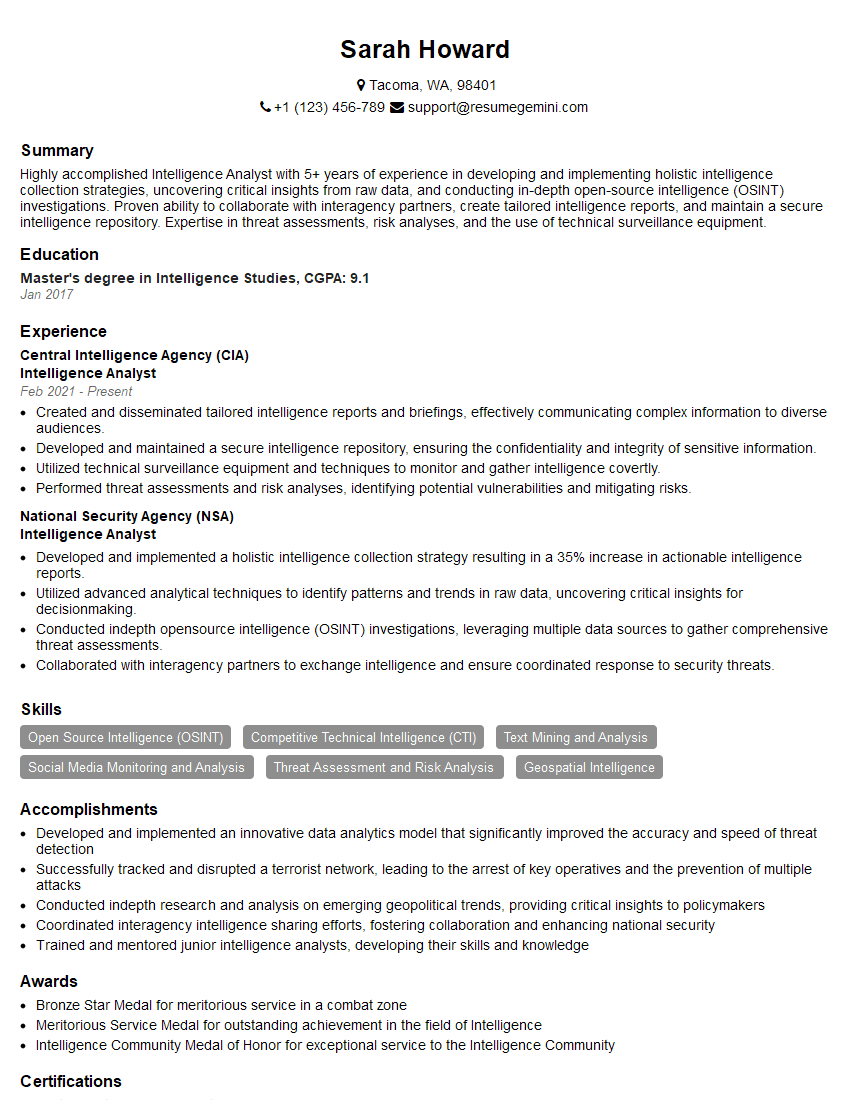
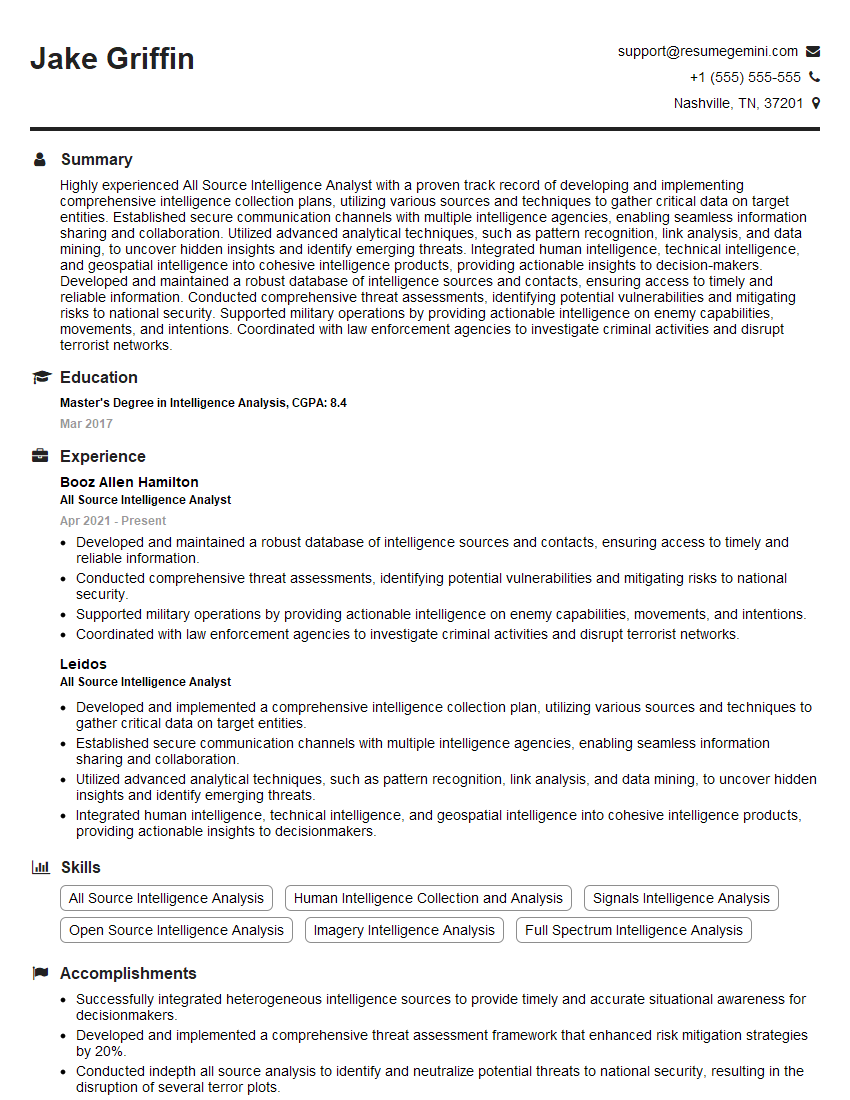
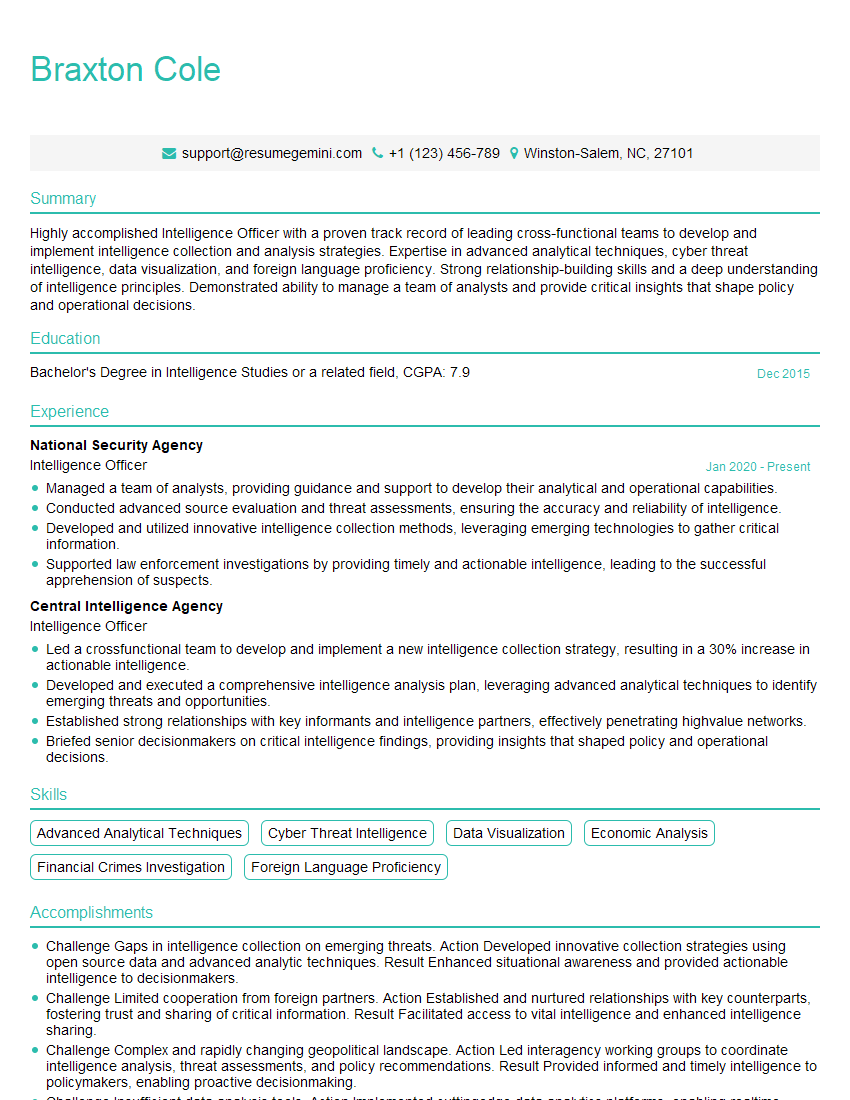
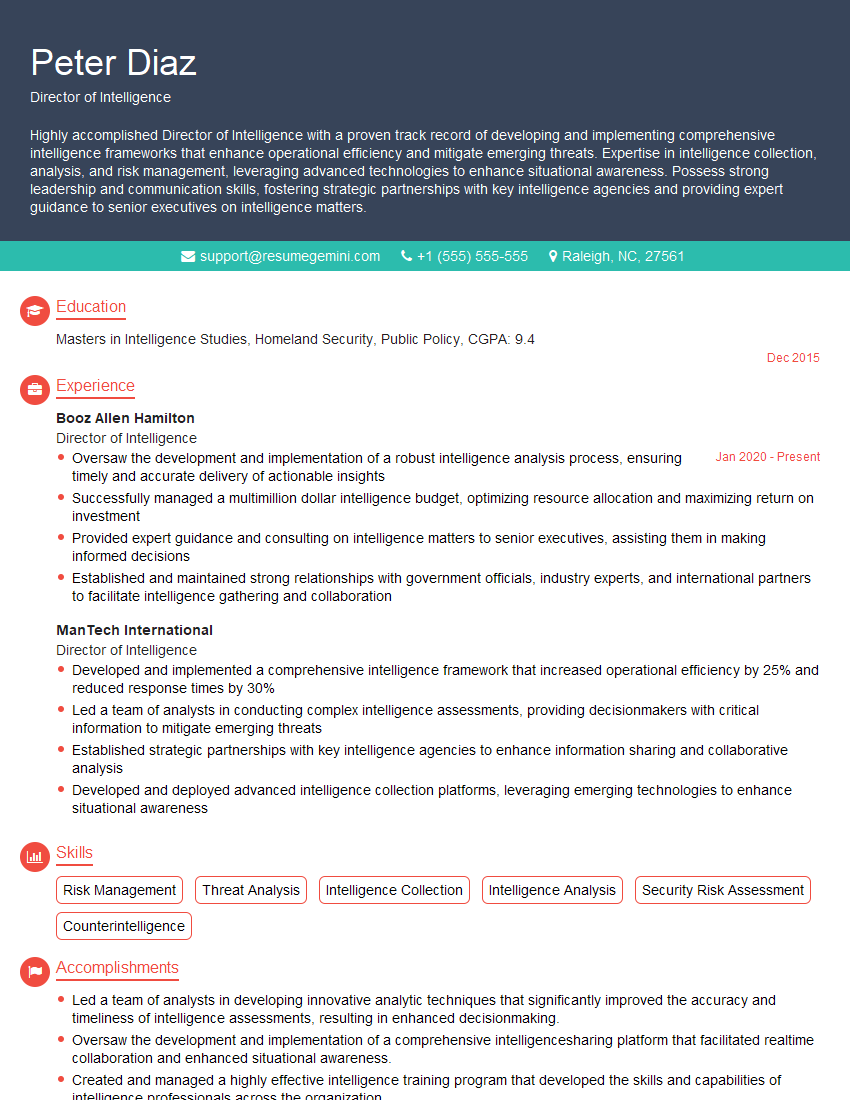
Mastering all-source intelligence integration opens doors to exciting and impactful careers in intelligence analysis, cybersecurity, risk management, and more. A strong foundation in this field significantly enhances your marketability and earning potential. To maximize your job prospects, it’s crucial to present your skills effectively. Crafting an ATS-friendly resume is essential for getting your application noticed by recruiters. We highly recommend using ResumeGemini to build a professional and impactful resume that showcases your expertise in all-source intelligence integration. Examples of resumes tailored to this field are available within the ResumeGemini platform.
Explore more articles
Users Rating of Our Blogs
Share Your Experience
We value your feedback! Please rate our content and share your thoughts (optional).
What Readers Say About Our Blog
Very informative content, great job.
good