Feeling uncertain about what to expect in your upcoming interview? We’ve got you covered! This blog highlights the most important AllSource Intelligence Collection interview questions and provides actionable advice to help you stand out as the ideal candidate. Let’s pave the way for your success.
Questions Asked in AllSource Intelligence Collection Interview
Q 1. Explain the concept of All-Source Intelligence and its importance in modern intelligence gathering.
All-Source Intelligence (ASI) is the process of integrating information from multiple intelligence disciplines to develop a comprehensive understanding of a situation or issue. It’s crucial in modern intelligence gathering because relying on a single source is inherently risky and often incomplete. Imagine trying to assemble a jigsaw puzzle with only a few pieces – you’d get a fragmented picture. ASI, however, uses all available pieces, from various sources, to create a much clearer and more accurate picture.
Its importance stems from the need for a holistic view, enabling analysts to identify patterns, predict future events, and make more informed decisions. For example, understanding a potential terrorist threat requires combining HUMINT (human intelligence), SIGINT (signals intelligence), and OSINT (open-source intelligence) to form a complete picture of the threat’s capabilities, plans, and vulnerabilities.
Q 2. Describe the different intelligence disciplines (e.g., HUMINT, OSINT, SIGINT) and how they contribute to All-Source analysis.
Several intelligence disciplines feed into All-Source analysis. Think of them as different lenses through which we view the same situation.
- HUMINT (Human Intelligence): Information gathered from human sources, such as spies, informants, and defectors. This provides invaluable insights into intentions and motivations, but often requires careful validation.
- SIGINT (Signals Intelligence): Intelligence derived from intercepted communications, such as radio transmissions, phone calls, and internet traffic. This can provide real-time data, but requires technical expertise to interpret and contextualize.
- OSINT (Open-Source Intelligence): Publicly available information gathered from the internet, news reports, academic papers, social media, etc. It’s accessible but may require careful analysis to separate fact from fiction.
- IMINT (Imagery Intelligence): Information gathered from satellites, aerial photographs, and other imagery sources. It provides visual evidence but needs interpretation and context.
- MASINT (Measurement and Signature Intelligence): Intelligence derived from measuring physical phenomena, such as acoustic, electromagnetic, and nuclear signatures. This is often highly technical and requires specialized expertise.
In ASI, each discipline contributes unique pieces to the puzzle. For instance, SIGINT might reveal communication patterns, while HUMINT provides context about those involved. Combining these gives a far richer understanding than either source could provide alone.
Q 3. What are the key challenges in integrating data from diverse intelligence sources?
Integrating data from diverse sources presents significant challenges:
- Data Format Inconsistency: Different sources use varying formats (text, images, audio, video). Harmonizing this data requires significant effort.
- Data Volume and Velocity: The sheer volume and speed of incoming intelligence data can overwhelm analytical capabilities, demanding sophisticated tools and efficient processing techniques.
- Data Quality and Reliability: Not all sources are created equal. Some may be biased, inaccurate, or outdated, necessitating rigorous validation processes.
- Data Security and Confidentiality: Protecting sensitive information from unauthorized access is paramount, requiring robust security measures throughout the data lifecycle.
- Lack of Standardization: The absence of consistent standards for data collection, storage, and analysis can hinder integration efforts.
Addressing these challenges often involves using advanced data analytics tools and employing skilled analysts who can effectively manage and interpret diverse datasets.
Q 4. How do you assess the credibility and reliability of different intelligence sources?
Assessing the credibility and reliability of intelligence sources is crucial. We use a multi-faceted approach:
- Source Evaluation: Assessing the source’s track record, motivation, and potential biases. Is it a known reliable source or a potentially unreliable one? What is their history?
- Information Corroboration: Comparing the information to data from multiple independent sources. Does the information align with data from other reliable sources?
- Contextual Analysis: Examining the information within its broader context, considering geographical, political, and social factors. Does the information make sense given the wider circumstances?
- Technical Validation: Verifying technical aspects of the data, such as geolocation and timestamps (for imagery and signals intelligence). Is the technical information consistent and authentic?
- Statistical Analysis: Using statistical methods to identify patterns and anomalies that may indicate manipulation or inaccuracy. Are there any statistical outliers or unusual patterns?
This process isn’t about assigning a simple ‘true’ or ‘false’ label, but rather assigning a confidence level to the information based on its source and corroborating evidence. We use a rigorous methodology to mitigate the risks associated with using potentially unreliable information.
Q 5. Explain the process of validating and corroborating intelligence information.
Validating and corroborating intelligence is an iterative process. It begins by evaluating the source and the information itself. We then look for corroborating evidence from independent sources. If inconsistencies exist, further investigation is warranted. This could involve:
- Triangulation: Seeking information from at least three independent and unrelated sources to confirm a piece of information.
- Open Source Verification: Checking the information against publicly available data to determine its accuracy.
- Human Source Validation: If the information comes from a human source, we might attempt to verify its credibility through additional questioning or interviews.
- Technical Analysis: Utilizing technological means like image verification or signal analysis to ensure authenticity.
The goal is to build a strong case for the information’s validity. A single piece of intelligence rarely stands alone. It’s the convergence of multiple lines of evidence that provides the highest level of confidence.
Q 6. Describe your experience with data analysis techniques used in All-Source Intelligence.
My experience encompasses a wide range of data analysis techniques:
- Statistical Analysis: Using statistical methods like regression analysis and hypothesis testing to identify trends, patterns, and anomalies in large datasets.
- Data Mining and Machine Learning: Employing algorithms to uncover hidden relationships and patterns in complex data, such as predicting future events or identifying potential threats.
- Network Analysis: Visualizing and analyzing relationships between individuals, organizations, and events to understand the structure and dynamics of complex systems.
- Geospatial Analysis: Using geographic information systems (GIS) to analyze location data, map intelligence, and visualize patterns geographically.
- Text Mining and Natural Language Processing (NLP): Analyzing unstructured text data, such as news articles and social media posts, to extract key insights and trends.
I am proficient in using various software tools like Python with libraries such as Pandas, Scikit-learn, and NetworkX to perform these analyses.
Q 7. How do you handle conflicting information from different sources?
Conflicting information is common in intelligence analysis. Rather than dismissing conflicting information, we treat it as an opportunity for deeper investigation. Our approach involves:
- Source Assessment: Evaluating the credibility and potential biases of the conflicting sources. Which source is more reliable given the evidence?
- Data Reconciliation: Attempting to reconcile the conflicting information by finding common ground or identifying the source of the discrepancy. Are there any underlying reasons for the conflict?
- Further Investigation: Conducting additional research to gather more information that might help resolve the conflict. This could involve collecting additional intelligence from other sources.
- Qualitative Analysis: Using judgment and experience to weigh the different pieces of evidence and form a reasoned assessment. It requires a deep understanding of the context and various perspectives.
- Presenting Multiple Perspectives: If a definitive resolution is not possible, we present the conflicting information along with our reasoning and assessment of each source’s reliability. Transparency in this situation is essential.
It’s important to note that resolving all conflicts is not always possible. Sometimes, uncertainty remains. However, the process of carefully analyzing conflicting information often leads to a more nuanced and complete understanding of the situation.
Q 8. What are some common biases in intelligence analysis, and how do you mitigate them?
Cognitive biases are systematic errors in thinking that can significantly distort intelligence analysis. They can lead to inaccurate assessments and flawed conclusions. Some common biases include confirmation bias (favoring information confirming pre-existing beliefs), anchoring bias (over-relying on the first piece of information received), and availability bias (overestimating the likelihood of events easily recalled).
Mitigating these biases requires a structured and rigorous approach. This includes:
- Employing multiple analysts with diverse backgrounds: Different perspectives challenge assumptions and help identify potential biases.
- Using structured analytical techniques: Methods like the Analysis of Competing Hypotheses (ACH) force analysts to consider alternative explanations and challenge their initial assumptions.
- Actively seeking out contradictory information: Intentionally looking for data that challenges the prevailing narrative helps avoid confirmation bias.
- Regularly reviewing and revising assessments: As new information becomes available, analysts should revisit their conclusions and adjust them accordingly.
- Employing devil’s advocacy: Assigning someone to actively argue against the prevailing analysis helps identify weaknesses and blind spots.
For example, during an assessment of a potential terrorist threat, confirmation bias might lead an analyst to focus only on evidence supporting a specific group’s involvement, ignoring contradictory evidence suggesting another actor. Using ACH and actively seeking contradictory information helps prevent this.
Q 9. Describe your experience using intelligence analysis tools and software.
My experience encompasses a wide range of intelligence analysis tools and software. I’m proficient in using various platforms for data collection, processing, and analysis. This includes:
- Database management systems: I’m experienced with SQL and NoSQL databases, allowing me to efficiently query and analyze large datasets.
- Geospatial intelligence (GEOINT) software: I’m skilled in using tools like ArcGIS and Google Earth to analyze imagery and map data, integrating it with other intelligence streams.
- Open-source intelligence (OSINT) tools: I’m familiar with a variety of OSINT tools, including social media monitoring platforms and web scraping tools, for collecting information from publicly available sources.
- Link analysis software: I’ve extensively used tools to identify connections and relationships between individuals, organizations, and events, creating visual representations of networks to identify key players and potential threats.
- Data visualization tools: I’m proficient in using tools like Tableau and Power BI to create clear and concise visualizations that communicate complex information effectively.
In a recent project, I utilized a combination of OSINT tools to collect information from various social media platforms, then used link analysis software to map the relationships between key individuals and groups involved in an emerging social movement. This allowed us to assess potential risks and develop appropriate strategies.
Q 10. How do you prioritize information based on its relevance and urgency?
Prioritizing information hinges on assessing both its relevance and urgency. I use a structured approach, often combining a matrix system with a time-sensitive approach.
A simple matrix can categorize information by its relevance (high, medium, low) and urgency (high, medium, low). High relevance and high urgency items receive immediate attention. Low relevance, low urgency items might be archived or delegated. Information falling into other quadrants requires a more nuanced assessment.
This matrix is used alongside a time-sensitive approach. Information with immediate implications for operations or decision-making takes priority, regardless of its long-term relevance. For example, an intercepted communication indicating an imminent attack would take precedence over background information on a potential adversary’s long-term goals, even if the latter is highly relevant.
This system ensures that critical information doesn’t get lost in the noise and that resources are allocated efficiently.
Q 11. How do you present intelligence findings in a clear and concise manner?
Presenting intelligence findings clearly and concisely requires a focus on the audience and the purpose. I tailor my communication style accordingly, using a variety of methods:
- Executive summaries: For high-level decision-makers, I provide concise summaries highlighting key findings and their implications.
- Visualizations: Charts, graphs, and maps communicate complex data more effectively than lengthy text.
- Structured reports: For detailed analysis, I utilize a structured report format, including clear headings, subheadings, and bullet points to enhance readability.
- Plain language: I avoid jargon and technical terms whenever possible, ensuring that the information is easily understood by the intended audience.
- Data storytelling: I present the findings in a narrative format that connects the dots and helps the reader understand the significance of the information.
For instance, when presenting findings on a cyber threat, I would use a combination of a concise executive summary, a visual representation of the attack chain, and a detailed report providing technical specifics for security specialists.
Q 12. Explain the importance of maintaining the chain of custody for classified information.
Maintaining the chain of custody for classified information is paramount to ensuring its integrity and admissibility. Any break in the chain can compromise the information’s reliability and potentially lead to legal repercussions.
The chain of custody meticulously documents every individual who handles classified information, the date and time of handling, and the location of the information at all times. This involves:
- Strict access controls: Limiting access to individuals with a valid need-to-know.
- Detailed logging: Recording every access, transfer, and modification of the information.
- Secure storage: Storing classified information in approved, secure facilities.
- Proper handling procedures: Following established procedures for handling, copying, and transmitting classified information.
- Regular audits: Periodically auditing access logs and storage locations to ensure compliance.
Failure to maintain the chain of custody can lead to legal issues, disciplinary actions, and compromise national security. A compromised document might not be admissible in court, and the source of the leak might be impossible to trace.
Q 13. Describe your experience with different data visualization techniques used in intelligence analysis.
Data visualization plays a crucial role in intelligence analysis, allowing analysts to identify patterns, relationships, and anomalies that might be missed in raw data. I’m experienced with various techniques, including:
- Network graphs: Visualizing relationships between individuals, organizations, or entities.
- Geographic Information Systems (GIS) maps: Displaying geographic data to identify patterns and trends.
- Time-series charts: Tracking changes in data over time to identify trends and anomalies.
- Heatmaps: Representing data density to highlight areas of concentration.
- Sankey diagrams: Illustrating flows of information or resources.
In a recent analysis of a drug trafficking network, I used a combination of network graphs and GIS maps to visualize the connections between individuals and the geographic locations of drug shipments. This helped us identify key players and trafficking routes.
Q 14. How do you identify and assess potential threats and risks?
Identifying and assessing potential threats and risks is a core aspect of intelligence analysis. I use a structured approach, typically involving:
- Threat identification: Identifying potential threats through open-source intelligence, human intelligence, and other intelligence sources.
- Threat assessment: Evaluating the likelihood and potential impact of each identified threat.
- Vulnerability analysis: Determining potential vulnerabilities that could be exploited by adversaries.
- Risk assessment: Combining threat and vulnerability assessments to estimate the overall risk.
- Mitigation strategies: Developing strategies to reduce the likelihood or impact of identified threats.
For instance, assessing the risk of a cyberattack on a critical infrastructure would involve identifying potential vulnerabilities in the system, assessing the capabilities of potential attackers, and determining the potential consequences of a successful attack. This assessment would then inform the development of mitigation strategies, such as strengthening cybersecurity defenses and implementing incident response plans.
Q 15. How do you handle sensitive information and maintain confidentiality?
Handling sensitive information in All-Source Intelligence is paramount. My approach is built on a foundation of strict adherence to established security protocols and regulations. This includes understanding and applying principles like need-to-know, least privilege, and data classification. I meticulously follow established procedures for handling classified information, including secure storage, transmission, and destruction of materials.
For example, when working with classified data, I would only access information relevant to my assigned tasks, utilizing secure systems and networks. I would never leave sensitive documents unattended, and I’d always ensure proper disposal methods were followed upon completion of a project. Data encryption and access controls are also crucial aspects of my workflow, ensuring that only authorized personnel can access sensitive materials.
Beyond formal procedures, I believe in fostering a culture of security awareness. This involves regularly reviewing security policies, participating in training sessions, and actively reporting any potential security breaches or vulnerabilities. It’s about making security a shared responsibility, not just a set of rules.
Career Expert Tips:
- Ace those interviews! Prepare effectively by reviewing the Top 50 Most Common Interview Questions on ResumeGemini.
- Navigate your job search with confidence! Explore a wide range of Career Tips on ResumeGemini. Learn about common challenges and recommendations to overcome them.
- Craft the perfect resume! Master the Art of Resume Writing with ResumeGemini’s guide. Showcase your unique qualifications and achievements effectively.
- Don’t miss out on holiday savings! Build your dream resume with ResumeGemini’s ATS optimized templates.
Q 16. Describe your experience in working with diverse teams and stakeholders.
My experience working with diverse teams and stakeholders is extensive. In the field of All-Source Intelligence, effective collaboration is key, as we often work with analysts from different backgrounds, skill sets, and agencies. I’ve honed my ability to communicate complex information clearly and concisely, adapting my communication style to suit the audience, whether it’s technical experts or senior policymakers.
For instance, I’ve worked on projects where I’ve coordinated with open-source intelligence analysts, signals intelligence specialists, and human intelligence officers. Effective collaboration requires active listening, mutual respect, and a willingness to compromise. I’ve found that creating a shared understanding of goals and objectives is crucial for ensuring a successful outcome. This often involves clearly articulating individual roles and responsibilities and establishing transparent communication channels.
I also excel at facilitating constructive discussions among stakeholders with differing perspectives. This involves carefully managing expectations, identifying common ground, and facilitating the resolution of conflicts in a professional and respectful manner. Successfully navigating these diverse team dynamics is essential for leveraging the full potential of All-Source intelligence.
Q 17. How do you stay current with the latest developments in your field?
Staying current in the dynamic field of All-Source Intelligence demands continuous learning. I actively engage in several strategies to maintain my expertise. This includes regularly reviewing relevant academic journals, industry publications, and government reports. I also attend conferences and workshops, both online and in-person, to network with colleagues and learn about the latest trends and technologies.
Furthermore, I leverage online learning platforms and professional development courses to enhance specific skillsets, such as advanced data analysis techniques or new OSINT tools. I’m a member of professional organizations dedicated to intelligence analysis, which provide access to valuable resources and networking opportunities. Staying up-to-date with geopolitical events and technological advancements is equally crucial, as these often significantly impact intelligence gathering and analysis.
Finally, I actively seek out mentorship and engage in peer-to-peer learning. Sharing knowledge and experiences with colleagues, particularly those with diverse backgrounds, allows me to broaden my perspectives and discover new approaches to intelligence collection and analysis.
Q 18. Describe your experience conducting research and analysis on a specific topic.
Recently, I conducted research and analysis on the evolving use of social media by extremist groups. My research involved the application of All-Source Intelligence methodologies, integrating open-source data with other intelligence sources. This project required extensive OSINT analysis using various tools to identify and track the online activities of these groups.
My analysis involved identifying patterns of communication, recruitment strategies, and the dissemination of propaganda. I utilized techniques such as network analysis to map the relationships between individuals and groups within these online communities. The data was meticulously documented and analyzed using qualitative and quantitative methods. I combined this OSINT data with information from other intelligence sources to develop a comprehensive understanding of the threat landscape.
The final intelligence product included an assessment of the groups’ capabilities, intentions, and potential threats. The findings were presented in a clear and concise report, accessible to policymakers and decision-makers. This project underscored the importance of combining various intelligence sources and sophisticated analytical techniques for accurate and timely assessments of evolving threats.
Q 19. How do you utilize open-source intelligence (OSINT) tools and techniques?
Open-Source Intelligence (OSINT) is a critical component of my All-Source Intelligence work. I utilize a wide range of tools and techniques to collect and analyze publicly available information. These tools vary from simple web searches to sophisticated data mining and network analysis software. I frequently use search engines like Google and specialized search engines designed for OSINT purposes.
For example, I utilize tools like Maltego for network mapping and analysis, allowing me to visualize relationships between entities identified through open-source research. I also employ social media monitoring tools to track the online activities of individuals and groups of interest. The selection of specific tools depends largely on the nature of the intelligence requirement. I am also proficient in using advanced search operators, Boolean logic, and other search techniques to refine my searches and efficiently retrieve relevant information.
Beyond the tools, the techniques are equally crucial. I apply careful source evaluation, corroboration, and triangulation to ensure the accuracy and reliability of my findings. This includes identifying potential biases and limitations inherent in open-source data. This multi-faceted approach guarantees that OSINT serves as a robust and reliable component of my wider intelligence analysis.
Q 20. How do you conduct effective source assessments?
Effective source assessment is fundamental to reliable intelligence. My approach involves a multi-faceted evaluation process, assessing a source’s credibility, reliability, and potential biases. I consider factors like the source’s expertise, motivation, and potential access to information. This assessment isn’t a one-size-fits-all process; it adapts to the context of the information and the source’s characteristics.
For instance, a government report will be assessed differently than a social media post. For a government report, I might check the author’s credentials, the publication’s reputation, and the methodology employed. For a social media post, I’d look at the poster’s history, their network, and the context of the post. I also look for corroboration—comparing information from multiple sources to verify its accuracy. This process is crucial to mitigating the risks associated with relying on potentially inaccurate or misleading information.
Triangulation is another essential element. This involves using multiple independent sources to confirm a piece of information, increasing confidence in its validity. By systematically evaluating and comparing information from diverse sources, I can make more informed judgments about the trustworthiness of intelligence findings.
Q 21. What methodologies do you use to develop intelligence products?
Developing effective intelligence products relies on a structured approach. I commonly employ several methodologies, adapting them to the specific intelligence requirement. The process often begins with a clear definition of the intelligence problem or question, followed by the collection of relevant information from multiple sources (All-Source).
Data analysis then follows, using techniques ranging from basic data aggregation to sophisticated statistical analysis and network analysis. I use various analytical frameworks depending on the task, including the Diamond Model, which helps visualize the relationship between actors, infrastructure, capabilities, and activities. The analysis phase also includes the critical step of source evaluation and corroboration to ensure the reliability of the information.
Finally, the findings are presented in a clear and concise intelligence product, tailored to the audience’s needs. The format of the product varies depending on the context. It might be a written report, a presentation, or a briefing. Regardless of the format, the end goal is always clear, actionable intelligence that supports sound decision-making. This structured approach maximizes the value and impact of the intelligence produced.
Q 22. How do you handle uncertainty and incomplete information?
Uncertainty and incomplete information are the bread and butter of All-Source Intelligence. We handle it through a combination of rigorous analytical techniques and a healthy dose of skepticism. Instead of waiting for a perfect picture, we build a case based on the available evidence, acknowledging the gaps.
- Triangulation: We corroborate information from multiple sources, even if each source is incomplete. If three independent sources mention a similar trend, even if none give a full picture, that’s stronger evidence than one complete but potentially biased source.
- Bayesian Analysis: This statistical approach allows us to update our beliefs as new information arrives. We start with a prior probability (initial belief) and refine it based on the evidence collected. For example, our prior belief might be that a specific group is unlikely to launch a large-scale attack, but new intelligence about their troop movements might adjust that probability.
- Red Teaming: We actively challenge our own assumptions by creating alternative hypotheses and testing them against the available data. This helps identify potential flaws in our reasoning and reveals vulnerabilities in our understanding.
- Sensitivity Analysis: We assess how sensitive our conclusions are to changes in the underlying assumptions or data. If a small change in input drastically alters the outcome, we know the conclusion is weak and further investigation is needed.
Essentially, it’s about managing risk and understanding the limitations of our knowledge. Transparency about uncertainties is crucial when communicating intelligence findings.
Q 23. Describe a time you had to make a critical decision based on incomplete or conflicting information.
During a counter-terrorism operation, we received conflicting reports about the location of a high-value target. Some reports placed him in a heavily populated market, while others indicated a remote desert compound. Both reports had some supporting evidence, but neither was definitive.
My decision-making process involved:
- Assessing the credibility of sources: We evaluated the track record and motivations of each source. Some sources had consistently reliable information, while others were known to be unreliable or biased.
- Analyzing supporting evidence: We examined the types of evidence supporting each report, such as intercepted communications, human intelligence, or satellite imagery. Some evidence, like signal intelligence, was more objective than others, like human intelligence reports that may be subjective and influenced by various factors.
- Developing alternative scenarios: We considered the potential consequences of each action based on different scenarios. A raid on the market carried a high risk of civilian casualties, while a raid on the remote compound was logistically more challenging.
Ultimately, we chose to prioritize the report with more corroborating evidence, even though it was still incomplete. We opted for a surveillance-based approach, which allowed us to collect further evidence and refine our understanding before committing to a decisive action. The operation was successful and allowed us to gather additional intel while minimizing risk. The inherent ambiguity highlighted the value of layered intelligence and a cautious approach.
Q 24. Explain your understanding of the intelligence cycle.
The intelligence cycle is a continuous process used to gather, process, and disseminate intelligence information. It typically involves these key phases:
- Planning and Direction: This phase identifies the intelligence requirements, determining what information is needed and how it will be obtained. It involves prioritizing tasks and assigning resources effectively.
- Collection: This involves gathering raw data from various sources, such as human intelligence (HUMINT), signals intelligence (SIGINT), imagery intelligence (IMINT), open-source intelligence (OSINT), and measurement and signature intelligence (MASINT).
- Processing and Exploitation: Raw data is converted into usable intelligence. This involves translating languages, analyzing images, and deciphering signals. The goal is to refine raw data to meaningful information.
- Analysis and Production: Intelligence analysts assess the processed data, drawing conclusions, and producing finished intelligence products. This often involves integrating information from different sources to build a cohesive picture.
- Dissemination: The finished intelligence products are distributed to those who need them, such as policymakers, military commanders, or law enforcement agencies. Effective dissemination involves clear, concise communication, tailored to the audience’s needs.
- Feedback: The effectiveness of the intelligence product is evaluated, and adjustments are made to improve future cycles. This ensures continuous improvement in the process.
Think of it as a continuous loop, where each phase informs the next, constantly refining our understanding.
Q 25. What are some ethical considerations in intelligence collection and analysis?
Ethical considerations in intelligence collection and analysis are paramount. We must always operate within a strict legal and moral framework. Key concerns include:
- Privacy: Collecting intelligence should respect individual privacy rights. Appropriate legal authorities must authorize any intelligence gathering that may infringe on these rights, and this process must be strictly controlled.
- Targeting: Intelligence operations should be directed only at legitimate targets. The targeting process must be transparent and accountable, avoiding the targeting of innocent individuals or groups.
- Proportionality: The means used to collect intelligence should be proportional to the threat faced. The actions taken must be justified and not cause unnecessary harm.
- Transparency and Accountability: Intelligence activities must be overseen by appropriate authorities to ensure compliance with legal and ethical standards. Intelligence agencies should be held accountable for their actions.
- Data Security: Protecting sensitive intelligence information is crucial to prevent its misuse or compromise. Strong security protocols must be in place to safeguard this information.
We need to constantly balance the need to gather critical information with the need to protect fundamental human rights and values.
Q 26. How do you effectively communicate intelligence findings to non-technical audiences?
Communicating intelligence findings to non-technical audiences requires clear, concise, and tailored messaging. Avoid jargon and technical terms whenever possible. Use visual aids such as charts, maps, and infographics to convey complex information effectively.
- Focus on the “So What?”: Highlight the implications of the findings and what they mean for the audience. Connect the analysis to their specific interests and concerns.
- Use Analogies and Real-World Examples: Make the information relatable by comparing it to familiar concepts or scenarios. This will enhance comprehension and engagement.
- Tailor the Message: Adapt the language and level of detail to match the audience’s knowledge and background. A presentation to policymakers will differ significantly from one to military personnel.
- Storytelling: Frame the intelligence in a narrative format to make it more engaging and memorable. Humanize the information by focusing on the human element within the context of the intelligence.
- Provide Context and Background: Set the stage by providing necessary background information, ensuring the audience understands the context of the findings.
It is crucial to remember that the goal is to inform and empower the audience, not to impress them with technical expertise.
Q 27. Describe your experience in using geospatial intelligence (GEOINT) to support analytical tasks.
Geospatial intelligence (GEOINT) is invaluable for supporting analytical tasks. I’ve extensively used GEOINT in several investigations. For instance, analyzing satellite imagery to identify patterns of movement of military equipment, confirming reports of troop buildup in a region, helped us predict potential conflicts.
Specific examples of my GEOINT application include:
- Target Identification and Tracking: Using high-resolution satellite imagery to identify and track the movements of key individuals or assets.
- Damage Assessment: Analyzing before-and-after imagery to assess the extent of damage after a natural disaster or military conflict.
- Infrastructure Analysis: Identifying critical infrastructure, such as power grids or communication networks, to understand vulnerabilities.
- Mapping and Terrain Analysis: Creating maps and conducting terrain analysis to support military operations or humanitarian aid efforts.
- Change Detection: Tracking changes in land use over time to identify patterns, such as deforestation, urbanization, or military construction.
GEOINT is a powerful tool that, when used effectively, enhances the accuracy and timeliness of our intelligence assessments. Its integration with other intelligence sources, like HUMINT, allows us to build more complete and accurate situational awareness.
Q 28. What are some common pitfalls in All-Source intelligence analysis and how can they be avoided?
Common pitfalls in All-Source intelligence analysis include:
- Confirmation Bias: Seeking out and interpreting information that confirms pre-existing beliefs while ignoring contradictory evidence. This can lead to inaccurate conclusions.
- Analysis Paralysis: Getting bogged down in excessive detail or analysis, hindering timely decision-making.
- Ignoring Open Sources: Failing to incorporate open-source information, which can provide valuable context and insights. OSINT is often overlooked but offers rich contextual data.
- Poor Source Evaluation: Not adequately assessing the credibility and reliability of different sources, leading to flawed conclusions. Knowing the biases and motivations of your sources is essential.
- Overreliance on a Single Source: Placing excessive weight on a single source of information, neglecting the value of corroboration from multiple sources.
- Ignoring Cognitive Biases: Failing to account for inherent cognitive biases that can influence the interpretation of evidence.
Avoiding these pitfalls requires:
- Structured Analytical Techniques: Employing techniques like analysis of competing hypotheses (ACH) to challenge assumptions and consider alternative explanations.
- Teamwork and Peer Review: Encouraging collaborative analysis and peer review to identify potential biases and errors.
- Continuous Learning: Staying current on analytical techniques and best practices.
- Transparency and Documentation: Maintaining detailed records of analytical methods and reasoning to promote accountability and enhance the reproducibility of findings.
By being aware of these pitfalls and implementing appropriate countermeasures, we can strive for more objective and accurate intelligence assessments.
Key Topics to Learn for AllSource Intelligence Collection Interview
- Open-Source Intelligence (OSINT) Techniques: Understanding various OSINT methodologies, including search engine techniques, social media analysis, and data mining from publicly available sources. Focus on practical application and ethical considerations.
- Data Analysis and Interpretation: Learn how to effectively collect, analyze, and interpret data from diverse sources, identifying patterns, trends, and relevant insights. Practice problem-solving scenarios involving incomplete or conflicting information.
- Information Verification and Validation: Master techniques for verifying the accuracy and reliability of information gathered from multiple sources. Understand the importance of source credibility and triangulation.
- Intelligence Reporting and Presentation: Develop skills in crafting clear, concise, and persuasive intelligence reports that effectively communicate findings to diverse audiences. Practice presenting complex information in a digestible format.
- Legal and Ethical Considerations: Understand the legal and ethical implications of AllSource Intelligence Collection, including privacy laws and responsible data handling. This is crucial for demonstrating professional conduct.
- Technological Tools and Platforms: Familiarize yourself with commonly used tools and platforms for OSINT gathering and analysis. Focus on understanding their capabilities and limitations.
- Threat Assessment and Risk Management: Develop an understanding of how AllSource Intelligence is used to assess threats and mitigate risks. Practice applying analytical frameworks to real-world scenarios.
Next Steps
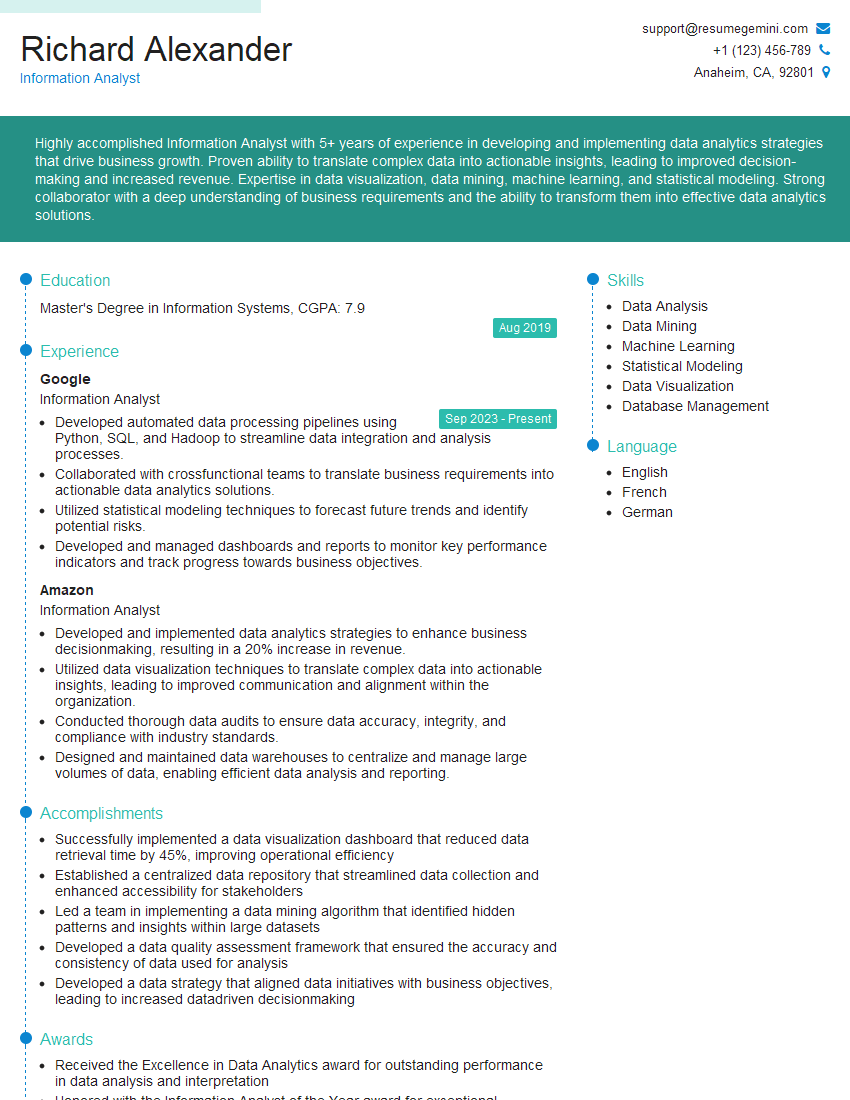
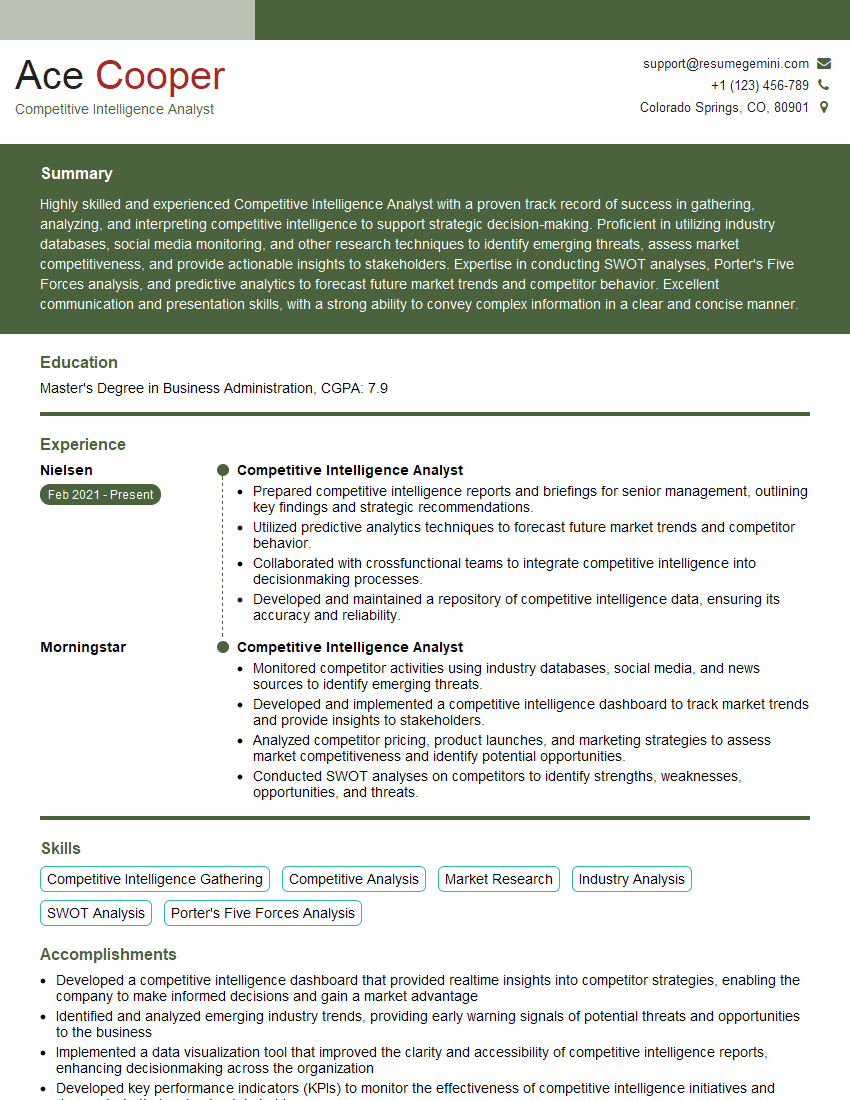
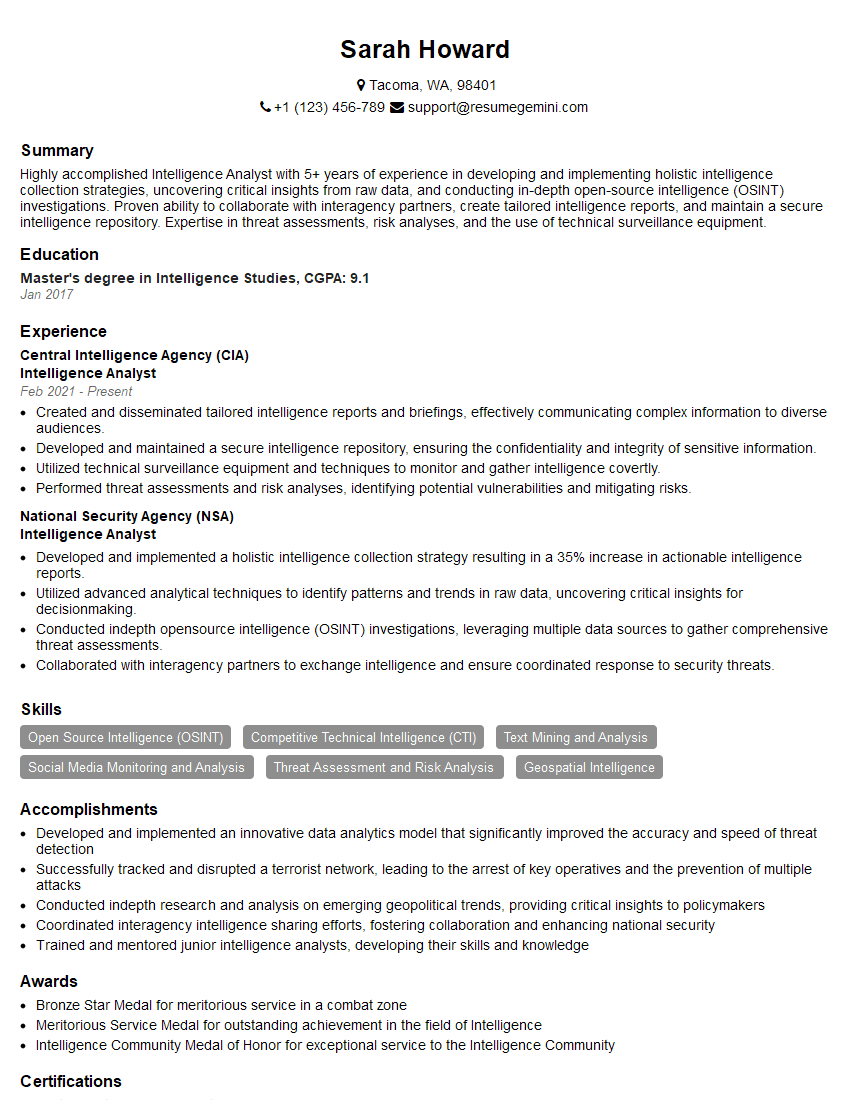
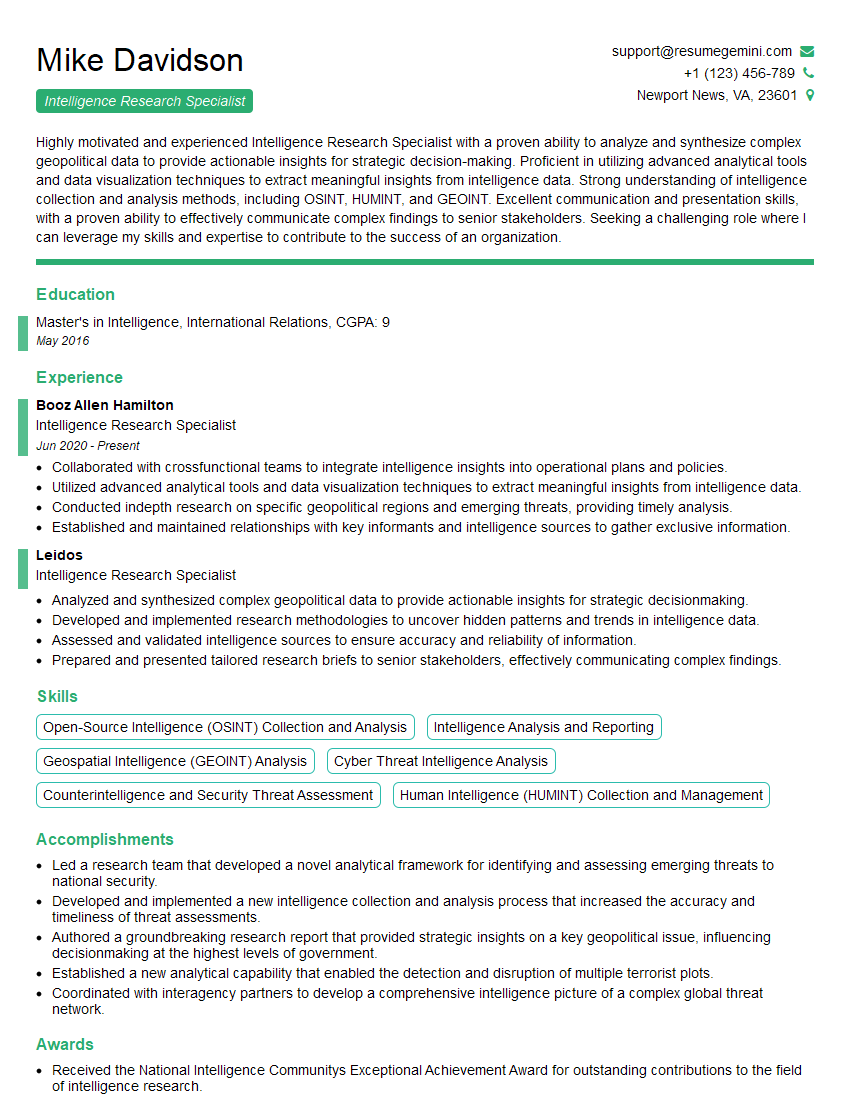
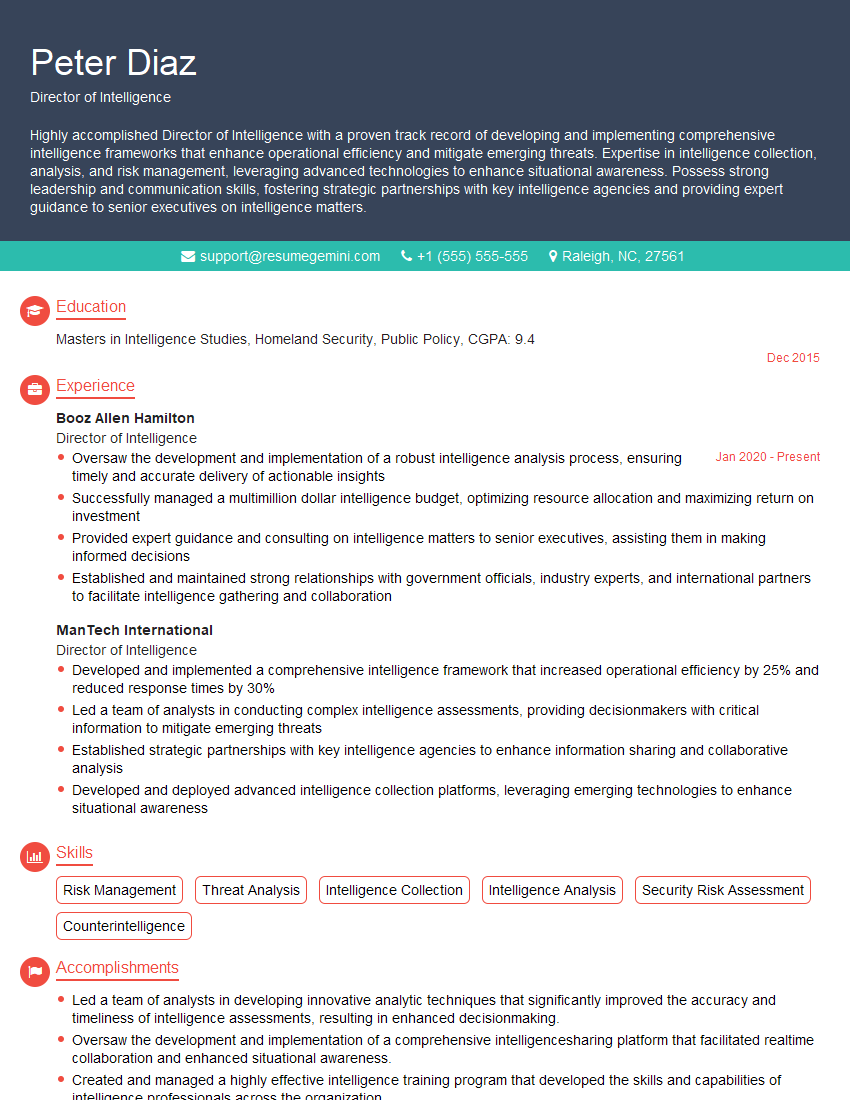
Mastering AllSource Intelligence Collection opens doors to exciting and impactful careers in various sectors, including national security, cybersecurity, and market research. To maximize your job prospects, creating a strong, ATS-friendly resume is crucial. ResumeGemini is a trusted resource that can help you build a professional and effective resume tailored to highlight your skills and experience. Examples of resumes tailored to AllSource Intelligence Collection are available to help guide your resume creation process.
Explore more articles
Users Rating of Our Blogs
Share Your Experience
We value your feedback! Please rate our content and share your thoughts (optional).
What Readers Say About Our Blog
Very informative content, great job.
good