Every successful interview starts with knowing what to expect. In this blog, we’ll take you through the top Analog and Digital Recording interview questions, breaking them down with expert tips to help you deliver impactful answers. Step into your next interview fully prepared and ready to succeed.
Questions Asked in Analog and Digital Recording Interview
Q 1. Explain the difference between analog and digital recording.
Analog and digital recording fundamentally differ in how they represent sound. Analog recording captures sound as continuous electrical waveforms that directly mirror the sound waves themselves. Think of it like a continuous line on a graph. Digital recording, on the other hand, converts the continuous waveform into a series of discrete numerical values (samples) at regular intervals. This is like taking snapshots of the line at regular points. These samples are then stored as binary code (1s and 0s).
Imagine drawing a wave on a piece of paper – that’s analog. Now, imagine taking a picture of that drawing at small intervals – that’s digital. The digital image is an approximation of the original drawing, and the accuracy depends on the resolution of the camera (sampling rate) and the amount of color information (bit depth).
Q 2. What are the advantages and disadvantages of analog recording?
Advantages of Analog Recording:
- Warmth and Character: Analog recordings often possess a unique warmth and character that many find musically pleasing. This is partly due to the inherent imperfections and harmonic distortions that occur during the recording process.
- Simplicity: Analog recording setups can be relatively simple, particularly in simpler recording scenarios.
- Intuitive Workflow: Many find the hands-on nature of analog recording intuitive and enjoyable.
Disadvantages of Analog Recording:
- Noise and Distortion: Prone to noise, hiss, and other forms of distortion that degrade the audio quality over time.
- Signal Degradation: Each time the signal is copied or processed (e.g., during tape duplication), the quality deteriorates further, this is known as generation loss.
- Limited Dynamic Range: Analog recordings typically have a lower dynamic range compared to digital.
- Maintenance and Storage: Requires specific environmental conditions for proper tape storage and care. Magnetic tape can deteriorate over time.
Q 3. What are the advantages and disadvantages of digital recording?
Advantages of Digital Recording:
- No Generation Loss: Digital copies are perfect replicas of the original, ensuring no quality loss during copying or editing. This is a massive advantage for archival purposes.
- High Dynamic Range: Digital recording can capture a wider dynamic range, preserving both quiet and loud sounds with great fidelity.
- High Fidelity: With proper equipment, digital recording can achieve very high fidelity, far exceeding the capabilities of analog recording.
- Flexibility and Editing: Easy editing and manipulation of the audio using Digital Audio Workstations (DAWs).
- Easy Storage and Archiving: Digital files are easy to store, backup, and access, unlike the more delicate handling that magnetic tape demands.
Disadvantages of Digital Recording:
- Potential for Cold or Sterile Sound: Some find digital recordings lack the warmth and character of analog recordings, although this is often a matter of personal preference and can be mitigated through mastering and processing.
- Complexity: Digital recording setups can be complex, requiring specialized software and hardware.
- File Management: Requires efficient file management practices to prevent loss or corruption of data.
- Data Corruption: Although rare, data corruption is possible, resulting in irrecoverable audio loss.
Q 4. Describe the signal flow in a typical analog recording setup.
In a typical analog recording setup, the signal flow might be as follows:
- Sound Source: The audio signal originates from a microphone, instrument, or other sound source.
- Microphone Preamplifier: The signal is boosted by a microphone preamplifier to a suitable level.
- Signal Processing (Optional): It might pass through compressors, equalizers, or other effects units.
- Recording Medium: The processed signal is then sent to a tape recorder (reel-to-reel or cassette), or a hard disk recorder that emulates the analog signal path.
- Output: The recorded signal is then played back through a tape machine or playback device.
For instance, a vocalist singing into a microphone would have their voice amplified by a preamp, potentially processed with an equalizer for tone adjustments, and finally recorded onto magnetic tape.
Q 5. Describe the signal flow in a typical digital recording setup.
A typical digital recording setup involves the following steps:
- Sound Source: Again, this starts with a microphone, instrument, or any other sound source.
- Analog-to-Digital Converter (ADC): The analog audio signal is converted into a digital signal using an ADC. This involves sampling and quantizing the signal.
- Digital Audio Workstation (DAW): The digital audio is processed and recorded within a DAW. This software allows for recording, editing, mixing, and mastering.
- Digital Signal Processing (DSP): The digital signal can be further processed using various plugins and effects within the DAW.
- Storage: The recorded audio is stored digitally on a hard drive, SSD, or other storage medium.
- Digital-to-Analog Converter (DAC): For playback, a DAC converts the digital signal back into an analog signal for listening.
An example would be a guitarist recording their instrument through an interface with a high-quality ADC. The signal is then routed into a DAW (like Ableton Live or Pro Tools) where it can be edited, mixed with other tracks, and finally mastered for distribution.
Q 6. What is dynamic range, and why is it important?
Dynamic range refers to the ratio between the loudest and quietest sounds a recording can capture. It’s expressed in decibels (dB). A higher dynamic range means a recording can capture both very loud and very soft sounds with detail and clarity, resulting in a more natural and realistic listening experience. Conversely, a lower dynamic range results in a compressed sound.
Imagine a quiet whisper followed by a loud explosion. A recording with a wide dynamic range will capture both events with fidelity, while a recording with a narrow dynamic range might squash the quiet whisper and limit the intensity of the explosion.
Dynamic range is crucial for audio quality. A wide dynamic range allows for a more nuanced and lifelike representation of the original sound, offering the listener a richer auditory experience.
Q 7. What is signal-to-noise ratio (SNR), and how does it affect audio quality?
The signal-to-noise ratio (SNR) measures the level of the desired audio signal relative to the level of unwanted background noise. It’s also expressed in decibels (dB). A higher SNR indicates a cleaner recording with less noise, while a lower SNR implies more noise obscuring the audio signal.
Think of a conversation in a noisy room. A high SNR would represent a situation where the voices are easily audible despite the background noise. A low SNR would indicate that the background noise is significantly louder than the voices, making the conversation difficult to understand.
SNR significantly affects audio quality. High SNR recordings sound clearer, more detailed, and less fatiguing to listen to, whereas low SNR recordings are often dull, muddy, and distracting because of the intrusive noise.
Q 8. Explain the concept of sampling rate and bit depth.
Sampling rate and bit depth are fundamental concepts in digital audio. Think of it like taking a photograph: sampling rate determines how many pictures you take per second, and bit depth determines the color resolution of each picture. In audio, a higher sampling rate captures more of the original sound’s detail, resulting in a higher fidelity recording, while a higher bit depth offers a greater dynamic range, allowing for more nuanced representation of quiet and loud sounds.
Sampling Rate: This refers to the number of times per second that a digital audio waveform is measured. It’s measured in Hertz (Hz) or kilohertz (kHz). A higher sampling rate (e.g., 48kHz, 96kHz, 192kHz) captures more data, leading to a more accurate representation of the original analog signal, but also results in larger file sizes. CD quality audio, for example, uses a 44.1kHz sampling rate.
Bit Depth: This determines the resolution of each sample, representing the number of bits used to store each measurement. A higher bit depth (e.g., 16-bit, 24-bit) allows for a finer resolution and greater dynamic range, meaning more subtle variations in amplitude can be captured. A 16-bit recording has a dynamic range of roughly 96dB, while a 24-bit recording offers around 144dB. The higher the bit depth, the less likely you are to hear quantization noise (a type of distortion caused by the limitations of digital representation).
In simple terms: a higher sampling rate means more snapshots of the sound, while a higher bit depth means each snapshot is more detailed.
Q 9. What are common audio file formats, and what are their characteristics?
Several common audio file formats exist, each with its own strengths and weaknesses. The choice depends largely on the intended use and required balance between file size and audio quality.
- WAV (Waveform Audio File Format): An uncompressed format, offering high fidelity audio but resulting in large file sizes. It’s a common format for studio recordings and mastering because of its lossless nature.
- AIFF (Audio Interchange File Format): Similar to WAV, it’s an uncompressed format known for its high quality and used often in professional environments, particularly on Apple platforms.
- MP3 (MPEG Audio Layer III): A lossy compressed format, achieving small file sizes at the cost of some audio detail. It’s widely used for distributing music online due to its relatively small file size and good balance between quality and compression.
- AAC (Advanced Audio Coding): Another lossy compressed format often used for streaming and digital distribution. Generally considered to offer better audio quality than MP3 at similar bitrates.
- FLAC (Free Lossless Audio Codec): A lossless compressed format, offering high audio quality with smaller file sizes compared to WAV or AIFF. It strikes a good balance between quality and storage efficiency.
The selection of the audio file format depends heavily on the application. For archiving, lossless formats like WAV, AIFF, or FLAC are preferred, whereas for online distribution, lossy formats like MP3 or AAC are often favored due to the smaller file sizes.
Q 10. Describe the process of microphone selection for different recording scenarios.
Microphone selection is critical for achieving high-quality recordings. The best microphone for a particular scenario depends on several factors, including the sound source, recording environment, and desired sound characteristics.
For instance, recording a quiet acoustic guitar in a treated studio would call for a highly sensitive condenser microphone known for its detail and clarity. These microphones are excellent at capturing subtle nuances. Conversely, recording a loud rock band on stage requires a rugged dynamic microphone capable of handling high sound pressure levels (SPLs) without distortion.
Voice Recording: For voiceovers or podcasts, a cardioid dynamic microphone is often preferred for its ability to reject background noise. A large-diaphragm condenser can also be useful for capturing warm vocals with rich detail.
Instrument Recording: The type of instrument dictates microphone choice. A small-diaphragm condenser is well-suited for capturing the bright, detailed sound of acoustic instruments like cymbals or acoustic guitars, while a dynamic microphone is more appropriate for loud instruments like electric guitar amplifiers or bass cabinets.
Environmental Considerations: The recording environment plays a crucial role. A highly sensitive microphone in a noisy environment will likely pick up unwanted background sounds. In such situations, a microphone with a tight polar pattern (like a supercardioid) and good noise rejection is important.
Q 11. Explain different microphone polar patterns and their applications.
Microphone polar patterns describe the microphone’s sensitivity to sound from different directions. Understanding these patterns is essential for controlling what’s captured and what’s rejected.
- Omnidirectional: Picks up sound equally from all directions. Useful for capturing ambient sounds or a 360-degree sound field.
- Cardioid: Most sensitive to sound from the front, with progressively less sensitivity as the sound source moves to the sides and rear. A popular choice for vocals and instruments, as it provides good sound isolation from unwanted background noises.
- Supercardioid: Similar to cardioid but with even more directional sensitivity, resulting in a narrower pickup pattern and greater rejection of rear sounds. This is often preferred for live sound reinforcement, where feedback is a major concern.
- Hypercardioid: The most directional polar pattern, providing the narrowest pickup area and high rear rejection. Excellent for isolating sound sources and minimizing unwanted ambience, but requires precise placement.
- Figure-8 (Bidirectional): Equally sensitive to sound from the front and rear, with minimal pickup from the sides. Useful for stereo recording techniques or specific applications requiring capture from two opposite directions.
Choosing the right polar pattern is crucial for controlling the sound captured and minimizing unwanted noise. In a noisy environment, a cardioid or supercardioid might be ideal to minimize background noise, whereas an omnidirectional microphone may be preferred if the goal is to capture the entire soundscape.
Q 12. How do you address audio latency issues during recording?
Audio latency, the delay between the sound being produced and when it’s heard, can be a significant problem during recording. Several techniques can be used to mitigate or eliminate it:
- Lower Buffer Size: In your DAW’s settings, you can adjust the buffer size. A smaller buffer size reduces latency but can increase CPU load, potentially leading to audio dropouts or glitches. Finding a balance between low latency and system stability is key.
- ASIO Drivers: ASIO (Audio Stream Input/Output) drivers provide low-latency audio communication between the computer and audio interface, resulting in more efficient audio processing and reduced latency. They are often preferred over the standard Windows drivers (e.g., WDM).
- High-Quality Audio Interface: A good quality audio interface with low latency drivers is crucial for minimizing latency. Choose an interface with ASIO drivers and a powerful DSP (Digital Signal Processor) for efficient processing.
- Hardware Monitoring: Many audio interfaces offer hardware monitoring, which allows you to hear the signal directly from the interface without relying on the computer’s processing, effectively eliminating latency from the monitoring path.
- Software Compensation: Some DAWs offer features for compensating for latency, automatically delaying the signal to sync with the audio output. This compensates for latency introduced by plugins and effects.
The approach to solving latency issues often involves a combination of these methods. Experimentation and fine-tuning are often needed to find the optimal configuration for your system.
Q 13. Describe your experience with different audio editing software (DAWs).
I have extensive experience with various Digital Audio Workstations (DAWs), including Pro Tools, Logic Pro X, Ableton Live, Cubase, and Reaper. My experience spans from basic audio editing and mixing to advanced tasks such as mastering and sound design. Each DAW has its own strengths and workflows; Pro Tools is known for its stability and industry standard in film and television post-production, while Ableton Live excels in live performance and electronic music production. Logic Pro X offers a comprehensive suite of tools within a user-friendly interface, and Cubase is another powerful option with a long history in music production. Reaper, known for its flexibility and customization options, is a favorite among many for its efficiency.
My workflow typically involves choosing the DAW most suited to the project’s needs. This often includes considering the specific features and plugins required for the task and familiarity with the workflow for efficient completion. For example, if the project involved a large number of tracks and precise editing, I would lean towards Pro Tools or Cubase. If it is a more experimental project involving sampling and effects, Ableton Live might be the ideal option.
Q 14. Explain your troubleshooting skills in a recording environment.
Troubleshooting in a recording environment involves a systematic approach. I start by identifying the symptoms of the problem (e.g., no sound, distortion, hum, crackling). Then I use a logical process of elimination to find the root cause.
My troubleshooting strategy usually follows these steps:
- Check Connections: Verify all cables and connections are secure and functioning correctly. This includes microphones, audio interfaces, instruments, and computer connections.
- Examine the Signal Path: Trace the signal from the source to the output, ensuring each component is working properly and that the levels are appropriate. This might involve checking input and output levels on the audio interface, mixer, and within the DAW.
- Software/Driver Issues: Update or reinstall audio drivers, DAW software, and plugins. A faulty driver can lead to unexpected issues, including latency and audio dropouts.
- Hardware Problems: Check for any signs of faulty hardware, such as malfunctioning microphones, audio interfaces, or computers. Testing with alternative equipment can help isolate the problem.
- Grounding Issues: Hum or ground loops can often be traced to grounding problems. This requires careful checking of connections, use of balanced cables, and potentially employing a ground lift adapter.
- Environmental Factors: Assess the recording environment, considering any factors that could be affecting the sound quality, such as excessive noise or electromagnetic interference.
My experience enables me to quickly diagnose and resolve most common audio recording issues. When necessary, I also consult documentation and online resources to find solutions for more complex problems. The ability to systematically break down the problem, check each element of the audio chain, and consider different possibilities is crucial for efficient troubleshooting.
Q 15. How do you handle noise reduction and audio restoration?
Noise reduction and audio restoration are crucial for enhancing the quality of recordings, especially older or damaged ones. My approach is multifaceted and depends heavily on the nature of the noise and the source material.
For example, with tape hiss on an old cassette recording, I might use a spectral noise reduction plugin. These plugins analyze the noise floor, creating a profile, and then subtracts it from the audio signal. It’s like digitally removing the background hum. However, it’s important to be subtle; aggressive noise reduction can dull the high frequencies and introduce artifacts. I prefer to work iteratively, applying several passes of gentle noise reduction rather than one aggressive pass.
For click and pop removal, I utilize tools that identify and surgically remove these transient imperfections. This often involves manual editing for precise correction to avoid altering surrounding frequencies. This is particularly relevant when working with vinyl rips, where pops and clicks are common.
For more extensive restoration involving significant damage, I might employ techniques like spectral repair or phase correction, which often require a deep understanding of audio signal processing. Ultimately, my goal is to improve the audio quality without introducing new artifacts or altering the overall sonic character of the recording.
Career Expert Tips:
- Ace those interviews! Prepare effectively by reviewing the Top 50 Most Common Interview Questions on ResumeGemini.
- Navigate your job search with confidence! Explore a wide range of Career Tips on ResumeGemini. Learn about common challenges and recommendations to overcome them.
- Craft the perfect resume! Master the Art of Resume Writing with ResumeGemini’s guide. Showcase your unique qualifications and achievements effectively.
- Don’t miss out on holiday savings! Build your dream resume with ResumeGemini’s ATS optimized templates.
Q 16. What are your experience with different types of compressors and limiters?
Compressors and limiters are essential tools for dynamic control, shaping the overall loudness and feel of a mix. I have extensive experience with both hardware and software versions. I choose my compressor based on the desired effect. For example, an optical compressor like the LA-2A is known for its warm, smooth compression, ideal for vocals or acoustic instruments. It adds subtle character while controlling dynamics. Conversely, a VCA compressor like the 1176 offers more aggressive control, often used for drums to achieve punchiness and power. I frequently use the 1176 on snare drums for that punchy, upfront sound.
Limiters are the heavyweights. They prevent the signal from exceeding a specified threshold, maintaining a consistent peak level. I use them primarily during mastering to ensure loudness without clipping. This is crucial for distribution across various platforms, where loudness wars are still very real, but always carefully, aiming for transparency, rather than a ‘squashed’ sound. The choice of limiter often depends on the source material and the desired aesthetic. The mastering process needs to be handled with great care to avoid unnecessary artifacts and maintain dynamic range as much as possible while achieving competitive loudness.
Q 17. How do you use EQ to shape the sound of an instrument or vocal?
EQ, or equalization, allows us to adjust the balance of frequencies in an audio signal. This is incredibly important in shaping the timbre of instruments and vocals. Imagine it like a sculptor working with clay; we’re shaping the sound by carving away or adding different frequency ranges.
For instance, I might use a high-shelf boost to brighten a dull vocal, or a low-cut to remove muddiness in the low-end. If a guitar sounds too harsh, I might attenuate the frequencies around 2-5kHz. For a warmer vocal sound, I may gently boost around 200-500Hz while carefully scooping out any overly prominent frequencies in the mid-range to create clarity and prevent muddiness. The key is to be surgical and targeted with adjustments, paying attention to the interactions between different frequencies. A well-EQ’d mix is balanced and clear, with each instrument having its place in the overall sonic landscape.
Q 18. Explain your understanding of reverb and delay effects.
Reverb and delay are time-based effects that add depth and dimension to audio. Reverb simulates the natural ambience of a space, like a concert hall or a small room. Delay, on the other hand, creates echoes by repeating the sound after a certain amount of time.
I often use reverb to create a sense of space and atmosphere. For instance, a large reverb on vocals can create a bigger, more impactful sound, whereas a shorter, brighter reverb might suit acoustic instruments. For a vocal, I will use a plate or hall reverb, but if I am working with acoustic guitar, a smaller room reverb will suit it better.
Delay can be used for rhythmic effects, creating interesting patterns and textures. It can also be employed for creative sound design. Different kinds of delays, such as tape delay or digital delay, each add unique character to the sound. Careful consideration is needed when using delay to avoid muddy mixes. The timing and feedback will determine how prominent it is in the mix.
Q 19. Describe your experience with mixing and mastering techniques.
Mixing and mastering are distinct but interconnected processes. Mixing involves balancing the levels, EQ, and effects of individual tracks to create a cohesive whole. Mastering is the final stage, where the overall mix is polished and prepared for distribution.
In mixing, I prioritize creating a clear and well-balanced mix where each instrument has its space in the frequency spectrum. I pay close attention to the stereo field, ensuring instruments are placed appropriately for a wide and engaging sound. I use various tools like compressors, EQ, and reverbs, which I discussed in earlier questions, to enhance this process. My mixing style is focused on transparency; I’m not looking to drastically alter the source material but rather to reveal its best features.
Mastering involves maximizing the loudness and overall clarity of the mix while maintaining a consistent dynamic range. This is where I will use limiters and subtle EQ adjustments. I also pay great attention to the overall frequency balance, ensuring the mix translates well across various playback systems. Mastering requires attention to detail and a critical ear to spot any remaining issues and prepare it for broad distribution across various platforms.
Q 20. How do you ensure phase coherence during mixing?
Phase coherence is crucial for avoiding cancellations and creating a full, clear sound. When signals are out of phase, their waveforms cancel each other out, resulting in a thin, weak sound. This is most noticeable in the low frequencies, making the bass lack punch.
I monitor phase carefully during mixing. Plugins are helpful here; most DAWs provide visual phase meters. If I spot phase issues between, for example, two microphones recording the same instrument, I might adjust the polarity (phase) of one of the signals to align the waveforms. This can involve subtle adjustments; sometimes even a slight phase shift can significantly impact the final outcome. Careful listening is vital throughout this process to fully assess the impact.
Q 21. What are your preferred monitoring techniques for accurate mixing?
Accurate monitoring is paramount for a quality mix. I use a combination of techniques to ensure my mixes translate well across various systems.
Firstly, I use high-quality studio monitors. These monitors offer a flat and accurate frequency response, allowing me to hear the true character of the mix. I also frequently calibrate my monitors using a measurement microphone and software to ensure they are reproducing the sound as intended. Secondly, I regularly check the mix on various playback systems, including headphones, laptop speakers, and car stereos, to assess the translation. This reveals any frequency imbalances or issues that might not be apparent on my primary studio monitors. The goal is to achieve a mix that sounds good and consistent across all types of listening environments.
Q 22. Explain your understanding of different loudspeaker systems and acoustics.
Loudspeaker systems and acoustics are intricately linked. Understanding both is crucial for achieving high-fidelity audio reproduction. Loudspeaker systems are broadly categorized by their design: passive (requiring an external amplifier) and active (containing built-in amplification). Within these categories, we have various configurations like two-way (woofer and tweeter), three-way (adding a midrange driver), and more complex multi-way systems. The choice depends on the frequency response needed and the listening environment.
Acoustics, on the other hand, deals with the behavior of sound waves in a given space. Room acoustics significantly impact the sound quality. Factors like room size, shape, materials used (hard surfaces reflect sound, soft surfaces absorb), and the placement of speakers and listening position all affect the perceived sound. Issues like standing waves (sound waves reflecting and interfering constructively and destructively) and room modes (resonances at specific frequencies) are common problems. Addressing these requires careful room treatment using acoustic panels, bass traps, and diffusers to optimize sound reproduction.
For example, a small home studio might benefit from acoustic treatment to minimize reflections and improve the clarity of recordings, while a large concert hall requires much more extensive acoustic design considerations, potentially involving specialized acoustical consultants.
Q 23. How do you approach collaborative projects with other engineers or producers?
Collaboration is paramount in audio engineering and production. My approach centers around clear communication and mutual respect. I begin by clearly defining roles and responsibilities, ensuring everyone understands their contribution to the project. I encourage open dialogue and brainstorming sessions to explore different creative solutions. Regular check-ins and progress updates maintain transparency and allow for proactive problem-solving. I also believe in leveraging each team member’s strengths; for instance, relying on a producer’s artistic vision while contributing my technical expertise in signal processing or mastering.
A recent project involved collaborating with a producer who had a strong musical vision but limited technical experience with DAWs. My role involved guiding them through the technical aspects, teaching them about crucial processes like gain staging and editing while respecting their artistic decisions. The result was a project that truly reflected their creative intent while benefiting from technically sound execution.
Q 24. Describe your experience with different types of audio interfaces.
My experience with audio interfaces spans several generations of technology. I’ve worked with everything from basic USB interfaces with limited I/O (input/output) to high-end professional interfaces with Thunderbolt connectivity boasting numerous inputs, outputs, and AD/DA (analog-to-digital/digital-to-analog) converters. The choice of interface depends heavily on the project’s scale and complexity.
For example, a simple podcast might only require a 2-in/2-out USB interface, while a large-scale recording session with multiple microphones and instruments would demand a high-channel-count interface with superior converters for pristine audio quality. Factors to consider include the interface’s sample rate and bit depth capabilities (higher values equate to better audio fidelity), its latency (delay between input and output), and its compatibility with the chosen DAW and other hardware.
I have personal experience with interfaces from companies like Universal Audio, Focusrite, and RME, each offering distinct characteristics in terms of sound quality, features, and price point.
Q 25. What are the key considerations for setting up a home studio?
Setting up a home studio requires careful planning. Acoustic treatment is paramount: controlling reflections and standing waves is essential for accurate monitoring. This often involves using acoustic panels and bass traps strategically placed around the room. Choosing the right monitoring speakers is critical; they should be flat and accurate, not colored, allowing you to make informed mixing decisions. A comfortable and ergonomic workspace is equally important, preventing fatigue and promoting productivity.
Beyond acoustics, consider the following:
- Computer system: Powerful enough to handle your DAW and plugins.
- Audio interface: Suiting your needs (number of inputs/outputs).
- Microphones: Appropriate for the intended applications (vocal, instrument, etc.).
- Headphones: Closed-back for isolation and accurate monitoring.
- Software: A Digital Audio Workstation (DAW) that suits your workflow.
Proper organization and cable management ensure a professional and efficient workspace. Starting small and gradually upgrading your equipment is often a wise approach.
Q 26. Describe your experience with different analog equipment like tape machines or consoles.
My experience with analog equipment is extensive. I’ve had the privilege of working with various tape machines, from reel-to-reel machines to cassette decks, each offering a unique sonic character. The warmth and saturation achieved through tape recording are often sought after by musicians and engineers. The process of aligning heads and calibrating the tape machine is a crucial aspect.
Analog consoles, with their physical faders and knobs, provide a tactile and intuitive mixing experience. The signal path’s analog nature can contribute unique harmonic distortion and a sense of cohesion to the final mix. Maintaining and troubleshooting analog equipment requires specialized knowledge and skills. For example, understanding impedance matching and signal flow is essential for avoiding issues like hum and noise.
I’ve worked with classic consoles from Neve and API, appreciating their distinctive sonic character and robust build quality. The experience of working with analog gear offers a deep understanding of audio signal flow and imparts a valuable perspective, often appreciated when working in a hybrid (analog and digital) workflow.
Q 27. How do you work with clients to achieve their creative vision?
Working with clients effectively involves clear communication and a collaborative approach. I begin by understanding their creative vision and musical goals. This might involve listening to their demos, discussing their inspirations, and defining the overall project scope. Regular updates and open communication help ensure the project remains aligned with their expectations. I welcome feedback and incorporate it constructively throughout the process. The key is to balance creative guidance with technical expertise, ensuring that the final product reflects the client’s vision while maximizing its technical quality.
For example, I once worked with a singer-songwriter who had a very specific idea for the sound of their album. By actively listening to their input, we were able to choose the right recording techniques, microphones, and even the specific type of reverb that best captured their desired atmosphere. The resulting album perfectly embodied their artistic vision.
Q 28. How do you stay current with industry trends and technological advancements?
Staying current in this rapidly evolving field requires continuous learning and adaptation. I regularly attend industry conferences and workshops, staying informed about the latest technologies, software updates, and mixing techniques. I subscribe to industry publications and online resources, and actively engage with online communities and forums where professionals share experiences and insights. Experimentation is vital; I often dedicate time to trying out new plugins, DAW features, and recording methods. This hands-on approach helps me evaluate their strengths and weaknesses firsthand, better understanding how to leverage them effectively within my workflow.
Moreover, I actively seek feedback from peers and mentors, engaging in constructive criticism to refine my skills and expand my knowledge base.
Key Topics to Learn for Analog and Digital Recording Interview
- Analog Recording Fundamentals: Microphone types and polar patterns, signal flow in analog recording chains (preamp, EQ, compressor), tape recording principles (saturation, noise reduction), understanding different analog recording media (tape, reel-to-reel).
- Digital Recording Fundamentals: Digital audio workstations (DAWs) and their functionalities, audio file formats (WAV, AIFF, MP3), sampling rate and bit depth, digital signal processing (DSP) concepts, quantization and its effects.
- Signal Processing: Practical application of equalizers, compressors, limiters, and other dynamic processors in both analog and digital domains. Understanding frequency response and its impact on audio quality.
- Microphones and Mixing: Gain staging, microphone techniques for various recording scenarios (vocals, instruments), mixing console operation (analog and digital), panning and stereo imaging.
- Mastering and Audio Restoration: Concepts of dynamic range, loudness, and mastering techniques. Familiarization with audio restoration tools and techniques for noise reduction and artifact removal.
- Troubleshooting and Problem Solving: Identifying and resolving common issues in recording setups, understanding audio artifacts and their causes, approaches to diagnose and fix problems in both analog and digital workflows.
- Audio Editing and Post-Production: Proficiency in audio editing software, techniques for cleaning up audio, adding effects, and preparing audio for final delivery.
Next Steps
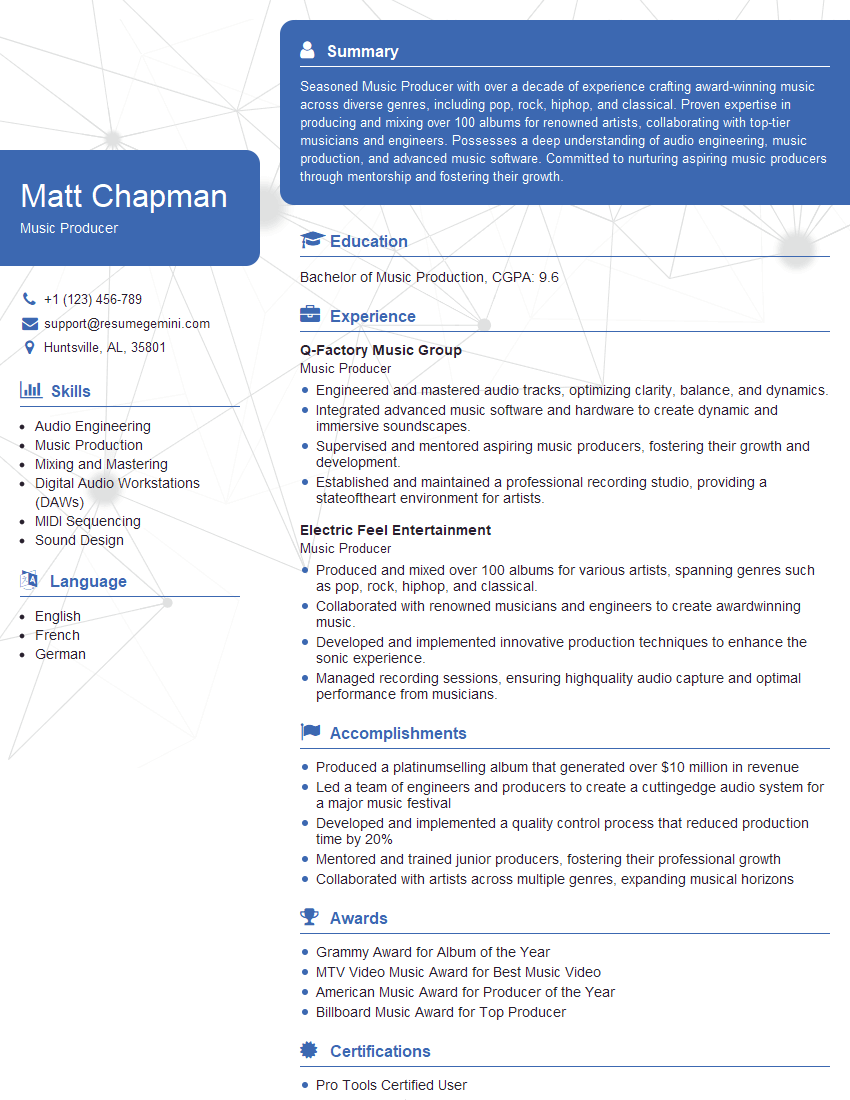
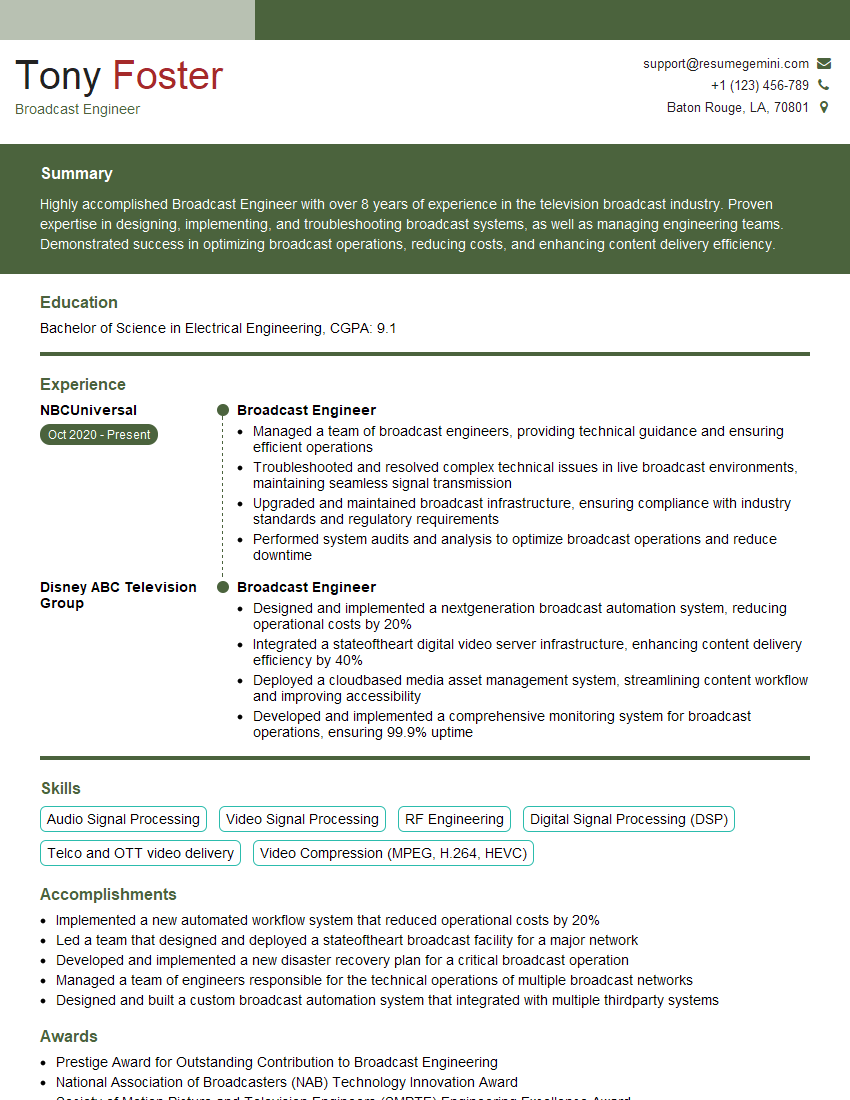
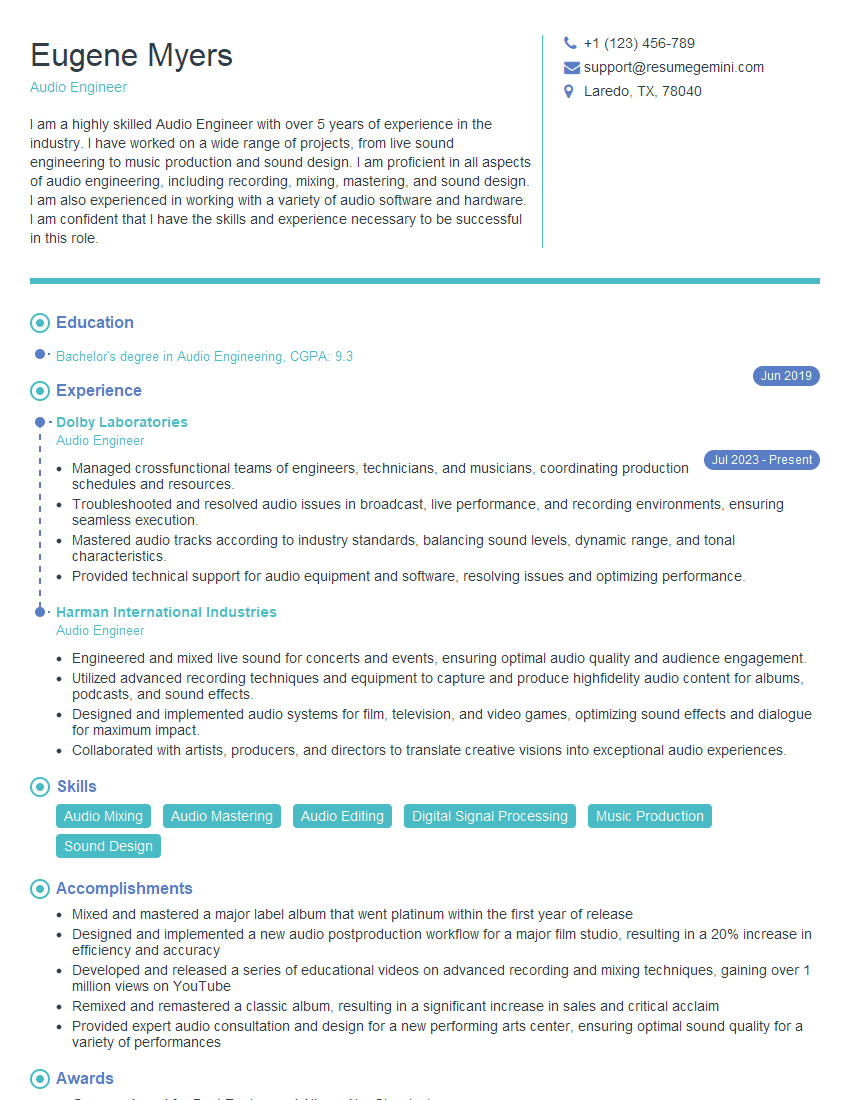
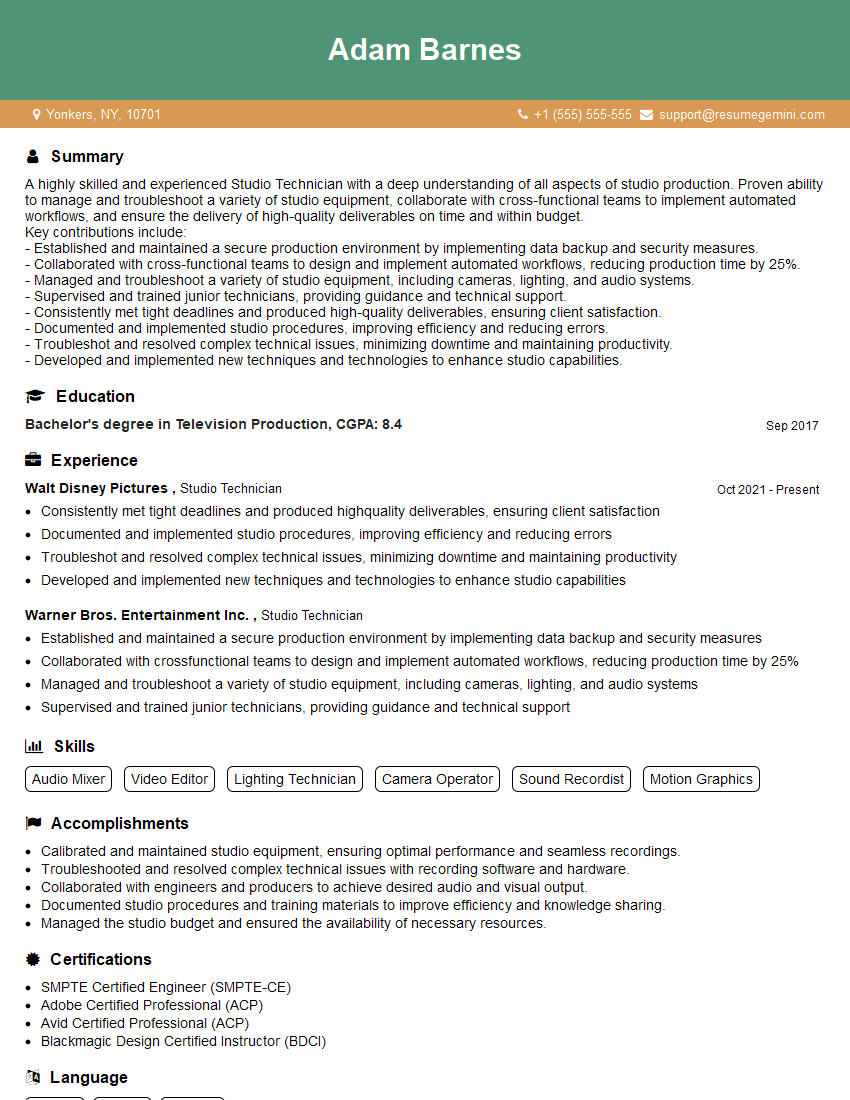
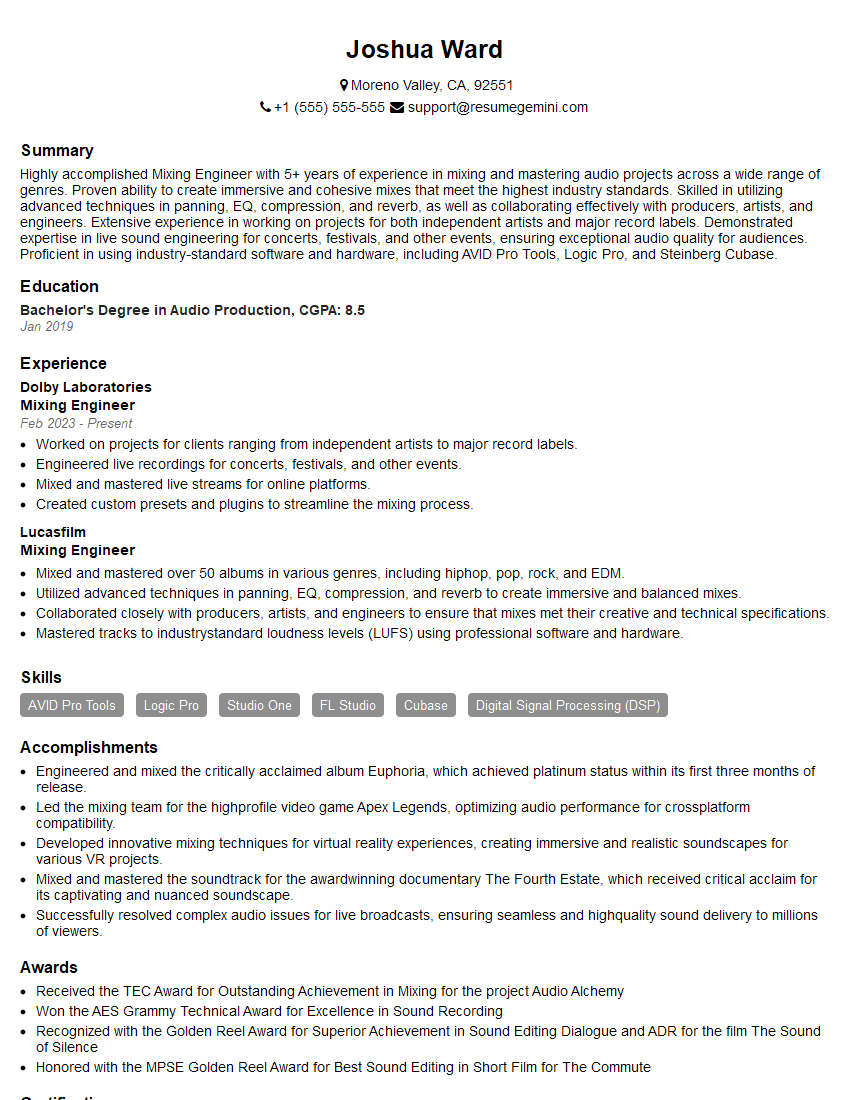
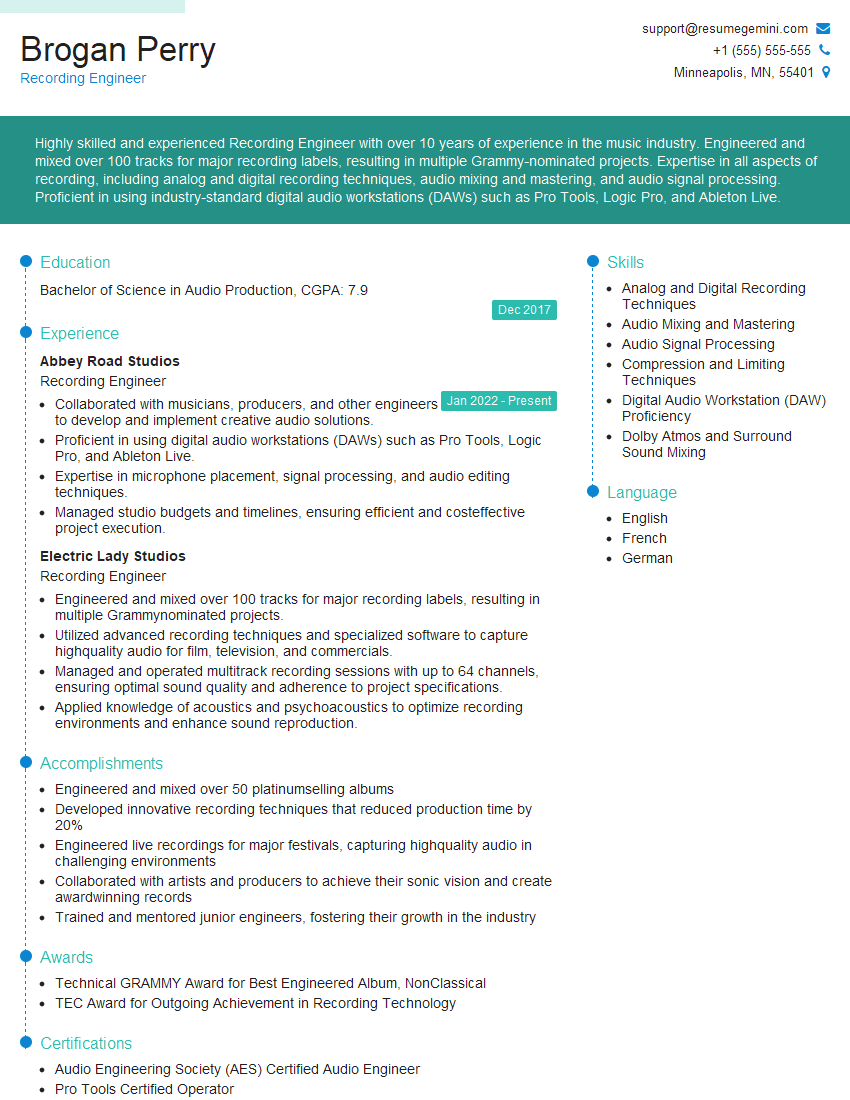
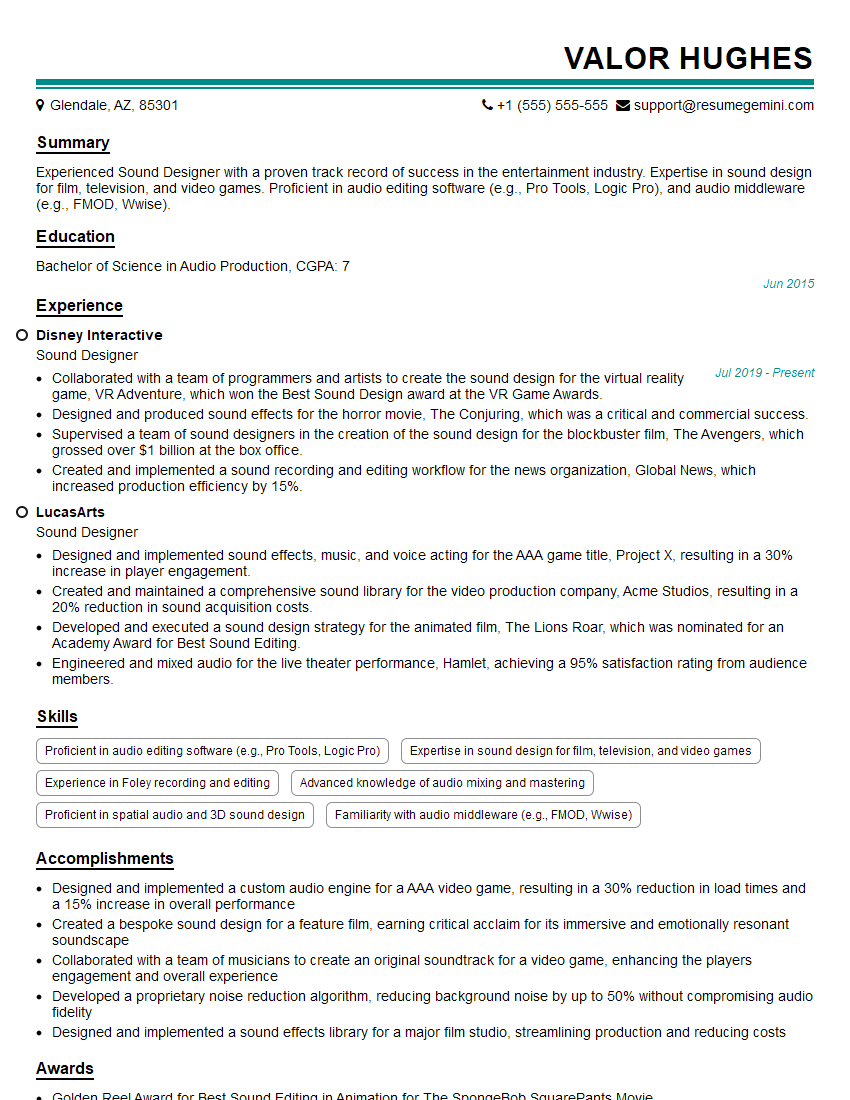
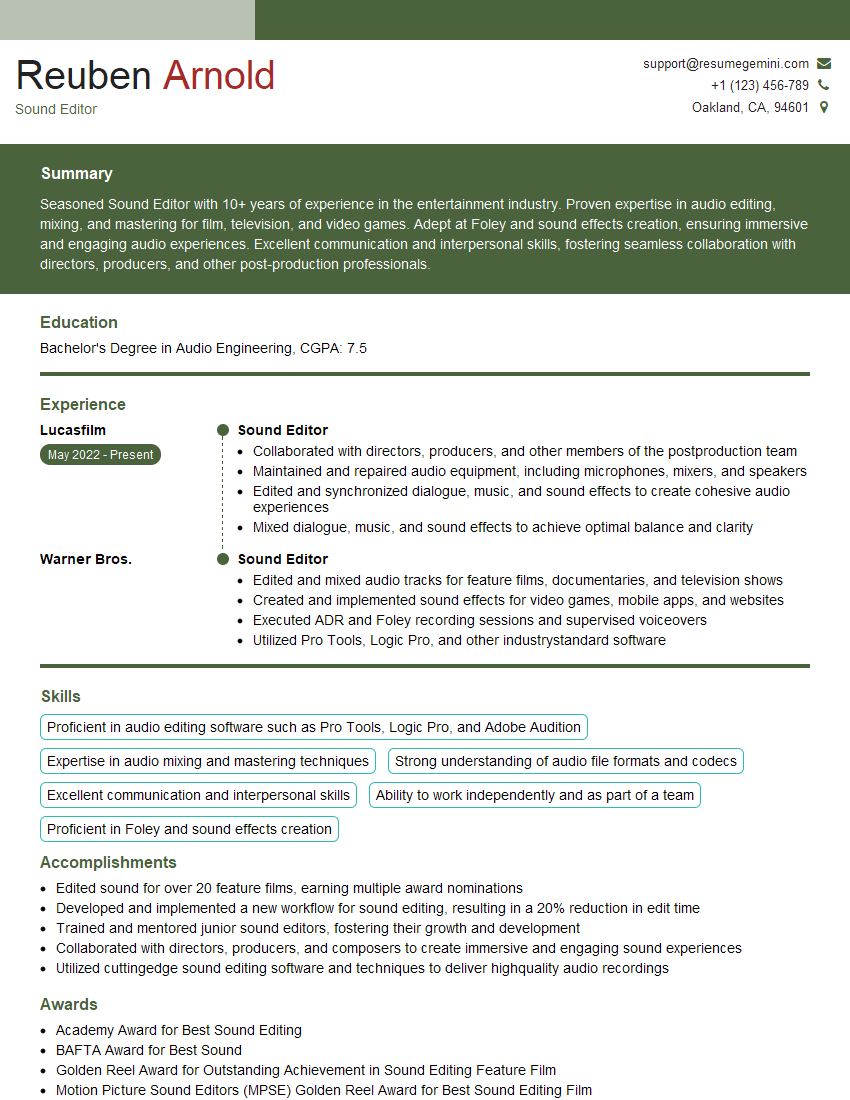
Mastering both analog and digital recording techniques is crucial for a successful career in audio engineering, music production, and related fields. A strong understanding of these principles opens doors to diverse and exciting opportunities. To enhance your job prospects, creating a well-structured, ATS-friendly resume is essential. ResumeGemini is a trusted resource that can help you build a professional and impactful resume tailored to your skills and experience. Examples of resumes tailored specifically to Analog and Digital Recording are available within ResumeGemini to guide your creation process.
Explore more articles
Users Rating of Our Blogs
Share Your Experience
We value your feedback! Please rate our content and share your thoughts (optional).
What Readers Say About Our Blog
Very informative content, great job.
good