Are you ready to stand out in your next interview? Understanding and preparing for Animal Laws and Regulations interview questions is a game-changer. In this blog, we’ve compiled key questions and expert advice to help you showcase your skills with confidence and precision. Let’s get started on your journey to acing the interview.
Questions Asked in Animal Laws and Regulations Interview
Q 1. Explain the difference between animal cruelty and animal neglect.
Animal cruelty and animal neglect are both forms of animal abuse, but they differ in their nature. Animal cruelty involves the intentional infliction of harm or suffering on an animal. This can range from physical abuse like beating or stabbing to psychological abuse like prolonged isolation or deprivation of basic needs. Think of it as an active, deliberate act of inflicting harm. Animal neglect, on the other hand, is the failure to provide for an animal’s basic needs. This includes inadequate food, water, shelter, veterinary care, or hygiene. It’s a passive form of abuse, characterized by omission rather than commission. Neglect can be just as harmful, and often leads to suffering and even death.
Example: Actively kicking a dog is animal cruelty. Leaving a dog outside in freezing temperatures without adequate shelter is animal neglect. Both are illegal and punishable by law, although the specific penalties may vary depending on the severity and jurisdiction.
Q 2. What are the key provisions of the Endangered Species Act?
The Endangered Species Act (ESA) is a landmark US law designed to protect and recover imperiled species and the ecosystems upon which they depend. Its key provisions include:
- Listing species: The Fish and Wildlife Service (FWS) and the National Marine Fisheries Service (NMFS) identify and list species as either endangered (facing extinction) or threatened (likely to become endangered).
- Habitat protection: The ESA mandates the designation of critical habitat – areas essential for the conservation of listed species. This often involves restrictions on development and other activities that could harm the habitat.
- Recovery plans: The agencies develop recovery plans outlining actions needed to help listed species recover and eventually be delisted.
- Prohibitions: The ESA prohibits the ‘taking’ of listed species. ‘Taking’ is broadly defined to include harming, harassing, pursuing, hunting, shooting, wounding, killing, trapping, capturing, or collecting, as well as significant habitat modification or degradation.
- Enforcement: The ESA provides for both civil and criminal penalties for violations, including fines and imprisonment.
Example: The ESA protects the California condor through habitat preservation, captive breeding programs, and strict regulations on activities that could harm them.
Q 3. Describe the process for obtaining permits for wildlife rehabilitation.
The process for obtaining wildlife rehabilitation permits varies by state and even by local jurisdiction. It generally involves the following steps:
- Research state regulations: Start by contacting your state’s wildlife agency or department of natural resources. Their website will outline the specific requirements and application procedures for wildlife rehabilitation permits in your area.
- Meet educational requirements: Most states mandate completing specific training courses or demonstrating proficiency in wildlife care. This often involves hands-on experience and knowledge of wildlife biology, disease prevention, and handling techniques.
- Secure appropriate facilities: You’ll need to demonstrate that you have adequate and safe facilities to house and care for wildlife, including appropriate enclosures, equipment, and sanitation protocols.
- Submit an application: The application typically requires detailed information about your experience, facilities, and proposed rehabilitation practices. You might also need to undergo a site inspection.
- Background check: Expect a background check to ensure you are fit to handle and care for wildlife.
- Ongoing compliance: Once permitted, you will be subject to regular inspections and reporting requirements to ensure you are adhering to the regulations.
Important Note: It’s illegal to rehabilitate wildlife without a permit in most places, even if the animal is seemingly harmless or injured. Unauthorized rehabilitation can expose both the animal and the person to significant risk.
Q 4. What are the legal implications of transporting animals across state lines?
Transporting animals across state lines is regulated by several federal and state laws. The Lacey Act, for instance, prohibits the interstate transportation of illegally taken wildlife. This means that animals must be legally acquired in both the origin and destination states. This includes proper permits, licenses, and documentation regarding the species’ origin and health status. Failure to comply with these laws can lead to hefty fines and even criminal charges.
Example: Someone transporting a protected bird across state lines without the necessary permits would be in violation of the Lacey Act. The same applies to animals acquired through illegal means, such as poaching or theft.
Furthermore, the Animal Welfare Act (AWA) applies to the transportation of certain animals covered under the act, requiring humane conditions during transport. State laws also frequently have their own specific rules regarding animal transportation, adding another layer of complexity.
Q 5. How does the Animal Welfare Act protect animals used in research?
The Animal Welfare Act (AWA) aims to ensure the humane treatment of animals used in research. It doesn’t cover all animals used in research (e.g., rats and mice are generally excluded), but for those it does cover, the AWA mandates several key protections:
- Minimum standards of care: The AWA sets minimum standards for housing, feeding, watering, sanitation, veterinary care, and the handling of animals.
- Institutional Animal Care and Use Committees (IACUCs): Research facilities must have IACUCs to review and approve research protocols involving animals. These committees ensure that the research is scientifically sound and that the animals are treated humanely.
- Record keeping: Detailed records of animal care and use must be maintained and made available for inspection.
- Inspections: The USDA regularly inspects facilities to ensure compliance with the AWA.
Example: A research facility using dogs in a study must provide adequate space, enrichment, and veterinary care, as specified in the AWA and approved by the IACUC. Failure to comply with these regulations can result in sanctions and penalties.
Q 6. What constitutes illegal hunting or poaching under federal law?
Illegal hunting or poaching under federal law typically involves violating the Lacey Act, the Migratory Bird Treaty Act, or other specific statutes depending on the animal and location. Generally, it includes:
- Hunting out of season: Hunting protected species during closed seasons or outside designated hunting areas.
- Hunting without a license: Failure to possess the required hunting license or permit for the species and location.
- Taking protected species: Hunting or otherwise harming endangered or threatened species protected under the Endangered Species Act.
- Using prohibited methods: Employing illegal hunting methods such as night hunting, spotlighting, or using poison.
- Exceeding bag limits: Killing or taking more animals than legally allowed.
- Commercial poaching: Illegally hunting or trapping animals for commercial purposes (e.g., selling wildlife parts).
Example: Hunting an endangered grizzly bear without a permit or shooting a migratory bird out of season are serious federal crimes punishable by substantial fines and imprisonment.
Q 7. Explain the concept of ‘responsible pet ownership’ and its legal ramifications.
Responsible pet ownership encompasses a broad range of duties aimed at ensuring the well-being of a pet and preventing harm to others. Legally, it includes adhering to local ordinances and state laws regarding pet ownership.
- Providing basic needs: This includes providing food, water, shelter, veterinary care, and appropriate exercise and enrichment. Failure to do so can lead to animal neglect charges.
- Licensing and registration: Many localities require pet licensing and registration, and failure to comply can result in fines.
- Containment: Keeping pets confined or restrained as required by law to prevent them from wandering onto private property, roadways, or harming other animals or people. This often involves leash laws and fence regulations. Failure to do so can lead to liability if the pet causes damage or injury.
- Waste disposal: Properly cleaning up after your pet’s waste is usually legally mandated.
- Public safety: Ensuring your pet does not pose a threat to public safety, such as through aggression or biting. Owners can be held liable for their pet’s actions if they fail to properly manage their pet’s behavior.
Example: A dog owner who fails to control their aggressive dog, resulting in a bite, could be held liable for damages and potentially face criminal charges. Similarly, not picking up after their dog in a public space could result in a fine.
Q 8. Describe the legal challenges involved in managing invasive species.
Managing invasive species presents a complex web of legal challenges. The primary difficulty lies in the inherent conflict between protecting native ecosystems and the often-uncertain legal frameworks governing the introduction, control, and eradication of non-native species.
Jurisdictional Issues: Invasive species rarely respect political boundaries. A species invading one state might require coordinated management efforts across multiple states or even international cooperation, leading to jurisdictional disputes and inconsistencies in regulations.
Property Rights: Control measures might necessitate actions on private land, raising legal questions about property rights and the extent to which landowners can be compelled to participate in eradication programs.
Economic Impacts: Eradication or control efforts can be costly, leading to legal battles over who bears the financial burden – landowners, government agencies, or potentially affected industries.
Scientific Uncertainty: The effectiveness of various control methods often lacks definitive scientific proof, leading to legal challenges questioning the chosen approach and its potential environmental impacts.
Enforcement Difficulties: Tracking and prosecuting violations related to the introduction or spread of invasive species can be challenging, especially for clandestine activities.
For example, the legal battles surrounding the control of the Asian carp in the Great Lakes illustrate these complexities. Managing this invasion requires international cooperation and navigating complex property rights and economic interests.
Q 9. What are the ethical considerations in wildlife management?
Ethical considerations in wildlife management are paramount, demanding a balance between human needs and the well-being of animals. Central tenets include:
Minimizing Suffering: Any intervention must prioritize minimizing animal suffering and prioritize humane methods for capture, relocation, or culling.
Scientific Basis: Management decisions must be based on sound scientific evidence and avoid interventions driven by emotion or speculation.
Precautionary Principle: In situations of scientific uncertainty, favoring cautious approaches that err on the side of protecting wildlife is crucial.
Fairness and Equity: Management practices should be fair and equitable, avoiding disproportionate impacts on specific animal populations or human communities.
Transparency and Accountability: Decisions and actions should be transparent and accountable to the public, ensuring open dialogue and consideration of diverse perspectives.
A clear example involves the debate over trophy hunting. Ethical considerations focus on whether such practices are justifiable based on conservation goals, the welfare of the animals involved, and fairness in access to hunting opportunities.
Q 10. Explain the role of CITES in protecting endangered species.
The Convention on International Trade in Endangered Species of Wild Fauna and Flora (CITES) plays a crucial role in protecting endangered species by regulating international trade.
CITES establishes three appendices categorizing species based on their conservation status:
Appendix I: Includes species threatened with extinction. Trade in these species is permitted only in exceptional circumstances, usually for scientific research or conservation purposes.
Appendix II: Includes species that are not necessarily threatened with extinction but could become so unless trade is carefully controlled. Trade is permitted with strict permits and monitoring.
Appendix III: Includes species protected in at least one country and for which that country requires assistance in controlling trade.
CITES achieves protection by requiring permits and certificates for trade, monitoring trade patterns, and collaborating internationally to enforce its regulations. It is important to note that CITES is not a substitute for national wildlife protection laws, but acts as a critical layer of international cooperation in protecting endangered species from international trade exploitation. The ivory trade restrictions imposed by CITES, for instance, aim to protect elephants from poaching driven by the demand for ivory.
Q 11. How do you balance wildlife conservation with human development needs?
Balancing wildlife conservation with human development needs requires careful planning and a collaborative approach. It’s not a zero-sum game; we can strive for solutions that benefit both.
Strategic Environmental Assessments (SEAs): These assessments evaluate the potential environmental impacts of development projects before they start, allowing for modifications to minimize harm to wildlife.
Habitat Corridors: Creating protected areas and connecting them with corridors allows animals to move and adapt to changing environments, mitigating habitat fragmentation from development.
Sustainable Land Use Planning: Integrating wildlife conservation into regional and local land use plans ensures that development avoids critical habitats and prioritizes areas with lower ecological value.
Community Engagement: Involving local communities in decision-making processes leads to solutions that respect both human livelihoods and wildlife protection goals.
Economic Incentives: Providing economic incentives such as ecotourism or payments for ecosystem services can encourage conservation-friendly practices.
For example, developing eco-friendly tourism strategies around wildlife preserves can provide economic benefits to local communities while ensuring the continued protection of the wildlife.
Q 12. What are the penalties for violating animal welfare laws?
Penalties for violating animal welfare laws vary significantly depending on the jurisdiction, severity of the offense, and the species involved. Penalties can include:
Fines: ranging from hundreds to thousands of dollars.
Imprisonment: in cases of severe cruelty or neglect, jail time can be imposed.
Prohibition Orders: Preventing individuals convicted of animal cruelty from owning or handling animals in the future.
Confiscation of Animals: Seizing animals from abusive owners and placing them in appropriate care.
Community Service: requiring offenders to perform community service related to animal welfare.
The specific penalties will depend on the jurisdiction’s laws and the court’s interpretation of the facts. For instance, intentionally causing significant injury to a protected animal is likely to result in much harsher penalties than unintentional neglect.
Q 13. How do you investigate allegations of animal cruelty?
Investigating allegations of animal cruelty requires a systematic and thorough approach, often involving multiple steps.
Initial Assessment: Gathering information from the complainant, including details of the alleged cruelty, dates, locations, and any supporting evidence (photos, videos).
On-Site Investigation: Visiting the location where the alleged cruelty occurred to assess the animals’ condition, gather evidence, and potentially interview witnesses.
Evidence Collection: Documenting findings with photographs, videos, and detailed written reports. This might include veterinary examinations of the animals.
Interviews: Interviewing individuals who may have witnessed the alleged abuse or have relevant information.
Legal Review: Consulting with legal counsel to determine if sufficient evidence exists to support criminal charges or civil action.
For example, investigating a case of alleged dog fighting might involve raiding a suspected location, seizing fighting dogs, and interviewing witnesses to build a case for prosecution.
Q 14. What are the different types of animal abuse and their legal definitions?
Animal abuse encompasses a range of actions causing unnecessary pain, suffering, or distress to animals. Legal definitions vary by jurisdiction, but generally include:
Physical Abuse: Acts causing physical harm, such as beating, kicking, burning, or other forms of intentional injury.
Neglect: Failure to provide basic necessities like food, water, shelter, or veterinary care, leading to suffering or death.
Emotional Abuse: Actions that cause significant psychological distress, such as prolonged isolation, confinement, or intimidation.
Abandonment: Intentionally leaving an animal without providing for its basic needs.
Animal Fighting: Involvement in activities such as dog fighting or cockfighting.
Hoarding: Accumulating a large number of animals beyond the capacity to provide proper care, often resulting in neglect.
It’s crucial to note that the specific legal definitions and penalties for these acts vary greatly depending on the location and specific circumstances. For example, the definition of ‘neglect’ might depend on factors such as the species involved, environmental conditions, and the animal’s overall health.
Q 15. What are your strategies for enforcing animal welfare regulations?
Enforcing animal welfare regulations requires a multi-pronged approach combining proactive education and reactive enforcement. My strategies begin with robust public education campaigns to inform owners about their responsibilities and the legal consequences of neglect or abuse. This includes workshops, online resources, and collaborations with animal welfare organizations. Secondly, we rely heavily on proactive inspections of animal facilities like kennels, farms, and zoos, conducting thorough checks for compliance with standards regarding housing, feeding, and veterinary care. Thirdly, reactive enforcement involves responding to complaints. These complaints are thoroughly investigated, and if violations are found, we issue warnings, fines, or even pursue legal action, potentially leading to license revocation or criminal charges. For example, a recent case involving a puppy mill resulted in a significant fine and the seizure of over 100 animals due to inhumane conditions. Finally, data analysis plays a crucial role. We track complaint trends and inspection results to identify areas needing improvement and to better allocate resources.
- Public Education: Workshops, online resources.
- Proactive Inspections: Regular checks of animal facilities.
- Reactive Enforcement: Investigating complaints and taking legal action.
- Data Analysis: Tracking trends to improve resource allocation.
Career Expert Tips:
- Ace those interviews! Prepare effectively by reviewing the Top 50 Most Common Interview Questions on ResumeGemini.
- Navigate your job search with confidence! Explore a wide range of Career Tips on ResumeGemini. Learn about common challenges and recommendations to overcome them.
- Craft the perfect resume! Master the Art of Resume Writing with ResumeGemini’s guide. Showcase your unique qualifications and achievements effectively.
- Don’t miss out on holiday savings! Build your dream resume with ResumeGemini’s ATS optimized templates.
Q 16. Describe your experience with handling animal bite cases.
Handling animal bite cases requires a systematic approach prioritizing public safety and determining liability. The immediate focus is on providing medical care to the victim. Then, a thorough investigation is launched, including gathering witness statements, assessing the animal’s behavior and medical history, and determining whether the bite was provoked. Depending on the severity of the bite and the circumstances, the animal may be subject to quarantine, and the owner could face legal consequences, including fines or even criminal charges if negligence is proven. For example, if an owner knew their dog had a history of aggression and failed to take necessary precautions, they could be held liable for damages. We work closely with animal control officers and public health officials throughout the process to ensure the safety of the community and compliance with all relevant regulations. Proper documentation is crucial for determining liability and ensuring a fair outcome for all parties.
Q 17. What legal protections are afforded to service animals?
Service animals enjoy significant legal protections under laws such as the Americans with Disabilities Act (ADA) in the United States. These protections ensure that individuals with disabilities have access to public accommodations and transportation with their service animals. This means businesses and other public entities cannot generally refuse entry to individuals accompanied by their service animals. The only exceptions are in limited circumstances, such as where the animal poses a direct threat to the health and safety of others or where the animal’s presence would fundamentally alter the nature of the goods or services provided. However, it’s important to note that the ADA does not define what constitutes a service animal, so businesses have the right to ask whether the animal is a service animal required because of a disability, and what work or task it is trained to perform. They cannot, however, ask about the nature of the individual’s disability. This delicate balance protects the rights of individuals with disabilities while preventing abuse of the service animal designation.
Q 18. How do you ensure compliance with animal quarantine regulations?
Ensuring compliance with animal quarantine regulations involves a combination of strict import/export procedures and rigorous post-arrival monitoring. For imported animals, this begins with verifying compliance with all necessary health certifications and permits. Animals often undergo inspections at ports of entry to ensure they meet health standards. Then comes a period of quarantine, the duration of which varies depending on the animal’s origin and the risk of disease transmission. After the quarantine period, further monitoring might be required to ensure the animals remain healthy and do not pose a risk to local populations. This may involve follow-up inspections and testing. For example, animals entering from regions with known outbreaks of rabies may be subject to a longer quarantine period and post-release observation. We utilize a robust database system to track quarantined animals and ensure timely release or appropriate action when violations are detected. Failure to comply with quarantine regulations can result in fines, animal seizure, and even legal action against the importer or owner.
Q 19. What are the environmental impact assessments involved in animal-related projects?
Environmental impact assessments (EIAs) for animal-related projects are crucial for evaluating potential ecological consequences. These assessments cover a wide range of potential impacts, including habitat loss due to construction, changes in water quality from animal waste, and the spread of invasive species. For instance, the construction of a new zoo requires a thorough assessment of the potential effects on local wildlife and the surrounding ecosystem. EIAs consider the project’s lifecycle, from initial planning to decommissioning, and incorporate mitigation measures to minimize negative impacts. These might include habitat restoration, waste management strategies, and the implementation of biosecurity protocols to prevent the spread of disease. Regulations typically require developers to conduct thorough EIAs before undertaking projects, and the results influence the decision-making process, often leading to project modifications or even rejection if the environmental risks are deemed unacceptable.
Q 20. Explain the legal implications of animal ownership in your jurisdiction.
Animal ownership in our jurisdiction comes with significant legal implications. Owners have a legal responsibility to ensure the welfare of their animals, providing adequate food, water, shelter, and veterinary care. Failure to do so can result in neglect charges. Owners are also responsible for the actions of their animals; for instance, if a dog bites someone, the owner might be liable for damages. Specific regulations govern things like leash laws, vaccination requirements, and restrictions on certain breeds considered dangerous. There are also regulations regarding animal waste disposal and noise control. For example, failing to properly dispose of dog waste in public places can lead to fines. Furthermore, various jurisdictions have specific regulations related to the keeping of exotic animals, often requiring permits and specialized facilities. Understanding these laws is crucial to responsible pet ownership and avoiding legal trouble.
Q 21. Describe the process of obtaining a permit to import or export animals.
The process of obtaining a permit to import or export animals is multifaceted and demands meticulous preparation. It typically begins with submitting a detailed application to the relevant authorities, specifying the species, quantity, purpose of import/export, and origin/destination. The application must be accompanied by veterinary health certificates, demonstrating that the animals are free from disease. Depending on the species and the destination country, additional documentation may be needed, such as CITES permits for endangered species. Authorities will review the application and supporting documentation to assess the risks associated with the importation or exportation. If the application is approved, a permit is issued outlining specific conditions that must be met throughout the transportation and handling of the animals. Failing to comply with these conditions can lead to permit revocation and serious legal consequences. The entire process can be complex and time-consuming, requiring coordination between the exporter, importer, and various government agencies.
Q 22. Discuss the concept of ‘animal sentience’ and its legal implications.
Animal sentience refers to the capacity of animals to experience feelings, both positive and negative, such as pain, pleasure, fear, and distress. Legally, the recognition of animal sentience is a rapidly evolving area. While traditionally animals were treated as property, increasingly, legislation acknowledges their capacity for suffering. This recognition is driving changes in animal welfare laws. For example, some countries have amended their animal cruelty statutes to reflect that animals are not merely objects but beings capable of experiencing emotional pain. This shift leads to stricter regulations on practices like factory farming, animal experimentation, and even the use of animals in entertainment. The legal implications include stricter penalties for animal cruelty, restrictions on certain practices, and even the emergence of legal rights for animals in specific contexts, though this varies considerably across jurisdictions.
For instance, the UK’s Animal Welfare Act 2006 explicitly acknowledges sentience, influencing a range of legislation. In contrast, the legal landscape in other parts of the world may be less developed, still treating animals primarily as commodities. The recognition of sentience is driving a global movement towards more humane treatment of animals and reforming animal laws to reflect this understanding.
Q 23. How do you address conflicts between landowners and wildlife?
Conflicts between landowners and wildlife are common, especially in areas where human development encroaches upon natural habitats. Addressing these conflicts requires a multifaceted approach combining preventative measures, conflict resolution strategies, and legal frameworks. Prevention often involves habitat management techniques to discourage wildlife from entering human areas. This can include fencing, planting deterrent vegetation, and proper waste disposal to eliminate attractants.
When conflicts do arise, mediation and education can often resolve the issue amicably. Landowners can be educated on wildlife behavior and coexistence strategies, and wildlife managers can assist in implementing non-lethal methods to deter animals. However, lethal methods may be permitted under certain circumstances, and these are often regulated through licensing and permitting systems. Furthermore, legal frameworks typically define acceptable methods of wildlife control and delineate responsibilities for both landowners and wildlife agencies. Examples of legal recourse include permitting for controlled hunts or trapping under specific conditions. The specific regulations vary greatly depending on the jurisdiction, the species involved, and the nature of the conflict. It’s crucial to understand local laws and engage with relevant wildlife agencies to find legal and ethical solutions.
Q 24. Explain the legal aspects of captive wildlife breeding programs.
Captive wildlife breeding programs are subject to a complex web of regulations designed to ensure animal welfare, prevent the spread of disease, and protect endangered species. Legal aspects cover permits and licenses, animal welfare standards, and trade regulations. Breeding programs often require permits from relevant wildlife agencies. These permits typically specify the species allowed, the number of animals that can be bred, and the conditions under which breeding can occur. Stringent animal welfare standards are usually in place, requiring appropriate housing, nutrition, veterinary care, and enrichment activities to ensure the physical and psychological well-being of the animals.
The legal framework also covers the trade of captive-bred animals. The Convention on International Trade in Endangered Species of Wild Fauna and Flora (CITES) regulates the international trade of endangered species and their products. Even animals bred in captivity might fall under CITES regulations, depending on the species and the country involved. Similarly, national and regional laws might govern the sale and transportation of captive-bred animals within a country, aiming to prevent illegal trafficking or exploitation.
Non-compliance with regulations can lead to significant penalties, including fines, license revocation, and even criminal prosecution. The specific legal requirements vary significantly across jurisdictions, so programs must meticulously research and comply with all relevant regulations at local, national, and sometimes international levels.
Q 25. What are the legal requirements for animal shelters and rescues?
Animal shelters and rescues are subject to various legal requirements aimed at ensuring the health, safety, and well-being of the animals in their care. These requirements vary significantly by jurisdiction, but common themes include licensing, animal care standards, record-keeping, and reporting obligations. Most jurisdictions mandate licensing for shelters and rescues, requiring operators to meet certain standards of animal care. This often includes requirements relating to facility size, sanitation, veterinary care, and staff qualifications.
Animal care standards commonly involve provisions for adequate food, water, shelter, and veterinary attention. Detailed record-keeping is usually mandatory, involving animal intake and exit records, veterinary treatments, and adoption procedures. Shelters are also typically obligated to report certain events, such as animal deaths, disease outbreaks, or suspected animal cruelty cases to the appropriate authorities. Failure to comply with these regulations can lead to sanctions, including fines, license revocation, and even criminal charges.
Finally, many jurisdictions have specific regulations related to euthanasia protocols, adoption processes, and the handling of surrendered or stray animals. It’s critical for shelters and rescues to stay informed about all relevant local, state, and potentially even federal laws.
Q 26. Describe the roles of different government agencies in animal welfare regulation.
Multiple government agencies often play a role in animal welfare regulation, often with overlapping responsibilities. At the national level, agencies like the Department of Agriculture (or equivalent) may oversee animal health, animal transportation, and the use of animals in research. State or provincial agencies frequently have more direct involvement in regulating animal shelters, animal control, and wildlife management. Local agencies, such as animal control departments, often handle issues related to stray animals, animal cruelty investigations, and enforcement of local ordinances.
In addition, specialized agencies may focus on specific aspects of animal welfare, such as wildlife conservation or the prevention of animal cruelty. The responsibilities of each agency can vary significantly based on the jurisdiction and the specific legislation in place. Effective animal welfare regulation often relies on inter-agency cooperation and coordination to ensure a comprehensive approach.
For instance, the USDA might focus on large-scale agricultural practices, while state agencies handle smaller-scale animal operations. Local animal control focuses on community-level animal welfare concerns. Understanding this division of responsibilities is crucial for effective advocacy and compliance.
Q 27. What is your experience with testifying in court cases related to animal law?
I have extensive experience testifying in court cases related to animal law, providing expert witness testimony on various aspects of animal welfare and cruelty. My testimony has included assessments of animal living conditions, evaluations of potential animal abuse or neglect, and opinions on the standard of care provided to animals in different contexts, from animal shelters to agricultural operations. I’ve worked on cases involving different species, from companion animals to wildlife and livestock.
In preparing for testimony, I meticulously document my findings, using detailed photographs, videos, and other supporting documentation to substantiate my claims. My testimony focuses on providing objective and scientifically sound information to the court, assisting in reaching a just outcome. Maintaining professional objectivity and clarity in communication is crucial in this capacity. The specific details of each case, such as the species involved, type of alleged cruelty, and the applicable laws, significantly impact the scope and nature of my testimony.
Q 28. How do you stay up-to-date on changes in animal laws and regulations?
Staying current in animal law and regulations requires a multifaceted approach. I actively monitor legislative updates at the local, state, and federal levels, utilizing online legislative databases, professional journals, and legal news sources. I participate in professional organizations dedicated to animal law, attending conferences and webinars to stay informed about emerging trends and legal precedents. This allows me to network with other professionals in the field, exchanging insights and staying abreast of the latest developments.
Furthermore, I maintain a collection of relevant legal resources, including statutes, regulations, and case law, ensuring I have access to up-to-date information. This continuous learning and engagement ensure my expertise is current and relevant, enabling me to provide the most accurate and effective legal advice and expert testimony.
Key Topics to Learn for Animal Laws and Regulations Interview
- Animal Welfare Legislation: Understanding the core principles and variations in animal welfare acts across different jurisdictions. Consider the ethical considerations involved in interpreting and enforcing these laws.
- Wildlife Protection Laws: Familiarize yourself with endangered species acts, hunting regulations, and habitat preservation laws. Be prepared to discuss practical scenarios involving wildlife conflicts and conservation efforts.
- Animal Cruelty and Abuse: Study the definitions of animal cruelty, the legal processes involved in prosecuting animal cruelty cases, and the different levels of severity and their corresponding penalties.
- Animal Rights vs. Animal Welfare: Understand the key differences between these philosophies and how they inform legal frameworks and policy debates. Be ready to discuss the ethical implications of each.
- Livestock and Agriculture Regulations: Explore laws related to animal husbandry, transportation, slaughter, and disease control. Consider the practical application of these regulations in ensuring animal health and food safety.
- Research Animal Regulations: Understand the ethical considerations and legal requirements related to animal research, including the use of animals in scientific experiments and the importance of minimizing animal suffering.
- Enforcement and Compliance: Explore the role of government agencies and other organizations in enforcing animal laws and regulations, including inspection procedures, investigation techniques, and legal remedies for violations.
- International Animal Law: Gain an understanding of international treaties and agreements related to animal welfare, wildlife trade, and conservation efforts. Consider the complexities of applying international law at a national level.
Next Steps
Mastering Animal Laws and Regulations is crucial for career advancement in this vital field. A strong understanding of these laws opens doors to diverse and impactful roles. To maximize your job prospects, create an ATS-friendly resume that effectively highlights your skills and experience. We highly recommend using ResumeGemini, a trusted resource for building professional resumes. ResumeGemini provides examples of resumes tailored to Animal Laws and Regulations to guide you in creating a compelling application that showcases your expertise.
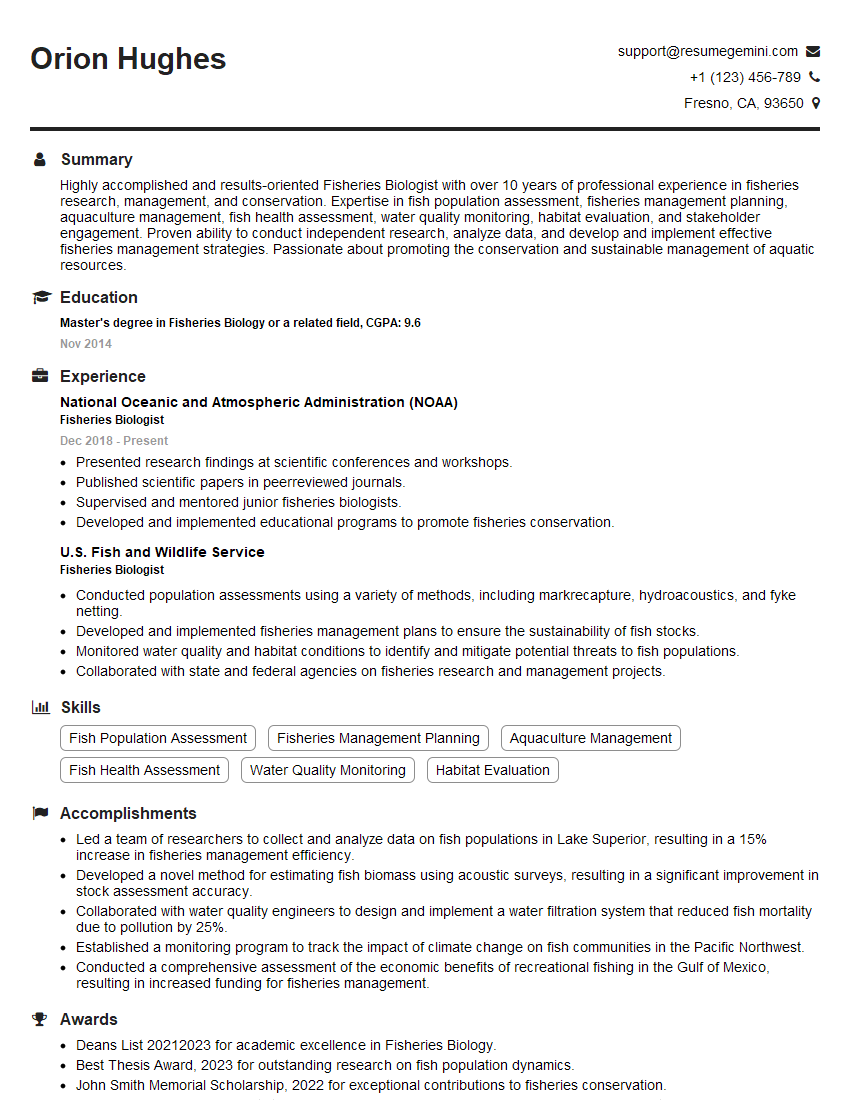
Fisheries Biologist Resume Sample

Wildlife Biologist Resume Sample
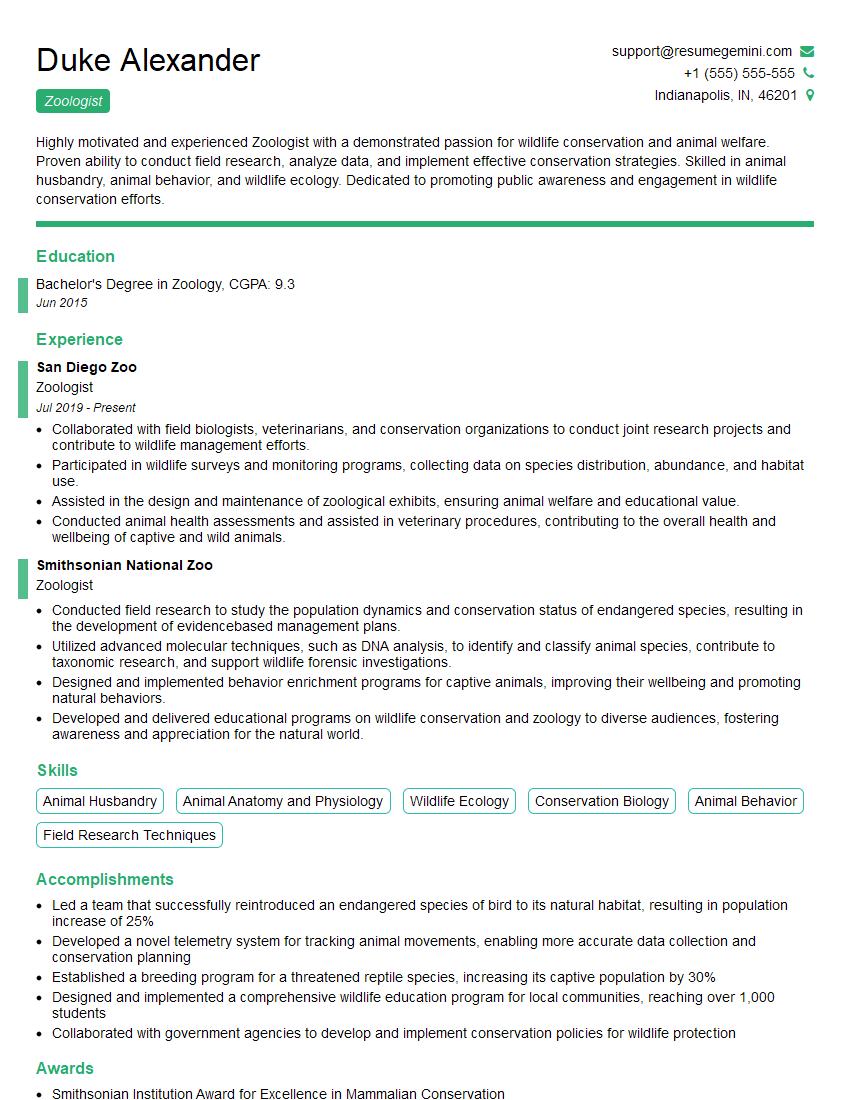
Zoologist Resume Sample
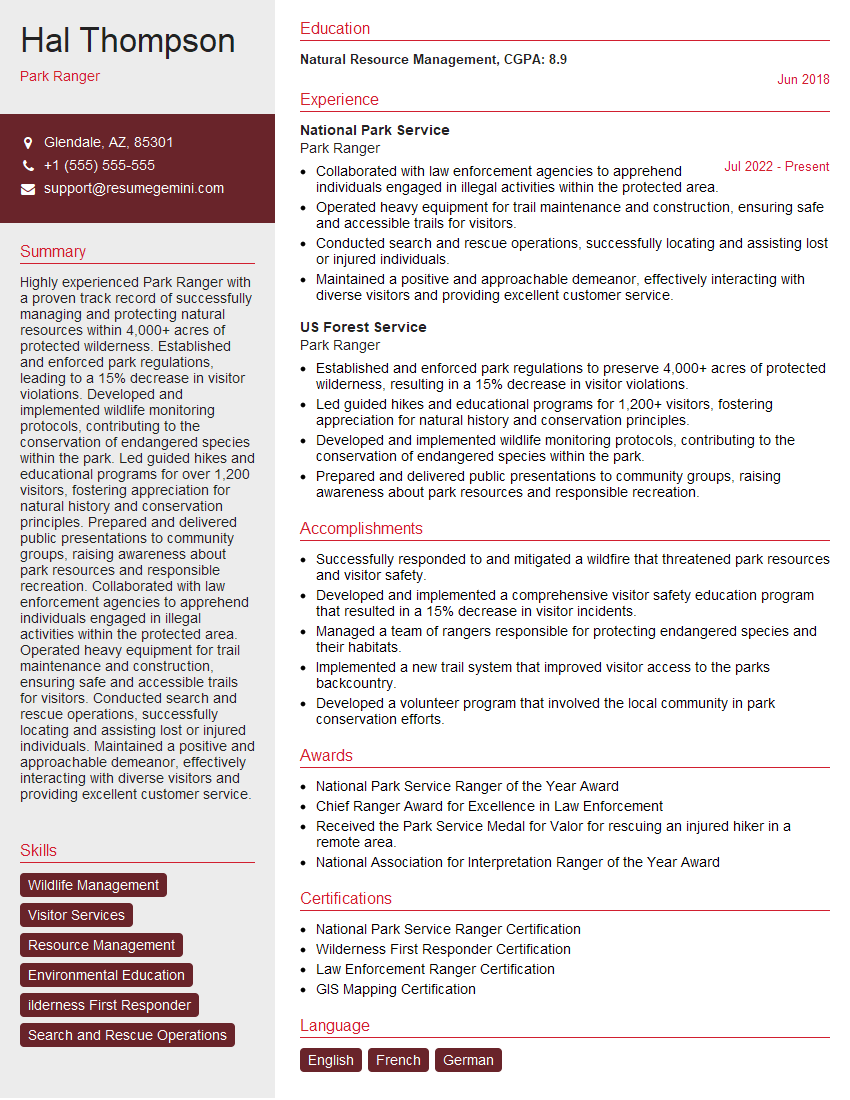
Park Ranger Resume Sample
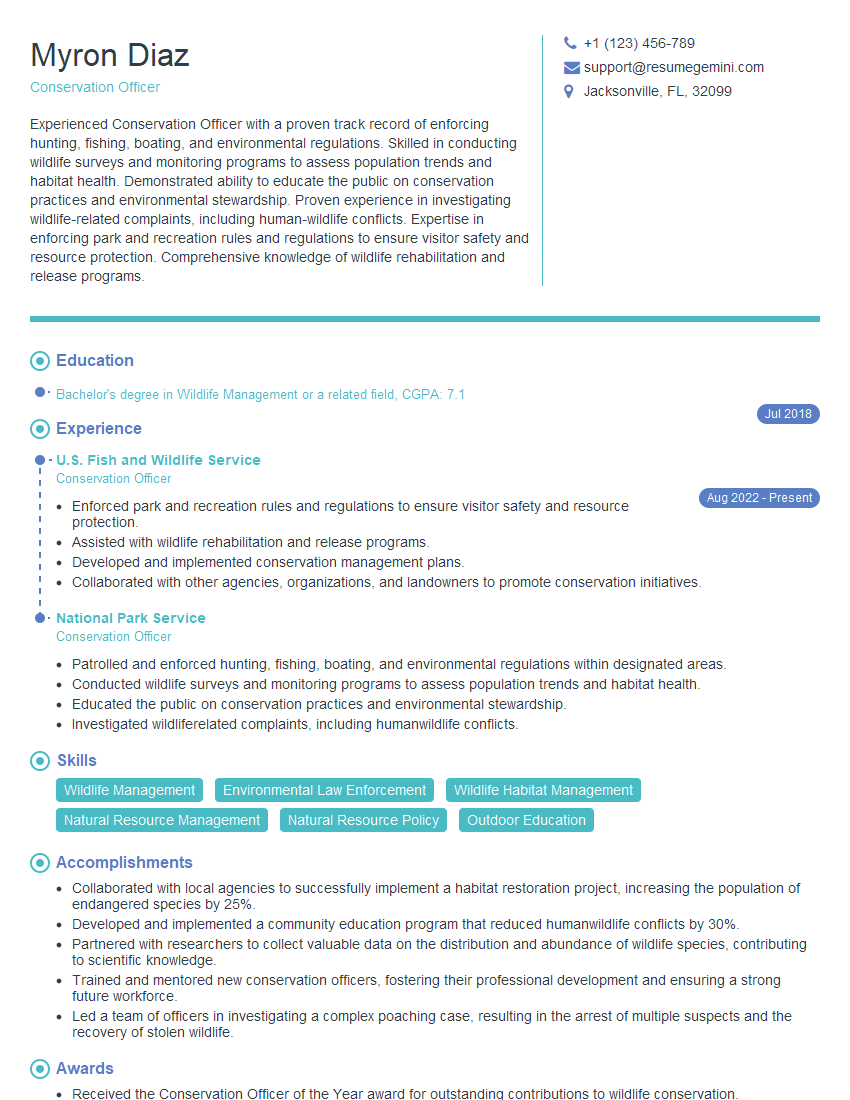
Conservation Officer Resume Sample
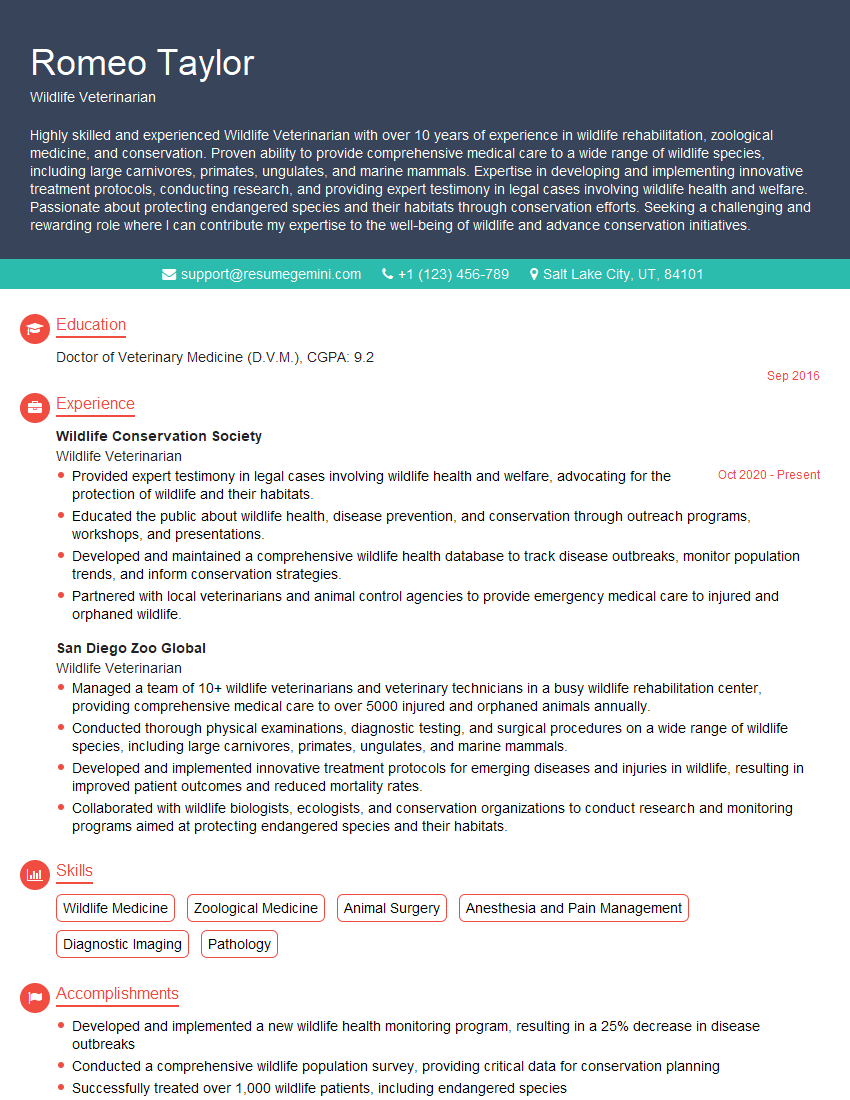
Wildlife Veterinarian Resume Sample

Game Warden Resume Sample
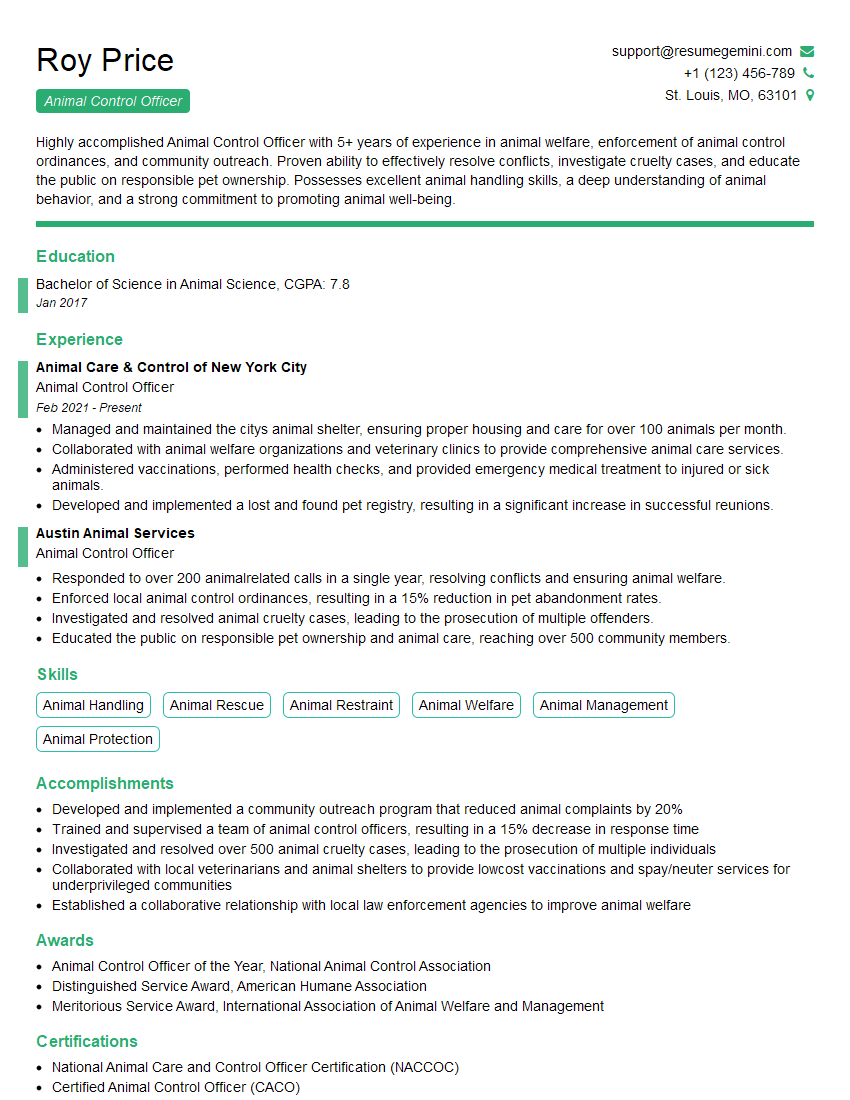
Animal Control Officer Resume Sample

Wildlife Rehabilitator Resume Sample
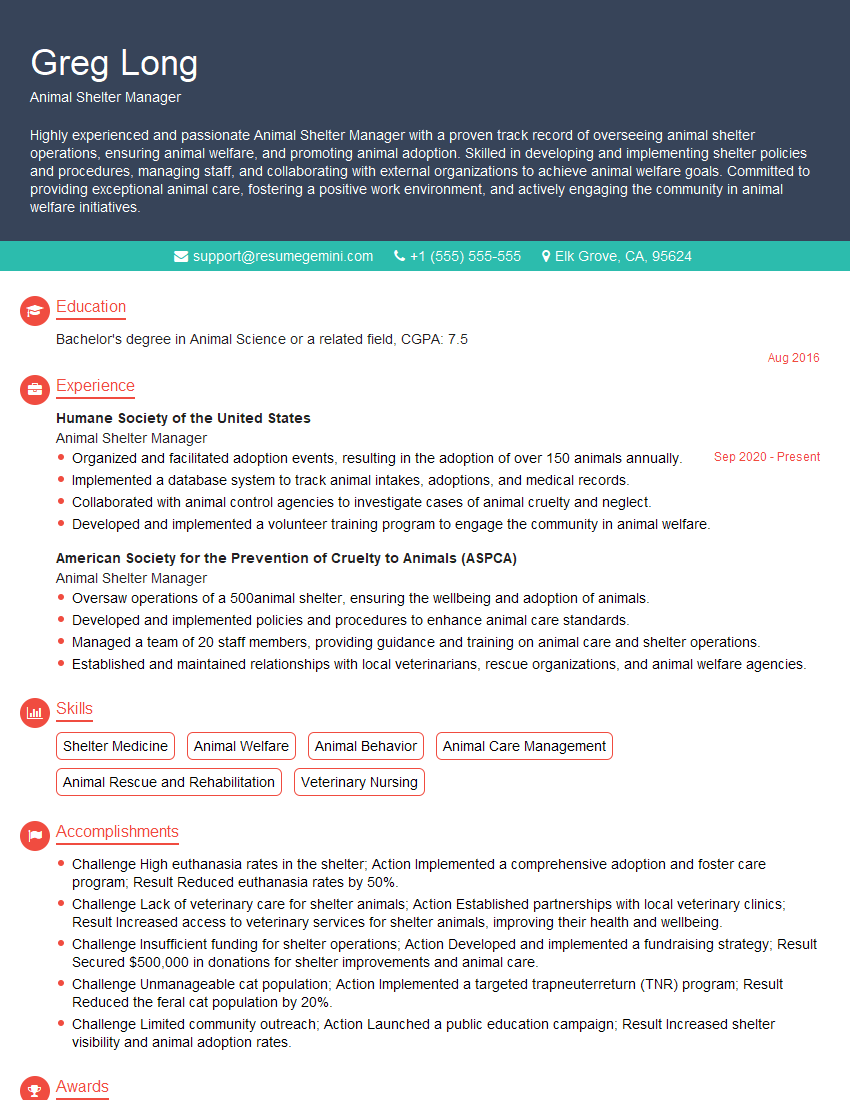
Animal Shelter Manager Resume Sample
Explore more articles
Users Rating of Our Blogs
Share Your Experience
We value your feedback! Please rate our content and share your thoughts (optional).
What Readers Say About Our Blog
Very informative content, great job.
good