The thought of an interview can be nerve-wracking, but the right preparation can make all the difference. Explore this comprehensive guide to Animal Rights interview questions and gain the confidence you need to showcase your abilities and secure the role.
Questions Asked in Animal Rights Interview
Q 1. Explain the difference between animal rights and animal welfare.
Animal rights and animal welfare are often confused, but they represent distinct philosophical positions. Animal welfare focuses on the humane treatment of animals, minimizing suffering and ensuring their basic needs are met. Think of it as improving the quality of life for animals within the existing system. This approach acknowledges that humans have the right to use animals, but emphasizes responsible and compassionate treatment. Examples include providing adequate food, water, shelter, and veterinary care for farm animals or companion pets.
Animal rights, on the other hand, argues that animals possess inherent rights, similar to human rights. This philosophy asserts that animals have a right to live free from human exploitation and control, regardless of whether humans benefit from their use. Advocates for animal rights believe that animals should not be used for food, clothing, entertainment, or scientific research. They advocate for complete abolition of practices that cause harm or suffering, such as factory farming and animal testing.
Q 2. Describe your understanding of sentience in animals and its relevance to ethical treatment.
Sentience refers to the capacity to experience feelings and sensations, both positive and negative. It’s the ability to feel pain, pleasure, fear, joy, and other subjective experiences. While definitively proving sentience in animals is challenging, a vast body of scientific evidence strongly suggests that many animals, including mammals, birds, and even some invertebrates, possess this capacity. This sentience is crucial to ethical treatment because it implies that animals are not simply automatons but beings capable of suffering. Ignoring their sentience justifies treating them as mere objects, which is ethically problematic.
For example, the way we raise and slaughter animals for food directly impacts their sentience. Confining animals in cramped, unsanitary conditions and subjecting them to painful procedures is a clear violation of their capacity for feeling. Ethical treatment requires acknowledging and respecting their sentience by minimizing or eliminating such harm.
Q 3. What are the key arguments for and against factory farming?
Factory farming, characterized by mass production of animals for food, is a highly controversial practice. Arguments for factory farming often center on efficiency and affordability. Proponents argue it provides a cost-effective way to produce large quantities of meat, eggs, and dairy, making these products accessible to a wider population. They also highlight technological advancements in animal husbandry that aim to improve animal welfare within factory farm settings, though these claims are often debated.
Arguments against factory farming are overwhelmingly focused on ethical concerns and environmental impacts. The conditions in many factory farms are often criticized as cruel and inhumane, leading to significant animal suffering due to overcrowding, lack of environmental enrichment, and painful procedures. Beyond ethical issues, factory farming contributes significantly to greenhouse gas emissions, deforestation, and water pollution. The environmental consequences are far-reaching and pose a threat to global sustainability. The widespread use of antibiotics in factory farming also contributes to the growing problem of antibiotic resistance.
Q 4. Discuss the ethical implications of animal testing in research.
The ethical implications of animal testing are complex and highly debated. Proponents argue that animal testing has been crucial for advancing medical knowledge and developing life-saving treatments. They emphasize the potential benefits to human health, citing instances where animal models have been essential in testing the safety and efficacy of new drugs and medical procedures. However, this argument frequently clashes with the ethical concerns raised by animal rights advocates.
Opponents of animal testing highlight the inherent suffering inflicted on animals during these procedures. They argue that the use of animals is morally wrong due to their capacity for pain and suffering, and that there are increasingly reliable and humane alternatives such as in vitro testing, computer modeling, and human-based research methods. Furthermore, the question of whether results from animal studies reliably translate to human outcomes is often debated, challenging the very rationale of animal testing. The ethical dilemma lies in balancing the potential for human benefit against the undeniable suffering experienced by the animals involved.
Q 5. How would you address concerns about the impact of pet ownership on animal welfare?
Addressing concerns about the impact of pet ownership on animal welfare requires a multi-pronged approach. Responsible pet ownership is paramount. This involves careful consideration of the commitment required to provide proper care, including adequate food, veterinary care, exercise, and mental stimulation. Potential pet owners should be educated about the specific needs of different animals to ensure they are capable of providing a suitable home.
Addressing overpopulation is crucial. Promoting spaying and neutering of pets can significantly reduce the number of animals entering shelters. Supporting reputable animal shelters and rescue organizations provides safe havens for animals in need, and improving animal welfare standards within these facilities is vital. Finally, stricter regulations and enforcement on breeders, pet shops, and puppy mills could help curb irresponsible breeding practices that contribute to animal suffering.
Q 6. What are some effective strategies for advocating for animal rights within your community?
Effective advocacy for animal rights within a community involves various strategies. Education is key. Raising awareness through workshops, presentations, and community events can inform people about animal welfare issues and inspire action. Collaboration is essential – partnering with other animal welfare organizations, local businesses, and community leaders can amplify your reach and impact. Direct action can include participating in peaceful protests, writing letters to elected officials, and supporting legislation that protects animal rights.
Volunteer work at local animal shelters and rescue organizations provides hands-on experience and a chance to make a tangible difference. Consumer choices matter – supporting businesses committed to ethical and sustainable practices, and avoiding products derived from animal cruelty sends a powerful message. Finally, utilizing social media and online platforms allows for effective communication and mobilization of support.
Q 7. Explain your approach to resolving conflicts between human interests and animal welfare.
Resolving conflicts between human interests and animal welfare requires a nuanced approach that emphasizes finding sustainable solutions. The goal is not simply to prioritize one over the other, but to seek common ground that minimizes harm to animals while acknowledging legitimate human needs. This often involves a collaborative process that includes stakeholders from both sides. Open dialogue, respectful communication, and a willingness to compromise are essential.
For example, in the context of food production, promoting sustainable farming practices that prioritize animal welfare alongside environmentally friendly methods can strike a balance. In research, investing in and supporting the development and validation of alternative methods to animal testing is crucial. Ultimately, achieving a harmonious coexistence requires a shift towards a more compassionate and sustainable approach that prioritizes the well-being of both humans and animals.
Q 8. Describe your knowledge of relevant animal protection legislation.
My understanding of animal protection legislation encompasses a wide range of national and international laws designed to prevent cruelty and promote welfare. This includes laws prohibiting animal fighting, regulating animal experimentation, controlling wildlife trade, and ensuring humane slaughter practices. Specific examples vary greatly by jurisdiction. For instance, the Animal Welfare Act in the United States sets standards for animal care in research, exhibition, and transportation, while the European Union has comprehensive directives on animal welfare covering various sectors. Understanding these laws requires familiarity with specific regulations, enforcement mechanisms, and ongoing legal challenges related to interpretation and enforcement. For example, debates surrounding factory farming practices often center on the adequacy of existing legislation to protect animals from suffering. I stay current on these evolving legal landscapes through continuous professional development and engagement with relevant organizations and legal updates.
Q 9. What are the ethical considerations of wildlife conservation efforts?
Ethical considerations in wildlife conservation are complex and often involve balancing competing interests. A primary concern is the potential for unintended negative consequences. For example, relocating animals to protect them from habitat loss might disrupt the ecological balance in the new location. Another key ethical consideration is the use of lethal methods for population control. While sometimes deemed necessary to prevent overgrazing or disease outbreaks, culling raises serious ethical questions about the inherent value of each individual animal. We must also consider the potential for bias in conservation efforts, favoring charismatic megafauna over less appealing species with equally important ecological roles. Ensuring that local communities are involved in and benefit from conservation initiatives is crucial for ethical implementation. Ultimately, the most ethical approaches to wildlife conservation prioritize the long-term well-being of entire ecosystems while respecting the intrinsic value of all living beings.
Q 10. How would you assess the welfare of animals in a shelter or sanctuary?
Assessing animal welfare in a shelter or sanctuary requires a multi-faceted approach. I would utilize a combination of observational assessments and documented records. Observational assessments involve visually inspecting the animals for signs of physical health and behavioral indicators of stress or distress such as lethargy, self-mutilation, or aggression. Documentation review would include examining veterinary records, feeding schedules, enrichment activities, and any documented behavioral issues. A robust assessment also involves considering the environmental factors such as cage size, cleanliness, social interaction opportunities, and environmental enrichment. For example, a cat might exhibit stress behaviors if kept in a small, barren cage with no opportunity for climbing or hiding. I’d also consult with the staff to gauge their experience and understanding of animal welfare needs. A comprehensive and ethical assessment goes beyond simply meeting minimum standards; it strives to optimize the well-being of each animal, accounting for individual species-specific needs.
Q 11. Describe your experience with animal rescue or rehabilitation.
My experience in animal rescue and rehabilitation spans several years and includes hands-on involvement with a variety of species. I’ve participated in wildlife rescue operations, assisting in the capture, transport, and initial care of injured or orphaned animals. This involved working closely with veterinarians and other specialists to provide necessary medical attention and rehabilitation. I’ve also worked in a sanctuary setting, focusing on providing long-term care for animals unable to be released back into the wild. This entailed developing and implementing enrichment programs to stimulate their natural behaviors and maintain their physical and mental health. Furthermore, I have experience in community outreach and education, working with local residents to prevent animal injuries and promote responsible pet ownership. These experiences have taught me the importance of collaborative teamwork, specialized knowledge, and a deep commitment to the animals under our care. I have learned to adapt my approach based on the specific needs of each animal and situation.
Q 12. How would you handle a situation where a colleague disagrees with your animal rights views?
Handling disagreements with colleagues regarding animal rights requires a respectful and professional approach. I believe that open and honest communication is essential. I would first seek to understand their perspective, actively listening to their concerns and arguments. This might involve sharing evidence-based information, research findings, or relevant legislation to highlight the ethical and welfare implications of the issue at hand. I would emphasize the importance of finding common ground and collaborative solutions. If the disagreement persists despite respectful dialogue, I would seek mediation from a supervisor or neutral third party to facilitate a productive conversation. The goal is not to win an argument but to find a compromise that protects animal welfare as much as possible within the constraints of our work environment. Ultimately, professional courtesy and maintaining a constructive work atmosphere are paramount.
Q 13. What are some effective methods for educating the public about animal welfare?
Effective public education on animal welfare requires a multi-pronged strategy. Educational campaigns utilizing various media, including social media, television, and print materials, can reach a wide audience. Engaging storytelling, highlighting the intelligence and emotional capacity of animals, can be particularly effective in fostering empathy. Hands-on experiences, such as visits to shelters or sanctuaries, offer a powerful way to connect people with animals directly. Collaborating with schools and community organizations can integrate animal welfare education into existing programs. Workshops, seminars, and public lectures by experts can provide in-depth information to interested individuals. Finally, promoting responsible pet ownership through educational materials and community initiatives is critical to preventing animal suffering. A successful strategy relies on tailored messaging to diverse audiences, utilizing effective communication methods, and measuring the impact of educational efforts.
Q 14. Explain the role of animal rights organizations in influencing policy.
Animal rights organizations play a crucial role in influencing policy by acting as advocates for animals at local, national, and international levels. They conduct research, lobby lawmakers, and mobilize public support for legislation that protects animal welfare. For example, organizations might provide expert testimony at legislative hearings, draft model legislation, and run public awareness campaigns to pressure lawmakers to adopt more stringent animal protection laws. They also engage in litigation, challenging policies or practices that violate animal welfare standards. Further, these organizations work to monitor the enforcement of existing laws and hold relevant agencies accountable. Their influence extends to shaping public opinion, raising awareness of animal welfare issues, and encouraging individual actions to protect animals. The effectiveness of these organizations depends on their credibility, their ability to build coalitions, and their strategic use of resources to achieve their policy goals.
Q 15. What are the challenges in enforcing animal welfare laws?
Enforcing animal welfare laws presents numerous challenges, primarily stemming from under-resourcing, difficulties in monitoring compliance, and loopholes in legislation itself.
- Under-resourcing: Many animal welfare agencies are chronically underfunded and understaffed, making comprehensive inspections and investigations difficult. This often leads to a lack of proactive enforcement, relying instead on reactive measures following reports of abuse.
- Monitoring Compliance: It’s incredibly challenging to monitor the vast number of facilities and individuals involved in animal care, from factory farms to pet stores to individual animal owners. Surveillance is expensive and labor-intensive, leaving many operations unchecked.
- Loop Holes in Legislation: Existing laws often contain loopholes that allow for practices that many consider inhumane to continue legally. For example, some laws may lack specific definitions of animal cruelty, or may allow for certain practices under specific conditions that still cause significant animal suffering.
- Political Influence: The agricultural industry, for example, often lobbies against stricter regulations, making it difficult for lawmakers to pass stronger animal welfare laws.
Addressing these challenges requires increased funding for animal welfare agencies, technological advancements in monitoring systems, stronger and more clearly defined legislation, and a greater public awareness of animal welfare issues to increase pressure on lawmakers.
Career Expert Tips:
- Ace those interviews! Prepare effectively by reviewing the Top 50 Most Common Interview Questions on ResumeGemini.
- Navigate your job search with confidence! Explore a wide range of Career Tips on ResumeGemini. Learn about common challenges and recommendations to overcome them.
- Craft the perfect resume! Master the Art of Resume Writing with ResumeGemini’s guide. Showcase your unique qualifications and achievements effectively.
- Don’t miss out on holiday savings! Build your dream resume with ResumeGemini’s ATS optimized templates.
Q 16. Discuss the importance of data collection and analysis in animal welfare research.
Data collection and analysis are crucial for evidence-based animal welfare research. Without robust data, our understanding of animal needs, suffering, and effective interventions remains limited.
- Quantifying Suffering: Data allows us to measure the extent of animal suffering in various contexts. For instance, we can track disease prevalence, mortality rates, and indicators of stress (such as cortisol levels) in different farming systems, enabling informed comparisons and improvements.
- Identifying Risk Factors: By collecting data on various factors (e.g., housing conditions, transportation methods, handling practices), researchers can identify specific risk factors for animal welfare problems. This helps pinpoint areas needing immediate attention.
- Evaluating Interventions: Data are critical for evaluating the effectiveness of welfare interventions. For example, researchers can use data to compare the outcomes of different enrichment strategies in zoo animals or assess the impact of alternative farming practices on livestock well-being.
- Advocacy and Policy: Compelling data are powerful tools for influencing policy and raising public awareness. Well-designed studies demonstrating the negative impacts of certain practices can provide strong arguments for regulatory changes.
Examples of relevant data include physiological measures (heart rate, cortisol levels), behavioral observations (e.g., frequency of agonistic interactions), mortality rates, disease prevalence, and farmer/worker surveys regarding animal handling practices.
Q 17. How can technology be used to improve animal welfare?
Technology offers significant potential for improving animal welfare across various sectors.
- Precision Livestock Farming: Sensors and data analytics can monitor individual animal health and behavior, allowing for early detection of illness and distress. This allows for timely intervention, reducing suffering and improving overall productivity.
- Automated Systems: Automation can reduce the need for stressful handling procedures. For instance, automated milking systems minimize physical interaction between farmers and cows.
- Remote Monitoring: Remote cameras and sensors can provide continuous monitoring of animals in remote locations, such as wildlife sanctuaries or remote farms. This allows for quicker responses to emergencies and better assessment of animals’ living conditions.
- Artificial Intelligence (AI): AI can be used to analyze large datasets to identify subtle indicators of animal distress that may be missed by human observation. This can lead to proactive intervention and improved welfare management.
- Virtual Reality (VR): VR can be used to train animal handlers in humane practices and to assess the responses of animals to different environmental stimuli.
However, it is crucial to ensure that the implementation of technology is ethically sound and does not replace the need for appropriate husbandry practices and skilled personnel. We must also address potential biases in data collection and analysis.
Q 18. Describe your understanding of the concept of speciesism.
Speciesism is a prejudice or bias that privileges the interests of one species over others, typically favoring humans. It’s analogous to racism or sexism, where membership in a particular group (species in this case) is used to justify discriminatory treatment.
Speciesism manifests in many ways, from the widespread consumption of animal products to the use of animals in scientific research without sufficient consideration of their suffering. It is based on the assumption of human superiority and the arbitrary valuing of human lives over those of other sentient beings. A key aspect of speciesism is the denial of moral consideration to non-human animals based solely on their species membership, regardless of their capacity to experience pain, pleasure, and other forms of sentience.
Critically, this isn’t about claiming that all species are equal in all respects, but rather about recognizing that the capacity to suffer is a morally relevant factor that should be considered across species. We should not inflict unnecessary suffering on any sentient being simply because they belong to a different species.
Q 19. How would you respond to criticism of animal rights activism?
Criticisms of animal rights activism are often varied, ranging from accusations of extremism to concerns about economic impact.
- Addressing Extremism Concerns: It’s crucial to acknowledge that some actions taken by individuals or groups in the name of animal rights may be perceived as extreme or disruptive. It’s important to differentiate between the actions of a few individuals and the broader goals of the animal rights movement. A responsible approach emphasizes ethical and non-violent methods.
- Economic Concerns: The animal agriculture industry often argues that stricter animal welfare regulations will negatively impact their profitability and food security. However, the long-term economic and environmental costs of unsustainable farming practices need to be weighed against short-term economic gains. We need to find innovative solutions that balance animal welfare with economic viability, such as investing in alternative protein sources and sustainable farming techniques.
- Personal Freedom Concerns: Some argue that animal rights activism infringes on individual freedoms, such as the right to eat meat or use animals for personal enjoyment. However, individual freedoms should not come at the expense of the welfare of sentient beings capable of experiencing suffering. A balanced approach considers the rights of all involved, including animals.
Ultimately, a productive response to criticism requires open dialogue, a willingness to address valid concerns, and a commitment to using effective and ethical strategies to achieve meaningful change.
Q 20. Explain your approach to working with diverse stakeholders on animal welfare issues.
Working effectively on animal welfare issues necessitates collaboration with a diverse range of stakeholders, including farmers, researchers, policymakers, industry representatives, and the public. My approach emphasizes building consensus and finding common ground.
- Open Communication: I prioritize open and respectful dialogue, actively listening to different perspectives and acknowledging the legitimate concerns of all parties involved.
- Collaboration and Partnership: I focus on building collaborative partnerships, creating opportunities for stakeholders to work together towards shared goals. This includes supporting initiatives that foster collaboration between farmers, scientists and animal welfare organizations.
- Education and Awareness: I believe that educating stakeholders about the scientific evidence regarding animal welfare is crucial. By sharing data-driven insights and promoting a better understanding of animals’ needs, we can work towards more humane practices.
- Finding Common Ground: I strive to find common ground by identifying shared values and objectives. Often, stakeholders have overlapping concerns, such as the economic viability of farming or the desire for ethical and sustainable practices.
- Evidence-Based Advocacy: I advocate for policies and practices supported by robust scientific evidence. This ensures a data-driven approach and facilitates constructive dialogue with all stakeholders.
By fostering trust and understanding, we can create a more inclusive and effective approach to advancing animal welfare.
Q 21. What are the potential consequences of ignoring animal welfare concerns?
Ignoring animal welfare concerns has far-reaching consequences that affect animals, humans, and the environment.
- Animal Suffering: The most immediate consequence is the unnecessary suffering inflicted on animals. This includes physical pain, psychological distress, and premature death.
- Public Health Risks: Neglecting animal welfare can lead to increased risks of zoonotic diseases—diseases that spread from animals to humans. Unsanitary conditions in factory farms, for instance, can create environments conducive to the spread of pathogens.
- Environmental Damage: Intensive animal agriculture is a significant contributor to environmental problems such as greenhouse gas emissions, deforestation, and water pollution. Poor animal welfare practices exacerbate these issues.
- Economic Impacts: While some argue that poor animal welfare is cost-effective, there are significant long-term economic costs associated with animal disease outbreaks, environmental damage, and diminished public trust in the food system.
- Ethical Concerns: Ignoring animal welfare raises significant ethical questions about our responsibility to other living beings and the moral implications of our actions. It undermines our commitment to compassion and justice.
Addressing animal welfare concerns is not merely a matter of compassion, but also a matter of public health, environmental protection, and ethical responsibility.
Q 22. How do you prioritize different animal welfare issues?
Prioritizing animal welfare issues requires a multifaceted approach, considering both the severity of suffering and the potential for effective intervention. I use a framework that balances urgency with impact. For instance, I’d prioritize issues with the highest immediate suffering and potential for swift, impactful change, like ending factory farming practices that cause immense animal cruelty, over issues with broader, longer-term goals, like shifting public perception, although long-term goals are vital. This prioritization is also influenced by available resources and the potential for collaboration. For example, focusing on a specific, achievable legislative change might be more effective than a broad awareness campaign with limited funding.
- Severity of Suffering: Issues like factory farming, animal experimentation without proper analgesia, and dog fighting operations are prioritized due to the immense and immediate suffering involved.
- Potential for Impact: Campaigns targeting specific legislation or corporate practices often have a higher chance of success and thus are prioritized, for example, pushing for better transportation regulations for livestock.
- Resource Availability: Effective campaigns need sufficient resources, so prioritization also considers funding, staffing, and public support.
- Collaboration Opportunities: Synergistic partnerships with other organizations amplify impact, making joint campaigns on shared priorities a key element.
Q 23. What are the ethical implications of using animals in entertainment?
The ethical implications of using animals in entertainment are deeply problematic. The inherent conflict lies in the exploitation of sentient beings for human amusement or profit. Animals, whether wild or domesticated, are often forced into unnatural behaviors, confined in unsuitable environments, and subjected to stress, injury, and even death. Examples range from the captivity of orcas in marine parks, to the use of animals in circuses, rodeos, and zoos which aren’t focused on conservation.
Ethically, it’s unacceptable to prioritize human entertainment over an animal’s well-being. The inherent power imbalance and the lack of consent from the animal are central to this ethical dilemma. Many argue that the inherent value and rights of animals should not be subordinate to human desire for entertainment.
Furthermore, the ‘training’ methods frequently used to control animals in entertainment often involve cruel and inhumane practices. The long-term psychological and physical harm inflicted upon animals, even if seemingly ‘hidden’, presents a compelling case against this industry.
Q 24. Discuss the role of consumer choices in impacting animal welfare.
Consumer choices are incredibly powerful tools in influencing animal welfare. Our purchasing decisions directly impact the demand for animal products and services, thereby shaping the market and incentivizing or discouraging certain practices. For example, a decrease in demand for factory-farmed meat will push producers toward more humane and sustainable practices, whereas continued high demand perpetuates cruel conditions.
- Food Choices: Choosing plant-based alternatives or supporting farms committed to ethical animal husbandry directly reduces demand for factory-farmed meat, poultry, and dairy.
- Clothing Choices: Avoiding leather, fur, and wool reduces the suffering of animals raised specifically for their skin and fleece.
- Entertainment Choices: Boycotting circuses, marine parks, and other forms of animal entertainment diminishes their profitability and encourages alternatives.
- Cosmetics and Research: Choosing cruelty-free cosmetics and supporting companies committed to alternative testing methods helps reduce animal testing in these industries.
Informed consumer choices, combined with advocating for stronger regulations and transparent labeling, create a significant shift towards improved animal welfare.
Q 25. How would you measure the success of an animal welfare campaign?
Measuring the success of an animal welfare campaign requires a multi-pronged approach, encompassing quantitative and qualitative data. It’s not simply about the number of signatures on a petition but a holistic evaluation of the impact on animals and the broader movement.
- Legislative Changes: Successful campaigns often result in new laws or policy changes protecting animals. This could be tracked through legislative records and official reports.
- Corporate Policy Shifts: Changes in corporate policies related to animal welfare, like improved animal handling practices in supply chains or commitments to cruelty-free products, are strong indicators of success. This would involve reviewing company documents and press releases.
- Public Awareness: Increased public awareness and changing attitudes towards animal welfare can be measured through surveys, social media engagement, and media coverage.
- Direct Animal Impact: Where possible, measuring the direct impact on animals is crucial. This might involve monitoring improvements in living conditions on farms or a reduction in the number of animals used in research.
- Collaboration and Networking: Successful campaigns usually lead to greater collaboration among various animal welfare organizations, further expanding the impact.
Q 26. Describe your experience in fundraising or grant writing for animal welfare causes.
My experience in fundraising and grant writing for animal welfare causes spans over [Number] years, during which I’ve successfully secured [Amount] in funding. My approach combines strategic planning, compelling storytelling, and a deep understanding of potential funders. For example, when applying for grants from a foundation focused on wildlife conservation, I tailored my proposal to highlight the immediate threats faced by a specific endangered species and detailed how our program would directly address those threats while aligning with their mission.
I’ve developed successful grant proposals for various animal welfare organizations, focusing on: clearly defining project goals and measurable outcomes; outlining a detailed budget that justifies each expense; showcasing the expertise of the team involved; and providing evidence of past successes to demonstrate impact. I also utilize various strategies like cultivating relationships with potential funders, crafting compelling narratives highlighting the urgency and impact of the project, and submitting high-quality proposals that meet their specific requirements.
Q 27. How do you stay up-to-date on current issues and advancements in animal welfare?
Staying current in the dynamic field of animal welfare requires a proactive and multi-faceted approach.
- Academic Journals and Publications: I regularly read peer-reviewed journals focusing on animal behavior, welfare science, veterinary medicine, and conservation biology.
- Industry Conferences and Workshops: Attending conferences and workshops allows me to network with experts and learn about cutting-edge research and best practices.
- Professional Organizations: Membership in relevant professional organizations, such as the American Society for the Prevention of Cruelty to Animals (ASPCA), provides access to resources, publications, and networking opportunities.
- Online Resources and Databases: I utilize online databases like PubMed and Google Scholar to access the latest research and publications.
- News and Media Monitoring: Staying informed through reputable news sources and animal welfare-focused media outlets is crucial for understanding emerging issues and trends.
Q 28. What are your long-term career goals related to animal rights?
My long-term career goals center around maximizing my impact on animal welfare through leadership and advocacy. I aspire to hold a leadership position within a prominent animal welfare organization or research institution, where I can leverage my expertise to develop and implement impactful strategies for animal protection. This includes leading policy advocacy efforts, spearheading innovative research projects, and mentoring future generations of animal welfare professionals.
Specifically, I aim to contribute to the development and implementation of evidence-based policies that promote animal welfare globally. A key element of this involves promoting interdisciplinary collaboration to address the complex challenges facing animals today, integrating perspectives from animal behavior, veterinary science, conservation biology, and law.
Key Topics to Learn for Your Animal Rights Interview
- Animal Welfare vs. Animal Rights: Understand the core distinctions and be prepared to discuss the nuances of each philosophy. Consider the ethical implications of each approach.
- Ethical Theories & Animal Rights: Explore relevant philosophical frameworks like utilitarianism, deontology, and virtue ethics, and how they apply to animal rights discussions. Be ready to articulate your own ethical stance and its justification.
- Animal Cognition & Sentience: Discuss the scientific evidence demonstrating animal intelligence, emotional capacity, and consciousness. Prepare examples illustrating the cognitive abilities of different species.
- Legislation & Policy: Familiarize yourself with current animal welfare laws and regulations at local, national, and international levels. Be prepared to discuss potential areas for reform and improvement.
- Animal Exploitation & its Impacts: Analyze the ethical and environmental consequences of factory farming, animal testing, and the fur trade. Understand the arguments for and against these practices.
- Advocacy & Activism Strategies: Research various advocacy approaches, from lobbying and public awareness campaigns to direct action and legal challenges. Consider the effectiveness and ethical implications of different strategies.
- Sustainable Practices & Alternatives: Explore and discuss alternatives to animal agriculture, such as plant-based protein sources and lab-grown meat. Understand the potential benefits and challenges of these alternatives.
- Case Studies & Current Events: Stay updated on recent developments in animal rights, including significant legal cases, policy changes, and ongoing campaigns. Be prepared to discuss these in the context of broader ethical considerations.
Next Steps
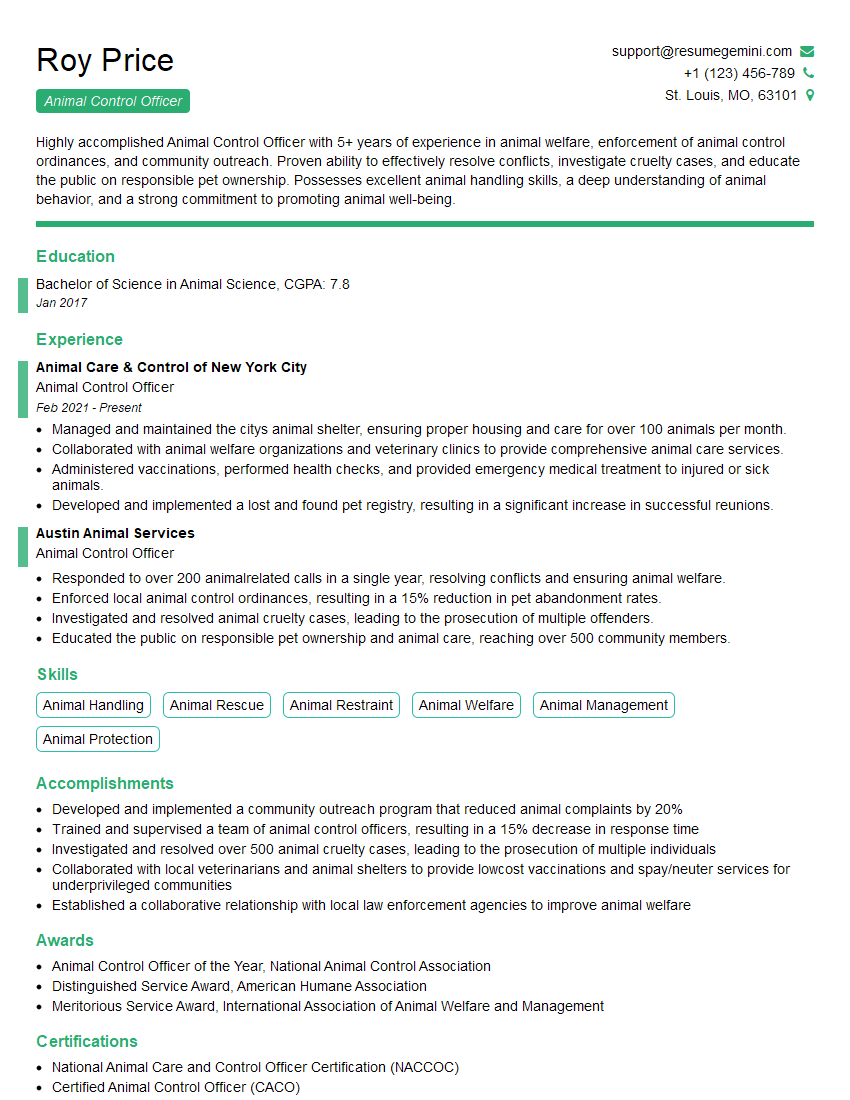
Mastering the complexities of animal rights is crucial for career advancement in this field. A strong understanding of the ethical, legal, and practical aspects will significantly improve your interview performance and overall career prospects. To maximize your chances, creating a compelling and ATS-friendly resume is essential. We strongly recommend using ResumeGemini to build a professional resume that highlights your skills and experience effectively. ResumeGemini provides examples of resumes tailored specifically to the Animal Rights sector, ensuring your application stands out.


Explore more articles
Users Rating of Our Blogs
Share Your Experience
We value your feedback! Please rate our content and share your thoughts (optional).
What Readers Say About Our Blog
Very informative content, great job.
good