Preparation is the key to success in any interview. In this post, we’ll explore crucial ANSI/ASME A17.1 Safety Code for Elevators and Escalators interview questions and equip you with strategies to craft impactful answers. Whether you’re a beginner or a pro, these tips will elevate your preparation.
Questions Asked in ANSI/ASME A17.1 Safety Code for Elevators and Escalators Interview
Q 1. Explain the difference between a Type A and Type B elevator.
The distinction between Type A and Type B elevators lies primarily in their hoistway construction and the type of machinery used. Think of it like comparing a small, efficient city car (Type A) to a larger, more robust SUV (Type B).
Type A elevators typically use a traction machine, meaning the car is lifted by a rope system wrapped around a sheave. These are commonly found in low-rise buildings where space is at a premium, as they have a smaller hoistway. They often have a simpler, more compact design. They are suitable for relatively lower traffic and lighter loads.
Type B elevators, on the other hand, often utilize a hydraulic system, where a piston pushes the elevator car upwards. These are more common in mid-rise buildings and often handle heavier loads. Their hoistway requires a pit of significant depth to accommodate the hydraulic ram. They also typically have a higher capacity and speed than Type A elevators.
The choice between Type A and Type B depends on several factors, including building height, load capacity requirements, space constraints, and budget.
Q 2. What are the requirements for elevator emergency lighting?
ANSI/ASME A17.1 mandates specific requirements for elevator emergency lighting, ensuring safe evacuation in case of power failure. Imagine a sudden blackout – these lights are critical for passenger safety.
- Duration: Emergency lighting must remain operational for at least 90 minutes after a power outage.
- Illumination Levels: Sufficient illumination is required to allow passengers to safely exit the car and locate the hoistway doors. Specific foot-candle requirements vary depending on the location.
- Location: Lights must be installed in the car, at the hoistway doors, and potentially in the machine room, providing illumination across all critical areas.
- Power Source: Emergency lighting systems typically use battery backup systems to ensure continuous operation during power outages. Regular testing of these batteries is crucial for compliance.
- Testing: Regular testing and maintenance are essential to confirm that the system functions correctly and meets code requirements. This often involves monthly and annual inspections.
Q 3. Describe the safety features of an elevator’s hoisting machine.
The hoisting machine is the heart of an elevator system, responsible for raising and lowering the car. Safety is paramount, and several features ensure reliable operation.
- Over-speed Governor: This device prevents the car from exceeding its safe speed. If the car goes too fast, the governor activates a safety mechanism that brings the elevator to a controlled stop. Think of it as a speed limiter for your elevator.
- Safety Brakes: These are crucial mechanisms that engage automatically to prevent the car from falling if there’s a mechanical failure. They’re like a backup safety net.
- Limit Switches: These switches detect the elevator’s position and prevent it from exceeding its travel limits, stopping the car before it hits the top or bottom of the hoistway. Imagine them as bumpers for the elevator’s travel.
- Mechanical Locking Devices: In the event of a power failure or other malfunction, these devices secure the elevator car to prevent unexpected movement. They provide an additional layer of security.
Regular maintenance and inspections of these safety features are critical to ensure the ongoing safety of the elevator system.
Q 4. What are the requirements for elevator car door interlocks?
Elevator car door interlocks are safety mechanisms that prevent the elevator from moving unless the car doors are completely closed and securely locked. They’re designed to prevent accidental entry or exit while the elevator is in motion – preventing serious accidents. Imagine them as a safety lock on your car doors.
The code requires that these interlocks are both electrically and mechanically interlocked. This means that if any part of the interlocking mechanism malfunctions, the elevator will be prevented from moving. This redundancy ensures that the system remains safe even if a component fails.
Regular inspection and testing of these interlocks are critical to ensuring they function correctly and meet safety standards. Any malfunctions must be addressed promptly.
Q 5. Explain the purpose of elevator buffers.
Elevator buffers are safety devices installed at the bottom of the hoistway to absorb the impact of a falling elevator car in case of a catastrophic failure of the safety system. Think of them as giant shock absorbers. They are a last line of defense designed to minimize the impact force and protect passengers from injury.
Different types of buffers exist, and their selection depends on several factors, including the elevator’s speed and weight. Regular inspection and maintenance are crucial, as their effectiveness diminishes over time. Their design is specifically calculated to absorb impact energy generated by a falling elevator.
Q 6. What are the requirements for elevator pit safety?
Elevator pit safety is crucial because it’s where many of the elevator’s critical components and safety systems are located. Proper lighting, access control, and fall protection measures are essential.
- Lighting: Adequate illumination is needed to allow technicians to safely inspect and maintain the equipment.
- Access Control: Access to the pit should be restricted to authorized personnel to prevent accidents.
- Fall Protection: Guardrails, barriers, or covers are needed to prevent falls into the pit.
- Ventilation: Sufficient ventilation should be provided to prevent the buildup of harmful gases or fumes.
Neglecting pit safety can lead to serious accidents, therefore, compliance with A17.1 code requirements is non-negotiable.
Q 7. How often should elevators undergo routine inspections?
The frequency of elevator inspections depends on several factors, including the type of elevator, its usage, and local regulations. However, ANSI/ASME A17.1 recommends regular inspections to ensure safety and compliance.
Generally, elevators require annual inspections by a qualified elevator inspector, as well as more frequent routine maintenance checks. These inspections should include a thorough examination of all safety devices, mechanical components, and electrical systems. Any deficiencies discovered during the inspection must be addressed promptly to ensure the continued safe operation of the equipment.
Beyond annual inspections, more frequent monitoring and maintenance are often required based on usage. For high-traffic elevators, more frequent, potentially quarterly checks, may be necessary.
Q 8. Describe the process for conducting a safety inspection of an elevator.
A comprehensive elevator safety inspection, guided by ANSI/ASME A17.1, is a systematic process involving a thorough examination of all elevator components and safety features. It’s not just a visual check; it demands a deep understanding of the system’s mechanics and potential failure points.
- Visual Inspection: This involves a detailed visual examination of all readily accessible parts, looking for signs of wear and tear, corrosion, damage, or misalignment. This includes cables, sheaves, counterweights, doors, and safety mechanisms.
- Functional Testing: This step involves testing all elevator functions, including door operation, emergency stops, safety features (like the governor and safety clamps), and the hoisting system. This may require operating the elevator through its entire travel range under various load conditions.
- Documentation and Reporting: All findings, both positive and negative, are meticulously documented. Any safety deficiencies, regardless of severity, must be clearly identified with specific recommendations for corrective actions. The report serves as a crucial record for future maintenance and compliance.
- Specific Component Checks: The inspection should delve into specific components, such as the speed governor (ensuring its proper function and regular testing), the safety circuit (testing its responsiveness), and the emergency communication system (checking its clarity and reliability).
Imagine a scenario where a visual inspection reveals a frayed elevator cable. This seemingly minor detail could lead to a catastrophic failure if left unaddressed. A thorough inspection ensures early identification of such potential hazards.
Q 9. What are the common causes of elevator malfunctions?
Elevator malfunctions stem from a variety of causes, often stemming from a combination of factors. Neglecting routine maintenance is a major contributor.
- Mechanical Wear and Tear: Components like cables, sheaves, and motors experience wear and tear over time. This leads to reduced efficiency and increased risk of failure. Regular lubrication and replacement are crucial.
- Electrical Issues: Problems with wiring, control systems, and electrical components (such as contactors and relays) can cause malfunctions. These can range from intermittent glitches to complete system shutdowns.
- Improper Maintenance or Lack Thereof: Inadequate or infrequent maintenance is a primary cause of elevator malfunctions. This leads to the accumulation of wear and tear, unnoticed defects, and compromised safety features.
- Overloading: Exceeding the elevator’s rated capacity puts excessive strain on the hoisting system and other components. This can lead to premature failure.
- Environmental Factors: Extreme temperatures, humidity, or dust can negatively impact the performance of elevator components, leading to malfunctions.
For example, a sudden power surge can damage the elevator’s control system, causing it to malfunction. Similarly, neglecting to lubricate moving parts can cause friction, wear, and eventual failure.
Q 10. Explain the requirements for elevator handrails on escalators.
ANSI/ASME A17.1 mandates specific requirements for escalator handrails to ensure passenger safety. The handrails must move continuously and smoothly at a speed synchronized with the steps, preventing slippage or catching. They must be securely mounted and constructed of materials that resist wear and tear.
- Speed Synchronization: The handrail speed must be precisely matched to the step speed to avoid any relative motion between the handrail and the moving steps. This eliminates the risk of hands getting caught or injured.
- Continuous Movement: Handrails should move continuously, even when the escalator is not in operation. This is usually achieved through a standby power supply.
- Material and Construction: Handrails must be made of materials that are durable, easy to grip, and resistant to wear. They must be securely fixed to prevent any detachment or instability.
- Emergency Stops: The escalator should have readily accessible emergency stops that can quickly bring both the steps and handrails to a halt in case of emergencies.
A common issue would be a handrail lagging behind the steps, creating a potential pinch point. Regular inspection and maintenance are critical to prevent such hazards.
Q 11. What are the safety requirements for escalator comb plates?
Escalator comb plates are crucial safety features located at the top and bottom of an escalator, designed to prevent items or people from falling into the gap between the steps and the sidewalls. Their design and maintenance are strictly regulated.
- Material and Construction: Comb plates are typically made of durable, impact-resistant material, designed to withstand high levels of traffic and stress. They must be properly aligned and securely attached.
- Gap Control: The comb plates must maintain a proper gap between the steps and the comb plate itself to prevent items from becoming trapped. The gap must be within the prescribed tolerances defined in the code.
- Regular Inspection and Maintenance: Comb plates should be regularly inspected for any damage, wear, or misalignment. Damaged comb plates must be replaced promptly to ensure ongoing safety. Accumulated debris can also hinder their effectiveness and should be regularly cleared.
- Emergency Stops: The design should integrate with the emergency stop mechanism, ensuring the immediate stoppage of the escalator in case of an obstruction.
For instance, a damaged or improperly adjusted comb plate can allow a child’s foot to become trapped, illustrating the importance of meticulous maintenance.
Q 12. Describe the process for emergency shutdown of an elevator.
Emergency shutdown procedures for elevators vary depending on the specific elevator system, but generally involve a combination of methods for immediate and safe halting of elevator movement.
- Emergency Stop Buttons: These buttons are usually located inside the elevator car and on each landing. Pressing the button immediately cuts power to the elevator’s motor, bringing it to a halt.
- Emergency Phone: Most modern elevators have an emergency phone that connects directly to a central monitoring station or emergency services. This allows occupants to alert authorities in case of a breakdown.
- Key Switch: A key switch on the elevator’s control panel can be used by trained personnel to shut down the system in emergencies.
- Automatic Safety Features: Elevators also include automatic safety devices like speed governors and safety clamps that will engage to stop the car in case of an overspeed condition or cable failure.
If you’re ever trapped in an elevator, using the emergency stop and phone are your primary actions. Professional responders will then utilize the key switches and knowledge of the elevator system to rescue you safely.
Q 13. What are the requirements for elevator speed governors?
Elevator speed governors are safety devices designed to prevent overspeed conditions. They are critical components in preventing catastrophic accidents. If the elevator exceeds its rated speed, the governor engages, activating the safety clamps which grip the guide rails, bringing the elevator car to a controlled stop.
- Regular Testing: Speed governors must be regularly tested and inspected to ensure their proper functioning. This often involves a functional test where the elevator is intentionally made to approach overspeed conditions under controlled conditions.
- Maintenance: Regular maintenance includes lubrication and inspection of moving parts, checking for any wear or damage to the governor’s components.
- Calibration: Periodic calibration is necessary to maintain the accuracy of the governor’s speed detection and ensure proper activation at the correct overspeed threshold.
- Compliance with Standards: The design, installation, and maintenance of speed governors must adhere strictly to the requirements specified in ANSI/ASME A17.1.
Imagine a scenario where the speed governor fails. This could result in a high-speed descent, potentially leading to serious injury or death. Regular maintenance and testing of the speed governor are non-negotiable.
Q 14. Explain the importance of elevator maintenance logs.
Elevator maintenance logs are essential records that document all aspects of an elevator’s maintenance history, from routine inspections to major repairs. These logs serve as crucial evidence of compliance with safety regulations and help predict potential problems.
- Tracking Maintenance Activities: Logs meticulously record all maintenance tasks performed, including dates, technicians involved, procedures followed, and any parts replaced. This detailed history makes it easy to trace the evolution of the elevator’s condition.
- Identifying Trends and Patterns: By analyzing the maintenance log, it’s possible to identify recurring problems or trends, enabling proactive maintenance strategies to avoid future malfunctions.
- Ensuring Compliance: Thoroughly maintained logs demonstrate compliance with safety regulations. Inspectors can use the log to verify that the elevator has been adequately serviced and maintained according to the standards outlined in ANSI/ASME A17.1.
- Liability Protection: Accurate and comprehensive maintenance logs can protect building owners and management from liability in case of accidents or malfunctions, providing strong evidence of responsible upkeep.
A well-kept maintenance log is like a detailed health record for an elevator; it shows its history, identifies potential issues, and demonstrates responsible care, essential for safety and liability purposes.
Q 15. What are the regulations regarding elevator access for people with disabilities?
ASME A17.1 mandates accessibility for people with disabilities in elevator design and operation. This includes stipulations regarding cab size to accommodate wheelchairs and other mobility devices, the provision of clear and appropriately sized buttons and controls, and audible and visual signals to indicate floor arrival and direction. For example, elevators in new construction must have a minimum cab size to allow for a wheelchair user to maneuver comfortably, including sufficient space for a companion. Furthermore, controls must be placed within easy reach for people using wheelchairs or other assistive devices, and Braille and raised lettering are required on all call buttons and floor indicators. These regulations aim to ensure that people with disabilities can independently and safely use elevators.
Career Expert Tips:
- Ace those interviews! Prepare effectively by reviewing the Top 50 Most Common Interview Questions on ResumeGemini.
- Navigate your job search with confidence! Explore a wide range of Career Tips on ResumeGemini. Learn about common challenges and recommendations to overcome them.
- Craft the perfect resume! Master the Art of Resume Writing with ResumeGemini’s guide. Showcase your unique qualifications and achievements effectively.
- Don’t miss out on holiday savings! Build your dream resume with ResumeGemini’s ATS optimized templates.
Q 16. How do you interpret and apply the requirements of ASME A17.1?
Interpreting and applying ASME A17.1 requires a thorough understanding of its various sections and a careful consideration of the specific context. It’s not simply about reading the code; it’s about applying engineering judgment. For instance, the code specifies minimum clearances around elevator doors, but the actual implementation may depend on the building’s architecture. We need to carefully analyze the design, consider factors like traffic flow, and ensure compliance without compromising safety or usability. A critical aspect is staying updated with the latest revisions and interpretations issued by ASME, and understanding the differences between mandatory requirements and recommendations. This often involves collaborating with architects, contractors, and inspectors to ensure consistent and accurate application across all phases of design, construction, and maintenance.
Q 17. Describe the safety features of an escalator’s handrail system.
Escalator handrail systems are crucial safety features designed to prevent falls. The handrails are continuously moving at a speed synchronized with the steps, providing passengers with support. Key safety features include emergency stop switches readily accessible to passengers, handrail breakage detection systems that automatically shut down the escalator if a break occurs, and mechanisms that ensure the handrails stay taut and maintain proper speed and tension throughout their length. Regular inspections and maintenance are paramount to identify any potential issues, such as worn components or misalignments, before they lead to malfunctions or accidents. For example, a handrail speed sensor will detect if the handrail is moving too fast or slow relative to the steps, and initiate a safety shutdown. These systems minimize the risk of injury from falls or entanglement.
Q 18. What are the requirements for escalator step safety mechanisms?
Escalator step safety mechanisms are critical for preventing accidents. A primary mechanism is the step comb plate, which is positioned at the top and bottom of the escalator to prevent clothing or objects from becoming trapped between the steps. Emergency stop switches are easily accessible in case of issues. Furthermore, there are safety features to prevent steps from malfunctioning. For instance, if a step becomes dislodged or malfunctions, sensors will immediately halt the escalator operation, minimizing the risk of injury or damage. Regular inspections and maintenance, including checking the condition of the step comb plates, are essential to ensure the continued effectiveness of these mechanisms. These mechanisms work together to form a robust safety system designed to prevent injuries and maintain escalator functionality.
Q 19. What are the common causes of escalator malfunctions?
Common escalator malfunctions often stem from wear and tear, improper maintenance, or overloading. Mechanical issues such as worn gears, broken chains, or damaged steps are frequent causes of malfunctions. Electrical problems, including faulty sensors, power surges, or control system failures, can also lead to disruptions in operation. Overloading, resulting from excessive passenger traffic beyond the escalator’s capacity, can stress mechanical components and cause malfunctions. Regular lubrication, inspections and preventive maintenance can significantly minimize these issues. Ignoring regular maintenance is one of the leading contributors to escalator malfunctions and safety risks. For example, a faulty step sensor can cause the escalator to stop unexpectedly, while a worn chain can create an uneven movement of the steps.
Q 20. How do you address safety concerns regarding entrapment in elevators?
Addressing elevator entrapment concerns involves a multi-faceted approach focusing on prevention and emergency response. The elevator’s design plays a crucial role. Emergency telephones, two-way communication systems, and alarm systems are fundamental safety features. Doors and door mechanisms should be designed and maintained to prevent trapping. Regular inspections and maintenance are crucial to ensure safety devices are functional. Detailed emergency procedures must be in place, including prompt response times by maintenance personnel and the ability to swiftly rescue trapped occupants. Regular drills and training for maintenance personnel ensure they are prepared for any emergency scenarios. These measures minimize the risk and ensure swift and safe rescue of anyone who might be trapped.
Q 21. What are the requirements for elevator signage and warnings?
ASME A17.1 specifies requirements for elevator signage and warnings to ensure clear communication and passenger safety. Signage must clearly indicate the elevator’s capacity, operational instructions, emergency procedures, and warnings about potential hazards. Signs must be legible, permanently affixed, and placed at appropriate locations for easy visibility. Braille and tactile characters are required for accessibility for the visually impaired. Warnings about potential hazards, such as potential door closing forces, must be prominently displayed. The language used must be simple and unambiguous, understandable by the general public. The consistent application of these signage guidelines ensures safety and promotes the safe usage of elevators by all.
Q 22. Explain the procedures for elevator rescue and recovery.
Elevator rescue and recovery procedures are crucial for ensuring passenger safety and minimizing downtime. They are dictated by ANSI/ASME A17.1 and often supplemented by local regulations. The first step is always to assess the situation. Is the elevator stuck between floors? Is there a power failure? Are there any passengers trapped? Once the situation is assessed, the appropriate rescue plan is implemented.
- Emergency Phone: Contacting emergency services via the elevator’s emergency phone is paramount. This alerts authorities and dispatchers to the location and situation.
- Manual Operation: If the elevator is equipped with a manual operation feature, and the rescuer is qualified and trained, they might be able to manually move the car to the nearest floor.
- Key Switch Operation: Authorized personnel might utilize a key switch to power down the system and potentially release the doors. This is critical to avoid unintended movement during rescue.
- Mechanical Means: In some scenarios, external means like using a rescue hoist or other specialized equipment may be required. This often involves a specialized rescue team.
- Post-Rescue Procedures: After the rescue, thorough inspection and testing must be performed to ascertain the cause of the entrapment and ensure the elevator’s safe operation. This may include checking the safety mechanisms, electrical systems, and other components.
For example, in one instance, I responded to an elevator entrapment due to a power outage. After confirming the passengers were safe and contacting emergency services, I used the key switch to unlock the doors, allowing for safe egress. A subsequent inspection identified a faulty power supply requiring replacement. This highlights the importance of having multiple, redundant safety measures in place.
Q 23. How do you ensure compliance with local and national elevator codes?
Ensuring compliance with local and national elevator codes requires a multifaceted approach. The foundation is a thorough understanding of ANSI/ASME A17.1 and all relevant local ordinances. This involves regular inspections, meticulous record-keeping, and staying abreast of any changes or updates.
- Regular Inspections: Scheduled inspections, both internal and by qualified third-party inspectors, are essential. These identify potential problems before they escalate into safety hazards.
- Documentation: Maintaining detailed records of inspections, repairs, and maintenance is crucial for demonstrating compliance. This includes keeping logs of all tests and certifications.
- Permitting and Approvals: Obtaining necessary permits and securing approvals from local authorities is a non-negotiable step before any installation, alteration, or repair work can begin.
- Staying Updated: Regularly reviewing the latest versions of ANSI/ASME A17.1 and any relevant local codes is crucial. Subscription to industry publications and attending professional development seminars can help stay informed of changes.
A practical example: During a modernization project, we had to ensure our design complied not only with ASME A17.1 but also the stricter fire-safety regulations of the local building code. This involved additional fireproofing measures, and a specific design for emergency power systems.
Q 24. Describe your experience with elevator modernization projects.
Elevator modernization projects offer significant benefits, including improved safety, energy efficiency, and passenger comfort. My experience in this area spans several projects encompassing various aspects from initial assessment to final commissioning.
- Needs Assessment: The initial phase involves assessing the existing elevator system to understand its strengths and weaknesses, and identifying areas for improvement based on the client’s needs and budget.
- Design and Planning: This includes selecting the appropriate equipment and technologies, creating detailed specifications, and securing necessary permits.
- Implementation: Overseeing the installation, testing, and commissioning of new equipment and systems with meticulous attention to detail, ensuring adherence to all safety standards and codes.
- Testing and Commissioning: Rigorous testing ensures that all components work correctly, meet safety requirements, and satisfy the client’s specifications. This includes load testing, safety device testing, and full system performance evaluation.
In a recent project, we modernized a group of older hydraulic elevators, replacing the outdated hydraulic system with a more efficient and environmentally friendly traction system. This not only increased the elevators’ speed and capacity but also reduced energy consumption significantly, resulting in lower operating costs for the building owner.
Q 25. What are the key differences between ASME A17.1 and other elevator safety standards?
ASME A17.1 is the widely recognized and accepted safety standard for elevators and escalators in North America. While other standards exist internationally (e.g., EN 81 in Europe, AS 1735 in Australia), they differ in their specific requirements and terminology. ASME A17.1 is a comprehensive document covering all aspects of elevator and escalator design, installation, maintenance, and operation.
- Scope: Key differences may lie in the scope of testing, specific safety requirements, and the level of detail provided on certain aspects.
- Terminology: Technical terms and definitions might vary across different standards.
- Testing Procedures: Test methods and acceptance criteria might also differ based on the specific standard.
For example, the required frequency of inspections and the specific tests performed during these inspections may differ between ASME A17.1 and other international standards. Understanding these differences is critical for ensuring safety and compliance when working on international projects or with elevators that have been imported.
Q 26. How do you stay updated on changes and revisions to ASME A17.1?
Staying updated on changes and revisions to ASME A17.1 is critical for maintaining compliance and ensuring passenger safety. I employ several strategies to stay informed:
- ASME Membership: Membership with the American Society of Mechanical Engineers provides access to the latest codes and standards, including updates and revisions to A17.1.
- Industry Publications: Subscribing to industry-specific journals and publications provides timely updates on changes in the field and potential impacts on elevator safety.
- Professional Development: Attending industry conferences, workshops, and seminars allows me to network with other professionals and learn about the latest advancements and changes in the field.
- Online Resources: Utilizing online resources and the ASME website to monitor the publication of updates and revisions is a convenient way to stay informed.
This proactive approach helps me ensure my knowledge remains current and allows me to incorporate the latest safety practices and technologies in my work.
Q 27. Describe a situation where you had to troubleshoot a complex elevator problem.
I once encountered an elevator that was experiencing erratic stopping and starting between floors. Initial diagnostics revealed no immediate issues with the motor or control system. The problem proved more subtle.
Troubleshooting Steps:
- Systematic Approach: We began by methodically checking each component, starting with the simplest elements like door sensors and switches, then progressing to more complex systems such as the encoder and the motor control unit.
- Data Analysis: We examined the elevator’s operational data logs for any anomalies, which eventually revealed a pattern of unusual voltage fluctuations at specific times of day.
- Root Cause Identification: This led us to investigate the building’s electrical system. It turned out that high-demand equipment on the same power circuit was causing voltage drops which the elevator’s control system couldn’t compensate for reliably.
- Solution: The solution involved rerouting the elevator’s power supply to a separate, dedicated circuit, eliminating the voltage fluctuations and resolving the erratic operation. This underscored the importance of considering the entire system, not just the elevator itself, when troubleshooting complex issues.
Q 28. Explain your understanding of elevator safety management systems.
Elevator safety management systems (ESMS) are comprehensive programs designed to proactively identify, assess, and mitigate risks associated with elevator operation. A robust ESMS goes beyond basic maintenance; it establishes a structured approach to ensuring ongoing safety and compliance.
- Risk Assessment: A key component is the regular risk assessment of the elevator systems to identify potential hazards and areas needing improvement.
- Preventative Maintenance: Implementing a rigorous preventive maintenance program is vital. This involves scheduled inspections, lubrication, and component replacements, aiming to prevent failures before they occur.
- Emergency Response Plan: An ESMS includes a detailed emergency response plan outlining procedures for handling various scenarios, from simple malfunctions to serious emergencies like entrapments.
- Training and Documentation: Proper training of maintenance personnel and operators is essential. This should be accompanied by detailed documentation, including inspection reports, maintenance records, and incident reports.
- Compliance Monitoring: Regular audits are needed to ensure compliance with all relevant codes, standards, and legal requirements.
Think of an ESMS like a comprehensive health checkup for your elevator system. Regular checkups, preventative care, and a clear emergency plan ensure the system runs smoothly and safely for years to come. Implementing a robust ESMS significantly reduces the risk of accidents and ensures a safer riding experience for all users.
Key Topics to Learn for ANSI/ASME A17.1 Safety Code for Elevators and Escalators Interview
- Fundamental Requirements: Understanding the core safety provisions and their rationale, including the roles and responsibilities of various stakeholders.
- Elevator Systems: Deep dive into the mechanical, electrical, and control systems of elevators, focusing on components, operation, and maintenance procedures as outlined in the code.
- Escalator Systems: Similar to elevators, understanding the unique aspects of escalator safety, including handrail systems, step mechanisms, and emergency stop procedures.
- Inspection and Testing: Practical application of the code during inspections, including the methods, documentation, and reporting requirements. Focus on identifying potential hazards and non-compliances.
- Accident Prevention and Mitigation: Analyzing accident reports and case studies to understand common causes of elevator and escalator incidents and applying the code to prevent future occurrences.
- Code Interpretation and Application: Demonstrating the ability to interpret and apply the code to real-world scenarios and solve complex problems related to elevator and escalator safety.
- Accessibility and Compliance: Understanding the code’s requirements related to accessibility for people with disabilities and compliance with relevant accessibility standards.
- Modernizations and Upgrades: Knowledge of how the code applies to modernization projects and ensuring compliance during upgrades and renovations.
- Emergency Procedures: Thorough understanding of emergency procedures, rescue techniques, and evacuation strategies as defined in the code.
Next Steps
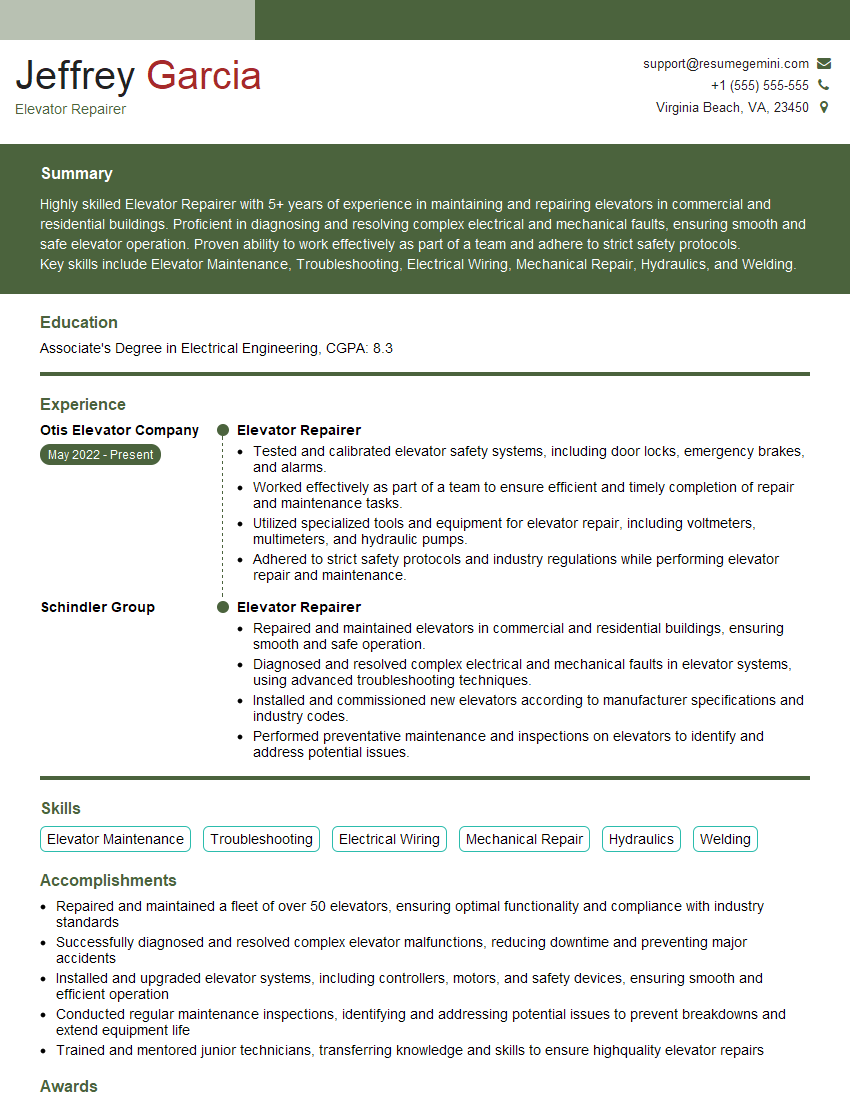
Mastering the ANSI/ASME A17.1 Safety Code is crucial for career advancement in the elevator and escalator industry, opening doors to senior roles and specialized positions. To maximize your job prospects, crafting a strong, ATS-friendly resume is essential. ResumeGemini is a trusted resource that can help you build a professional and impactful resume tailored to highlight your expertise in ANSI/ASME A17.1. We provide examples of resumes specifically designed for candidates with ANSI/ASME A17.1 Safety Code knowledge to help you showcase your skills effectively. Take the next step in your career journey today!





Explore more articles
Users Rating of Our Blogs
Share Your Experience
We value your feedback! Please rate our content and share your thoughts (optional).
What Readers Say About Our Blog
Very informative content, great job.
good