Interviews are more than just a Q&A session—they’re a chance to prove your worth. This blog dives into essential ANSI Z10 Standard Development interview questions and expert tips to help you align your answers with what hiring managers are looking for. Start preparing to shine!
Questions Asked in ANSI Z10 Standard Development Interview
Q 1. Explain the key elements of an ANSI Z10 compliant Safety Management System (SMS).
An ANSI Z10 compliant Safety Management System (SMS) is a proactive and integrated approach to managing workplace safety and health. It’s not just about reacting to incidents; it’s about preventing them in the first place. Key elements include:
- Leadership Commitment: Top management must actively champion safety, allocating resources and establishing a safety culture.
- Hazard Identification and Risk Assessment: A systematic process to identify potential hazards and assess their associated risks, leading to prioritized control measures.
- Hazard Prevention and Control: Implementing practical control measures to eliminate or mitigate identified hazards, ranging from engineering controls to administrative controls and PPE.
- Emergency Preparedness and Response: Developing and regularly practicing emergency plans to effectively handle incidents and minimize their impact.
- Training and Competency Assessment: Ensuring all workers have the necessary knowledge, skills, and abilities to perform their tasks safely.
- Communication and Consultation: Open communication channels to share safety information, involve workers in decision-making, and foster a culture of reporting.
- Performance Measurement and Improvement: Continuously monitoring safety performance, identifying areas for improvement, and implementing corrective actions.
- Documentation and Record Keeping: Maintaining comprehensive records of safety activities, incidents, and corrective actions to support continuous improvement.
Think of it like building a house: Leadership provides the foundation, hazard identification is the blueprint, controls are the materials, and training is the skilled labor. Each element is critical for a strong and safe structure.
Q 2. Describe the role of leadership in implementing an effective SMS.
Leadership plays a pivotal role in a successful SMS. It’s not just about assigning responsibility; it’s about demonstrating a genuine commitment to safety at all levels. Effective leadership in an ANSI Z10 framework involves:
- Setting the Vision and Tone: Leaders must articulate a clear safety vision, demonstrating that safety is a core value, not an afterthought.
- Allocating Resources: Providing the necessary funding, time, and personnel to support safety initiatives.
- Accountability and Responsibility: Establishing clear lines of accountability and ensuring that individuals are responsible for their safety and the safety of others.
- Promoting a Culture of Safety: Fostering an environment where workers feel empowered to report hazards, participate in safety discussions, and challenge unsafe practices without fear of reprisal.
- Leading by Example: Leaders must model safe behavior and actively participate in safety programs and initiatives.
Imagine a construction site: If the project manager doesn’t emphasize safety, the workers are less likely to prioritize it, regardless of training. Leadership sets the stage for a safe and productive work environment.
Q 3. How does ANSI Z10 address hazard identification and risk assessment?
ANSI Z10 emphasizes a proactive approach to hazard identification and risk assessment. It encourages a systematic process that goes beyond simply reacting to incidents. This involves:
- Identifying Hazards: This includes a variety of methods, such as walkthroughs, checklists, job safety analyses, and incident investigations. The goal is to identify all potential hazards, both obvious and less apparent.
- Assessing Risks: Once hazards are identified, their associated risks must be assessed. This typically involves considering the likelihood of the hazard occurring and the severity of the potential consequences. A common approach is using a risk matrix.
- Implementing Controls: Based on the risk assessment, appropriate control measures are implemented to eliminate or mitigate the hazards. The hierarchy of controls, from elimination to PPE, should guide this process.
- Review and Updating: The entire process should be regularly reviewed and updated, as hazards and risks can change over time due to new processes, equipment, or regulations.
For example, a manufacturing plant might conduct a job safety analysis for a specific machine operation, identifying hazards like pinch points and moving parts. A risk assessment would then determine the likelihood and severity of injuries, leading to the implementation of safety guards, lockout/tagout procedures, and training programs.
Q 4. What are the essential components of an effective hazard communication program under ANSI Z10?
An effective hazard communication program under ANSI Z10 is crucial for ensuring worker awareness and safety. Key components include:
- Hazard Identification and Characterization: Clearly identifying and describing the hazards present in the workplace.
- Labeling and Signage: Using appropriate labels and signs to warn workers of specific hazards.
- Safety Data Sheets (SDS): Providing readily accessible SDSs containing detailed information about chemical hazards.
- Training: Educating workers on how to identify, understand, and control hazards.
- Communication Methods: Utilizing various communication methods, such as meetings, training sessions, and written materials, to convey safety information.
- Emergency Response Information: Providing clear information on emergency procedures and contact information.
For example, a chemical laboratory would label containers with appropriate hazard warnings, provide SDSs for all chemicals used, and conduct regular training sessions to educate employees on safe handling procedures and emergency response protocols.
Q 5. Explain the importance of worker participation in an ANSI Z10 compliant SMS.
Worker participation is essential for a successful and effective ANSI Z10 compliant SMS. It ensures that the system is practical, relevant, and addresses the concerns of those most directly affected by workplace hazards. This includes:
- Job Hazard Analysis Participation: Involving workers in the process of identifying hazards and assessing risks in their specific work areas.
- Safety Committee Involvement: Providing opportunities for workers to participate in safety committees, offering valuable insights and contributing to decision-making.
- Near Miss Reporting: Encouraging workers to report near misses without fear of reprisal, providing valuable data for identifying and addressing potential hazards.
- Feedback Mechanisms: Establishing formal and informal channels for workers to provide feedback on safety-related matters.
- Safety Training Input: Involving workers in the development and delivery of safety training programs to tailor the content to their specific needs.
Think of a restaurant kitchen: The cooks are the ones who know best where the sharp knives are, where spills are most likely, and where the hot surfaces are. Involving them directly ensures a more effective safety program.
Q 6. How does ANSI Z10 address emergency preparedness and response?
ANSI Z10 stresses the importance of being prepared for emergencies. This involves:
- Emergency Planning: Developing comprehensive emergency plans that address various scenarios, including fires, chemical spills, and natural disasters.
- Emergency Response Procedures: Establishing clear procedures for responding to emergencies, including evacuation plans, first aid protocols, and communication strategies.
- Training and Drills: Regularly training workers on emergency procedures and conducting drills to ensure they are prepared to respond effectively.
- Emergency Equipment and Supplies: Ensuring adequate emergency equipment and supplies, such as fire extinguishers, first-aid kits, and communication systems.
- Post-Incident Review: Conducting thorough reviews of emergency incidents to identify areas for improvement and update emergency plans accordingly.
Imagine a hospital: Having a robust emergency plan, regular drills, and well-trained staff is not just a good idea; it’s essential for patient and staff safety. Similarly, any workplace should have a clear plan for handling emergencies.
Q 7. Describe the role of training and competency assessment in an ANSI Z10 framework.
Training and competency assessment are fundamental to an effective ANSI Z10 SMS. It ensures workers possess the knowledge, skills, and abilities to perform their tasks safely. This includes:
- Needs Assessment: Determining the specific training needs of workers based on their job tasks and the hazards they face.
- Training Program Development: Developing comprehensive training programs that address the identified needs, incorporating various learning methods.
- Training Delivery: Delivering training effectively using methods appropriate for the audience and subject matter.
- Competency Assessment: Evaluating worker competency through various methods, such as practical demonstrations, written tests, and observations.
- Record Keeping: Maintaining accurate records of training and competency assessment results.
- Refresher Training: Providing refresher training as needed to ensure that workers’ knowledge and skills remain up-to-date.
Consider a construction worker operating heavy machinery: Proper training, followed by regular competency assessments, is crucial to ensure they operate the equipment safely and efficiently, minimizing the risks of accidents.
Q 8. How does ANSI Z10 promote continuous improvement of the SMS?
ANSI Z10 promotes continuous improvement of a Safety Management System (SMS) through a cyclical process of planning, implementation, evaluation, and improvement. It emphasizes a proactive approach, encouraging organizations to constantly assess their safety performance, identify areas for enhancement, and implement changes to reduce risks and improve safety culture. This is not a one-time implementation but a dynamic and iterative process.
The standard achieves this through several mechanisms: regular reviews and audits of the SMS, the use of leading indicators to predict potential problems before they become incidents, and the systematic analysis of incidents and near misses to identify root causes and preventative measures. This cyclical review and improvement is crucial; it ensures that the SMS remains relevant and effective in addressing ever-evolving risks within an organization.
Think of it like maintaining a finely tuned machine; regular maintenance checks (audits), proactive adjustments (risk assessments), and prompt repairs (corrective actions after incidents) keep the machine running smoothly and efficiently. Without continuous improvement, the SMS risks becoming outdated and ineffective.
Q 9. What are the key performance indicators (KPIs) for evaluating SMS effectiveness according to ANSI Z10?
ANSI Z10 doesn’t prescribe a specific list of KPIs, but it encourages organizations to select and monitor KPIs that are relevant to their specific context and hazards. The key is to use a balanced scorecard approach, including both leading and lagging indicators.
- Lagging Indicators: These measure the outcomes of safety performance, reflecting what has already happened. Examples include the number of incidents, lost time injuries (LTIs), and severity rates. These are important for tracking progress, but they don’t predict future risks.
- Leading Indicators: These measure the factors that influence safety performance, highlighting potential future issues. Examples include the number of safety observations, training completion rates, the effectiveness of hazard identification processes, and the implementation rate of corrective actions. Monitoring leading indicators enables proactive mitigation of risks before they materialize into incidents.
The choice of KPIs should align with the organization’s goals and reflect the specific hazards and risks it faces. Regularly reviewing and adjusting KPIs is also essential for keeping the SMS relevant and effective.
Q 10. Explain the concept of ‘Plan-Do-Check-Act’ (PDCA) in relation to ANSI Z10.
The Plan-Do-Check-Act (PDCA) cycle is a fundamental principle in ANSI Z10, providing a framework for continuous improvement within the SMS.
- Plan: This stage involves identifying hazards, assessing risks, establishing objectives, and defining actions to improve safety performance. It requires careful planning and resource allocation.
- Do: This stage focuses on implementing the planned actions, putting them into practice and collecting data on their effectiveness.
- Check: This stage involves monitoring the implemented actions, collecting data, and evaluating their effectiveness in achieving the objectives. Are the implemented actions yielding the desired results?
- Act: This stage involves taking corrective actions based on the evaluation. If the implemented actions are successful, they are standardized. If not, the cycle restarts, with modifications to the plan based on lessons learned.
PDCA is iterative; organizations continually refine their SMS through this cycle, using data and feedback to improve safety performance over time. For example, a company might implement a new safety training program (Plan), monitor its effectiveness through observation and feedback (Do and Check), and then adjust the program based on employee feedback or observed improvements in workplace safety (Act).
Q 11. How does ANSI Z10 address incident investigation and corrective actions?
ANSI Z10 emphasizes a thorough and systematic approach to incident investigation and corrective actions. The goal is not just to fix the immediate problem but to identify the root causes to prevent recurrence.
The process typically involves:
- Incident Reporting: A comprehensive system for reporting all incidents, including near misses.
- Investigation: A detailed investigation using established methodologies such as the ‘5 Whys’ to determine root causes. This often involves interviewing witnesses, reviewing documentation, and analyzing data.
- Corrective Action: Development and implementation of corrective actions to address the root causes identified during the investigation. This might involve changes to procedures, equipment, training, or management systems.
- Verification: Checking that implemented corrective actions are effective in preventing similar incidents from occurring in the future. This often involves monitoring leading indicators.
By focusing on root cause analysis, ANSI Z10 ensures that corrective actions address the underlying problems rather than just treating symptoms. This proactive approach minimizes the likelihood of similar incidents occurring in the future.
Q 12. What are the differences between reactive and proactive approaches to safety, as per ANSI Z10?
ANSI Z10 advocates for a proactive approach to safety, rather than relying solely on reactive measures after incidents occur. While reactive measures are necessary to address immediate issues, a proactive approach aims to prevent incidents before they happen.
- Reactive Approach: This approach focuses on responding to incidents after they occur. It’s like putting out fires; it addresses immediate problems but doesn’t prevent future fires. This approach relies heavily on lagging indicators and often results in higher costs and more severe consequences.
- Proactive Approach: This approach focuses on identifying and controlling hazards before they cause incidents. It’s like preventing fires through proactive measures such as regular inspections, fire drills, and fire prevention education. This relies heavily on leading indicators and aims to reduce the likelihood and severity of incidents.
ANSI Z10 promotes a balanced approach, integrating both reactive and proactive elements. While investigating and correcting past incidents is crucial, the emphasis is on proactive measures to minimize risk and foster a strong safety culture.
Q 13. How does ANSI Z10 integrate with other safety standards (e.g., OSHA)?
ANSI Z10 is designed to be complementary to other safety standards, such as OSHA. It doesn’t replace other regulations but provides a framework for a comprehensive SMS that incorporates regulatory requirements.
For example, OSHA regulations may specify requirements for hazard communication or personal protective equipment (PPE). ANSI Z10 provides the structure for implementing these regulations effectively, including procedures for training, hazard identification, risk assessment, and performance monitoring. It’s a framework for integrating various safety requirements into a cohesive and effective system.
Imagine OSHA as a set of building codes and ANSI Z10 as the blueprint for building a safe and efficient structure. The building codes (OSHA) specify minimum requirements, while the blueprint (ANSI Z10) outlines how to build a robust and effective system that meets those requirements and goes beyond them.
Q 14. Describe your experience in developing and implementing an SMS based on ANSI Z10.
In a previous role at a large manufacturing facility, I led the development and implementation of an SMS based on ANSI Z10. This involved a multi-phased approach, starting with a comprehensive hazard identification and risk assessment across all facility operations. We utilized a combination of job safety analyses (JSAs), process hazard analyses (PHAs), and walkthroughs to identify potential hazards.
Following this, we developed a series of safety procedures, training programs, and emergency response plans based on our risk assessment. We also established key performance indicators (KPIs) to track our progress and identify areas for improvement. The KPIs included leading indicators such as safety observation scores, training completion rates, and near-miss reporting rates, as well as lagging indicators such as incident rates and lost-time injury frequency rates.
A crucial aspect of the implementation was establishing a strong safety culture, fostering open communication, and encouraging employee participation in the SMS. We achieved this through regular safety meetings, employee training, and a robust incident reporting system. The results were significant, showing a reduction in incident rates and an improvement in overall safety performance. The system was not a one-time project but an ongoing process requiring continual improvement and adjustments.
Q 15. What are the challenges you foresee in implementing an ANSI Z10 compliant SMS?
Implementing an ANSI Z10 compliant Safety Management System (SMS) presents several challenges. One major hurdle is cultural change. Successfully integrating safety into the very fabric of an organization requires a shift from reactive to proactive thinking, demanding buy-in from all levels, from the C-suite to the shop floor. This often involves overcoming ingrained attitudes and behaviors that may prioritize production over safety.
Another key challenge lies in resource allocation. Developing and maintaining a robust SMS requires significant investment in time, training, and resources – including specialized software, equipment, and potentially external consulting expertise. Justifying this expense to leadership can be difficult, especially in financially constrained environments.
Finally, consistent implementation across geographically dispersed locations or diverse departments can be problematic. Maintaining a unified approach to safety procedures and training while adapting to varied local contexts requires careful planning and ongoing monitoring. Inconsistencies can easily undermine the overall effectiveness of the SMS.
Career Expert Tips:
- Ace those interviews! Prepare effectively by reviewing the Top 50 Most Common Interview Questions on ResumeGemini.
- Navigate your job search with confidence! Explore a wide range of Career Tips on ResumeGemini. Learn about common challenges and recommendations to overcome them.
- Craft the perfect resume! Master the Art of Resume Writing with ResumeGemini’s guide. Showcase your unique qualifications and achievements effectively.
- Don’t miss out on holiday savings! Build your dream resume with ResumeGemini’s ATS optimized templates.
Q 16. How do you ensure consistent application of the SMS across different departments or locations?
Consistent application of the SMS across different departments or locations necessitates a multi-pronged strategy. Firstly, a centralized, well-defined, and easily accessible SMS manual is crucial. This manual must detail all procedures, responsibilities, and reporting protocols in a clear and concise manner, using consistent terminology and formatting. Regular audits and inspections should be scheduled, utilizing standardized checklists to ensure compliance across all sites and departments.
Secondly, robust training programs are essential. All employees, regardless of their location or department, must receive thorough training on the SMS, including hazard identification, risk assessment, and emergency response procedures. This training should be delivered consistently across all locations, perhaps employing online modules and standardized in-person sessions to maintain uniformity.
Finally, effective communication channels are vital for maintaining consistency. Regular meetings, newsletters, and safety briefings ensure continuous updates and feedback, allowing for prompt identification and correction of any inconsistencies. A centralized reporting system facilitates rapid dissemination of safety information and best practices across the entire organization.
Q 17. How would you measure the effectiveness of your implemented SMS based on ANSI Z10?
Measuring the effectiveness of an ANSI Z10 compliant SMS requires a multifaceted approach that goes beyond simply tracking the number of incidents. Key performance indicators (KPIs) should include:
- Leading indicators: These predict future performance and include measures like the number of safety training hours completed, participation rates in hazard identification programs, and the completion rate of risk assessments.
- Lagging indicators: These reflect past performance and include the number and severity of accidents, incidents, near misses, and lost-time injuries.
- Employee engagement metrics: Surveys and feedback mechanisms gauge employee perception of safety culture, management commitment, and the effectiveness of safety procedures. This is crucial because a strong safety culture is vital for an effective SMS.
Regularly monitoring these KPIs allows for data-driven decision making. Tracking trends over time enables identification of areas for improvement and facilitates the ongoing refinement of the SMS. Data analysis, trend identification and preventative action will clearly show the program effectiveness.
Q 18. Describe a situation where you had to overcome a significant safety challenge.
In a previous role, we faced a significant safety challenge involving the handling of hazardous materials. A new chemical process introduced a higher risk of exposure to a highly toxic substance. Our initial risk assessment, while thorough, underestimated the potential for human error in the new process. We experienced a near-miss incident, which highlighted the shortcomings of our existing control measures.
To overcome this challenge, we adopted a multi-layered approach. We implemented stricter procedural controls, including additional safety checks and automated safeguards. We also enhanced employee training, focusing specifically on the new chemical’s properties, handling procedures, and emergency response protocols. Crucially, we fostered a more open communication environment where employees felt empowered to voice safety concerns without fear of reprisal. The subsequent implementation of these improvements significantly reduced the risk of exposure and improved overall safety performance.
Q 19. How do you communicate safety information effectively to different audiences?
Effective communication of safety information demands a tailored approach that considers the audience’s background, literacy level, and cultural context. For example, complex technical information needs to be simplified for non-technical staff, possibly using visuals, such as videos or infographics. Different communication channels are necessary for different audiences. For example, using Toolbox Talks for frontline workers, while emails and formal presentations might suit management.
Multi-lingual materials may be necessary for diverse workforces. Regular feedback mechanisms, such as surveys and informal discussions, are crucial for ensuring that safety messages are understood and acted upon. Regular safety meetings, interactive training sessions and gamified safety training modules can make learning engaging and increase retention.
Q 20. What is your understanding of the role of management systems in achieving organizational safety goals?
Management systems, such as those compliant with ANSI Z10, are fundamental to achieving organizational safety goals. They provide a structured framework for identifying hazards, assessing risks, implementing controls, and monitoring performance. A well-designed management system promotes a proactive safety culture, shifting the focus from reactive incident response to proactive risk prevention.
The system provides a mechanism for accountability and responsibility. Clear roles and responsibilities are outlined, ensuring that tasks are completed and performance is tracked. Regular audits and reviews enable continuous improvement, allowing the organization to adapt and respond to emerging safety challenges. Importantly, ANSI Z10 emphasizes leadership commitment, emphasizing the crucial role of top management in driving safety performance.
Q 21. How would you handle resistance to implementing safety improvements within an organization?
Resistance to implementing safety improvements is often rooted in concerns about cost, time, or disruption to workflows. Addressing resistance requires a collaborative and empathetic approach. Instead of imposing changes, engage stakeholders in a dialogue to understand their concerns and address them proactively. This may involve demonstrating the long-term cost savings associated with improved safety, showcasing the benefits of new technologies or procedures through pilot projects, or providing additional training and support.
Highlighting success stories from other departments or organizations can demonstrate the tangible benefits of safety improvements. Recognizing and rewarding employees who champion safety initiatives can create a positive feedback loop and foster a more receptive environment. In some cases, involving employees in the design and implementation of safety improvements can increase buy-in and reduce resistance. It’s important to remember that addressing resistance is an ongoing process that requires patience, persistence, and a commitment to open communication.
Q 22. Explain the importance of integrating safety into the design and planning stages of projects.
Integrating safety into the design and planning phases of any project is paramount, akin to building a house on a solid foundation. Ignoring safety upfront drastically increases risks and costs down the line. It’s far more efficient and effective to proactively design out hazards than to react to incidents after they occur.
This proactive approach, guided by standards like ANSI Z10, involves hazard identification and risk assessment at the initial conceptual stage. This allows for the incorporation of safety controls into the design itself, minimizing the need for costly retrofits later. For example, if you are designing a manufacturing plant, integrating inherent safety features like automated safety shut-offs during emergencies during the design phase rather than retrofitting them later will save substantial time and money.
Consider this: designing a staircase with adequate handrails and non-slip surfaces from the outset is much simpler and cheaper than later addressing fall injuries caused by a poorly designed staircase. This proactive approach minimizes the potential for accidents, improves worker morale, and demonstrates a commitment to a positive safety culture.
Q 23. What are the key considerations for auditing an SMS based on ANSI Z10?
Auditing a Safety Management System (SMS) based on ANSI Z10 requires a thorough and systematic approach. It’s not just about checking boxes; it’s about evaluating the effectiveness of the system in managing risks and preventing incidents. Key considerations include:
- Compliance with ANSI Z10: The audit must assess adherence to all relevant clauses and sections of the standard, ensuring the SMS covers all aspects of safety management from policy to performance evaluation. This involves reviewing documentation, observing practices, and interviewing personnel.
- Effectiveness of Hazard Identification and Risk Assessment Processes: This involves examining whether hazards are properly identified, assessed, and controlled. Are the controls adequate, and are they being implemented effectively? Are risk assessments regularly reviewed and updated?
- Implementation of Controls: Are the chosen controls appropriate, effective, and properly implemented? Are workers trained on their use and are they using them consistently?
- Effectiveness of Communication and Training: The audit should evaluate how safety information is communicated to workers, the effectiveness of training programs, and whether workers are empowered to report hazards and near misses without fear of reprisal.
- Incident Investigation and Reporting System: Is the system for investigating incidents and near misses thorough, objective, and timely? Are corrective actions implemented and their effectiveness verified?
- Management Commitment and Resources: A successful SMS requires strong leadership commitment and adequate resources. The audit should assess the level of management support and resource allocation for safety initiatives.
The audit should use a combination of document review, observations, interviews, and potentially sampling techniques to obtain a comprehensive understanding of the SMS’s performance.
Q 24. How would you address a gap in the SMS discovered during an internal audit?
Addressing a gap in an SMS discovered during an internal audit requires a structured and systematic approach. It’s not enough to simply identify the problem; a plan of action must be developed and implemented to close the gap.
- Clearly Define the Gap: First, precisely define the nature of the gap. What is missing, not functioning correctly, or inadequately implemented? Document this finding with supporting evidence.
- Root Cause Analysis: Determine the underlying reasons for the gap. Why does this deficiency exist? Use tools like ‘5 Whys’ or fishbone diagrams to delve into the root cause(s).
- Develop Corrective Actions: Based on the root cause analysis, develop specific, measurable, achievable, relevant, and time-bound (SMART) corrective actions to address the gap. This might involve updating procedures, providing additional training, improving communication, acquiring new equipment, or revising policies.
- Implement Corrective Actions: Assign responsibility for implementing each corrective action and establish a timeline for completion.
- Verify Effectiveness: After implementing the corrective actions, verify their effectiveness. This might involve re-auditing the area, reviewing data on incident rates, or conducting worker feedback surveys.
- Document Everything: Thoroughly document all aspects of the gap identification, root cause analysis, corrective actions, implementation, and verification. This documentation will be crucial for demonstrating continuous improvement.
For instance, if an audit reveals inadequate worker training on a specific piece of machinery, the corrective action might involve developing a new training program, scheduling training sessions, and providing refresher training on a regular basis. The effectiveness of this corrective action would be verified through observation, testing workers’ knowledge, and reviewing incident reports involving that machinery.
Q 25. Explain your familiarity with the various clauses and sections of ANSI Z10.
My familiarity with ANSI Z10 extends across its various clauses and sections, which I utilize in practical applications daily. The standard’s framework is crucial for building effective SMSs. I have a comprehensive understanding of:
- Section 1: Introduction: This sets the context, highlighting the importance of a proactive safety approach.
- Section 2: Management and Leadership: This is crucial, stressing the necessity of management commitment, accountability, and resource allocation for a successful SMS.
- Section 3: Hazard Identification, Risk Assessment, and Risk Control: This details the processes involved in identifying hazards, assessing risks, and implementing appropriate controls. I am proficient in various risk assessment techniques, including qualitative and quantitative methods.
- Section 4: Safety and Health Program Development and Implementation: This section guides the development of detailed safety procedures, training programs, and emergency response plans.
- Section 5: Communication and Consultation: This underscores the importance of open communication and collaboration between management and workers.
- Section 6: Emergency Preparedness and Response: I have considerable experience in developing and implementing comprehensive emergency response plans, including drills and training exercises.
- Section 7: Incident Investigation, Reporting and Analysis: I understand how to conduct thorough incident investigations and use the data to drive improvements.
- Section 8: Monitoring and Review of the SMS: This section details the importance of regular audits and reviews to measure the effectiveness of the SMS.
My understanding extends to the specific requirements of each section, enabling me to design, implement, and audit SMSs effectively and efficiently across diverse settings.
Q 26. How do you ensure the SMS remains relevant and effective in a constantly changing environment?
Maintaining the relevance and effectiveness of an SMS in a dynamic environment requires a continuous improvement approach. This is not a ‘set it and forget it’ system. Think of it as a living document that constantly adapts to changes in technology, regulations, and organizational needs. To ensure continued relevance:
- Regular Reviews and Updates: Conduct regular reviews of the SMS, at least annually, to identify areas for improvement. This includes reviewing policies, procedures, training materials, and risk assessments.
- Proactive Monitoring: Implement a system for monitoring leading indicators of risk, such as near misses and hazard reports. These provide early warnings of potential problems.
- Incident Investigation and Analysis: Thoroughly investigate all incidents and near misses to identify root causes and implement corrective actions to prevent recurrence. This is a crucial learning opportunity.
- Stay Informed on Best Practices and Regulations: Keep abreast of changes in legislation, industry best practices, and new technologies. Regularly update the SMS to reflect this knowledge.
- Feedback Mechanisms: Establish systems for collecting feedback from workers, supervisors, and other stakeholders. Their input is crucial for identifying gaps and areas for improvement.
- Technology Integration: Explore how technology can help enhance the SMS. This might include safety management software, wearable technology for monitoring worker safety, or data analytics to identify trends and patterns.
By adopting this continuous improvement mindset, the SMS remains a powerful tool for managing safety in a constantly changing landscape.
Q 27. Describe your experience in using safety management software to support an SMS.
I have extensive experience using safety management software to support SMSs. These systems can significantly enhance the effectiveness of a safety program. The software I’m familiar with provides tools for:
- Hazard Identification and Risk Assessment: Many systems provide structured methods for identifying hazards, conducting risk assessments, and assigning risk levels. This ensures consistency and facilitates data analysis.
- Incident Reporting and Investigation: Software facilitates the electronic reporting and tracking of incidents and near misses. It provides tools for conducting investigations, documenting findings, and tracking corrective actions.
- Training Management: The systems can track employee training records, ensuring compliance with training requirements and scheduling refresher courses as needed.
- Document Management: Centralized document storage and retrieval improves access to safety-related information and ensures everyone is working with the most current versions.
- Data Analysis and Reporting: Software provides analytical tools to identify trends, patterns, and areas for improvement. This data supports informed decision-making and resource allocation.
For example, I have used software to track leading indicators of risk, allowing us to proactively address potential issues before they escalated into incidents. The ability to generate reports on key performance indicators (KPIs) has also been invaluable for demonstrating the effectiveness of our SMS to management and stakeholders.
Q 28. How would you prioritize safety initiatives within limited budget and resources?
Prioritizing safety initiatives with limited budget and resources requires a strategic approach. It’s crucial to focus on the highest-impact interventions first. I would use a risk-based approach:
- Risk Assessment: Conduct a comprehensive risk assessment to identify the hazards with the highest potential for serious injury or fatality. This assessment should consider both the likelihood and severity of potential outcomes.
- Prioritization Matrix: Use a prioritization matrix, such as a risk matrix, to rank hazards based on their risk level. This matrix will visually show which hazards pose the greatest risks, allowing for focused action.
- Cost-Benefit Analysis: For each hazard, evaluate the cost of implementing control measures versus the potential cost of an incident (including lost time, medical expenses, fines, and reputational damage). This helps to justify resource allocation.
- Focus on High-Impact, Low-Cost Interventions: Prioritize interventions that address high-risk hazards and have a low implementation cost. These are often ‘low-hanging fruit’ that can significantly improve safety without large financial investments.
- Phased Implementation: If resources are truly limited, implement safety initiatives in phases, starting with the highest-priority items. This allows for a gradual improvement in safety while staying within budget constraints.
- Continuous Monitoring and Evaluation: Regularly monitor the effectiveness of implemented initiatives and adjust priorities as needed. Data-driven decision making is key.
For instance, if a risk assessment reveals a high risk of falls from heights, inexpensive interventions, such as improving lighting, providing adequate guardrails, and training employees on fall protection techniques, would be prioritized before investing in more expensive measures like installing safety nets.
Key Topics to Learn for ANSI Z10 Standard Development Interview
- Understanding the Z10 Framework: Grasp the core principles and structure of ANSI Z10, including its purpose in managing occupational safety and health programs.
- Hazard Identification & Risk Assessment: Learn practical methods for identifying workplace hazards, conducting thorough risk assessments, and implementing effective control measures compliant with Z10 guidelines. Practice applying different risk assessment methodologies.
- Developing and Implementing Safety and Health Programs: Understand the process of creating, implementing, and maintaining a comprehensive safety and health management system according to ANSI Z10. Consider the role of management commitment and employee involvement.
- Program Evaluation and Improvement: Familiarize yourself with techniques for auditing and evaluating the effectiveness of existing safety programs. Understand how to use data to drive improvements and demonstrate continuous improvement cycles.
- Communication and Training: Explore effective communication strategies for conveying safety information to employees at all levels. Understand the importance of training programs and their role in maintaining a safe work environment. Consider different training methodologies and their effectiveness.
- Recordkeeping and Documentation: Learn the importance of accurate and complete recordkeeping in complying with ANSI Z10. Understand the types of documentation required and best practices for maintaining them.
- Legal and Regulatory Compliance: Understand how ANSI Z10 aligns with other relevant legal and regulatory requirements. Be prepared to discuss the interplay between Z10 and other safety standards.
Next Steps
Mastering ANSI Z10 Standard Development significantly enhances your career prospects in safety management, demonstrating a deep understanding of best practices and a commitment to creating safer workplaces. To showcase your expertise effectively, crafting an ATS-friendly resume is crucial. This helps your application stand out and reach potential employers. ResumeGemini can help you build a powerful and professional resume tailored to the ANSI Z10 field. We provide examples of resumes specifically designed for ANSI Z10 Standard Development professionals to help guide you. Take advantage of this resource to boost your job search and land your dream role.
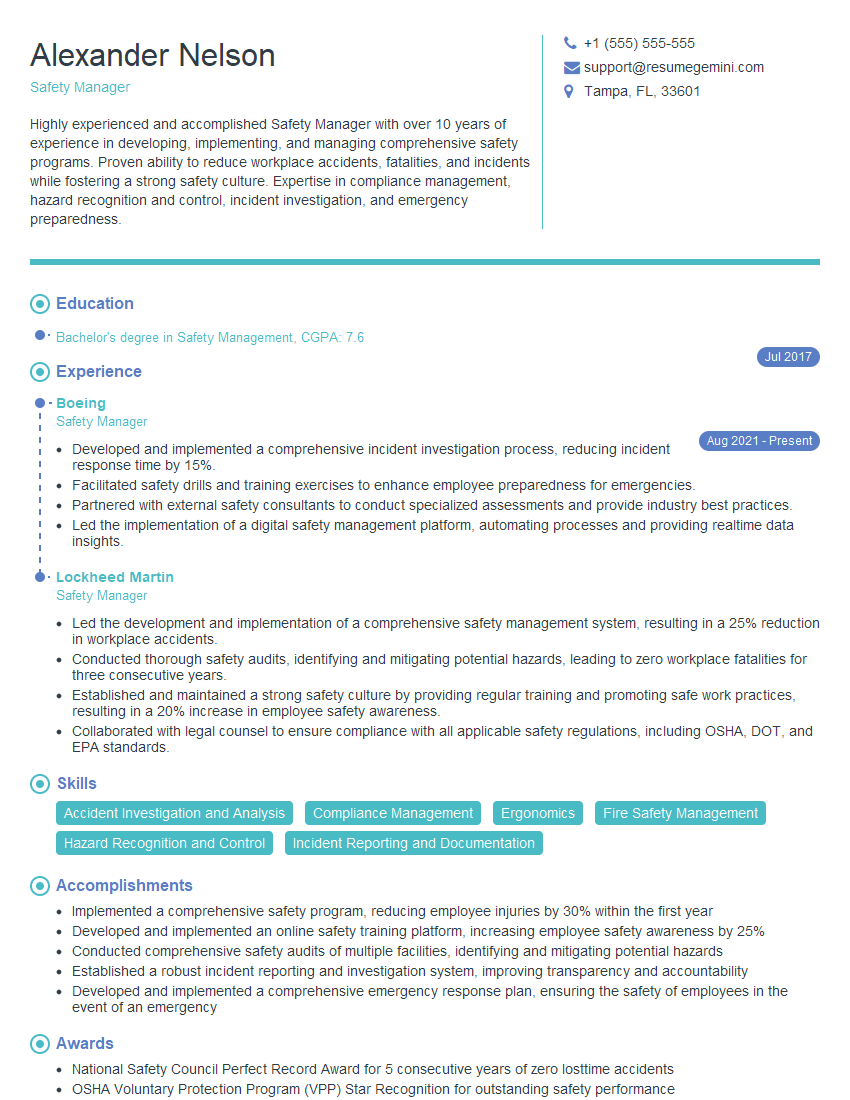
Safety Manager Resume Sample
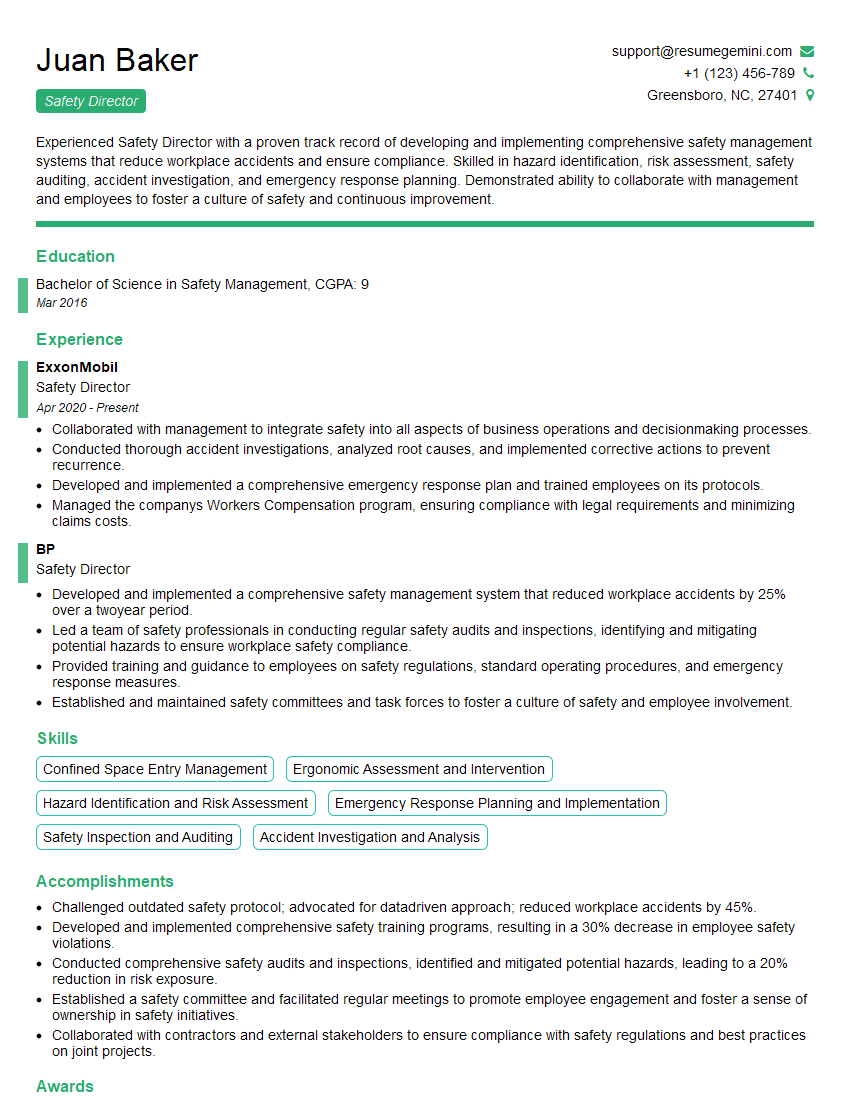
Safety Director Resume Sample
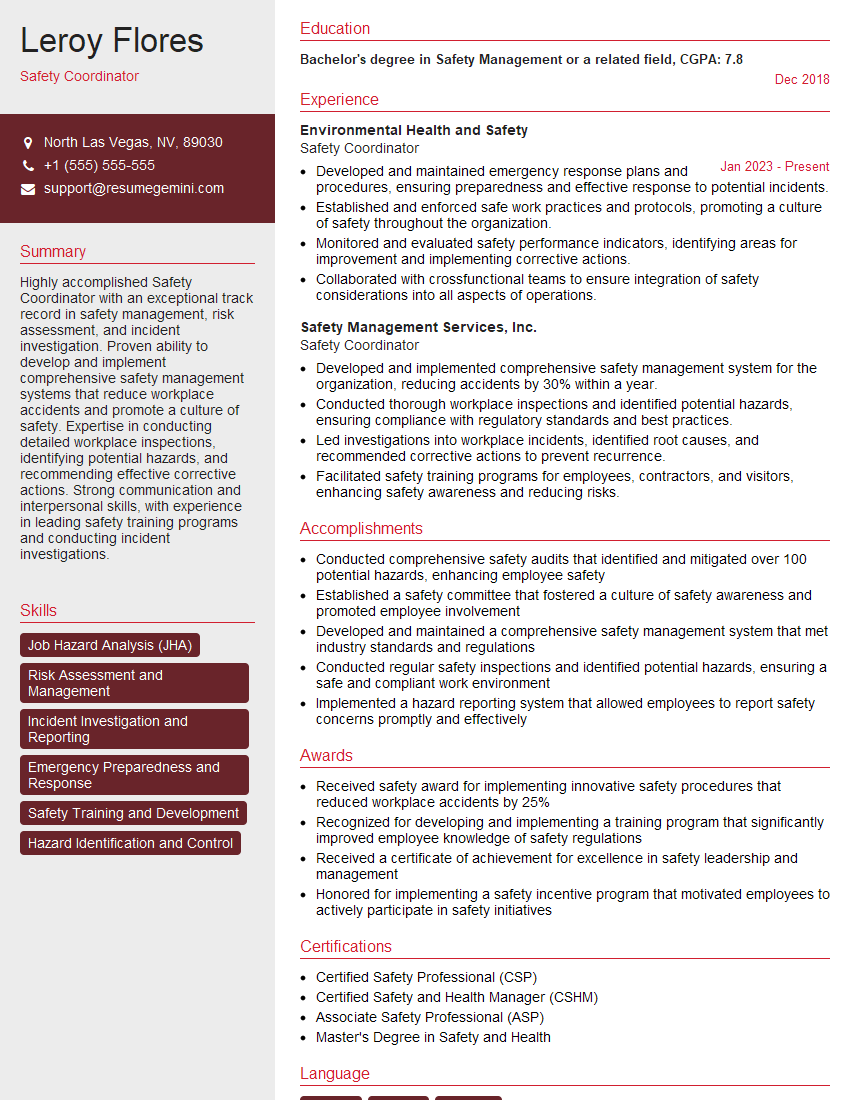
Safety Coordinator Resume Sample
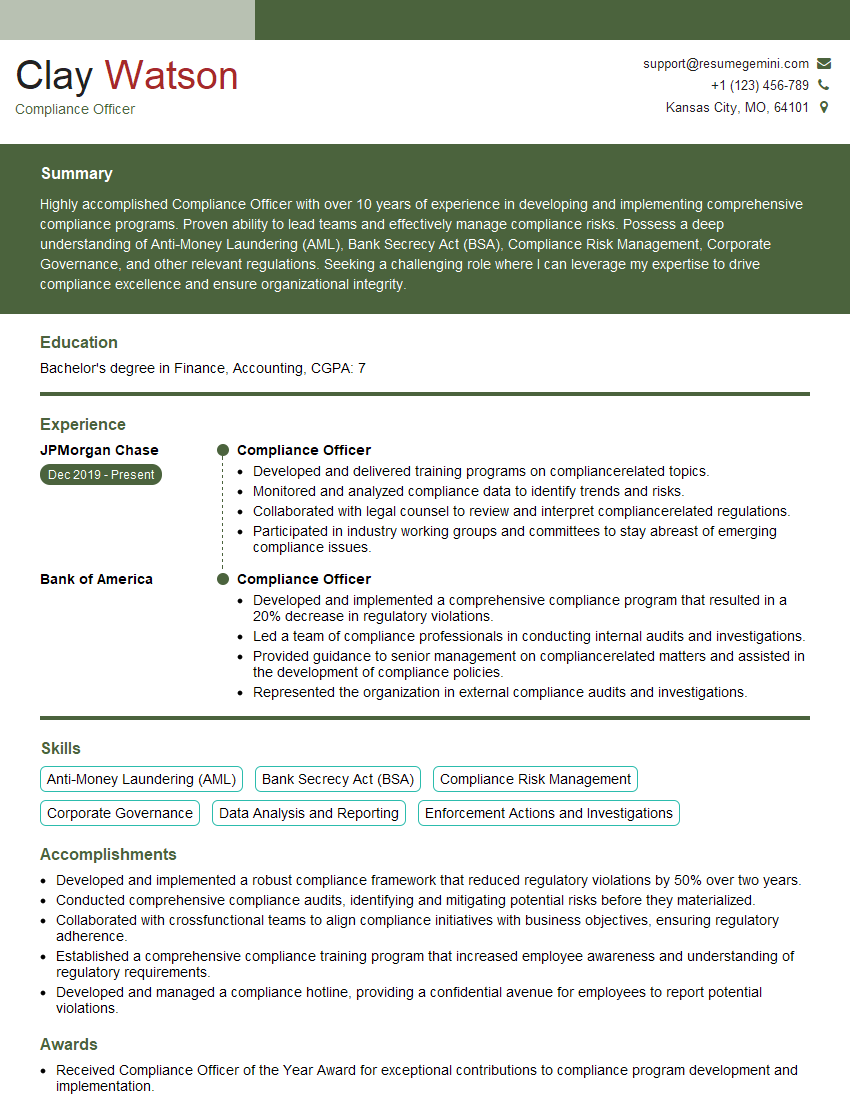
Compliance Officer Resume Sample
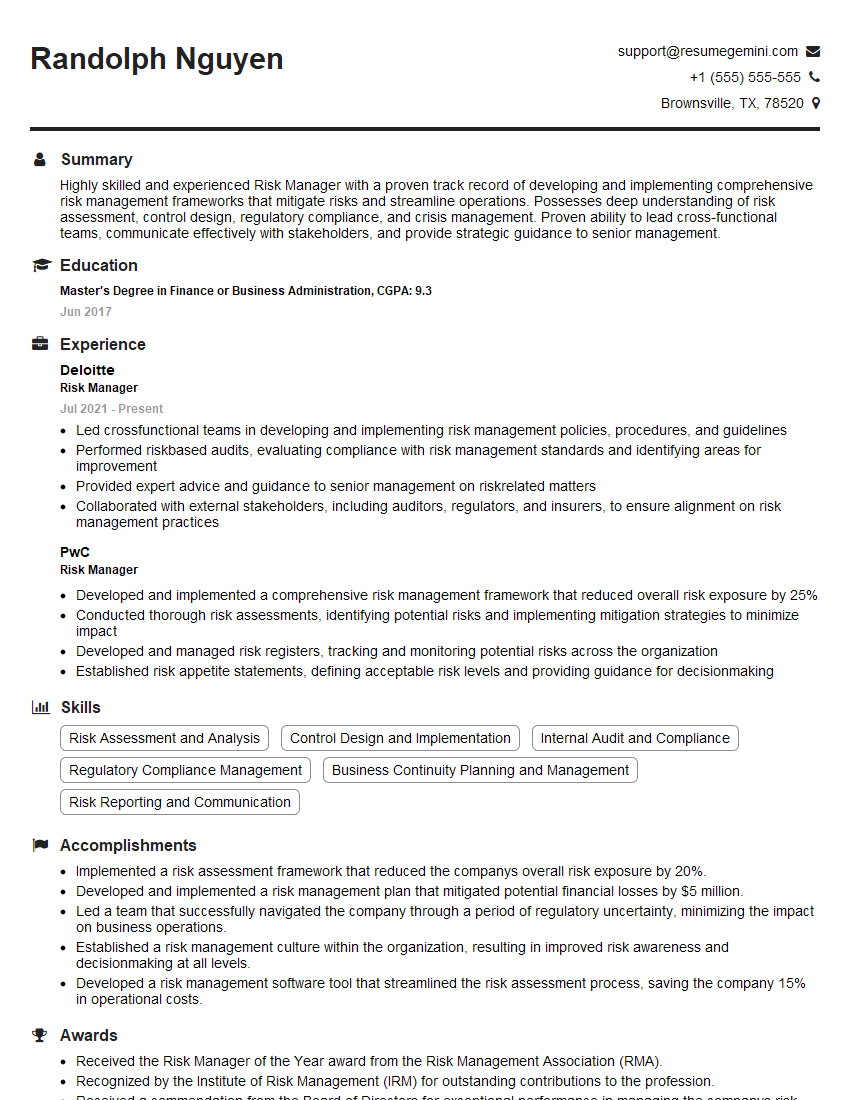
Risk Manager Resume Sample
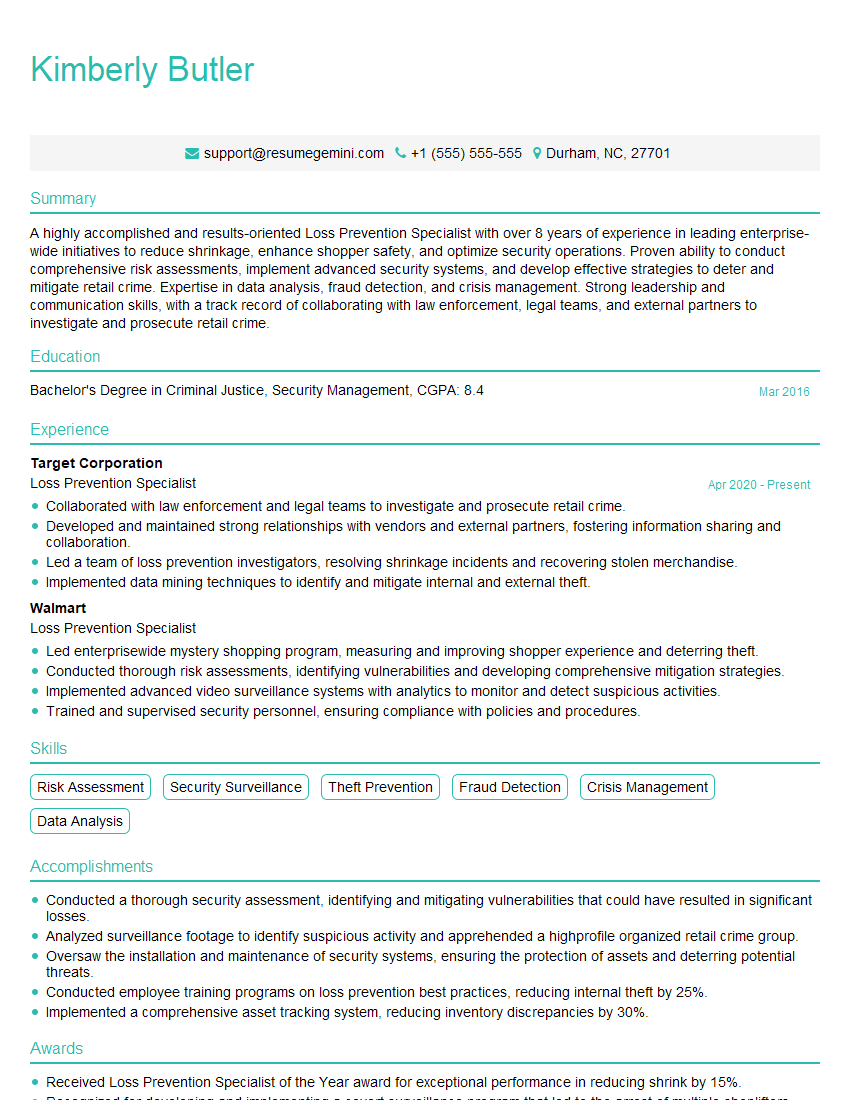
Loss Prevention Specialist Resume Sample
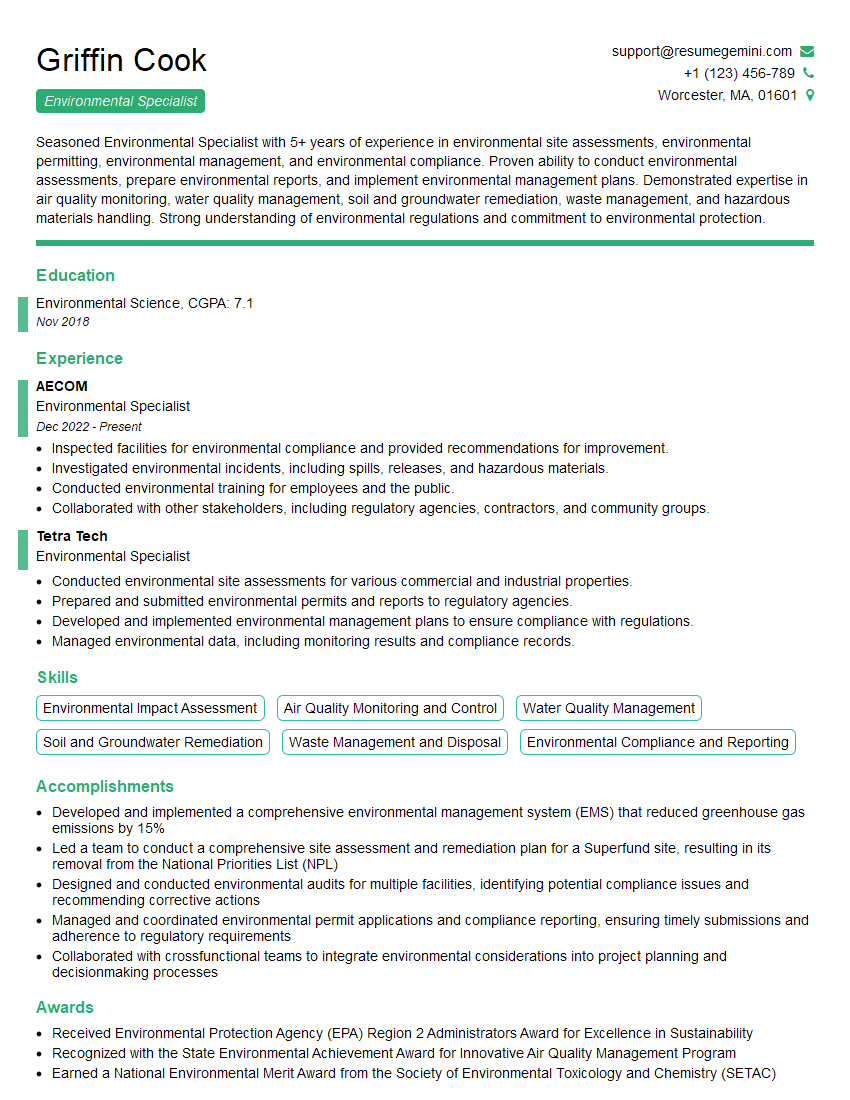
Environmental Specialist Resume Sample
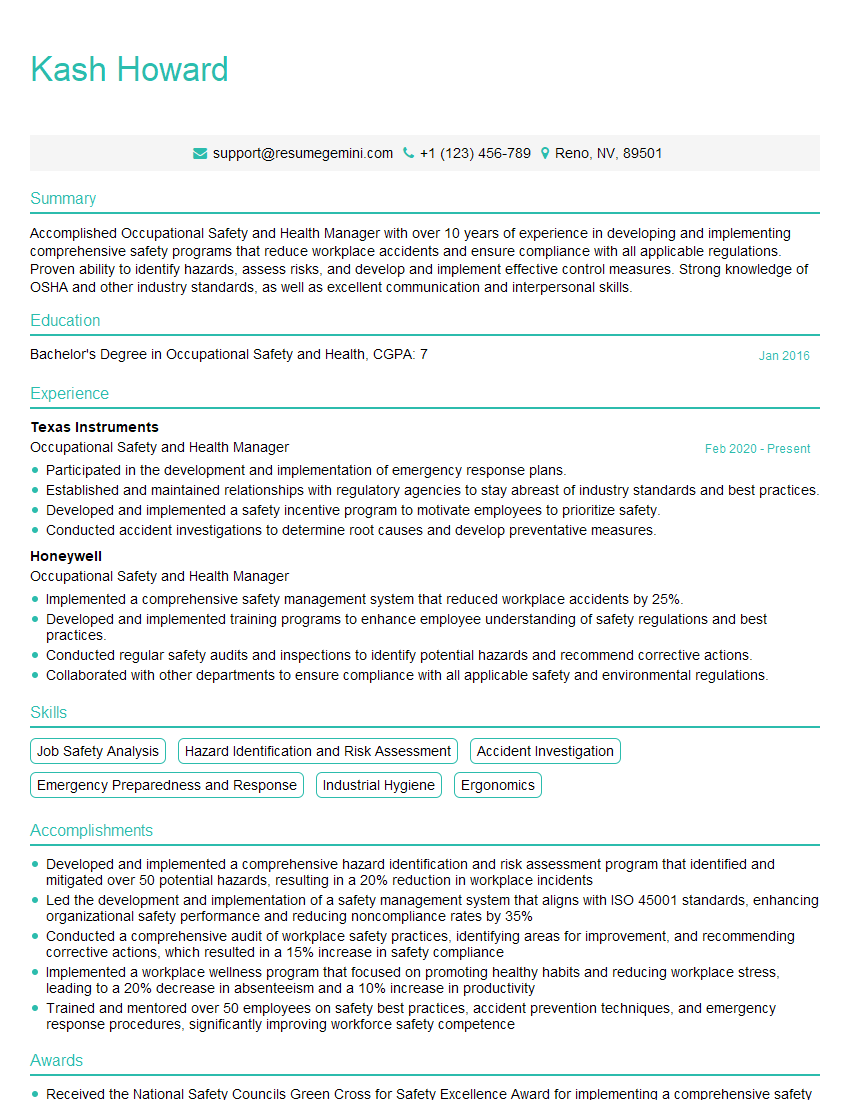
Occupational Safety and Health Manager Resume Sample
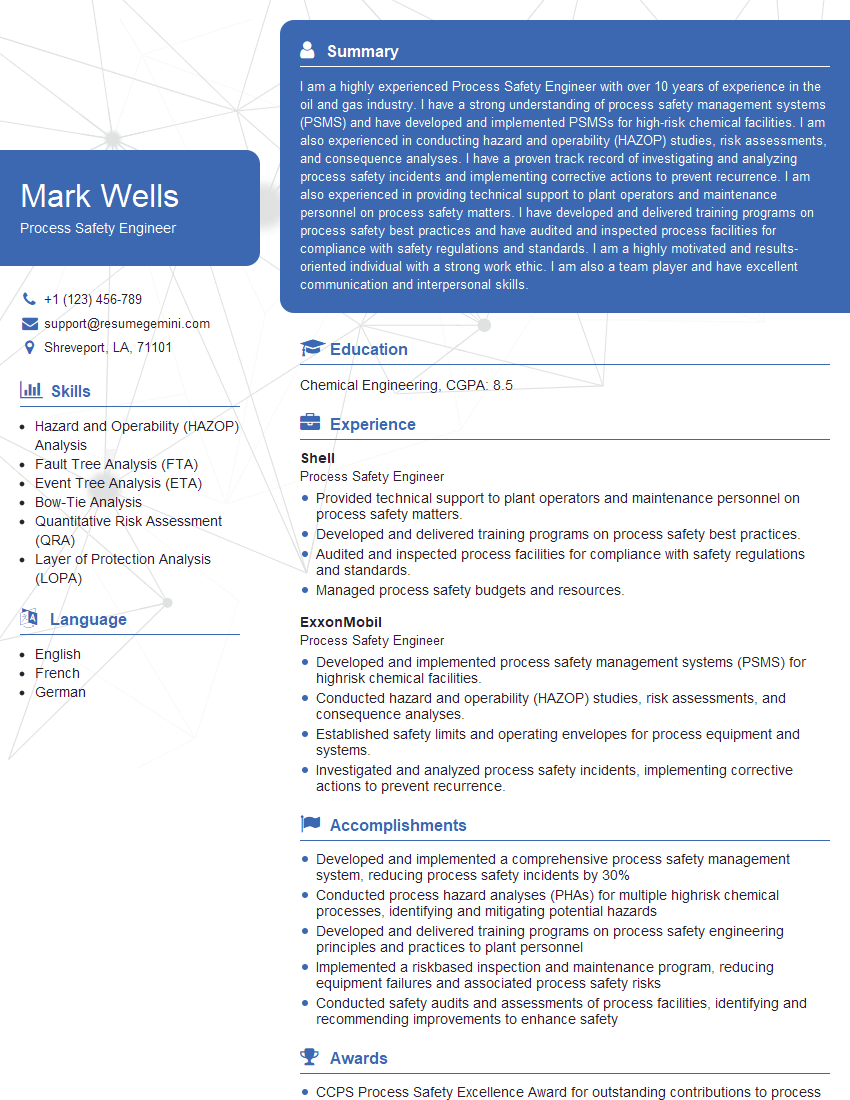
Process Safety Engineer Resume Sample
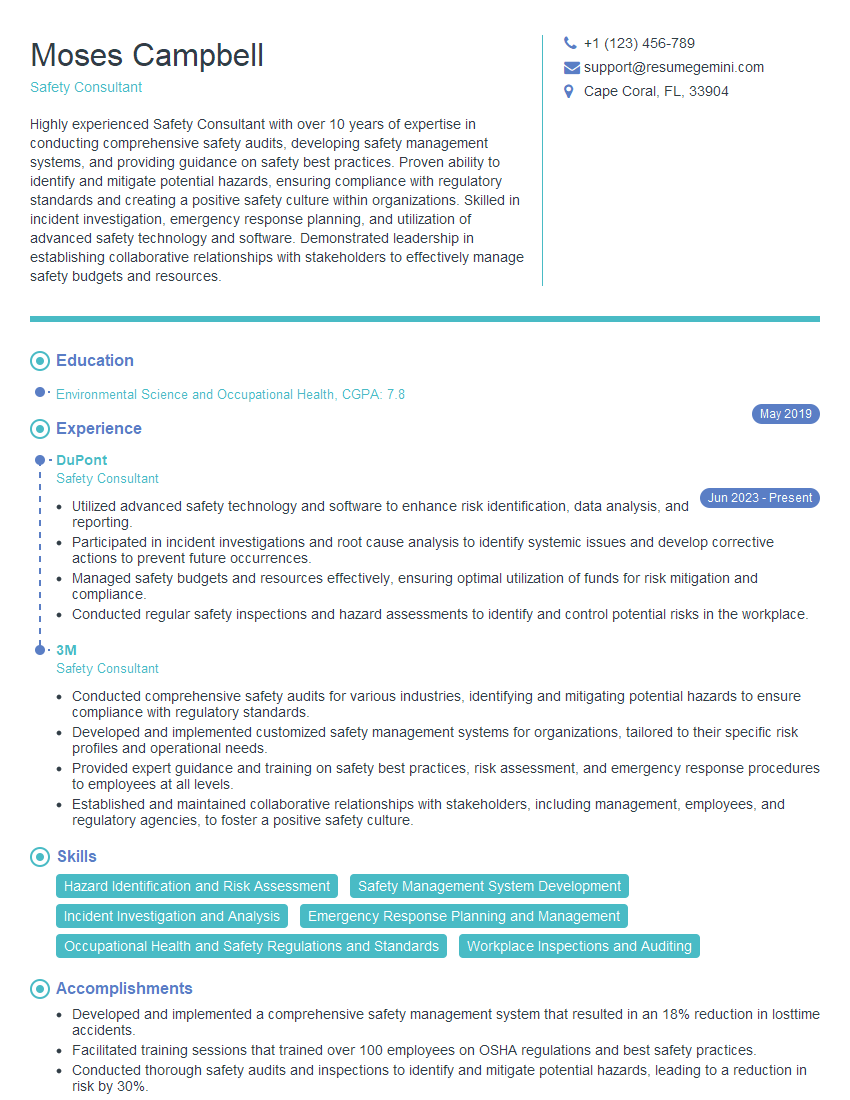
Safety Consultant Resume Sample
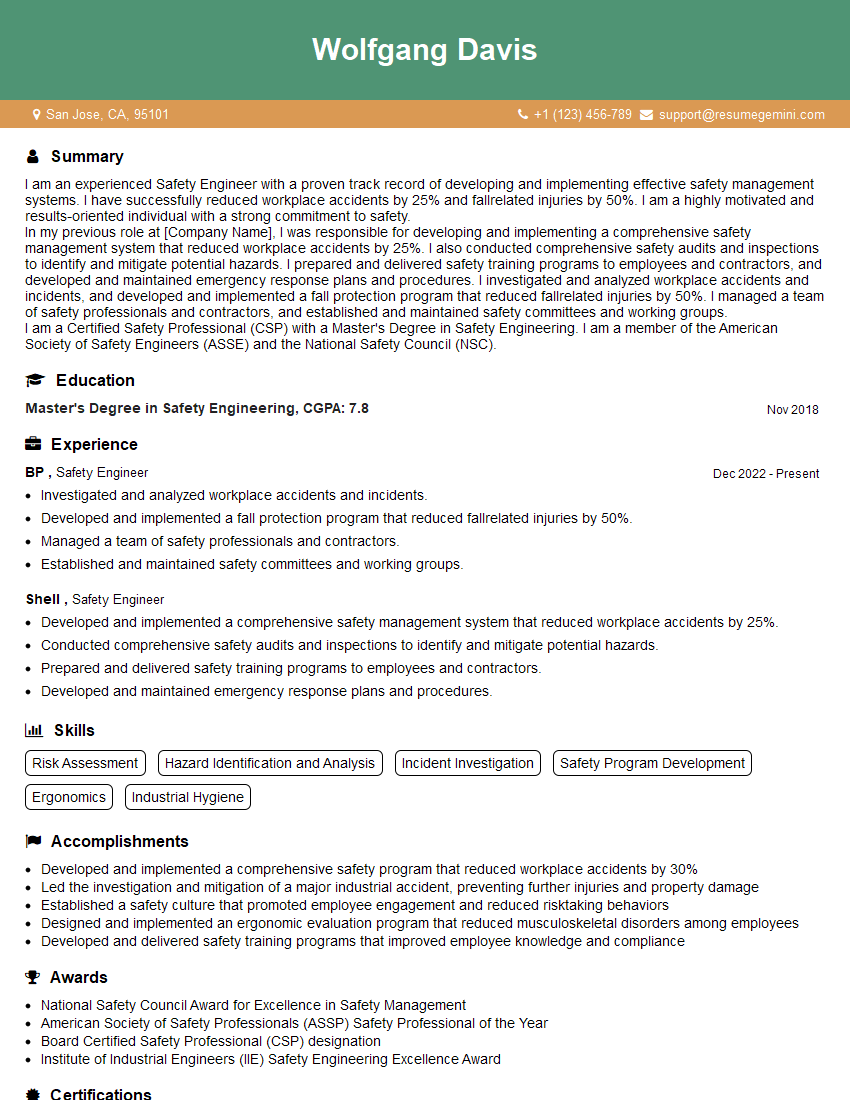
Safety Engineer Resume Sample
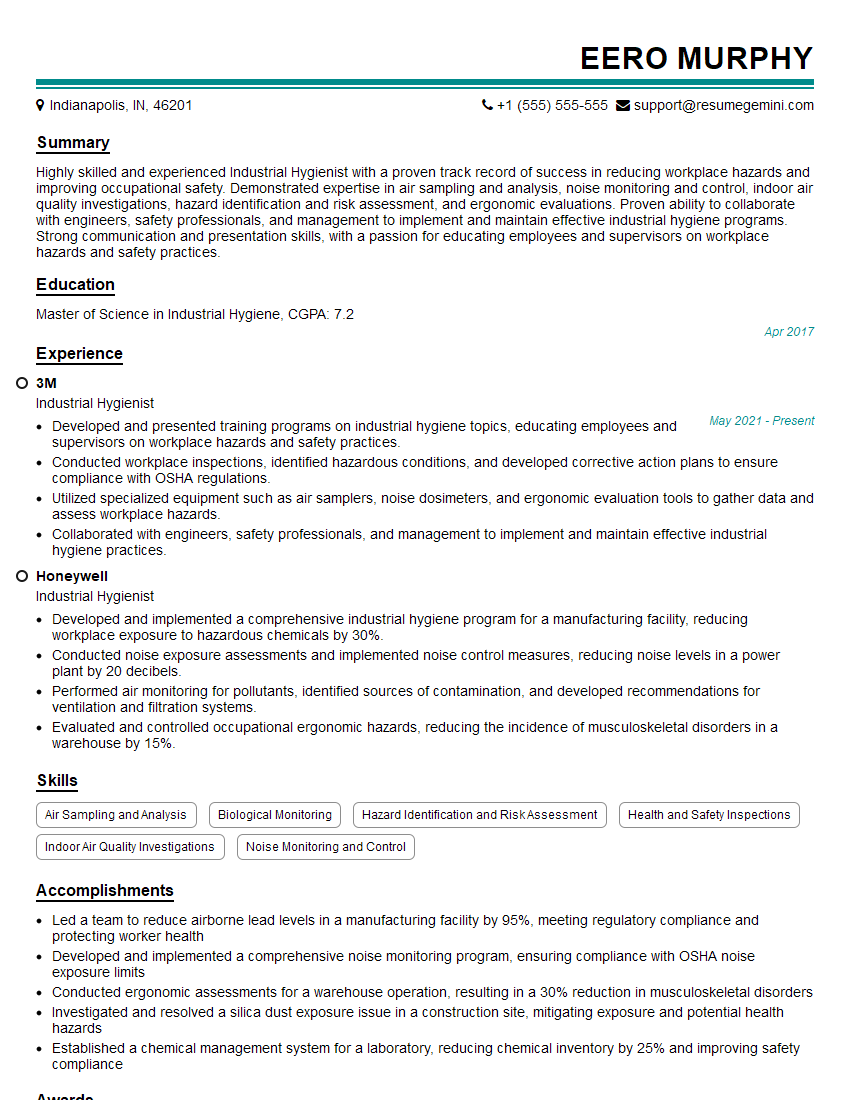
Industrial Hygienist Resume Sample
Explore more articles
Users Rating of Our Blogs
Share Your Experience
We value your feedback! Please rate our content and share your thoughts (optional).
What Readers Say About Our Blog
good