Preparation is the key to success in any interview. In this post, we’ll explore crucial ANSI Z133.1 Safety Requirements for Arboricultural Operations interview questions and equip you with strategies to craft impactful answers. Whether you’re a beginner or a pro, these tips will elevate your preparation.
Questions Asked in ANSI Z133.1 Safety Requirements for Arboricultural Operations Interview
Q 1. Explain the key differences between ANSI Z133.1 and other relevant safety standards.
ANSI Z133.1, Safety Requirements for Arboricultural Operations, is specifically designed for the tree care industry. Unlike broader occupational safety standards like OSHA (Occupational Safety and Health Administration) regulations, which cover a wide range of workplaces, Z133.1 focuses solely on the unique hazards associated with tree work. OSHA might address fall protection generally, but Z133.1 delves into the specifics of tree-related falls, including considerations like rigging techniques, anchor points, and the dynamic forces involved in felling large trees. Other standards might touch on aspects like personal protective equipment (PPE) use, but Z133.1 provides detailed requirements tailored to arboriculture, specifying the types of PPE necessary for different tasks and situations. Think of it this way: OSHA sets the general safety rules, while Z133.1 provides the specialized instruction manual for tree work.
Q 2. Describe the hierarchy of hazards outlined in ANSI Z133.1.
ANSI Z133.1 doesn’t explicitly list a formal “hierarchy of hazards,” but it implicitly addresses hazards in a tiered approach based on the severity and likelihood of potential injuries. The most critical hazards, those with the highest potential for fatalities or catastrophic injuries, are given the most attention. For instance, tree falls, which can lead to crushing injuries or death, are addressed with extensive requirements for planning, rigging, and felling techniques. Hazards like cuts and abrasions from chainsaws or other tools are also addressed, but the focus is higher on the more severe risks. Essentially, the standard prioritizes controlling the most dangerous hazards first, then addressing those with less severe consequences. This is similar to a risk assessment matrix, where you would prioritize based on the likelihood and severity of the risk.
Q 3. What are the requirements for pre-work planning as outlined in ANSI Z133.1?
Pre-work planning under ANSI Z133.1 is paramount. It involves a thorough assessment of the work site and the trees to be worked on. This includes:
- Site Survey: Identifying potential hazards like overhead power lines, underground utilities, nearby structures, and unstable ground.
- Tree Assessment: Determining the tree’s condition, including its structural integrity, lean, and presence of decay or disease. This will help determine the best felling technique.
- Risk Assessment: Identifying potential hazards and developing control measures to mitigate them. This should document the identified hazards, the risks associated with them, and the steps taken to mitigate them.
- Work Plan: Developing a detailed plan outlining the sequence of operations, the equipment to be used, and the roles and responsibilities of each crew member. This plan should address emergency procedures and communication protocols.
- Emergency Response Planning: Defining clear protocols for emergencies, including contacting emergency services and providing first aid.
Failing to adequately plan can lead to serious accidents. For example, neglecting to identify a nearby power line could result in electrocution. A poorly planned felling operation could cause the tree to fall in an unintended direction, causing damage or injury.
Q 4. How does ANSI Z133.1 address the use of personal protective equipment (PPE)?
ANSI Z133.1 mandates the appropriate use of personal protective equipment (PPE) based on the tasks being performed. This includes, but is not limited to:
- Hard hats: To protect against falling objects.
- Eye and face protection: Safety glasses or face shields to prevent injuries from flying debris.
- Hearing protection: Earplugs or muffs to reduce noise exposure from chainsaws and other equipment.
- Gloves: To protect hands from cuts and abrasions.
- Chainsaw chaps or protective clothing: To mitigate injuries from chainsaw kickbacks.
- High-visibility clothing: To enhance visibility in various work environments.
- Fall protection equipment: Harnesses, lanyards, and anchor points for work at heights (discussed in more detail below).
The standard emphasizes that PPE must be properly fitted, maintained, and used correctly. Regular inspections and training are crucial to ensure effectiveness. Improper use of PPE, or the failure to use it at all, can negate its protective benefits, leading to serious consequences.
Q 5. Explain the requirements for fall protection under ANSI Z133.1.
Fall protection is a critical aspect of ANSI Z133.1, especially given the inherent risks of working at heights in tree care. The standard requires the use of a complete personal fall arrest system (PFAS) when working at heights exceeding six feet. This system includes:
- A full-body harness: Properly fitted and inspected regularly.
- Anchor points: Securely attached points that can withstand the forces of a fall. These should be independently assessed to verify their capacity.
- Connecting devices: Lanyards, shock absorbers, and self-retracting lifelines that connect the harness to the anchor point.
ANSI Z133.1 also specifies requirements for the selection and inspection of fall protection equipment and emphasizes the importance of training and competent supervision to ensure its proper use. Additionally, rescue plans must be developed and practiced in case a fall occurs. Failure to comply with these requirements can lead to serious injury or death. For example, using a damaged lanyard or improper anchor point could result in a fatal fall.
Q 6. How would you identify and mitigate potential hazards during a tree removal operation?
Identifying and mitigating hazards during a tree removal operation requires a systematic approach:
- Pre-work Planning: As discussed earlier, this includes a thorough site survey and risk assessment to identify all potential hazards.
- Hazard Identification: This involves identifying specific hazards, such as overhead power lines, unstable branches, surrounding structures, and the potential for tree falls. Consider the tree’s species, its condition (decay, disease), and its location in relation to surrounding elements.
- Hazard Mitigation: This involves implementing control measures to reduce or eliminate the identified hazards. Examples include de-energizing power lines, securing unstable branches, clearing the area around the tree, using proper felling techniques, and employing appropriate PPE and fall protection.
- Communication: Clear communication is critical among crew members to ensure everyone is aware of the hazards and mitigation strategies.
- Continuous Monitoring: Hazards can emerge unexpectedly. Continuously monitoring the work area, the tree’s behavior, and the crew’s actions is essential to detect and respond to evolving risks. This includes changing weather conditions, unexpected structural failure in the tree itself, or unsafe actions by crew members.
For example, if a power line is close to the tree, it might be necessary to contact the utility company to de-energize it before commencing work. If there is a risk of the tree falling on a structure, the structure may need to be protected or the operation redesigned entirely. Failing to properly identify and mitigate hazards could lead to serious injury or property damage.
Q 7. What are the communication protocols you’d implement to ensure the safety of your crew?
Effective communication protocols are essential for crew safety. These should include:
- Pre-work Briefing: A detailed briefing before starting work, covering the work plan, potential hazards, safety procedures, and emergency protocols. This should include a clear explanation of each crew member’s roles and responsibilities.
- Hand Signals: Established hand signals for communicating during operations, especially in noisy environments where verbal communication is difficult. These signals should be clearly defined and understood by all crew members.
- Two-Way Radios: Using two-way radios to maintain constant communication among crew members, especially when working in different areas or at heights. This allows for immediate communication of any issues or hazards.
- Emergency Procedures: Clear procedures for emergency situations, including reporting accidents and contacting emergency services. This also includes having designated personnel responsible for specific emergency roles (e.g., first aid, communication).
- Post-Work Debriefing: A meeting after work to discuss the day’s events, identify any near misses or unsafe actions, and learn from experiences to improve safety practices.
Consistent and clear communication minimizes misunderstandings and ensures a safe working environment. Lack of communication can lead to accidents caused by misinterpretations or a failure to alert others to potential dangers.
Q 8. Outline the proper procedures for handling energized lines according to ANSI Z133.1.
Handling energized power lines is paramount in arboriculture. ANSI Z133.1 stresses the absolute necessity of maintaining a safe distance and contacting the utility company before any work near power lines begins. This isn’t just a guideline; it’s a life-saving precaution.
The proper procedure involves:
- Contacting the utility company: This is the first step. You must call and request they de-energize the lines or provide a safe work distance. Never assume a line is dead.
- Establishing a safe work zone: Based on the voltage, a specified distance (often significantly larger than what you might intuitively think) must be maintained. This distance is determined by the utility company and specified in their response.
- Using spotters: Trained spotters are essential to monitor the work area for any movement of equipment or limbs that could compromise the safe distance. They act as a second line of defense.
- Employing appropriate PPE: This includes insulated tools, rubber gloves, and protective clothing. This personal protective equipment is vital in the rare event of accidental contact.
- Documentation: Thorough documentation of the contact with the utility company, the safe work zone established, and any other relevant details is crucial for liability and safety records.
Imagine a scenario where a branch unexpectedly swings close to a power line. Proper planning and communication with the utility company could be the difference between a minor incident and a severe accident. Following these procedures isn’t about being overly cautious; it’s about preventing tragedy.
Q 9. Describe the emergency procedures to follow if a worker is injured on the job site.
Emergency response is critical. ANSI Z133.1 mandates the establishment of clear emergency procedures and the provision of first aid. The focus is swift action and minimizing further injury.
The steps are typically:
- Immediate assessment: Check for immediate life threats (e.g., airway, breathing, circulation).
- Call for emergency services: Dial emergency medical services immediately. Be prepared to provide the location, nature of the injury, and the number of injured workers.
- Administer first aid: Qualified personnel should provide appropriate first aid while awaiting emergency responders.
- Secure the scene: Ensure the area is safe to prevent further injuries to first responders or other workers.
- Preserve the site: Do not disturb the scene until the investigation is complete. This ensures that relevant evidence is not lost.
- Post-incident reporting: A detailed report should be created, documenting the incident, injuries sustained, actions taken, and any contributing factors.
Remember, the goal is to save lives and minimize long-term consequences. Timely and efficient emergency response can be the difference between a temporary setback and a life-altering event.
Q 10. What is your understanding of the ‘Competent Person’ as defined in ANSI Z133.1?
A ‘Competent Person,’ as defined in ANSI Z133.1, is an individual capable of identifying existing and predictable hazards in the surroundings or working conditions which are unsanitary, hazardous, or dangerous to employees, and who has authorization to take prompt corrective measures to eliminate them.
This isn’t simply someone with experience; it requires a combination of:
- Knowledge: A thorough understanding of ANSI Z133.1 and related safety regulations.
- Training: Formal training in arboriculture safety practices and hazard recognition.
- Experience: Significant on-the-job experience to identify potential hazards.
- Authority: The power to take corrective action when hazards are identified.
For example, a competent person would recognize the risk of a tree falling near power lines and have the authority to halt work until the lines are de-energized or a safe distance is established. They are responsible for the overall safety of the crew.
Q 11. How do you ensure compliance with ANSI Z133.1 in your daily work tasks?
Ensuring compliance with ANSI Z133.1 is an ongoing process, not a one-time event. My daily tasks include:
- Pre-job planning: Conducting thorough risk assessments before any work commences.
- PPE checks: Verifying that all workers have the appropriate personal protective equipment and are using it correctly.
- Tool inspections: Regular inspection of equipment to ensure it’s in good working order and properly maintained.
- Hazard identification and mitigation: Actively searching for and addressing potential hazards throughout the workday.
- Training and communication: Ensuring that all crew members are adequately trained and informed about safety procedures.
- Documentation: Maintaining accurate records of inspections, training, and incidents.
Imagine a daily checklist – this is my approach. Each task is a step towards a safer work environment.
Q 12. Explain the role of risk assessment in tree care operations according to ANSI Z133.1.
Risk assessment is the cornerstone of safe tree care operations according to ANSI Z133.1. It’s a systematic process of identifying hazards and evaluating the risks associated with them. It’s not a one-size-fits-all process; each job requires a unique assessment.
The process involves:
- Identifying hazards: Pinpointing potential dangers such as unstable trees, overhead power lines, traffic, and challenging terrain.
- Evaluating risks: Determining the likelihood and severity of each hazard.
- Implementing controls: Developing and implementing strategies to mitigate or eliminate the identified risks, such as using proper equipment, establishing safe zones, or modifying work procedures.
- Monitoring and review: Regularly monitoring the effectiveness of the controls and reviewing the risk assessment as conditions change.
For example, a risk assessment might identify a dead tree leaning toward a building. The control measures could include rigging the tree for a controlled fall away from the building and establishing a safety zone to protect onlookers.
Q 13. What are the key requirements for vehicle and equipment safety?
Vehicle and equipment safety is crucial. ANSI Z133.1 emphasizes regular maintenance, proper operation, and safe handling. Negligence in this area can lead to serious accidents.
Key requirements include:
- Regular maintenance: Vehicles and equipment must be regularly inspected and maintained to ensure they are in safe operating condition. This includes brakes, tires, lights, and other critical components.
- Safe operating procedures: Operators must be trained and competent in the safe operation of all equipment. This includes understanding the limitations of the equipment.
- Proper loading and securing: Equipment and materials must be loaded and secured properly to prevent shifting or falling during transport.
- Pre-use inspections: A pre-use inspection should be carried out before any equipment is used to identify any potential hazards.
- Emergency exits and safety features: Vehicles and equipment should be equipped with functioning emergency exits and safety features.
Think of it as a driver’s pre-trip inspection, but magnified for all equipment. Regular and diligent care prevents many accidents.
Q 14. Describe the procedures for dealing with unstable trees.
Dealing with unstable trees requires a cautious and methodical approach. ANSI Z133.1 prioritizes worker safety above all else.
Procedures include:
- Assessment: A thorough assessment of the tree’s condition, including its lean, decay, and potential failure points. This often involves using specialized tools and techniques.
- Planning: Developing a detailed plan for safely removing or stabilizing the tree, considering factors such as wind, terrain, and proximity to structures or people.
- Safe working zones: Establishing clearly defined safe working zones to protect workers and the public from falling debris.
- Appropriate equipment: Using appropriate equipment, such as ropes, rigging hardware, and climbing gear, to safely manage the tree’s removal.
- Controlled felling techniques: Employing controlled felling techniques to direct the tree’s fall in a predetermined direction.
- Emergency protocols: Having clear emergency protocols in place in case of unexpected events.
Imagine a large, leaning tree near a power line. A poorly executed removal could lead to serious consequences. The focus must be on a slow, deliberate plan to minimize any risk.
Q 15. How do you determine the safe working load for ropes and rigging equipment?
Determining the safe working load (SWL) for ropes and rigging equipment is paramount for arboricultural safety. It’s not just about a single number; it’s a holistic assessment considering several factors. We must never exceed the manufacturer’s recommended SWL, clearly stated on the equipment’s label. This SWL is typically expressed as a weight or force, such as ‘5,000 lbs’ or ’22kN’.
Beyond the manufacturer’s rating, we consider:
- Rope Condition: A rope showing signs of wear, UV degradation, or damage (cuts, abrasions, etc.) will have a reduced SWL. We’d inspect closely and potentially replace it.
- Type of Knots: Different knots reduce the rope’s strength. We choose the correct knot for the job and account for the resulting strength reduction; for example, a bowline reduces strength less than a clove hitch.
- Environmental Factors: Wet or icy conditions can significantly reduce the strength of synthetic ropes. We account for these factors by reducing our working load or choosing more robust equipment.
- Angle of Pull: When a rope is pulled at an angle, the effective load on the rope is greater than the vertical load. We use vector analysis or a simple reduction factor to calculate the correct SWL.
- System Redundancy: We often use multiple ropes or rigging points for redundancy. However, this doesn’t simply multiply the SWL; the system needs to be designed for safe load distribution.
Example: If a rope has a 5000 lb SWL but we’re using a knot that reduces strength by 10% and the rope is slightly damp (reducing strength by another 5%), the effective SWL is reduced to approximately 4250 lbs (5000 * 0.9 * 0.95).
Career Expert Tips:
- Ace those interviews! Prepare effectively by reviewing the Top 50 Most Common Interview Questions on ResumeGemini.
- Navigate your job search with confidence! Explore a wide range of Career Tips on ResumeGemini. Learn about common challenges and recommendations to overcome them.
- Craft the perfect resume! Master the Art of Resume Writing with ResumeGemini’s guide. Showcase your unique qualifications and achievements effectively.
- Don’t miss out on holiday savings! Build your dream resume with ResumeGemini’s ATS optimized templates.
Q 16. What are your protocols for handling hazardous materials?
Handling hazardous materials in arboriculture requires strict adherence to OSHA and ANSI Z133.1 guidelines. Our protocols emphasize minimizing exposure and preventing accidents. We begin with proper identification and understanding of the hazards of each material used—pesticides, herbicides, fuels, etc.
- Pre-work Planning: Before starting a job involving hazardous materials, we develop a detailed safety plan, including material safety data sheets (MSDS) review, appropriate PPE selection, and emergency response plans.
- Personal Protective Equipment (PPE): PPE is crucial. This includes respirators, gloves, eye protection, and protective clothing specific to the material’s hazards. We ensure everyone understands PPE requirements and proper use.
- Spill Response: We have designated spill kits available on-site and trained personnel in their safe and effective use. Spill containment and cleanup procedures are clearly defined and practiced regularly.
- Waste Disposal: We strictly follow all local, state, and federal regulations for the proper disposal of hazardous waste materials. This includes proper labeling, packaging, and transportation to approved disposal sites.
- Training and Communication: Regular training keeps our team up-to-date on safe handling procedures, emergency protocols, and the latest regulations. Open communication ensures that any concerns are addressed promptly.
Example: When using herbicides, we would use appropriate respirators, chemically resistant gloves, and eye protection. A spill response plan would be in place, outlining the use of absorbent material and neutralizers if necessary.
Q 17. How would you train new employees on ANSI Z133.1 safety standards?
Training new employees on ANSI Z133.1 safety standards is a multi-faceted process encompassing classroom instruction, practical demonstrations, and ongoing mentorship. We start with a thorough review of the standard, emphasizing key sections relevant to their roles.
- Classroom Instruction: This covers the theoretical aspects of the standard, using visuals and interactive sessions to make learning engaging. We focus on topics like hazard identification, risk assessment, PPE use, and emergency response procedures.
- Hands-on Training: This includes practical demonstrations and supervised practice. New employees are guided through proper techniques for rope handling, rigging, climbing, and tree cutting under the close supervision of experienced arborists. This emphasizes safe practices and the consequences of errors.
- Mentorship and On-the-Job Training: Experienced arborists act as mentors, providing ongoing guidance and feedback during real-world tasks. This ensures consistent application of safety protocols and allows for immediate corrections if needed.
- Regular Refresher Training: Safety standards and best practices are regularly updated. Therefore, we conduct regular refresher training sessions to keep our employees’ knowledge and skills current.
- Documentation and Testing: We maintain detailed training records and conduct competency assessments to ensure each employee understands and can apply ANSI Z133.1 standards effectively.
Example: A new employee wouldn’t be allowed to climb a tree independently until they had demonstrated competency in the correct use of climbing equipment, fall protection techniques, and rescue procedures through supervised practice and assessment.
Q 18. Describe your understanding of lockout/tagout procedures.
Lockout/Tagout (LOTO) procedures are crucial for preventing accidental energization of equipment, protecting workers from serious injury or death. This is especially relevant when working near powered equipment like chippers, saws with electric motors, or aerial lifts.
Our LOTO process follows these steps:
- Preparation: Identify all energy sources (electrical, hydraulic, pneumatic, etc.).
- Notification: Inform all relevant personnel that LOTO procedures will be implemented.
- Energy Isolation: Safely shut down and isolate all energy sources. This might involve turning off circuit breakers, closing valves, or disconnecting power cords.
- Lockout: Attach a lock to the energy isolation device, preventing accidental re-energization. Each person working on the equipment should have their own lock.
- Tagout: Attach a tag with clear identification of the worker, date, and reason for lockout. This serves as a secondary visual warning.
- Verification: Before commencing work, verify that the equipment is truly de-energized. Try to re-energize (if possible and safe to do so) to confirm the lockout’s effectiveness.
- Removal: After completing the work, only the person who applied the lockout should remove it. This process should also be documented and witnessed.
Example: Before performing maintenance on a wood chipper, we’d turn off the power switch, lock it out using a personal padlock, tag it with our name and date, then verify the machine is off before starting work. The padlock is removed only after the work is complete and the machine has been verified to be in a safe condition.
Q 19. How do you conduct a thorough job site inspection before beginning work?
A thorough job site inspection before commencing work is non-negotiable. It’s the cornerstone of preventing accidents. We use a standardized checklist, ensuring consistency and thoroughness. The inspection covers several key areas:
- Tree Assessment: We evaluate the tree’s condition, identifying potential hazards like deadwood, weak branches, cavities, leaning or unstable conditions, and the presence of wildlife.
- Ground Conditions: The ground is examined for hazards like uneven terrain, holes, buried utilities, and obstacles that could cause trips, falls, or equipment damage.
- Equipment Inspection: All equipment—chainsaws, ropes, harnesses, aerial lifts, etc.—is inspected for defects or damage. Equipment should meet safety standards and be properly maintained.
- Weather Conditions: Wind speed, rain, and other weather factors are assessed. Work might be postponed if conditions are unsafe.
- Access and Egress Routes: Clear and safe access and egress routes are verified to ensure that workers can get in and out of the work area safely, even in an emergency.
- Public Safety: The site is checked to ensure that the work area is appropriately cordoned off and that the public is at a safe distance from the operation.
Example: During a pre-job inspection, we discovered a significant underground utility line near the base of the tree. This necessitated altering the work plan to avoid damage to the line and potential harm to the workers.
Q 20. What are the criteria for selecting appropriate climbing gear and equipment?
Selecting appropriate climbing gear and equipment is crucial for safety and efficiency. The choice depends on the specific job, the tree’s characteristics, and the arborist’s skill level. We always prioritize equipment that meets or exceeds ANSI Z133.1 standards and is in excellent working condition.
- Harnesses: Full-body harnesses are mandatory, designed for tree work, with appropriate padding and adjustment straps for a secure and comfortable fit.
- Ropes: Ropes should be the correct diameter and strength for the load, tree size, and climbing technique. They should be inspected regularly for wear and tear. Static ropes are generally used for climbing, while dynamic ropes might be employed for certain rigging applications.
- Helmets: A hard hat offering protection from falling objects is essential.
- Carabiners: High-quality locking carabiners are used to connect the harness to the rope or anchor points. They must be regularly inspected for damage.
- Ascenders and Descenders: These devices provide controlled ascent and descent. The choice depends on the climbing technique and the tree’s characteristics.
- Other Equipment: Other important equipment includes climbing spurs (only if the tree’s bark is sufficiently durable), gloves, eye protection, and appropriate footwear.
Example: For a large, tall tree with a relatively smooth bark, we might select a full-body harness, static rope, ascender/descender system, and appropriate anchor points. We would avoid using climbing spurs in this scenario. However, for a shorter tree with more textured bark, spurs might be considered in combination with a harness and rope.
Q 21. Explain your understanding of the different types of tree cutting techniques and their associated risks.
Understanding tree cutting techniques and their associated risks is fundamental to safe arboriculture. Different techniques are suited to different situations, and each carries specific hazards.
- Topping: This involves removing the top of a tree. It’s considered a high-risk practice because it can damage the tree and create instability, potentially leading to failure and property damage or injury.
- Crown Reduction: Reduces the size of a tree’s crown, often using more selective cuts and aiming to maintain a natural shape. It reduces risk compared to topping but still requires careful planning and execution.
- Crown Cleaning: Removes dead, diseased, or weak branches from the crown, improving the tree’s health and safety. Risk is lower, but hazards include dropped branches or limbs.
- Crown Thinning: Reduces the density of the crown by removing some branches while maintaining the tree’s overall shape. This lowers wind resistance and reduces the risk of branch breakage.
- Directional Felling: Cutting a tree down in a precise direction, which requires assessing the tree’s lean, identifying potential obstacles, and using a specific felling technique. Risks include tree kickback, felling in an uncontrolled direction, and crushing hazards.
Risk Assessment: Before any tree cutting operation, a thorough risk assessment is essential. We consider the tree’s size, species, condition, and the surrounding environment. The chosen technique must minimize risk and ensure the safety of workers and the public. We might use specialized equipment such as wedges and rigging systems to control the direction of falling trees.
Example: While crown cleaning is generally safer than topping, even small branches can cause injuries if they fall on a worker. Therefore, appropriate PPE and safe work practices, such as using a chainsaw safely and controlling the fall of branches, are crucial.
Q 22. How would you respond to an unexpected weather event during a tree care operation?
Responding to unexpected weather during a tree care operation requires immediate and decisive action, prioritizing safety above all else. My first step is to assess the severity and type of weather event. Is it a sudden downpour, strong winds, or lightning? This assessment dictates the next actions.
- Light Rain: If it’s light rain, we might temporarily pause non-critical tasks, ensuring everyone remains vigilant and has appropriate rain gear. We’d continue only if conditions remain safe.
- Strong Winds or Lightning: If we encounter strong winds (above the safe wind speed for the specific equipment and task, as defined in ANSI Z133.1) or lightning, we immediately cease all operations. All personnel must be evacuated from aerial lifts and the worksite to a safe location, away from trees and potential hazards. We wait until the weather improves to a safe level before resuming.
- Severe Weather Warnings: If severe weather warnings are issued, we completely shut down operations and ensure everyone is safely accounted for and offsite. Communication is key; I use a designated communication system to ensure everyone receives updates and instructions.
In all cases, safety is paramount. We follow the guidelines in ANSI Z133.1 to ensure all personnel adhere to established safety protocols. I would also document the weather event, the actions taken, and the time of resumption of work in our safety logs.
Q 23. What is your experience with various aerial lift devices and their associated safety protocols?
I have extensive experience operating and overseeing the safe operation of various aerial lift devices, including bucket trucks, aerial lifts, and climbing systems. This includes thorough understanding and adherence to the specific safety protocols outlined in ANSI Z133.1 for each device.
- Bucket Trucks: I’m proficient in pre-operational checks (ensuring brakes, outriggers, and hydraulic systems are functioning correctly), safe operation procedures (maintaining appropriate distances from power lines and maintaining three-point contact while in the bucket), and emergency procedures (knowing how to safely lower the bucket in case of failure).
- Aerial Lifts (Articulating and Telescoping): My experience covers pre-operational inspections, load capacity awareness, stability considerations (ground conditions, outrigger placement), and safe operating practices at varying heights. I am familiar with the different controls and limitations of different models.
- Climbing Systems: I’m experienced in the safe use of climbing systems, including proper rope selection, knot tying techniques, and fall protection methods. I strictly adhere to ANSI Z133.1 standards for climbing and ensuring proper equipment inspection and maintenance.
In all cases, I emphasize risk assessment and hazard identification before, during and after operation of any aerial lift. This includes identifying potential hazards such as power lines, overhead obstructions, and unstable ground conditions.
Q 24. Explain the importance of maintaining accurate records and documentation regarding safety practices.
Maintaining accurate records and documentation of safety practices is crucial for several reasons. It’s not just about compliance; it’s about continuous improvement and liability protection.
- Compliance: ANSI Z133.1 and other regulations often require detailed records of safety inspections, training, incidents, and near misses. These records demonstrate adherence to the standards.
- Risk Management: Detailed records allow us to identify trends and patterns in accidents or near misses. This helps pinpoint areas needing improvement in our safety protocols and training programs, proactively reducing risk.
- Liability Protection: In case of an accident or legal dispute, accurate and complete records serve as vital evidence of our commitment to safety and due diligence.
- Employee Training: Records of training sessions and competency evaluations support demonstration of a commitment to employee safety. It aids in identifying knowledge gaps and customizing further training needs.
Our documentation includes daily job hazard analyses, equipment inspection reports, incident reports, and employee training records. These are stored securely and are readily accessible for review and auditing purposes. This is vital for a safe and efficient arboricultural operation.
Q 25. Describe a situation where you had to apply your knowledge of ANSI Z133.1 to prevent an accident.
During a large tree removal project, we were preparing to fell a large oak tree near a power line. Initial assessments, even with the use of advanced measuring equipment, suggested we had sufficient clearance. However, during a final check before commencing, I noticed subtle discrepancies that raised concerns. While the initial measurements suggested adequate distance, the tree’s lean, combined with potential sway during the felling process, raised the risk of contact with the power line.
Applying my knowledge of ANSI Z133.1, specifically section 6.7 on working near energized lines, I halted the operation. We employed more detailed analysis and additional safety measures, including contacting the power company to de-energize the line temporarily. This prevented a potentially fatal electrical accident. The extra time and expense saved lives and prevented substantial damages. This reinforced my commitment to never compromise on safety, even when facing seemingly minor discrepancies.
Q 26. How do you stay current with changes and updates to ANSI Z133.1?
Staying current with ANSI Z133.1 is an ongoing process. I accomplish this through several methods:
- Subscriptions to Industry Publications: I subscribe to industry journals and newsletters that regularly update on changes and interpretations of the standard.
- Professional Development Courses: I actively participate in professional development courses and workshops specifically focusing on ANSI Z133.1 and related safety regulations. These provide in-depth knowledge and address common challenges.
- Networking with Other Professionals: I attend industry conferences and actively engage with other arborists, sharing knowledge and discussing best practices regarding safety.
- Directly Checking for Updates from ANSI: I regularly check the ANSI website to access the latest versions of the standard and any related updates or errata.
Staying updated isn’t just about compliance; it’s about ensuring I’m using the most effective and up-to-date safety practices to protect my team and myself.
Q 27. What are the specific responsibilities of a competent person concerning aerial lifts?
According to ANSI Z133.1, a competent person regarding aerial lifts has specific responsibilities that ensure safe operation and hazard prevention. These responsibilities extend beyond just operational knowledge.
- Pre-operational Inspections: The competent person must perform thorough pre-operational inspections of all aerial lift devices, verifying their mechanical soundness and safety features.
- Training and Supervision: They are responsible for ensuring all operators have received adequate training, understand the safety procedures, and are properly supervised during operation.
- Risk Assessment: The competent person must conduct a thorough risk assessment before any work begins, identifying potential hazards related to aerial lift usage and implementing appropriate control measures.
- Emergency Procedures: They must establish and communicate clear emergency procedures to all personnel, ensuring everyone knows how to react in case of a malfunction or accident.
- Compliance with Standards: They must ensure that all aerial lift operations comply with all relevant sections of ANSI Z133.1 and other applicable safety standards.
- Record Keeping: They’re responsible for maintaining accurate records of inspections, training, and any incidents or near misses.
A competent person acts as a safety leader, ensuring compliance and fostering a safety-conscious work environment.
Q 28. Describe your approach to incorporating continuous improvement into your safety procedures.
Incorporating continuous improvement into our safety procedures is a critical component of our operations. We use a multi-faceted approach:
- Regular Safety Meetings: We hold regular safety meetings to discuss near misses, identify potential hazards, and review our safety procedures. These meetings provide a platform for open communication and feedback from the team.
- Incident Reporting and Investigation: We have a robust incident reporting system. Any incident, regardless of severity, is thoroughly investigated to determine the root cause and implement corrective actions to prevent recurrence. This involves analysis and root-cause identification.
- Regular Equipment Inspections: We perform frequent equipment inspections, going beyond the minimum requirements of ANSI Z133.1 to ensure early identification and mitigation of potential issues.
- Employee Feedback: We actively solicit feedback from our employees, encouraging them to report any safety concerns or suggestions for improvement. Their insights are invaluable.
- Staying Updated on Industry Best Practices: We are continuously researching and learning about new technologies and techniques in arboricultural safety, adapting our practices accordingly.
This cyclical approach of review, analysis, and improvement helps us build a stronger, safer, and more efficient work environment.
Key Topics to Learn for ANSI Z133.1 Safety Requirements for Arboricultural Operations Interview
- Personal Protective Equipment (PPE): Understanding the types of PPE required for various tasks (helmets, eye protection, gloves, etc.), proper selection, inspection, and maintenance.
- Hazard Recognition and Risk Assessment: Identifying potential hazards in the work environment (e.g., overhead hazards, unstable trees, equipment malfunctions) and implementing appropriate risk mitigation strategies.
- Tree Climbing and Fall Protection: Mastering safe climbing techniques, proper use of climbing equipment (ropes, harnesses, ascenders), and understanding fall arrest systems.
- Safe Use of Chainsaws and Other Equipment: Proper techniques for chainsaw operation, maintenance, and sharpening, as well as safe handling of other arboricultural equipment (e.g., chippers, aerial lifts).
- Emergency Response Procedures: Knowing how to respond to various emergencies, such as falls, equipment malfunctions, or injuries, including first aid and emergency contact procedures.
- Site Safety and Planning: Understanding the importance of proper site preparation, hazard control measures, communication protocols with the team and public, and emergency exit strategies.
- Working with Utility Lines: Safe practices for working near or around power lines and other utility services.
- Regulations and Compliance: Familiarity with relevant safety regulations and industry best practices beyond ANSI Z133.1.
- Practical Problem-Solving: Be prepared to discuss how you’ve solved safety-related challenges on the job, demonstrating your critical thinking and problem-solving skills.
Next Steps
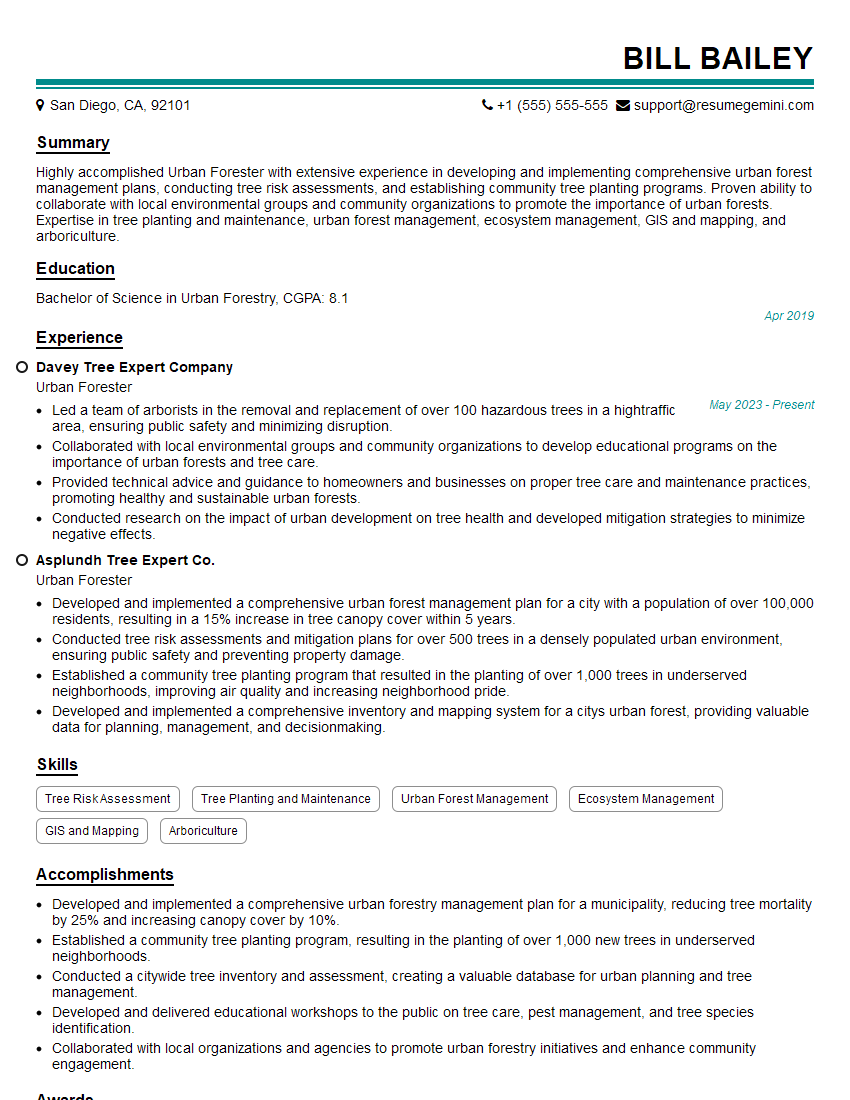
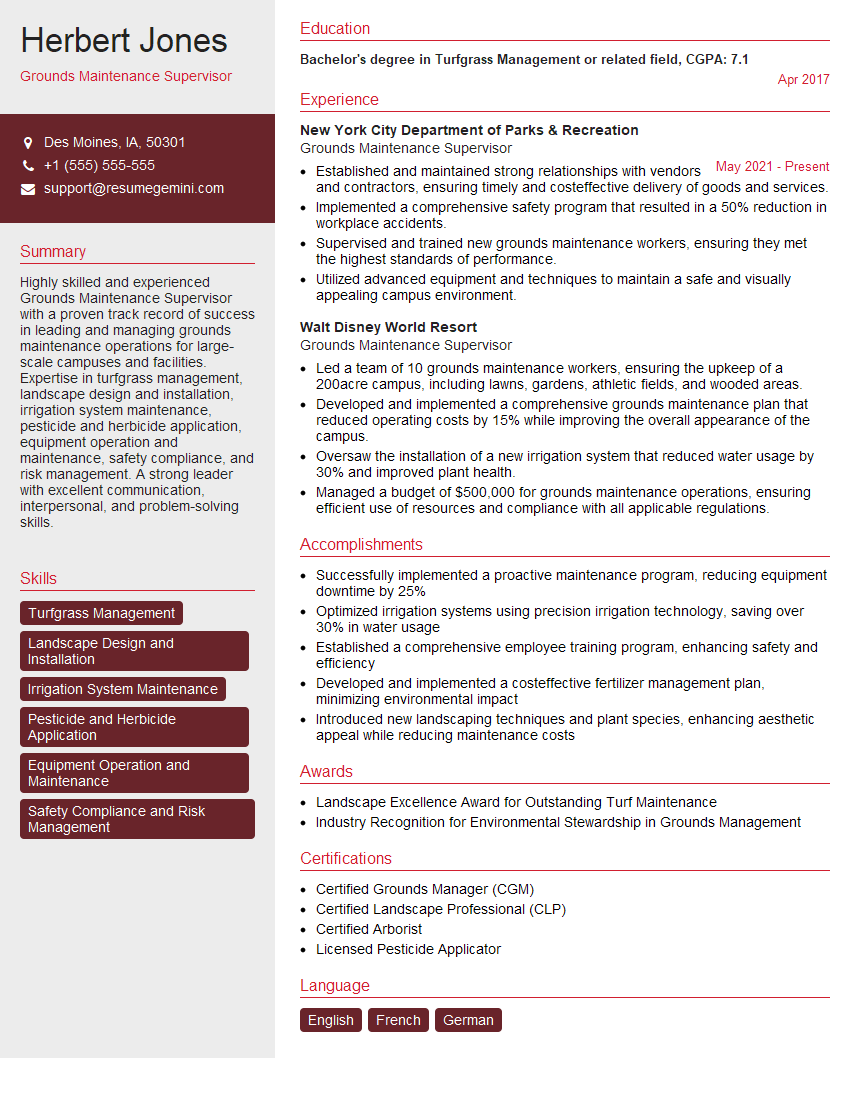
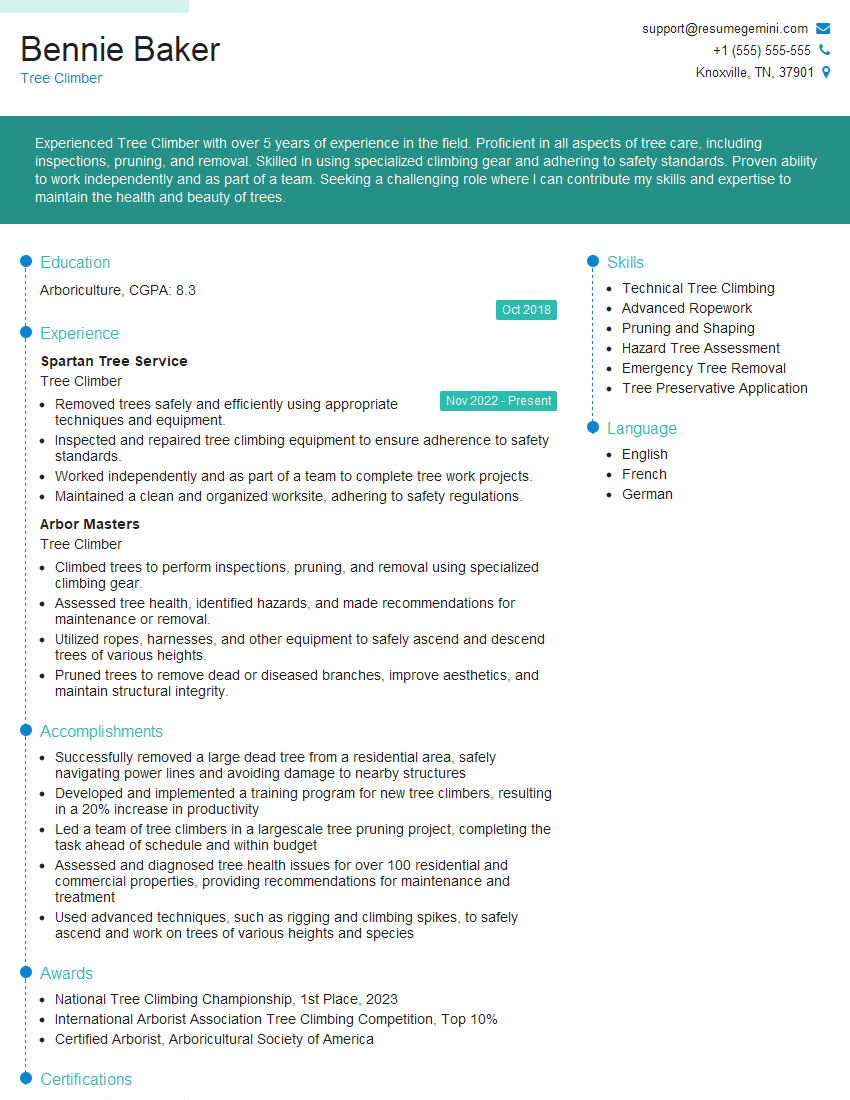
Mastering ANSI Z133.1 is crucial for career advancement in arboriculture. It demonstrates your commitment to safety, a top priority in this demanding field. This knowledge will significantly enhance your interview performance and make you a more competitive candidate. To maximize your job prospects, focus on creating an ATS-friendly resume that highlights your skills and experience relevant to ANSI Z133.1. ResumeGemini is a trusted resource for building professional resumes that get noticed by employers. We provide examples of resumes tailored specifically to ANSI Z133.1 Safety Requirements for Arboricultural Operations to help you create a winning application.

Explore more articles
Users Rating of Our Blogs
Share Your Experience
We value your feedback! Please rate our content and share your thoughts (optional).
What Readers Say About Our Blog
Very informative content, great job.
good