Interviews are opportunities to demonstrate your expertise, and this guide is here to help you shine. Explore the essential API Certification in Pipeline Inspection interview questions that employers frequently ask, paired with strategies for crafting responses that set you apart from the competition.
Questions Asked in API Certification in Pipeline Inspection Interview
Q 1. Explain the different types of pipeline corrosion and their detection methods.
Pipeline corrosion is a major concern in the oil and gas industry, leading to leaks and potential catastrophic failures. There are several types, each requiring specific detection methods.
- Internal Corrosion: This occurs on the inside of the pipe, often due to the chemical composition of the transported fluid (e.g., acidic crude oil). Detection methods include In-Line Inspection (ILI) tools using magnetic flux leakage (MFL) or ultrasonic technology to detect wall thinning and pitting.
- External Corrosion: This affects the outside of the pipe, primarily caused by soil conditions (e.g., acidic soil, stray current). Methods include external inspection using close-interval surveys, ground penetrating radar, and cathodic protection monitoring.
- Microbial Corrosion: This is caused by microorganisms in the soil or fluid that produce corrosive byproducts. Detection is challenging and often involves microbiological analysis of soil samples and potentially specialized ILI tools.
- Stress Corrosion Cracking (SCC): This is a type of corrosion that occurs due to a combination of tensile stress and a corrosive environment. ILI tools employing advanced techniques like electromagnetic acoustic transducers (EMAT) can sometimes detect it.
The choice of detection method depends on the type of corrosion suspected, the pipeline’s material, and the operating conditions. A comprehensive pipeline integrity management program usually employs a combination of these methods.
Q 2. Describe the process of planning and executing an in-line inspection (ILI) run.
Planning and executing an ILI run is a complex process requiring meticulous attention to detail. It’s like planning a complex surgical procedure – each step is crucial for successful diagnosis and treatment of pipeline threats.
- Pre-Run Planning: This involves detailed pipeline data gathering (maps, specifications, history), tool selection based on pipeline diameter and material, and scheduling of the inspection window with minimal operational disruption.
- Pipeline Preparation: This critical stage ensures the ILI tool can successfully traverse the pipeline. This includes cleaning and flushing to remove debris, pressure testing, and isolating sections of the pipeline. Any obstructions must be removed or bypassed.
- Tool Launching and Running: The ILI tool is carefully launched into the pipeline, and its progress is monitored remotely. Real-time data may be acquired, providing immediate insights into pipeline conditions.
- Data Acquisition and Processing: The ILI tool collects vast amounts of data regarding the pipeline’s internal condition. This raw data is then processed to remove noise and artifacts, enhancing the accuracy of the assessment.
- Data Analysis and Interpretation: Specialized software and expertise are required to interpret the processed data, identifying anomalies such as corrosion, cracks, or dents. This step involves considerable engineering judgment.
- Post-Run Activities: This includes retrieving the ILI tool, creating a comprehensive inspection report detailing identified anomalies and recommended remediation actions. Verification of the findings through other techniques might also be necessary.
The success of an ILI run depends on thorough planning, skilled execution, and the expertise to interpret the resulting data. A failure at any stage could compromise the integrity of the inspection.
Q 3. What are the key components of a pipeline integrity management (PIM) program?
A robust Pipeline Integrity Management (PIM) program is crucial for ensuring the safe and reliable operation of pipelines. It’s a holistic approach, not just about inspections. It’s like a comprehensive health checkup for a pipeline – proactive prevention and timely intervention to avoid serious problems.
- Risk Assessment: Identifying and evaluating potential threats to pipeline integrity, such as corrosion, third-party damage, and environmental factors.
- Inspection Planning: Developing a detailed plan for regular inspections, including the type and frequency of inspections based on risk assessment.
- In-Line Inspection (ILI): Utilizing advanced ILI tools to detect internal pipeline anomalies.
- External Inspections: Conducting regular visual and other inspections of the pipeline’s exterior to detect external corrosion, damage, and leaks.
- Data Management: Establishing a system for managing and analyzing inspection data to identify trends and patterns.
- Repair and Remediation: Developing procedures for repairing or replacing damaged pipeline sections, and managing work permits.
- Compliance: Ensuring that the PIM program complies with all relevant regulations and industry best practices.
- Emergency Response: Establishing procedures for dealing with leaks, failures, and other emergencies.
A successful PIM program is iterative, constantly evolving based on new data and advancements in technology. It’s a long-term commitment to pipeline safety.
Q 4. How do you interpret ILI data to identify potential pipeline threats?
Interpreting ILI data requires specialized knowledge and software. Think of it as deciphering a complex medical scan – it requires a trained eye and understanding of the nuances.
The process typically involves:
- Data Cleaning: Removing noise and artifacts from the raw ILI data to enhance the clarity of anomalies.
- Anomaly Detection: Using algorithms and software to identify deviations from the baseline pipeline condition. These deviations can represent corrosion, cracks, dents, or other pipeline threats.
- Anomaly Characterization: Determining the size, location, and type of each anomaly. This step is crucial for assessing the severity of the threat.
- Risk Assessment: Evaluating the probability and consequence of failure associated with each identified anomaly. This will help prioritize remediation efforts.
- Reporting: Generating a detailed report that summarizes the ILI findings, including locations of anomalies, severity assessments, and recommendations for repair or mitigation.
Advanced data analysis techniques, such as machine learning, are increasingly being used to improve the accuracy and efficiency of ILI data interpretation. It’s a dynamic field with ongoing advancements.
Q 5. Explain the significance of API 570 and its relevance to pipeline inspection.
API 570, ‘Management of Pipeline Systems,’ is a widely recognized industry standard that provides comprehensive guidelines for the management of pipeline integrity. It’s like the bible of pipeline safety, offering a framework for ensuring safe and reliable pipeline operation.
Its relevance to pipeline inspection is significant because it emphasizes the importance of a robust pipeline integrity management (PIM) program that incorporates various inspection methods. API 570 outlines the requirements for:
- Risk Assessment: Performing regular risk assessments to identify potential hazards and prioritize inspection efforts.
- Inspection Planning: Developing detailed plans for inspections, specifying the methods to be used and the frequency of inspections.
- Data Analysis: Properly analyzing inspection data to identify and assess the severity of anomalies.
- Repair and Remediation: Developing procedures for repairing or mitigating identified defects.
- Documentation: Maintaining complete and accurate records of all inspections, repairs, and other maintenance activities.
Compliance with API 570 is often a regulatory requirement, and adhering to its guidelines is crucial for ensuring pipeline safety and operational reliability.
Q 6. What are the common causes of pipeline leaks and failures?
Pipeline leaks and failures can have devastating consequences, both environmentally and economically. They’re often the result of a combination of factors, and understanding these causes is vital for prevention.
- Corrosion: Both internal and external corrosion are major contributors to pipeline failures, weakening the pipe wall and leading to eventual leaks or ruptures. This is particularly problematic in areas with aggressive soils or transported fluids.
- Stress Corrosion Cracking (SCC): A combination of tensile stress and a corrosive environment can lead to cracks that propagate and eventually cause leaks. This is particularly relevant in high-pressure pipelines.
- Third-Party Damage: Accidental damage caused by construction activities, excavation, or anchoring is a significant cause of leaks. This is often preventable with proper communication and mapping of underground utilities.
- Material Defects: Manufacturing defects or flaws in the pipeline material can lead to weaknesses that increase the risk of failure. Rigorous quality control during manufacturing is essential.
- Poor Construction Practices: Inadequate welding, incorrect pipe bedding, or other construction flaws can create weak points that may lead to future problems.
- Natural Disasters: Earthquakes, floods, and landslides can damage pipelines, leading to leaks or ruptures. Proper pipeline routing and design can mitigate some of these risks.
A comprehensive PIM program incorporates strategies to mitigate each of these potential causes of pipeline leaks and failures.
Q 7. Describe different NDT techniques used in pipeline inspection.
Non-Destructive Testing (NDT) techniques are crucial for inspecting pipelines without causing damage. They’re like advanced medical imaging for pipelines, allowing us to assess their internal and external condition.
- Magnetic Flux Leakage (MFL): This is a widely used ILI technique that detects variations in magnetic flux around the pipe, indicating wall thinning, corrosion, or other defects. It’s highly effective for detecting longitudinal defects. Think of it as using a magnetic field to ‘see’ inside the pipe.
- Ultrasonic Testing (UT): This technique uses high-frequency sound waves to detect internal flaws such as cracks, corrosion pits, and laminations. It’s effective for both internal and external inspections.
- Electromagnetic Acoustic Transducers (EMAT): EMAT uses electromagnetic waves to generate ultrasound within the pipe wall, allowing for inspection from outside the pipe. It’s particularly useful for detecting stress corrosion cracking.
- Radiographic Testing (RT): This technique uses X-rays or gamma rays to detect internal defects such as cracks, welds flaws, and corrosion. It’s particularly useful for welds and high-integrity areas. It’s less commonly used during in-line inspection due to practical limitations.
- Close-Interval Survey (CIS): This method involves a visual inspection of the pipeline’s exterior, typically from a ditch or using specialized cameras, to identify external corrosion, damage, or leaks.
The choice of NDT method depends on the type of defect being sought, the accessibility of the pipeline, and other factors. A combination of techniques is often used to achieve comprehensive inspection coverage.
Q 8. How do you assess the risk associated with identified pipeline anomalies?
Assessing the risk associated with pipeline anomalies involves a multi-step process that combines data analysis, engineering judgment, and regulatory compliance. We first categorize anomalies based on their severity and potential impact. This typically involves using a risk matrix that considers factors like the anomaly’s size, location (e.g., proximity to environmentally sensitive areas), the pipeline’s operating conditions (pressure, temperature), and the material’s properties. For example, a small, shallow corrosion pit in a low-pressure pipeline might be considered low risk, while a large crack in a high-pressure pipeline near a river would be categorized as high risk.
Next, we quantify the risk using established models and industry standards. These models often incorporate probability of failure, consequence of failure (environmental damage, economic loss, human safety), and the likelihood of detection. Advanced techniques like probabilistic risk assessment (PRA) may be employed for complex scenarios. Finally, we develop mitigation strategies based on the assessed risk. These strategies could range from increased monitoring frequency to immediate repair or even pipeline replacement, depending on the severity of the threat.
Imagine a scenario where an ILI tool detects several areas of significant metal loss in a pipeline carrying highly flammable gas. The risk assessment would consider the potential for a catastrophic failure leading to a major fire or explosion. This would warrant immediate action, potentially including excavation and repair or even pipeline replacement, coupled with stringent monitoring of the area. A thorough root cause analysis would be conducted to understand the cause of the corrosion and to prevent future incidents.
Q 9. What are the regulatory requirements for pipeline inspection and maintenance?
Regulatory requirements for pipeline inspection and maintenance vary depending on the location (country, state/province), the type of pipeline (e.g., hazardous liquid, natural gas), and the pipeline’s operating pressure. However, common threads include adherence to codes and standards developed by organizations like ASME, API, and relevant government agencies. These regulations often mandate regular inspections using various methods (ILI, aerial surveys, in-situ testing), detailed record-keeping, and preventative maintenance programs.
For instance, many jurisdictions require regular in-line inspection (ILI) of pipelines, specifying the minimum frequency based on factors such as pipeline age, material, operating pressure, and history of incidents. Regulations also dictate how inspection findings are to be documented, analyzed, and reported to relevant authorities. Furthermore, they often outline procedures for emergency response and addressing deficiencies found during inspections. Failure to comply with these regulations can lead to significant penalties, including fines, operational restrictions, and even criminal charges.
A specific example might be the mandatory use of smart pigs (ILI tools) for regular internal inspections of high-pressure natural gas pipelines, with the frequency specified in the relevant pipeline safety regulations, along with a strict requirement to report and address any significant anomalies found in a set timeframe.
Q 10. How do you manage and document inspection findings?
Managing and documenting inspection findings is crucial for maintaining pipeline integrity. This involves a structured approach that ensures accurate, consistent, and easily retrievable information. We typically use a dedicated database or software system designed to store and manage inspection data, often integrating with Geographic Information Systems (GIS) to provide spatial context. Inspection reports are generated using standardized templates, including details about the inspection method used, the date and time of inspection, the location of any anomalies detected, and their severity.
The data includes detailed descriptions of anomalies, their dimensions, and supporting imagery (e.g., photographs, radiographs). The reports also need to track the status of any repairs or remediation actions taken. A robust system allows for efficient searching and filtering of data, enabling quick access to information regarding specific pipeline sections or types of anomalies. This is vital for trending analysis to identify patterns and predict potential issues.
For example, if an ILI scan identifies corrosion, the database would include information about the corrosion’s location, depth, length, area affected, and type (pitting, uniform, etc.). Photos from the excavation and repair process, as well as repair details (e.g., weld details, material used), would also be incorporated. This comprehensive documentation is essential for demonstrating regulatory compliance and making informed decisions on maintenance and repairs.
Q 11. Explain the difference between internal and external pipeline corrosion.
Internal and external pipeline corrosion differ significantly in their causes, mechanisms, and detection methods. External corrosion is caused by the interaction of the pipeline’s surface with the surrounding environment, primarily soil and water. Factors like soil resistivity, moisture content, pH level, and the presence of corrosive substances (e.g., stray currents) play a significant role. External corrosion typically occurs on the pipe’s outer surface and can lead to pitting, general thinning, or localized attack.
Internal corrosion, on the other hand, results from the interaction of the pipeline’s internal surface with the transported fluid. Factors such as fluid composition (pH, presence of water, dissolved gases, etc.), flow rate, and temperature influence the corrosion process. Internal corrosion might manifest as pitting, scaling, or general erosion, depending on the fluid’s characteristics. While external corrosion can be visualized through excavation or remote inspection techniques, internal corrosion is primarily detected through In-Line Inspection (ILI) tools. Both types of corrosion pose serious threats to pipeline integrity and require careful monitoring and timely intervention.
For example, a pipeline transporting acidic crude oil is susceptible to internal corrosion, while a pipeline buried in highly corrosive soil will be prone to external corrosion. Identifying the type of corrosion is critical to develop an appropriate mitigation strategy. External corrosion might be addressed by cathodic protection, coating repairs, or soil remediation, whereas internal corrosion might necessitate internal coatings, flow modifications, or inhibitor injection.
Q 12. What are the limitations of different ILI tools?
Various In-Line Inspection (ILI) tools exist, each with its own strengths and limitations. For example, magnetic flux leakage (MFL) tools are excellent for detecting longitudinal defects such as cracks and seam welds but may struggle with small, shallow corrosion pits. Ultrasonic tools provide high resolution for detecting corrosion and other wall thickness variations but have limited range and may be sensitive to changes in the pipeline’s geometry.
Caliper tools measure the internal diameter of the pipeline to detect deformations and ovality but don’t provide information about metal loss. Electromagnetic Acoustic Transducers (EMAT) tools offer a less intrusive method than traditional ultrasonic tools but may be limited by the pipeline’s material and coating. It’s crucial to select the appropriate ILI tool based on the specific objectives of the inspection, considering the type of anomalies expected and the pipe’s characteristics. No single ILI tool provides a complete picture of all possible defects, requiring a holistic approach that may combine different tools.
For instance, while MFL is very effective for detecting large defects, it may miss small corrosion pits. Therefore, combining MFL with an ultrasonic tool is advisable to enhance the overall detection capabilities. Furthermore, understanding the limitations of each tool is crucial for interpreting the inspection data and avoiding misinterpretations that could lead to incorrect decisions.
Q 13. How do you handle discrepancies between ILI data and other inspection methods?
Discrepancies between ILI data and other inspection methods, such as excavation or close-interval surveys, require careful investigation to determine the root cause. This involves a systematic process to validate the data from each method and identify potential sources of error. Factors to consider include the limitations of each inspection technique, the accuracy of data acquisition and processing, and environmental conditions that may influence the inspection results.
We might use advanced data analysis techniques to reconcile differences, such as comparing the ILI data with historical inspection data or other relevant information. In some cases, it may be necessary to conduct further inspections to resolve the discrepancies, potentially including excavation to visually inspect the area of concern. It is important to document all steps taken to resolve the discrepancies, including the assumptions made and the conclusions reached.
For example, a discrepancy might arise between an ILI tool detecting a significant anomaly and a subsequent excavation revealing only minor corrosion. This could be due to signal interference within the ILI data, an inaccurate location reported by the ILI tool, or a misinterpretation of the ILI data. A thorough investigation is essential to ensure that the correct actions are taken based on accurate and reliable information.
Q 14. Describe your experience with pipeline repair and remediation strategies.
My experience with pipeline repair and remediation strategies encompasses various approaches tailored to the specific anomaly detected and the pipeline’s operating conditions. For external corrosion, techniques such as applying protective coatings, installing cathodic protection systems, and carrying out soil remediation (if necessary) are commonly employed. These strategies aim to prevent further corrosion and protect the pipeline’s structural integrity. For internal corrosion, strategies like chemical inhibitors, flow modification, and the installation of internal linings might be employed.
When dealing with significant metal loss or damage, repair methods such as welding, clamp repairs, or sleeve replacements are utilized. The selection of a repair method depends on factors such as the extent of damage, the accessibility of the pipeline section, the pipeline’s material, and its operating pressure. Each repair is meticulously documented and inspected to ensure it meets the required standards. After repairs are completed, further inspections are often performed to validate the effectiveness of the remediation work.
For example, I have been involved in projects where extensive external corrosion was addressed through a combination of cathodic protection and the replacement of severely corroded pipeline sections. In another instance, significant internal corrosion necessitated the installation of an internal epoxy coating to protect the pipe from further damage. Post-repair inspection and validation are critical steps to ensure the long-term integrity and safety of the pipeline.
Q 15. What are the safety protocols you follow during pipeline inspection?
Safety is paramount in pipeline inspection. My approach is built around a layered safety system, adhering strictly to industry best practices and company-specific safety manuals. This starts with a thorough risk assessment before any inspection begins, identifying potential hazards like hazardous materials, confined spaces, and high-pressure environments. We then implement control measures, including permit-to-work systems, lockout/tagout procedures for equipment, and the use of personal protective equipment (PPE) such as hard hats, safety glasses, high-visibility clothing, and fall protection harnesses depending on the inspection method and location. Regular safety briefings and toolbox talks reinforce safe working practices and address any specific site-related concerns. Furthermore, we employ real-time monitoring and communication systems to ensure immediate response to any emergencies. For example, during an in-line inspection, we’d use a remote operations center that continuously monitors the inspection tool’s status and pipeline pressure and flow parameters. Any anomaly triggers immediate action and communication with on-site personnel.
- Pre-job risk assessment and hazard identification
- Permit-to-work system implementation
- Use of appropriate PPE
- Regular safety briefings and toolbox talks
- Real-time monitoring and communication systems
Career Expert Tips:
- Ace those interviews! Prepare effectively by reviewing the Top 50 Most Common Interview Questions on ResumeGemini.
- Navigate your job search with confidence! Explore a wide range of Career Tips on ResumeGemini. Learn about common challenges and recommendations to overcome them.
- Craft the perfect resume! Master the Art of Resume Writing with ResumeGemini’s guide. Showcase your unique qualifications and achievements effectively.
- Don’t miss out on holiday savings! Build your dream resume with ResumeGemini’s ATS optimized templates.
Q 16. How do you utilize data analytics to improve pipeline integrity?
Data analytics plays a crucial role in enhancing pipeline integrity. We leverage data from various sources, including in-line inspection (ILI) tools, external corrosion surveys, and operational data like pressure and flow readings. This data is processed using advanced analytics techniques to identify patterns, anomalies, and potential integrity issues. For instance, we use machine learning algorithms to predict corrosion rates based on historical data and environmental factors, enabling proactive maintenance planning. We also employ statistical process control techniques to monitor pipeline performance and identify deviations from established norms. This enables us to prioritize repairs, optimize maintenance schedules, and minimize the risk of failures. Imagine using a predictive model to forecast the remaining life of a specific pipeline section based on its current condition and operational parameters – this is a powerful application of data analytics for proactive integrity management. Visualization tools like dashboards are used to present these findings clearly to stakeholders for informed decision-making. This data-driven approach has significantly improved our ability to predict and mitigate potential risks, ultimately increasing pipeline safety and reliability.
Q 17. How do you communicate technical information effectively to non-technical audiences?
Communicating complex technical information to non-technical audiences requires a clear and concise approach. I avoid using technical jargon and instead utilize simple language, analogies, and visual aids to effectively convey the key points. For example, instead of discussing ‘axial stress’ I might explain it as the ‘pressure along the pipe’s length.’ I use charts, graphs, and images to illustrate data and findings, making them more accessible and understandable. Storytelling techniques can also be effective, relating technical findings to real-world consequences or successes. For instance, I might describe a case where a detected anomaly prevented a potential leak, highlighting the importance of our inspection work. Active listening and feedback from the audience are crucial to ensure they understand the information and are able to ask questions. Adapting the communication style to suit the audience is also essential. For example, I’d provide more detailed explanations to engineers, while providing a concise overview for executive management focusing on the implications and actions.
Q 18. Explain your understanding of pipeline material selection and its impact on integrity.
Pipeline material selection is critical for ensuring long-term integrity. The choice of material depends on various factors, including the transported fluid, operating pressure, temperature, soil conditions, and environmental factors. Common materials include steel (carbon steel, low-alloy steel, high-strength low-alloy steel), which is prevalent due to its strength and cost-effectiveness, and polyethylene (PE) for its flexibility and resistance to corrosion. The material’s properties directly affect its susceptibility to corrosion, cracking, and other forms of degradation. For example, carbon steel is susceptible to corrosion in certain environments, requiring protective coatings and cathodic protection. Selecting an inappropriate material can lead to premature failure, leaks, and costly repairs. Therefore, a thorough material selection process involving material property analysis, environmental considerations, and risk assessment is crucial to selecting the most suitable material that aligns with the specific requirements and operating conditions of the pipeline, ensuring a safe and reliable operation for its intended lifespan.
Q 19. Describe your experience with different types of pipeline coatings and their effectiveness.
I’ve extensive experience with various pipeline coatings, including fusion-bonded epoxy (FBE), three-layer polyethylene (3LPE), and concrete coatings. Each offers different levels of protection against corrosion and environmental factors. FBE provides excellent adhesion to the steel pipe and is widely used for buried pipelines. 3LPE offers enhanced protection against mechanical damage, which is particularly beneficial for pipelines in areas with rocky or abrasive soils. Concrete coatings, while less flexible, provide good protection against abrasion and external corrosion. The effectiveness of each coating is evaluated through various methods, including pre-and post-coating inspections, thickness measurements, and testing to assess its adhesion and resistance to degradation. The selection of an appropriate coating depends on factors such as the environment, soil conditions, and internal pressure of the pipeline. For instance, 3LPE would be a suitable choice for pipelines exposed to high mechanical stress, whereas FBE might suffice for buried lines in stable soil conditions. Regular monitoring and inspections are crucial to identify and address any coating degradation or damage to ensure it maintains its protective function throughout the pipeline’s lifecycle.
Q 20. How do you ensure the accuracy and reliability of inspection data?
Ensuring the accuracy and reliability of inspection data is paramount. We use a multi-faceted approach, beginning with rigorous quality control procedures for data acquisition. This includes calibrating inspection tools and equipment regularly, adhering to standardized operating procedures, and employing trained and certified personnel. Data validation involves comparing results from multiple inspection methods to ensure consistency and identifying discrepancies. Data analysis includes statistical techniques to identify outliers and evaluate data uncertainty. For example, we might use cross-correlation between different inspection techniques to verify findings. We also maintain a comprehensive chain of custody for data, tracking it from acquisition to analysis and reporting to ensure its integrity. Regular audits and internal reviews are conducted to assess the quality of our inspection processes and identify any areas for improvement. This rigorous quality management system guarantees the integrity of our inspection data and allows for reliable decision-making concerning pipeline integrity.
Q 21. What are the challenges of inspecting pipelines in remote or challenging environments?
Inspecting pipelines in remote or challenging environments presents unique challenges. Accessibility is often limited, requiring specialized equipment and techniques, such as remotely operated vehicles (ROVs) for underwater inspections or helicopters for aerial surveys. Harsh weather conditions, such as extreme temperatures or heavy rainfall, can disrupt inspections and compromise safety. Difficult terrain can impede access to pipeline sections, increasing costs and complexity. Maintaining communication and coordination in these remote locations can also be challenging. Logistics for personnel, equipment, and supplies become more demanding. For example, an underwater inspection of a pipeline in a deep, cold body of water requires specialized ROVs with high-quality sensors and robust communication systems. These added complexities and the need for contingency planning are crucial for a successful and safe inspection process. Careful planning, risk assessment, and the use of appropriate technology are essential to overcome these challenges and ensure accurate and reliable inspections even in the most demanding locations.
Q 22. Explain your experience with pipeline integrity software and data management systems.
My experience with pipeline integrity software and data management systems spans over a decade, encompassing various platforms and methodologies. I’m proficient in using industry-standard software for data acquisition, analysis, and reporting, such as Pipelogic, ILOG, and Bentley OpenPlant. These tools allow me to manage enormous datasets from diverse sources, including inline inspection (ILI), magnetostrictive inspection (MI), and remotely operated vehicle (ROV) surveys.
My expertise extends beyond simple data entry; I’m skilled in data cleansing, validation, and interpretation, ensuring data accuracy and reliability. I understand the importance of data security and compliance with relevant regulations. For instance, I’ve been involved in projects where I’ve developed custom algorithms to identify anomalies and correlate data from different inspection methods, leading to more accurate risk assessments. Data management isn’t just about storage; it’s about creating a robust system for efficient retrieval, analysis, and decision-making. I consistently employ a structured approach, using relational databases and GIS systems to organize and link different data sets, enabling effective data mining for trend analysis and predictive modeling.
Q 23. Describe your process for developing an inspection plan for a specific pipeline section.
Developing an inspection plan involves a systematic process. It begins with a thorough understanding of the pipeline’s characteristics: its age, material, operating conditions, and history. I’d then utilize the pipeline’s as-built drawings, and operational data to identify high-risk areas – sections with previous anomalies, areas of known geological instability, or those near environmentally sensitive zones.
Next, I determine the appropriate inspection techniques. This depends on factors such as the pipeline’s diameter, material, and the type of threats I’m looking for. This selection might involve ILI, MI, or even conventional excavation techniques, depending on the severity and type of potential risk. The plan itself will detail the scope of the inspection, the chosen methodologies, the inspection schedule, quality control procedures, and reporting requirements. A key element is defining acceptance criteria, specifying what constitutes a defect that warrants further investigation or repair. This entire plan is rigorously documented and reviewed by stakeholders before execution.
For instance, for a high-risk section with a history of corrosion, I’d likely include both ILI and close-interval surveys, possibly supplemented by excavation to confirm findings. This multi-faceted approach assures comprehensive evaluation.
Q 24. How do you determine the appropriate inspection frequency for a given pipeline?
Determining the appropriate inspection frequency relies on a risk-based approach, considering numerous factors. The pipeline’s age, material, operating pressure, soil conditions, environmental factors, and previous inspection results all play a crucial role. We use risk assessment methodologies, often employing software to model potential failure scenarios and calculate risk scores.
Regulations and industry best practices also guide the frequency determination. For instance, highly stressed pipelines in corrosive environments might require annual inspections, while newer pipelines in less aggressive environments could have longer intervals. A critical aspect is the trend analysis of inspection data. If corrosion rates are increasing or new defects are appearing, the inspection frequency will be adjusted accordingly. This dynamic approach ensures that the inspection program remains effective in mitigating risks.
Imagine a pipeline carrying highly volatile liquids in a seismically active region. Given this higher risk profile, the inspection frequency would be much more frequent than a pipeline carrying less hazardous materials in a geologically stable region.
Q 25. What is your experience with different types of pipeline joints and their inspection considerations?
I have extensive experience with various pipeline joint types, including welded joints, flanged joints, and mechanical couplings. Each type presents unique inspection challenges and considerations.
- Welded Joints: These are susceptible to various defects such as lack of fusion, porosity, and cracks. Inspection often relies on non-destructive testing (NDT) methods like radiography (RT), ultrasonic testing (UT), and magnetic particle inspection (MPI). The focus is on identifying flaws that could compromise the structural integrity of the weld.
- Flanged Joints: These are prone to leakage and corrosion at the flange face. Inspection involves visual inspection, checking for corrosion, gasket integrity, and proper bolt tightness. Leak detection technology is often used for sensitive applications.
- Mechanical Couplings: The inspection of these joints centers on the wear and tear on the gripping mechanisms and the overall sealing effectiveness. This can often require specialized tools and visual inspection with appropriate magnification.
My approach to inspecting joints involves selecting the most appropriate NDT techniques based on the joint type, material, and potential hazards. Furthermore, I pay close attention to the joint’s history, considering factors like past repairs or any known maintenance issues. A systematic approach ensures thoroughness and minimizes the risk of overlooking critical defects.
Q 26. Explain your understanding of cathodic protection and its role in pipeline corrosion control.
Cathodic protection (CP) is a crucial technique for mitigating corrosion in pipelines. It involves introducing a negative electrical potential to the pipeline, reducing the electrical potential difference between the pipeline and its surrounding environment. This slows down or prevents the electrochemical reactions responsible for corrosion.
CP systems typically involve sacrificial anodes or impressed current systems. Sacrificial anodes slowly corrode, providing electrons to protect the pipeline. Impressed current systems use a rectifier to supply electrons to the pipeline. My understanding of CP goes beyond basic theory; I’m proficient in interpreting CP survey data, identifying areas with inadequate protection, and recommending remedial measures such as anode replacements, rectifier adjustments, or coating repairs.
I also understand the importance of regular monitoring of CP systems to ensure their effectiveness. This includes regular inspections of the anode beds, rectifier performance, and the pipeline potential. Effective CP management significantly extends the lifespan of pipelines and prevents costly failures.
Q 27. How do you manage and resolve conflicts between different stakeholders involved in pipeline integrity?
Managing stakeholder conflicts is an essential part of pipeline integrity management. Conflicts often arise between operators, regulators, landowners, and communities. To resolve these conflicts, I employ a collaborative approach, starting with open communication and establishing clear lines of communication amongst all involved. A key aspect is transparency: I ensure that all stakeholders are fully informed about the integrity assessment process, findings, and proposed solutions.
I facilitate meetings and workshops to discuss concerns and reach mutually agreeable solutions. Compromise is often necessary. If conflicts persist, I may involve mediation or arbitration to achieve a fair resolution. Documentation is vital throughout the process, recording decisions, agreements, and any outstanding issues. My experience has taught me that proactive communication and a focus on shared goals are far more effective than reactive conflict resolution.
For example, I once faced a conflict between an operator wanting to defer repairs due to cost concerns, and a regulator pushing for immediate action due to safety concerns. Through collaborative discussion and a detailed risk assessment, we found a compromise that involved prioritizing the most critical repairs while developing a phased approach for the remaining issues, satisfying both parties’ concerns.
Q 28. Describe a situation where you had to make a critical decision regarding pipeline safety.
In one instance, an ILI inspection revealed a significant anomaly in a high-pressure gas pipeline. Initial analysis suggested a potential crack, which posed a severe safety risk. The pressure needed to be reduced immediately, potentially impacting gas supply to a large region. This required a rapid decision-making process.
My role involved quickly evaluating the data, consulting with other experts, and assessing the risks of immediate shutdown versus continued operation at reduced pressure. We considered the implications for the gas supply, the potential for further damage if the pipeline remained in operation, and the cost of a rapid shutdown. After thorough analysis and consultation, we made the critical decision to immediately reduce the operating pressure, while simultaneously initiating an expedited excavation and inspection of the affected section. This prevented a potential catastrophic failure and minimized disruption to the gas supply, showcasing the importance of prompt and decisive action in high-stakes situations. Post-incident analysis and corrective actions were meticulously documented and shared, improving future response strategies.
Key Topics to Learn for API Certification in Pipeline Inspection Interview
- Pipeline Integrity Assessment: Understanding various inspection techniques (in-line inspection, magnetic flux leakage, ultrasonic testing) and their applications in identifying pipeline anomalies.
- Data Analysis and Interpretation: Analyzing inspection data to identify and classify defects, understanding data visualization tools, and generating reports based on findings.
- API Standards and Codes: Deep understanding of relevant API standards and codes related to pipeline inspection, repair, and maintenance. This includes familiarity with regulatory compliance and best practices.
- Risk Assessment and Management: Evaluating the risks associated with identified pipeline defects, prioritizing repairs, and developing mitigation strategies.
- Corrosion Mechanisms and Mitigation: Understanding the causes of corrosion in pipelines, and the various methods used for corrosion prevention and control.
- Defect Characterization and Sizing: Accurately identifying and sizing defects using various inspection techniques and interpreting the significance of the findings.
- Repair and Remediation Strategies: Familiarizing yourself with different pipeline repair techniques, including in-situ repair, excavation, and replacement.
- Reporting and Communication: Effectively communicating inspection findings and recommendations to stakeholders, both verbally and in written reports.
- Problem-solving and critical thinking: Applying your knowledge to analyze complex scenarios, troubleshoot issues, and propose effective solutions.
Next Steps
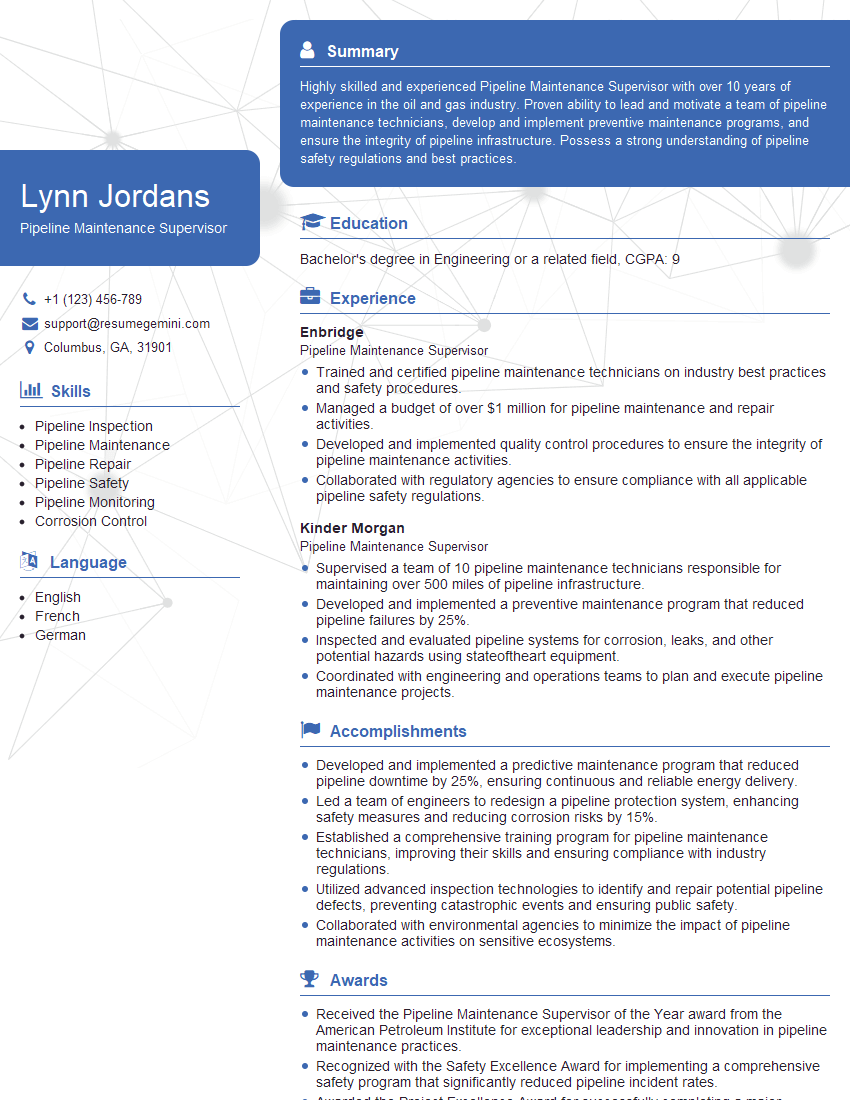
Mastering API Certification in Pipeline Inspection significantly enhances your career prospects in the energy sector, opening doors to higher-paying roles and greater responsibility. To maximize your job search success, create a compelling and ATS-friendly resume that effectively highlights your skills and experience. ResumeGemini is a trusted resource for building professional resumes that stand out. We provide examples of resumes tailored to API Certification in Pipeline Inspection to help guide you in showcasing your qualifications. Take the next step toward your dream job today!
Explore more articles
Users Rating of Our Blogs
Share Your Experience
We value your feedback! Please rate our content and share your thoughts (optional).
What Readers Say About Our Blog
Very informative content, great job.
good