Cracking a skill-specific interview, like one for Architectural and Interior Design, requires understanding the nuances of the role. In this blog, we present the questions you’re most likely to encounter, along with insights into how to answer them effectively. Let’s ensure you’re ready to make a strong impression.
Questions Asked in Architectural and Interior Design Interview
Q 1. Explain your experience with different architectural styles.
My experience spans a wide range of architectural styles, from the classic elegance of Georgian architecture to the sleek minimalism of modern design. I’ve worked on projects incorporating elements of Victorian, Art Deco, Mediterranean, and contemporary styles. For instance, a recent residential project involved blending traditional Craftsman features like exposed beams and built-in shelving with modern open-plan living spaces and large windows to maximize natural light. This required a deep understanding of each style’s defining characteristics – materials, proportions, and ornamentation – to create a cohesive and aesthetically pleasing result. Another project involved a commercial building where we incorporated elements of brutalist architecture, using raw concrete and bold geometric forms, balanced with internal spaces designed with biophilic principles, integrating natural light and greenery to counter the austere exterior. Each project demands a unique approach, and my expertise lies in seamlessly integrating different stylistic elements to create spaces that are both functional and beautiful.
Q 2. Describe your proficiency in AutoCAD and Revit.
I’m highly proficient in both AutoCAD and Revit, leveraging their strengths for different project phases. AutoCAD remains my go-to tool for precise 2D drafting and detailed drawings, especially during the initial design and documentation stages. For example, I use AutoCAD’s precise drawing tools to create detailed shop drawings for custom millwork or intricate site plans requiring accurate measurements and annotations. Example: Using AutoCAD's layering system to manage different elements of a drawing like structural, electrical, and mechanical systems. Revit, on the other hand, is invaluable for Building Information Modeling (BIM). Its 3D modeling capabilities allow for better visualization, coordination of different disciplines, and efficient clash detection, which was crucial in a recent large-scale commercial project where we managed to identify and resolve potential structural conflicts during the design phase, avoiding costly rework later on. I utilize Revit’s features like parametric modeling and schedules to manage material quantities and overall project cost estimations effectively. My experience encompasses creating detailed 3D models, generating construction documents, and using Revit’s collaboration features for seamless teamwork.
Q 3. How do you manage project deadlines and budgets?
Managing project deadlines and budgets requires a proactive and organized approach. I start by creating a detailed project schedule using Gantt charts or similar tools, breaking down the project into manageable tasks with clear milestones and deadlines. This schedule is then regularly reviewed and updated, allowing for flexibility in case of unexpected delays. For budget management, I develop a comprehensive budget at the outset, meticulously detailing all anticipated costs, from materials and labor to permits and professional fees. Regular cost tracking and comparison against the projected budget are crucial. In one instance, an unexpected increase in material costs required me to collaborate with the client to find cost-effective alternatives without compromising the design quality. This involved exploring various materials with comparable aesthetic and performance properties, resulting in a successful project delivered on time and within the revised budget. Transparent communication with clients regarding potential cost overruns or schedule adjustments is key to maintaining a strong working relationship.
Q 4. What are your preferred methods for client communication?
My preferred methods for client communication emphasize transparency, responsiveness, and active listening. Regular meetings, both in-person and virtual, are crucial for updates and feedback. I leverage various communication tools, including email, project management software (like Asana or Trello), and video conferencing to keep clients informed and engaged throughout the project lifecycle. I believe in creating a collaborative environment where clients feel comfortable sharing their ideas and concerns. For example, in a recent residential renovation project, weekly progress reports, accompanied by photographs and 3D renderings, kept the clients updated on the construction’s progress. This proactive communication not only managed expectations but also fostered trust and built a strong relationship, leading to a successful project completion.
Q 5. Explain your process for space planning and layout design.
My space planning process begins with a thorough understanding of the client’s needs and the functional requirements of the space. This involves detailed questionnaires, site visits, and discussions to define the program. Next, I utilize various diagramming techniques, such as bubble diagrams and adjacency matrices, to explore different layout options, considering factors like traffic flow, natural light, and views. For example, in designing a restaurant, I would map out the flow of customers from entrance to seating to restrooms to ensure smooth and efficient movement. The process also involves considering the ergonomics of the space, ensuring proper dimensions for furniture and fixtures to ensure comfortable and user-friendly spaces. Finally, I use 3D modeling software to visualize the proposed layouts and fine-tune the design, allowing for virtual walkthroughs and further client feedback before finalizing the design. This iterative approach guarantees a design that perfectly meets the client’s needs and functionality.
Q 6. Describe your understanding of building codes and regulations.
I possess a thorough understanding of building codes and regulations, recognizing their importance in ensuring the safety and compliance of my designs. My knowledge encompasses local, state, and national codes related to structural requirements, fire safety, accessibility (ADA compliance), and energy efficiency. For every project, I conduct a thorough review of the applicable codes early in the design process. This includes research into specific zoning requirements, height restrictions, and other pertinent regulations. This proactive approach minimizes potential delays and costly revisions later in the project. For example, in a recent multi-family dwelling project, I ensured that the design met all accessibility requirements, such as appropriate ramp slopes and accessible bathroom dimensions, as per the ADA guidelines. Staying updated with the latest code changes through continuing education and professional affiliations is crucial in my practice.
Q 7. How do you incorporate sustainable design principles into your work?
Sustainable design principles are integral to my work. I strive to create environmentally responsible buildings that minimize their environmental impact throughout their lifecycle. This encompasses various strategies, including optimizing natural light and ventilation to reduce reliance on artificial lighting and air conditioning. I also focus on selecting sustainable materials with low embodied carbon and recycled content. For example, in a recent project, we used reclaimed wood for flooring and locally sourced stone for the facade, reducing transportation emissions. Furthermore, I integrate energy-efficient systems, such as high-performance windows and solar panels, to minimize energy consumption. Water conservation measures, like low-flow fixtures and rainwater harvesting systems, are also incorporated where feasible. My commitment to sustainable design extends beyond material selection and energy efficiency, encompassing the entire building lifecycle, from construction to demolition. This holistic approach ensures buildings that are not only aesthetically pleasing but also environmentally responsible.
Q 8. What software programs are you proficient in?
My proficiency in architectural and interior design software is extensive. I’m highly skilled in industry-standard programs like Autodesk Revit for Building Information Modeling (BIM), allowing me to create detailed 3D models, manage project data, and produce accurate construction documents. I also utilize SketchUp for quick concept modeling and visualization, and Adobe Creative Suite (Photoshop, Illustrator, InDesign) for presentations, renderings, and marketing materials. Furthermore, I’m experienced with Lumion and Enscape for creating high-quality photorealistic renderings and virtual walkthroughs that aid client communication and project visualization. My knowledge extends to AutoCAD for precise 2D drafting and detailing, and I’m familiar with other specialized software as needed, such as Vectorworks and various rendering plugins.
Q 9. Describe your experience with material selection and specification.
Material selection and specification are critical to a project’s success, impacting both aesthetics and functionality. My approach begins with a thorough understanding of the client’s needs, budget, and the project’s context. I consider factors like durability, sustainability, maintenance requirements, and the overall design aesthetic. For example, in a high-traffic commercial space, I might specify durable porcelain tiles instead of delicate natural stone. For a residential project emphasizing sustainability, I’d explore options like reclaimed wood or low-VOC paints. I meticulously research and specify materials, creating detailed schedules that include manufacturer information, samples, and installation guidelines. This process ensures consistent quality and avoids costly mistakes during construction. I’m also skilled in navigating building codes and regulations concerning material usage and fire safety. I often work closely with material suppliers and contractors to ensure that the specified materials are available, meet the project requirements, and are installed correctly.
Q 10. Explain your approach to resolving design conflicts.
Design conflicts are inevitable in collaborative projects. My approach emphasizes open communication and proactive problem-solving. I start by clearly defining the project goals and establishing a collaborative environment where all stakeholders—architects, engineers, contractors, and clients—feel comfortable expressing their concerns. When a conflict arises, I facilitate a meeting where each party can explain their perspective. I then analyze the issue, considering the technical, aesthetic, and budgetary implications. My goal is to find a solution that meets the needs of all parties while adhering to project requirements and timelines. Sometimes, this involves compromise; other times, it requires creative problem-solving. For instance, in a recent project, a conflict arose between the structural engineer’s design and the client’s desired aesthetic. Through collaboration and iterative design changes, we found a compromise that met both structural needs and the client’s vision by incorporating decorative elements that cleverly addressed the structural requirements.
Q 11. How do you handle unexpected changes during a project?
Handling unexpected changes is a crucial skill in design. My approach is based on flexibility, adaptability, and meticulous planning. First, I assess the impact of the change on the project’s scope, budget, and timeline. Clear communication with the client and other stakeholders is essential. We discuss the implications of the change and explore potential solutions, adjusting the plans as needed. This might involve redesigning certain aspects, adjusting the budget, or revising the project schedule. Strong documentation is key, ensuring any changes are documented and approved by all parties. Using BIM software allows for easier adaptation to changes since the model can be updated dynamically. For instance, if a client suddenly decides to change the flooring material mid-project, I would re-evaluate the material’s impact on the design, budget, and schedule, present the new options to the client, update the relevant documents, and communicate with the contractor to ensure a smooth transition.
Q 12. Describe your experience with construction documentation.
My experience with construction documentation is extensive. I’m proficient in producing detailed and accurate drawings and specifications, ensuring a smooth and efficient construction process. This includes creating plans, sections, elevations, details, schedules, and specifications that comply with industry standards and building codes. I utilize BIM software to create comprehensive documentation, which aids coordination between different disciplines and minimizes errors. The documentation goes beyond just the visual representations; it also includes precise measurements, material specifications, and notes to guide the construction team. I’ve worked on various project types, from small residential renovations to large-scale commercial developments, consistently delivering clear, comprehensive, and error-free documentation that contributes to successful project outcomes. I find it particularly important to create clear and concise details that address potential construction challenges proactively. I understand the importance of collaboration with contractors during the construction documentation phase to ensure the drawings accurately reflect the building methods and practical considerations.
Q 13. How do you incorporate universal design principles in your projects?
Universal design principles are fundamental to my design philosophy. I strive to create spaces that are accessible and usable by people of all ages and abilities. This involves considering a wide range of factors, including mobility, vision, hearing, and cognitive function. For example, I incorporate features like ramps and wider doorways for wheelchair accessibility, appropriate lighting levels for those with visual impairments, and clear signage for wayfinding. I use simple and intuitive controls, avoiding complex mechanisms. In residential projects, I design adaptable spaces that can accommodate future changes in needs, such as aging in place. I also select materials that are easy to clean and maintain. Moreover, I consult with accessibility specialists as needed to ensure compliance with relevant codes and standards and to gain insight into best practices for universal design. For instance, in a recent restaurant design, I ensured sufficient space for wheelchair maneuvering, appropriate countertop heights for wheelchair users, and accessible restrooms that met ADA guidelines. Universal design isn’t just about compliance; it’s about creating inclusive and welcoming spaces for everyone.
Q 14. What is your understanding of lighting design principles?
My understanding of lighting design principles is multifaceted. I consider lighting not just as a functional element but as a crucial tool for shaping the atmosphere, enhancing the architectural features, and improving the overall user experience. I carefully consider the type, intensity, color temperature, and placement of light sources to achieve the desired effect. This involves understanding the principles of ambient, task, and accent lighting. Ambient lighting creates the overall mood, task lighting provides sufficient illumination for specific activities, and accent lighting highlights architectural details or artwork. I utilize various lighting technologies, including LED, incandescent, and fluorescent, selecting the most appropriate option based on the project’s requirements. I also consider daylighting strategies, maximizing natural light to reduce energy consumption and enhance the indoor environment. For example, in a retail space, I’d utilize strategically placed spotlights to highlight merchandise, while ambient lighting would create a welcoming atmosphere. Similarly, in a residential setting, layered lighting allows for customization, from warm, ambient lighting in the evening to bright task lighting in the kitchen.
Q 15. Explain your process for creating detailed design drawings.
Creating detailed design drawings is a multi-stage process that requires precision and attention to detail. It starts with a thorough understanding of the client’s brief and the project’s constraints. I typically follow a phased approach:
- Conceptual Sketches and Diagrams: Initial brainstorming and sketching to explore various design options. This phase involves quick hand sketches and basic floor plans to establish the overall layout and spatial relationships.
- Schematic Design: Refining the chosen concept into more detailed drawings, including preliminary floor plans, elevations, and sections. This stage focuses on the functionality and spatial arrangement, considering factors like circulation, lighting, and views.
- Design Development: Developing the schematic design further, adding more specific details such as window and door placement, material selections, and fixture layouts. This often involves creating more refined plans, sections, and elevations with accurate dimensions.
- Construction Drawings: Producing detailed drawings for construction purposes. These drawings are highly precise and include all necessary information for builders, including dimensions, specifications, and construction details. This often involves utilizing CAD software for accuracy and efficiency.
- Working Drawings: These are a subset of construction drawings that are specifically used by the construction team on-site for daily reference.
For example, in a recent residential project, I started with rough sketches exploring different kitchen layouts before settling on an L-shaped design that maximized counter space and natural light. This evolved through schematic and design development stages, resulting in precise construction drawings that facilitated seamless construction.
Career Expert Tips:
- Ace those interviews! Prepare effectively by reviewing the Top 50 Most Common Interview Questions on ResumeGemini.
- Navigate your job search with confidence! Explore a wide range of Career Tips on ResumeGemini. Learn about common challenges and recommendations to overcome them.
- Craft the perfect resume! Master the Art of Resume Writing with ResumeGemini’s guide. Showcase your unique qualifications and achievements effectively.
- Don’t miss out on holiday savings! Build your dream resume with ResumeGemini’s ATS optimized templates.
Q 16. Describe your experience with 3D modeling software.
I have extensive experience with various 3D modeling software, including SketchUp, Revit, and Lumion. My proficiency extends beyond basic modeling to encompass rendering, animation, and virtual walkthroughs.
Revit, for instance, is invaluable for creating detailed architectural models, incorporating building information modeling (BIM) techniques. This allows for integrated design, construction, and operation processes. I often use it to coordinate MEP (Mechanical, Electrical, and Plumbing) systems with the architectural design, avoiding costly clashes during construction. Lumion is crucial for generating high-quality photorealistic renderings and walkthroughs, facilitating client presentations and better visualization of the final design. I’ve used SketchUp for quick conceptual models and presentations and to model furniture or site planning.
For instance, in a recent commercial project, I used Revit to model the entire building, including structural elements, HVAC systems, and lighting fixtures. This BIM model allowed me to detect and resolve potential clashes between different systems before construction commenced, saving both time and money. Lumion then helped create compelling visuals for the client presentation.
Q 17. How do you ensure your designs meet client needs and expectations?
Ensuring designs meet client needs is paramount. My approach involves a collaborative and iterative process:
- Initial Consultation: Thorough discussions with clients to understand their needs, preferences, lifestyle, and budget. This involves asking detailed questions, listening actively, and taking comprehensive notes. It is crucial to gather as much information as possible before creating any designs.
- Mood Boards and Concept Development: Present initial concepts, design sketches, and mood boards to align expectations. This allows clients to visualize the design and offer early feedback.
- Regular Feedback and Iteration: Throughout the design process, I provide regular updates and seek feedback from clients at various stages. This ensures the design evolves to match their needs, addressing any concerns or changes promptly.
- Detailed Presentations and Walkthroughs: Employ 3D modeling and rendering to create a comprehensive visualization of the final product, allowing clients to better understand the design and spatial experience.
For example, in a recent residential renovation, the client initially expressed a desire for a modern design. However, through discussions, I discovered a preference for certain traditional elements. Incorporating this feedback, the final design blended modern and traditional aesthetics to better suit their taste.
Q 18. Explain your experience with presentation techniques for design proposals.
Effective presentation techniques are critical for securing client approval. I use a multi-pronged approach:
- Storytelling: Framing the design not just as a set of drawings, but as a narrative that resonates with the client’s vision and lifestyle.
- High-Quality Visuals: Utilizing photorealistic renderings, 3D walkthroughs, and detailed drawings to showcase the design’s aesthetic appeal and functionality.
- Interactive Presentations: Engaging clients through interactive walkthroughs using VR headsets or by manipulating 3D models on a screen.
- Material Samples and Mock-Ups: Presenting physical samples of materials and creating small-scale mock-ups to allow clients to touch and feel the materials being considered.
- Data Visualization: Using charts and graphs to present technical details such as energy efficiency or cost breakdowns in an easily understandable format.
In a recent commercial project, I used a virtual reality headset to take the client on a walkthrough of the proposed office space. This allowed them to experience the design firsthand, leading to a more informed decision and quick project approval.
Q 19. How do you incorporate accessibility features in your designs?
Accessibility is an integral part of my design philosophy. I incorporate universal design principles, creating spaces usable by people of all ages and abilities. This involves:
- Ramped Access: Providing ramped access to buildings and various levels instead of relying solely on stairs.
- Accessible Doorways and Corridors: Ensuring sufficient width for wheelchairs and other mobility devices.
- Adaptive Fixtures: Using adjustable-height countertops, sinks, and other fixtures.
- Accessible Bathrooms: Designing bathrooms with grab bars, roll-in showers, and appropriate clearances.
- Clear Signage and Wayfinding: Using clear and contrasting signage, ensuring appropriate visual cues and tactile aids.
- Sensory Considerations: Minimizing noise pollution, using appropriate lighting levels, and incorporating design features that promote a sense of calm and security for individuals with sensory sensitivities.
For example, in a recent residential project, I designed a bathroom with a roll-in shower, grab bars, and a lowered countertop, ensuring it was fully accessible for the client’s aging parents.
Q 20. What is your approach to managing a team of designers?
Managing a design team requires strong leadership, communication, and collaboration. My approach focuses on:
- Clear Communication: Establishing open communication channels and regular team meetings to ensure everyone is informed and aligned on project goals and deadlines.
- Delegation and Empowerment: Assigning tasks based on team members’ skills and expertise, empowering them to take ownership of their work. This includes providing necessary training and resources when required.
- Constructive Feedback: Providing regular feedback on work progress, offering constructive criticism, and fostering a supportive environment where team members feel comfortable sharing ideas.
- Collaborative Problem-Solving: Encouraging teamwork, brainstorming sessions, and open discussions to collaboratively overcome challenges.
- Project Management: Utilizing project management tools and techniques to effectively track progress, manage resources, and meet deadlines.
I believe in fostering a positive and collaborative environment where every team member feels valued and empowered. This results in higher quality work and improved team morale.
Q 21. Describe your experience with different project types (residential, commercial, etc.)
My experience encompasses a range of project types, including residential, commercial, and hospitality design.
- Residential: I’ve worked on numerous residential projects, from small-scale renovations to large custom homes. This has involved designing everything from kitchens and bathrooms to entire floor plans, focusing on creating spaces that are both functional and aesthetically pleasing, tailored to the client’s specific needs and lifestyle.
- Commercial: My commercial experience includes office spaces, retail stores, and restaurants. These projects necessitate a strong focus on functionality, efficiency, and branding, ensuring the design aligns with the client’s business objectives and brand identity.
- Hospitality: I have experience designing hotels and restaurants, where the design is crucial for creating a welcoming and memorable experience for guests. These projects involve close attention to detail and creative design solutions that improve the overall customer journey.
The skills and experience gained in each of these sectors are complementary, leading to a more holistic approach to project design, understanding the specific requirements and challenges of each area. Each project presents unique challenges and opportunities, and I adapt my design strategies accordingly.
Q 22. How do you stay current with industry trends and technologies?
Staying current in architecture and interior design requires a multifaceted approach. It’s not enough to rely solely on formal education; continuous learning is key.
Industry Publications and Websites: I regularly read publications like Architectural Record, Interior Design, and Dezeen, as well as following influential architects and designers on social media platforms. This provides insights into emerging trends, innovative materials, and cutting-edge technologies.
Conferences and Workshops: Attending industry conferences and workshops offers invaluable opportunities to network with peers and learn about the latest advancements firsthand. I actively participate in these events to stay abreast of the latest developments.
Continuing Education Courses: I actively seek out continuing education courses, both online and in-person, focusing on specific areas like sustainable design, BIM software advancements, or emerging construction techniques. This allows for deeper dives into specific subjects.
Professional Organizations: Membership in professional organizations like the AIA (American Institute of Architects) or IIDA (International Interior Design Association) provides access to resources, publications, and networking opportunities that help keep me informed.
Site Visits and Case Studies: I make a point to visit completed projects and analyze case studies to understand how design solutions are implemented in real-world settings. This provides a practical understanding of the challenges and successes of different approaches.
By combining these strategies, I ensure my knowledge remains current and relevant, allowing me to provide the best possible service to my clients.
Q 23. Explain your understanding of building information modeling (BIM).
Building Information Modeling (BIM) is a process involving the generation and management of digital representations of physical and functional characteristics of places. It’s essentially a shared knowledge resource for information about a facility forming a reliable basis for decisions during its lifecycle; from earliest conception to demolition.
My understanding of BIM extends beyond just software proficiency. I see it as a collaborative tool that improves efficiency, reduces errors, and facilitates better communication among all stakeholders. I’m proficient in software like Revit and ArchiCAD, using them to create detailed 3D models, generate construction documents, and perform simulations for energy efficiency and structural analysis.
For instance, in a recent project, using BIM allowed us to detect a clash between the HVAC system and structural elements early in the design phase, avoiding costly rework during construction. The ability to visualize the entire building in 3D, including MEP (Mechanical, Electrical, and Plumbing) systems, significantly streamlined the design process and ensured a smoother transition into the construction phase.
Beyond the technical aspects, I understand the importance of BIM’s role in data management and collaboration. Centralized models facilitate efficient communication between architects, engineers, contractors, and clients, minimizing misunderstandings and delays.
Q 24. Describe your experience with site analysis and context planning.
Site analysis and context planning are crucial for creating responsible and successful designs. It’s about understanding the existing conditions of a site and its surroundings before even considering the building itself.
My approach to site analysis involves a thorough investigation of various factors, including:
- Topography: Analyzing the land’s slope, elevation changes, and drainage patterns to inform building placement and site grading.
- Climate: Understanding prevailing winds, sunlight exposure, and temperature fluctuations to optimize building orientation, shading, and natural ventilation.
- Environmental conditions: Assessing existing vegetation, soil composition, and potential environmental impacts to make informed design choices that minimize ecological disruption.
- Surrounding context: Considering the neighborhood’s character, building heights, and land uses to ensure the project integrates seamlessly with its context.
- Infrastructure: Evaluating accessibility, proximity to utilities, and transportation networks to plan efficient site infrastructure.
For example, in a recent project nestled in a densely wooded area, careful site analysis guided us to design a building that minimized tree removal while maximizing natural light and views. This approach preserved the existing ecosystem and enhanced the building’s aesthetic appeal.
Context planning involves integrating the design with its surroundings, considering factors such as urban design principles, zoning regulations, and community needs. This may involve incorporating public spaces, ensuring pedestrian accessibility, or designing a building that complements the architectural style of the neighborhood.
Q 25. What is your approach to developing a design concept?
Developing a design concept is an iterative process that involves a blend of creativity, research, and client collaboration. It’s not a linear path, but rather a dynamic exploration of possibilities.
My approach typically involves these steps:
Understanding the Client’s Needs: This is paramount. Through thorough discussions and questionnaires, I strive to understand the client’s functional requirements, aesthetic preferences, and budget constraints.
Site Analysis and Contextual Research: As discussed previously, this informs the project’s feasibility and its integration within its surroundings.
Initial Concept Sketches and Diagrams: I utilize quick sketches and diagrams to explore different spatial arrangements and design ideas, fostering creativity and collaboration.
Mood Boards and Material Palettes: These help to visualize the overall aesthetic direction, exploring colors, textures, and materials to achieve the desired atmosphere.
Refining and Iterating: The design evolves through multiple iterations, incorporating client feedback and addressing potential challenges.
Presenting Design Options: I present several design options to the client, allowing them to participate in the decision-making process and choose the most suitable direction.
For example, in designing a restaurant, the initial concept sketches focused on open kitchens and communal seating to create a lively atmosphere, while later iterations incorporated design features that maximized natural light and enhanced sound acoustics.
Q 26. How do you ensure the functionality and aesthetics of your designs?
Balancing functionality and aesthetics is a core principle of good design. A beautiful space that is impractical is a failure, just as a practical space that lacks aesthetic appeal can be uninspiring.
I ensure this balance through a meticulous design process that considers both aspects from the outset. This includes:
Space Planning: Careful planning ensures efficient flow, maximizes natural light, and optimizes space utilization based on the client’s needs. Ergonomics and user experience are carefully considered.
Material Selection: Materials are chosen not only for their aesthetic qualities but also for durability, sustainability, and maintenance requirements. This involves understanding material properties and long-term impacts.
Lighting Design: Lighting plays a vital role in both functionality and ambiance. A well-designed lighting scheme enhances functionality while creating the desired mood and highlighting architectural features.
Detailing and Finishes: Attention to detail in finishes and construction elements adds refinement and elevates the overall aesthetic while maintaining functionality.
Client Collaboration: Continuous client feedback is crucial in ensuring the design meets their expectations and addresses their specific needs, creating a space that is both functional and aesthetically pleasing.
For example, designing a family home would involve selecting durable and child-friendly materials while also considering aesthetics that appeal to the family’s taste. Balancing practicality with beauty creates a home that is both functional and visually appealing.
Q 27. Explain your experience with cost estimation and value engineering.
Cost estimation and value engineering are critical for managing project budgets and ensuring clients receive optimal value for their investment. They’re not about cutting corners, but about making smart design choices.
My experience in cost estimation involves using various methods, including:
Detailed Quantity Takeoffs: Precisely quantifying materials and labor required for construction.
Unit Cost Estimating: Using historical data and market prices to estimate costs per unit of work.
Software Tools: Utilizing specialized software for cost estimation and project management.
Value engineering, on the other hand, is a more proactive approach. It involves critically evaluating design choices to identify areas where cost savings can be achieved without compromising functionality or aesthetics. This could involve exploring alternative materials, construction methods, or design solutions. For example, instead of using expensive custom cabinetry, we might propose using a more affordable but equally aesthetically pleasing alternative.
In a recent project, we used value engineering to identify a more efficient HVAC system that reduced initial costs and long-term energy consumption without compromising the building’s comfort. This resulted in significant savings for the client without sacrificing quality or performance.
Q 28. Describe your understanding of contract administration.
Contract administration is the process of managing the contractual aspects of a project from its inception to completion. It involves ensuring that the project proceeds according to the agreed-upon terms and conditions outlined in the contract documents.
My experience in contract administration encompasses:
Reviewing and Understanding Contract Documents: Thoroughly reviewing contracts to ensure clarity and address any potential ambiguities.
Managing Project Schedules and Budgets: Tracking progress against the agreed-upon timelines and budgets.
Managing Change Orders: Efficiently processing and managing any changes or modifications to the original contract.
Document Control: Maintaining a comprehensive record of all project-related documents.
Dispute Resolution: Addressing any disagreements or conflicts between parties in a professional and timely manner.
Ensuring Compliance: Making sure all project activities comply with relevant regulations and building codes.
Effective contract administration is crucial for minimizing disputes, ensuring smooth project execution, and protecting the interests of all involved parties. It requires strong communication, organizational skills, and a thorough understanding of contractual obligations.
Key Topics to Learn for Architectural and Interior Design Interview
- Design Principles & Theories: Understanding fundamental concepts like form, function, space planning, and the elements and principles of design. Practical application: Analyzing existing spaces and proposing design solutions based on these principles.
- Building Codes & Regulations: Familiarity with relevant building codes and safety regulations. Practical application: Designing spaces that comply with all necessary codes and ensure occupant safety.
- Sustainable Design Practices: Knowledge of environmentally conscious design approaches, including LEED certification principles. Practical application: Incorporating sustainable materials and energy-efficient strategies into design projects.
- CAD Software Proficiency: Demonstrating competency in industry-standard software like AutoCAD, Revit, SketchUp, etc. Practical application: Creating detailed drawings, models, and presentations using chosen software.
- Material Selection & Specification: Understanding the properties and applications of various building materials. Practical application: Selecting appropriate materials based on functionality, aesthetics, budget, and sustainability.
- Construction Methods & Processes: Basic understanding of construction techniques and timelines. Practical application: Collaborating effectively with contractors and understanding the feasibility of design solutions.
- Client Communication & Collaboration: Effective communication and presentation skills to convey design ideas to clients. Practical application: Presenting design proposals and addressing client feedback constructively.
- Space Planning & Ergonomics: Designing functional and user-friendly spaces considering human factors. Practical application: Creating layouts that optimize workflow, accessibility, and comfort.
- Lighting Design & Illumination: Understanding the impact of lighting on mood and functionality. Practical application: Designing effective lighting schemes that enhance the overall design.
- Project Management & Budgeting: Experience with managing design projects within budget and timeframe constraints. Practical application: Developing realistic project timelines and managing resources effectively.
Next Steps
Mastering Architectural and Interior Design principles opens doors to exciting and rewarding career opportunities. To significantly increase your job prospects, crafting a strong, ATS-friendly resume is crucial. ResumeGemini is a trusted resource to help you build a professional resume that highlights your skills and experience effectively. Examples of resumes tailored to Architectural and Interior Design are available to guide you. Invest the time to create a compelling resume – it’s your first impression with potential employers.
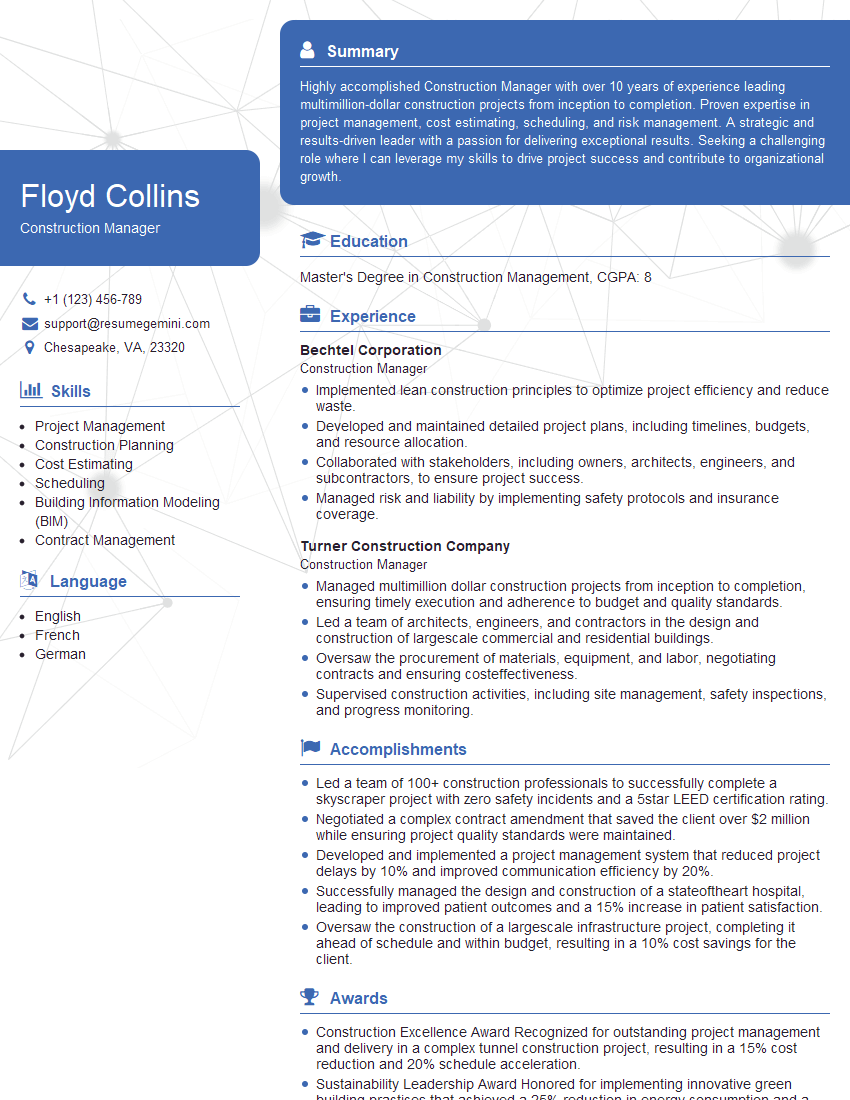
Construction Manager Resume Sample

Sustainability Consultant Resume Sample
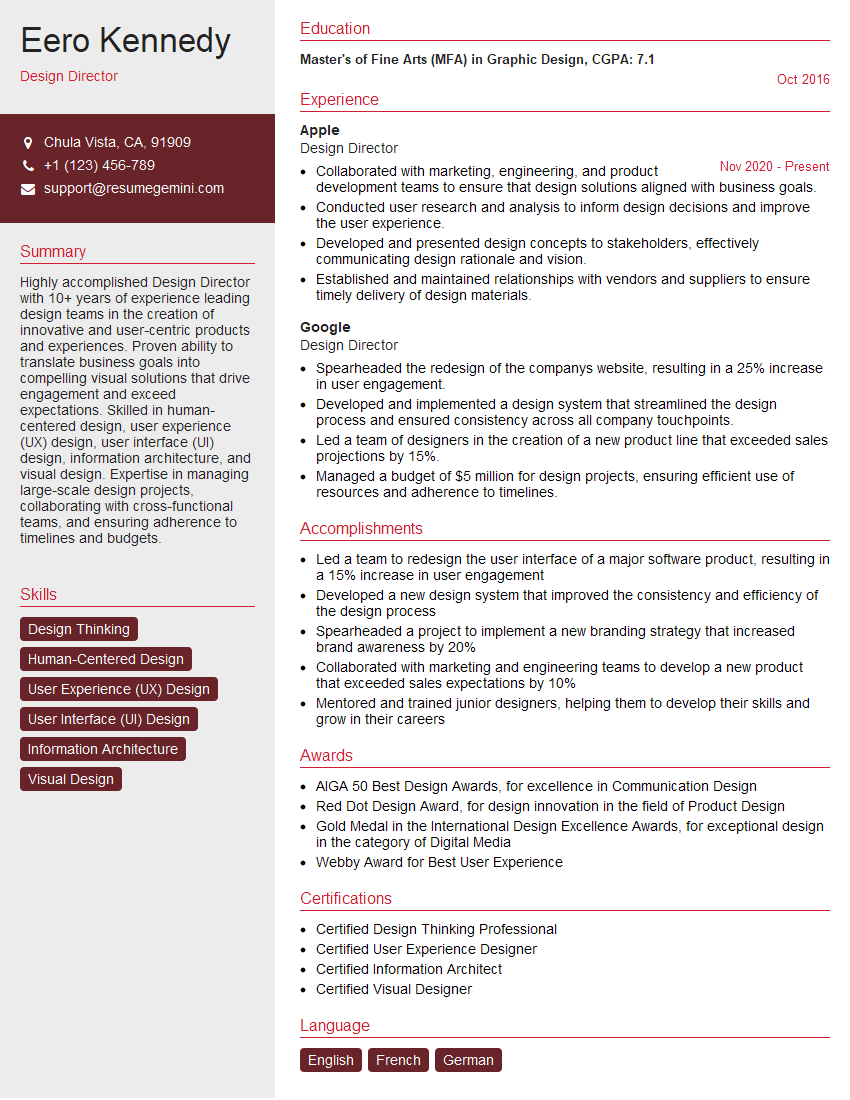
Design Director Resume Sample
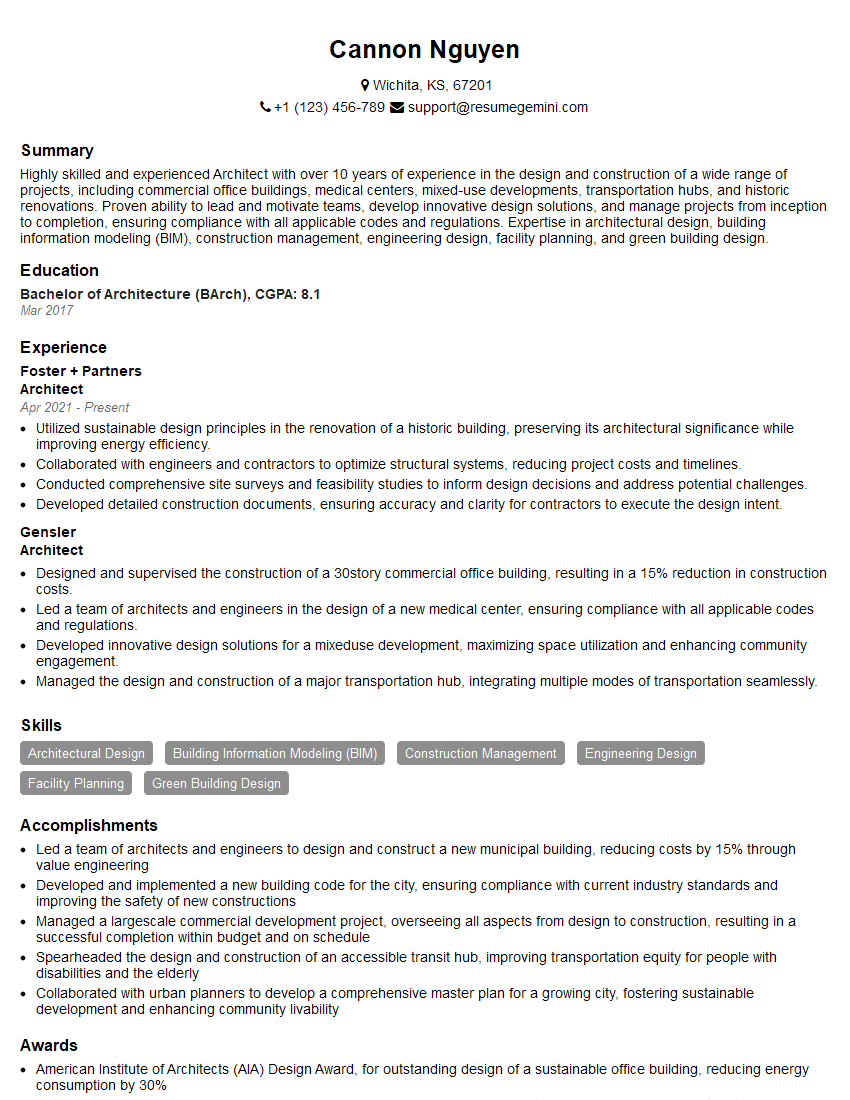
Architect Resume Sample
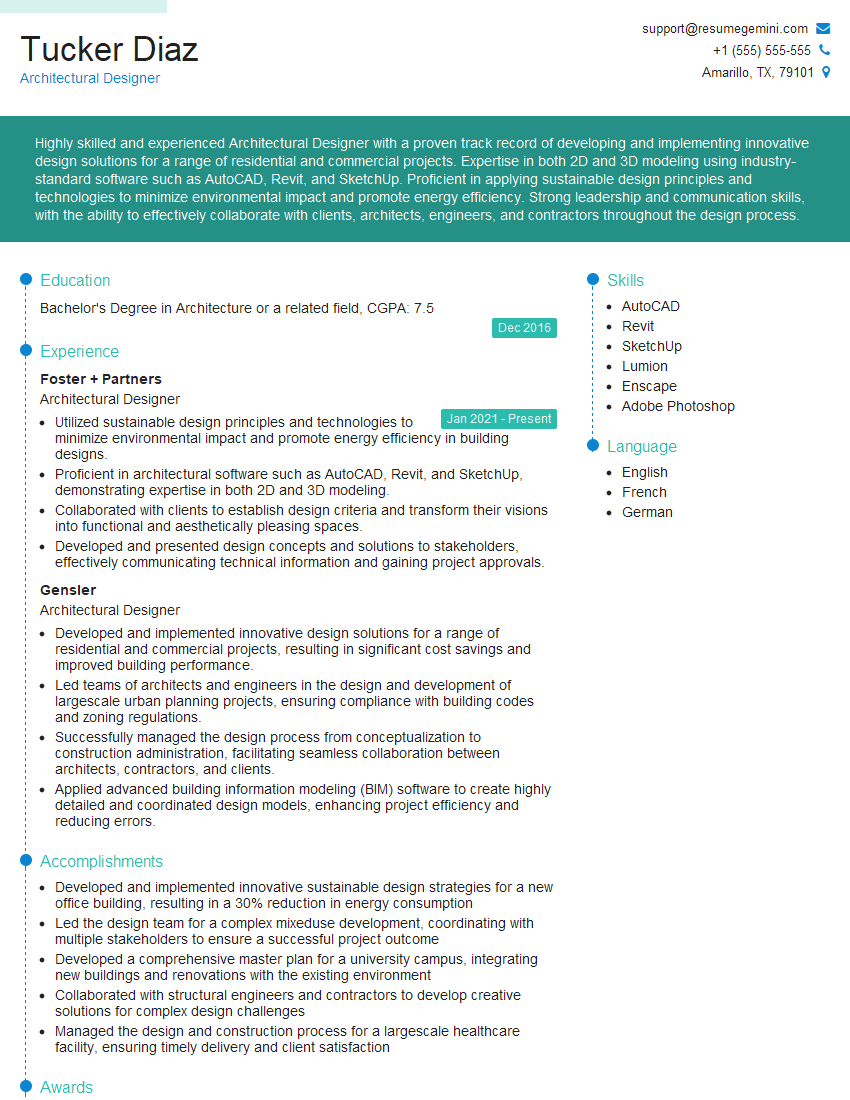
Architectural Designer Resume Sample
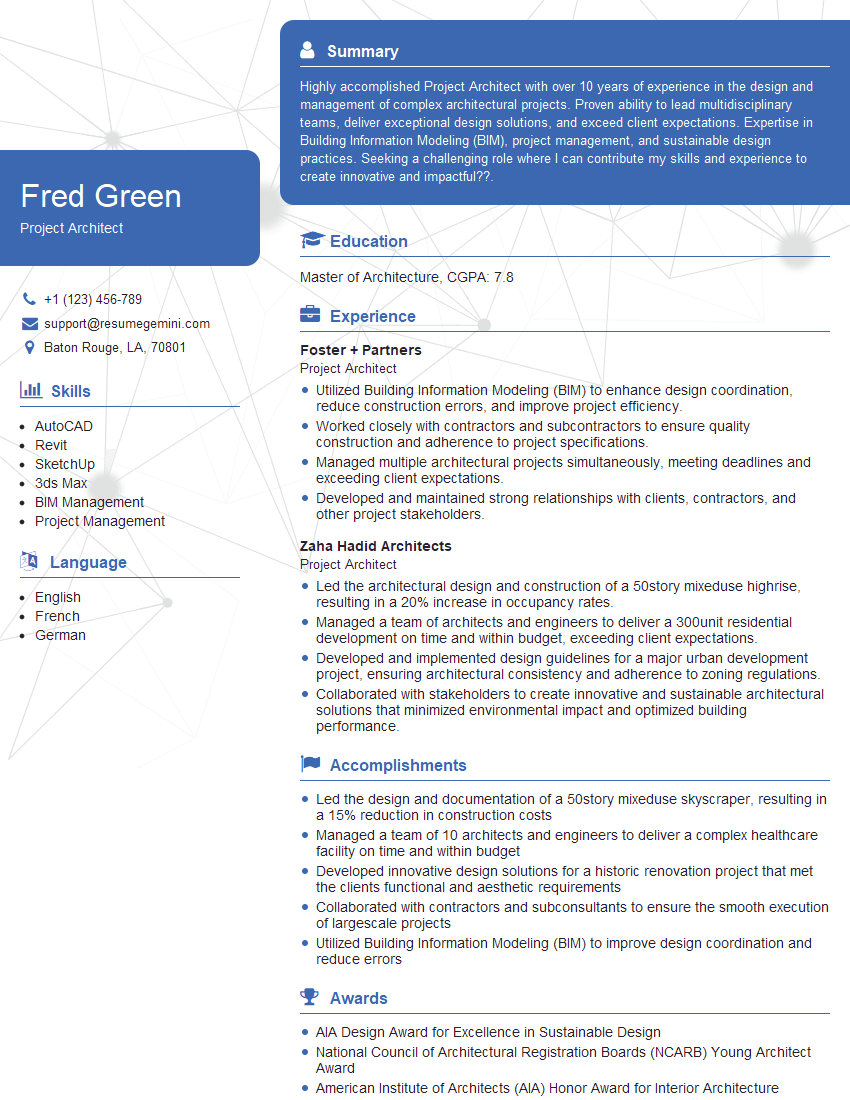
Project Architect Resume Sample
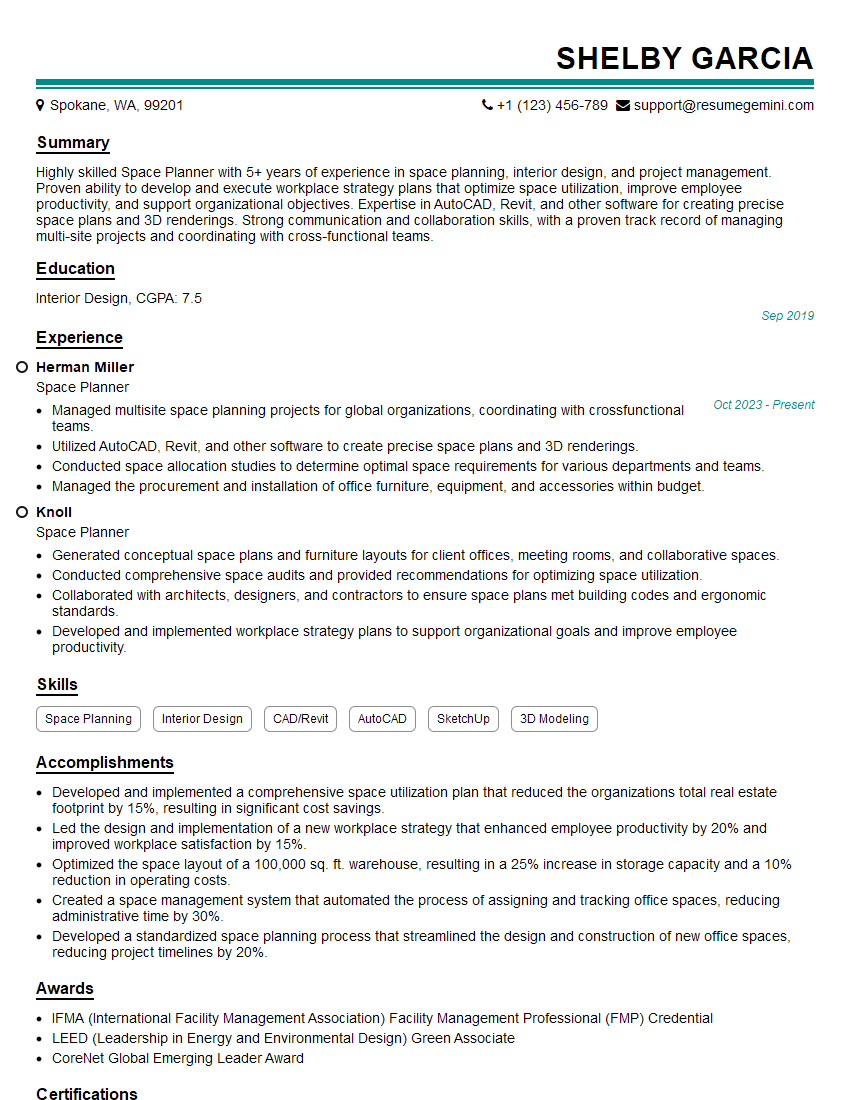
Space Planner Resume Sample
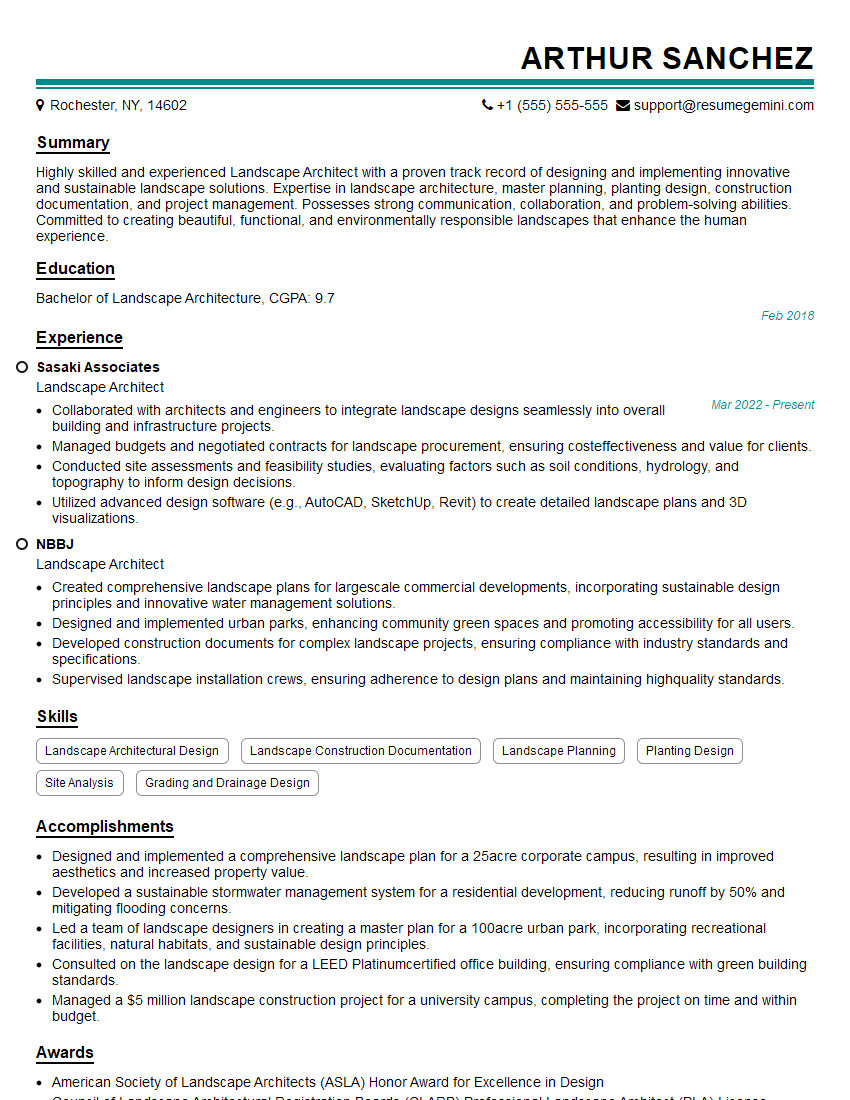
Landscape Architect Resume Sample
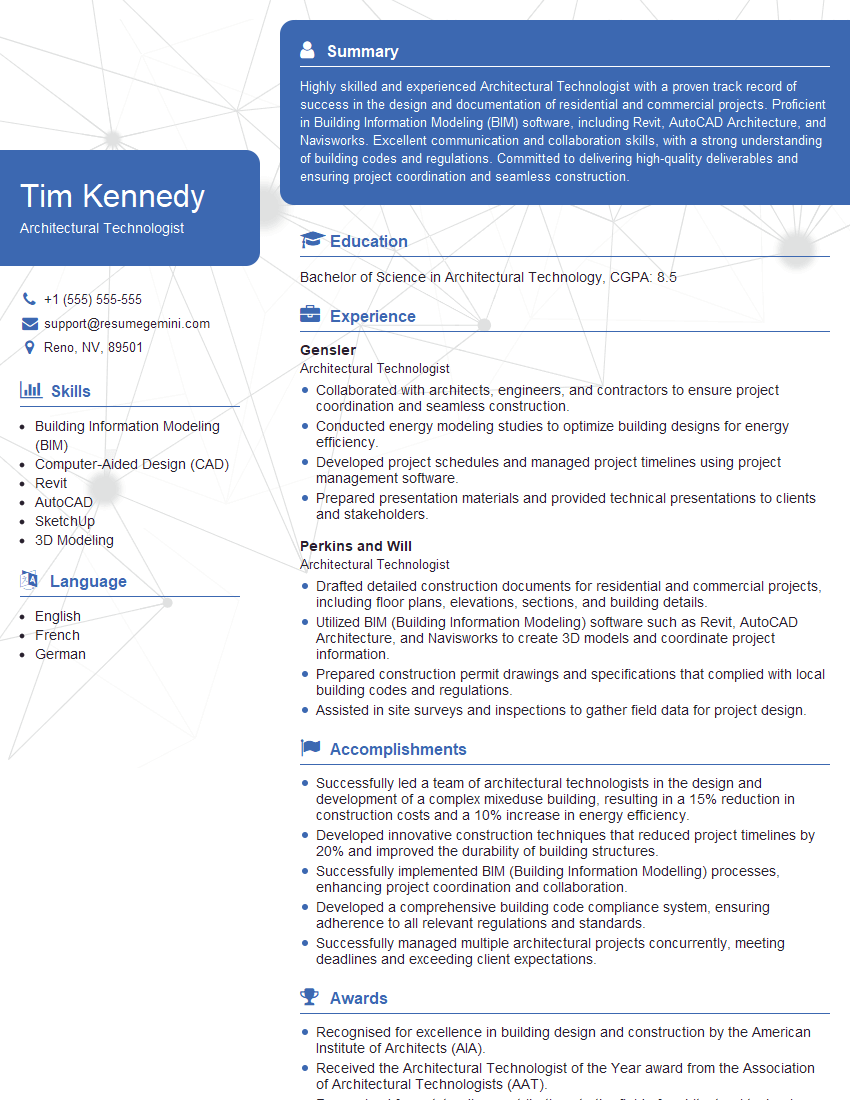
Architectural Technologist Resume Sample
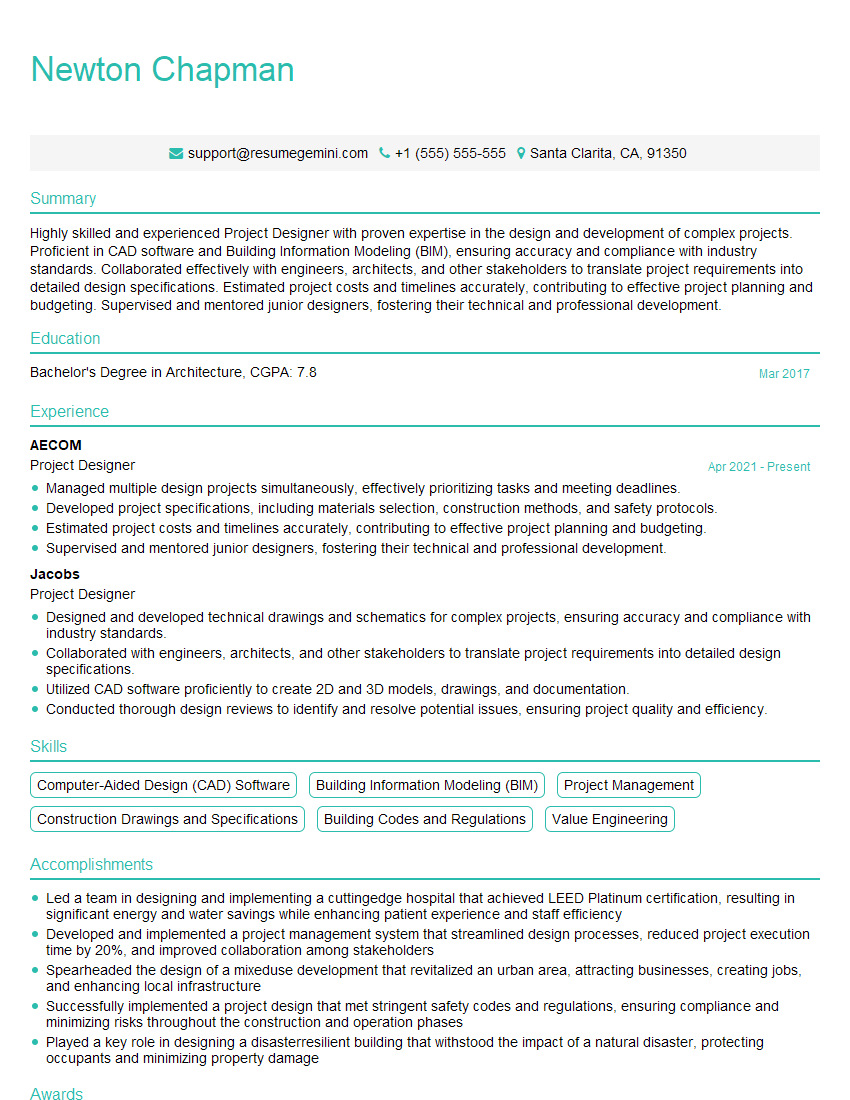
Project Designer Resume Sample
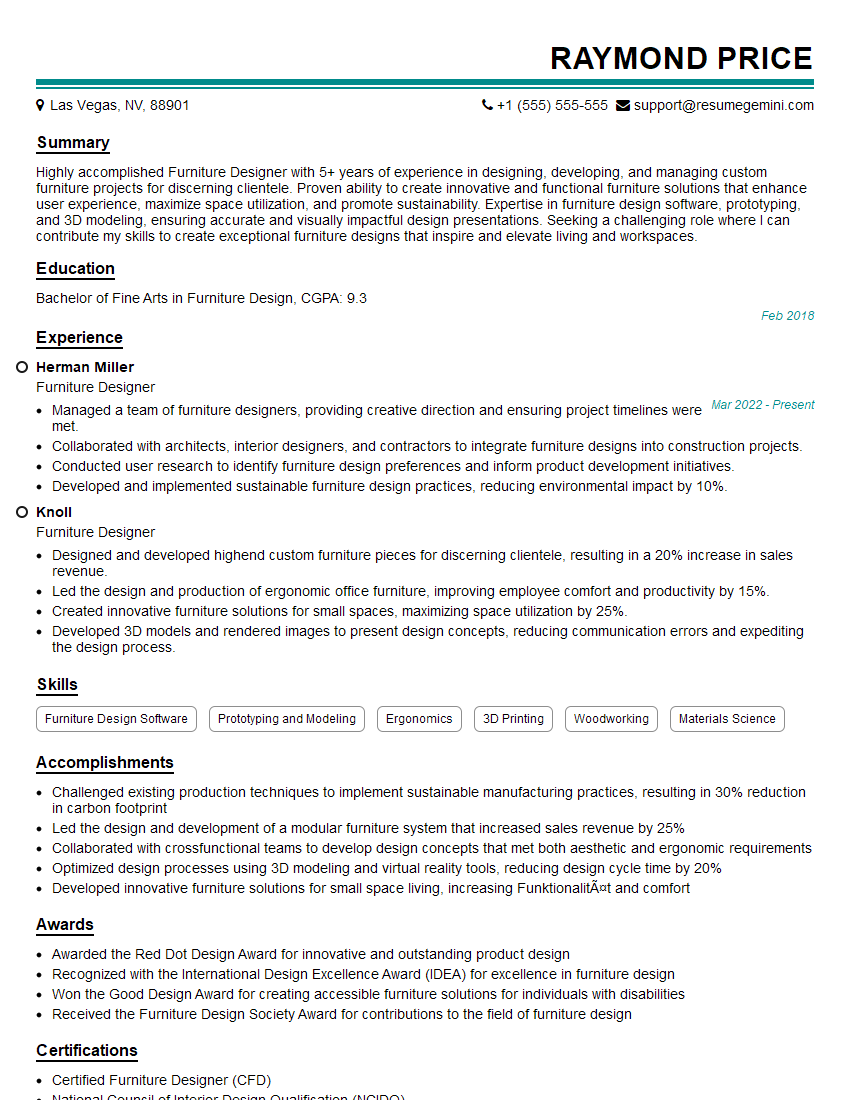
Furniture Designer Resume Sample
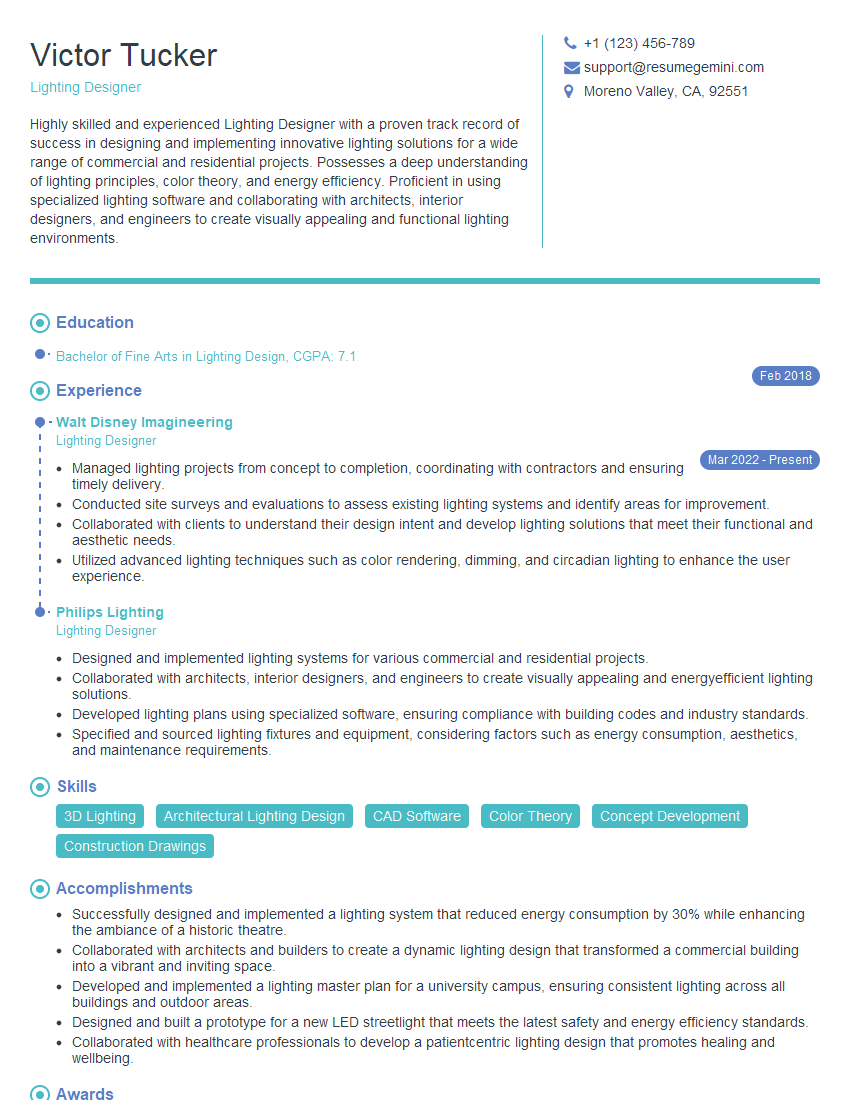
Lighting Designer Resume Sample
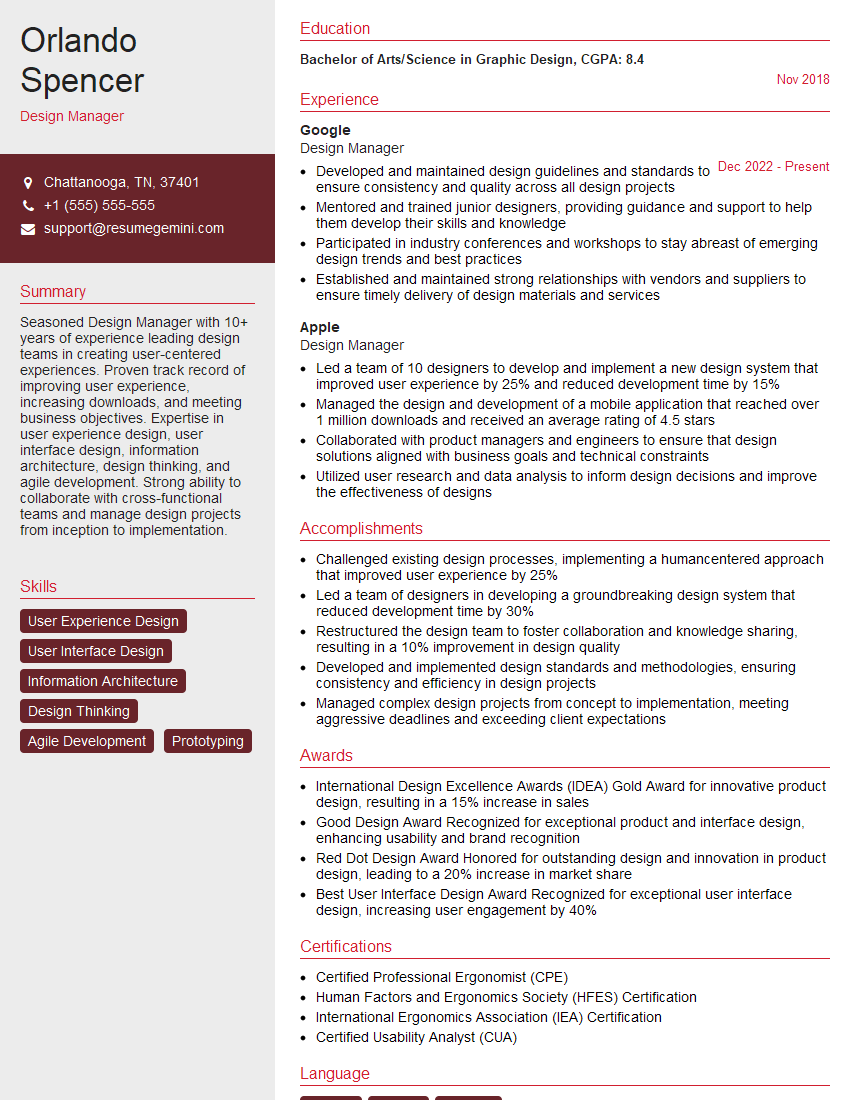
Design Manager Resume Sample
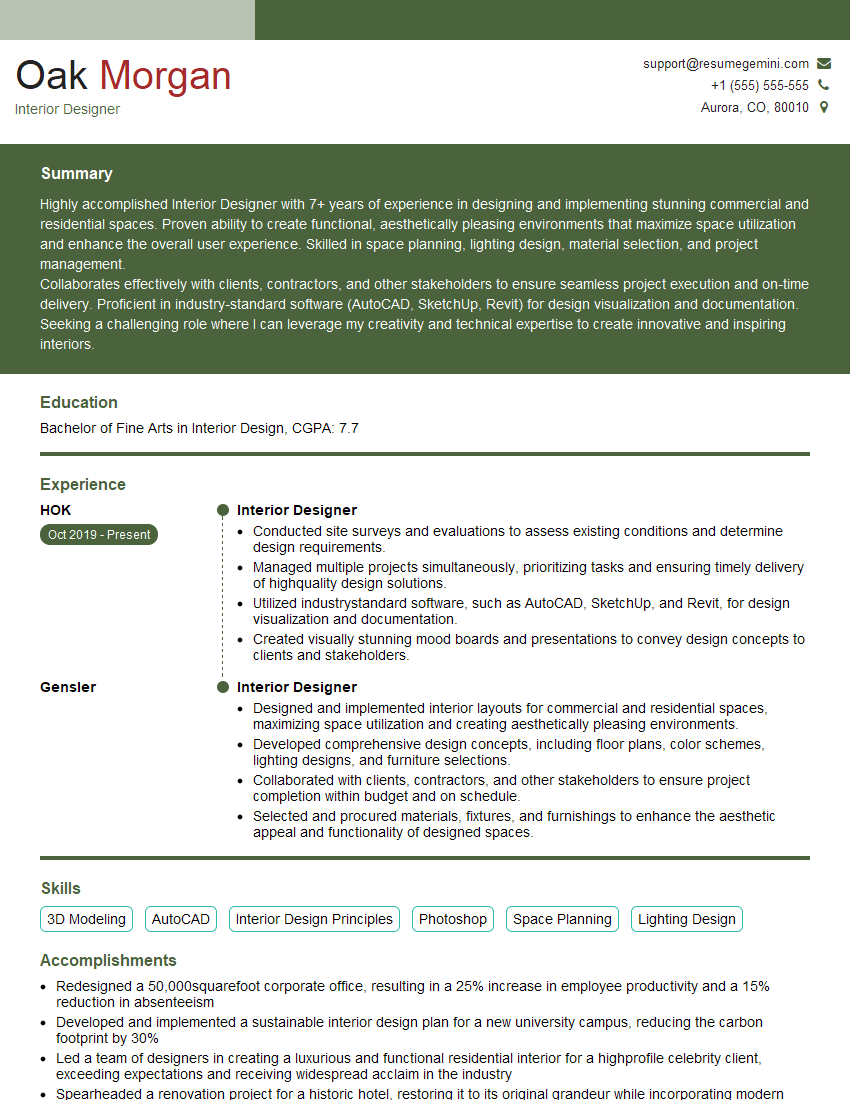
Interior Designer Resume Sample
Explore more articles
Users Rating of Our Blogs
Share Your Experience
We value your feedback! Please rate our content and share your thoughts (optional).
What Readers Say About Our Blog
Very informative content, great job.
good