Are you ready to stand out in your next interview? Understanding and preparing for Archiving and Documentation interview questions is a game-changer. In this blog, we’ve compiled key questions and expert advice to help you showcase your skills with confidence and precision. Let’s get started on your journey to acing the interview.
Questions Asked in Archiving and Documentation Interview
Q 1. Explain the difference between physical and digital archiving.
Physical and digital archiving differ fundamentally in their medium of storage. Physical archiving involves storing information on tangible materials like paper, film, or magnetic tapes. Digital archiving, on the other hand, uses electronic storage devices such as hard drives, cloud storage, or optical media. This core difference leads to significant variations in management, access, preservation, and potential risks.
- Physical Archiving: Requires physical space for storage, is susceptible to physical damage (water, fire, theft), and access is often slower and less convenient. Imagine a historical society carefully preserving old newspapers in climate-controlled vaults. This is a perfect example of physical archiving.
- Digital Archiving: Offers scalability and cost-effectiveness in terms of storage, but is vulnerable to technological obsolescence, data corruption, and security breaches. Think of a digital library hosting thousands of ebooks – readily accessible but requiring robust systems to prevent data loss.
Choosing the right method depends heavily on the nature of the information, budget, and long-term preservation goals. Many organizations now employ a hybrid approach, leveraging the strengths of both methods.
Q 2. Describe your experience with metadata schema and implementation.
Metadata schemas are crucial for organizing and retrieving information within an archive. My experience spans various schemas, including Dublin Core, MODS (Metadata Object Description Schema), and PREMIS (Preservation Metadata Implementation Strategy). I’ve worked on projects implementing these schemas using both relational databases (like MySQL or PostgreSQL) and NoSQL databases (like MongoDB), tailoring the schema to the specific needs of the archive.
For instance, in a project archiving historical photographs, I implemented a MODS schema that included fields for title, creator, date created, subject, geographic location, and a description field for contextual information. This allowed for detailed searches and facilitated efficient retrieval based on various criteria.
Implementing a metadata schema involves careful planning, considering the type of data being archived, the anticipated user needs, and the long-term goals. It’s crucial to balance the level of detail with practicality and ease of use. Regular review and updates to the schema are also necessary to accommodate evolving needs and standards.
Q 3. What are the key principles of records management?
The key principles of records management (which encompass archiving) revolve around ensuring the authenticity, integrity, and usability of information throughout its lifecycle. These principles include:
- Authenticity: Ensuring records are genuine and have not been tampered with. This involves using methods like digital signatures and version control.
- Reliability: Maintaining the accuracy and completeness of records. Regular data backups and validation are essential.
- Usability: Making records easily accessible and understandable to authorized users. This necessitates effective metadata and search capabilities.
- Integrity: Protecting records from unauthorized access, alteration, or destruction. Access control mechanisms and security protocols are vital.
- Preservation: Maintaining the long-term availability of records in a usable format. This often involves migration to new technologies over time.
- Compliance: Adhering to relevant legal and regulatory requirements for record keeping.
These principles are interconnected; compromising one can affect the others. For example, poor preservation can lead to data loss, undermining authenticity and reliability.
Q 4. How do you ensure data integrity in an archival system?
Data integrity is paramount in archival systems. It ensures that records are complete, accurate, and unaltered. Maintaining data integrity requires a multi-faceted approach:
- Data Validation: Implementing checks to ensure data consistency and accuracy during ingestion. This includes format validation, checksum verification, and data type checks.
- Regular Backups: Creating frequent backups to protect against data loss due to hardware failure or other unforeseen events. Employing a 3-2-1 backup strategy (3 copies of data, on 2 different media, with 1 copy offsite) is a best practice.
- Version Control: Tracking changes made to records over time, allowing for the recovery of previous versions if needed.
- Access Control: Restricting access to authorized personnel only. This prevents unauthorized alterations or deletions.
- Hashing and Digital Signatures: Using cryptographic techniques to detect any unauthorized modifications. Hashing generates a unique fingerprint for a file, while digital signatures provide authentication and integrity verification.
- Audit Trails: Recording all actions performed on the archival system to track changes and identify potential issues.
A robust data integrity strategy is crucial for maintaining trust in the archive and ensuring the reliability of the information it contains.
Q 5. What methods do you use for data migration in archiving?
Data migration in archiving is a complex process requiring careful planning and execution. The methods used depend on several factors, including the source and target systems, the volume of data, and the available resources.
- Direct Copy: A simple method suitable for small datasets, involving direct copying of files from the source to the target. This is less ideal for large-scale migrations or complex data structures.
- Incremental Migration: Migrating data in stages, starting with a subset of the archive. This reduces the risk and allows for testing and refinement of the process.
- Transformational Migration: Converting data from one format to another during the migration process. This is often necessary to address technological obsolescence or improve compatibility.
- Database Migration Tools: Using specialized tools for migrating data between database systems. These tools automate much of the process, reducing manual effort and improving efficiency.
Regardless of the chosen method, thorough testing and validation are essential to ensure data integrity after migration. A well-defined migration plan with clear steps and contingency plans is vital for a successful outcome.
Q 6. Explain your experience with different archival storage formats.
My experience encompasses a range of archival storage formats, both physical and digital. Physical formats include magnetic tapes (LTO, DAT), optical media (CD-R, DVD-R, Blu-ray), and microfilm. Digital formats include various file types (PDF, TIFF, JPEG 2000), database formats (SQL, NoSQL), and cloud storage solutions (AWS S3, Azure Blob Storage).
Each format has its own strengths and weaknesses regarding longevity, accessibility, and storage capacity. For example, magnetic tapes offer high storage density but require specialized equipment for access and are susceptible to degradation over time. Optical media offer better longevity but have limited storage capacity. Digital formats offer flexibility and accessibility but require ongoing management and migration to prevent obsolescence.
The selection of an appropriate format depends on the specific needs of the archive, considering factors such as the type of data, expected lifespan, budget, and access requirements. A long-term strategy that accounts for technological changes is crucial for effective archival management across all formats.
Q 7. How do you handle sensitive information within an archival system?
Handling sensitive information in an archival system demands stringent security measures. This involves implementing a layered security approach addressing access control, data encryption, and physical security.
- Access Control: Restricting access to sensitive information only to authorized personnel through role-based access control (RBAC) and strong authentication mechanisms.
- Data Encryption: Encrypting sensitive data both at rest and in transit using strong encryption algorithms. This protects data even if the system is compromised.
- Data Masking and Anonymization: Removing or altering identifying information to protect privacy. This might involve removing names and addresses from documents while preserving the valuable contextual information.
- Physical Security: Protecting physical storage locations from unauthorized access using measures like secure facilities, surveillance systems, and access control systems.
- Regular Security Audits: Conducting regular security audits to identify vulnerabilities and ensure compliance with security policies and regulations.
- Compliance with Regulations: Adhering to relevant data privacy regulations such as GDPR or HIPAA, depending on the nature of the sensitive information.
A comprehensive security plan tailored to the specific risks and regulatory requirements is crucial for protecting sensitive information within an archival system.
Q 8. What are the common challenges faced in digital preservation?
Digital preservation presents unique challenges compared to traditional archiving. The biggest hurdle is bit rot – the gradual degradation of digital data over time due to media failure or file corruption. This is unlike physical documents which, while they can degrade, do so at a slower, more predictable rate.
- Format Obsolescence: Software and hardware used to create and access files become outdated. A file created in a now-defunct program might be impossible to open without specialized tools or emulators.
- Data Migration: Regularly migrating data to newer storage technologies is crucial, but it’s a complex, resource-intensive process and carries inherent risks of data loss.
- Storage Capacity: Digital data grows exponentially, requiring vast and ever-expanding storage solutions, a significant cost factor.
- Authenticity and Integrity: Ensuring that digital files haven’t been tampered with requires robust security measures and verification techniques (e.g., checksums, digital signatures).
- Metadata Management: Accurate, rich metadata (data about the data) is essential for discoverability and understanding, yet maintaining its consistency and accuracy over long periods is a challenge.
For example, I once worked on a project where we had to recover data from obsolete floppy disks. The format was unique to a specific software application no longer supported. This required considerable effort in finding compatible hardware and software, and eventually the development of custom scripts for data extraction. This highlights the persistent challenge of format obsolescence in digital preservation.
Q 9. Describe your experience with archival software and tools.
My experience encompasses a wide range of archival software and tools. I’m proficient in using systems like Archivematica, a comprehensive open-source solution for digital preservation, and have experience with various digital asset management (DAM) systems. I am also familiar with specialized software for metadata management, such as ExifTool for extracting metadata from image files, and tools for creating checksums and digital signatures, which are essential for ensuring data integrity.
In addition, I’ve worked with cloud-based storage solutions, specifically focusing on those with robust security features and compliance certifications. Experience with different database systems is also crucial for handling large datasets and metadata efficiently, and I have hands-on experience with relational databases like PostgreSQL and NoSQL databases like MongoDB.
I’m comfortable scripting (Python, Bash) to automate tasks such as file migration, metadata creation, and checksum verification which boosts efficiency and reduces human error.
Q 10. Explain your understanding of information lifecycle management.
Information lifecycle management (ILM) is a holistic approach to managing information throughout its entire existence, from creation to disposal. It’s not just about archiving; it’s a comprehensive strategy that ensures information is available when needed, and disposed of securely and legally when no longer required.
- Creation: Defining how information is created and captured (e.g., using standardized formats).
- Storage: Choosing appropriate storage methods based on the sensitivity, value and lifespan of the data (cloud, on-premise, etc.).
- Use & Access: Ensuring the information is easily accessible to authorized users.
- Retention: Determining how long information should be kept based on legal and business requirements.
- Archiving: Moving information to long-term storage.
- Disposal: Securely deleting or destroying information that is no longer needed, in compliance with regulations.
Think of it like managing a library: you wouldn’t keep every book forever; you’d organize them, use some regularly, store others away, and eventually dispose of outdated or damaged items. ILM is the same concept applied to digital and physical information in an organization.
Q 11. How do you prioritize archival tasks based on business needs?
Prioritizing archival tasks based on business needs requires a strategic approach. I use a framework that combines risk assessment, legal compliance, and business value to determine which archival tasks are most important.
- Risk Assessment: Identify high-risk information – data subject to stringent legal or regulatory requirements, or information critical to business operations. These warrant higher priority.
- Legal Compliance: Prioritize archiving tasks related to meeting legal obligations (e.g., data retention laws). Failure to comply carries significant penalties.
- Business Value: Evaluate the business value of information. Data essential for future decision-making, research, or legal defense should be prioritized.
- Cost-Benefit Analysis: Weighing the costs of archival preservation against the potential business benefits.
For example, in a financial institution, regulatory compliance related to financial records is paramount. Therefore, archiving those records would take precedence over archiving less critical information like internal marketing documents. This prioritisation ensures resources are allocated efficiently to meet the most critical business needs.
Q 12. What is your experience with disaster recovery and business continuity planning for archives?
Disaster recovery and business continuity planning are essential for archive preservation. My experience includes developing and implementing plans that address a range of potential threats, from natural disasters to cyberattacks.
- Data Backup & Replication: Implementing multiple backups to geographically diverse locations, ensuring redundancy and minimizing risk of data loss. I utilize both on-site and off-site storage solutions.
- Recovery Procedures: Defining clear steps for restoring archived data in case of disaster. This includes testing the recovery process regularly to ensure it works effectively.
- Security Measures: Implementing robust security protocols to prevent unauthorized access and data breaches. This includes encryption, access controls and regular security audits.
- Contingency Planning: Establishing alternative work arrangements and resources in case of disruption.
In a previous role, I designed a plan for a museum that involved off-site cloud storage of digitized artifacts and detailed procedures for data retrieval in case of a fire or natural disaster. Regular disaster recovery drills were also conducted to ensure staff preparedness.
Q 13. How do you ensure compliance with relevant data privacy regulations?
Ensuring compliance with data privacy regulations is paramount. My experience spans multiple regulations including GDPR, CCPA, and HIPAA. I understand the principles of data minimization, purpose limitation, and data security.
- Data Inventory: Creating a comprehensive inventory of all archived data, classifying it according to sensitivity levels.
- Access Controls: Implementing strict access controls, ensuring only authorized personnel can access sensitive data.
- Encryption: Employing encryption techniques to protect data at rest and in transit.
- Data Retention Policies: Creating and enforcing retention policies compliant with relevant regulations.
- Data Subject Requests: Establishing procedures for handling data subject access requests (DSAR) efficiently and securely.
- Regular Audits: Conducting regular audits to ensure ongoing compliance.
For instance, I’ve helped organizations implement GDPR compliance measures by developing data retention policies aligned with the regulation’s guidelines, establishing processes for handling data subject access requests, and implementing appropriate security measures to protect personal data.
Q 14. Describe your experience with creating and managing retention policies.
Creating and managing retention policies is a critical aspect of information governance. A well-defined retention policy dictates how long different types of information must be kept, based on legal, regulatory, and business needs.
- Legal and Regulatory Requirements: Identifying and incorporating all applicable laws and regulations.
- Business Needs: Determining the business value of different information types and how long they are needed for operational purposes.
- Risk Assessment: Assessing the potential risks associated with retaining or deleting information.
- Policy Documentation: Clearly documenting the policy, outlining retention periods, and disposal methods.
- Implementation & Monitoring: Implementing the policy through appropriate systems and regularly monitoring compliance.
For example, I worked with a healthcare provider to develop a HIPAA-compliant retention policy for patient medical records. This involved researching HIPAA guidelines, analyzing the organization’s needs, and creating a documented policy that outlined retention periods for different types of medical records, along with secure destruction methods for outdated records.
Q 15. How do you assess the authenticity and integrity of archival materials?
Assessing the authenticity and integrity of archival materials is crucial for ensuring their reliability and historical value. It’s a multi-faceted process involving both internal and external examination.
Internal Examination focuses on the physical characteristics of the material. This includes checking for signs of damage (tears, water stains, fading), analyzing the material’s composition (paper type, ink), and comparing handwriting or signatures to known examples. For digital materials, checksums and cryptographic hashes are vital for verifying data integrity – ensuring no unauthorized alterations have occurred. Discrepancies raise questions about authenticity, requiring further investigation.
External Examination involves scrutinizing the context of the materials. This means examining provenance (the history of ownership and custody), verifying dates and signatures against external sources, and comparing the content with other relevant documents for consistency. Cross-referencing with other credible sources allows for corroboration and validation.
Example: Imagine discovering a supposedly handwritten letter from a historical figure. Internal examination would assess the ink, paper, and handwriting style. External examination would involve comparing the letter’s style to known writings, verifying the mentioned dates against historical events, and investigating the chain of custody to ensure its origins.
Career Expert Tips:
- Ace those interviews! Prepare effectively by reviewing the Top 50 Most Common Interview Questions on ResumeGemini.
- Navigate your job search with confidence! Explore a wide range of Career Tips on ResumeGemini. Learn about common challenges and recommendations to overcome them.
- Craft the perfect resume! Master the Art of Resume Writing with ResumeGemini’s guide. Showcase your unique qualifications and achievements effectively.
- Don’t miss out on holiday savings! Build your dream resume with ResumeGemini’s ATS optimized templates.
Q 16. What is your experience with archival appraisal and selection?
Archival appraisal and selection are critical processes, determining which materials are deemed worthy of preservation and access. This involves evaluating materials based on their significance, authenticity, and condition. I have extensive experience in developing and applying appraisal methodologies tailored to various collections.
My approach involves a multi-step process: Identifying Scope and Context: This sets the framework by defining the collecting area and the criteria for selection. Then, there’s a Detailed Assessment: Each item is evaluated based on factors such as historical value, research value, uniqueness, and completeness. The condition of the material and its potential for preservation also play a crucial role. Prioritization and Selection follows, often involving a hierarchy of importance. A weighted scoring system can be used to quantitatively rank items. Finally, the process concludes with Documentation – a detailed record of the appraisal decisions, including justifications and rationales for selection or rejection. This documentation helps future archivists understand the rationale behind the selections.
Example: In a project involving a local historical society, I developed a detailed appraisal framework considering local history, community significance, and the existing collection gaps. This framework helped prioritize materials relating to underrepresented groups or events, ensuring a more balanced and representative archive.
Q 17. Describe your familiarity with different indexing and retrieval methods.
My familiarity with indexing and retrieval methods spans various approaches, from traditional cataloging techniques to advanced digital search methodologies. The choice depends on factors like the nature of the materials, the intended users, and the available resources.
- Traditional Indexing: This involves creating descriptive metadata, such as subject headings, keywords, and names, using controlled vocabularies like Library of Congress Subject Headings (LCSH) for consistency. This is suitable for smaller collections or those requiring a high level of accuracy.
- Keyword Indexing: Simpler and faster, but relies on less structured metadata, making searching potentially less precise. Effective for large datasets where speed is crucial.
- Faceted Classification: Allows for a more nuanced search, enabling users to refine results based on various facets such as date, subject, author, or geographic location. Very useful for complex collections.
- Database Management Systems (DBMS): Tools like MySQL or PostgreSQL are essential for managing large digital archives and metadata. They enable structured storage and complex retrieval queries using SQL.
SELECT * FROM documents WHERE subject = 'World War II' AND date BETWEEN '1939-09-01' AND '1945-09-02'; - Full-text search engines: Tools like Elasticsearch or Solr enable powerful searching across the full text of documents, allowing for more flexible searches based on keywords and phrases.
I am adept at selecting and implementing the most appropriate method depending on the specific context of the archival project.
Q 18. Explain your understanding of the concept of provenance in archiving.
Provenance, in archiving, is the history of ownership, custody, and location of archival materials. It’s essentially the chain of custody from creation to present day. Understanding provenance is fundamental to establishing the authenticity and context of materials. It answers the ‘who,’ ‘when,’ ‘where,’ and ‘how’ of a document’s journey.
Maintaining a clear provenance helps archivists understand how a document came to be where it is, providing crucial insights into its history and potential biases. Gaps or discrepancies in provenance raise red flags regarding authenticity. Detailed provenance information is often documented in accession records, which include information about the donor, acquisition method, and any prior owners.
Example: A diary discovered in an attic might have limited provenance if only the current owner is known. But if the diary is accompanied by family letters that document its ownership over generations, that dramatically strengthens its provenance and helps establish its authenticity.
Q 19. How do you manage and resolve conflicting requirements in an archival project?
Conflicting requirements in archival projects are common, often stemming from diverse stakeholder needs – researchers needing access, preservationists emphasizing long-term stability, or budget constraints limiting resources. Managing these conflicts requires a structured approach.
My strategy involves: Identifying and Defining the Conflicts: Clearly articulate the conflicting needs and interests. Then, Prioritization: Evaluate the relative importance of each requirement, often involving weighting criteria based on organizational goals, legal obligations, and ethical considerations. Negotiation and Compromise: Involve all stakeholders in a collaborative process to find mutually acceptable solutions. This might involve creating tiered access levels, prioritizing specific preservation efforts, or adjusting project timelines. Finally, Documentation and Transparency: Maintain clear records of the decisions made and the justifications, ensuring accountability and transparency.
Example: In a recent project, researchers demanded immediate access to a newly acquired collection, while preservationists needed time for proper processing and digitization. Through negotiation, we established a phased approach: a subset of the collection was made available immediately while the remaining materials underwent processing, ensuring both research needs and long-term preservation goals were met.
Q 20. How do you measure the effectiveness of your archival processes?
Measuring the effectiveness of archival processes involves both qualitative and quantitative methods. It’s about assessing how well the archive achieves its goals of preservation, access, and use.
Quantitative Measures might include: the number of items processed and preserved, the number of researchers served, the number of digital assets made available, the user satisfaction scores from surveys.
Qualitative Measures focus on assessing the quality of the archival work. This involves evaluating the accuracy and completeness of metadata, the effectiveness of preservation methods, the accessibility of resources, and user feedback on the usefulness and relevance of the collection. Regular audits and reviews, coupled with feedback mechanisms, are critical for ensuring ongoing improvement.
Example: We track the number of user inquiries, the average response time, and user feedback regarding ease of access to assess user satisfaction. We also regularly audit our preservation protocols and metadata accuracy to ensure standards are met.
Q 21. Describe a time you had to solve a complex problem related to archival access.
I once faced a complex problem involving restricted access to a collection of sensitive personal records. Researchers needed access to certain documents, but the records contained identifying information that required anonymization before release, according to privacy regulations. A simple redaction wasn’t sufficient due to the interconnected nature of the data.
The solution involved a multi-step process: Data Mapping: We carefully mapped the relationships between different parts of the records to understand how redacting one piece of information might affect others. Then, we developed a De-identification Strategy using a combination of redaction, data masking, and data aggregation techniques. This strategy ensured that identifying information was removed while preserving the historical and research value of the documents. We also developed a Detailed Metadata Schema to document all changes made, ensuring transparency and accountability. Finally, we implemented a Secure Access System granting researchers access only to the anonymized versions. This successfully balanced the researchers’ need for information with the obligation to protect personal privacy.
Q 22. How do you communicate effectively with stakeholders on archival matters?
Effective communication with stakeholders regarding archival matters hinges on understanding their needs and tailoring my approach accordingly. This involves active listening, clear and concise language, and proactive information sharing. I begin by establishing a clear understanding of the stakeholder’s objectives – are they looking for specific information, seeking guidance on preservation strategies, or needing to understand archival policies?
For instance, when communicating with researchers, I prioritize providing detailed information about the collection, including finding aids and access procedures. With senior management, I focus on the strategic value of the archive, highlighting its contribution to organizational goals and outlining resource needs. Visual aids such as charts, graphs, and presentations are often very helpful in explaining complex information concisely and effectively. I also ensure that all communication is documented, maintaining a transparent record of all interactions and decisions.
For example, in a recent project, I had to explain the costs associated with digitizing a large collection of historical photographs to the budget committee. I prepared a presentation outlining the benefits of digital preservation (increased accessibility, reduced risk of damage, etc.), the costs associated with different digitization methods, and a projected return on investment. This transparent communication secured the necessary funding.
Q 23. What are your experience with different types of archival finding aids?
My experience encompasses a wide range of archival finding aids, from traditional card catalogs and printed guides to sophisticated online databases. Finding aids are crucial for locating and accessing archival materials; they act as a roadmap to the collection. I’m proficient in creating and utilizing different types, including:
- Descriptive inventories: These provide item-level descriptions, often including detailed summaries, subject headings, and dates.
- Controlled vocabularies and subject headings: Using standardized vocabularies like Library of Congress Subject Headings (LCSH) ensures consistency and searchability.
- Databases: Relational databases and dedicated archival management systems allow for complex searches and retrieval of information.
- Digital finding aids: These leverage the web to provide easy access and often incorporate multimedia components.
For example, I once managed the transition of a large paper-based finding aid system to a digital one using a specialized archival database. This involved data migration, schema design, and user training, ultimately improving accessibility and discoverability significantly. I also have experience creating EAD (Encoded Archival Description) finding aids conforming to international standards for digital archival descriptions.
Q 24. Describe your experience with implementing and maintaining an archival system.
Implementing and maintaining an archival system requires a multifaceted approach encompassing planning, acquisition, processing, storage, and access. I’ve been involved in projects ranging from setting up small departmental archives to managing large, complex repositories. This includes:
- Needs assessment and planning: Defining the scope of the archive, identifying resources, and establishing policies and procedures are critical initial steps.
- System selection: Choosing appropriate software (e.g., Archivists’ Toolkit, CONTENTdm) and hardware based on the size and type of collection is essential.
- Metadata creation and management: Consistent and accurate metadata is key to effective retrieval; this requires adhering to established standards and controlled vocabularies.
- Preservation strategies: Implementing protocols for the physical and digital preservation of materials is paramount, encompassing environmental controls, disaster preparedness, and digital preservation techniques.
- Ongoing maintenance: Regular system backups, software updates, and data migration are crucial to ensure long-term accessibility.
For instance, I was responsible for the design and implementation of a new digital asset management system for a museum, involving staff training, the migration of thousands of images, and the development of new metadata schemas. Regular system updates and backups were implemented to mitigate risk and maintain data integrity.
Q 25. Explain your experience with different archival storage environments (physical and digital).
Experience with various archival storage environments is crucial for ensuring the long-term preservation of materials. My experience encompasses both physical and digital storage, emphasizing best practices for each.
Physical storage: This involves controlling environmental factors like temperature, humidity, and light to minimize deterioration. Proper shelving, pest control, and security measures are also crucial. Different materials have different needs, with photographic materials, for instance, requiring specific environmental conditions and protective enclosures.
Digital storage: This necessitates employing robust storage systems with redundancy and backup strategies. Regular data migration, format preservation, and adherence to preservation standards (like OAIS) are essential to prevent data loss. Metadata management is key for long-term accessibility. I’ve worked with various digital storage solutions, from cloud-based services to on-site servers, selecting the appropriate technology based on the organization’s needs and resources. For example, I implemented a strategy employing a tiered storage system, using cloud storage for less frequently accessed materials and on-site servers for high-use materials to optimize costs and ensure accessibility.
Q 26. How do you handle requests for access to archived materials?
Handling requests for access to archived materials involves a careful balancing of preservation needs and researcher access. I typically follow a structured process:
- Request assessment: I assess the request, identifying the specific materials needed and verifying the researcher’s credentials and legitimacy. This might involve confirming institutional affiliation or conducting background checks depending on the sensitivity of the materials.
- Materials retrieval: The requested materials are retrieved from storage following appropriate handling procedures; delicate materials require special care.
- Access provisions: Access is granted in designated areas, with appropriate supervision if needed. Restrictions are adhered to in accordance with copyright, donor stipulations, or other legal requirements.
- Documentation and tracking: All requests, access, and usage are meticulously documented. This provides a detailed audit trail and aids in resource management.
For instance, I recently handled a request from a historian who needed access to a collection of fragile letters. I created a controlled access environment, provided archival gloves for handling the documents, and ensured that the letters were handled with extreme care to avoid any damage. I also documented the request, the materials accessed, and the condition of the materials before and after access.
Q 27. What strategies do you use to ensure the long-term accessibility of digital archives?
Ensuring the long-term accessibility of digital archives requires a proactive, multi-pronged approach. This goes beyond simply storing the data; it’s about ensuring that future users can access and interpret it. Key strategies include:
- Format preservation: Using open, widely supported file formats minimizes the risk of obsolescence. Regular migration to newer formats is often necessary.
- Data migration: Periodically migrating data to newer storage technologies prevents vendor lock-in and addresses potential hardware failure.
- Metadata creation and management: Rich, well-structured metadata ensures discoverability and provides context for the data. This includes descriptive, structural, administrative, and preservation metadata.
- Redundancy and backup: Multiple copies of data are stored in different locations, protecting against data loss due to hardware failure or disaster.
For example, I developed a preservation plan for a digital archive that included a strategy for regular data migration, using a combination of cloud storage and on-site servers, along with a detailed schedule for software and hardware updates and rigorous testing to maintain data accessibility over time.
Q 28. Describe your experience with working with different types of archival materials (e.g., paper, film, audio, video).
My experience with various archival materials is extensive, encompassing a broad range of formats and their specific preservation challenges. I am proficient in handling:
- Paper-based materials: This includes manuscripts, letters, photographs, and books. Proper handling, storage in acid-free enclosures, and environmental controls are critical for preservation.
- Film-based materials: Motion picture film, photographic negatives and prints require special handling to prevent degradation and ensure longevity. Storage in cool, dark environments and regular inspection are essential.
- Audio and video materials: Magnetic tapes, CDs, and DVDs are prone to degradation. Regular inspections, migration to newer formats, and proper storage are crucial for preservation.
- Born-digital materials: These encompass digital files, databases, and software. Strategies such as creating multiple copies, using open formats, and regular data migration are critical for long-term access.
In a previous role, I managed a collection including fragile 19th-century photographs, audio recordings on deteriorating magnetic tape, and a large collection of born-digital records. I developed customized preservation plans for each, encompassing appropriate storage, handling, and digitization strategies, tailored to the unique properties and vulnerabilities of each material type.
Key Topics to Learn for Archiving and Documentation Interview
- Metadata and Schema Design: Understanding different metadata schemas (Dublin Core, MODS, etc.) and their application in organizing and describing archival materials. Practical application includes designing a metadata schema for a specific collection.
- Digital Preservation Strategies: Explore various methods for ensuring the long-term accessibility and integrity of digital archives, including file formats, storage solutions, and preservation planning. Consider practical scenarios like migrating legacy data to a new system.
- Records Management Principles: Learn the lifecycle of records, from creation to disposal, and the legal and ethical considerations involved. Practical application includes developing a records retention schedule.
- Archival Description Standards: Familiarize yourself with standards like ISAD(G) and EAD for creating finding aids and descriptive metadata for archival collections. Practical use includes creating a finding aid for a collection of historical photographs.
- Database Management for Archives: Understand the role of databases in managing archival metadata and collections. Practical application includes designing a database schema for an archival repository.
- Disaster Preparedness and Recovery: Develop an understanding of disaster preparedness and recovery plans for archival materials, both physical and digital. Practical application includes designing a disaster recovery plan for a specific archive.
- Access and Use Policies: Learn how to develop policies that balance preservation with access to archival materials, considering copyright, privacy, and intellectual property. Practical application includes reviewing existing access policies and suggesting improvements.
Next Steps
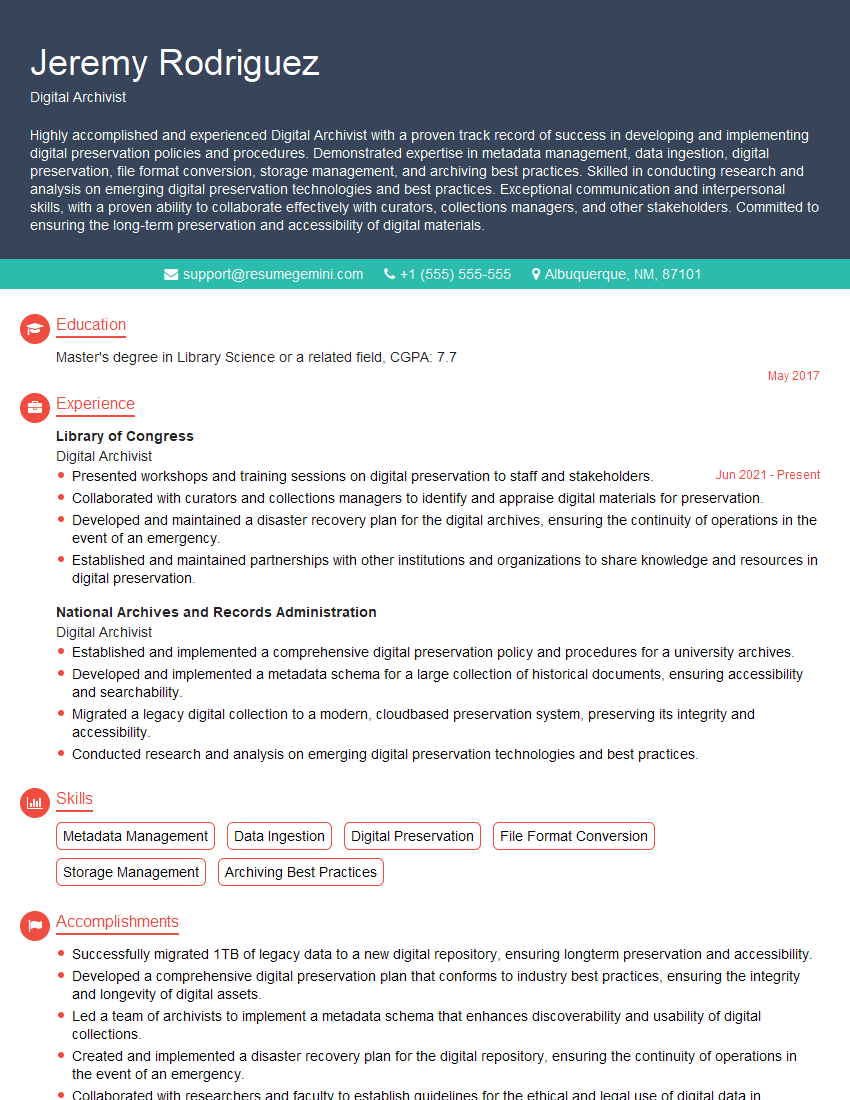
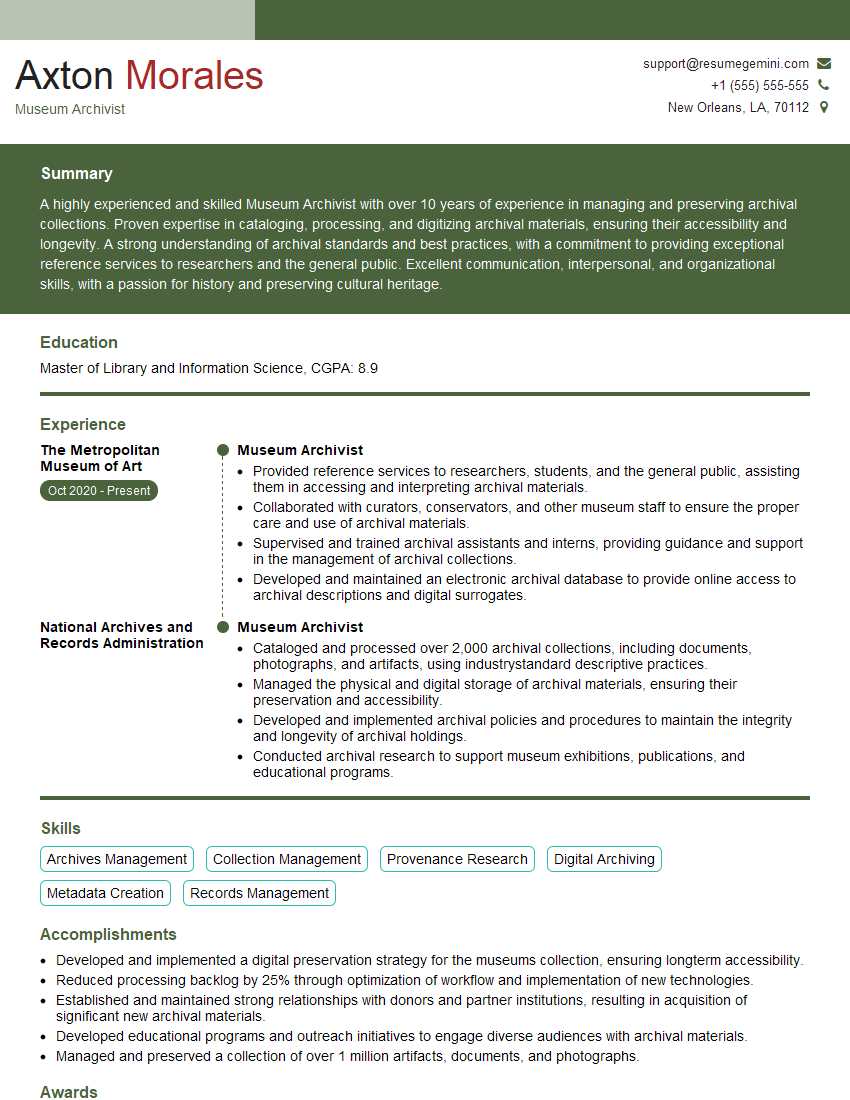
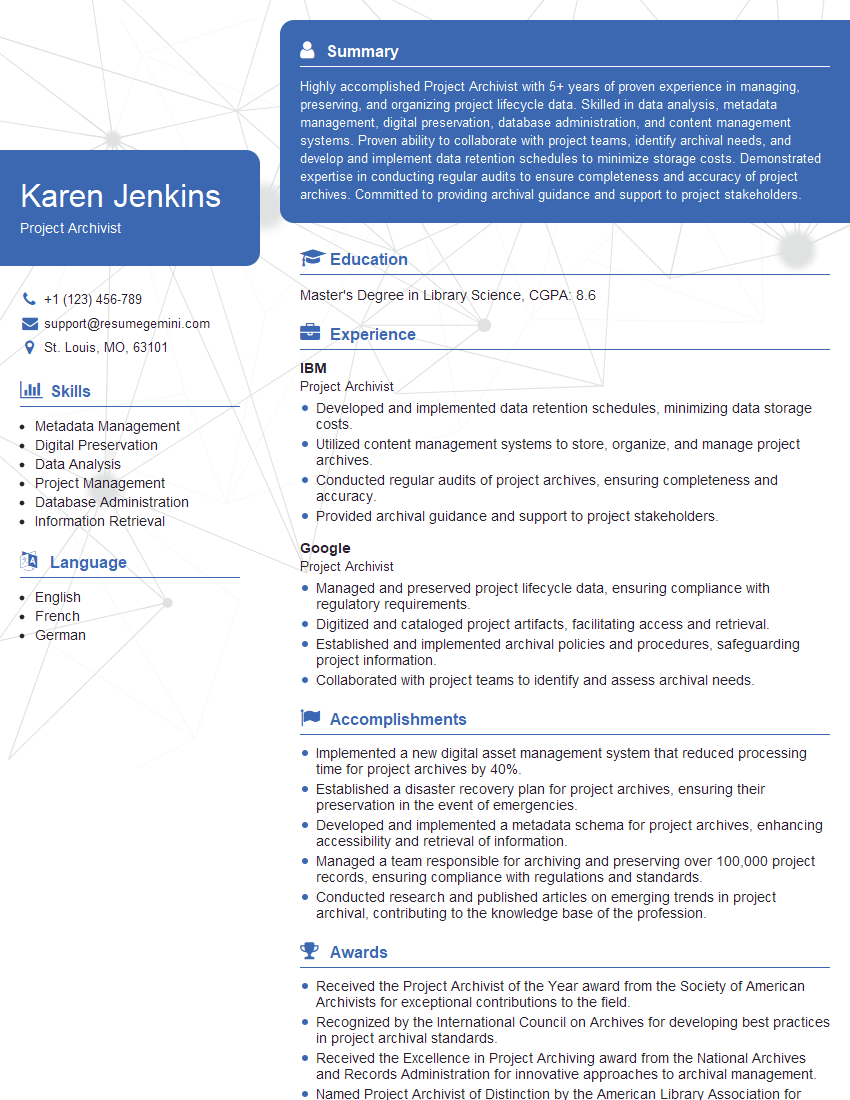
Mastering Archiving and Documentation opens doors to rewarding careers in diverse sectors, from museums and libraries to government and private organizations. A strong foundation in these areas is highly valued by employers. To maximize your job prospects, invest in creating a compelling and ATS-friendly resume that highlights your skills and experience effectively. ResumeGemini is a trusted resource for building professional resumes, and we offer examples tailored specifically to the Archiving and Documentation field to help you showcase your expertise. Take the next step towards your dream job today!

Explore more articles
Users Rating of Our Blogs
Share Your Experience
We value your feedback! Please rate our content and share your thoughts (optional).
What Readers Say About Our Blog
Hello,
we currently offer a complimentary backlink and URL indexing test for search engine optimization professionals.
You can get complimentary indexing credits to test how link discovery works in practice.
No credit card is required and there is no recurring fee.
You can find details here:
https://wikipedia-backlinks.com/indexing/
Regards
NICE RESPONSE TO Q & A
hi
The aim of this message is regarding an unclaimed deposit of a deceased nationale that bears the same name as you. You are not relate to him as there are millions of people answering the names across around the world. But i will use my position to influence the release of the deposit to you for our mutual benefit.
Respond for full details and how to claim the deposit. This is 100% risk free. Send hello to my email id: [email protected]
Luka Chachibaialuka
Hey interviewgemini.com, just wanted to follow up on my last email.
We just launched Call the Monster, an parenting app that lets you summon friendly ‘monsters’ kids actually listen to.
We’re also running a giveaway for everyone who downloads the app. Since it’s brand new, there aren’t many users yet, which means you’ve got a much better chance of winning some great prizes.
You can check it out here: https://bit.ly/callamonsterapp
Or follow us on Instagram: https://www.instagram.com/callamonsterapp
Thanks,
Ryan
CEO – Call the Monster App
Hey interviewgemini.com, I saw your website and love your approach.
I just want this to look like spam email, but want to share something important to you. We just launched Call the Monster, a parenting app that lets you summon friendly ‘monsters’ kids actually listen to.
Parents are loving it for calming chaos before bedtime. Thought you might want to try it: https://bit.ly/callamonsterapp or just follow our fun monster lore on Instagram: https://www.instagram.com/callamonsterapp
Thanks,
Ryan
CEO – Call A Monster APP
To the interviewgemini.com Owner.
Dear interviewgemini.com Webmaster!
Hi interviewgemini.com Webmaster!
Dear interviewgemini.com Webmaster!
excellent
Hello,
We found issues with your domain’s email setup that may be sending your messages to spam or blocking them completely. InboxShield Mini shows you how to fix it in minutes — no tech skills required.
Scan your domain now for details: https://inboxshield-mini.com/
— Adam @ InboxShield Mini
Reply STOP to unsubscribe
Hi, are you owner of interviewgemini.com? What if I told you I could help you find extra time in your schedule, reconnect with leads you didn’t even realize you missed, and bring in more “I want to work with you” conversations, without increasing your ad spend or hiring a full-time employee?
All with a flexible, budget-friendly service that could easily pay for itself. Sounds good?
Would it be nice to jump on a quick 10-minute call so I can show you exactly how we make this work?
Best,
Hapei
Marketing Director
Hey, I know you’re the owner of interviewgemini.com. I’ll be quick.
Fundraising for your business is tough and time-consuming. We make it easier by guaranteeing two private investor meetings each month, for six months. No demos, no pitch events – just direct introductions to active investors matched to your startup.
If youR17;re raising, this could help you build real momentum. Want me to send more info?
Hi, I represent an SEO company that specialises in getting you AI citations and higher rankings on Google. I’d like to offer you a 100% free SEO audit for your website. Would you be interested?
Hi, I represent an SEO company that specialises in getting you AI citations and higher rankings on Google. I’d like to offer you a 100% free SEO audit for your website. Would you be interested?
good