The thought of an interview can be nerve-wracking, but the right preparation can make all the difference. Explore this comprehensive guide to Arrestee Management interview questions and gain the confidence you need to showcase your abilities and secure the role.
Questions Asked in Arrestee Management Interview
Q 1. Describe the standard procedures for receiving and processing an arrestee.
Receiving and processing an arrestee follows a standardized procedure to ensure safety, legality, and efficiency. It begins the moment an arrestee is brought into custody.
- Initial Assessment: This involves checking the arrestee’s immediate physical condition for injuries or signs of distress. A quick visual check for weapons is also standard practice.
- Identification and Booking: The arrestee is identified through various means (e.g., driver’s license, fingerprints, photographs). Basic biographical information, the reason for arrest, and arresting officer details are recorded in the booking system. This is the cornerstone of the entire process, ensuring accountability and traceability throughout the arrestee’s journey within the system.
- Search and Inventory: A thorough search is conducted to ensure the safety of both the arrestee and staff and to prevent the introduction of contraband. All personal belongings are meticulously inventoried and documented – this is crucial for later return.
- Medical Screening: A medical evaluation may be performed to assess for injuries, illnesses, or existing medical conditions. This is particularly important for individuals displaying signs of intoxication or injury.
- Placement in Holding Cell: Based on the arrestee’s classification (e.g., gender, offense, medical needs), they’re placed in an appropriate holding cell. The cell assignment ensures separation of potentially conflicting individuals.
- Notification of Rights: Arrestees are informed of their legal rights (Miranda rights, right to an attorney, etc.). This step is paramount for upholding legal standards and preventing potential legal challenges later.
Imagine a scenario where a suspect is arrested for DUI. The entire procedure would be carefully followed, from the initial check for injuries to the recording of blood alcohol content, if applicable, and the inventory of their car keys and wallet. Every step is meticulously documented to create a complete and auditable record of the arrest and processing.
Q 2. Explain the importance of maintaining accurate records during the arrestee management process.
Accurate record-keeping is paramount in arrestee management for several reasons: it ensures accountability, transparency, and adherence to legal requirements. Inaccurate records can lead to serious consequences, including legal challenges, wrongful convictions, and reputational damage for the agency.
- Legal Defense: Accurate records are crucial during legal proceedings. They serve as irrefutable evidence of the arrest, handling of the arrestee, and the chain of custody for evidence.
- Auditing and Oversight: Agencies regularly audit their records to ensure compliance with internal policies, local, state, and federal laws. This continuous monitoring minimizes potential errors and fosters responsible practice.
- Protection from Liability: Thorough documentation protects both the agency and individual officers from accusations of misconduct or negligence.
- Data Analysis and Improvement: Accurate data allows for analysis of trends, identification of areas needing improvement, and the development of better practices within the system.
For instance, imagine an error in the time of an arrestee’s booking. This seemingly minor discrepancy could severely impact the admissibility of evidence and weaken the prosecution’s case.
Q 3. How do you ensure the safety and security of both arrestees and staff?
Ensuring the safety and security of arrestees and staff is a top priority. This requires a multi-faceted approach combining physical security measures, procedural safeguards, and staff training.
- Physical Security: Secure facilities with controlled access, surveillance cameras, robust cell construction, and emergency systems are essential. Regular inspections and maintenance are vital.
- Procedural Safeguards: Clear policies and protocols for handling arrestees, including searches, transfers, and interactions, are essential. Staff must adhere to these procedures meticulously.
- Staff Training: Ongoing training in de-escalation techniques, conflict resolution, use of force, and recognizing and responding to mental health crises is crucial. Training should be both theoretical and practical, incorporating simulations and real-world scenarios.
- Segregation: Separating arrestees based on factors like gender, offense, and potential for violence minimizes the risk of conflict and increases safety for both arrestees and staff.
A practical example is the implementation of a system that automatically alerts staff to a potential safety breach (e.g., a cell door opening unexpectedly). Immediate response protocols coupled with the training of staff members are essential in preventing dangerous situations.
Q 4. What methods do you use to de-escalate potentially volatile situations with arrestees?
De-escalation techniques are vital in managing potentially volatile situations. The goal is to calm the arrestee and resolve the situation peacefully, avoiding the use of force whenever possible.
- Active Listening: Pay close attention to what the arrestee is saying (verbally and non-verbally) and reflect their feelings back to them to show empathy and understanding.
- Clear and Calm Communication: Use a calm and respectful tone of voice, avoiding accusatory or confrontational language. Speak slowly and clearly.
- Creating Space and Time: If safe to do so, provide the arrestee with some space and time to calm down. Avoid cornering or crowding them.
- Offering Choices: Whenever possible, offer the arrestee some sense of control by providing choices within the limitations of the situation.
- Identifying and Addressing Underlying Issues: Try to understand the root cause of the arrestee’s agitation. Are they in pain, frightened, or experiencing a mental health crisis?
Imagine a situation where an arrestee is becoming increasingly agitated. Active listening, a calm tone, and offering small choices, such as whether they’d prefer to sit or stand, can significantly help to de-escalate the situation, preventing a potentially dangerous escalation.
Q 5. How do you handle arrestees with mental health issues or special needs?
Handling arrestees with mental health issues or special needs requires a compassionate and sensitive approach, often involving specialized training and collaboration with mental health professionals.
- Early Identification: Staff should be trained to recognize signs of mental illness or special needs. This may involve noticing unusual behaviors, self-harm attempts, or statements made by the arrestee.
- Appropriate Housing: Arrestees with mental health issues or special needs should be placed in a safe and appropriate environment, potentially separate from the general population.
- Access to Medication: Ensure that arrestees have access to necessary medications, with careful monitoring by medical personnel.
- Specialized Care: Consider the need to transfer individuals to appropriate medical facilities or mental health units based on the severity of their needs.
- Collaboration with Professionals: Work closely with mental health professionals and specialists to ensure proper assessment, diagnosis, and treatment.
For example, an arrestee exhibiting signs of acute psychosis would require immediate access to mental health professionals and careful observation to prevent self-harm or harm to others. The entire process from arrest to appropriate medical placement would be carefully documented and reviewed to ensure the arrestee’s safety and well-being.
Q 6. Outline the process for conducting a thorough search of an arrestee.
Searching an arrestee must be conducted systematically and professionally to ensure safety and respect for their dignity, while also adhering to legal guidelines.
- Safety First: The primary goal is to ensure the safety of both the officer and the arrestee by detecting any weapons or contraband.
- Systematic Approach: Follow a standardized procedure, typically starting with a visual inspection followed by a pat-down or strip search (depending on the circumstances and legal authorization).
- Documentation: Thoroughly document the search, including the date, time, location, officers involved, and any items found. This documentation is critical for legal purposes and accountability.
- Witness (if feasible): Whenever possible and appropriate, have a witness present during the search, especially if a strip search is required.
- Respectful Manner: Perform the search in a professional and respectful manner, minimizing any unnecessary humiliation or discomfort.
Consider a scenario where an officer is searching an arrestee for weapons after a reported assault. The officer would follow a step-by-step procedure, carefully documenting every detail and ensuring that the arrestee’s personal safety and dignity are respected. The entire search would be documented, including any contraband found.
Q 7. What are the legal and ethical considerations in handling arrestee property?
Handling arrestee property involves significant legal and ethical considerations. The goal is to safeguard the property, protect its integrity, and ensure its lawful return to the owner.
- Inventory and Documentation: Meticulously inventory and document all items found on or in possession of the arrestee. This includes detailed descriptions, serial numbers (if applicable), and photographs.
- Chain of Custody: Maintain a strict chain of custody for any evidence seized during the search. This record demonstrates the continuous control and handling of the evidence, preventing accusations of tampering.
- Secure Storage: Store the property securely to prevent loss, damage, or theft. Appropriate storage should be used, varying according to the nature of the items.
- Return of Property: Establish a clear procedure for the return of property. This could involve a formal process of release upon release from custody or through the courts.
- Legal Requirements: Adhere to all applicable laws and regulations concerning the handling, storage, and disposition of arrestee property. This varies by jurisdiction.
- Ethical Considerations: Maintain ethical standards of professionalism and respect, ensuring that the handling of property is fair and unbiased.
For example, the handling of a cell phone seized during an arrest involves not only securing the phone but also ensuring that any data on it is handled according to legal guidelines related to digital evidence. The entire process from seizure to potential return would be carefully documented and reviewed.
Q 8. How do you ensure compliance with all relevant laws and regulations?
Ensuring compliance with all relevant laws and regulations in arrestee management is paramount. It involves a multi-faceted approach, beginning with thorough training on all applicable federal, state, and local laws, including the Fourth Amendment (search and seizure), the Fifth Amendment (due process), and the Eighth Amendment (cruel and unusual punishment). This training must be ongoing and updated to reflect changes in legislation and court precedents.
We regularly review our policies and procedures to ensure they align with current legal standards. This includes policies on booking procedures, use of force, inmate rights, and medical care. We conduct internal audits and welcome external reviews to identify areas for improvement and address any potential non-compliance issues. Maintaining detailed records of all interactions with arrestees is crucial for accountability and transparency, forming a strong defense against potential legal challenges. For example, all use-of-force incidents are thoroughly documented, reviewed by supervisors, and reported according to established protocols. This detailed documentation allows for a complete and accurate accounting of events, protecting both the arrestee’s rights and the officers involved.
Finally, we foster a culture of compliance within the department through continuous education and open communication. Employees are encouraged to report any potential violations or concerns without fear of reprisal, ensuring a proactive approach to maintaining legal compliance.
Q 9. Describe your experience with inmate classification and assignment.
Inmate classification and assignment are critical for ensuring safety and security within a correctional facility. My experience involves a thorough assessment of each arrestee, considering factors like the severity of their offense, prior criminal history, gang affiliation, mental health status, and medical needs. This assessment guides the classification process, assigning inmates to appropriate housing units and programs. For example, a first-time offender charged with a misdemeanor might be housed separately from a violent repeat offender. Similarly, inmates with mental health issues require specialized housing and support services, separated from those without such needs.
I’m proficient in using standardized risk assessment tools to objectively evaluate an arrestee’s potential for violence or escape. This data-driven approach allows for the most appropriate housing assignment, minimizing the risk to staff and other inmates. The assignment process also takes into account the individual’s specific needs, such as language barriers or religious practices, ensuring a fair and equitable environment. In my previous role, I successfully implemented a new classification system that improved efficiency and enhanced the overall security of the facility by reducing incidents of violence and escapes. This system reduced overcrowding and allowed for better resource allocation, improving both the safety and rehabilitation potential of the facility.
Q 10. Explain the procedures for transferring an arrestee to another facility.
Transferring an arrestee to another facility requires meticulous adherence to established protocols to ensure the safety and security of the individual and the transporting officers. The process typically begins with receiving a formal request from the receiving facility, specifying the reasons for the transfer. This request often includes information regarding the inmate’s security level and any special needs. Before the transfer, we complete a thorough review of the arrestee’s file, ensuring all relevant information, including medical records and disciplinary history, accompanies them.
Next, appropriate security measures are implemented. This might involve using restraints based on the inmate’s risk level and the type of transportation used. The transfer is coordinated to ensure the safest possible route, minimizing potential risks. Accurate documentation of the entire process is maintained, including details of the transfer, the mode of transport, and the personnel involved. Upon arrival at the receiving facility, the inmate is formally handed over to the staff there, and a confirmation of receipt is documented. For example, a high-risk inmate might require a dedicated transport vehicle with multiple armed officers, while a low-risk inmate might be transported with a smaller team using standard procedures. Throughout the process, close communication is maintained with both the originating and receiving facilities to guarantee a smooth and secure transfer.
Q 11. How do you maintain effective communication with other agencies involved in the arrestee management process?
Maintaining effective communication with other agencies is essential for seamless arrestee management. This involves utilizing various communication channels, including secure phone lines, email, and dedicated inter-agency databases. For example, sharing information about an arrestee’s criminal history, outstanding warrants, or mental health concerns between law enforcement agencies and correctional facilities is crucial for coordinated efforts.
Regular meetings and collaborative task forces involving representatives from different agencies provide a platform to share best practices, discuss emerging challenges, and coordinate responses to critical incidents. I have experience in establishing and maintaining these collaborative relationships, ensuring timely information exchange and promoting a unified approach. For instance, we regularly collaborate with probation officers, social services, and mental health professionals to facilitate a smooth transition for arrestees back into the community upon release. These coordinated efforts often lead to reduced recidivism rates and improved public safety. Utilizing secure data sharing platforms also allows agencies to share real-time information efficiently and securely.
Q 12. Describe your experience with managing inmate behavior and discipline.
Managing inmate behavior and discipline requires a fair, consistent, and transparent approach. This involves establishing clear rules and expectations, consistently enforcing those rules, and providing inmates with opportunities to address grievances. I utilize a combination of preventive measures, such as providing engaging programming and resolving conflicts promptly, and reactive measures, such as implementing disciplinary actions for infractions. Each disciplinary action is thoroughly documented and reviewed to ensure fairness and consistency.
De-escalation techniques are crucial in managing challenging situations. This involves understanding the root causes of disruptive behavior, engaging in calm and respectful communication, and utilizing non-violent crisis intervention strategies. When disciplinary actions are necessary, they are proportionate to the offense, aiming at rehabilitation and behavioral modification rather than simply punishment. Maintaining detailed records allows for effective monitoring of inmate behavior and informs decisions related to housing assignments and program participation. For example, if an inmate consistently violates facility rules, their privileges might be restricted, or they might be transferred to a higher-security unit. A clear and well-documented process ensures accountability and transparency, mitigating potential legal challenges.
Q 13. How do you respond to medical emergencies involving an arrestee?
Responding to medical emergencies involving an arrestee requires immediate action and efficient coordination. Our facility has established protocols for handling medical emergencies, including readily available first aid supplies and trained personnel, including medical staff or on-site medical professionals. Upon identification of a medical emergency, we immediately alert emergency medical services (EMS) and initiate first aid as needed while awaiting their arrival. This might involve administering CPR, controlling bleeding, or stabilizing the individual’s condition until professional medical assistance arrives.
Detailed records of the emergency, including the actions taken, the time of the events, and the individual’s response to treatment are meticulously maintained. Post-incident reviews assess the effectiveness of the response, identifying any areas for improvement and further training. Maintaining open communication with EMS, the individual’s family, and relevant medical facilities ensures a seamless transition for the arrestee to appropriate medical care. For example, a sudden cardiac arrest would necessitate immediate CPR and defibrillation by trained staff while waiting for EMS; an inmate experiencing a mental health crisis would require de-escalation strategies and possible intervention by mental health professionals. The exact response protocols are determined by the specifics of the medical emergency.
Q 14. What is your understanding of the use of force continuum in an arrestee management context?
The use of force continuum is a framework guiding the appropriate use of force by law enforcement and correctional officers. It outlines a graduated response to escalating situations, emphasizing the use of the minimum force necessary to achieve a legitimate objective. The continuum typically starts with officer presence and verbal commands, escalating to physical controls (e.g., holds, takedowns), intermediate weapons (e.g., pepper spray, tasers), and finally, deadly force. Each level of force must be objectively reasonable and justified based on the circumstances of the situation.
It is critical to understand that the continuum is not a rigid checklist but rather a guide. The decision to use force at any level must be made within the context of the specific situation, considering factors such as the threat level posed by the arrestee, the officer’s safety, and the overall safety of those present. Thorough documentation of all force incidents is paramount. This documentation must include a clear and objective description of events, the justification for the use of force, and any injuries sustained by the arrestee or officers. Post-incident reviews ensure compliance with policy and identify potential areas of improvement in training or procedures. For example, an arrestee resisting arrest peacefully might be managed with verbal commands and physical controls; however, if the arrestee actively tries to harm the officer, the use of intermediate weapons or even deadly force might be justified under specific circumstances. The appropriate level of force must always be proportionate to the threat level.
Q 15. How do you handle complaints or grievances from arrestees?
Handling complaints from arrestees is crucial for maintaining a fair and just system. It begins with actively listening to their concerns without judgment. We utilize a formal grievance procedure, ensuring all complaints are documented, investigated, and responded to within a specific timeframe. This process involves interviewing witnesses, reviewing video footage (where available), and examining relevant paperwork. For example, if an arrestee claims they were mistreated during transport, we’d review the officer’s body camera footage, interview the transporting officers, and examine the arrestee’s medical records for any signs of injury. If the complaint is substantiated, appropriate disciplinary action is taken, and the arrestee is informed of the outcome. If unsubstantiated, the arrestee is also notified with a clear explanation.
Transparency is key. The process is explained to the arrestee, ensuring they understand the steps involved and the expected timeframe. We also offer translation services as needed. Ultimately, our aim is to address the complaint fairly, maintaining integrity and upholding ethical standards within the system.
Career Expert Tips:
- Ace those interviews! Prepare effectively by reviewing the Top 50 Most Common Interview Questions on ResumeGemini.
- Navigate your job search with confidence! Explore a wide range of Career Tips on ResumeGemini. Learn about common challenges and recommendations to overcome them.
- Craft the perfect resume! Master the Art of Resume Writing with ResumeGemini’s guide. Showcase your unique qualifications and achievements effectively.
- Don’t miss out on holiday savings! Build your dream resume with ResumeGemini’s ATS optimized templates.
Q 16. Describe your experience with crisis intervention techniques.
Crisis intervention is a vital skill in arrestee management. It involves recognizing and responding to individuals experiencing acute emotional distress, potentially stemming from mental illness, substance abuse, or the trauma of arrest itself. My training includes de-escalation techniques, active listening, and identifying signs of distress like agitation, anxiety, or suicidal ideation. For instance, if an arrestee is exhibiting self-harming behaviors, my immediate response would focus on safety: securing the arrestee, minimizing potential hazards, and seeking immediate medical or mental health assistance. We also utilize verbal de-escalation strategies, speaking calmly and empathetically, attempting to establish rapport and understand their situation. Sometimes, simply acknowledging their feelings can significantly ease tension.
In cases requiring more specialized intervention, we collaborate with mental health professionals or trained crisis negotiators. We strictly follow protocols to ensure the safety of both the arrestee and the staff. This might include securing a quiet space, providing comfort items, or offering a phone call to a trusted individual. Regular training keeps our skills sharp and adapts to evolving best practices in crisis intervention.
Q 17. How do you maintain a secure and sanitary environment for arrestees?
Maintaining a secure and sanitary environment is paramount. Security measures include regular cell checks, secure locking mechanisms, and surveillance systems. We adhere to strict protocols for searching arrestees and their belongings to prevent contraband. Sanitation involves regular cleaning of cells, common areas, and restrooms. This includes disinfecting surfaces, disposing of waste properly, and providing clean bedding and hygiene supplies. We also address issues like pest control promptly. Imagine a scenario where a plumbing issue causes flooding: immediate action is taken to mitigate the situation, relocate arrestees if necessary, and repair the damage. We regularly inspect facilities to proactively address potential problems before they escalate.
The environment is regularly monitored for cleanliness and safety hazards. Staff are trained on proper cleaning and disinfection protocols and are responsible for reporting any issues immediately. Compliance with health and safety regulations is mandatory. Regular audits and inspections ensure we maintain the highest standards of hygiene and security.
Q 18. Explain your understanding of the rights of arrestees.
Understanding the rights of arrestees is fundamental to ethical and legal arrestee management. These rights include, but aren’t limited to, the right to remain silent (Miranda Rights), the right to legal counsel, the right to due process, and the right to be treated humanely. We clearly communicate these rights to arrestees at the time of arrest, ensuring they understand their options. For instance, before any questioning, we inform them of their right to an attorney and that anything they say can be used against them in court. We maintain detailed records of all interactions with arrestees, ensuring we document when and how these rights were explained. Providing access to legal counsel is a vital aspect of protecting these rights.
We are acutely aware that these rights extend beyond the immediate arrest. We treat arrestees with respect and dignity, regardless of the charges against them. Furthermore, we actively ensure all personnel within our department receive continuous training and updates on changes to relevant legislation and case law. Violations of arrestee rights are taken very seriously and lead to immediate investigation and disciplinary action.
Q 19. How do you ensure the efficient flow of the arrestee processing workflow?
Efficient arrestee processing hinges on a well-organized workflow. This involves a clear and streamlined process from the point of arrest through booking, medical screening, and detention. We utilize specialized software to manage the flow of information and track arrestees through each stage. This system facilitates communication between different departments (e.g., law enforcement, medical, court personnel) and eliminates potential bottlenecks. For example, using a centralized database enables us to quickly access an arrestee’s information, including medical history, criminal record, and legal representation, across different workstations.
Staff training is crucial for maintaining workflow efficiency. Every member of the team understands their role and responsibilities within the overall process. Standardized operating procedures ensure consistency and minimize errors. Regularly reviewing and refining the workflow helps us identify and address areas for improvement, potentially involving process mapping and flow charting to optimize the efficiency. Continuous improvement keeps our processes efficient, accurate, and compliant with legal and ethical standards.
Q 20. What technological tools are you familiar with that aid in arrestee management?
Technology plays a significant role in modern arrestee management. I’m proficient in using various software systems for booking, inmate management, and communication. This includes databases for tracking arrestees, their charges, medical history, and legal status. We also utilize body-worn cameras and CCTV for surveillance and evidence gathering. These systems provide an objective record of interactions and assist in investigations. Furthermore, secure messaging and communication platforms are used to facilitate communication between staff and different departments.
Biometric technologies such as fingerprint and facial recognition systems are used to improve identification accuracy and security. These tools significantly reduce errors and ensure we are managing the correct individuals. We also use data analytics tools to identify trends and patterns in arrestee demographics and crime rates to inform decision-making and resource allocation.
Q 21. Describe your experience with managing a team of correctional officers.
Managing a team of correctional officers requires strong leadership, communication, and interpersonal skills. My approach focuses on clear expectations, effective delegation, and fostering a collaborative team environment. I utilize regular team meetings to discuss challenges, share best practices, and provide constructive feedback. Open communication is encouraged, and I am readily available to address staff concerns. For example, if a team member is struggling with a particular aspect of their work, I might offer additional training or mentorship to support their growth and development.
Fairness and consistency are crucial in creating a positive work environment. I ensure that all team members are treated equitably and that disciplinary actions are applied fairly and consistently. I also focus on the well-being of the team, promoting a healthy work-life balance and addressing issues such as stress and burnout proactively. Regular performance reviews help to identify individual strengths and weaknesses, allowing me to provide tailored support and development opportunities. Ultimately, a well-managed team is essential for maintaining a safe, secure, and humane environment for arrestees.
Q 22. How do you identify and address potential security risks within the facility?
Identifying and addressing potential security risks within an arrestee facility is paramount. It involves a multi-layered approach encompassing proactive measures and reactive responses. Proactive measures include regular security audits, staff training on recognizing suspicious behavior, and rigorous screening procedures for visitors and deliveries. We conduct regular inspections of the facility’s infrastructure, looking for vulnerabilities such as weak points in fencing, inadequate lighting, or malfunctioning security systems.
Reactively, we use a robust incident reporting system. Every incident, from a minor altercation to a suspected escape attempt, is documented and analyzed to identify recurring patterns or weaknesses in our security protocols. For instance, if we notice a cluster of incidents near a particular cell block, we’ll investigate further to determine the cause and implement corrective actions, such as increasing surveillance or adjusting staffing levels.
Think of it like a layered security system – the more layers you have, the more difficult it is for a security breach to occur. Each layer – physical security, staff training, technology, procedures – reinforces the others to create a robust system.
Q 23. What strategies do you use to prevent contraband from entering the facility?
Preventing contraband from entering the facility is an ongoing battle, requiring a multifaceted strategy. Our approach involves a combination of physical searches, electronic detection methods, and intelligence gathering. All incoming arrestees undergo a thorough strip search, and their belongings are meticulously examined. We use body scanners and drug-sniffing dogs to detect hidden contraband. Visitors are also subject to thorough searches and may be subjected to pat-downs.
Beyond physical checks, we focus on staff integrity. Comprehensive background checks and regular training reinforce the importance of adhering to strict protocols. We also maintain open communication channels to encourage reporting of suspicious activity. We also employ strategies to monitor inmate interactions and communication – this can often reveal smuggling attempts within the facility. For example, we utilize surveillance cameras strategically located throughout the facility to detect and deter any illicit activities.
It’s a continuous process of refinement. We regularly review our strategies, adapting them based on emerging trends and techniques used to smuggle contraband. It’s not just about stopping the contraband; it’s about creating a culture of vigilance and accountability.
Q 24. Describe your experience with conducting investigations related to arrestee incidents.
My experience in conducting investigations related to arrestee incidents involves gathering evidence, interviewing witnesses, and analyzing data to determine the facts of what happened. This includes reviewing CCTV footage, examining physical evidence, and interviewing both the involved arrestees and facility staff. Each investigation follows a structured process to ensure completeness and objectivity. We use interview techniques to collect unbiased information, paying close attention to body language and inconsistencies in statements.
For example, in one instance, we investigated a fight between two arrestees. Our investigation involved reviewing security camera footage to determine the sequence of events, interviewing witnesses who saw the altercation, and collecting statements from the arrestees involved. This allowed us to accurately reconstruct the event, identify the instigator, and determine the appropriate disciplinary actions. The meticulous documentation of the investigation, including all evidence collected and interviews conducted, is crucial to ensure transparency and accountability.
Q 25. How do you handle situations involving escape attempts or assaults?
Escape attempts and assaults are serious incidents requiring swift and decisive action. Our response protocols are designed to prioritize the safety of staff and other arrestees while effectively neutralizing the threat. In the case of an escape attempt, immediate notification of appropriate personnel (internal and external law enforcement) is crucial. A coordinated response will involve lockdown procedures, perimeter security reinforcement, and pursuit of the escaped arrestee.
During assaults, our priority is to de-escalate the situation. Trained staff will intervene using non-lethal force when necessary to protect the victims and restrain the assailant. After the immediate threat has been neutralized, medical attention is provided to those injured. A full investigation follows, documenting the incident in detail to determine the contributing factors and prevent recurrence. Appropriate disciplinary action is taken against those involved, and the facility’s security protocols are reviewed for any potential improvements needed.
Q 26. What are your methods for documenting incidents involving arrestees?
Comprehensive documentation is essential for accountability and transparency. We use a detailed incident reporting system that captures all relevant information regarding arrestee incidents. This system ensures consistent and accurate recording of events, providing a reliable record for future review and analysis. The details include the date, time, location, individuals involved, a description of the incident, witness statements, evidence collected, and actions taken in response.
Our documentation includes various forms, such as incident reports, medical reports, and disciplinary action forms. All reports are digitally stored and securely accessible to authorized personnel. This system enables the generation of reports for various purposes, including internal review, legal proceedings, and statistical analysis of incident trends. The use of digital systems ensures efficiency, accuracy, and the prevention of data loss.
Q 27. How do you prioritize tasks and manage your time effectively in a high-pressure environment?
Managing time effectively in a high-pressure environment requires a structured approach. I prioritize tasks based on urgency and importance, using techniques such as Eisenhower Matrix (urgent/important). High-priority tasks, such as responding to security threats, always take precedence. I leverage technology to improve efficiency – for example, using scheduling software to manage my calendar and to-do list.
Effective delegation is also critical. I work closely with my team, assigning tasks based on individual strengths and expertise. Clear communication and regular team meetings ensure everyone is informed and working towards common goals. Regular breaks and self-care are essential to maintaining focus and preventing burnout. It’s a balance between reacting to immediate demands and proactively planning for the future. Thinking strategically about resource allocation also plays a huge role.
Q 28. Describe a time you had to make a difficult decision regarding an arrestee’s welfare or safety.
One challenging situation involved an arrestee experiencing a severe mental health crisis. The arrestee was exhibiting self-harming behaviors and posed a risk to themselves and others. I had to balance the need to ensure the arrestee’s safety with the requirements of maintaining facility security and the rights of other arrestees.
My decision was to prioritize the arrestee’s immediate welfare. I authorized the immediate transfer to a specialized mental health facility, even though this required diverting resources and temporarily disrupting facility operations. The decision involved weighing several factors, such as the potential risk of harm to the arrestee, the safety of other inmates, and the legal and ethical implications. It was a difficult decision, but ultimately, I believe it was the most responsible course of action, prioritizing the arrestee’s well-being and preventing a potentially tragic outcome.
Key Topics to Learn for Arrestee Management Interview
- Arrestee Intake and Processing: Understanding the legal and procedural steps involved in receiving and documenting arrestee information, including booking procedures, property management, and initial health assessments. Practical application: Describe your approach to ensuring accurate and timely processing of arrestees while maintaining adherence to legal and ethical standards.
- Security and Safety Protocols: Knowledge of security measures to maintain order, prevent escapes, and ensure the safety of arrestees, staff, and the public. Practical application: Explain how you would handle a volatile situation involving an agitated arrestee or a security breach.
- Legal Rights and Responsibilities: Thorough understanding of arrestee rights, including the right to legal counsel, due process, and humane treatment. Practical application: Describe a scenario where you had to balance the needs of an arrestee with the security requirements of the facility.
- Record Keeping and Data Management: Proficiency in maintaining accurate and comprehensive records of arrestee information, complying with data privacy regulations, and utilizing relevant software or systems. Practical application: Explain your experience with maintaining accurate and up-to-date databases, and how you ensure data integrity.
- Communication and De-escalation Techniques: Ability to effectively communicate with arrestees from diverse backgrounds, manage challenging behaviors, and de-escalate potentially violent situations. Practical application: Describe a situation where you successfully de-escalated a tense interaction with an arrestee.
- Ethical Considerations and Professional Conduct: Understanding and upholding ethical standards in arrestee management, including fairness, impartiality, and respect for human dignity. Practical application: Discuss a situation where you had to make a difficult ethical decision related to arrestee management.
Next Steps
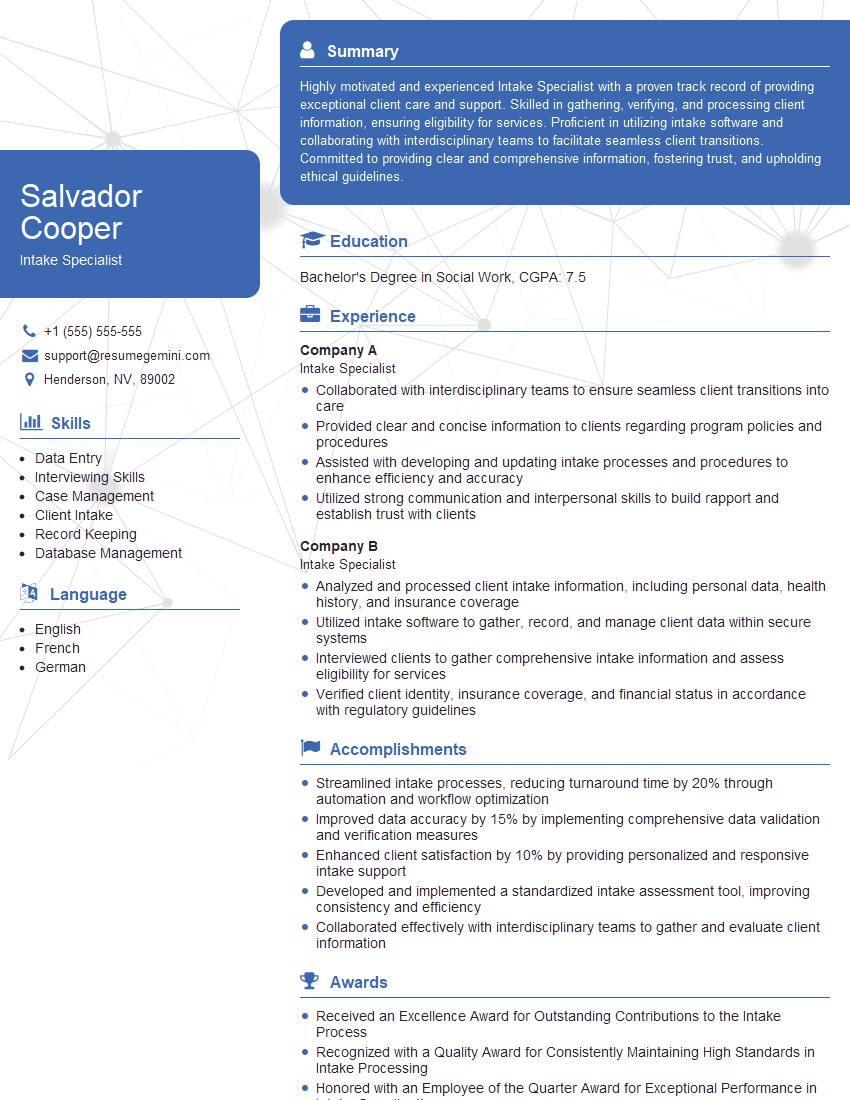
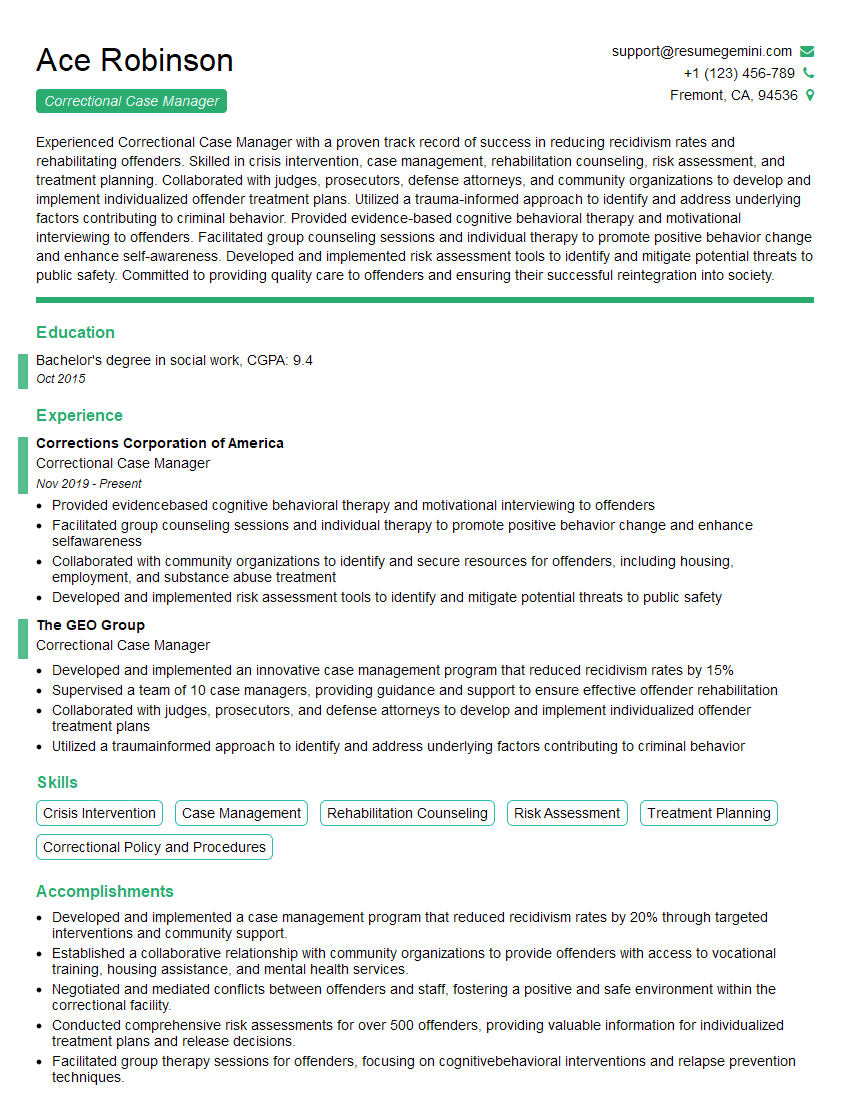
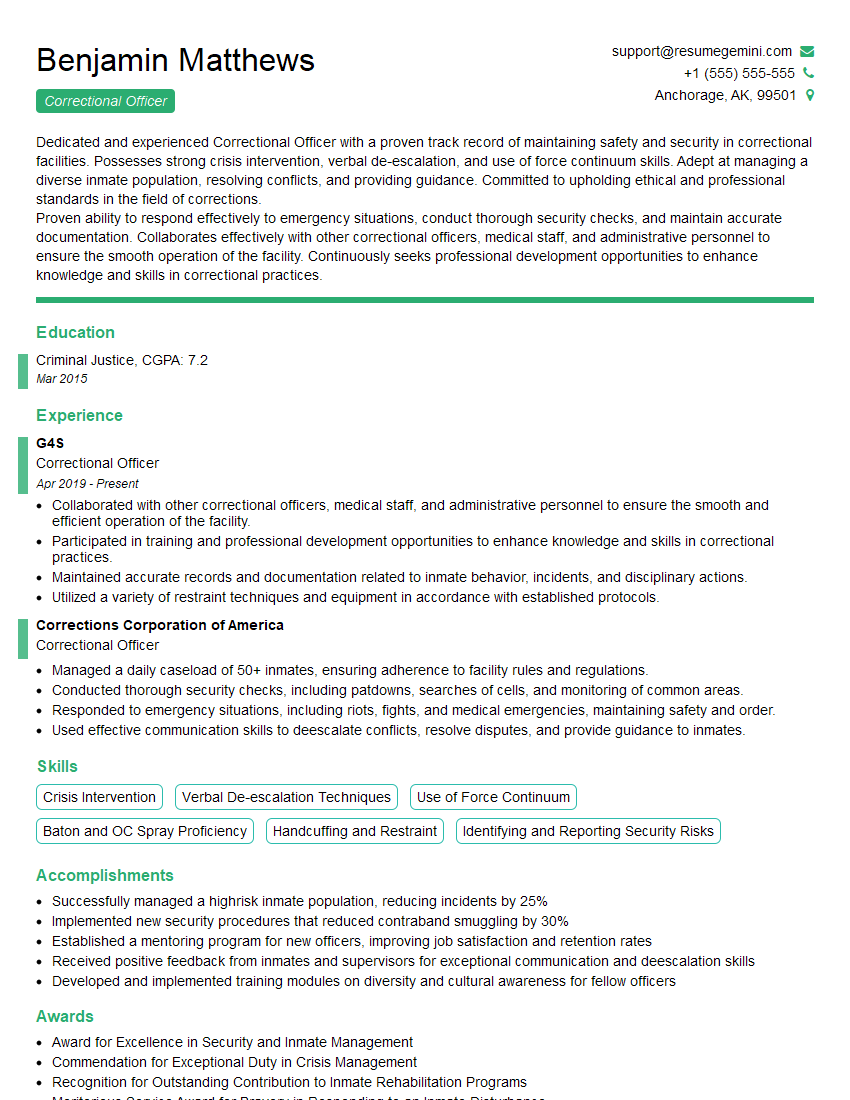
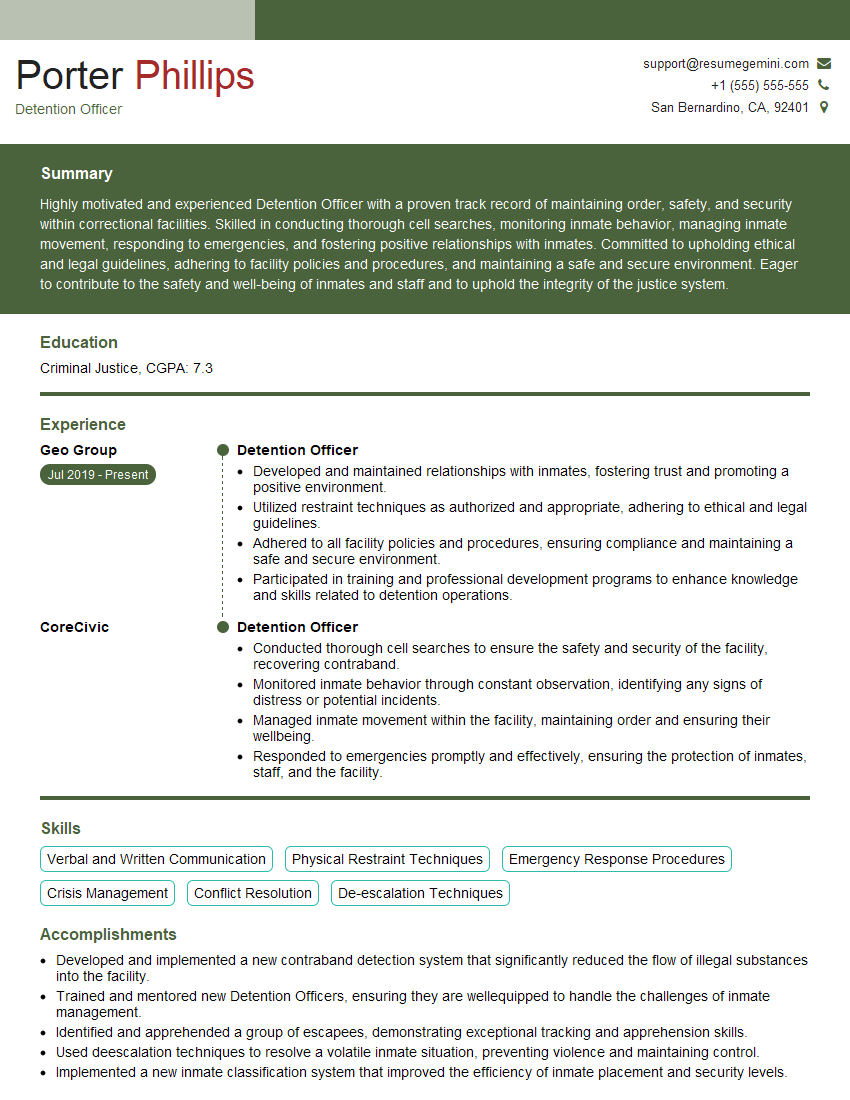
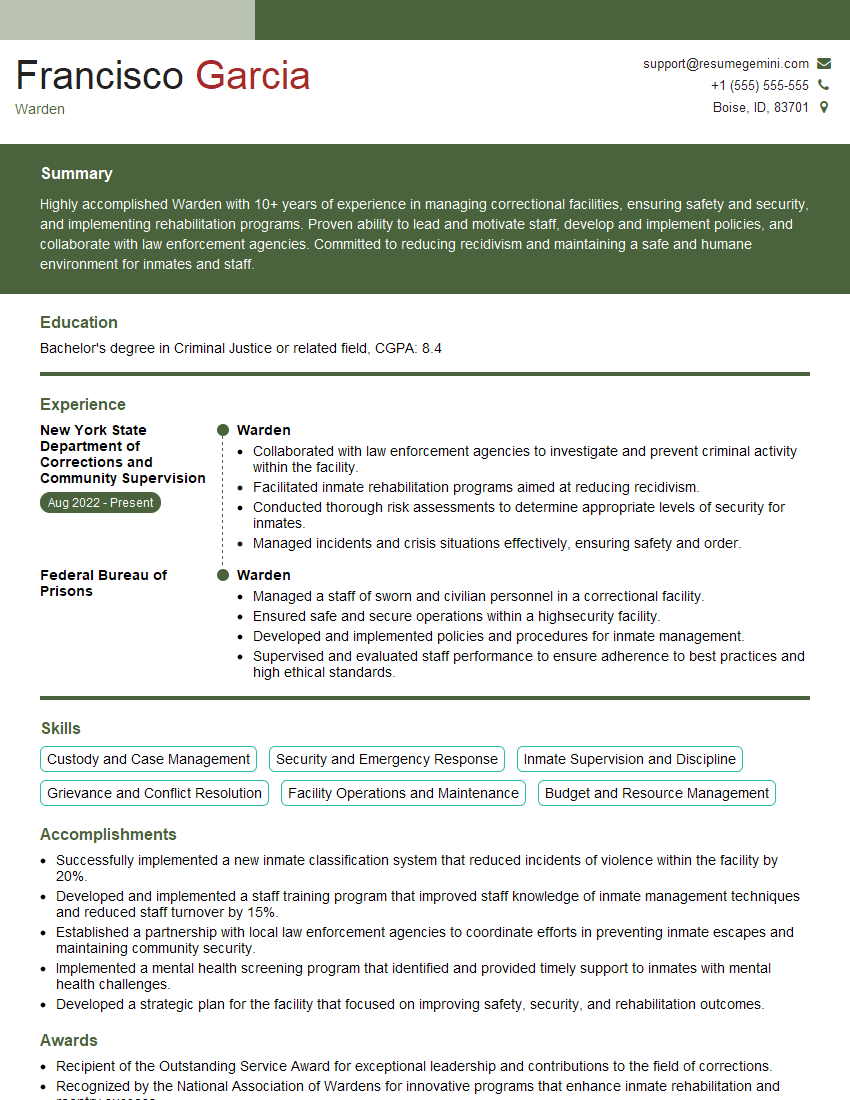
Mastering Arrestee Management demonstrates crucial skills highly valued in law enforcement and correctional settings, opening doors to diverse and rewarding career paths. A strong resume is vital for showcasing your abilities to potential employers. Building an ATS-friendly resume is key to maximizing your job prospects. We recommend using ResumeGemini, a trusted resource for crafting professional and effective resumes. ResumeGemini provides examples of resumes tailored to Arrestee Management to help you present your skills and experience in the best possible light.

Explore more articles
Users Rating of Our Blogs
Share Your Experience
We value your feedback! Please rate our content and share your thoughts (optional).
What Readers Say About Our Blog
Very informative content, great job.
good