Preparation is the key to success in any interview. In this post, we’ll explore crucial Art Conservation Materials interview questions and equip you with strategies to craft impactful answers. Whether you’re a beginner or a pro, these tips will elevate your preparation.
Questions Asked in Art Conservation Materials Interview
Q 1. What are the key properties of Paraloid B-72?
Paraloid B-72 is a widely used acrylic resin in art conservation known for its excellent film-forming properties, solubility in various solvents, and good adhesion to a range of materials. Key properties include its thermoplastic nature (meaning it softens with heat and can be re-melted), its relatively high molecular weight contributing to good film strength and durability, and its excellent clarity and UV resistance, preventing discoloration of artwork over time. It’s also relatively inert and chemically stable, minimizing the risk of unwanted reactions with the artwork.
Its solubility in various solvents allows for controlled application and removal, a crucial aspect of reversible conservation treatments. For example, its solubility in acetone allows for adjustments during application and potentially easier removal in the future, if necessary. Its non-yellowing properties make it ideal for use on light-colored artwork.
Q 2. Describe the advantages and disadvantages of using acrylic resins in conservation.
Acrylic resins, like Paraloid B-72, offer several advantages in art conservation. Their excellent clarity, flexibility, and good adhesion make them suitable for consolidating fragile artwork, such as paintings on canvas or cracked sculptures. They are relatively inert and stable, minimizing the risk of damaging chemical reactions with the artwork. Many are also reversible, meaning that with the appropriate solvent, they can be removed in the future if needed, a vital consideration for ethical conservation practice.
However, disadvantages exist. Some acrylic resins can be sensitive to solvents, potentially causing the film to dissolve or become degraded. Proper solvent selection is crucial. Furthermore, some acrylics can yellow slightly over time, although modern formulations have greatly reduced this issue. Finally, the selection of the correct acrylic resin is crucial, as its properties vary widely between different manufacturers and grades. A poorly chosen resin can damage the artwork it is meant to protect.
Q 3. Explain the differences between reversible and irreversible treatments in art conservation.
The distinction between reversible and irreversible treatments is fundamental in art conservation. Reversible treatments are those that can be removed or reversed without damaging the artwork. This is the preferred approach whenever possible, allowing future conservators to remove the treatment if new techniques or improved understanding emerges. Examples of reversible treatments include the use of certain water-soluble adhesives or the application of removable support structures.
Irreversible treatments, conversely, cannot be reversed easily or at all without causing significant damage. These are often used as a last resort when the artwork is in critical condition and reversible methods wouldn’t suffice. An example would be consolidating a severely deteriorated painting with an irreversible consolidant that permanently bonds fragments together. The choice between reversible and irreversible treatments always involves careful weighing of risks and benefits, with a strong preference for reversible methods when feasible.
Q 4. How do you select appropriate adhesives for different materials (e.g., wood, paper, metal)?
Adhesive selection is crucial and depends heavily on the materials involved and the intended application. For wood, animal-hide glues (like rabbit skin glue) are traditional choices. They are reversible (in theory – practically less so) and compatible with wood, but require careful application and temperature control. For less porous wood, synthetic adhesives such as polyvinyl acetate (PVA) emulsions might be preferable. These offer good adhesion and are relatively easy to use, but care should be taken to ensure compatibility and reversibility.
Paper conservation often employs wheat starch paste or methyl cellulose, which are water-soluble and readily reversible. For more robust repairs, a Japanese tissue and wheat starch paste combination is a classic technique. Metals frequently necessitate specialized epoxies or acrylic adhesives, carefully selected for their adhesion, stability and lack of reactivity with the specific metal.
The key is to always consider factors like the porosity of the material, the desired strength of the bond, the reversibility requirements, and any potential chemical interactions between the adhesive and the artwork.
Q 5. What are the potential risks associated with using solvents in conservation?
Solvents pose several risks in conservation. They can damage artwork materials by dissolving or softening them, especially if the wrong solvent or excessive amounts are used. They are also often flammable, posing a fire hazard, and many are toxic, requiring careful handling and ventilation to prevent inhalation or skin contact. Improper use can lead to discoloration, embrittlement, and irreversible damage to the artifact.
Furthermore, some solvents can cause undesirable chemical reactions with the artwork’s materials. For example, certain solvents might affect the binding medium of a painting. Therefore, rigorous testing and a deep understanding of both the artwork’s materials and the solvents’ properties are essential before using them in a conservation treatment. Safety precautions, such as appropriate personal protective equipment (PPE) and a well-ventilated workspace, are paramount.
Q 6. Describe the process of cleaning a painted canvas.
Cleaning a painted canvas is a delicate process requiring expertise and careful consideration. The first step involves a thorough examination of the painting to assess its condition and the nature of the dirt or grime. Non-invasive cleaning methods, such as vacuuming with a soft brush attachment, are often attempted first to remove loose surface dirt.
If necessary, more active cleaning might involve using a carefully selected solvent, often applied with cotton swabs or specialized brushes. The solvent choice is crucial and depends on the painting’s medium and condition. Testing on an inconspicuous area is always essential before proceeding with full cleaning. The process is typically slow and methodical, working in small areas and carefully monitoring the effect of the solvent. The goal is to remove surface dirt without damaging the paint layer, which could be vulnerable to both mechanical abrasion and chemical attack.
Q 7. Explain the importance of understanding the aging process of different materials.
Understanding the aging process of various materials is fundamental to effective art conservation. Different materials age in different ways. For example, wood can dry out, shrink, and crack, while paper can become brittle and yellow due to oxidation. Metals can corrode or tarnish, and pigments can fade or change color due to light exposure or chemical reactions.
Knowledge of these aging processes helps conservators predict potential problems and plan appropriate preventative measures or interventions. It informs the choice of materials and methods used in conservation treatments, enabling the development of strategies that address specific vulnerabilities associated with the materials and their particular deterioration processes. This knowledge helps prolong the life of artworks and preserves their cultural and artistic significance for future generations.
Q 8. How do you assess the compatibility of different conservation materials?
Assessing the compatibility of conservation materials is crucial to prevent further damage to the artwork. It’s like choosing the right glue – you wouldn’t use superglue on a delicate porcelain vase! We need to consider several factors.
- Chemical Compatibility: We analyze the chemical composition of both the artifact and the proposed material to ensure there’s no adverse reaction. For instance, using an acidic consolidant on an alkaline substrate could lead to deterioration. We might use techniques like FTIR (Fourier-transform infrared spectroscopy) or gas chromatography-mass spectrometry (GC-MS) to determine this.
- Physical Compatibility: This involves considering factors such as solubility, porosity, and expansion/contraction rates. A consolidant that’s too stiff could crack a fragile painting, while one that’s too soft might not offer sufficient support.
- Visual Compatibility: The material shouldn’t alter the appearance of the artwork in an undesirable way. Ideally, it should be invisible and reversible, allowing for future treatments.
- Testing: Before applying any material to the entire artifact, we conduct small-scale tests on inconspicuous areas to assess its compatibility and effectiveness. This is like testing a new paint color on a small, hidden section of a wall before painting the entire room.
We also refer to extensive databases and scientific literature on material interactions to support our decisions.
Q 9. What are the ethical considerations in choosing conservation materials?
Ethical considerations in choosing conservation materials are paramount. Our primary goal is to preserve the artwork for future generations, and this requires careful consideration.
- Reversibility: We strive to use materials and techniques that can be removed or reversed in the future, allowing for improved treatments based on new scientific knowledge or changing aesthetic preferences. Think of it as leaving options open for future conservators.
- Minimally Invasive Treatment: We prioritize interventions that cause the least possible damage or alteration to the original artwork. We prefer less is more, only intervening when absolutely necessary.
- Material Sourcing and Sustainability: We increasingly consider the environmental impact of materials, favoring sustainable and ethically sourced options. We research the origin and environmental footprint of each product.
- Transparency and Documentation: Detailed records of all materials used, along with their properties and application methods, are meticulously documented. This transparency ensures accountability and aids future conservators.
- Respect for the Artist’s Intent: We aim to respect the artist’s original techniques and materials as much as possible, while safeguarding the artwork for the future.
Ethics in conservation is a continuous learning process; we regularly engage with professional organizations and literature to stay abreast of best practices and evolving ethical guidelines.
Q 10. Describe your experience with different types of consolidants.
My experience with consolidants spans various types, each suited to specific materials and conditions.
- Paraloid B-72 (poly(methyl methacrylate): A widely used consolidant for paintings and other objects, it’s known for its good adhesion and reversibility. I’ve successfully employed it in consolidating flaking paint layers on canvases and stabilizing weakened plaster sculptures. However, its relatively high viscosity can sometimes make application challenging on porous surfaces.
- Acrylic resins: These offer a range of properties depending on their formulation and molecular weight. Some are more flexible than Paraloid B-72 and hence better suited for materials subject to significant movement. I’ve used these on fragile textiles.
- Natural resins (e.g., beeswax): These offer excellent compatibility with certain materials, particularly historical objects. The application might involve more traditional techniques, but they result in minimal visual impact and are generally well-tolerated. I’ve used beeswax to consolidate some wooden sculptures, benefiting from its excellent compatibility with the wood and aesthetic qualities.
- Silicate consolidants: These are particularly useful for porous stone and brick. They offer excellent penetration and strength, but their application requires specific expertise to avoid potential discoloration or surface bloom. However, I would consider carefully if using this on artifacts containing pigments sensitive to alkalinity.
The choice of consolidant is always tailored to the specific artifact, its condition, and the desired outcome. This is where testing and careful assessment are critical.
Q 11. How do you determine the appropriate level of intervention for a damaged artifact?
Determining the appropriate level of intervention is a critical decision guided by the principles of minimum intervention and reversibility. It’s like treating a patient – we want to fix the problem but avoid unnecessary surgery.
We consider:
- The extent of damage: A small crack in a ceramic object requires less intervention than extensive fragmentation.
- The significance of the artifact: A highly valuable or historically significant object requires more thorough documentation and a higher level of expertise.
- The material’s inherent stability: Some materials are inherently more fragile and require more conservative treatment.
- The risk of further damage: Some treatments, even if effective, can carry a risk of causing further harm.
- The reversibility of treatment: Interventions should, wherever possible, be reversible, allowing future conservators to adjust the treatment based on new knowledge.
A thorough condition survey, including documentation (photography, technical analysis), precedes any decision. This informed assessment guides us toward the least invasive and most effective treatment strategy.
Q 12. What are the common causes of deterioration in different types of art materials?
Deterioration in art materials is a complex process influenced by a multitude of factors.
- Paintings (Canvas & Panel): Deterioration can include cracking and flaking of paint layers (due to aging of binders, fluctuating environmental conditions), mold growth (due to humidity), canvas degradation (due to aging and attack from insects or rodents), and wood panel warping or cracking (due to environmental conditions and wood degradation).
- Sculptures (Stone & Metal): Stone sculptures are vulnerable to weathering (rain, freeze-thaw cycles), salt damage (due to the ingress of soluble salts), and biological growth (lichens, moss). Metal sculptures suffer from corrosion due to oxidation, environmental pollutants, and interaction with other metals.
- Textiles: Textiles are prone to damage from light exposure, causing fading and embrittlement. Insect infestation, moisture damage (mold), and fiber degradation from aging also play significant roles.
- Paper & Books: Paper deteriorates due to acid hydrolysis (leading to embrittlement), light exposure, and insect infestation. This can lead to fading, discoloration, and tearing.
Understanding these deterioration processes is critical for devising effective preservation strategies. The factors are often intertwined, and a comprehensive approach is necessary.
Q 13. Explain the role of preventative conservation.
Preventative conservation is proactive; it aims to minimize deterioration *before* it occurs. Think of it as preventative medicine – it’s far better to prevent a disease than to cure it.
Key aspects include:
- Environmental control: Maintaining stable temperature, relative humidity, and light levels is crucial in slowing deterioration. Think of a museum climate control system.
- Pest control: Regular inspections and appropriate pest management strategies are vital, preventing insect and rodent damage.
- Proper handling and storage: Careful handling prevents physical damage, while appropriate storage (e.g., acid-free boxes, archival-quality materials) protects against deterioration.
- Protective barriers: Using UV filters on windows or display cases minimizes light damage. Encapsulation and barrier materials protect against environmental pollutants.
- Regular monitoring: Routine inspections allow for early detection of deterioration and prompt intervention, before the damage becomes severe.
Preventative conservation is cost-effective in the long run, as it avoids costly and potentially irreversible restorative treatments.
Q 14. What are some common inpainting materials and techniques?
Inpainting is the process of filling losses or areas of damage in an artwork to improve its visual appearance. The goal is to integrate the repair seamlessly, without creating a distracting or unnatural effect.
Common materials and techniques include:
- Pigments: Traditional pigments, carefully matched to the original artwork, are often used. This might involve preparing custom pigment mixtures to precisely match the color and texture.
- Binders: The pigment is mixed with a binder, such as an acrylic medium or traditional egg tempera, to achieve the desired consistency and adhesion.
- Application techniques: Painters use fine brushes and a variety of techniques to blend the inpaint with the surrounding areas, creating a smooth, visually acceptable transition. This might involve layering thin washes of paint, blending with solvents, or other techniques.
- Retouching varnishes: Once the inpainting is complete, a retouching varnish can be applied to unify the surface and protect the inpaint.
Ethical considerations are crucial. The inpainting should be clearly distinguishable from the original artwork (using differences in texture or other subtle cues) to avoid deceiving viewers. Documentation of the inpainting is vital to ensure transparency and assist future conservators.
Q 15. How do you document your conservation treatments?
Documentation in art conservation is paramount. It’s not just about recording what we did; it’s about creating a comprehensive historical record for future conservators and researchers. Think of it like a detailed recipe, but for a very delicate and valuable cake!
My documentation process usually involves several steps:
- Initial Assessment: Detailed photographic documentation (macro and micro photography are essential), including condition reports with precise descriptions of damage, using standardized terminology.
- Treatment Plan: A written plan outlining proposed treatments, rationale for the selected methods, materials used (with manufacturers and batch numbers!), and anticipated risks and outcomes. This is crucial for transparency and allows for peer review.
- Treatment Process Documentation: A detailed, day-by-day account of the treatment, with photographs and notes at each stage. This includes any unexpected findings or changes to the treatment plan. I often use digital tools such as spreadsheets and databases to organize this data.
- Final Report: A comprehensive summary of the treatment process, incorporating all previous documentation, analysis of results, and recommendations for future care. This includes before-and-after photographs and any analytical data obtained (e.g., from scientific analysis).
The entire process emphasizes clarity, accuracy, and reproducibility. Good documentation is essential for the long-term preservation and understanding of the artwork.
Career Expert Tips:
- Ace those interviews! Prepare effectively by reviewing the Top 50 Most Common Interview Questions on ResumeGemini.
- Navigate your job search with confidence! Explore a wide range of Career Tips on ResumeGemini. Learn about common challenges and recommendations to overcome them.
- Craft the perfect resume! Master the Art of Resume Writing with ResumeGemini’s guide. Showcase your unique qualifications and achievements effectively.
- Don’t miss out on holiday savings! Build your dream resume with ResumeGemini’s ATS optimized templates.
Q 16. What safety precautions do you take when working with hazardous materials?
Safety is my top priority. Working with hazardous materials like solvents, adhesives, and consolidants requires meticulous attention to detail and strict adherence to safety protocols. Imagine working with a delicate artifact—you need to be as careful with your own well-being as you are with the object itself.
My safety procedures include:
- Proper Personal Protective Equipment (PPE): This is non-negotiable and includes gloves (nitrile, for example, for solvent resistance), eye protection, respirators (depending on the volatile organic compound (VOC) levels), and lab coats.
- Well-Ventilated Workspace: I always work in a well-ventilated area, preferably with a fume hood for particularly hazardous materials. Good ventilation is vital to avoid inhaling harmful fumes.
- Material Safety Data Sheets (MSDS): I always consult the MSDS before using any material, understanding its hazards and handling precautions. This is like reading the instructions before assembling furniture – essential for safe operation.
- Waste Disposal: Proper disposal of hazardous waste is crucial. I follow all regulations and often utilize specialized waste disposal services.
- Emergency Procedures: Knowing emergency procedures, including eye wash stations and access to medical help, is essential.
Regular training and staying updated on the latest safety regulations are also critical aspects of maintaining a safe working environment. Safety is not a one-time effort; it’s an ongoing commitment.
Q 17. Describe your experience with micro-emulsions in cleaning.
Micro-emulsions are fascinating cleaning agents. They’re basically tiny droplets of one liquid dispersed within another, creating a stable, transparent solution. Think of it like making a really smooth, perfectly blended vinaigrette.
In cleaning, the small droplet size allows for better penetration into porous surfaces like canvas or paper, effectively removing dirt and grime without causing damage. I’ve used them successfully in cleaning paintings, particularly those with delicate surfaces.
My experience demonstrates that micro-emulsions offer several advantages:
- Increased Cleaning Efficiency: The small droplet size allows for better contact with the soiling, enhancing removal.
- Reduced Surface Tension: This aids in penetrating and lifting dirt without aggressive scrubbing.
- Better Control over Cleaning Agents: The system allows for controlled delivery of cleaning agents, minimizing risk of damage.
However, careful selection of solvents and surfactants (the substances that stabilize the emulsion) is essential. The specific composition needs to be tailored to the artwork’s materials, considering potential interactions and risks.
For example, I might use a micro-emulsion containing deionized water, a mild surfactant, and a low-toxicity solvent for cleaning a delicate watercolor.
Q 18. What are the advantages and disadvantages of using natural versus synthetic materials?
The choice between natural and synthetic materials in conservation is a complex one, often involving weighing advantages and disadvantages.
Natural Materials:
- Advantages: Often biocompatible (meaning they’re less likely to interact negatively with the artwork), may have a longer track record of use, and can be aesthetically more appropriate for certain works.
- Disadvantages: Can be inconsistent in quality, more prone to deterioration over time, may be difficult to source ethically and sustainably, and some can attract pests.
Synthetic Materials:
- Advantages: More consistent in quality, often more durable and stable, may offer enhanced performance (e.g., stronger adhesives), and can have specifically tailored properties.
- Disadvantages: Potential for unknown long-term effects, possibly less aesthetically suitable, may be derived from non-renewable resources, and they can sometimes be more costly.
For example, traditional animal glue (natural) has been used for centuries for canvas lining, yet its sensitivity to humidity is a significant drawback. Synthetic adhesives offer better stability but might not be aesthetically ideal in all situations. The best approach often involves carefully considering the artwork’s specific needs and context, weighing the potential benefits and drawbacks of each material option. Detailed testing is crucial.
Q 19. How do you select appropriate support materials for paintings?
Selecting appropriate support materials for paintings is a critical step, impacting the artwork’s long-term stability. The goal is to provide firm, stable, and inert support without damaging the original artwork. It’s like finding the perfect foundation for a house.
My approach involves:
- Assessment of the Painting: Understanding the painting’s current condition, the nature of the existing support, and the type of paint used is crucial. A deteriorated canvas may require different support than a stable panel.
- Material Selection: The choice of support material depends on several factors, including the artwork’s size, weight, fragility, and the nature of the paint layer. Options include linen canvas, cotton canvas, various wood panels (depending on species and stability), and sometimes even aluminum or other synthetic materials.
- Testing: Before committing to a large-scale treatment, small-scale tests are usually performed to assess the compatibility of the chosen support with the painting. This is essential to avoid unintended interactions.
- Preparation: Proper preparation of both the painting and the new support is crucial for a successful lining or mounting. This involves cleaning, sizing, and ensuring both surfaces are properly conditioned.
For instance, a delicate watercolor on aged paper might require a lightweight and inert support like Japanese tissue, while a large, heavy oil painting might benefit from a strong linen canvas.
Q 20. Explain the principles of humidity and temperature control in conservation.
Humidity and temperature control are fundamental in conservation, impacting the long-term stability and preservation of artworks. Think of them as the ideal climate for the artwork.
Temperature: Extreme temperature fluctuations can cause expansion and contraction of materials, leading to cracking, delamination, and other forms of damage. Ideally, a stable temperature around 68-72°F (20-22°C) is recommended.
Humidity: Relative humidity (RH) is equally important. High humidity can lead to mold growth and swelling of materials, while low humidity can cause brittleness and cracking. A stable RH of 45-55% is generally considered ideal.
Control Methods: Methods for controlling humidity and temperature range from simple measures, like installing dehumidifiers or humidifiers, to sophisticated climate control systems involving specialized environmental monitoring equipment. This might involve installing climate-controlled storage facilities or using individual enclosures (like museum cases) that maintain optimal climate conditions for specific artifacts.
Monitoring systems that continuously record temperature and humidity levels are essential to ensure optimal conditions and promptly address deviations from the ideal range. Detailed records of temperature and humidity are integral parts of the conservation documentation.
Q 21. What are the different types of mounting techniques used in conservation?
Mounting techniques in conservation aim to support fragile artworks while minimizing damage and ensuring reversibility. It’s a delicate balancing act – the goal is to provide support without impacting the original artwork.
Several common methods exist:
- Dry Mounting: This involves using a heat-activated adhesive sheet to attach the artwork to a support board. It’s suitable for relatively stable artworks but can damage certain materials if overheated.
- Wet Mounting: Uses a wheat starch paste to adhere the artwork to a support. It’s often used for works on paper but requires careful consideration of the paper’s properties and potential for water damage.
- Lining: This is often used for paintings on canvas, involving attaching a new canvas to the back of the original to provide structural support. The original artwork is preserved on the face, so it looks unchanged.
- Float Mounting: Artwork is affixed to a support using hinges that allow for some movement; this is beneficial for very fragile materials. The artwork rests on spacers and appears to float between layers.
- Hinging: A method of attaching items such as photographs or smaller artworks using small strips of archival materials.
The selection of the mounting technique depends on the artwork’s material, condition, and size. Reversibility is a crucial consideration. The method should ideally be reversible, allowing future conservators to remove the support without harming the artwork, if necessary.
Q 22. How do you address mold and insect infestation on artifacts?
Mold and insect infestations are serious threats to artifacts, causing irreversible damage. Addressing them requires a multi-pronged approach prioritizing safety and preservation. The first step is always careful assessment to determine the extent of the infestation and the type of organism involved. This often involves microscopic examination and possibly even environmental testing for spore counts.
For mold, the initial step is often carefully removing loose mold growth with a soft brush or suction. The choice of method depends critically on the artifact’s material. For instance, a delicate watercolor would require vastly different treatment than a robust wooden sculpture. After removal, treatment might involve localized application of fungicides, always ensuring compatibility with the artifact’s material. This often requires testing on a less visible area first. Crucially, the underlying cause of the mold growth (high humidity, water leaks) must be addressed to prevent recurrence.
Insect infestations are tackled similarly, starting with identifying the pest. This dictates the appropriate treatment strategy. For example, freezing can effectively kill many insects and their eggs, but this isn’t suitable for all materials. Fumigation with approved insecticides is another possibility but requires stringent control over environmental conditions and careful selection of the fumigant to avoid damaging the artifact. Again, preventative measures, like improving storage conditions and pest monitoring, are vital for long-term preservation.
Q 23. Explain your experience with different types of coatings used for protection.
Choosing the right protective coating is like choosing the right clothing for an occasion – it depends on the ‘occasion’ (the artifact and its environment) and the ‘person’ (the material of the artifact). I’ve worked with a wide range of coatings, from simple, reversible ones like wheat starch paste for paper conservation, to more complex, durable coatings like Paraloid B-72 for paintings. Paraloid B-72, an acrylic polymer, is exceptionally versatile and offers good protection against environmental damage but is not universally applicable. It’s crucial to consider the material’s inherent properties and its susceptibility to degradation.
For instance, I once treated a delicate 18th-century silk textile. A rigid coating would have risked damaging the fragile fibres, so we opted for a micro-emulsion wax, which provided some protection while allowing the fabric to retain its flexibility. Conversely, a robust bronze sculpture might benefit from a more durable, UV-resistant coating to protect it from atmospheric pollutants. Each project necessitates a thorough assessment of the artifact, the environmental conditions, and the desired level of protection to select the appropriate coating.
I’ve also gained experience with more specialized coatings designed to address specific problems. For example, we’ve employed nano-coatings to enhance the water repellency of porous stone sculptures.
Q 24. What are the key considerations for the long-term storage of art objects?
Long-term storage is the cornerstone of artifact preservation. Key considerations focus on minimizing environmental stress factors. This includes:
- Temperature and humidity control: Fluctuations can cause significant damage, leading to cracking, warping, and mold growth. Stable conditions are paramount.
- Light exposure: Ultraviolet (UV) and visible light can cause fading and degradation, especially in organic materials. Storage should be in low light or dark conditions.
- Air quality: Pollutants can accelerate deterioration. Storage spaces should be well-ventilated and free of harmful gases.
- Pest control: Preventing insect and rodent infestation is crucial. Regular monitoring and preventative measures are vital.
- Proper support and handling: Objects should be properly supported to prevent distortion or damage. Careful handling procedures are essential during storage and retrieval.
- Environmental monitoring: Continuously monitoring environmental conditions (temperature, humidity, light levels, etc.) is vital for ensuring the integrity of the collection. Data loggers are often used for this purpose.
Consider this example: I was involved in developing a climate-controlled storage facility for a museum. This involved selecting the appropriate HVAC (heating, ventilation, and air conditioning) system, implementing strict air filtration, and designing the storage racks to ensure proper support and access for delicate items.
Q 25. How do you manage and dispose of hazardous waste materials?
Hazardous waste management is a critical aspect of conservation work. We adhere strictly to all relevant regulations and employ a systematic approach. First, we minimize waste generation through careful planning and selection of materials. For example, selecting water-based rather than solvent-based cleaning solutions reduces the risk of hazardous waste.
Any hazardous waste generated (e.g., solvents, acids, certain cleaning solutions, contaminated materials) is segregated and clearly labeled according to local regulations. We use appropriate containers and follow strict safety protocols during handling and transportation. Disposal is handled exclusively through licensed waste disposal companies specializing in hazardous materials, ensuring they are processed in an environmentally responsible manner. Detailed records of all hazardous waste generated, treated, and disposed of are meticulously maintained for auditing purposes. This is not only ethically responsible but essential for regulatory compliance and liability management.
Q 26. Describe your understanding of the role of scientific analysis in material selection.
Scientific analysis plays a vital role in material selection. It provides crucial information about the artifact’s composition, degradation processes, and susceptibility to environmental factors. Techniques like X-ray fluorescence (XRF), gas chromatography-mass spectrometry (GC-MS), and Fourier-transform infrared spectroscopy (FTIR) allow us to identify materials, detect pollutants, and assess the overall condition of the artifact. This data guides the selection of appropriate conservation materials. A material that is compatible with one type of paint may be incompatible with another.
For example, before applying a consolidant to a crumbling fresco, I’d use FTIR spectroscopy to ascertain the fresco’s pigments and binder. This ensures the consolidant doesn’t react negatively with the existing materials and is compatible. Without this analysis, we risk causing irreversible damage by using an unsuitable material. This scientific approach minimizes the risks and maximizes the chances of a successful treatment. Such informed decisions are based on rigorous testing and analysis, not just on general assumptions.
Q 27. How do you evaluate the effectiveness of a conservation treatment?
Evaluating the effectiveness of a conservation treatment involves a combination of visual assessment, scientific analysis, and long-term monitoring. Initial visual inspection checks for improvements in the artifact’s appearance and stability. This might involve documenting changes in color, cracks, or surface texture. However, visual observation alone is insufficient.
We then employ scientific methods, such as microscopy to analyze the structure of the treated areas. This might involve checking the penetration of a consolidant or the effectiveness of a cleaning method. Long-term monitoring is crucial, as the effects of a treatment may not be immediately apparent. This involves periodic inspections and re-assessments to track the artifact’s condition over time. Any changes in condition would be recorded and analyzed to determine the treatment’s long-term impact. Furthermore, before-and-after photographs, and detailed documentation of the treatment itself, are vital for comparing the changes over time.
Q 28. What are some emerging trends in art conservation materials and techniques?
The field of art conservation materials and techniques is constantly evolving. Several emerging trends are shaping the future:
- Nanomaterials: Nanotechnology offers innovative solutions, such as nano-coatings for improved protection and self-cleaning properties.
- Bio-based materials: The use of sustainable and environmentally friendly materials is gaining traction.
- Advanced imaging techniques: Improved imaging technologies (like multispectral imaging and hyperspectral imaging) allow for more detailed analysis and better understanding of artifacts and their condition.
- Digital preservation: Creating 3D models and virtual reconstructions of artifacts offers valuable tools for documentation and research.
- Preventive conservation: A greater focus on proactive strategies to prevent damage rather than solely reactive treatments.
For instance, the development of bio-compatible consolidants derived from natural sources represents a significant advancement, minimizing the environmental impact while improving the sustainability of our practices.
Key Topics to Learn for Your Art Conservation Materials Interview
- Binding Media: Understanding the properties and degradation of various binding media (e.g., oils, acrylics, tempera) – including their chemical composition, aging processes, and appropriate cleaning methods. Practical application: Diagnosing the cause of paint flaking on a canvas painting.
- Pigments and Dyes: Identifying pigments and dyes used historically and in contemporary art, their lightfastness, and susceptibility to environmental factors. Practical application: Selecting appropriate conservation treatments based on pigment analysis.
- Support Materials: Knowledge of different support materials (canvas, wood panels, paper, etc.), their inherent vulnerabilities, and appropriate conservation techniques for each. Practical application: Assessing the structural stability of a deteriorating wooden panel painting.
- Conservation Ethics and Practices: Understanding the ethical considerations in art conservation, including reversibility of treatments, documentation, and the impact of intervention on the artwork’s integrity. Practical application: Justifying the choice of a specific conservation treatment based on ethical principles and best practices.
- Environmental Factors and Degradation: Analyzing the impact of environmental conditions (light, temperature, humidity) on artwork deterioration. Practical application: Designing appropriate storage and display environments to mitigate degradation.
- Modern and Traditional Conservation Techniques: Familiarity with both traditional and modern approaches to art conservation, including cleaning, consolidation, repair, and inpainting techniques. Practical application: Proposing a comprehensive conservation plan for a damaged artwork.
- Materials Analysis Techniques: Understanding various analytical techniques used in art conservation (e.g., microscopy, spectroscopy) to identify materials and assess their condition. Practical application: Interpreting analytical data to inform conservation decisions.
Next Steps
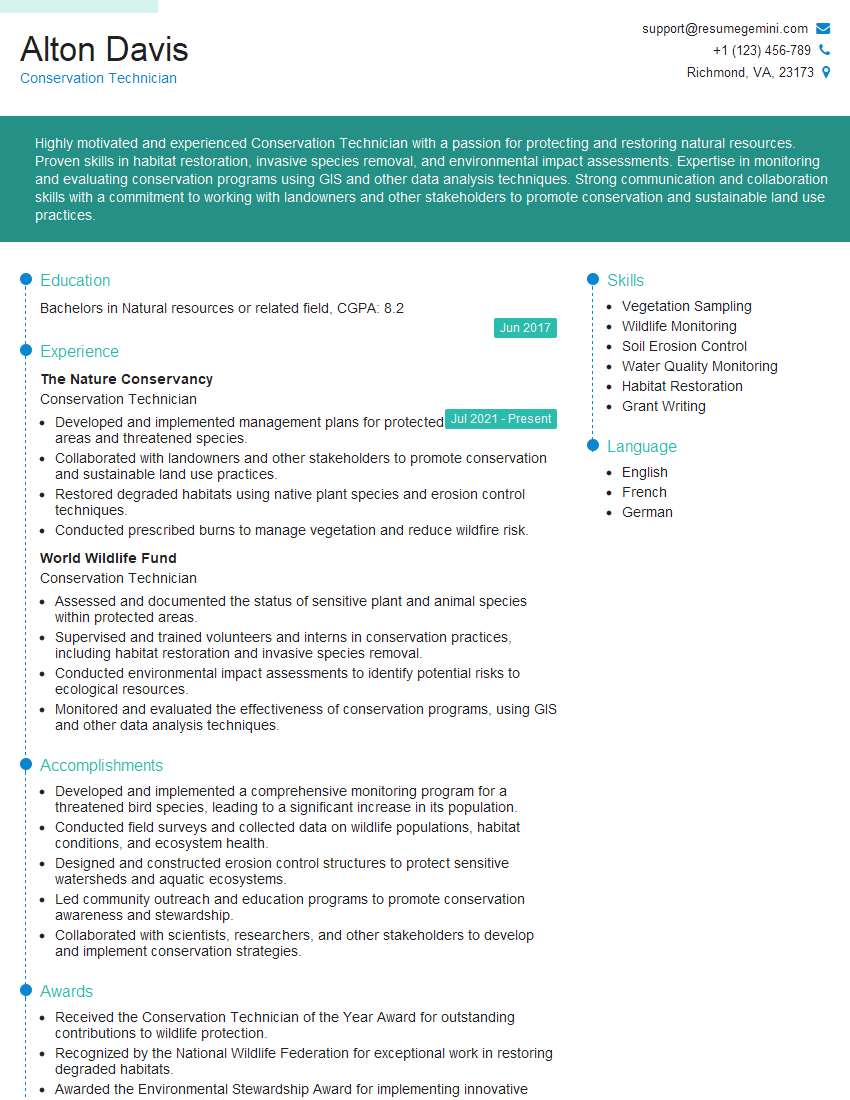
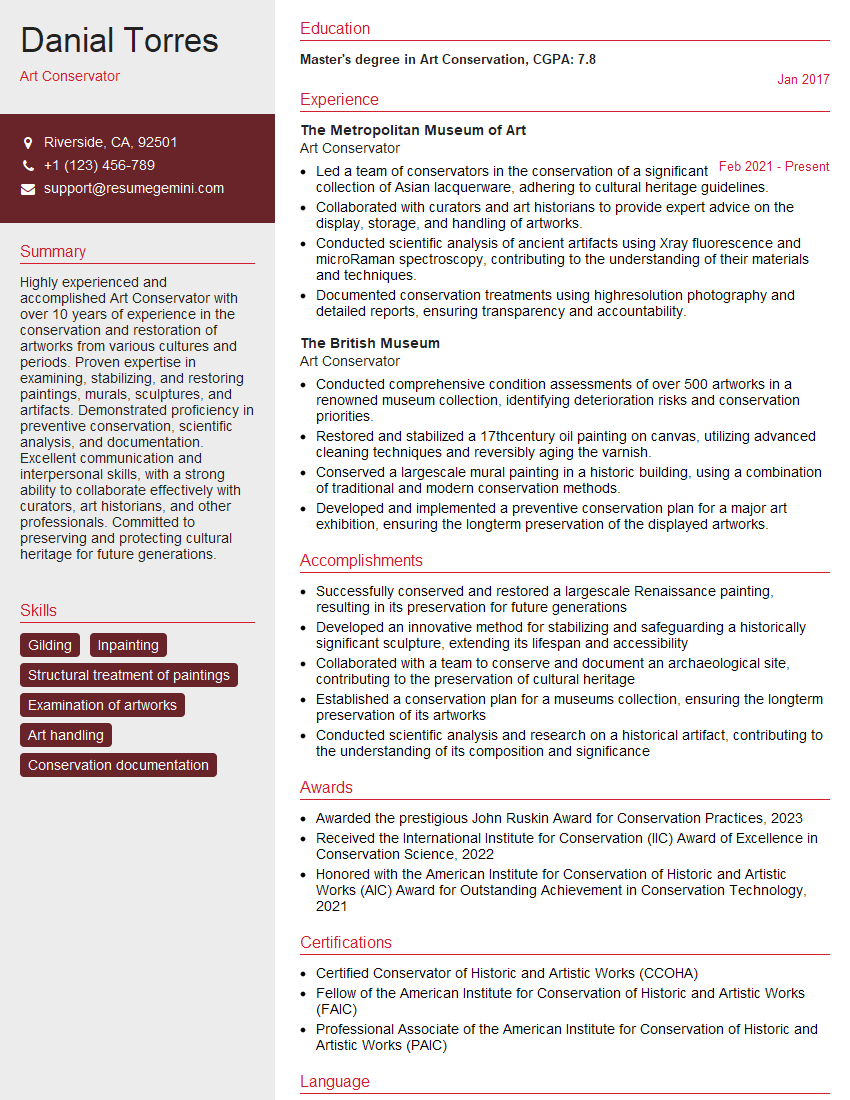
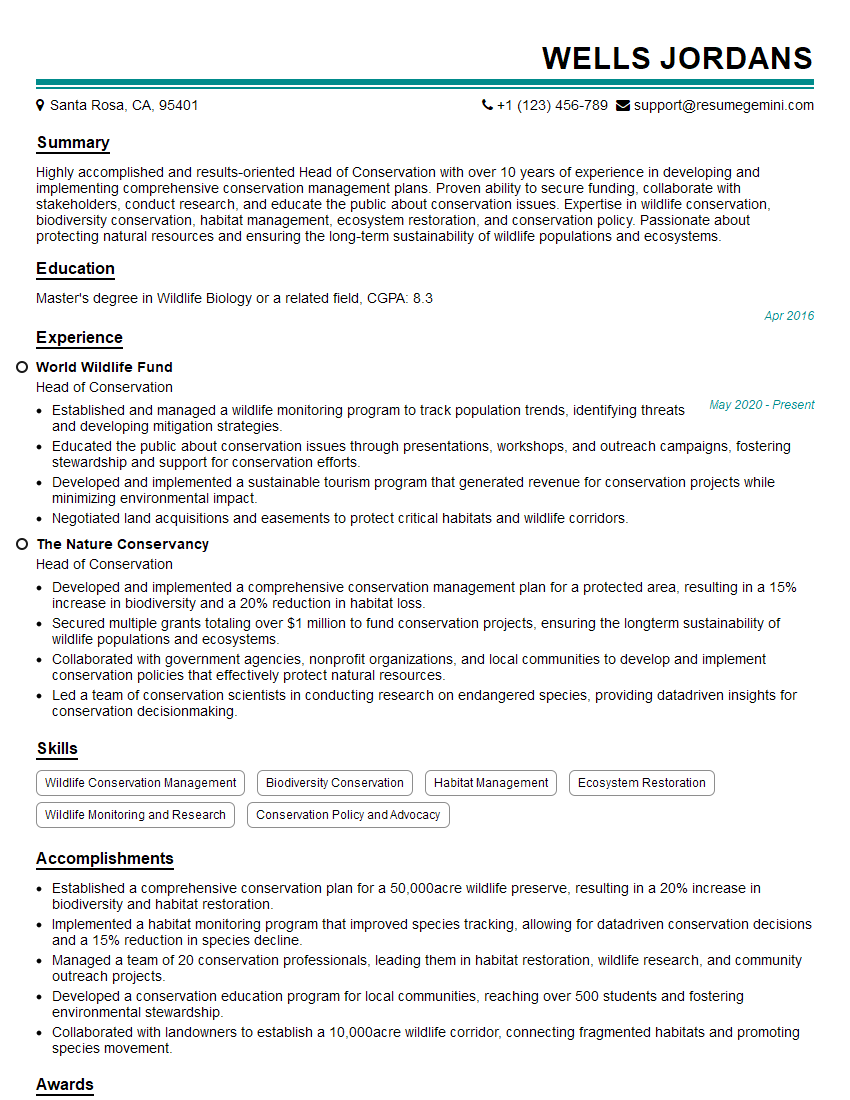
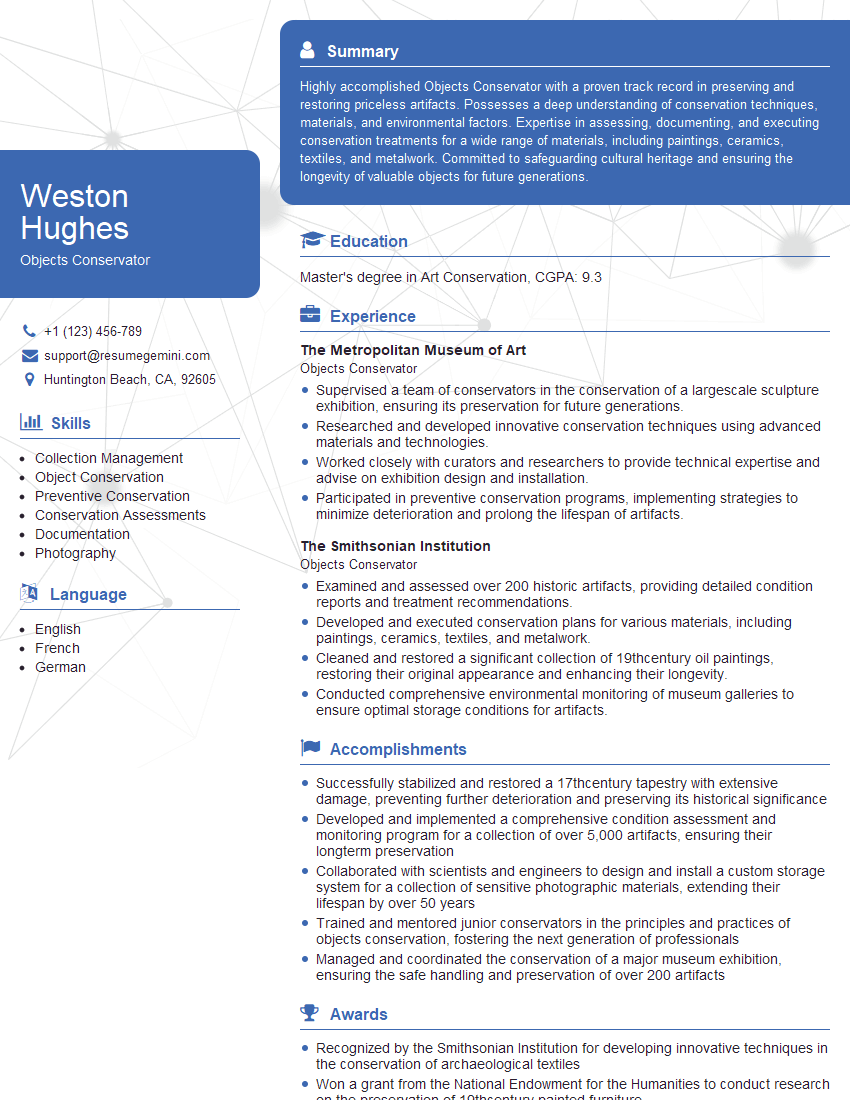
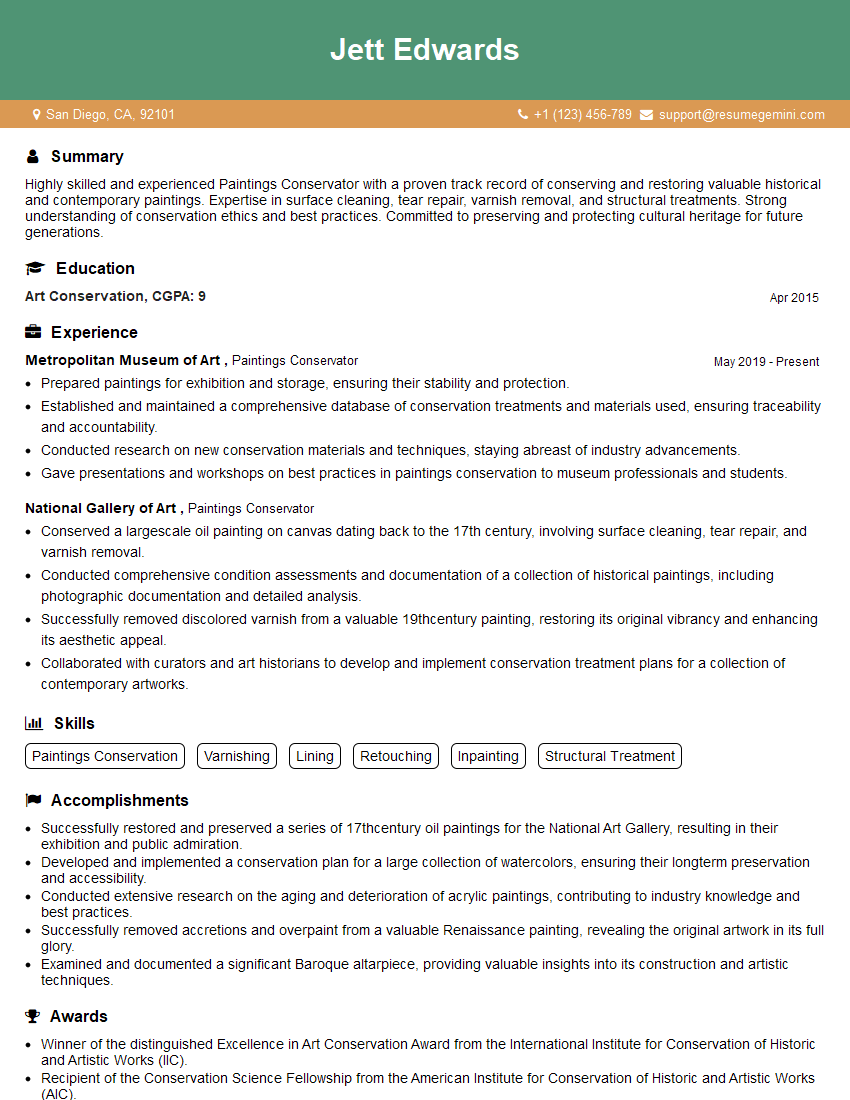
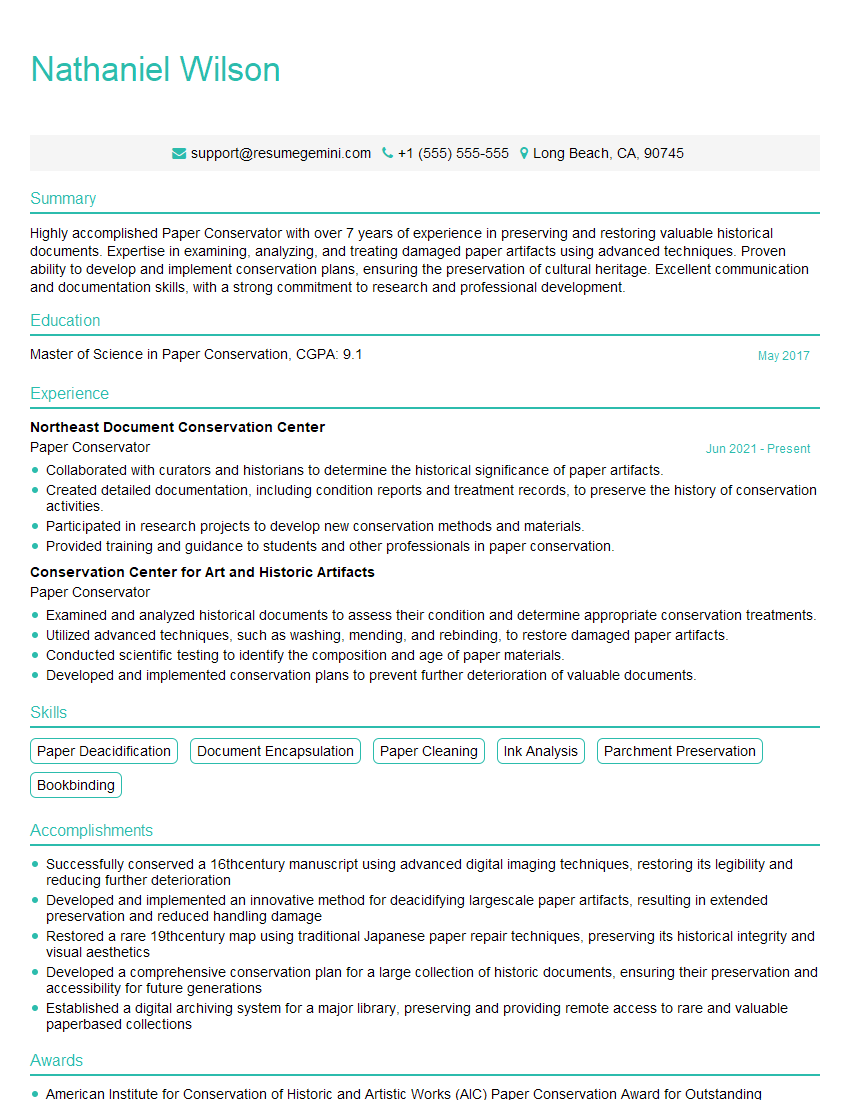
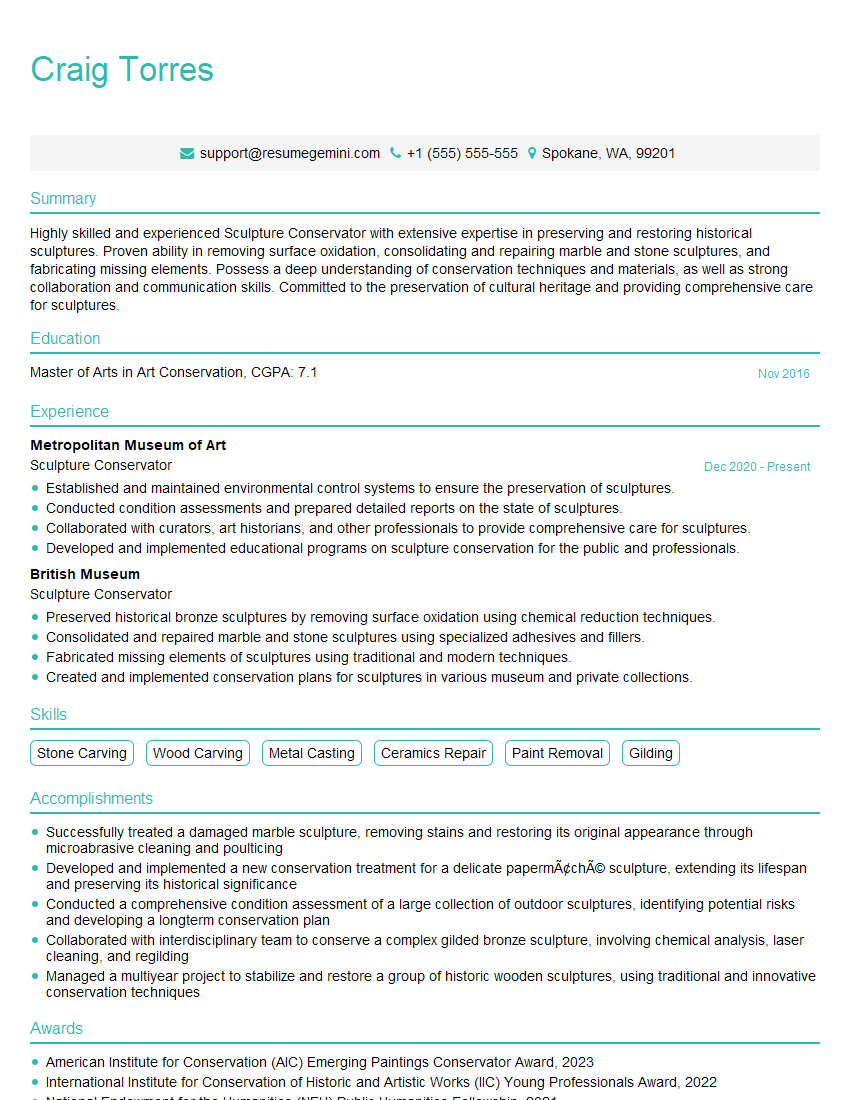
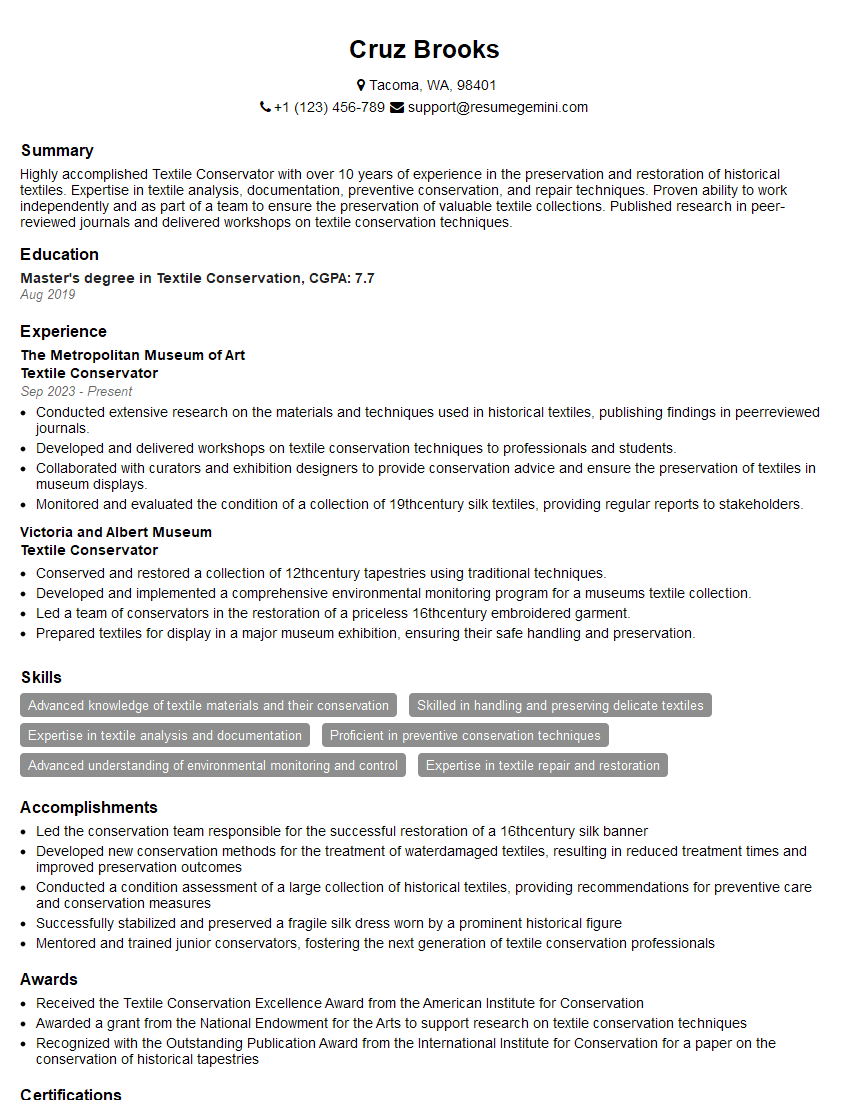
Mastering Art Conservation Materials is crucial for a successful career in this field. A deep understanding of these materials is essential for effective diagnosis, treatment, and preservation of valuable artworks. To significantly improve your job prospects, create an ATS-friendly resume that highlights your skills and experience effectively. ResumeGemini is a trusted resource that can help you build a professional resume tailored to the specific requirements of Art Conservation Materials positions. Examples of resumes specifically designed for this field are available to help you create a compelling application.
Explore more articles
Users Rating of Our Blogs
Share Your Experience
We value your feedback! Please rate our content and share your thoughts (optional).
What Readers Say About Our Blog
Very informative content, great job.
good