Feeling uncertain about what to expect in your upcoming interview? We’ve got you covered! This blog highlights the most important Art Direction and Collaboration interview questions and provides actionable advice to help you stand out as the ideal candidate. Let’s pave the way for your success.
Questions Asked in Art Direction and Collaboration Interview
Q 1. Describe your experience managing creative projects from concept to completion.
Managing a creative project from concept to completion involves a structured approach that balances creative vision with practical execution. It’s akin to orchestrating a symphony – each instrument (team member) plays a vital role, and the conductor (Art Director) ensures harmony and a cohesive final product.
- Concept Development: This initial phase involves brainstorming, client consultations, and mood board creation to solidify the project’s core message and visual style. For example, in a recent rebranding project for a tech startup, we spent several weeks exploring different logo concepts and brand identities, ultimately settling on a minimalist approach that conveyed innovation and trust.
- Design & Production: This is where the creative magic happens. I collaborate closely with designers, ensuring their work aligns with the overall vision. Regular check-ins, feedback sessions, and utilizing project management tools like Asana or Trello are crucial for tracking progress and addressing issues proactively.
- Quality Assurance & Refinement: Before final delivery, the project undergoes rigorous review to ensure it meets quality standards and the client’s brief. This involves rounds of feedback, revisions, and meticulous attention to detail. For a recent website redesign, we conducted multiple rounds of user testing to ensure navigation was intuitive and user-friendly.
- Delivery & Post-Production: Finally, we deliver the final assets and documentation to the client, and even after completion, provide support if needed to ensure lasting success.
Q 2. How do you handle conflicting creative visions within a team?
Conflicting creative visions are inevitable in collaborative environments. The key is to facilitate constructive dialogue, not suppression. Think of it as a negotiation, where everyone’s voice is heard, and a compromise that satisfies the project’s goals is reached.
- Active Listening: I begin by actively listening to each team member’s perspective, ensuring everyone feels heard and understood.
- Identifying Common Ground: I focus on finding shared objectives and values. What are the overarching goals of the project? What aspects are non-negotiable?
- Compromise & Collaboration: Sometimes, it means adapting the initial vision. Other times, it requires breaking down larger conflicts into smaller, more manageable disagreements.
- Data-Driven Decisions: In some cases, data, such as user feedback or market research, can inform the final decision.
For instance, in a recent campaign, two designers had drastically different approaches to the color palette. By analyzing target audience demographics and brand guidelines, we found a compromise that balanced both aesthetics and marketing effectiveness.
Q 3. Explain your process for providing constructive criticism to designers.
Providing constructive criticism is an art in itself. It’s not about personal attacks but about helping designers improve their skills and the final product. I follow a ‘sandwich’ approach:
- Positive Feedback: I start by highlighting what’s working well. This sets a positive tone and builds confidence.
- Specific & Actionable Criticism: I then offer specific, actionable feedback, focusing on the design elements and suggesting concrete improvements. Instead of saying “This isn’t good,” I might say, “The typography here feels a bit crowded. Try increasing the leading between lines to improve readability.”
- Encouragement & Support: I conclude by offering encouragement and support, emphasizing the designer’s potential and the value of their contribution.
Q 4. How do you ensure brand consistency across multiple design projects?
Maintaining brand consistency across multiple projects requires meticulous planning and clear communication. It’s about creating a style guide that acts as a bible for all design efforts.
- Brand Style Guide: This comprehensive document outlines everything from logo usage and color palettes to typography and imagery styles. This ensures consistency across all platforms, regardless of the individual designer.
- Template Creation: Using design templates for common design elements (e.g., email newsletters, social media posts) simplifies the process and reduces variations.
- Regular Audits: Periodic audits of existing materials ensure that any inconsistencies are caught and rectified quickly.
- Centralized Asset Library: Storing all brand assets in a single, accessible location prevents the use of outdated or inconsistent materials.
Imagine a global coffee chain – the logo, colors, fonts, and overall aesthetic remain consistent across all their outlets worldwide, regardless of location. That’s the power of a strong brand style guide.
Q 5. Describe a time you had to adapt your design approach due to unforeseen circumstances.
During the launch of a new e-commerce website, we faced an unexpected server crash a day before the deadline. Instead of panicking, we quickly adapted.
- Prioritization: We prioritized the most critical pages (homepage, product pages) for immediate functionality while pushing less urgent pages (blog) to post-launch.
- Alternative Solutions: We explored temporary solutions like hosting the site on a different server until the issue was resolved.
- Transparency: We communicated the situation transparently with the client, managing their expectations and mitigating potential reputational damage.
We successfully launched a functional website, albeit with some minor limitations, showcasing adaptability and problem-solving skills under pressure. The lesson learned was the importance of having a robust backup plan for unexpected technical challenges.
Q 6. How familiar are you with different design software (e.g., Adobe Creative Suite)?
I’m highly proficient in the Adobe Creative Suite, including Photoshop, Illustrator, InDesign, and After Effects. I’m also comfortable using Figma and Sketch for collaborative design work. My expertise extends beyond basic usage; I understand advanced techniques like layer management, vector graphics, typography optimization, and animation principles.
For example, I often use Photoshop for image editing and retouching, Illustrator for creating vector-based logos and illustrations, and InDesign for laying out print materials and digital publications. My proficiency in these tools enables me to efficiently execute design tasks, ensuring both quality and timely delivery.
Q 7. How do you prioritize tasks and manage deadlines effectively in a fast-paced environment?
In fast-paced environments, effective task prioritization and deadline management are paramount. I utilize a combination of techniques:
- Prioritization Matrix: I use a prioritization matrix (e.g., Eisenhower Matrix – Urgent/Important) to categorize tasks based on urgency and importance, ensuring focus on the most critical ones first.
- Project Management Tools: Tools like Asana, Trello, or Jira help me track deadlines, assign tasks, and monitor progress effectively.
- Time Blocking: I allocate specific time blocks for dedicated tasks, minimizing distractions and maximizing productivity.
- Regular Check-ins: Regular team meetings and progress updates ensure everyone remains aligned and potential roadblocks are identified early.
- Flexibility & Adaptability: Recognizing that unexpected challenges can arise, I maintain flexibility to adapt plans when necessary without compromising quality.
For instance, during a campaign with tight deadlines, we used a Kanban board to track progress, ensuring that tasks moved smoothly through each stage, allowing us to stay on schedule despite the pressure.
Q 8. Explain your experience working with clients or stakeholders.
Working with clients and stakeholders is the cornerstone of successful art direction. It’s about translating their vision into compelling visual narratives while managing expectations and ensuring a smooth collaborative process. My approach involves active listening, clear communication, and iterative feedback loops. I begin by thoroughly understanding their business goals, target audience, and brand identity. This initial phase often involves detailed questionnaires, mood boards, and potentially competitor analysis. Then, I present preliminary concepts, explaining my design choices and rationale. This isn’t a one-way street; it’s a dialogue. I actively encourage feedback, even if it initially seems contradictory to my vision. I view such feedback as an opportunity for refinement and a chance to deeply understand the client’s needs. For instance, I recently worked with a startup on their branding. They initially wanted a very minimalist logo, but through discussion, we realized a slightly bolder approach would better represent their energetic and innovative culture. The final result was a logo that exceeded their initial expectations and perfectly captured their brand essence.
Throughout the project, I maintain consistent communication, providing regular updates and addressing concerns promptly. I believe in transparency; clients appreciate knowing the ‘why’ behind design decisions, making the entire process far more collaborative and less stressful. I use project management tools to track progress, deadlines, and feedback efficiently.
Q 9. How do you measure the success of a design project?
Measuring the success of a design project goes beyond simply delivering on time and within budget. It’s about achieving the project’s objectives and positively impacting the client’s business. I measure success using a multi-faceted approach:
- Achieving Client Satisfaction: A high client satisfaction rating, demonstrated through positive feedback and testimonials, is paramount.
- Meeting Project Goals: Did the design achieve its intended purpose? For example, did a website redesign improve conversion rates or did a marketing campaign increase brand awareness?
- Data Analysis: Where applicable, I use data analytics (e.g., website traffic, social media engagement, sales figures) to assess the tangible impact of the design.
- Brand Consistency: Did the design align with the client’s brand identity and messaging?
- Usability and Accessibility: Was the design user-friendly and accessible to the target audience?
For example, I recently designed a website for a non-profit. Success wasn’t just about aesthetics; it was measured by the increase in donations and volunteer sign-ups following the launch. We saw a 30% increase in both, clearly demonstrating the project’s success.
Q 10. Describe your approach to brainstorming and generating innovative design solutions.
My brainstorming approach is highly collaborative and iterative. I believe that diverse perspectives are key to generating truly innovative solutions. I start by clearly defining the problem or brief, often using mind mapping techniques to visually explore various aspects of the project. Then, I employ a variety of brainstorming methods:
- Mood Boards: These visually represent the project’s aesthetic direction.
- Sketching and Ideation Sessions: Encouraging free-flowing ideas, regardless of their feasibility at first.
- Mind Mapping: Visually organizing ideas and identifying connections.
- Reverse Brainstorming: Identifying potential problems and then finding solutions to prevent them.
For instance, when designing a logo, I wouldn’t simply brainstorm logo options. I would start by brainstorming the brand’s core values, target audience, and desired emotional response. This allows us to generate logos that are not just visually appealing, but also strategically sound. Following the initial brainstorming, we rigorously evaluate the ideas, selecting the most promising concepts for refinement and development. I often use client feedback at this stage to ensure alignment with their vision.
Q 11. How do you handle feedback from clients who are not design experts?
Handling feedback from non-design experts requires patience, empathy, and clear communication. The key is to translate technical design jargon into layman’s terms. Instead of using terms like ‘kerning’ or ‘typography,’ I might say ‘the spacing between letters’ or ‘the style of the text’.
I approach feedback by asking clarifying questions. Understanding the ‘why’ behind their feedback is crucial. For example, if a client says ‘the colors are too bright,’ I’d ask ‘what feeling do the colors evoke? What colors would you prefer and why?’ This helps me understand their underlying concerns and ensures I’m addressing the core issue. I then offer alternative solutions, explaining the rationale behind each option. Sometimes, compromise is necessary, and I’ll present options that balance both the client’s preferences and design principles. Visual aids like mockups and before-and-after comparisons are invaluable in communicating the impact of design changes.
Q 12. What is your experience with design reviews and presentations?
Design reviews and presentations are integral parts of my workflow. I aim to create engaging presentations that clearly articulate the design process, choices, and rationale. I begin by outlining the project goals and objectives, then showcase the design process, from initial concepts to the final deliverables. I use high-quality visuals, prototypes, and mockups to demonstrate the design’s functionality and aesthetics. Presentations are not just about showcasing the work; it’s about engaging the audience and fostering discussion. I incorporate interactive elements, like Q&A sessions and feedback forms, to encourage participation. My goal is to build a shared understanding and ensure everyone is on the same page before moving to the next phase. I usually record presentations for easy access and future reference.
Q 13. How do you maintain a positive and collaborative team environment?
Maintaining a positive and collaborative team environment is crucial for creative success. I believe in fostering open communication, mutual respect, and shared responsibility. I create a space where team members feel comfortable sharing their ideas, concerns, and feedback without fear of judgment. Regular team meetings, both formal and informal, are essential for keeping everyone informed and engaged. I encourage open dialogue, active listening, and constructive criticism. I also prioritize recognizing and celebrating team achievements to boost morale and foster a sense of camaraderie. Team-building activities, even something as simple as a shared lunch, can significantly improve team dynamics. Conflict resolution is also key; I aim to address disagreements promptly and fairly, focusing on finding mutually agreeable solutions. I ensure everyone has a clear understanding of their roles and responsibilities, minimizing confusion and potential conflict.
Q 14. Explain your understanding of different design styles and trends.
My understanding of design styles and trends is constantly evolving. I stay updated through various channels: industry publications, design blogs, conferences, and social media. I’m familiar with a wide range of styles, from minimalist and Scandinavian to maximalist and Art Deco. I understand the nuances of each style, including its characteristic elements, color palettes, typography, and overall aesthetic. Knowing the historical context and the underlying principles of each style enables me to make informed design choices and apply them appropriately to different projects. I’m also aware of current design trends, such as the increasing use of bold typography, immersive experiences, and sustainable design principles. However, I don’t simply follow trends blindly. I focus on applying design elements that genuinely enhance the design’s effectiveness and resonate with the client’s brand and target audience. Ultimately, the goal is not to be trendy, but to create timeless and effective designs that stand the test of time.
Q 15. How do you stay up-to-date with current design technology and techniques?
Staying current in the ever-evolving world of design technology requires a multi-pronged approach. It’s not just about knowing the latest software; it’s about understanding the underlying design principles and how new tools enhance them.
- Active Online Presence: I regularly follow leading design blogs, websites, and publications like Awwwards, Behance, and Dribbble. This provides exposure to cutting-edge work and emerging trends.
- Industry Events and Webinars: Attending conferences (like Adobe MAX or local design meetups) and online webinars allows for direct interaction with experts and the opportunity to network.
- Experimentation and Practice: I actively experiment with new software and techniques. I’ll often take on small personal projects to learn new tools firsthand. For example, I recently learned to use Figma’s advanced prototyping features by designing an interactive website mockup for a personal project.
- Continuous Learning Platforms: Platforms like Skillshare, Udemy, and LinkedIn Learning offer structured courses on specialized design topics, allowing me to delve deeper into specific areas like motion graphics or UX/UI design.
- Following Design Leaders on Social Media: Following influential designers on platforms like Instagram and Twitter provides insights into their creative processes and the tools they use.
This holistic approach ensures I’m not just aware of new tools, but also understand their effective application within a broader design context.
Career Expert Tips:
- Ace those interviews! Prepare effectively by reviewing the Top 50 Most Common Interview Questions on ResumeGemini.
- Navigate your job search with confidence! Explore a wide range of Career Tips on ResumeGemini. Learn about common challenges and recommendations to overcome them.
- Craft the perfect resume! Master the Art of Resume Writing with ResumeGemini’s guide. Showcase your unique qualifications and achievements effectively.
- Don’t miss out on holiday savings! Build your dream resume with ResumeGemini’s ATS optimized templates.
Q 16. Describe a design project that you are particularly proud of and explain why.
I’m particularly proud of my work on the branding and website design for a local non-profit organization, “Green Futures.” It wasn’t just about creating aesthetically pleasing visuals; it was about aligning design with their mission and values.
The challenge was to convey their commitment to environmental sustainability in a way that was both engaging and accessible to a broad audience. We opted for a minimalist design using earthy tones and illustrative elements depicting nature. The typography was chosen to feel both approachable and professional. The website itself was designed with a focus on user experience, making it easy for visitors to find information about volunteering, donations, and their ongoing projects.
What makes me most proud is the impact this project had. The new branding and website significantly increased their online visibility and engagement, leading to a substantial rise in volunteer applications and donations. It was incredibly rewarding to see how design could directly contribute to a cause I believe in.
Q 17. How do you ensure accessibility and inclusivity in your design work?
Accessibility and inclusivity are paramount in my design process. It’s not an afterthought; it’s integrated from the initial concept stage.
- Color Contrast: I always utilize tools to check color contrast ratios, ensuring sufficient differentiation between text and background for users with visual impairments. The Web Content Accessibility Guidelines (WCAG) provide a framework I follow closely.
- Alternative Text for Images: Providing descriptive alternative text for all images allows screen readers to convey visual information to users who are blind or visually impaired.
- Keyboard Navigation: I ensure all interactive elements are fully navigable using a keyboard, accommodating users who cannot use a mouse.
- Font Choices: I choose fonts that are legible and easy to read, considering various disabilities that might impact reading comprehension.
- Captions and Transcripts: For any video or audio content, I make sure there are accurate captions and transcripts available.
- Consideration of Cognitive Differences: This includes using clear and concise language, avoiding jargon, and structuring information logically to aid comprehension for users with cognitive disabilities.
By proactively considering accessibility from the start, I create designs that are usable and enjoyable for everyone, regardless of their abilities.
Q 18. How do you delegate tasks effectively to team members with varying skill sets?
Effective delegation requires understanding individual strengths and aligning tasks accordingly. I use a combination of strategies:
- Assessment of Skills: I begin by clearly assessing each team member’s skills and experience. This might involve reviewing portfolios, conducting brief interviews, or observing their work on past projects.
- Task Matching: I match tasks to individual skill sets, ensuring that each person is given work they can excel at. This boosts morale and efficiency.
- Clear Communication: I provide clear instructions, outlining project goals, deadlines, and expectations. I also ensure there are open channels for communication and feedback.
- Providing Support and Mentorship: For tasks outside a team member’s comfort zone, I offer support and guidance, fostering professional development within the team.
- Regular Check-ins: I hold regular check-in meetings to monitor progress, address any roadblocks, and provide support as needed. This prevents bottlenecks and keeps the project on track.
For example, I might assign a senior designer to handle complex layout issues while assigning a junior designer to handle simpler tasks like image resizing. This approach optimizes workflow and helps cultivate team members’ growth.
Q 19. Describe your approach to solving design problems.
My approach to solving design problems is iterative and user-centric. I don’t jump straight into solutions; I begin with a thorough understanding of the problem itself.
- Define the Problem: I start by clearly defining the problem at hand. What are the goals? What are the constraints? Who is the target audience?
- Research and Ideation: I conduct thorough research, exploring existing solutions and gathering insights from the target audience. I then engage in brainstorming sessions, generating a wide range of ideas, regardless of their feasibility at this stage.
- Sketching and Prototyping: I translate initial ideas into visual concepts through sketching and low-fidelity prototypes. This allows for quick iteration and feedback.
- Testing and Iteration: I conduct usability testing with representative users to gather feedback on the prototypes. This feedback informs further iterations, refining the design based on real-world usage.
- Refinement and Finalization: Based on the feedback and iterations, I refine the design, ensuring it meets the defined goals and is user-friendly. This includes aspects like visual hierarchy, typography, and color palette.
This process ensures a user-centered approach, allowing me to create solutions that are both effective and aesthetically pleasing.
Q 20. Explain your understanding of typography and its impact on design.
Typography is more than just choosing pretty fonts; it’s a critical element of visual communication. The right typeface can significantly impact the mood, readability, and overall effectiveness of a design.
My understanding of typography encompasses various aspects:
- Font Families (Serif, Sans-serif, Script, etc.): Understanding the characteristics of different font families and how they convey different messages. For example, a serif font might be appropriate for a formal document, while a sans-serif font could work better for a modern website.
- Font Weight, Size, and Spacing: Mastering the use of these elements to create visual hierarchy and improve readability. Proper kerning (letter spacing) and leading (line spacing) is crucial for clear communication.
- Legibility and Readability: Prioritizing the clarity and ease of reading the text is essential. Font choices should be appropriate for the context and target audience.
- Pairing Fonts: Knowing how to effectively combine different fonts to create a visually harmonious and balanced design.
Poor typography can lead to decreased readability and a negative user experience. Conversely, well-chosen and skillfully implemented typography can enhance the overall message and leave a lasting impression on the viewer.
Q 21. How do you manage your time when juggling multiple design projects simultaneously?
Juggling multiple projects demands a structured and organized approach. I utilize several strategies:
- Project Prioritization: I prioritize projects based on deadlines, importance, and client needs. This ensures I focus my energy on the most critical tasks first.
- Detailed Task Lists and Schedules: I create detailed task lists for each project, breaking down larger tasks into smaller, manageable steps. I then integrate these into a schedule using project management tools.
- Time Blocking: I allocate specific time blocks for each project, minimizing context switching and maximizing focus. For example, I might dedicate two hours in the morning to one project and then switch to another in the afternoon.
- Regular Reviews and Adjustments: I regularly review my progress and adjust my schedule as needed. This flexibility accommodates unforeseen circumstances and ensures I stay on track.
- Effective Communication: Maintaining open communication with clients and team members keeps everyone informed and prevents misunderstandings that could lead to delays.
By combining these strategies, I ensure that all projects receive the necessary attention and are completed efficiently and effectively.
Q 22. Describe your experience with design systems and their implementation.
Design systems are essentially comprehensive guides for creating consistent and scalable user interfaces. They’re like the instruction manuals for a brand’s visual language, ensuring everything from buttons to typography maintains a unified look and feel across all platforms and products. My experience involves designing and implementing these systems, starting with thorough audits of existing assets to identify patterns and inconsistencies. I then create a style guide, which documents design elements such as colors, typography, spacing, and component specifications. This guide isn’t just a static document; it’s a living, breathing tool maintained and updated through collaboration with developers and other designers. For example, in a recent project for a large e-commerce platform, we developed a design system that standardized the button styles, ensuring consistency across their website, mobile app, and email marketing. This streamlined the development process and resulted in a more cohesive user experience.
Implementation often involves using tools like Figma or Sketch to create reusable components and design libraries. These libraries are then integrated into the developers’ workflow, usually through code libraries like React component libraries or equivalent, allowing developers to easily access and use the pre-designed elements, keeping everything consistent. This not only ensures brand consistency but significantly speeds up the design and development process, leading to faster time-to-market for new features and products. Regular audits and updates are crucial to the long-term success of a design system.
Q 23. How familiar are you with different printing methods and their implications on design?
Understanding printing methods is critical for any art director. Different processes drastically affect the final output, from color accuracy to texture and overall aesthetic. For instance, offset printing, a traditional method, provides vibrant, high-quality results, ideal for large print runs, but it’s expensive to set up. Digital printing is more cost-effective for smaller quantities, but the quality can vary depending on the printer and paper. Screen printing offers a unique tactile experience due to its textured application, making it ideal for posters or merchandise.
My experience ranges from selecting the appropriate paper stock and ensuring proper color profiles (like CMYK vs. RGB) to considering the limitations of various print techniques. I remember a project where we needed to reproduce a highly detailed watercolor painting. We opted for giclée printing, a high-resolution inkjet method, to capture the nuances of the artwork accurately. Understanding the capabilities and limitations of each process allowed us to make informed decisions that resulted in a stunning final product. Working closely with printers is crucial; their expertise helps ensure designs are technically feasible and achieve the desired aesthetic.
Q 24. How do you handle creative differences of opinion with other designers?
Creative differences are inevitable, and I see them as opportunities for growth and innovation. My approach involves fostering open and respectful dialogue. I encourage everyone to clearly articulate their perspectives, focusing on the rationale behind their design choices rather than making it personal. We use collaborative tools like shared design files and online whiteboards to visually explore different ideas, comparing and contrasting approaches side-by-side.
Sometimes, a structured approach is necessary. We might use a decision-making framework like a weighted pros and cons list, where we evaluate each approach based on predetermined criteria like user experience, feasibility, and brand alignment. Ultimately, the goal is to reach a consensus that reflects the best possible design solution, even if it means compromising aspects of individual preferences. I believe the strength of a design team lies in its ability to synthesize diverse ideas into a cohesive and compelling whole, rather than having a single ‘winner’.
Q 25. How do you use data and analytics to inform your design decisions?
Data and analytics are no longer optional; they’re essential for informed design decisions. I use data to understand user behavior, identify pain points, and measure the effectiveness of design choices. Tools like Google Analytics, heatmaps, and A/B testing provide invaluable insights into how users interact with a product or website. For example, heatmaps can show where users are focusing their attention, helping us optimize the placement of crucial elements. A/B testing allows us to compare different design versions and measure which performs better in terms of conversion rates or user engagement.
I’ve used this data-driven approach in several projects, including redesigning a website’s navigation. By analyzing user clickstream data, we identified areas of confusion and frustration. Based on these insights, we redesigned the navigation, which resulted in a significant improvement in user engagement and task completion rates. Data doesn’t dictate every decision, but it provides crucial context and helps us validate our assumptions, leading to more effective and impactful designs.
Q 26. Describe your process for developing a design brief.
Developing a robust design brief is the cornerstone of any successful design project. It’s a collaborative document that sets the project’s goals, scope, and constraints. My process starts with a thorough understanding of the client’s needs and objectives. This involves asking detailed questions, conducting interviews, and reviewing relevant documentation. I then translate these needs into clear, actionable goals that are measurable and achievable.
The brief includes sections specifying the target audience, key messages, desired outcomes, and any constraints, such as budget or timeline. I also define the deliverables, such as mockups, prototypes, and final assets. Visual mood boards and examples of competitor work are often included to establish a visual direction. Finally, I present the draft brief to the client and stakeholders, making adjustments based on their feedback. This collaborative approach ensures alignment from the outset, minimizing misunderstandings and setting the stage for a successful project.
Q 27. Explain your experience with user research and its role in the design process.
User research is integral to my design process, acting as a bridge between the design team and the end-user. It helps us understand user needs, behaviors, and pain points, ensuring the designs are user-centered and effective. My experience encompasses various research methods, including user interviews, surveys, usability testing, and contextual inquiry. For instance, in a recent project involving the redesign of a mobile app, we conducted user interviews to understand how people currently used the app, identifying areas of friction and frustration.
This qualitative data, coupled with quantitative data from usage analytics, informed our design decisions, leading to a more intuitive and user-friendly app. Usability testing was particularly crucial, allowing us to observe users interacting with prototypes and identify areas for improvement. The iterative nature of user research means we continuously refine the design based on feedback, ensuring the final product meets user expectations and delivers a positive experience. User research is not a one-time activity; it’s an ongoing process that informs the design throughout its lifecycle.
Q 28. How do you contribute to a positive and productive team culture?
Contributing to a positive and productive team culture is paramount. I believe in fostering a collaborative environment where everyone feels valued, respected, and empowered. I promote open communication, encouraging team members to share ideas freely and provide constructive feedback. I actively listen to their concerns and strive to create a safe space for constructive criticism.
I also emphasize teamwork and collaboration, encouraging knowledge sharing and mentoring. Regular team meetings, both formal and informal, help foster camaraderie and build relationships. Celebrating successes, both big and small, is crucial for maintaining team morale and motivation. In addition, I advocate for work-life balance, recognizing that a healthy and happy team is a productive team. By creating a supportive and inclusive environment, I aim to cultivate a team where everyone feels inspired to do their best work.
Key Topics to Learn for Art Direction and Collaboration Interview
- Visual Communication & Branding: Understanding the principles of effective visual communication and how they translate into successful branding strategies. Consider how different design choices evoke specific emotions and brand identities.
- Creative Brief Interpretation & Execution: Demonstrate your ability to analyze a creative brief, extract key information, and translate client needs into a cohesive visual strategy. Practice outlining your approach to different brief styles.
- Collaboration & Client Management: Discuss your experience working effectively within teams, managing feedback, and navigating differing creative opinions. Highlight successful collaborative projects and your role in them.
- Art Direction Styles & Trends: Showcase your knowledge of current design trends and your ability to adapt your style to various projects and clients. Be prepared to discuss your preferred styles and why they are effective.
- Software Proficiency & Technical Skills: Highlight your expertise in relevant design software (Adobe Creative Suite, Figma, etc.). Be ready to discuss your workflow and how you utilize these tools for efficient collaboration.
- Presentation & Communication: Practice articulating your design decisions and creative process clearly and concisely. Prepare examples of how you’ve presented your work to clients or teams.
- Problem-Solving & Creative Thinking: Discuss your approach to tackling design challenges, overcoming creative blocks, and finding innovative solutions. Provide specific examples where you’ve demonstrated these skills.
- Project Management & Time Management: Demonstrate your ability to manage multiple projects simultaneously, meet deadlines, and prioritize tasks effectively, especially within a collaborative environment.
Next Steps
Mastering Art Direction and Collaboration is crucial for career advancement in the creative industry. It allows you to lead, innovate, and deliver impactful results while building strong professional relationships. To significantly boost your job prospects, create a resume that’s optimized for Applicant Tracking Systems (ATS). ResumeGemini is a trusted resource to help you build a professional and effective resume. We provide examples of resumes tailored to Art Direction and Collaboration roles to help you craft the perfect application.
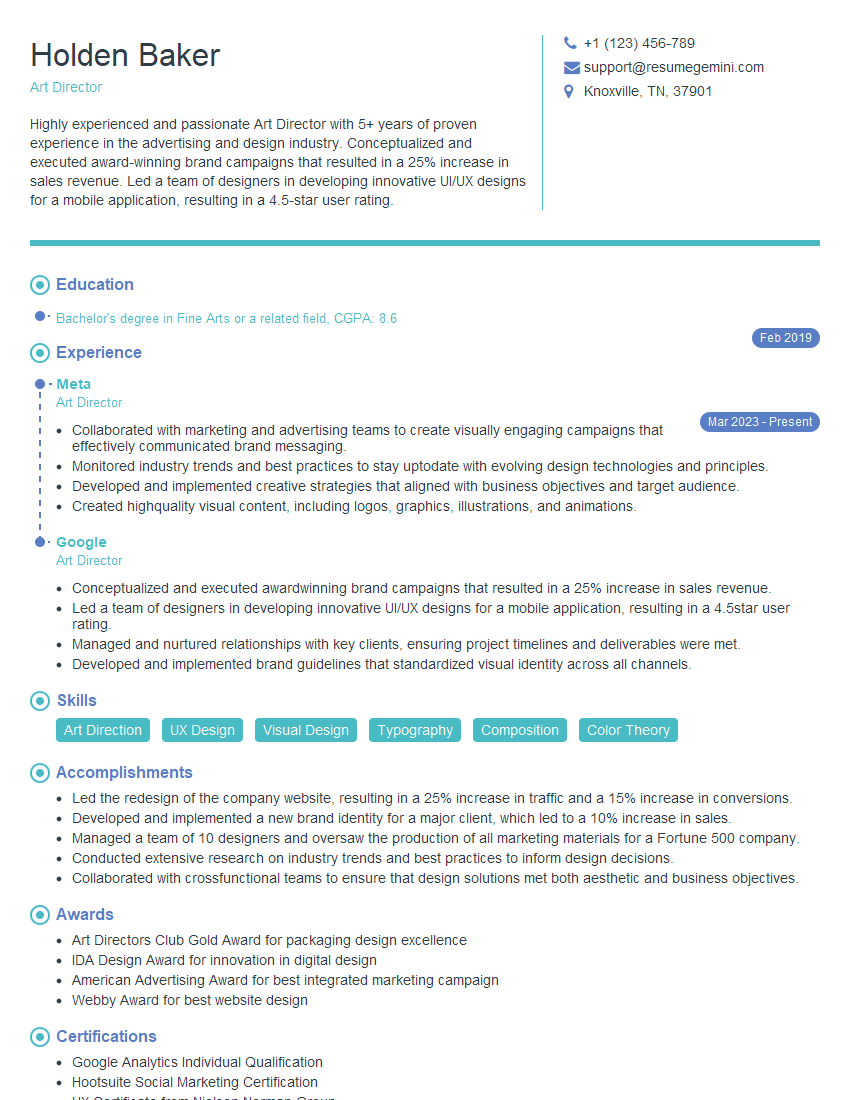
Art Director Resume Sample

Creative Director Resume Sample
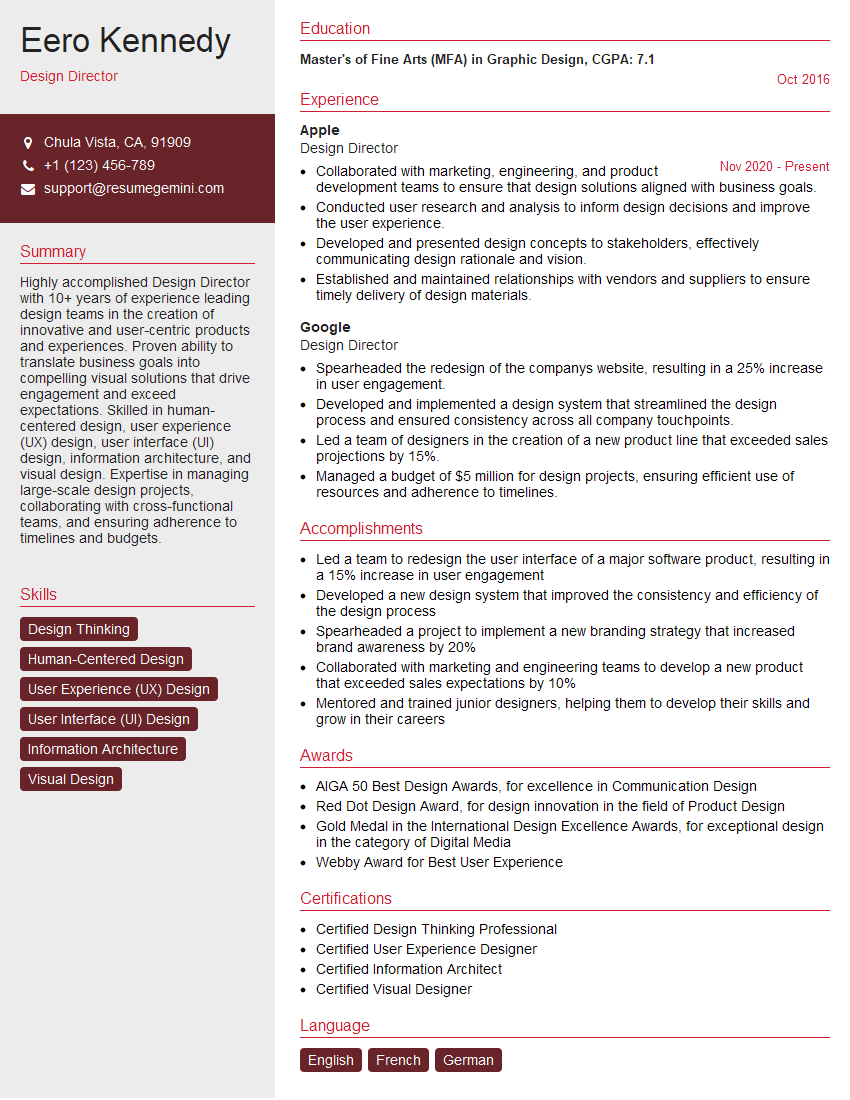
Design Director Resume Sample
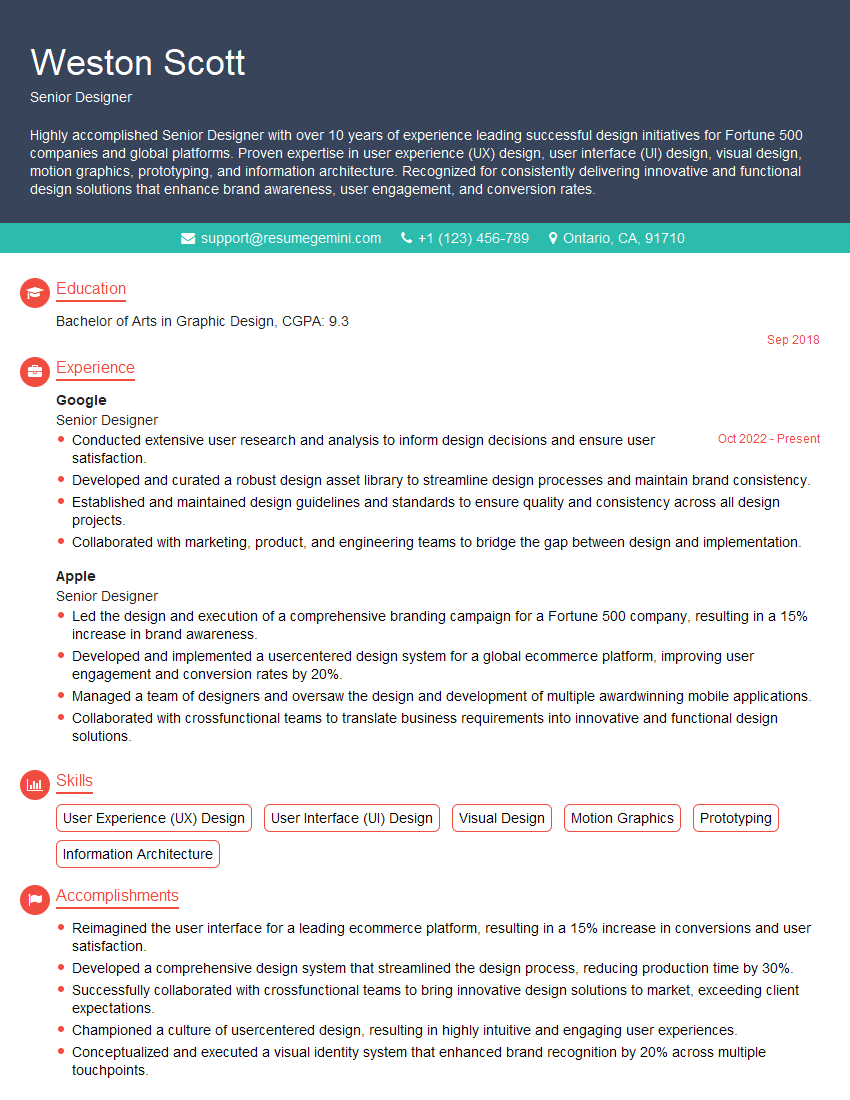
Senior Designer Resume Sample
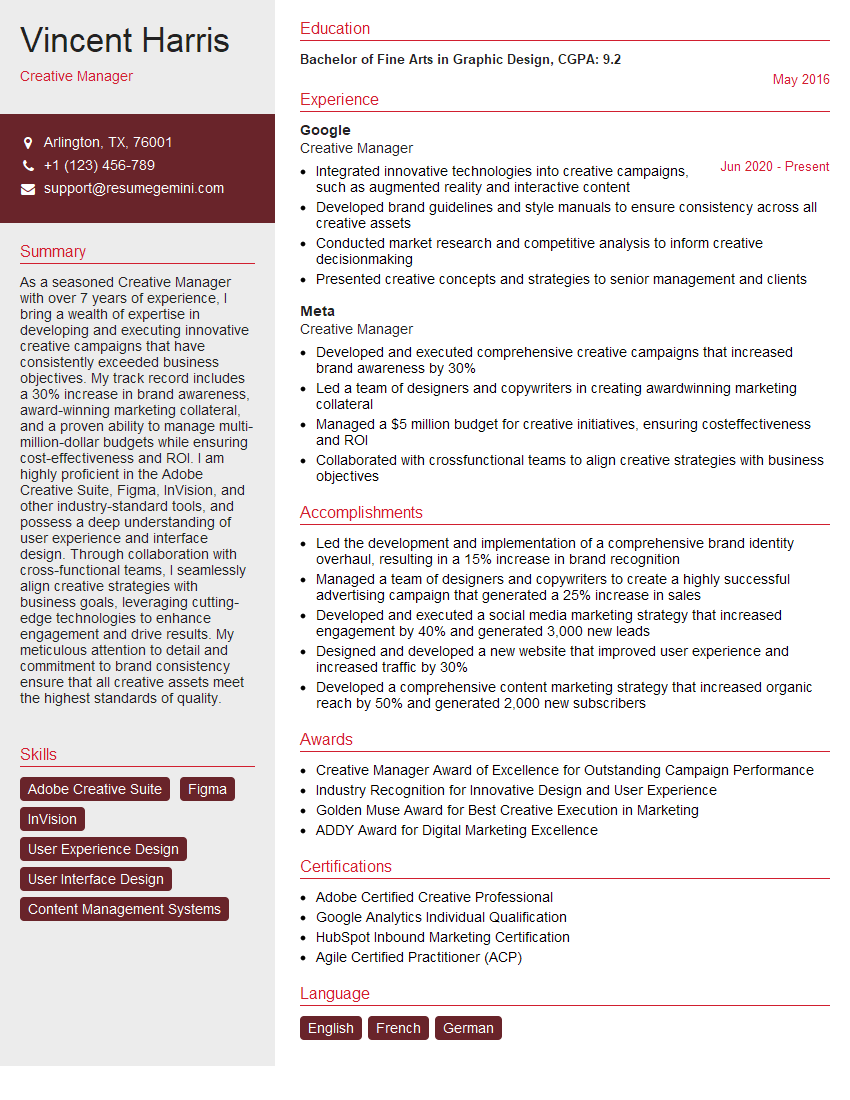
Creative Manager Resume Sample
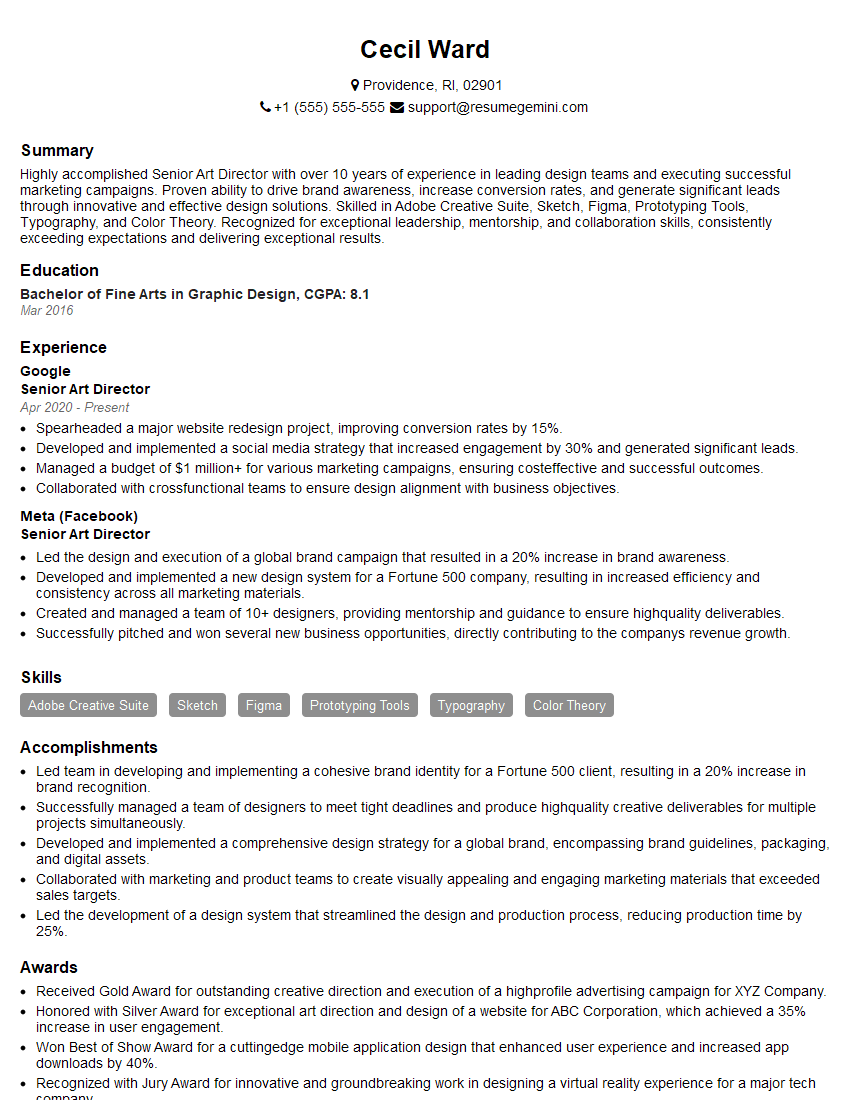
Senior Art Director Resume Sample
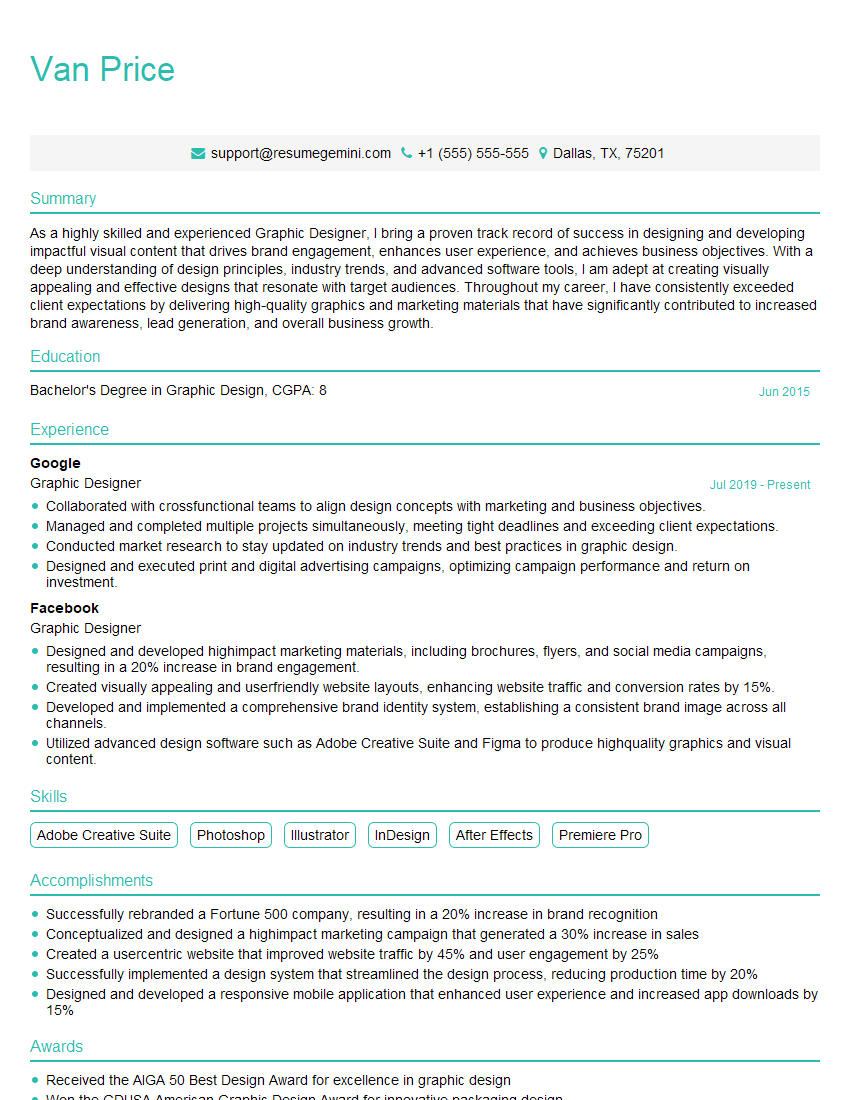
Graphic Designer Resume Sample
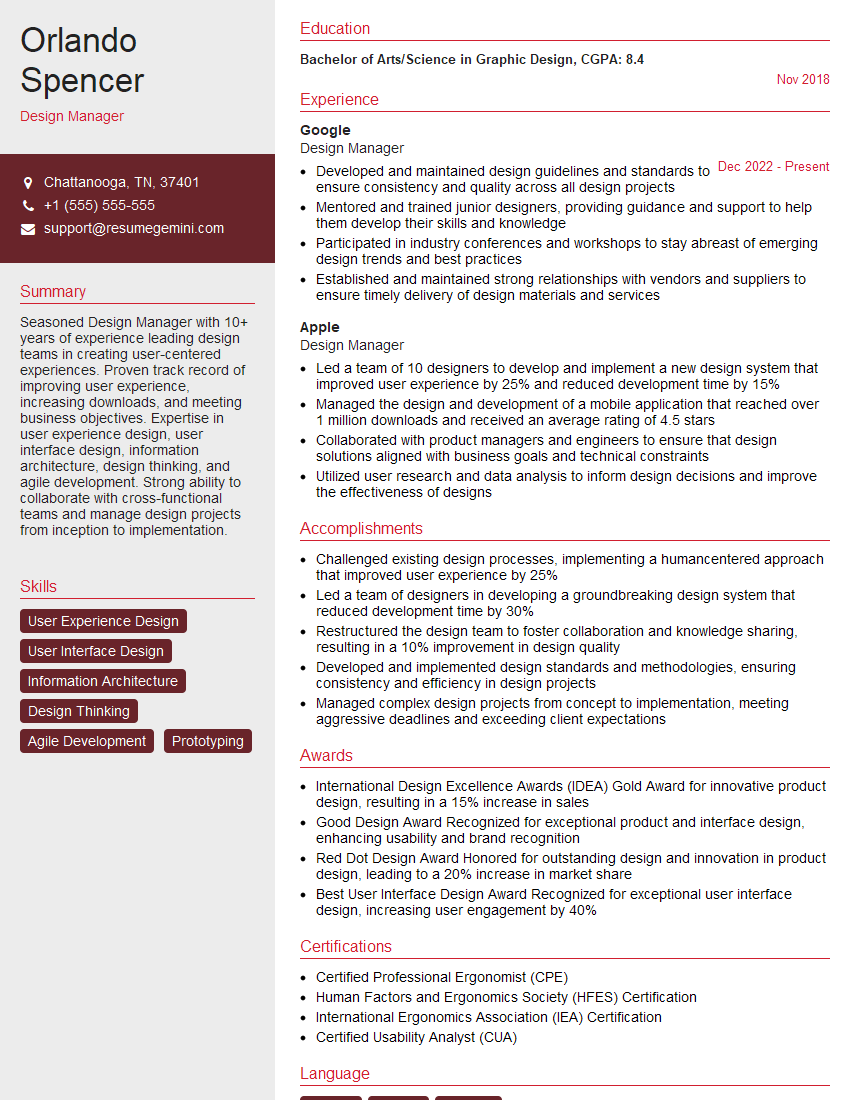
Design Manager Resume Sample
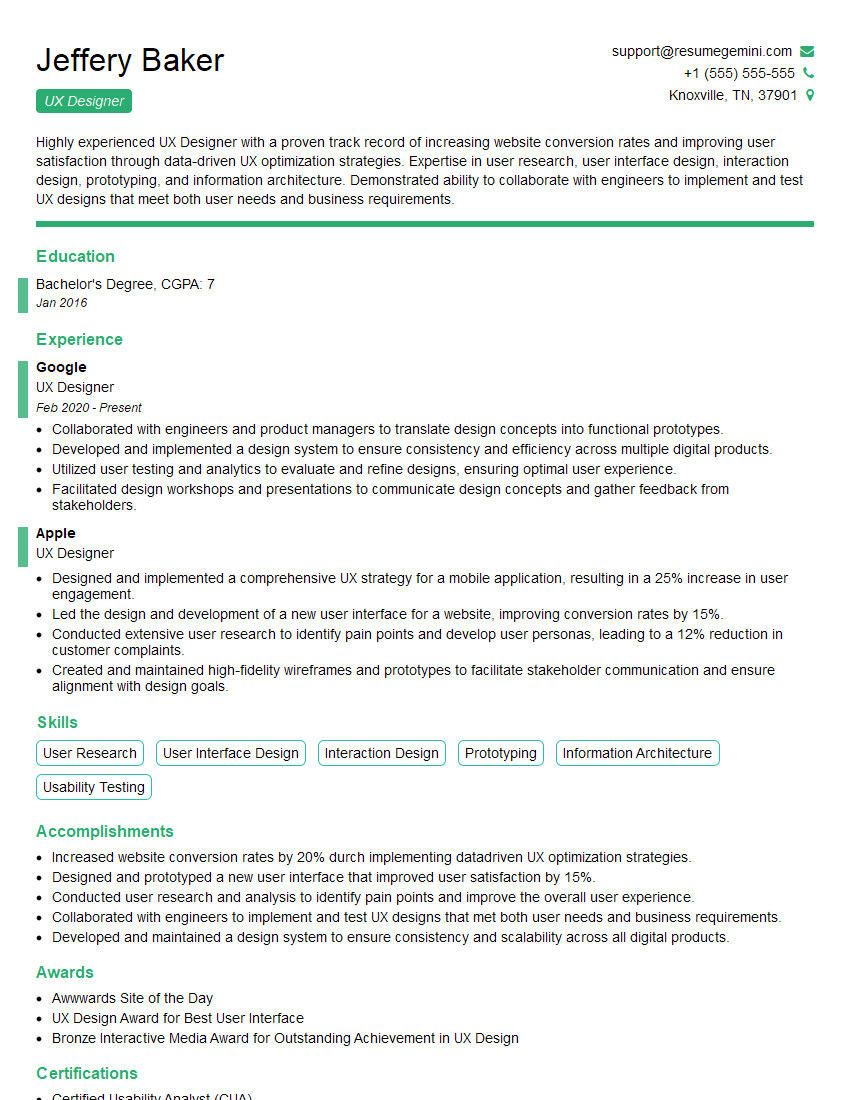
UX Designer Resume Sample
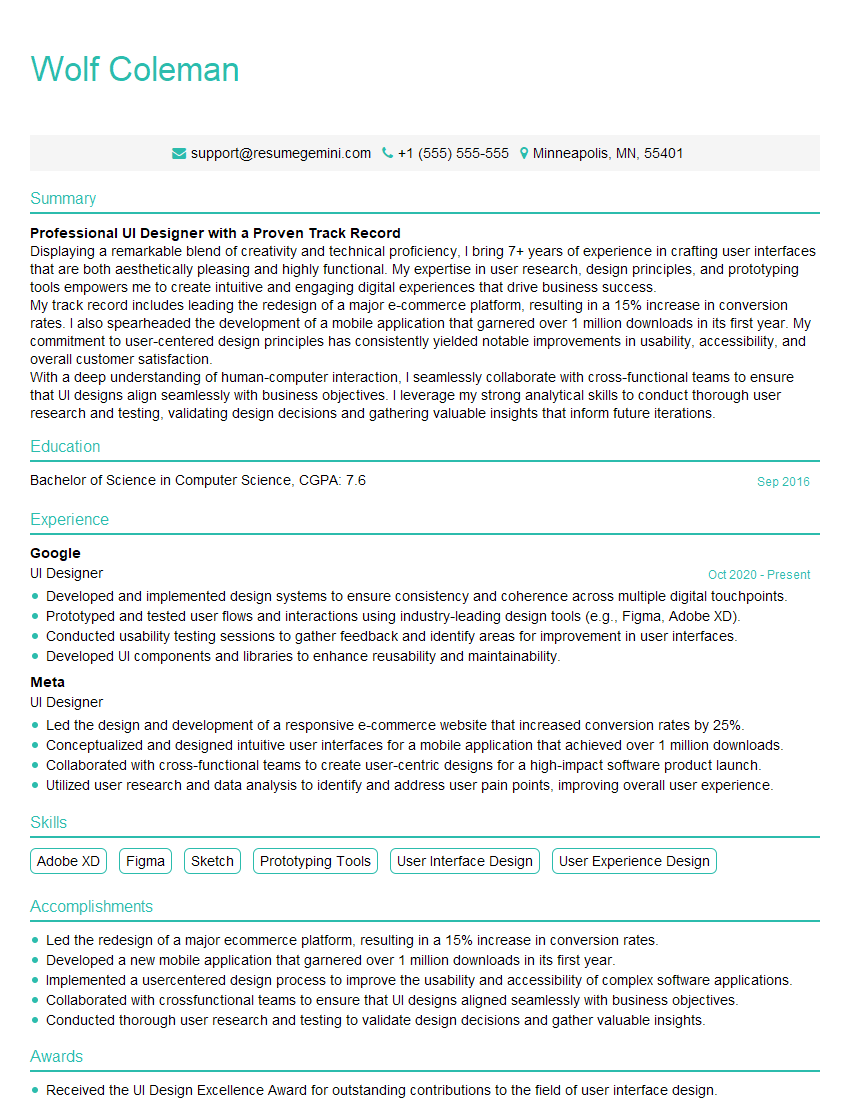
UI Designer Resume Sample
Explore more articles
Users Rating of Our Blogs
Share Your Experience
We value your feedback! Please rate our content and share your thoughts (optional).
What Readers Say About Our Blog
Very informative content, great job.
good