Interviews are more than just a Q&A session—they’re a chance to prove your worth. This blog dives into essential Art History and Costume Theory interview questions and expert tips to help you align your answers with what hiring managers are looking for. Start preparing to shine!
Questions Asked in Art History and Costume Theory Interview
Q 1. Define the term ‘mise-en-scène’ and explain its relevance to costume design.
Mise-en-scène, a French term meaning ‘placing on stage,’ encompasses all the visual elements within a film or theatrical frame. It’s the director’s control over what the audience sees, and costume design is a crucial component of this. Think of it as the overall visual storytelling; everything from set design, lighting, and composition contributes, but costume is particularly powerful in establishing character, time period, social standing, and even narrative arc.
For example, a character’s ragged clothing might suggest poverty or hardship, while elaborate attire could signal wealth and power. The costumes instantly communicate crucial information to the audience, guiding their interpretation of the scene and the characters involved. A costume designer works closely with the director to ensure the costumes seamlessly integrate with the overall mise-en-scène, enhancing the intended mood and message.
Q 2. Compare and contrast the stylistic differences between Baroque and Rococo costume.
Baroque and Rococo costumes, though sequential, present distinct stylistic differences. Baroque (roughly 17th century) fashion was characterized by opulence, grandeur, and a sense of drama. Think rich fabrics like velvet and brocade, heavily embellished with lace, embroidery, and jewels. Silhouettes were often voluminous, with wide skirts, puffed sleeves, and elaborate hairstyles. The overall effect was one of extravagance and power.
Rococo (early to mid-18th century) fashion, while retaining some Baroque elements, shifted towards a more delicate and playful aesthetic. While luxurious fabrics were still used, the emphasis moved toward lighter colors, pastel shades, and more intricate details like ribbons, bows, and floral motifs. Silhouettes became softer and more flowing, with less emphasis on structure and volume. Think of the transition as from a grand, powerful statement to a more intimate, elegant style. Think of the difference between the regal portraits of Spanish royalty in the Baroque and the airy, frivolous paintings of French aristocracy during the Rococo period.
Q 3. Analyze the social significance of clothing in Victorian England.
Clothing in Victorian England held immense social significance, acting as a powerful visual language that communicated class, morality, and social standing. A person’s attire immediately revealed their place in society. The elaborate gowns and intricate accessories of the wealthy upper class stood in stark contrast to the simpler, more functional clothing of the working class. The strict social codes dictated not only the style of clothing but also the color, fabric, and embellishments. Black was often associated with mourning, while bright colors and luxurious fabrics were reserved for the affluent.
Furthermore, clothing played a role in projecting moral values. Modesty was highly valued, and clothing was designed to conceal the body. The corset, for instance, was not just a fashion accessory but a symbol of Victorian ideals of female restraint and respectability. Departures from these norms could lead to social censure. The careful observation of dress codes ensured social order and hierarchy. Understanding Victorian fashion allows for insights into the rigid social structures and moral values of the time.
Q 4. Discuss the impact of the Industrial Revolution on textile production and fashion.
The Industrial Revolution dramatically reshaped textile production and fashion. The invention of new machinery, such as the power loom and the cotton gin, led to mass production of textiles. This made clothing more affordable and accessible to a wider range of people. Previously, clothing was largely handmade, resulting in higher prices and limited availability. The revolution also introduced new fabrics and dyes, expanding the range of colors and textures available. This led to greater variety and innovation in fashion.
However, the shift to mass production also had its drawbacks. Working conditions in factories were often harsh and exploitative, and the quality of some mass-produced garments was lower than that of handcrafted items. The availability of cheaper clothing altered consumer habits, speeding up the pace of fashion cycles and contributing to the rise of ‘fast fashion’ concepts which we see even today. It was a significant turning point, impacting social strata and shifting the dynamics of labor and consumption.
Q 5. Explain the evolution of women’s fashion from the 1920s to the 1950s.
Women’s fashion underwent a significant transformation from the 1920s to the 1950s. The 1920s saw the flapper style emerge – loose, knee-length dresses, bobbed hair, and a general rejection of Victorian-era constraints. This symbolized a new era of freedom and independence for women. The silhouette was slim and boyish, contrasting sharply with the earlier, more restrictive styles.
The 1930s brought a return to a more feminine silhouette, with longer dresses, softer lines, and a focus on elegance. The bias-cut gown became popular, emphasizing the fluidity and grace of the female form. World War II impacted fashion, leading to simpler styles and a focus on practicality and resourcefulness. The post-war era (1940s and 50s) ushered in the New Look, popularized by Christian Dior. This emphasized a full, cinched waist, a full skirt, and a more structured silhouette. This was a dramatic shift from the looser styles of the earlier decades, signifying a return to more traditional femininity, although the simplicity of war-time also left its mark and influenced certain styles.
Q 6. How do you research the historical accuracy of costumes for a film or theatrical production?
Researching historical accuracy for costumes in film or theatre requires meticulous work. It starts with extensive archival research: studying paintings, photographs, and written sources from the relevant period. Museums, libraries, and online archives are invaluable resources. You should also consider analyzing surviving garments whenever possible. Detailed analysis of construction techniques, fabric types, and embellishments is essential. It’s crucial to verify information from multiple sources to ensure accuracy and avoid misinterpretations. The use of primary sources is always preferred, but secondary sources, like scholarly publications on the subject, can offer crucial context and interpretation.
Consultations with costume historians and experts can significantly enhance the research process. They can provide insights into the nuances of historical fashion and help resolve ambiguities in the available data. For example, even the seemingly simple task of replicating a 17th-century collar requires deep understanding of the different fabrics, the stitching methods, and the social conventions associated with its wear. Thorough research ensures not only visual accuracy but also reflects an authentic understanding of the historical period and its social context. Failing to do this can lead to major inaccuracies and audience misinterpretations.
Q 7. What are the key challenges in preserving and conserving historical textiles?
Preserving and conserving historical textiles presents unique challenges due to their fragility and susceptibility to damage. The materials themselves, like natural fibers (linen, silk, wool) or dyes are vulnerable to degradation over time. Factors like light exposure (UV damage), humidity, pests, and improper handling can lead to significant deterioration. Environmental conditions are paramount – maintaining stable temperature and humidity levels is crucial to slowing down decay.
Proper storage is key. Textiles should be stored in acid-free containers, away from direct light and potential sources of damage. Regular monitoring and inspections for signs of deterioration, such as discoloration or weakening of fibers, are essential. Careful cleaning and conservation techniques, often involving specialized expertise, are sometimes necessary to stabilize damaged textiles. The process can be highly complex, sometimes demanding the use of advanced scientific methods for assessment and repair. Furthermore, finding the right balance between preserving the artifact in its original state and potentially conducting minimal interventions requires careful judgment and consideration.
Q 8. Describe different draping techniques used in costume construction.
Draping is a fundamental technique in costume construction, allowing designers to sculpt fabric directly onto a dress form or model to create three-dimensional shapes and forms. It’s a crucial method for achieving unique silhouettes and avoiding the limitations of pre-cut patterns. Several techniques exist, each offering different results:
- Basic Draping: This involves pinning and adjusting fabric directly onto the form, using simple folds and gathers to build volume or create specific shapes. Think of the classic Grecian drape, where flowing fabric is artfully arranged to create a columnar or flowing silhouette.
- Pattern Draping: This technique involves draping the fabric and then creating a pattern from the draped form. This pattern can then be used to reproduce the design in other fabrics, ensuring consistency. This is commonly used for more complex garments requiring multiple pieces.
- Bias Draping: Using fabric cut on the bias (at a 45-degree angle to the selvage) allows for greater fluidity and drape, resulting in softer, more flowing garments. This is frequently seen in evening gowns or flowing skirts.
- Sculptural Draping: This advanced technique utilizes multiple layers of fabric, often different textures and weights, to build complex three-dimensional forms. Think of the architectural designs of Issey Miyake, who masterfully sculpted fabric into seemingly gravity-defying shapes.
- Drape-and-Cut: This method combines draping with cutting and stitching. The fabric is draped on the form, then cut and sewn together to create a finished garment. This is useful for both quick prototypes and more elaborate designs.
Understanding these techniques is essential for any costume designer, enabling them to translate design concepts into tangible garments and to develop unique and expressive silhouettes.
Q 9. What are the ethical considerations surrounding the use of historical clothing in contemporary fashion?
Ethical considerations surrounding the use of historical clothing in contemporary fashion are multifaceted and complex. Appropriation of cultural heritage is a significant concern. Using elements from specific cultures without proper understanding or acknowledgment can be deeply offensive and disrespectful. For example, using Indigenous designs without permission or understanding their significance can trivialize sacred practices.
Another issue is authenticity versus imitation. Creating faithful reproductions of historical garments for educational purposes or museum exhibitions is different from using historical styles for profit without proper attribution. The ethical balance lies in responsible representation and acknowledgement of the origins of styles and techniques. Fair compensation for designers and artisans whose work is inspired by historical garments is another critical aspect of ethical practices.
Finally, the environmental impact of reproducing historical garments needs to be addressed. The materials and manufacturing processes used to create authentic reproductions can have significant environmental costs. Sustainable alternatives and ethical sourcing of materials are essential for mitigating these negative consequences.
Q 10. Explain the difference between haute couture and ready-to-wear.
Haute couture and ready-to-wear represent opposite ends of the fashion spectrum. Haute couture, meaning ‘high sewing’ in French, is the pinnacle of fashion. It involves exquisitely handcrafted garments, often individually tailored to the client, using the finest materials and unparalleled craftsmanship. Each garment is a unique work of art, reflecting the designer’s vision and the client’s specific requirements. Haute couture houses follow strict guidelines set by the Chambre Syndicale de la Haute Couture in Paris, ensuring the highest standards of quality and exclusivity.
Ready-to-wear (RTW), also known as prêt-à-porter, focuses on mass-producing clothing in standard sizes for wider distribution. While it may incorporate design elements inspired by haute couture, the emphasis is on affordability, mass production, and wider accessibility. RTW employs industrial techniques and economies of scale, making it vastly different from the bespoke nature of haute couture.
In essence, haute couture represents an exclusive, bespoke experience, whereas ready-to-wear prioritizes accessibility and affordability, offering a wider range of styles and prices.
Q 11. How has globalization impacted the fashion industry and its relationship to cultural traditions?
Globalization has profoundly impacted the fashion industry, intertwining and sometimes clashing with cultural traditions. The ease of international trade has led to a globalized supply chain, making clothing cheaper and more readily available worldwide. This has enabled fast fashion brands to grow rapidly, offering trend-driven clothing at low prices. However, this rapid production often comes at the cost of ethical labor practices and environmental sustainability in developing nations.
Simultaneously, globalization facilitates the cross-cultural exchange of fashion styles. Traditional textile techniques and garment designs from various cultures are now more visible globally, inspiring designers and consumers alike. However, this exchange needs to be approached thoughtfully to avoid the cultural appropriation discussed earlier. The challenge lies in appreciating and celebrating the diversity of global styles responsibly, ensuring fair representation and respect for cultural heritage.
In essence, globalization has created both opportunities and challenges for the fashion industry. While it fosters a wider spread of fashion, it also highlights the need for ethical sourcing, sustainable practices, and responsible cultural exchange.
Q 12. Discuss the role of symbolism and semiotics in costume design.
Symbolism and semiotics play a crucial role in costume design. Costumes are not merely garments; they are powerful tools for visual communication. Through careful selection of color, fabric, silhouette, and accessories, designers can convey meaning, status, and character traits. For example, a bright red dress might signify passion or power, while a somber black outfit might represent mourning or mystery.
Semiotics, the study of signs and symbols, helps to decode these visual cues. Analyzing the symbolism of costumes within a specific context – be it a historical period, a theatrical production, or a film – reveals layers of meaning. A particular hat style might indicate social class in a historical drama, while a specific color palette might establish the mood and atmosphere in a film. Costume designers are masters of visual storytelling, using clothing to create a deeper understanding of characters and their narratives.
Therefore, understanding symbolism and semiotics allows costume designers to craft visually rich costumes that enhance the story being told, add depth to characters, and communicate meaning effectively to the audience.
Q 13. Identify three influential figures in the history of costume design and their contributions.
Three highly influential figures in the history of costume design are:
- Erté (Romain de Tirtoff): A renowned Art Deco artist, Erté’s designs were characterized by their elegant lines, bold colors, and luxurious fabrics. His work significantly impacted the aesthetics of fashion and theatrical costume design in the early 20th century. His iconic silhouettes and flamboyant use of color remain highly influential.
- Edith Head: One of the most prolific costume designers in Hollywood’s Golden Age, Edith Head created memorable looks for countless classic films. Her designs were not merely decorative but helped to define characters and advance narratives. She understood the power of costume to convey emotions and story elements, leaving an enduring legacy on film costume design.
- Sandy Powell: A contemporary costume designer known for her unique and often unconventional approaches. Powell’s work in films like Shakespeare in Love and Carol demonstrates a mastery of historical accuracy combined with a strong sense of visual storytelling. She is recognized for her ability to seamlessly blend period accuracy with artistic expression.
These designers, though spanning different eras and mediums, all demonstrate the power of costume to enhance storytelling and establish visual identity.
Q 14. Explain the process of creating a mood board for a costume design project.
Creating a mood board is a vital first step in any costume design project. It’s a visual collage that encapsulates the overall aesthetic and feeling of the design. It acts as a reference point throughout the design process, ensuring consistency and cohesiveness.
The process typically involves:
- Understanding the Project Brief: Carefully review the script, design notes, and any relevant information to understand the characters, setting, and desired mood.
- Gathering Images: Collect images that reflect the project’s overall aesthetic, including fabric swatches, color palettes, sketches, photographic references, and even artwork that evokes the desired mood. These could be torn from magazines, printed from online sources, or even original sketches.
- Organizing the Board: Arrange the gathered images on a board (physical or digital) in a way that visually communicates the story. Consider using thematic groupings or a chronological arrangement if applicable. Note down color references and fabric textures.
- Refining the Board: Review and refine the mood board to ensure it accurately reflects your vision. You may need to add or remove elements to achieve the desired effect. It is an iterative process.
- Documenting the Choices: Note down rationales behind the choices made for each element, explaining why certain images or colors were chosen. This adds valuable context for future reference and collaboration.
A well-crafted mood board provides a clear visual language for the costume design, facilitating effective communication with the director, actors, and other members of the production team. It’s a living document that may evolve as the project progresses but always serves as a valuable guide to maintain coherence and vision.
Q 15. How do you manage a costume budget effectively?
Effective costume budgeting requires a multi-stage approach, beginning with meticulous research and planning. First, I create a detailed breakdown of all anticipated costs: fabric, trims, findings (buttons, zippers, etc.), labor, rentals (if any), and transportation. This is often done in spreadsheet software, allowing for easy tracking and adjustments. I then research various suppliers and compare prices to find the most cost-effective options without compromising quality. For example, sourcing fabrics from wholesalers can significantly reduce expenses compared to buying from smaller retailers. Next, I prioritize expenses, focusing on essential elements of the design that impact the overall aesthetic and functionality. Finally, I build in contingency funds to account for unexpected costs or fabric shortages. This proactive approach helps prevent budget overruns and ensures that the project remains financially viable.
Imagine designing a 17th-century court gown. The fabric cost might be the largest expense; choosing a more affordable but appropriate linen blend instead of a rare silk damask allows me to allocate more budget to intricate embroidery or handcrafted lace. This intelligent budgeting allows for more creative freedom within limitations.
Career Expert Tips:
- Ace those interviews! Prepare effectively by reviewing the Top 50 Most Common Interview Questions on ResumeGemini.
- Navigate your job search with confidence! Explore a wide range of Career Tips on ResumeGemini. Learn about common challenges and recommendations to overcome them.
- Craft the perfect resume! Master the Art of Resume Writing with ResumeGemini’s guide. Showcase your unique qualifications and achievements effectively.
- Don’t miss out on holiday savings! Build your dream resume with ResumeGemini’s ATS optimized templates.
Q 16. What are some common fabric types used in historical costume construction, and their properties?
Historical costume construction employs a wide variety of fabrics, each possessing unique properties. Linen, for instance, was a staple in many historical periods. It’s durable, breathable, and relatively inexpensive, making it practical for everyday wear and undergarments. Wool, another workhorse fabric, offers warmth and drape, ideal for outerwear and winter clothing. Its properties vary depending on the type of wool (e.g., merino, cashmere) influencing the feel and texture. Silk, prized for its luxurious sheen and drape, was often reserved for the wealthy. It is delicate and requires careful handling. Velvet, characterized by its pile, offers a rich, luxurious texture but can be challenging to work with due to its nap. Cotton, widely used from the 18th century onward, is versatile, absorbent, and easy to dye, making it suitable for a variety of garments. Understanding these material properties is crucial for replicating historical garments accurately and choosing fabrics that withstand wear and tear.
Q 17. Describe different pattern-cutting methods.
Pattern-cutting methods have evolved over time, but several core techniques remain relevant. The most common method is the flat pattern method, which involves drafting patterns directly on paper or fabric using measurements and formulas. This method, while precise, requires a strong understanding of draping and construction. Then there is the draping method where fabric is draped on a dress form to create the desired shape, then the shape is pinned and transferred to paper to create the pattern. It is particularly useful for creating unique, closely-fitting garments. Computer-aided design (CAD) software provides a modern approach. These programs allow for digital pattern making, offering greater precision, scalability, and the ability to quickly create variations. Finally, historical pattern cutting involves understanding the unique techniques used in specific eras, analyzing extant garments, and interpreting written and pictorial sources to recreate historical patterns.
For example, designing a medieval gown requires a thorough understanding of the ‘gown’ pattern and its specific tailoring techniques of that period. Whereas designing a Victorian era dress will rely on the principles and techniques employed during that time period, often including multiple components, such as a bodice, skirt, and sleeves, all separately patterned. Choosing the appropriate method is crucial for achieving a historically accurate and wearable garment.
Q 18. How do you handle deadlines and time constraints in a fast-paced design environment?
Managing deadlines in a fast-paced design environment requires a structured approach. I begin by carefully reviewing the project timeline and breaking it down into smaller, manageable tasks with associated deadlines. I then prioritize tasks based on urgency and importance, utilizing project management tools and techniques. This could involve creating a Gantt chart or using software such as Asana or Trello. Effective communication with the team and client is key – proactively addressing potential delays, ensuring everyone is on the same page regarding timelines and expectations. I also practice time management techniques, such as time blocking, to allocate dedicated time slots for specific tasks, minimizing distractions and maximizing productivity. For example, if I have a tight deadline for creating a costume for a photoshoot, I might dedicate two days solely to constructing the garment, scheduling meetings and other tasks accordingly.
Q 19. What software programs are you proficient in for design or research purposes?
My proficiency in design and research software includes Adobe Photoshop and Illustrator for image manipulation, pattern design, and technical drawings. I also utilize Adobe InDesign for creating presentations and technical packages. For 3D modeling and visualization, I am familiar with programs like CLO3D, which allows me to create virtual prototypes, test different designs, and refine fit. My research often involves utilizing online databases such as JSTOR and Artstor for accessing historical sources and scholarly articles.
Q 20. How do you collaborate with other members of a design team?
Collaboration is fundamental in a design team. I believe in fostering open communication and actively participating in brainstorming sessions, contributing my expertise in costume history and design. I’m adept at actively listening to the ideas and concerns of my colleagues, ensuring that all voices are heard and incorporated. I also value constructive criticism, using it as an opportunity for growth and refinement. I frequently utilize digital communication tools like Slack or email to coordinate effectively and track progress. For example, when working on a theatrical production, I would collaborate closely with the director, set designer, and other costume personnel to ensure the costumes align seamlessly with the overall vision and production timeline.
Q 21. Describe your experience working with different types of fabrics and their handling.
My experience with various fabrics spans decades. I’ve worked extensively with delicate silks, requiring gentle hand-washing and careful pressing to avoid damage. I’ve also worked with heavy brocades, requiring specific needle techniques to ensure even stitching. Understanding the drape and weight of each fabric is critical for designing and constructing garments. For example, a heavy wool fabric might require additional support structures, like boning in a corset, to maintain its shape and structure. Conversely, a lightweight chiffon would require a different approach, perhaps using multiple layers for fullness and body. I approach each fabric with a nuanced understanding of its unique characteristics to achieve both aesthetic and functional success.
Q 22. Explain how you ensure historical accuracy in costume reproduction.
Ensuring historical accuracy in costume reproduction is paramount. It’s a meticulous process that begins long before the needle touches the fabric. It involves a deep dive into primary and secondary sources – paintings, sculptures, written accounts, surviving garments, and archaeological findings. I start by meticulously researching the specific period, location, and social class of the characters I’m costuming. For example, if designing a gown for a 1780s French aristocrat, I’d examine portraits by artists like Élisabeth Louise Vigée Le Brun, analyze the construction techniques prevalent in extant garments from that era, and consult period fashion plates.
Next, I analyze the silhouette, fabric choices, construction techniques, and embellishments. The silhouette, or overall shape of the garment, is crucial. For instance, the dramatic panniers of the 18th century are significantly different from the streamlined shape of a 1920s flapper dress. Fabric selection is equally important: using the correct weight, drape, and texture of fabric significantly impacts the final appearance. I might use linen for a medieval tunic or silk for a Regency-era gown, carefully considering the availability of historically appropriate materials (more on this in the next answer).
Finally, meticulous attention to detail is key. This includes researching accurate trims, buttons, embroidery styles, and even the types of dyes used. I often create detailed technical drawings and mock-ups before beginning the final construction, allowing for adjustments and refinements based on my research. It’s an iterative process, demanding constant cross-referencing of sources to validate choices and ensure authenticity.
Q 23. How do you adapt historical designs for modern productions?
Adapting historical designs for modern productions requires a delicate balance between historical accuracy and practical considerations for the actors and the production itself. The goal is not to create a museum exhibit, but rather to evoke the spirit and style of a period while ensuring the costumes are comfortable, functional, and visually stunning on stage or screen.
One approach is to simplify complex historical garments while retaining their essential characteristics. For instance, I might simplify the number of layers in a voluminous 18th-century gown, using modern construction techniques that maintain the silhouette without the impracticality of numerous undergarments. Similarly, I might adapt a historically accurate neckline or sleeve shape to be slightly more manageable for modern actors’ movement needs.
Another strategy is to use modern materials that mimic the look and drape of historical fabrics, but are easier to work with and more durable. For example, I might use a high-quality synthetic fabric with a similar sheen and texture to silk for a period costume, or a blend of modern and historical techniques. Modern printing technologies can also be incorporated to achieve accurate patterns and embellishments efficiently. The key is maintaining the visual integrity of the historical design while ensuring the costumes are practical and comfortable for the performers, ultimately improving the entire production.
Q 24. How do you address challenges with sourcing historically accurate materials?
Sourcing historically accurate materials can be one of the biggest challenges. Many period fabrics are no longer produced or are prohibitively expensive. I address this through a multi-pronged approach. First, I extensively research existing suppliers specializing in historical textiles. This involves exploring both traditional textile mills and specialized suppliers who reproduce period fabrics using traditional techniques. I sometimes even work directly with artisans and weavers, commissioning specific fabrics to match historical samples.
Second, I employ creative substitutions when necessary. If a specific fabric is unavailable, I search for modern alternatives that best approximate the original in terms of weight, texture, and drape. This might involve experimenting with different blends of natural and synthetic fibers.
Third, I actively explore options like repurposing vintage textiles. This not only provides unique and authentic materials, but also addresses sustainability concerns – a growing priority in the industry. Sometimes, I might even incorporate details like antique lace or buttons, integrating small pieces of the past to add a tangible link to the historical period. The process of sourcing materials often necessitates resourcefulness and creativity, alongside a keen understanding of the properties of fabrics and their historical contexts. The result justifies the effort: a greater authenticity and a richer visual impact.
Q 25. Describe your experience working with diverse teams and cultures.
Working with diverse teams and cultures has been a consistently rewarding aspect of my career. I value the different perspectives and skills that individuals from diverse backgrounds bring to a project. For example, while working on a production set in 19th century India, I collaborated closely with artisans and craftspeople in India who possessed invaluable knowledge of traditional textile techniques and embellishment styles. Their expertise was crucial to the authenticity of the costumes.
Furthermore, cross-cultural understanding is crucial when representing other cultures. I strive to be sensitive and respectful in my designs, avoiding stereotypes and ensuring accurate representation. This often requires extensive research and consultation with experts in those cultures. Open communication and collaboration are essential to ensuring a respectful and successful outcome. Building trust and understanding with team members from varied backgrounds fosters creativity and leads to more nuanced and enriching designs.
In one memorable instance, while designing costumes for a play depicting a story from the Tang Dynasty, my consultation with a Chinese art historian resulted in the use of more accurate color palettes and textile techniques, enhancing the historical resonance of the production. These collaborative efforts highlight the importance of open communication and mutual respect in creating authentic and meaningful costumes.
Q 26. What are your strengths and weaknesses as a costume designer?
My strengths lie in my deep historical knowledge, meticulous attention to detail, and ability to collaborate effectively with diverse teams. I’m a highly organized and resourceful individual, able to manage complex projects and meet tight deadlines under pressure. I am also adept at adapting historical designs for modern productions while maintaining historical accuracy and visual appeal. My ability to communicate effectively with both artisans and actors ensures a smooth and efficient production process.
One area I’m continually working to improve is my proficiency in digital design software. While I am comfortable using these tools, I believe that expanding my skills in 3D modeling and virtual prototyping would significantly enhance my workflow and efficiency in the long run. Additionally, I am always seeking opportunities to expand my knowledge of contemporary costume design techniques, ensuring that I remain at the forefront of the ever-evolving field.
Q 27. Discuss the impact of technology on costume design and its future trends.
Technology has revolutionized costume design, impacting everything from the initial design process to the final construction and presentation. Digital design software enables quick iteration of designs, precise pattern creation, and 3D modeling, allowing for realistic visualizations and virtual fittings. 3D printing is transforming the creation of intricate embellishments and bespoke accessories. Digital fabrication also allows for greater efficiency in large-scale productions.
Future trends indicate an even greater integration of technology. We are likely to see further development in virtual reality (VR) and augmented reality (AR) for design visualization and fitting, allowing for a more immersive and interactive design process. Artificial intelligence (AI) could also play a significant role in optimizing production processes, predicting fabric needs, and even assisting in the creation of unique designs. Sustainability will be a dominant concern, leading to increased use of digital tools to minimize waste and optimize material use. The convergence of technology and historical expertise will continue shaping the field, promising innovative and efficient approaches to costume design.
Q 28. What are your salary expectations for this role?
My salary expectations for this role are commensurate with my experience and expertise in the field, and also consider the industry standards for a costume designer with my qualifications. I am open to discussing a competitive compensation package that reflects the demands and responsibilities of this position. I am happy to provide a detailed breakdown of my salary expectations once I have a better understanding of the specific details of the role and the company’s compensation structure.
Key Topics to Learn for Art History and Costume Theory Interview
- Historical Periods & Styles: Develop a strong understanding of major artistic movements (e.g., Renaissance, Baroque, Rococo) and their corresponding costume styles. Analyze the interplay between social context, artistic trends, and clothing.
- Material Culture & Technology: Explore the evolution of textile production, garment construction techniques, and the impact of technological advancements on costume design across different eras. Consider the role of materials in signifying social status and identity.
- Iconography & Symbolism in Costume: Learn to interpret the symbolic meaning of clothing, accessories, and colors in various artworks and historical contexts. Understand how costume choices communicate social status, power, and ideology.
- Body & Fashion: Analyze the relationship between the body, fashion, and social ideals across different cultures and time periods. Explore how representations of the body have changed throughout history and their influence on costume design.
- Theoretical Frameworks: Familiarize yourself with key theoretical approaches in art history and costume theory, such as semiotics, gender studies, and post-colonial theory, and how they can be applied to analyze costume.
- Museum Studies & Archival Research: Understand the methodologies involved in researching and interpreting costumes within a museum or archival setting. This includes handling, cataloging, and analyzing artifacts.
- Practical Application: Practice analyzing visual sources (paintings, sculptures, photographs) to identify stylistic features and interpret costume choices. Develop strong analytical and communication skills to articulate your insights.
Next Steps
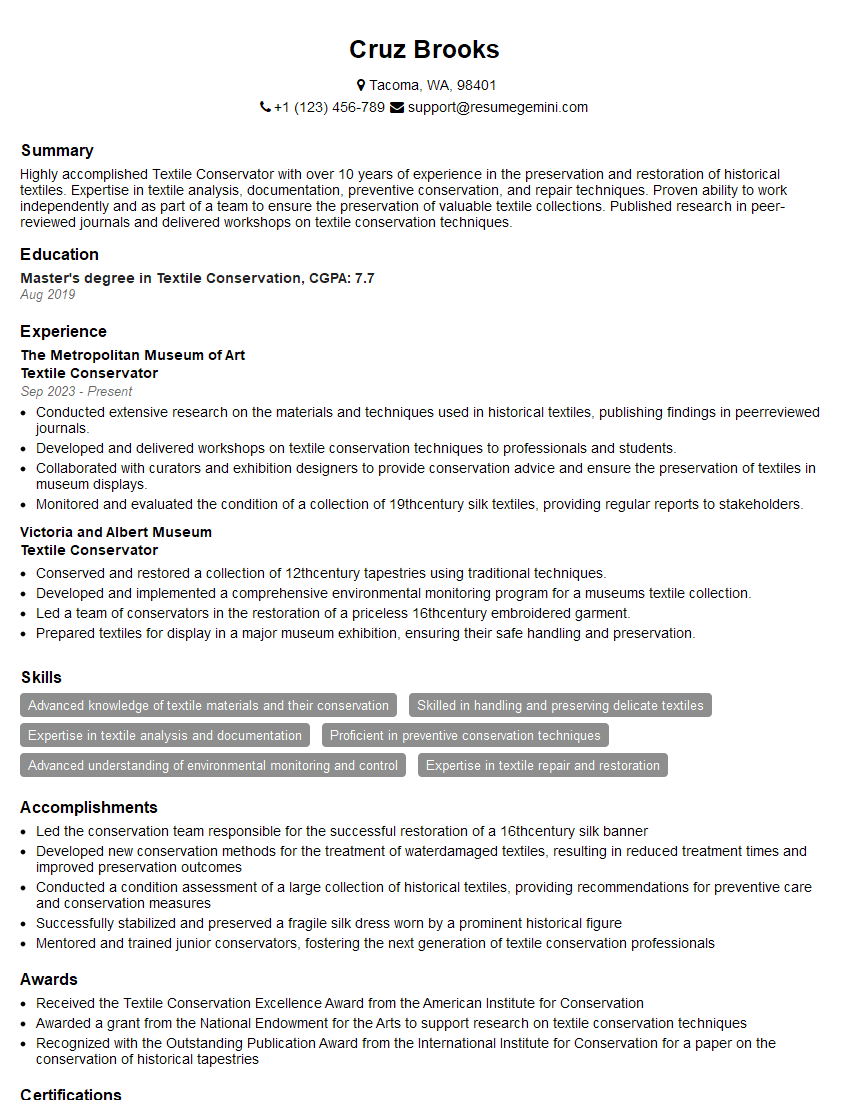
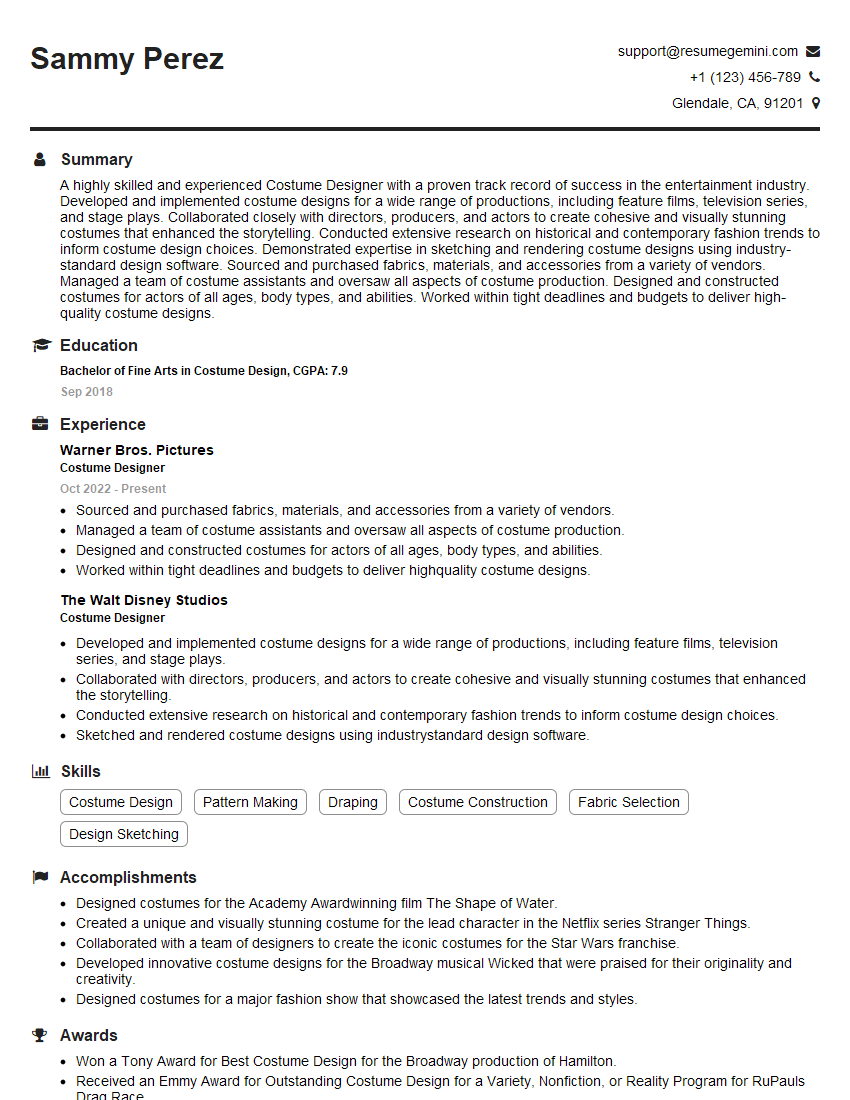
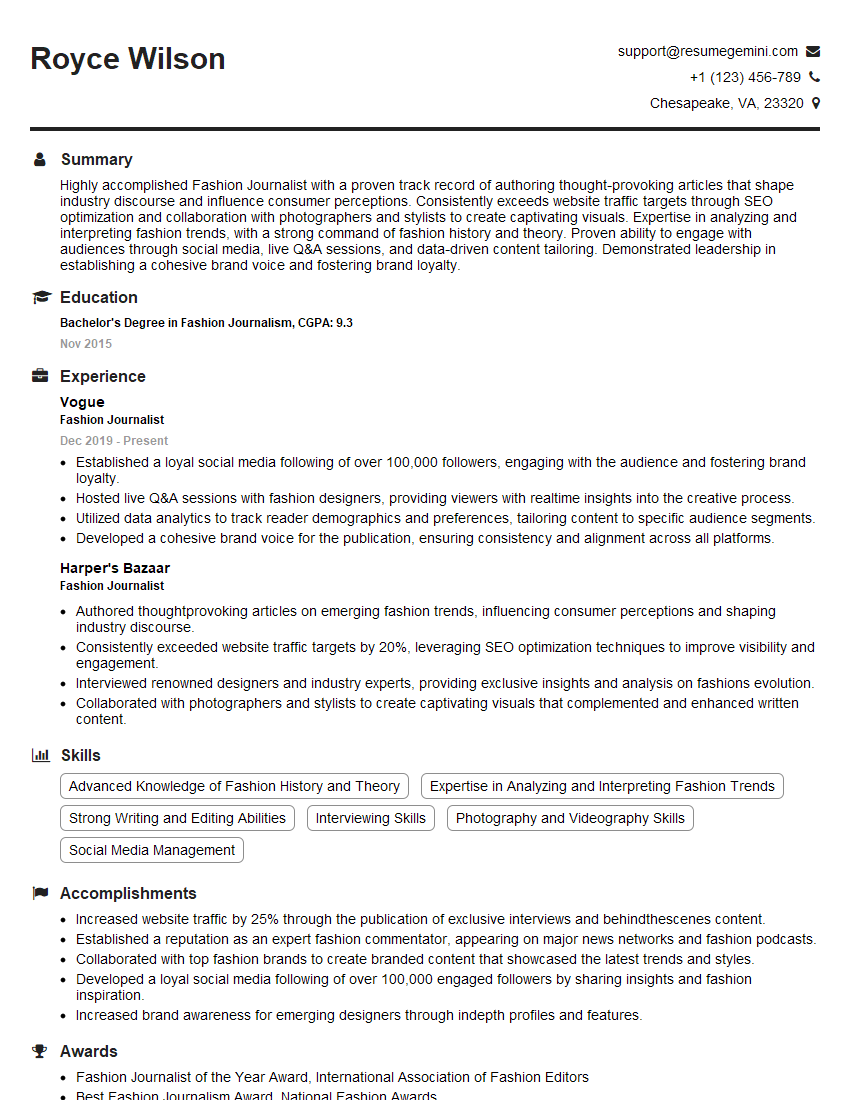
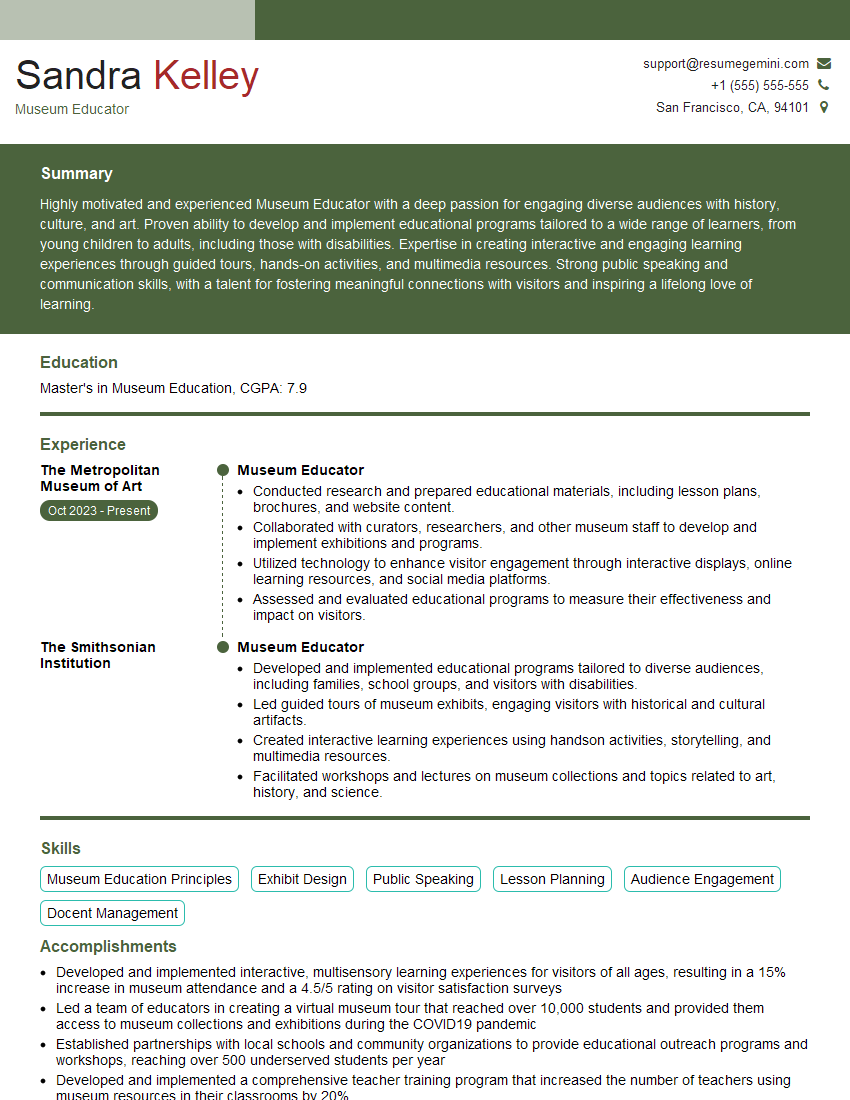
Mastering Art History and Costume Theory opens doors to diverse and rewarding careers in museums, archives, academia, fashion design, and film. A strong grasp of these subjects demonstrates critical thinking, analytical skills, and a keen eye for detail – highly valued attributes in many fields. To maximize your job prospects, creating a polished and ATS-friendly resume is crucial. ResumeGemini is a trusted resource that can help you craft a compelling resume tailored to showcase your unique skills and experience in Art History and Costume Theory. Examples of resumes specifically designed for this field are available to guide you. Invest time in crafting a professional resume to significantly improve your chances of landing your dream role.



Explore more articles
Users Rating of Our Blogs
Share Your Experience
We value your feedback! Please rate our content and share your thoughts (optional).
What Readers Say About Our Blog
Very informative content, great job.
good